02 Prokofiev GergievProkofiev – Symphonies Nos. 4, 6, & 7; Piano Concertos Nos. 4 & 5
Alexei Volodin; Sergei Babayan; Mariinsky Orchestra; Valery Gergiev
Mariinsky MAR0577

The Swiss composer Arthur Honegger once claimed that Prokofiev would “remain the greatest figure of contemporary music.” These were strong words of praise indeed and whether or not one agrees, this splendid two-disc set on the Mariinsky label offers the listener ample opportunity to decide. The collection is the first in a series the label is issuing to honour the 125th anniversary of Prokofiev’s birth and features the piano concertos Four and Five and symphonies Four, Six and Seven, appropriately performed by the Orchestra of the Mariinsky Theatre with soloists Alexei Volodin and Sergei Babayan all under the direction of Valery Gergiev.

The set opens with the Piano Concerto No.4 for the left hand, music completed in 1931, and the second concerto written for the pianist Paul Wittgenstein who had lost his right arm in the Great War (Ravel had provided the first). The opening movement – the first of four – is sprightly and virtuosic, with Alexei Volodin easily handling the technical demands for the left hand that would challenge all but the most competent of artists. An expansive and introspective second movement follows a quirky Moderato before a lickety-split finale where soloist and orchestra prove a formidable pairing.

The Fifth Concerto from 1932 also presents considerable technical challenges. Its five brief movements are true studies in contrasts, from the cheeky and extroverted opening to the calm Larghetto. Throughout, Sergei Babayan’s dexterity and keyboard style are much in evidence; the virtuosic demands are conveyed with great finesse.

Judging from the relatively small number of recordings of the Symphony No.4 – originally composed in 1930 but expanded 17 years later – it would seem to be the most under-appreciated of all seven symphonies. The light and playful mood attests to its origins in the ballet The Prodigal Son on which it was based. Gergiev and the Mariinsky Orchestra provide a spirited and thoroughly convincing performance, bringing together a wealth of timbres and colours. Symphony No.6 was completed in 1947 and has long been regarded as the darker twin of the more optimistic No.5. Nevertheless, Gergiev draws a sensitive performance from the orchestra throughout the solemn march-like opening movement, the anguished and lengthy Largo and the optimistic and rambunctious Vivace, performed with panache. To a degree, the ballet spirit is also found in Symphony No.7 from 1952. The gracious second movement waltz and elegiac andante are further enhanced by the warmly resonant strings, while the spirited finale seems meant to be danced to! A surprisingly placid ending brings the symphony – and the set – to a satisfying conclusion.

In all, these are exemplary performances and the collection is destined to be a staple in the catalogue.
03 Catherine Leesocial sounds
Catherine Lee
Teal Creek Music TC-2035 (catherinemlee.com)

The difficulty and excitement of a solo instrumental performance arises from the fact that the entire sound envelope is, from beginning to end, from top to bottom, exposed. A note’s attack, its approach towards silence, the sound of keys, the performer’s breath – all these come under the listener’s scrutiny, amplified by the surrounding stillness. On social sounds, Portland oboist Catherine Lee, instead of merely navigating these choppy waters, makes them her destination. Almost all of the pieces feature an improvisatory aspect, tools which Lee uses to prod the boundaries of her instrument’s sound.

The first such piece presented here is Jérôme Blais’ Rafales. Scored for solo oboe and piano with depressed sustain pedal, the work is this disc’s standout. Inspired by the composer’s encounters with Nova Scotian wind, Blais supplies the performer only with loosely defined long-tone gestures, leaving their lengths at the performer’s discretion. These, combined with the timbral shifts caused by the choreographed movement of the oboe in relationship to the microphone, result in a gripping tension: Lee’s tone, at first pushed and pulled along its edges, finally disintegrates into the murk of sympathetic vibrations with the piano.

A similar effect is achieved in Emily Doolittle’s Social sounds from whales at night, only here it’s improvised timbral fingerings and pitch bends which cause the tension, and pre-recorded whale sounds rising to the ocean’s surface which give release. The sum of these is a CD as compelling as it is eminently listenable.

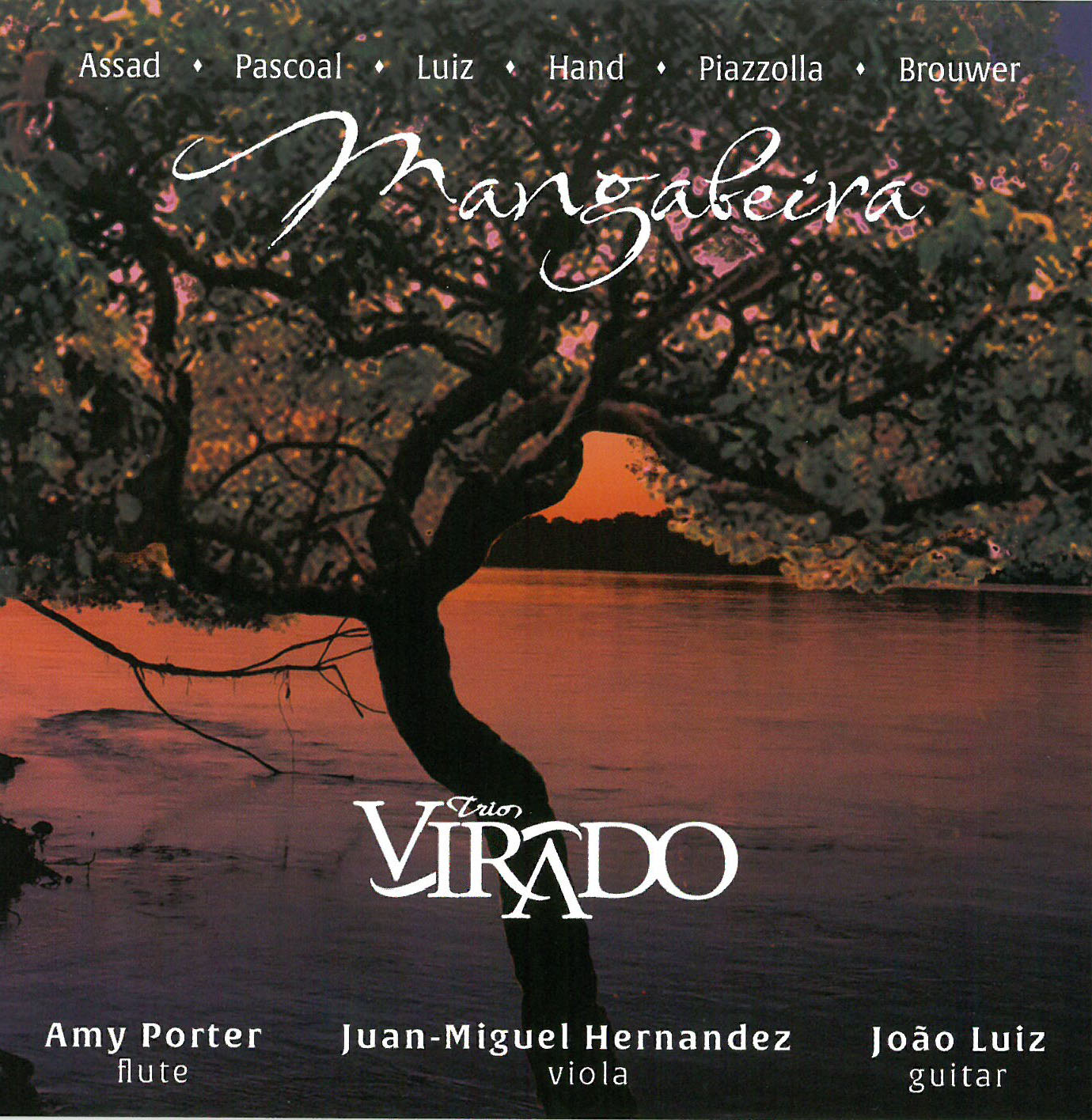
04 Trio ViradoMangabeira
Trio Virado
Soundset Recordings SR1075 (triovirado.com)

Trio Virado was created after member guitarist João Luiz heard the Leo Brouwer piece Paisajes, Retratos y Mujeres in a Brazilian concert at the Leo Brouwer Festival. So enthralled was the musician with its successful instrumentation that he asked his manager to bring flutist Amy Porter and violist Juan-Miguel Hernandez together for a concert of this piece and Luiz’s arrangement of three Astor Piazzolla tangos. The musical chemistry clicked with a permanent trio, more concerts, more pieces and this debut release.

The unusual instrumentation works as each instrument and each performer can convincingly take on lead or accompaniment roles in various styles. The above-mentioned Brouwer piece is given a clear, energetic performance in its subtle three note ideas, unison sections and stylistic shifts from Renaissance to minuet dance rhythms. Likewise the three Luiz-arranged Piazzolla tracks are spirited, tight, rhythmic, and true to the bandeonist/composer’s musical vision. The other three works by Sergio Assad, Hermeto Pascoal and Luiz are well-played good pieces in a more popular music genre – for example Luiz’ theme and variations work Todas as Manhas draws on the familiar Luiz Bonfa song Manha de Carnaval, and showcases the trio’s ability to transcend lighter styles.

Trio Virado’s musicianship is world class yet the group still feels slightly like a work in progress before it is fully grounded. But this is a first release which still needs to be heard and appreciated. And the future should be exciting for them!

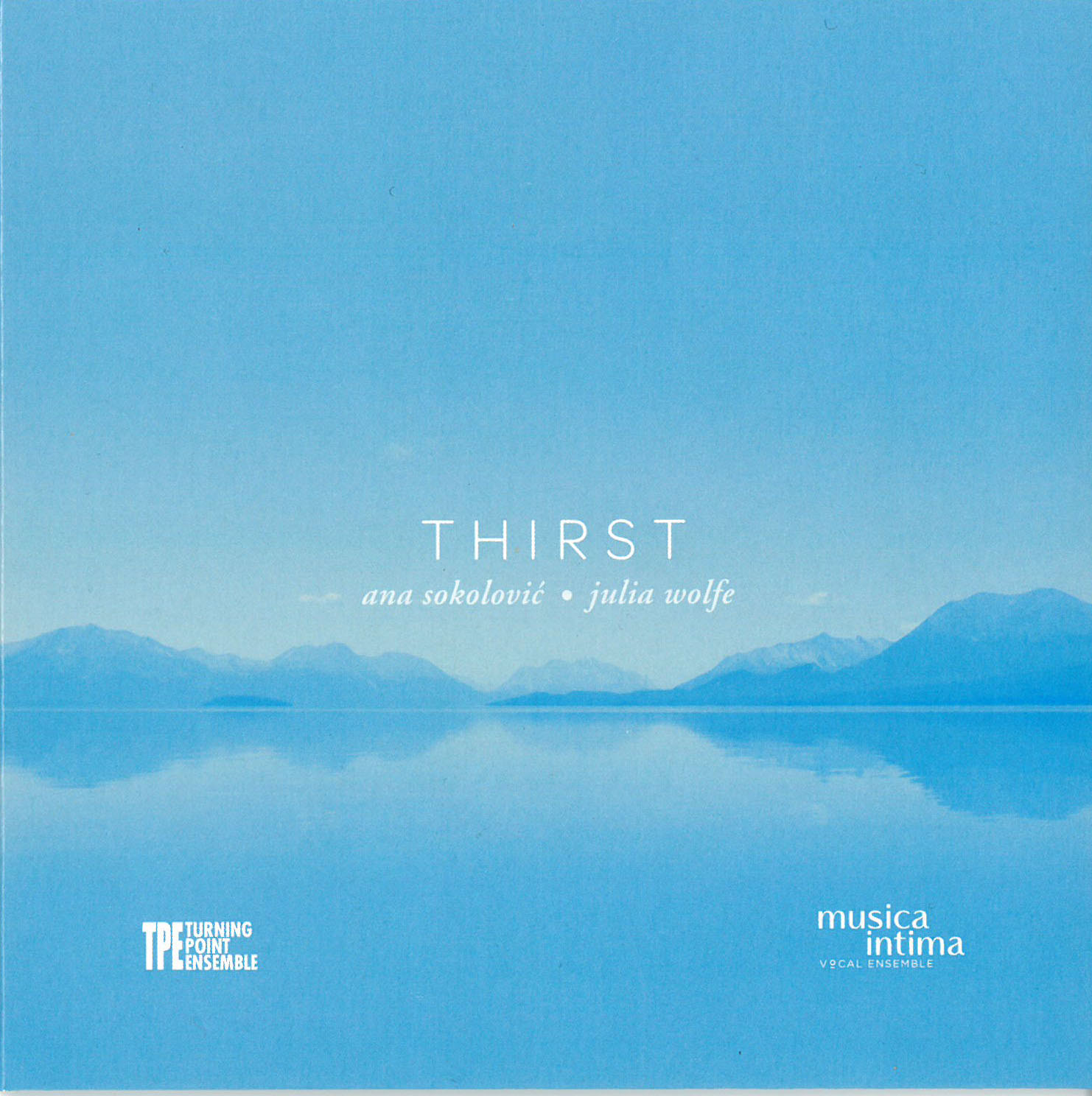
05 Sokolovic TPEThirst – Ana Sokolović; Julia Wolfe
Turning Point Ensemble; musica intima Vocal Ensemble
Redshift Records TK442 (redshiftrecords.org)

Thirst. The name of this CD evokes a primal human need and fear – our absolute reliance on water for survival. The album offers four works by two composers – Ana Sokolović from Montreal and Julia Wolfe from New York City – whose composing styles share some similarities while also exhibiting quite contrasting approaches. The four works on the album are expertly performed by two Vancouver-based groups, the Turning Point Ensemble and musica intima.

Beginning with three works by Sokolović, one immediately is struck by her compelling and driving use of rhythm. This feature can in part be attributed to her Serbian background and the influence of traditional Balkan music with its characteristic irregular rhythms. The first track is inspired by songs from a Serbian rock band, whereas the third track Vez, a Serbian word for embroidery, creates an atmosphere of furious and energetic patterns and gestures for solo cello. Her other work Dring, dring plays with both sounds and words associated with the experience of using a telephone. Humourous and dramatic exchanges are tossed amongst the singers in four different languages.

Wolfe’s epic work Thirst immediately casts a spell upon the listener with its long expansive and timeless gestures, all the while maintaining a driving movement forward. Using text from the Old Testament prophet Isaiah, the composer creates an intense drama, plunging the listener into an act of contemplating the precious need for and precarious presence of water.

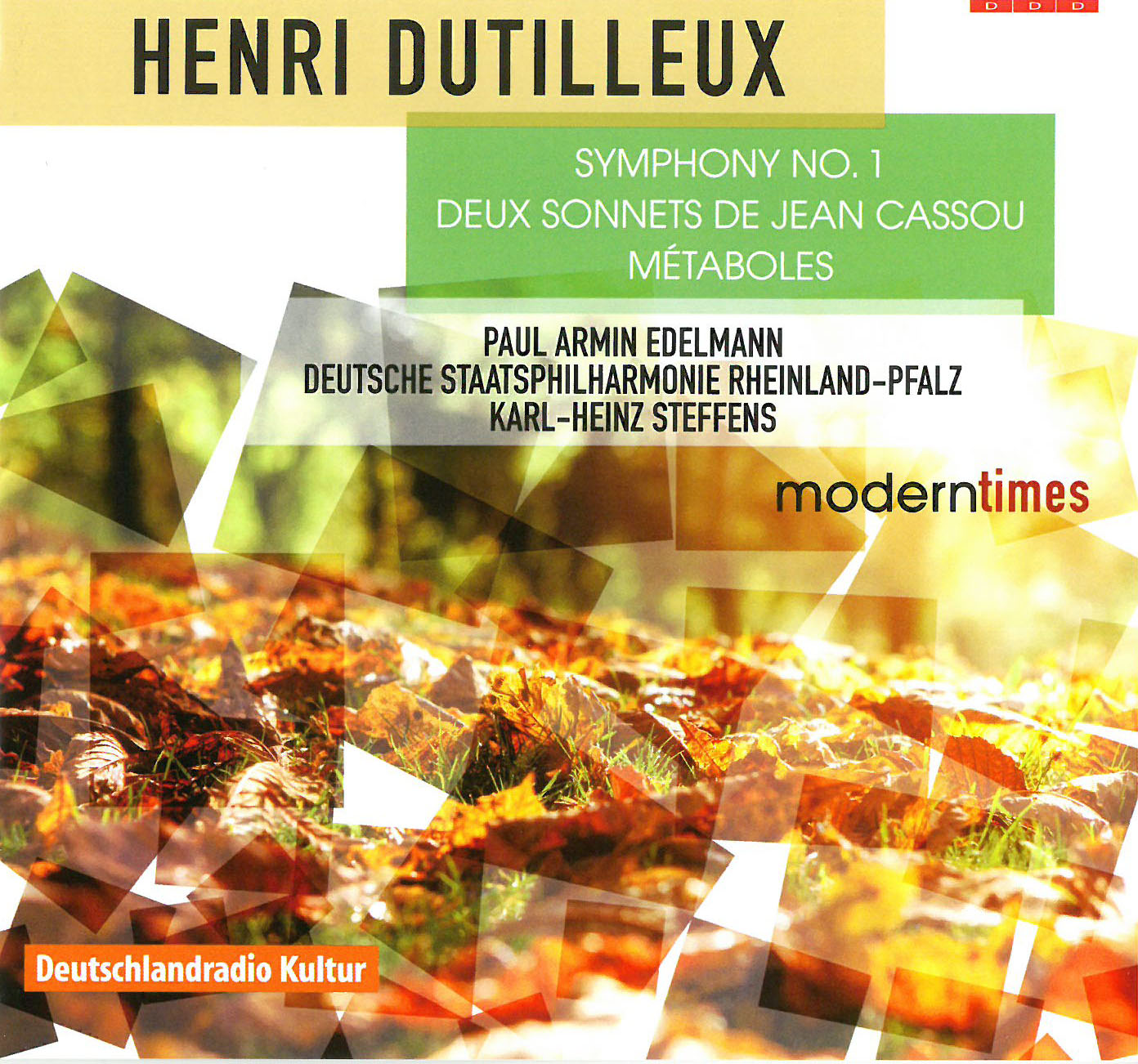
Dutilleux – Symphony No.1; Deux Sonnets de Jean Cassou; Métaboles
Paul Armin Edelmann; Deutsche Staatsphilharmonie Rheinland-Pfalz; Karl-Heinz Steffens
Capriccio C5242

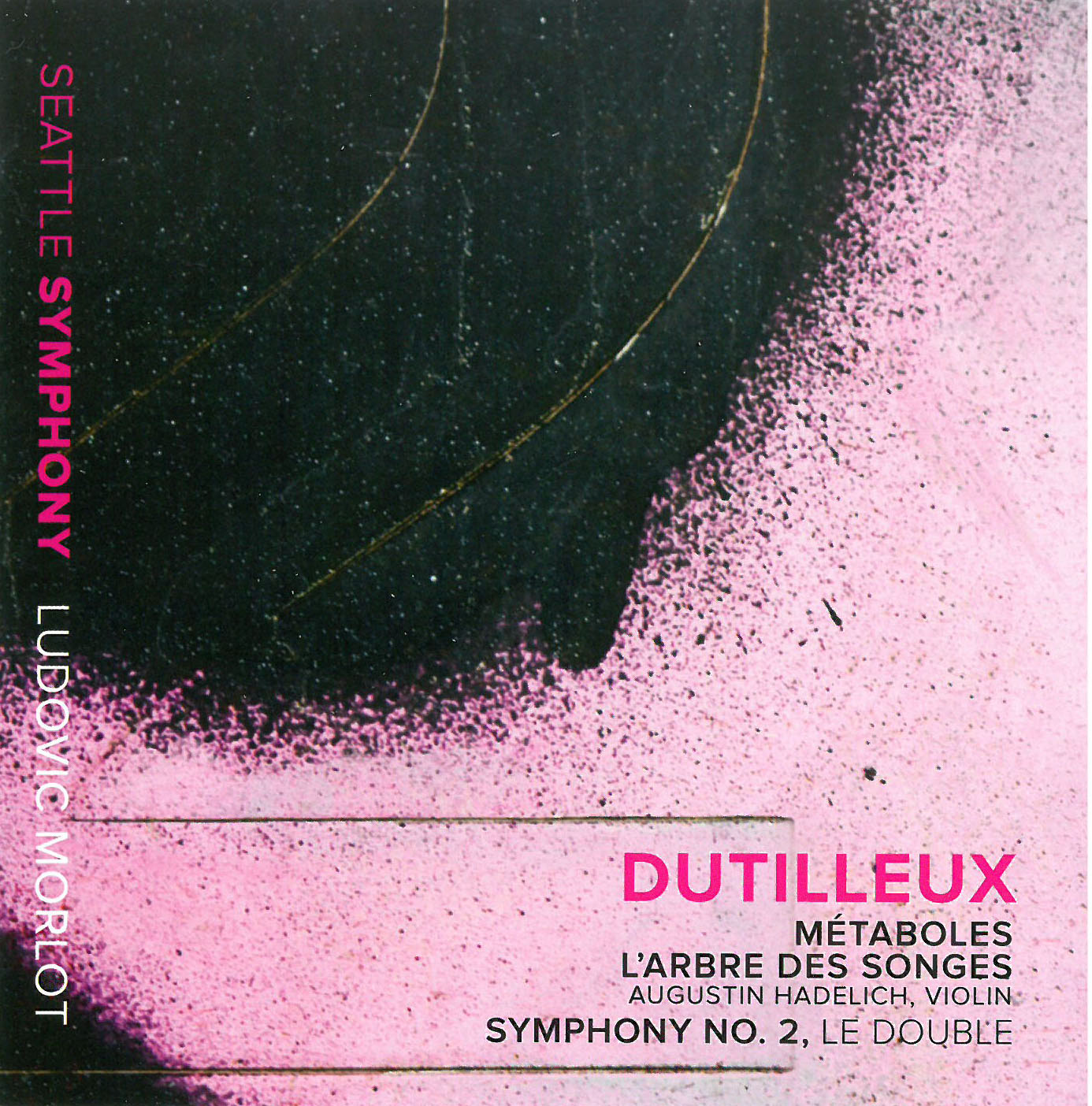
Dutilleux – Métaboles; L’arbre des songes; Symphony No.2 «Le double»
Augustin Hadelich; Seattle Symphony; Ludovic Morlot
Seattle Symphony SSM1007

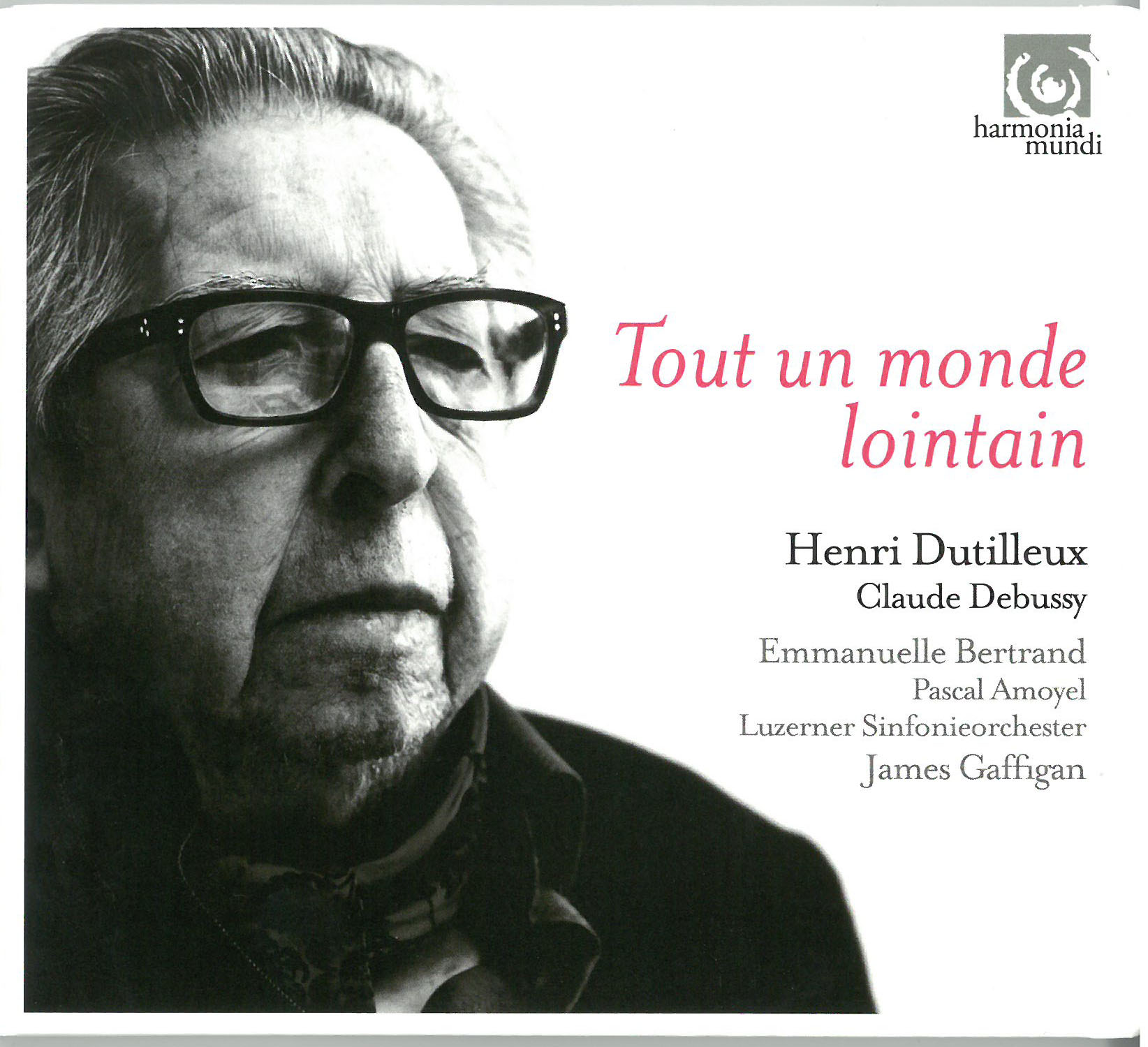
Dutilleux – Tout un monde lointain
Emmanuelle Bertrand; Pascal Amoyel; Luzerner Sinfonieorchester; James Gaffigan
harmonia mundi HMC 902209

Last month was French composer Henri Dutilleux’s centennial, and commemorative recordings of his meticulously crafted works began appearing in the middle of last year. Despite the premature arrival of these particular discs, however, a reappraisal of his music has long been overdue. A relatively small oeuvre, combined with a high-placed enemy in the form of a young Pierre Boulez, worked to consign Dutilleux to relative obscurity for nearly all but the last two decades of his 97-year life.

What’s more, the music which he did permit, after years of revision, to pass through the pinpoint mesh of his self-criticism never had pretensions of epoch-making in the first place. There is no avant-garde formalistic demagoguery, no school of thought behind his work (though the long shadows of Ravel and Berg loom). Instead, Dutilleux commandeers entire orchestras, as Proust commandeered thousands and thousands of pages, to convey nothing more than a deeply personal – though phantasmagorical – inner world.

Comparisons to artists in other mediums always abound when one speaks of Dutilleux, likely because he makes no secret of his debts to the Belle Époque; he has also cited Baudelaire and Van Gogh as inspirations. And yet his music is rarely programmatic, or even narrativistic. If anything, it is architectural; his pieces often feel like they occupy considerable space, like musical edifices composed of forces held in perfect equilibrium.

Review

01a Dutillieux Symphony 1His first major work to embody this panoramic style is his most performed. Written in 1964 for the Cleveland Orchestra, Métaboles is a précis of Dutilleux’s work. Tired with the thesis-antithesis of theme A versus theme B, Dutilleux looked to nature in search of a more malleable symphonic form. There he saw that, given enough transformations, evolution could bridge unimaginable gaps between organisms (as that between, say, a primordial bacteria and a human being). Adapting this model to Métaboles, he steadily modifies his thematic material until it becomes unrecognizable – yet still inextricably linked through a kind of musical metabolism to the material which germinated it.

01b Dutillieux MetabolesTwo fine recordings of this piece appeared last year. The first, recorded by Karl-Heinz Steffens and the Deutsche Staatsphilharmonie Rheinland-Pfalz, is expansive, smoothing the kaleidoscope turn of Métaboles’ transformations. The next, recorded by Ludovic Morlot with the Seattle Symphony, is notable for its excellent mastering, which enhances the work’s already galactic compass. Taken together, these CDs present a kind of “métaboles” of Dutilleux’ entire career: the Rheinland-Pfalz disc contains his early works, including a rare vocal setting, while the Seattle recording features a brilliant performance of Dutilleux’s late violin concerto by Augustin Hadelich (entitled L’arbre des songes, it too draws inspiration from nature and has structural similarities with Métaboles).

01c Dutillieux CelloFilling in the gaps is Emmanuelle Bertrand’s performance of the Baudelaire-inspired cello concerto, “Tout un monde lointain…” with the Luzerner Sinfonieorchester. The concerto is worth the price of admission alone – it is perhaps his greatest work, ably performed here – but the CD also includes some historical context with a recording of Debussy’s cello sonata. Sensibly enough, for though Dutilleux was scorned by the Paris establishment, he was one of its rightful heirs. The recordings appearing now on this important anniversary are the definitive proof.


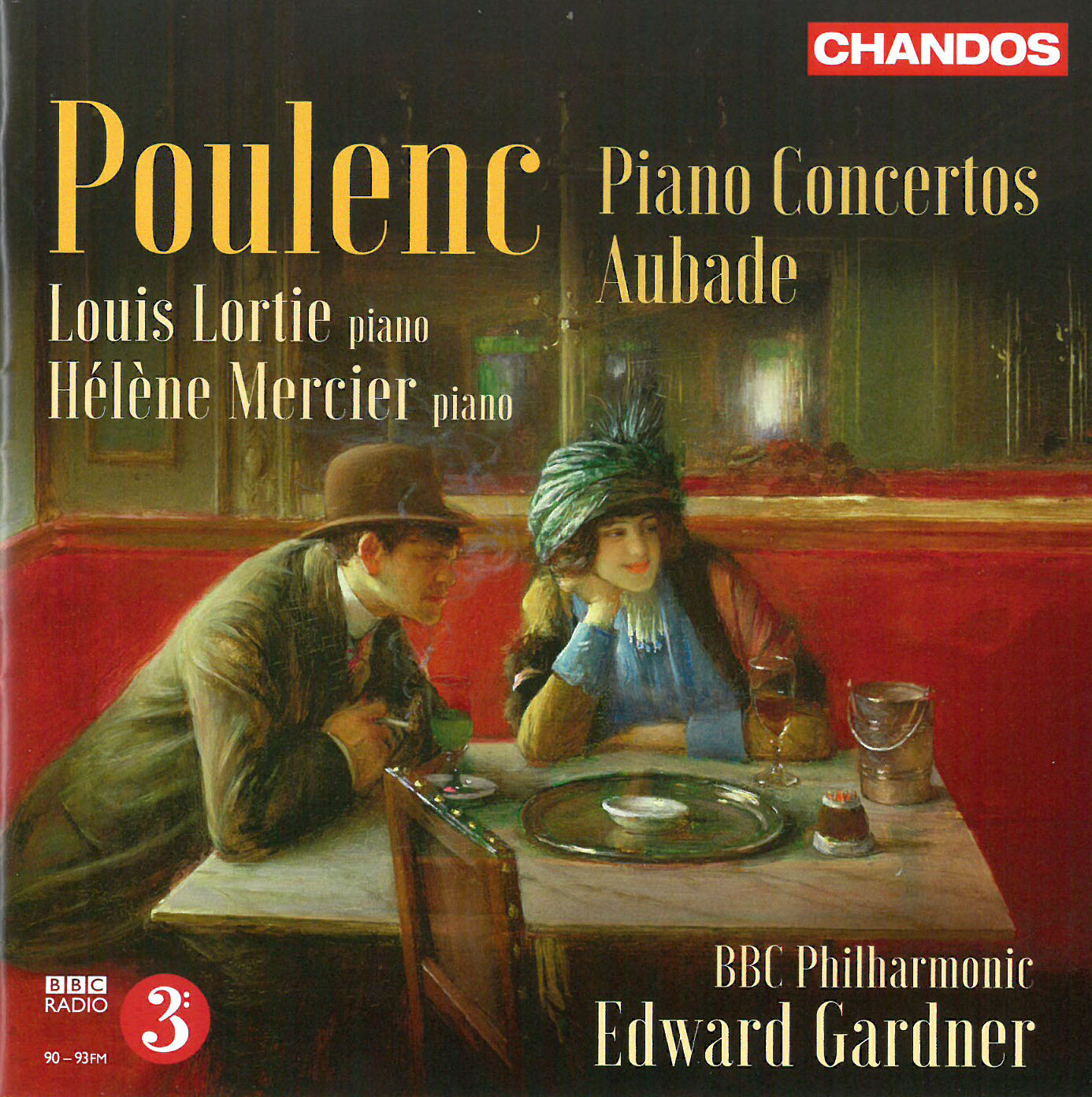
02 Poulenc concertosPoulenc – Piano Concertos; Aubade
Louis Lortie; Hélène Mercier; BBC Philharmonic; Edward Gardner
Chandos CHAN 10875

This sparkling CD includes Francis Poulenc’s works for piano and orchestra plus music for two pianists. I’ve loved Poulenc’s cheeky brews of popular and classical elements since a lighthearted teenage attempt at his Sextet for Piano and Winds, when we had a mock waiter serve drinks during my first piano solo! Compositionally, Poulenc invites us to loosen up and accept new things, but performance is not easy. In the Concerto (1949) Lortie’s ensemble with orchestra is precise without compromising rhythmic life, and he dashes off the first movement’s lounge-piano flourishes without belabouring them. Originally written for a ballet, Aubade (1929) is quintessential Poulenc. It is evocative of 1920s Paris, for piano with an orchestra stripped down to 18 instruments emphasizing winds and brass. Lortie plays the opening toccata with its challenging repeated chords immaculately, and manages the juxtaposed contrasting phrases well. The BBC Philharmonic’s winds shine in wonderfully bittersweet double-reed instrument passages and in several fine clarinet solos.

Lortie’s long-time duo-piano partner Hélène Mercier joins him in the two-piano Concerto in D Minor. They play the opening movement’s quasi-Balinese passages seamlessly. The Larghetto’s classical nostalgia and more modern sentiments come through effectively. In the dissonant final movement, double notes are crisp and chords balanced. Works for two pianists alone close the disc; in Poulenc’s four-hand Sonata and two short duo-piano pieces, Mercier and Lortie find opportunities for free dialogue and joyous music-making.

03 Leo Brouwer

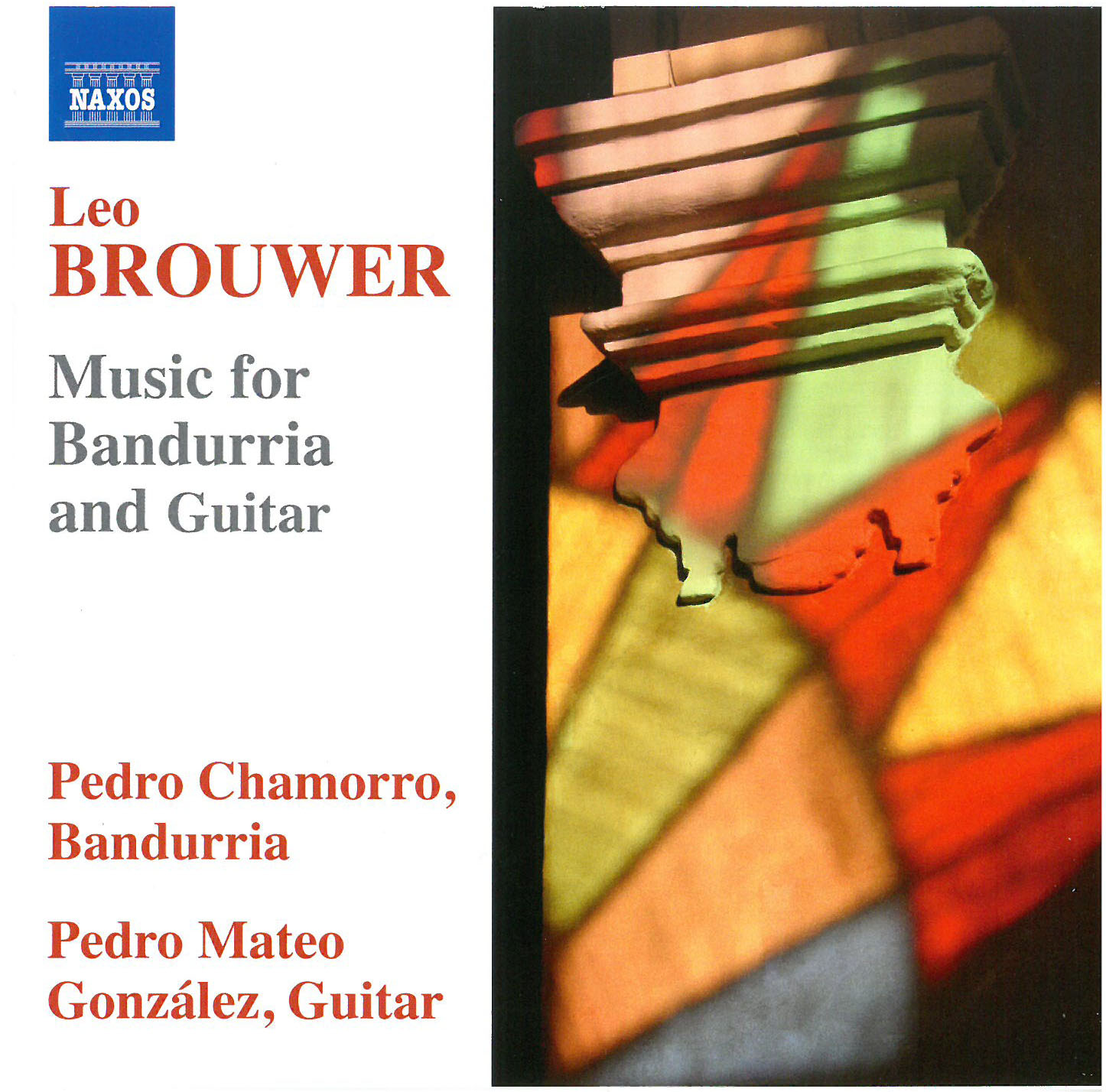
Leo Brouwer – Music for Bandurria and Guitar
Pedro Chamorro; Pedro Mateo González
Naxos 8.573363

Review

Cuban composer Leo Brouwer (b.1939) is an astonishing sound creator in this new release featuring music for bandurria and guitar. Brower’s masterful use of music of divergent musical styles like Cuban rhythms, changing metres, contemporary new music atonal references, simple folk music and South American references from other composers are, when combined and layered, surprisingly atheistically pleasing and challenging, yet never jolting.

Performers Pedro Mateo González on guitar and Pedro Chamorro on bandurria (a popular South American small lute dating from the 16th century) are stars both as soloists and as a duo. There is so much respect for the composer in their spirited performances. González is especially outstanding in capturing both the soul-wrenching slow lyricism in Variation 3, and the toe-tapping energetic and contrasting slower emotions in Variation 7 of Variaciones sobre un tema de Víctor Jara, a work drawn from Chilean musician/activist Victor Jara’s popular song Lo unico que tengo. Likewise, Chamorro easily conquers the fiery rapid lines and contrasting rhythms in both his solo performances which include a world premiere recording of Sonata para Bandurria. The 1957 duet Micropiezas para Bandurria y Guitarra is dedicated to Darius Milhaud. A theme and variation of the French children’s song Frère Jacques, Brouwer creates an unmatched spellbinding piece for the two musicians to shine in subtlety and simplicity.

Kudos too to the fine, clear work of the producers, Canadians Norbert Kraft and Bonnie Silver. This is beautiful music played beautifully.

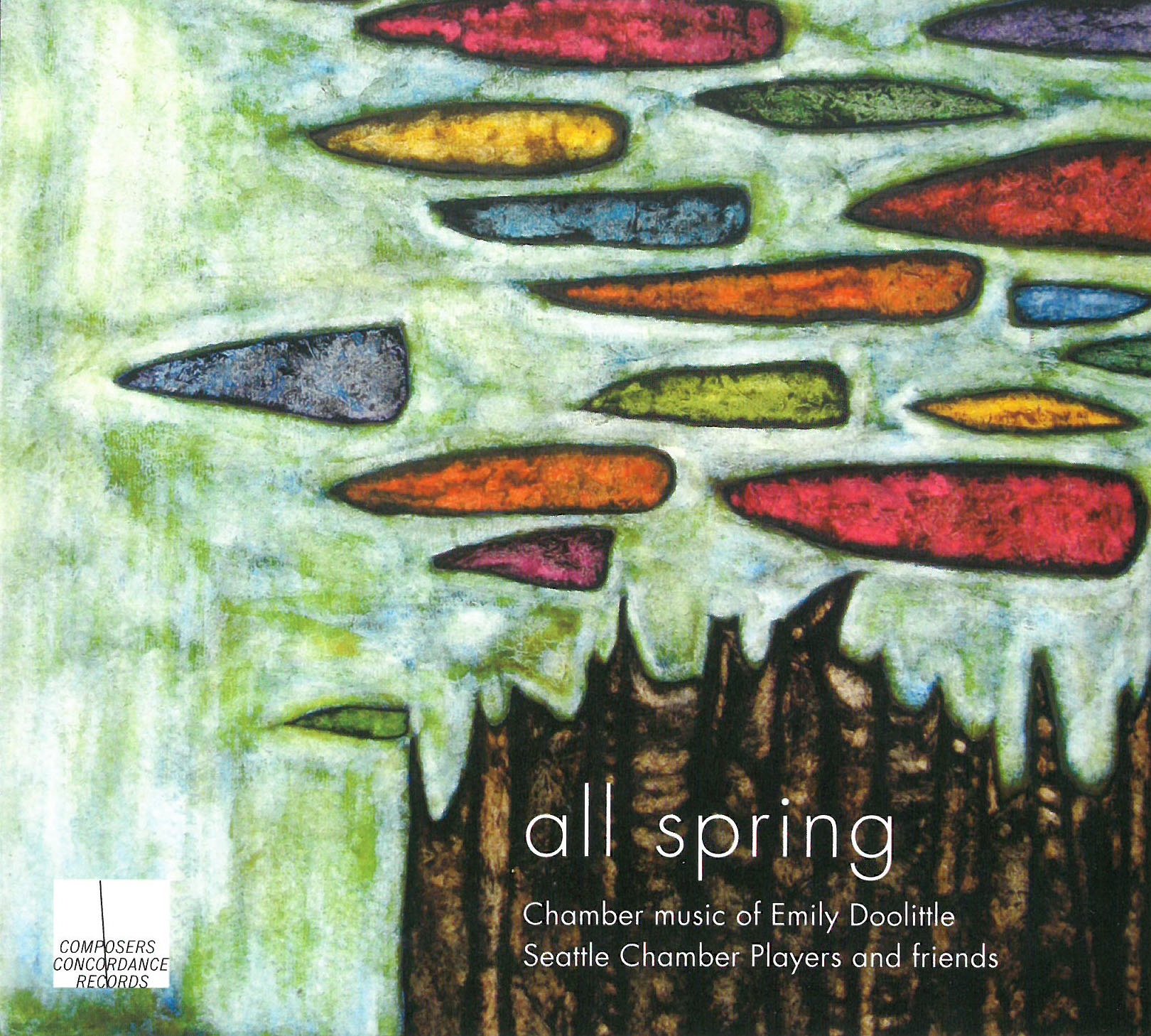
05 Emily Doolittleall spring – Chamber Music of Emily Doolittle
Seattle Chamber Players and friends
Composers Concordance Records comcon0025 (emilydoolittle.com)

Behind Canadian composer Emily Doolittle’s music lies a passion for the relationship between music and nature, and specifically, bird and animal songs. Her recent album of chamber music, all spring, is a superb example of how she navigates this fundamental connection that has inspired generations of composers. This interest has led her to conduct research into birdsong and explore the aesthetics of whether animal songs can be considered music. As our world faces critical environmental choices, the question of how we relate to the forces of nature and all beings who live here is increasingly becoming a focus for many composers. How these concerns translate into music for acoustic instruments was uppermost in my awareness as I listened to Doolittle’s CD.

Her approach is to offer a distillation of the qualities of natural phenomena or personal experiences. In four pieces about water essential qualities of water are revealed, whereas in all spring the focus is on the characteristics of specific birds. Some of the ways Doolittle herself engages with nature – listening and hiking – are highlighted in her pieces falling still and col. The choices Doolittle makes to bring the listener into closer connection with nature works at subtle levels. It is less about recreating a sense of place or imitation of the soundscape, but rather creating a sonic experience to guide the listener into connection with the deeper layers of natural phenomena, an entry into the heart of nature.

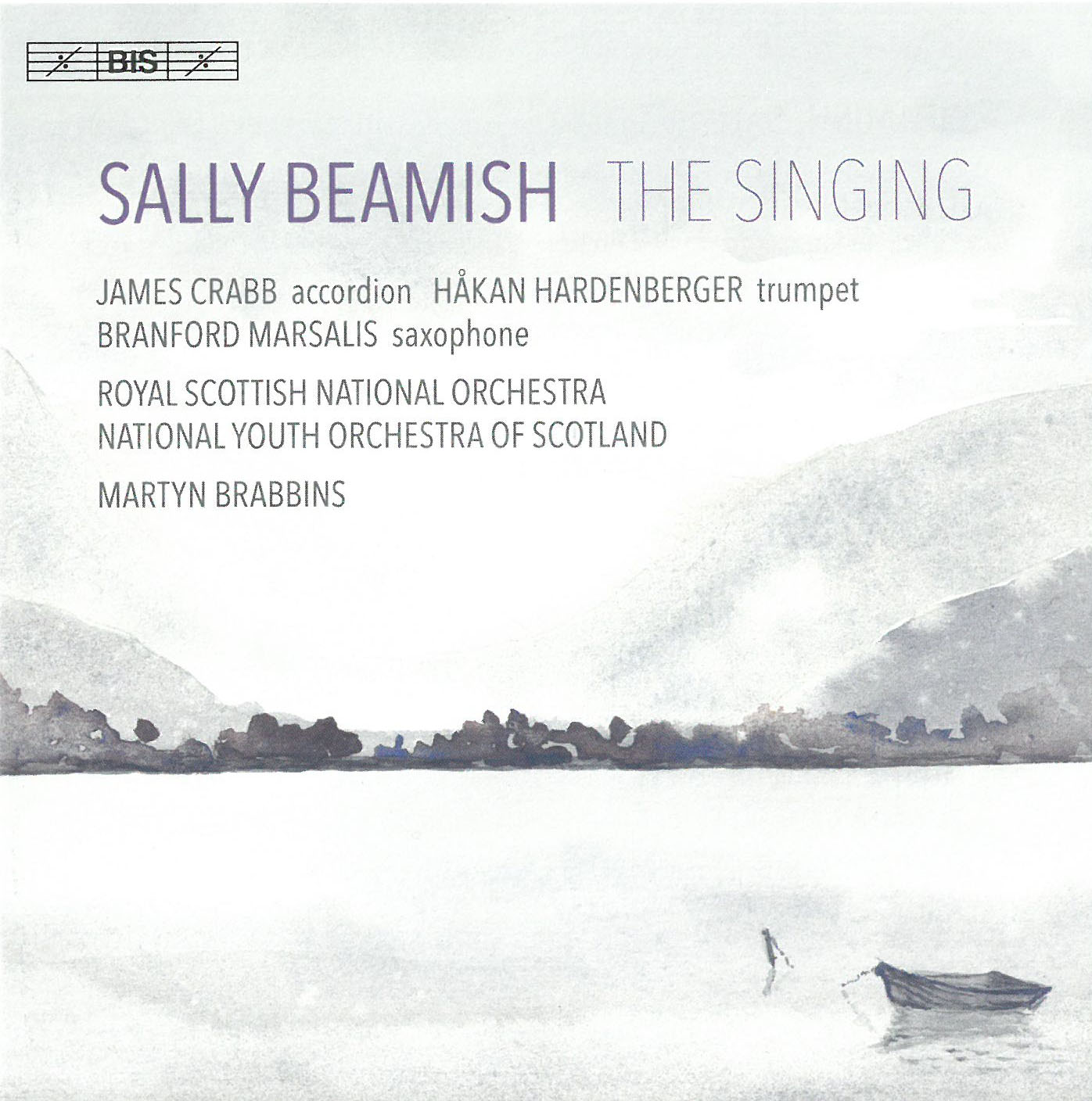
10 Sally BeamishSally Beamish – The Singing
James Crabb; Håkan Hardenberger; Branford Marsalis; Royal Scottish Orchestra; National Youth Orchestra of Scotland; Martyn Brabbins
BIS 2156

British composer Sally Beamish has called Scotland home since 1990, and describes her love of Scottish traditional music, landscape and history along with an interest in jazz as her inspirations. There are many, many styles and traditions that Beamish draws upon in her compositions, making this release of her works written between 2003 and 2012 intriguing, accessible and exciting listening.

Accordionist James Crabb is spectacular in the concerto The Singing. From long mournful singing lines, bagpipe imitations and breathing bellows and winds, the accordion and orchestra create lush soundscapes. Saxophonist Branford Marsalis is equally lyrical and moving in Under the Wing of the Rock, a piece originally scored for solo viola and strings and inspired by Celtic song and psalms. It’s back to downtown city living in the exciting Concerto for Trumpet and Orchestra featuring soloist Håkan Hardenberger. The use of parts of scrapped cars and scaffolding pipes in the percussion section against the wailing trumpet in the third movement creates a dramatic edgy, hard sound. Reckless for chamber orchestra is witty and light while the orchestra emulates atmospheric washes of land and sea in A Cage of Doves. Conducted by Martyn Brabbins, both the Royal Scottish National Orchestra and the National Youth Orchestra of Scotland, on the trumpet concerto, play with energetic precision and flair.

Beamish’s love and respect for her inspirations resonate throughout these intelligent works. Perfect music to warm up a cold winter’s day!

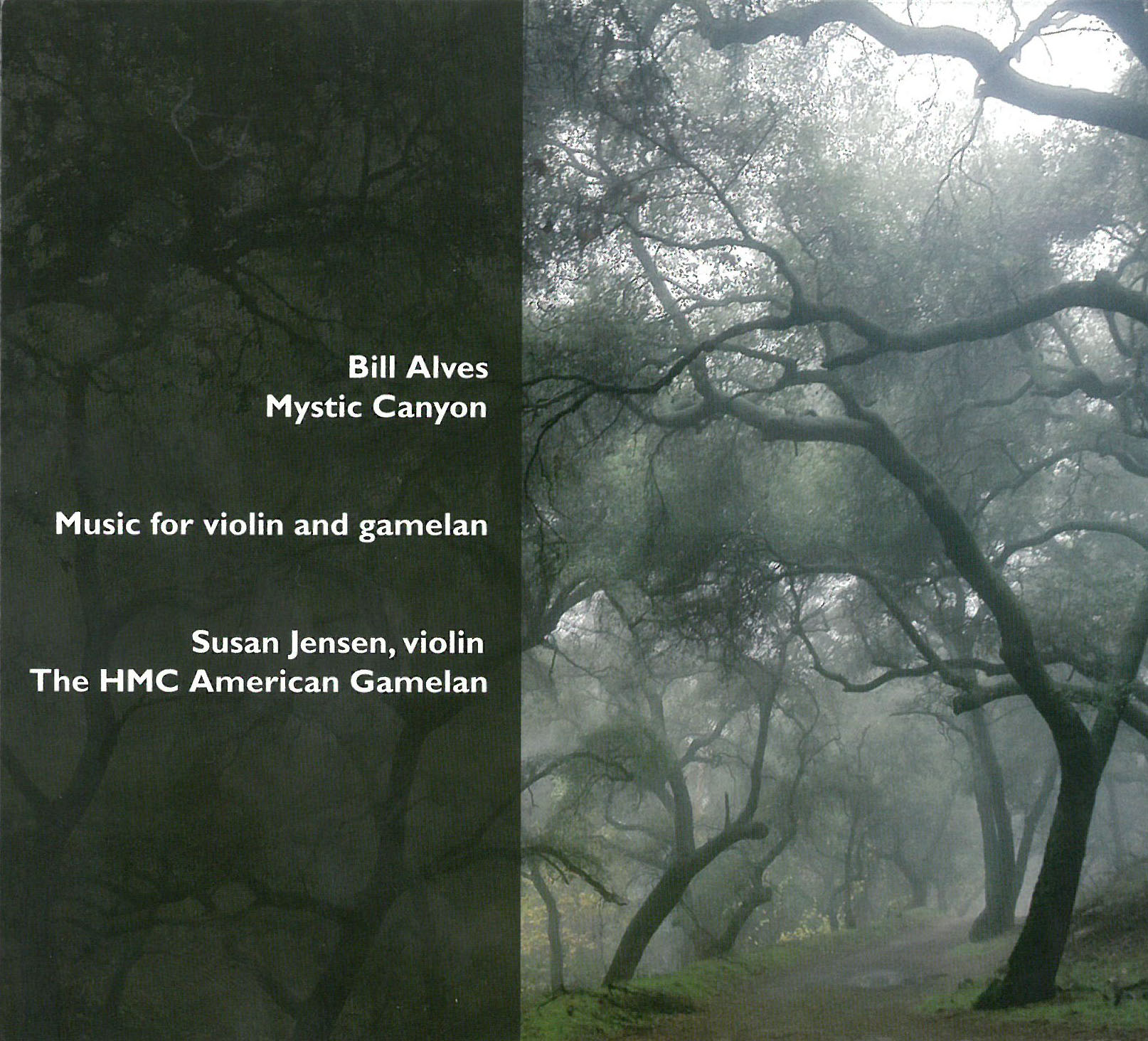
08 Bill AlvesBill Alves – Mystic Canyon; Music for Violin and Gamelan
Susan Jensen; HMC American Gamelan
MicroFest Records MF4
(microfestrecords.com)

East-West crossover combining gamelan and Western orchestral instruments is, of course, nothing new, and composer Bill Alves continues in the tradition established by the late American composer, Lou Harrison, who wrote more than 50 compositions in this genre. Like Harrison, Alves has composed many musical works for gamelan – specifically his “American gamelan,” the Harvey Mudd College American Gamelan (HMC), an ensemble of Javanese instruments whose tunings have been modified according to just intonation, and which is dedicated to performing new music rather than traditional gamelan repertoire. This CD showcases two such compositions for violin and gamelan: Mystic Canyon and Concerto for Violin and Gamelan.

This music is mesmerizing and quite beautiful. Susan Jensen’s superb violin playing, with its rich and languorous musical lines, overlays the soft, delicate and glimmering sounds of the bronze gamelan instruments. They provide a range of mellifluous musical patterns with their polyrhythms, sometimes static, and at other times gently shifting. The ambience of Mystic Canyon is ethereal and diaphanous, with contrasting sections where the violin is prominent, followed by occasional breaks with just gamelan, all fading away gently at the end of the piece. The six movements of the concerto display a variety of moods and techniques ranging from energetic and percussive, to changing textures and gentle interlocking rhythms, to more inert ostinati backing the violin’s soaring melodies. This is music that will appeal to gamelan and non-gamelan specialists alike.

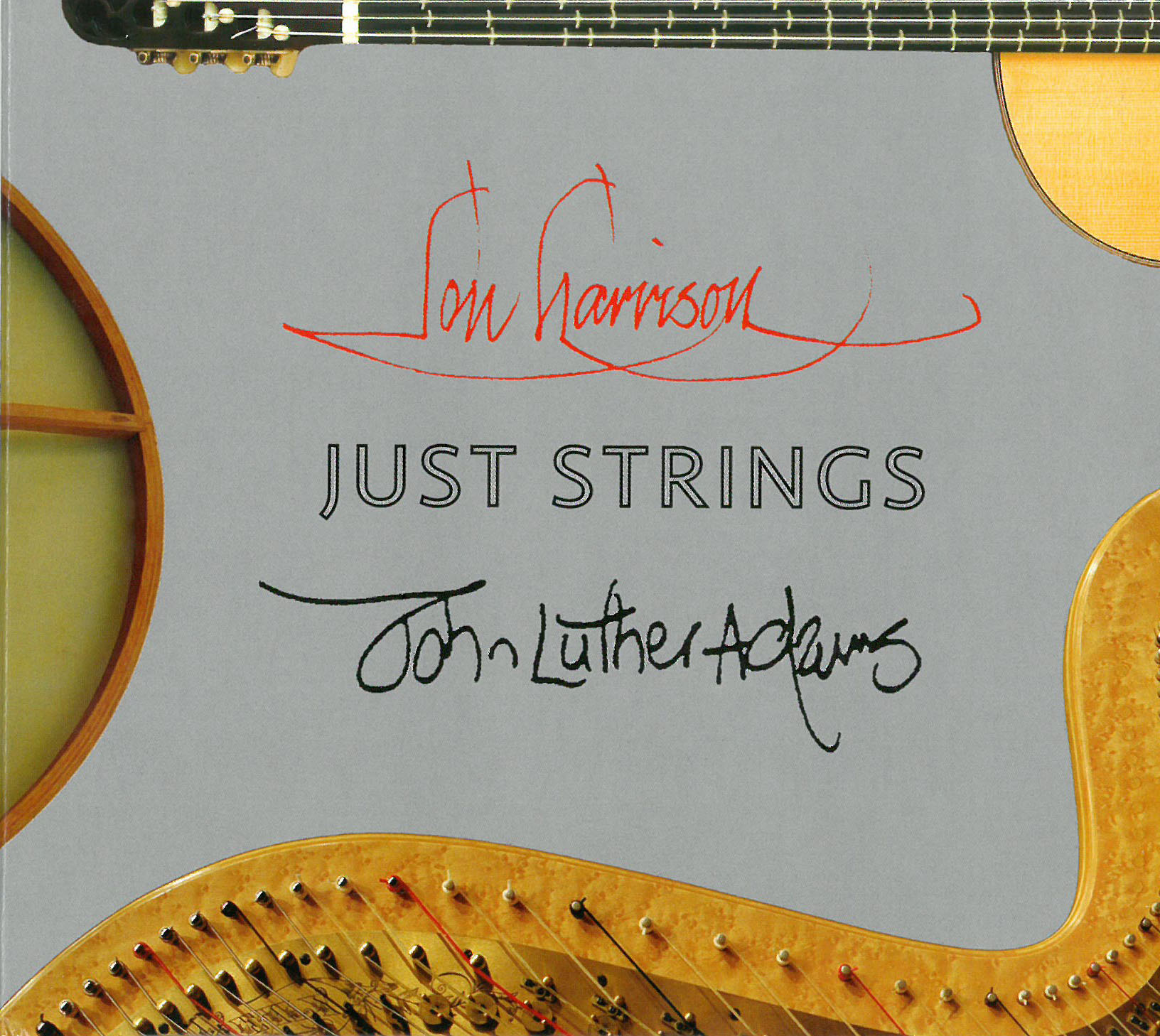
09 Just StringsJust Strings – Compositions of Lou Harrison and John Luther Adams
Just Strings; Alison Bjorkedal; John Schneider; T.J. Troy; HMC American Gamelan
MicroFest Records MF7
(microfestrecords.com)

This sparkling album weaves together six works variously scored for harp, guitar and percussion by Pulitzer Prize- and Grammy-winning American composer John Luther Adams (b.1953), and his mentor Lou Harrison (1917-2003).

The liner notes call Harrison “the Godfather of World Music,” and not without justification. His compositions from mid-career on are marked by the incorporation of elements of the musics of non-Western cultures, particularly those of South, Southeast and East Asia. For example, from the 1970s to the end of his life Harrison composed dozens of works for Sundanese, North and Southcentral Javanese types of gamelan (orchestra). Along the way he influenced several generations of musicians including Toronto’s Evergreen Club Contemporary Gamelan.

Calling it “American gamelan” Harrison also constructed several of his own DIY versions of gamelan prototypes with his partner William Colvig. They chose to tune each gamelan set in just intonation, eschewing both mainstream equal temperament and the Javanese/Sundanese indigenous theoretical tuning systems (of which he was also well aware). We hear a work Harrison wrote for one of his American gamelans in the finale of this album. In Honor of the Divine Mr. Handel (1991), for concert harp and small Javanese gamelan in just intonation, is stylishly directed by composer and Harrison scholar Bill Alves. It manages a difficult and deft dual musical trick: it is not only a delightfully tuneful tribute to the baroque composer but also to the music of the Javanese gamelan.

Among today’s leading composers in the Western classical lineage, John Luther Adams is represented here by two suites, Five Athabascan Dances and Five Yup’ik Dances, both from 1995. Like Harrison before him, Adams, in these works, pays respect to indigenous music-making. Commissioned for the Just Strings trio, the works drew on traditional songs of the Athabascan people for the first set and on the songs of the Yup’ik of the Yukon-Kuskokwim delta for the second. Those songs were extensively reworked and rendered in the Pythagorean tuning by the composer, who remarked that he had “extended and transformed these … melodies in many ways. In the process, they have become something else, somewhat far removed from Alaska Native music in sound and in context.”

In the skillful musical hands of the three Grammy Award-winning musicians of Just Strings, this melody-forward music of Adams and Harrison rings true clear across boundaries marked by culture, musical performance practice and genre.

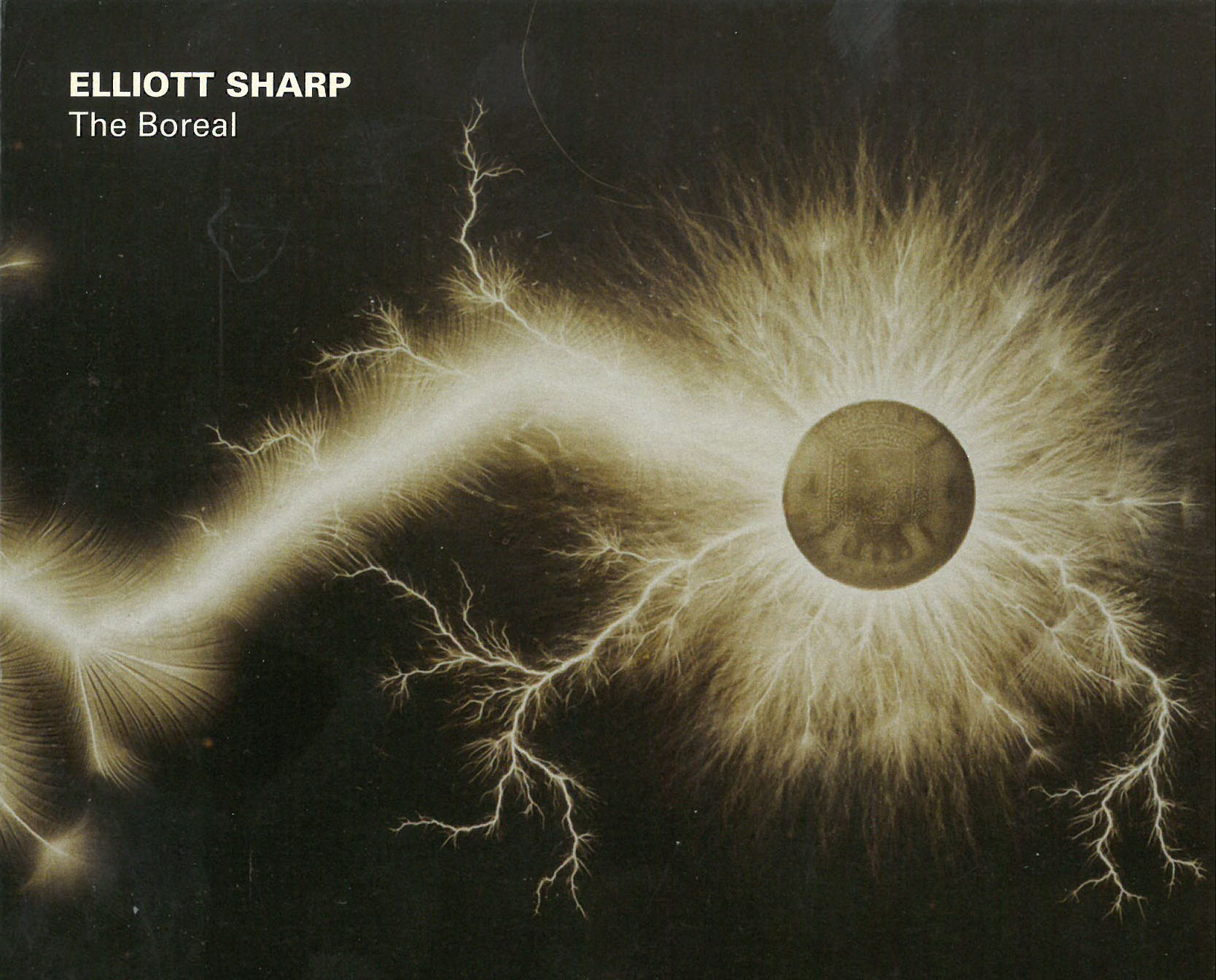
10 Elliott SharpElliott Sharp – The Boreal
Various Artists
Starkland ST-222 (starkland.com)

There is a sense of beautiful, orderly turmoil on Elliott Sharp’s The Boreal. Speaking first of the piece and then the whole album, the fullest appreciation of the music is, of course, to be had by following its schematics from Sharp’s score, which is exquisite in all its minimalistic glory. This, as the composer points out, includes “hocketed grooves, difference tones and non-pitched materials generated by the use of alternate bows made from ballchain and metal springs.” The effect is quite masterful, pleasing to the ear, mostly due to the clarity of the gestures, and of course, the JACK Quartet’s brilliant interpretation of this written/improvised score. You learn immediately to appreciate, the combustible spontaneity, the treasurable fire, communicative flair and consummate craft of Sharp’s indelible inspiration.

Headlined by The Boreal, the recording also features some of Elliott Sharp’s other remarkable pieces – Oligosono from 2004, Proof Of Erdős from 2006, performed by Orchestra Carbon, with David Bloom as conductor, and On Corlear’s Hook from 2007 performed by the Janáček Philharmonic Orchestra with Peter Rundel conducting. The selection provides a peep into Sharp’s polymath-like artistry. The noteworthy Oligosono is a reference to the world of “little sounds” and what is even more remarkable is its transposition from the stringed instrument for which it was written, to the piano, and performed with wit and intuition by pianist Jenny Lin. Two hands here and a new generation of rhythm and harmonic overtones make this piece quite memorable. Proof Of Erdős is an erudite homage to the mathematician Pál Erdős. The tonal colours of On Corlear’s Hook are culled from Sharp’s ethereal palette and flawless artistry.

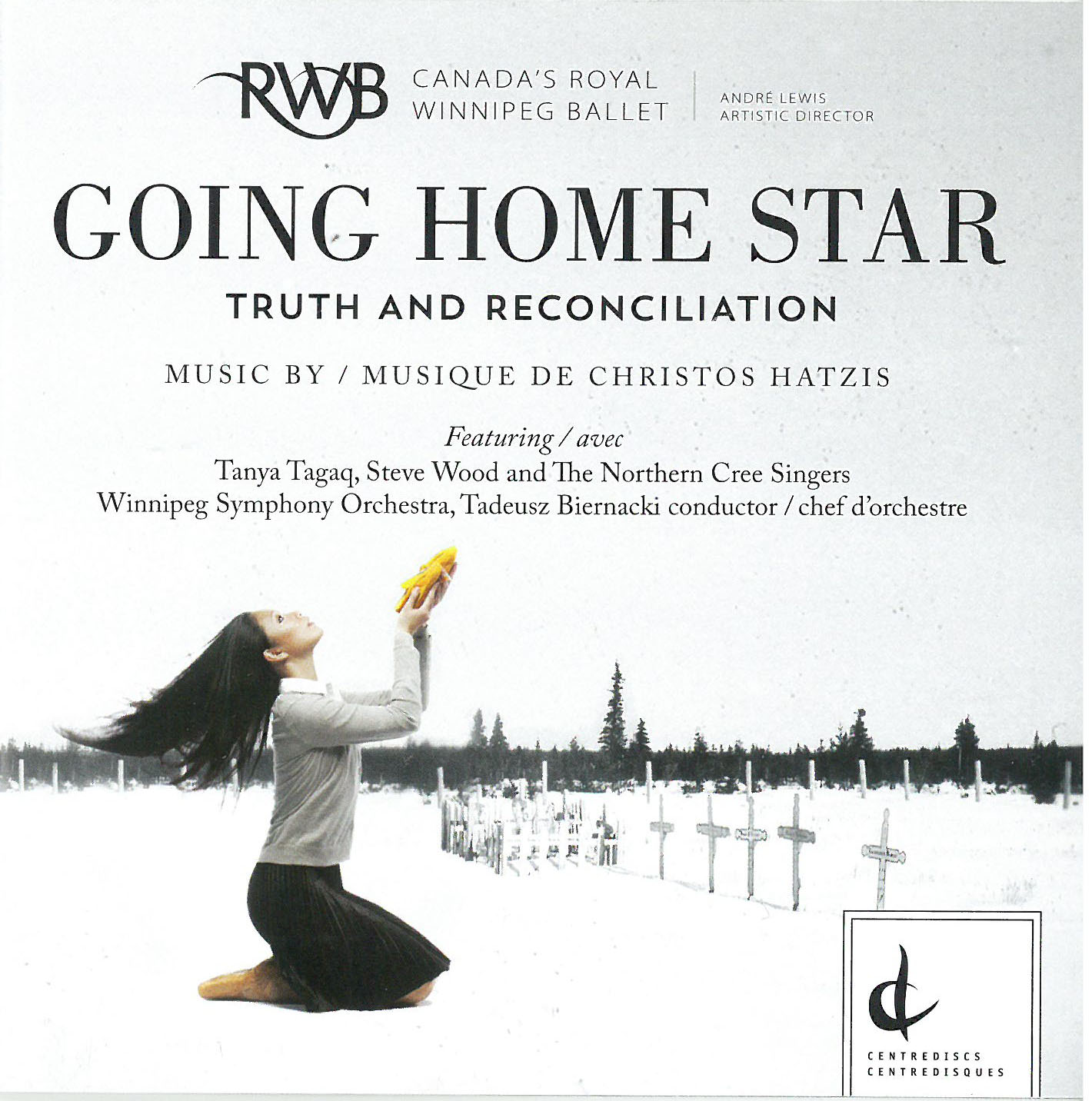
01 Hatzis Going Home StarGoing Home Star – Truth and Reconciliation (music by Christos Hatzis)
Tanya Tagaq; Steve Wood and The Northern Cree Singers; Winnipeg Symphony Orchestra; Tadeusz Biernacki
Centrediscs CMCCD 22015

The richly textured, eclectic cinematic score by veteran Toronto composer Christos Hatzis furnished for the ballet Going Home Star – Truth and Reconciliation for the Royal Winnipeg Ballet was premiered in October 2014 to considerable audience and critical acclaim. This impressive work is a superimposition of at least three culturally defined layers.

Hatzis directly quotes and echoes sections of iconic 20th-century European ballets Rite of Spring, Swan Lake and Prokofiev’s Romeo and Juliet. In addition Christian liturgical chorales, medieval chant and dance music by Jean-Baptiste Lully are all skillfully reworked in Hatzis’ characteristic tonal-centric style. To this he adds elements in multiple vernacular music genres, as well as acoustic and electronic soundscapes, diffused from the studio-produced digital audio track.

Another significant layer of this 2-CD musical journey is the contribution of North American indigenous voices. They are essential texts in this narrative centred on the suffering imposed on children in Canada’s infamous Indian residential schools – with musical detours into the early contact between Europeans and First Nation peoples – ending with the possibility of personal and intercultural redemption and reconciliation.

Based on a story by Joseph Boyden, the ballet score is given a human voice by the extraordinary Polaris Prize-winning Inuk singer Tanya Tagaq, in the last scene’s Morning Song eloquently performed by the Cree singer Steve Wood and through the pow-wow energy of the Northern Cree Singers infusing a visceral power into several scenes.

Is Going Home Star “the most important dance mounted by the Royal Winnipeg Ballet in its illustrious 75 year history,” as described by one CBC TV commentator? Hatzis’ cumulatively moving, highly eclectic score compels me to see Mark Godden’s choreography and to find out how this important national story plays out on stage. I invite my fellow Canadians to join me on this journey during the RWB’s upcoming 2016 national tour.

02 Allison CameronAllison Cameron – A Gossamer Bit
Contact Contemporary Music
Redshift Records TK445 (redshiftmusic.org)

This distinctive 2015 CD with four new pieces by the ever-wonderful contemporary composer Allison Cameron is sure to garner her much positive attention among the cognoscenti. A Gossamer Bit, produced as what is rightfully described as a palimpsest, is a stimulating though very different programme. Here Cameron presents pieces that represent myriad aspects not only of music – as in 3rds, 4ths & 5ths – but also great flights of the imagination – as in the song, Gossamer Bit, which is a dazzling overlay on Charles Ives and which, in turn is an eloquent sojourn across manipulated pitches and dramatic quarter-tones. In Memoriam Robert Ashley shapes the relentless octaves of Ashley’s music (overlapping the directions to that composer’s In Memoriam Esteban Gomez with great melodic cogency. D.I.Y. Fly combines written and improvised sections and finds a wider dynamic and colouristic scope using just this composerly device.

Allison Cameron is, of course, the Alberta-born, Toronto-based musician and composer who has built a sizeable reputation in contemporary composition but remains relatively little-known even in her native Canada. It is hoped that this attractive and well-recorded program, which hints at impressionistic antecedents, will greatly enhance her reputation. Look out, of course for the balletic leaps across her work especially in this repertoire. Cameron also has an acute sense of humour and this is delightfully hinted at in this music which is also rendered with a telling sensuous reserve.

03 SoundsNature

SOUNDSNATURE – Works for Cello and Electronics
Madeleine Shapiro
Albany Records TROY 1577 (albanyrecords.com)

Review

SOUNDSNATURE is a series of pieces performed by cello innovator Madeleine Shapiro combining the sounds of the cello with electronic sources to bridge the gap between the listener and the heart of the natural world. The disc includes compositions by Morton Subotnick, Judith Shatin, Matthew Burtner, Tom Williams and Gayle Young.

Although it may seem an oxymoron to use electronic means to bring us into a closer relationship with nature, it is precisely through using the microphone that we can enhance our experience with the soundscape. This is particularly evident in the works by Judith Shatin, Matthew Burtner and Gayle Young. Shatin’s For the Birds consists of four movements, each one using recordings of different types of birds found in the Yellowstone region. These visceral and intimate recordings are heard in both their original and digitally transformed states. Burtner’s Fragments from Cold takes us into the parallel terrains of outer snow and inner breath, creating the silent stillness of a skier gliding along the snow.

Young’s Avalon Shores features soundscape recordings of waves along the stony shorelines of Newfoundland’s Avalon Peninsula. Shapiro becomes improviser in this work, following the course of the waves, highlighting patterns and responding through timbral variations. I found this an evocative partnership, returning to listen several times. Shapiro is a dynamic performer, and her passion for the environment is evident in this recording as she brings to life her deep reverence for the nonhuman worlds.

04 Duo LisusDiálogos
Dúo Lisus (Lidia Muñoz; Jesús Núñez)
FonoSax FONOSAX001 (duolisus.wix.com/duolisus)

Though France is still the European Mecca of the classical saxophone, a contender for Medina might be Spain; the country has recently seen hothouse growth in its classical saxophone community. The result has been a lot of excellent saxophone recordings from south of the Pyrenees. One such disc is Dúo Lisus' Diálogos, released this year on the FonoSax label.

Five of the seven pieces on the disc are by Spanish composers and every single composition is recorded here for the first time. With music, the duo and even the record label making their debuts on this disc, the unified impression, especially combined with composer José de Valle's opening maelstrom, is a kind of ex nihilo new music big bang. The momentum of this first burst carries through to American Eliza Brown's Apart Together, an entropic canon which seems to disintegrate under the energy received from the previous piece – a narrative arc which accurately describes the entirety of the disc as the saxophones are subsumed by electronics.

The other inclusion to break from the all-Spanish theme is Canadian composer Robert Lemay's Deuce. These heterogenizing selections were carefully chosen, and it's clear why Lemay made the cut: his extended techniques here always complement and never overshadow his finely wrought spectral and contrapuntal textures.

Leonard Feather may have called Spain a “jazz desert,” but the saxophone, a hardy plant, still finds a home there in spite of it; both Dúo Lisus and FonoSax are worth watching.

Back to top