06 GinasteraGinastera Orchestral Works 2 – Panambi; Piano Concerto No.2
Xiayin Wang; Manchester Chamber Choir; BBC Philharmonic; Juanjo Mena
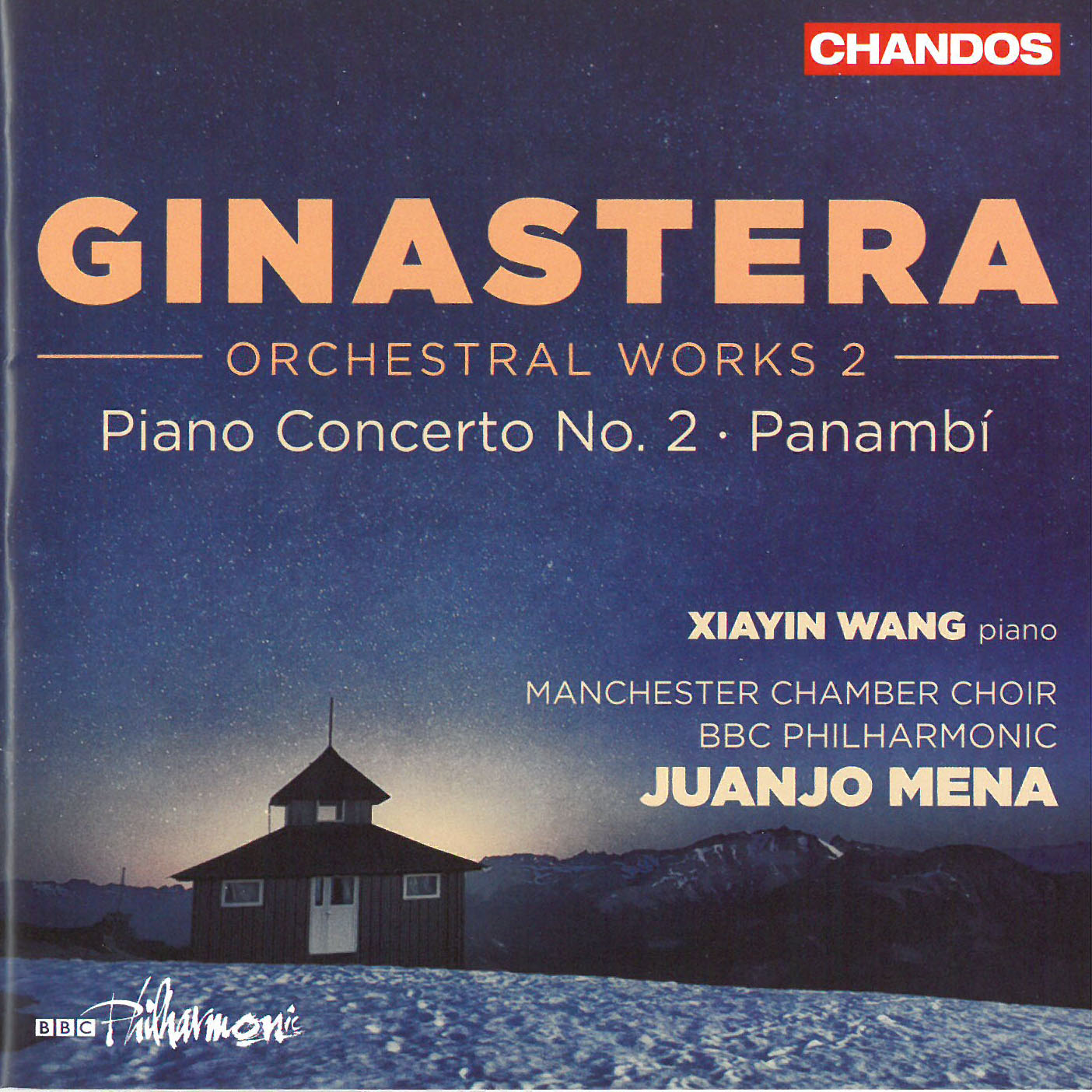
Chandos CHAN 10923

Continuing a 2016 series celebrating the centennial of Argentinian master Alberto Ginastera’s birth, this disc offers an intriguing contrast of compositions from his early and late periods. Beginning with the latter, Xiayin Wang’s elegant and sonorous performance of the Second Piano Concerto (1972) will be a surprise for anyone who associates the composer with pianistic bombast. Her crisp, even touch in both the perpetual motion, repeated-note scherzo and the prestissimo triplet finale is remarkable, yet so is her balance of complex chords and gradual pacing in the tread-like build of the slow movement to a crisis point. The first movement is the most dissonant and complex. Succeeding movements are more accessible; textures and sounds fascinate throughout. Altogether, this work is a major statement of artistic freedom and of identification with both classical and contemporary music for the composer, who had recently moved to Switzerland from the darkening situation in his homeland.

Panambi (1934-37), subtitled Choreographic Legend in One Act, is Ginastera’s Op.1. It is a precocious work from his folkloric years, one which also includes modern tendencies. Notable are the composer’s varied percussion writing and his seeking out of innovative low-register combinations. Rather than dwell on obvious influences from early 20th-century Paris, I would like to emphasize his successful evocation though imagery and sound of the Argentinian pampas, suggesting feelings associated with nature and the past. The BBC Philharmonic led by Juanjo Mena play with verve and sensitivity throughout.
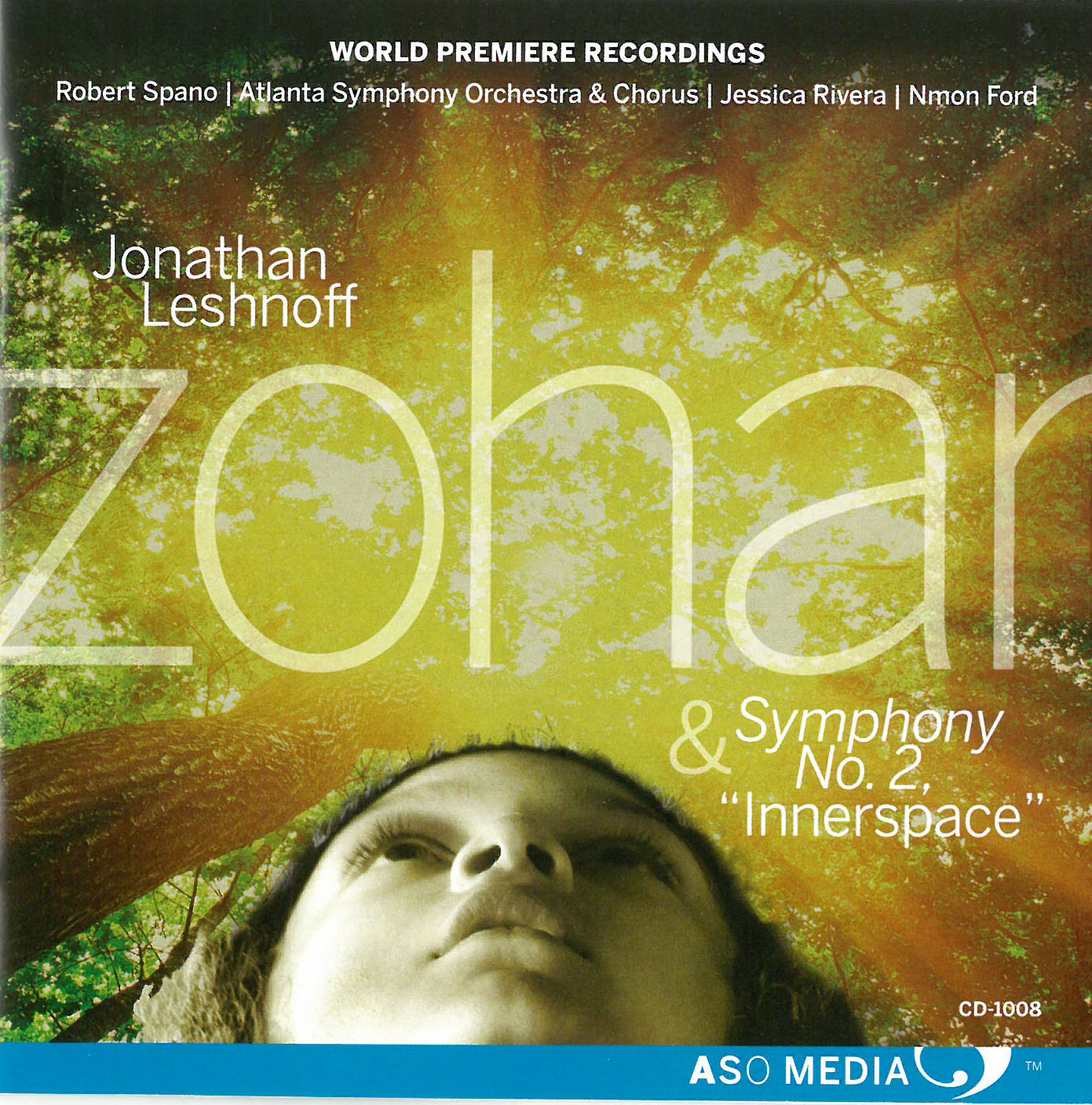
07 ZoharJonathan Leshnoff – Zohar; Symphony No.2
Jessica Rivera; Nmon Ford; Atlanta Symphony Orchestra and Chorus; Robert Spano
ASO Media

John Franklin aptly wrote in the autumn 2016 Imago newsletter, “…artists have a capacity to see what is coming in a culture and their work indicates the mood and values of society.” Jonathan Leshnoff’s Zohar and Symphony No.2 “Innerspace” represent part of his exploration of Jewish mysticism. But they also succeed in his attempt to transport us to transcendence, and isn’t that what we need when we feel mired in this current global atmosphere of oppression and alienation?

Symphony No.2 describes a benevolent “G-d,” whose omnipotence quickly becomes apparent in the second through fourth movements in the Atlanta Symphony Orchestra’s bold portrait of divinity. It’s huge and satisfies our need to encounter the incomprehensible. Then, the final movement, Unimaginable, shifts gears with one clarinet playing one note for seven seconds and suddenly we are confronted with 83 seconds of silence which complete the symphony. The silence is surprisingly moving and makes the listener mindful of the Jewish constraint against saying YHWH’s name.

Zohar is Leshnoff’s mystical commentary on the Pentateuch and was commissioned to be performed in conjunction with Brahms’ German Requiem. The text of the eponymous first movement sets the stage for the work: “Master of all Worlds…no thought can grasp You.” The second movement reflects on the puniness of man but for the grace of God’s recognition. In the following Twenty-two Letters, some theolinguistic synecdoche discusses the Hebrew alphabet that was used to create the universe. This Master is so great that the boy in the fourth movement (Shepherd Boy) feels inadequate to pray to Him correctly, and this is given a very sympathetic and informed interpretation by baritone Nmon Ford. The work wraps up with a choral reiteration that He is, indeed, “higher than all that is high.”

This CD struck me as being one that will become very important in the canon of religious choral and orchestral works.

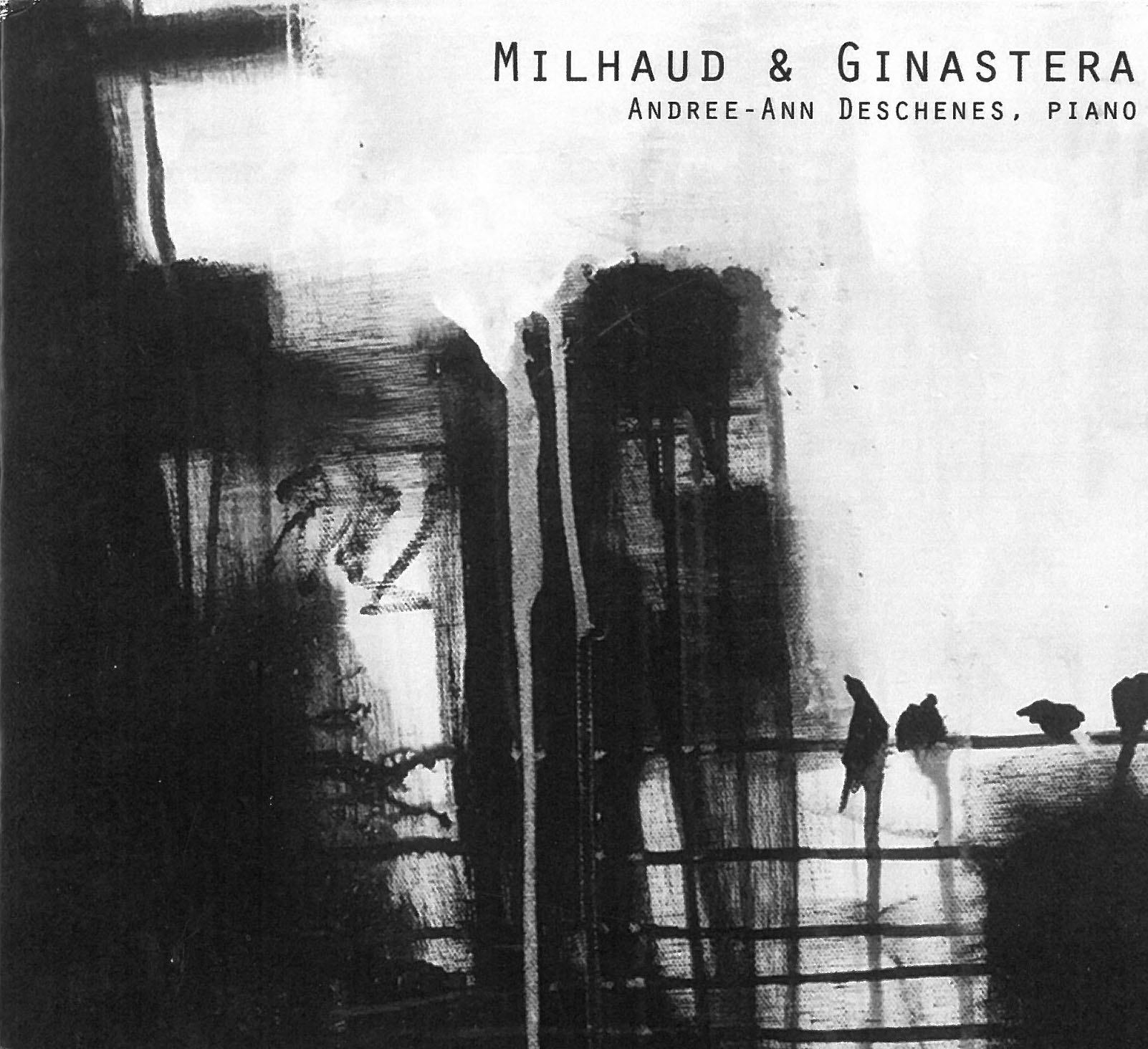
01 Milhaud GinasteraMilhaud & Ginastera
Andrée-Ann Deschênes
Independent (aadpiano.com)

Los Angeles-based Canadian pianist Andrée-Ann Deschênes has a thing for Latin American piano music. Her first CD was a collection of piano music from Cuba and Brazil. And in August, the Humber College grad – presently a doctoral music student at California’s Claremont Graduate University (CGU), with a teaching gig at Cal State LA – released Milhaud & Ginastera. Her second indie effort – in a recent interview with CGU’s magazine, The Flame, Deschênes calls herself an “indie pianist” (followed by, “if there’s such a thing!”) – offers two sets of dances for solo piano: one largely inspired by Rio de Janeiro’s neighbourhoods; the other, a well-known trio of Argentinian dances.

After a two-year stay in Rio (1917-18), French composer Darius Milhaud composed his 12-dance suite, Saudades do Brazil. Untranslatable, “saudade” suggests a feeling of longing, melancholy or nostalgia, a fixture in the music and literature of Brazil. In that same Flame interview, Deschênes says she chose these pieces “because they are such unique little gems of music.” And they are, each one its own, self-contained iteration of saudade, some poignant and dark, others more playful with driving rhythms. All tonally interesting, harmonically colourful and utterly charming. Deschênes captures the essence of saudade, tapping into an emotional connection to the material – you sense she’s both moved by it, yet at the same time, focused on the task at hand, technique crisp and clean.

Alberto Ginastera’s Danza Argentinas are also gorgeous gems, and Deschênes executes them deftly and sensitively; the middle, an achingly beautiful invocation.

Deschênes’ disc is a gem. ¡Fantástico!

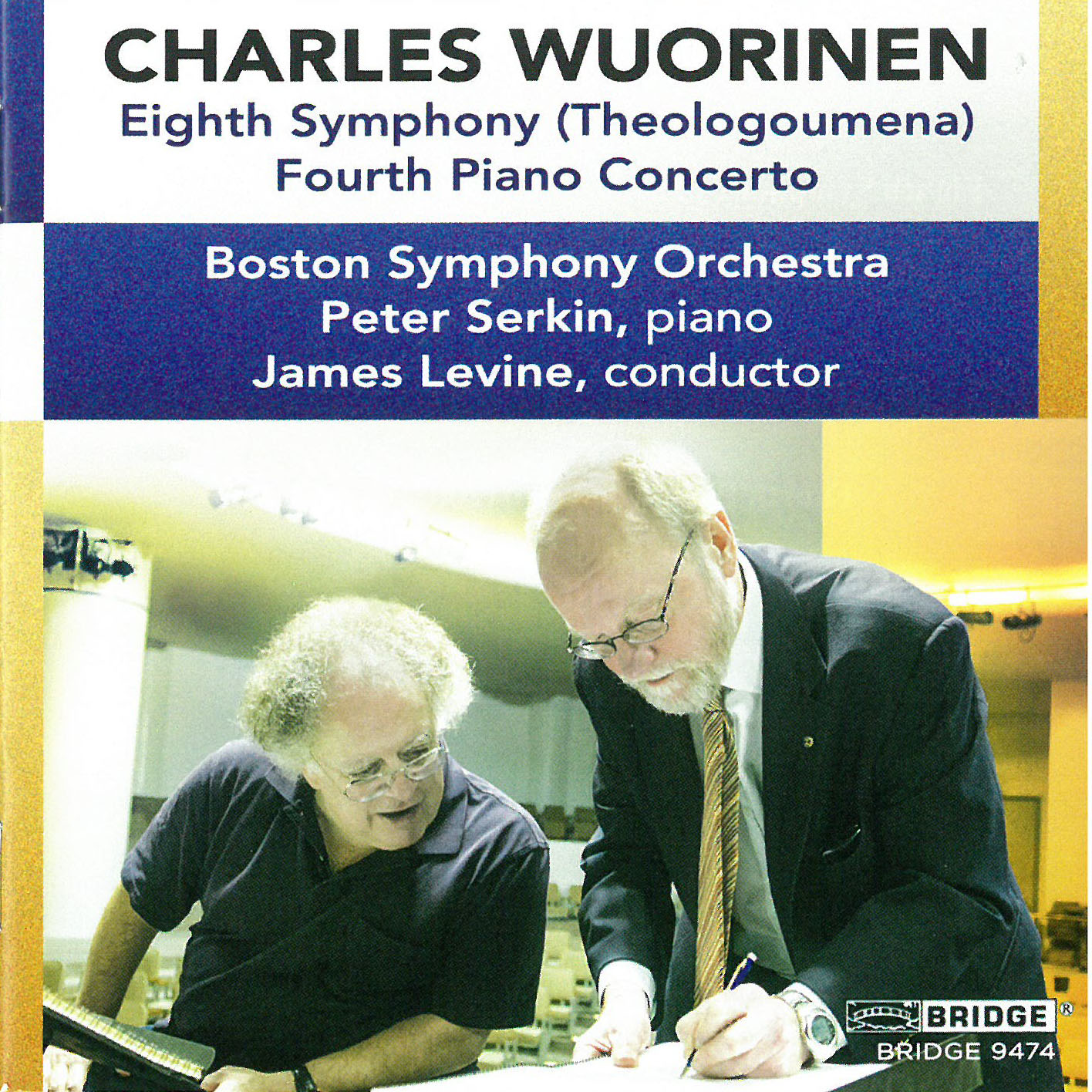
02 WuorinenCharles Wuorinen – Eighth Symphony; Fourth Piano Concerto
Peter Serkin; Boston Symphony Orchestra; James Levine
Bridge Records 9474 (bridgerecords.com)

In his heyday, conductor James Levine was known as a staunch advocate of the American high modern school of practitioners of Arnold Schoenberg’s serial method, commissioning new works from Elliott Carter, Milton Babbitt and Charles Wuorinen during his tenure as music director of the Boston Symphony. Bridge Records, with considerable philanthropic support, has now issued a commemorative disc of two major works from the last man standing of that compositional triumvirate. The first of these, Wuorinen’s Eighth Symphony, bears the arcane subtitle, Theologoumena, defined by the composer as “a private non-dogmatic theological opinion.” Make of that what you will. Formally it is cast in a conventional order of three fast-slow-fast movements, expressed in a no-compromise, often abrasive, language. That language is nevertheless in many ways a very traditional and approachable one; there are no extended instrumental techniques or a smidgen of spectralism to be found in his highly contrapuntal style. The first movement of the symphony is a wild ride of unbridled energy, dense and frenetic; the second movement is marginally more restrained, while the finale brings the percussion and piano to the fore for a thunderous conclusion. The ensemble of the Boston musicians is pushed to the edge in this high tension recording of the 2007 premiere performance.

The performance of Wuorinen’s compelling Fourth Piano Concerto from 2005 is considerably more assured, in large part due to Peter Serkin’s admirable mastery of the demanding solo piano part and the composer’s more lyrical approach in this work. All three movements of the concerto maintain a constant, mercurial energy leavened with explosive outpourings of orchestral frenzy. This is tough music to love, but easy to admire.

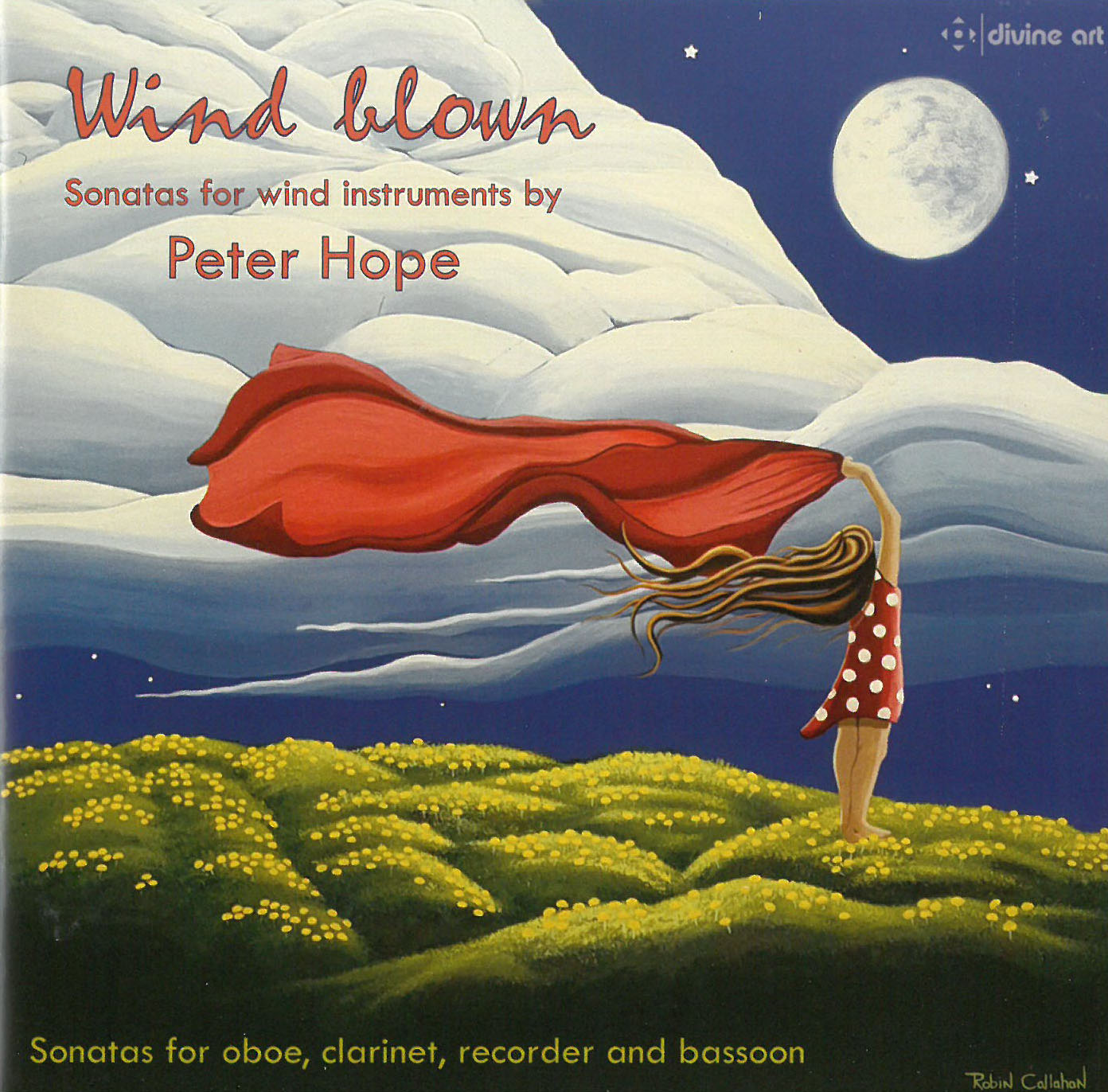
03 Wind blownWind blown – Sonatas for wind instruments by Peter Hope
Various Artists
Divine Art dda 25137
(divineartrecords.com)

Review

Wistful sentiments dominate the opening moments of most of the works on this collection of wind music by British composer Peter Hope. His music can be called contemporary in terms of date (all six works were composed in the space of six years, between 2009 and 2015) but in character it’s all unabashedly anachronistic. As capably written as the pieces are, one can only imagine Hope has determined that the harmonic and rhythmic language of the most conservative 20th-century composers is sufficient to his artistic needs. The writing for recorder goes even further back in time, echoing the pre-Baroque era with open parallel harmonies. He ventures into the popular idioms of jazz and klezmer styles, which sadly come off as cliché to such a jaded ear as mine. It is music that remains by the hearth in the library, caftan-wrapped, brandy snifter at hand, faithful hound at its feet. It is comfortable and, for those seeking such, comforting.

All performances are quite good, and the production is untainted by excessive reverb, the sound clean and direct. The piano balances the soloists on all the sonatas, while remaining clear and forthright. The instruments are each presented with all their idiosyncrasies, close-miked enough to catch tone-hole whistles yet not such that any warts are apparent. Kudos to engineer Richard Scott for capturing a soundscape so familiar to the undergraduate ear – that of the academic recital hall – in this case the one at Royal Northern College of Music in Manchester.

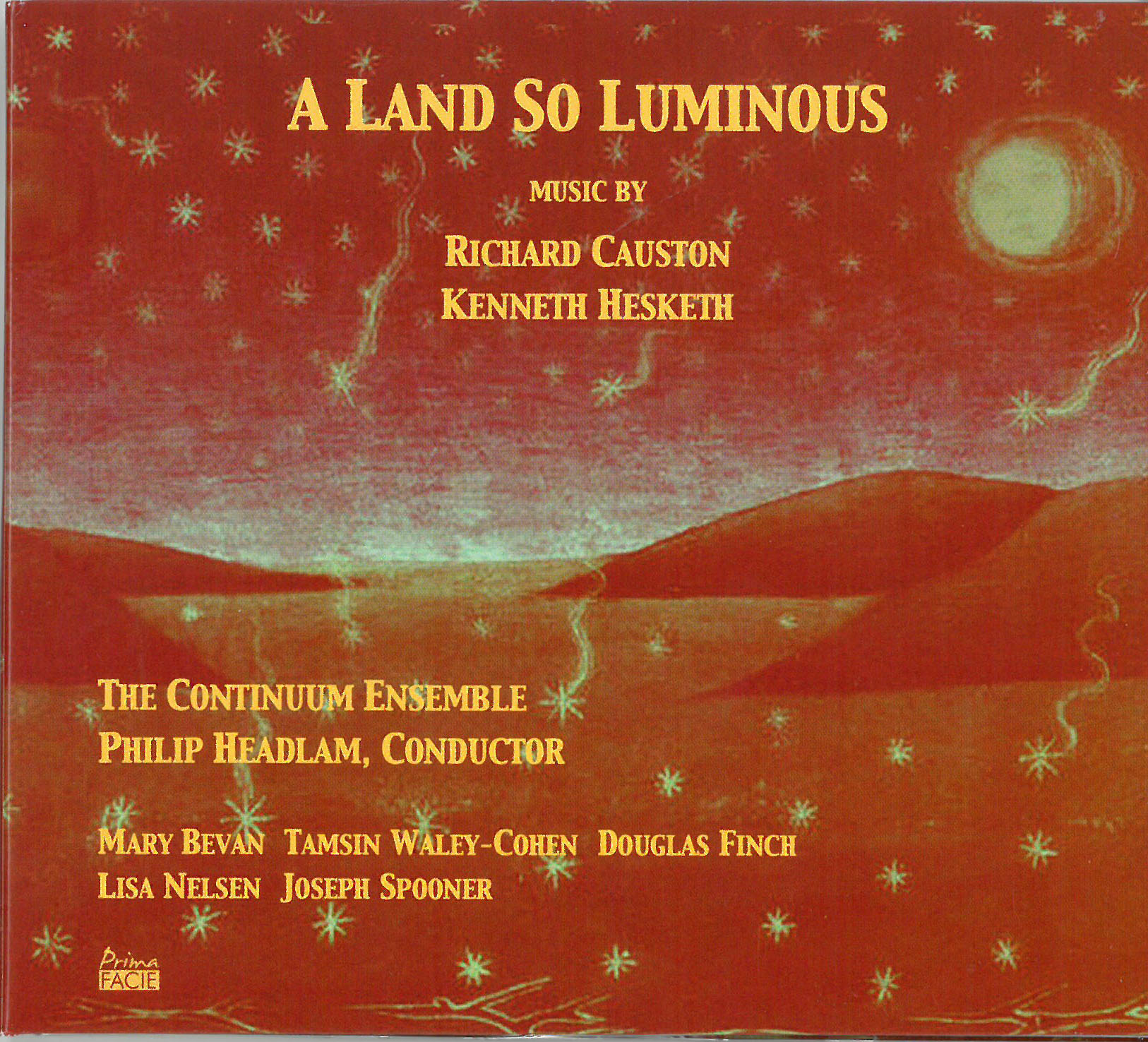
04 A Land So LuminousA Land So Luminous – Music by Richard Causton; Kenneth Hesketh
Continuum Ensemble; Philip Headlam
Prima Facie PFCD051 (thecontinuumensemble.co.uk)

Review

In 1993, two Canadians – pianist-conductor Philip Headlam and pianist Douglas Finch – co-founded Britain’s Continuum Ensemble specializing in contemporary music. Here they present first recordings of works by two prominent English composers, both in their 40s but very different stylistically.

Kenneth Hesketh’s A Land So Luminous for violin and piano and IMMH for solo cello feature fragmentary outbursts, prolonged pauses and directionless meandering. In IMMH, an “imagined shamanic ritual, marking the passage from life to death,” the cellist plucks, bows, vocalizes and knocks on the cello’s body, but with no discernible trajectory. Hesketh’s three-movement Cautionary Tales for clarinet, violin and piano was adapted from his five-movement Netsuke for large ensemble. Both works ostensibly depict literary “events and characters” but offer only more fragments, silences and meandering.

Five engrossing pieces by Richard Causton follow, providing welcome contrast. Threnody for soprano, two clarinets and piano is a moody setting of a Russian anti-war poem from 1915. His 13-minute Rituals of Hunting and Blooding, two movements for large ensemble, would make an effective ballet score, with its wildly syncopated rhythms of the chase followed by the solemn initiations of hunters being ceremonially marked with their prey’s blood. Sleep for solo flute is a dignified elegy, commissioned by a widower in memory of his wife. Finally, Douglas Finch plays two atmospheric piano pieces, Non Mi Comporto Male and Night Piece, contemplative homages, respectively, to Fats Waller and Mozart.

One thumb down; one thumb up.

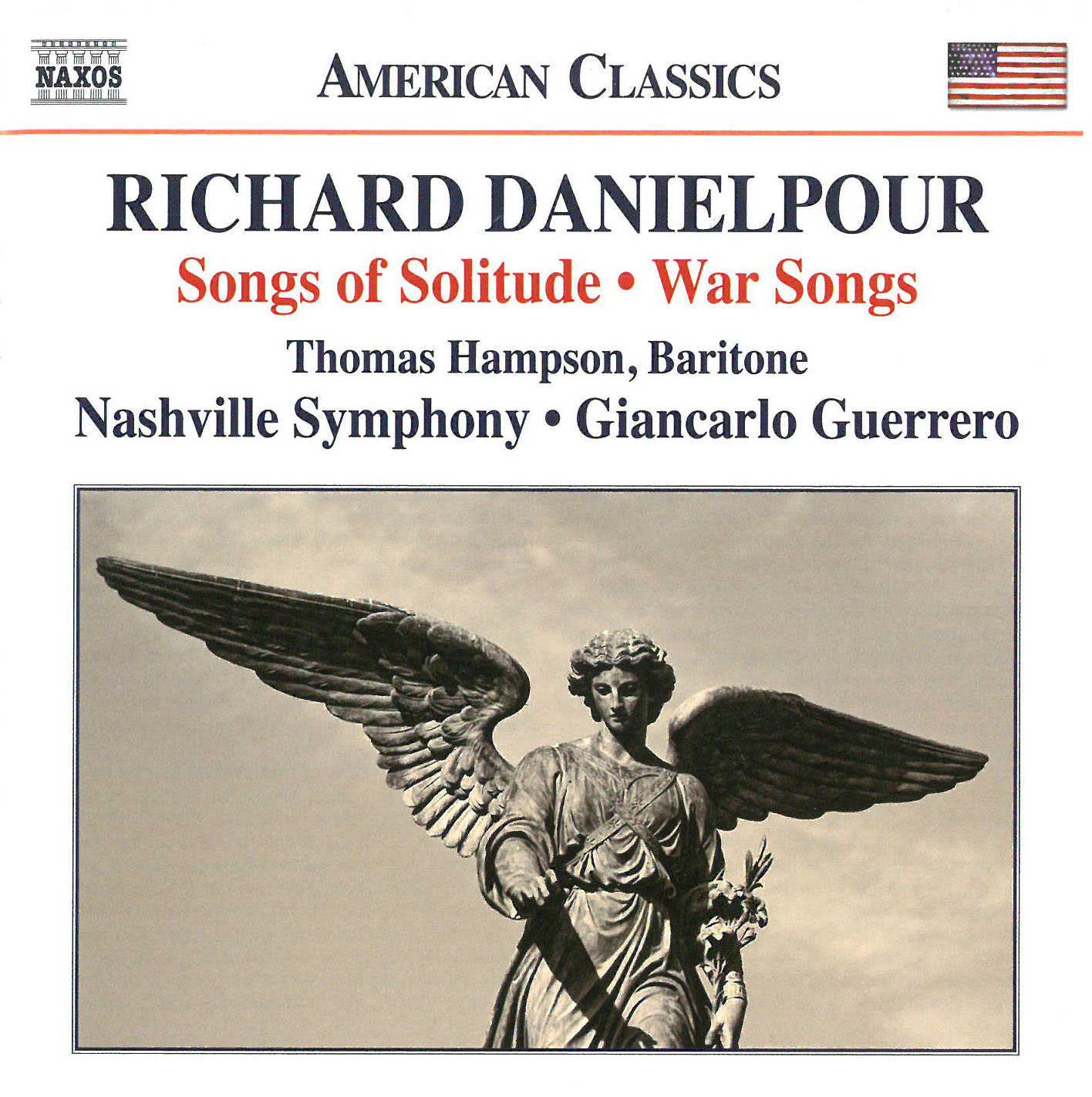
05 Richard DanielpourRichard Danielpour – Songs of Solitude; War Songs
Thomas Hampson; Nashville Symphony; Giancarlo Guerrero
Naxos 8.559772

On the day the Twin Towers fell, Richard Danielpour was at the composers’ retreat in Aaron Copland’s former Peekskill, NY, home. His artistic response to 9/11 was to begin work on Songs of Solitude, settings of six scathing Yeats poems. Danielpour’s melodic, rhythmic and colouristic predilections link him to Copland and Bernstein, two fellow New York-based composers of Jewish ancestry. Echoes of Copland appear in the cycle’s orchestral opening and closing; Bernstein is channelled in the jazzy Drinking Song. The longest song, lasting nine of the cycle’s 28 minutes, sets Yeats’s most famous poem, The Second Coming, but the music fails to match the power of these often-quoted lines.

There’s power aplenty, though, in War Songs (2008), inspired, writes Danielpour, by photographs of young soldiers killed in Iraq. Set to haunting Civil War poems by Walt Whitman, four dirge-like, elegiac songs precede the shattering final song, Come up from the Fields Father, at 11 minutes, nearly half the cycle’s duration. I was left both shaken and stirred.

Both cycles were composed for baritone Thomas Hampson, here in characteristically fine voice, fully expressive of the words (texts are included).

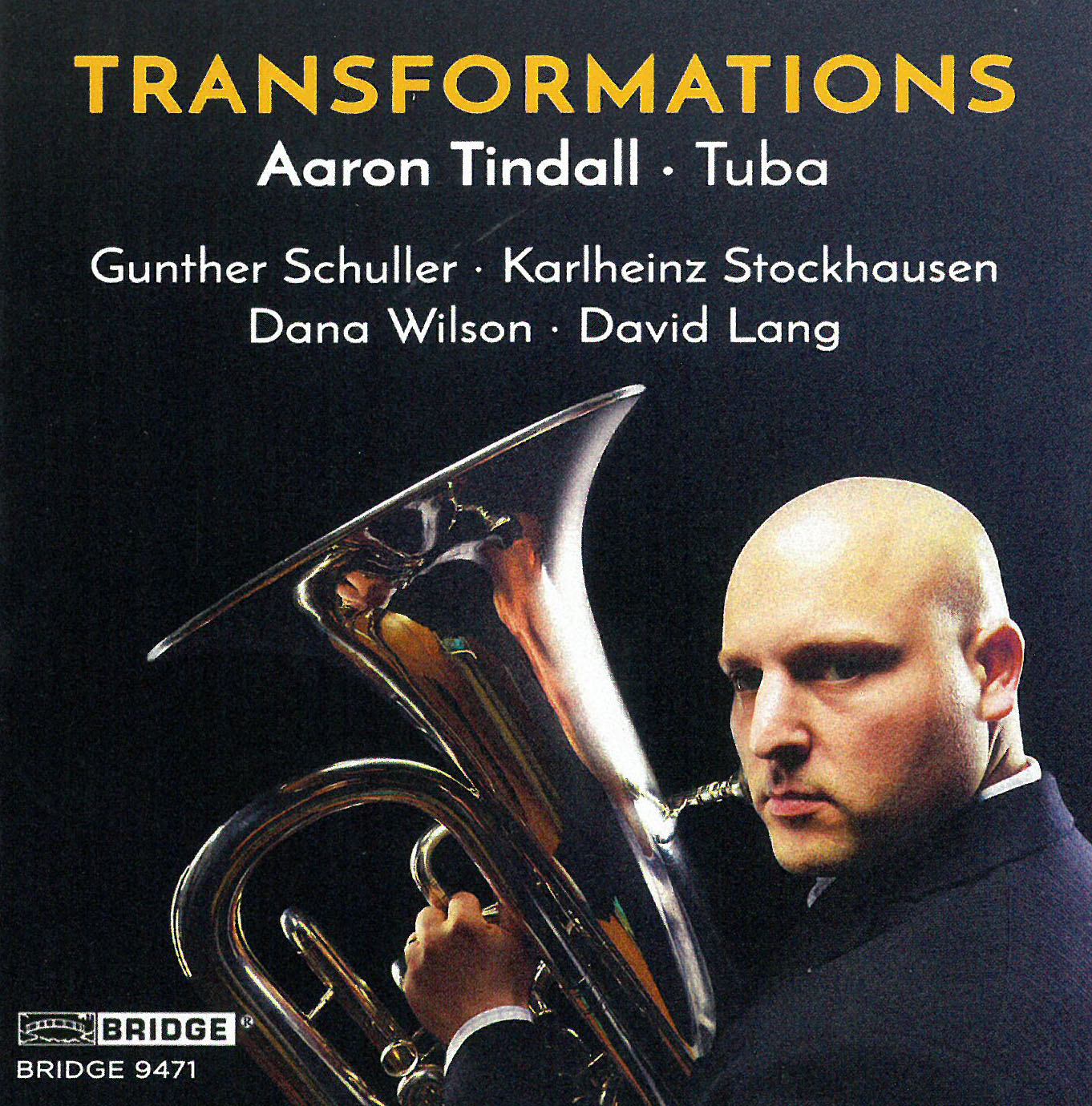
06 TransformationsTransformations
Aaron Tindall, tuba; various ensembles
Bridge Records 9471 (bridgerecords.com)

Review

The convergence on this disc of horn-playing composer Gunther Schuller (1925-2015) and tuba virtuoso Aaron Tindall in Concerto No.2 for Contrabass Tuba and Symphony Orchestra (2008) is highly successful. Professional French horn player Schuller’s orchestration skills and affinity for low-registered instruments are evident; at the opening the solo tuba emerges wonderfully from darkness. With the Ithaca College Symphony Orchestra under Jeffrey Meyer, Tindall gives an adept, eloquent recording of this mostly expressionist concerto. Horn-tuba affinity recurs in Dana Wilson’s (b.1946) Concerto for Tuba and Wind Ensemble (2013). It begins with an offstage horn echoing the tuba, and continues with motifs over a minimalist weave. Tindall’s melodic shaping and building together with the Ithaca Wind Ensemble in the second movement is remarkable, but unfortunately the composer’s turn to a jazz finale is awkward.

Harmonien (2006) by Karlheinz Stockhausen (1928-2007) is played here on tuba, not the original bass clarinet. Including a wealth of sounds and processes, it is a solo tour de force for Tindall. The composer’s claims of colour and time-of-day associations do not resonate with me, though. The bold Are You Experienced? for electric tuba, narrator, and chamber orchestra (1987-89) by David Lang (b.1957) would ideally be best experienced live or on DVD. Its imaginative take on the situation of having received a brain injury breaks new ground, and Tindall’s evocation of Jimmy Hendrix’s fuzz-tone guitar on the electric tuba is truly amazing!

Vyacheslav Artyomov – Symphony Gentle Emanation; Tristia II
Russian National Orchestra; Teodor Currentzis; Vladimir Ponkin
Divine Art dda 25144

Artyomov – Symphony on the Threshold of a Bright World; Ave Atque Vale; Ave, Crux Alba
National Philharmonic Orchestra of Russia; Vladimir Ashkenazy
Divine Art dda 25143
(divineartrecords.com)

07a Artyomov AshkenazyVyacheslav Artyomov was preparing for a life in astrophysics, but these two symphonies (parts of a tetralogy) are unlike The Planets, unless you think of them as uber-Holst: they cause a visceral reaction and suggest a metaphysical cri de cœur. My initial reaction to them was that they sounded like the soundtrack of some 1940s film noir or an original-series Star Trek episode – which is apt, since they embody mystery and the unknown. In his essay, Musica Perennis, the composer said “Serious music is created by the spirit for the Spirit,” and these twin-released CDs reflect his view of music as a mediator between God and man, but also as science. While I find the Threshold of a Bright World symphony more arresting than the Gentle Emanation, they are both accessible, and while Artyomov is often compared to Arvo Pärt, I hear a little more of Rautavaara.

07bArtyomov PonkinThe orchestration in Ave Atque Vale and Gentle Emanation is a little jarring due to the highlighting of the percussion parts. But Ave, Crux Alba, a choral (Helikon Theatre Choir) and orchestral setting of the Hymn of the Knights of Malta, returns to the majesty and mystery Artyomov is known for in his musical quest for spirituality. Tristia II, based on the 19th-century poems of Nikolai Gogol and with spoken parts read by Russian actor Mikhail Philippov, carries on the potential-soundtrack feel and allows us non–Russian speakers to hear the cries of the artist to God for inspiration; the suspense in the middle tracks suggests Him mulling the petitions over.

Both CDs are in memoriam of the composer’s friend and colleague, Mstislav Rostropovich, and both have expansive liner notes.

Slow Bend
See Through Two
All-Set! A8007 (all-set.org)

Famous Wildlife Movies
Mike Smith
All-Set! A8006 (all-set.org)

Another Helpful Medicine
Aurochs
All-Set! A8004 (all-set.org)

Margins
See Through 5
All-Set! A8005 (all-set.org)

08a All Set See Through2The All-Set! Imprint is fast becoming a beacon of originality as a fast-growing world of boutique and independent contemporary music labels. Its penchant for featuring artful cover graphics that appear more inclined towards corporate identity than visually describing musical content is unusual, to say the least. But nothing could prepare the listener for what to hear on each of their releases; not even the names of rather well-known experimental musicians whose work lies within each release. A case in point is Slow Bend by the bass duo See Through Two.

08c All Set AurochsOn this masterful performance by Rob Clutton (bass, banjo and fretless Fender bass) and Pete Johnston (bass) we glimpse music from quite another realm of bass violin, with the sound of the banjo providing not just relief, but occasionally elevating the music to the upper layers of this tonal realm. The personality of each piece is characterized by the rhythmic brevity of its title but often takes the dallying conversation between the two bassists to fascinating harmonic spaces. This adventure that takes as its starting point, in place of metric lassitude, a steady beat which is then stretched and moulded with infinite varieties of rubato. As a result, the rather explicitly titled Range that begins the set to Trail, which suggests not the end, perhaps, but the beginning of another journey, the refreshing overall impression is of a great colouristic soundscape that is rather dynamic and rich in possibility.

08b All Set Mike Smith08d All Set See Through5In addition to Slow Bend, but completely different in every aspect of music, recent releases have also included Mike Smith’s Famous Wildlife Movies, a fascinating collection of pieces which emerges as an epic in miniature for large ensemble performed with special authority and élan. Two years after Aurochs’ Rational Animals comes Another Helpful Medicine, which seems to have been created in a crucible ignited by an explosion of collective imagination. Finally the recent collection of releases includes Margins by See Through 5, a quintet whose music is characterized by its gaunt sonority, laser-like projection, finely calibrated articulation and uncanny rhythmic equilibrium.

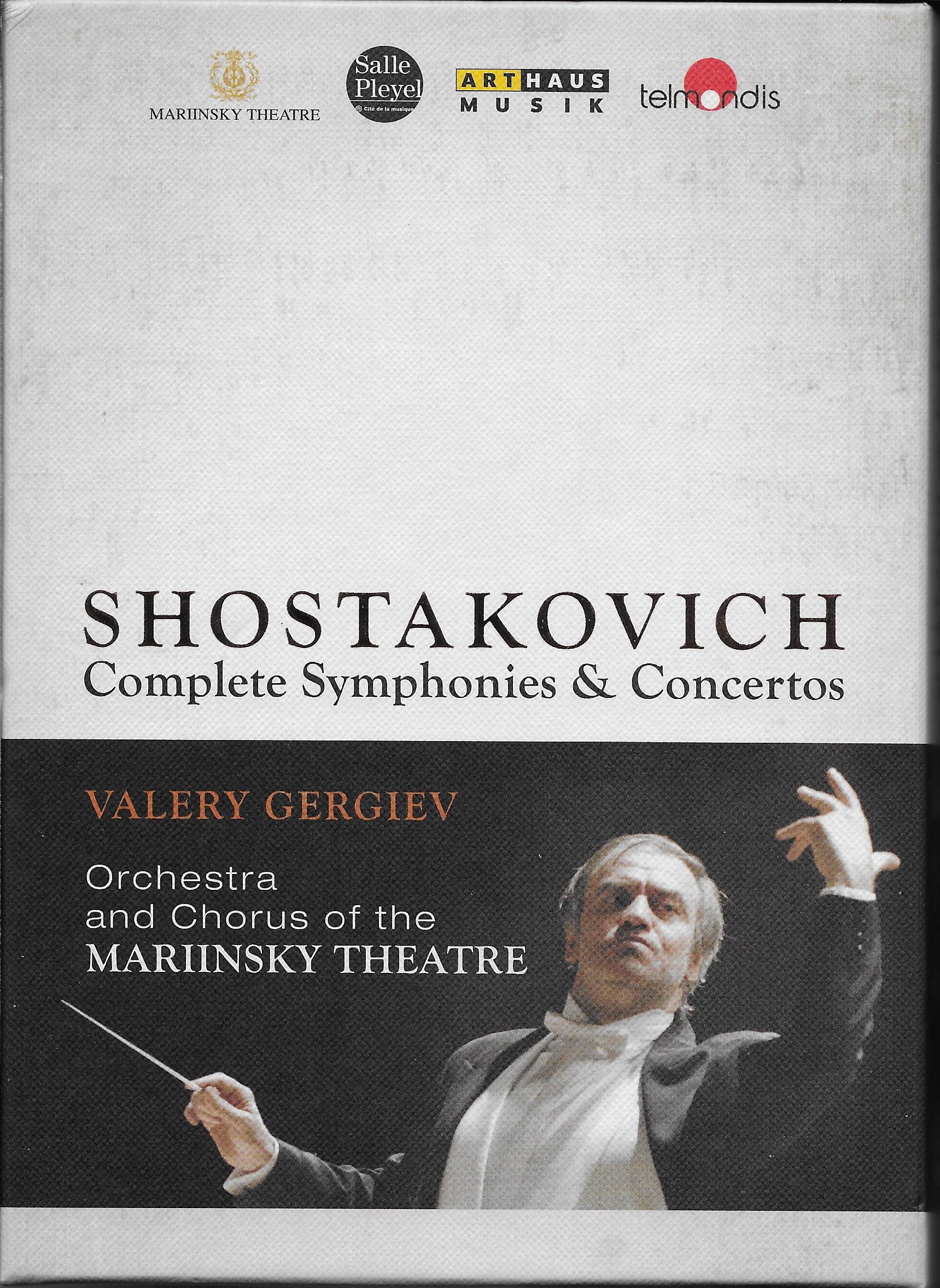
01 ShostakovichShostakovich – Complete Symphonies and Concertos
Orchestra and Chorus of the Mariinsky Theatre; Valery Gergiev
ArtHaus Musik/Mariinsky Theatre 107552
(4 Blu-Ray video discs, 100-page Hardcover book, etc.)

These performances took place in the Salle Pleyel, Paris in 2013 and 2014 where they were recorded in concert by a co-production of the Mariinsky Theatre, Mezzo, Euro Media France and France Télévisions.

It seems to me that music of Shostakovich is more popular now than in past decades. I wonder why. Conductor Arturo Toscanini was asked why he didn’t conduct the music of Bruckner. ”It doesn’t beat with my heart,” was his reported answer. I understand that and I wonder if Shostakovich’s popularity now is the corollary. Perhaps the music of Shostakovich is in tune with us more now than in generations gone by. It really doesn’t matter why, but today more people are attracted to the late composer and want to hear more of his music…symphonies, concertos and sonatas.

The above set was released last year and a couple of weeks ago I relented and got myself a copy. I am more than delighted with the whole production, performances, camera work and audio. One thing about the audio: there is a choice of playback, PCM or DTS-HD Master Audio 5.0. The PCM sound is rather disappointingly compressed, clearly for broadcast. The DTS-HD format offers the highest resolution and dynamics, most audible in the percussion. Gergiev prefaces each performance with a short talk on the work. There is also a film A Man of Many Faces, a documentary that explores the composer’s life and work, his triumphs and travails, with much archival footage and an interview with Gergiev.

As for the performances themselves, both symphonies and concertos, there was no “listen to us” impression; they were there for Shostakovich. In the Eighth, my favourite symphony, the earnest perfection of ensemble proves that this orchestra, in this repertoire with this conductor, is probably untouchable. Gergiev was immobilized after the music evaporated. The audience felt it too, as the applause burst out a long 38 seconds after the last note had died away. An extremely moving experience for all. The answer to the usual question about the tempi in the last movement of the Fifth is that he wastes no time.

The exuberant performances of the six concertos are a generous bonus, with Gautier Capuçon and Mario Brunello (cello), Daniil Trifonov and Denis Matsuev (piano), Timur Martynov (trumpet), Vadim Repin and Alena Baeva (violin). The outstanding vocal soloists in the Fourteenth Symphony are Veronika Dzhioeva (soprano) and Mikhail Petrenko (bass).

As a footnote to these performances, there is a synergy between an orchestra working with its resident conductor (unless they hate him or her, as sometimes happens).They are of one mind, so to speak. Audiences try to decode Gergiev’s unusual gestures… the fluttering fingers, for example. The orchestra knows. We have no need to figure it out, although the fluttering fingers is pretty obvious.

02 Casadesus DutillieuxSelected Piano Works by Robert Casadesus and Henri Dutilleux
Cicilia Yudha
Navona Records NV6053 (parmarecordings.com)

On this disc young Indonesian pianist Cicilia Yudha, now based in the United States, spotlights the familiar names of Robert Casadesus (1899-1972) and Henri Dutilleux (1916-2013). Best known as a virtuoso pianist, Casadesus was also a prolific composer represented here by the Sonata No.3 Op.44 and the Toccata Op.40. These deft works are somewhat reminiscent of Ravel and Milhaud. The Sonata’s slow movement is both craftsmanly and touching, but in the outer movements as well as in the sparkly perpetual-motion Toccata there is too much piano-exercise and white-note-only writing. Cicilia Yudha certainly demonstrates fleet fingers, variety of articulation and an ear for clarity suited to the French school of Casadesus.

The early Blackbird and Along the Waves: Six Little Pieces of Dutilleux are also finely rendered. Dutilleux’s great Sonata for Piano (1947/48) is a different case, one of mastery of harmony and large-scale form with expressive ideas realized in depth. It seems to me that Yudha is too careful with tempo and accentuation in the opening Allegro con moto. Anne Queffélec’s more robust, occasionally almost frantic version on Virgin Classics is preferable; it is surprising that even at fast tempos Dutilleux’s complex harmonies sound and proceed well. Things improve greatly in the second movement, where Yudha’s command of sonority comes to the fore and she projects a mysterious sense of unseen presence. In the final variations she rises to the occasion with power and virtuosity.

03 Ginastera 100Ginastera One Hundred
Gil Shaham; Yolanda Kondonassis; Jason Vieaux; Orli Shaham; Oberlin Orchestra; Raphael Jiménez
Oberlin Music OC 16-04
(oberlin.edu/oberlinmusic)

This disc’s high-calibre performances and production make it a fitting tribute to Alberto Ginastera (1916-1983) on the 100th anniversary of his birth. Harpist Yolanda Kondonassis’ introductory notes state that his Harp Concerto (1956, rev. 1968) “pushed the harp out of its box and gave us the kind of indelible, substantive composition that makes or breaks a solo career like mine.” In broken-chord dance rhythms of the first movement, resonant glissandi of the second and tuneful melodies of the third, the Argentinean composer consistently finds striking, effective gestures for the instrument. Soloist Kondonassis plays with confidence: her rhythms have bite and liveliness, her flourishes atmosphere and grandeur, all in effective partnership with the Raphael Jiménez-led Oberlin Orchestra.

Pampeana No.1 (1947) for violin and piano dates from a period when Ginastera was influenced by Aaron Copland to integrate folk and modernist elements. Violinist Gil Shaham plays the opening soliloquy with intensity and virtuosity, in alternation with pianist Orli Shaham’s lower-pitched chords emulating guitar strumming; the whole suggests the Argentinean pampas’ wide open spaces. In later exciting dance sections, ensemble between violin and piano is ideal. Shaham is equally effective in the more familiar Danzas Argentinas (1937) for piano. The Sonata for Guitar (1976), the most advanced work included, comes after the composer’s move to Switzerland. Ginastera allows the guitar to resonate with well-chosen tonal material and a variety of percussive effects. Challenging to play yet mastered convincingly by guitarist Jason Vieaux, I enjoyed this work thoroughly.

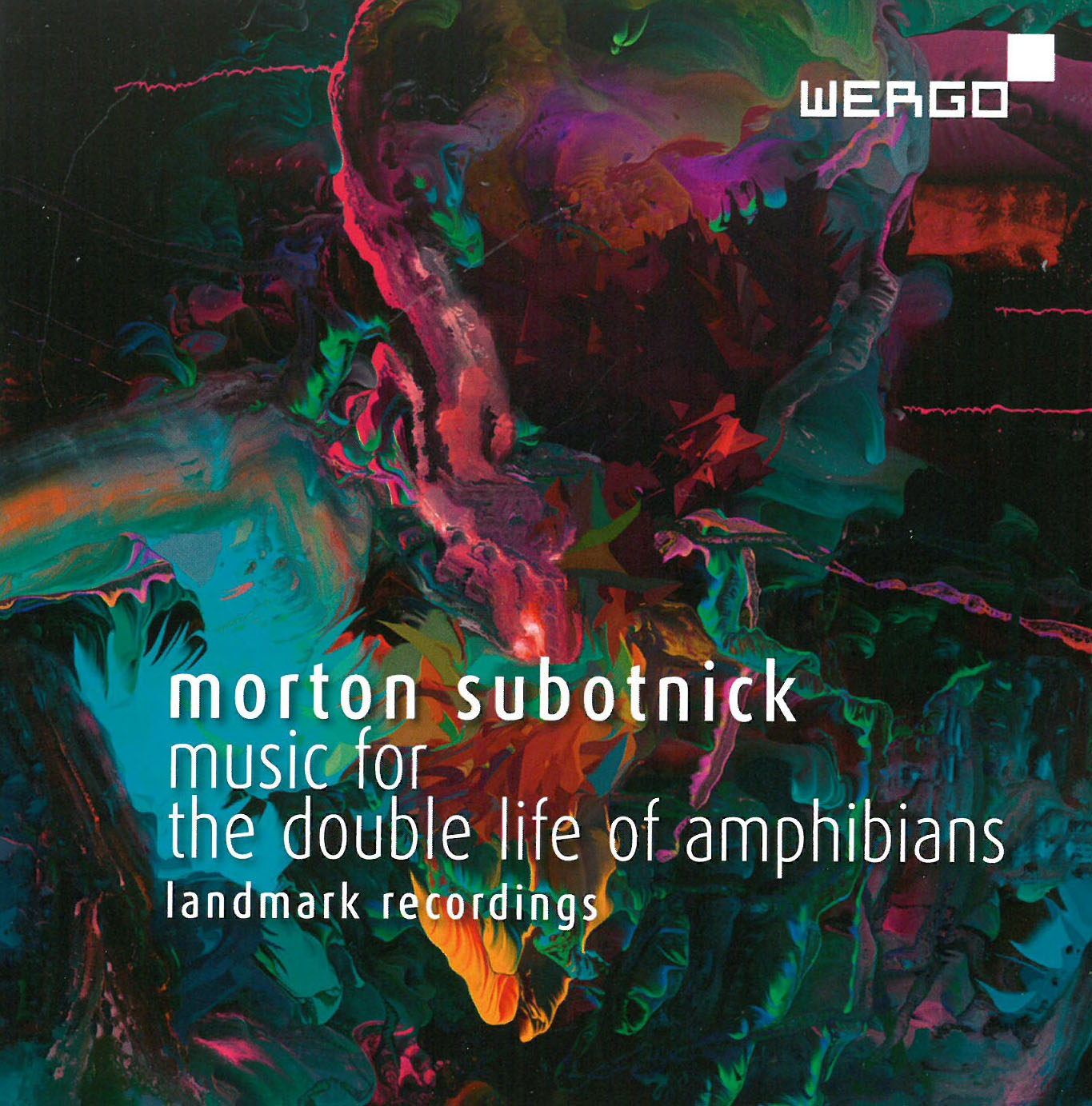
04 Morton SubotnickMorton Subotnick – Music for the Double Life of Amphibians (Landmark Recordings)
Various Artists
Wergo WER 7312 2

For most of his notable career American composer and electronic music pioneer Morton Subotnick (b. 1933) has employed his signature methodology of live electronically processed scored acoustic instrumental and/or vocal parts, and later, interactive computer music systems.

Subotnick has also been an important actor in many of the significant technological milestones in the commercialization of electroacoustic music. A prime example is his early Silver Apples of the Moon (Nonesuch LP 1967). Produced using the Electric Music Box, Don Buchla’s analogue modular voltage-controlled synthesizer and tape-manipulated sounds, it is considered the first electronic work commissioned by a record company. In it, the composer challenged academic avant-gardists by including sections with metric, regular rhythms. More significantly, he aimed to render a musical composition for which the performance was the recording, reflecting the spirit of Marshall McLuhan’s 1964 phrase “the medium is the message.” The album sold very well internationally and was highly influential: it was a touchstone of my own first experiments in tape and electronic music.

Recorded in a studio between 1981 and 1985 the music for Subotnick’s Music for the Double Life of Amphibians continued his fruitful commercial relationship with the Nonesuch label. This skillfully remastered current Wergo CD is part of a series dedicated to Subotnick’s recorded oeuvre. Each of the seven movements form part of a larger symphonic poem, and the resulting dramatically compelling music successfully treads over several genre lines. It seamlessly combines modernist chamber music – superbly performed by cellist Joel Krosnick in the outstanding Axolotl, as well as by the Juilliard Quartet and by the soprano Joan La Barbara – with (1980s) state-of-the-art studio electronics.

The album strongly affirms the composer’s modernist lineage. It also reminds us of his street cred in the development of 20th-century electroacoustic music’s creation, performance, studio recording and commercial release.

05 OCallaghanEspaces tautologiques
James O’Callaghan
empreintes DIGITALes IMED 16140 (electroCD.com)

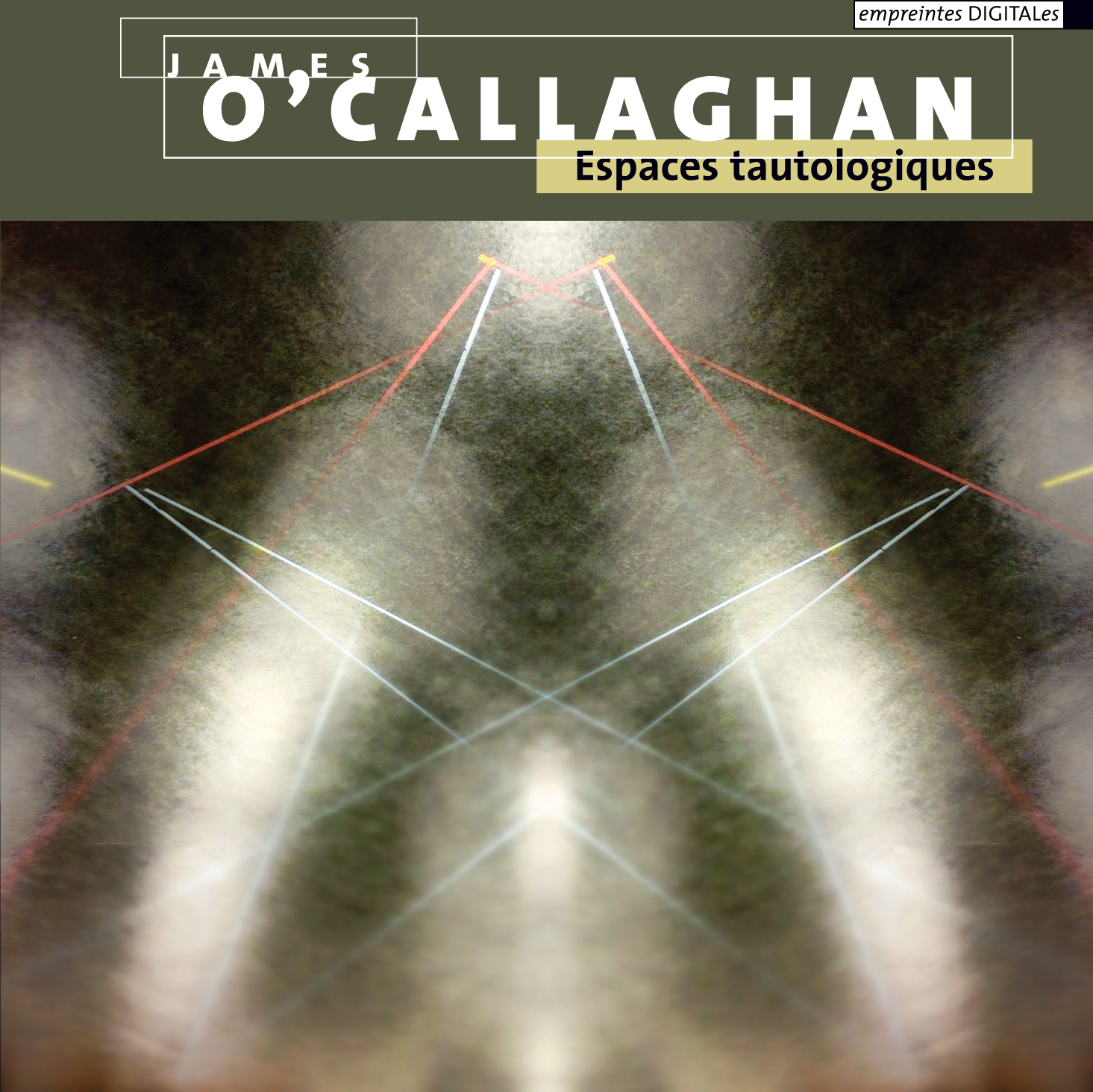
On his recent electroacoustic CD Espaces tautologiques, composer James O’Callaghan takes us down the rabbit hole into a visceral, endogenous acousmatic wonderland. Although tautologies can be defined as needless repetitions, for O’Callaghan, they instead may be an ironic unifying premise for his vagabond auditory adventures, or append extra significance to compositional procedures such as varied repetition, imitation and augmentation. The first three pieces form a triptych that “imagine[s] the sounding bodies of instruments as resonant spaces.” They contain crisp, natural and remodelled recordings of passages through remote instrumental spaces, and at times it feels as though the listener is situated inside the instrument. From the rim to the spine of a piano (Objects-Interiors), an acoustic guitar and toy piano (Bodies-Soundings), or the surfaces and recesses of instruments in a string quartet (Empties-Impetus), each piece celebrates the percussions and resonances of a similar, colourful palette of instrumental and digital treatments.

O’Callaghan demonstrates fluency with standard techniques of electroacoustic music, but it’s the impetus of the philosophical aspects that takes the pieces to their most compelling territories. The last piece, Isomorphic, is a particularly captivating jaunt through protractions of carefully ordered squealing, chattering textures. While the work shifts from one archetype to another, it’s coherently driven by consecutive, playful morphological relationships that extend from one sound to the next, despite differences of sound source and context. By virtue of the gesture, contour, pitch and timbral coherence of his materials, O’Callaghan proposes contrasting ways to consider the ornithological chirps, industrial doors and ambient environments. They can be heard as a perpetual flow, in which all sounds are related as one, or as a duality in which the listener simultaneously compares the ongoing profile similarities of the sounds with their wildly differing origins.

06 Christopher RouseChristopher Rouse – Odna Zhizn; Symphonies 3 & 4; Prospero’s Rooms
New York Philharmonic; Alan Gilbert
Dacapo 8.22611 (dacapo-records.dk)

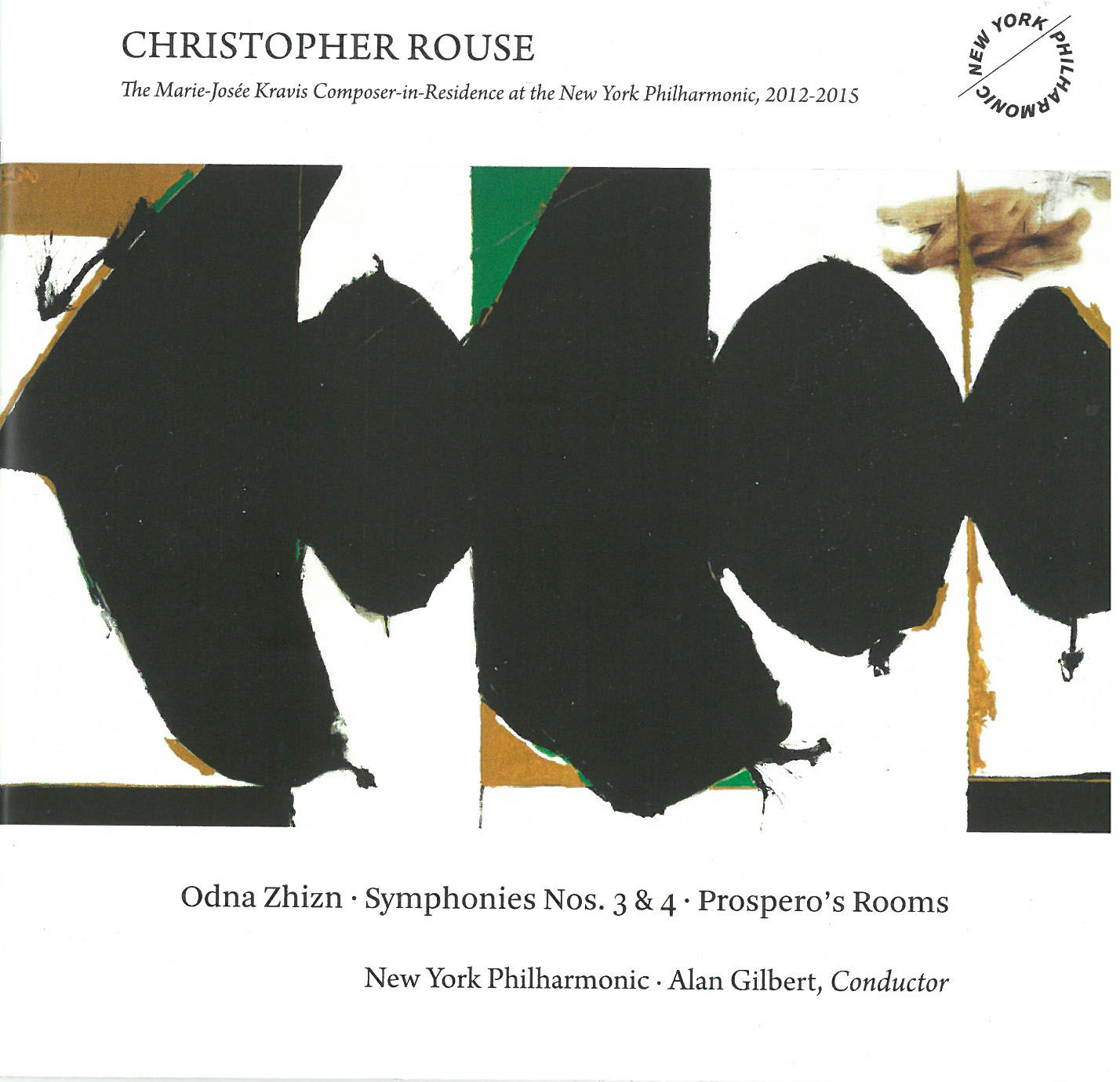
Rouse is the most recent to hold the composer-in-residence position at the New York Philharmonic, and this new disc is his capstone project. It is actually the latest chapter in a decades-long relationship between composer and orchestra; the Phil premiered, along with many other of his works, Rouse’s Pulitzer Prize-winning trombone concerto in 1993. Owing to these years of collaboration, this disc achieves an all-too-uncommon thing: music born from an understanding shared equally by conductor, orchestra and living composer.

Just as these three have found common ground, so has Rouse found common ground between the conceptual and the visceral. The harmonic language of Odna Zhizn, for instance, is tightly controlled and generated using a “code.” If these words conjure up frightening images of angular serialist lines, however, fear not: “code” here refers not to forbidding pre-compositional matrices, but to the age-old tradition of encoding a loved one’s name into the score by way of note names.

“Odna Zhizn” means “life” in Russian and Russian influences loom large here. Symphony No.3 is heavily indebted to Prokofiev’s Symphony No.2, his symphony of “iron and steel.” If Prokofiev’s was the churning foundry, then Rouse’s is its smoldering remains, brooding and charred. As for his Symphony No.4’s “code,” Rouse cites Tchaikovsky: “Asked whether listeners would devise the…meaning of his Pathétique Symphony, Tchaikovsky famously replied, ‘Let them guess.’”

This disc’s grand and unified vision is not to be missed.

Back to top