04 Kernis DreamsongsAaron Jay Kernis – Dreamsongs: Three Concertos
Paul Neubauer; Joshua Roman; Royal Northern Sinfonia; Rebecca Miller
Signum Classics SIGCD524 (signumrecords.com)

In these three very disparate concertos, composed between 2009 and 2014, Pulitzer Prize laureate Aaron Jay Kernis has drawn inspiration from very disparate sources, ranging from African instruments to Bach, Schumann and Yiddish folk song.

Bittersweet melodies pervade the three-movement Viola Concerto, dedicated to and performed by superb violist Paul Neubauer, former principal of the New York Philharmonic. The 32-minute concerto is dominated by its third movement, A Song My Mother Taught Me, lasting nearly 20 minutes, in which Kernis elaborates on the Yiddish song Tumbalalaika and the Fughette from Schumann’s Klavierstücke Op.32.

The 26-minute, two-movement Dreamsongs is dedicated to and performed by virtuoso cellist Joshua Roman. The first movement, Floating Dreamsongs, pits dreamily, plaintive melodies in the cello against orchestral textures featuring harp, marimba and vibraphone. Kora Song, the second movement, is more animated, cello pizzicati evoking the sound of the kora, a plucked gourd, with the orchestra augmented by a West African djembe drum.

Echoes of Bach’s Brandenburgs inhabit the16-minute Concerto with Echoes, scored without soloist or violins. Its three movements encompass a vigorous Toccata, a poignant passacaglia (Slowly) and a nostalgic Aria that gently fades away.

Many critics, myself included, have commented in the past that Kernis’ lyrical lines often lapse into sentimentality, as can be heard on this CD. I’m convinced, however, that this very sentimentality has actually been the basis of his music’s audience appeal and the key to the ongoing success of his compositional career.
05 MortensenFinn Mortensen – Symphony Op.5
Stavanger Symphony Orchestra; Peter Szilvay
SSO Recordings 3917-2 (sso.no)

Weighty Brucknerian moods and gestures imbue the dark-hued, dramatic Symphony by the previously unknown to me Norwegian composer Finn Mortensen (1922-1983), enhancing a powerful and rewarding listening experience, so much so that I played and enjoyed it again immediately after my first hearing.

A restless, long-lined chromatic melody in the lower strings launches the Allegro Moderato. A gentle English horn solo then creates a moment of calm before a storm of prolonged, repeated thunderbolts, followed by a return to the grumbling opening theme. Finally, a solo flute breaks through the gray clouds with a ray of sunlight and the movement ends in radiant glory.

The Adagio continues the pervading noir-ness, a gripping musical counterpart to the popular, bleakly brooding Nordic detective novels. The scherzo, marked Allegro Vivace, alternates dancing, light strings and woodwinds with heavy, ponderous brass and percussion. In the final Allegro Moderato, an aggressive fugue leads to the English horn melody of the first movement, now transformed into a triumphant concluding brass chorale.

This tempestuous, late-Romantic music receives a full-blooded performance from the Stavanger Symphony Orchestra, conducted by Peter Szilvay, who first fell under the Symphony’s potent spell as a teenage violist performing it with a Norwegian youth orchestra. At only 37 minutes, this CD may seem less attractive than the two other CDs of the Symphony, both of which include additional Mortensen works; nonetheless, this splendid recording of this splendid symphony is well worth your consideration.

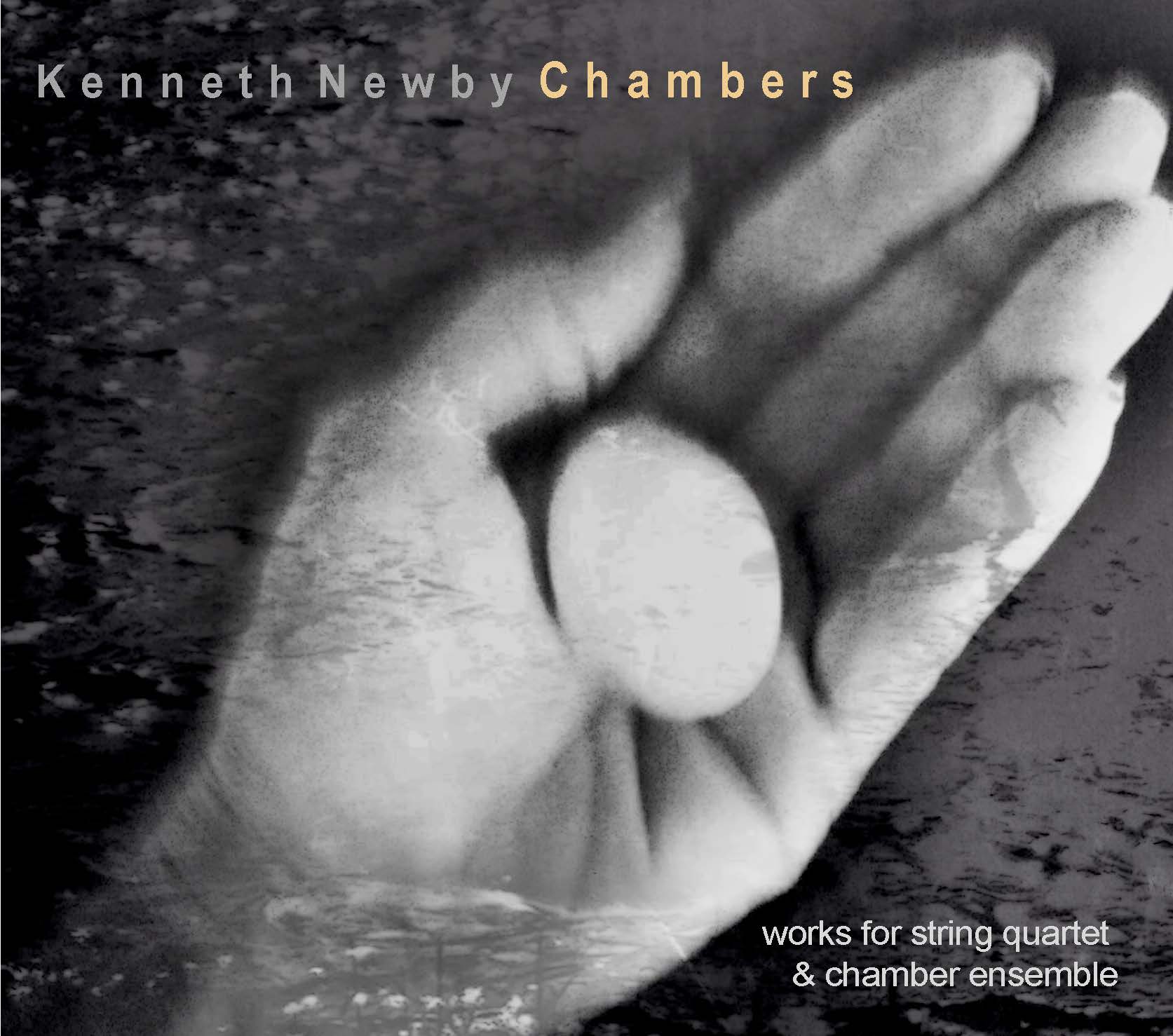
06 Chambers coverKenneth Newby – Chambers: Emergence Trilogy Volume 1
Flicker String Quartet; Flicker Ensemble
MP3-320 digital edition, CD Baby, Spotify, iTunes, Apple Music (flickerartcollaboratory.org)

A member of the Computational Poetics research group, British Columbia composer-performer, media artist and senior researcher at UBC’s Centre for Culture and Technology, Kenneth Newby’s music is not well known among the general audience on this side of the country. Newby’s music uses computational techniques in combination with acoustic ones, marked by his training in classical and improvised musics, as well as his extensive music studies in Bali and Java during the 1980s. His current work involves interdisciplinary collaborations in the creation of audiovisual installation works that represent complex images of multicultural identity. The composer writes that his Emergence Trilogy is “the culmination of a five-year research-creation process that involved the formulation of a personal theory of music which guided the development of a set of generative processes for music composition...”

Consisting of 23 primarily aphoristic tracks, Chambers is the first album of Newby’s Emergence Trilogy, the other albums being Elegeia, and Spectral (Golden) Lyric, also available for download. The works are performed with precision and panache by the Flicker String Quartet and Flicker Ensemble. For Mingus is Newby’s longest composition at just under ten minutes. It is also the most varied texturally and timbrally. It prominently features the double bass – as one might expect given the title – the prepared piano, a lacey battery of bells, bowed cymbals and other metal percussion, plus an inventive use of winds. The pointillistic texture is revealed over time via a motoric rhythm, lending the colourfully orchestrated work an attractive forward momentum. For Mingus exhibits several facets of Newby’s advanced transcultural musical aesthetic where echoes of gamelan mingle successfully with Edgard Varèse and John Cage. It certainly deserves to be more widely heard and performed.

Listen to 'Kenneth Newby – Chambers: Emergence Trilogy Volume 1' Now in the Listening Room

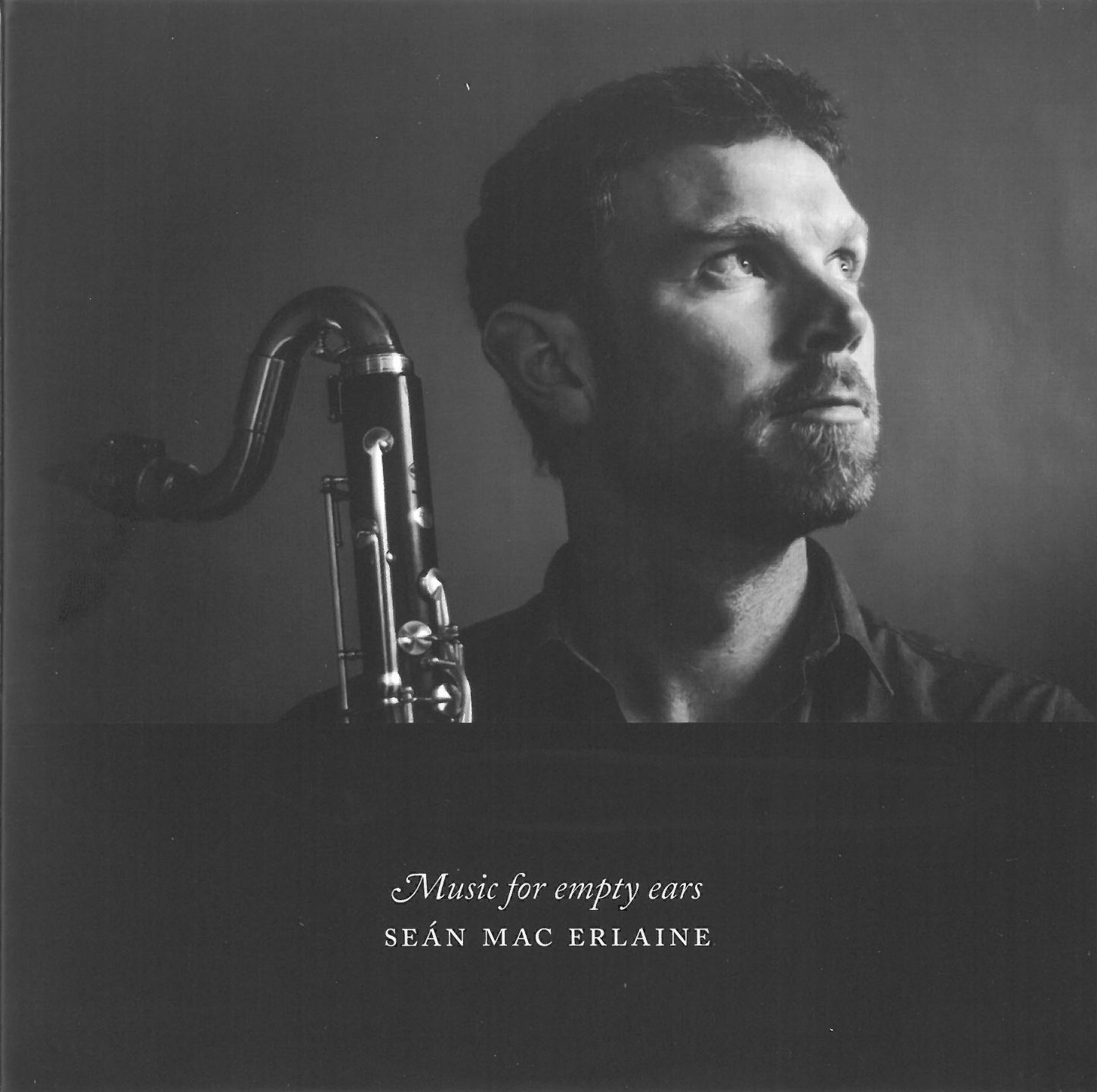
07 Music for Empty EarsSeán Mac Erlaine – Music for Empty Ears
Seán Mac Erlaine; Jan Bang; Eivind Aarset; Sadhbh Ní Dhálaigh
ergodos ER28 (ergodos.ie)

Music for Empty Ears gives the perfect hint to what you are about to hear on this new release by Dublin-based woodwind instrumentalist, composer and producer Seán Mac Erlaine. It comes as no surprise that he was noted as one of the most progressive musicians of his generation in Ireland – his music is truly unique. On this album, Mac Erlaine collaborated with two Norwegian artists, live sampling pioneer Jan Bang and guitarist Eivind Aarset. Together, they have created a sonic story that will play with your perceptions of time and space, and make your ears beat with pleasure.

I was immediately taken by the first track on this album, Winter Flat Map. The music ushered me into the post-apocalyptic space of pulsating sound waves, enriched with ethereal clarinet lines. This tune was followed by The Melting Song, featuring tranquil vocals (the fantastic Sadhbh Ní Dhálaigh) and gentle minimalism. And so the journey begins into the world of Mac Erlaine. Although sparse at times, the music is so richly textured that one truly needs to start listening with empty ears or, rather, without any preconceived notion or expectations. Layers upon layers are laid down with a variety of woodwind instruments, electronics, guitar, keyboards and vocals, creating a world of wonders, surprises, haunted melodies and melancholic impressions. This album is a gem.

08 Stephen AltoftRASP (trumpet in 19 divisions of the octave)
Stephen Altoft
Microtonal Projects MPR008 (microtonalprojects.com)

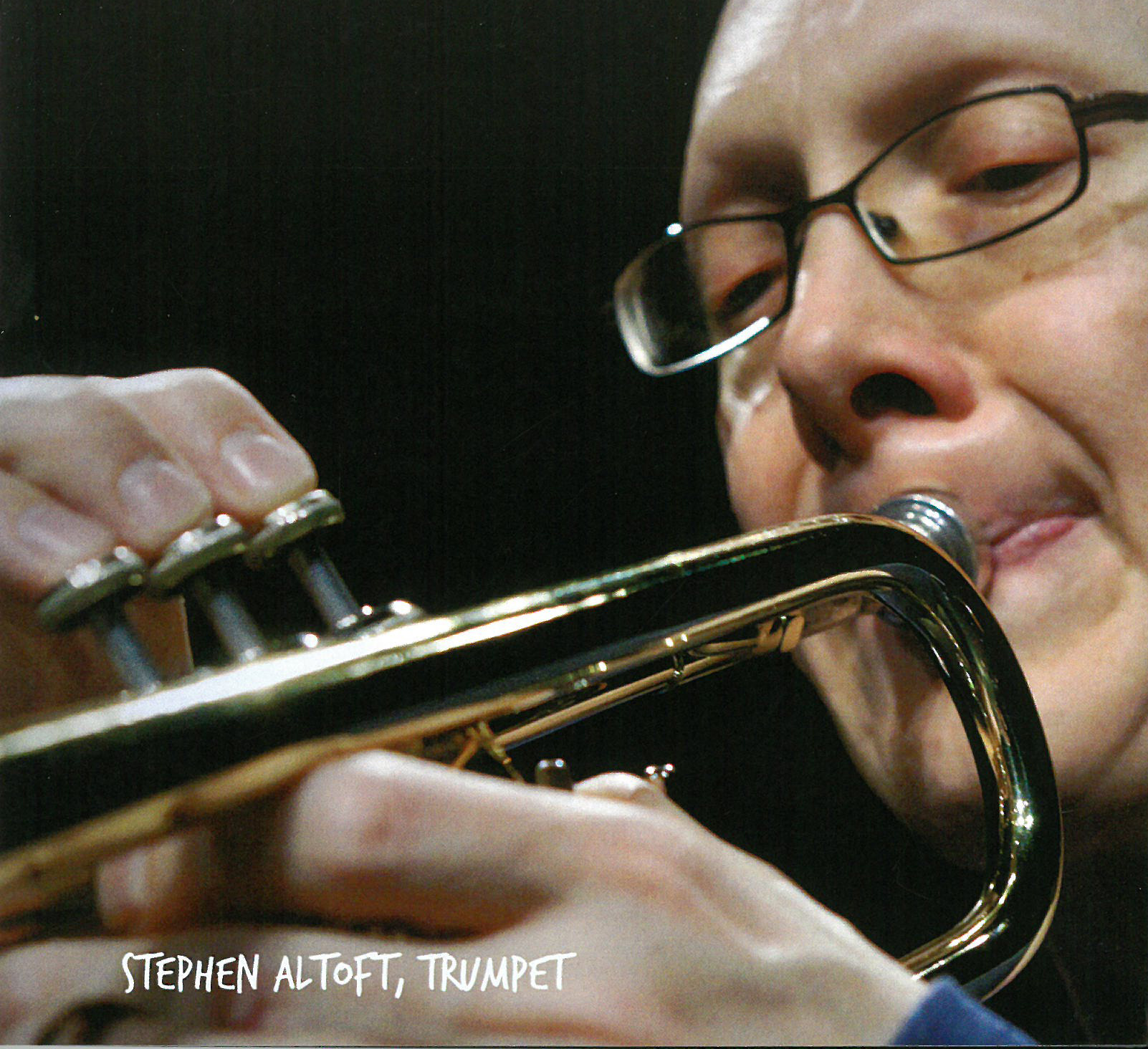
Stephen Altoft is an explorer who draws maps of musical terrain with his trumpet. The title track, his own composition Rasp, is a slow motion expansion from a breathy hiss to an intense broken buzz, like an angry housefly on a window pane. The logic of the progression is as stark as the material itself: a fearless opening statement and sensible at the same time, announcing to the listener “this is what I work with.”

The following tracks (especially the tenth, Studie by Manfred Stahnke) demonstrate the microtonal potential of Altoft’s remarkable customized trumpet. An extra valve and tubing permit him to divide the scale into 19 pitches without the guesswork of constantly adjusting a tuning slide mid-phrase. The effect is both comforting and disconcerting: one hears unusual pitches securely nailed instead of groped for, and wonders if one is hearing the “normal” tuned notes or the “altered.” And that’s the point, I believe – to re-normalize the various tunings that equal temperament has hidden behind its bland reductiveness.

I’d love to better understand the effects produced on many of the tracks. Electronics play a significant role in some, including the MalletKat, a digital marimba. Despite a promise on the jacket, I could unearth no information on the site about the 11 different composers or their pieces. Nevertheless, the succession of short pieces (none more than eight minutes, most five or less) provides a fascinating trip through this new (or forgotten) country.

Listen to 'RASP (trumpet in 19 divisions of the octave)' Now in the Listening Room

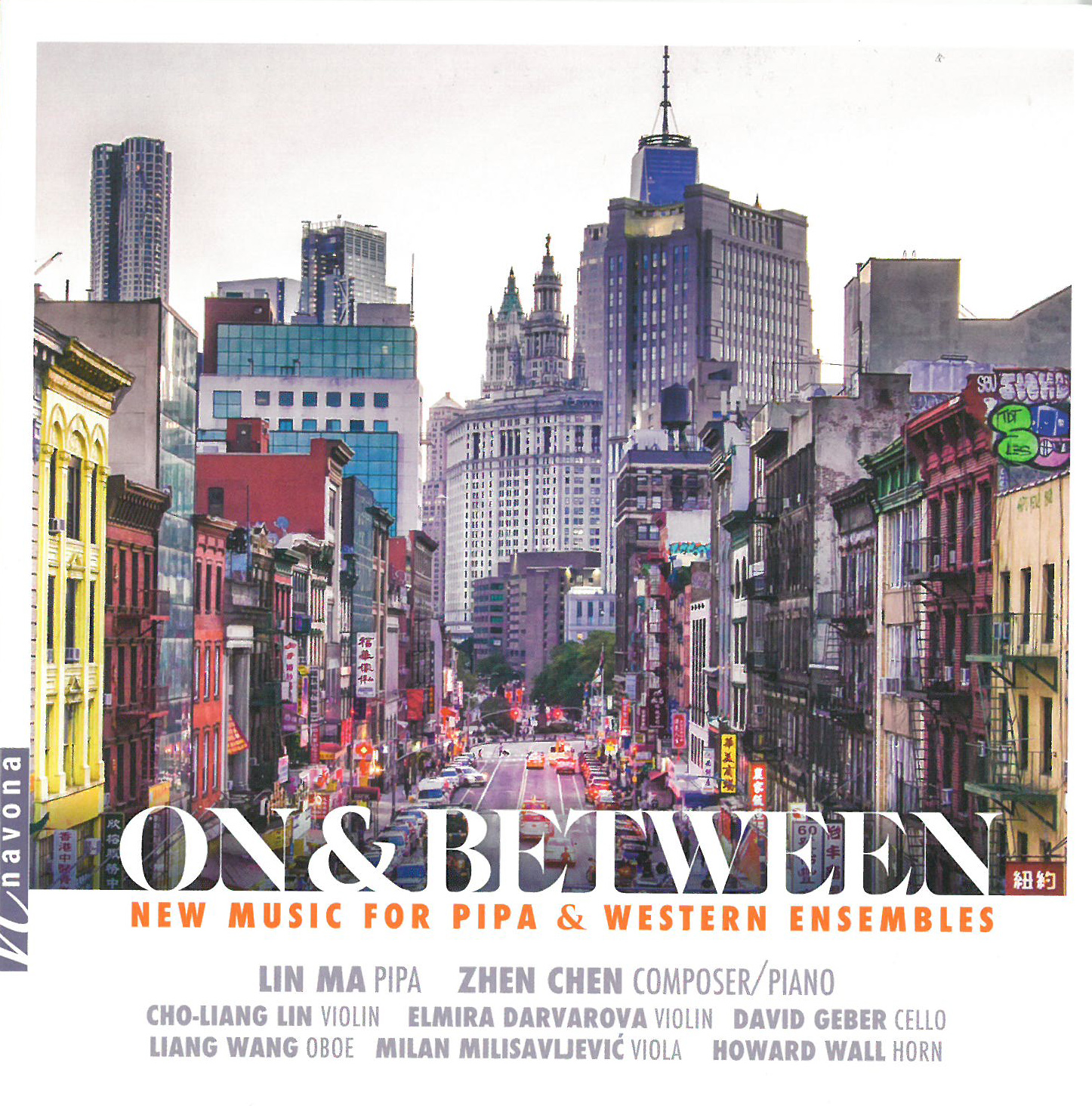
09 PipaOn & Between – New Music for Pipa & Western Ensembles
Lin Ma; Zhen Chen; Various
Navona Records NM6146 (navonarecords.com)

In On & Between, composer and pianist Zhen Chen weaves the musical tale of a Chinese immigrant newly arrived in America. Employing conservative tonal language and instrumentation (except for the pipa, the Chinese lute), the work deftly demonstrates Chen’s bicultural sensibility.

In a recent China Daily.com.cn interview, pipa soloist Lin Ma outlined the work’s narrative. “The pipa is the main character [threading] through the whole album,” Ma explained. “It stands for a Chinese girl who just came to New York City. She wandered, struggled and went through phases of growth. After years, she finally gained a foothold in the new land.” It sounds quite cinematic, and the music would be effective at the movies.

Several times in the suite Chen quotes the well-known English horn melody from Dvořák’s Symphony No.9 “From the New World” (1893), composed while Dvořák worked in the USA. In 1922 it was adapted for the song Goin’ Home by Dvořák pupil William Arms Fisher. For Chen it represents the “respect and sense of promise the United States [has] in the hearts of new immigrants.”

It’s interesting to note that Chen’s setting of the melody owes as much to neo-Romantic 20th-century Chinese patriotic compositions for Western orchestra such as the Yellow River Piano Concerto, as much as it does to Fisher’s song with lyrics cast in dialect and Dvořák’s original setting.

Then there’s my favourite track, Cocktails. It features just Ma’s cantabile pipa playing and Chen’s grand piano, effectively evoking a sophisticated, languid hybrid pipa-spiked-lounge jazz-meets-Satie atmosphere.

01 Eve EgoyanMaria de Alvear: De puro amor & En amor duro
Eve Egoyan, piano
World Edition 0033 (world-edition.com)

It’s been over 20 years since Canadian pianist Eve Egoyan gave the North American premieres of De puro amor (Of Pure Love) and En amor duro (In Hard Love) by Maria de Alvear. After hearing those performances, de Alvear, an innovative Spanish composer, performer and multimedia artist, composed three works for Egoyan. In 2001 Egoyan recorded one of those, Asking. Now, on this stunning new two-disc set, come De puro amor and En amor duro.

In her scores, de Alvear likes to give performers the freedom to make decisions about elements as fundamental as rhythm, metre and dynamics. With her fearless imagination, boundless sense of adventure and brilliant technique, Egoyan pushes beyond what seems possible on the piano. Floating melodies, expressive rhythmic shapes and ringing intervals plucked from the harmonic series weave a contemplative mood in both works, though disruptive undercurrents do intermittently surface.

De Alvear is a charismatic figure in the world of experimental music, especially in Germany, where she now lives. But her music is so personal that it either speaks to you or it doesn’t. For me, it does. I love the honesty, the passion and the openness, which lead her to colourful titles like Sexo and Vagina to evoke the more intimate aspects of love.

This set features drawings by de Alvear’s sister and frequent performance partner, Ana de Alvear, and booklet notes by Tim Rutherford-Smith, who has just published a groundbreaking book on contemporary music, Music After the Fall.

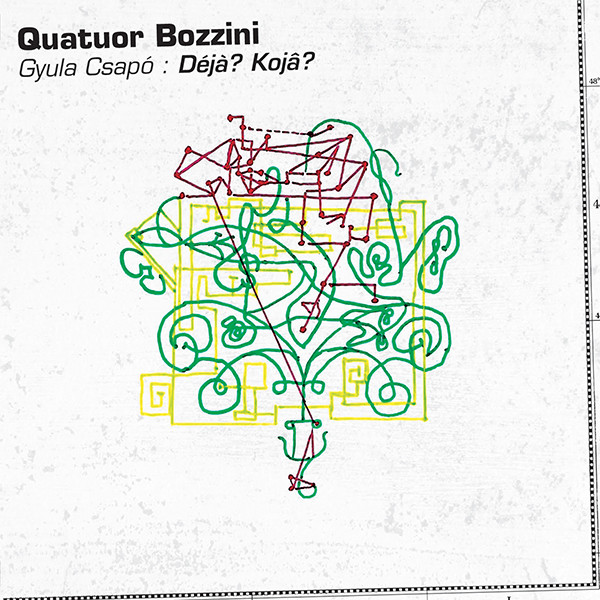
02 BozziniGyula Csapó: Déjà? Kojâ?
Quatuor Bozzini
Collection QB CQB 1821 (actuellecd.com)

Founded in 1999, Quatuor Bozzini are distinguished interpreters of contemporary repertoire, including fine recordings of John Cage, James Tenney and Steve Reich. Here they present a particularly challenging work, a three-part, 73-minute piece composed between 2011 and 2016 by Gyula Csapó, a Hungarian composer currently teaching at the University of Saskatchewan. His music suggests the influences (including scale and depth) of Morton Feldman and Arvo Pärt. Csapó’s brief note about this work is dauntingly abstract (“event-fossils,” “fractals”), but the core is in the title, Déjà? Kojâ? part French, part Persian: “Already?” is easy. “Kojâ?” comes with a poem that suggests “Threshold” as the crucial sense, and that this world is a threshold, the beginning of another experience or existence, a step both inevitable yet deferred.

The work is monumental, developing thick, often dissonant textures. Its long first section is anchored to a repeating oscillation, brief but slow, between low-register cello and viola and high, reedy violins. Seconda Parte is more varied, adding other sonic devices, including moving the contrast of registers to pizzicato lows and whistling harmonic glissandi from the violins. Terza Parte eventually expands the oscillating figures into a still minimalist, but gradually evolving melodic shape.

It’s a demanding work, a dark reverie that suggests anticipation while dramatizing its delay, a sombre meditation shot through with bright highs that are themselves dissonant. At once static and tumultuous, this is depth experience, rewarding all the attention one can give it.

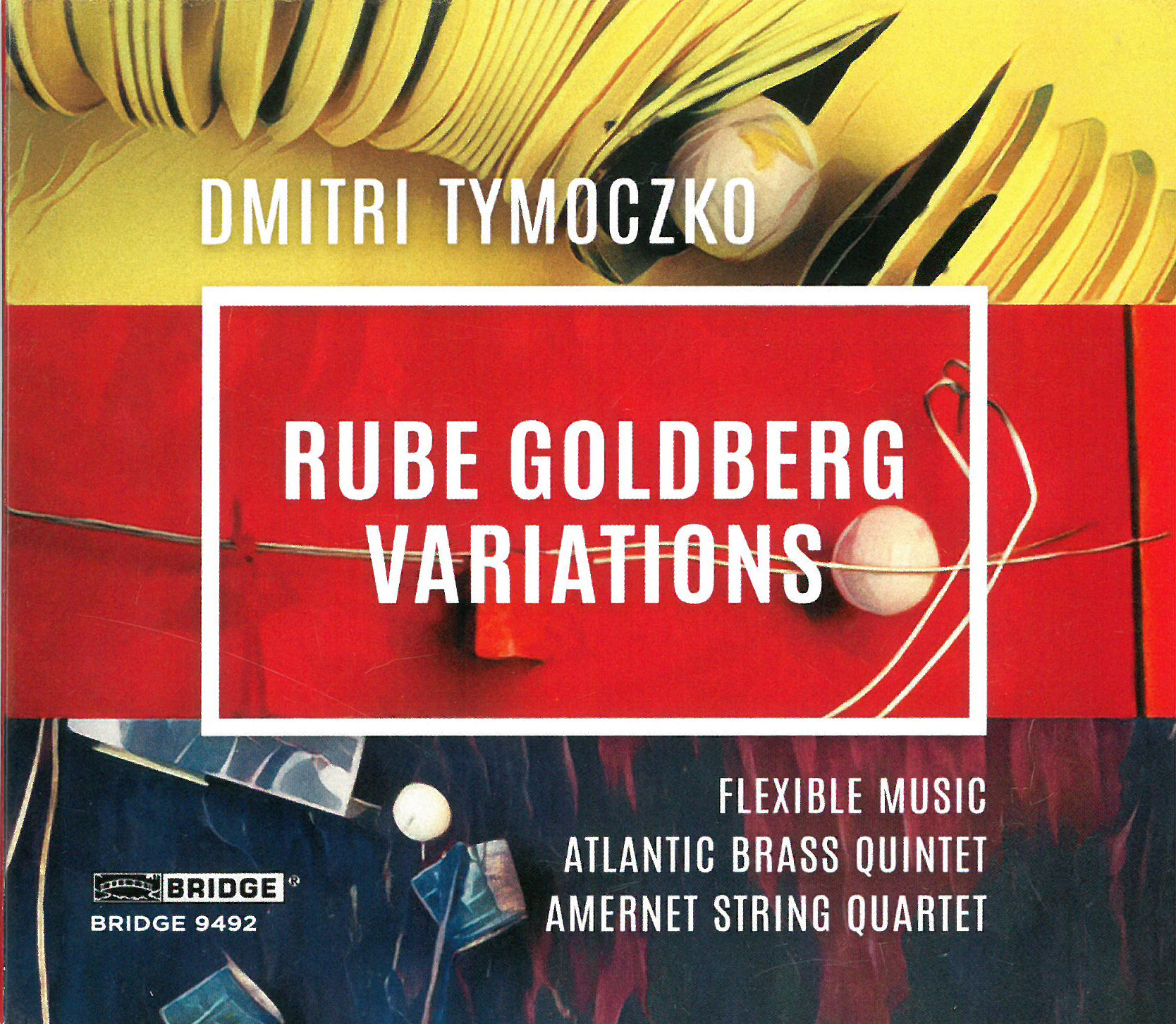
03 Tymoczko Rube GoldbergDmitri Tymoczko – Rube Goldberg Variations
Flexible Music; Atlantic Brass Quintet; Amernet String Quartet
Bridge Records 9492 (bridgerecords.com)

Mid-career American composer and music theorist Dmitri Tymoczko’s music exhibits an attractive blend of jazz, Romanticism and rock, as well as influences from film and cartoon soundtracks. Demonstrating sonic imagination and frequent nods to past composers, his work appears to be equally at home in the American concert hall modernist and popular music streams, a compositional style which has been dubbed polystylistic.

Rube Goldberg Variations, the central work on this album, refers both to a certain J.S. Bach keyboard work, and to the American cartoonist known for his illustrations of machines designed to perform simple tasks in baroque, convoluted ways. The four-movement, 19-minute Variations is scored for brass quintet and prepared piano. In its movement titles Tymoczko refers to his musical ancestor Igor Stravinsky, to kinetic sculpture and to his experiences of fatherhood. Rhythmically and sonically engaging, the prepared piano part in the first movement, To a Leaf, refers to its inventor John Cage. The brass quintet flutters along with idiomatic fanfare-like wind polyphony contrasted by contrapuntal brassy sustained chords. Stravinsky Fountain is another effective movement, with its shards of jazz in a syncopated early-20th-century style, and references to the dedicatee composer’s adoption of it in his concert works. This single movement is a satisfying complete musical statement.

The other album works, S Sensation Something (string quartet and piano) and I cannot follow… (chamber ensemble), are more conventional in instrumentation and form. They are not however without the melodic invention and easygoing charm with which Tymoczko brands his mature scores.

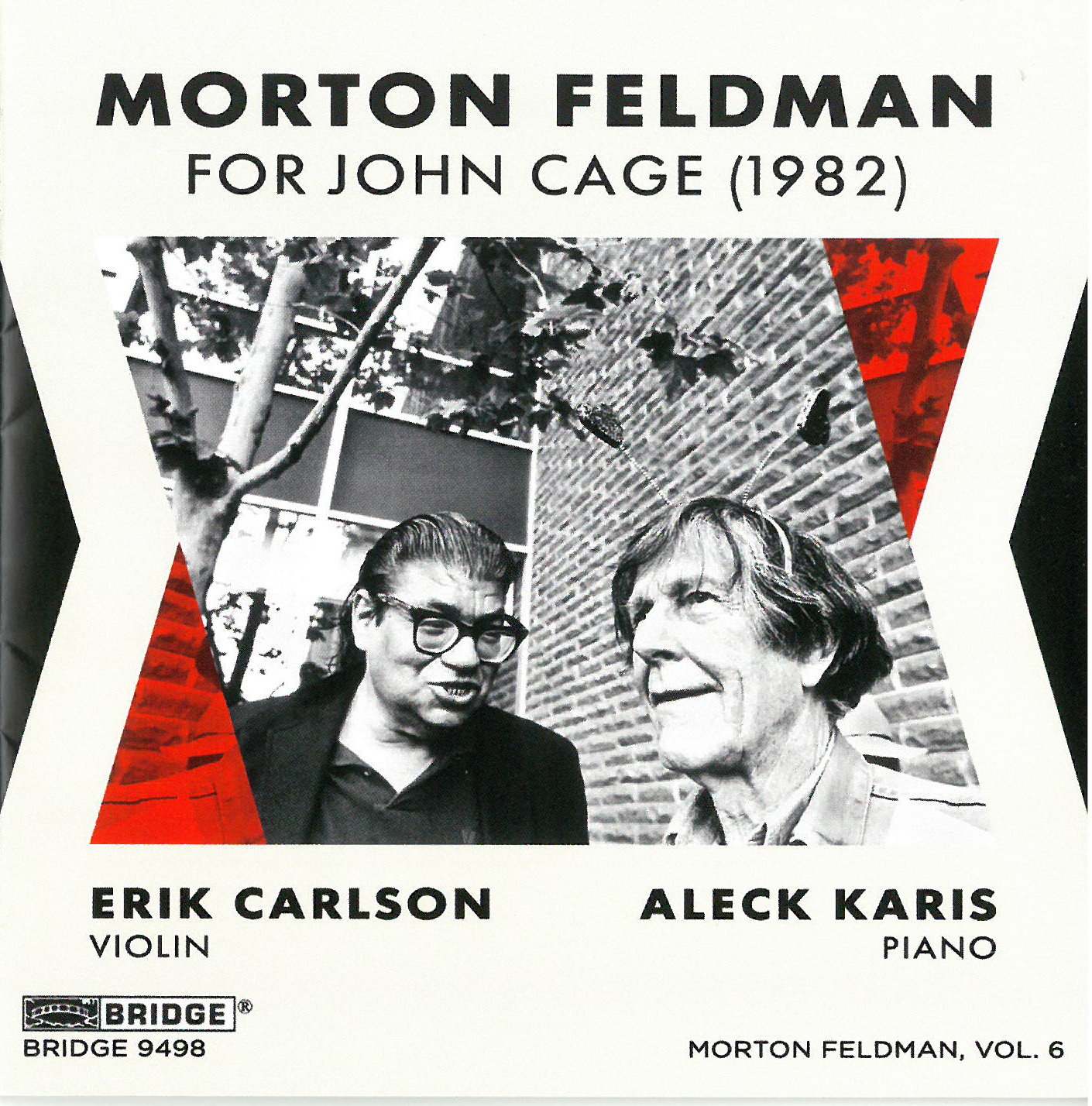
04 Feldman for CageMorton Feldman – For John Cage
Erik Carlson; Aleck Karis
Bridge Records 9498 (bridgerecords.com)

For John Cage (1982) scored for piano and violin is late-period Morton Feldman (1926-1987). That typically means a very lengthy work in a single continuous movement – more than 71 minutes in this recording – that explores a glacially paced musical development and very quiet sound levels.

In a 1982 lecture Feldman asked, “Do we have anything in music … that just cleans everything away?” For John Cage offers his answer. A tribute to one of Feldman’s most enduring personal and professional relationships, it’s a platform for his musical concerns at the time. These include translating meaningful visual and textural effects he found in Turkish regional carpets into musical patterns and sonic gestures. The two musicians, violinist Erik Carlson and pianist Aleck Karis, render the composer’s ideas with precision and delicacy in equal measure.

Feldman was a frequent visitor to Toronto during the 1970s when he taught at the University of Buffalo. Later he married his Canadian composition student Barbara Monk, who established a home in midtown Toronto where she held soirees after her husband’s death. While attending two of these soirees, I was particularly fascinated by the walls covered with kilim carpets, a physical reminder of a source of Feldman’s late period inspiration.

Leaning toward a minimalistic aesthetic in its use of subtly varied melodic phases and a restrained abstract formalism, don’t expect tunes you can hum along with, or grooves to tap your toes to here. While this music will be challenging for some listeners, I personally find it a searching, engaging and rewarding listen.

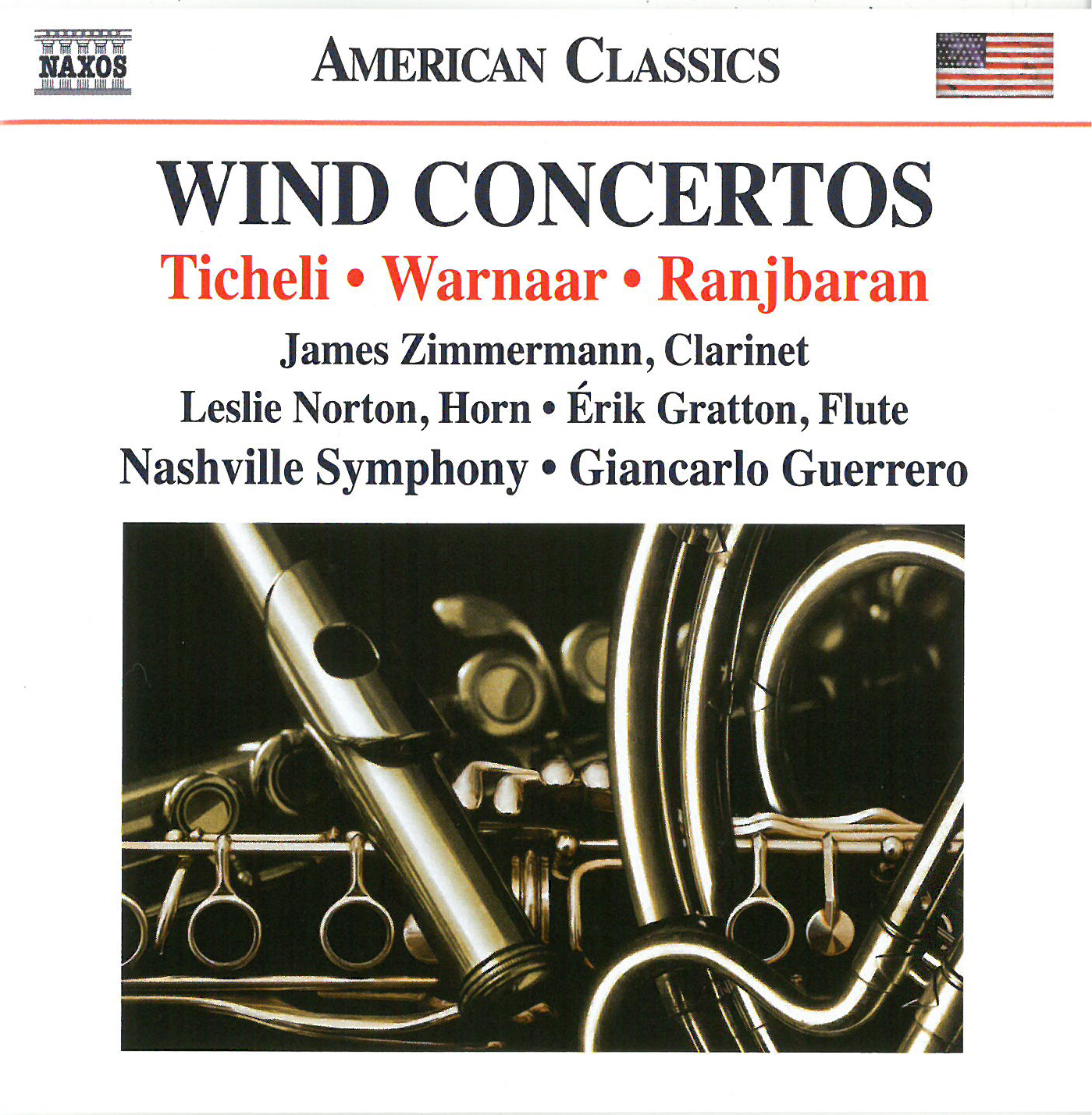
06 Wind ConcertosWind Concertos: Ticheli; Warnaar; Ranjbaran
James Zimmermann; Leslie Norton; Érik Gratton; Nashville Symphony; Giancarlo Guerrero
Naxos 8.559818 (naxos.com)

Three very different, recent (2010-2015), ear-catching concertos in the traditional fast-slow-fast three movements, by three composers born in the 1950s, each referencing earlier music, receive vibrant performances from Nashville Symphony principals James Zimmermann (clarinet), Leslie Norton (horn) and Érik Gratton (flute).

In his Clarinet Concerto, Frank Ticheli, who teaches at the University of Southern California, pays homage to American composers in movements titled Rhapsody for George, Song for Aaron and Riffs for Lenny, adding some recognizable quotations and paraphrases to flavour his original, engaging takes on his illustrious predecessors. It’s a pops concert natural!

Michigan native Brad Warnaar wrote his Horn Concerto for the instrument he played in the Toronto Symphony and other Ontario orchestras in the 1970s, before relocating to play in the Los Angeles Philharmonic and, he claims, “over a thousand film scores.” Warnaar says his concerto embraces everything from rock to atonality, but I hear only very accessible, enjoyable, tonal mainstream music in the minimalist-energized Tintinnabulations, the ruminative Elegies, Lamentations and the jaunty Tarantella, including subtle quotations from Mozart, Brahms and Richard Strauss.

Juilliard faculty member Behzad Ranjbaran, born and raised in Iran, emulates what he calls the “mystic, melancholic” tone of the ney (Persian end-blown reed flute), enhancing the exoticism of his hybrid Iranian-Western Flute Concerto. Extended meditative passages (the Adagio cantabile is a real beauty) are offset by the sparkling finale.

These world-premiere recordings should help all three very entertaining concertos become, deservedly, part of today’s active repertoire.

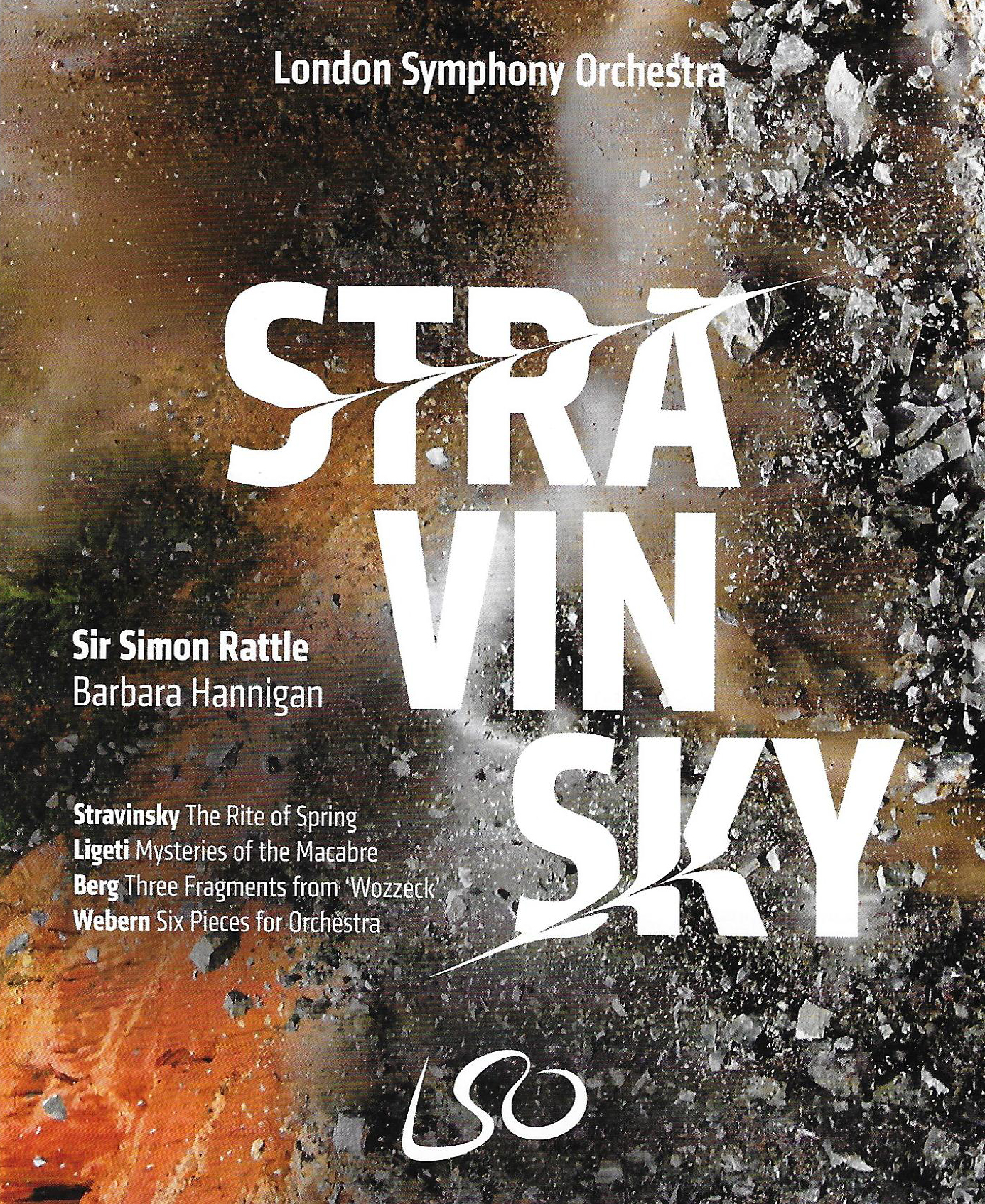
01 Stravinsky Blu rayStravinsky – Rite of Spring: Ligeti – Mysteries of the Macabre; Berg – Three Fragments from Wozzeck; Webern – Six Pieces for Orchestra
Barbara Hannigan; London Symphony Orchestra; Sir Simon Rattle
LSO Live LSO3028 (lso.co.uk)

Some will want this album for the major work, the Stravinsky, while others will want to hear how the LSO will sound under their new music director, recently returned from Berlin. Still others, a lot of others, will want to hear what Barbara Hannigan is up to, particularly the outrageous Mysteries of the Macabre, which is a specialty of hers and has been recorded and videoed several times.

Hannigan is astonishingly versatile, a brilliant soprano singing what sopranos sing, in addition to works by 20th- and 21st-century composers, and is developing as a conductor (often while singing!). (There is, by the way, a revealing and fascinating documentary on another DVD, Barbara Hannigan Concert and Documentary from Lucerne (Accentus ACC 20327) published in 2014. In it she explains what Ligeti’s Mysteries of the Macabre is all about. She is the chief of the secret police who is crazy, paranoid and hysterical, who cannot speak real words and gives orders to her squad, the orchestra, in indecipherable code. A crazy but serious piece, especially coming straight after the genuinely searching fragments from Wozzeck.)

The concert from January 15, 2015 opens with the Webern pieces in a performance that puts the likes of, say, a Boulez to shame. Finally to Le Sacre. The playing is measured, powerful and incisive throughout with accents and attacks quite audible, even in the ferocious but controlled tuttis. Both audio and video are most impressive and considering the repertoire, this Blu-ray disc packaged with a regular DVD is enthusiastically recommended.

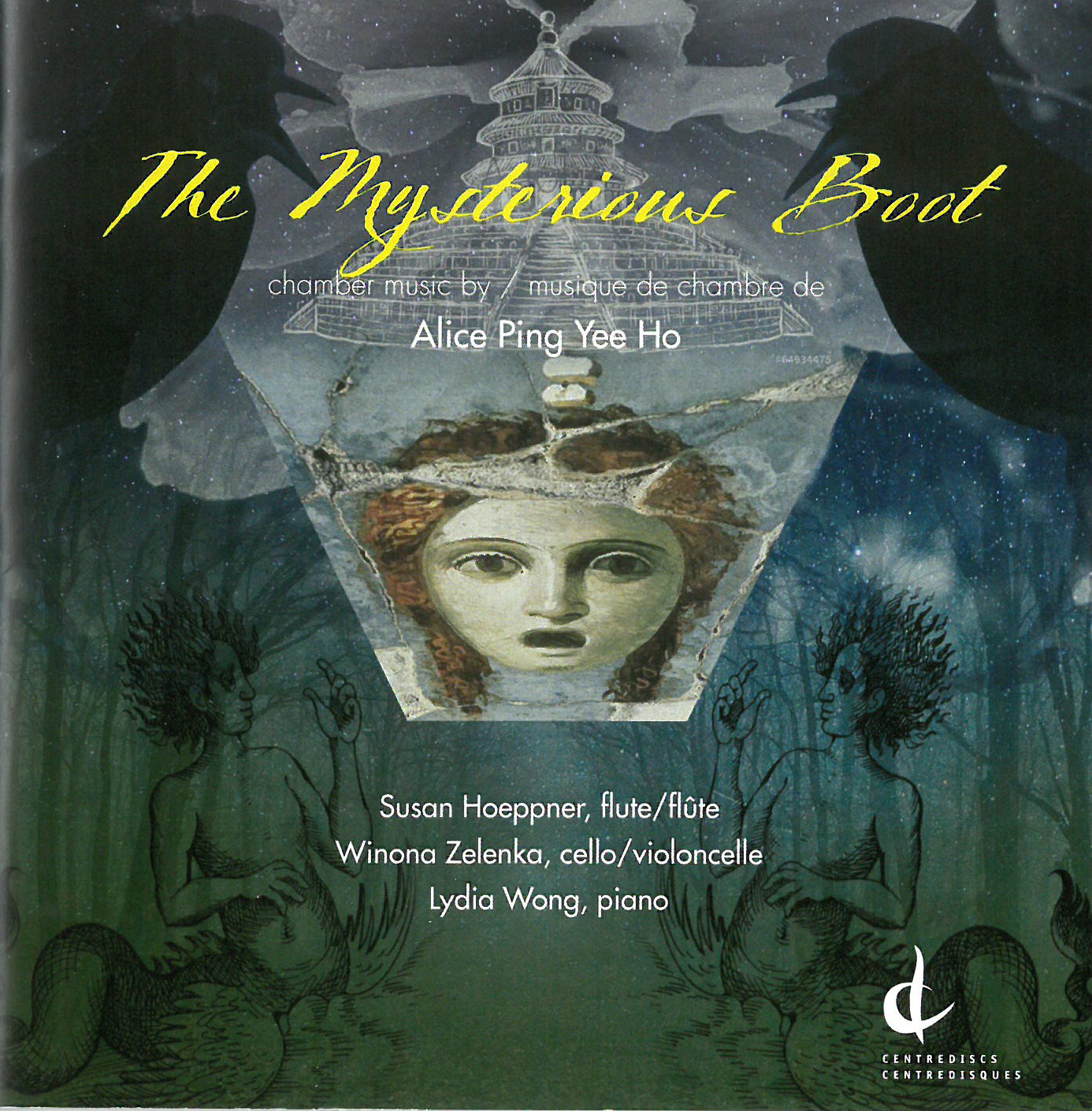
02 Alice HoAlice Ping Yee Ho – The Mysterious Boot
Susan Hoeppner; Winona Zelenka; Lydia Wong
Centrediscs CMCCD 25018 (musiccentre.ca)

Prolific Toronto-based composer Alice Ping Yee Ho adds to her extensive discography with these five works for flute, plus cello and/or piano, brilliantly performed by three superb Toronto musicians: flutist Susan Hoeppner, cellist Winona Zelenka and pianist Lydia Wong.

Ho’s compositions often reflect her Chinese ancestry (she was born in Hong Kong in 1960). Asiatic Impression for flute, cello and electronic tape “evokes,” writes Ho, “sounds of Asiatic instruments and ancient tunes.” More “ancient” echoes appear in two works for all three players, but here they’re Greco-Roman. Seiren is the mythical songstress whose hypnotic melodies fatally lured sailors onto reefs. Ho gives the instruments roles: flute/alto flute (Seiren), cello (sailor), piano (sea), creating a turbulent tone-poem scenario. In The Mysterious Boot (subtitled Cothurnus, the boot worn by actors in tragic plays), the musicians employ many unconventional techniques, seeming to offer quirky, hypermodern commentary on an archaic drama.

Ho describes Coeur à Coeur for flute and piano “as an imaginary conversation between two voices…confessing their feelings to each other.” By turns lyrical, passionate, playful, ruminative and vehement, the flute emerges as the dominant voice. Suite for Flute and Piano (1992) is an early Ho composition (the other four date from 2014 to 2017). It’s an attractive, French-sounding piece, suggesting that Ho hadn’t yet found her own dominant stylistic voice, a voice that sings loud and clear in the recent works on this highly entertaining disc.

03 Scott Johnson Mind Out of MatterScott Johnson – Mind Out of Matter
Alarm Will Sound; Alan Pierson
Tzadik TZ 4021 (alarmwillsound.com)

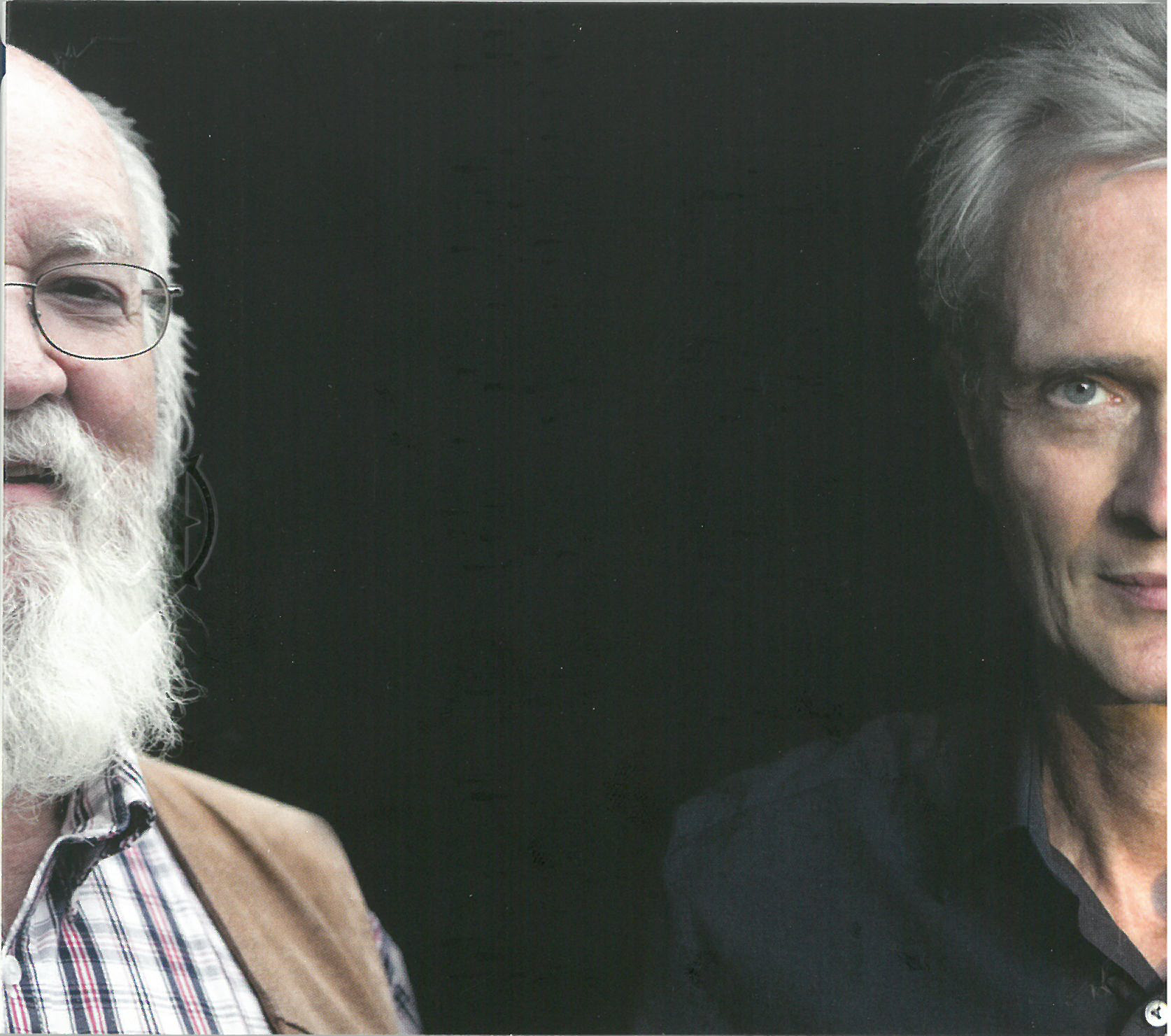
I have read, with pleasure, books by secular-humanist philosopher Daniel Dennett on evolution (Darwin’s Dangerous Idea), religion (Breaking the Spell) and consciousness (From Bacteria to Bach and Back). So I was curious to hear this 73-minute, eight-movement work by American composer Scott Johnson (b.1952), using as musical materials the pitches and rhythms of Dennett’s spoken words, recorded at a talk about Breaking the Spell and in interviews with the composer.

Johnson calls his technique, used in this and previous compositions, “speech melody,” adding that Mind Out of Matter contains “musical references ranging from Baroque recitative to retro funk grooves.” Dennett’s speaking style is conversational and Johnson’s instrumental score is conversational, too, lacking extended melodies or dramatic climaxes. Johnson repeats some of Dennett’s words and phrases many times, usually clearly heard but occasionally submerged under the colourful, ambulating music, mixing elements of classical, rock and jazz. It’s performed by Alarm Will Sound, 17 players on strings, winds, brass and percussion, including alto sax and electric guitar, conducted by Alan Pierson. In one movement, the musicians contribute a chanted chorus.

In Surrender, the longest movement, Dennett asserts that religions – “ideas to die for and kill for, even if it doesn’t make sense” – have, like biological organisms, evolved by natural selection.

Dennett’s books drew me to this music. If, in turn, listeners are led to read Breaking the Spell, Johnson’s composition will have helped increase their understanding of why people believe as they do.

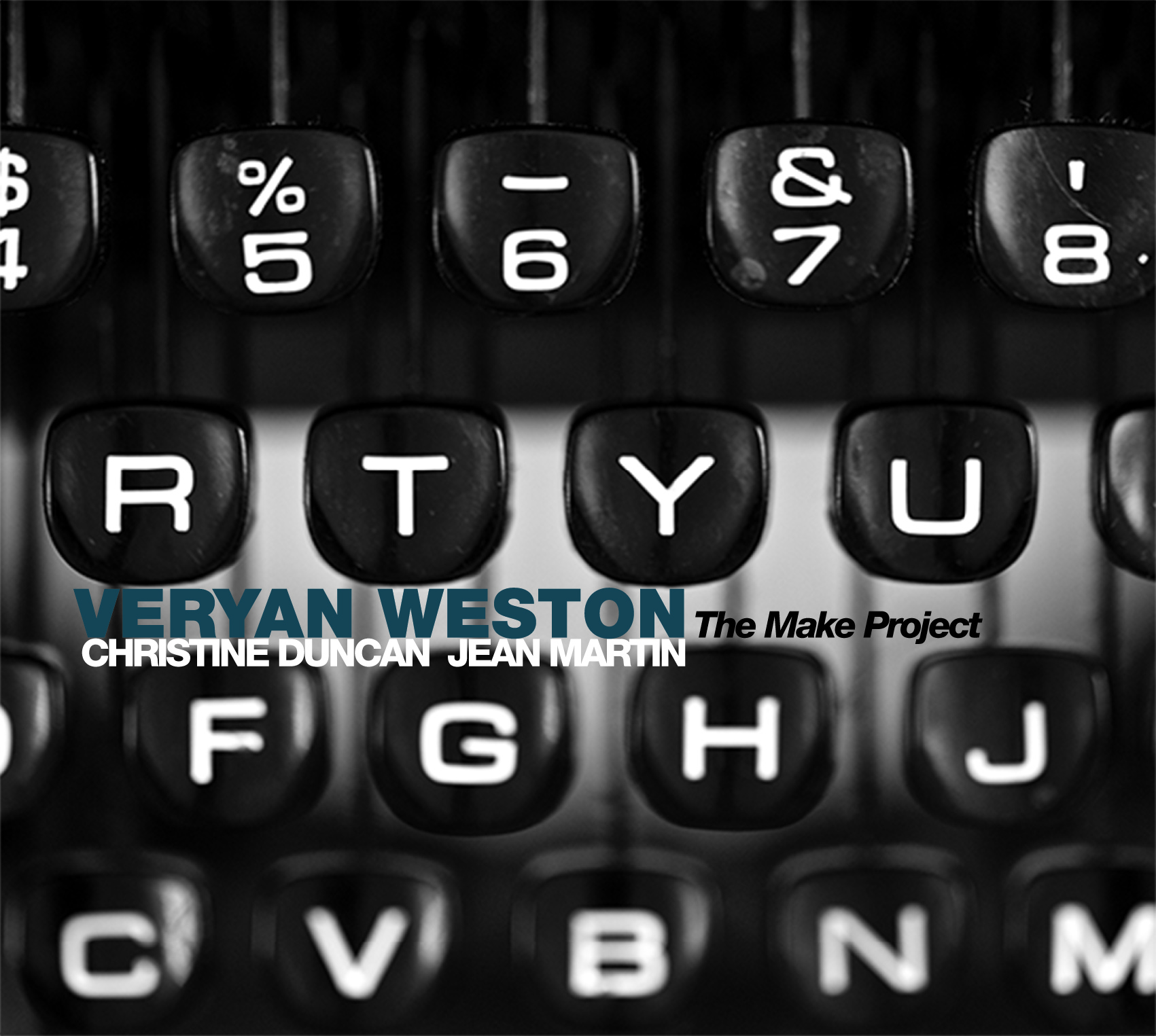
04 Make ProjectThe Make Project
Veryan Weston
Barnyard Records BR0344 (barnyardrecords.com)

The Make Project presents pieces realized in Toronto in 2015 by English pianist-composer Veryan Weston with Christine Duncan, Jean Martin and three ensembles, including Duncan’s 45-member Element Choir. The music is a stunning synthesis of two concepts: one is Duncan’s conduction method in which the large choir creates spontaneously in response to her hand signals; the second is Weston’s Tesselations, works he’s been developing since 2000 in which performers move through the 52 possible pentatonic scales, altering one note at a time.

For Tesselations IV, Weston has added 52 corresponding texts, all from women writers and each containing the word “make,” which triggers the shift to the next scale. The authors range through the centuries, from Julian of Norwich to Margaret Atwood, and include telling words whether on creativity (Simone de Beauvoir: “On paper, I make time stand still”) or politics (Emma Goldman: “If voting changed anything, they’d make it illegal”).

The first piece, the four-minute Hidden Meanings, has a nine-voice women’s a cappella choir creating luminous layers of words and voices with overlapping texts. The second, Hidden Words, is an eight-minute instrumental improvisation with Weston, producer/drummer Martin and four strings (violinists Josh and Jesse Zubot, violist Anna Atkinson and bassist Andrew Downing) that possesses a spiky, Webern-esque clarity.

Then the forces assemble – the musicians, the Element Choir, solo voices Felicity Williams and Alex Samaras – for the 32-minute Tesselations IV (Make), a work of great depth and scale that moves through various combinations of choir, sextet and soloists with expanding meaning and a series of luminous textures. It’s brilliant work that combines genres and techniques to create its own world.

05 SteveSwelCD007Music for Six Musicians: Hommage à Olivier Messiaen
Steve Swell
Silkheart SHCD 161 (silkheart.se)

Taking the post-modern concept of saluting favoured musicians without recreating their work, trombonist Steve Swell convened a sextet of New York improvisers to play five of his compositions expanding on the work of French composer Olivier Messiaen (1908-1992). Extrapolating Messiaen’s complex harmonies, rhythms and melodies to the 21st century, this 76-minute suite manages to replicate orchestral verisimilitude with violist Jason Kao Hwang, cellist Tomas Ulrich, alto saxophonist Rob Brown, keyboardist Robert Boston and drummer Jim Pugliese.
Boston’s ecclesiastical organ fills create the perfect environment for a sly takeoff on Messiaen’s Quartet for the End of Time, titled Sextet for the End of Democracy. Quiet but sardonic like the 1941 classic, this piece features appropriate aviary cackles from the strings and plunger variables by Swell. Contrasting melodic cello and astringent reed timbres contribute to the juddering swing as the tune climaxes with swelling organ pulsations. Comparable transformations advance the other tracks, with the polyphonic and nearly atonal final Exit the Labyrinth filled with squeaking strings and blowsy horns reaching a passionate crescendo; and Joy and the Remarkable Behavior of Time outright jazz, matching drum shuffles and pseudo-tailgate trombone with cascading piano chording.

Tellingly it’s the nearly 25-minute Opening track which sets up compositional tropes from the dynamic to the compliant, with as many dual contrapuntal challenges and pseudo-romantic tutti outbursts as solos that measure technique against inspiration. More than a Hommage, the performance demonstrates how considered inspiration can create a work as memorable as its antecedent(s).

Back to top