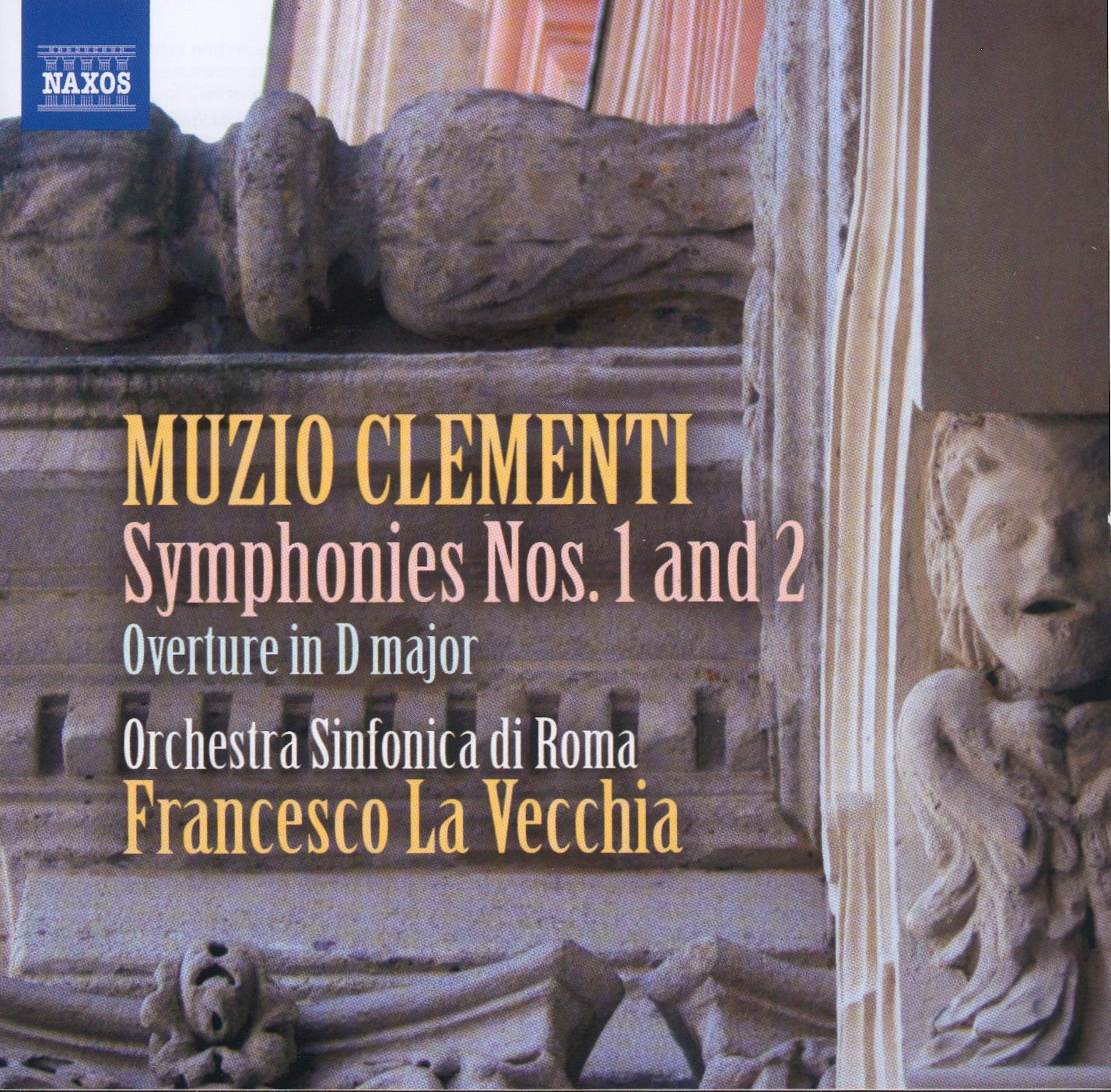
02 ClementiClementi - Symphonies 1 & 2
Orchestra Sinfonica di Roma; Francesco La Vecchia
Naxos 8.573071

Although we tend to think of Muzio Clementi primarily as the composer of utilitarian exercises for the piano, this disc reminds us of his considerable gifts as a symphonist and the liner notes succinctly lay out the impressive details of his remarkable and influential career. His playing, conducting and teaching brought him into contact with leading composers of his generation and in 1813 he founded – together with Viotti – the Philharmonic Society of London. He was also active in music publishing and the manufacturing of pianos.

Written somewhere between 1805 and 1820 (the exact dates of composition are a matter of speculation), these orchestral pieces invite comparison to the masterpieces of the form by Haydn, Mozart and Beethoven and the results are favourable. It’s clear that Clementi’s studies and travels – which took him from Rome to Paris, Vienna, Lyon and, eventually, London – equipped him with a formidable musical knowledge and technique. Thematic interest, clever orchestration and powerful drama make the case that these works should be more widely known.

This excellent recording will help in that regard. La Vecchia coaxes energetic and spirited performances from his orchestra, featuring particularly fine wind playing.     

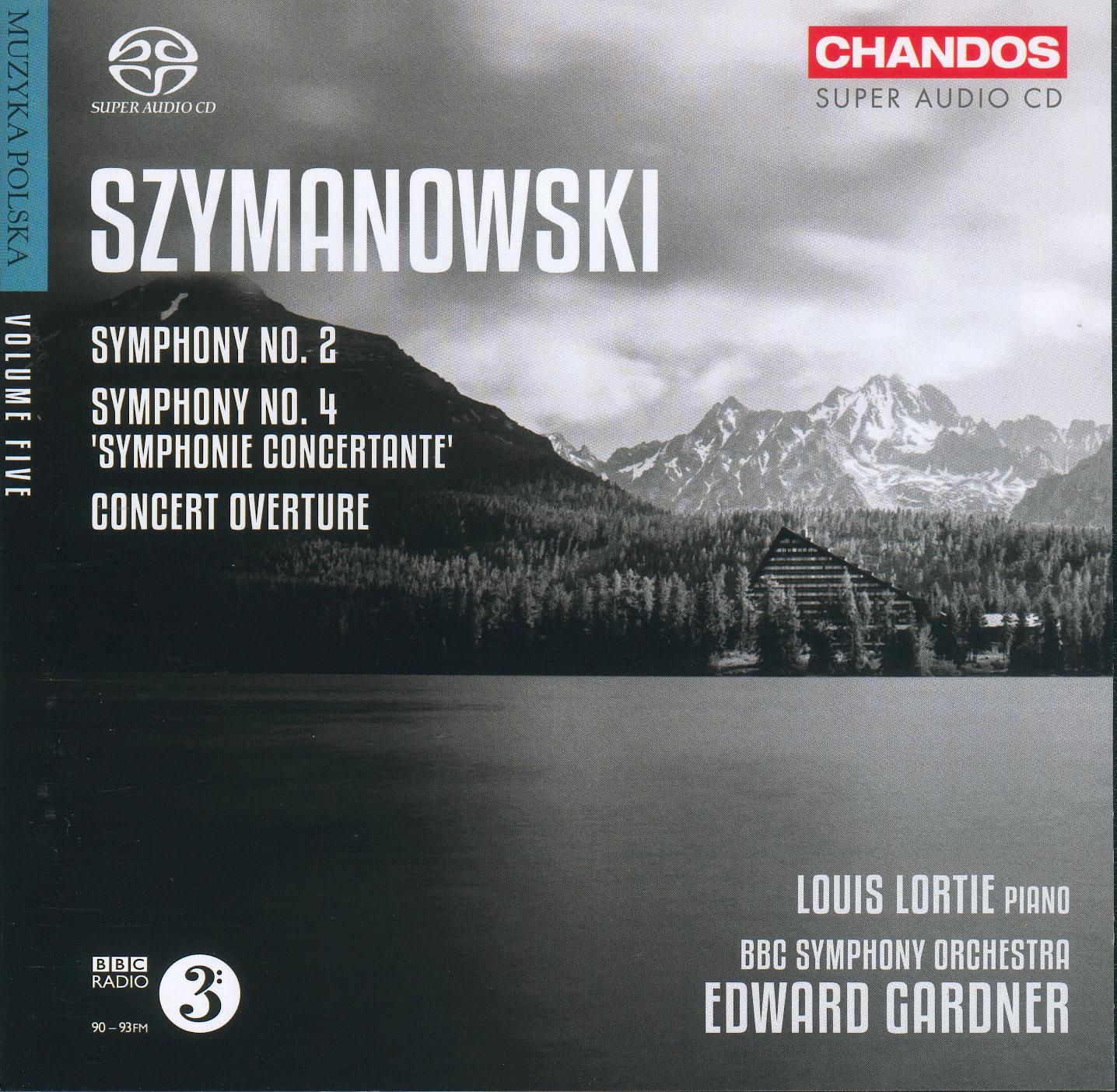
06 SzymanowskiSzymanowski - Symphonies 2 & 4 “Symphonie Concertante”
Louis Lortie; BBC Symphony Orchestra; Edward Gardner
Chandos CHSA 5115

Following many masterful performances of standard repertoire on Chandos, celebrated pianist Louis Lortie has branched out. In addition to his Lutoslawski Piano Concerto (Chandos CHSA 5098), there is now Karol Szymanowski’s Symphony No.4, Op.60 (“Symphonie Concertante,” 1932), a modernist concerto dedicated to Szymanowski’s friend Arthur Rubenstein. Lortie makes the most of solo opportunities, delivering the first movement cadenza with expressive rubato and drama. In a second movement including both romantic-nocturne and Bartókian night-music elements, he accompanies lovely flute and violin solos with tastefully shaped treble figuration. Edward Gardner`s orchestral pacing builds the performance steadily before a return to the original uneasy pastoral mood. The finale is an oberek, a wild Polish dance; here technique and ensemble between Lortie and orchestra are impeccable.

Comparing the work with Szymanowski’s early, derivative Straussian Concert Overture, Op.12 (1905) demonstrates his moving away from German models towards influences from Eastern Europe. Gardner and the BBC Symphony give the latter a rousing performance that shows the 23-year-old composer’s mastery of compositional and orchestral technique. Symphony No.2 (1909-10, re-orchestrated 1927-36) continues his earlier Austro-German direction, reminding me of Zemlinsky and the tonal Schoenberg. The conducting of the dramatic opening movement conveys long, wide-ranging leading and subsidiary lines, with appropriate tempo fluctuations. In the middle movement, each variation is a lyrical gem and the BBC strings shine. An adventurous fugal finale concludes this impressive disc.


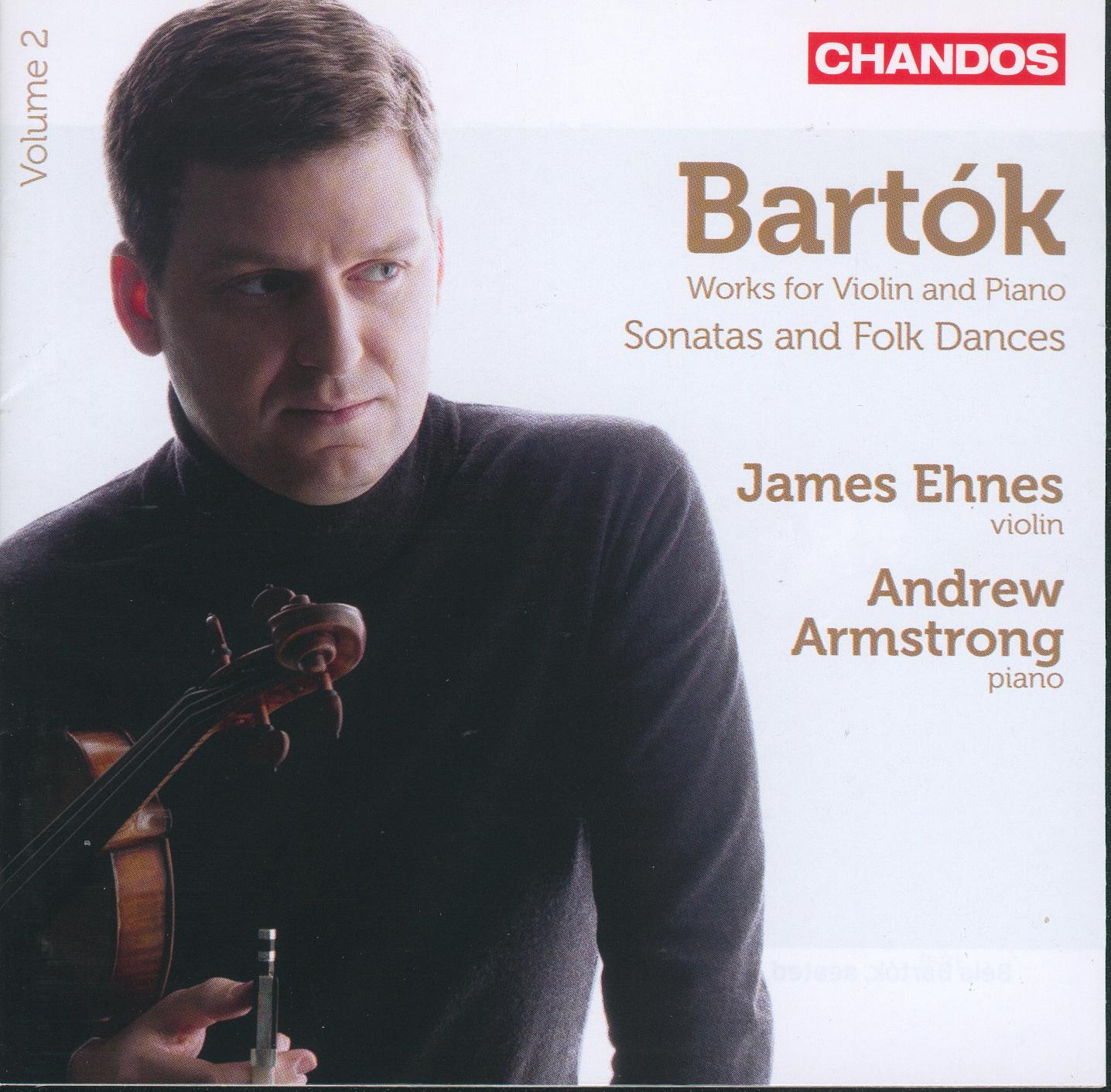
01 Ehnes BartokThe wonderful James Ehnes is back with more top-notch performances in Bartók: Works for Violin and Piano, Volume 2, with the equally terrific Andrew Armstrong at the piano (CHANDOS CHAN 10752). Volume 1 (CHAN 10705) featured sonatas and rhapsodies; this new CD features sonatas and folk dances.

Despite the CD’s title, it’s the Solo Sonata from 1944 that opens the recital, and Ehnes gives a commanding performance, perhaps not as edgy as some, but with a great sense of line and energy. The Sonata in E Minor is an early work from 1903 and is perhaps stylistically closer to Brahms than to the composer Bartók was to become. Well worth hearing, it was apparently shelved after its first performance in 1904 and remained both unplayed and unpublished until the 1960s.

Three shorter works complete a generous — almost 80 minutes — CD. The Hungarian Folksongs and Hungarian Folk Tunes were both transcribed from the piano collection For Children, and the more recognizable Romanian Folk Dances are transcriptions of the solo piano pieces of the same name.

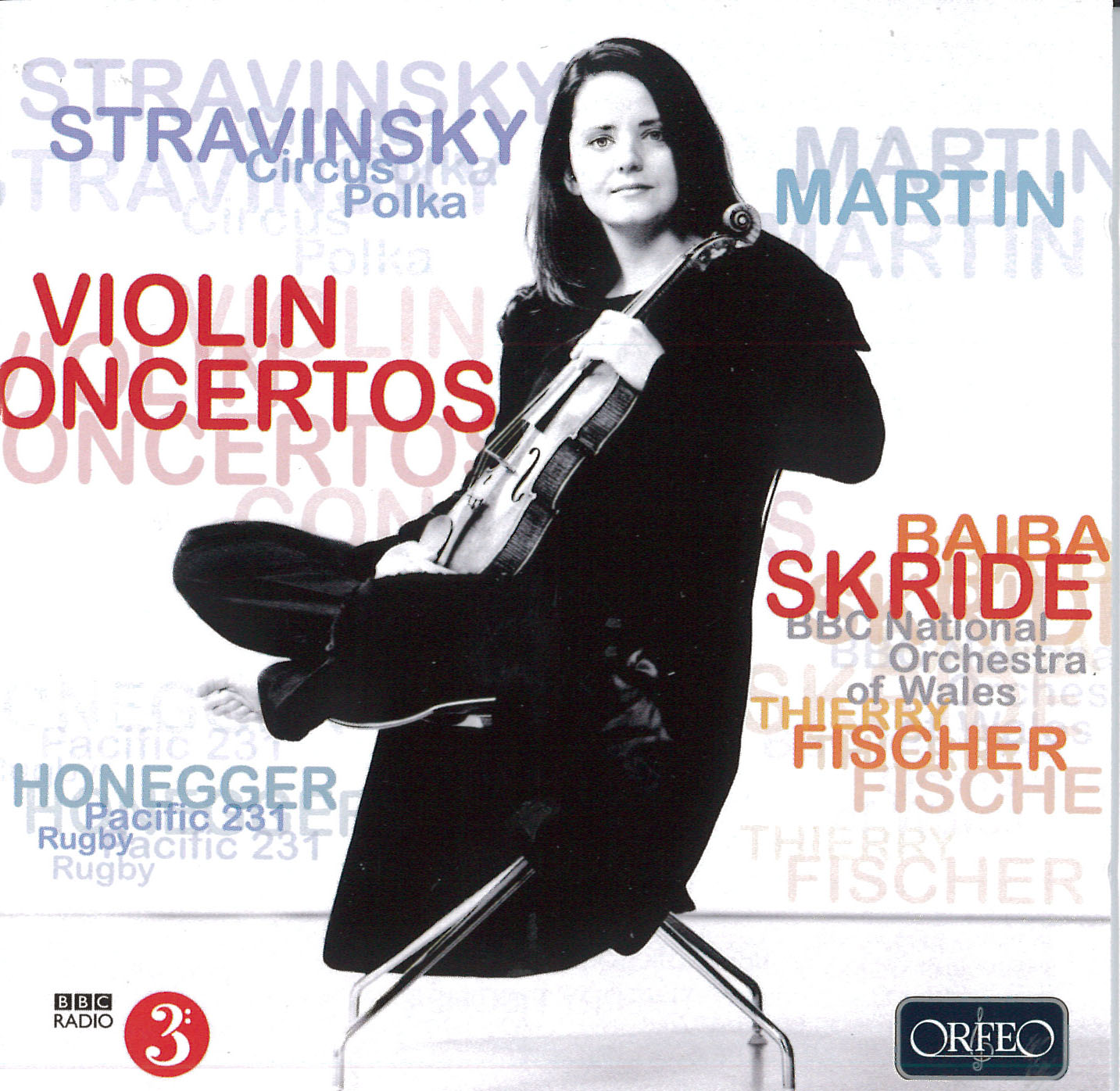
02 Baiba SkrideThe Latvian violinist Baiba Skride is another player in great form on her latest CD Stravinsky & Martin Violin Concertos, with the BBC National Orchestra of Wales under Thierry Fischer (ORFEO C 849 121 A). There is some beautifully spiky playing in the neo-classical Stravinsky concerto, but the longest work here – and the real gem – is the 1951 concerto by the Swiss composer Frank Martin. It’s a simply lovely work that really should be much better known. The orchestra shines in the Two Symphonic Movements from the mid-1920s by Martin’s fellow countryman Arthur Honegger: the startlingly effective Pacific 231, as good a representation of the physical power of a steam locomotive as you will ever hear and Rugby, which attempts to convey the cut and thrust of the sport. Stravinsky’s short Circus Polka rounds out a highly enjoyable CD.

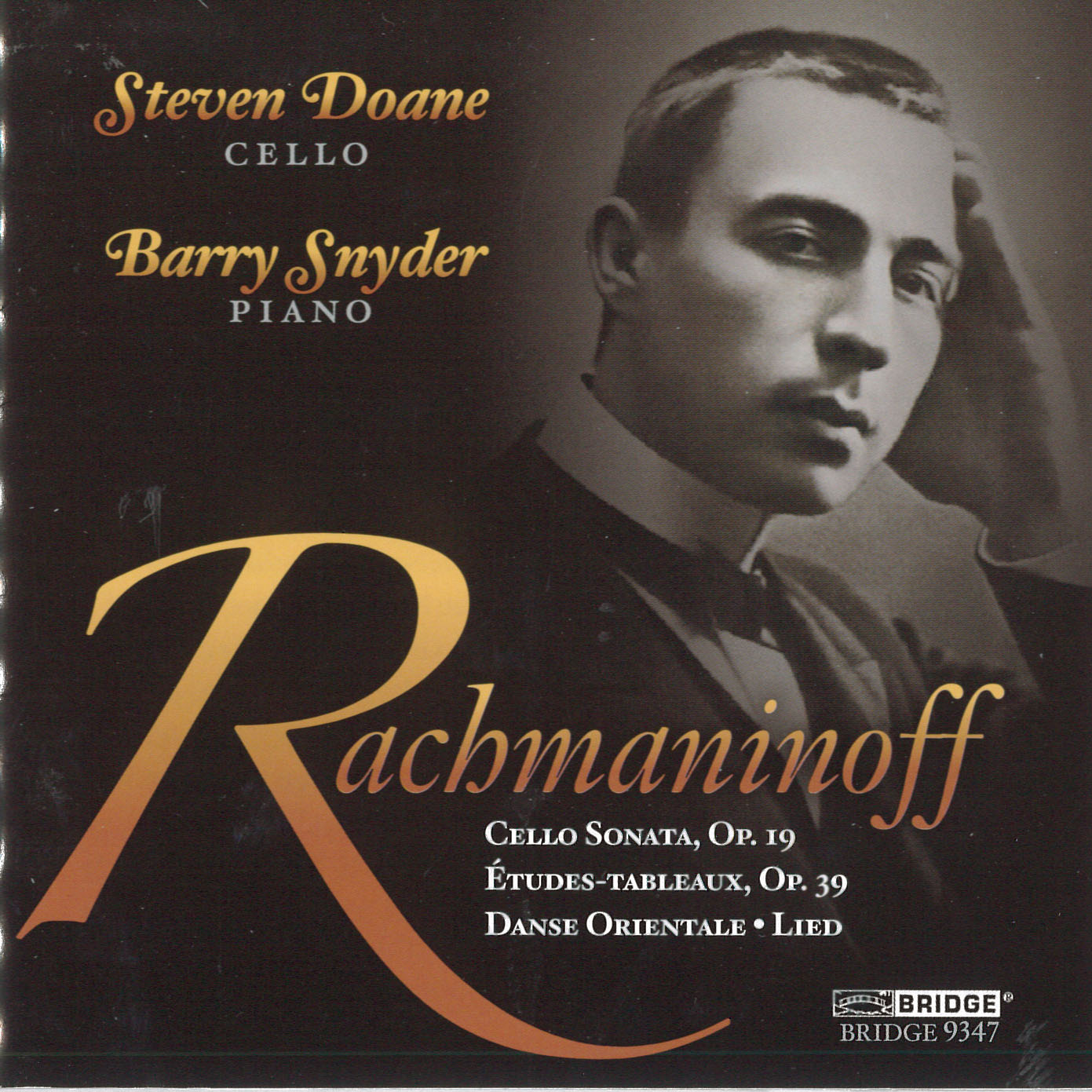
03 Rachmaninoff celloCellist Steven Doane and pianist Barry Snyder combine for a quite astonishing Rachmaninoff recital on the Bridge label (BRIDGE 9347). It’s astonishing for two reasons: the recordings were made in 1996 and have simply (and inexplicably) sat on the shelf for the past 16 years; and the playing is quite extraordinary. The brief Danse Orientale Op.2, No.2 opens the disc and is followed by an absolutely riveting performance of the Cello Sonata in G Minor. There is a wonderful balance here, with both players producing a full, rich tonal quality.

What comes next is even better, when Snyder performs the complete Études-Tableaux Op.39 for solo piano; not only is his playing quite stunning, the nine pieces were apparently recorded in a single continuous take, with only a few extraneous sounds over-dubbed after the event. Remarkable.

After back-to-back performances like those, the very brief (2:07) Lied for cello and piano that ends the CD almost seems like an afterthought. The recorded sound throughout is superb.

Sixteen years?? Difficult to explain, but boy, was this ever worth waiting for!

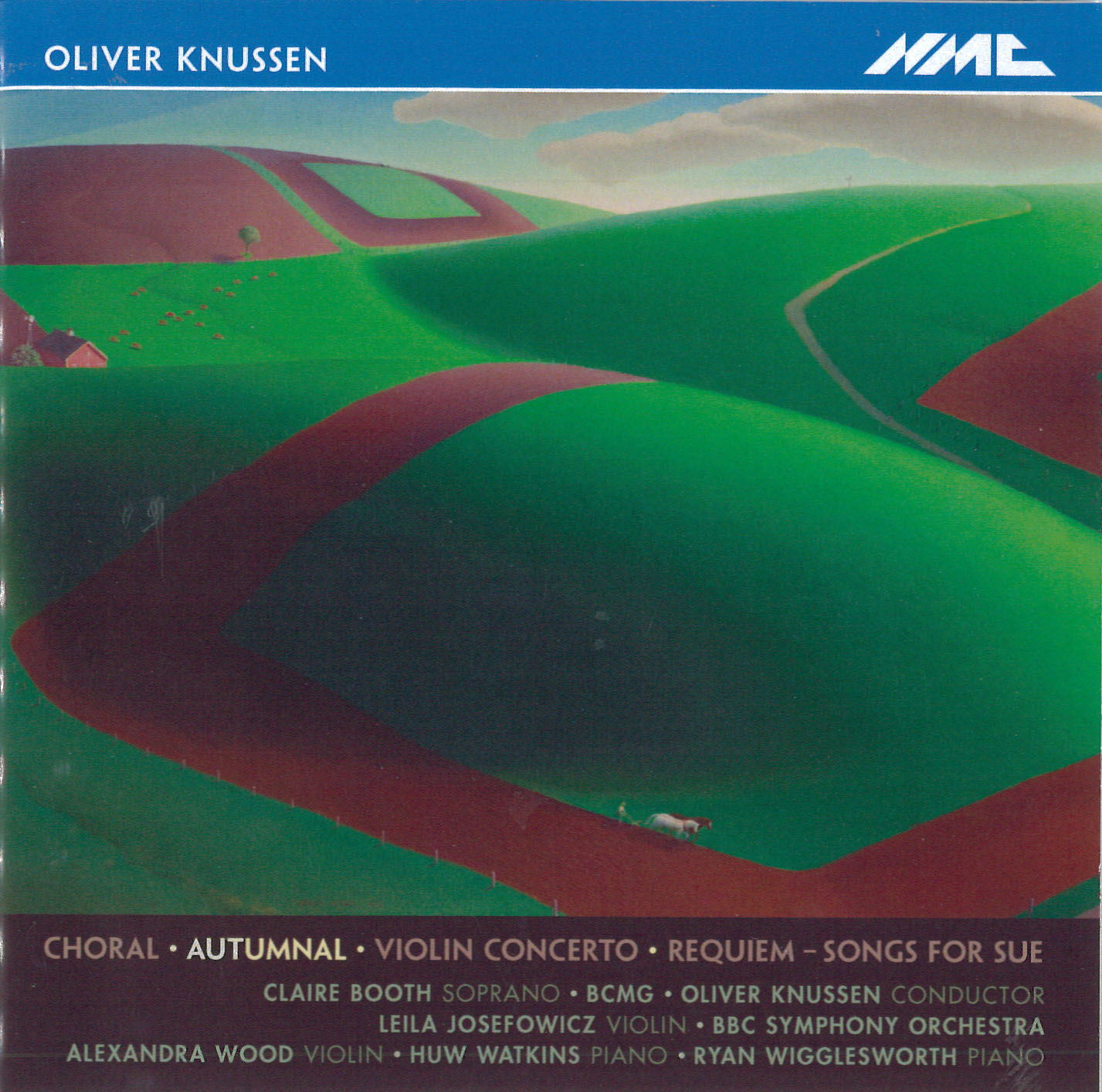
04 KnussenTwo imported compilation CDs afford the opportunity to hear three string concertos by contemporary British composers. Oliver Knussen’s 2002 Violin Concerto is included on Autumnal (NMC D178) in a definitive performance by Leila Josefowicz and the BBC Symphony Orchestra, with the composer conducting. The CD also includes Alexandra Wood playing Secret Psalm for solo violin and Wood with Hugh Watkins (piano) performing the CD’s title work. Works for orchestra, solo piano, voice and piano and voice and orchestra complete a fascinating look at this 60-year-old composer’s work over 40 years.

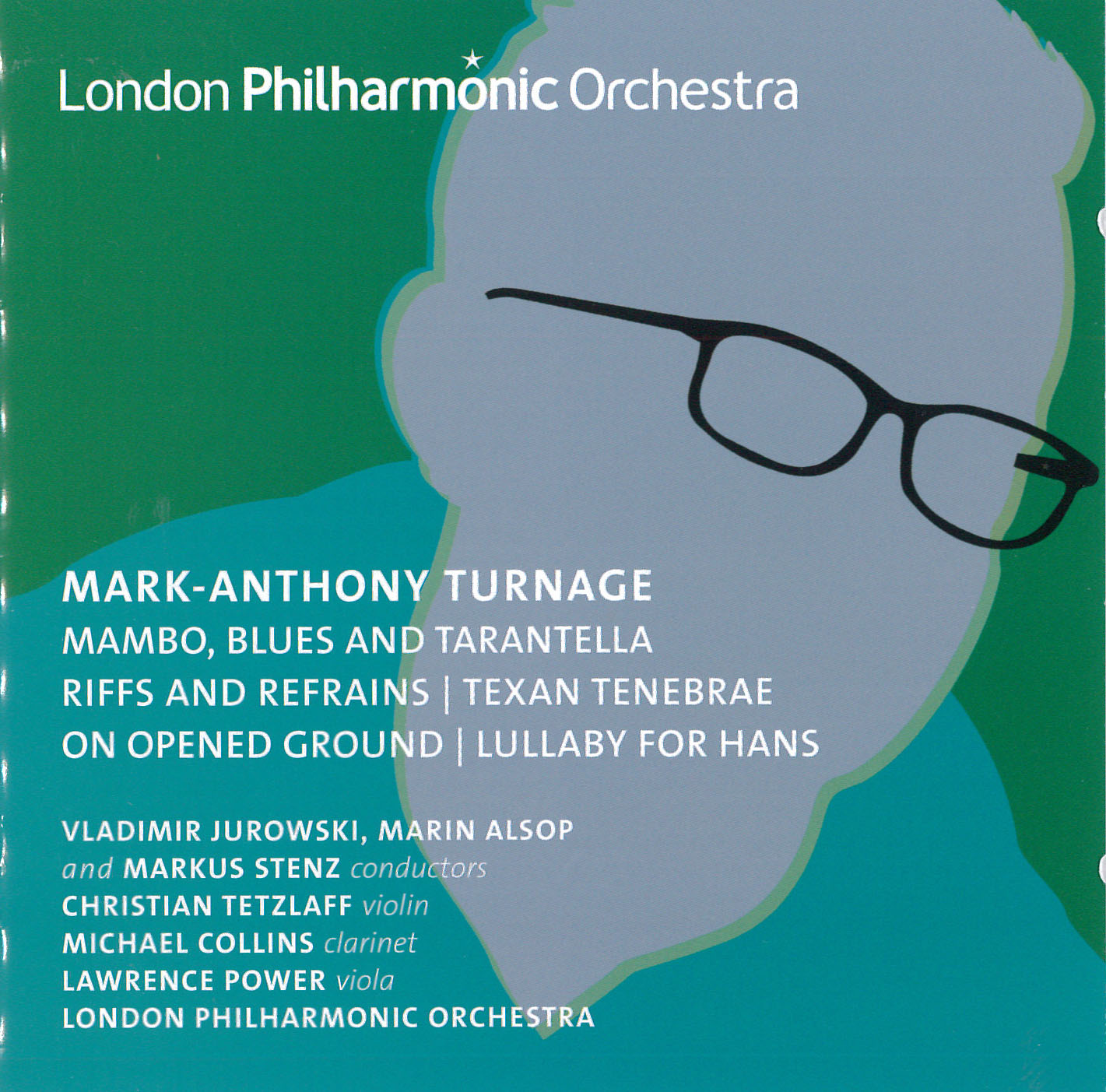
05 TurnageMark-Anthony Turnage, although only eight years younger, was once a composition student of Knussen’s. The London Philharmonic Orchestra has already issued two CDs dedicated to Turnage on its own label and this third self-titled CD (LPO-0066) features première recordings of five Turnage works. Mambo, Blues and Tarantella: concerto for violin and orchestra is a live recording of the September 2008 world première performance by Christian Tetzlaff, with Vladimir Jurowski conducting. On Opened Ground: concerto for viola and orchestra dates from 2001, and is played here by Lawrence Power, with Markus Stenz conducting. Both works provide ample evidence of Turnage’s blending of jazz and blues influences with classical traditions. Two short orchestral works and the clarinet concerto Riffs and Refrains complete the disc.

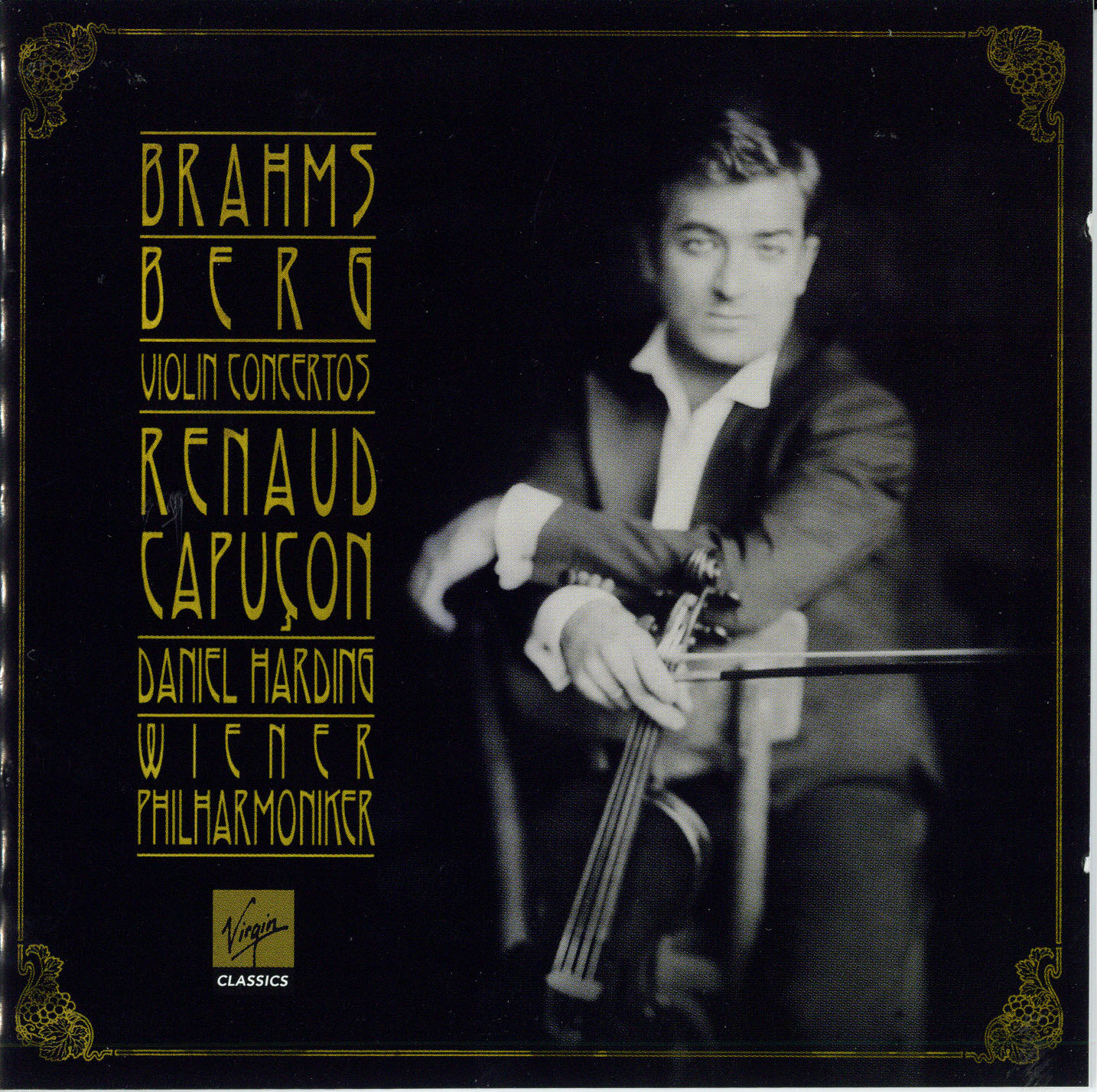
06a Brahms BergRenaud Capuçon is back with an interesting pairing of two giant concertos from the Austro-German repertoire, the Brahms and the Berg, on his latest Virgin Classics CD (50999 60265326). The disc realizes Capuçon’s long-time wish to record with the Wiener Philharmoniker, conducted here by the excellent Daniel Harding, and it’s one that will certainly please his many admirers.

Capuçon has been playing these works in public for 15 years, and he is clearly at ease with them. I was particularly interested in his interpretation of the Berg, a particular favourite of mine and a concerto that the soloist considers to be the great violin concerto of the 20th century. It’s hard to disagree. My first reaction was that Capuçon’s smooth, almost genteel approach missed some of the harsh, tragic depth of this very emotional work, but the more I listened the more he convinced me that his approach was the correct one, especially in the Bach chorale in the concerto’s final section.

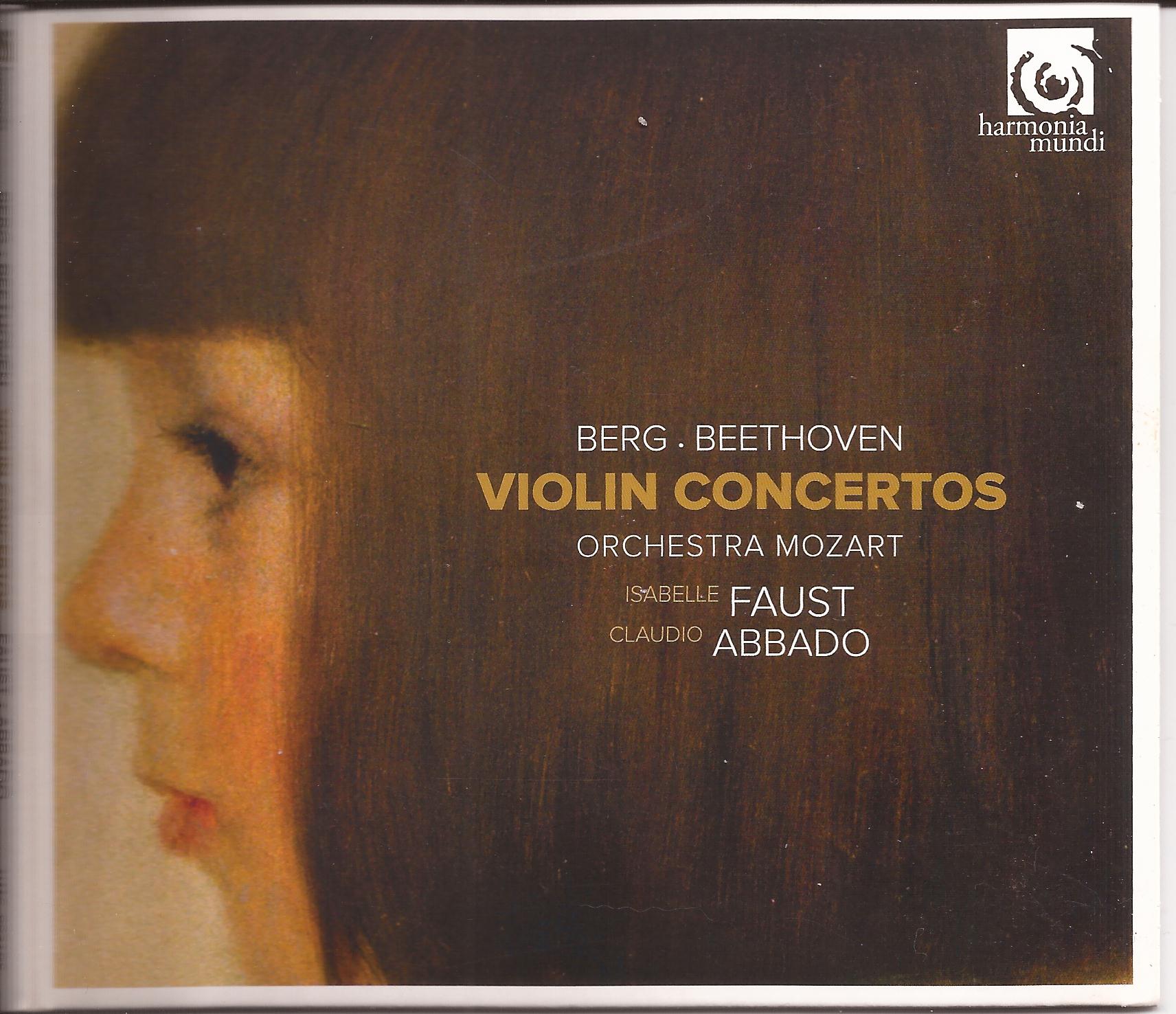
06b FaustThe Capuçon CD gave me the opportunity to compare his performance of the Berg with one on an excellent disc that I meant to review last year, but somehow managed to overlook, that featured Isabelle Faust and the Orchestra Mozart under Claudio Abbado (harmonia mundi HMC 902105). Faust’s approach is much more gritty and acerbic, even in the quiet opening, although the orchestral detail is more clearly defined. The orchestral sound in the Capuçon disc is surprisingly indistinct at times, especially in the middle range and the percussion.

What really makes the Faust CD a great buy is her terrific performance of the Beethoven concerto. Her fairly fast vibrato is more effective here than in the Berg; the outer movements move along at a really bright tempo and the slow movement is beautifully and sensitively drawn out, with lovely dynamics. The lengthy first movement cadenza, complete with timpani accompaniment, is presumably an arrangement of Beethoven’s own cadenza for his piano transcription of the concerto; several violinists from Eugène Ysaÿe to Christian Tetzlaff have arranged the piano cadenza for violin and timpani, but there is no confirmation of this in the booklet notes. The orchestral support and recorded sound are outstanding.

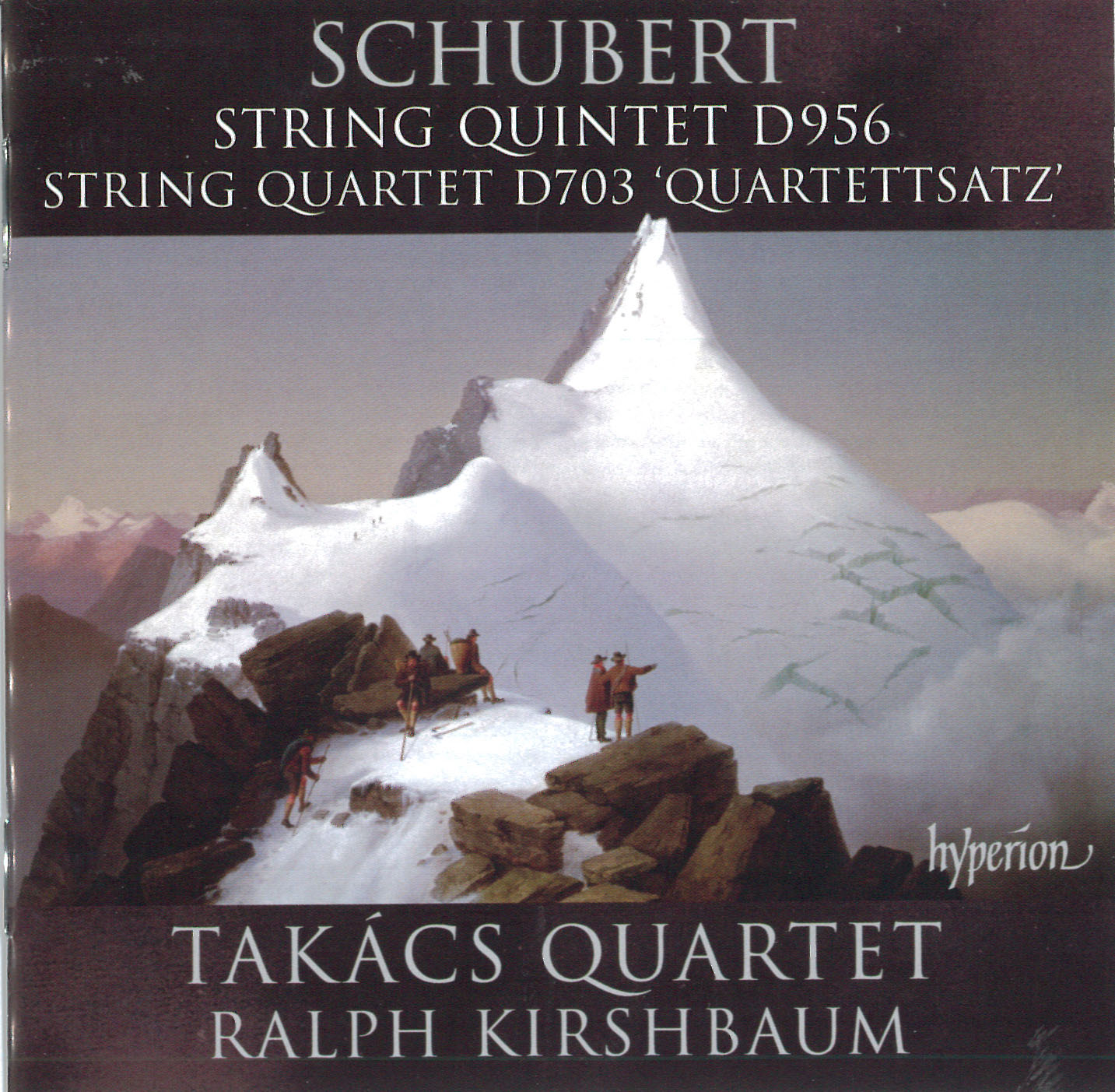
07 Schubert Quintet TakacsThere’s yet another fine recording of the wonderful Schubert String Quintet in C major, D956, this time by the Takacs Quartet with Ralph Kirshbaum on the always-reliable Hyperion label (CDA67864). Written just a few months before the composer’s death in 1828, it’s a work of great range and depth and one which always seems to draw the best out of its performers. I reviewed an excellent CD of the same work by the Arcanto Quartett just last November, and this latest issue is of an equally high standard. Schubert’s Quartettsatz, the String Quartet Movement in C minor, D703, completes the disc; it was the only completed movement of a string quartet both started and abandoned in 1820.

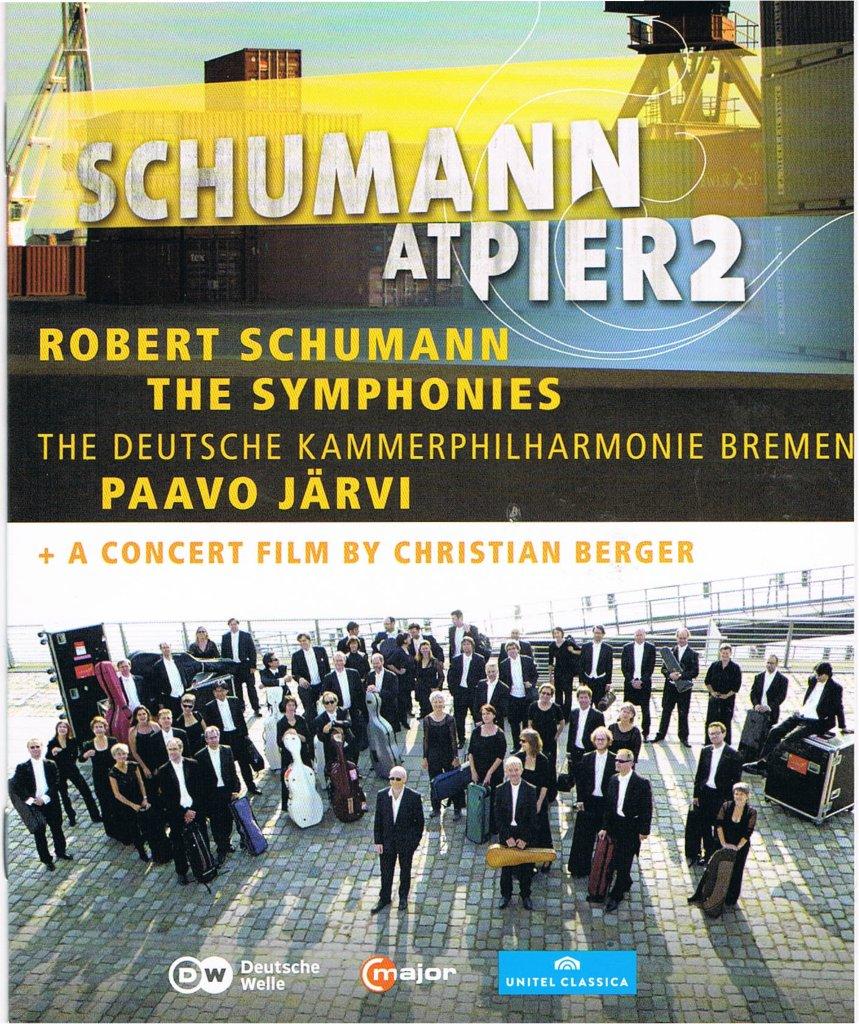
01 SchumannSchumann at Pier 2 – The Symphonies
Deutsche Kammerphilharmonie Bremen; Paavo Järvi
Cmajor 712004

At last; an exultation of Schumann (my favourite composer) that finally and decisively disproves the myth that he was an inept orchestrator. Järvi’s brilliant, no-holds-barred performances are realizations of Schumann’s four symphonies without any editing and “corrections” by others (including Mahler) to suit their taste, an accepted practice that has tainted performances for generations. These indispensible performances radiate from the inside… exciting, highly charged and, where called for, meltingly poetic. Textures are sinewy but never lean. Audio and video are state of the art. 

In addition to four definitive performances there is an appreciation of these original scores. Movement by movement, we are treated to extracts from the rehearsals with observations and illustrations from some of the players but most informative and enlightening are Jarvi’s discerning thoughts and annotations:

“If you only use your brain to dictate the choices you will never actually get to the bottom of what Schumann’s music is all about because the music comes from the heart. It is incredibly emotional. You have this sense of neurotic extreme and you have to allow yourself to feel it in performance otherwise it will not fly, it will not explode, it will not make you cry… One of the problems is that we need to have enough courage to actually go with what Schumann writes because sometimes one thinks that, wait a minute, it cannot possibly be that impulsive, it cannot be so neurotic, it cannot possibly be so, um, extreme… I don’t think that I know of any other composer, even from the same period that brings that type of energy and that type of extreme into music… and that is something that all the great old maestros tried to fix. They tried to make it more academic, closer to Brahms, more correct. All the corners that were a little too sharp they tried to make smoother and what we end up with is a sort of a smooth correct, improved – quote, unquote – version of Schumann that takes away the essence which is the incredible neurotic energy… with all the insecurities and all the doubts, you know that Schumann knew, somehow, that he was one of the great voices.

“After performing the whole cycle of Schumann symphonies, you come away from that experience knowing that everything that you have been taught in school in the beginning is just nonsense. Basically, Schumann’s symphonic music is truly great. If one goes into it with complete commitment and one has courage to forget a little bit about so-called tradition and really see what’s in the music, you realize that this is absolutely stunningly original, touching and emotionally powerful music.”

The proof is here to be heard.


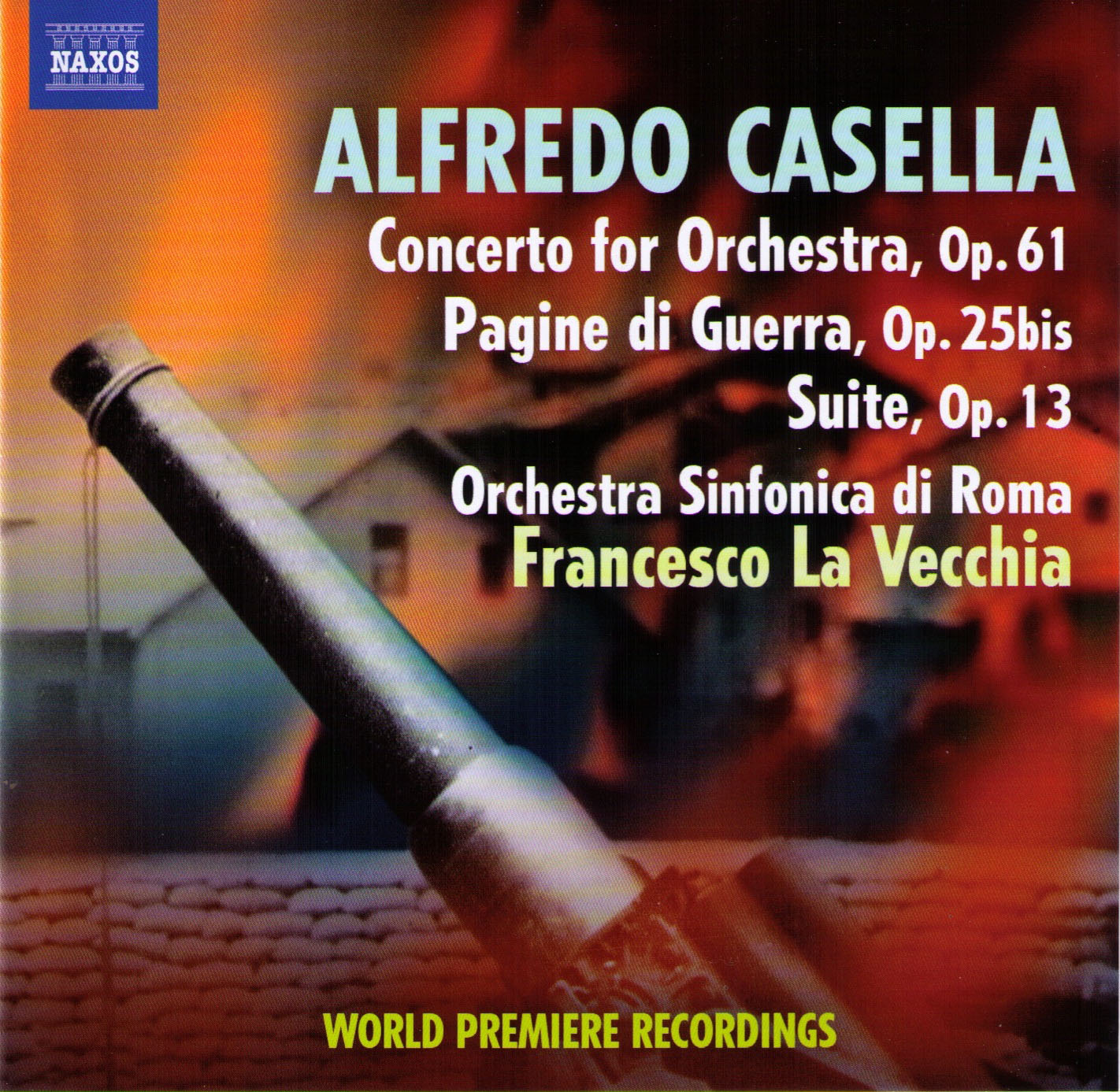
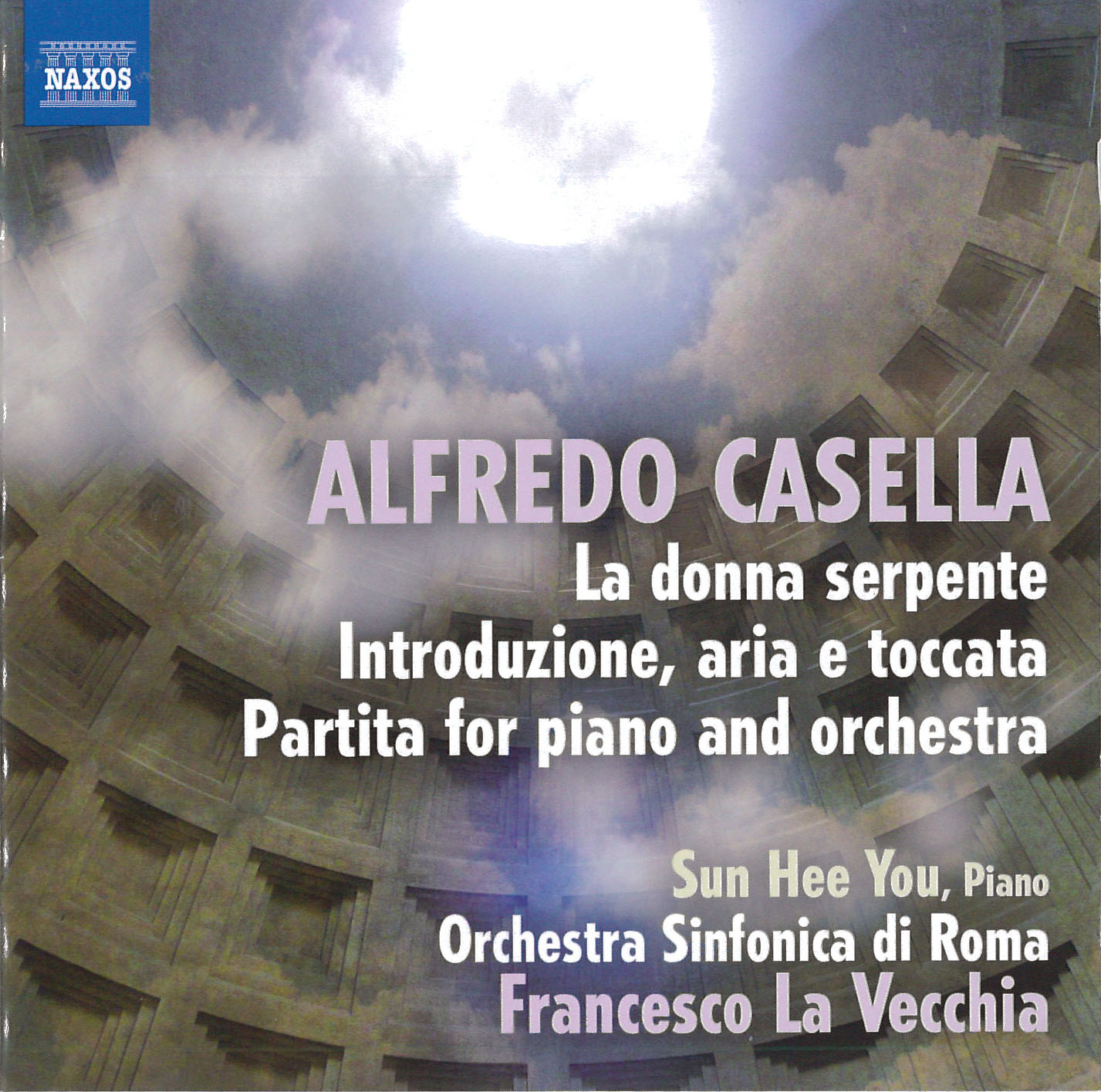
04a Casella OrchWorks LaVecchia04b Casella 2Alfredo Casella – Concerto for Orchestra
Orchestra Sinfonica di Roma; Francesco La Vecchia
Naxos 8.573004

Alfredo Casella – La Donna Serpente; Introduzione, aria e toccata; Partita
Sun Hee You; Orchestra Sinfonica di Roma; Francesco La Vecchia
Naxos 8.573005

These two discs present world premiere recordings (except for the Partita) of Alfredo Casella’s music. They join a series of his complete orchestral works on Naxos, a stellar accomplishment by conductor Francesco La Vecchia and the Rome Symphony Orchestra. Piano prodigy and gifted conductor, Casella (1883-1947) was a leading instrumental composer in opera-soaked Italy.

 The excellent first disc includes music from three phases of Casella’s career. Modal harmony and 18th century dance genres in the early neo-classical Suite reflecthis teacher Fauré’s influence. The lively Overture, pensive extended Sarabande, and assertive Bourée are all delivered impeccably by the Rome Symphony. The ensemble is equally adept in the more adventurous five miniatures of Pagine di Guerra (War Pages). Startling sounds bombard us with the mechanical horror of World War I; perfectly-tuned wind chords subtly evoke dissonant cathedral bell timbres. The three-movement Concerto for Orchestra is the disc’shighlight, which according to David Gallagher’s fine program notes Casella considered his most mature orchestral achievement. Particularly moving is the epiphanic ninth variation of the Passacaglia where high violins linger deliciously over a procession of brass and wind solos.

The second disc’s Introduction, Aria and Toccata has both strengths and weaknesses. His easy way with a long line make the Aria a delight; La Vecchia captures its tasteful sentiment and tender moments.Strings are appropriately biting in the outer movements, which unfortunately also illustrate the composer’s penchant for lumpy Mussolini-era marches. Casella was piano soloist in the premiere of the Partita in 1925, where Stravinsky’s neo-baroque influence shows. In the Sinfonia, pandiatonicism (simultaneous sounding of any notes in a major scale), prominent use of winds and detaché strings are all Stravinskian, but rhythms are more four-square. Pianist Sun Hee You delivers a clear, spiky performance with impeccable ensemble throughout; the orchestra’s trumpet trio shines in the rapid-fire Burlesca. La donna serpente (1928-31) which presents orchestral fragments from Casella’s opera based on a fabulous drama about a snake-woman by Gozzi, evokes a very different world. From the sumptuous strings in the opening Music for King Altidòr’s Dream onward, La Vecchia balances well blocks of orchestral sound with instrumental solos. The War March showcases a fine horn section; the Battle and Finale abounds with exciting ensemble flourishes supported by ample percussion.

The neglect of Casella’s orchestral music after the Second World War had several possible causes: his troubling support for Il Duce’s regime even after racial laws were imposed in 1938; his too-numerous musical influences; and his re-working of compositions in later works. Keeping these important caveats in mind I am still very partial to this music’s bright liveliness and range of feeling, recommending especially the first disc for the curious.


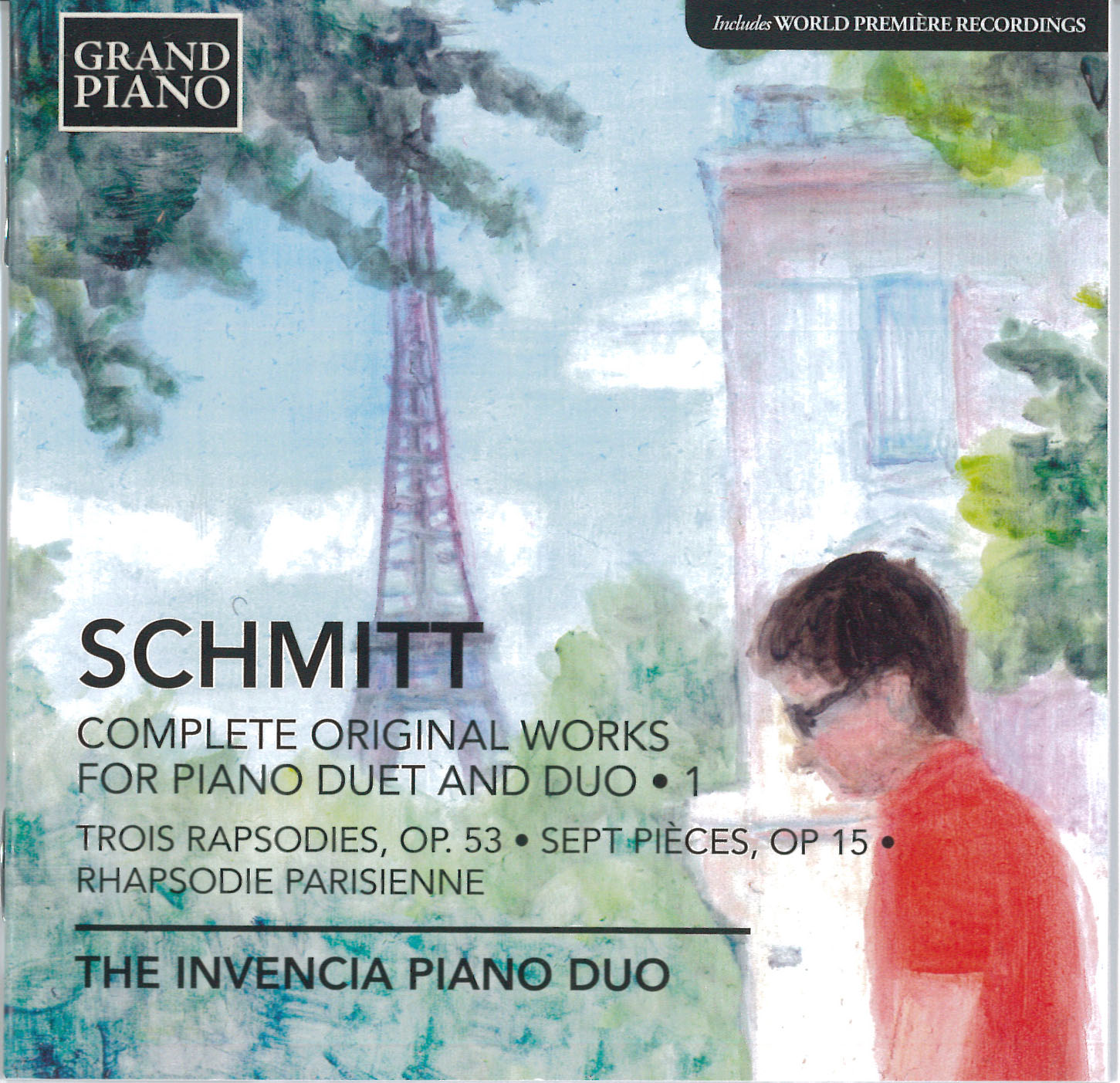
03 Schmitt PianoFlorent Schmitt – Complete Original Works for Piano Duet and Duo 1
Invencia Piano Duo
Grand Piano GP621

The lengthy career of the Alsatian-born French composer Florent Schmitt (1870-1958) began quite auspiciously at the beginning of the 20th century. Awarded the prestigious Prix de Rome in 1900, his early orchestral work La Tragédie de Salomé (1907) and his setting for chorus and orchestra of Psalm 47 (1904) met with great praise and are still performed today. By the 1930s however he had completely fallen out of favour; it did not help matters that he had since developed a reputation as a notoriously vituperative music critic and shameless German sympathizer. Be that as it may, for a nominally late Romantic composer Schmitt’s progressive tendencies remain compelling and at his best he reveals the voice of a true original.

Schmitt contributed some 88 pieces to the duo piano repertoire written between 1893 and 1912. The Virginia-based pianists Andrei Kasparov and Oksana Lutsyshyn, known collectively as the Invencia Piano Duo, have made it their mission to record all of these works in a series of four CDs to be released sequentially on the Grand Piano label distributed by Naxos. Volume One offers a familiar work followed by two world premiere recordings. The first item, the Trois Rapsodies for two pianos Op.53 (1903-1904), receives its fifth recording on disc. It is vintage Schmitt, rhythmically supple, harmonically inventive, and beautifully scored with telling thematic interchanges between the two pianos. The earlier Sept Pièces, Op.15 (1889) dates from Schmitt’s student days. Scored for two pianists at a single piano, the sonorities are more intimate and homophonic. Though it seems to me that Schmitt has either not quite found or is intentionally suppressing his distinctive creative voice here for academic reasons, this low-key, Schumann-esque multi-movement work is winningly genial and technically assured in every respect. The final item, the Rhapsodie Parisienne, also for four-hand piano, makes a stronger visceral impact. A spirited, asymmetric and impulsive waltz, the manuscript of this unpublished work from 1900 may have been intended to become a larger orchestral work presaging Ravel’s later La Valse. I look forward to future unknown gems from this very interesting composer.


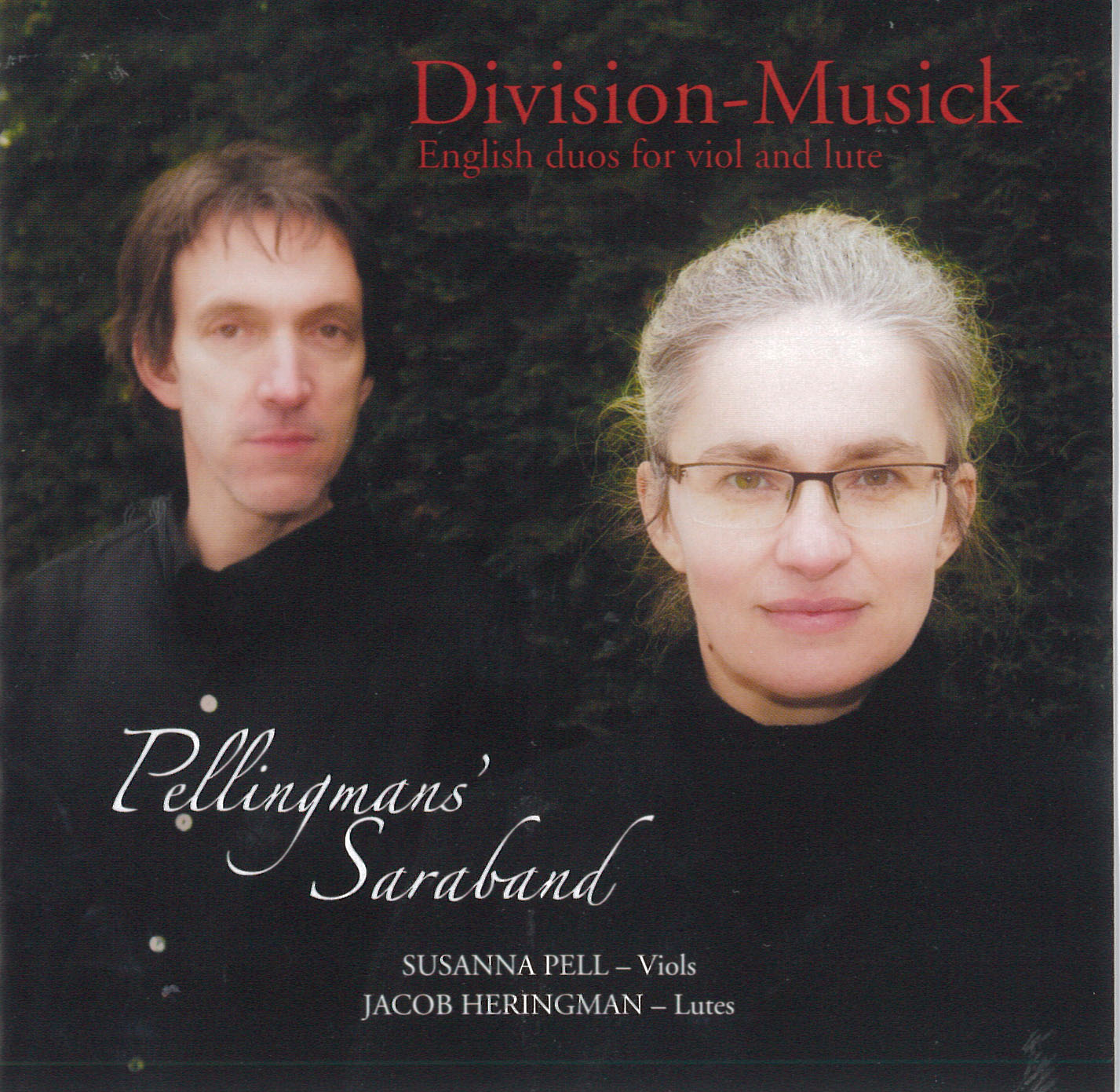
02 Division MusickeDivision-Musicke – English duos for viol and lute
Susanna Pell; Jacob Heringman
Pellingmans’ Saraband PS001

According to Christopher Simpson in the 1659 publication The Division Violist, as quoted in the Harvard Dictionary of Music, the term Division refers to the prevailingly English practice of a harpsichordist playing a ground bass to which a viol or flute player, “having the said ground before his eye, plays such a variety of descant or division in concordance thereto as his skill and present invention do then suggest to him.” Pellingmans’ Saraband perform eighteen divisions on this, their maiden CD. They adventurously describe playing these often complex and demanding divisions as the equivalent of jazz improvisation!

 No one can fault their dedication to the art of the division. Barafostus’ Dream is truly testing – Susanna Pell rises to the challenge of the solo version specifically scored for treble viol. On the CD she follows with the exhilarating divisions based anonymously on Greensleeves.

 The divisions selected were written between the late 16th century and the early 18th. Two factors the pieces have in common are the complexity of their divisions and the sense of joyfulness with which they are played. This is certainly true of Gottfried Finger’s Divisions, where Pell’s spirited playing livens up more formal compositions.

 Very often, the collection features popular dance tunes which were arranged by established composers. The names of some of these composers have come down to us. Others remain anonymous, but Jacob Heringman plays Green Garters with sympathy and zest; Pell’s Paul’s Steeple, which immediately follows, equals it in both qualities.

 The divisions are not confined to English composers. London-based Giovanni Battista Draghi’s aptly named Italian Ground is sensitively performed by both musicians. The same is true of three pieces by Solomon Eccles, who was one of the last composers of divisions before Italian sonatas became popular.

 Both musicians tackle their divisions with relish. The Leaves be Green always demands virtuosic skills; Heringman obliges. Pell responds with A New Division to a Ground by Eccles. This compilation also comprises some more Elizabethan favourites such as Go From My Window, but a division by Christopher Simpson scored for bass viol looks towards the Baroque future. Note: physical copies of these CDs are exclusively available from www.heringman.com and www.pellingman.co.uk.


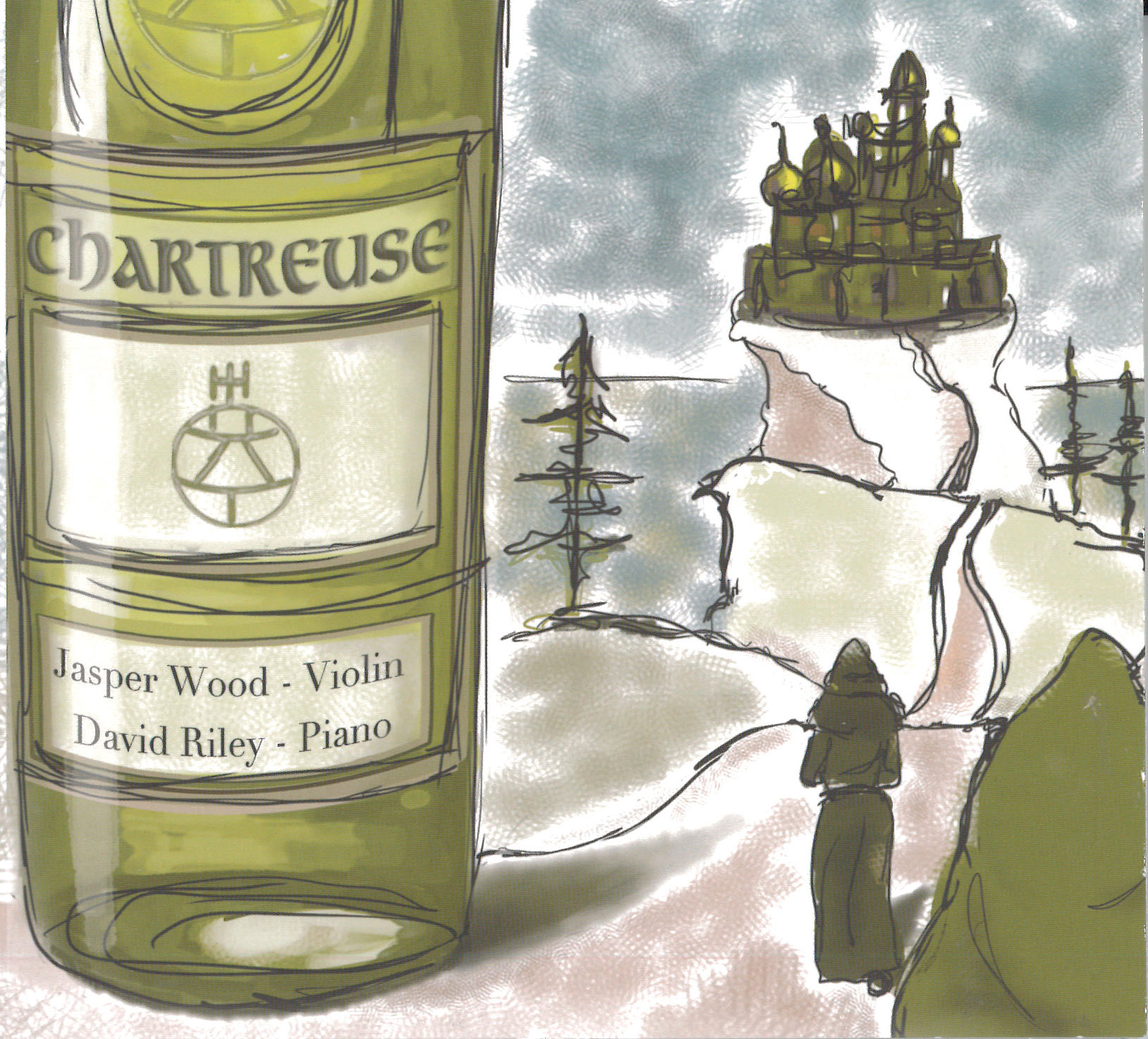
01 Wood ChartreuseCanada’s Jasper Wood has long been one of my favourite violinists, ever since he used to come into the music store where I was working some ten years ago to promote his terrific CDs of the Eckhardt-Gramatté and Gary Kulesha solo Caprices and Saint-Saëns’ Music for Violin and Piano. Since then he has built a wide-ranging discography, including CDs of music by Ives, Stravinsky, Bartók and Morawetz. His latest CD on the American Max Frank Music label (MFM 003) is titled Chartreuse, and features Wood and his long-time accompanist David Riley in beautifully judged performances of sonatas by Mozart, Debussy and Richard Strauss.

The Mozart is the Sonata in B-Flat Major K454, and the playing here — as it is throughout the CD — is Wood at his usual best: clean; accurate; tasteful; sweet-toned; stylish; intelligent and thoughtful. The Debussy sonata is given an impassioned reading; and in the Strauss Sonata in E-Flat Major, Op.18 Wood and Riley handle the virtuosic demands with sensitive subtlety, invoking Brahms rather than providing a mere display of fireworks. The sound throughout is resonant and warm, and the instrumental balance just right. The CD digipak comes without booklet notes, but none are really necessary; listening to this CD is like being at a memorable live recital.
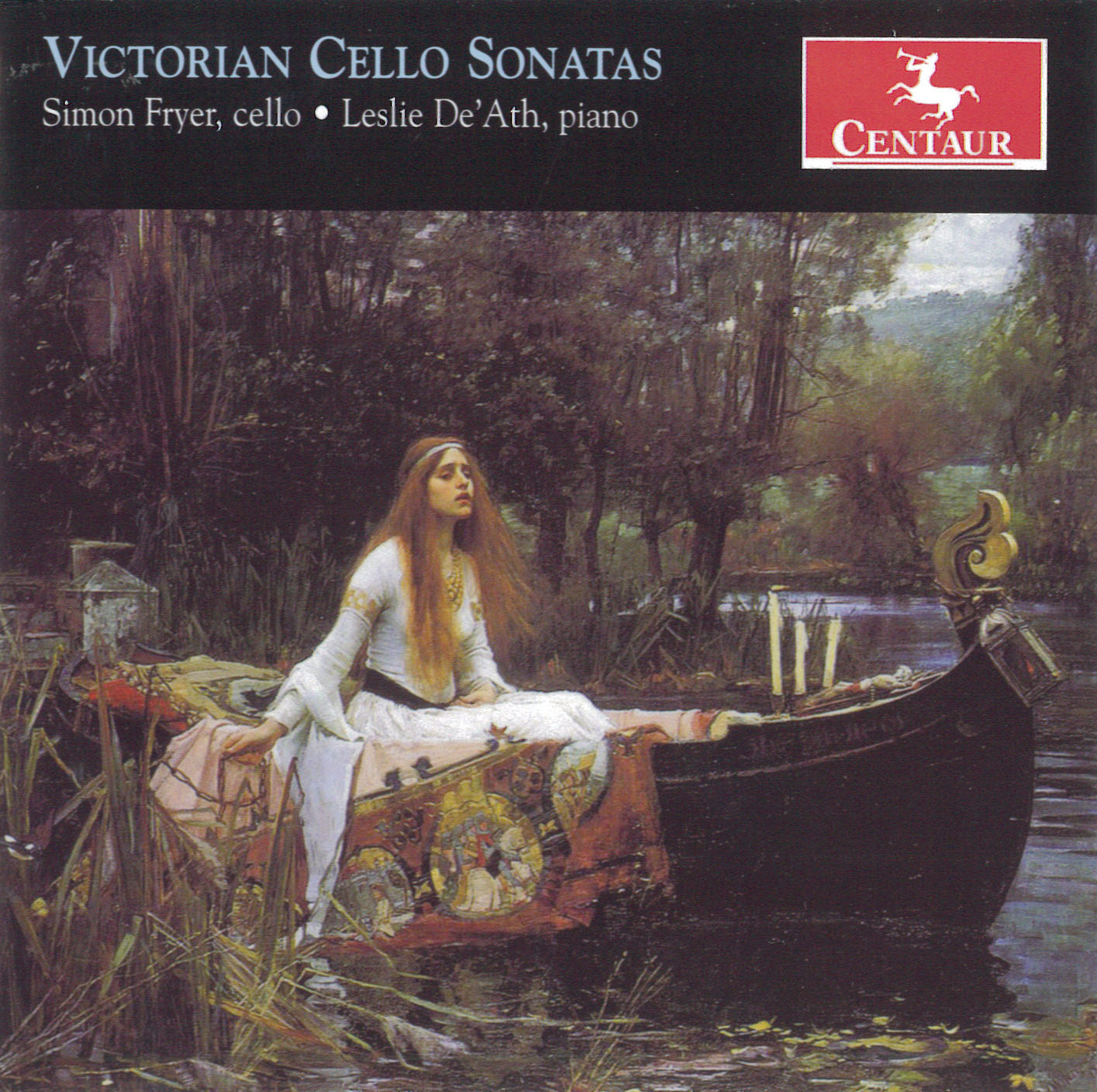
02 Victorian CelloCellist Simon Fryer teams up with pianist Leslie De’Ath on a fascinating CD of Victorian Cello Sonatas on the independent American label Centaur Records (CRC 3216). The composers Algernon Ashton and Samuel Liddle are probably new to you — they certainly were to me — but they are representative of that generation of late 19th century English composers whose style went out of fashion in the years before the Great War, and whose works virtually disappeared from the repertoire. Not surprisingly, their works here — Ashton’s Sonata No.2 in G Major from 1882 and Liddle’s Sonata in E-Flat Major and his Elegy from 1889 and 1900 respectively — are world premiere recordings; the Sonata No.2 in D Minor, Op.39 by Sir Charles Villiers Stanford completes the recital.

The previously unknown Liddle sonata was discovered by De’Ath in the course of his hobby of collecting musical documents and ephemera. The predominant influence seems to be German, especially the music of Mendelssohn and Brahms, but that’s hardly surprising, given the musical connections between the two countries in Victorian times. Ashton’s music, although scarcely acknowledged at home, was widely published in Germany, where he had studied at the Leipzig Conservatory; Liddle and Stanford also studied in Leipzig during the late 1870s, as had Arthur Sullivan some 20 years earlier.

While the Stanford sonata may be the stronger work, there is a great deal of worthwhile and highly attractive music here, clearly the work of competent and imaginative craftsmen. Fryer and De’Ath certainly present a persuasive case for the pieces, surmounting the often formidable technical challenges with expansive playing that never resorts to overly Romantic indulgence. Fryer’s tone in the lower register is particularly lovely.

Sometimes, admittedly, works do remain buried or neglected for good reasons, but CDs like this one remind us just how rewarding it can be to take the path less trodden.
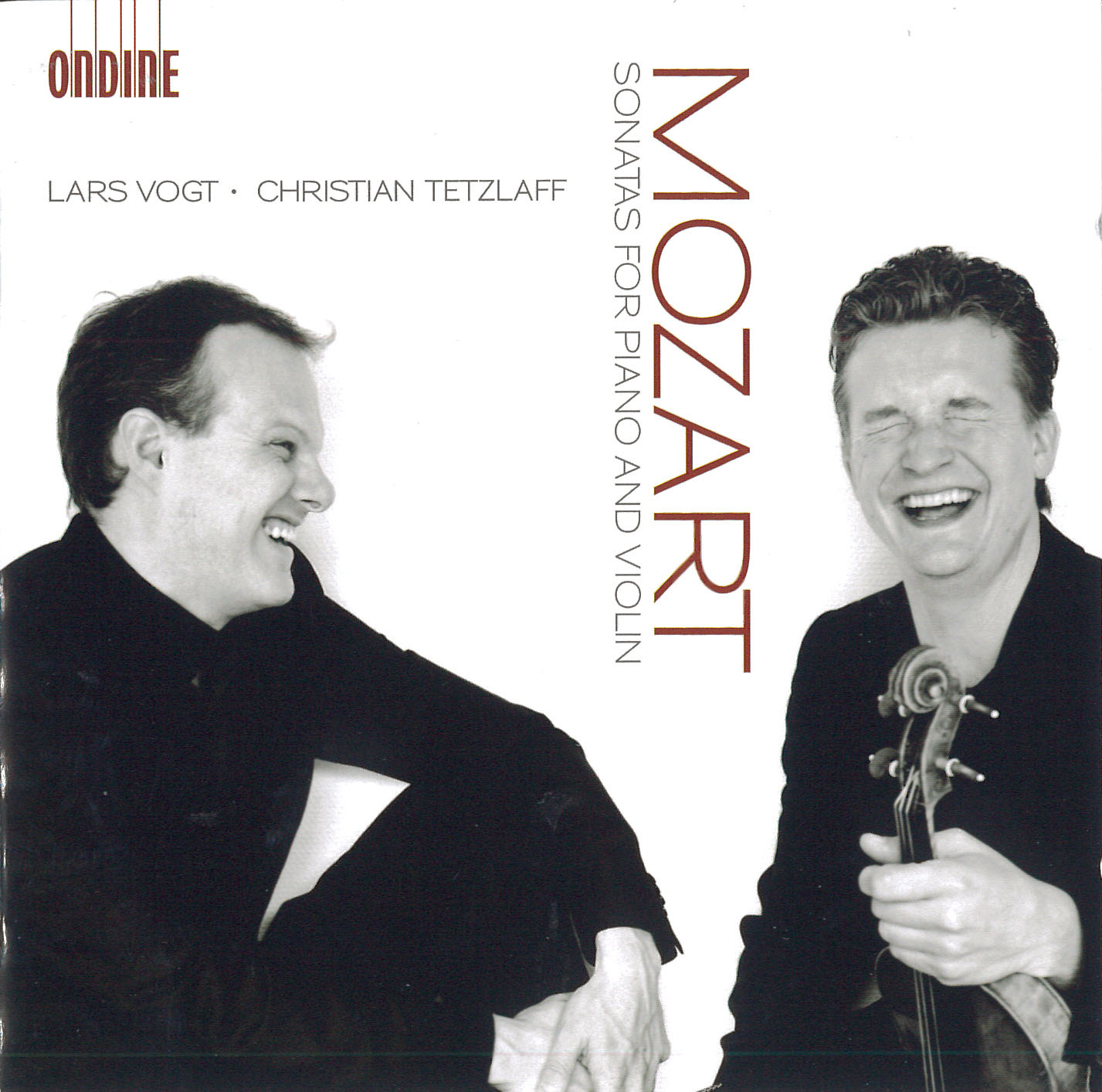
03 Mozart TetzlaffFans of violinist Christian Tetzlaff will be delighted with his new CD of three Mozart Sonatas for Piano and Violin, with Lars Vogt at the keyboard (Ondine ODE 1204-2). The sonatas are those in B Flat Major K454, G Major K379 and A Major K526 and Tetzlaff more than lives up to his usual world-class standard in works that require not only virtuosity but also a great deal of sensitivity. His playing seems effortless, with a smooth legato and a lovely range of dynamics.

The booklet notes tell us that Vogt and Tetzlaff are both very conscious of the ambiguity created in these sonatas by Mozart’s customary emotional range, and their performances quite beautifully reflect this. Tetzlaff apparently came to Mozart’s music fairly late — well, at 15; late for a prodigy — but clearly understands that growing older is crucial to understanding the music.

The sound is spacious without being overly resonant, with the two instruments clearly separated but nicely balanced, reminding us — as does the CD’s title — that these were not originally written as sonatas for solo violin with piano accompaniment.
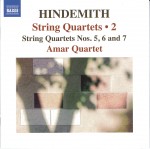
04 HindemithThere are another two outstanding string quartet releases from the Naxos label. Hindemith String Quartets Vol.2 (8.572164) features the final three quartets of the composer’s cycle of seven, in impeccable performances by the Amar Quartet. The Zurich-based ensemble was granted use of the name of Hindemith’s own 1920s string quartet by the Hindemith Institute in 1995 on the centenary of the composer’s birth, so their interpretations here are clearly authoritative. Quartet No.5 is from 1923; Quartets Nos.6 and 7 are from 1943 and 1945, when Hindemith had settled in America. They’re terrific works, demonstrating his mastery of string writing and reminding one yet again that the opinion – still held in some quarters – that Hindemith was a dry and cerebral composer is patently false. Volume 1, featuring Quartets 2 and 3, is available on Naxos 8.572163; hopefully a third volume with Quartets 1 and 4 will soon complete an outstanding set.
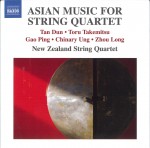
05 Asian QuartetsThe New Zealand String Quartet are the performers on the CD Asian Music for String Quartet (8.572488), a quite fascinating – and often quite beautiful – example of contemporary musical East meets West. There are single works by China’s Zhou Long and Gao Ping, Cambodia’s Chinary Ung (now an American citizen), Japan’s Toru Takemitsu and Tan Dun, the Chinese composer now resident in New York City. Titles like Song of the Ch’in (a Chinese plucked string instrument) and Bright Light and Cloud Shadows are a good indication of the sort of music you can expect here. It’s all superbly played by the New Zealand quartet. The recording was made in the acoustically superb St. Anne’s Church in west end Toronto, with the ever-reliable Norbert Kraft as recording engineer.
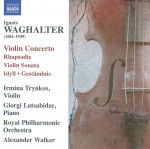
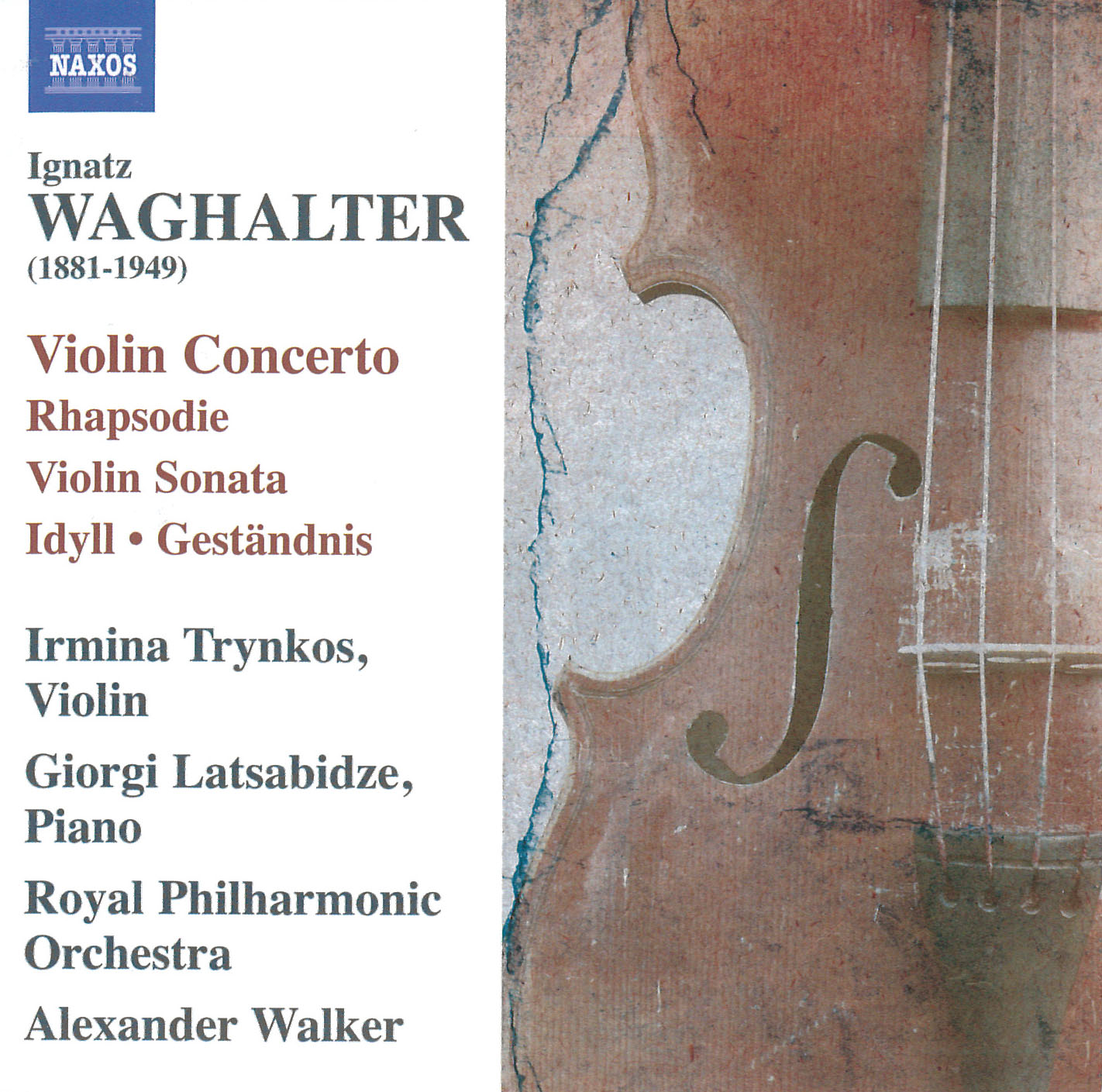
06 WaghalterIt’s always nice to open a CD when you have absolutely no idea – or, at least, very little – what to expect. I must admit to never having heard of the Polish composer and conductor Ignaz Waghalter (1881-1949), who moved to Berlin at the age of 17 and finally ended up, like so many others, in the United States after fleeing the Nazi regime in the late 1930s. Waghalter was born seven years after Schoenberg, the same year as Bartok, only one year before Stravinsky, two years before Anton Webern and four years before Alban Berg, but never showed any interest in what could be termed avant-garde music, a fact which certainly contributed to his virtual anonymity after the Second World War. His music, always strongly melodic, looks back to the world of Schumann, Brahms and Bruch, and never forward to the world of atonality and innovation. Naxos has issued a quite revelationary CD of his Violin Music (8572809), featuring the Greek-Polish violinist Irmina Trynkos in her debut CD and the first in her Waghalter Project, created specifically to promote the music of this composer.

The main offering here is the Violin Concerto Op.15 from 1911, a beautiful work that recalls Bruch and Brahms from the opening bars without ever showing quite the same sense of depth and scale. The Royal Philharmonic Orchestra under Alexander Walker provides exemplary accompaniment in this and in the Rhapsodie Op.9 from 1906, a shorter work again strongly reminiscent of Brahms; both are world premiere recordings.

Three attractive works for violin and piano complete the disc: the Sonata in F minor Op.5; the Idyll Op.19b; and Geständnis, Trynkos being joined in these by pianist Giorgi Latsabidze.

Trynkos is a relatively new talent on the concert scene, but plays with warmth, style and confidence; she is clearly one to watch.

As for Waghalter, it will be interesting to see what, if any, other examples of his music will now be resurrected. There is certainly a great deal to enjoy here, but it is perhaps not too difficult to come up with an answer to the question posed at the end of the booklet notes: “How was it possible that this music went missing for a century?” To be fair though, that’s a question that can be asked about a good number of early 20th century European composers – especially Jewish ones – who fell victim to the political changes in the inter-war years and to the rejection after the Second World War of anything that was redolent of the old German musical tradition.
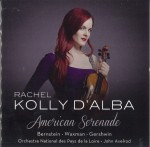
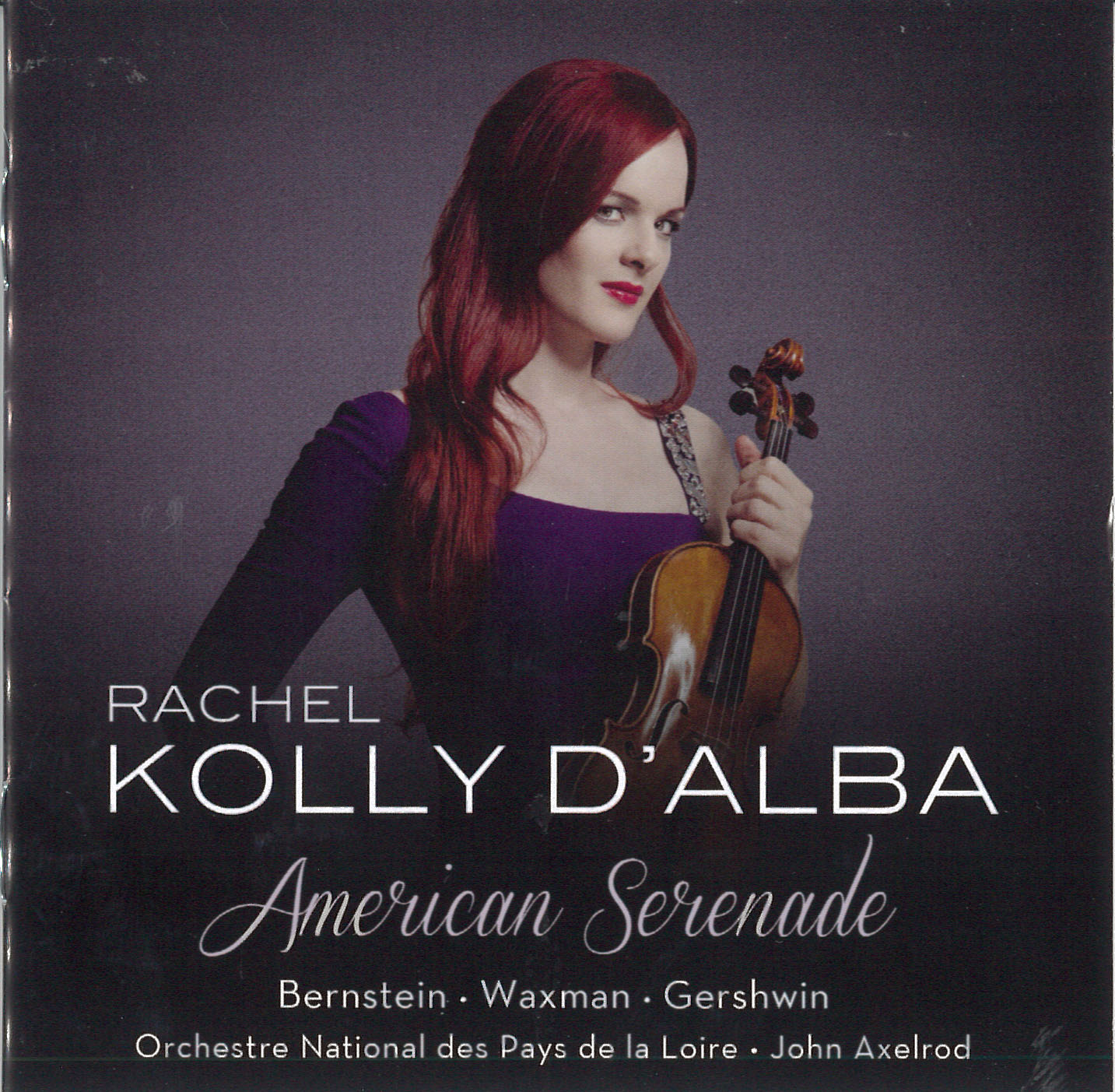
07 Kolly DAlbaThe excellent Swiss violinist Rachel Kolly D’Alba is back with her latest CD, American Serenade (Warner Classics 2564 65765-7), accompanied by the Orchestre National des Pays de la Loire under John Axelrod. In her booklet notes, D’Alba comments on the lack of boundaries between the multitude of different styles in American music. Certainly all three composers represented here were, as she notes, continually dogged by the question of whether their music was “serious’ or “popular” but for her it simply illustrates the fascinating complexity of American music. The Fantasy on Porgy and Bess opens the CD, George Gershwin’s music appearing in Alexander Courage’s arrangement for violin and orchestra of eight songs from the opera (– or was it a musical?). Leonard Bernstein’s Serenade after Plato’s Symposium is not heard all that often, but the composer apparently considered it his best work. When the conductor here, John Axelrod, was a pupil of Bernstein in the early 1980s it was the first work he studied with the composer, lending this performance a real sense of authority. Franz Waxman’s Carmen Fantasie on themes from Bizet’s opera completes the disc. It’s a darker work than the Sarasate Fantasy on the same opera, and has long been a cult favourite with violinists. D’Alba is in great form throughout a terrific CD.


01 Toronto ConsortAll in a Garden Green –
A Renaissance Collection
Toronto Consort; David Fallis
Marquis MAR 81515

This CD comprises a double re-release. Mariners and Milkmaids is a tribute to some of the stock characters of 17th century English ballads and dances. Its breakdown of 11 anonymous pieces and eight from the seminal English Dancing Master by John and Henry Playford bears this out.

Toronto Consort is highly imaginative in its selection and very few of the tracks are those old favourites often encountered in early music compilations. Come Ashore Jolly Tar is a spirited interpretation which would grace any Celtic celebration with its exuberant violin playing and percussion, as would The Sailor Laddie. More thoughtful but no less intense is Gilderoy: one singles out Laura Pudwell’s solo mezzo-soprano. One also notes the confident way in which Toronto Consort’s artistic director David Fallis defeats the Spanish Armada in In Eighty Eight — and Queen Anne’s enemies in the Recruiting Officer!

The Toronto Consort finds time to showcase its soloists. Katherine Hill (soprano) sings of being The Countrey Lasse, accompanied only by Terry McKenna’s lute. Alison Melville’s recorder and flute playing excel in An Italian Rant and Waltham Abbey, which reminds us of the complex techniques she draws on for the virtuosic English Nightingale by Jacob van Eyck.

The latter is found on the second CD, O Lusty May. This is more a celebration of renaissance music as a whole, dipping into the continental European repertoire, and less dependent on anonymous popular pieces.

There is a real sophistication to Allons au Vert Boccage by Guillaume Costeley, each of the four singers enjoying their own prominent part. The pure exuberance of Thoinot Arbeau’s Jouissance immediately follows — could there have been a more appropriate title for this tune? The continental pieces make their mark — Laura Pudwell in La terre n’agueres glacée, Giovanni Bassano’s Frais et Gaillard with Alison Melville rising to the challenge of some intricate baroque recorder fingering, and Meredith Hall’s solo Quand ce beau printemps je voy.

William Byrd’s All in a Garden Green is the most courtly English piece, its divisions bearing little resemblance to the plaintive tune set to words for lovers and, later, English Civil War activists. Meredith Hall breathes (bird) life into This Merry, Pleasant Spring, while an animated quintet urges us to See, see the shepherds’ queen.

Buy these CDs for anyone new to early music — and for your own sheer delight!

Concert note: Toronto Consort presents
the Canadian premiere of Francesco Cavalli’s 1640 Italian opera The Loves of Apollo & Daphne February 15 and 16 at Trinity-St. Paul’s Centre.

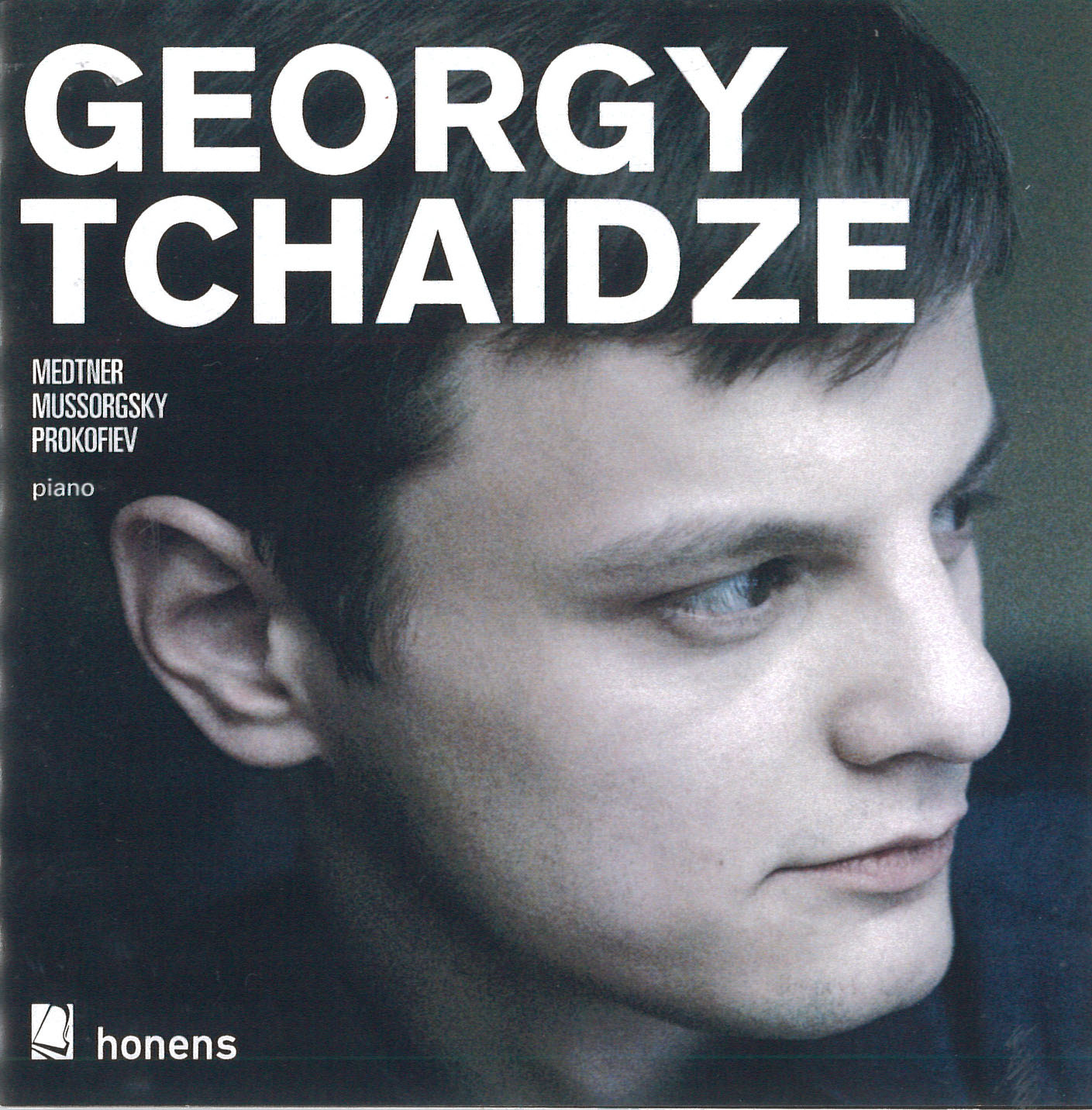
02 Georgy TchaidzeMedtner; Mussorgsky; Prokofiev
Georgy Tchaidze
Honens
honens.com

Laureates of the Honens International Piano Competition are fascinating to follow as they begin to make their way in the world. The competition is a prestigious career launcher and offers wide public exposure as well as the promise of a performance recording on which to build a growing discography.

It’s easy to understand why Russian Georgy Tchaidze emerged victorious from the 2009 crop of gifted competitors. On this, his first major recording, he plays with articulate clarity and an enormously expressive technique, and considering his youth, his interpretive maturity is truly surprising.

Recorded at the Banff Centre in May 2012, Tchaidze plays Prokofiev, Mussorgsky and the somewhat lesser known Nicolai Medtner. The four Medtner Fairy Tales, Op.34 are a diverse and well-crafted collection of programmatic works. They demand much of their performer, especially the final one of the set where Tchaidze succeeds in making Medtner sound more of a modernist than even he may have realized.

Moving from the poetry of Medtner to the intellectual discipline of his contemporary Prokofiev, Tchaidze is fully at ease in the Sonata No.4 in C Minor, Op.29. He seems, in some way, to understand the music better than the composer himself and to convey this youthful confidence quite convincingly, never pushing this understated composition beyond credibility — even in the brief but highly charged final movement.

Mussorgsky’s Pictures are so well known and frequently recorded that including them on a first CD is a courageous choice. Tchaidze truly makes “Pictures” an exhibition.

For a closer look at this amazing young pianist, watch his several YouTube interviews and performances.

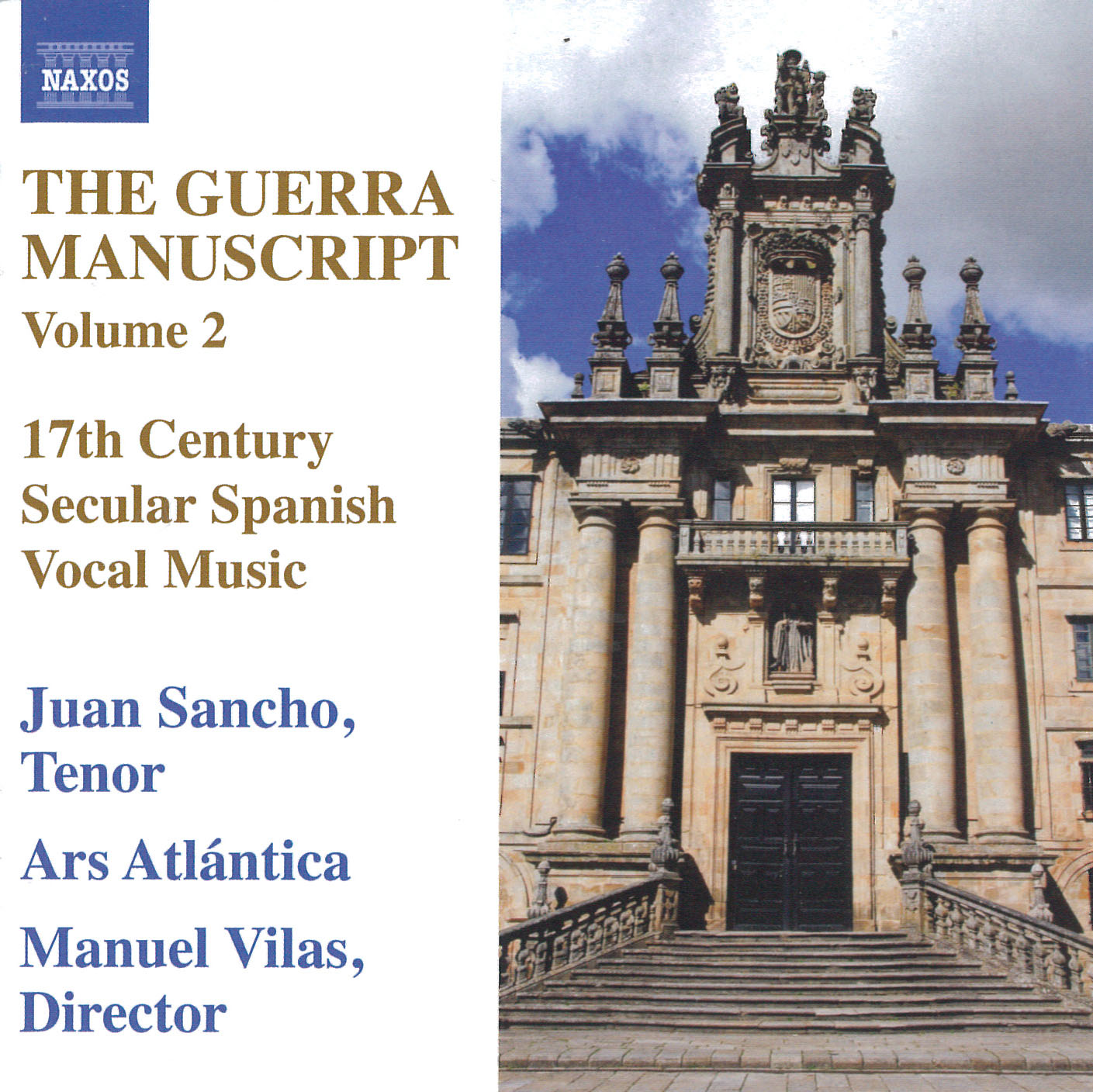
01 Guerra Manuscript 2The Guerra Manuscript Volume 2: 17th Century Secular Spanish Vocal Music
Juan Sancho; Ars Atlántica; Manuel Vilas
Naxos
8.572876

The University of Santiago de Compostella’s libraries are an indispensible source of information regarding Spanish music. Many tonos humanos (secular songs) were copied by José Miguel Guerra; his name is given to the Guerra manuscript. It is Ars Atlántica’s aim to record all 100 of these tonos humanos.

 In this recording the instruments accompanying tenor Juan Sancho comprise a two-course Spanish harp based on a 1704 original – a highly contemporary touch – and a four- and five-course pair of guitars based on originals even older than the manuscript!

 From the start Juan Sancho’s clear Spanish tenor voice brings the songs to life. Juan Hidalgo’s Ay de mi dolor, despite its sorrowful title, places varied demands on Sancho’s vocal range. This is comforted by what immediately follows, Dichoso yo que adoro, in turn benefiting from the guitar accompaniment. It was rare for instruments to be specified but harp and guitar are known to have been used frequently. As an example, Hidalgo exploited the range of both tenor and baroque harp in his La noche tenebrosa.

 Many of the songs on this particular recording are of anonymous composition. Frescos airecillos with its beautiful guitar embellishments is one such example; what a shame that we do not know who composed this beautiful and expressive piece.

 Among the composers who can be identified (sometimes by similar songs appearing in other manuscripts where they are attributed) are Hidalgo and José Marín. The latter exploited his talents as a tenor, composer and guitarist to write Amante, Ausente Y Triste, although the notes in this recording indicate he did not have too much time for composing, having been sentenced to exile and the galleys!

 All of the songs in the Guerra manuscript will be recorded in this series – they will form a joyful and informative contribution to our knowledge of the Spanish Baroque.


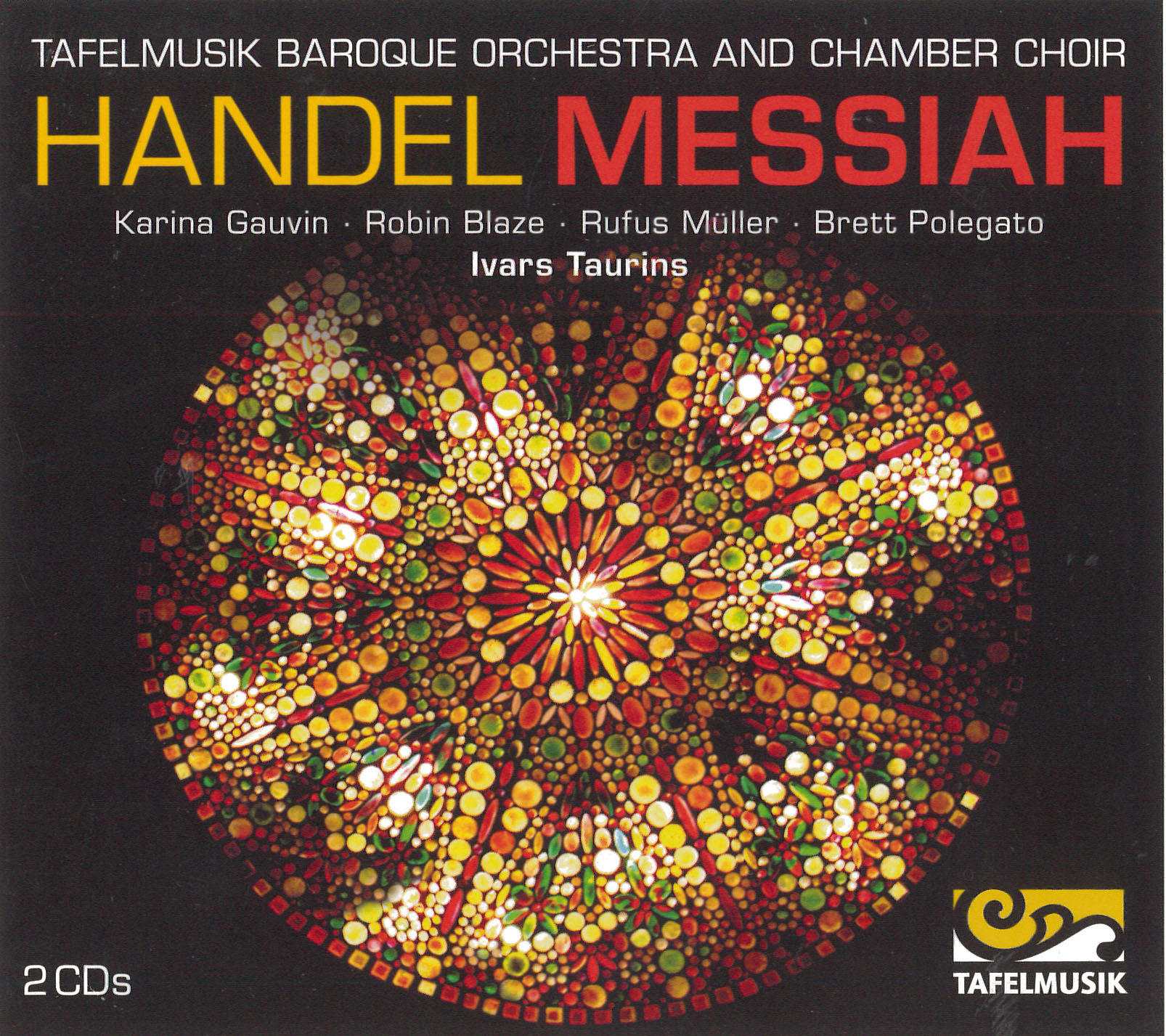
02 Messiah TafelmusikHandel – Messiah
Karina Gauvin; Robin Blaze; Rufus Müller; Brett Polegato; Tafelmusik Baroque Orchestra and Chamber Choir; Ivars Taurins
Tafelmusik TMK1016CD2

Handel's Messiah was first performed in Dublin in 1742 and in London on numerous occasions between 1743 and 1759. After Handel's death, performances grew larger in scale, culminating in the Crystal Palace performance of 1857 with its 2,500 musicians. Something of that big band effect can be heard in the performances conducted by Sir Malcolm Sargent. In his 1959 recording his tempi are ponderous with huge rallentandos at the end of movements. He also re-orchestrated a great deal of the work.

A major event in the recording history of Messiah was the performance conducted by Charles Mackerras in 1966. Mackerras used modern instruments but nevertheless communicated his understanding of baroque performance practice. Soloists were encouraged to decorate their parts, something heard to especially fine effect in Janet Baker's handling of the da capo in He was despised. Since then there have been many historically informed performances: my own preference is for the one conducted by William Christie. Just listen to the buoyancy of For unto us a Child is born or to the radiance which Barbara Schlick brings to I know that my Redeemer liveth.

The new Tafelmusik recording holds up well. The orchestra and choir are excellent. As for the soloists, tenor Rufus Müller is very good, baritone Brett Polegato is outstanding and soprano Karina Gauvin is out of this world. I am of two minds, however, about the countertenor: he is good in O thou that bringest good tidings, but He was despised drags and other arias need greater evenness than Robin Blaze brings to them.

Over the years Tafelmusik made a number of recordings for Sony. Many of these have been deleted but some of them have been brought back by Arkivmusic and now by Tafelmusik's own label. This recording is new, however, and it is also the first live recording of the orchestra. I hope that there will be many more. The achievements of Tafelmusik have been immense and further recordings should bring them to the attention of a wider audience.

Tafelmusik’s annual Messiah performances take place at Koerner Hall December 19 through 23.


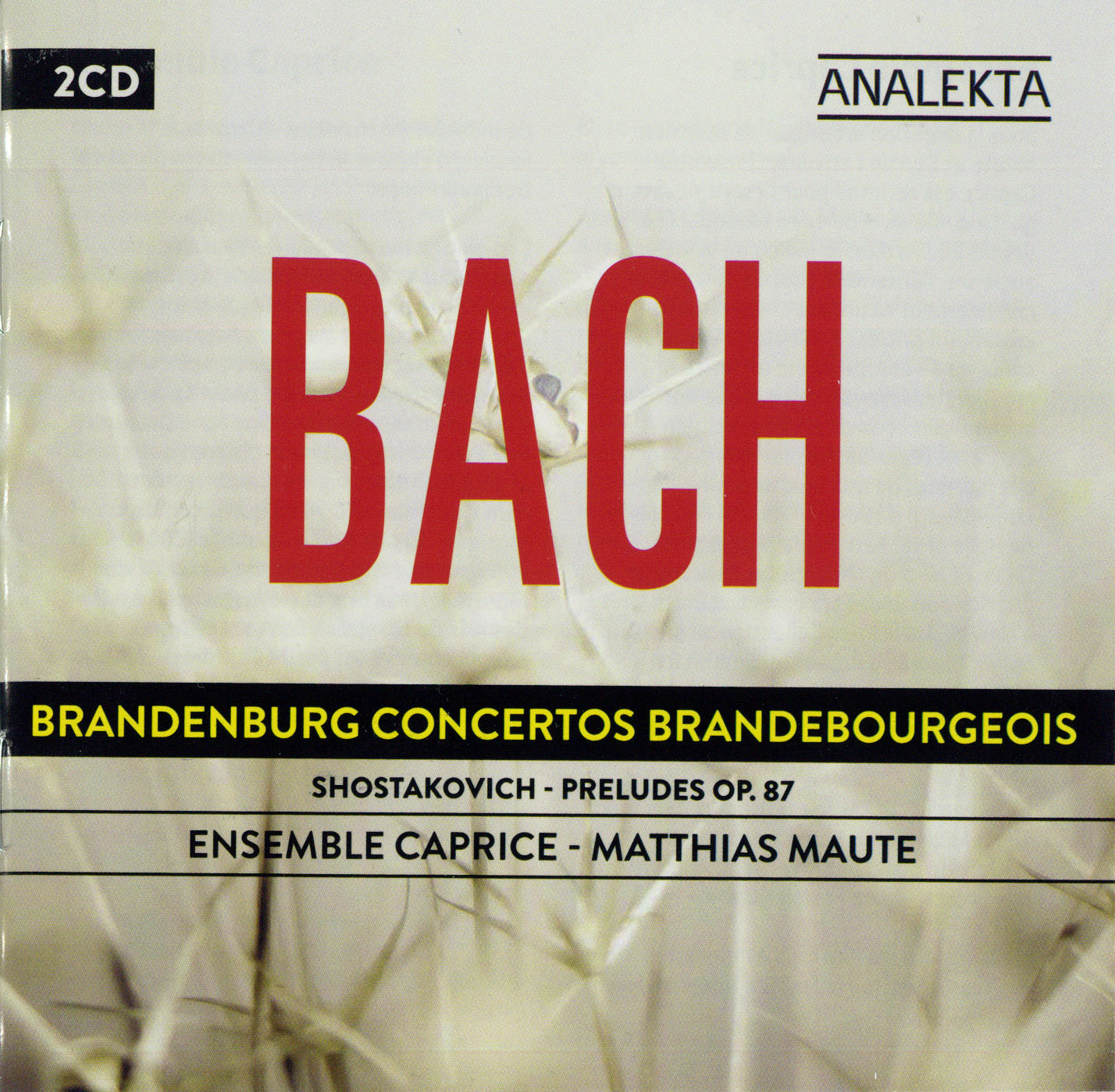
03 Brandenburg ShostakovichBach - Brandenburg Concertos; Shostakovich – Preludes (arr. Maute)
Ensemble Caprice; Matthias Maute
Analekta AN 2 9996-7

The Montreal-based recorder/flute player, composer and conductor Matthias Maute has established himself as one of the country’s finest baroque musicians and his Ensemble Caprice maintains a busy annual touring and recording schedule. The oft-recorded Brandenburg Concertos are given lively performances by Maute and his excellent Montreal colleagues, with stellar work from violinist (and violist in the sixth concerto) Olivier Brault, oboist Matthew Jennejohn, trumpeter Josh Cohen and, perhaps especially, harpsichordist Erin Helyard, who handles the challenging solo part in the fifth concerto with elegance and style.

There is a certain hyper-energetic quality to the playing that is at first attractive, but can become exhausting. Maute’s approach, even in the slow movements, is aggressive and rustic, with extreme dynamic contrasts, accents and abrupt endings to phases and – sometimes – whole movements. This is certainly not easy listening, but it gives a fresh, honest and immediate feel to the music making, emphasizing the improvisatory nature of Bach’s music.

Maute’s liner notes are fanciful and entertaining, as he analyzes each concerto in terms of instrument hierarchy, trying to prove that Bach was making subversive political statements with these pieces.

Each concerto is preceded by a short work by Shostakovich, originally for piano, but orchestrated by Maute especially for the Bach forces. These preludes (and one fugue) were apparently inspired by Shostakovich’s adjudication of the 1950 International Bach Competition and his admiration of the Well-Tempered Clavier. The performances are tremendously successful and their inclusion lends a special flavour to the whole program.

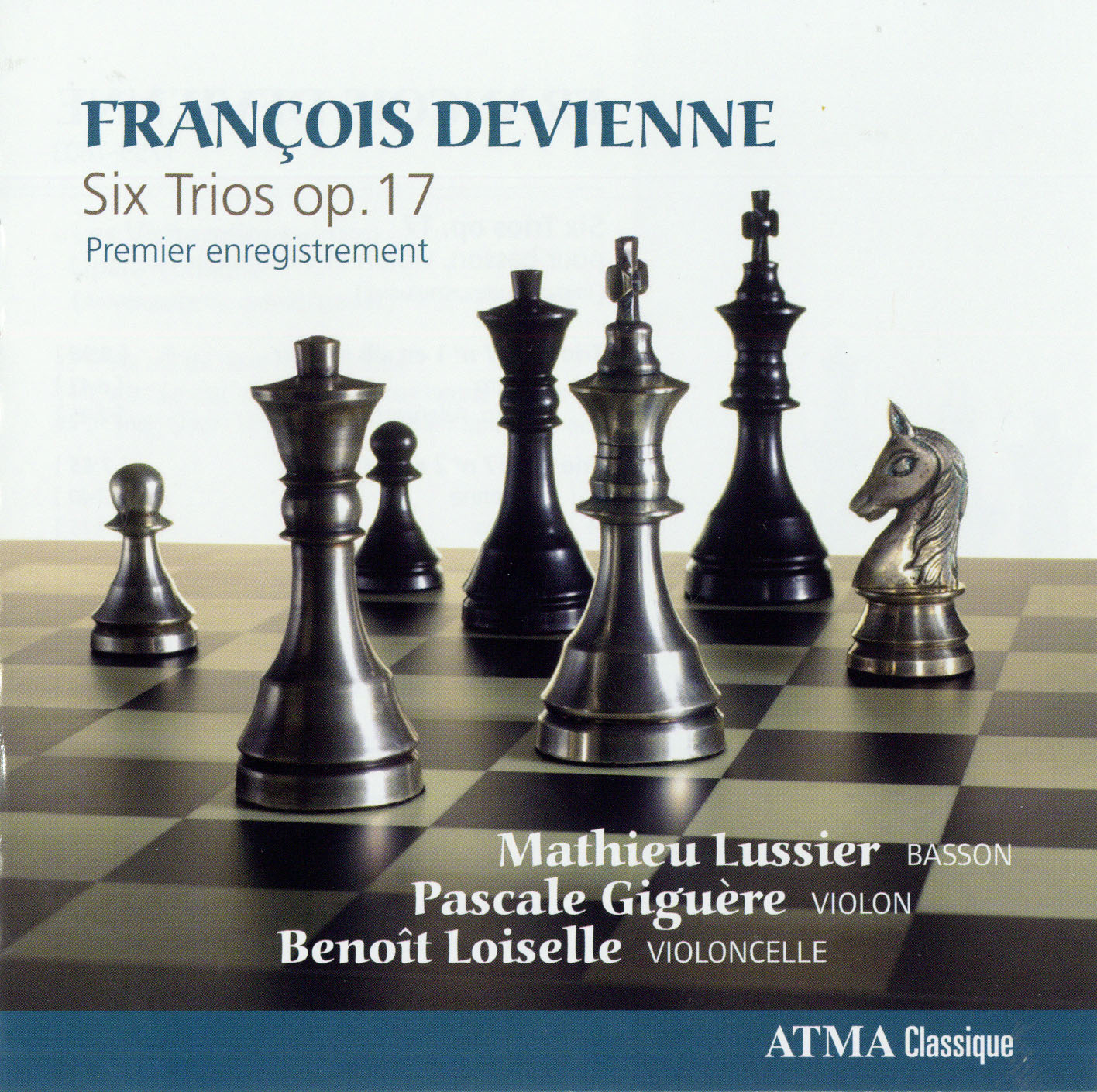
01 DevienneDevienne - Six Trios, Op.17
Mathieu Lussier; Pascale Giguère; Benoît Loiselle
ATMA ACD2 2583

Although François Devienne (1759-1803) was quite well known in France in the late 18th century, he has received little attention in recent times. Devienne was a very prominent bassoonist and flutist in the royal court of France prior to the French Revolution. For five years he was a member of Cardinal de Rohan’s household orchestra, a group popular with Queen Marie-Antoinette. During the period of the revolution, bands and orchestras changed names many times and Devienne seems to have spent that time in military bands only to emerge as a professor at what is now the Paris Conservatory.

This series of Six Trios Op.17, for bassoon, violin and cello, has never been recorded before. So we owe a debt of gratitude to Montreal bassoonist and conductor Mathieu Lussier for bringing these delightful works to our attention. At all times Mathieu Lussier’s bassoon playing is flawless. His articulation is crisp, clear and dazzling in the fast passages and his tone is full and rich with a lyrical quality rarely heard on bassoon.

While this CD definitely highlights the bassoon, Pascale Giguère on violin and Benoît Loiselle on cello certainly don’t take a back seat here. There is an almost seamless transition between the performers as each takes centre stage with the melody. It’s a unified ensemble. Throughout, the strings make limited use of vibrato as befits the genre. With eyes closed, one is easily transported back to the household of Cardinal de Rohan or the Queen before the violence of the revolution.

In addition to the six trios, the CD contains transcriptions of three airs from Devienne’s opéra comique Les Visitandines. For these selections, the trio is augmented with a viola in the capable hands of Jean-Louis Blouin. These provide a pleasant contrast, yet remain in the spirit of the musical times when they were written and performed.

As one who has, in the past, struggled with the diabolical fingering system of the bassoon, I have two very mixed reactions. Is the virtuosity displayed by Mathieu Lussier a challenge? Do I get my bassoon out of its case and practice diligently as I once did, or do I advertise a bassoon for sale? In the meantime, I will enjoy this CD of delightful happy music performed by true virtuoso musicians.

Christmas came early for me with the release of so many new Beethoven sonata CDs. Each pianist has done an exemplary job in recording their interpretation of the Beethoven masterpieces and I wish I could write more. All of these releases deserve detailed critiques. Some CDs resonated more with me than others but it is an entirely subjective reaction. All performances were impeccable musically and technically. However, we all respond differently to the individual voices and inflection of each performer’s unique phrasing and tempo. In fact we are listening to each pianist translate Beethoven’s musical speech. Music as a language has been a constant metaphor throughout the centuries before and after Beethoven. Greeks and Romans associated music with spoken rhetoric and musical execution may be compared with the delivery of an orator. By way of the spoken voice or musical gesture, performers hope to capture the hearts and attention of their listeners and arouse or quiet their passions by transporting them to a sublime musical experience. As pianos improved with more rapid decay of sound, quick and efficient damping and variation of timbre from one register to another, Beethoven began writing for the articulate brilliance of a “speaking music.” He also immersed himself in the treatises of authors such as Johan Mattheson and Emanuel Bach, discovered from reading ancient rhetoric by the Greek and Roman writers. Beethoven learned through the classical oratory to describe music as gestural art and cultivate the art of eloquent musical discourse and musical declamation. Here are the pianists who spoke to me in their Beethoven CDs.

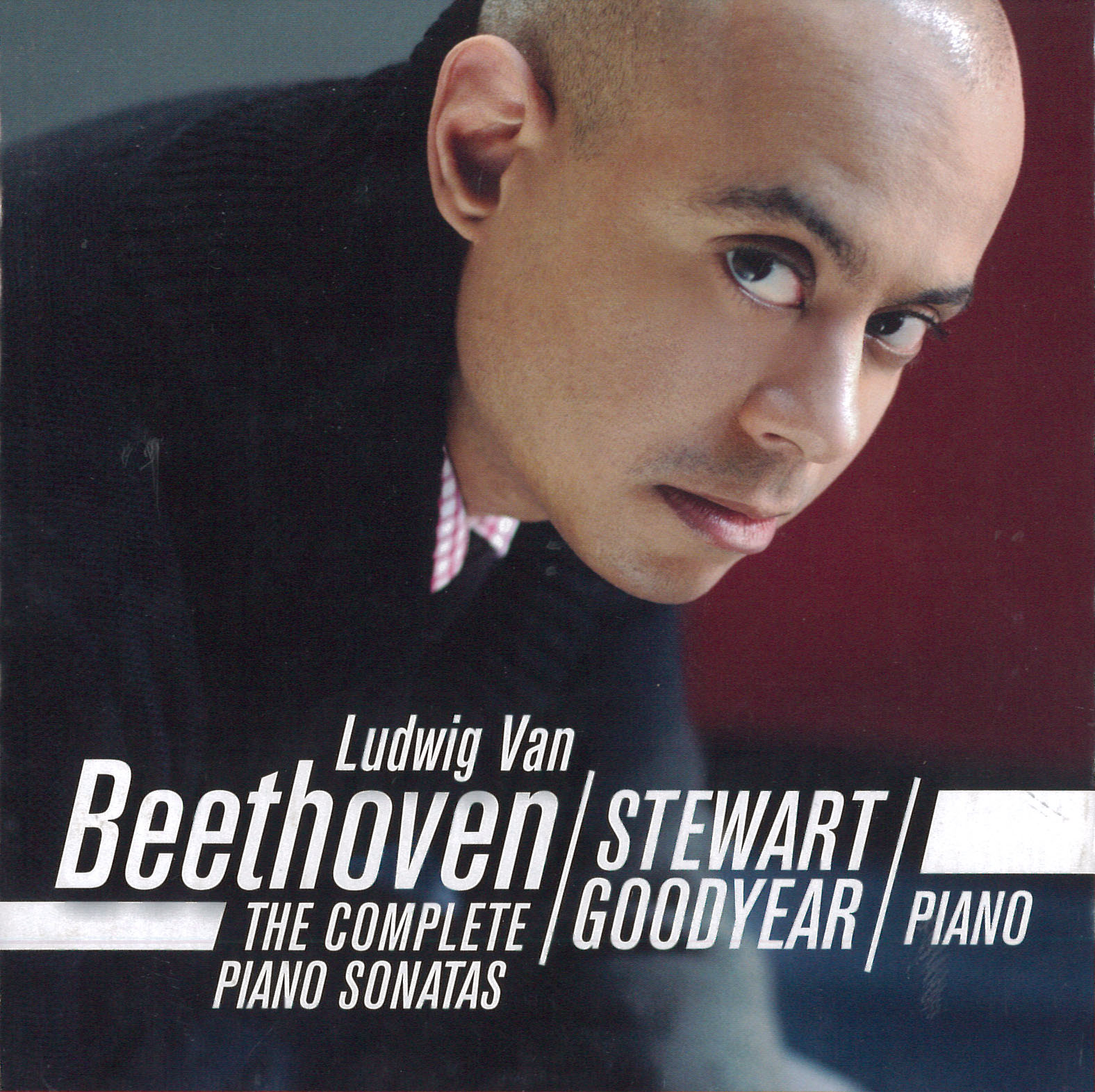
02a GoodyearStewart Goodyear: Beethoven – The Complete Piano Sonatas (Marquis MAR 513) I had the pleasure of hearing Stewart Goodyear perform the entire set of Beethoven Sonatas at a marathon in Koerner Hall last June. He is an amazing pianist with formidable technique, stamina and fortitude. His talent is promethean and his playing eloquent and polished throughout the set. Like an orator, Goodyear takes you on a dramatic operatic journey, embracing every nuance and detail. Beethoven had carried the declamatory style into the new century with articulative tools such as legato and slurs crossing bar lines to subsume points of arrival. Beethoven used speech-mimetic effects in his keyboard works in order to approximate speech articulation. According to Czerny, he adopted the methods of singers and recommended putting words to passages or listening to string or wind instruments. Goodyear has given much thought to the form and structure of each sonata. I might quibble here and there about certain tempi or tonal nuance but his level of artistry is truly exceptional. His command of the keyboard and depth of emotion, especially in the last five sonatas is moving and intense. Like a good book, once you start listening it is difficult to stop and that is a remarkable accomplishment for this young artist.

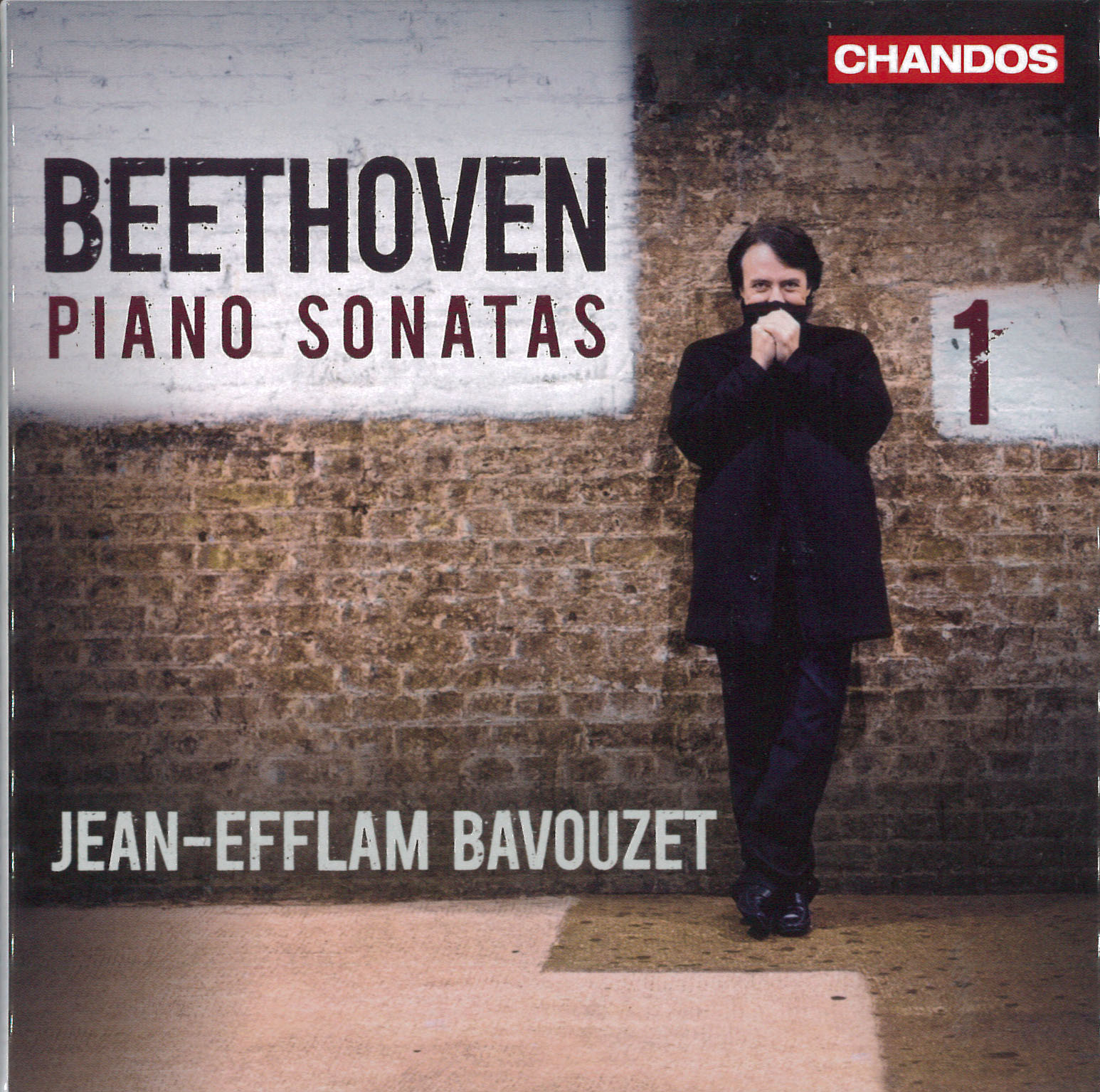
02b BavouzetJean-Efflam Bavouzet: Beethoven – Piano Sonatas Volume 1 (Chandos CHAN 10720) I love these three CDs. They spoke to me on so many levels. The warm, velvety sound Bavouzet achieves suggested an intimate conversation, almost whispered at times. More robust movements were lively but enveloped in honeyed tonal colours. I was mesmerized and hypnotized by the tenderness and sensitivity in his playing. Every phrase, every nuance and ornament was lovingly played. Bavouzet’s shaping of phrases was fluid and his articulation superb. The cantabile lines sang and the quiet, tranquil movements were introspective. The faster, more robust movements had great energy and pulsed with rhythmic inflection. The piano writing in the early sonatas embraced a multitude of textures, borrowing from the symphonic style, string quartet and other chamber music. Bavouzet emphasized this in his playing. In his program notes he is as articulate as in his performance. He asks the question: “Why record more Beethoven?” “And if Beethoven’s music is still alive within us and continues to inspire and inform us about how we relate with the world, is it not absolutely crucial that we should be alert to its enduring vitality and modernity? And why should music lovers be denied the opportunity to associate the new insights of living musicians with this immortal repertoire?” Excellent words and playing. Volume 1 includes sonatas from Opp.2, 7, 10, 13 and 14.

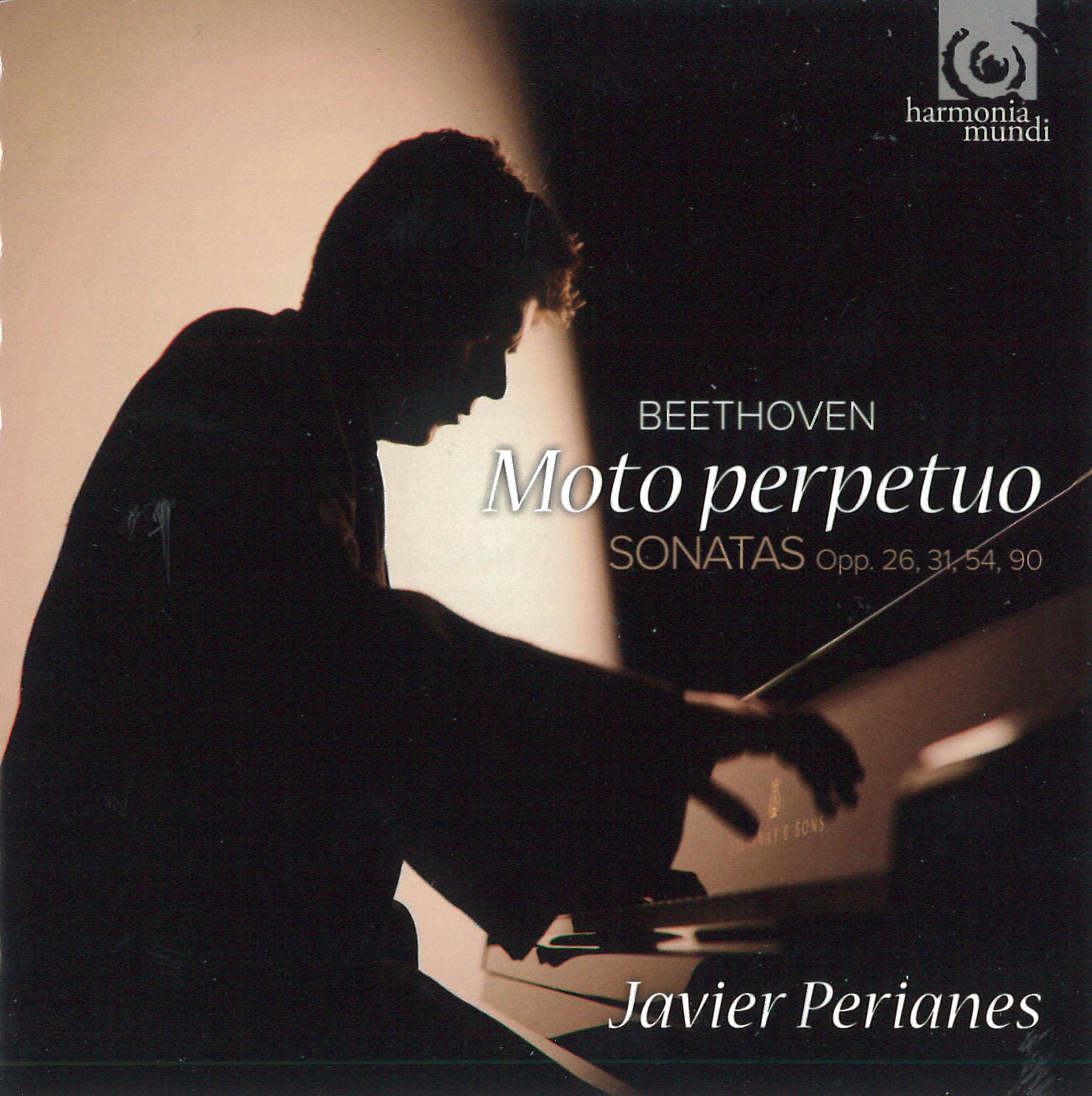
02c PerianesJavier Perianes: Beethoven – Moto perpetuo: Sonatas Opp.26, 31, 54, 90 (Harmonia Mundi HMC 902138) This recording couples four sonatas which end with “moto perpetuo,” a selection that deliberately underlines their similarity but also the diversity of the results Beethoven achieves using the same basic idea. Beethoven explored, like no one else, the possibilities of this compositional concept. The incessant repetition of the moto perpetuo has influenced keyboard composers and performers since before Bach. However, the development of the piano and its quicker action ensured the receptivity of this mode of writing. As to the tempo of these fast movements, Carl Maria von Weber speaks “of human pulse as a model of tempo as informed by an apprehension of periodicity in declamation. The beat, the tempo must not be a controlling tyrant nor a mechanical driving hammer, it should be to a piece of music what the pulse is to the life of man.” There also has to be a contrast in the music of speed. A presto needs tranquil moments to prevent the illusion of excessive speed. Javier Perianes performed the slow tranquil moments with tenderness and warmth. Beautifully shaped phrases were liquid and flowed effortlessly from one to another. I was very impressed with his musicality and the direct way he approached the music. The moto perpetuo movements did not use daredevil tempos but were articulate and exciting. I loved the care with which he pushed and pulled the musical phrases, slow or fast. Nothing was unnatural and accents were not harsh. His tone always retained warmth and was deep with rich colour. Here was another CD I couldn’t stop listening to and I look forward to more Beethoven from this excellent pianist.

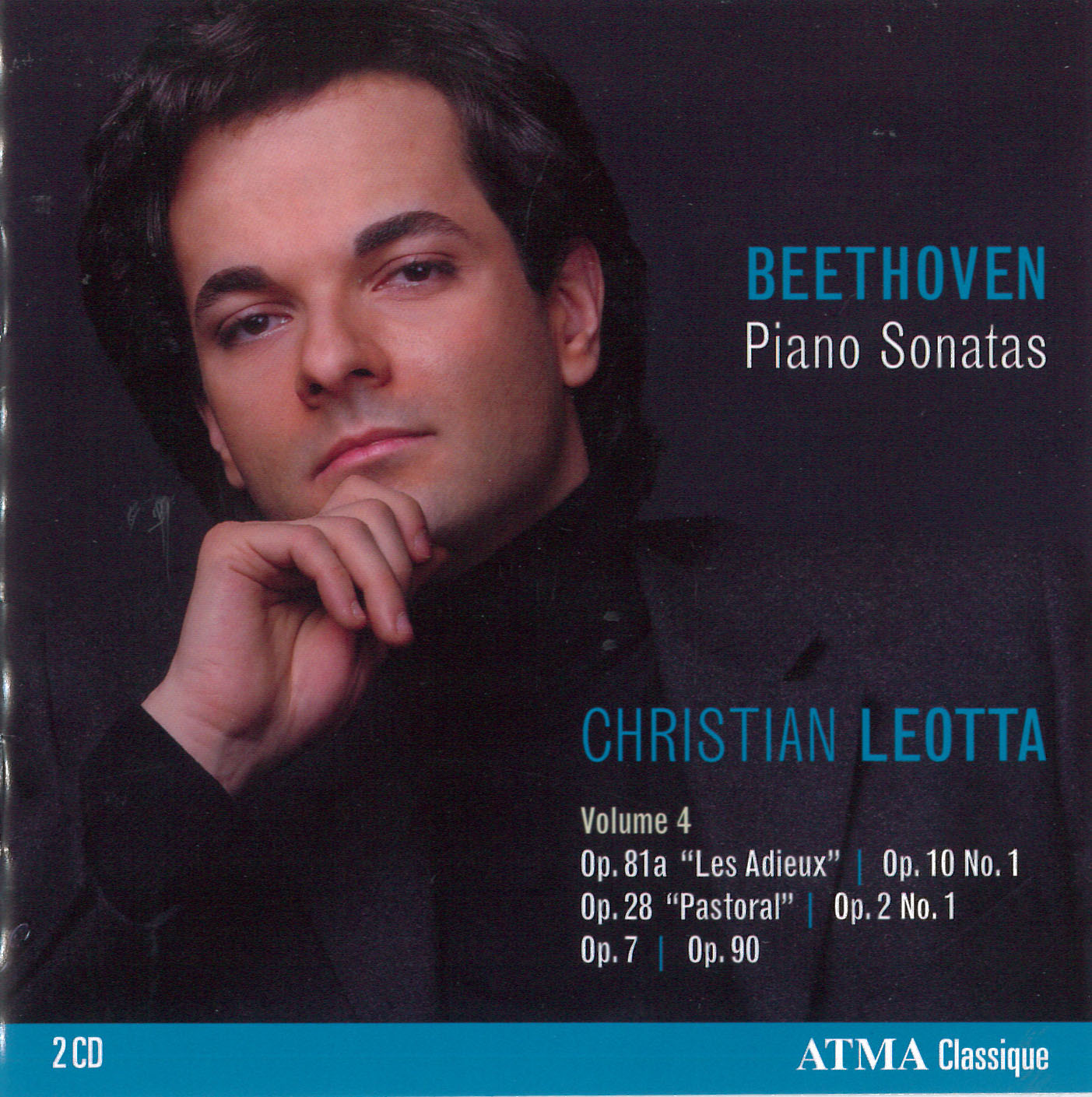
02d LeottaChristian Leotta: Beethoven – Piano Sonatas Volume 4 (ATMA ACD2 2489) Chords are in music what words are in language. A harmonic sentence or period consists of several chords that are connected. A succession of many sentences constitutes an entire speech and a composition consists of a succession of many periods. Christian Leotta chooses to speak not only in volumes but in unique ones. His inflections in musical speech might not be to everyone’s taste but his declamatory playing commands that you listen. According to Beethoven’s critical comments on Czerny’s playing, he wanted all the rhythmic accents stressed quite heavily. He did not want flat performances, even if they were eloquent. Christian Leotta obliges us with his personal interpretation of the sonatas. He has a prodigious technique and an innate musicality. I admire his attention to the form and structure of each movement and his exquisite detailing. Volume 4 includes sonatas from Opp.2, 7, 10, 28, 81a and 90 and in it Leotta has presented us with another extremely worthy CD that deserves many hearings.

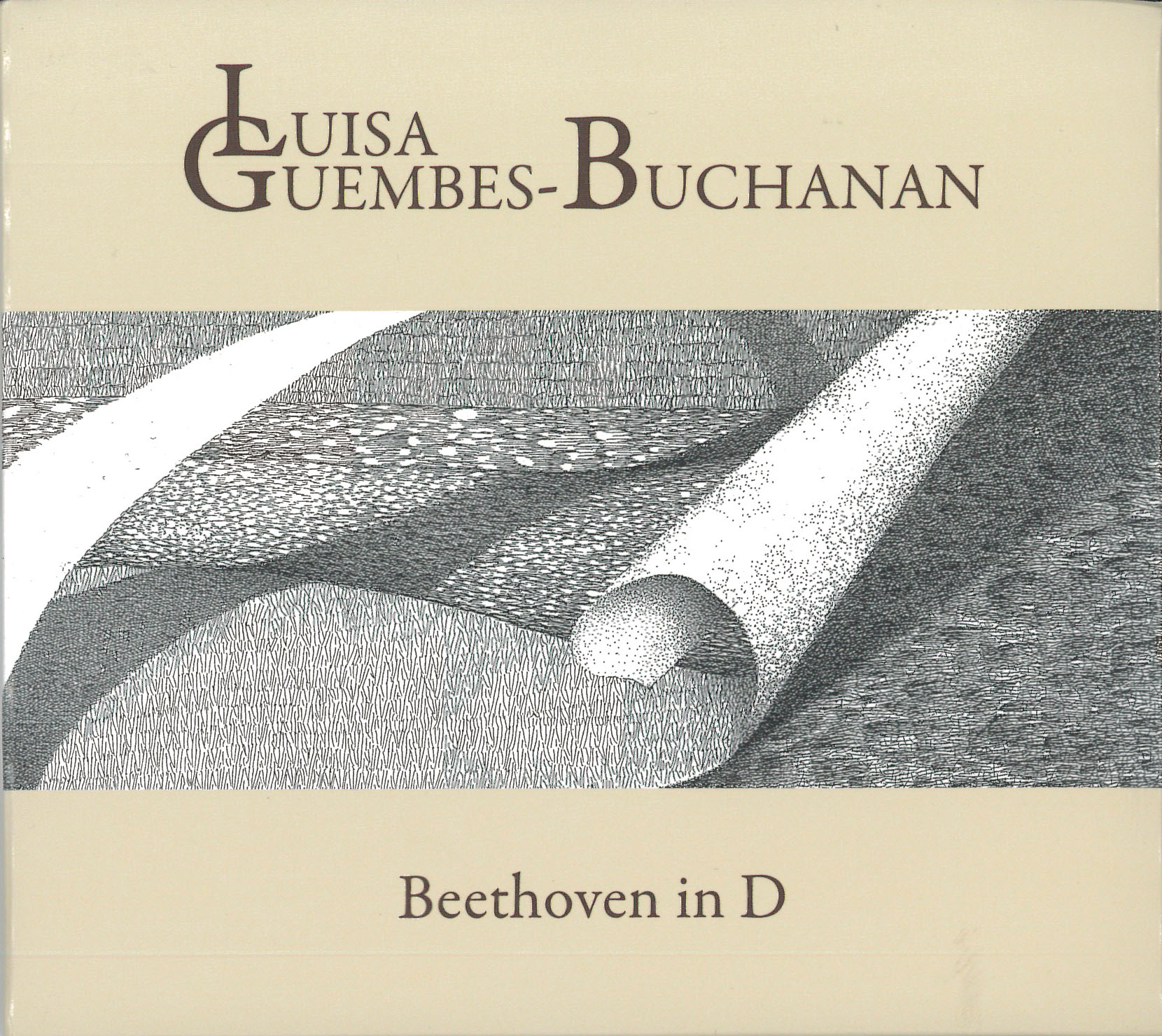
02e Guembes-BuchananLuisa Guembes-Buchanan: Beethoven in D (www.beethovenpianoworks.com) I liked the care with which the choices were made for this self-produced CD. The three sonatas presented share the tonality of D (two major and one minor) but are radically different from one another in character. I did enjoy her intense leading of the musical phrase. Her interpretations draw you in. In a few spots she neglected pushing through to the end of the phrase. Some of the accents were too harsh and she needs to vary the tonal quality of the accents. Like in speech it is the inflection that is powerful, not necessarily the shouting. Although some of the playing was rough I did enjoy the energy and the slow movements were played with deep emotion and feeling. I could feel the pain and longing of Beethoven.

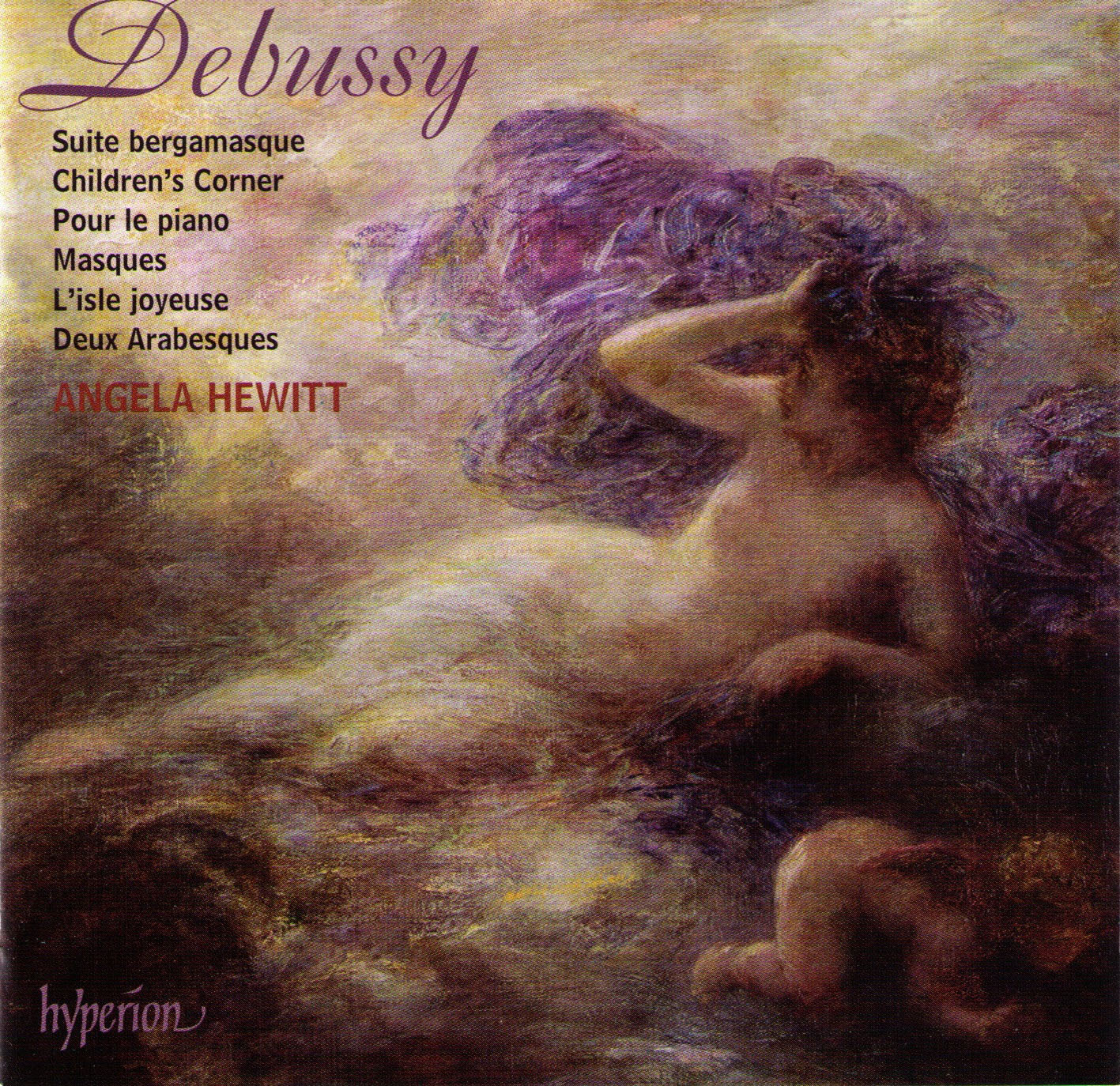
03 Debussy PianoMusic HewittDebussy
Angela Hewitt
Hyperion CDA67898

Angela Hewitt first achieved international recognition for her interpretations of the music of Bach – was that really 27 years ago? Since then, the Ottawa-born pianist has proven to the world that her talents are truly eclectic, with a repertoire ranging from Handel to Messiaen. And how appropriate now that we’ve come to the end of 2012 – the 150th anniversary of the birth of Claude Debussy – that she should return once again to France for music by the musicien from Saint-Germaine-en-Laye.

This latest CD on the Hyperion label comprises many of Debussy’s major piano works, including the Suite bergamasque, Children’s Corner, Pour le piano, Masques, L’isle joyeuse and Deux Arabesques. Nevertheless, in recording such well-known repertoire, Hewitt had a tall order to fill. What amateur pianist with some degree of proficiency hasn’t tried his or her hand at least a few of these chestnuts? The challenge was thus a question of breathing new life into these oft-performed pieces. Not surprisingly, she succeeds admirably. Opening with the familiar Children’s Corner suite from 1908, Hewitt brings a particular freshness and vitality to the music, from the tongue-in-cheek Doctor Gradus ad Parnassum to the good-humoured Golliwog’s Cake-walk. Similarly, with the Suite bergamasque, each miniature demonstrates a wonderful sense of tonal colour, particularly in the famous Clair de lune. In contrast is L’isle joyeuse, music of gregarious buoyancy, inspired in part by Watteau’s painting L’embarquement pour Cythère.

My only quibble – and it’s a minor one – are the tempos, at times slightly brisker than we’re accustomed to. Yet this is not always the case. La Plus que lente is all sensuousness, performed with just the right degree of hesitancy and tempo rubato, thus rounding out a fine recording of much-loved repertoire.

Back to top