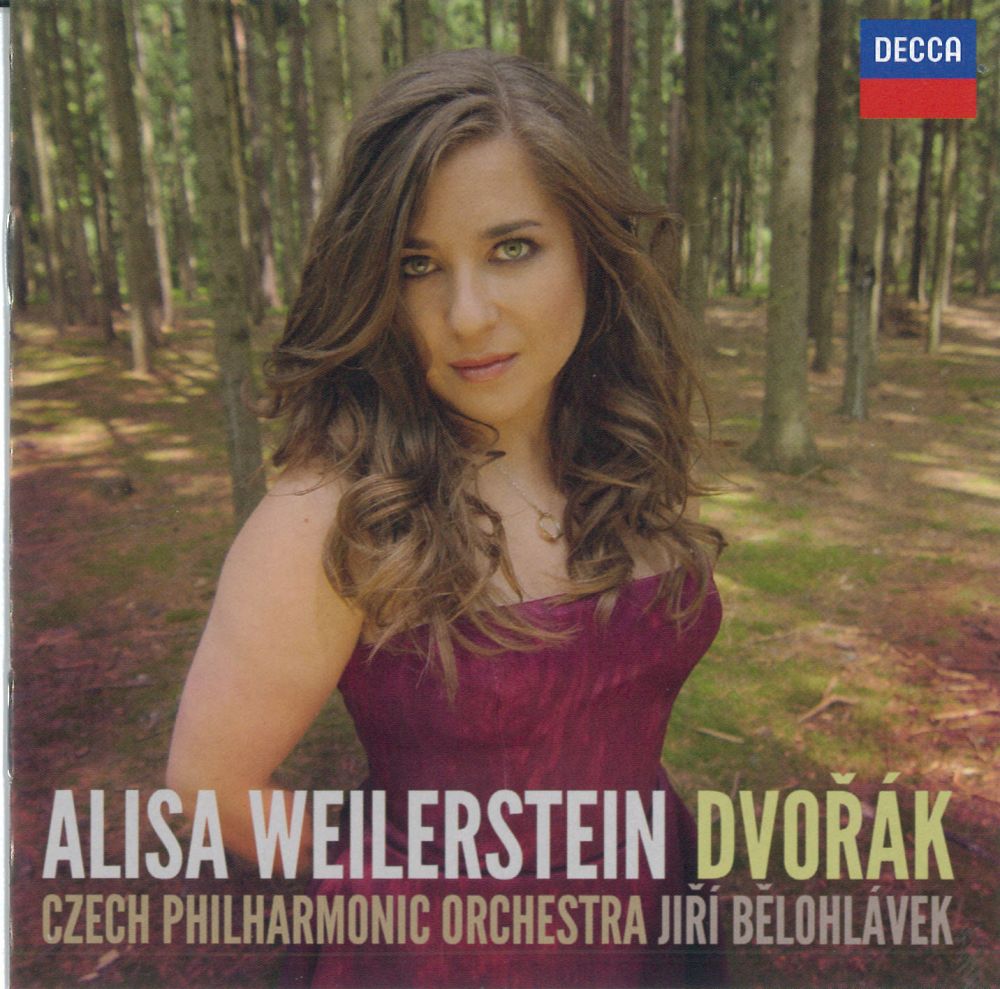
04 classical 03 weilerstein dvorakDvořák – Cello Concerto in B Minor, Op.104
Alisa Weilerstein; Czech Philharmonic Orchestra; Jirí Bělohlávek
Decca B0019765-02

When we think of great cello concertos only a handful come readily to mind, namely those from the Romantic composers; Dvořák, Elgar, Schumann, Saint-Saëns, plus Prokofiev and the two from Shostakovich. Of course, there are also these popular named works: Tchaikovsky’s Rococo Variations, Richard Strauss’s Don Quixote, Bloch’s magnificent Schelomo. For the average music lover, the Dvořák and the Elgar are most likely to come to mind.

Neither of the two wants for excellent recorded performances from past and present luminaries, but today’s artist to listen for is Alisa Weilerstein and she has recorded both (her EuroArts DVD and Decca CD recordings of the Elgar were reviewed in these pages in October 2011 and December 2012 respectively). From the moment of her entry in the first movement of the Dvořák we are aware of her flawless and stimulating technique, producing thrilling sonorities with assurance and rhythmic precision. 

Under Bělohlávek, the Czech Philharmonic has regained the sound and authority of the past, playing with palpable enthusiasm and partnering in a very exciting and satisfying performance, superbly recorded.

Just a thought: a photograph of the recording session shows Weilerstein facing into the orchestra which may account for the total involvement of everyone concerned.

Six shorter show pieces are included: Lasst mich allein, Op.82 No.1; Rondo in G Minor, Op.94; Goin’ home; Songs my mother taught me, Op.55 No.4; Silent Woods, Op.68 No.5 and an exciting Slavonic Dance in G Minor, Op.46 No.8. Even though she does not yet have a recognizable, distinctive sound of her own, Weilerstein excels with an engaging rendering of each piece, closing out this most welcome disc.


04 classical 04 faure lemelinFauré – Nocturnes and Barcarolles
Stéphane Lemelin
ATMA ACD2 2466

Stéphane Lemelin’s program interweaves Fauré’s complete nocturnes and barcarolles (13 of each) on this two-disc release, providing an ideal chronological overview of the composer’s development. Lemelin’s program notes are clear and interesting. For example, he notes that while the pieces became less nocturne- or barcarolle-like over the composer’s lifetime, the publisher retained those generic names in an effort to boost sales!

Interpretively, Lemelin follows Fauré’s abstention from rubato yet maintains expressiveness with inflections and sense of breathing, in the manner of a Fauré mélodie (art song). Technically he executes well, from the clarity and filigree work of Barcarolle No.2 to the rumbling bass, octaves and even tone clusters of Nocturne No.12. Stylistically, many listeners will find the experimental works of the years 1902-1913 most difficult to appreciate: here Lemelin is uncompromising in projecting the bleakness and obsessive quality of Nocturne No.10, or the repetitive melody and harmony (for this chromatically sophisticated composer) of Barcarolle No.9. And yet, on repeated hearing I find that these pieces too reveal many beauties.

As for Fauré’s accessible early pieces, Lemelin sets a high standard of commitment from the beginning. His playing of Nocturne No.1 is full of harmonic interest and emotional depth. Though Barcarolle No.1 is fairly conventional Lemelin elevates it, capturing the beauty of texture and occasional twists of chord direction that will become stylistic trademarks. And so it goes, onward from these works and throughout this wonderful set.


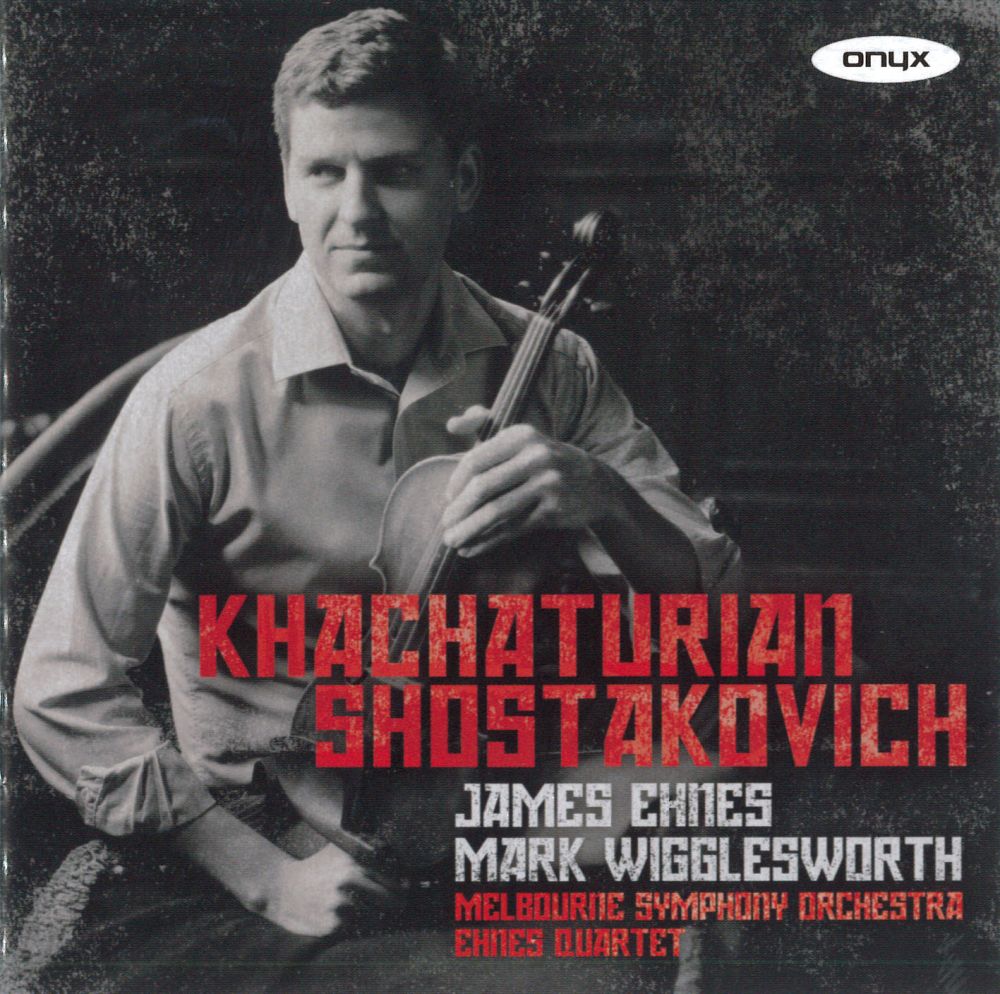
strings attached 01 ehnes khachaturianJames Ehnes is back with a program of Russian music on his latest CD, Khachaturian/Shostakovich (ONYX 4121). Ehnes is joined by the Melbourne Symphony Orchestra under Mark Wigglesworth in a solid performance of the Khachaturian Violin Concerto. The slow middle movement is particularly lovely here, and the “Allegro vivace” final movement really sparkles. Recorded in the orchestra’s Melbourne concert hall, the violin seems to be a bit far back in the balance at times, but the overall sound is full and resonant.

Shostakovich is represented by two works from his series of 15 string quartets – the Quartet No.7 in F Sharp Minor, Op.108 and the Quartet No.8 in C Minor, Op.110 – played here by the Ehnes Quartet, an ensemble formed in 2010 in which Ehnes himself is joined by violinist Amy Schwarz Moretti, violist Richard O’Neill and cellist Robert deMaine. The quartets, both written in 1960, are highly personal in nature, with the Op.110 in particular being essentially autobiographical. Dedicated “To the Victims of Fascism and War,” it quotes from six of Shostakovich’s earlier works and is dominated by his signature monogram D-S-C-H, the German designation for the notes D, E flat, C and B natural. It is a work that consistently reduced Shostakovich to tears, both in its composition and in performance. The playing here is dynamic and thoughtful, although perhaps a bit too polished at times; the aching, yearning sense of melancholy, desolation and despair so essential to the Op.110 in particular doesn’t always come through.

strings attached 02 weinbergShostakovich’s influence is clearly audible in an outstanding 2-CD set of the music of Mieczysław Weinberg (1919-1996), the Polish/Soviet composer who, with Shostakovich’s help, settled in Moscow in the early 1940s. The two composers shared a close friendship and clearly influenced each other. For many years Weinberg’s music has been unjustly neglected, but that has gradually been changing, with an ever-increasing number of CDs exploring his extensive and hugely impressive output. This latest issue on the German ECM Records label (ECM 2368/69) featuring Gidon Kremer and the Kremerata Baltica makes a massive contribution to the growing appreciation of Weinberg’s music.

Three of the works – the Concertino Op.42 for Violin and String Orchestra, the Sonatina Op.46 for Violin and Piano and the String Trio Op.48 – are from the period 1948-50, when toeing the Party line was more than just a sensible idea; Reading between the musical lines, the excellent booklet essay on Weinberg, refers to his being “under suspicion and shadowed day and night for five years from 1948 to 1953.” Like so much Soviet music of the time, these works are immediately accessible, but always with the sense of added meaning lurking beneath the surface.

The two other works – the monumental and towering Sonata No.3 Op.126 for Solo Violin from 1978, which Kremer rightly puts on the same level as the Bartók sonata, and the Symphony No.10 Op.98 for String Orchestra from 1968 – are from a period when the mature composer clearly enjoyed a greater sense of freedom, both politically and musically.

It’s a quite stunning set, with the performers outstanding in all respects. Kremer is as good as I’ve ever heard him, and this is clearly music very close to his heart.

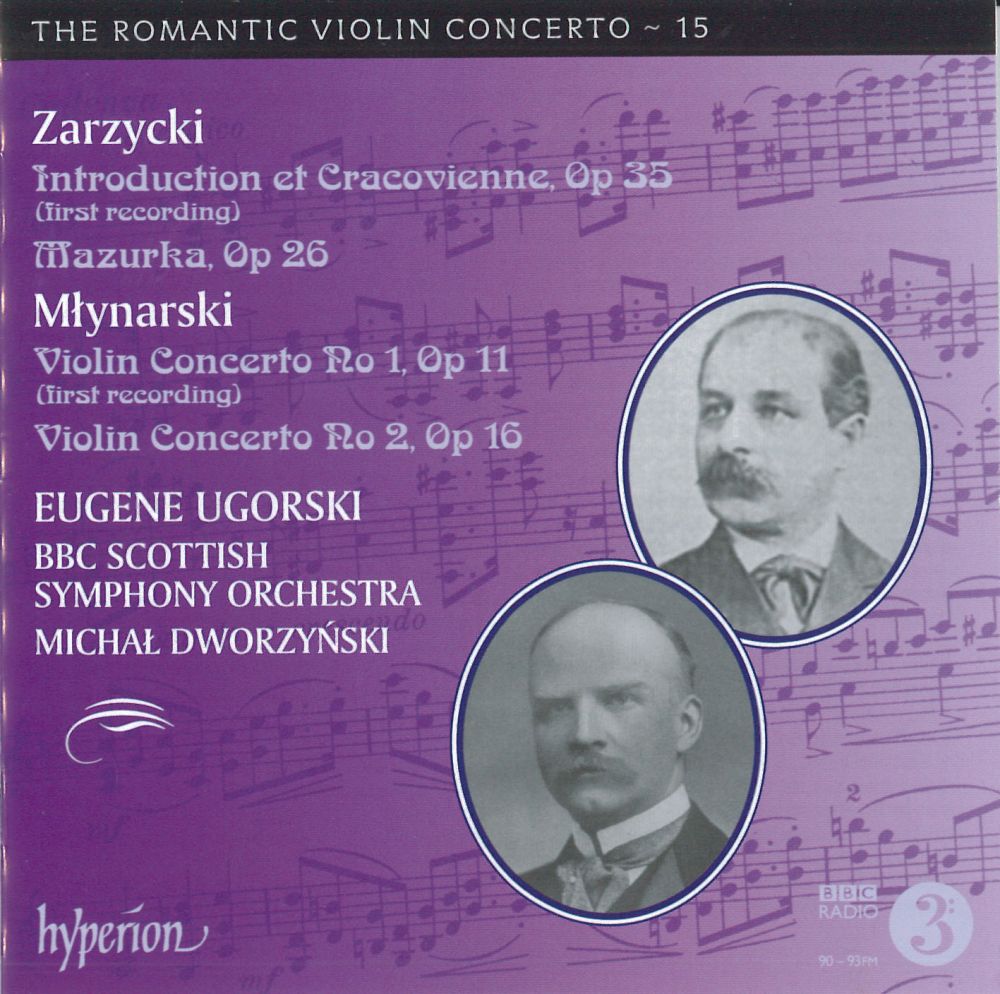
strings attached 03 romantic violin 15Hyperion’s The Romantic Violin Concerto Volume 15 features the music of Polish composers Emil Młynarski (1870-1935) and Aleksander Zarzycki (1834-1895) (CDA67790). Młynarski enjoyed a hugely successful international career as a violinist, conductor and composer, and is represented here by his two violin concertos, No.1 in D Minor Op.11 from 1897 and No.2 in D Major Op.16 from 1916. The style is typically late Romantic, with echoes of Wieniawski and Dvořák. The first concerto virtually disappeared after its initial success, and apparently remained unplayed until 2011. The second concerto is clearly a more confident and individual work that has stayed in the repertoire.

Zarzycki was primarily a virtuoso pianist before concentrating on composition and teaching. His Introduction et Cracovienne in D Major Op.35 and Mazurka in G Major Op.26 are both delightful virtuosic pieces. Violinist Eugene Ugorski is terrific, with a big tone and a large and constant vibrato which is perfectly suited to the style of these works. The BBC Scottish Symphony Orchestra under Michał Dworzyński provides excellent support.

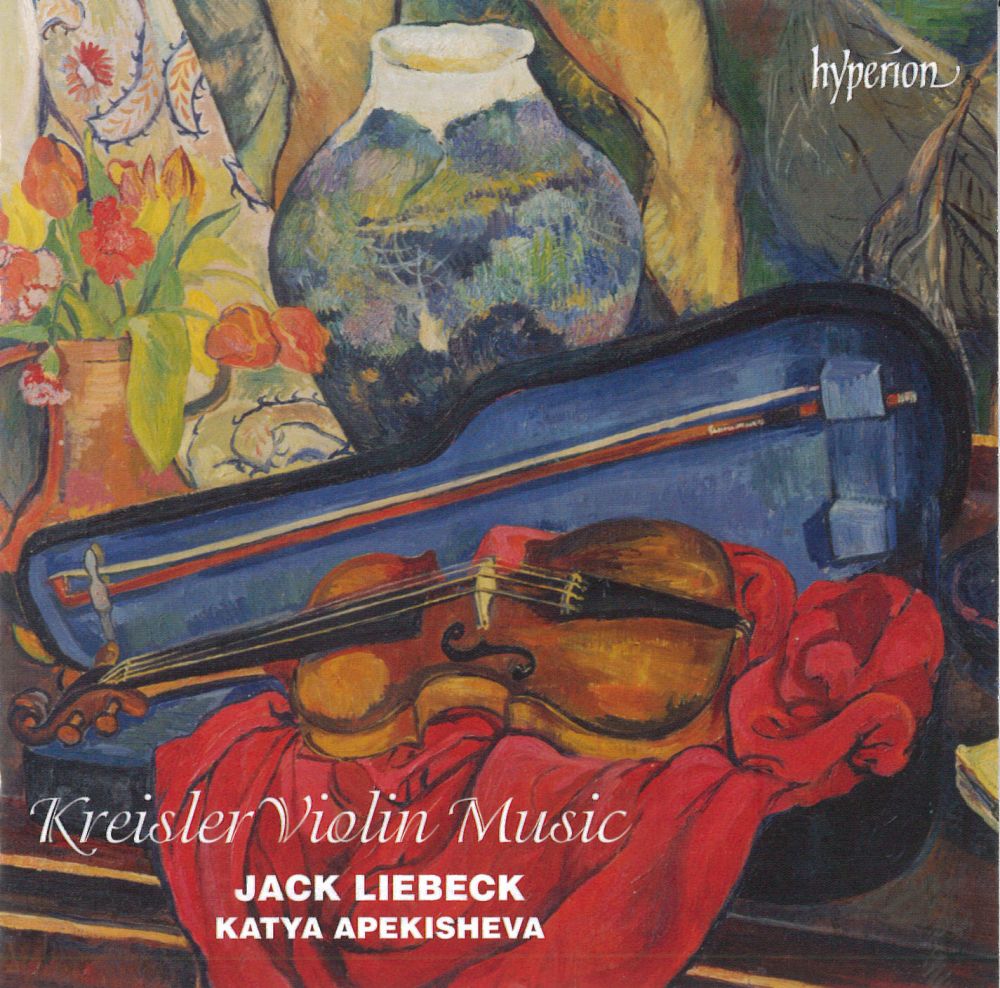
strings attached 04 kreisler musicBritish violinist Jack Liebeck is superb on another outstanding Hyperion disc, this time a recital of Kreisler Violin Music, accompanied by pianist Katya Apekisheva (CDA68040). The Viennese violinist Fritz Kreisler was one of the most outstanding and instantly recognizable players in the first half of the 20th century. As the excellent booklet notes by the ubiquitous Tully Potter point out, Kreisler`s continuous use of vibrato was considered to be a revolutionary new style of playing; he was also renowned for his pure, sweet tone and his immaculately clean and accurate double-stopping.

Although there is now ample opportunity for us to hear Kreisler himself in recorded performance – there are well over a dozen Kreisler CDs in the Naxos Historical series alone – he is still mostly remembered for his compositions, transcriptions and arrangements. Some of the compositions, of course, were the subject of a mini-scandal in the mid-1930s when Kreisler, who had passed them off as being by various Baroque and Classical composers, even claiming to own the original manuscripts, finally admitted that they were his own compositions. They are now usually listed as “in the style of…” The most well-known (and arguably the best) of these, the Pugnani Praeludium and Allegro, opens this recital in fine style. Other “in the style of…” compositions are the Boccherini Allegretto and the Cartier La Chasse, the latter full of the dazzling double-stops that Kreisler could handle so comfortably. As can Liebeck, quite clearly.

The four most popular Kreisler compositions – Schön Rosmarin, Tambourin chinois, Liebeslied and Liebesfreud – are here, the latter two, incidentally, having been originally passed off as being by the Austrian waltz composer Joseph Lanner. The lesser-known Syncopation, Toy Soldiers’ March, Caprice viennois, Polichinelle and Marche miniature viennoise are also included, along with the fascinating Recitativo and Scherzo for solo violin. Four Kreisler arrangements fill out the program: Gluck’s Mélodie from Orfeo; De Falla’s Danse espagnole from La vida breve; Dvořák’s Slavonic Dance in E minor; and Tartini’s G minor Sonata The Devil’s Trill, where Liebeck’s superb multiple-stopped trills bring an outstanding CD to a jaw-dropping conclusion.

There is a good deal of competition in recordings of this repertoire, but Liebeck and Apekisheva provide as lovely playing of these beautifully crafted works as you could wish to hear.

03 early 01 doulce memoireDoulce Mémoire
Margaret Little; Sylvain Bergeron
ATMA ACD2 2685

This CD explores the variation technique known as “diminutions,” a concept more commonly known as “divisions.” It is explained in the accompanying booklet: “Diminutions were made by dividing long notes of the melody into a series of shorter notes either surrounding the melody note or filling up the interval between it and the next melody note.” Many of these were based on madrigals, most famously Cipriano de Rore’s Ancor che col partire. Here the artists have chosen one set of variations, that by Ricardo Rogniono. The title of the CD refers to a different madrigal, Doulce Mémoire, by Pierre Sandrin. Here three sets of variations are played: by François de Layolle, Diego Ortiz and Vincenzo Bonizzi.

Although there are only two players, the recital gives us many different textures: of the 17 tracks, seven are for treble viol and archlute, six for bass viol and archlute, two for solo treble viol and two for solo archlute. The material is largely based on variations on 16th century madrigals, but it is complemented by selections from John Playford’s 1684 collection The Division Viol with its variations on popular English songs. No selection of variations would be even half complete without that most popular of songs, La Folia. Fittingly the CD ends with an anonymous set of variations based on that song.

Throughout the CD viol player Margaret Little and lutenist Sylvain Bergeron, are superb. I am always careful not to use superlatives too easily but these performances are truly out of this world.


03 early 02 meine seeleMeine Seele – German Sacred Music
Matthew White; Tempo Rubato; Alexander Weimann
ATMA ACD2 2668

As the CD’s booklet reminds us, music was very important to Martin Luther. It was “a gift of God,” he wrote in 1530. It should be central to education: “A teacher must be able to sing; if not, I don’t think he’s any use.” Luther’s views account, at least in part, for the centrality of music in the Lutheran tradition. The tradition culminated with Johann Sebastian Bach, but he was able to build on at least a century of earlier music.

This recording begins with an early cantata by Bach (Widerstehe doch der Sünde) but then moves back into the 17th century (Heinrich Schütz, Franz Tunder, Johann Rosenmüller, Johann Michael Bach, Christoph Bernhard). It then returns to the early 18th century with the final work, a cantata by Philipp Heinrich Erlebach. The vocal works are complemented by instrumental pieces: a sinfonia by Tunder, extracts from a suite by Erlebach, a passacaglia for organ by Georg Muffat and a set of dances by Rosenmüller.

J.S. Bach, Schütz and Rosenmüller are the only composers here who are at all well known today. It is good to hear the religious music of other German composers of the Early Baroque, especially when sung by the countertenor Matthew White, who is a fine interpreter of this music. We used to hear him often in Toronto, with Tafelmusik or the Toronto Consort. Now his work centres on Montreal and Vancouver. I hope he will come back soon.


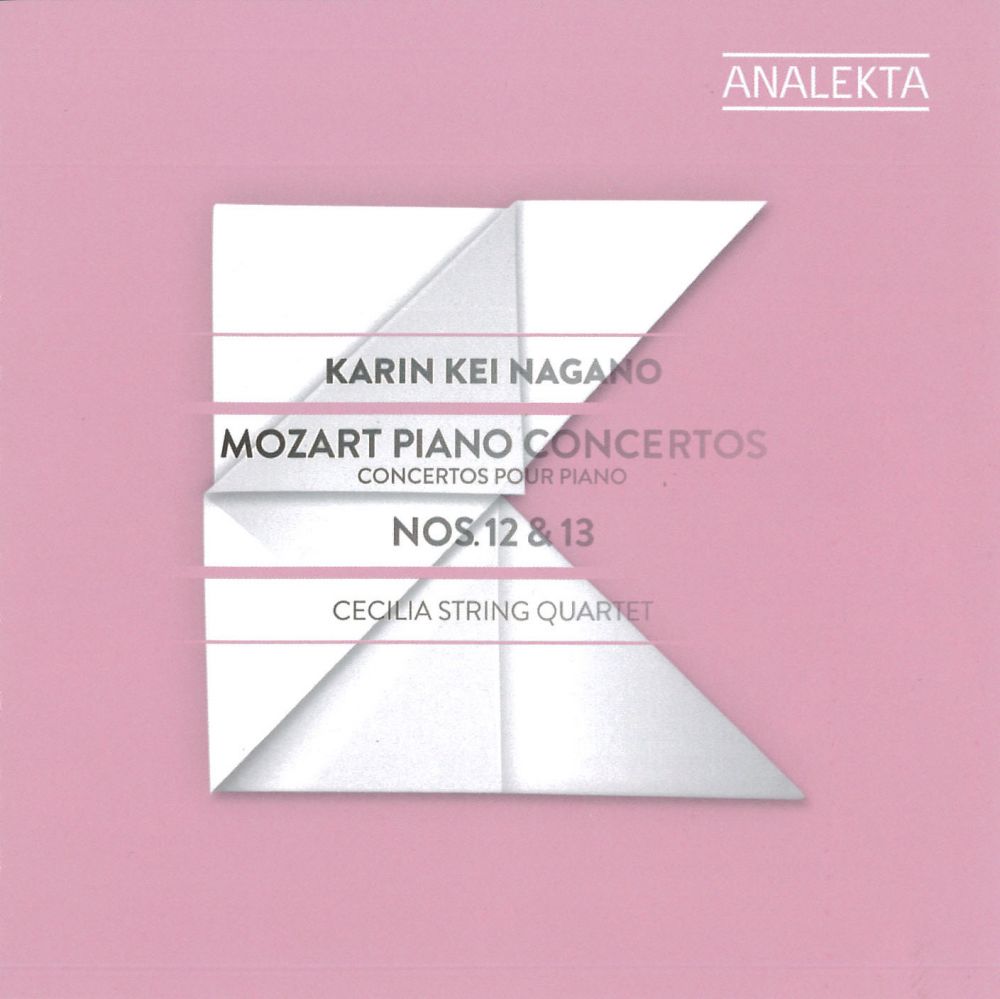
04 classical 01b mozart fialkowska04 classical 01a mozart naganoMozart – Piano Concertos 12 & 13
Karin Kei Nagano; Cecilia String Quartet
Analekta AN 2 8765

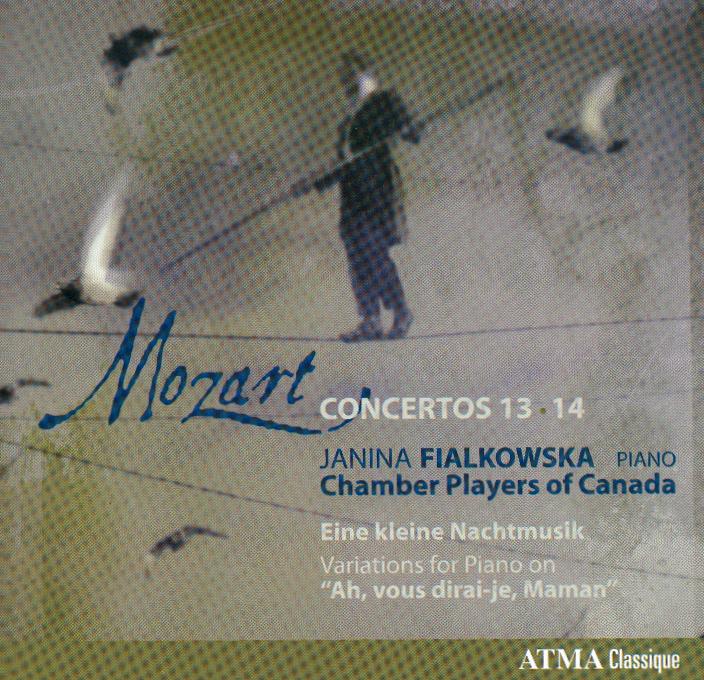
Mozart – Piano Concertos 13 & 14
Janina Fialkowska; Chamber Players of Canada
ATMA ACD2 2532

The piano concertos featured on these two recordings may not be largely known to most audiences. After all, Mozart wrote 27 piano concertos and many later ones appear to be more dazzling and exciting. However, concertos Nos.12, 13 and 14 were written at the time when Mozart himself entered a very prosperous and exciting stage in his life; he had just moved to Vienna, thus acquiring more independence from his father, married Constanze Weber, and began developing entrepreneurial spirit by generating revenue from public performances and sales of his new compositions. These piano concertos, written in 1782 (Nos.12 and 13) and in 1784 (No.14), reflect the forward momentum of Mozart’s life as well as some nostalgic elements and a subtle homage to Johann Christian Bach and Joseph Haydn in the middle movements. In an attempt to promote his work, Mozart wrote two versions of these concertos: the orchestral version (strings and woodwinds), meant for concert halls, and the chamber one, making them more accessible to amateur musicians.

It is the more intimate, “a quattro” version that is presented on both recordings. The absence of the horns is arguably bothersome to some but it is my opinion that the chamber rendition offers nuance and clarity in phrasing that otherwise may not be heard and works just as well. Pianist Karin Kei Nagano and the Cecilia String Quartet dive into the intimate textures and colours by emphasizing the simplicity of Mozart’s music. Cecilia Quartet uses vibrato with the clear intention of enhancing the sound, making the phrasing appear fresh and exciting at times. Karin Kei Nagano brings youthfulness and certain sweetness to her interpretation – her notes are light, spirited and virtuosic in a very natural way.

The Chamber Players of Canada and Janina Fialkowska included the double bass in the string ensemble thus achieving a warmer overall sound. Fialkowska’s playing is fierce at times yet wonderfully lyrical. She does not shy away from darker piano colours in the concertos but emphasizes innocence and brightness in Ah, vous dirai-je, Maman. The string ensemble playing is intense and elegant. Eine kleine Nachtmusik has a reputation of being the party piece in the classical music world – the Chamber Players of Canada clearly enjoyed playing it and they did so with a high degree of stylishness.


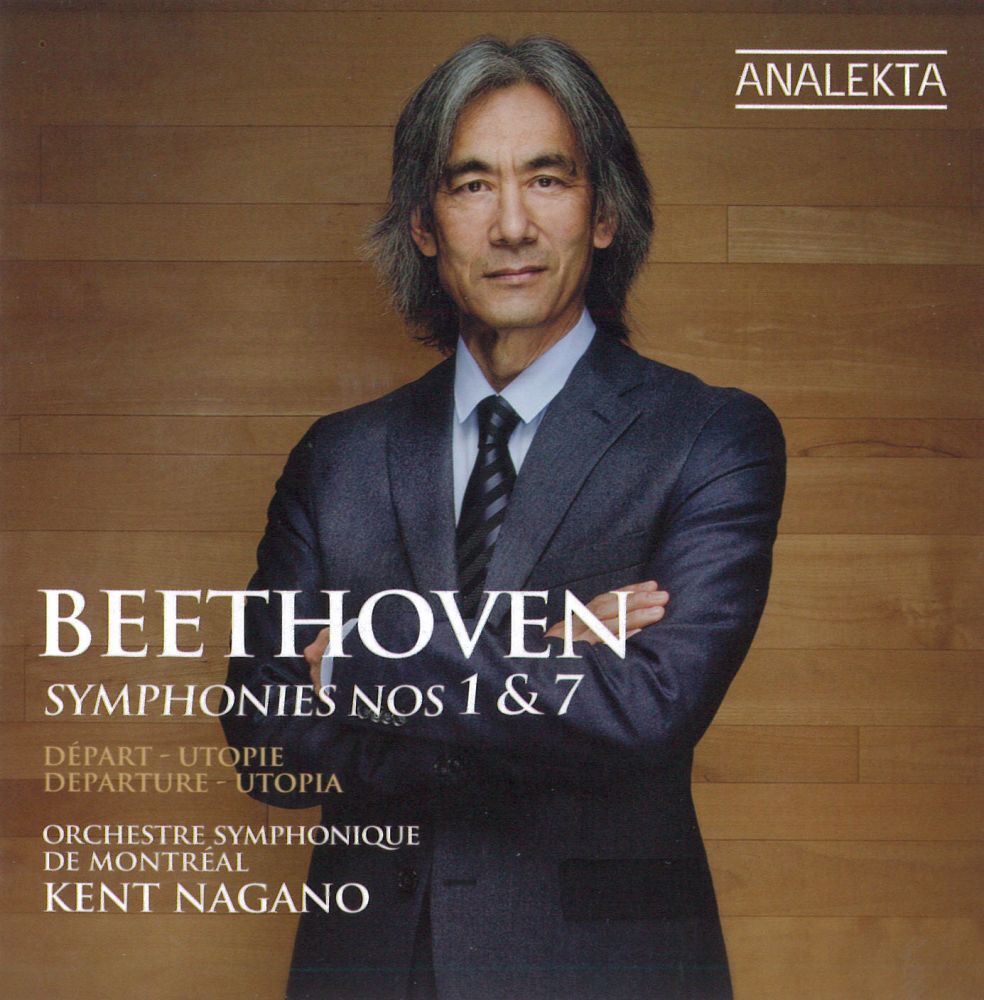
04 classical 02 beethoven naganoBeethoven – Symphonies 1 & 7
Orchestre Symphonique de Montreal; Kent Nagano
Analekta AN 2 9887

Conductor Kent Nagano leads the Orchestre Symphonique de Montréal (OSM) in energetic and technically tight live performances of Beethoven Symphonies Nos.1 and 7 in this thought-provoking release.

Symphony No.1 is an early work where the compositional influences of late Haydn are combined with Beethoven’s precise and contrasting dynamics. In contrast, the later Symphony No. 7 is a robust rhythmic composition, as the liner notes state, “the theme of Joy in conjunction with that of Dance and dance rhythms arising from physical impulses consistently predominates.”

Both works are given thorough and invigorating interpretations. The musical and ensemble mastery of OSM is most evident in the faster sections, where Nagano’s appropriate choices of tempo create a sense of urgency without a feeling of rushing the beat. The orchestra shines in these sections, and it is a joy to listen to such crisp performances.

But it is the contrasts in dynamics that makes these performances stand out from the crowd. Nagano and the OSM seem to trust each other’s musical choices, as the louds, softs and in between volumes are succinct, colourful and result in energetically focused performances that are never exaggerated for effect.

Each performance ends with justifiable rousing applause from the audience. Combined with clear production, this is a recording to listen to, contemplate and appreciate as Nagano and the OSM offer a fresh and modern take on two Beethoven symphonic chestnuts!


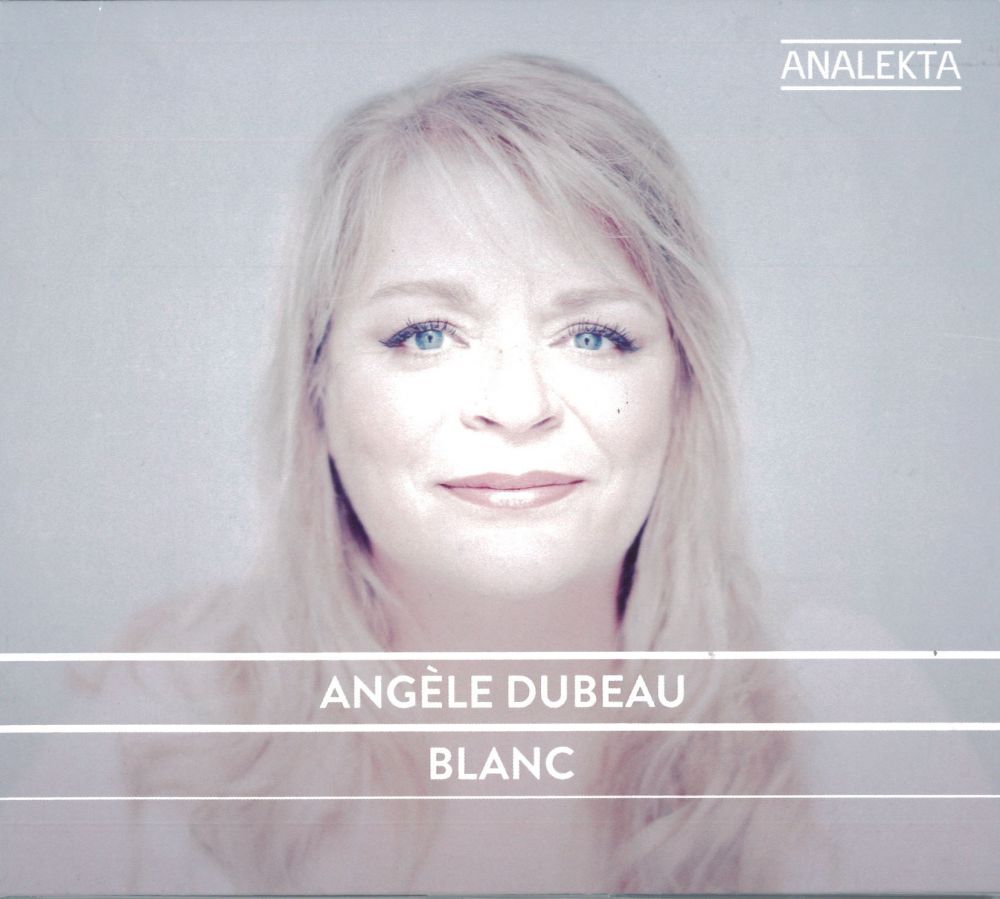
terry 01 angele dubeauAngèle Dubeau and La Pietà are back with another CD of short contemporary works on BLANC (Analekta AN 2 8737), a disc very similar to her Silence, on joue! CD from two years ago. That the approach seems to work so much better this time is almost certainly due to the fact that BLANC celebrates Dubeau’s return after a year spent battling cancer. In the booklet notes, Dubeau says that during her battle, music brought her “comfort, tranquility and sometimes, an essential escape.” The album is the story of her fight against illness, and how she “…serenely, came out of it stronger.”

Perhaps not surprisingly, then, there is much more of a sense of program here, plus a real feeling of emotional involvement – and, indeed, of serenity and strength. There are 14 tracks on the CD, with Osvaldo Golijov’s Close Your Eyes, Adrian Munsey’s The Distance Between and Marjan Mozetich’s “Unfolding Sky,” from his Postcards from the Sky, sounding particularly beautiful. Cat Stevens’ Morning Has Broken and Mark O’Connor’s Appalachian Waltz are presented in lovely arrangements; there are two pieces by Dave Brubeck and one by Ennio Morricone. Also represented are Garry Schyman, Joe Hisaishi, François Dompierre, Ryuichi Sakamoto and Shawn Phillips.

Recorded at McGill University’s Schulich School of Music last November, the sound quality is warm and resonant. Part of the proceeds from sales of the CD will go to support the Quebec Breast Cancer Foundation.
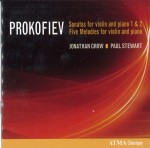
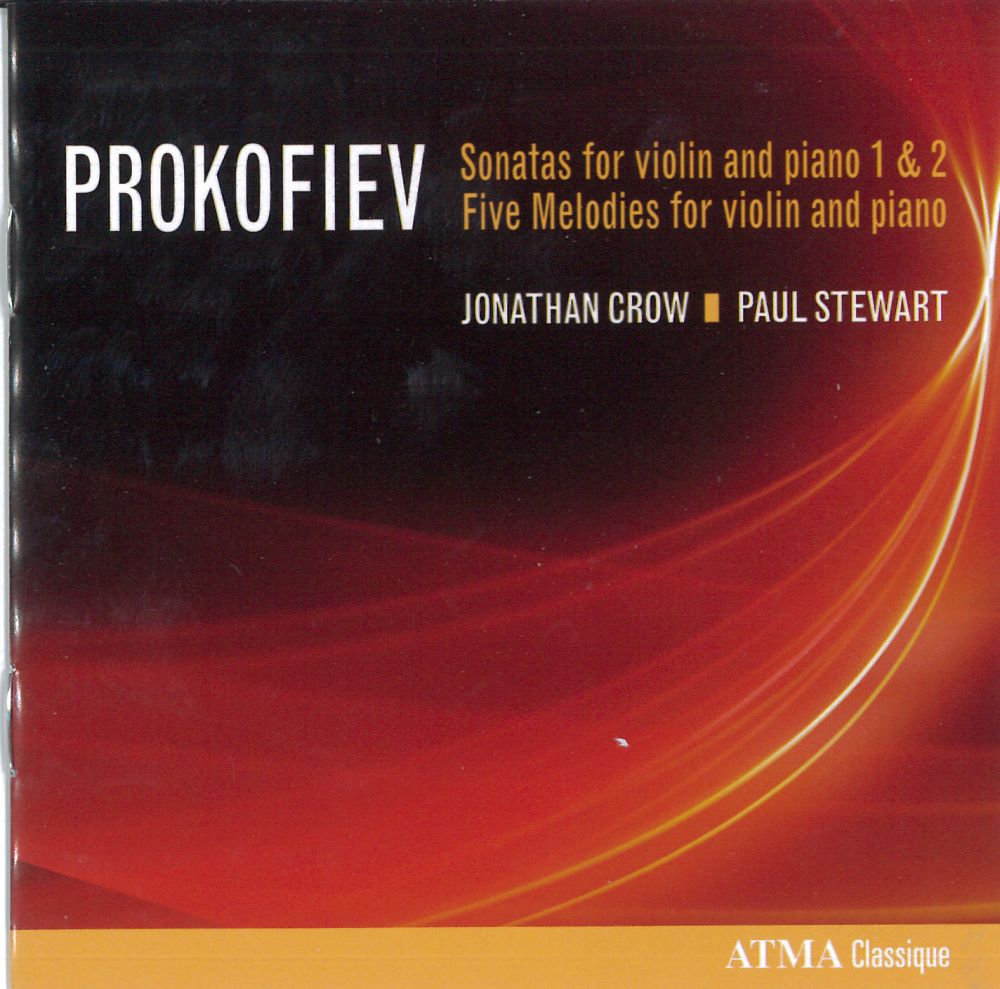
terry 02 prokofiev jonathan crowToronto Symphony Orchestra concertmaster Jonathan Crow is joined by pianist Paul Stewart on Prokofiev’s Works for Violin and Piano, his latest CD on the ATMA Classique label (ACD2 2535). The recording was made in April 2008, though, when Crow was still concertmaster of the Orchestre Symphonique de Montréal. The three works here – the Sonatas for Violin and Piano No.1 in F Minor and No.2 in D Major and the Five Melodies – were all also featured on the recent 2-CD release of Prokofiev’s complete works for violin by James Ehnes, reviewed in this column just two months ago.

There is a warmth and clarity to Crow’s playing, as well as a nice range of tonal colour. The Sonata No.1 in F Minor, by far the major work on the disc, is given a powerful reading, and the D major sonata, a transcription of Prokofiev’s light-hearted Flute Sonata, showcases the brightness of Crow’s playing. Stewart is an excellent partner, and there is strong but sensitive playing from both performers throughout an excellent disc.

The recording was made in the acoustically superb Salle Françoys-Bernier hall at Domaine Forget in Saint-Irénée, Québec.
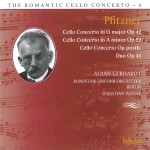
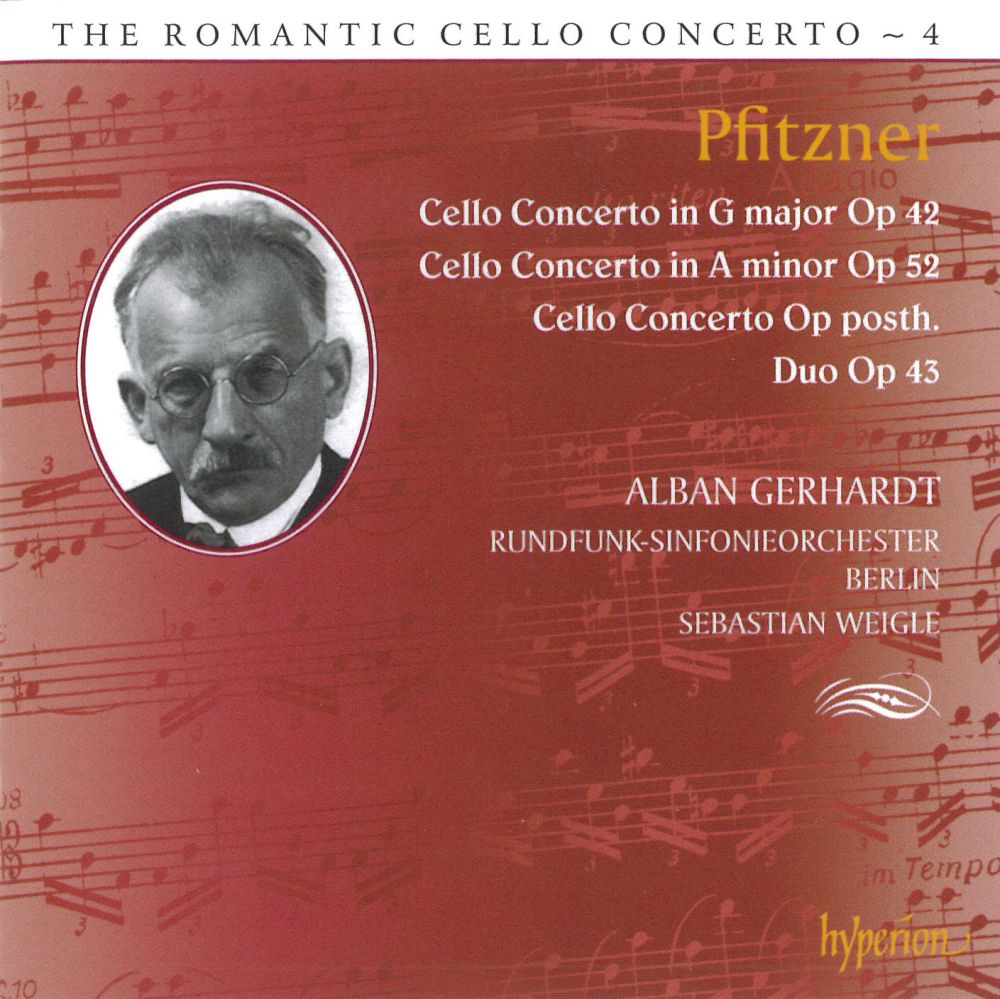
terry 03 pfitznerSeveral of the CDs in the outstanding Hyperion series Romantic Violin Concertos – currently at Volume 15 – have been reviewed in previous editions of this column, but Volume 4 in the companion Romantic Cello Concerto series is the first I have received; it features concertos by the German composer Hans Pfitzner, who lived from 1869 to 1949 (CDA67906).

I have long known Pfitzner’s name in connection with his opera Palestrina, the work for which he is still mostly remembered, but it occurred to me that I couldn’t recall ever actually having heard any of his music. And what a loss that turns out to be, if the works on this revelatory CD are anything to go by. Pfitzner wrote three cello concertos: the Concerto in A Minor, Op.posth.,  is a student work from 1888 that was not performed in public until 1977; the Concertos in G major, Op.42 and A minor, Op.52, date from 1935 and 1943 respectively.

Don’t be put off by Pfitzner’s stern, dour face in his photographs: his music is firmly in the German late Romantic tradition of Brahms, Bruch and Humperdinck, and it really is gorgeous stuff – warm, rich, melodic, finely crafted, beautifully orchestrated, giving the soloist ample opportunity to display the instrument’s range and character.

The German cellist Alban Gerhardt is in his element here, and gets wonderful support from the Rundfunk-Sinfonieorchester Berlin under Sebastien Weigle. Violinist Gergana Gergova joins Gerhardt for the Duo Op.43 for Violin, Cello and Small Orchestra, a delightful work from 1937 that brings a marvellous and beautifully-recorded CD to a close.
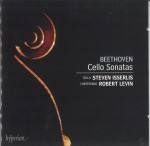
terry 04 beethoven isserlisYou’re always guaranteed a thought-provoking CD whenever cellist Steven Isserlis is the soloist, and his latest offering on Hyperion (CDA67981/2), a 2-CD set of the Beethoven Cello Sonatas (although Complete Works for Cello and Piano would be a more accurate title) is no exception.

There are many performer pairings to choose from in recordings of these works, of course, but what makes this particular set so interesting is Robert Levin’s accompaniment on a copy of an 1805 fortepiano. The works consequently have a quite different sound, with the reduced volume and sustainability giving the keyboard an almost harpsichord-like quality, especially with the left-hand Alberti bass patterns and the heavy, almost percussive, low left-hand octaves. While it might reduce the volume, however, it certainly doesn’t reduce the scale of these works, which span Beethoven’s early, middle and late periods. In fact, the keyboard sound perfectly complements and contrasts the dark, rich sound of Isserlis’ 1726 Stradivarius cello. And what a sound it is: sweet and clear in the higher register, but strong and forceful – almost rough – in the lower register.

CD1 has the two Op.5 sonatas and the A major Op.69; CD2 has the two Op.102 sonatas together with three sets of Variations – on See the conqu’ring hero comes from Handel’s Judas Maccabaeus and on Ein Mädchen oder Weibchen and Bei Männern, welche Liebe fülen’ from Mozart’s Die Zauberflöte – and Beethoven’s own transcription of his Op.17 Horn Sonata.

The performances are outstanding, bristling with character throughout. Add the usual terrific booklet notes by Isserlis himself, and the almost 80 minutes per disc, and it’s simply impossible to give this set anything but the highest recommendation.
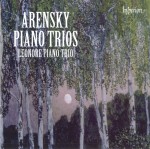
terry 05 arensky triosBritain’s Leonore Piano Trio is outstanding in the two Arensky Piano Trios (Hyperion CDA68015). Anton Arensky’s Piano Trio No.1 in D minor Op.32 was written in 1894 and, in keeping with the commemorative nature of the piano trio form established by Tchaikovsky some 12 years earlier, was conceived as a memorial to the cellist Karl Davidoff, the director of the St. Petersburg Conservatory during Arensky’s student days there. The cello consequently has a very prominent part in the Trio.

Pianist Tim Horton sets the stage with a beautiful opening; violinist Benjamin Nabarro adds a warm, sweet tone, especially in the lower register; and cellist Gemma Rosefield’s passionate playing leaves nothing to be desired. The Piano Trio in F Minor Op.73 dates from the early 1900s, not long before Arensky’s death in 1906 and at a time when the composer was in poor health. It’s another terrific work, and one that draws more outstanding playing from the Leonore ensemble.

Among Arensky’s pupils in his harmony class at the Moscow Conservatory was Sergei Rachmaninov, and the latter’s Vocalise is presented here in an arrangement by Rachmaninov’s friend Julius Conus, who was also one of Arensky’s students at the Conservatory. Everything about this outstanding CD is just right: the works themselves; the great ensemble playing; the interpretations; the excellent dynamics and phrasing; and the real passion and sensitivity displayed throughout. Add the excellent balance and sound quality, and it’s a real winner.

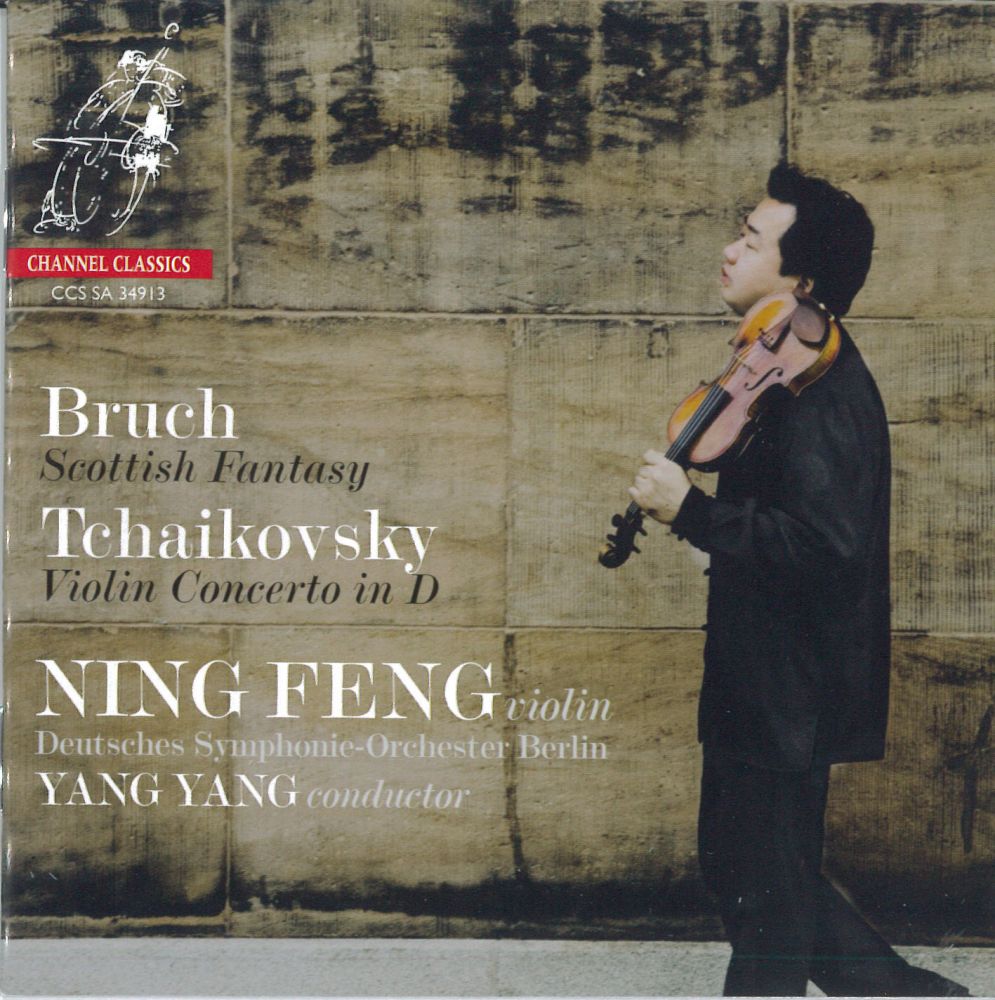
Berlin-based Chinese violinist Ning Feng is a new name to me, but it clearly shouldn’t be; he’s been active at a very high level for the best part of 10 years, and his three previous CDs – two of them solo recitals – on the Channel Classics label were issued to great critical acclaim.
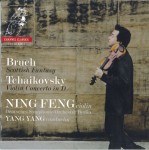
terry 06 ning fengHis latest offering on the same label pairs Bruch’s Scottish Fantasy with the Tchaikovsky Violin Concerto, with Yang Yang conducting the Deutsches Symphonie-Orchester Berlin (CCS SA 34913).

Ning has a bright, clear tone, and obviously finds no technical challenges in the music. He exhibits somewhat of a laid-back approach in the Bruch, avoiding any tendency to rush, but it does seem to be a bit emotionally detached at times. There’s the same approach in the Tchaikovsky, but with much better results. The sweet, singing tone is always present, but the constant feeling of holding back at the beginning of the faster, busy passages doesn’t halt the flow at all – in fact, it has just the opposite effect, allowing us to hear the details without a sense of rushing, and allowing the momentum to build naturally as the music progresses.

The recorded sound is fine, but the balance seems to be a bit strange at times; there are moments in the Bruch in particular when Ning seems to almost disappear.
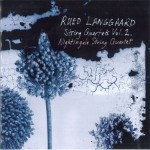
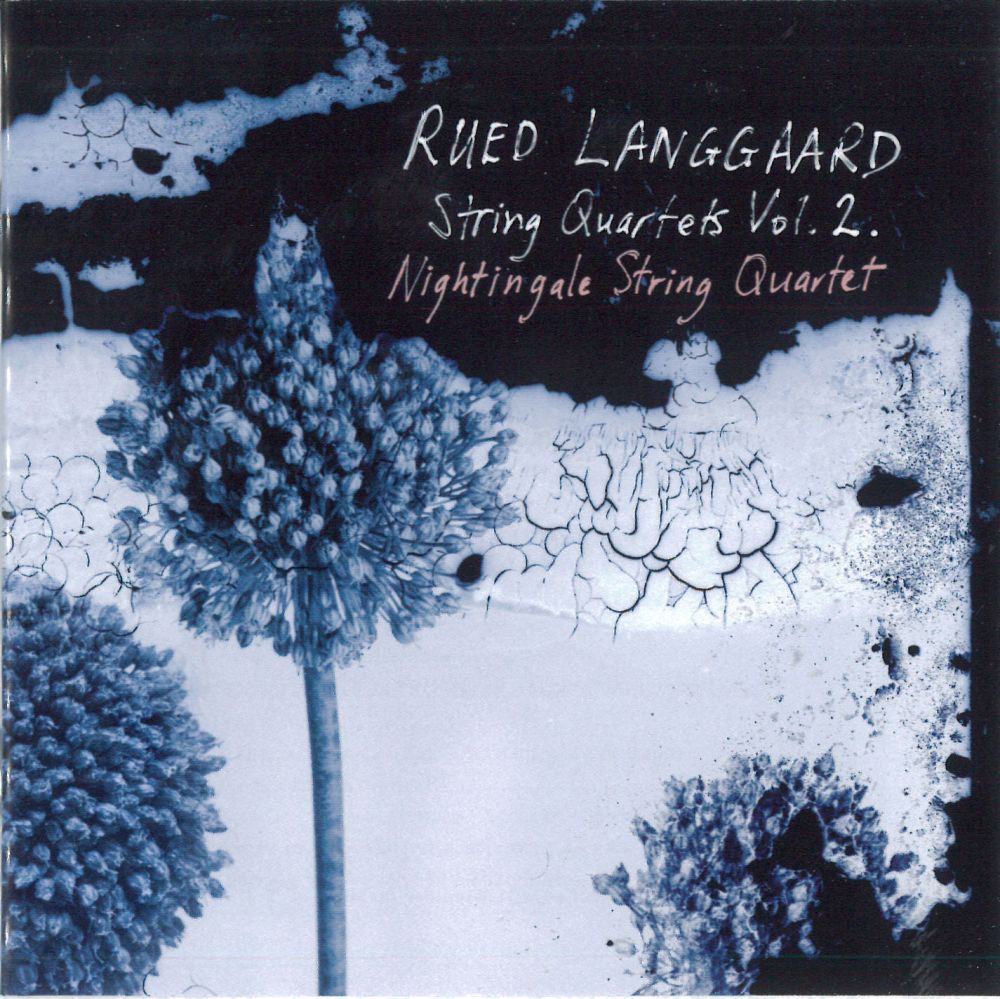
terry 07 langaard quartetsI was delighted to see that Volume 2 of the outstanding series of the complete String Quartets by Danish composer Rued Langgaard (1893-1952) has been released (DACAPO 6.220576). Volume 1 was reviewed in depth in this column in July 2012, at which time I noted that Denmark’s Nightingale String Quartet was simply superb in the first volume of a series of all nine quartets by a composer described in the excellent booklet notes as an eccentric outsider who was virtually ignored by the Danish musical establishment in his lifetime.

Most of Langgaard’s string quartets were written in his youth, between 1914 and 1925. This second volume features three works from the Great War years: Rosengaardsspil (Rose Garden Play) from 1918 (in a world premiere recording), String Quartet in A-flat major from 1918, and String Quartet No.4 “Sommerdage” (Summer Days) from 1914-18, revised in 1931. All three quartets use material inspired by Langgaard’s unrequited love for a young girl he met in the summer of 1913 while on holiday with his parents in Sweden; the house they stayed in was called “The Rose Garden.”

Once again, the performances by the prize-winning all-female Nightingale Quartet are outstanding – warm, passionate, expressive, and displaying great ensemble playing. I ended the review of Volume 1 by saying: “Beautifully recorded at the Royal Danish Academy of Music and issued on Denmark’s national record label, these performances are as close to definitive as you can get. Wonderful stuff, and I can’t wait to hear the rest of the series.” Well, two volumes down and one to go, and I’m still just as enthusiastic!


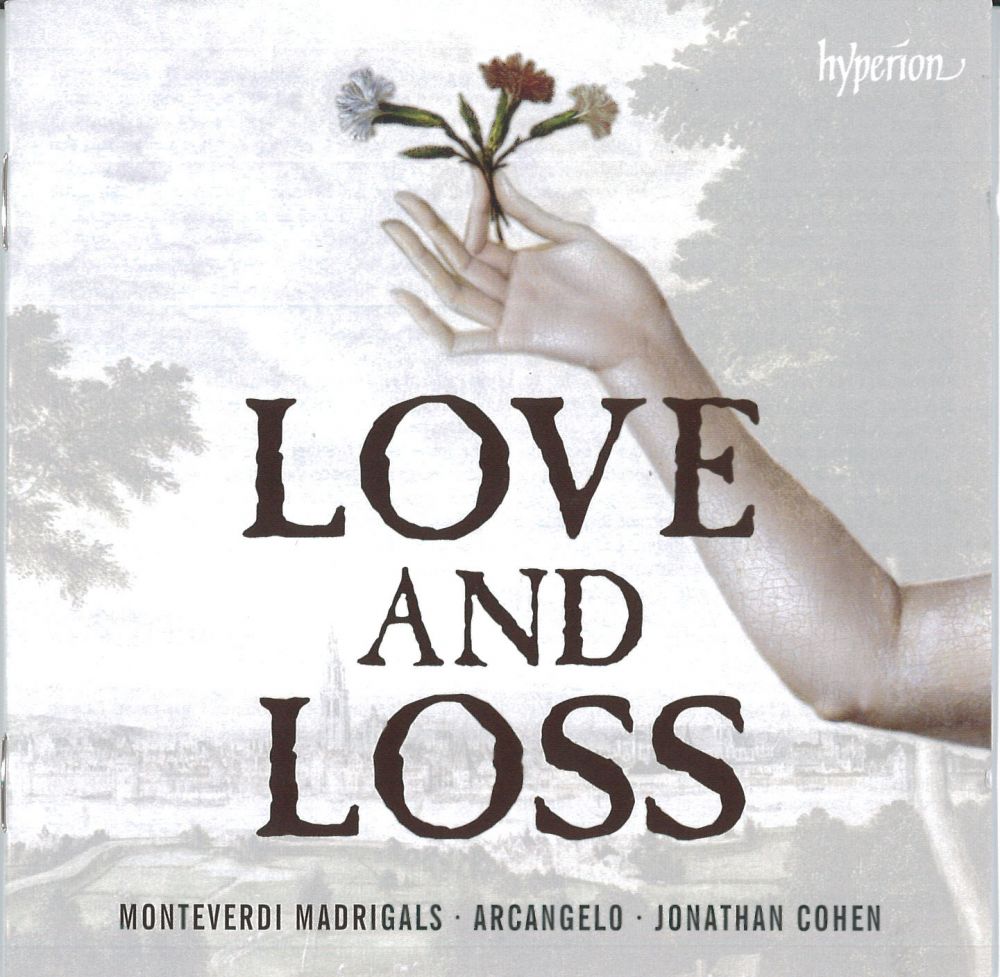
03 early 01 monteverdi madrigalsLove and Loss – Monteverdi Madrigals
Arcangelo; Jonathan Cohen
Hyperion CDA68019

The works on this CD consist of a well-chosen selection from the last three books of madrigals by Claudio Monteverdi. The ensemble Arcangelo was founded in 2010 by the British conductor Jonathan Cohen. Its performances have been acclaimed and the group has issued six CDs, of which this is the latest. On this recording the group consists of six singers and twelve instrumentalists. They are joined by the tenor James Gilchrist, who, eloquently and movingly, narrates Il Combattimento di Tancredi e Clorinda, a passage from Tasso’s La Gerusalemme liberata, in which the Christian knight Tancredi mistakenly kills his beloved. The record ends with the sestina, Lagrime d’amante al sepolcro dell’amata, written as a lament for the soprano Caterina Martinelli, who was to have sung the title role in Monteverdi’s Arianna but who died from smallpox when she was 18.

John Whenham, who contributes a fine essay, suggests that the ballet Volgendo il ciel may have been sent to Vienna in 1636 for the coronation of the new emperor. Halfway through, the score indicates that music for a dance is played, but Monteverdi did not write that music. On this recording a beautiful chaconne by Tarquinio Merula is added. That insertion works very well.

Perhaps the finest item on the record is the duet for two sopranos, Ohimè, dov’è il mio ben, beautifully sung by Katherine Watson and Anna Dennis. It is full of deliciously painful dissonances which are then slowly resolved.

These are all terrific performances.


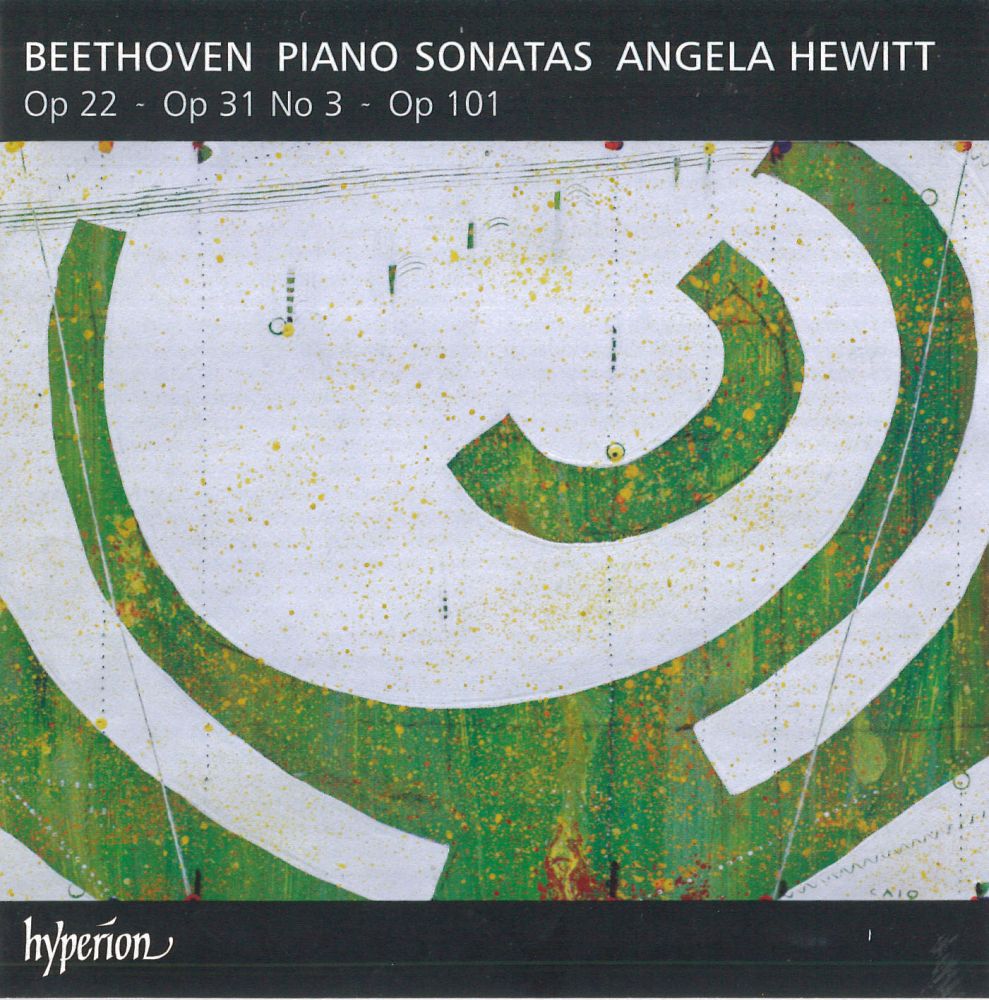
04 classical 01 beethoven hewittBeethoven – Piano Sonatas Opp.22; 31/3; 101
Angela Hewitt
Hyperion CDA67974

It’s no surprise that accomplished musicians develop such acute discernment of their composers’ muses. One simply comes to expect that ongoing intimacy with the creative utterances of someone like Beethoven will produce a deep and evolving understanding of how the music must be played. It transcends academic debate and argument about historical authenticity. It’s a conviction that doesn’t waver. It’s just “right.”

Hewitt plays three sonatas which offer a historical progression clearly marked by Beethoven’s evolving compositional form and musical language over 17 years. The unmistakable echoes of Haydn and Mozart, the classical turns of phrase and stylistic ornaments place the Op.22 solidly at the end of the 18th century. But by the time we hear the Op.101 there are serious rumblings in the depths and a hint of recklessness that we have come to recognize as the Beethoven of the fifth and ninth symphonies.

It must, however, be tempting to take the classical bait of the early work and play it as though we need to be reminded that Haydn and Mozart are standing behind us. Hewitt in fact does the opposite. With appropriate recognition of the classical architecture, Hewitt unleashes the spirit of the young Beethoven and shows us how the composer at mid-life has already seen his destiny. There is no mistaking the volcanic potential of this pen when it meets manuscript. Major keys and scherzos notwithstanding, this young composer is already shaking his fist at the universe.

Concert Note: Angela Hewitt is featured in Beethoven’s Emperor Concerto with the Toronto Symphony on March 20 and 22 at Roy Thomson Hall.

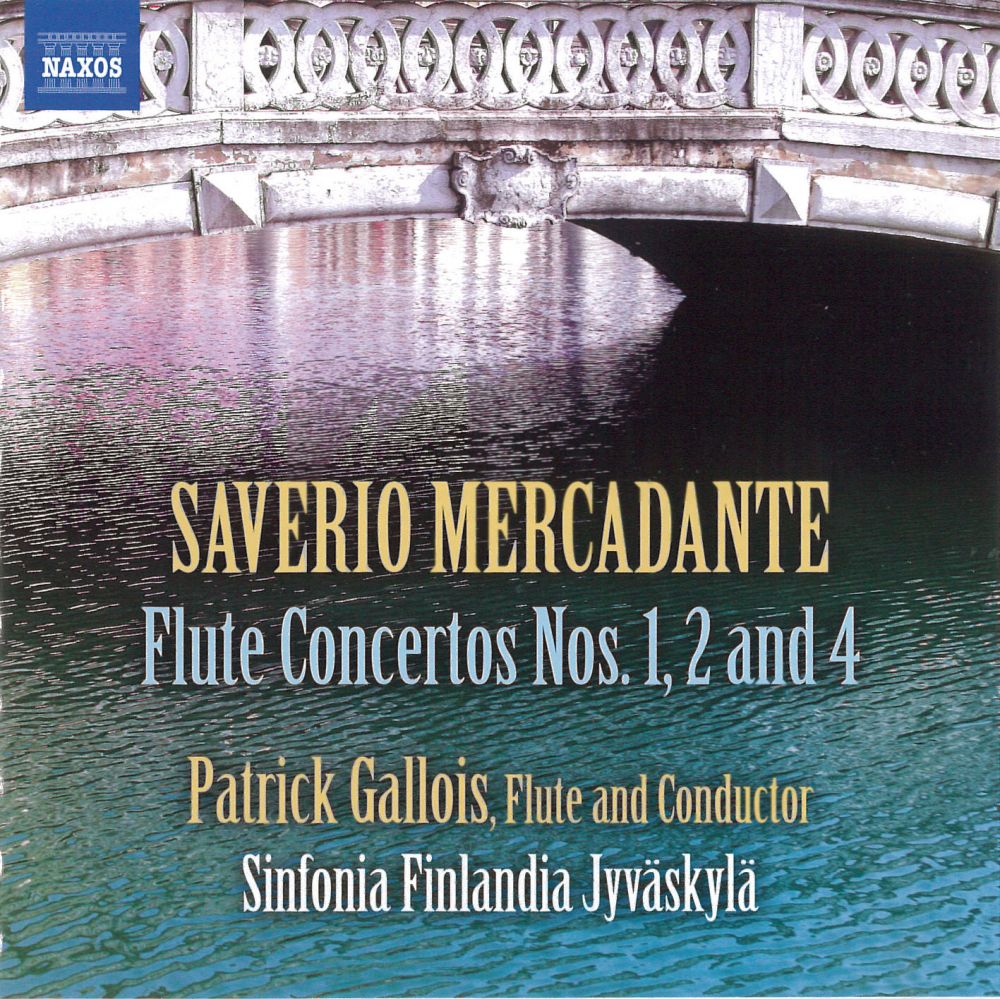
04 classical 02 mercadanteSaverio Mercadante – Flute Concertos Nos.1, 2 & 4
Patrick Gallois; Sinfonia Finlandia Jyväskylä
Naxos 8.572731

Saverio Mercadante (1795-1870), well-known and respected in his time as the composer of many operas, has since been overshadowed by his contemporaries Rossini, Donizetti and Bellini. Insofar as he is remembered today, despite occasional revivals of his operas, it is because of his flute concertos, which were rediscovered by Jean-Pierre Rampal about 50 years ago.

As one might expect of music of Mercadante’s time, these concertos are cornucopias of melodic invention, sometimes spirited, sometimes lyrical, coupled with passages of stunning virtuosity. The long orchestral passage at the beginning of the first movement of the concerto in E minor, for example, sounds as if it could be from the overture to a comic opera; it would take little to make a case for these concertos having been the inspiration for the opera fantasies composed by Taffanel, Borne and Fürstenau some 60 years later.

As for Patrick Gallois, you could almost think it was his teacher, Rampal, playing. You hear the same effortless articulation and movement between registers, the same absence of mannerisms and the same purity of sound. What I didn’t hear was Rampal’s exquisitely refined phrasing and an indefinable quality in the sound, which mysteriously conveys what might be called the meaning of the music. The performance by Gallois’ collaborators, Sinfonia Finlandia Jyväskylä, is precise and sensitive to every nuance of the soloist. These are engaging and beautifully produced performances of a significant byway of the flute repertoire.


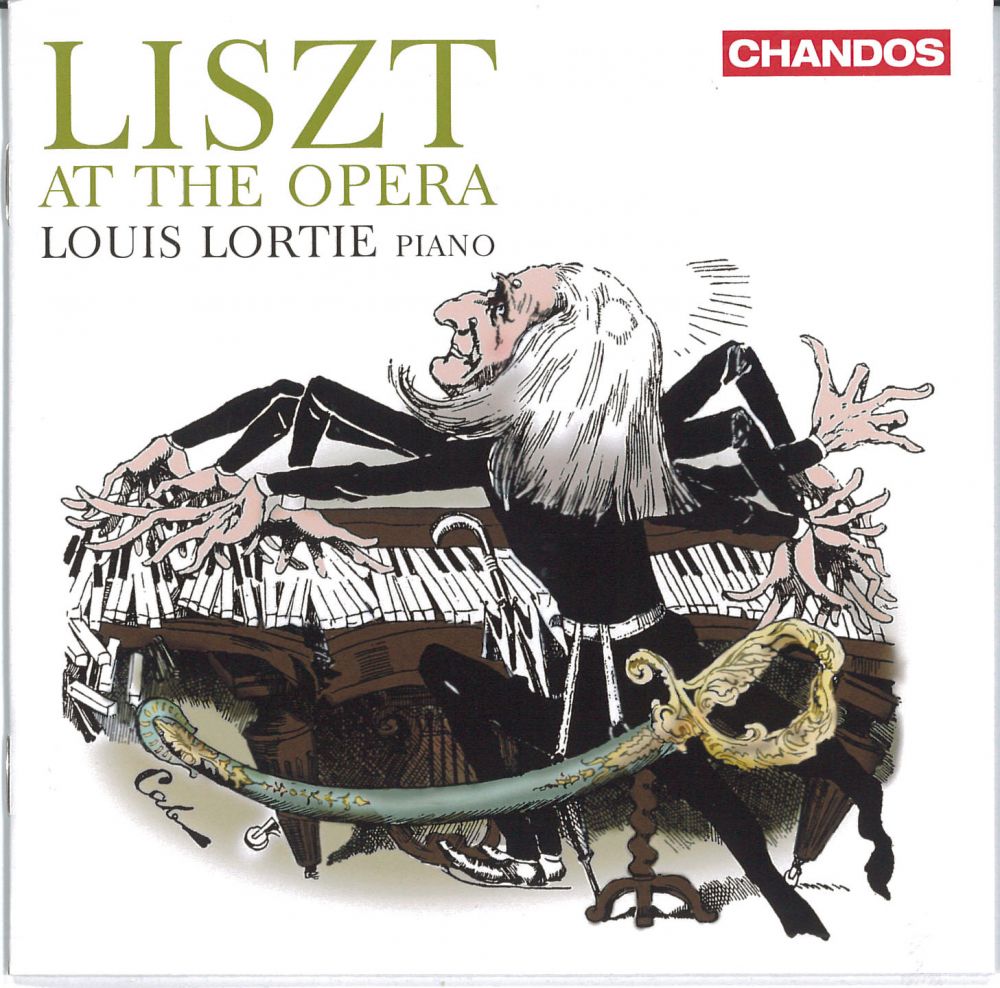
04 classical 04 liszt at operaLiszt at the Opera
Louis Lortie
Chandos CHAN10793

Louis Lortie and Chandos records have put together a wonderful Juno-nominated CD of Liszt’s opera transcriptions. Lortie dazzles us with smooth, elegant virtuosity in O du mein holder abendstern (Tannhauser) and Spinnerlied aus dem Fliegenden Hollander. His scales, arpeggios and trills shimmer and sparkle with a light, feathery touch. The speed and flourish of his technique leave us breathless. The beautiful melodic lines are also performed with warm tone and sensitivity. His phrasing is sublime and his fingers sing out the arias.

What I really liked was the freedom with which he teased us with carefree cascades of orchestral sound. In the Valse de L’opera Faust de Gounod Lortie flirted with the music and the rhythms danced with devilish intricacy. His spectacular finger dexterity allows Lortie to play cleanly but with resonance. There is a natural flow that never overshadows the music but enhances it. He has immaculate control of dynamics and can perform pianissimos as gentle whispers and fortes like a full orchestra. His tone can be warm and gentle. The only minor moments of harsher tone were in two of the Wagner transcriptions. The Overture to Tannhauser and the Prelude and Liebestod from Tristan und Isolde are the only pieces in which I missed an actual orchestra. However, Louis Lortie is an extraordinary Liszt interpreter who definitely deserves that Juno nomination and a win for this CD.

The program notes are also excellent. They give a real insight into the era when opera transcriptions were numerous.


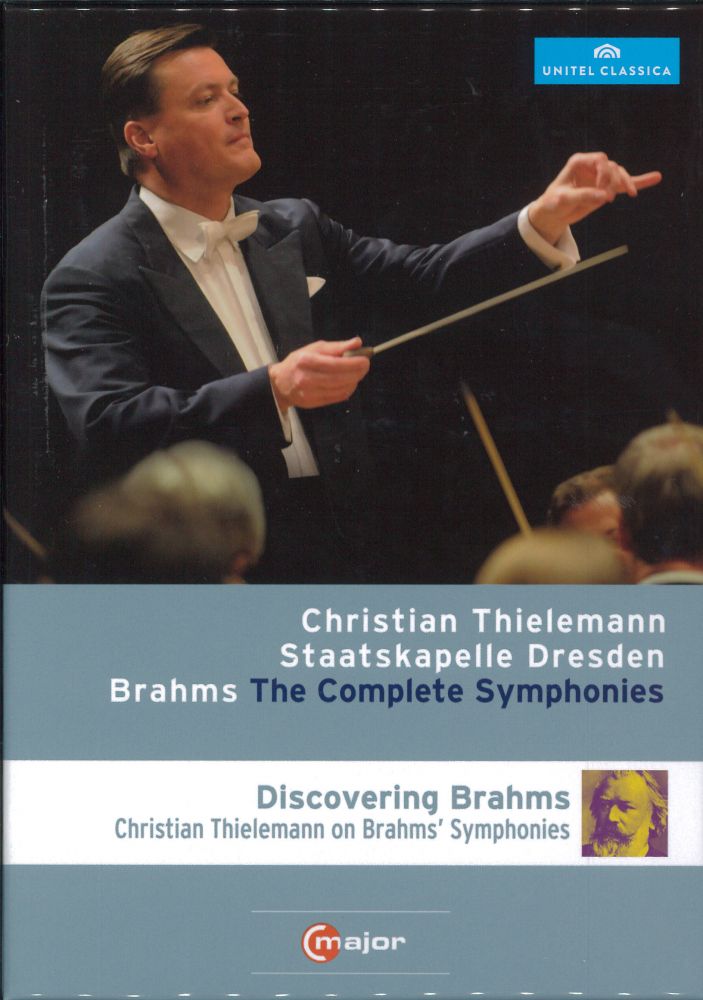
04 classical 05 thielemann brahmsBrahms – The Complete Symphonies; Discovering Brahms
Staatskapelle Dresden; Christian Thielemann
Cmajor 715108

Sets of the complete Brahms symphonies on DVD are not all that common, so this one featuring the Dresden Staatskapelle with Christian Thielemann is indeed a welcome arrival. It features live performances from 2012 and 2013 recorded at two different venues, in the NHK Hall in Tokyo, Japan (1 & 3) – during the 10th NHK Festival – and at the Semperoper in Dresden (2 & 4).

A conductor very much of the old-school German tradition, Thielemann studied at the Hochschule für Musik in Vienna and later worked as an assistant to no less a conductor than Herbert von Karajan. He has been chief music director of the Staatskapelle Dresden since October, 2009.

From the moment he raises his baton to a most appreciative Japanese audience in the Symphony No.1, it’s clear to everyone that this music holds a special place for both him and his orchestra. The ensemble invokes a deeply romantic spirit throughout, from the tempestuous opening movement to the jubilant finale. Little wonder this darkly uplifting music is often referred to as “Beethoven’s Tenth.”

In contrast to the tragically noble character of Brahms’ First Symphony, the Second is all placid geniality, so much so that it has often been referred to as his “Pastoral.” Recorded in the Semperoper in Dresden (before a seemingly less appreciative audience!) the orchestra demonstrates a keen clarity and finely judged balance. Thielemann is sometimes known for “pushing boundaries” with respect to tempos, but that is clearly not the case in these performances.

The collection also contains a bonus disc in the form of a 52-minute interview with Thielemann where he reflects on Brahms’ symphonies. During the conversation, he alludes to the solidity of the scoring, and the difficulty in achieving a cohesive orchestral sound, an aspect in which the Staatskapelle Dresden succeeds brilliantly. Indeed, it’s this wonderful melding of orchestral timbres that make the SD’s interpretations so appealing. One of the high points for me in the set (and there are many) is the famous third movement of Symphony No.3. For this poignant and wistful music, Thielemann coaxes a luxuriant sound from the players, the mellow brass perfectly complementing the warmth of the strings – and principal horn Erich Markwart deserves kudos for his hauntingly lovely solo.

Special mention must also be made of the exemplary camerawork in both venues. The shots of both Thielemann and members of the orchestra provide a live presence and further enhance these superb performances. It’s been said that Thielemann has the ability to make familiar repertoire sound new again and he certainly succeeds in doing so here. This set is a must-have for any serious music lover, a sublime combination of wonderful music magnificently performed. Highly recommended.


This has been a bumper few months for string quartet CDs, with some outstanding issues from several world-class ensembles.

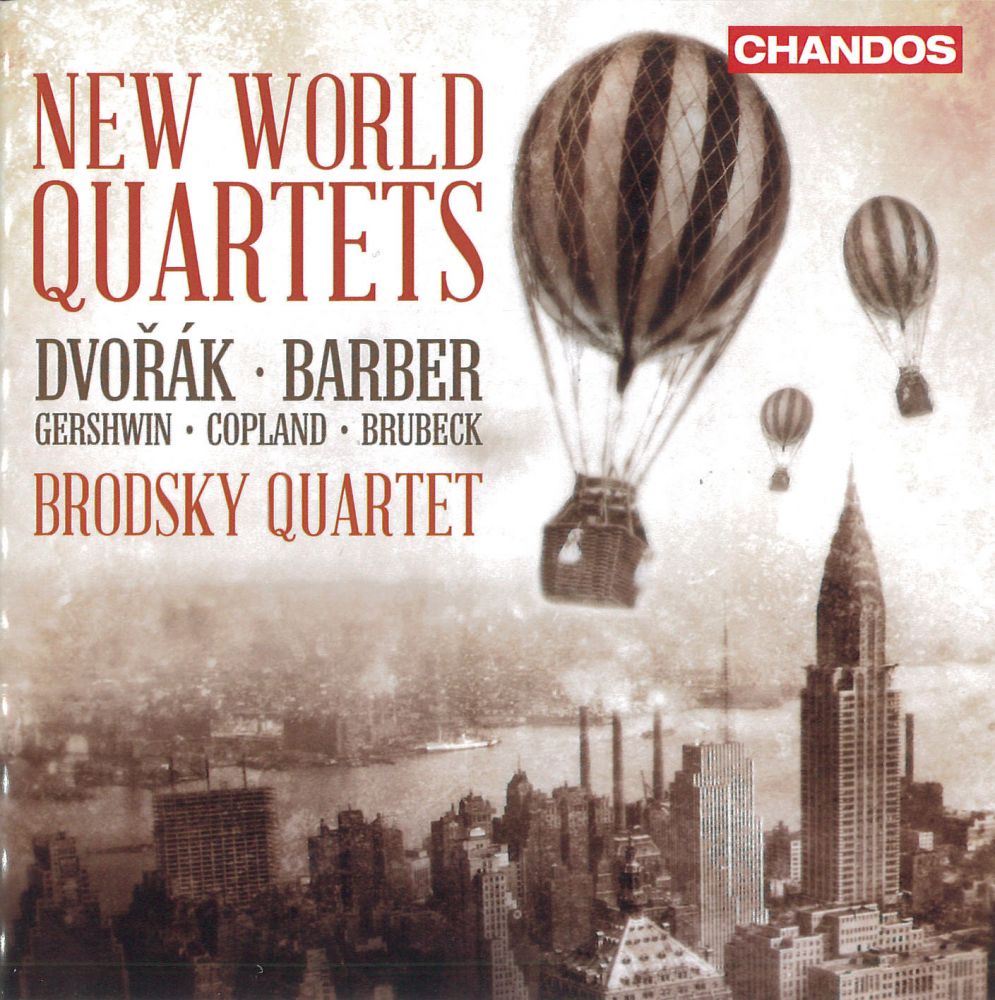
robbins 01 new world quartetsBritain’s Brodsky Quartet adds another winner to its already extensive discography with New World Quartets (Chandos CHAN 10801). The main works on the disc are Dvořák’s String Quartet Op.96 (“American”) and Samuel Barber’s String Quartet Op.11, best known for its slow movement that later became his Adagio for Strings; it remains extremely effective in its original version. The shorter works are Gershwin’s Lullaby, Copland’s Two Pieces and the Hoe-Down from Rodeo (here in a transcription by two of the Brodsky members) and Dave Brubeck’s Regret, a hauntingly beautiful piece presented here in an arrangement that the classically trained Brubeck prepared specifically for the Brodsky Quartet.

Everything on this CD simply glows: the playing is warm, radiant and expressive, and the balance and sound quality are ideal.

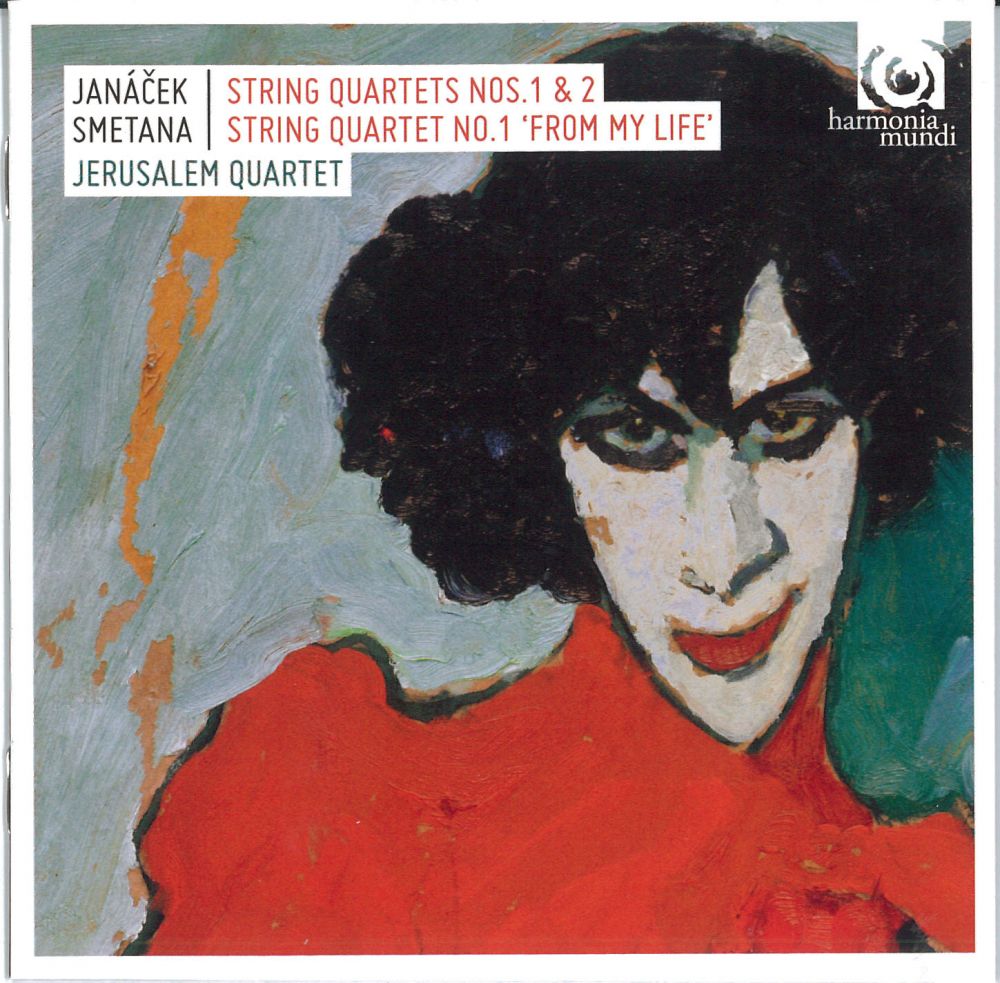
robbins 02 jerusalem quartetThe latest CD from the Jerusalem Quartet celebrates the Czech national school, with the first – and best known – of Bedřich Smetana’s two quartets, the String Quartet in E minor “From My Life, and both quartets by his spiritual heir Leoš Janáček (harmonia mundi HMC 902178).

The players take a thoughtful, carefully measured approach to the Smetana, with a steady underlying rhythm and a wide range of dynamics. Overall, though, the result seems more controlled than rhapsodic; there’s no real outburst of joy and exhilaration at the start of the second movement, and little sense of desolation at the end of the finale.

The two Janáček quartets, however – subtitled the “Kreutzer Sonata” and “Intimate Pages” – are worth the price of the CD on their own, the Jerusalem Quartet capturing the wide emotional range and almost improvisatory rhythms of this astonishingly personal and achingly beautiful music in stunning performances.

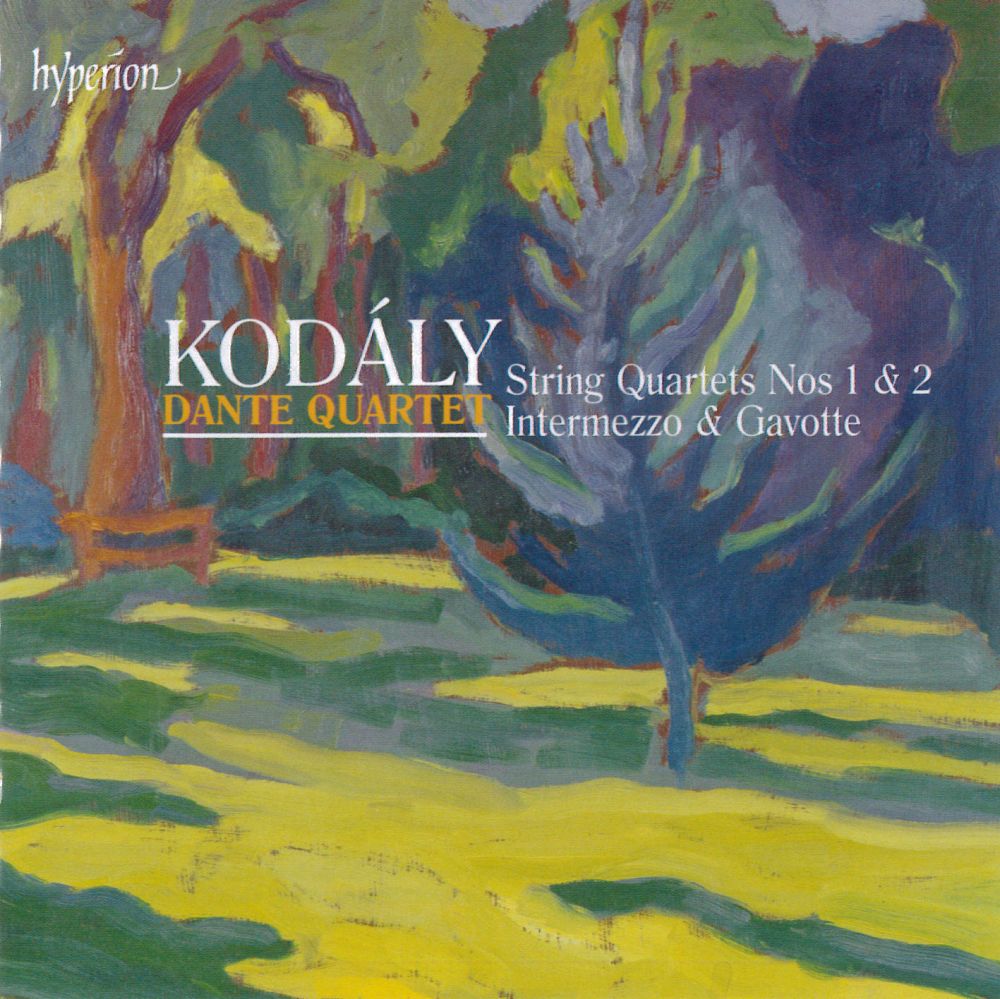
robbins 03 kodaly quartetsAnother British ensemble, the Dante Quartet, is now approaching its 20th year. Their latest CD on the Hyperion label is devoted to the music of the Hungarian composer Zoltán Kodály, and features the String Quartets Nos.1 & 2 and the Intermezzo for String Trio, all three works dating from the first 18 years of the 20th century (CDA67999). The very short Gavotte from 1952 completes the CD.

The quartets in particular are wonderful works, and the Dante Quartet displays a really terrific feel for this music in highly idiomatic performances.

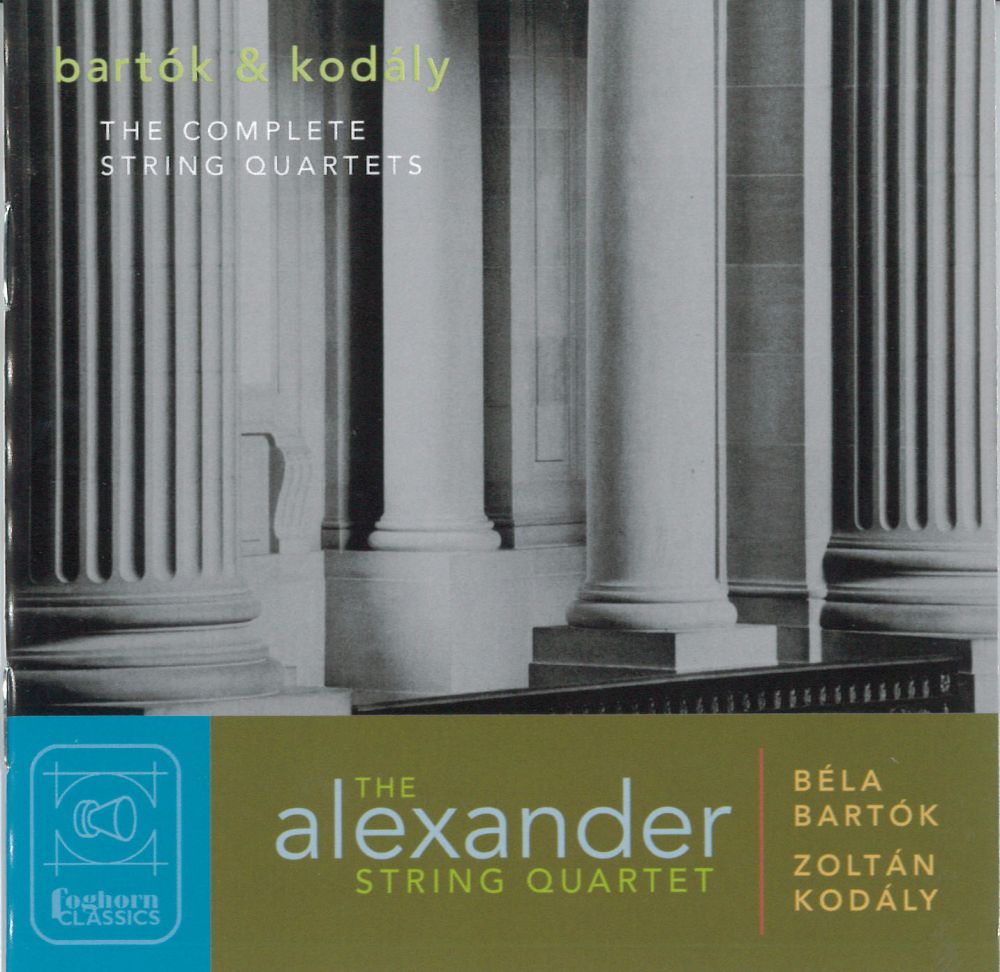
robbins 04 bartok kodalyThe excellent booklet notes for the Dante CD stress the close relationship between Kodály and his friend and compatriot Béla Bartók, and the Alexander String Quartet take things to the logical conclusion with their 3-CD set of the Complete String Quartets of Bartók and Kodály (Foghorn Classics CD2009).

Again, the Kodály works receive outstanding performances, with possibly even more depth in the slow movements than in the Dante recording.

The Bartók quartets are of an equally high standard, with a refined and polished feel to them, although the tougher, abrasive moments never lose their edge. All in all, a marvellous set, especially at the mid-range price.

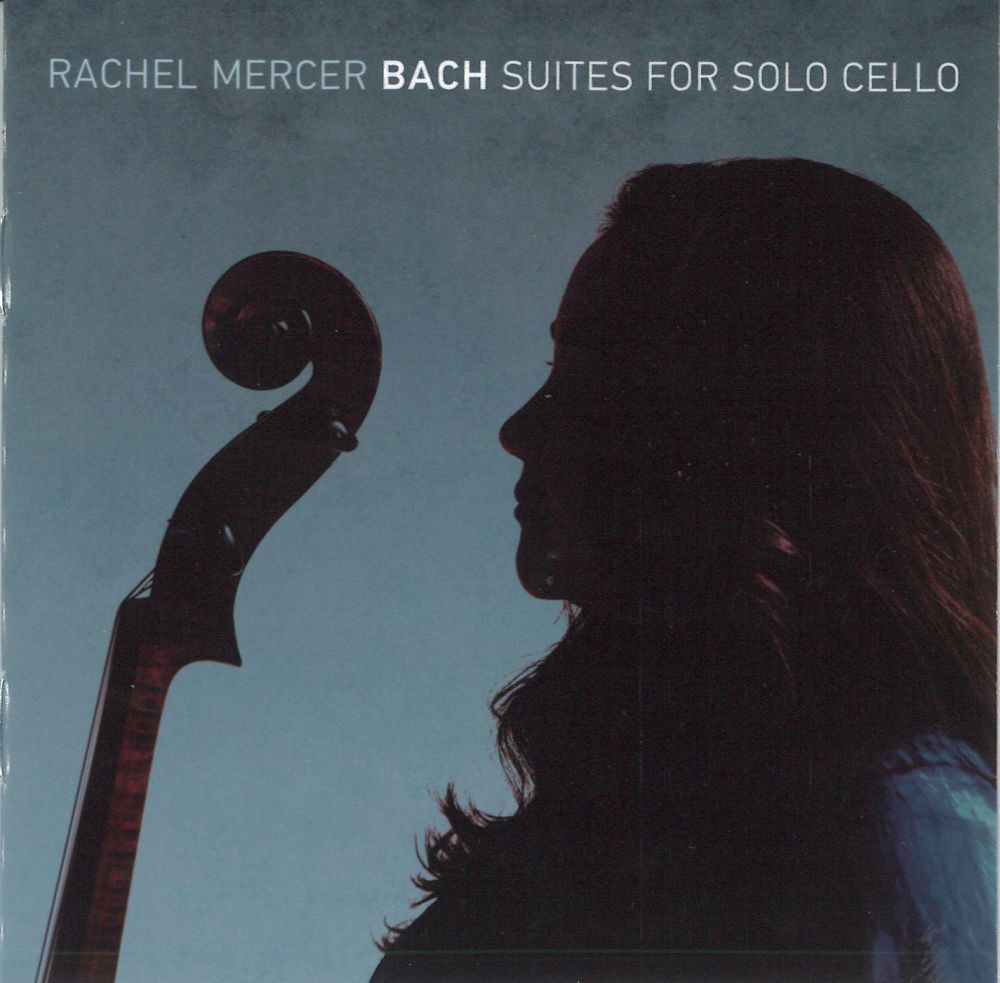
I’ve probably received half a dozen different 2-CD sets of the Bach Suites for Solo Cello over the past three or four years, and I always find them difficult to review. It’s not simply the sheer amount of music and its emotional and intellectual range and depth, but the almost limitless possibilities for phrasing, bowing, interpretation, ornamentation, tempo choice, style, tone and vibrato use available to the soloist. No two sets are ever the same, and there are so many available that to try comparison reviews would be almost impossible. All you can really do is give prospective listeners some idea of what to expect. After that, it just comes down to personal taste.

robbins 05 bach rachel mercerRachel Mercer’s new release on the Pipistrelle label (PIP1403) is her September 2011 recording from Walter Hall of the Suites on the 1696 Bonjour Stradivarius cello, which was on loan to her from the Canada Council from 2009 to 2012. Mercer felt an immediate affinity with the instrument, and began performing the Suites on it as often as possible. It certainly has a big, strong sound, with a good deal of bite that sounds almost rough in places. Mercer’s approach is quite slow and introspective, although the dance movements have a nice line, and it’s clearly a very personal journey for her.

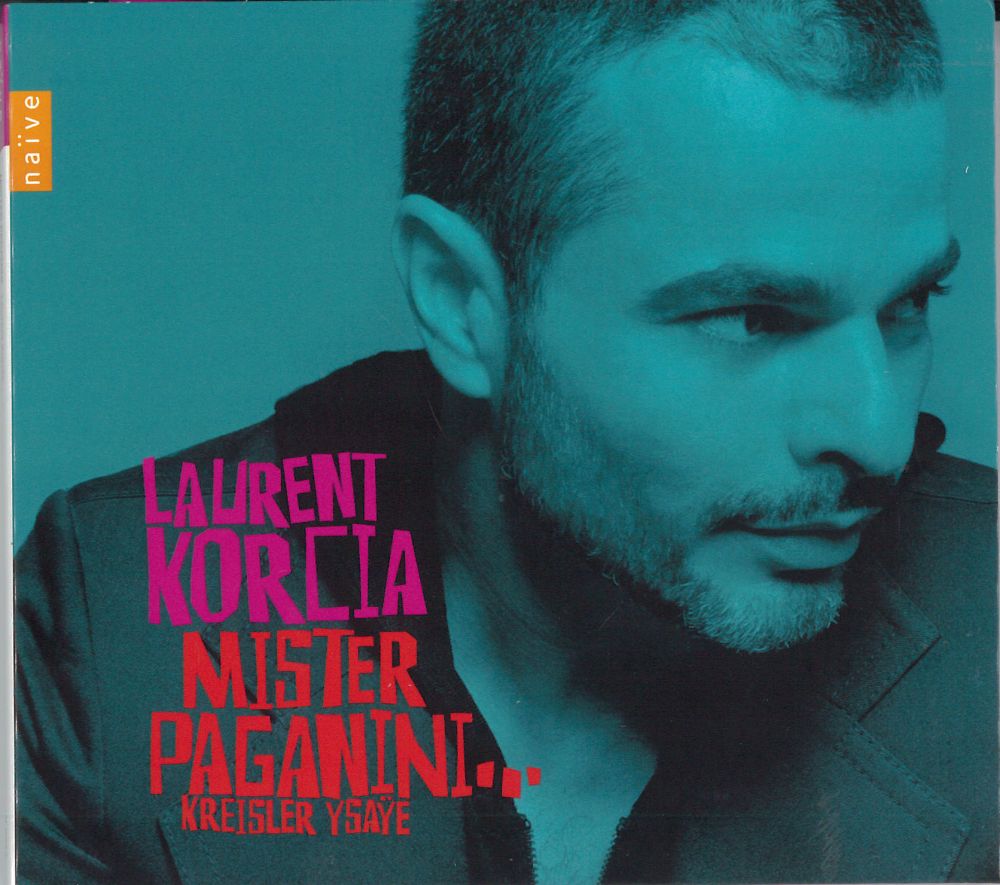
robbins 06 mister paganiniThe French violinist Laurent Korcia is in terrific form on Mister Paganini, his latest CD on the naïve label (V 5344). It features transcriptions by Fritz Kreisler and Eugène Ysaÿe that were inspired by Paganini. Korcia is joined by the Orchestre de chamber de Paris under Jean-Jacques Kantorow for the opening and closing tracks: Kreisler’s Concerto in One Movement transcribed from the first movement of Paganini’s Concerto No.1 in D Major; and Paganini’s own I palpiti Op.13, the Introduction and Variations on the aria di tanti palpiti from Rossini’s opera Tancredi. Pianist Haruko Ueda joins Korcia for the remaining tracks on the disc, apart from one piano solo – Kreisler’s lovely Petite Valse.

There are real fireworks in the Kreisler concerto, particularly in the cadenza, terrific dynamics in the Albéniz-Kreisler Malagueña, and a real gypsy feel in Kreisler’s La gitana. Kreisler was justifiably famous for the accuracy of his double-stopping, and Korcia is superb in this respect in all the Kreisler transcriptions, and in particular in La campanella, Kreisler’s transcription of the finale of Paganini’s Concerto No.2 in B Minor.

Ysaÿe is represented by his Paganini Variations, a set of 15 short variations on Paganini’s famous 24th Caprice. This is apparently the first recording of the work.

Korcia has a huge tone, especially in the lower register, and always lets his technical brilliance serve the music and not overpower it. Some astonishing playing in I palpiti brings an outstanding CD to a rousing close.

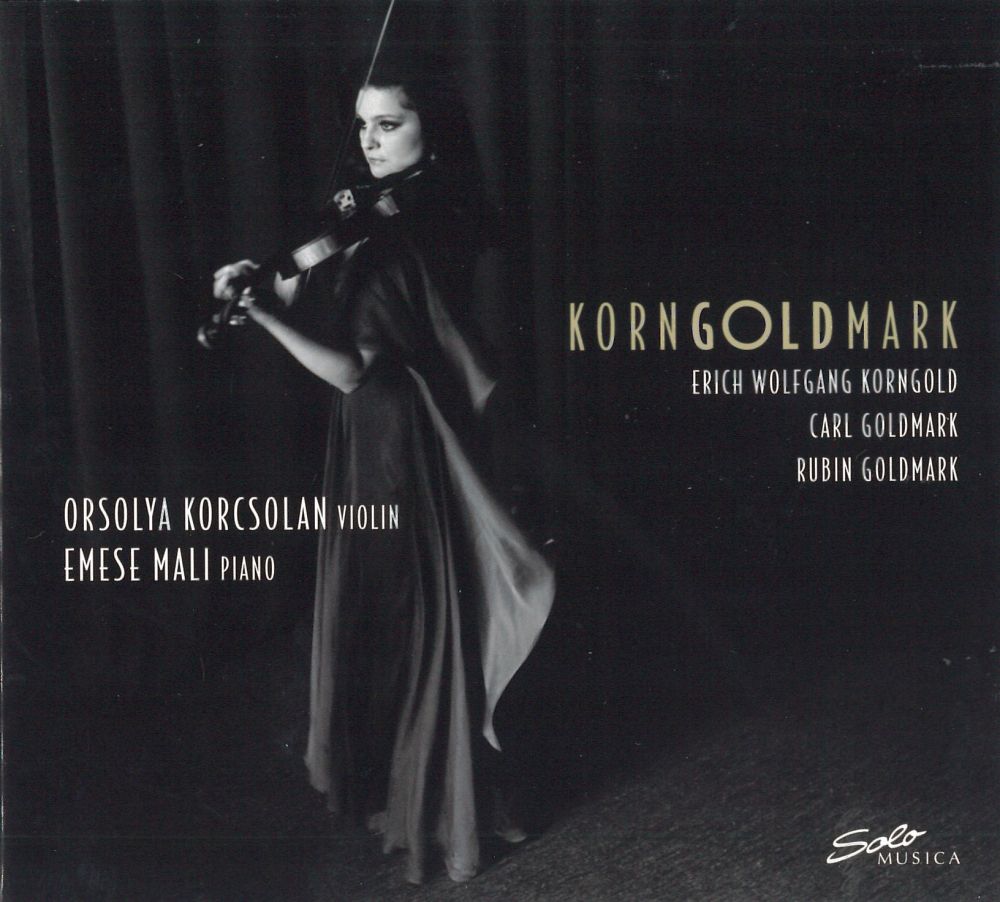
robbins 07 korngoldmarkThe Hungarian violinist Orsolya Korcsolan, now resident in Vienna after studying with Dorothy DeLay and Itzhak Perlman at the Juilliard School in New York, returns to her Hungarian Jewish roots on the CD KornGOLDMark on the German label Solo Musica (SM 202). She is joined by pianist Emese Mali in a recital of works by Erich Wolfgang Korngold, Carl Goldmark and Rubin Goldmark, each of whom spent a significant part of his life in Vienna.

Korcsolan’s playing is strong and confident, with a really big tone, but some of the music here doesn’t seem to give her much opportunity to display her undoubted musicality; the short Korngold pieces in particular are pretty straightforward. Korngold was a child prodigy, and his Serenade from the ballet Der Schneemann was written when he was only 11. There are also three arias from his operas, the best-known being Marietta’s Lied from Die Tote Stadt, and the four-movement Much Ado About Nothing Suite, Op.11, arranged by the composer from his orchestral incidental music for a 1920 production of the Shakespeare play.

There is certainly more substance to Carl Goldmark’s Suite Op.11 in E Major, and to the lovely Romanze in A Major, Op.51, and Korcsolan makes the most of the opportunity to shine.

Rubin Goldmark was Carl’s nephew; although he studied in Vienna, he was born in New York, and spent his entire teaching career in the United States, ending up as head of composition at the new Juilliard School in 1924. He is represented here by the world premiere recording of his Plaintive Air, a short but very effective piece.

Korcsolan ends the CD with a bonus track that she admits doesn’t really fit with the program, although she does feel that there are links (she doesn’t elaborate) with the other three composers. Robert Dauber wrote his Serenata in 1942 in the Theresienstadt concentration camp; he died in Dachau in 1945. It is his only surviving composition, and is a short, delicate Kreisler-like work that bears little hint of the circumstances of its composition. Korcsolan says that of all the works on the CD it is probably the one closest to her heart, and it shows in her performance. It’s arguably the most satisfying track on the CD.

robbins 08 sarasate transcriptionsThe excellent 8-volume Naxos series of the complete violin music of Pablo Sarasate reaches completion with the issue of Volume 4 of the Music for Violin and Piano – Transcriptions and Arrangements (8.572709). Violinist Tianwa Yang has been in tremendous form throughout the series, and displays the same warmth, dazzling technique and interpretative skills that marked the earlier volumes. German pianist Markus Hadulla provides excellent accompaniment in short pieces by Moszkowski, Chopin, Handel and Bach, and by the French Baroque violinists Jean-Pierre Guignon, Jean-Joseph de Mondonville, Jean-Marie Leclair and Jean-Baptiste Senaillé. The two more substantial works on the CD are Sarasate’s own Souvenirs de Faust on themes from the Gounod opera, and Joachim Raff’s exceptionally difficult La fée d’amour, which was apparently Sarasate’s favourite concert item. Needless to say, Yang seems to navigate the challenges with effortless ease.

robbins 09 beethoven triosThere’s an all-star line-up for the Beethoven Piano Trios Op.70 No.2 and Op.97, The Archduke, on the harmonia mundi label (HMC 902125), with pianist Alexander Melnikov joining violinist Isabelle Faust and Jean-Guihen Queyras cellist in the composer’s last two works in the genre. Melnikov plays a restored 1828 fortepiano, so the sound and approach are softer and more intimate than in performances with a modern grand piano. These are committed and thoughtful interpretations, though, and no less powerful for the somewhat reduced dynamic range in the keyboard.

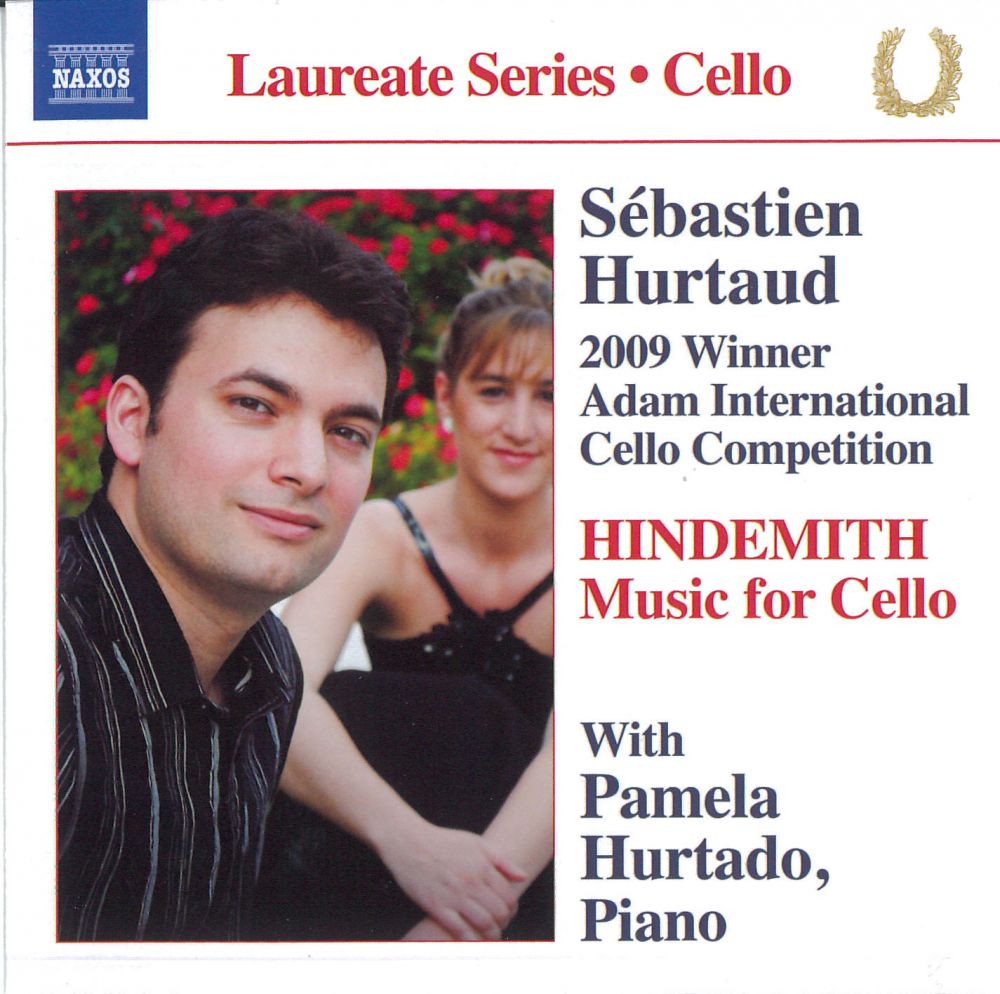
robbins 10 hindemith celloThe French cellist Sébastien Hurtaud, winner of the 2009 Adam International Cello Competition, is featured in a recital of Hindemith’s Music for Cello with pianist  in the Naxos Laureate Series (8.573172). The Three Pieces for Cello and Piano Op.8 seem a bit uneven in places, with the piano quite dominant at times, but A frog he went a-courting – Variations on an Old English Nursery Song fares much better. Hurtaud is terrific in the Sonata for Solo Cello, Op.25 No.3, and is joined by Hurtado again for the Sonata for Cello and Piano from 1948.

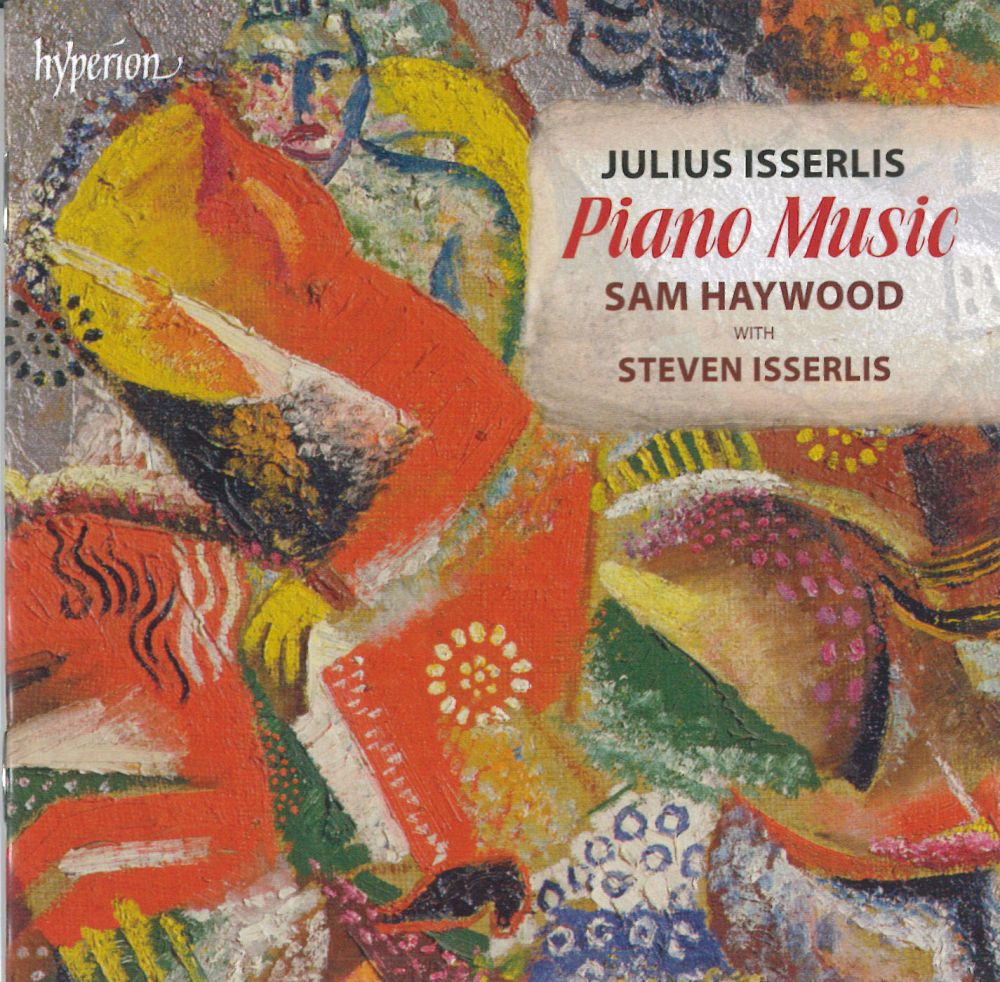
04 classical 06 isserlis pianoJulius Isserlis – Piano Music
Sam Haywood
Hyperion CDA68025

The Isserlis family name is familiar to most by virtue of cellist Steven whose career has its own impressive discography. The music of his grandfather Julius is, however, a recent discovery and makes its first recorded appearance on this disc by pianist Sam Haywood.

Haywood is a long time friend of the Isserlis family. It was Haywood who found the manuscripts and early published music of Julius Isserlis among the family papers, and it was Haywood who set about editing, correcting and recording these works for Hyperion.

Born in 1888 in Moldova (then a part of Russia) Julius was a child prodigy who earned his admission to conservatories in Kiev and Moscow and the attention of the great musicians of the day such as Taneyev. The rise of Bolshevism and Nazism in Europe severely restricted career options for the young pianist and composer. He was fortunate to escape the continent with his family and settle in England where he spent the rest of his life teaching and performing.

He seems to have been a master of the short form, writing brilliant little pieces of every kind, skillfully evoking a wide range of moods…very French and very Russian. The Ballade in A Minor for cello and piano, with a cameo by grandson Steven, is the longest work and offers some hint of what Isserlis might have achieved had he written more frequently on a larger scale.

This recording is something of an Isserlis family project, but offers a very fine example of hitherto unheard music.


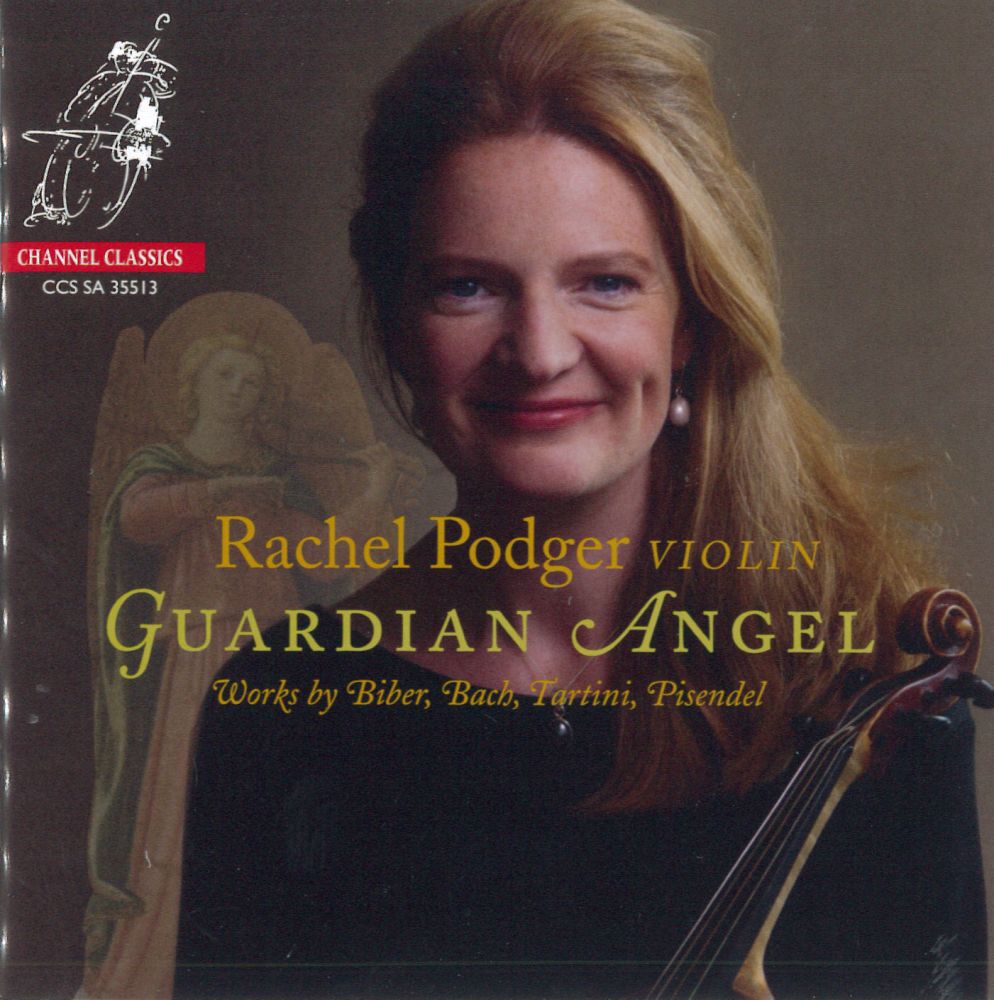
03 early 01 rachel podgerGuardian Angel – Works by Biber, Bach, Tartini, Pisendel
Rachel Podger
Channel Classics CCA SA 35513

Lest you think this is a lightweight, “new-age” recording, the title of this brilliant new CD is shared with Biber’s Passacaglia for solo violin, the last of his Mystery Sonatas. Rachel Podger is well-known as a first-rate baroque violin soloist, teacher and leader of many of England’s top period instrument orchestras. On this recording from May, 2013 she appears alone, leading us on a tour of music from the Baroque era written or transcribed for unaccompanied violin. The program includes interesting music by the London virtuoso Nicola Matteis, the long-lived Italian violinist Giuseppe Tartini (two of his rather obscure solo sonatas) and the little-known Dresden composer Johann Georg Pisendel. The absolute highlights, though, are a suave performance of the title work by Biber and a transcription of J.S. Bach’s superb A Minor Flute Partita.

Podger’s playing is full of clarity, technical assuredness and power. What is most impressive and moving, though, is her attention to detail and understanding of the rhetoric of these pieces. To quibble, it might have been nice to hear a broader range of dynamics and colours, but her sound is so mesmerizingly beautiful and her musical ideas so clear and convincing that our interest is keenly held throughout.

I especially appreciated the recording quality. Solo violin can be tricky to record well. This recording places us in the hall with enough distance for good perspective, though we’re close enough to pick up every detail.


Back to top