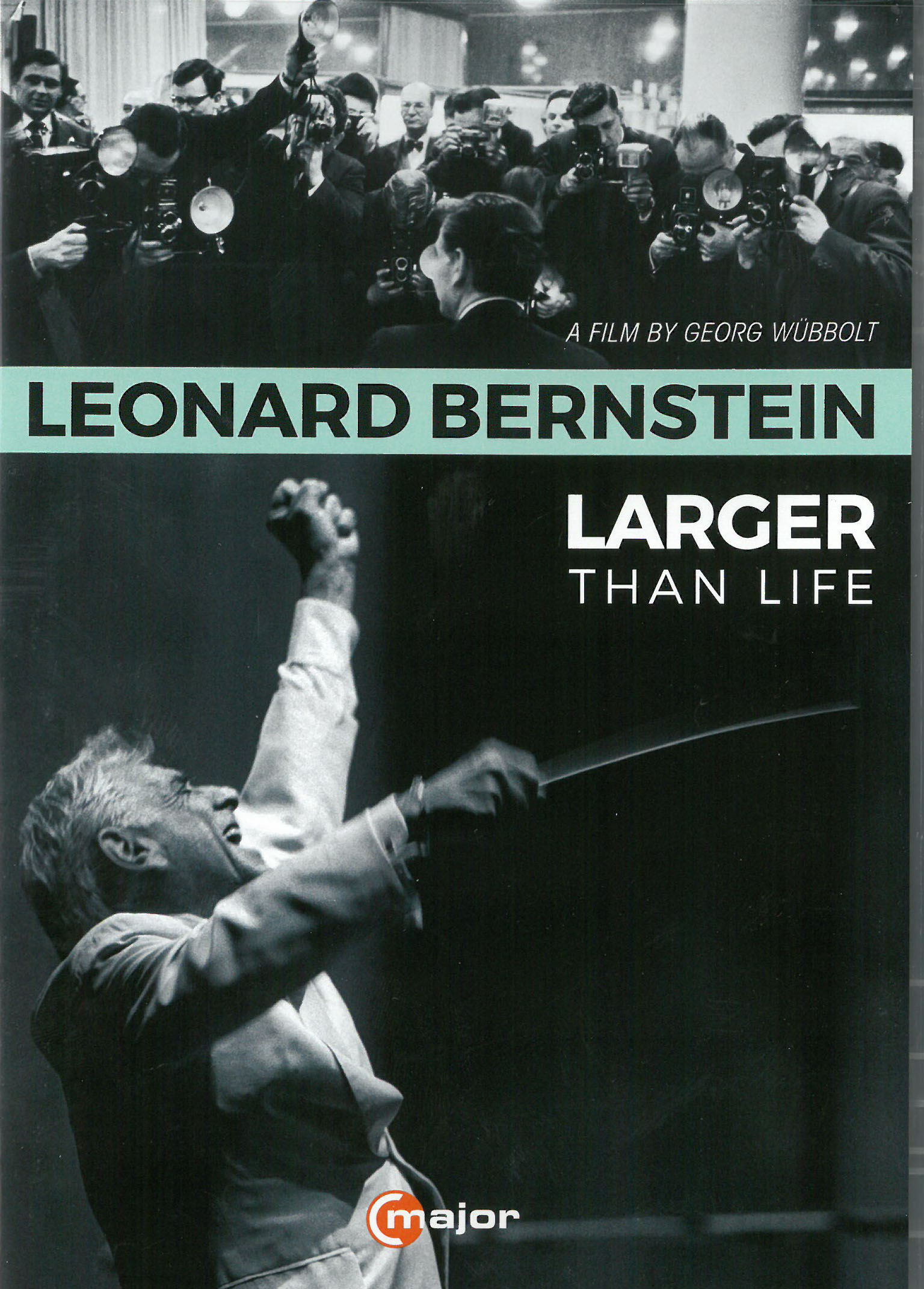
07 Bernstein Larger than LifeLeonard Bernstein – Larger than Life
(A Film by Georg Wübbolt)
Cmajor 735908

The beauty of Wübbolt’s documentary is the decision not to show Leonard Bernstein’s life in chronological order but rather in random, visually pleasing segments which drive the storyline, regardless how much one knows about his life.

Footage of Bernstein conducting illustrates that he put everything – mind, body, listening and soul – into his work. The swaying, jumping and arm swinging are not affectations but the means to achieve a great orchestral performance. It wasn’t always easy for him, as seen in a clip of orchestra members chatting during his verbal direction of his beloved Mahler. Composing was a great love. Bernstein loved to work with the musical teams, as shown by driving footage from the timeless West Side Story and comments by Stephen Sondheim. Bernstein is seen leading conducting classes with enthralled participants while fun clips from his television show Omnibus and Young People’s concerts convey his passion for youth, storytelling, conducting and piano performance.

Interspersed is footage from Bernstein interviews. Illuminating comments feature his children, Jamie, Nina and Alexander, and professionals such as Sondheim, Kent Nagano, Marin Alsop and Gustavo Dudamel, who are positioned in front of eye-catching Bernstein photographic stills from private and professional settings. In dramatic visual contrast, a bonus section has Nagano, Alsop and Dudamel speaking minus the backdrop.

This film’s uncanny strength lies in its ability to create a personal viewing experience; one may feel that Leonard Bernstein is speaking and performing only to you.

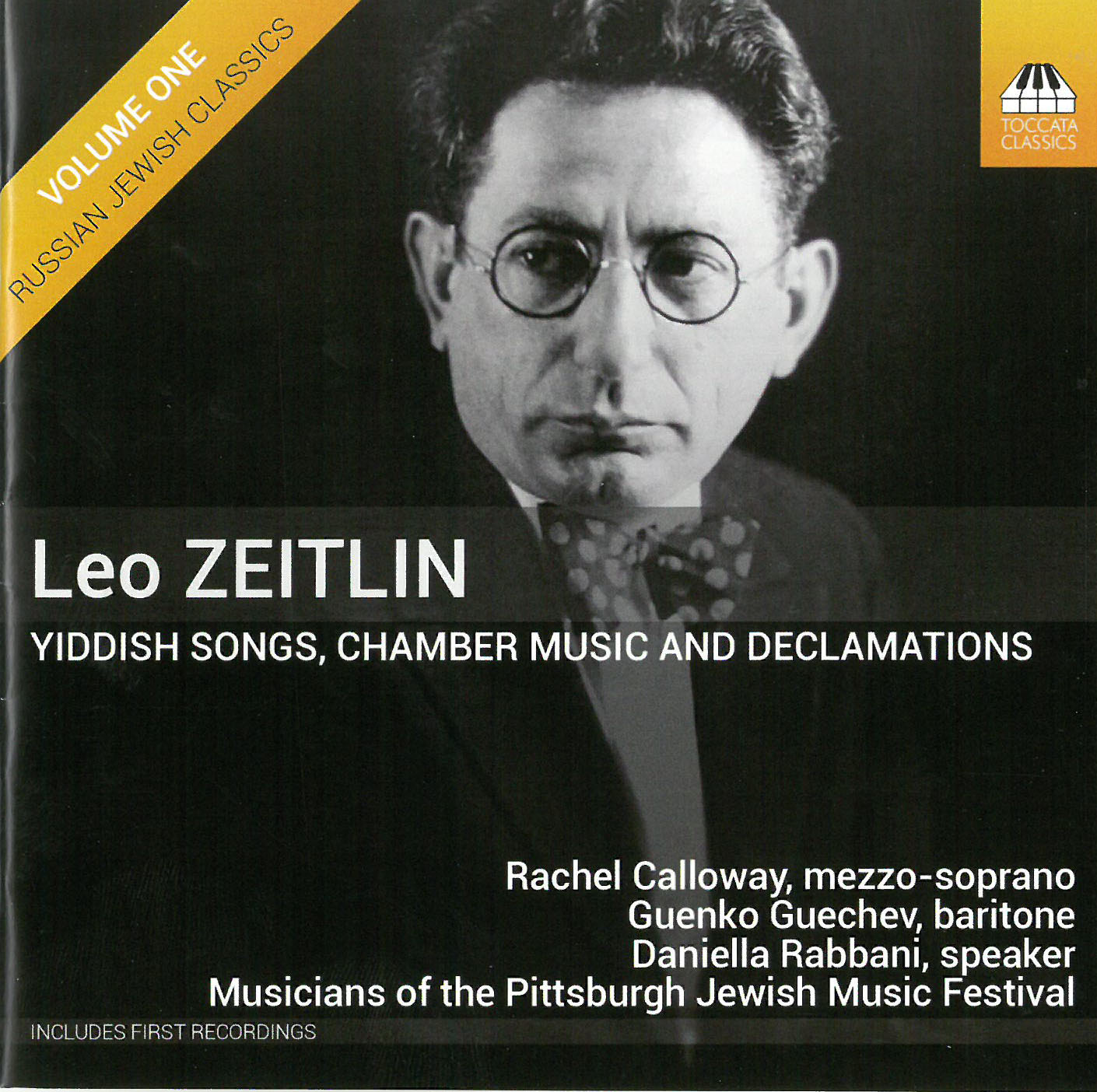
Leo Zeitlin – Yiddish Songs, Chamber Music and Declamations
Rachel Calloway; Guenko Guechev; Daniella Rabbani; Pittsburgh Jewish Music Festival
Toccata Classics TOCC 0294 (toccataclassics.com)

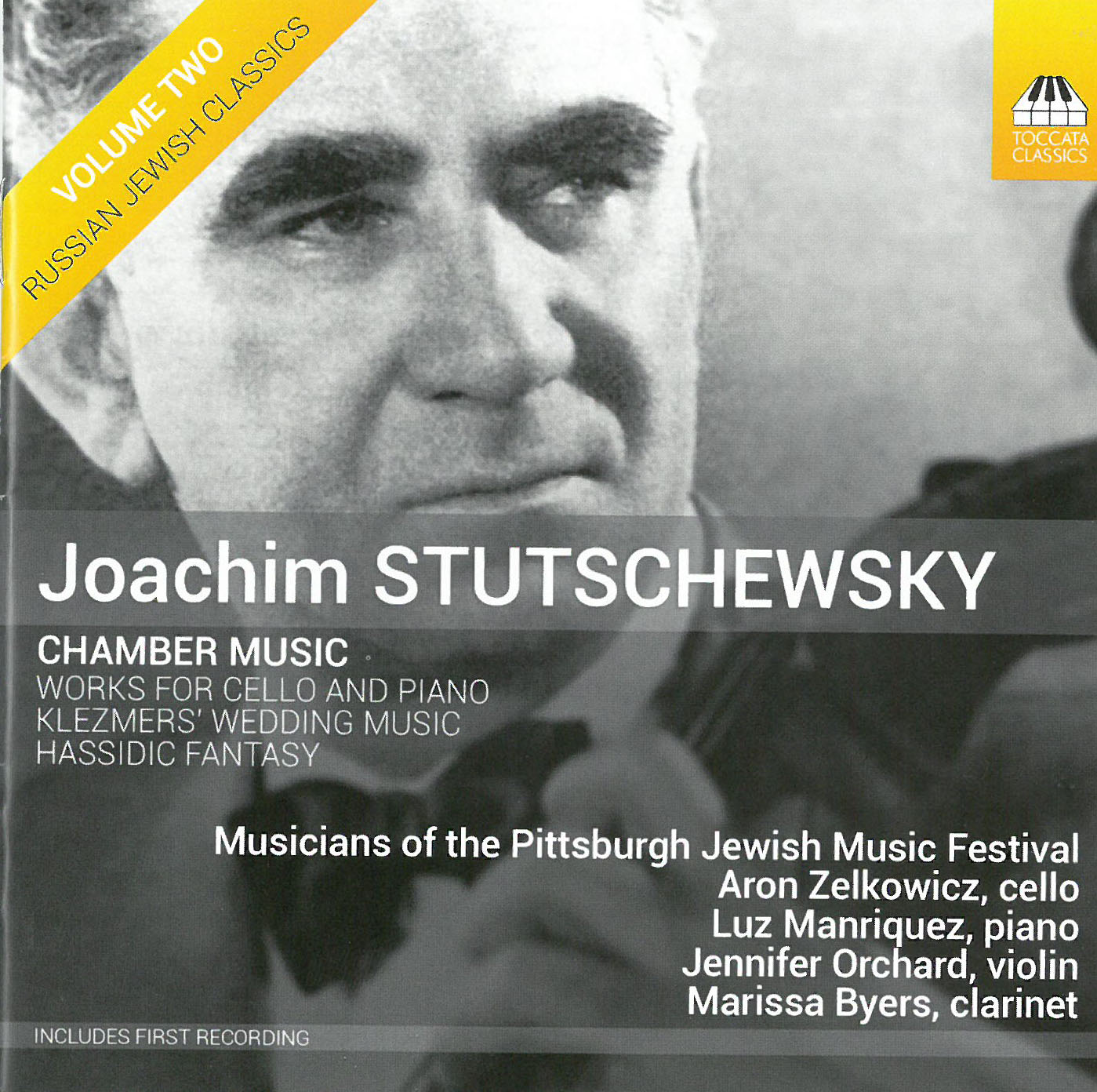
Joachim Stutschewsky – Chamber Music
Pittsburgh Jewish Music Festival
Toccata Classics TOCC 0314 (toccataclassics.com)

08b ZeitlinThe Pittsburgh Jewish Music Festival (PJMF), in conjunction with Toccata Classics (an independent British label dedicated to producing recordings of first-rate yet overlooked classical music), has undertaken an ambitious and honourable project: releasing a series of CDs focussing on the largely forgotten and neglected music of members and composers affiliated with the St. Petersburg Society for Jewish Folk Music. As PJMF founder and director (and the CDs’ producer), cellist Aron Zelkowicz, explains in a delightful radio interview he gave this past July on WQED’s Voice of the Arts – and as noted in the meticulously researched booklet accompanying each volume – the Society, which operated between 1908 and 1918, sought to elevate the music of the shtetl – klezmer, liturgical, cantorial, religious songs in Yiddish and Hebrew – to the highest level of Jewish art music, by creating scores, hosting symposiums, lectures and concerts, and most critically, publishing the works (about 80) of its affiliates.

08a StutschewskyRussian Jewish Classics, Volumes One and Two, are the PJMF’s first two commercial albums, and Zelkowicz promises a total of “at least” five in the series, to be released gradually over the next few years. Each album features the music of a single composer. Volume One offers a rich variety of works by Leo Zeitlin (1884-1930), a violinist, violist, conductor, arranger, impresario and teacher, who studied with Rimsky-Korsakov and Glazunov. Volume Two explores the compelling chamber music of musicologist, arranger, pedagogue and cellist, Joachim Stutschewsky (1891-1982). The exhaustive notes in the aforementioned booklets provide a comprehensive biography of each composer.

With the limited space available, it’s not possible to do justice to the impressive breadth and depth of the music presented on each CD. Clearly, though, Zelkowicz’s assemblage of accomplished musicians (all members of esteemed orchestras and university music departments, who performed the music both live at the PJMF and in the studio recordings), executes this haunting, evocative, melodic, joyous, plaintive, gorgeous and freilach music with tremendous passion and intelligence. From Guenko Guechev and Daniella Rabbani’s dramatic recitations in Zeitlin’s unique “declamations” – affecting piano music underscoring spoken Yiddish and Russian poetry (once a popular genre) – and mezzo Rachel Calloway’s glorious interpretations of several of his Yiddish songs in various arrangements, to the masterful performances, by the musicians of the PJMF, of the rhapsodic and sophisticated chamber works of Stutschewsky, these CDs represent a wealth of material that demands renewed exploration and attention, attention it once commanded, briefly, in a bygone age.

I look forward to the rest of the series, and say “Bravo” and “Mazel Tov” to Zelkowicz, the PJMF and Toccata Classics.

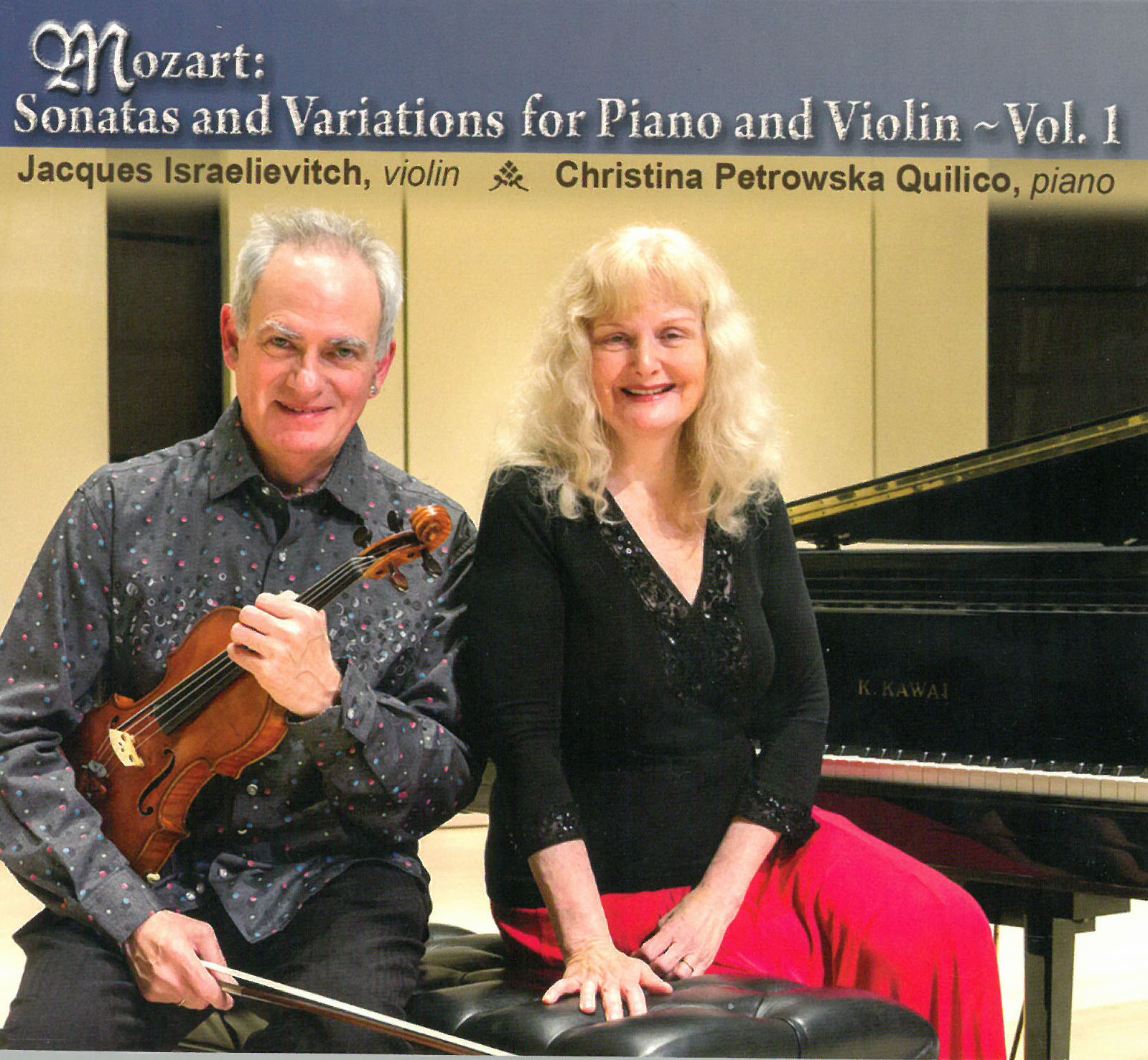
When violinist Jacques Israelievitch joined the Faculty of Music at York University in 2008 he became a colleague of pianist Christina Petrowska Quilico, and it wasn’t long before they started performing as a duo. They also sight-read all of the Mozart sonatas for their own pleasure, and soon added some of the late works to their concert recitals.

This led to their performing all of the sonatas in a marathon concert of more than seven hours (with three short breaks), an experience which convinced them to try to recreate the excitement by recording the complete series. They were part of the way through the project when Israelievitch was diagnosed with advanced lung cancer. Despite a break for hospital treatment he managed to find the strength to complete the project, recording the final six sonatas in less than four hours. He passed away on September 5, 2015.
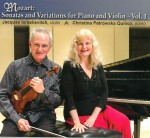
01 IsraelievitchMozart: Sonatas and Variations for Piano and Violin Vol.1 is the initial release in the series, issued “with a heavy heart” by Fleur de Son Classics (FDS 58034). This first volume features the Sonata No.28 in E Flat K380, the Sonata No.32 in B-Flat Major K454, the Sonata No.35 in A Major K526 and the Six Variations on a French Song K360.

These works are perfectly suited to Israelievitch’s distinctive style and sound, which was always warm, gentle and sensitive. More so than in the early juvenile sonatas written before Mozart turned 11, where the violin is little more than an accompaniment to the piano, the instruments are on equal terms here, and it’s obvious that Israelievitch and Petrowska Quilico are of one mind in their performances.

I’m not sure how many volumes there will be in this series – there are 19 mature sonatas as well as the 17 juvenile works – but if this first volume is anything to go by then it will be a series to treasure, and one that will be a wonderful memorial tribute to a great and much-loved violinist.
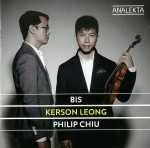
02 Bis Leong ChiuThere seems to be a never-ending stream of emerging top-notch violinists these days, but every now and then a talent emerges that simply stops you in your tracks. One such talent is the 19-year-old Canadian violinist Kerson Leong, who makes his CD debut with Bis on the Analekta label with Canadian pianist Philip Chiu (AN 2 9160).

Leong is by no means an unknown, having won the Junior First Prize at the 2010 Menuhin Competition in Oslo, as well as numerous awards here in Canada, but from the very first bars of the opening track it’s clear that this is a very special violinist with qualities that lift him from the general crowd and place him in the stratosphere.

In a blog from the 2012 Menuhin Competition, Nancy Pellegrini called Leong “a 15-year-old with a 45-year-old’s stage presence.” The level of musical maturity on display here is simply staggering. Leong chose to make his first album a series of encore-style pieces, saying that he thought it would be the ideal way to introduce himself, and it was a wise decision: the wide range of composers and styles allows him to display his dazzling talents to the fullest.

From the rich, deep, passionate tone of the Brahms Hungarian Dances Nos.1 and 17, through Kreisler’s Liebesfreud and Liebesleid, a Gluck Melodie, the Bartók Romanian Dances, Medtner’s Fairy Tale, the three Gershwin Preludes, Rachmaninoff’s Vocalise, a simply ravishing Debussy Clair de lune and Valse, to Wagner’s Albumblatt and the final Hebrew Melody Op.33 by Joseph Achron, this is magnificent playing by a young violinist who must surely be on the cusp of a stellar international career. Chiu’s finely judged accompaniments add greatly to an outstanding CD.
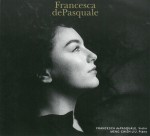
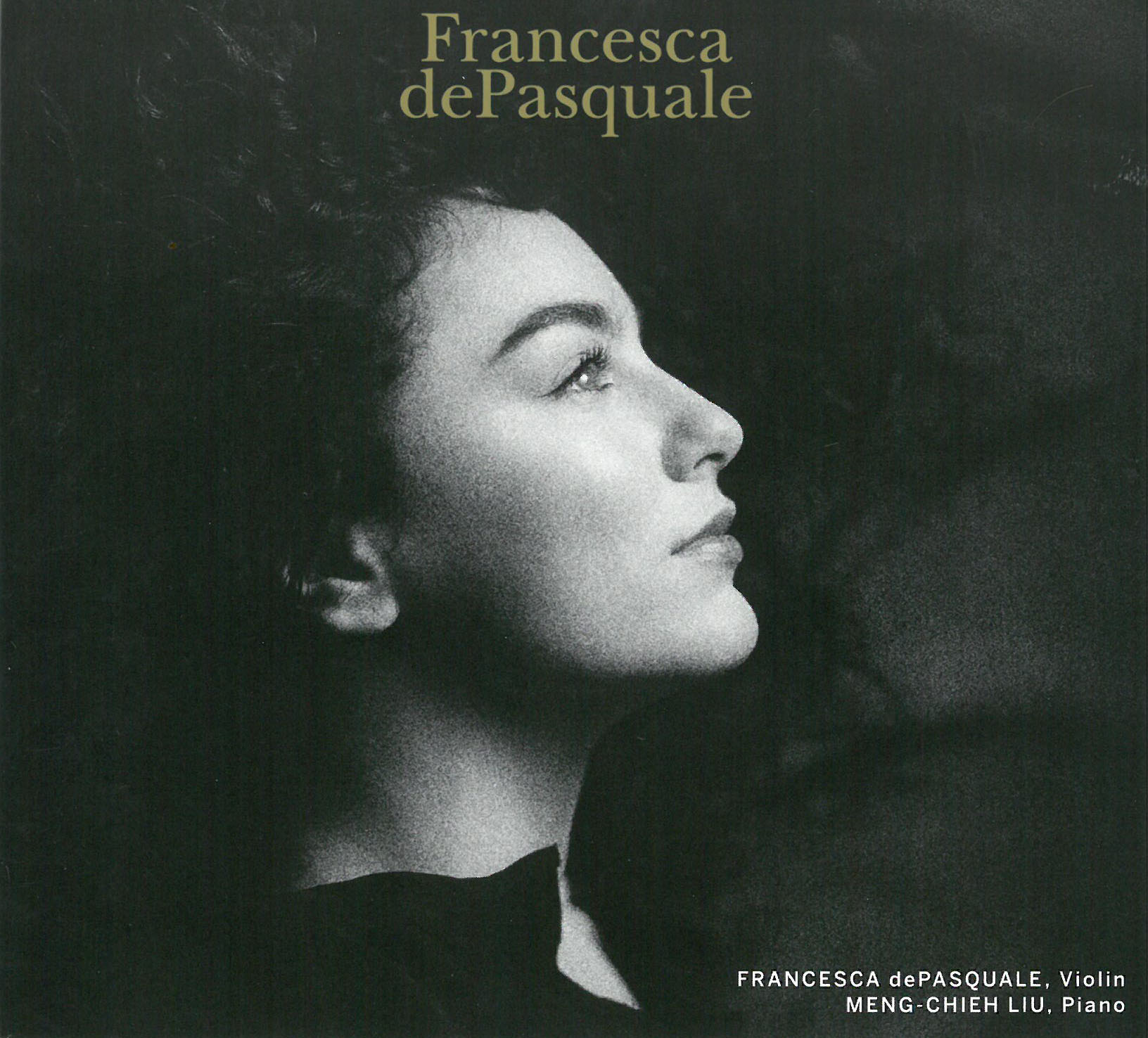
03 Francesca de PasqualeThe Juilliard graduate and Itzhak Perlman protégée, Francesca dePasquale (francescadepasquale.instantencore.com), has also released a self-titled debut album, with pianist Meng-Chieh Liu. Like Leong, dePasquale has been around for quite a while – she made her debut at the age of nine touring Spain – and for her first album chose works that she feels are not only dear to her heart but that also show her wide range as an artist; also like the Leong CD, it’s a choice that works extremely well.

DePasquale has a beautiful tone and impressive technique. There’s a lovely reading of the Bach Partita No.2 in D Minor for Solo Violin, and a really strong extended melodic line in Messiaen’s Thème et Variations. Paola Prestini’s very effective Oceanic Fantasy for Solo Violin and Electronics, a 2015 commission from dePasquale, incorporates field recordings of southern Italian songs, although the work is almost entirely for violin alone, with Bach-like arpeggios and double-stopping and strong melody lines. The remaining works are the brief Schumann Intermezzo from the F.A.E. Sonata, Bartók’s Rhapsody No.1 and a simply gorgeous performance of Marietta’s Lied from Korngold’s opera Die Tote Stadt; there is a video of the recording session of the latter, along with audio samples of all the tracks on the CD, on dePasquale’s website. It’s well worth a visit.
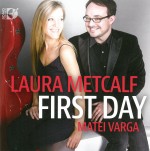
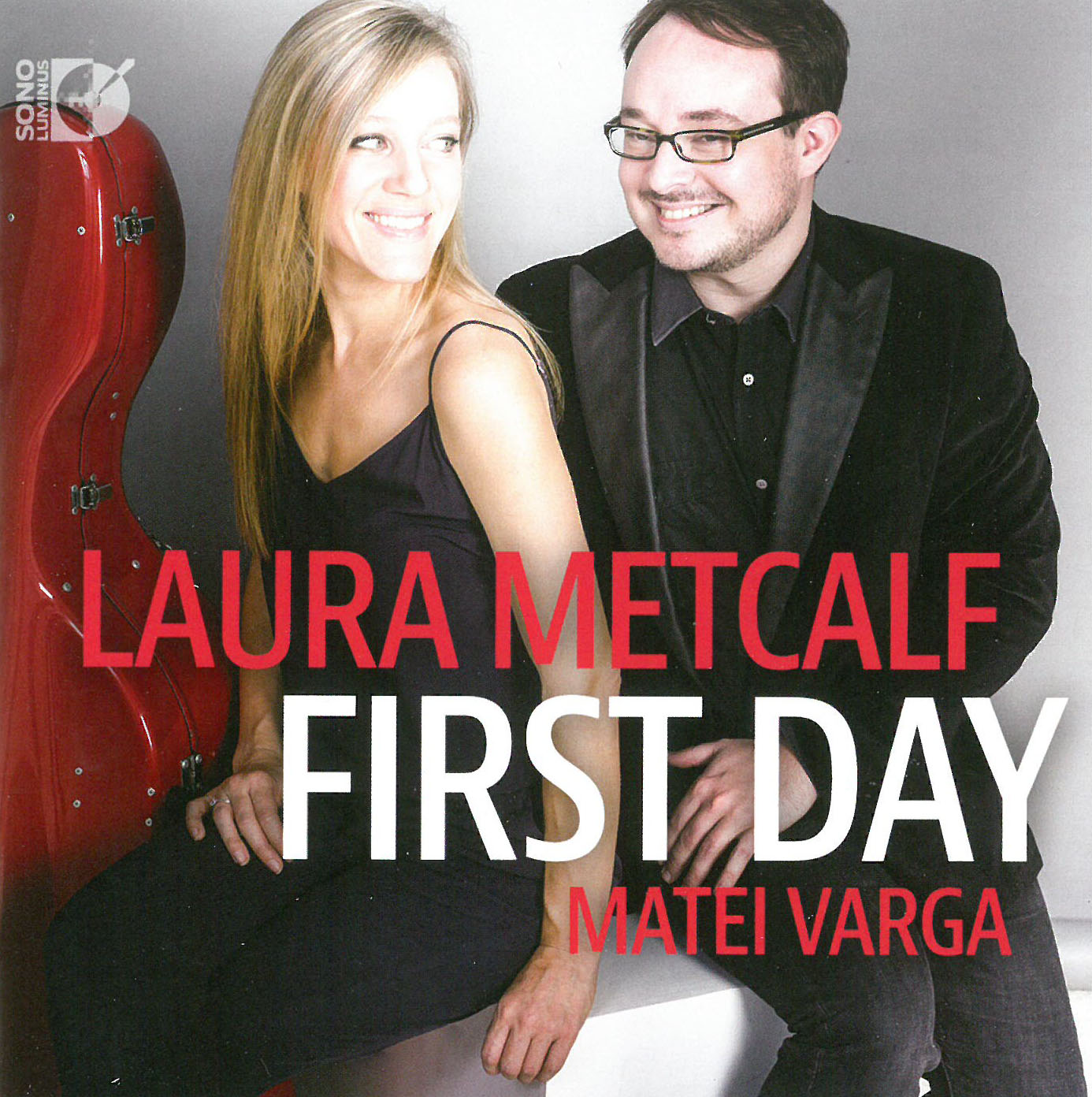
04 Laura MetcalfThis seems to be a good month for debut albums. First Day is the solo debut CD of the American cellist Laura Metcalf, accompanied by pianist Matei Varga in another varied program of works to which both performers feel deeply connected (Sono Luminus DSL-92201).

Metcalf has extensive experience as both a chamber musician and soloist, and has a lovely tone and a fine legato. She has been friends and musical partner with Varga since 2004, and one wonders why a solo CD has been so long in coming. Still, it was certainly worth the wait.

Two works on the disc by young American composers are world premiere recordings: Caleb Buhrans’ Phantasie and Dan Visconti’s very brief but joyful Hard-Knock Stomp. There are also works by José Bragato, Bohuslav Martinů, Alberto Ginastera and Marin Marais. A student work by a young George Enescu, the single movement Sonata in F Minor, was only recently discovered and is still unpublished.

The CD’s title comes from the phrase “paths of the first day” from the Francis Poulenc song Les Chemins de l’amour, the final track on the album. Metcalf adds a vocal performance to bring an excellent CD to a simply lovely close.
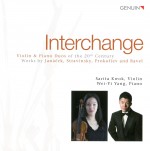
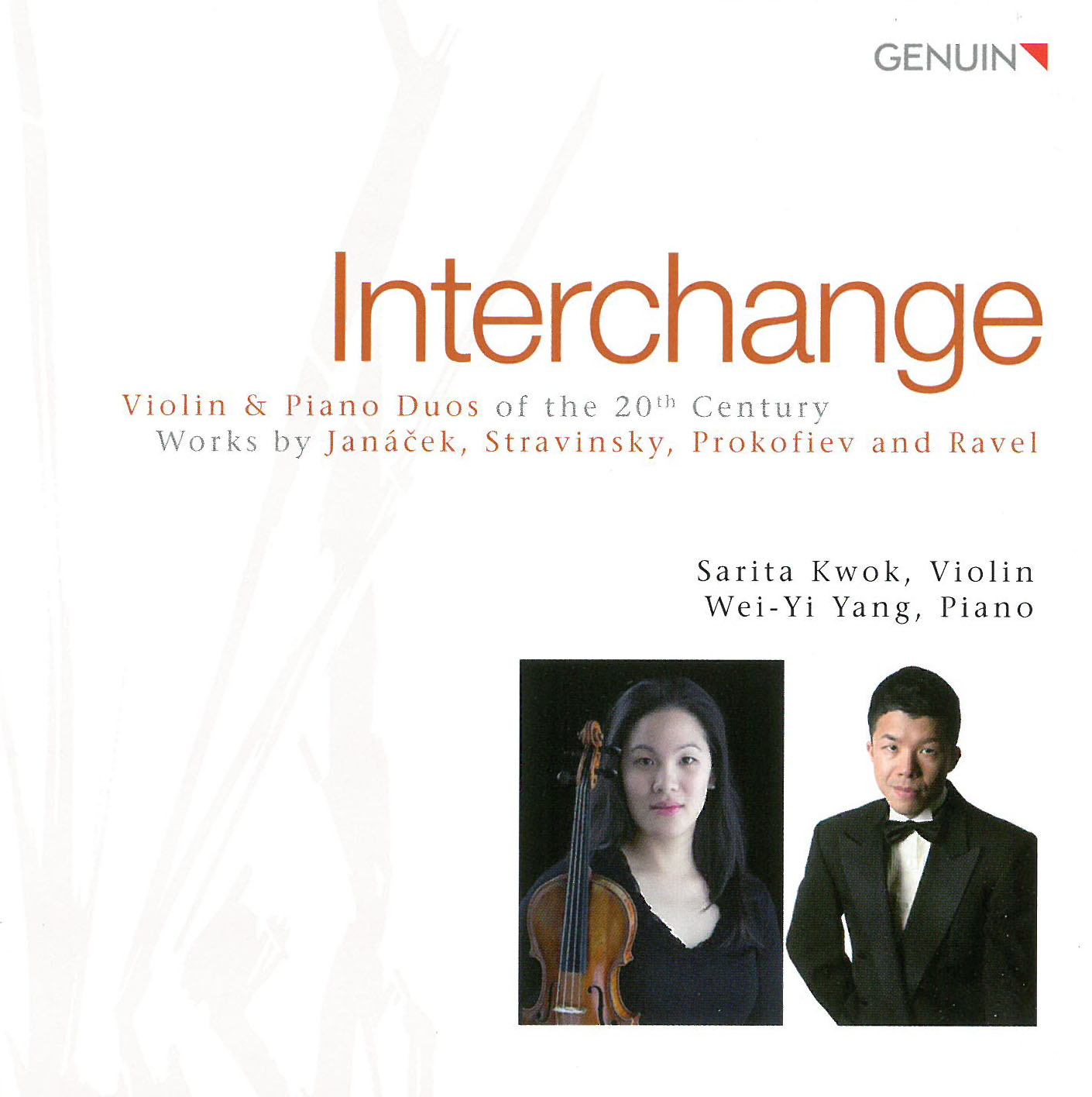
05 Sarita KwokThis also seems to be a great month for violin and piano CDs. Interchange is a new release from the Australian violinist Sarita Kwok (a longtime resident in the United States) and pianist Wei-Yi Yang featuring Violin & Piano Duos of the 20th Century (Genuin GEN 16548).

Janáček’s Sonata is a late work that shows the influence of the First World War as well as the composer’s fascination with the speech patterns of his native Moravia that gave his late music such a distinctive sound. It’s a difficult, intense, passionate and constantly changing work, and Kwok captures every element perfectly.

Stravinsky’s Duo Concertante and Prokofiev’s Five Melodies are given equally sympathetic performances, and there is a stunning sense of style in Ravel’s Sonata No.2 in G Major, particularly in the Blues middle movement and the final Perpetuum mobile.

Kwok displays a gorgeous tone, a dazzling technique and a beautiful focus throughout a terrific CD, and is matched in all respects by Yang’s outstanding piano playing.
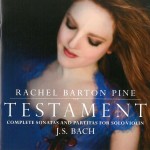
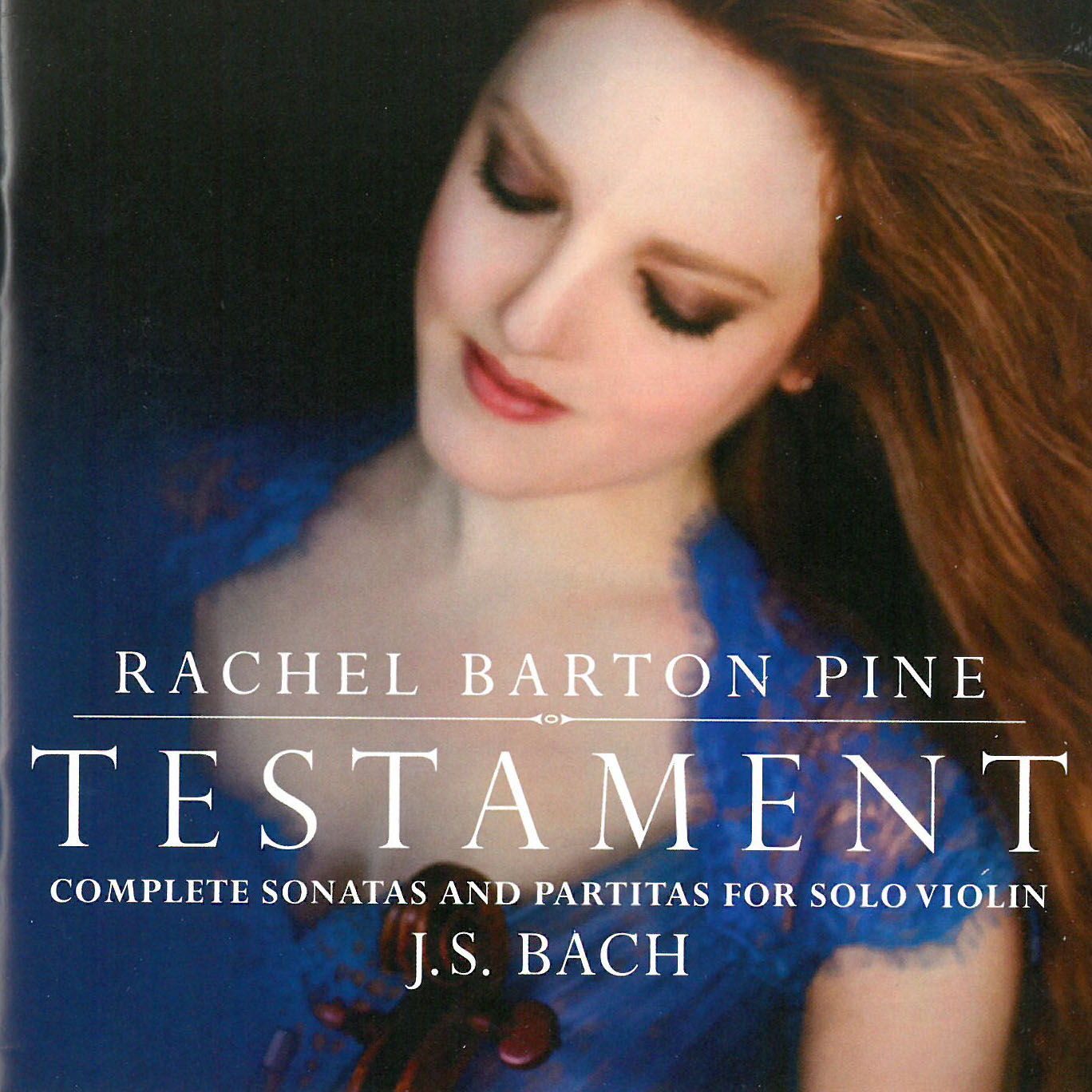
06 Rachel Barton PineThe latest issue from the outstanding American violinist Rachel Barton Pine is Testament, a 2CD set of the complete Bach Sonatas & Partitas for Solo Violin (Avie 2CD AV2360).

As I’ve noted before, comparative reviews of these sets are not only extremely difficult, given the huge number of performer choices available, but also irrelevant. Probably more than with any other works in the solo repertoire, recorded performances of the Sonatas & Partitas are about making an intimate personal statement. The sheer size and scope of the work means that there will always be countless variations – small and large – between various interpretations; all that matters is that each performer’s personal views and feelings come through, for nothing lays a violinist’s soul bare more than these astonishing pieces.

Barton Pine makes no attempt to hide the work’s spiritual significance for her, choosing to record the CD in her church, St. Paul’s United Church of Christ in Chicago, the place she calls her “emotional home” for Bach’s music and where she first encountered the violin and first played Bach in a worship setting at the age of four. There’s certainly a spirituality to her playing, which is quite superb.

The recording is, she says, a testament to her lifelong relationship with one of the cornerstones of the violin repertoire and to all who have inspired and supported her. And what a testament it is.
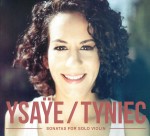
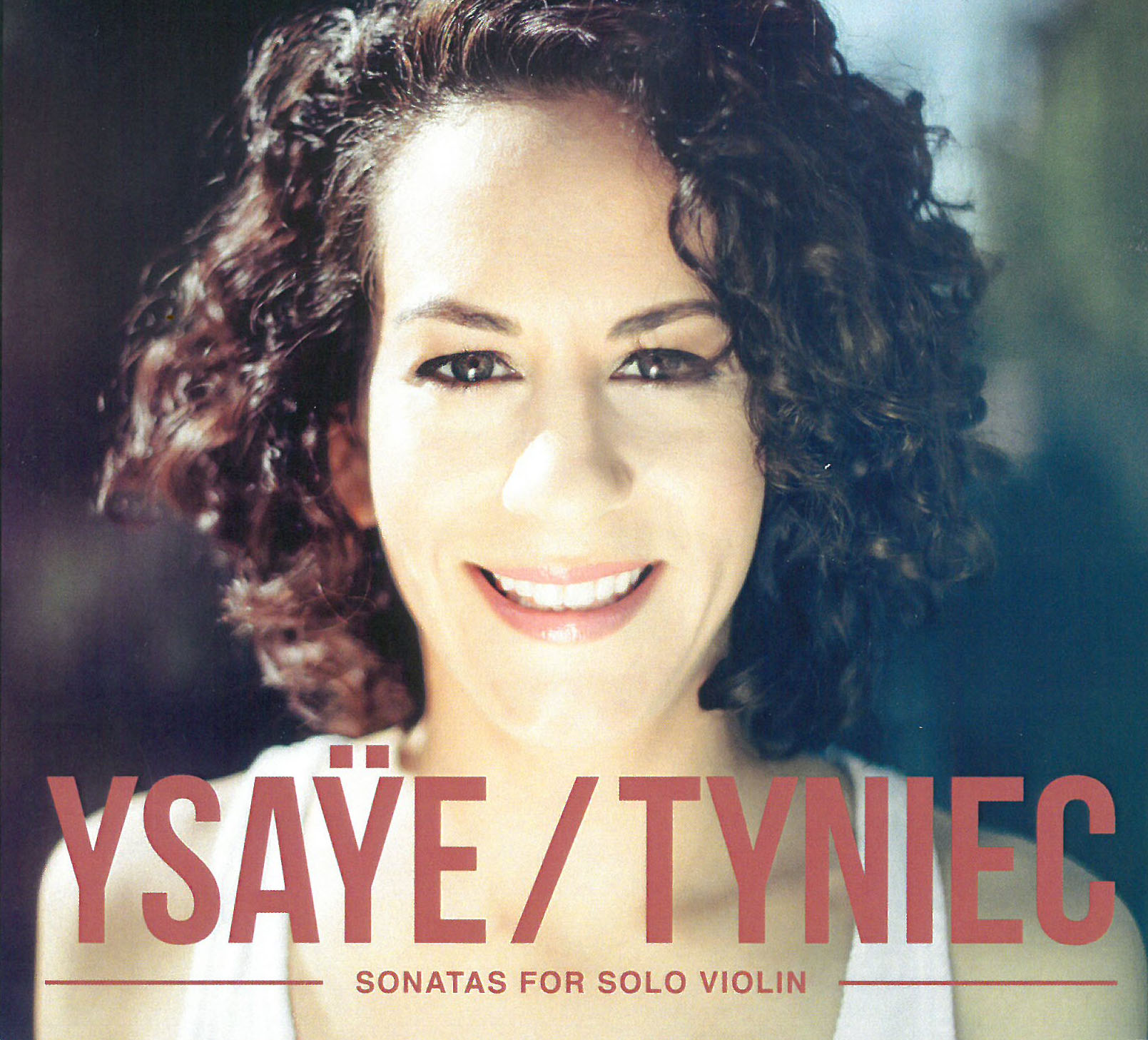
07 Ysaye TyniecCanadian violinist Andréa Tyniec has released a simply stunning recording of the Six Sonatas for Solo Violin Op.27 by Eugène Ysaÿe (Really Records REA-CD-5898D). Tyniec raised the money to fund the recording through the online fundraising site Indiegogo and boy, was it worth it!

These astonishing sonatas, apparently mapped out within the space of 24 hours in July 1923 and published in 1924, manage to look back to Bach as well as forward to the 20th century, and are arguably the greatest solo works in the violin literature after the Bach Sonatas & Partitas. This is the sixth complete set I’ve received in the past five years and, as with the Bach works, comparative reviews are almost impossible in the space available.

Suffice it so say that Tyniec’s faultless technique, outstanding musicianship and a crystal-clear recorded sound make this marvellous set one to revisit and to treasure.
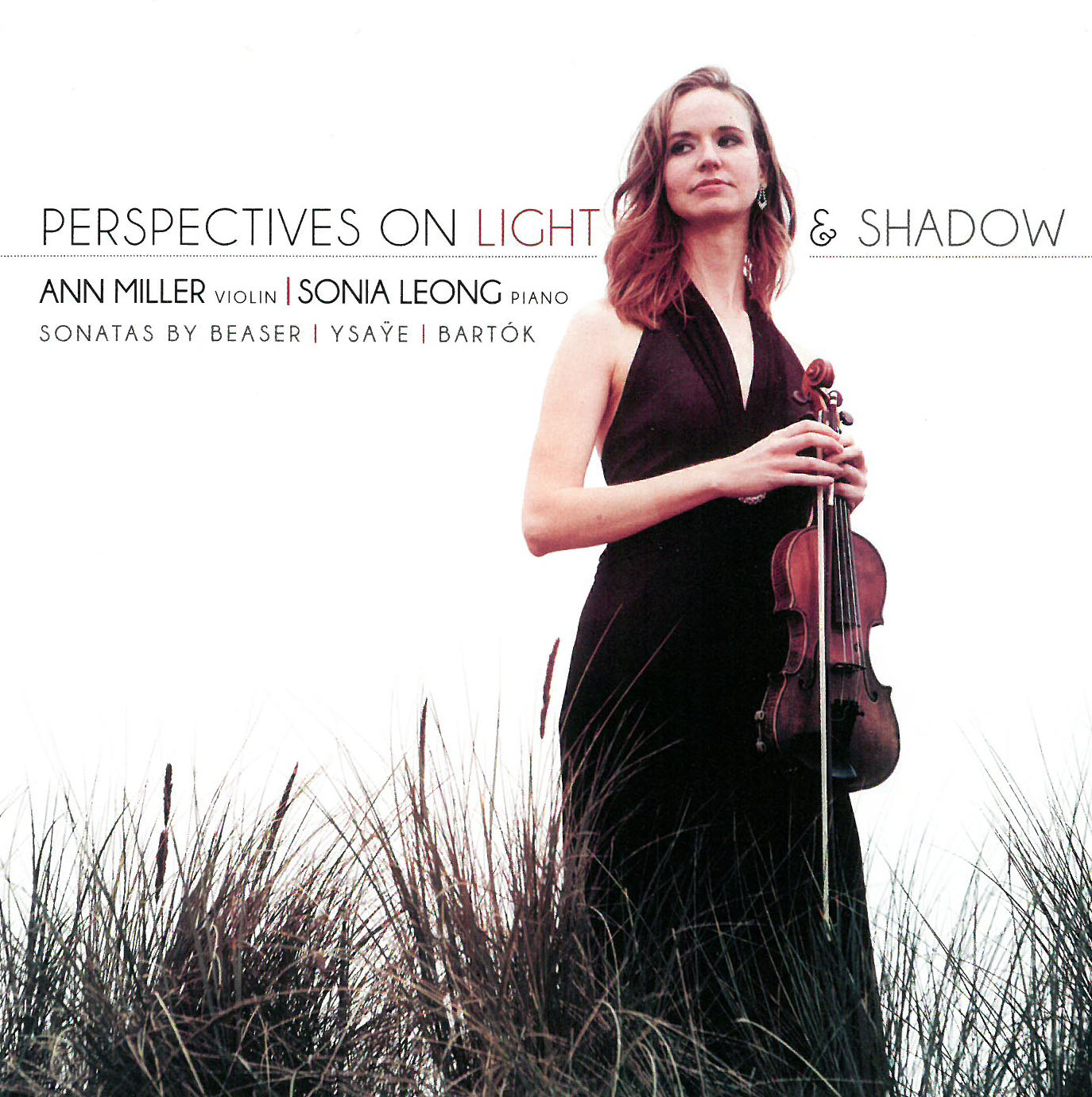
08 Ann MillerOne of the Ysaÿe sonatas – the No.4 in E Minor – is featured on Perspectives on Light & Shadow, the new CD from violinist Ann Miller (annmillerviolin.com) with pianist Sonia Long. Although a more-than-capable reading, it doesn’t quite match Tyniec’s; a rather muddy recorded sound doesn’t help. The same could be said for the Bartók Sonata No.1 for Violin and Piano, which doesn’t really come up to the Tanja Becker-Bender recording reviewed last month.

The real gem here, though, and what makes this CD so interesting, is the Sonata for Violin and Piano by the American composer Robert Beaser (b.1954). Consisting of a theme and 15 variations divided into three contrasting movements of five variations each, it was reworked for violin in 2002, having been originally written in 1981 for flute and piano, although you would never guess: it’s strong, idiomatic writing for the violin, and a striking and quite brilliant work that brings the best playing on the disc from Miller.
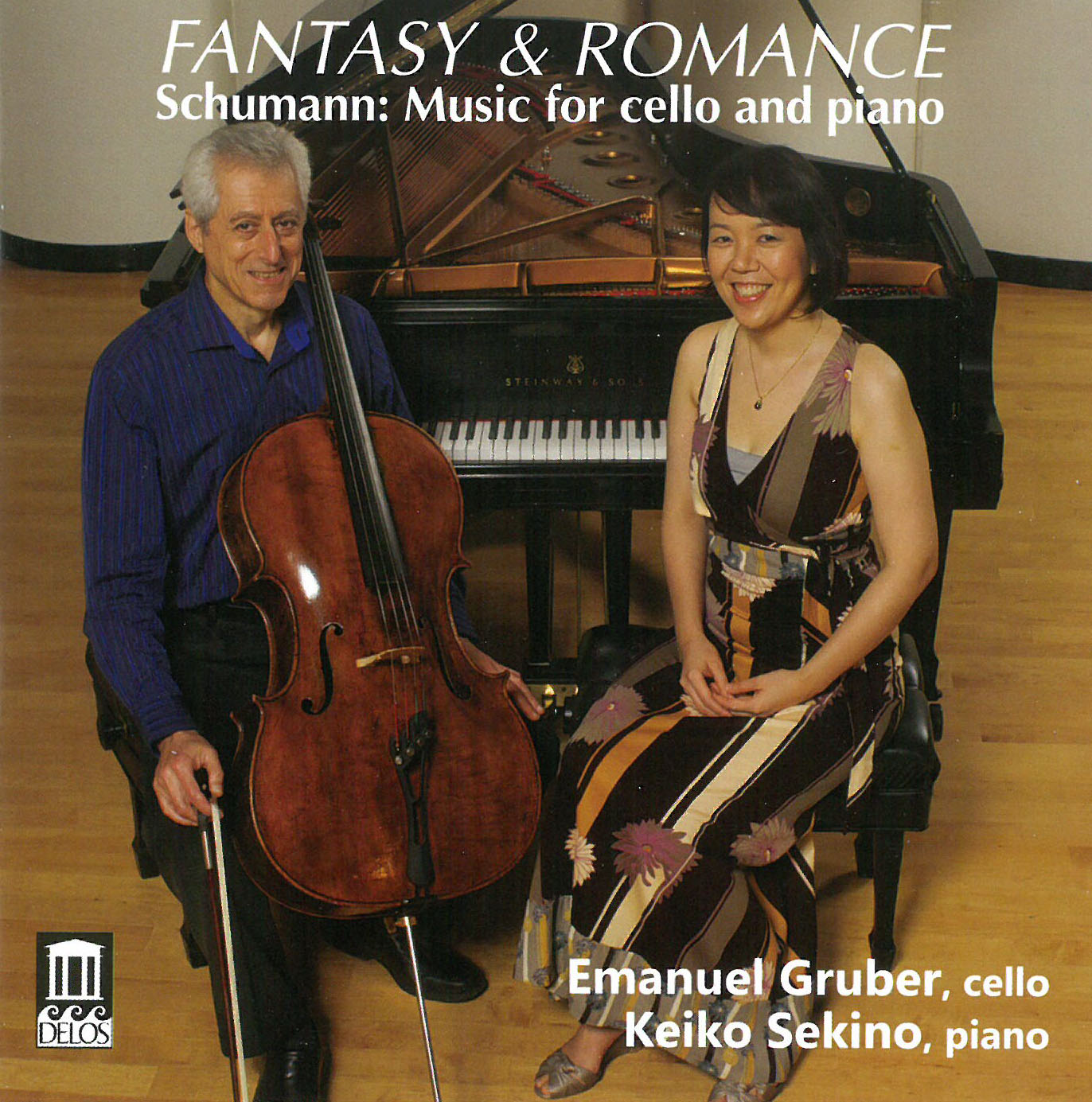
09 Fantasy and Romance SchumannFantasy & Romance – Schumann: Music for Cello and Piano is the latest CD from Emanuel Gruber, who has previously recorded the complete music for cello and piano by Beethoven and Mendelssohn; Keiko Sekino is the pianist this time (Delos DE 3481).

Although Schumann loved and played the cello he left only two works written specifically for the instrument: his Cello Concerto in A Minor and the Five Pieces in Folk Style Op.102, the latter included on this album. The other works here are all transcriptions or arrangements, although Schumann did suggest that two works – the Fantasiestücke Op.73 for clarinet and piano and the Adagio and Allegro Op.70 for horn and piano – could also be played on the cello.

The Drei Romanzen Op.94, arranged here by Valter Dešpalj, were originally for oboe and piano; the Märchenbilder Op.113, in a transcription by Alfred Piatti and Christian Bellisario, were originally for viola and piano. Two piano pieces – Abendlied Op.85 and the famous Träumerei Op.15, in lovely arrangements by Lothar Lechner – complete a very attractive CD.

Gruber notes that the lyrical quality of Schumann’s music makes the cello an ideal medium of expression, and regardless of the original scoring of the works here, these lovely performances certainly support that opinion.

Review

Victor Herbert was another composer who played cello, but in his case at full professional level. He was born in Ireland in 1859, but grew up in Germany, emigrating to the United States in 1886. By the late 1890s he was one of the most famous musicians in America, celebrated for his playing and conducting and for his operettas.
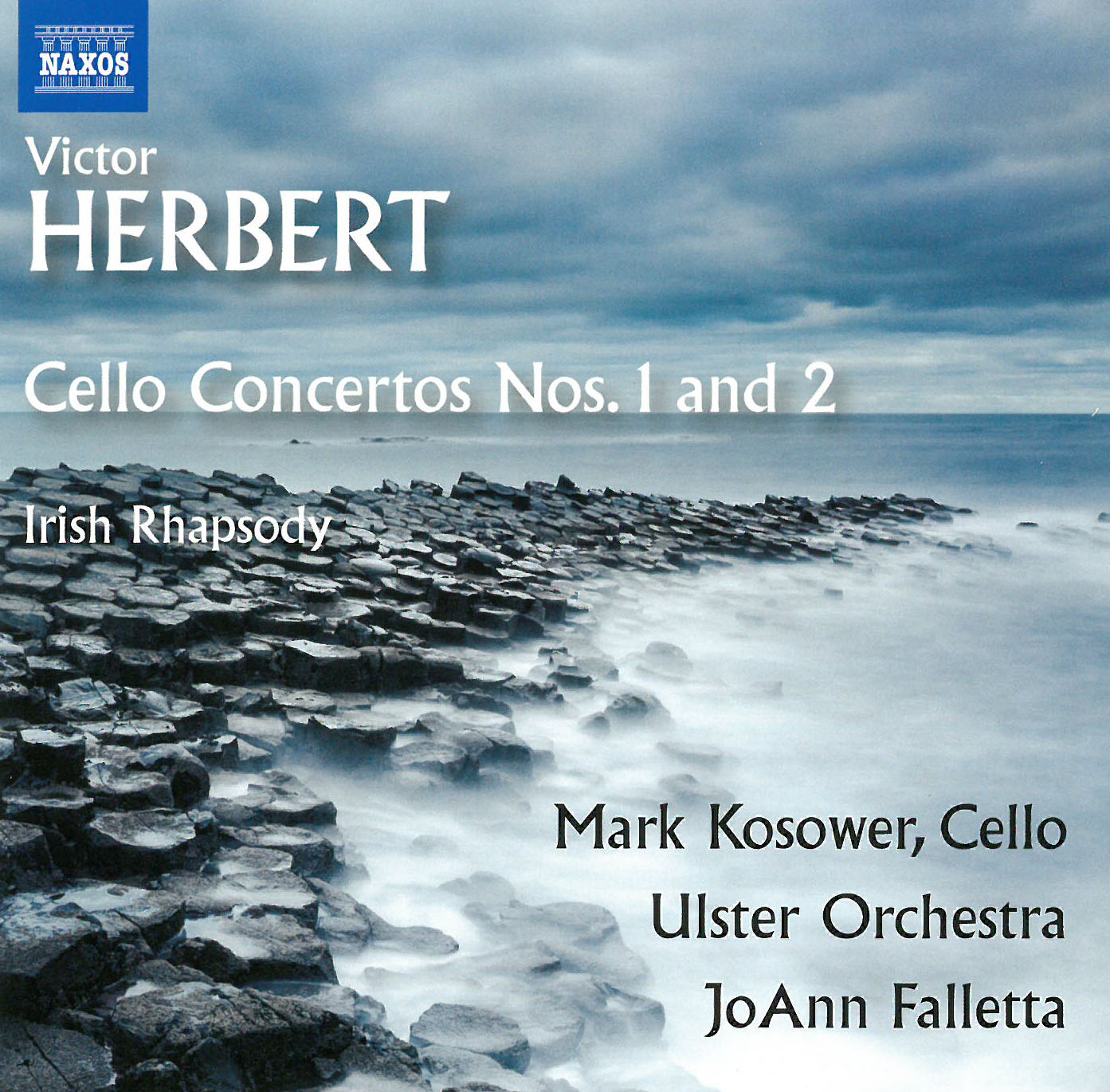
10 Herbert Cello CtiHis Cello Concertos Nos.1 and 2 are featured on a new Naxos CD in performances by Mark Kosower and the Ulster Orchestra under JoAnn Falletta (8.573517). Not surprisingly, both works are typical of the late German Romantic school. The Concerto No.1 in D Major Op.8 was performed by the composer in Stuttgart in 1885, and again in New York in 1887, but remained unpublished and apparently unperformed for many years; it was first recorded in 1986.

The Concerto No.2 in E Minor Op.30 is the stronger of the two works. Dvořák attended its premiere in New York in March 1894, and was so impressed with Herbert’s balancing of the large orchestra and the solo cello that it led directly to the composition of his own B-Minor Concerto within the year.

Kosower is in great form in two really lovely performances, and Falletta draws spirited playing from the orchestra for which she was principal conductor from 2011 to 2014.

Herbert’s Irish Rhapsody for Grand Orchestra completes the disc; it’s the expected mix of Irish tunes, much like the Bruch Scottish Fantasy in mood and orchestration, and with some brilliant counterpoint to round it off.

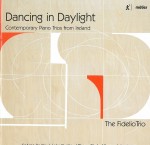
11 Dancing in Daylight Irish Piano TriosThere’s more Irish music on Dancing in Daylight – Contemporary Piano Trios from Ireland, a new CD featuring works by Seóirse Bodley (b.1933), John Buckley (b.1951), Rhona Clarke (b.1958) and Fergus Johnston (b.1959) in performances by the Fidelio Trio (métier msv 28556).

Last year the trio completed a residency in the music department of St. Patrick’s College in Drumcondra, Dublin, during which time they commissioned the works by Bodley, Buckley and Johnston. Johnston’s Piano Trio dates from 2011; Buckley’s Piano Trio from 2013; and Bodley’s Piano Trio ‘Dancing in the Daylight’ from 2014. Clarke’s Piano Trio No.2 was originally written in 2001, but revised in 2007 and 2015, when it was played during the Trio’s residency.

All four works are extremely strong, well-written, accessible and effective, with performances and recording quality of the highest level throughout a really interesting CD.
12 Matt SellickNocturne is the second CD by the Thunder Bay flamenco guitarist and composer Matt Sellick (matt.sellick@gmail.com), whose first album After Rain was very favourably reviewed in the February 2015 edition of The WholeNote.

Sellick has spent four summers studying in Spain with some of the leading flamenco guitarists, and it show. He admits that this new CD is “more clearly flamenco” than his first, but also acknowledges that there are other influences at work here as well. All 11 pieces – some solo and some accompanied by bass and percussion – are original compositions, and there is a lovely mix of different moods and tempos.

He obviously has a great feel for flamenco, an outstanding technique – clean, accurate and clearly defined – and plays with a warm rich sound and a lovely range of tone colour and shading. The recording quality and ambience are perfect.

Sellick is clearly a huge talent; this is a terrific CD, and it will be very interesting to see what he does next.


 

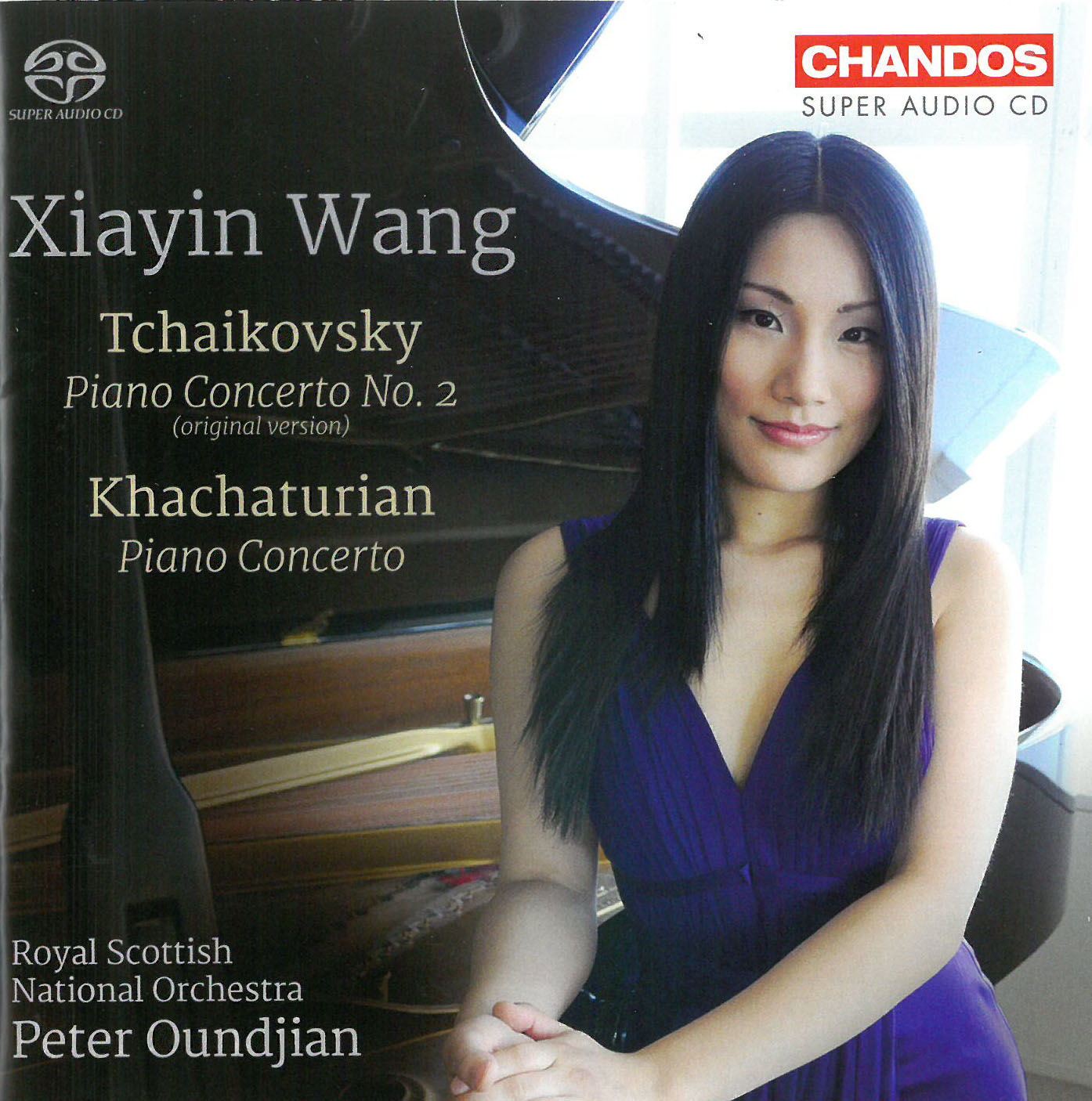
01 Xiayin WangXiayin Wang has recorded nearly a dozen CDs. Tchaikovsky – Piano Concerto No.2; Khachaturian – Piano Concerto; Royal Scottish National Orchestra; Peter Oundjian (Chandos CHSA 5167) is her fifth for this label.

The Tchaikovsky Piano Concerto No.2 is a big play at almost 45 minutes. This recording is of the original version, not the shorter one with significant cuts by Taneyev to the second movement. Wang proves to be a very precise player with a lot of stamina for whom Tchaikovsky’s wilder passages pose no difficulty. She is also comfortable with long interpretive pauses that give better definition to the deluge of musical ideas the composer releases in the opening movement.

Very much in command of her music when pitted against the orchestra, she also plays beautifully when more exposed with only solo violin and cello, as she is in the second movement. Similarly, in the Khachaturian Piano Concerto, Wang sustains long passages of simple octaves with great discipline, always sensitive to the mystery of the work’s Asiatic atmosphere.

Toronto-born conductor Peter Oundjian leads the Royal Scottish National Orchestra of which he has been music director since 2012. The RSNO is superb and deservedly claims its reputation as one of Europe’s leading orchestras. Both concertos require a broad range of stylistic and dynamic expression which the orchestra handles beautifully. They do especially well with the often angular nature of the Khachaturian. This recording brings together a wonderful team of musicians in a pair of truly demanding works. The result is a highly energized and superb performance.

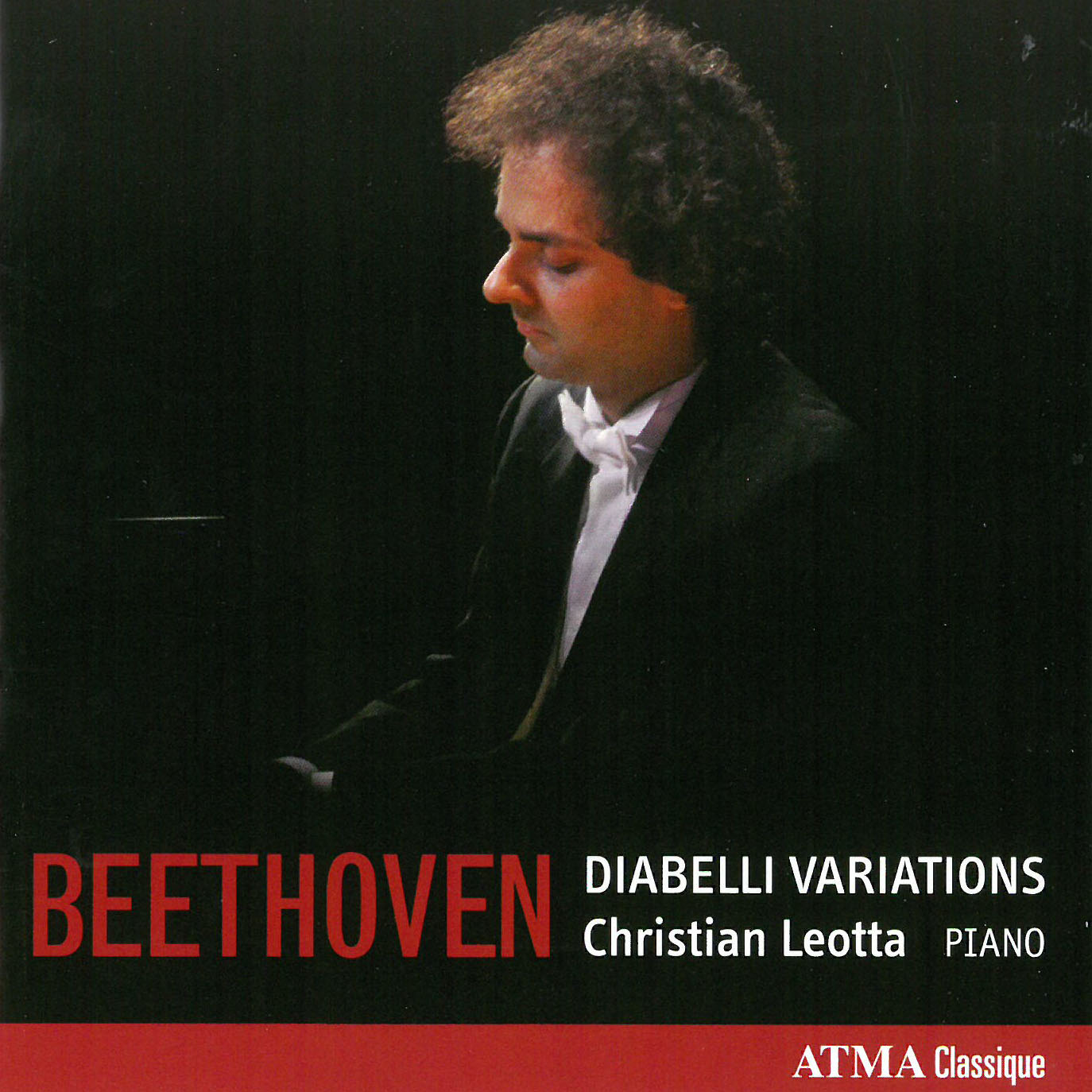
02 Christian LeottaWith all 32 Beethoven sonatas in his discography, Christian Leotta has now added Beethoven – Diabelli Variations (ATMA ACD2 2485) to his growing list of recordings.

The Diabelli Variations have a history of divided critical opinion. At worst, Anton Diabelli’s original theme is considered a trite offering containing very little that any composer can use for a credible variation. That Beethoven used the material to write an entire set of 33 variations, is then something of a miracle that speaks directly to the composer’s inventive gift. Regardless of the theme’s actual merits, or lack of them, a performer needs to understand what Beethoven is actually doing in each variation in order to perform them intelligently.

This is where Leotta proves his standing as a highly respected Beethoven interpreter. He understands that Beethoven uses as little as a single interval and often barely more than that, a pick-up note, an ornament or a rhythmic pattern, to construct his variations. He remains highly focused on this, and in doing so holds the set of variations together despite its diverse moments of comedy, tumult, melancholy and contemplation.

Leotta has discerned Beethoven’s deepest imprint and conveys it in each of these utterances. What he makes clear by the end of it all is that Beethoven’s creative genius is for him, supreme.

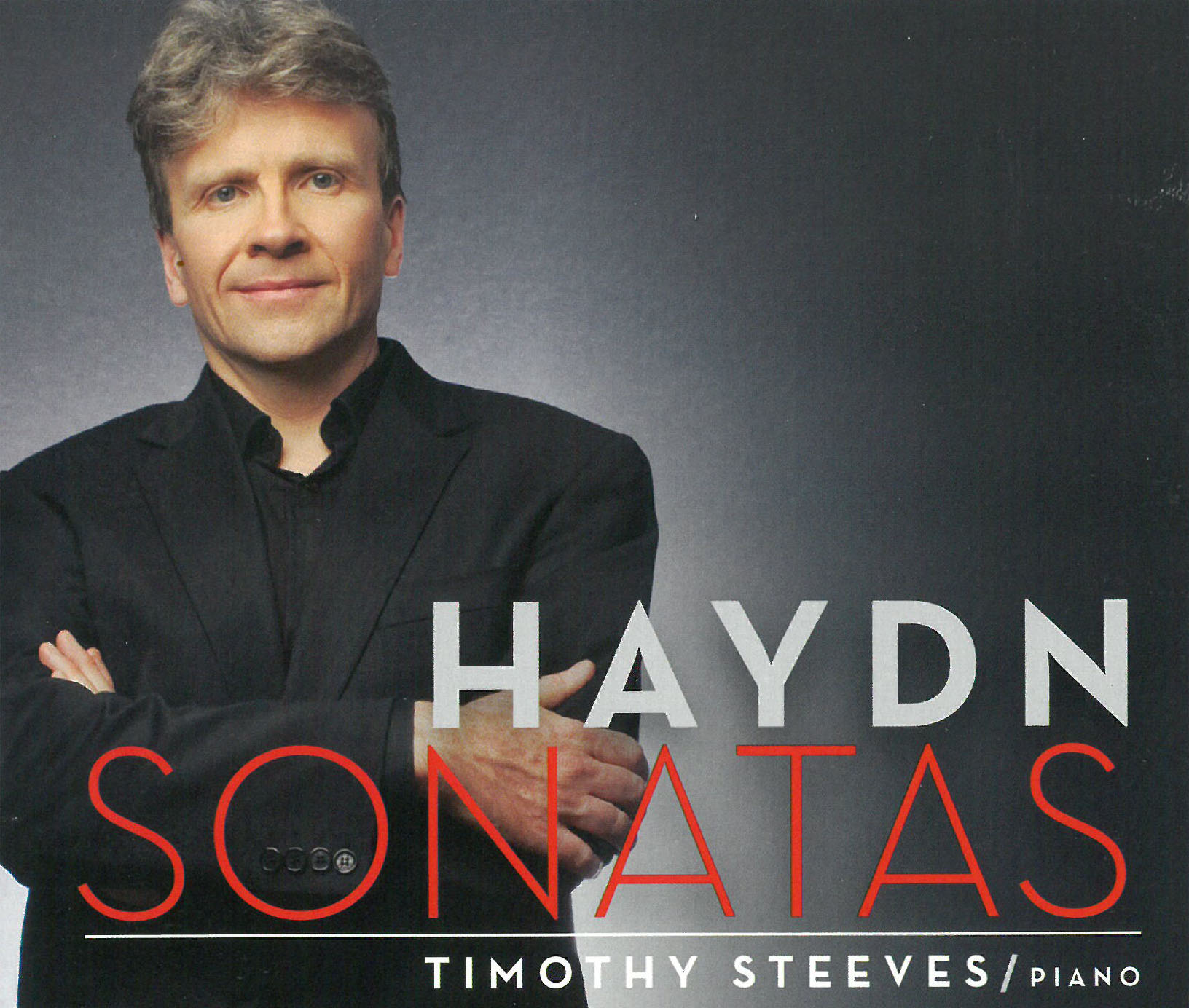
03 Steeves haydnTimothy Steeves, known for his six recordings with violinist Nancy Dahl as Duo Concertante, has now released his first solo disc, Haydn Sonatas (Marquis MAR 469). Steeves admits to having a lifelong admiration for Haydn’s music and his choice of the three sonatas on this disc is meant to show Haydn’s creativity and originality. While the modern ear may have difficulty in hearing this music as original, because of its similarities to baroque and Mozartian works, a quick self-reminder as to where Haydn sits historically helps place him as the significant bridge from the baroque to the classical period.

Steeves plays with great clarity, required especially in the upper voices where Haydn tends to nest his melodies. He has a touch that demonstrates impressive control of tonal colouring, so important in the slow movements of the sonatas. The Adagio of the Sonata in A-Flat Major Hob.XVI:46 is an example of how Steeves gives the middle register a lovely dark sound while it supports a brighter upper voice. And while Haydn rarely creates the complex counterpoint we associate with Bach, Steeves pulls out inner voices whenever Haydn sends them lower down the keyboard.

The Sonata in C Minor Hob.XVI:20 opening movement is a telling example of how ornamentation remained a staple of keyboard writing style from the Renaissance, through the baroque and into the classical period. Steeves is meticulous throughout the first movement where Haydn has inserted trills and grace notes liberally. The Andante is noteworthy for the freedom Steeves takes with its phrasings, slowing a select few to a near stop to heighten the impact of their final cadence.

Steeves’ affection for Haydn is obvious and makes this a recording worth having.

Review

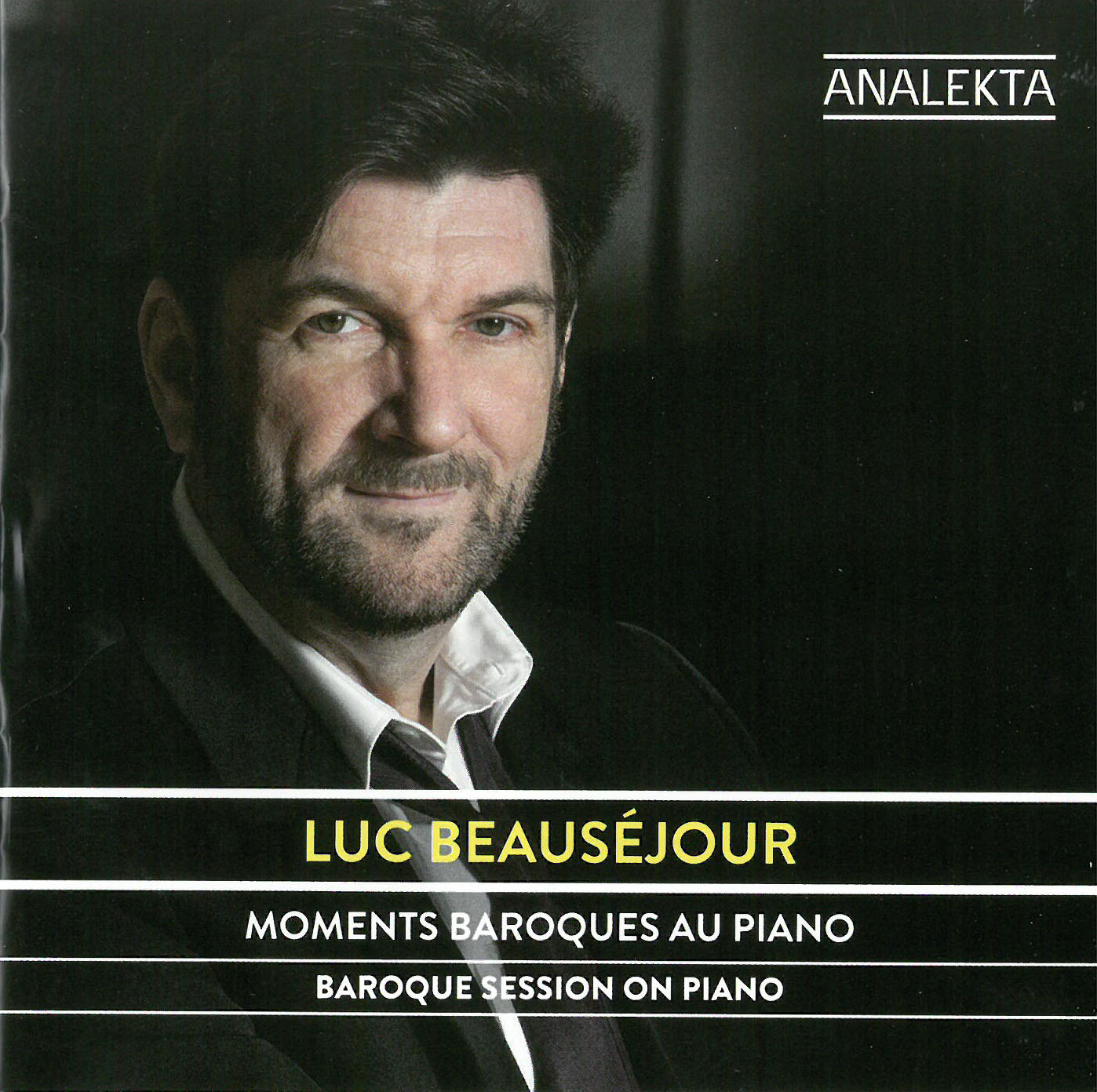
04 Beausejour PianoIn Baroque Session on Piano (Analekta AN 2 9128) harpsichordist Luc Beauséjour takes to the piano with pieces that he argues work well on that instrument for specific reasons. Beauséjour points out that much of the harpsichord repertoire does not play well on our modern keyboard because of the piano’s inability to deliver the clarity of complex ornamentation so often required by 15th- and 16th-century repertoire. He also points out that the darker colours of the piano’s middle registers can often obscure inner contrapuntal voices. Greater resonance is yet another factor that requires pianists to change phrasing techniques when playing harpsichord repertoire.

Selecting a program that avoids the worst of these problems, Beauséjour presents an attractive mix of frequently recorded works and others less well known. A couple of familiar Scarlatti sonatas and Rameau’s Les Indes Galantes deliver wonderfully clear and fluid runs. Bach’s Concerto in D Minor BWV974 after Marcello is an example of how the piano’s touch-based colours can make the second movement even more intensely expressive.

Other works by Louis Couperin and Georg Böhm, keep much of their harpsichord character with graceful arpeggios that Beauséjour retains more for a sense of period style than necessary technique. He includes a set of four Correnti by Frescobaldi and imbues them with a strongly rhythmic bounce and keyboard touch that suggests the crisp attack of the harpsichord’s plectra.

Baroque Session on Piano is a very fine recording commendable for its intelligence and musicality.

Review

05 Sudbin ScarlattiUnapologetic about the highly pianistic approach he takes, Yevgeny Sudbin admits that playing Scarlatti on the piano is in reality a transcription for a new instrument. Consequently, Scarlatti – 18 Sonatas (BIS-2138 SACD) is fully piano, with sustain pedal wherever needed, generous dynamic expression and every other technique the modern instrument can offer. Sudbin makes no effort at historical performance practice and instead claims the freedom to do whatever the music leads him to do – on the piano.

The result of all this might be a little shocking but is, ultimately, very believable because of the quality of the musical decisions underlying these controversial choices. Scarlatti remains identifiably Scarlatti, albeit with a new voice. Sudbin’s playing is undeniably gorgeous, rich in colour and texture, and everything the piano wants it to be.

As a litmus test for open mindedness on this issue compare the familiar Sonata in C Major K159 to any other performance, especially the Beauséjour described above.

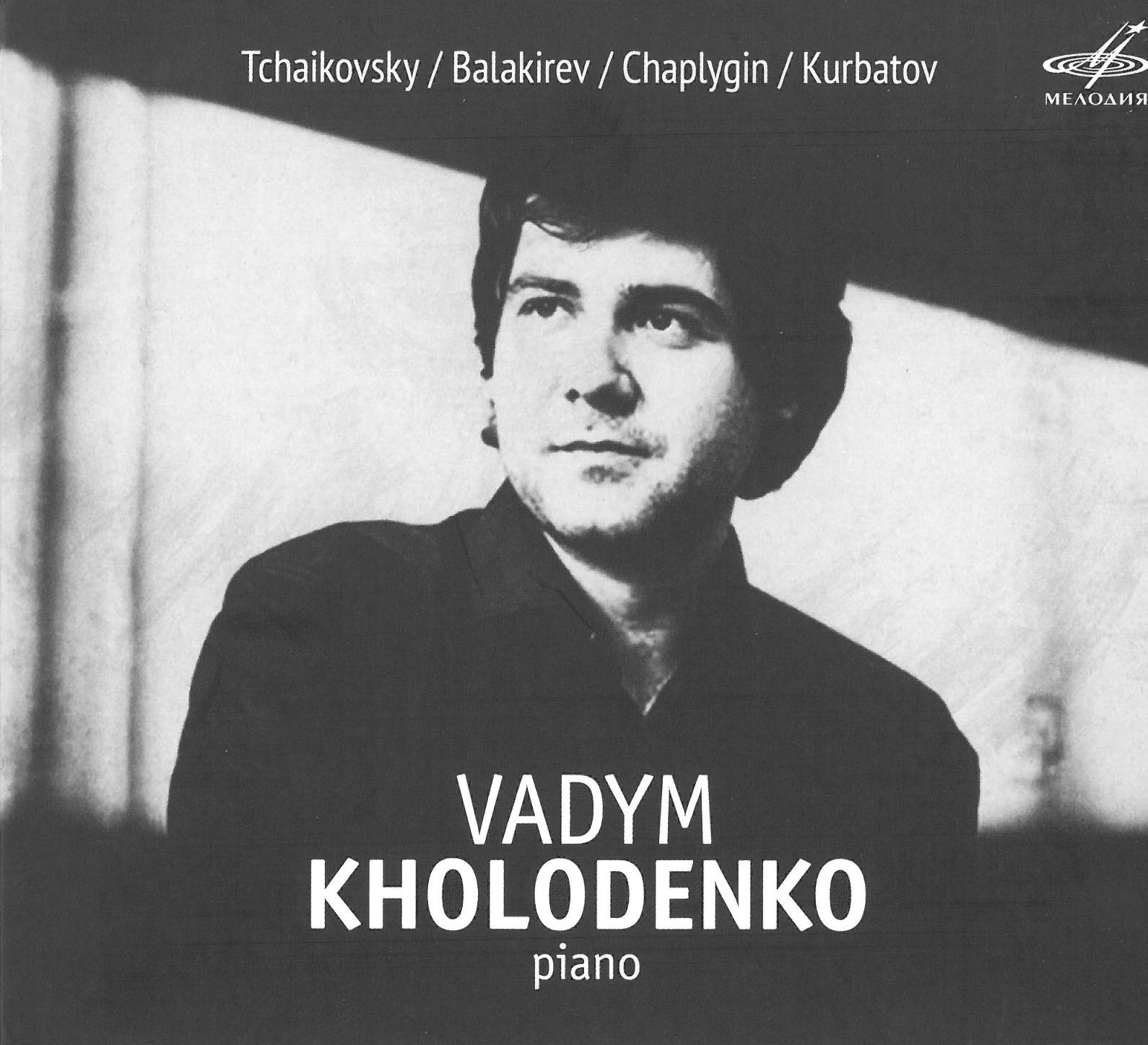
06 Vadim KholodenkoWinner of the 14th Van Cliburn International Piano Competition, Vadym Kholodenko has released a new recording with a varied program showing his remarkable versatility. In Tchaikovsky/Balakirev/Chaplygin/Kurbatov (Melodiya MEL CD 10 02365), Kholodenko opens with Balakirev’s Sonata No.2 in B-Flat Minor Op.102, a beautiful if curious work. The first movement begins with a contrapuntal idea that could have been written by Bach, and this is exactly how Kholodenko plays it. The second and third movements become increasingly Chopinesque until the Finale leaves no doubt where Balakirev’s French stylistic influences originate.

Despite this kaleidoscope of voices, Kholodenko provides a consistent and expressive approach. His playing style feels very choreographic. His keyboard presence is graceful yet powerful but not overbearing. Videos of his performances show him to be a physically restrained pianist but highly focused on expressiveness and this is, in fact, the first and most lasting impression he makes.

Tchaikovsky’s rarely heard Six Pieces on a Single Theme, Op. 21 is the only such short cycle he wrote. It uses a 15-note series embedded in the opening bars of each piece, varied only in rhythm. Kholodenko treats each section as a distinct character piece and closes the work with an impressive and energetic Scherzo.

Little Cyprian Music (2003) by Evgeny Chaplygin is a contemporary piece that compiles a series of musical impressions of a holiday on that island. It’s richly textured and technically very demanding in some passages. Kholodenko focuses on the composer’s intent in conveying the dance-like nature and Eastern flavour of Cypriot music.

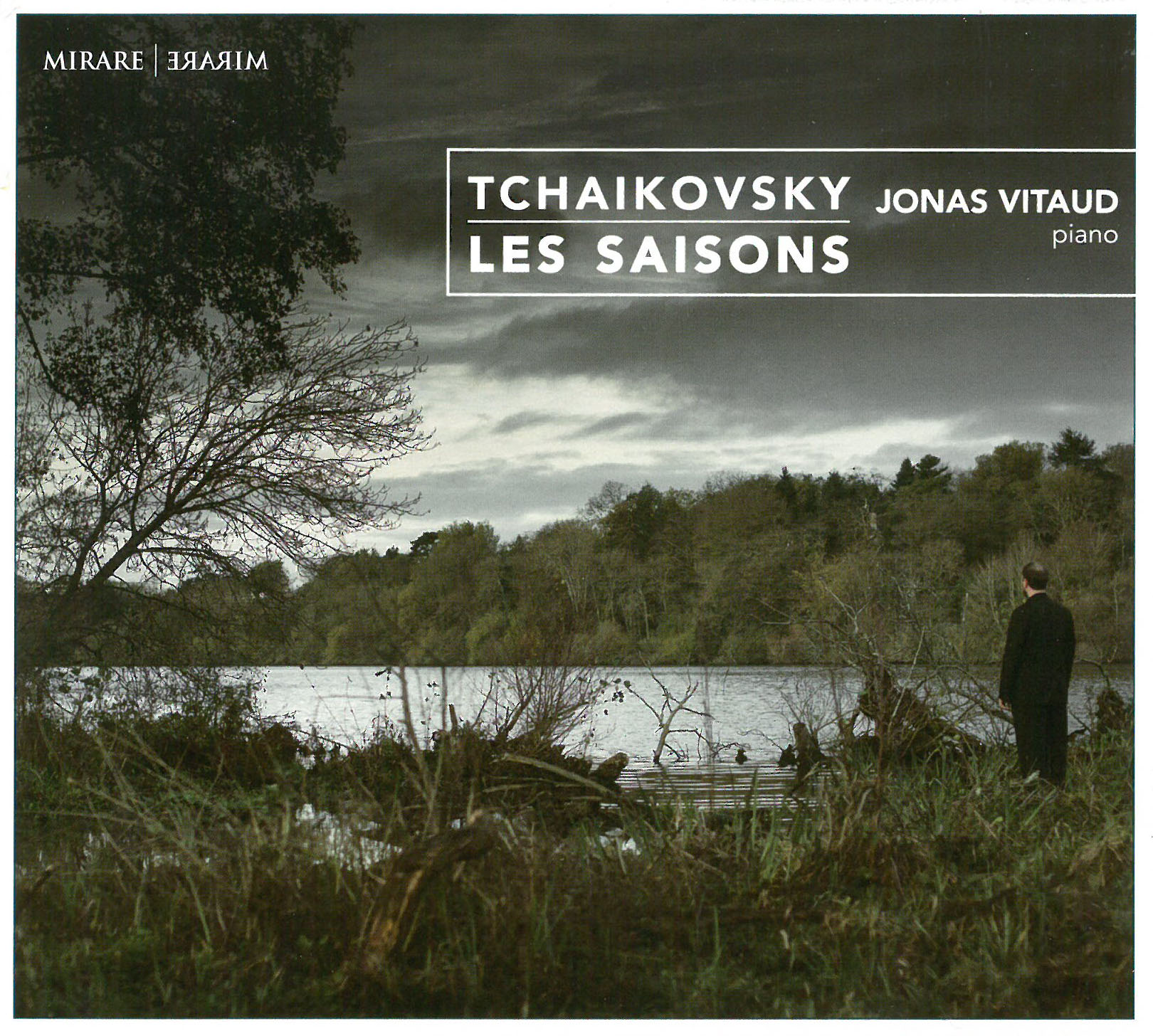
07 Jonas VitaudFrench pianist Jonas Vitaud has only a few recordings to his credit, and while he’s already in his mid-30s, his remarkable playing would suggest we should really be hearing more from him. His newest recording Tchaikovsky – Les Saisons (Mirare MIR 308) offers two starkly contrasting works.

The Seasons Op.37a is an introspective work constructed on a calendar scheme with 12 sections. The music has some programmatic content based on activities or events associated with each month of the year. It is, more significantly, marked by a constant presence of fragility that is perhaps best known in the often quoted Barcarolle representing June. Even December – Noël concludes the cycle lightly and quietly. Maintaining this emotional posture with only a few energetic releases in sections like La Chasse is a challenge that Vitaud handles beautifully. His tenderness and fragility never convey weakness but seem perfectly poised. His playing is assured, even in the most tentative of Tchaikovsky’s moments.

By contrast, the Grand Sonata in G Major Op.37 begins with huge chordal gestures of confidence. These are echoed with even greater energy in the closing movement and played at furious speed. Still, the Grand Sonata contains a remarkable moment in the second movement Andante (about a third of the way through) where Vitaud strikes a dense chord and lets it sustain with all the dampers up off the strings. The resulting resonances grow by the moment into a rich texture not achievable by any other means. It’s a stunning device that he repeats near the end of the movement with the same result. It’s brilliant and creative.

We need more recordings by this fine musician who’s definitely worth hearing.

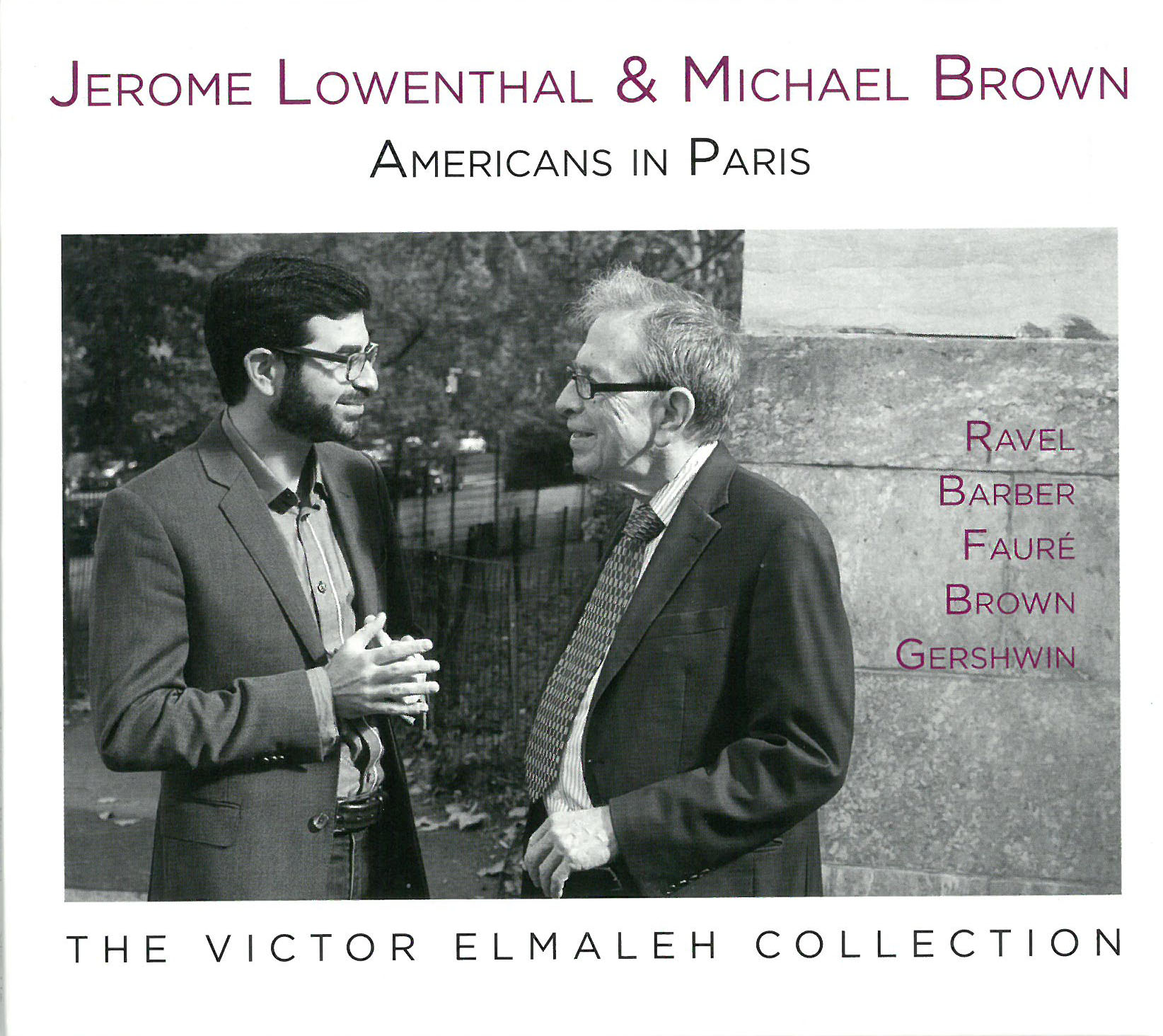
08 Americans in ParisPiano four-hands offers a texture not quite achieved in any other keyboard configuration. The possibilities for density and polyphony have enticed composers since keyboards became commonplace. Pianists Jerome Lowenthal and Michael Brown have just released Americans in Paris (Concert Artists Guild Records VEC 116 concertartists.org) and recorded some favourites including the Ravel Ma mère l’Oye that includes short bits of introductory narration to setup the fairy-tale background of each segment.

Samuel Barber’s Souvenirs Op.28 is a compilation of dances set in New York’s Plaza Hotel about 1914 and evokes the music Barber would have heard as a boy when taken there by his mother for tea. Lowenthal and Brown make an outstanding piano duo and deliver these dances, many of which have ample humour injected into them, with impeccable precision.

Plenty of piano students have played the four-hands Dolly Suite Op.56 by Gabriel Fauré. This performance is well-paced. Messieu Aoul and Le pas espagnol are especially admirable for the coordinated energy and execution they require.

The highlight of the CD is a four-hands arrangement of George Gershwin’s An American in Paris. It’s an autobiographical work recounting Gershwin’s own time there in the mid-1920s. It features some obvious references early in the work to the set of authentic Parisian taxi horns Gershwin had purchased during his trip. Lowenthal and Brown seem most at home in this piece, really feeling the deep melancholy of the blues section, as well as the jazzy syncopations that drive so much of the music.

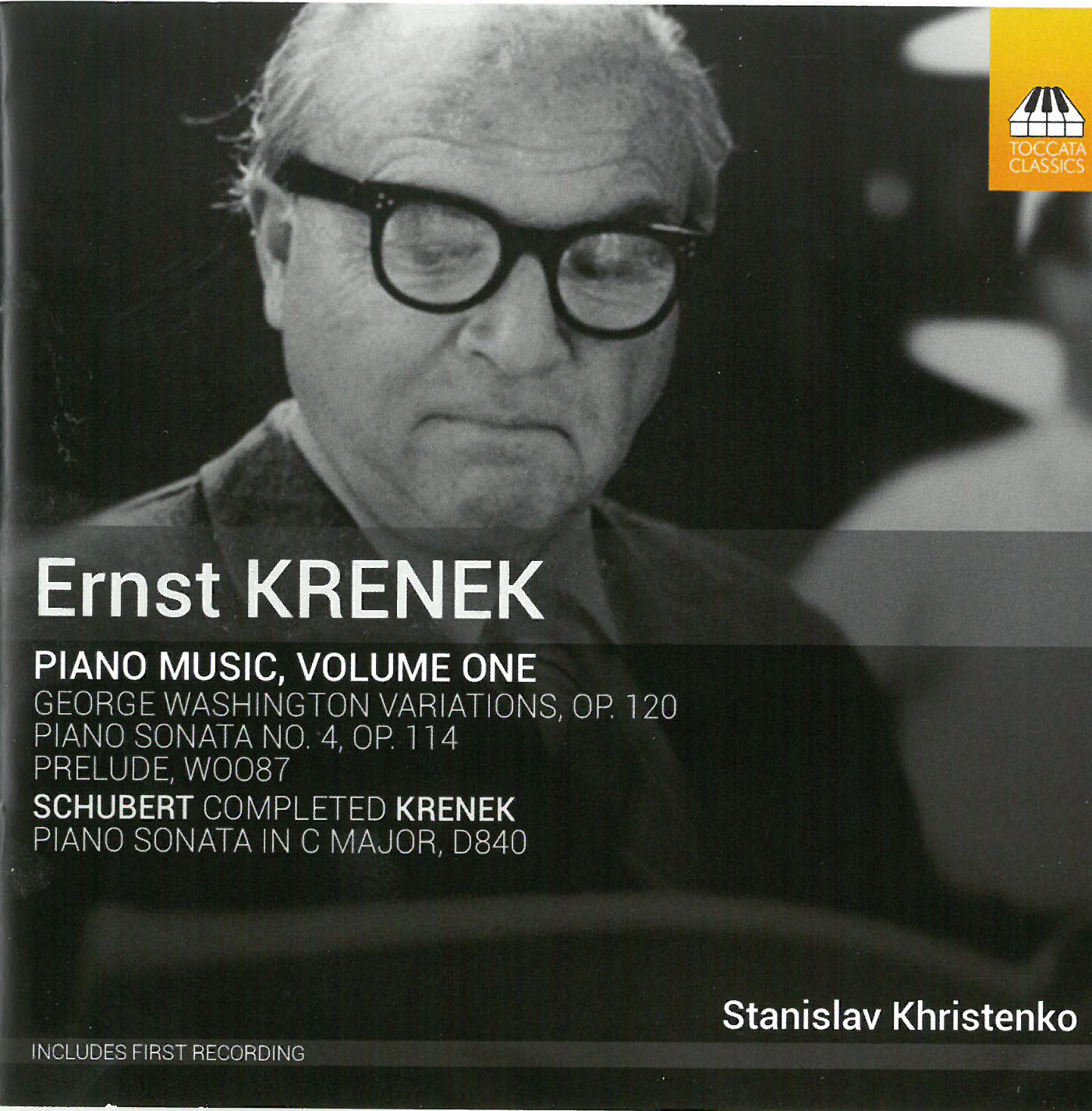
09 Stanislav KhristenkoErnst Krenek was one of the 20th century’s most stylistically complete composers whose vocabulary gave him creative access to both historical and contemporary expression. On Ernst Krenek – Piano Music, Volume One (Toccata Classics TOCC 0298), Ukrainian-born Stanislav Khristenko performs a well-balanced program of Krenek’s compositions.

The Piano Sonata No.4 Op.114 (1948) is a work in which Khristenko demonstrates Krenek’s ability to move seamlessly between ideas that are tonally centred and others that aren’t. Khristenko not only captures the neo-romantic essence of Krenek’s language, but also the unsettling elements of the composer’s early life that express themselves in the edgy phrasing he uses to evoke the changed world emerging from the two world wars.

Khristenko’s choice of the George Washington Variations, Op.120 (1950) is especially entertaining for its use of all of Krenek’s favourite devices. Deployed as they are, they move an opening 19th-century military march through a metamorphosis of clever changes in which Khristenko never lets go of the initial musical idea.

Krenek held a lifelong devotion to the music of Franz Schubert. He spent years coming to understand the genius of Schubert’s music, its design and balance, especially as present in his lieder. Krenek’s decision to complete Schubert’s Piano Sonata in C Major D840 is based solely on the existence of sufficient thematic material in the final two movements to make credible development possible. Naturally, it’s difficult to listen to this Schubert without also listening for some Krenek.

Khristenko is also currently working on recording the complete works of Krenek as well as a recording of Soler sonatas.

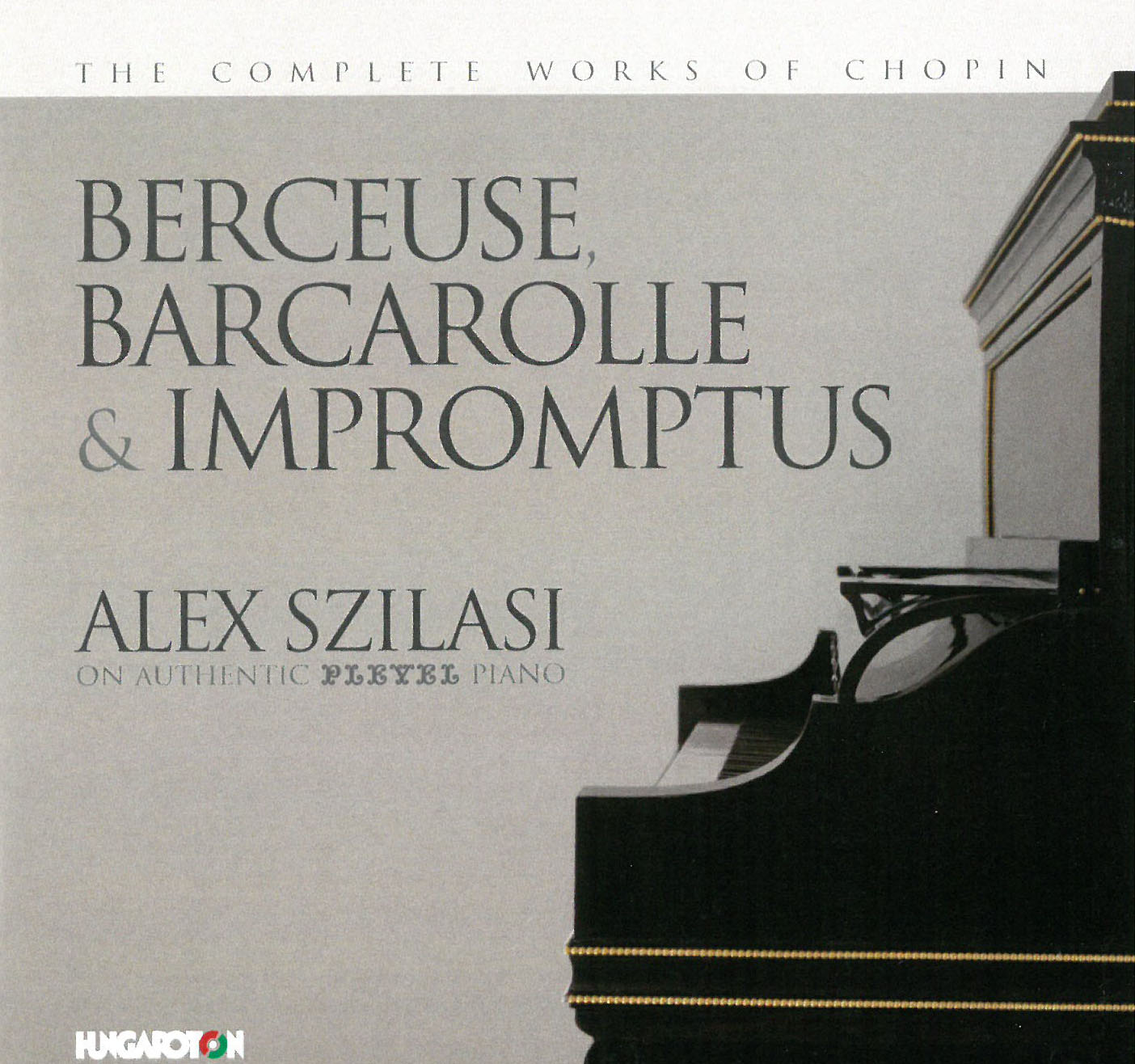
10 Szilasi ChopinIt can be understandably difficult to get terribly excited about a recording of an upright piano, especially if it’s old, really old, say 1834. So why would Alex Szilasi record Chopin Berceuse, Barcarolle & Impromptus (Hungaroton HCD32473) on an old Pleyel upright? Evidently this one is special – Chopin played it. Pleyel Company archives show that Chopin played it at the factory in Paris and selected it for the Russian ambassador. He liked this particular model so much that he ordered one for himself. Both instruments were delivered to adjacent apartments at the ambassador’s residence where Chopin was a frequent guest. While Chopin’s piano was eventually lost, the other instrument has survived fully authenticated. This is its recording debut.

Chopin favoured the Pleyel piano for its soft tone. It was double-strung in its middle and upper registers and therefore softer than later triple-strung instruments. It responds to the gentlest touch to produce nearly inaudible pianissimos. Aggressive or heavy touch tends to cause distortion on these instruments, so Chopin would have favoured them for very specific repertoire, and certainly nothing terribly bombastic, hence this CD’s program of more tender compositions.

Szilasi creates some amazing effects with the instrument. The rapid chromatic runs in the right hand through the upper octaves of the keyboard sound extremely fragile like a web of silk threads, yet they remain clear although very soft. This is best heard in the Impromptu in F-Sharp Major Op.36. The familiar Fantasie-Impromptu in C-Sharp Minor Op.72 is also a dramatic contrast to the more muscular performances commonly heard on modern pianos.

Alex Szilasi has created a thought-provoking recording that gives us a glimpse of how Chopin would have heard and played his own music 180 years ago.


01 Pardessus de violePardessus de Viole
Mélisande Corriveau; Eric Milnes
ATMA ACD2 2729

The elegant music featured on this recording was written for a now largely abandoned instrument – pardessus de viole. This smallest member of the viola da gamba family originated in France at the end of the 17th century and had a brief life span of just over 100 years. While pardessus de viole exemplified French aesthetics and their sophisticated musical tastes and values, it was forsaken with the arrival of the Revolution, which did not stand for the same ideals. Featured composers – Barrière, Caix D’ Hervelois, Boismortier and Dollé – are among many prominent French composers who wrote for this instrument at the height of its popularity. However the selection of pieces on this recording is mostly unpublished and carefully chosen from the microfilm collections of the Bibliothéque nationale de France.

What grabbed me immediately was the sound of the “woman’s violin” (as it was nicknamed once upon a time) – pure, light yet robust at times, textured as a crossover between the flute and the violin. Mélisande Corriveau elicits an array of emotions out of her instrument. The virtuosic passages in Jean Barrière’s Sonata in G Major suit her very well but she is equally colourful in depicting the feelings of sorrow in Dollé’s Les Regrets. Eric Milnes is a resourceful and imaginative harpsichord player; together they offer a charming array of ornamentations, making this music a gesture of nobility from the past.

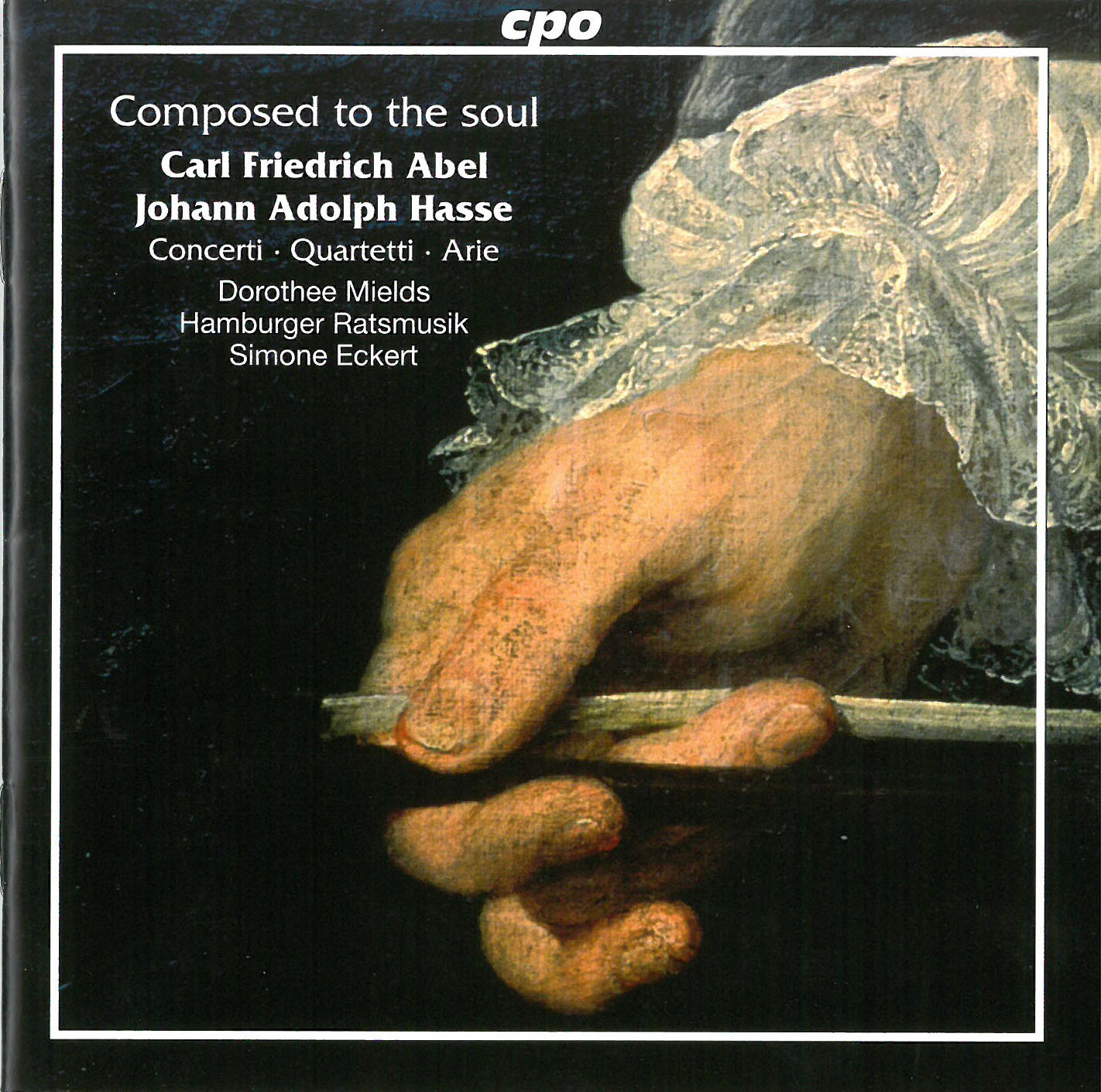
02 Abel and HasseComposed to the soul: Abel; Hasse – Concerti; Quartetti; Arie
Dorothee Mields; Hamburger Ratsmusik; Simone Eckert
CPO 777 911-2

This beautifully programmed recording offers two quartets, a concerto and an aria by the esteemed 18th-century gambist Carl Friedrich Abel, and an aria by his contemporary Johann Adolf Hasse. Not household names, perhaps, but well worth a listen. The quartets, contemporary transcriptions of two standard string quartets from 1768, make for most pleasant listening. The shift in sonic balance created by giving the first violin part to the bass viol gives a welcome depth and richness to the ensemble sound. The group’s playing is expressive and focused, and it’s also nice to hear tempos that are more laid-back than today’s breakneck norm: the humour and variety of musical gesture in the Allegro con spirito of the Quartet in B Flat, for example, isn’t trumped by the technical mastery required to play it. Michael Fürst plays the solo part of Abel’s two-movement harpsichord concerto with wit and thoughtful brilliance, and his colleagues of the Hamburger Ratsmusik are stylishly eloquent throughout. Soprano Dorothee Mields joins the group for two substantial arias, Abel’s sole surviving vocal piece, Frena le belle lagrime from Sifari (1767), and an aria from Hasse’s La Didone abbandonata (1742). As always, Mields sings with extraordinary musical grace and suppleness. The latter aria is also a contemporary transcription, giving the original obbligato flute part to the viol, which Eckert plays beautifully. Composed to the soul, indeed. I’ll be listening to this one again, and I hope you do too.

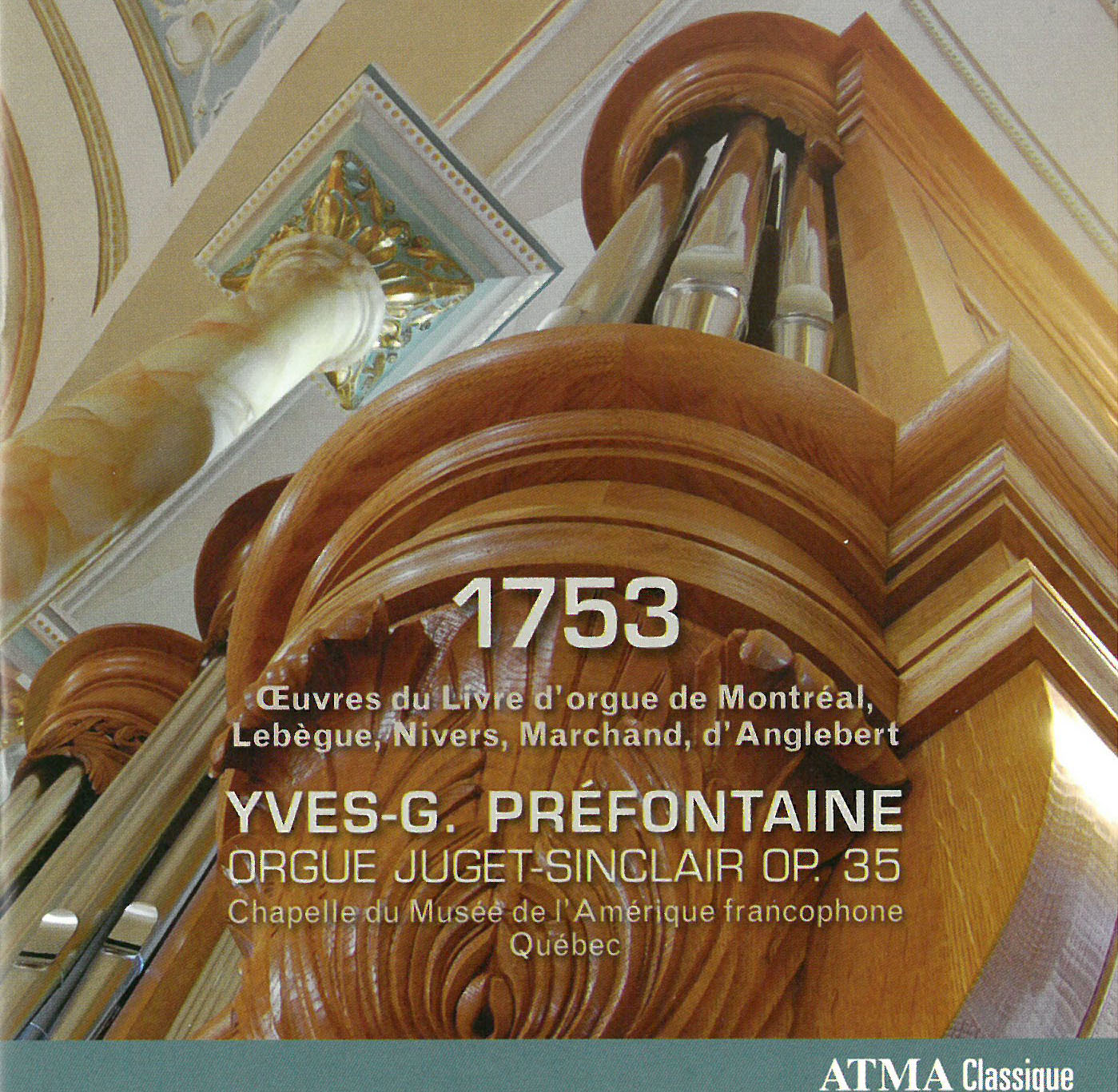
03 17531753 – Livre de Montréal
Yves-G. Préfontaine
ATMA ACD2 2717

Review

The brand-new organ in this recording is a replica of an instrument (no longer extant) built in 1753 in Paris for the Cathedral in Quebec City. It contains ten stops, all but two of which are divided, offering different timbres to the upper and lower halves of the keyboard.

The repertoire features works likely known to 18th-century Quebec players, including a six-movement Magnificat from the so-called Montreal Organ Book, the manuscript transported to New France in 1724 and discovered in the 1980s. The composers of the nearly 400 pieces in this collection are not named, but a couple of dozen are definitively attributed to Nicolas Lebègue. Appropriately, a further group by Lebègue (not from the MOB) follows, alongside representative compositions from his period by Guillaume-Gabriel Nivers, Louis Marchand and Jean Henry D’Anglebert.

There are 34 tracks; each piece lasts on average just over two minutes. Generally in classical French keyboard music one anticipates descriptive titles but there is only one, Lebègue’s “Les Cloches,” with its descending four-note scale suggesting bells. The rest are either liturgical pieces or fugues and other abstract types. The divided stops show to advantage in several pieces with prominent bass solos or based on dialogue between registers. Préfontaine demonstrates remarkable variety of approach and a good deal of freedom within the French baroque style, recalling the comment of a great figure in this music, François Couperin: “We write differently from what we play.” The performances are intelligently lifted off the page. The disc is well produced and a pleasure to hear. Listeners curious about how the Chapelle instrument looks as well as how it sounds may be disappointed however: front and back cover photos show portions of it, but the only artist photo shows Préfontaine at a much larger console, unidentified.

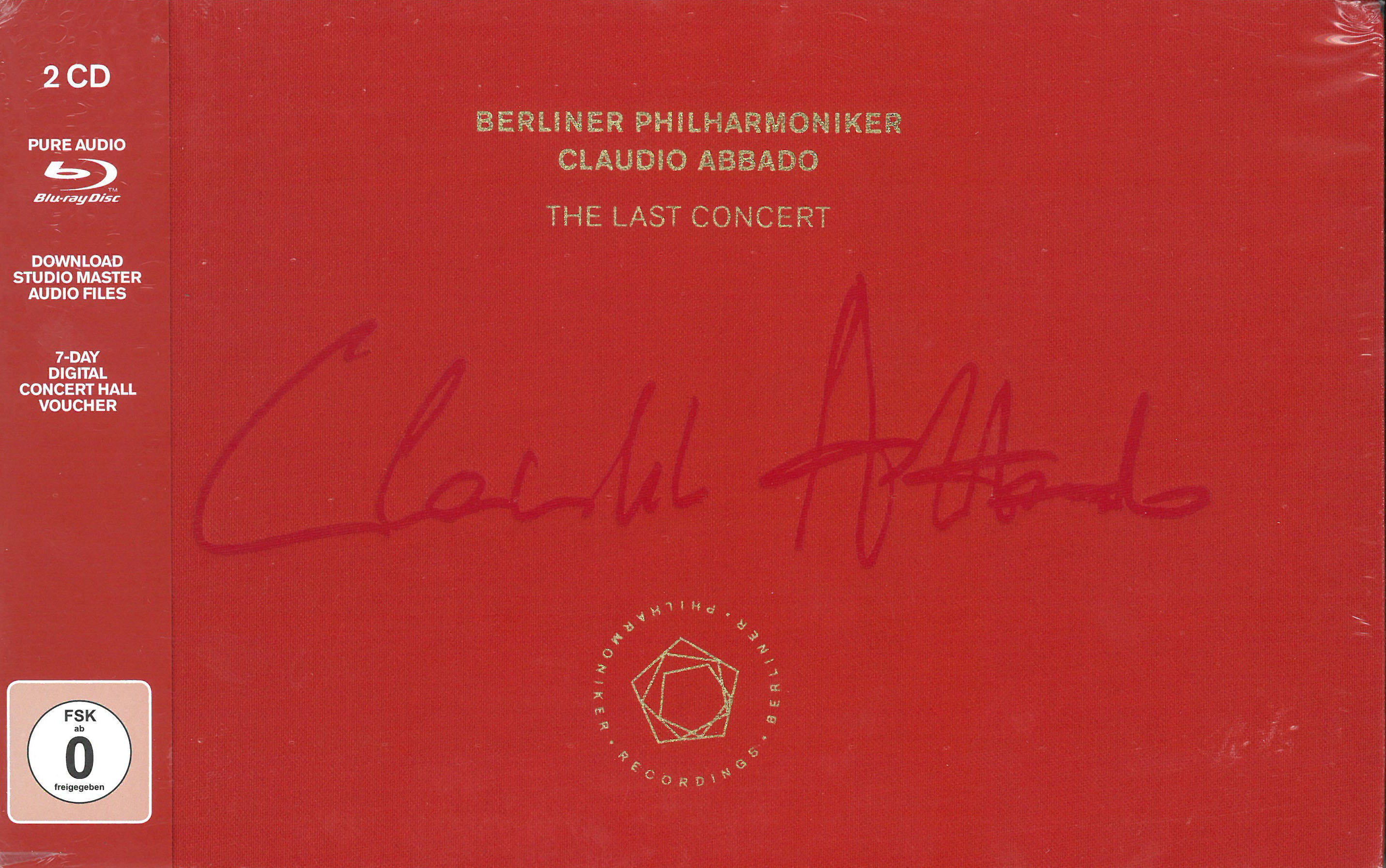
01 Abbado last concertThe Last Concert: Mendelssohn – Incidental music to A Midsummer Night’s Dream; Berlioz – Symphonie Fantastique
Berliner Philharmoniker; Claudio Abbado
Berliner Philharmoniker Recordings BPHR 160081

Claudio Abbado was conductor of the Berlin Philharmonic Orchestra from 1990 to 2002, succeeding the iconic Herbert von Karajan who had died in 1989. On an evening in May 2013 Abbado returned to conduct his last concert with the orchestra and as such it was a rather special event. What to program on such an occasion? There is no absolute answer but after hearing and seeing the concert one must agree that the choice was a right one. This wasn’t an audition for anyone but a final get-together of equals to make some music. This isn’t wishful thinking but there was a oneness between conductor and the orchestra here that produced a solidly romantic view of the shenanigans in the Mendelssohn and solidified the passing phantasmal delusions in the Berlioz. This really was a splendid event.

To commemorate the second anniversary of Abbado’s death, his last concert with them has been issued by the Berlin Philharmonic with full documentation of the evening in a very fine cloth-covered hardcover edition, 24.5cm X 15.5cmX 2.3cm. Inside are two CDs and a Blu-ray disc containing the complete concert in HD audio plus an HD video of the event with choice of stereo or 5.1 surround sound. On the same Blu-ray disc are bonus videos including full documentaries, Claudio Abbado in Berlin – The First Year and Members of the Berlin Philharmonic Remember Claudio Abbado. There are lots of discussions, rehearsals and human interest events plus the reason Abbado had to wait eight months after assuming the post to receive a contract. A personal code to download high resolution audio files is also included.

A well-produced 56-page multilingual booklet the size of the package contains information about the two works on the program and how they are tied together. There are interesting articles with many colour photographs. Also there are the names of the personnel of the orchestra in May 2013.

01 Bach Duo ConcertanteThere’s another lovely release from Duo Concertante, the Newfoundland-based husband and wife team of violinist Nancy Dahn and pianist Timothy Steeves, this time a two-CD set of Bach’s Six Sonatas for Violin and Keyboard (Marquis MAR 81521).

In an interview with the duo in the booklet notes, Steeves admits to having no reservations about playing Bach on the piano, given the instrument’s connection with Bach’s music for over 200 years. Dahn also uses a modern instrument, but notes that although they knew they were going against a trend they found that focussing on the language, harmony and style of the sonatas still enabled them to play them in a way that was historically informed.

A German press review during their recent European tour noted the beautiful balance in the Bach slow movements – on the one hand not too romantic, on the other not too austere – as well as the ease, lightness and naturalness in the fast movements; it’s an observation more than justified by the performances here. There’s warmth, clarity, sensitivity and empathy to spare, with crystal-clear violin lines, faultless intonation throughout the most difficult passages and a thoughtful and always sensitive piano contribution.

You tend to run out of superlatives with performances like these, and there’s simply not much you can do other than sit back, listen and be carried away by the complete artistry. Suffice it to say that this is as totally satisfying an account of the sonatas as I have heard.

02 Shaham 1930sTake one of my favourite violinists – Gil Shaham; add one of the best accompanying orchestras around – the New York ensemble The Knights under Eric Jacobsen; throw in one of my favourite conductors – Stéphane Denève; and have them perform two of my favourite 20th century concertos – the Prokofiev No.2 and the Bartók No.2 – and it’s not surprising that the new CD 1930s Violin Concertos Vol.2 on Shaham’s own Canary Classics label (CC16) was the first one I took out of the box when this month’s discs arrived.

It should also be no surprise that it more than lived up to expectations. The 1930s was a simply astonishing decade for new violin concertos, with works by Schoenberg, Stravinsky, Berg, Prokofiev, Bartók, Szymanowski, Hindemith, Barber, Britten and Walton among others. Shaham started this series with a two-CD set featuring the concertos of Barber, Berg, Britten, Hartmann and Stravinsky and is clearly intrigued by the extent to which the works reflect the spirit of a turbulent era; he has been exploring this repertoire in concert performances since the 2008/2009 season.

The Knights are the support in the Prokofiev, with Denève leading the Stuttgart Radio Symphony Orchestra in the Bartók. Shaham’s trademark mixture of a warm sweet tone, faultless technical assurance and impeccable musical intelligence make for immensely satisfying interpretations of both works, and he is matched by both orchestras and conductors every step of the way.

No word yet on a Volume 3, but here’s hoping.

03 Tetzlaff StorgardChristian Tetzlaff also has a new concerto CD pairing the Dvořák Violin Concerto in A Minor Op.53 and the Romance in F Minor Op.11 with the Fantasy in G Minor Op.24 of Josef Suk on a Super Audio CD (Ondine ODE 1279-5). John Storgårds conducts the Helsinki Philharmonic Orchestra.

Suk, who was Dvořák’s son-in-law, was a topnotch violinist (and grandfather of the Czech violinist Josef Suk) who is probably best remembered as a composer for his early Serenade for Strings. His music is very much in the tradition of Smetana and Dvořák – indeed, despite stylistic differences his music often sounds very much like that of his father-in-law.

The Fantasy is a substantial single-movement work from 1903, and while attempts have often been made to view it as being in three-part concerto form it is essentially a rhapsodic and passionate work with numerous tempo changes, and one which makes great demands of the soloist.

The Dvořák concerto has never quite made itself at home in the top echelon of violin concertos, but it’s an absolute charmer from the early 1880s – bright, lively, typically Dvořák throughout, and with a simply lovely slow movement. The Romance pre-dates it by several years and, much like the Beethoven works with the same name, is more about linear phrasing and clarity and beauty of tone than pure virtuosity.

Tetzlaff meets all the demands, both technical and emotional, with ease and conviction, and with passion and sensitivity, throughout a really lovely CD.

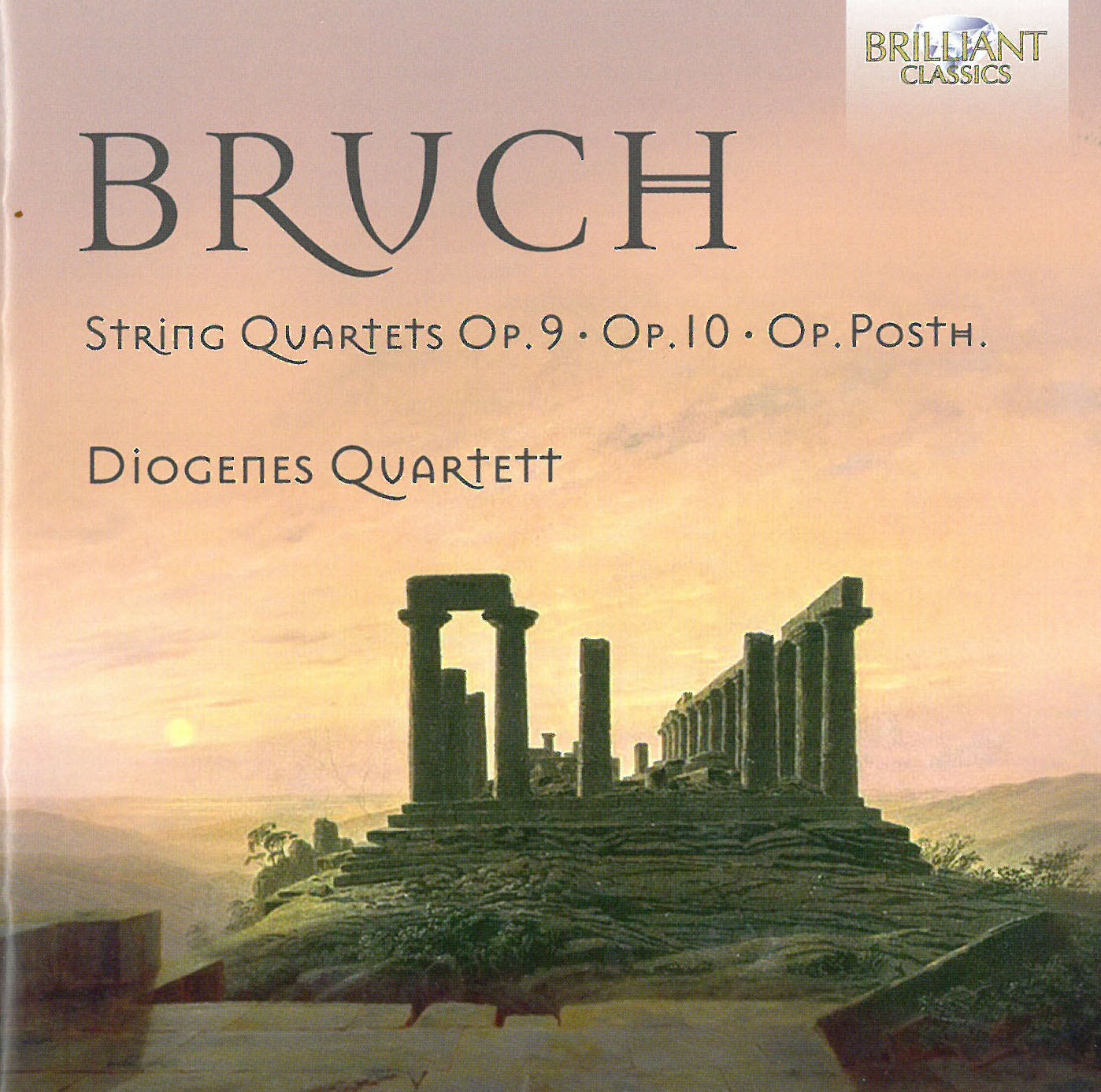
04 Bruch String QuartetsIn 1852 the 14-year-old Max Bruch wrote a string quartet to apply – successfully – for the scholarship of the Mozart-Stiftung (Mozart Foundation) in Frankfurt. While musicologists researching Bruch’s music knew of its existence, the work was always considered lost – until January 2013, that is, when Ulrike Kienzle, researching a book on the history of the Mozart-Stiftung, found the manuscript in a box in the foundation’s archives.

The String Quartet in C Minor, Op. Posth., is an astonishingly self-assured and mature work, bursting with energy and full of flowing melodies and rich harmonies. It’s the opening work on a simply outstanding CD of Max Bruch Complete String Quartets performed by the Diogenes Quartet (Brilliant Classics 95051). The String Quartets No.1 in C Minor, Op.9 (which, as it turned out, incorporated a substantial amount of material from the earlier work) and No.2 in E Major Op.10, both also early works from 1859 and 1861 respectively, complete the disc.

Not unexpectedly, the influences of Beethoven, Schubert, Mendelssohn and Schumann are plain to hear, but these are far from being mere stylistic copies, despite the composer’s youth. They also remind us not only of how wonderfully gifted a composer Bruch was, but also of how little he strayed from his German Romantic roots throughout his long life.

These are rarely heard but simply beautiful works (there’s that word “beautiful” in a Bruch review again) beautifully played and beautifully recorded. The Diogenes Quartet is apparently recording the complete Schubert string quartets for Brilliant Classics; I, for one, can hardly wait.

In November 1918, shortly after the end of the First World War, Arnold Schoenberg founded the Association for Private Musical Performances “to provide artists and art lovers with a real and precise familiarity with modern music” – in Alban Berg’s words, “from Mahler up to now.” Members frequently transcribed large orchestral works for chamber ensembles.

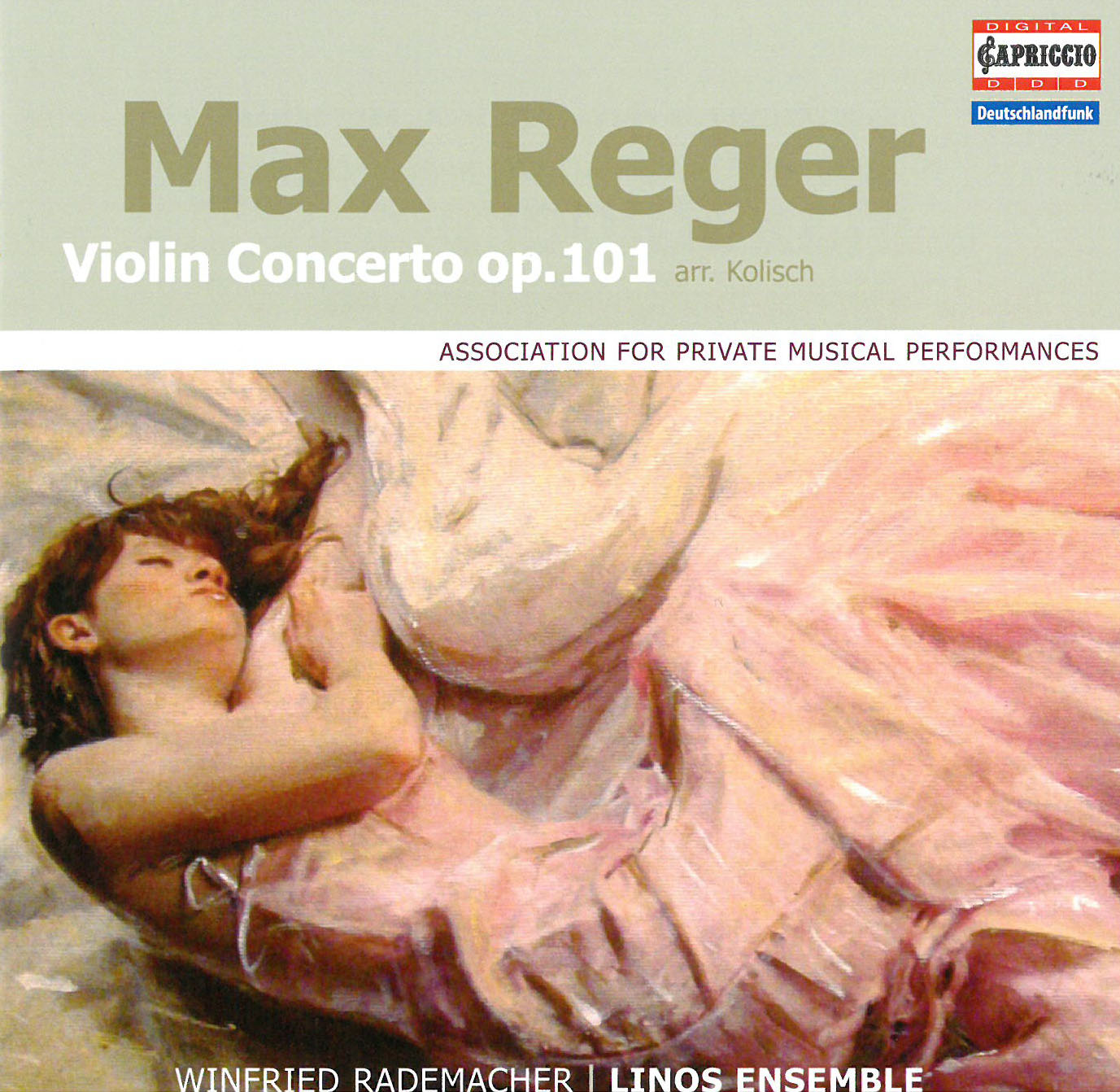
05 Reger Violin ConcertoMax Reger, who died in 1916, seemed to be especially favoured by the group, although his music was generally regarded by the critics as being excessively long, overly chromatic, turgid and far too complicated. In fact, it’s more a case of an overabundance of creative ideas making it difficult for the listener to discern the overall shape and form in Reger’s music.

That’s certainly true of his Violin Concerto in A Major, Op.101, completed in 1908. It’s a simply huge work (almost one hour) but melodic and accessible, and very much in the post-Brahms tradition – in fact, Reger mistakenly believed that his concerto would soon become as popular as the Brahms. The German Capriccio label has been issuing a series of recordings by the Linos Ensemble of chamber transcriptions made for the Association for Private Musical Performances, and the 1922 arrangement of the Violin Concerto by the violinist Rudolf Kolisch for flute, clarinet, horn, piano, harmonium and five strings is featured on the latest volume (C5137). Winfried Rademacher is the solo violinist.

The original full orchestral version in a performance by Tanja Becker-Bender was reviewed in this column in April 2012, and it’s clearly the more satisfying of the two, although the chamber version does clarify the texture to some degree as well as rendering the virtuosic solo part more playable. There have been various attempts over the years to apply cuts to the concerto, but it has retained its original length and structure – not to mention difficulty – and as a result has remained on the fringe of the repertoire.

Rademacher does full justice to the solo part, and the Linos Ensemble is excellent in this 2010 recording, apparently made for German radio. However, while the reduced forces may well help to reduce the complexity of the work they also make its more ponderous and meandering moments more apparent, and reduce the concerto’s overall effect.

Still, it’s an interesting alternate view of a complicated and challenging work.

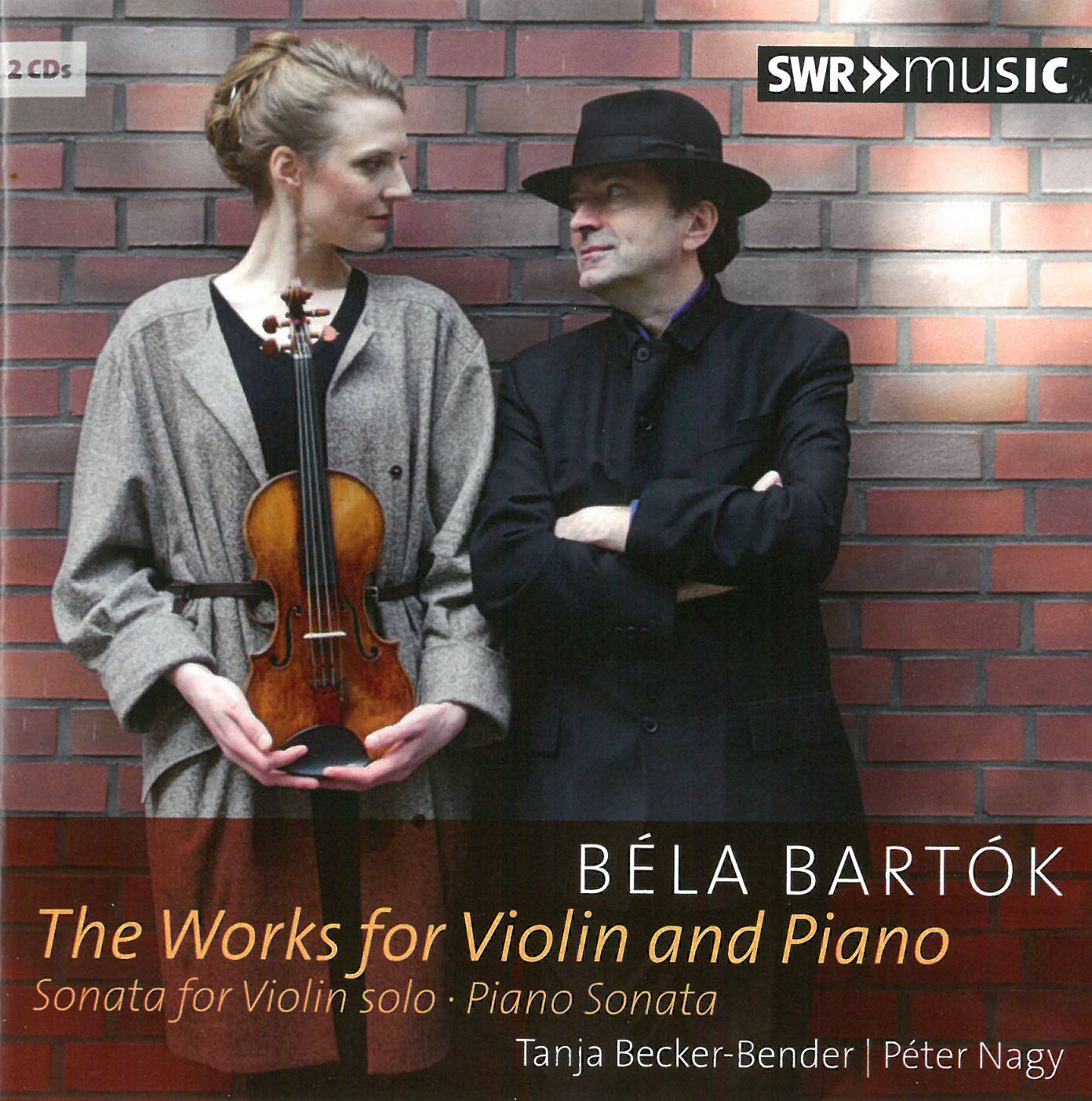
06Bartok Becker BenderSpeaking of Tanja Becker-Bender, her latest release is a two-CD set of Béla Bartók: The Works for Violin and Piano with pianist Péter Nagy (SWR 19003 CD). Each performer also takes a solo turn in the spotlight, Becker-Bender with the Sonata for Solo Violin BB124 and Nagy with the Piano Sonata BB88 from 1926.

CD1 has the two Rhapsodies for Violin and Piano and the two Sonatas for Violin and Piano. CD2, in addition to the two solo works, has the early Andante in A Major (a simply beautiful piece) and the Sonata in E Minor from 1902 and 1903 respectively, as well as the Romanian Folkdances in the transcription by Zoltán Székely, to whom the Rhapsody No.2 was dedicated. The two early works are both late Romantic in style, but everything else here clearly reflects the composer’s lifelong fascination with Magyar folk music that began in 1905.

There’s terrific playing from both performers, with Becker-Bender mixing toughness with the brilliance where necessary without ever compromising the interpretation. The second movement of the Rhapsody No.2, in particular, is quite superb.

07 IngolfssonThere’s another outstanding violin and piano recital disc (Accentus Music ACC 303711), this time from violinist Judith Ingolfsson and pianist Vladimir Stoupel with works by the French composer Albéric Magnard and the German Rudi Stephan, both of whom were killed in the First World War. It’s the first in their three-CD series Concert-Centenaire that will also feature works by Gabriel Fauré and Louis Vierne.

Magnard and Stephan were both killed in somewhat bizarre circumstances, Magnard in September 1914, when his house was burned down by the advancing German army after he had shot and fatally wounded two German soldiers – Magnard’s remains were never identified – and Stephan in September 1915, when he was shot by a Russian sniper two days after his unit had moved into trenches on the Eastern Front; he was apparently the first casualty in the 900-strong unit and was only 28.

Stephan was considered to be one of Germany’s leading young composers, but it’s difficult to judge from this distance – his works were neglected in the 1920s and 1930s, and many of his unpublished manuscripts were destroyed in the Allied bombing raids in 1945. He is represented here by his Groteske for Violin and Piano from 1911, the manuscript for which was only discovered in 1979 in the Bavarian State Library; it’s a short but really effective piece that shows the influence of pre-war Impressionism.

Only 49 when he was killed, Magnard was considered one of the greatest French composers of his era; his style owed more to Vincent d’Indy and César Franck than to Debussy. The major work on the disc is his Sonata for Violin and Piano in G Major Op.13 from 1901; it really is a very impressive piece.

Ingolfsson’s playing is simply superb throughout a fascinating CD, with Stoupel providing terrific support.

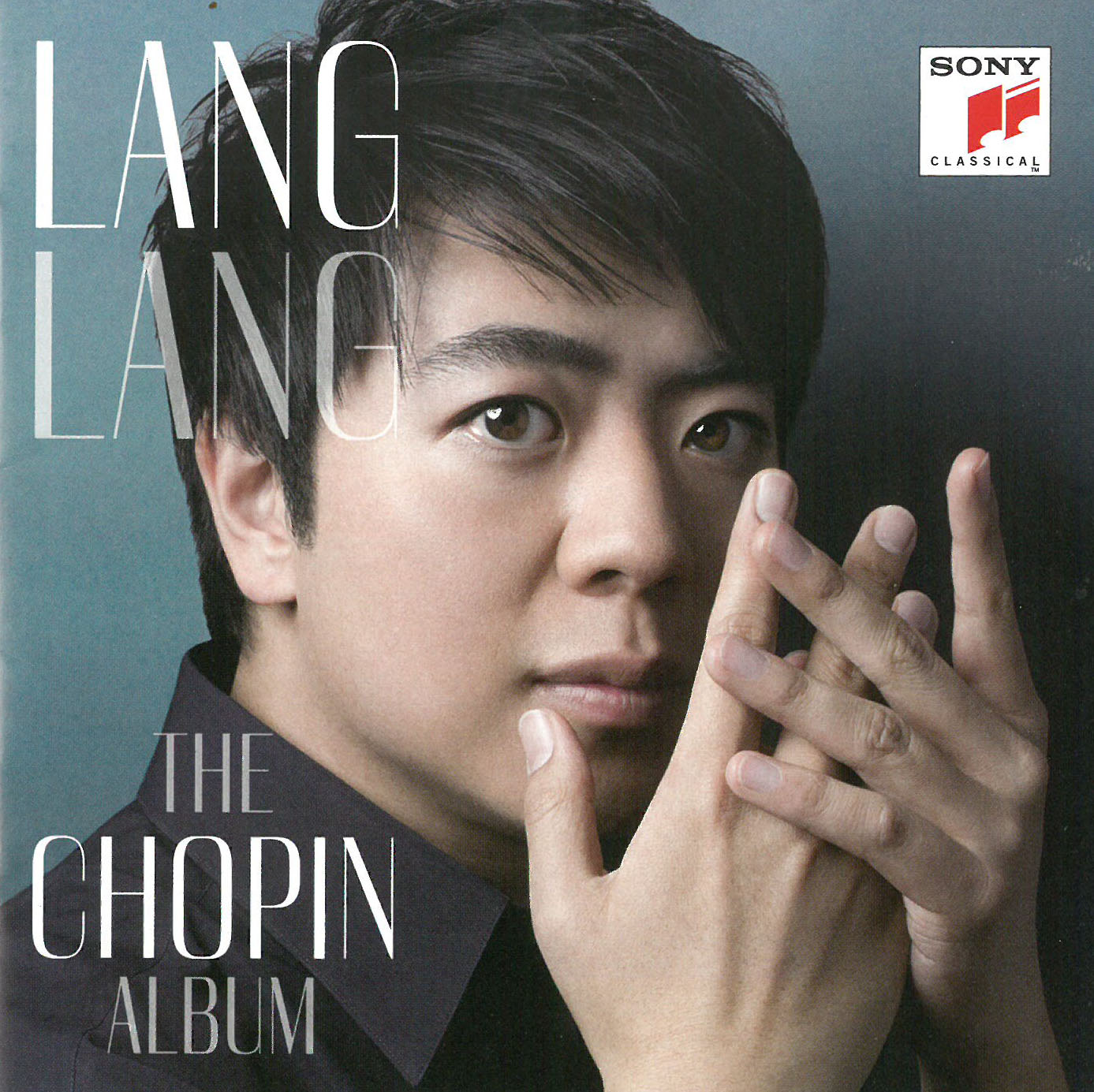
01 Lang Lang ChopinLang Lang’s new release The Chopin Album (Sony 8872548960) is a demonstration of his belief that Chopin is all about emotion. The sheer amount of it that he releases from the dense black spots on Chopin’s pages is a wonder.

There is something about the way the human brain is wired that allows gifted pianists to play the way they do. A single player can sound like two people, with hands at every point of the keyboard, drawing melodies out of dense swirls of elaborate runs and arpeggios. The scale of this genius grows when one considers that composer-pianists first conceived such phenomena in their minds then coded them to paper fully expecting their conceptions to be interpreted accurately. Pianistic genius is something shared inexplicably between creator and performer. Obviously Lang Lang is a pianist who really connects this way with Chopin.

Because technique has long since ceased being a barrier, Lang Lang concentrates on content. He plays the 12 Etudes Op.25 with complete commitment to the power of both force and fragility. It would be difficult to find another performance where emotional poles are so distant from each other. The Nocturnes in E-Flat Major Op.55 No.2 and F Major Op.15 No.1 are amazing examples of this approach.

Every track is a treasure and the listening experience simply begs to be repeated.

Review

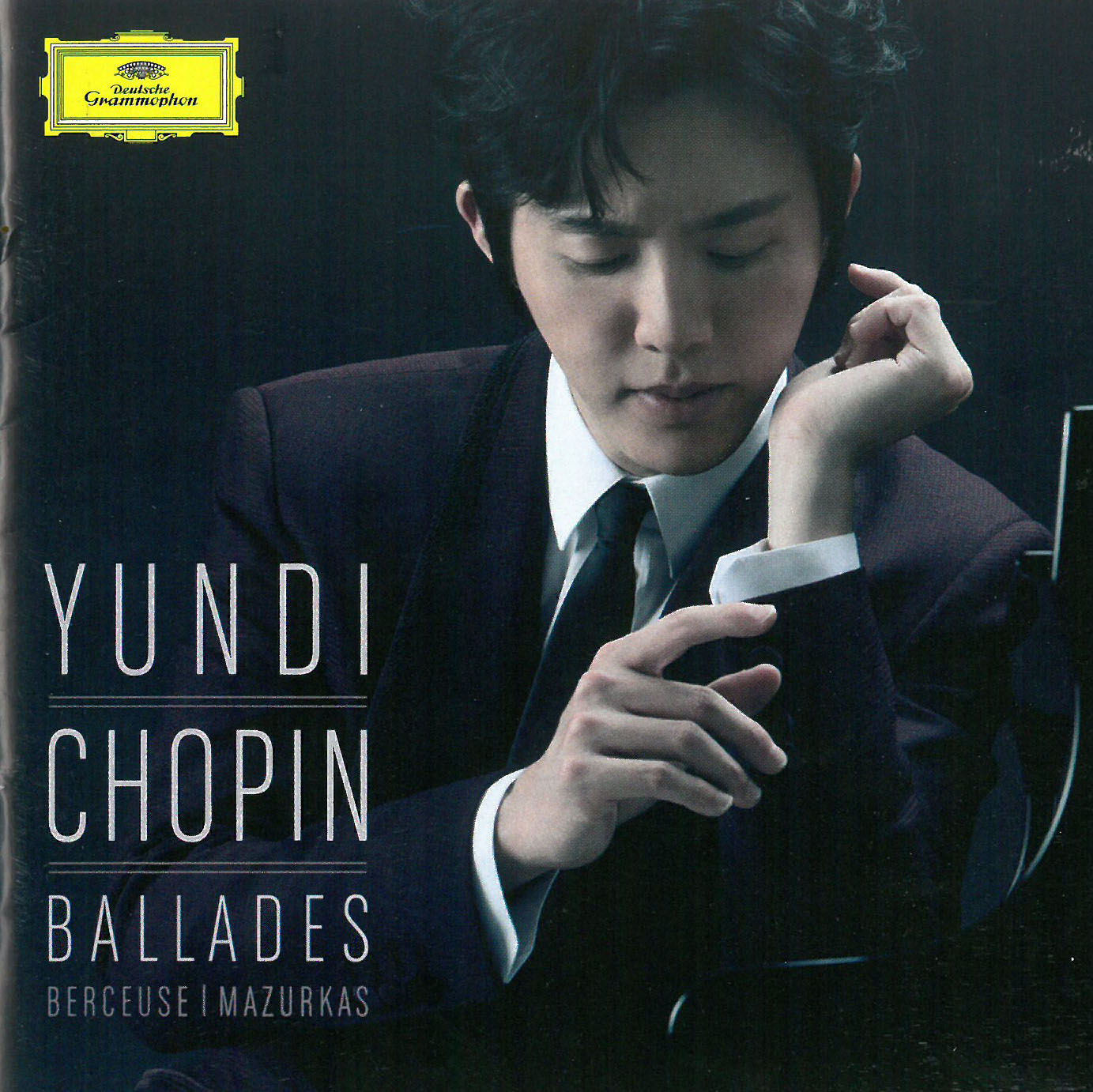
02 Yundi ChopinI wrote about Yundi a few months ago and now have another Chopin disc by this prolific recording artist. to enjoy. A prolific recording artist Chopin Ballades, Berceuse, Mazurkas (Deutsche Grammophon 4812443) is his 19th CD. Yundi is a direct player who doesn’t venture far beyond the notes on the page unless Chopin suggests the risk promises some reward. Yundi seems to calculate his artistic risks carefully. In the Four Ballades we have impeccable playing through the first three but No.4 in F Minor Op.52 is altogether different. Here Yundi moves the expressive boundaries out further based on the potential of the emotional content of Chopin’s melodic material. It’s a brilliant and successful choice that speaks to Yundi’s maturity.

Similarly, the Four Mazurkas Op.17 give us the familiar rhythmic pulse of one of Chopin’s favourite dance forms. But Chopin expresses so much more than just dance. No.3 in A-Flat Major begins to open the languorous dark side of this music and Yundi exploits this with great care. No.4 in A Minor is, however, a powerful exploration of the rich melancholy Chopin weaves so skillfully. Yundi glides through this making the most of every possible hesitation and lingering idea. It’s a magical way to end the program.

03 Trifanov TchaikovskyRussian pianist Daniil Trifonov has all the fire of his mid-20s age. On Tchaikovsky – Piano Concerto No.1, Mariinsky Orchestra; Valery Gergiev (Mariinsky MAR 0530) Trifonov leaves no doubt that he can conquer the most difficult passages Tchaikovsky has written into the score. Trifonov and Gergiev take many of these tutti passages at blazing speeds, making them truly exciting. But all this would be nothing if Trifonov couldn’t retreat, as he does so effectively, into the concerto’s introspective moments. The second movement offers a generous sanctuary for this repose, where Trifonov shifts between wistfulness and playfulness. But it’s the two outer movements that really underscore the contrasts of Tchaikovsky’s large-scale vocabulary. The whole concerto frequently has a balletic feel, which is no surprise with Gergiev conducting.

While the concerto gave us all the muscle of this young pianist, the rest of the disc is a moving testament to his gift for tenderness. The Chopin Barcarolle, and the Shubert/Liszt Frühlingsglaube are played with great vulnerability. Die Forelle, similarly moves with great care, but impressive technique, through Liszt’s rapid and skittish portrayals of the legendary trout.

The final track is wisely given to Liebeslied (Widmung) wherein Liszt speaks to Schubert’s original idea in broader more embellished keyboard style and creates a grand final impact by building the simple musical idea into a great edifice. Trifonov really shines in these smaller scale works with flawless technique, intelligent and deeply believable interpretations.

Review

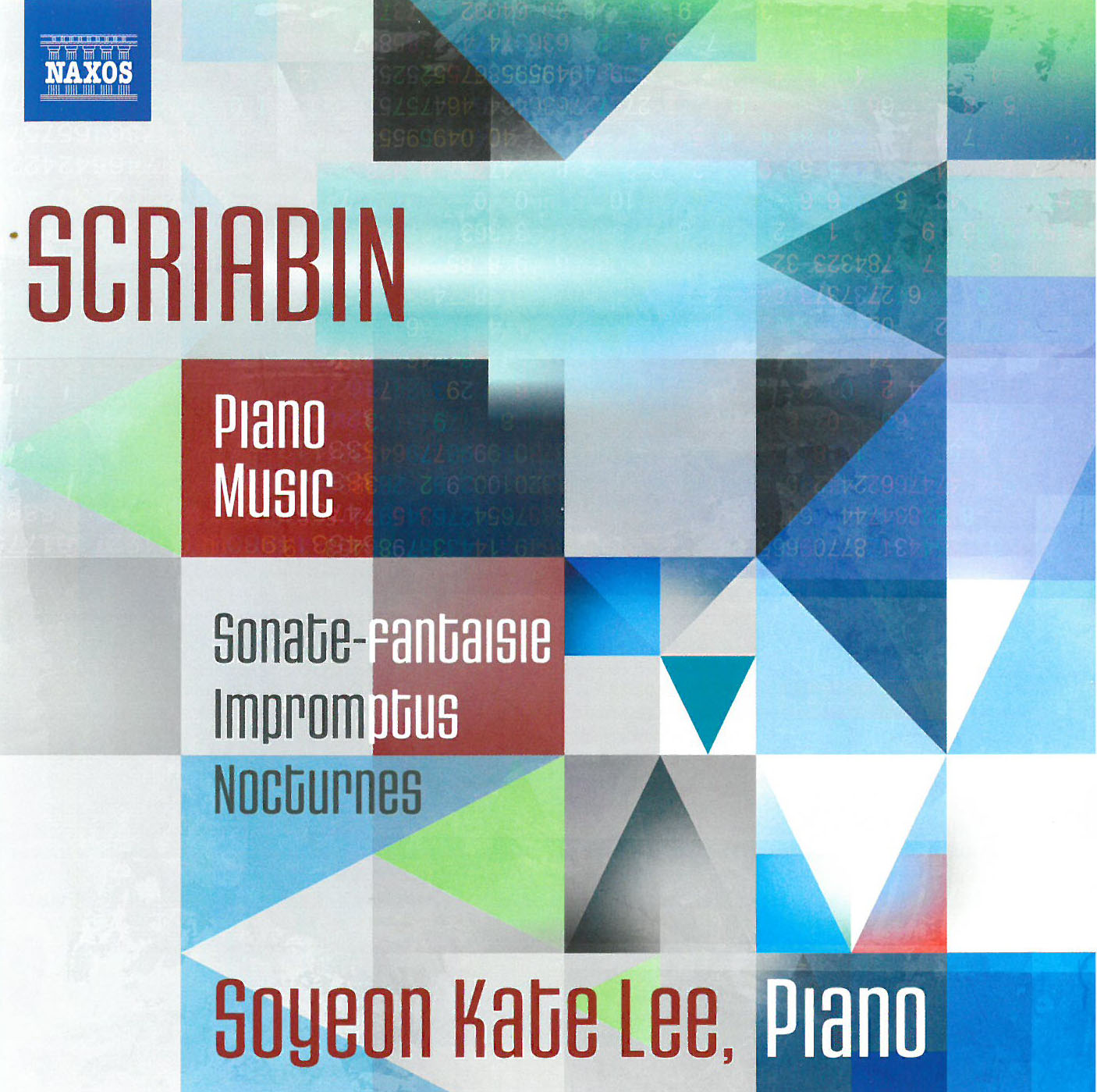
04 Scriabin LeeKorean-American pianist Soyeon Kate Lee has a modest discography but a talent that deserves more exposure. Her newest recording Scriabin – Piano Music (Naxos 8.573527) is a deliberate choice of the composer’s lesser known works, and as such, a wonderful find. Scriabin’s language for the piano has its well-known Chopinesque accent. Much of it is late 19th-century but a few pieces are from the early 20th. The Two Pieces, Op.57 (1908) are the most contemporary of the set and Lee delights in all the gentle angularities of Scriabin’s melodies. She is always completely certain of where the most important material lies and highlights it artfully, even if only a passing note. Lee is very generous with her rubato, taking all the time to exploit hesitant moments for their greatest effect. Her consistently fluid technique is a pleasure to experience, especially in the Nocturne in D-Flat Major Op.9 No.2, written for the left hand alone.

While Scriabin made little of the dance nature of his Mazurkas and Polonaises, Lee nevertheless chooses to underscore this with a subtle pulse on the beat of certain measures as if to remind us of the missing choreography. She closes her recording with a remarkable piece Scriabin wrote at age 11. This Canon in D Minor already bears the distinctive melancholy of its Russian composer. This is a very engaging recording for its fine repertoire choice and thoughtful playing.

05 Lewis Schubert

Not many pianists can boast of having performed all the Beethoven concertos in a single season. Paul Lewis can. When one considers this, his 15 recordings, and sees his discography is mostly Schubert and Beethoven, we begin to understand this artist. While such specialization early in a career may be unusual, one can’t argue with the results.

Lewis in Schubert – Piano Sonata D.845 (Harmonia Mundi HMC 902136.37) leaves no doubt that he is a master of Schubert’s musical language. His grasp of the large forms like the Wanderer Fantasy in C Major Op.15 D760 and the Sonata No.16 in A Minor Op.42 D845 is often orchestral in conception.

The smaller forms like the Four Impromptus Op.Posth.142 D935 are wonderfully fresh and credible. The Impromptu No.2 in A-Flat Major is moving in its simplicity and fluid middle section. No.4 in F Minor is often Listzian in its delivery, suggesting that Schubert was a finer pianist than history might have allowed.

Lewis plays the Six Moments Musicaux Op.94 D780 in a beautifully contemplative posture, especially the final Allegretto. It’s a memorable performance.

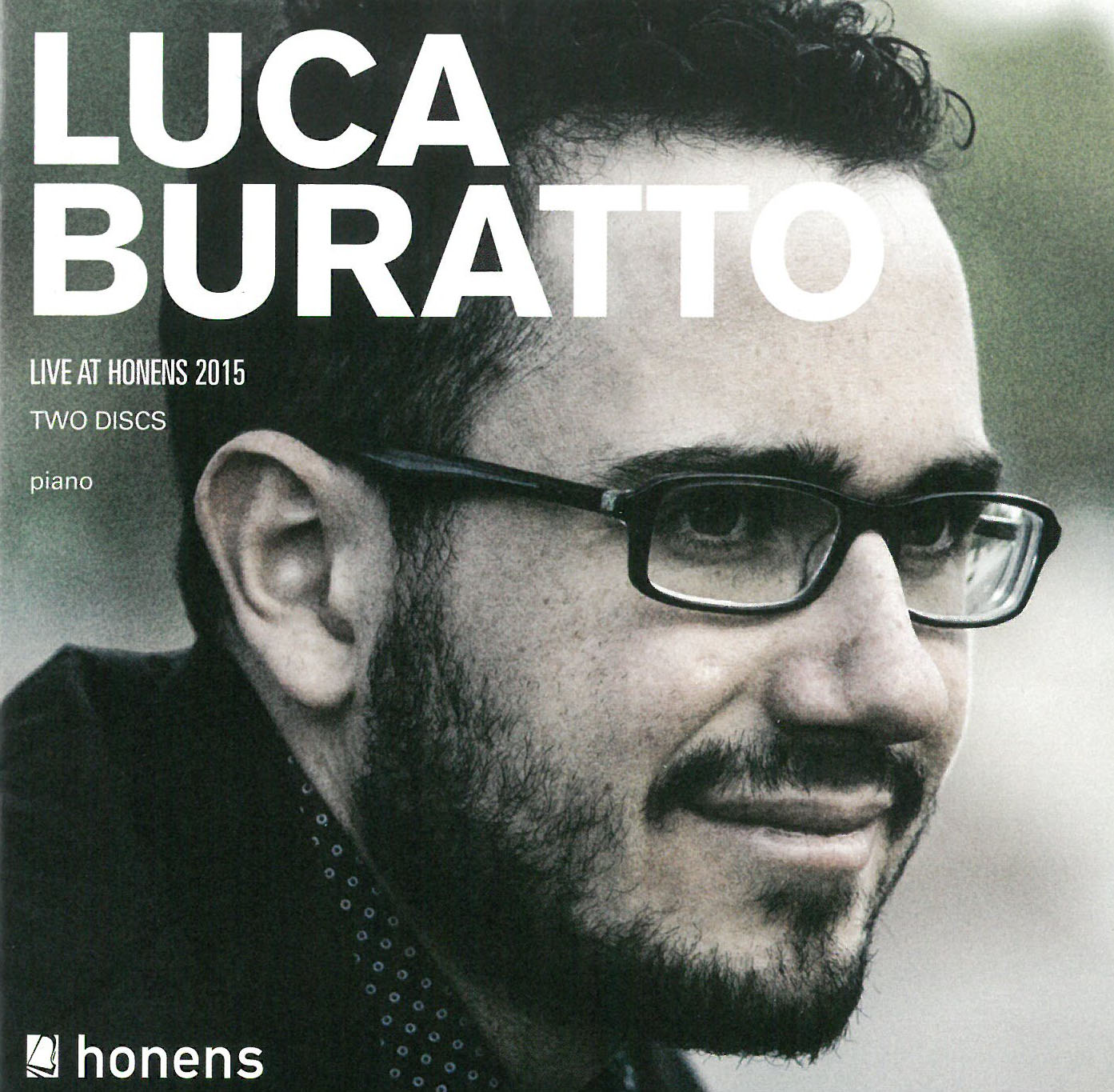
06 BurattoItalian pianist Luca Buratto is the 2015 Laureate of the Honens Piano Competition. His two-disc set Live at Honens 2015 (Honens 201601CD) of performances at the competition is a reminder of how well-rounded the judges expect the winner to be. The latest “Complete Pianist” has assembled a live performance program of impressive variety to demonstrate his abilities as soloist, accompanist and ensemble player.

The standard repertoire items for solo piano reveal Buratto’s unerring grasp of the genre. His inspired approach to the final movement of Schumann’s Fantasy in C Major Op.17 moves it to a new level of dark and rich solemnity. He delivers Debussy’s L’isle joyeuse with a rare sparkle and remarkable firepower for the ending. Etudes 15 and 16 for Piano by György Ligeti are breathtaking in their closing measures, restating at maniacal speed, the opening ideas originally heard at a meditative pace. This is brilliant interpretation and performance.

Buratto’s recording includes songs by Viardot and Obradors, sung by Soprano Isabel Bayrakdarian, Mozart’s “Kegelstatt” Trio K498 for piano, viola and clarinet and other works variously combining the voice with the wind and string instruments.

The true highlight of the set is, however, the Hindemith Sonata for viola and piano in F Major Op.11 No.4. Buratto and violist Hsin-Yun Huang understand this music at the deepest level, capturing all the melodic beauty in Hindemith’s writing. This is especially effective in the second and third movements where the theme and variation format offer seemingly endless opportunity for restatement. The 2015 Honens recording is a must-have.

Review

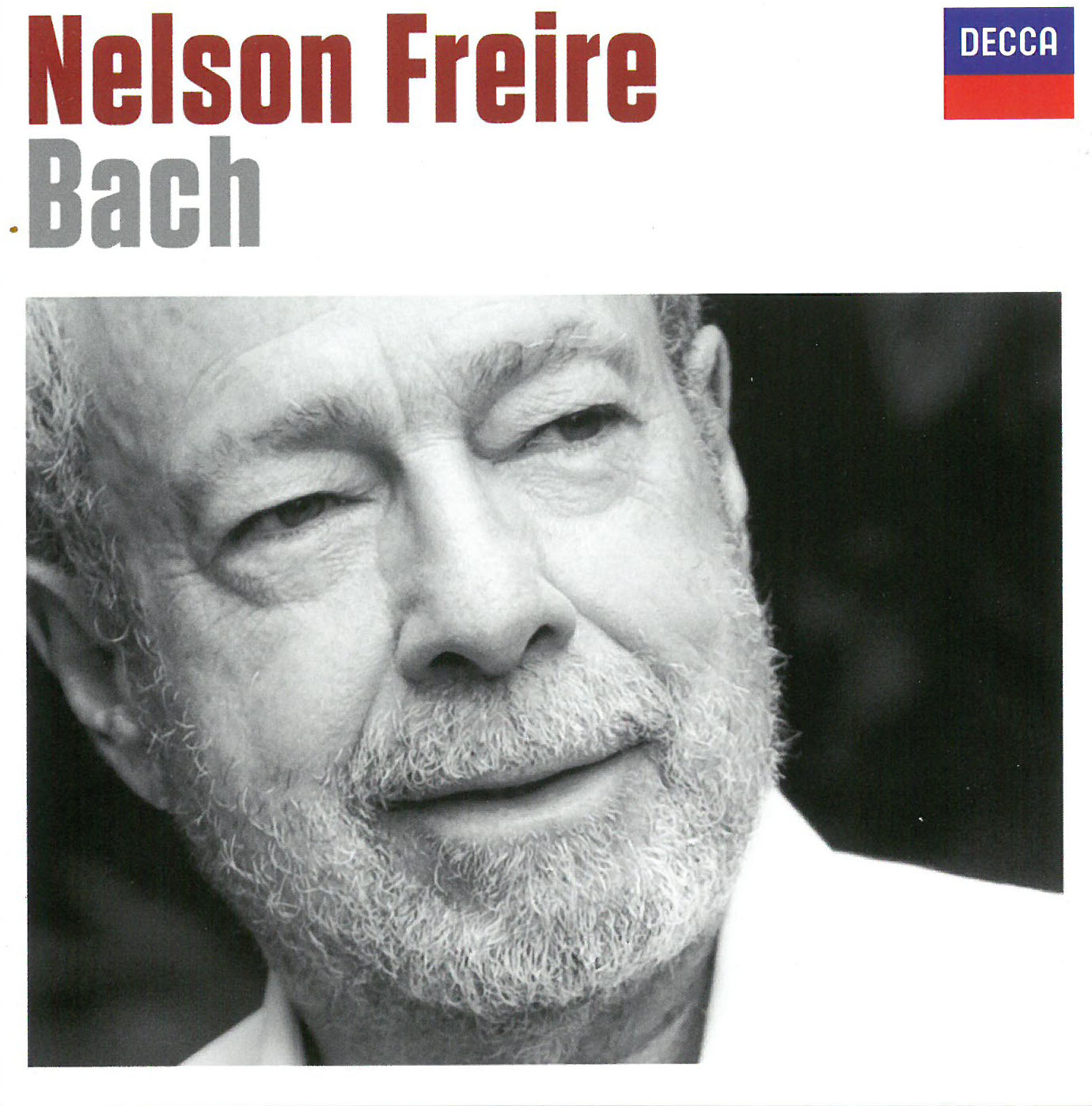
07 Freire BachNow in his early 70s, Brazilian pianist Nelson Freire has recorded most of the classical and romantic repertoire. His latest recording Bach Piano Works (Decca 478 8449) is a reminder of how universal an artist he is. While not regarded as a specialist in the historical performance practice of baroque keyboard repertoire, he is nevertheless highly credible because of his interpretive maturity.

All the Bach on this recording is clean and unpedalled, as it should be. The wild sweeps of the Chromatic Fantasia and Fugue in D Minor BWV903 are beautifully conceived, using only a minimum of the piano’s natural resonance. By contrast, Freire steeps himself in all the available tonal richness of the Andante from the Concerto in D Minor BWV974.

The unidentified instrument used in the recording surrenders a lovely mellow ring to Freire’s touch. His remarkable technique is at once light and fluid. He’s masterful in knowing how to culminate the hammer strike through each keystroke to achieve the precise colour he wants. The Allemande of the Partita No.4 in D Major BWV828 is an arresting example of this keyboard caress. The closing Gigue is a rapid cascade of crisp articulated notes impeccably phrased.

Equally impressive is his shift to the modern transcriptions of Jesu, Joy of Man’s Desiring by Myra Hess and two chorales by Ferruccio Busoni. The stylistic shift is flawless while preserving the Germanic baroque discipline of Bach’s melodies and modulations. This is a performance of exceptional beauty.

08 RazumovskayaAll performance art benefits from the companionship of passion and intellect. When a highly intelligent artist with impressive academic credentials undertakes a quest to know a composer at the most essential level, we have to listen. In her new recording Liszt – Sonata in B Minor, Petrarch Sonnets, Variations on Weinen, Klagen, Sorgen, Sagen (Malachite Cu20301), Maria Razumovskaya informs her pianistic virtuosity with a profound understanding of Liszt and the nature of his music.

The Three Petrarch Sonnets are exquisitely cast in a pictorial yet spiritual way. Razumovskaya fully grasps the pilgrimage Liszt undertook both physically and creatively. The Sonnets have a simple and ethereal quality in their performance that is quite remarkable. It’s an approach that’s very similar to her treatment of the Variations on Weinen, Klagen, Sorgen, Sagen. So much of this piece is played introspectively. It ends with very a moving statement of the Bach chorale.

The anchor of Razumovskaya’s program is, of course, the B Minor Sonata S178. This may possibly be the least tormented and most contemplative performance I have heard. There is a confidence of statement found throughout even the darkest and most troubled passages which seem to point naturally to all the moments of modal and emotional resolution. It’s an effective interpretation based on a direct inquiry of Liszt’s intention at every moment and constantly reconciled with the person Razumovskaya knows him to be. It’s a very satisfying approach, the companionship of passion and intellect.

01 BrucknerBruckner – Symphony No.9
Royal Concertgebouw Orchestra; Mariss Jansons
RCO 16001

On his knees, the ailing Anton Bruckner beseeched God, “Let me be well, I need my health to finish the Ninth.” The devout composer even dedicated the symphony to “lieben Gott.” Apparently, God disdained the dedication: Bruckner died before completing the work.

Although Bruckner scored some of the fourth movement and various completions have been performed, the Ninth is almost always presented, as on this CD, unfinished, ending with the sublime Adagio. This movement, along with the Adagios of Bruckner’s Seventh and Eighth, and those of Beethoven’s and Mahler’s Ninths, ranks among the most profound and exalted slow movements in all music.

Yet many music-lovers scorn Bruckner for his disjointed lumbering, often conducted at lugubrious tempi. Devoted Brucknerites wallow in this expansive timelessness; this CD is not for them. Instead, it makes an ideal, painless way to introduce Bruckner-scorners to this transcendent music.

Recordings of the Symphony No.9 often last an hour or more; this performance, while under 55 minutes, is no superficial run-through. In the opening Misterioso, Jansons favours cohesive lyrical flow over mystery and granitic grandeur. Nonetheless, the movement ends in a sonically stunning climax, highlighted by the RCO’s magnificent brass.

The Scherzo, with its powerfully punctuated, rugged main theme, emerges unusually cheerful and buoyant, with tightly accented rhythms. In the closing Adagio, Jansons and his great orchestra produce glorious, heaven-storming, organ-like sonorities, bringing this Ninth to a memorable conclusion. Recommended to all Bruckner scorners.

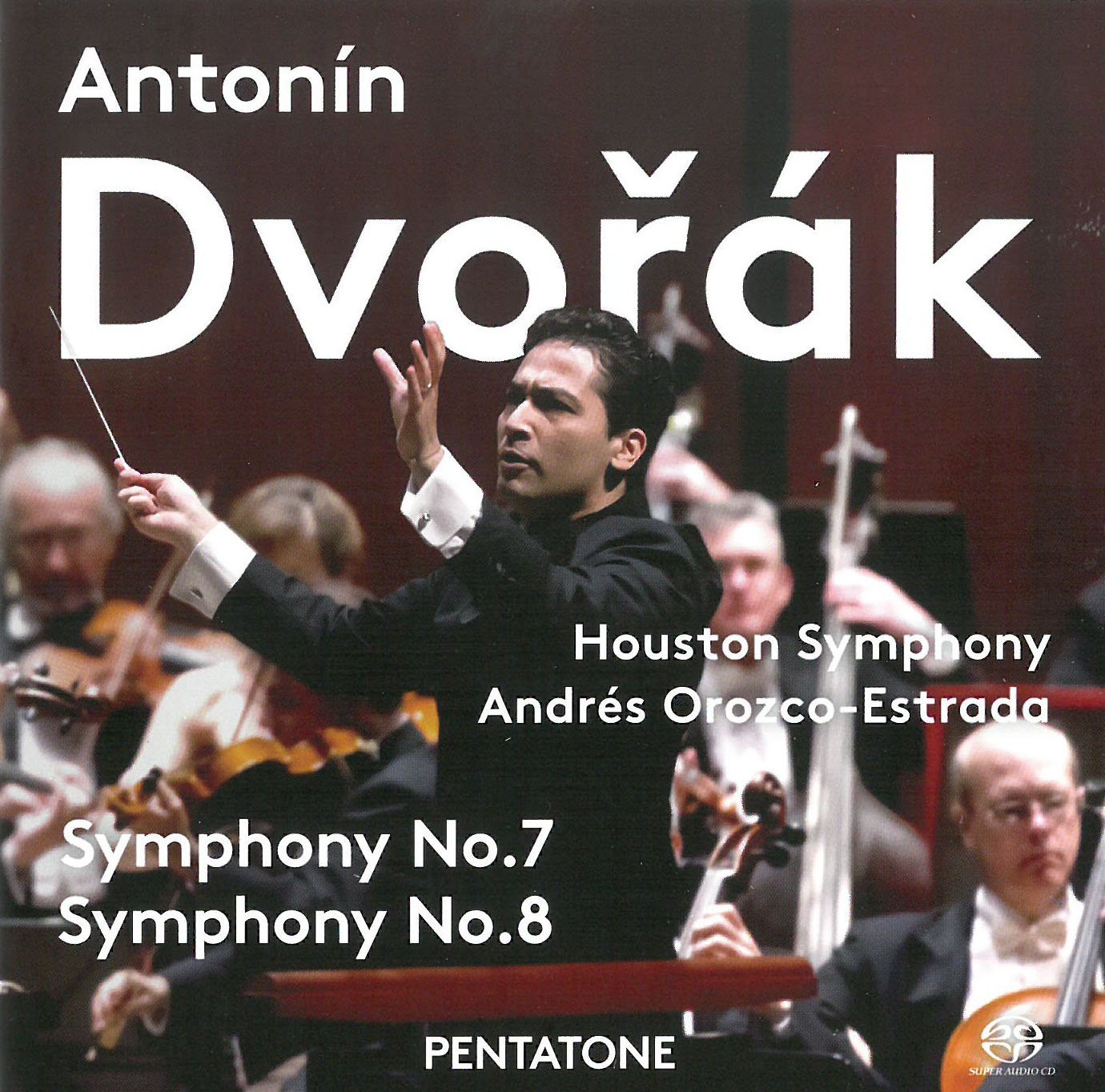
02 DvorakDvořák – Symphonies Nos. 7 & 8
Houston Symphony; Andres Orozco-Estrada
Pentatone PTC 5186 578

Every so often a disc comes along that is truly cross-cultural and this is certainly one of them. The renowned Colombian-born conductor Andrés Orozco-Estrada leading the Houston Symphony in Dvořák’s seventh and eighth symphonies on the Dutch Pentatone label is proof indeed that music in the 21st century is truly a global affair.

Dvořák was at the height of his fame early in 1884 when he received a commission by London’s Royal Philharmonic Society. The resulting Symphony No.7 is a dark and dramatic work, heavily influenced by the political situation in Bohemia and the composer’s ongoing troubles with his publisher Simrock. Nevertheless, its premiere in April 1885 was a huge success and the work has remained a landmark ever since.

Orozco-Estrada and the Houston Symphony masterfully evoke a sense of tragedy and tension throughout, creating a dark but warmly romantic sound particularly in the second movement Poco Adagio. The third movement Scherzo is all lightness and grace while the grand and triumphant fourth receives a fittingly solid and heroic performance.

The much sunnier Symphony No.8 was completed in 1889 and received its premiere in Prague early the following year. In contrast to its predecessor, the music is cheerful and optimistic and the precision, expression and energy created by the Houston Symphony make this an exciting performance. The wistful third movement waltz contains just the right amount of sentimentality while the buoyant finale – introduced by the famous trumpet fanfare – is a true tour de force with Orozco-Estrada and the orchestra going for the gusto all the way to the brilliant conclusion.

This is an exemplary recording, one that can rightfully take its place alongside the more established performances. Judging from this CD, fine music-making does indeed transcend international boundaries. Highly recommended.

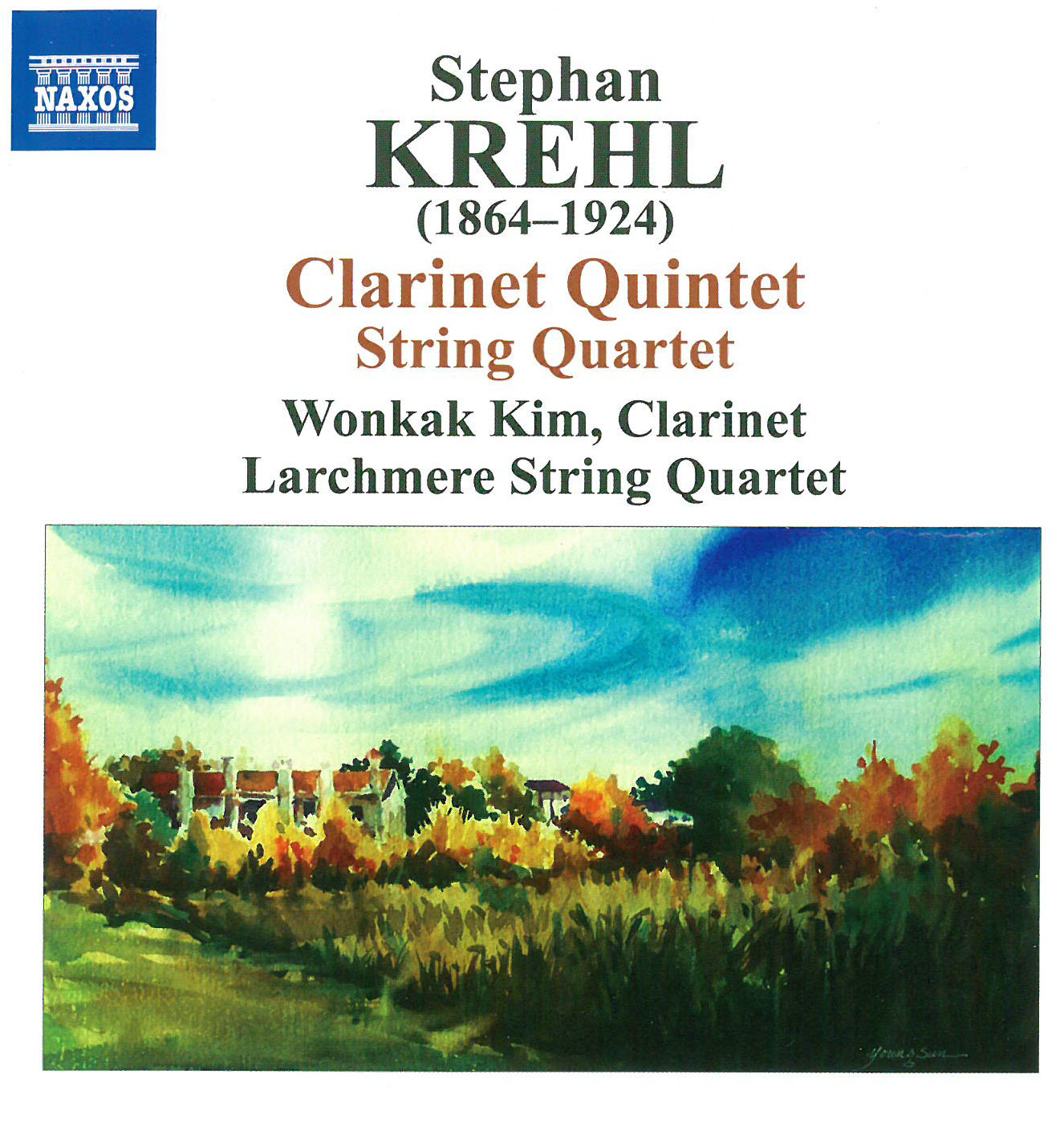
03 KrehlStephan Krehl – Clarinet Quintet; String Quartet
Wonkak Kim; Larchmere String Quartet
Naxos 9.70173

Another unfairly forgotten composer re-emerges thanks to an enterprising ensemble and record company. This is, apparently, Stephan Krehl’s debut on CD, as it is for the Larchmere String Quartet, based at the University of Evansville in Indiana.

Krehl (1864-1924) was a fixture at the Leipzig Conservatory as student, teacher and author of books on theory and composition, eventually becoming the conservatory’s director. Although a contemporary of Mahler and Richard Strauss, Krehl was no forward-looking stylistic adventurer, instead drawing inspiration from Schumann, Brahms and one of his predecessors as Leipzig Conservatory director, Mendelssohn.

Yet for all his looking backward and academic credentials, the music on this CD never sounds imitative or academic. The performances are similarly un-stodgy, expressive and vivacious. Krehl’s String Quartet Op.17, published in 1899, is filled with attractive, yearning melodies and unexpected, engaging changes of texture, tempo and rhythm. In the Clarinet Quintet Op.19, the strings are joined by Wonkak Kim, professor at Tennessee Tech and a regular Naxos artist. Krehl’s Quintet, published in 1902, is patterned on that of Brahms, even being written for and dedicated to clarinetist Richard Mühlfeld, for whom Brahms had composed his Quintet. Again, we are treated to wistful melodies, imaginative part-writing and frequent, effective changes of mood.

Considering Krehl’s obscurity, I was happily surprised by just how good and downright enjoyable this music is, with lovely melodies and attention-holding narratives. Naxos, more Krehl, please.

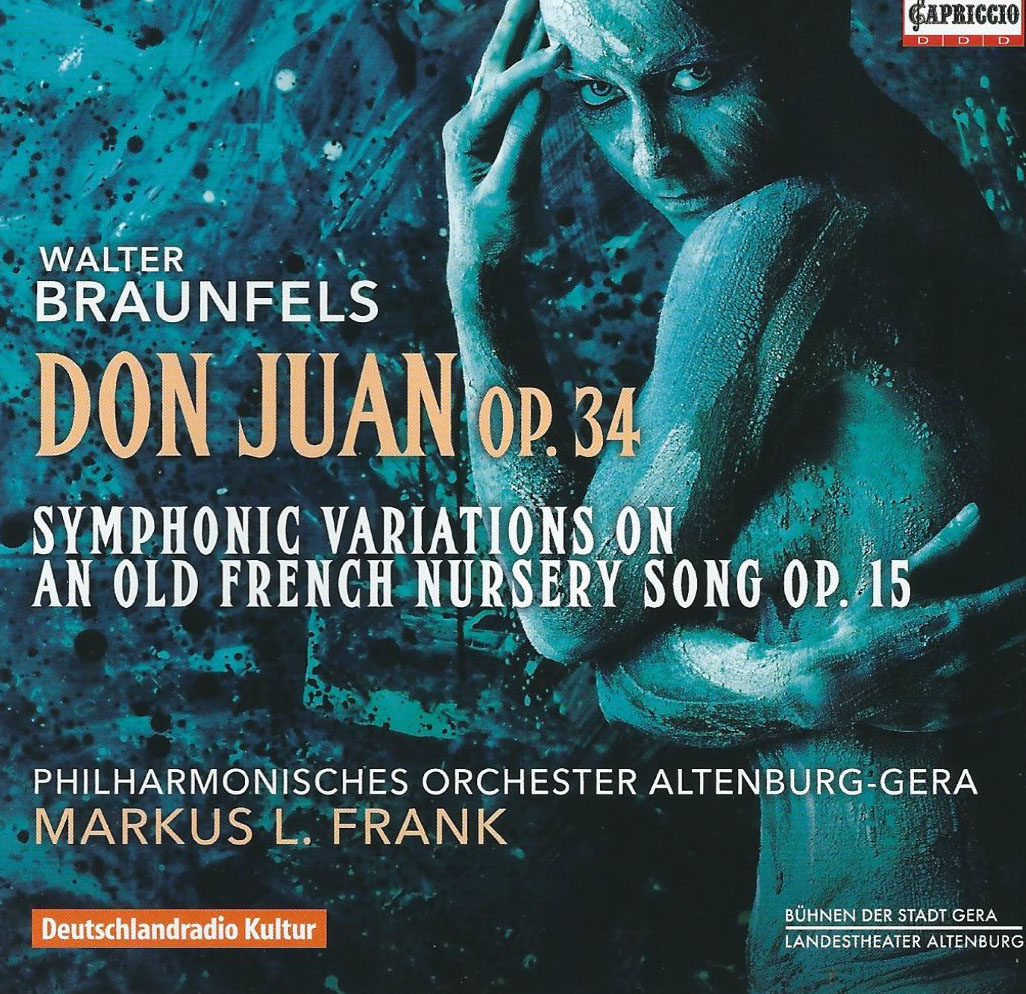
04 BraunfelsWalter Braunfels: Don Juan; Symphonic Variations on an Old French Nursery Song
Altenburg-Gera Philharmonic Orchestra; Markus L. Frank
Capriccio CD C5250

Review

Born in Frankfurt am Main, Walter Braunfels (1882-1954) was the best, most well-equipped of the German composers whom the Nazis managed to sideline completely after their ascension to power in 1933. Braunfels seems to have been the most surprised at being outed as a Jew since he considered himself a staunch, practising Roman Catholic. He was already in mid-career, having produced a string of major compositions. In fact, the Cologne Conservatory had been especially formed around Braunfels as principal. He belongs in the same user-friendly idiom as Richard Strauss although he sounds nothing like Strauss. He had already written his operatic masterpiece, The Birds, an excellent recording of which can be found on Decca in their Entartete Kunst series. Three of his other operas enjoy fine recordings.

Don Juan was written when the composer was at the pinnacle of his career. This is very much the Don Giovanni of Mozart, specifically the Champagne Aria upon which there are seven entertaining variations. It was premiered by Wilhelm Furtwängler in 1924.

The Symphonic Variations on an Old French Nursery Song dates from 1909 and remained in the repertoire until 1933 when it was banned. It is a thoughtful, more serious work, beautifully orchestrated. Neither work presents any challenges to the musicians or the listener.

In case you’re wondering, in 2001 the Provincial Orchestra of Altenburg amalgamated with Philharmonic Orchestra of Gera, forming an orchestra that honours the centuries-old traditions of both cities.

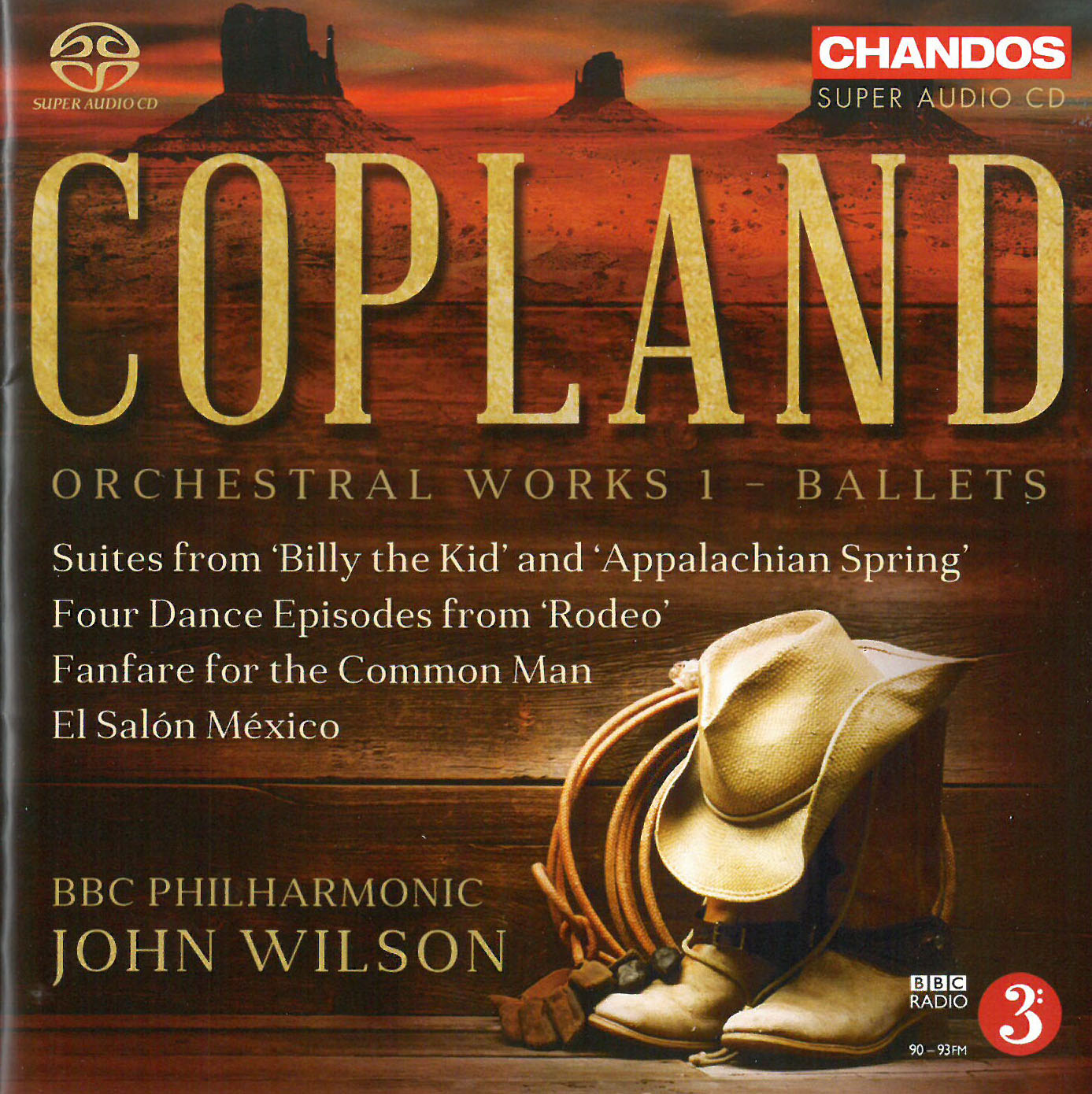
05 CoplandCopland – Orchestral Works I: Ballets
BBC Philharmonic; John Wilson
Chandos CHSA 5164

In 1979, I interviewed Aaron Copland and asked him how he, a boy from Brooklyn (like myself), developed such a feel for Western and rural America. “That’s not so odd,” he answered. “There’s a whole legendary feeling about the West. I think any young American, wherever he might live, would have some sort of feel about the wide open spaces. Beyond that, it’s just a feat of the imagination.”

Copland’s imagined wide-open spaces are front-and-centre in this CD’s three ballet suites. The cowboy ballets Billy the Kid (Billy – another Brooklynite!) and Rodeo receive atmospheric, colourful readings with emphasized percussion. (The booklet notes identify Rodeo choreographer Agnes de Mille as Cecil B.’s daughter; she was his niece.) In Appalachian Spring, conductor Wilson underlines “the spaces between the notes,” building a grand climax on the Shaker hymn Simple Gifts.

The CD opens with an unusually slow and sombre Fanfare for the Common Man, followed by Wilson’s less-than-raucous treatment of El Salón México, Copland’s musical postcard from a Mexican dancehall. (Though not intended for the stage, it has occasionally been choreographed.)

Aided by brilliant recorded sound, Wilson’s measured approach adds uncommon depth and dignity to these works, often tossed off as pops repertoire. The Roman numeral “I” on the cover indicates more Copland CDs are planned. Here’s hoping the unjustly neglected film scores will finally get the comprehensive coverage they deserve. In any event, the series is off to a promising start.

01 Narratives on LifeNarratives on Life – music for cello and piano is the latest CD from the Ottawa duo of cellist Joan Harrison and pianist Elaine Keillor (Marquis MAR 81467). The four varied works are connected by the composers’ shared Jewish heritage and are not often heard – indeed, three of the performances here are world premiere recordings.

Srul Irving Glick’s Chagall Suite for Cello and Piano is a three-movement work from 1993 inspired by the Marc Chagall paintings The Cellist, The Lights of the Wedding and The Big Circus. There’s some lovely tone and colour from the cello, although the piano seems to be a bit far back in the balance.

My feeling that the playing was perhaps a bit too subdued was reinforced by the second work, the Sonata for Cello and Piano by the Canadian composer Steven Gellman. Completed in 1994, its third movement finale is titled Scherzo (on a Heavy-Metal rhythm), but while the playing here is more than up to the technical challenges it really seems to need more fire and energy.

The one work I would have thought would be a first recording turned out to be the only one that wasn’t. The musically multi-talented child prodigy Hélène Riese Liebmann was born in Berlin in 1795 and was already having her compositions published by 1813, a quite remarkable achievement in an age when the likes of Fanny Mendelssohn and Clara Schumann would have to resort to having their compositions published under the names of their respective brother and husband. The Grand Sonata in B-flat Major for Cello and Piano Op.11 is a very pleasant work and it is very much of its time.

While studying at Yale University Harrison met the son of the American composer Maurice Gardner (1909-2002) whose Sonata for Cello and Piano completes the CD.

Gardner had a long and varied musical career in many commercial spheres, and was finally able to concentrate on non-commercial compositions when he reached his 60s. Harrison’s acquaintance with his son led to her being coached by the composer himself in the playing of this sonata, and it shows: it’s not only the strongest and most assured work on the CD, but also draws the most committed and convincing playing from the performers.

It’s a fine ending to a very interesting CD.

Say what you will about Antonio Vivaldi – and despite the huge popularity of his music, he isn’t everyone’s favourite composer – his voice is unmistakeable. We’ve all heard the old line – that Vivaldi didn’t write 500 concertos but wrote the same concerto 500 times – but the truth is that despite the continuous sequences, circles of fifths, arpeggios, scales and rhythmic patterns that tend to obscure the frequent absence of any real melodic material, there is a delightful freshness and inventiveness and a sense of spontaneity that runs throughout his instrumental music.

Review

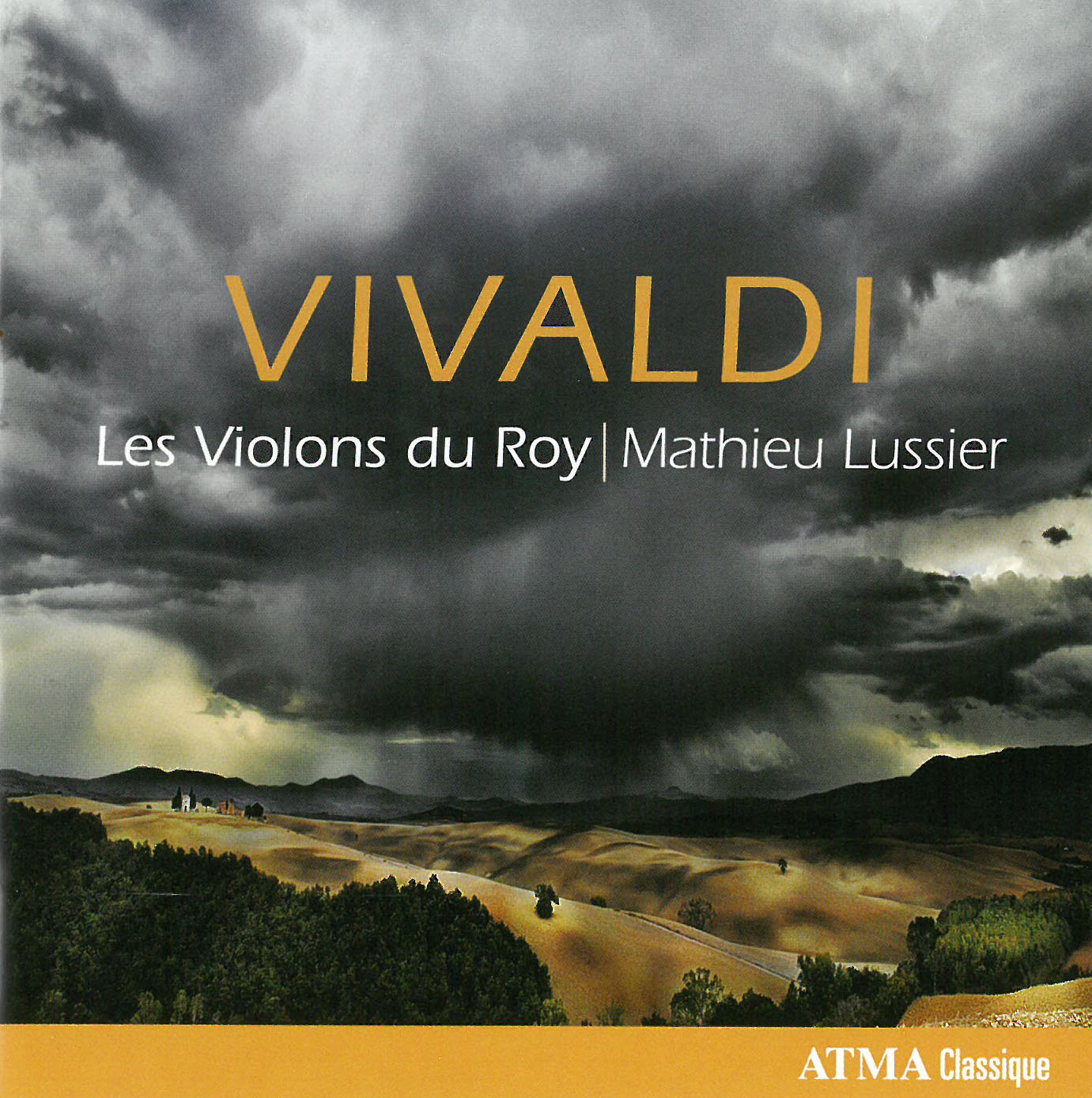
02 VivaldiThese qualities are more than captured in Vivaldi, the outstanding new CD from Les Violins du Roy under Mathieu Lussier (ATMA ACD2 2602). Moreover, the six concertos here display the wide range of solo combinations that Vivaldi used, as 16 of the orchestra members are featured as soloists. Just look at the range of works: the two Concertos in F Major for Violin, Two Oboes, Bassoon, Two Horns, Strings and Continuo RV569 and RV574; the Concerto in B Minor for Four Violins, Cello, Strings and Continuo RV580; the Concerto in G Minor for Violin, Two Recorders, Two Oboes, Bassoon, Strings and Continuo RV577; and the Concerto in E Minor for Four Violins, Strings and Continuo RV550.

There is a brief Sinfonia from the opera La verità in cimento, RV739 before the final Concerto in C Major for Two Trumpets, Strings and Continuo RV537, whose familiar opening three notes will immediately bring to mind the closing doors on a TTC subway car for Toronto residents; the dazzling third movement brings to a close a CD that is a pure delight from start to finish.

The orchestral texture is warm and bright, with a discreet and beautifully balanced continuo and a clear and resonant recorded sound.

03 Trio RodinThe young Spanish ensemble Trio Rodin is featured in a lovely CD of music of their homeland with Enrique Granados Chamber Music with Piano (Ævea Æ16013).

Chamber music was a neglected field in late 19th-century Spain, a situation that Granados addressed in his compositions; his Piano Trio Op.50 was one of two chamber works that he performed on his debut in Madrid’s musical society in 1895. It’s an attractive work that allows all three performers here to showcase their technique, their warm tone and their ensemble skills. For this recording Trio Rodin worked from the autograph manuscript source, apparently only recently identified.

Pianist Jorge Mengotti is joined by cellist Esther García in the three pieces Madrigal, Danza gallega and Trova, all adapted from previous Granados works and all dedicated to Pablo Casals.

The remaining eight tracks on the CD feature violinist Carles Puig. Romanza is a lovely, lyrical miniature that brings sensitive playing from the duo. The Tres preludios are extremely short (less than four minutes in total) but quite effective.

The unfinished Sonata for Violin and Piano completes the disc. It dates from the same period as the Piano Trio, but until fairly recently the beautifully rhapsodic first movement was thought to be all that was completed; Trio Rodin, however, found a completed second movement in the same manuscript source as the Piano Trio, together with very brief opening fragments for an Andante and a Finale; all the material is presented here.

The works here are all finely crafted and beautifully played, with an exceptionally clean recorded sound.

Every now and then a CD comes along that reminds you how easily you can lose track of contemporary composers and their works if your focus is always on the standard repertoire and the established, traditional composers, and how much of real value you can consequently miss.

04 Yael BarolskyOne such CD is Meanderings, the terrific new solo release from the Israeli violinist Yael Barolsky (negevmusic.wix.com/negevmusic). While Luciano Berio’s name will be familiar to most, the same may not be true for Dai Fujikura (b.1977), a Japanese composer now resident in the UK; the Boston-born Israeli composer Amos Elkana (b.1967); the soloist’s father, Lithuanian Michael Barolsky (1947-2009); and Italian Luca Francesconi (b.1956), although all five composers are represented here by strong, engrossing works.

Berio’s Sequenza VIII from 1976 is at the heart of the album for Barolsky, who credits its character and technical demands as leading to, and influencing the selection of, the other works on the CD. The ease and comfort with which she negotiates a really challenging piece more than bear out her statement that it is a piece she has loved and performed for many years.

Fujikura’s 2010 composition Fluid Calligraphy for violin and optional video (the latter obviously not included here, but viewable in a complete performance on daifujikura.com) is an attempt to recreate the principles of Japanese calligraphy by using the bow as the equivalent of the calligrapher’s brush. Although it encompasses a wide range of technical effects it remains a very accessible work.

Elkana’s Reflections for violin and electronics was written for Barolsky in 2014 and is dedicated to her. A computer records the solo violin, but only at specific points in the solo part, and plays the recordings back through four speakers positioned beside the player. The result is a multi-layered collage of voices where distinguishing between the live and recorded playing becomes virtually impossible at times; only the first appearance of new material clearly identifies the live soloist. It’s extremely effective, with mixes of high and low registers, pizzicato and arco sections and fast and slow tempi, with a beautiful quasi-chordal section at the end.

Michael Barolsky’s Prana (the Sanskrit word for life force) for violin and tape from 1977 fuses the composer’s melodic lines with fragments from the Bach D Minor Allemande (in slow tempo) against a background of electronic sounds invoking nature.
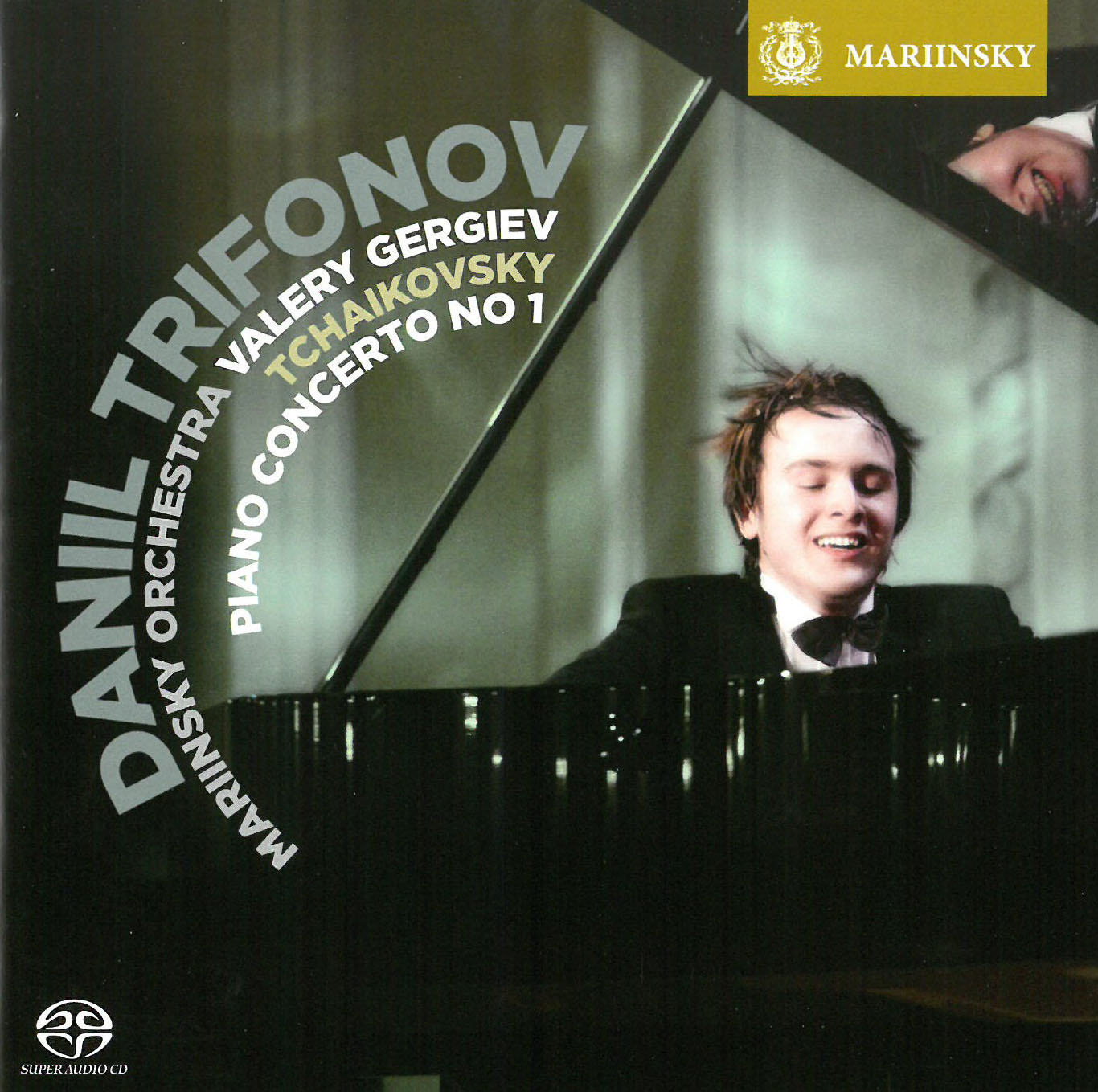
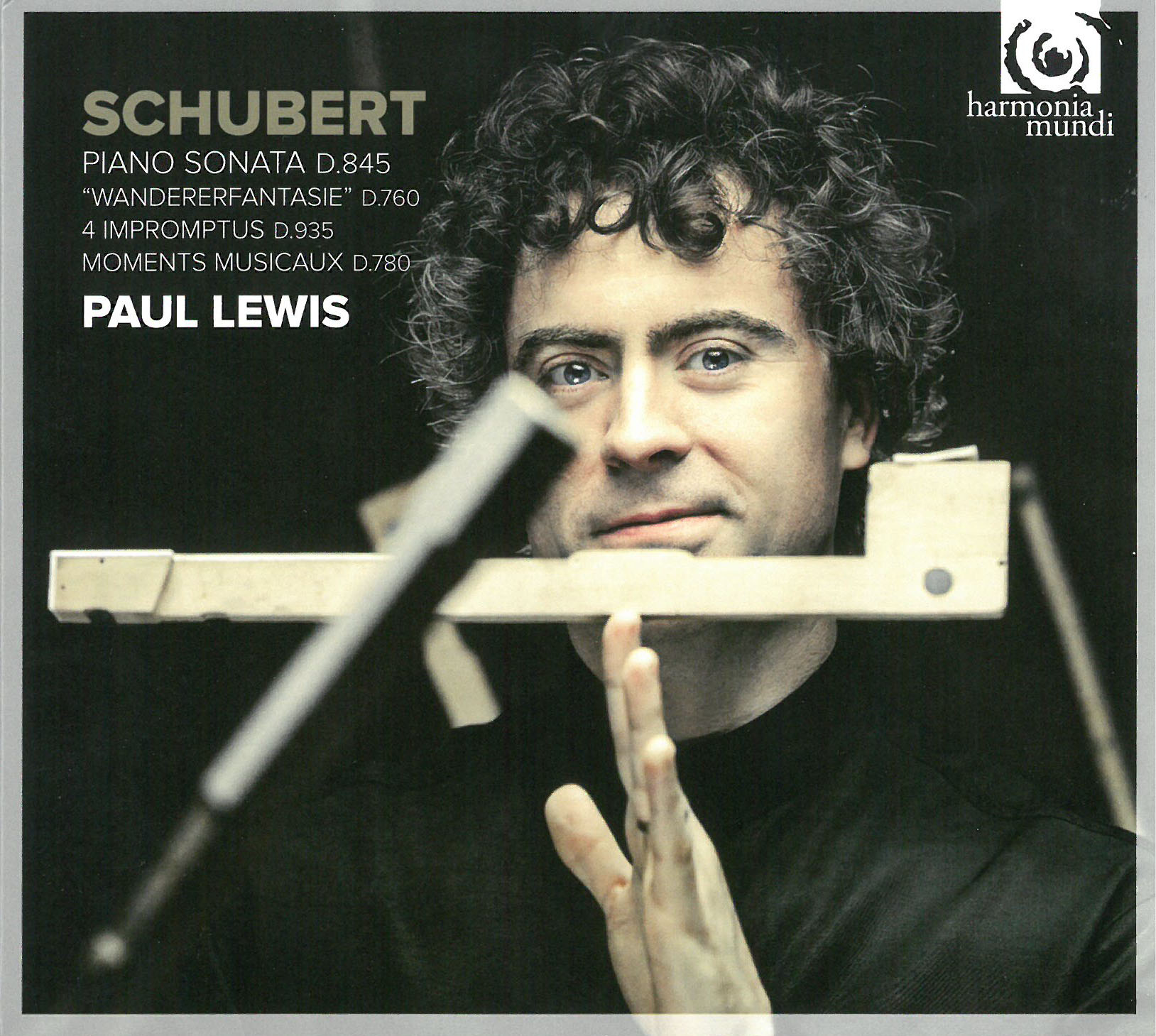
Francesconi’s 1991 composition Riti neurali for violin and ensemble is a live recording with the Israel Contemporary Players under Ilan Volkov. Subtitled Third Study on Memory, it was inspired by the composer’s fascination with a particular theory on the function of memory.

Barolsky’s playing is simply outstanding throughout a CD that is a significant addition to the contemporary solo violin discography.

05 Well Tempered LuteLutenist Žak Ozmo explores the music of Vincenzo Galilei on The Well-Tempered Lute Tones I-IV, another excellent CD from Hyperion (CDA68017).

Galilei was a respected member of the Camerata, an influential group of humanists, musicians, poets and intellectuals active in Florence in the late 1500s. The music here is taken from his Il Primo Libro d’intavolatura di liuto (1584), written for a six-course lute and which Ozmo, in the outstanding booklet notes, calls the first substantial musical collection to champion the versatility of a well-tempered tuning system, demonstrating the lute’s ability to transpose pieces to any of the 12 degrees of an equally tempered scale. Ozmo explains in fascinating detail the philosophical, interpretational and technical challenges that the work presents – which he says push both the player and the instrument to their limits – as well as the questions that need to be answered in order to perform it.

The technical challenges are clearly handled well, although the playing seems a bit dry and tight at times, no doubt due to the fact that in order to play the pieces on each step of the scale, the index finger of the left hand needs to be kept flat on the fingerboard after the first step. Anyone who has ever tried playing classical guitar with a permanent full barre chord will know what that entails!

Still, this is a fascinating CD that will doubtless more than repay repeated listening.

06 Quartetto CremonaThere’s another series of the Beethoven Complete String Quartets making its way through these remarkable works, this time by the Quartetto di Cremona on the audite label (92.684). The first volume was issued in March 2013.

I haven’t heard any of the previous releases, but if the new Volume V Super Audio CD is anything to go by, then I’ve really been missing something. There’s only one quartet on this issue – No.15, the String Quartet in A Minor Op.132 – but the ensemble is joined by the outstanding Lawrence Dutton on viola for the early String Quintet in C Major Op.29.

This Italian quartet has been around for ten years now, and much is made of their training with the Quartetto Italiano’s Piero Farulli and the Alban Berg Quartet’s Hatto Beyerle; the resulting mix of an intuitive, emotional approach to the music with the classical German-Austrian focus on form and structure. Their playing here certainly bears that out, with a fine sense of shape and form never compromising the warmth and spontaneity of the playing.

Three further volumes are planned to complete the series of eight regular-priced CDs. How this set will fare in a fiercely competitive field where 2CD issues and box sets are the norm remains to be seen, but the performances themselves will more than hold their own, I’m sure.


Back to top