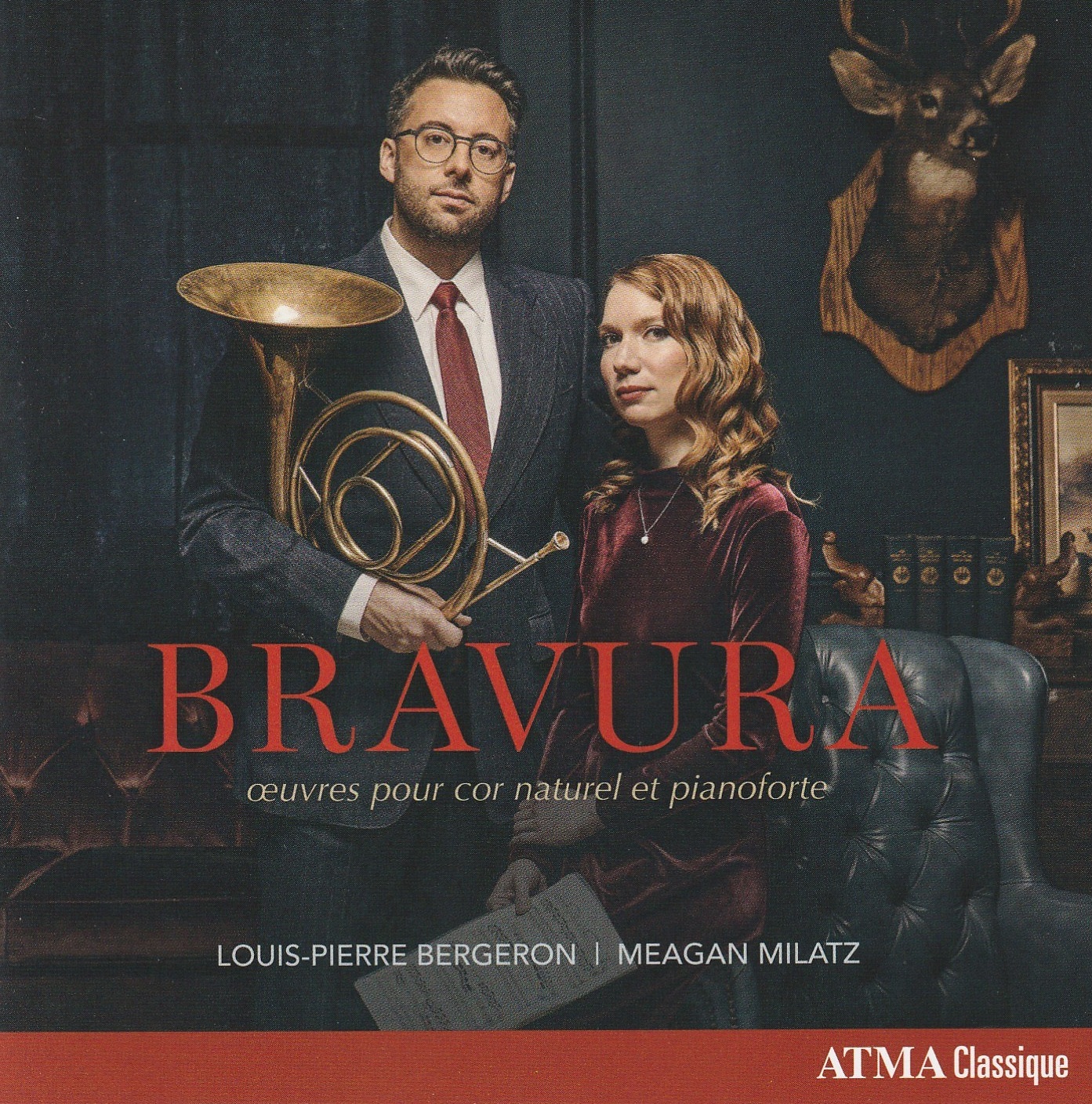
01 BravuraBravura – Works for Natural Horn and Piano
Louis-Pierre Bergeron; Meagan Milatz
ATMA ACD2 2864 (atmaclassique.com/en)

The natural horn, like its successor the French horn, has, in the right hands, a buttery, full and round timbre and tone that makes one wonder why you would ever again listen to the more strident trumpet. And on ATMA Classique’s terrific 2024 recording, Bravura: Works for Natural Horn and Piano, that question is indeed put to the test. 

Making his recording debut as a leader, the virtuosic Canadian hornist Louis-Pierre Bergeron demonstrates just how beautiful and expressive this pre-19th century brass instrument can be. Ably accompanied by Meagan Milatz on the Classical-era Fortepiano, this sympatico duo mines a set of repertoire that includes impressive works, largely new to me, by Franz Xaver Süssmayr, Ludwig van Beethoven, Nikolaus Freiherr von Krufft and Vincenzo Righini in order to feature this unique instrumental pairing. Take, for example, Cipriani Potter’s Sonata di bravura for Horn and Piano in E-flat Major that captures Bergeron and Milatz at their most expressive and playful. Over 20 minutes in length, this multi-themed piece affords both principals space to showcase their renowned musical abilities, while offering room for the antiquated instruments to interact within a decidedly modern recording context.

As a studio musician, hornist with the National Arts Centre Orchestra and a frequent collaborator with Tafelmusik and various pop ensembles, Bergeron is clearly used to this blending of the old with the new. But for listeners new to the instrumental pairing here, Bravura is unexpectedly refreshing, exciting and musically satisfying.

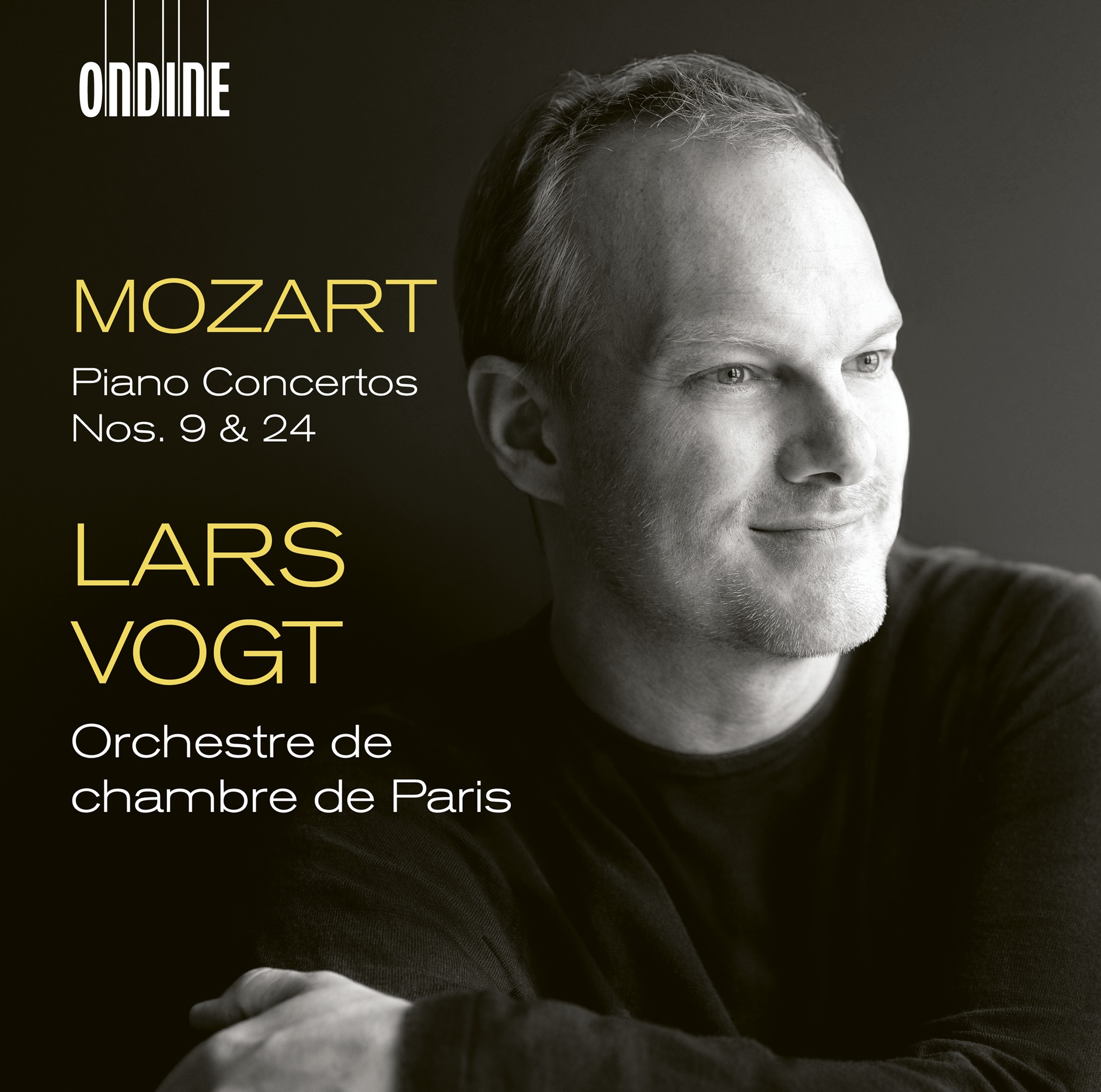
02 Lars Vogt MozartMozart – Piano Concertos 9 & 24
Lars Vogt; Orchestre de chamber de Paris
Ondine ODE 1414-2 (naxos.com/Search/KeywordSearchResults/?q=ODE1414-2)

In a sad loss to the music world, in September 2021 at age 51 a remarkable German pianist, conductor and wonderful human being, Lars Vogt passed away leaving behind an impressive career and a worldwide reputation. He appeared as soloist with many major orchestras (including Berlin and Vienna), created his own Music Festival, won numerous awards and had a distinguished discography. Unfortunately, this is his last recording. It has already acquired numerous awards (e.g. Critic’s Choice, Gramophone) and I just couldn’t stop listening. I would include it among my “desert island” discs.

 Vogt had such love for these two Mozart concertos that he felt compelled to record them even in the midst of medical treatments. The two are as different as can be. The first piece, the bold and youthful No.9 in E-flat, Mozart’s first major statement in the genre, has a well-fitting nickname Jeunehomme. It is a concerto of contrasts. After the elegant and optimistic major key first movement, the second is in the relative C minor key and has a tragic, somber atmosphere while the final Rondo is joyful and exuberant.

Out of Mozart’s 27 piano concertos nine are undisputed masterpieces, all of them written in the last two years of his tragically short life. Among these, only two were in a minor key and No.24 is arguably his greatest. The dark C minor chords dominate the first movement which is in a very unusual 3/4 measure, obviously meant to be close to the composer’s heartbeat. (The long virtuoso cadenza at the very end of the first movement was composed by Vogt). The heavenly second movement brings some happiness, but the last one is again in a minor key. Its set of variations on a simple theme brings a virtuoso, brilliant ending.

My feeling concurs with Vogt that “this idea that despite everything things aren’t so horrible in this world… It always plays a role in Mozart.”

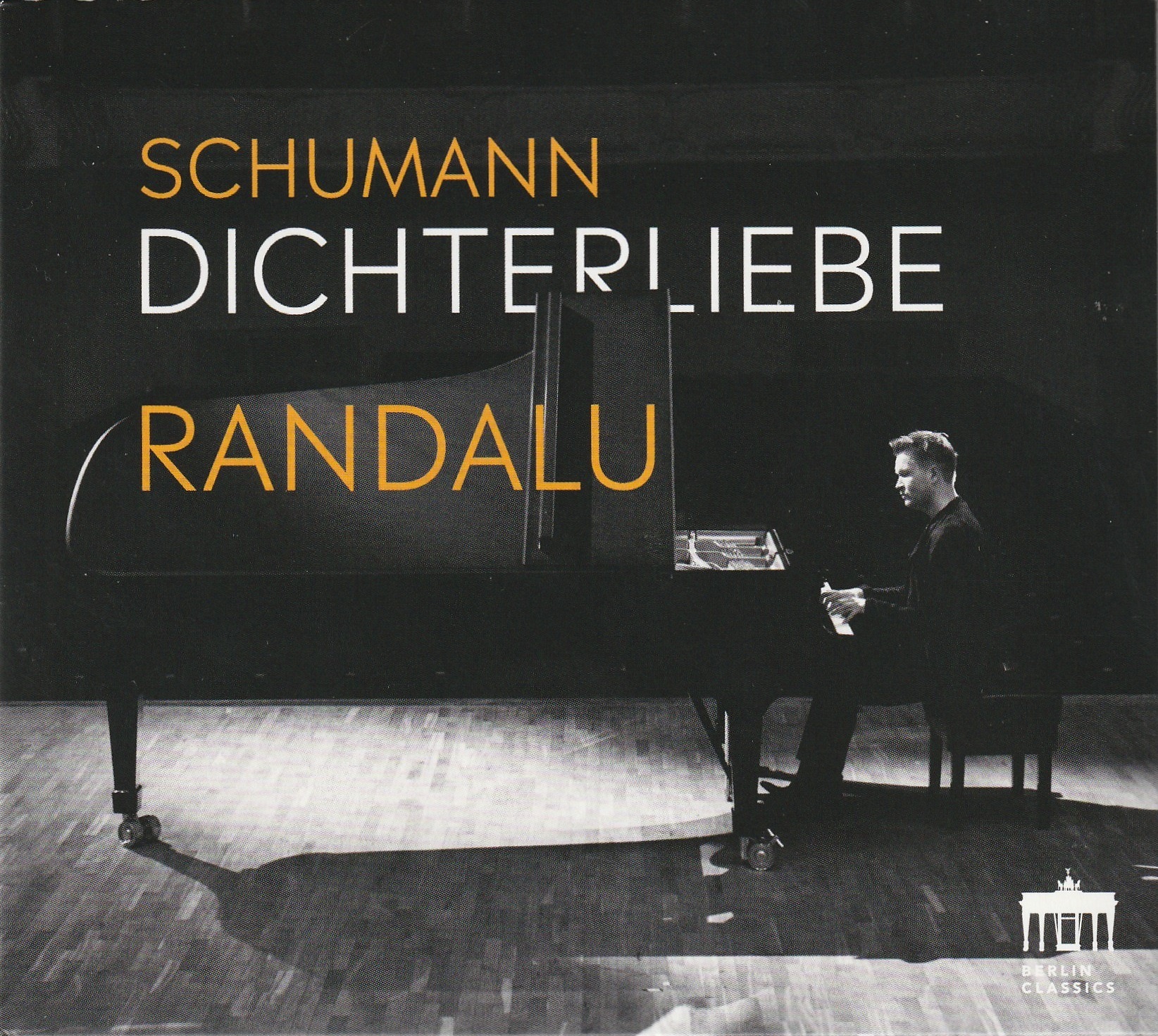
03 Schumann DicterliebcSchumann – Dichterliebe
Kristjan Randalu
Berlin Classics 0303295BC (prestomusic.com/classical/products/9609352--dichterliebe)

This recording of Robert Schumann’s Dichterliebe by Kristjan Randalu is one of the most ingenious piano recordings not only of anything Schumann that I have heard but possibly any recent solo piano recording. And there have been many recordings by classical pianists far more celebrated than Randalu. All is explained in the final paragraphs below. 

Dichterliebe (Poet’s Love), a cycle of 16 songs, takes its text from Henrich Heine. It introduces to German song a mingling of sentiment and irony, much as Heine’s poems had done for German verse. This is a world of disillusionment in which nature acts as an adjunct and reflection to a bittersweet love story. 

Perhaps the most immortal interpretation of this song-cycle is baritone Dietrich Fischer-Dieskau and pianist Alfred Brendel’s (Philips, 1986). In this (and every other version) the piano becomes an equal partner with the singer, appearing sometimes as a combatant, sometimes as commentator, and given the long preludes and postludes, the instrument adds an extra dimension to the possibilities of the lieder genre. Randalu makes all of the above happen by masterfully employing his insolent virtuosity and febrile imagination to Dichterliebe.

Randalu’s right hand cadenzas are “the singer” adding “vocalastics” through improvisation, a second layer of colour, liberating the lyrical element of Dichterliebe, and defining the emotional element more precisely. His left-hand acts as combatant and commentator. Together they offer Dichterliebe as Schumann dreamed: “a deeper insight into my inner musical workings.”

04 BREAKING GLASS CEILINGS MUSIC BY UNRULY WOMENBreaking Glass Ceilings – Music by Unruly Women
Rose Wollman; Dror Baitel
SBOVMusic (sbovmusic.com)

Expansions of the classical canon are always welcome. Offering much needed opportunities to infuse new and diverse voices into the ongoing history of this music not only provides revitalized repertoire for potentially warhorse weary ears, but such fresh compositional contributions underscore just how relevant, vibrant and still meaningful an art form classical music remains. All of the above is most certainly the case with violist Rose Wollman and pianist Dror Baitel’s excellent 2024 duo recording, Breaking Glass Ceilings, a collection of fine music from the pens of four women composers: Florence Price, Libby Larsen, Rebecca Clarke and Amy Beach.

Released on Sounds Better on Viola (SBOV) records, Breaking Glass Ceilings showcases not only an exciting program of lesser-known pieces by three deceased and one still-living composer, but traverses style (from the lush Romantic-era inspired sounds of Beach to the contemporary and decidedly American influenced compositions of Larsen), and, perhaps most of all, offers up an exciting new duo set of viola and piano performances with impressive results. 

While described as a musical celebration of “women who were told ‘no’ and did it anyway,” the recording may have an agenda to correct long standing historical omissions but there is nothing didactic here. Instead, what we have is an effervescent contemporary recording featuring excellent interplay and blue-chip musicianship from two accomplished soloists and performers. An excellent addition to the collection for fans of the genre.

05 Tchaikovsky Symphonies No. 4 5 6Tchaikovsky – Symphonies 4, 5 & 6
Park Avenue Chamber Orchestra; David Bernard
Recursive Classics RC4789671 (chambersymphony.com/recordings)

Conductor David Bernard has organized and conducted orchestras such as this Park Avenue Chamber Symphony, bringing them up to excellence in concerts and recordings recognized by audiences worldwide and to critical acclaim by the likes of the New York Times and Gramophone magazine. There is a photo of Bernard as a young kid getting a conducting lesson from the great Serghiu Chelibidache and I consider this his highest recommendation. By the way, chamber symphony is a misnomer. They are full size and have all the instruments of a complete symphony orchestra.

Tchaikovsky’s late symphonies, the Mighty Three, are cornerstones of musical literature. These are divinely inspired and among the most important and beautiful works of the master (and perhaps of all Russian composers). I have been in love with the passionate Fourth Symphony in F Minor since seeing Rudolf Kempe doing it so beautifully at Massey Hall back in the 60s with the Royal Philharmonic. In the entire symphonic literature there are few other works that test all sections of an orchestra and its individual instruments in technical brilliance: just think of the virtuoso pizzicato third movement that requires the entire string section to be in perfect unison and coordinated like a giant balalaika. These Park Avenue Chamber players are having a lot of fun with it and can be congratulated on passing the test very well. The sunny, optimistic, heroic and arguably the most beautiful of the three, Symphony No.5 in E Minor and the soul-searching gut wrenching but noble and magnificent Symphony No.6 in B Minor, the “Pathetique” are given equally fine performances.

As a distinguishing feature I noticed the conductor’s obvious effort to bring out all that’s written down in the score thus exposing internal voices I’ve not heard before. But what impressed me most is Bernard and his orchestra’s tremendous enthusiasm and love of this music that one can feel. It shows as if it were a live performance which is not easy to achieve. All in all, not a Mravinsky, nor a Karajan, but lovingly played and a sincere noble effort and that could be the most important element.

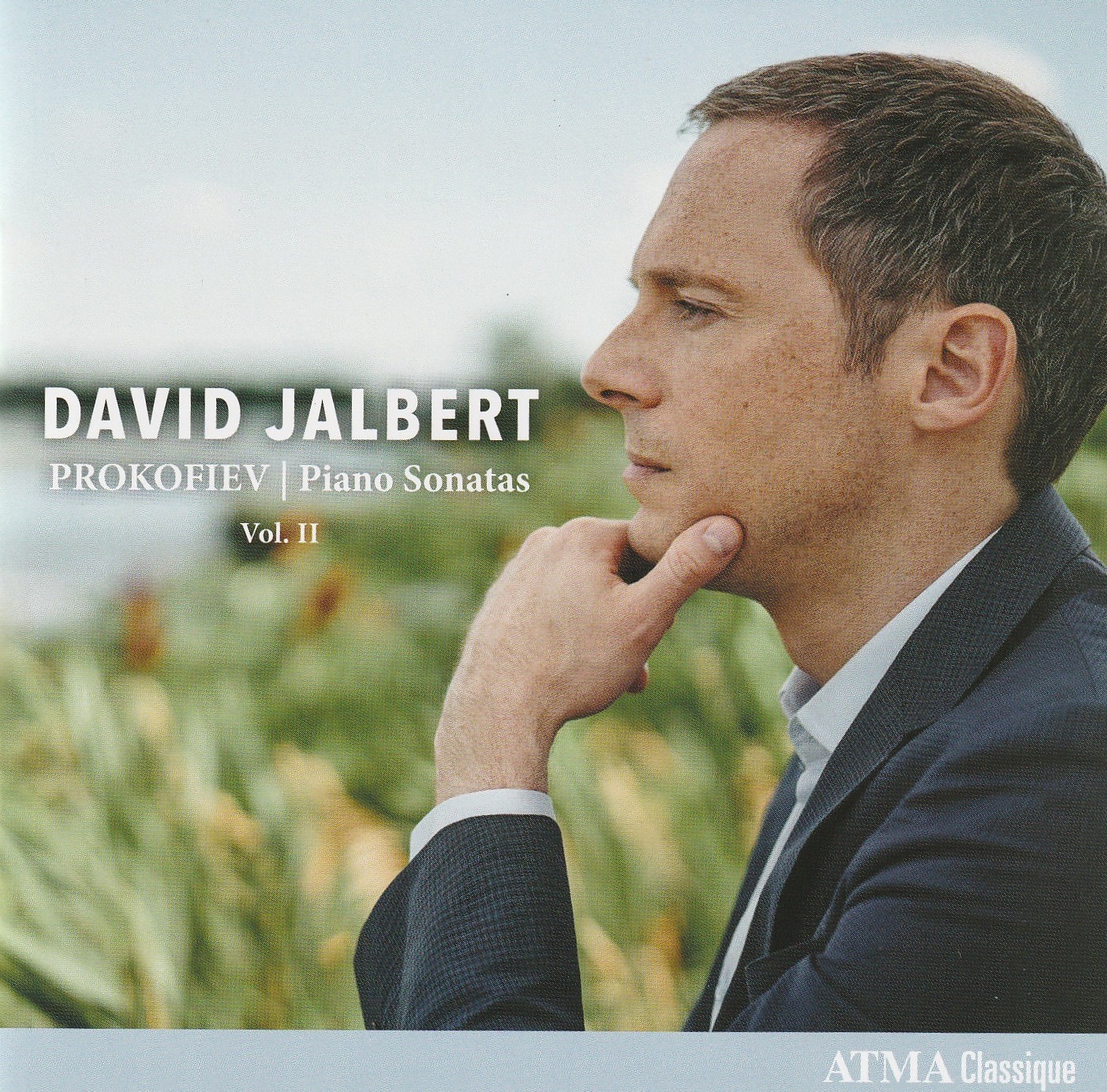
06 Prokofiev JalbertProkofiev – Piano Sonatas Vol.II
David Jalbert
ATMA ACD2 2462 (atmaclassique.com/en)

One of the 20th century’s most significant composers, Sergei Prokofiev’s music continues to challenge performers and listeners alike with its thrilling rhythms, complex harmonies and technically demanding scores. An expert pianist himself, Prokofiev’s piano music is notoriously challenging, notably demonstrated in his first two piano concertos.

A prolific writer, Prokofiev composed nine piano sonatas in addition to seven completed operas, seven symphonies, eight ballets, five piano concertos and a number of other large-scale works. Featuring Piano Sonatas 5-7, Canadian pianist David Jalbert gives a commanding survey of Prokofiev’s powerhouse writing for piano in this, his second installment in a series of the complete piano sonatas.

Piano Sonata No.5 in C Major is the least-performed of all Prokofiev’s sonatas, largely due to its cumbersome history. Accused of “formalism” by the Stalin regime in 1948, Prokofiev re-composed the third movement, simplifying his music in accordance with Stalin’s dictates. These unwanted, detrimental changes weakened the structure of the sonata, so much so that Prokofiev issued it a new opus number. Despite these political-compositional accommodations, Jalbert injects great energy and conviction into his interpretation, overcoming any weakness in the score with a strong and captivating performance.

Sonatas six and seven, written in 1940 and 1942 respectively, are known as the War Sonatas (along with Sonata No.8, composed in 1944). These works are at once thrilling, expressive and devastating, effectively distilling the angst and anguish of the time into one piano and two hands. This music needs to be attacked and thrust upon the audience, and Jalbert achieves this with gripping success, making this recording essential listening for pianophiles everywhere.

07 The Lost GenerationThe Lost Generation
The Orchestra Now; Leon Botstein
Avie Records AV2684 (avie-records.com/releases/the-lost-generation-hugo-kauder-•-hans-erich-apostel-•-adolph-busch)

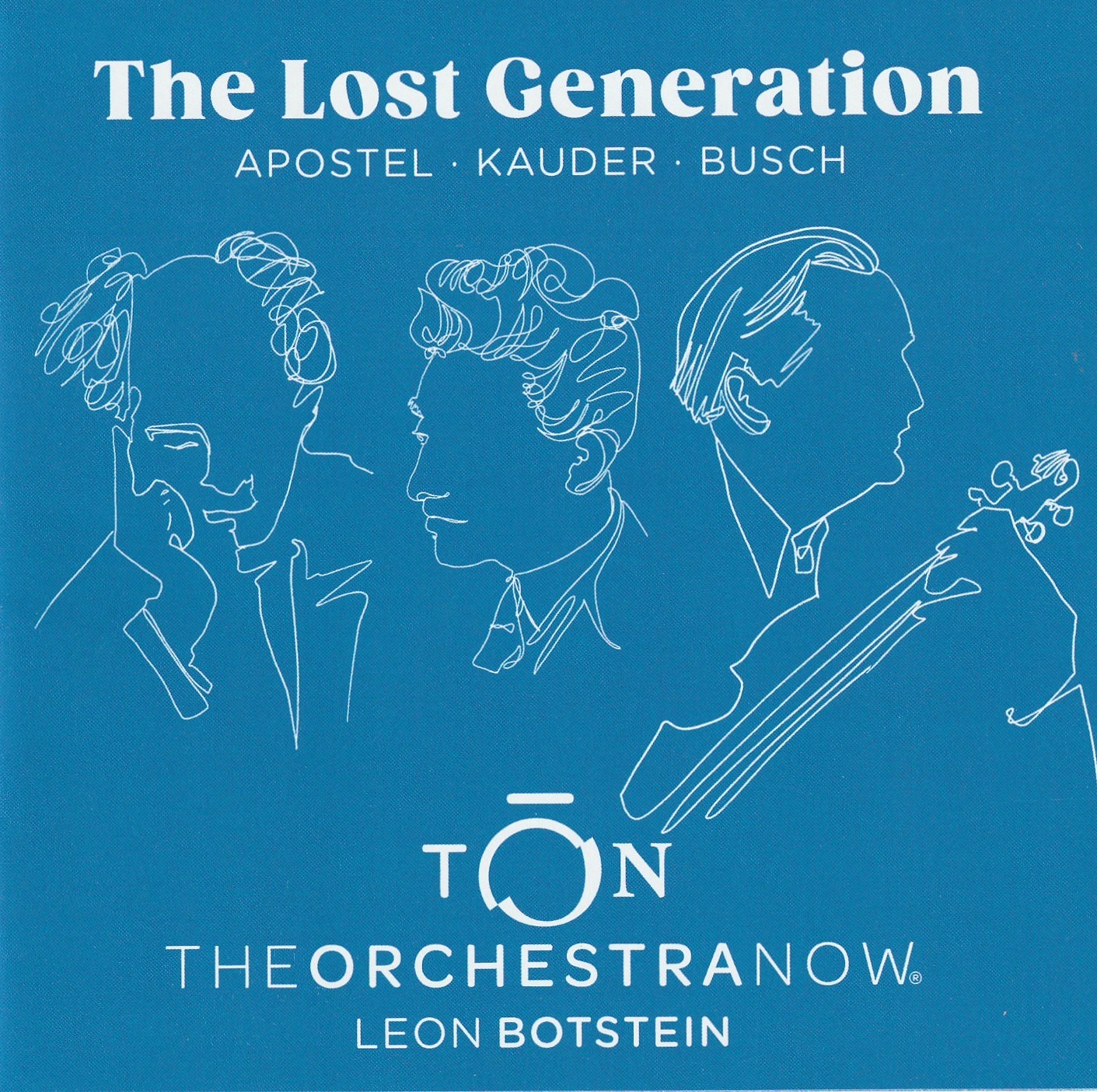
Leon Botstein (founder-conductor of Orchestra Now, a graduate-level, multi-year program at Bard College in Red Hook, New York) enjoys rediscovering and performing unfairly neglected works. Here, works by three composers of “the lost generation” – those born between 1888 and 1901 – receive their first available recordings.

Hans Erich Apostel’s Variations on a Theme by Haydn (1940) utilizes a graceful theme from Haydn’s Symphony No.103. Apostel’s variations, while not completely atonal, reflect his studies with Schoenberg and Berg. Despite their melodic aridity and astringent harmonies, listener engagement is maintained by Apostel’s imaginative changes of tempo, rhythm and orchestration.

Renowned violinist Adolf Busch composed his sentimental, cheerful Variations on an Original Theme for piano four-hands (1944) as a Christmas gift for his wife. Often played by his son-in-law Rudolf Serkin and grandson Peter, they’re heard here in Peter Serkin’s orchestration.

The CD’s major offering, Hugo Kauder’s 40-minute Symphony No.1 (1920-1921), opens with Bewegt. As per its title, it’s emotionally agitated, Brucknerian in sonority and drama. The following scherzo is a wryly rustic Mahlerian dance (Kauder dedicated the symphony to Alma Mahler), interrupted by a lyrically nostalgic trio. The gorgeous slow movement is very much in the Bruckner-Mahler mould, featuring long-lined, yearning melodies and noble, hymn-like crescendos. The finale, a passacaglia, begins skulkingly, with alternating playful and solemn variations before ending abruptly. Amazingly, it took 100 years since its creation for Botstein to conduct this fine symphony’s U.S. premiere at Carnegie Hall in 2022.

08 Cuando el FuegoCuando el Fuego Abrasa
Ensemble Bayona; Eros Jaca
Eudora Records EUD-SACD-2403 (eudorarecords.com)

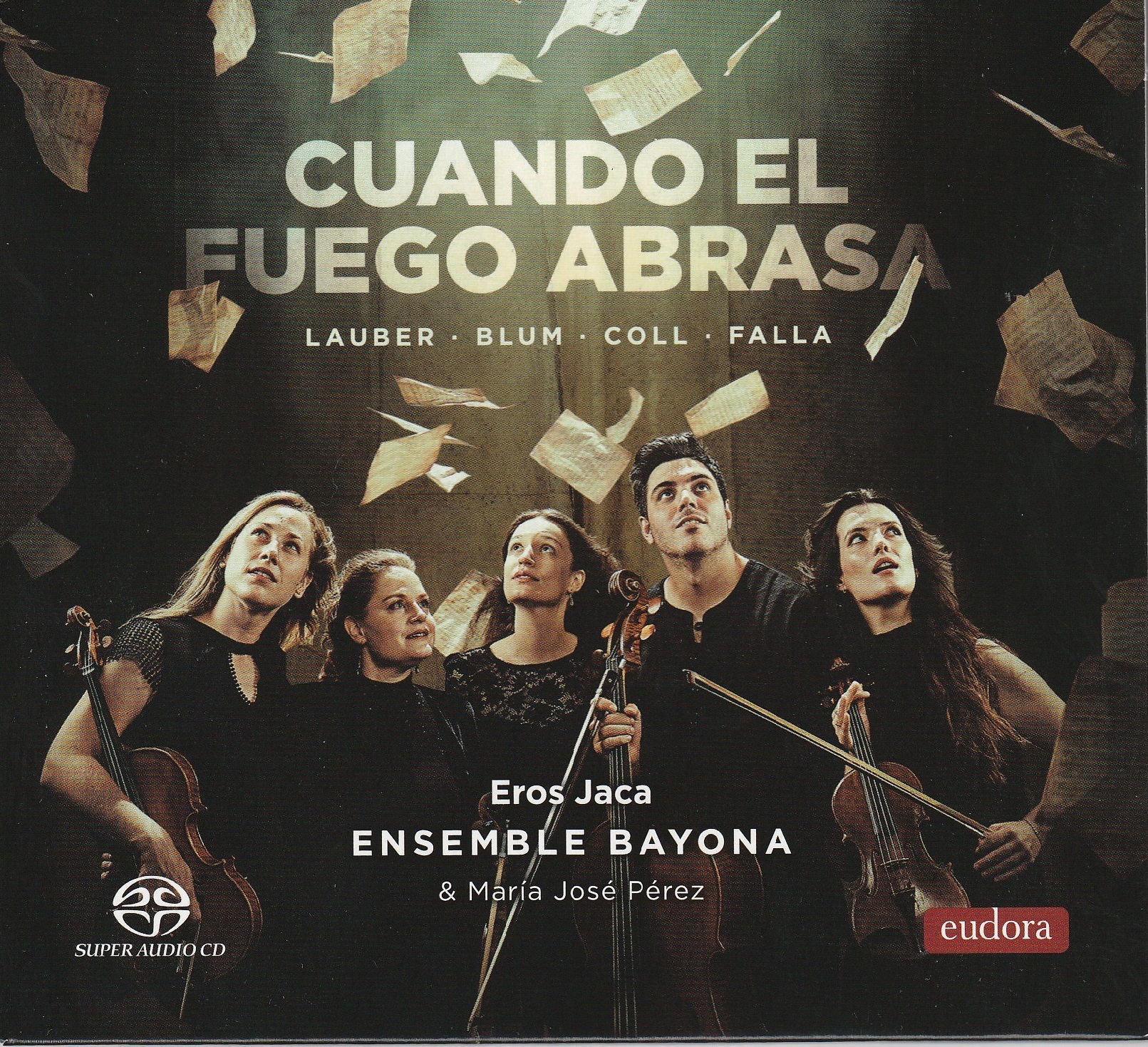
At first glance, the cultural connection between Spain and Switzerland may seem a tenuous one. Nevertheless, the two countries work closely together on political, economic and cultural levels and this premier recording by the Spanish-based quintet Ensemble Bayona is an intriguing demonstration of this close alignment. Titled Cuando el Fuego Abras (When the Fire Burns), it features works by both Swiss and Spanish composers, all of them first recordings.

Focusing on music from the first half of the 20th century, the ensemble made its debut in Berlin in 2021 having won the Dwight and Ursula Mamlok Prize the previous year. 

The disc opens with the Piano Quintet in F Major Op.6 by Swiss composer Joseph Lauber, music very much in the German late romantic style. What a fine sound these musicians produce, the warm tone of the strings – particularly from cellist and artistic director Eros Jaca – perfectly blending with the solid and assured playing by pianist Camile Sublet.

In contrast are two contemporary compositions, the Variations on a Swiss Theme for string trio by Swiss-born Christoph Blum and the Cantos for string quartet by Valencian composer Francisco Coll. The variations are a true study in contrasts with alternating pizzicati and glissandi and the use of vocal parts throughout, while the Cantos is quietly introspective.

The program returns to 20th century Spain with a 12-movement suite from Manual de Falla’s 1915 ballet El Amor Brujo specifically arranged for the ensemble by the Spanish composer José Luis Turina. The ensemble approaches the music with much bravado with vocalist Maria José Pérez further enhancing this fine performance of De Falla’s colourful and sensuous score.

With outstanding playing and a melding of two musical cultures, this disc is well worth investigating.

09 SolaceSolace
Kormaz Can Saglam
Sono Luminus DSL-92272 (sonoluminus.com/store/solace)

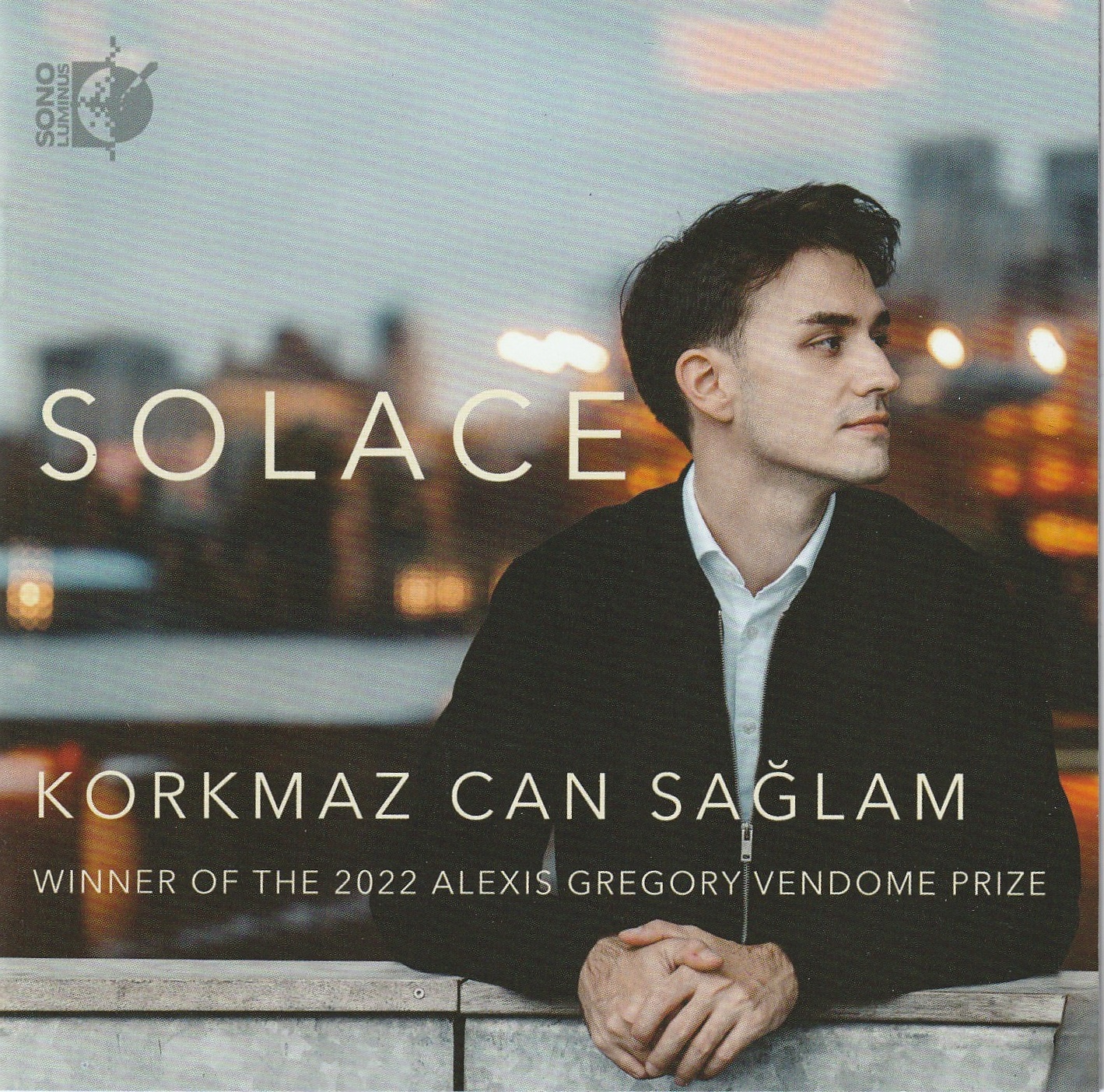
The name Korkmaz Can Sağlam may not be an overly familiar one, but this up and coming Turkish pianist already has much to his credit. Born in Ankara in 1999, he was the Grand Prize winner of the 2022 Alexis Gregory Vendome Prize, having received his bachelor’s degree from the Juilliard School. While there, he was also recipient of the Ahmet Ertegün Memorial Scholarship and the Susan W. Rose Piano Fellowship. Sağlam is currently pursuing his master’s degree at the Cleveland Institute and this premiere recording, featuring works by Handel, Rachmaninoff and Turkish composer Ilayda Deniz Oguz, is worthy proof of his stature.  

Handel’s six-movement Suite in D Minor (c.1720) is a set of stylized dance movements, each a musical miniature. Sağlam delivers a polished and elegant performance, from the expansive opening Prelude to the virtuosic presto finale, easily demonstrating that baroque keyboard repertoire can sound as convincing on a concert grand as it does on a harpsichord.

History has never been too kind to the Rachmaninoff Piano Sonata No.1 Op.28. Very much in the grand late romantic tradition; it was written for the composer’s tour to the U.S. in 1909, yet he never performed it in public again. Nevertheless, Sağlam approaches the score with a particular vitality, always clearly focused throughout the myriad technical complexities.

In contrast is Rachmaninoff’s lyrical In the Silence of the Secret Night, the third of his Six Romances Op.4. Of even greater dissimilarity is Bozluk, a contemporary composition by Sağlam’s friend Ilayda Deniz Oguz, where the use of prepared piano demonstrates yet another facet of Sağlam’s musical capabilities.

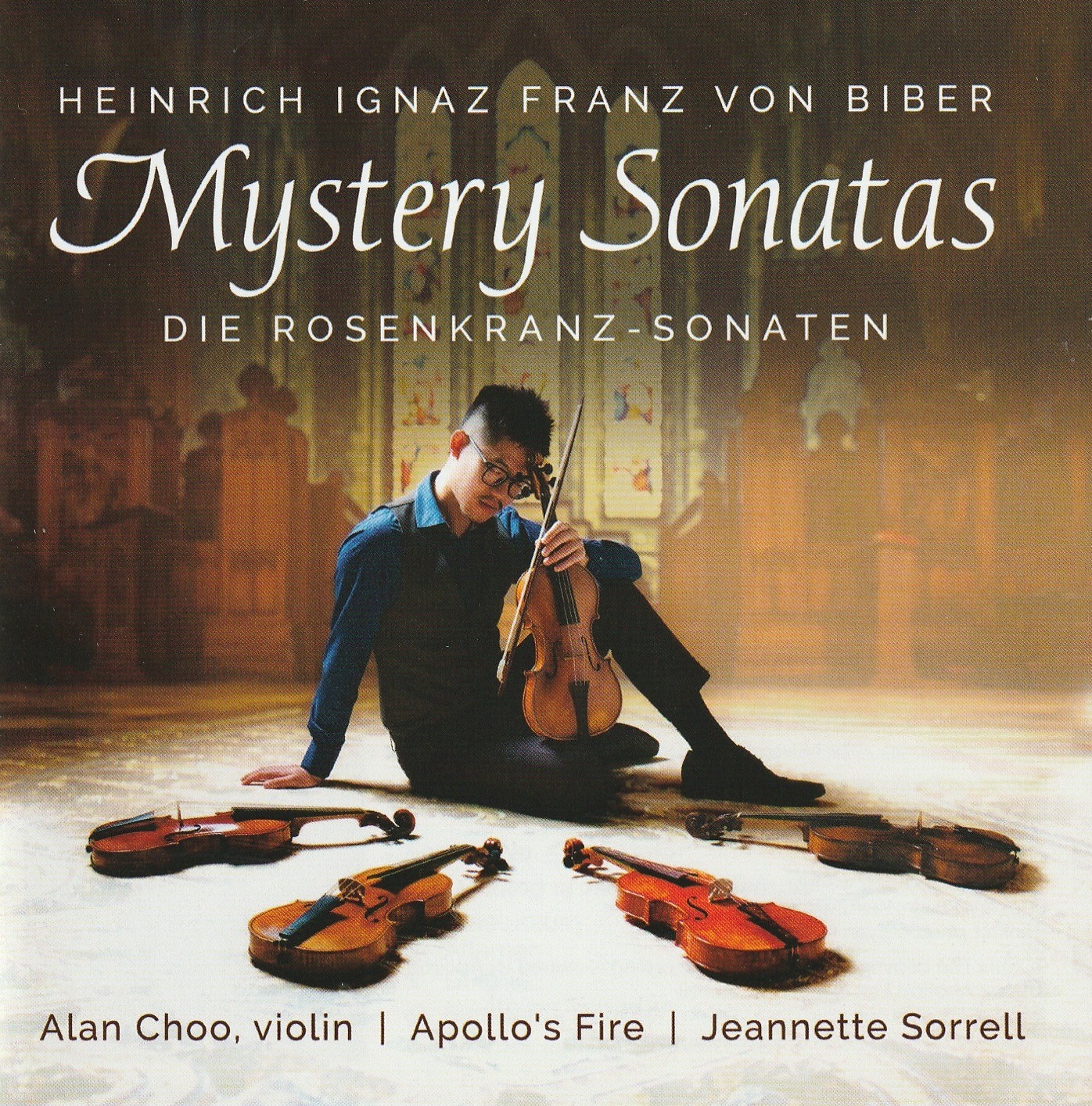
01 Biber MysteriesThere’s an outstanding new recording of the quite remarkable Mystery Sonatas, or Rosary Sonatas of Heinrich Ignaz Franz von Biber, violinist Alan Choo the exceptional soloist with Apollo’s Fire, under the direction of Jeanette Sorrell at the harpsichord (Avie AV2656 avie-records.com).

Believed to have been written in the 1670s and never published – the sole source is the manuscript dating from around 1676 – the 15 sonatas follow events in the lives of Jesus and the Virgin Mary, known in Catholic tradition as the Mysteries of the Rosary. A monumental solo, Passacaglia in G Minor, completes the set.

What makes the work so remarkable is the unprecedented and unsurpassed use of scordatura – the re-tuning of the violin strings – with all 15 sonatas requiring different tunings and the resulting use of multiple violins, Choo using six here.

The manuscript gives no indication regarding accompaniment, with Sorrell choosing to use various combinations of continuo instruments to add colour and variety to the individual sonatas.

Excellent booklet notes, with full tuning details and reproductions of the copper engravings Biber placed at the start of each sonata in the manuscript, add to a superb release.
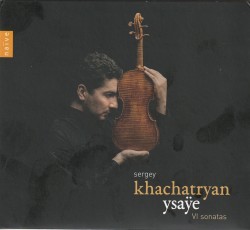
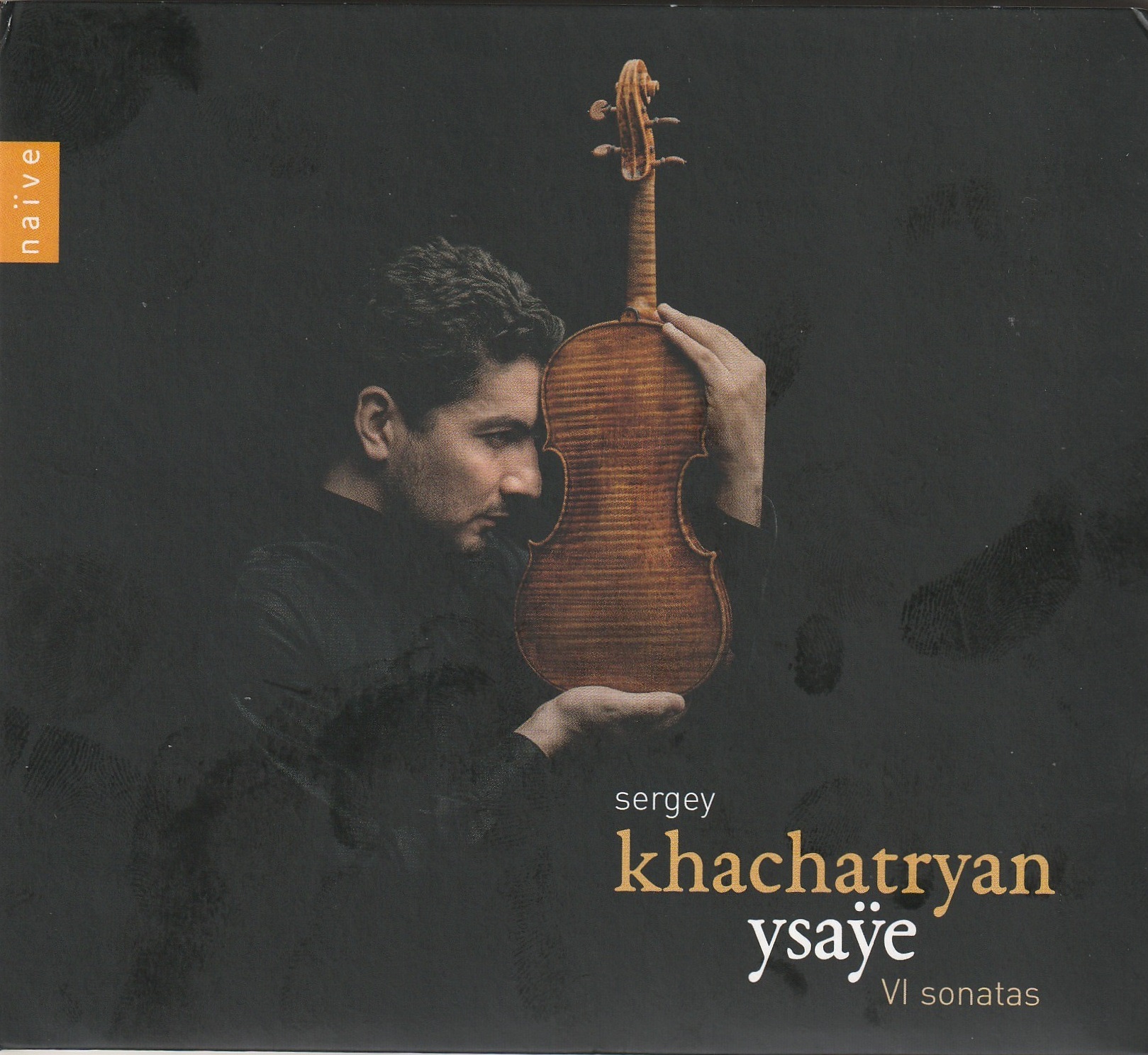
02 Ysaye KhachatryanThe Armenian violinist Sergey Khachatryan is simply superb on Ysaÿe VI Sonatas, the set of 6 Sonatas for solo violin Op.27 by the Belgian violinist and composer Eugene Ysaÿe (naïve V 5451 arkivmusic.com/products/ysaye-sergey-khachatryan).

After hearing Joseph Szigeti play Bach’s Sonata No.1 in G Minor in early 1923, Ysaÿe decided to compose his own tribute to Bach, reflecting current musical language and violin technique while also incorporating elements of Szigeti’s style. By July he had written a further five, each dedicated to and depicting a different violinist: Jacques Thibaud; Georges Enescu; Fritz Kreisler; Mathieu Crickboom; and Manuel Quiroga.

What makes this release extra special, though, is the fact that it marks the first recording of the sonatas on Ysaÿe’s 1740 Guarneri del Gesù violin, on loan from the Nippon Music Foundation; its sumptuous tone in such supremely talented hands fully exploits the instrument’s wide range of tonal colour.
Listen to 'Ysaÿe VI Sonatas' Now in the Listening Room

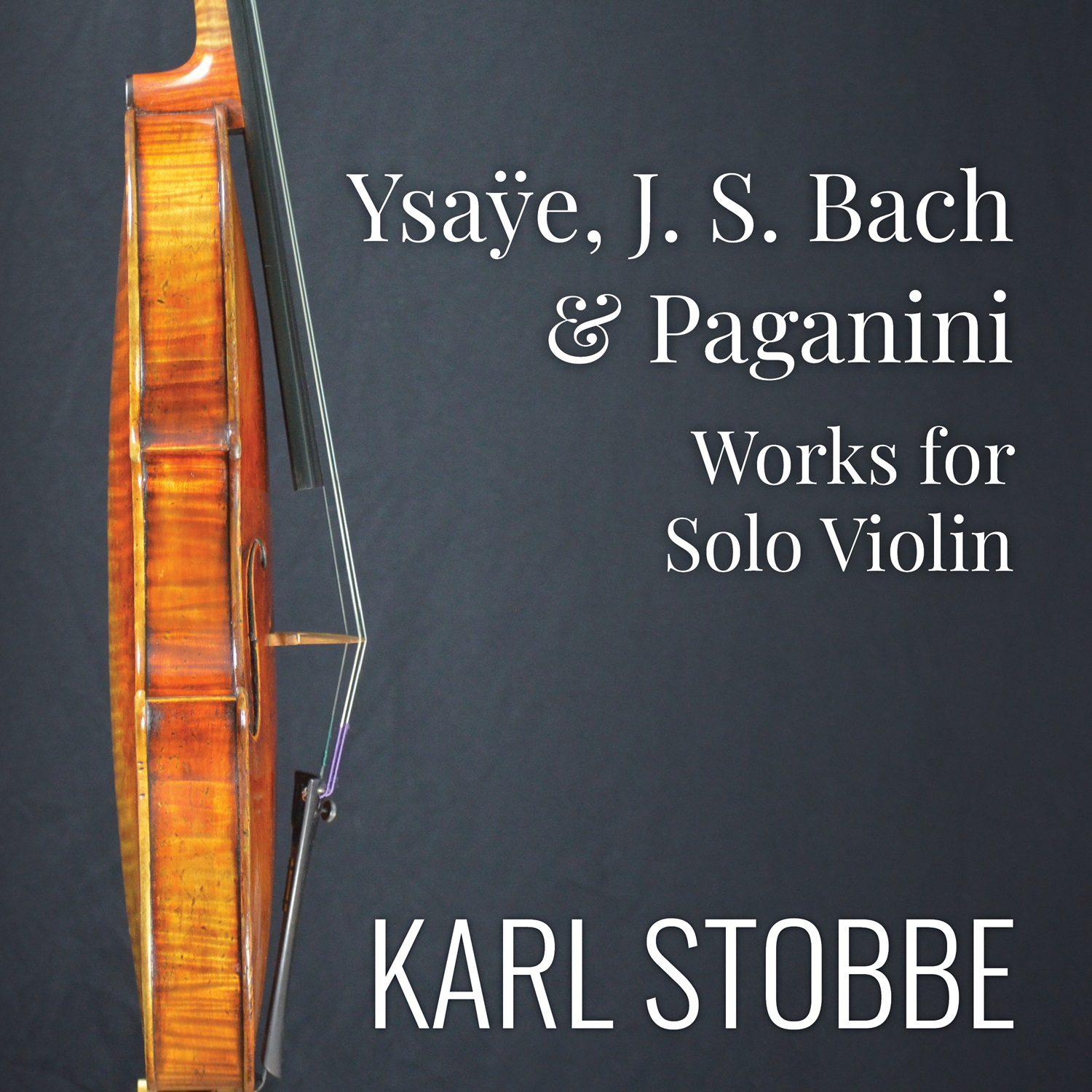
03 Bach Karl StobbeCanadian violinist Karl Stobbe presents works for solo violin by Ysaÿe, J.S. Bach & Paganini in a digital release that is part of a six-album series based on the Bach Sonatas & Partitas (Leaf Music LM294 leaf-music.ca).

The Bach work here is the Partita No.1 in B Minor, BWV1002, with Ysaÿe’s Sonata in E Minor, Op.27 No.4 (dedicated to Fritz Kreisler) opening the recital and three of Paganini’s 24 Caprices Op.1 – No.9 in E Major, No.17 in E-flat Major and No.24 in A Minor – closing it. There is a hidden connection here: Kreisler apparently had a special affinity for this particular Bach Partita, and also arranged the Paganini Caprices for violin and piano.

Technical difficulties don’t seem to present any challenge for Stobbe, who handles everything with ease with his 1806 Nicolas Lupot violin and 1790 François Xavier Tourte bow.
Listen to 'Ysaÿe, J.S. Bach & Paganini' Now in the Listening Room

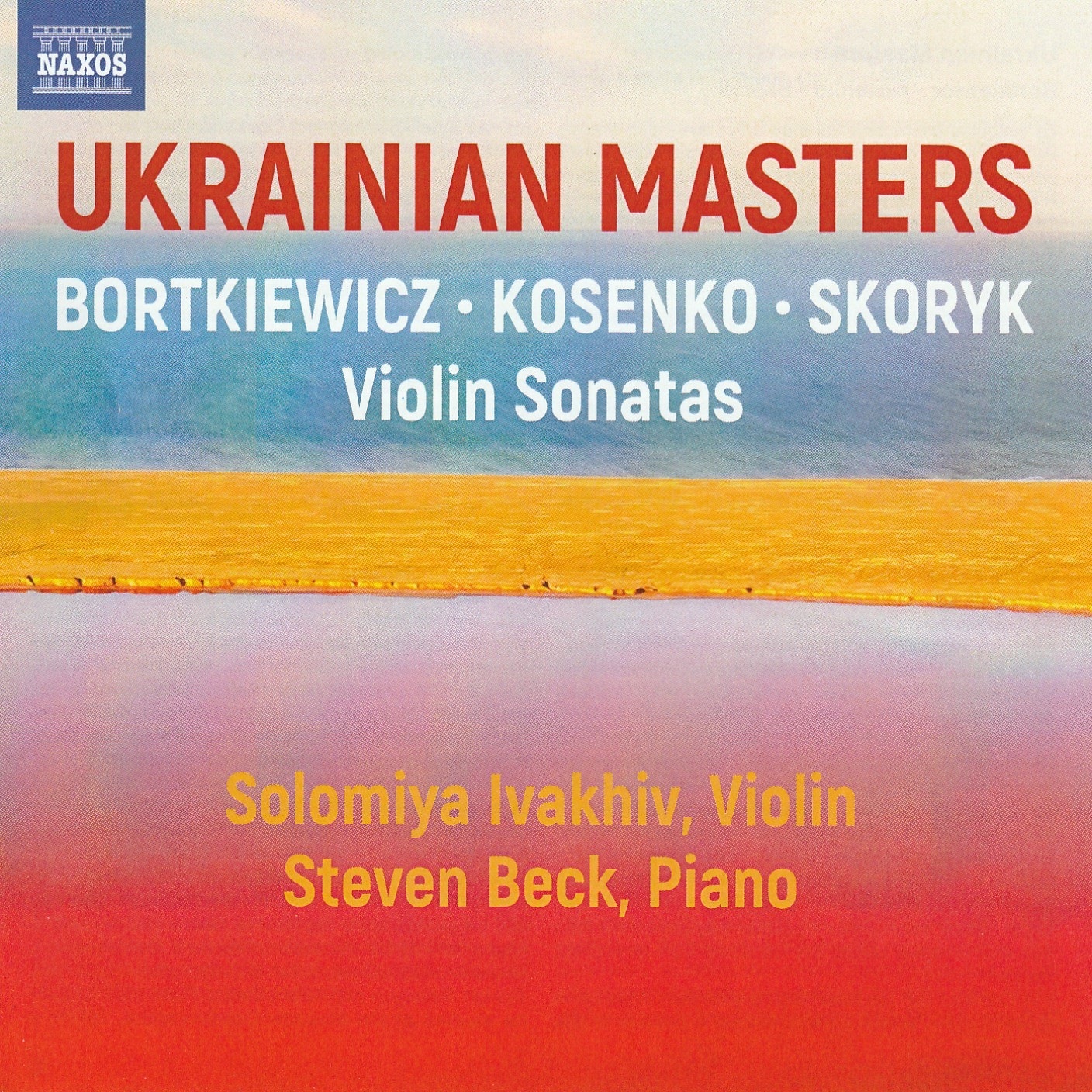
04 Ukrainian MastersUkrainian-American violinist Solomiya Ivakhiv continues her mission to share the music of her home country with Ukrainian Masters, a new CD featuring 20th-century sonatas by three major figures in Ukrainian classical music. Steven Beck is the pianist (Naxos 8.579146 naxos.com/CatalogueDetail/?id=8.579146).

The world-premiere recording of the1927 Violin Sonata in A Minor, Op.18 by Viktor Kosenko (1896-1938) is quite lovely, a lush, immediately accessible work beautifully played. The 1991 Violin Sonata No.2 by Myroslav Skoryk (1938-2020) with its “pointed allusions to Beethoven, Prokofiev and Gershwin” is another winner, with more fine playing.

Ivakhiv only recently discovered the music of Sergei Bortkiewicz (1877-1952), which was banned in the Soviet Union after he fled Ukraine in 1919. His Violin Sonata in G Minor, Op.26 was written in 1922 in Germany, and finds his mature musical language “at its most vivid and directly communicative.”
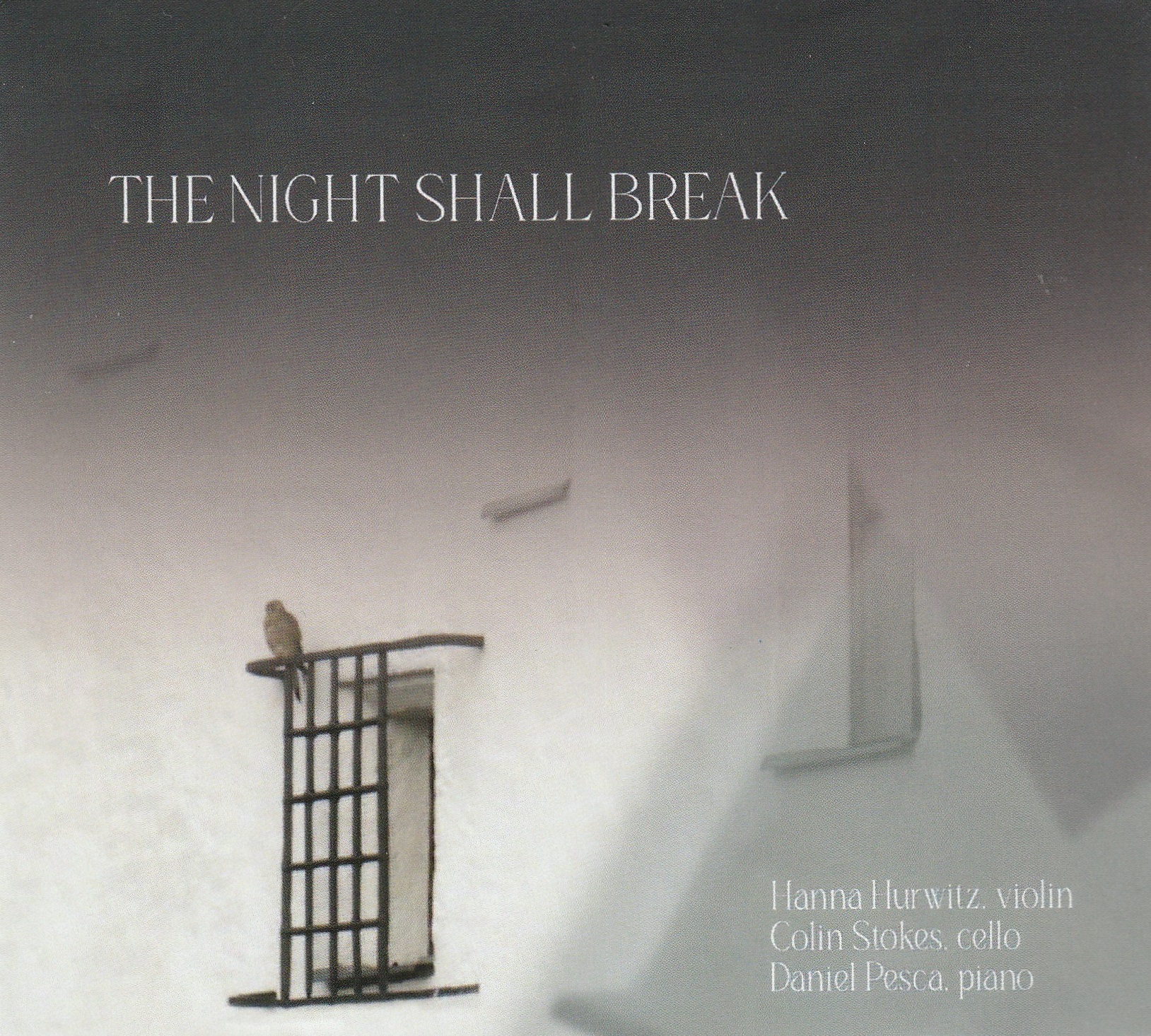
05 The Night Shall BreakOn The Night Shall Break violinist Hanna Hurwitz, joined by cellist Colin Stokes and pianist Daniel Pesca goes back 100 years to find neglected gems and present them alongside established works (Neuma Records 198 neumarecords.org).

Florence Price’s attractive Fantasie No.1 for Violin and Piano from 1933 and Rebecca Clarke’s 1921 Piano Trio both produce top-level playing, and the standard never drops through the very brief (four movements, each less than two minutes) 1924 Sonatina for Violin and Piano by Carlos Chávez and particularly through the established works: Messiaen’s Thème et Variations pour Violon et Piano from 1932 and the terrific Duo No.1 for Violin and Cello by Bohuslav Martinů.
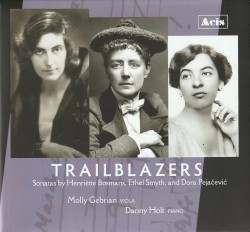
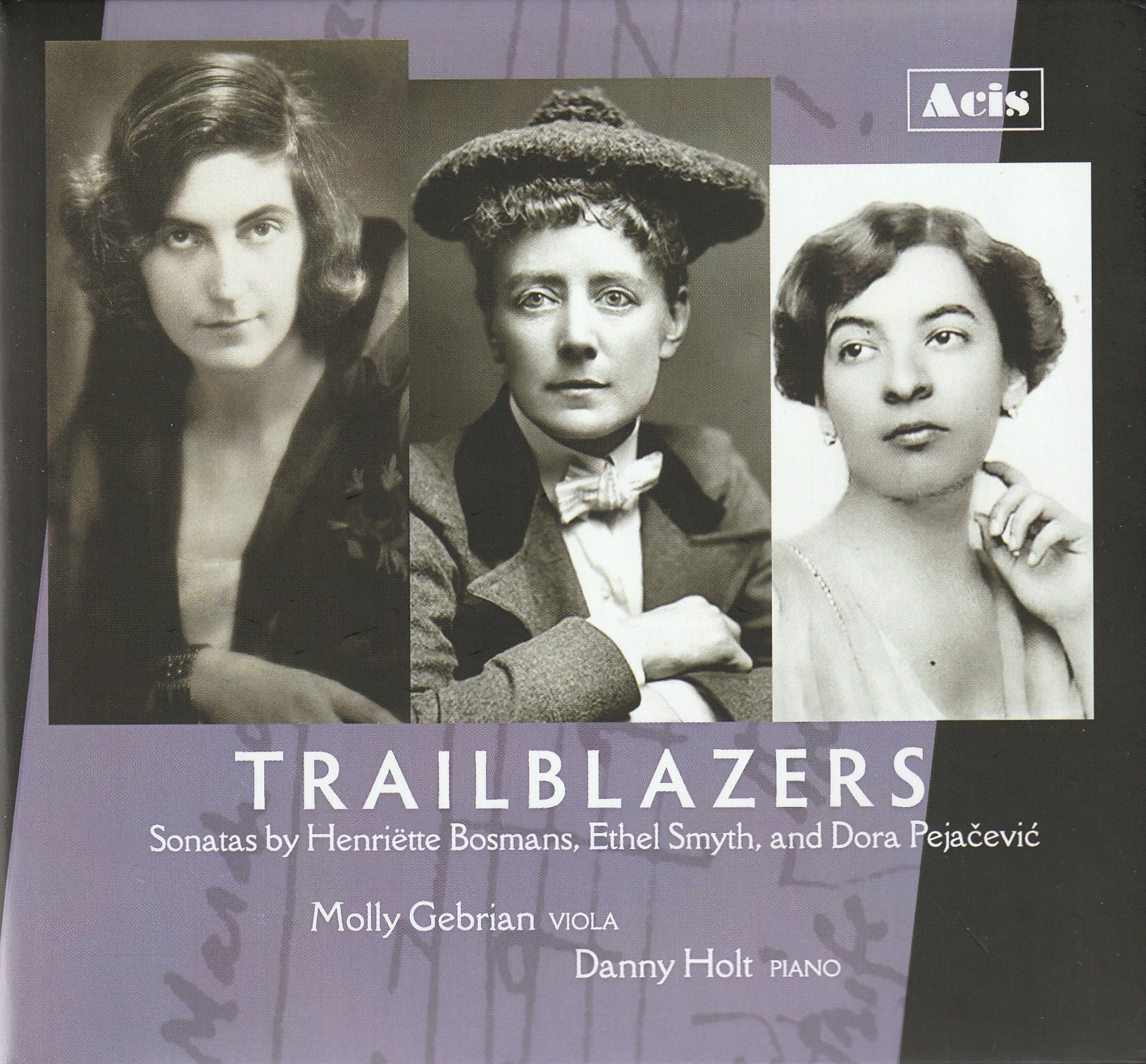
06 TrailblazersViolist Molly Gebrian discovered the works she plays on Trailblazers several years ago when listening to music online, YouTube’s auto-play feature kicked in to play cello sonatas by Dora Pejačević (1885-1923), Henriëtte Bosmans (1895-1952) and Ethyl Smyth (1858-1944). Gebrian knew immediately that these were sonatas she wanted to play, and her effective transcriptions for viola and piano are presented here. Danny Holt is the pianist (Acis APL54162 acisproductions.com).

All three composers broke new ground by defying social expectations of their times. The Dutch Bosmans was a concert pianist as well as a composer; her Sonata in A Minor is from 1919. Dame Ethyl Smyth’s essentially Romantic Sonata in A Minor, Op.5 is from 1887, and the Croatian Pejačević’s Sonata in E Minor, Op.35 from 1913.

Gebrian is a superb player, strong and full-toned. Ably supported by Holt, she gets to the heart of these exceptional works in stellar performances.
Listen to 'Trailblazers' Now in the Listening Room

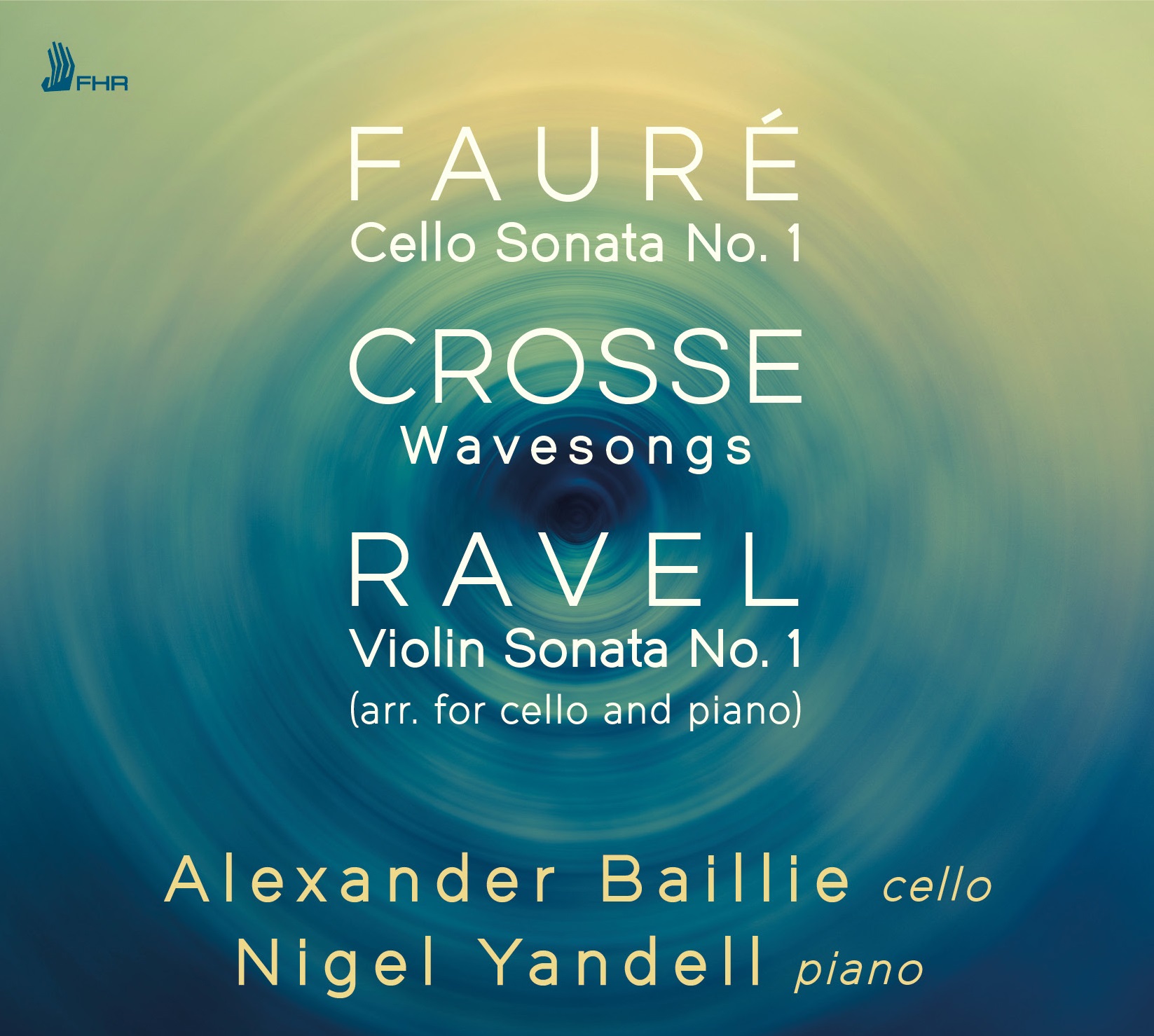
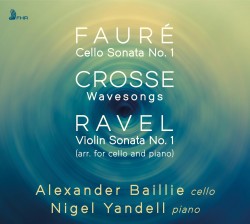
07 Faure Cross RavelCellist Alexander Baillie and pianist Nigel Yandell are in fine form on the new CD Fauré, Crosse and Ravel – Works for Cello & Piano (First Hand Records FHR152 firsthandrecords.com).

The disc opens with a lovely performance of Fauré’s Cello Sonata No.1 in D Minor, Op.109 from 1917 and ends with an effective transcription of Ravel’s early Violin Sonata No.1 in A Minor, Op.posth. M.12 from 1897. The heart of the CD, both physically and musically is the 1983 Wavesongs by the English composer Gordon Crosse, who died in 2021. Written for Baillie, it’s described as a 22-minute tone poem, a single-movement work with numerous sub-sections with titles like Sea Shanty, Troubled Waves, Storm, Cruel Sea, Tempest and Lost at Sea. This recording uses a newly revised performing edition resulting from Yandell’s partnership with Baillie and is dedicated to Crosse’s memory.

It’s a striking work and a notable addition to the contemporary cello repertoire, more than justifying the description as “a modern masterpiece” in the press release.
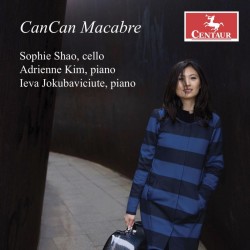
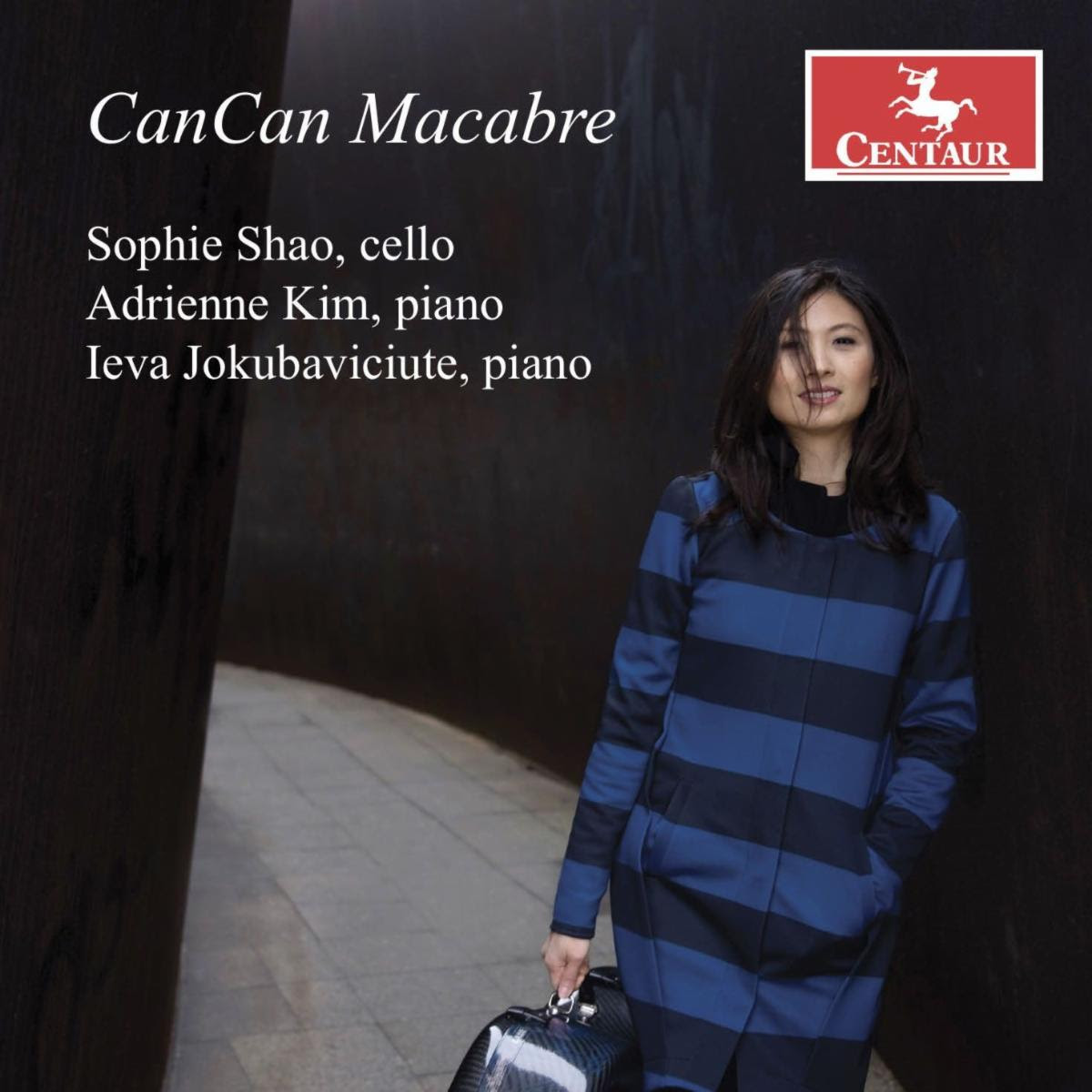
08 Cancan MacabreThere are another two contemporary cello works on CanCan Macabre, with the American cellist Sophie Shao playing music by Couperin, Debussy, Herschel Garfein, Thomas Adès and Chopin. Adrienne Kim is the pianist in all but the Couperin and Chopin, where the pianist is Ieva Jokubaviciute (Centaur CRC4052 centaurrecords.com).

Couperin’s five Pièces en concert in the 1924 arrangement by Paul Bazelaire and Debussy’s 1915 Cello Sonata in D Minor open the disc, with the Largo from Chopin’s Cello Sonata in G Minor, Op.65 closing it. In between are the two contemporary works. Garfein’s The Layers, commissioned by and written for Shao, was inspired by the poem by former U.S. poet laureate Stanley Kunitz, its three sections reflecting central images in the poem.

Adès’ Lieux retrouvés was written in 2009 for Steven Isserlis, its final movement, La ville – cancan macabre providing the title for a high-quality CD. 
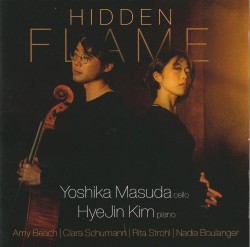
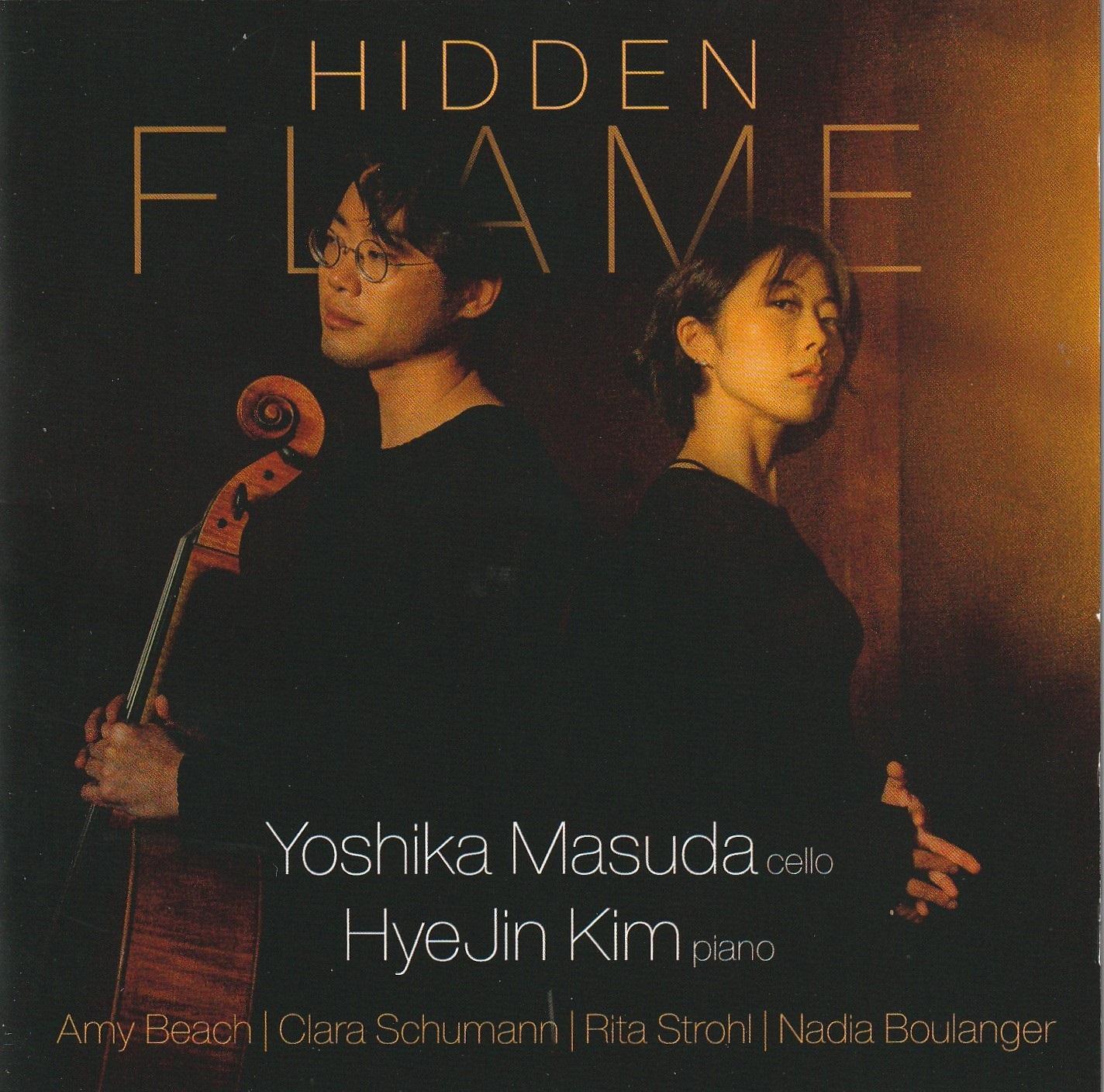
09 Hidden FlameHidden Flame, the new CD from cellist Yoshika Masuda and pianist HyeJin Kim features compositions by women presented simply as “masterpieces by truly great composers” (Avie AV2653 avie-records.com).

Amy Beach’s Romance Op.23 and Clara Schumann’s 3 Romanzen Op.22, both originally for violin and piano, provide a gorgeous opening with a full, rich cello sound across the entire range. The major work here is the lengthy (almost 40 minutes) 1892 Great Dramatic Sonata “Titus et Bérénice” by the French composer Rita Strohl (1865-1941), a little-known work that will repay repeated hearings.

Rena Ismail’s one word makes a world is a world-premiere recording; based on the third movement cello solo from her 2013 String Quartet, it was written for Masuda. Nadia Boulanger’s 3 Pieces for Cello and Piano are delightful, but the final track – the Sicilienne attributed to Maria Theresia Paradis – hardly qualifies as a masterpiece by a great composer; indeed, current research suggests that the composer was probably the violinist Samuel Dushkin.

No matter, for it closes a fine CD full of excellent playing.
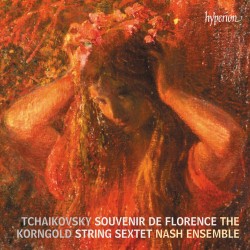
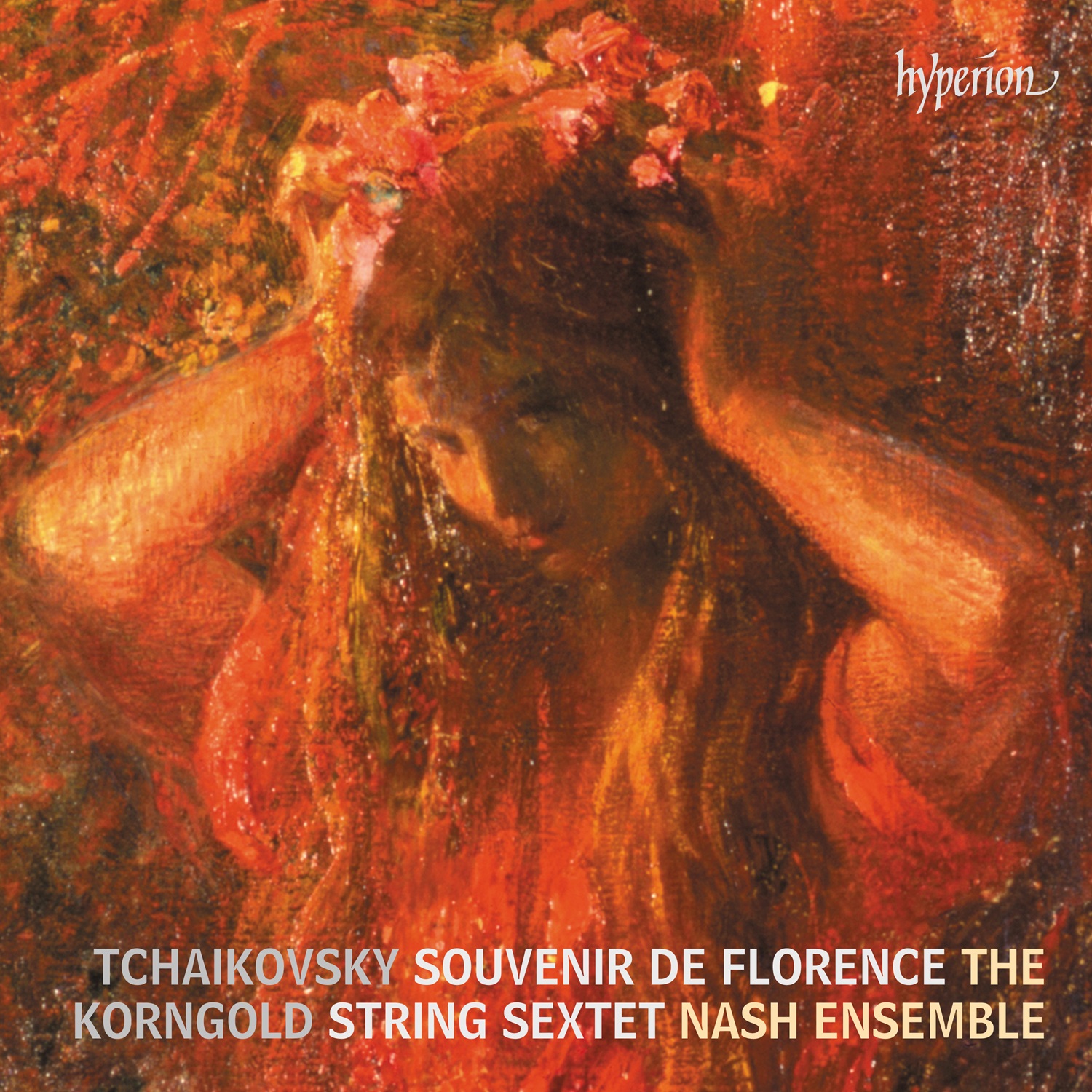
10 Tchaikovsky KorngoldIf you want to hear some superb string ensemble playing then look no further than Tchaikovsky & Korngold: String Sextets, the new release from the Nash Ensemble (Hyperion CDA68406 hyperion-records.co.uk/dc.asp?dc=D_CDA68406).

Although only written some 25 years apart, the two works are from opposite ends of their composers’ lives: Tchaikovsky’s Sextet in D Minor “Souvenir de Florence” Op.70 from 1890, when he feared his creative powers were waning, and Korngold’s astonishingly mature, rich and Romantic Sextet in D Major Op.10 from 1914-16, started when he was only 17 years old.

“The Nash Ensemble brings passion and conviction to both,” says the promotional release, and indeed they do in simply outstanding performances.
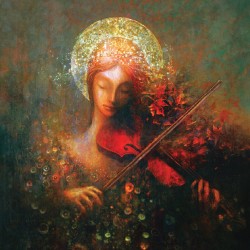
11 Vivaldi PiazzollaIsabella d’Éloize Perron is the violinist on the 2CD set Vivaldi & Piazzolla The Four Seasons, with the Orchestre Filmharmonique under Francis Choinière (GFN Classics gfnproductions.ca).

There’s a real freshness to the Vivaldi, with a resonant recording enhancing a spirited, animated and really effective performance. The same approach works wonderfully well in Piazzolla’s Las cuatro estaciones porteñas - The Four Seasons of Buenos Aires, four individual pieces written for his bandoneón quintet and not originally intended as a suite; they are heard here in the terrific 1990s adaptation by Leonid Desyatnikov for violin and string orchestra that incorporates direct quotes from the Vivaldi Seasons.

Perron draws a magnificent sound from her 1768 Guadagnini violin in riveting performances, with Choinière and the orchestra adding significantly to a superb release.
Listen to 'Vivaldi & Piazzolla: The Four Seasons' Now in the Listening Room

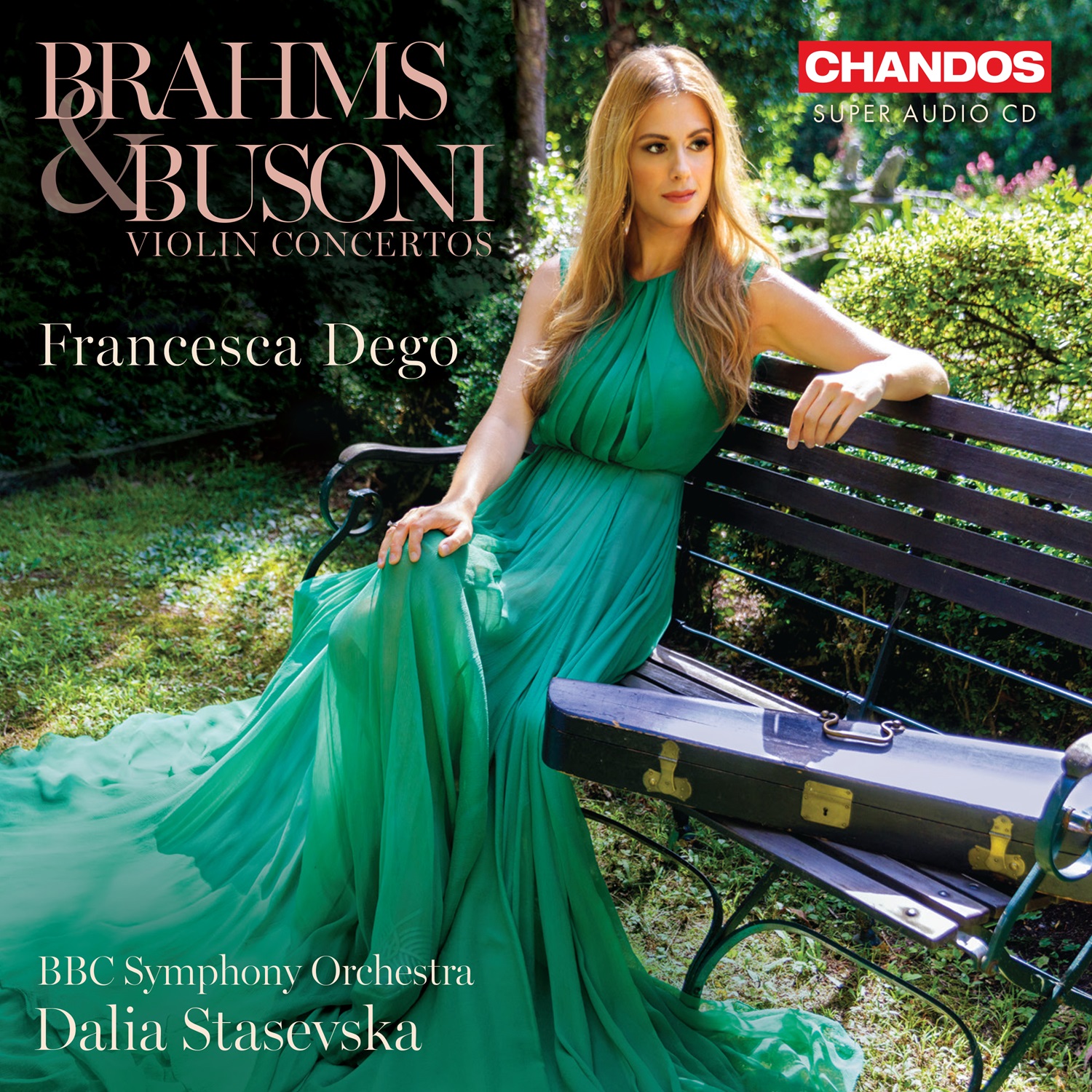
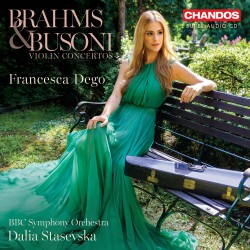
12 Francesca DegoViolinist Francesca Dego admits that the Brahms & Busoni Violin Concertos make an unusual pairing but says that “one of the reasons I fell in love with Busoni’s concerto is that it is permeated with the spirit of the Brahms.” Dalia Stasevska conducts the BBC Symphony Orchestra (Chandos CHSA 5333 chandos.net/products/catalogue/CHAN%205333).

Brahms and Busoni had a somewhat uneven relationship, but Busoni certainly respected the older composer’s music. His Violin Concerto in D Major, Op.35a K243 was premiered a few months after Brahms’ death in 1897, and although initially favoured by players like Kreisler and Szigeti its popularity gradually faded. It’s certainly very “Brahms” in nature, with influences of Liszt in its structure, and clearly will repay repeated listening. 

There’s a direct Busoni link to the Brahms Violin Concerto in D Major, Op.77, with Dego using Busoni’s cadenza (with timpani accompaniment) in the first movement of a thoughtful performance that perfectly displays Dego’s luminous, crystal-clear tone.
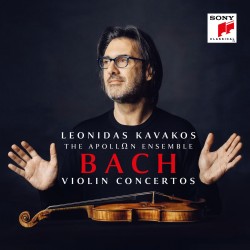
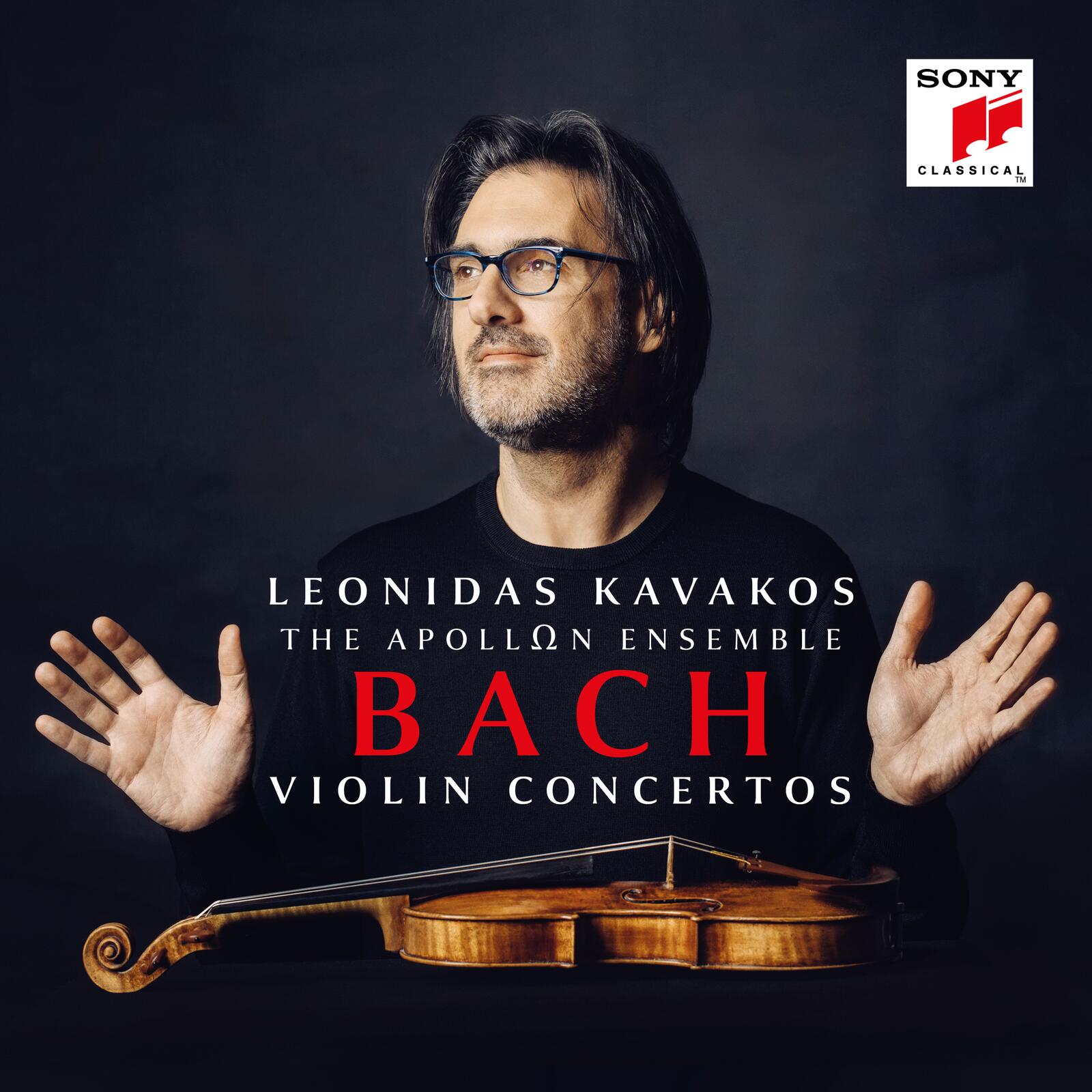
13 Leonidas Kavakos BachViolinist Leonidas Kavakos stopped playing Bach in public for quite some time so that he could examine his relationship with the music and recalibrate his baroque technique. His 2022 CD of the Sonatas & Partitas was his first Bach recording, and he has followed it with his new release Bach Violin Concertos with the ApollΩn Ensemble (Sony Classical 19658868932 sonyclassical.com/releases/releases-details/bach-violin-concertos).

The four concertos are all for solo violin – no Double Concerto here – and include two transcribed from harpsichord concertos – the Concerto in D Minor BWV1052R and the Concerto in G Minor BWV1056R – in addition to the Concerto No.1 in A Minor BWV1041 and the Concerto in E Major BWV1042.

Kavakos decided to go with the smallest possible ensemble of five string players (one per part) and harpsichord, with the result being a light, intimate and well-balanced sound in which the soloist is never placed too far forward but always seems to be an integral part of the ensemble. 
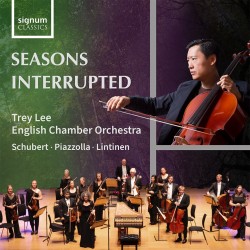
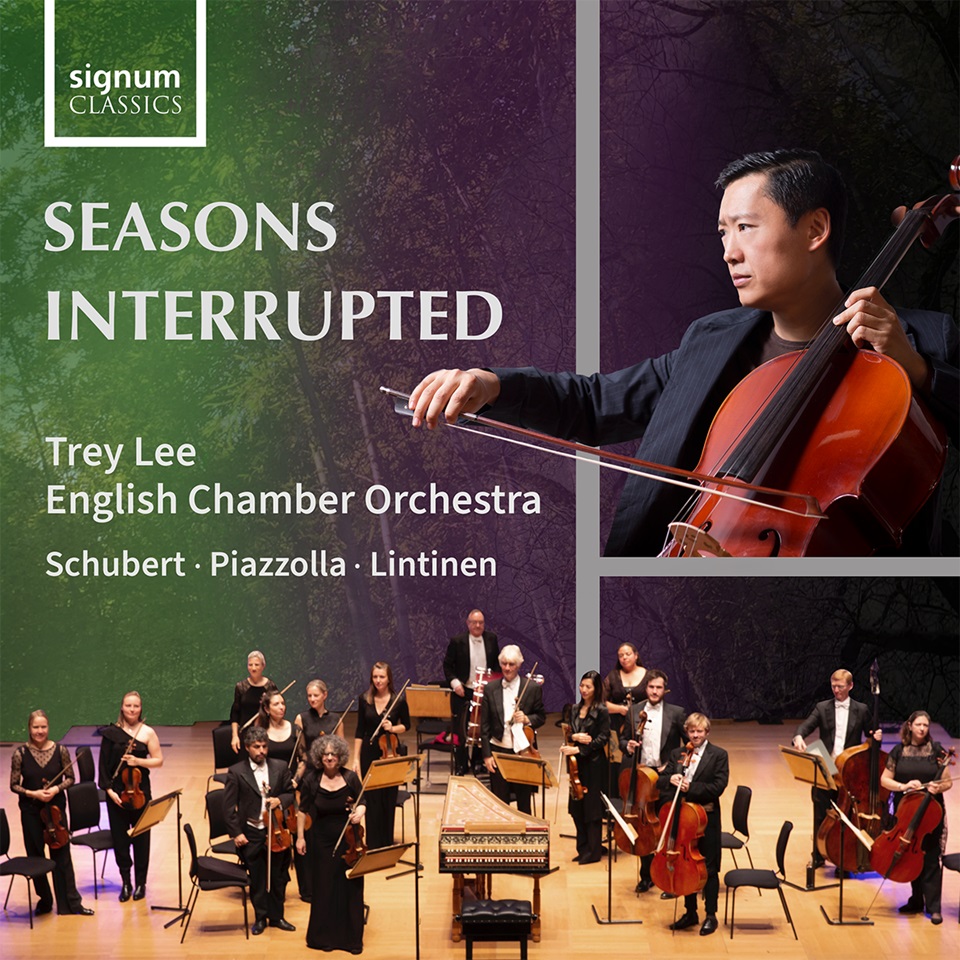
14 Seasons InterruptedCellist Trey Lee describes Seasons Interrupted as “a musical narrative that confronts our climate crisis, which every year is distorting the behavior of nature’s four seasons beyond recognition.” Georgy Tchaidze is the pianist, and Emilia Hoving conducts the English Chamber Orchestra (Sigma Classics SIGCD791 signumrecords.com/?s=seasons+interrupted).

Lee’s arrangements of 4 Schubert LiederIm Frühling (Spring); Die Sommernacht (Summer Night); Herbst (Autumn); and Gefrorne Tränen (Frozen Tears, from Die Winterreise) – represent the untainted Past.

A terrific performance of Lee’s highly effective arrangement of Piazzolla’s Las Cuatro Estaciones Porteñas for cello and string orchestra embodies the Present and the rise of 20th-century industry, while the Future is represented by the striking Cello Concerto by Finnish composer Kirmo Lintinern (b.1967), an imaginary journey through a possible climate-changed future with no recognizable seasons.
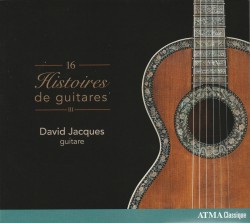
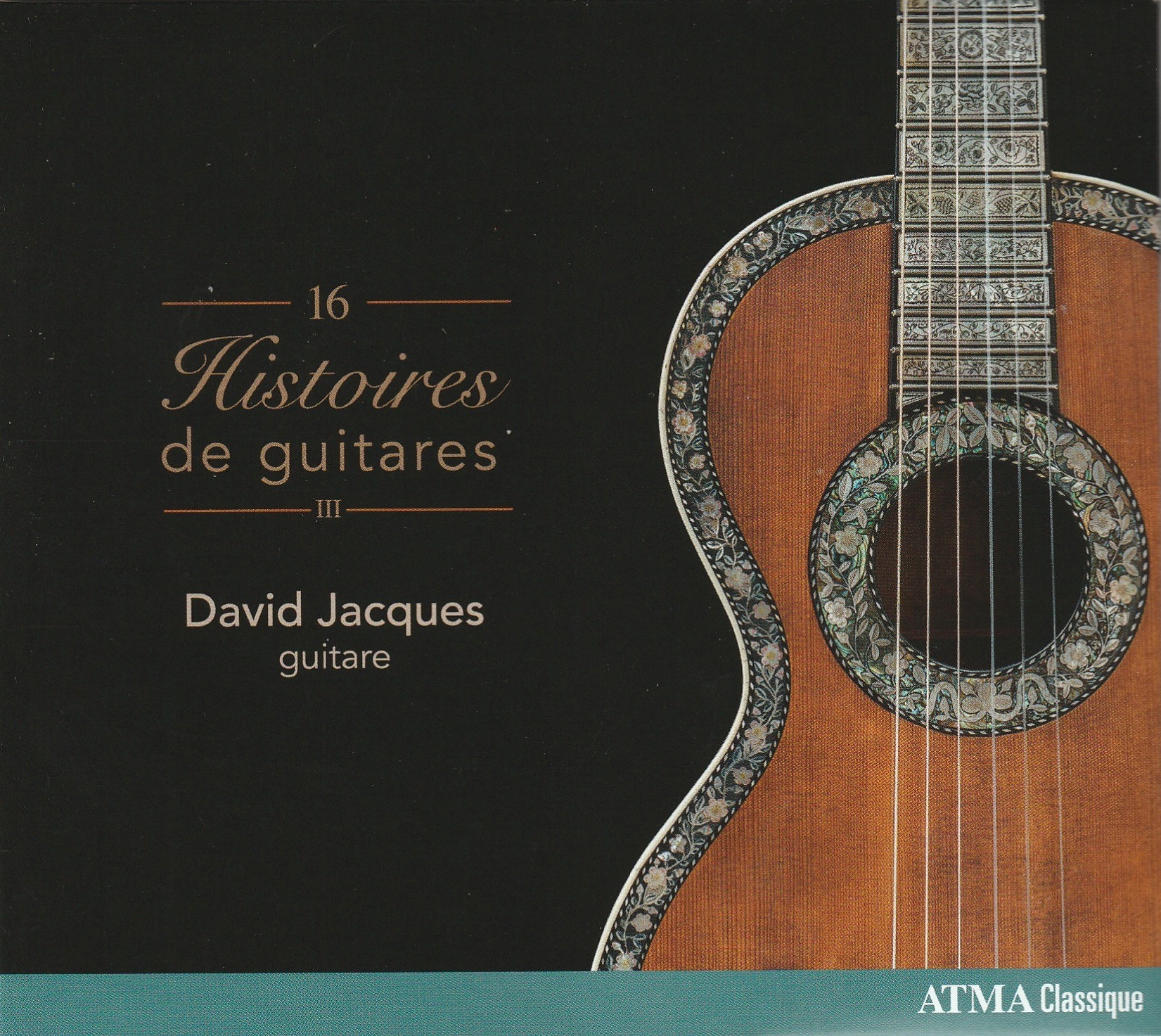
15 Histoires de guitaresWith 16 Histoires de guitares III the Canadian guitarist David Jacques returns with yet another fascinating selection of guitars from his astonishing private collection (ATMA Classique ACD2 2868 atmaclassique.com/en).

Ten of the instruments on this disc were built by the best 19th-century luthiers; there are also three from the late 1700s and three more recent guitars from 1940, 1993 and 2017. Each instrument is illustrated in full colour, along with its history and with information on the composers of the selected works, all chosen to best illustrate the individual qualities of the instruments and which produce a wide range of tonal colours.

Those composers include Coste, Aguardo, Carulli, Giuliani and a host of lesser-known names, all wonderfully presented with faultless technique and admirable sensitivity.
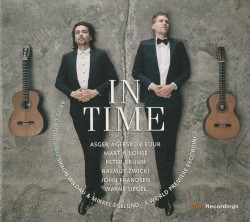
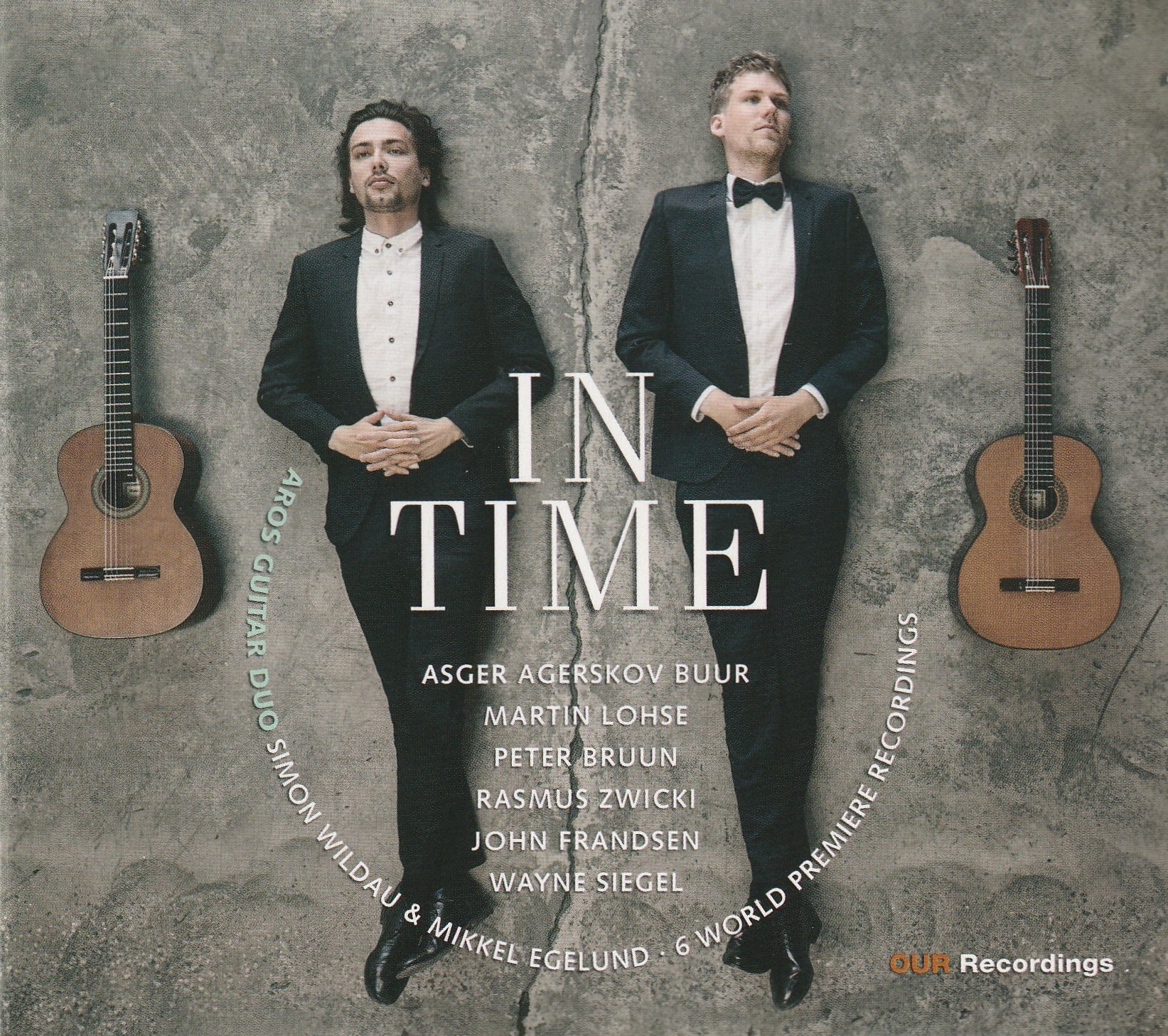
16 In TimeIn Time, the new CD from the Aros Guitar Duo of Simon Wildau and Mikkel Egelund is a tribute to the city of Aarhus (Aros being the old Norse name) where the duo started (OUR Recordings 8.226919 ourrecordings.com).
The clock in the city hall bell tower plays In vernalis temporis, a Danish melody from around 1500. When the duo premiered Asger Buur’s I fordret (In the spring) in 2018 they asked that he use the tune in the work, and the idea for a complete concert programme was born, with five newly commissioned works added in the next three years.

All six works here incorporate the theme in some fashion. Buur’s original piece is joined by Martin Lohse’s Ver, Peter Bruun’s Dark is November, Rasmus Zwicki’s In Time, John Frandsen’s Rollercoaster and Wayne Siegel’s bluegrass-inspired Vernalis Breakdown. All are finely crafted and impressive works, given equally impressive performances by the duo.

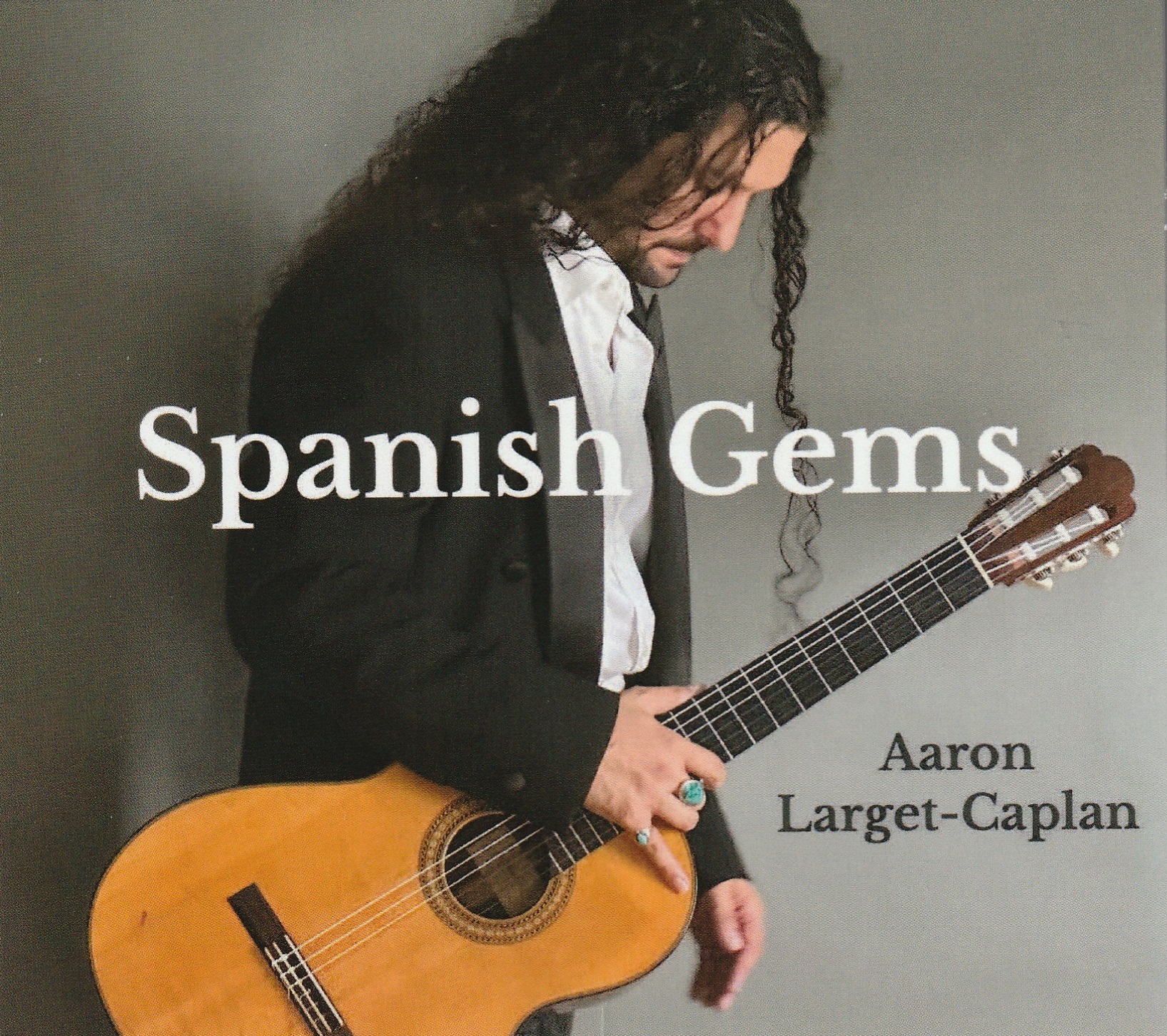
17 Aaron Larget CaplanGuitarist Aaron Larget-Caplan is back with his 11th solo album, and second celebrating Spanish musical heritage with Spanish Gems, a collection of works from the classical and flamenco repertoire (Tiger Turn 888-11 ALCguitar.com).

Included are Tárrega’s Capricho Arabe and Adelita, Esteban de Sanlúcar’s Panaderos, Albeniz’ Asturias, Gaspar Sanz’ Canarios from Suite Española, Emilio Pujol’s El Abejorro and – perhaps somewhat surprisingly – the ubiquitous Spanish Romance, hardly worthy of inclusion in “a collection of masterpieces.”

Torroba’s three-movement Sonatina closes a thoroughly enjoyable – albeit brief at 35 minutes – CD full of Larget-Caplan’s customary clean and sensitive playing. 

Listen to 'Spanish Gems' Now in the Listening Room

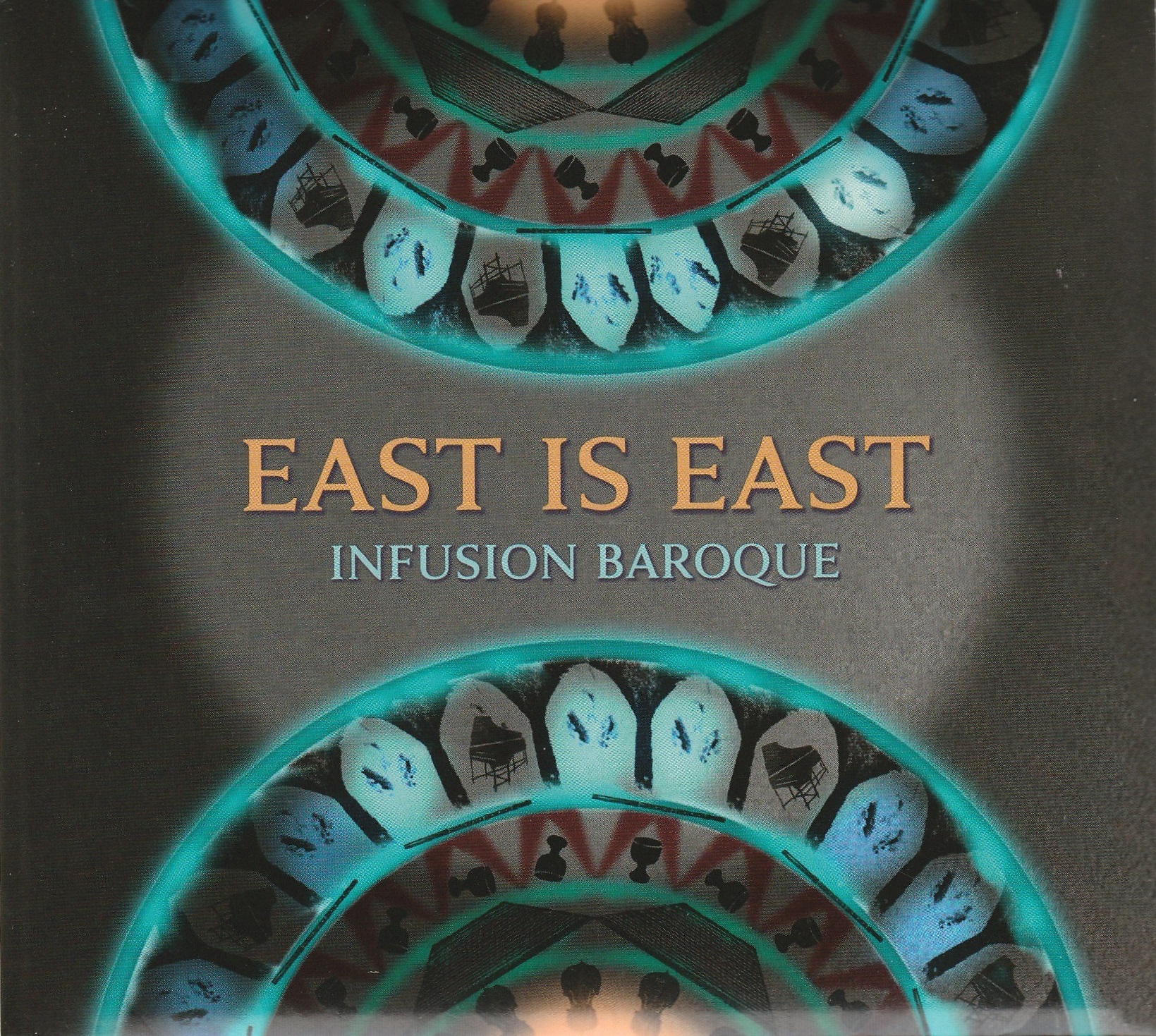
01 East is EastEast is East
Infusion Baroque
Leaf Music LM276 (leaf-music.ca)

To 19th century literary aficionados – and many who came thereafter – Rudyard Kipling’s poem The Ballad of East and West must have sounded prescient. Indeed, many with self-serving nationalist tendencies, ever mindful of irrational social turmoil the world over might, with the wag of a rigid digit even go further and say, “Told you so.” However, the cultural topography of civilisations have been enriched immeasurably from such collisions since time immemorial. Canadian culture is an outstanding example of such amazing cultural collisions.

Although we do not need proof that humanity is brought so many degrees closer together by art – especially music and dance – the repertoire on East is East is a beautiful example of how much better we can begin to appreciate and live alongside the “otherness” of cultures. In fact, such “otherness” may often seem apocryphal. Listen with wide-eyed wonder to Infusion Baroque’s eloquent undulant variations (of) La Bergamasca. In an act of true inspiration, the ensemble has fused variations by Uccellini and Vitali, Corelli, Vivaldi and Marais into an inspired reinvention in the Phrygian mode. 

Refusing to let this inspirational music fade away thereafter, the performers soar loftily with music that interprets Indian ragas such as Sandhya Raga and Gurjari Todi, in performances led by the luminous-voiced soprano Vidita Kanniks. Santoor master, Amir Amiri also contributed several celestial compositions: Saghi Nameh, Cortege, Raghse Choobi and Aghrab are truly outstanding. Infusion Baroque anchored by Alexa Raine-Wright, Sallynee Amawat and Andrea Stewart and guests – Thibault Bertin-Maghit, Hamin Honari, Hank Knox and Shawn Mativetsky – are masterful throughout.

Listen to 'East is East' Now in the Listening Room

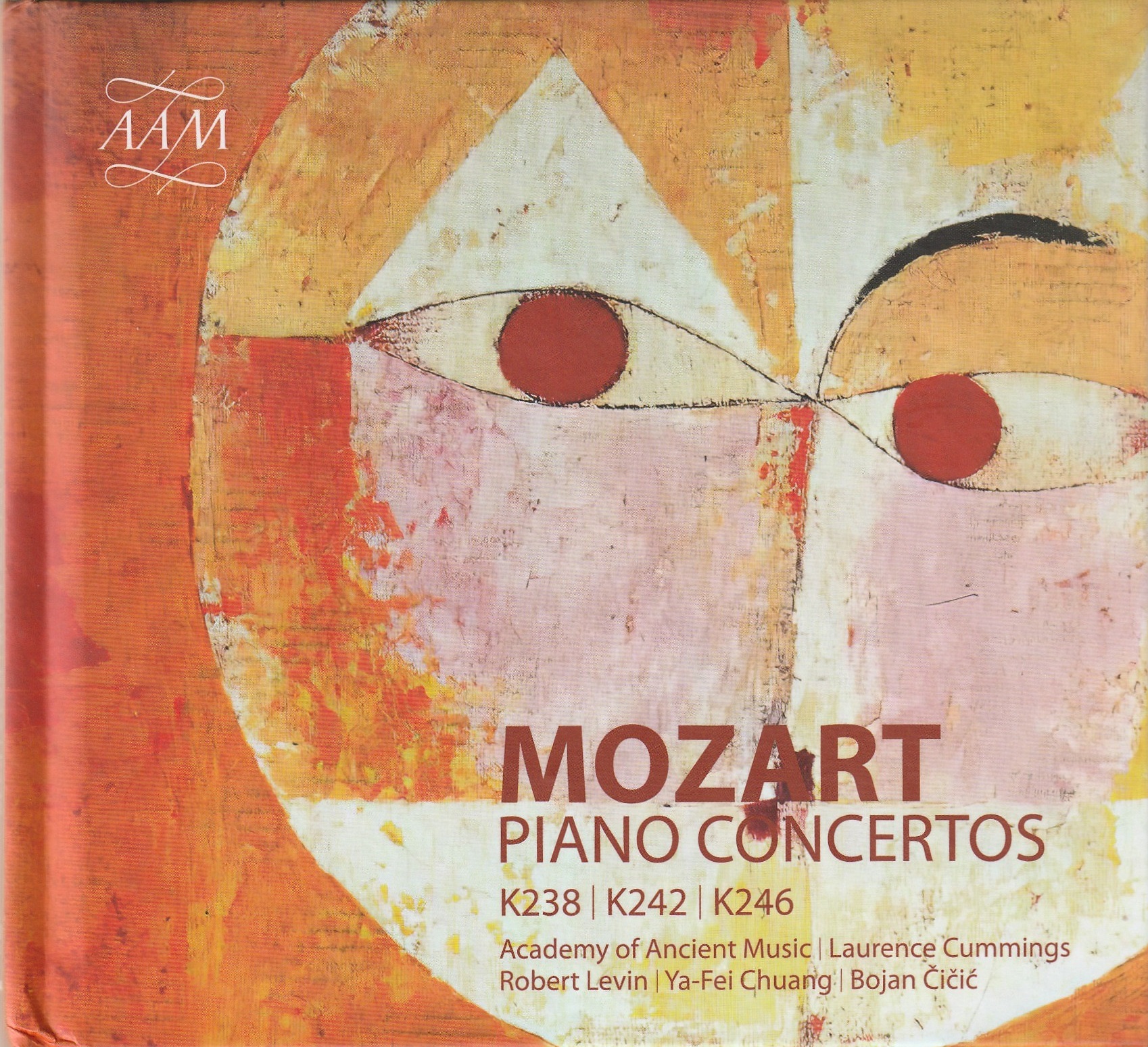
03 Mozart Robert LevinMozart – Piano Concertos K238 | K242 | K246
Robert Levin; Ya-Fei Chuang; Academy of Ancient Music
AAM AAM044 (aam.co.uk)

Few period music ensembles have had as long and illustrious a history as the Academy of Ancient Music.  Founded by Christopher Hogwood in 1973, it took its name from an earlier ensemble that existed between 1725 and 1806. Since then, the orchestra has maintained a reputation for its excellence in the performance of baroque and classical period music on period instruments. 

This newest recording on the AAM Classics label is the 12th and penultimate disc in a Mozart piano concerto cycle, presenting concertos numbers six, seven and eight – all from 1776 – with soloists Robert Levin and Ya-Fe Chuang under the direction of Laurence Cummings and Bojan Čičić.

This disc is a delight! Opening with the Concerto No.6, Levin delivers a fresh and robust performance on a tangent piano (a cross between a harpsichord and pianoforte) particularly suiting this youthful music. His phrasing is carefully conceived and the cadenzas, tasteful and creative. 

Levin is joined by Chuang on a fortepiano and Cummings (who also directs) on a harpsichord in the Concerto for Three Pianos K242, music written for the wealthy Lodron family of Salzburg with each of the solo parts composed to meet the ability of the original soloists. Here, the march-like opening movement, the lyrical adagio and sprightly Rondo finale are all adroitly handled by the three soloists who achieve a wonderful sense of balance while the AAM proves a sturdy and sympathetic partner.

Rounding out the recording is the Concerto K246, the “Lutzow” performed by Levin and directed by Čičić. Levin’ s approach is fluid and stylish, particularly in the courtly finale which brings the disc to a most satisfying conclusion. 

Attractive packaging and detailed notes further add to an already exemplary recording.  We can look forward to the final release in the series.

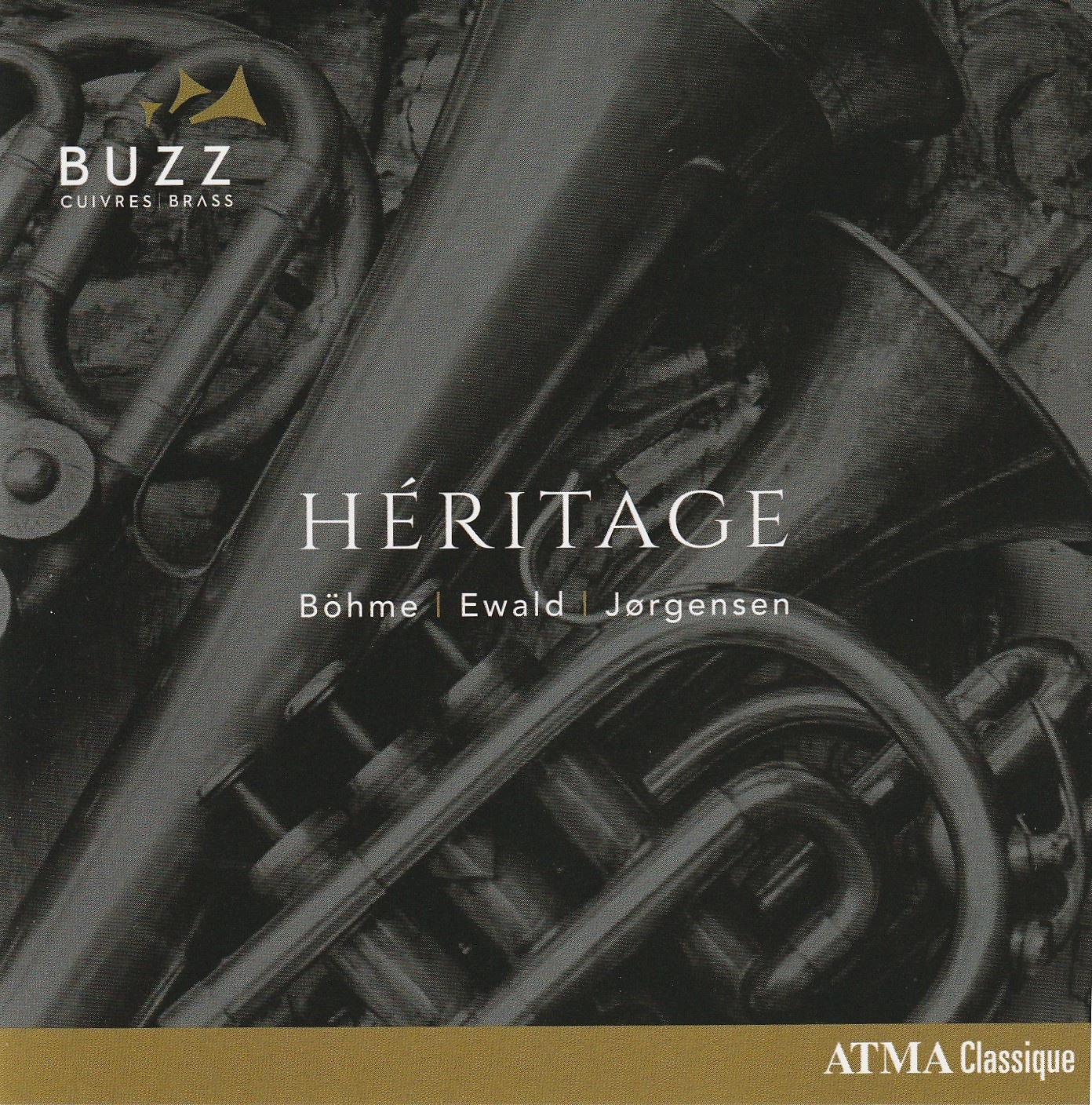
05 Buzz BrassHeritage – Bohme; Ewald; Jergensen
Buzz Brass
ATMA ACD2 2897 (atmaclassique.com/en)

Buzz Brass (Buzz Cuivres), a Canadian but globally recognized brass quintet, has been dependably putting out strong recordings and concertizing around the world for over two decades. For an ensemble such as this – two trumpets, horn, trombone and bass trombone – the challenge, it seems, is what to play. First, the aggregation itself is relatively young in comparison to other classical music forms, dating back to 1833 with the Distin family. Secondly, although such well-known composers as Joseph Haydn were indeed known for fine chamber music contributions, the canonical repertoire for this unique instrumental setting belongs primarily to a handful of such wonderful composers as Victor Ewald, Axel Jørgensen and Oskar Böhme, who were all new to me and who Buzz Brass does a marvellous job at broadcasting more widely. 

With such titles as Brass Quintet No.1 in B-flat Minor and Brass Quintet in A-flat Major, we are clearly in the territory of so-called “absolute music,” where the music itself, fine playing and cohesive blend of beautiful brass instruments is the point, rather than some extra-musical theme or programme intended to give the pieces further meaning. And with Héritage, the group’s first recording for ATMA Classique (following two on  the Analekta label), nothing additional is needed. Like slipping into a warm bath of wonderfully resonant and round brass timbres, this 2024 recording is immersive and enveloping, capable of washing over the attuned listener with beauty, lyricism and expressiveness.

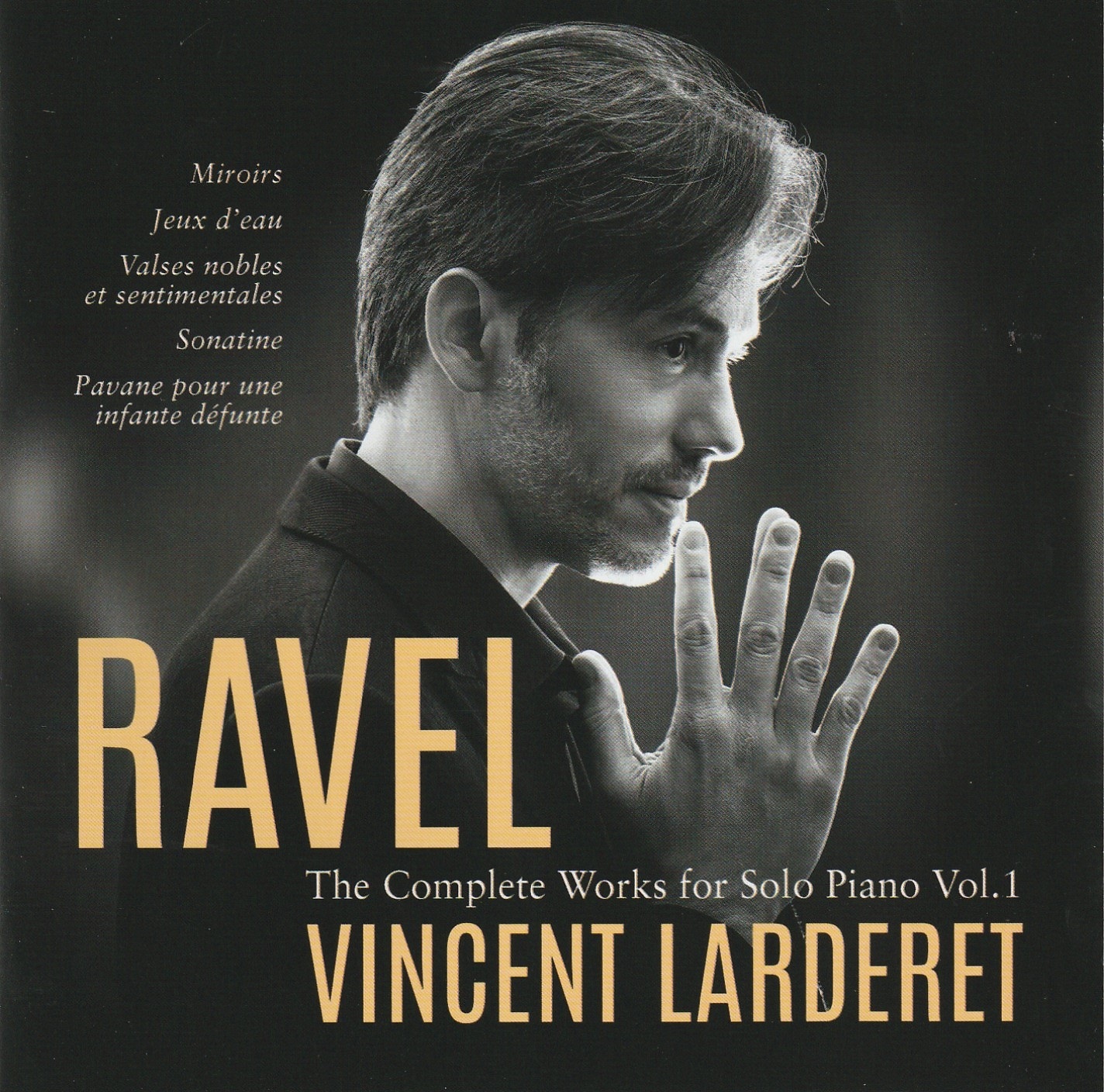
06 Ravel Complete PianoRavel – Complete Works for Solo Piano Vol.1
Vincent Larderet
Avie Records AV2623 (avie-records.com)

On the last page of the booklet there is a beautifully captured sketch of Ravel by none other than our pianist at age 12! So we have a talented visual artist as well as a pianist and that’s just what we need for the world of Ravel. “Steinway Artist” Vincent Larderet’s playing, apart from superb technique, is beautifully lyrical and deeply inspired with “a rare melding of the intellectual and the visceral” (International Piano, UK).

Ravel has an amazing quantity of piano works and Larderet embarks here on a project to record them all in four volumes. This first contains Miroirs, Jeux d’eau, Valses nobles et sentimentales, Sonatine and Pavane pour une princesse défunte. 

One salient feature of French Impressionism is getting inspiration from the external world, in the case of Ravel from Nature, e.g. water in its many representations. This is the case for Jeu d’eau, which was also inspired by Liszt, his Fountains of the Villa d’Este. The multifaceted genius Ravel was also quite entranced with the dance form the Waltz, and here we are treated to a set of eight delightful Valses that are indeed Noble and Sentimental. One can sense here some elements germinating towards Ravel’s major orchestral composition La Valse

The final work is one of Ravel’s finest, Pavane pour une princesse défunte, a hauntingly beautiful melody that was also orchestrated by the composer. This fine collection bodes well for the future and we look forward to further volumes from this exceptional pianist.

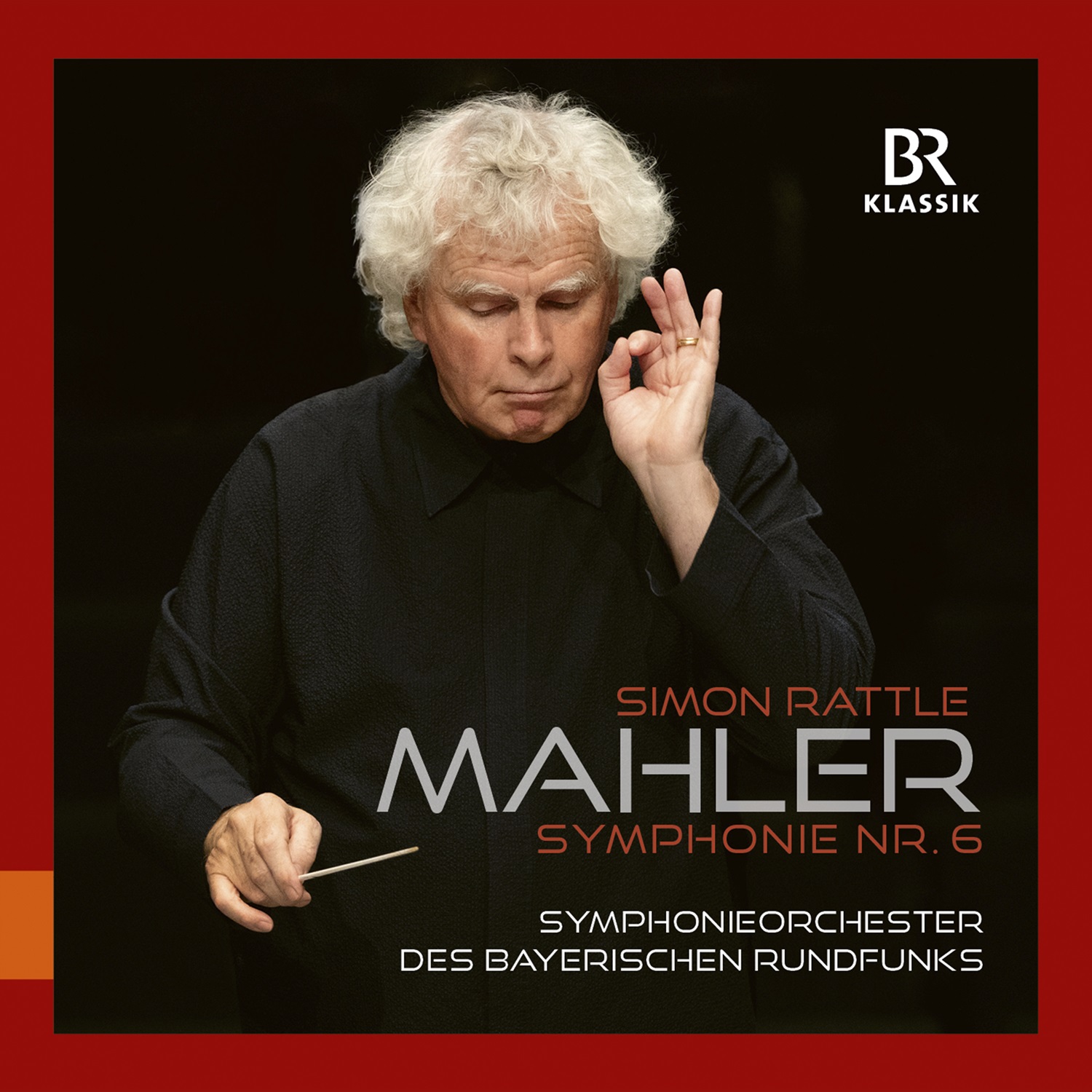
07 Mahler Symphony No. 6Mahler – Symphony No.6
Symphonieorchester des Bayerischen Rundfunks; Sir Simon Rattle
BR Klassik BRK900217 (brso.de/en/media-center/cds-and-dvds)

Throughout his life, the music of Gustav Mahler has been a guiding star in Simon Rattle’s career. While a percussion student at the Royal Academy of Music he single-handedly organized and conducted a performance of Mahler’s Second Symphony by his fellow pupils. His love of Mahler continued throughout his years directing the City of Birmingham Symphony Orchestra (1980 to 1998); their well-received recordings of contemporary and late romantic works included several Mahler symphonies. Rattle made his conducting debut with the Berlin Philharmonic in 1987 in a performance of Mahler’s Sixth Symphony; he was their chief conductor from 1999 to 2018 and chose the very same symphony for the final concert of his tenure. His subsequent leadership of the London Symphony Orchestra (2017 to 2023) also drew to a close with a Mahler symphony, the Ninth.

Alban Berg once proclaimed, “There is only one Sixth, notwithstanding the Pastoral.” Rattle once again has chosen this tragic masterpiece that encapsulates, in his words, “the whole package of a colossal life – and that includes love and optimism” for his inaugural season with the Bavarian Radio Symphony Orchestra. The orchestra responds magnificently to Rattle’s direction with a sensitivity that surpasses the sometimes indifferent results he encountered in Berlin. I’d go as far as to say that Sir Simon may be the finest Mahler interpreter since the late Claudio Abbado, his predecessor in Berlin. Rattle has remarked in the past that a conductor doesn’t become really good until he hits his sixties. Give this compelling disc a listen and I’m sure you’ll find that truer words were never spoken.

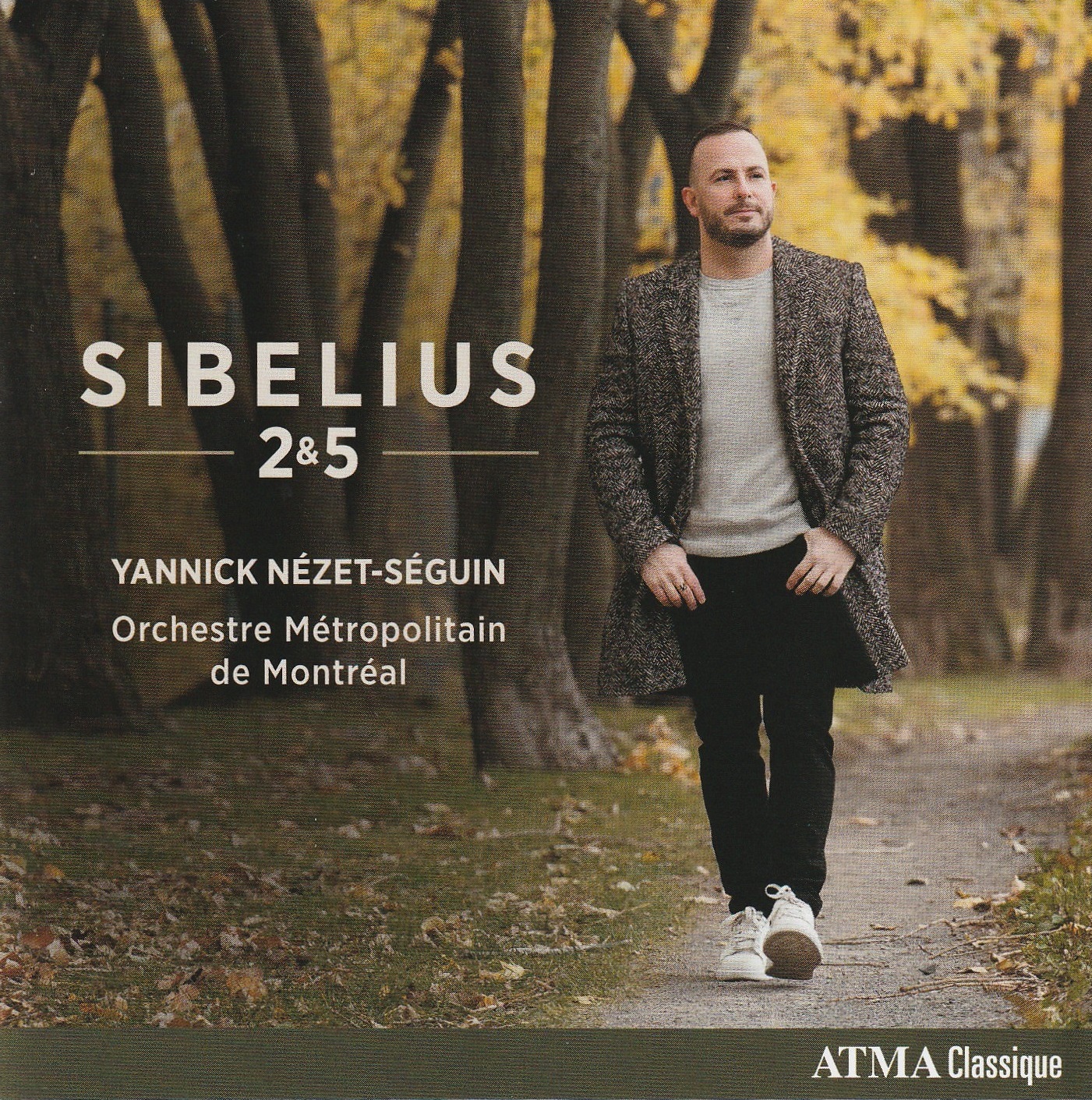
08 Sibelius 25Sibelius 2 & 5
Orchestre Metropolitain de Montréal; Yannick Nézet-Séguin
ATMA ACD2 2453 (atmaclassique.com/en)

In the right hands Sibelius’ symphonic work can be extremely exciting. Yannick Nézet-Séguin can lay claim to being one of the most penetrating Sibelians in modern times. He may be less Romantic than some – Osmo Vänskä, for instance – but his understanding of the composer goes way beyond abstraction. His 2019 Symphony No.1 was amongst the most stirring ever recorded, while on this recording of Nos. 2 & 5 he brings the kind of visceral engagement that forces you to listen afresh.

Symphony No.2 (1901), one of the most popular in the cycle, marks the transition between the youthful and the more mature Sibelius. The Russian influence is replaced by something more southern in feeling: themes and textures are more open, and the general atmosphere is one of warmth. But a mood of foreboding soon emerges at the start of the second movement, with a theme inspired by Don Juan being confronted by the figure of Death. 

Symphony No.5, experienced here, certainly lives up to its reputation as one of Sibelius’ most original reworkings of the symphonic form. During its dramatic (1919) revision he merged the first and second movements with a transitional passage that miraculously glides from one into the other. So heroic is the grand finale that it is aptly described as the swinging of Thor’s hammer. 

Nézet-Séguin and Orchestre Métropolitan de Montréal traverse both symphonies with exhilarating power and energy.

Editor’s Note: One of the most lauded conductors of his generation, Canadian Yannick Nézet-Séguin received the highest designation conferred by Toronto’s Royal Conservatory of Music on April 17 when he was inducted as an Honorary Fellow (FRCMT) of the organization.

Listen to 'Sibelius 2 & 5' Now in the Listening Room

Back to top