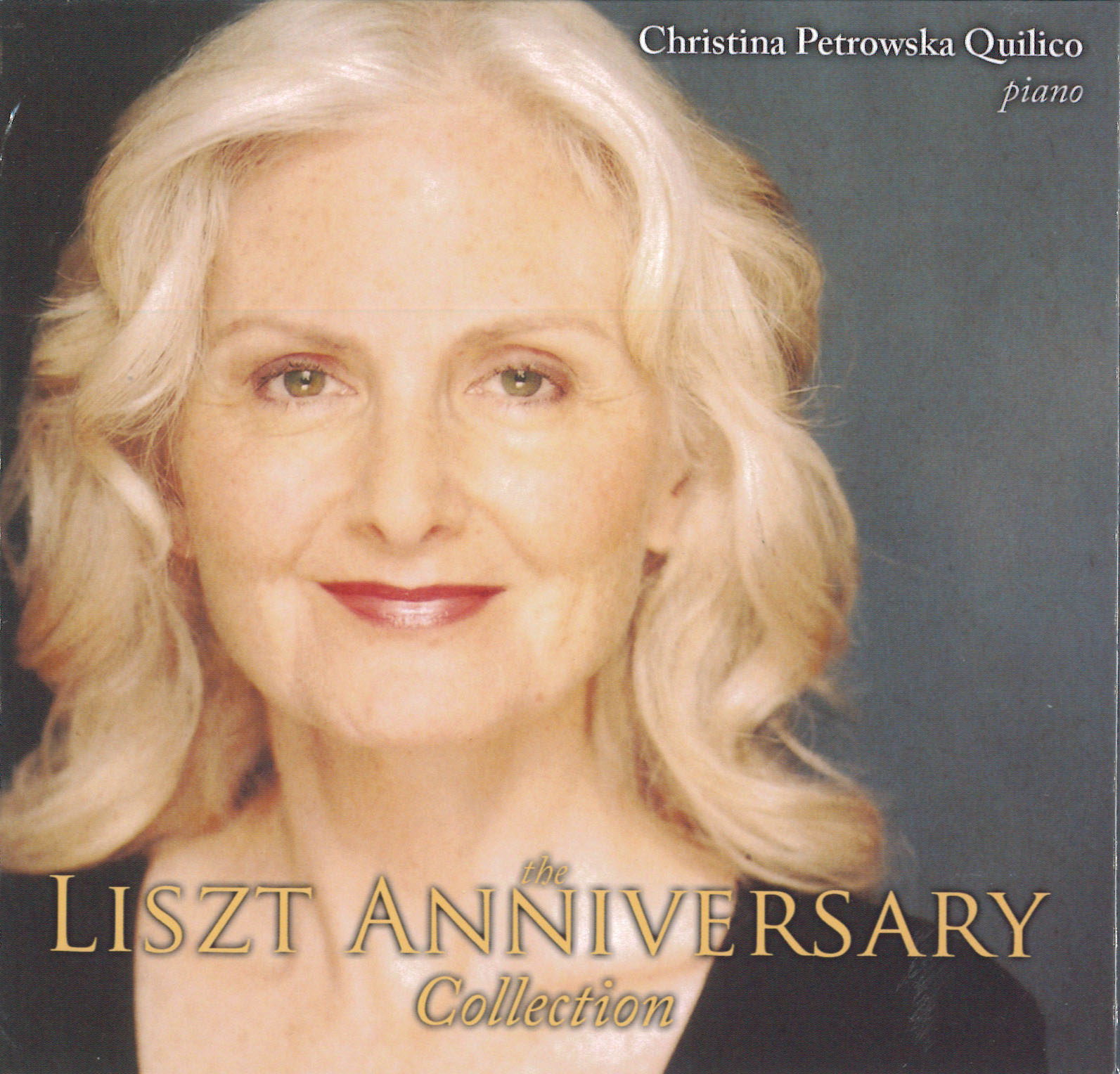
01a_liszt_anniversaryThe Liszt Anniversary Collection
Christina Petrowska Quilico
Welspringe Productions WP011 (www.indiepool.com)

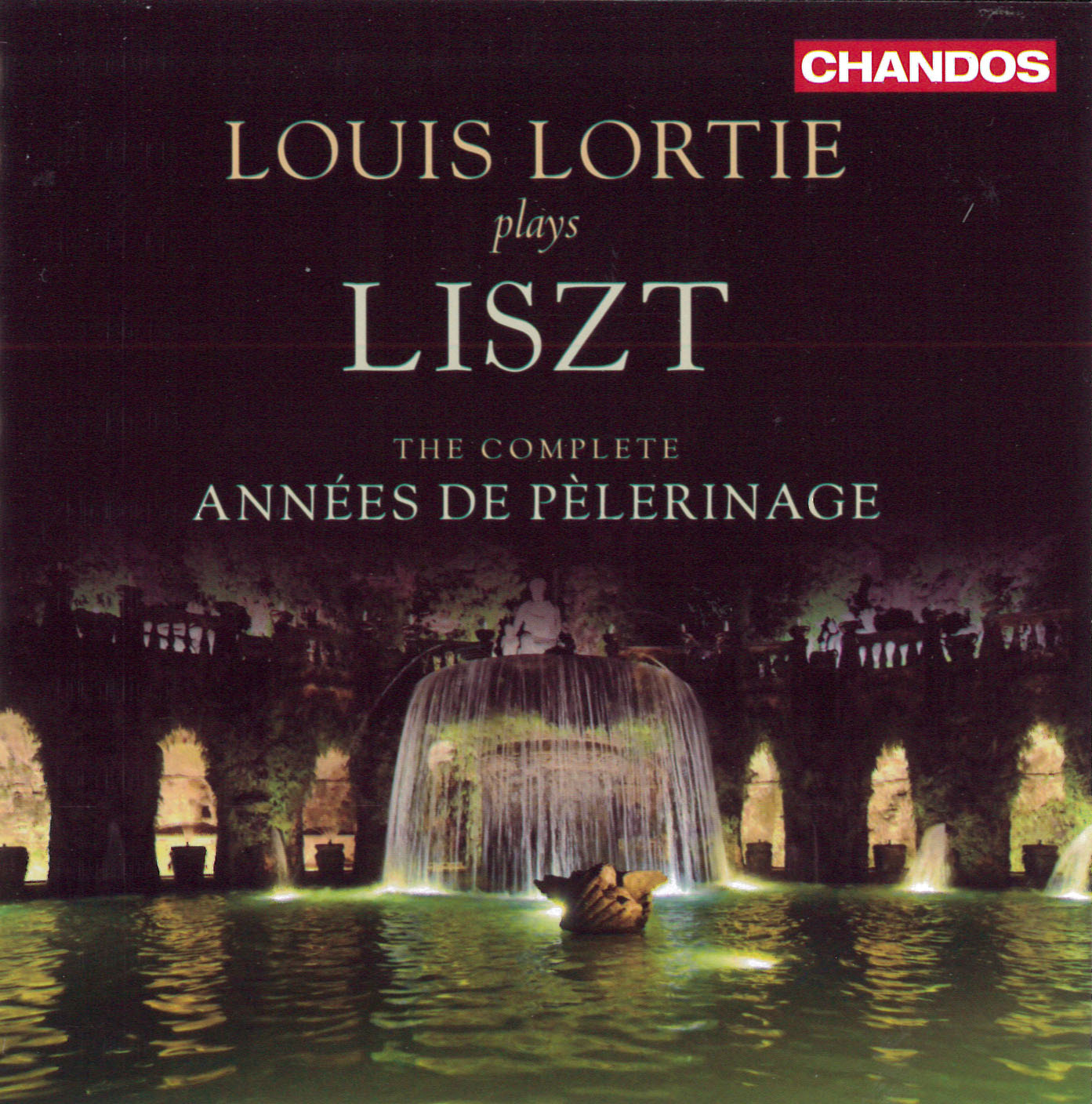
01b_liszt_lortieLiszt - The Complete Années de Pèlerinage
Louis Lortie
Chandos CHAN10662(2)

Is it true that women used to vie for a lock of Franz Liszt’s hair? Justin Bieber move over! In any event, it seems particularly appropriate that this being the 200th anniversary of his birth, we have not one, but two new releases devoted to piano music by the Hungarian virtuoso, and both of them performed by Canadians.

Ottawa-born Christina Petrowska Quilico studied at the Royal Conservatory, and later at the Juilliard School. Since then, she has earned a reputation as an exceptional and innovative teacher and performer, with a particular dedication to music by contemporary Canadian composers. Nevertheless, in her newest CD, titled “The Liszt Anniversary Collection” on the Welspringe label, she returns to the 19th century, with selections spanning Liszt’s entire career. True to form, her playing is polished, self-assured, and technically flawless. But what I find most appealing about this recording is the wonderful variety achieved within the carefully chosen programme. Well-known favourites such as La Campanella (as transcribed by Busoni) and the concert étude Un Sospiro are here, but also included are less familiar pieces, such as Wiegenlied, En rêve, and Nuages gris. These smaller works dating from Liszt’s late period are quietly introspective, and stylistically point to the 20th century. Petrowska Quilico treats them with a wonderful delicacy, adeptly proving that Liszt is not all bravura and showmanship!

More gargantuan in scale is a new Chandos double-disc set by Louis Lortie featuring the entire Années de Pelèrinage, including an addendum to the second set, Italie. Lortie has made a considerable name for himself since winning first prize at the Busoni Piano Competition in 1984, and a major prize at the Leeds Competition... Now based in Berlin, he continues to enjoy international fame through concerts and recordings. The three sets of Années – based on Liszt’s voyages to Switzerland and Italy - are gigantic in scope, and I would deem few pianists are able to interpret this music convincingly. Needless to say, Lortie does so brilliantly. As befits this repertoire, his approach is bold and impassioned, demonstrating a herculean technique. The Vallée d’Obermann from the first set presents technical challenges that would make the average pianist wince, but Lortie brings it off with aplomb. On the other hand, his treatment of such pieces as the Sonetto 47 and 123 from the second set, Italie, is elegantly understated. Bringing the disc to a rousing conclusion is the flamboyant Tarantella, music requiring almost superhuman powers. Is it any wonder that Liszt was sometimes regarded as Mephistopheles himself?

In all, two exemplary recordings which together comprise admirable recognition to Liszt’s bicentenary.

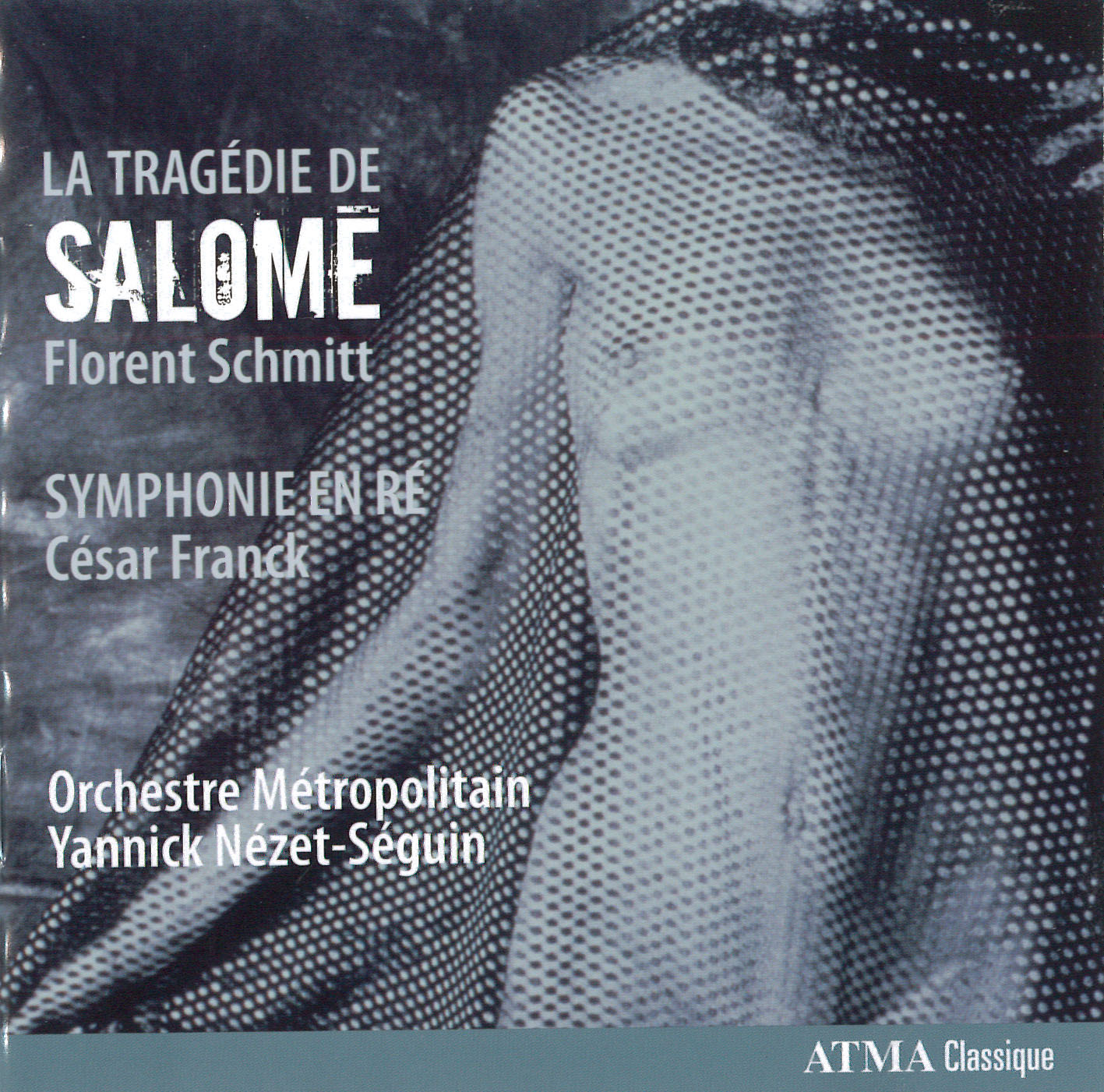
02_Schmitt_FranckSchmidtt - La Tragedie de Salomé; Franck - Symphonie in D minor
Orchestre Metropolitain du Grand Montreal; Yannick Nézet-Séguin
ATMA ACD2 2647

A half-submerged treasure in the dark and luxurious orchestral repertoire of the early 20th-century is the ballet/orchestral work The Tragedy of Salomé (1907) by French composer Florent Schmitt. Dance critic Toni Bentley’s intriguing book Sisters of Salomé describes the era’s “Salomania” craze. Oscar Wilde’s play Salomé that became the libretto for the Richard Strauss opera (1905) was not the only manifestation. There were also solo Salomé acts by proto-modern dancers including Canadian Maud Allan, “Mata Hari” (real name Margaretha Zelle) and Ida Rubenstein.

Schmitt’s work was premiered by American dancer Loïe Fuller, also well-known for her own Salomé creations when Schmitt composed his version. After the premiere he shortened and re-scored it for large orchestra, in the form recorded on this fine disc. Yannick Nézet-Séguin leads Montreal’s Orchestre Métropolitain in an exciting yet carefully-balanced performance. The shifts of mood and pacing essential for this post-Debussy style are handled sensitively, as is the balance of solo winds emerging out of complex symphonic textures. I particularly liked the brilliance of the Dance of Pearls and the aptly-titled final Dance of Terror in 5/4 time.

Franck’s Symphony in D minor (1888) has its defenders, but for me the overworked motifs eventually turn into unwelcome guests. Nézet-Séguin delivers with subtle dynamics and clear delineation of the organ-like instrumentation, enough to attract Franckophiles and those seeking to fill a gap in their late-19th-century orchestral collections.


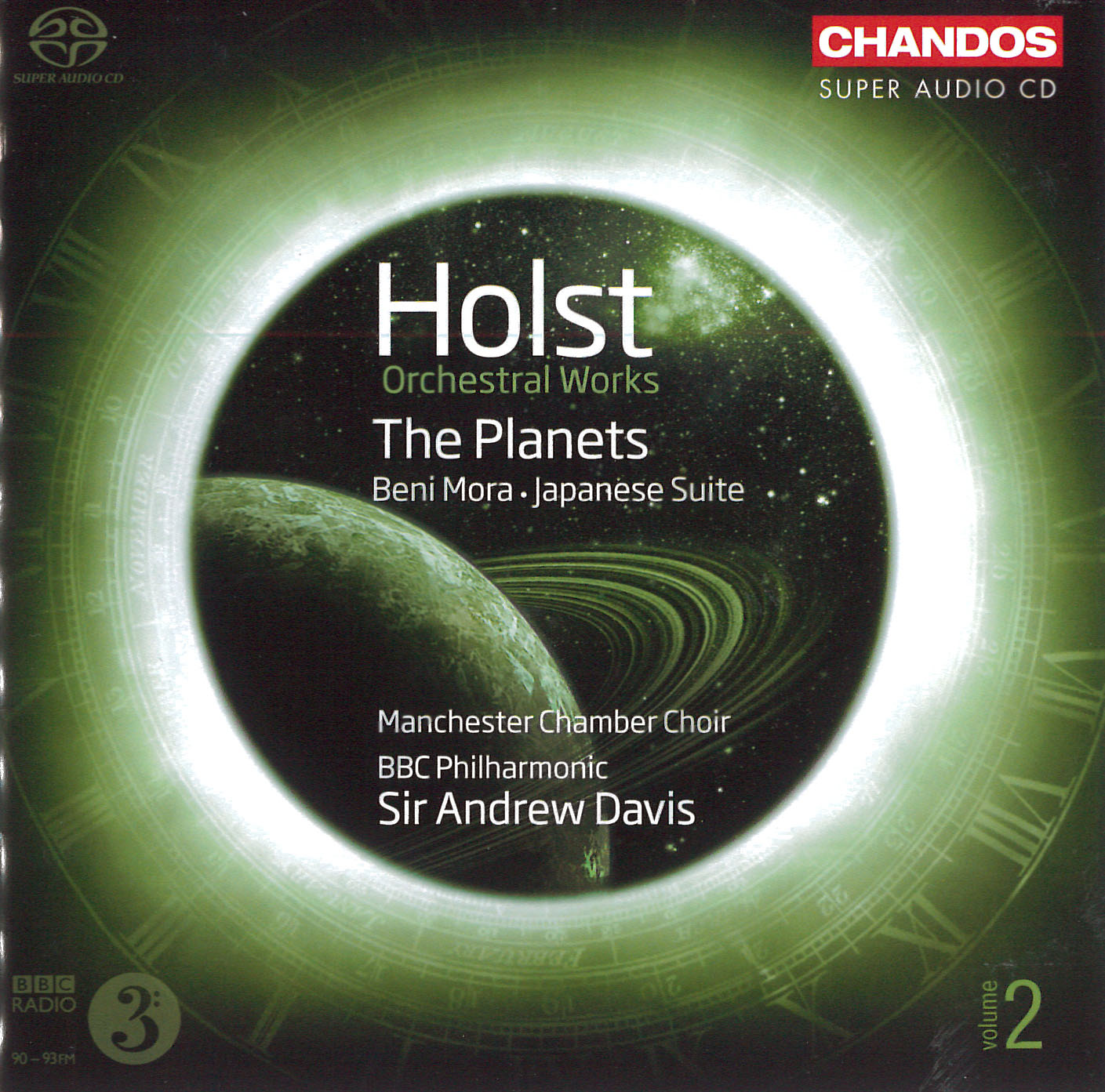
03_HolstHolst - The Planets; Beni Mora; Japanese Suite
Manchester Chamber Choir; BBC Philharmonic; Sir Andrew Davis
Chandos CHSA 5086

This is Davis’ third recording of The Planets, Holst’s best known work. The first was for EMI in 1986 with the TSO during his tenure here. His second, for Teldec, was in 1993 with the BBC Symphony Orchestra during his tenure there.

There is no paucity of recorded versions interpreted by a who’s who of eminently suitable conductors and some quite unsuitable. I have heard just about all of them and some are outstanding, such as Boult’s 1966 version with the New Philharmonia (EMI) but Davis’s new version, all things considered, is the one some of us have been waiting for.

From the very first bars of Mars, The Bringer of War, it is clear that Davis has re-thought the music with striking results. There is a fresh clarity and transparency achieved primarily by adjusting the balances between instruments and through subtle and not so subtle adjustments to the tempi and phrasing.

Beni Mora is a delicately scored, attractive little ballet with an oriental flavour. The Japanese Suite is another dance piece, alternately stimulating and reposeful. It is new to me but I’ve listened a few times and regard both beautifully scored little works as undeservedly obscure gems that live in the shadow of The Planets.

Davis acknowledges an affinity for Holst and there are more recordings to come from these forces.

The wide range of sonorities together with scrupulous regard for dynamic gradations from juggernaut tuttis to the gossamer pianissimos in The Planets are captured to absolute perfection by CHANDOS. This disc is a must have, particularly for the most demanding audiophile. A hybrid disc, the outstanding sound in stereo is enhanced with astonishing reality in surround sound on SACD players.


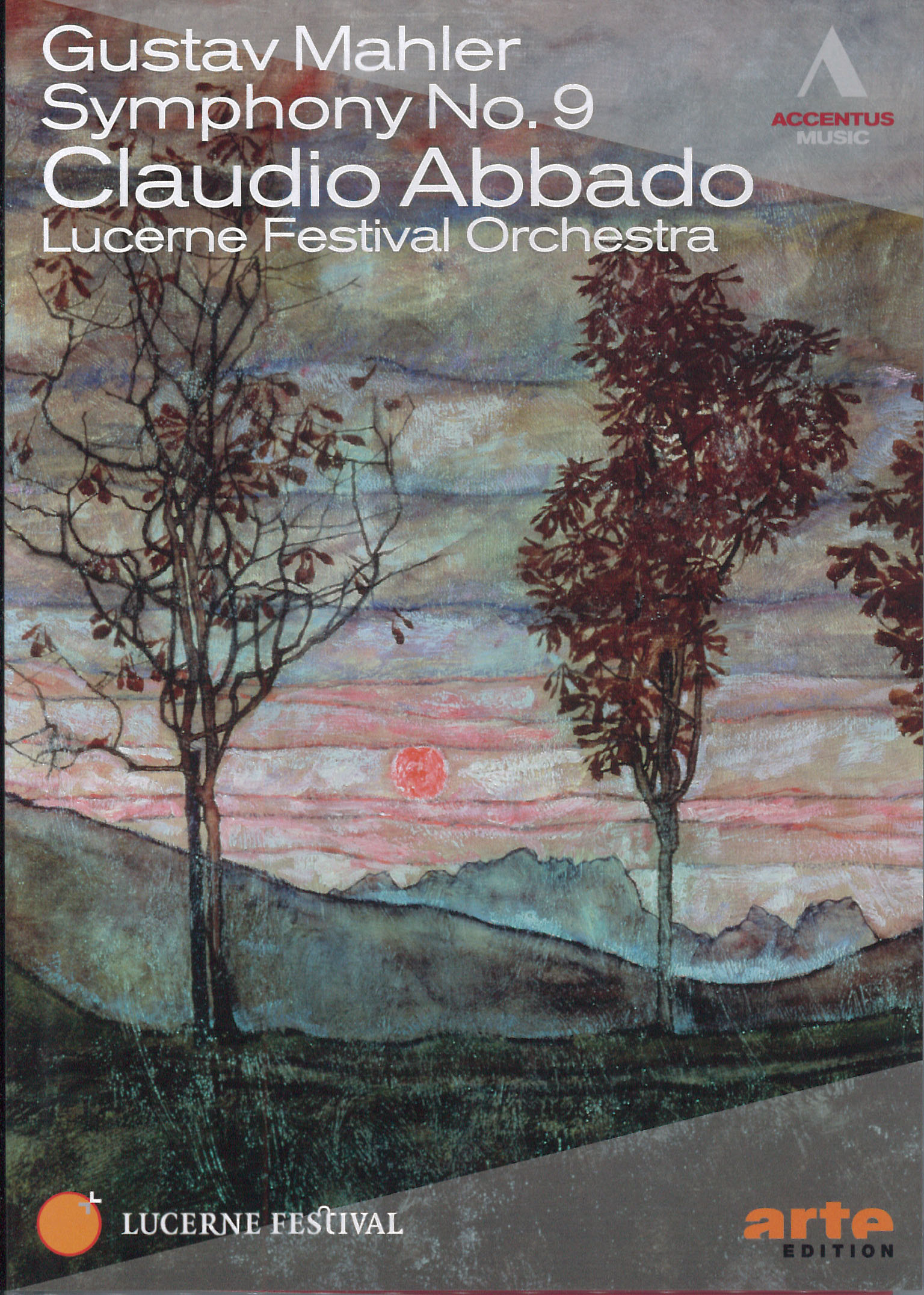
04_mahler_dvdMahler: Symphony No. 9
Lucerne Festival Orchestra; Claudio Abbado
Accentus Music; Arte DVD ACC20214

This is the second DVD of Abbado conducting this work at the Lucerne Festival; a previous 2005 EuroArts release had featured a marvellous rendition by the Gustav Mahler Youth Orchestra. As fine as that performance was, I find myself utterly astonished by the excellence of this latest incarnation from August of 2010 with the incomparable Lucerne Festival Orchestra. From start to finish conductor and orchestra are of one mind, setting a new standard of excellence in revealing this purportedly death-obsessed work as a fiery affirmation of life. The very soul of Mahler is stripped bare, tender and defiant, sarcastic and caring, brave and pensive, in a truly revelatory performance of astounding sensitivity and beauty of tone. As the house lights dim theatrically during the final pages of the symphony we are transported into an atmosphere of sublime transcendence: now barely audible, the music is drawn out to infinity and evaporates into two and a half minutes of stunned silence from an audience which clearly has witnessed a truly historic event. The DVD (also available in the Blu-Ray format) is skilfully filmed with vastly improved sound from previous releases and includes the option of a “conductor camera” view focused on Abbado alone.


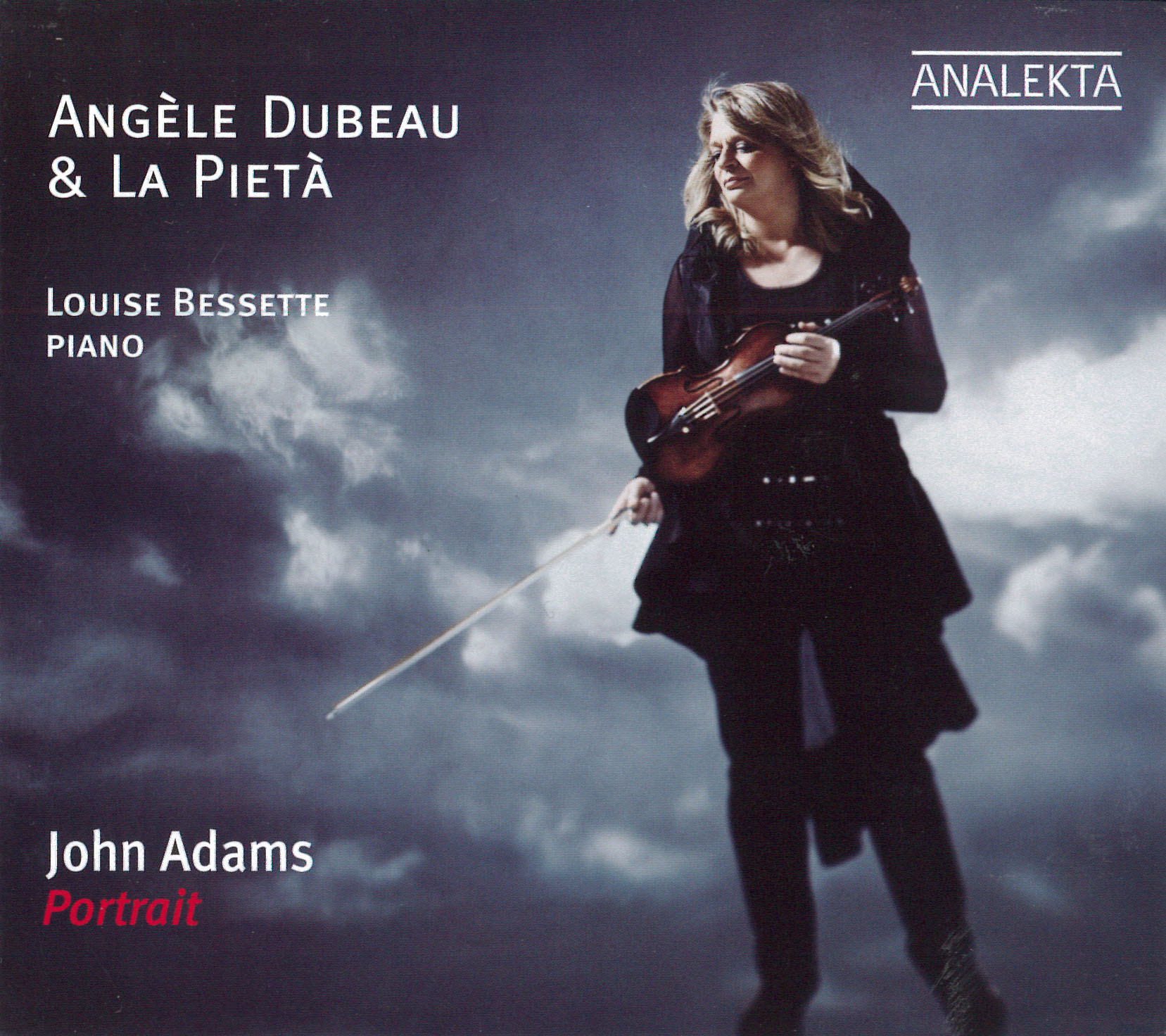
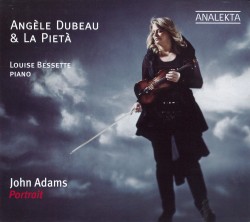
01_Adams_PortraitBy his own admission American composer John Adams, star of the recent TSO New Creations Festival, is hard to classify. Given his large output, the three works on John Adams - Portrait, the latest CD from Angèle Dubeau and La Pietà (Analekta AN 2 8732), won’t really help you in that regard, despite the CD’s title. This is the group’s third ‘portrait’ CD, following discs dedicated to Philip Glass and Arvo Pärt, but there is little of Adams’ range on display here. Shaker Loops, for string septet, is an early work from 1978 with echoes of Steve Reich, but with more going on and some interesting textures. The other works are only a year apart, and over 15 years old. Road Moves for violin and piano (with Louise Bessette) is from 1995, and closer to the Adams of the Short Ride in a Fast Machine style. John’s Book of Alleged Dances for string quartet, from 1994, is a set of dances that can be played in whole or in part, and in any order. Six of the ten dances – the ones selected for this CD - are accompanied by a recorded track of percussion noises produced on a prepared piano. The booklet notes inform us that “except for a few excerpts, the dances are played here with a double quartet, adding considerably to the challenge of performing the work.” Nobody says why. Recorded at McGill’s Schulich School of Music, the performance and sound quality are top notch.

The Deutsche Grammophon debut CD by the Georgian violinist Lisa Batiashvili, Echoes of Time (DGG 477 9299) is her selection of works by composers whose artistic lives were impacted by the Soviet regime, and it’s a real winner. At its core is the Shostakovich Violin Concerto No.1, and it’s worth the price of the CD on its own. Whatever the truth of the composer’s apparent compliance with the regime, there is no music from the 20th century that is more painfully personal than that of Shostakovich: listening to this deeply moving performance made me feel almost uncomfortable, as if intruding on someone’s most intimate thoughts. The contribution of the Symphonieorchester des Bayerischen Rundfunks under Esa-Pekka Salonen is outstanding. Nothing else on the disc really measures up after that, but it’s still terrific playing. Giya Kancheli’s V&V, for violin and taped voice with string orchestra, and Shostakovich’s Lyrical Waltz (orchestrated by Batiashvili’s father) are paired with Arvo Pärt’s Spiegel im Spiegel and Rachmaninov’s Vocalise, Batiashvili being joined by the excellent Hélène Grimaud on piano.
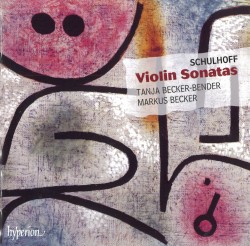
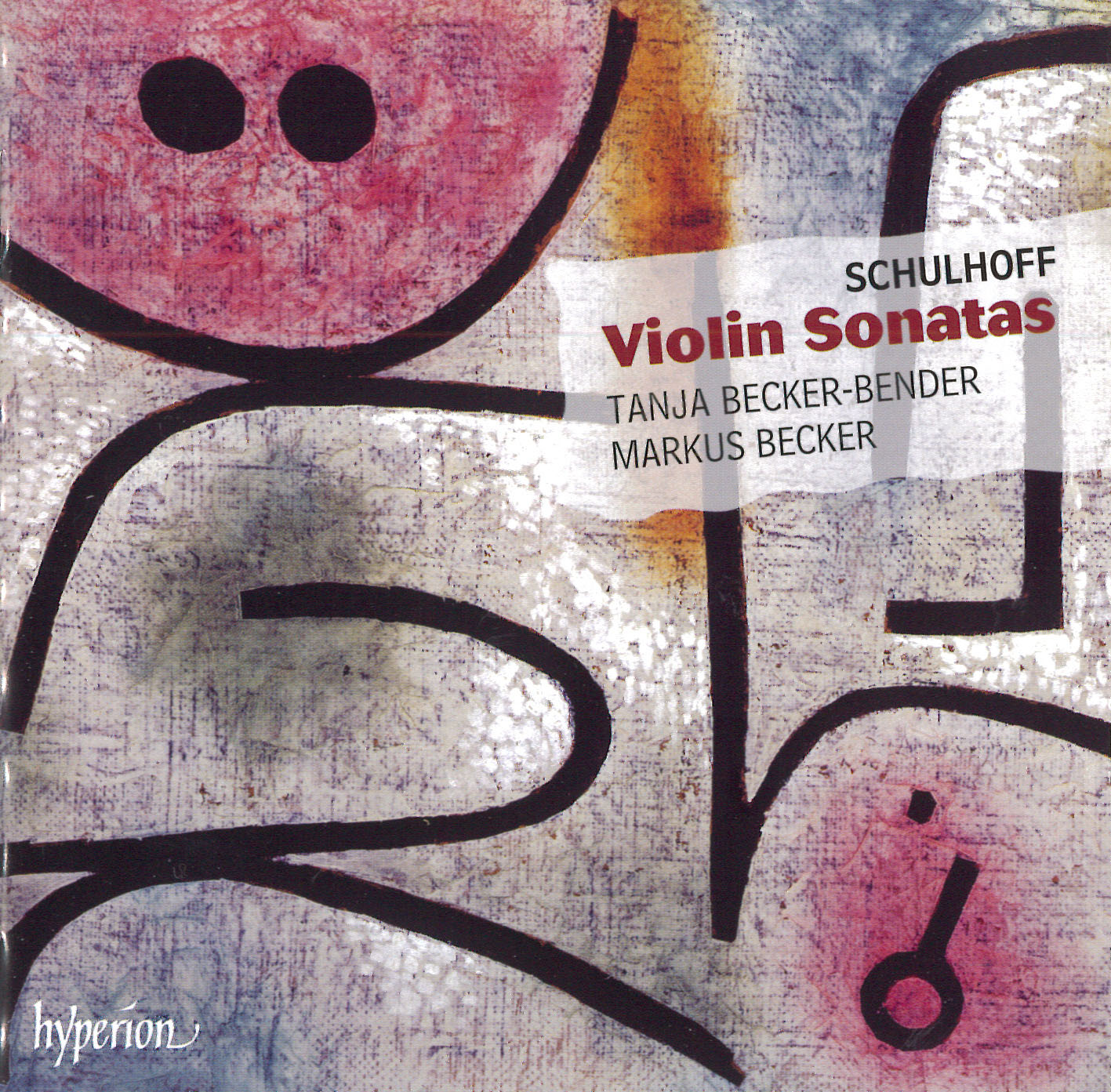
03_SchulhoffChances are you may know the name of Erwin Schulhoff but not his music; I was unaware of his violin works before hearing the excellent CD of his Violin Sonatas by Tanja Becker-Bender and Markus Bender (Hyperion CDA67833). Schulhoff, who was in his late 40s when he died of tuberculosis in a Nazi concentration camp in 1942, was a student of Reger and of Brahms’ close friend Fritz Steinbach, and the influence shows in his early Suite Op.1, a finely crafted and strongly tonal work from 1911. Within two years, however, Schulhoff had discovered the music of Debussy, and the harmonic language in his Sonata No.1, Op.7 is far more sophisticated. The other two works on the CD are from 1927. The Sonata for Solo Violin is a stunning work with a dazzling first movement, a lyrical but highly chromatic slow movement, and third and fourth movements strongly reminiscent of Bartok, whose influence is also heard in the Sonata No.2 for violin and piano. The playing and sound quality throughout are of the highest order. A terrific disc.
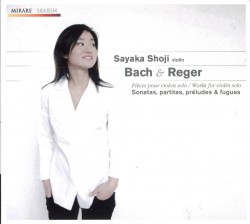
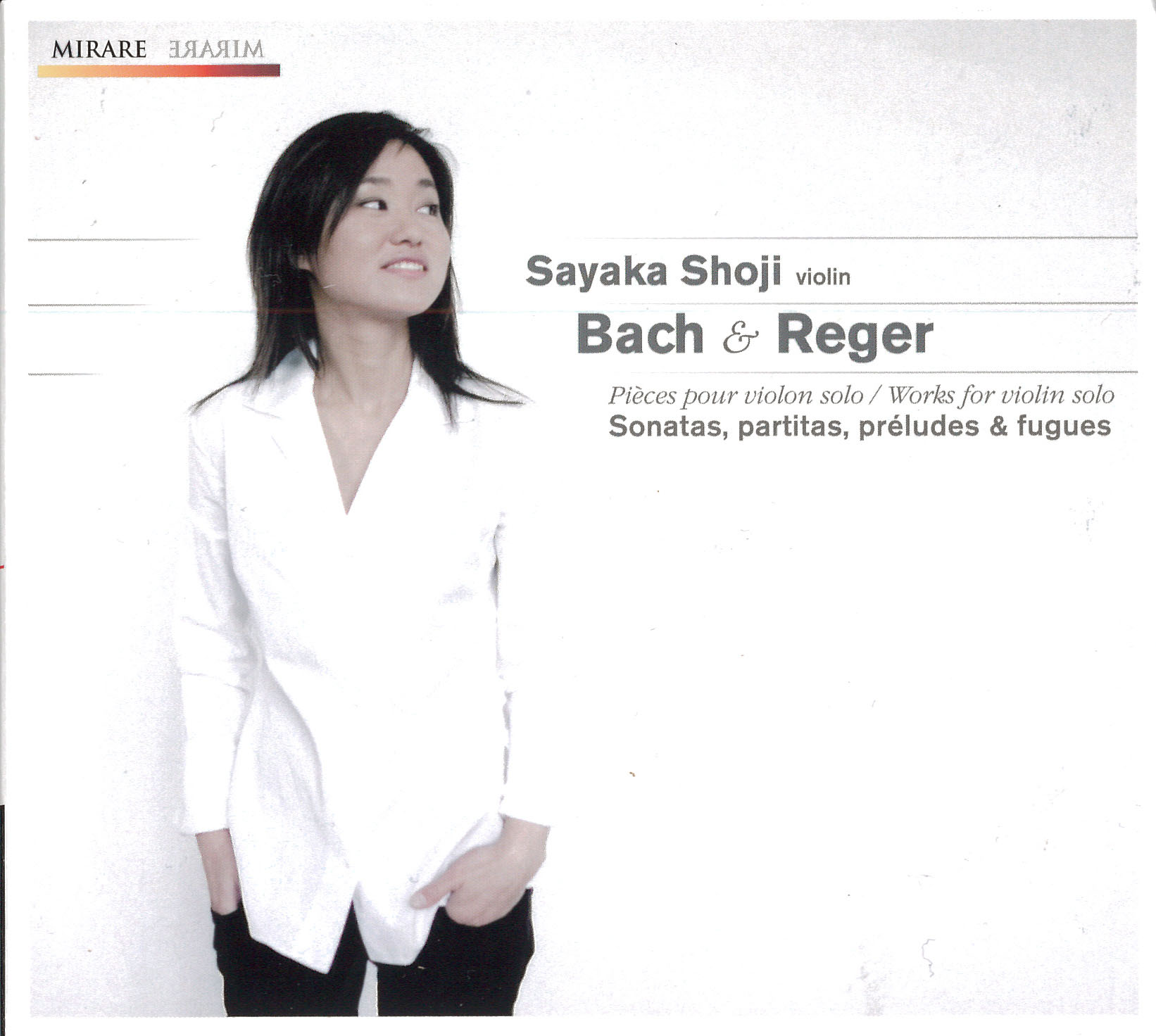
04_Bach_RegerI’ve never quite understood the lack of interest in the music of Max Reger. Outside his native Germany he is still misunderstood and rarely heard, usually being regarded as some turgid, chromatic hybrid of Brahms and Mahler. A brilliant organist, Reger revered Bach, taking him as a model, and his life-long obsession with the fugue is reflected in the huge amount of music he wrote for organ and for solo violin. The Japanese violinist Sayaka Shoji has produced a fascinating 2-CD set (Mirare MIR 128) which pairs three of Reger’s Preludes & Fugues from his Op.117, written between 1909 and 1912, with three of the Bach Sonatas & Partitas: the Sonata No.1 in G minor; the Partita No.1 in B minor; and the Partita No.2 in D minor. Shoji has a full, warm sound, and is recorded with a good deal of resonance but great clarity. Her technique is superb, and her interpretation quite captivating: with its understated dynamics, the great D minor Chaconne makes an almost introspective ending to a fascinating look at how musical influences can reach across the centuries. In fact, hearing these works side by side makes you realize just how chromatic and stunningly ‘modern’ Bach’s harmonic structures really were.
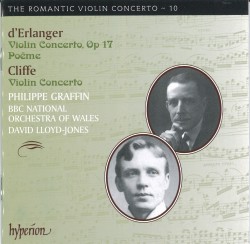
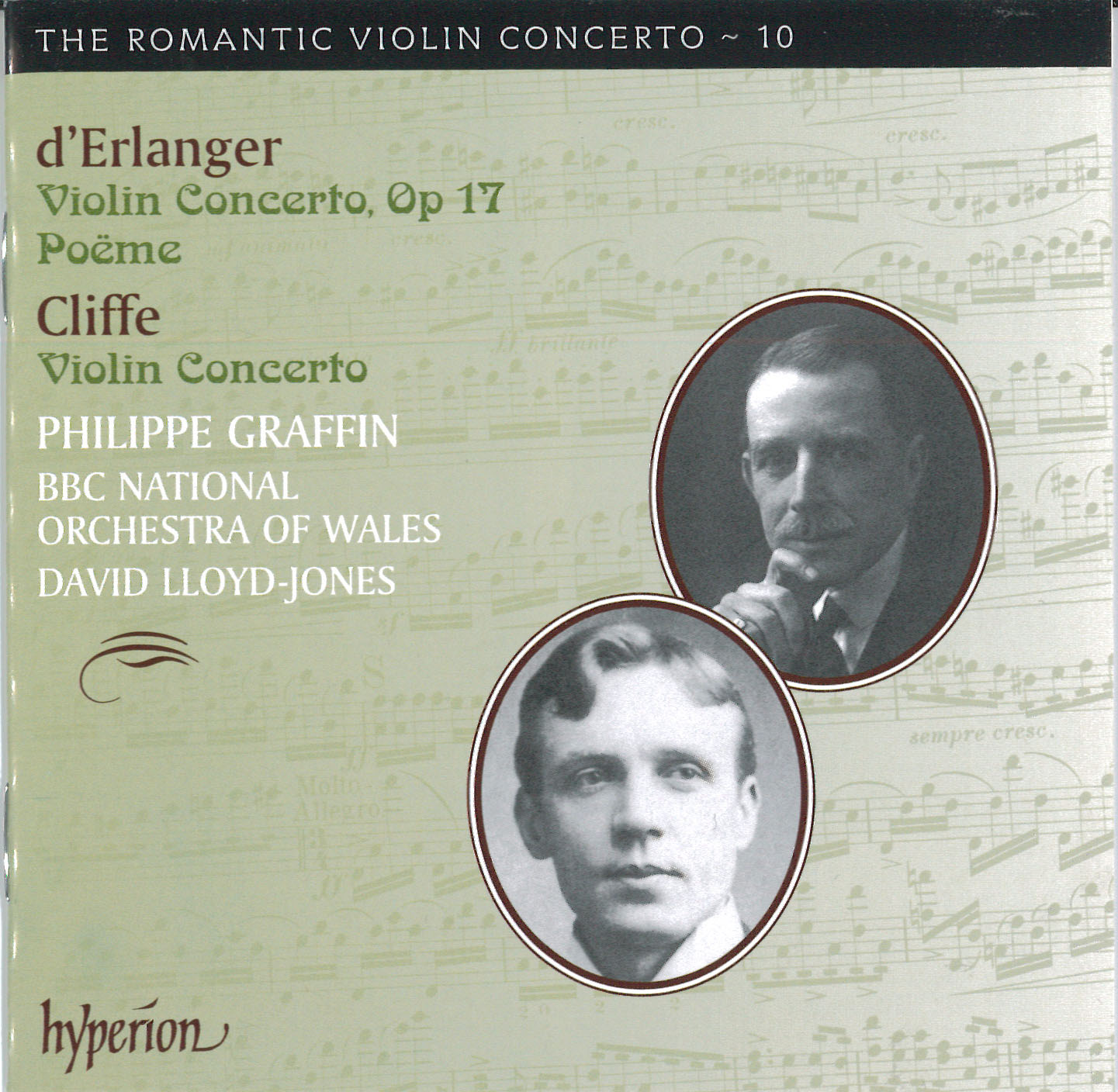
05_dErlangerHyperion’s latest addition to their series The Romantic Violin Concerto – Volume 10 (Hyperion CDA67838) – features works by two composers who are completely new to me, and three works that will be new to almost everyone. Frederic d’Erlanger (1868-1943) was born in France to a German father and American mother, and moved to London in his teens, eventually becoming a naturalized British citizen and a prominent figure in the London musical scene. He composed regularly, though not profusely, throughout his life, and his compositions were performed by the leading artists of the day. His Violin Concerto in D minor, Op.17, dates from 1902, and over the next 20 years was played by Kreisler and by the great English violinist Albert Sammons. It is very much in the Brahms/Bruch mould, beautifully scored, and with a very lovely slow movement. His Poème started life in 1918 as a work for violin and piano, and was orchestrated by d’Erlanger in 1926. The soloist for the premiere of the orchestral version in 1928 was the famous viola player William Primrose. Again, it’s lovely stuff: fresh, warm, melodic, and beautifully orchestrated. The Yorkshire-born Frederic Cliffe (1857-1931) is a classic example of the late Victorian minor English composers who were swept away and rendered irrelevant by the 20th century. He burst on to the scene at the age of 31 – apparently with no previous compositional accomplishments to his name - with a highly successful symphony, produced a handful of major works, and disappeared again within 20 years. His Violin Concerto was written in 1896 for the Norwich Festival, but after only a handful of performances it remained un-played for 90 years. It’s an attractive and competent work, but nowhere near as convincing as the d’Erlanger, feeling more episodic and somewhat disjointed, especially in the slow movement. The violinist who revived it, Philippe Graffin, is the soloist on this excellent CD, and it’s difficult to imagine a more appropriate and sympathetic interpreter. His playing is effortlessly beautiful, and stylistically perfect. The BBC National Orchestra of Wales under David Lloyd-Jones is his equal in all respects. It’s easy to see why this music disappeared – after all, it’s only a dozen years or so before Schoenberg’s atonality and Stravinsky’s Rite of Spring changed the playing field for ever – but it’s also easy to appreciate its appeal. It’s an absolutely fascinating sample of English music in the late Victorian and Edwardian eras.
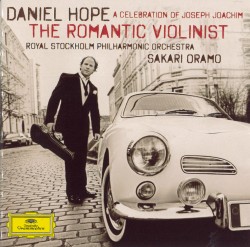
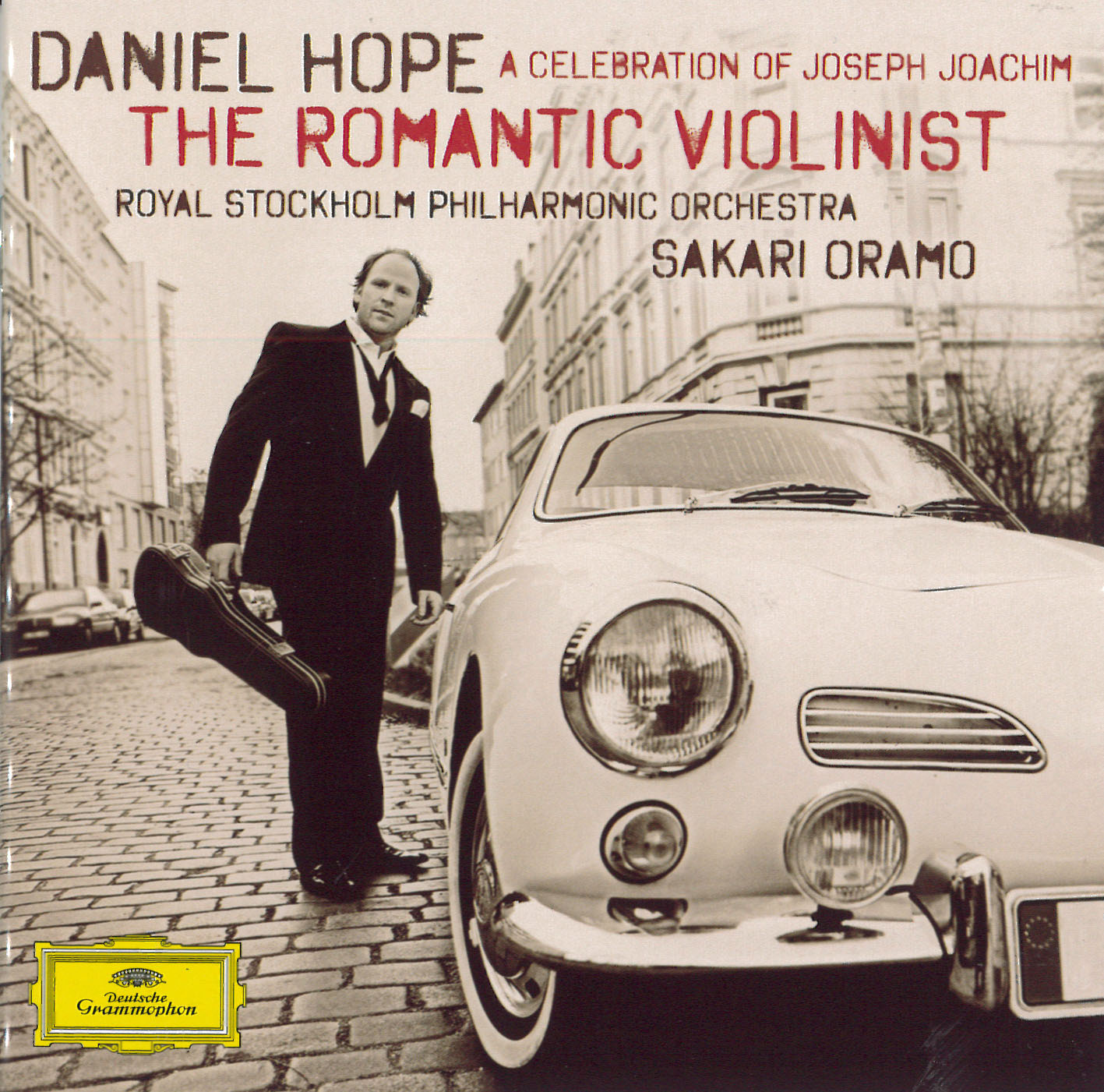
06_Romantic_violinistOn The Romantic Violinist – A Celebration of Joseph Joachim (DGG 477 9301), Daniel Hope presents a programme of works created for and by the man whose influence dominated the violin world in the second half of the 19th century. The major work is a beautifully considered, warm and intelligent reading of the Bruch G minor concerto, with the Royal Stockholm Philharmonic Orchestra under Sakari Oramo. The nine shorter pieces have varied accompaniment: Dvorak’s Serenade and Joachim’s own Notturno are with orchestra; Brahms’ Hungarian Dances Nos.1 and 5 are for violin and strings; Clara Schumann’s Romanze, Joachim’s piece with the same title, Brahms’ Scherzo from the F-A-E Sonata and Schubert’s Auf dem Wasser zu singen feature piano accompaniment by Sebastian Knauer. Hope switches to viola for the Brahms Geistliches Wiegenlied, where he is joined by mezzo-soprano Anne-Sofie von Otter and pianist Bengt Forsberg. For this CD, he tells us in the booklet notes, “I borrowed a viola and taught myself to play it.” Must be nice!
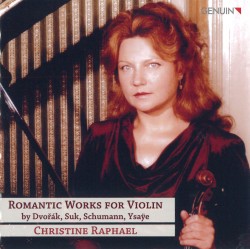
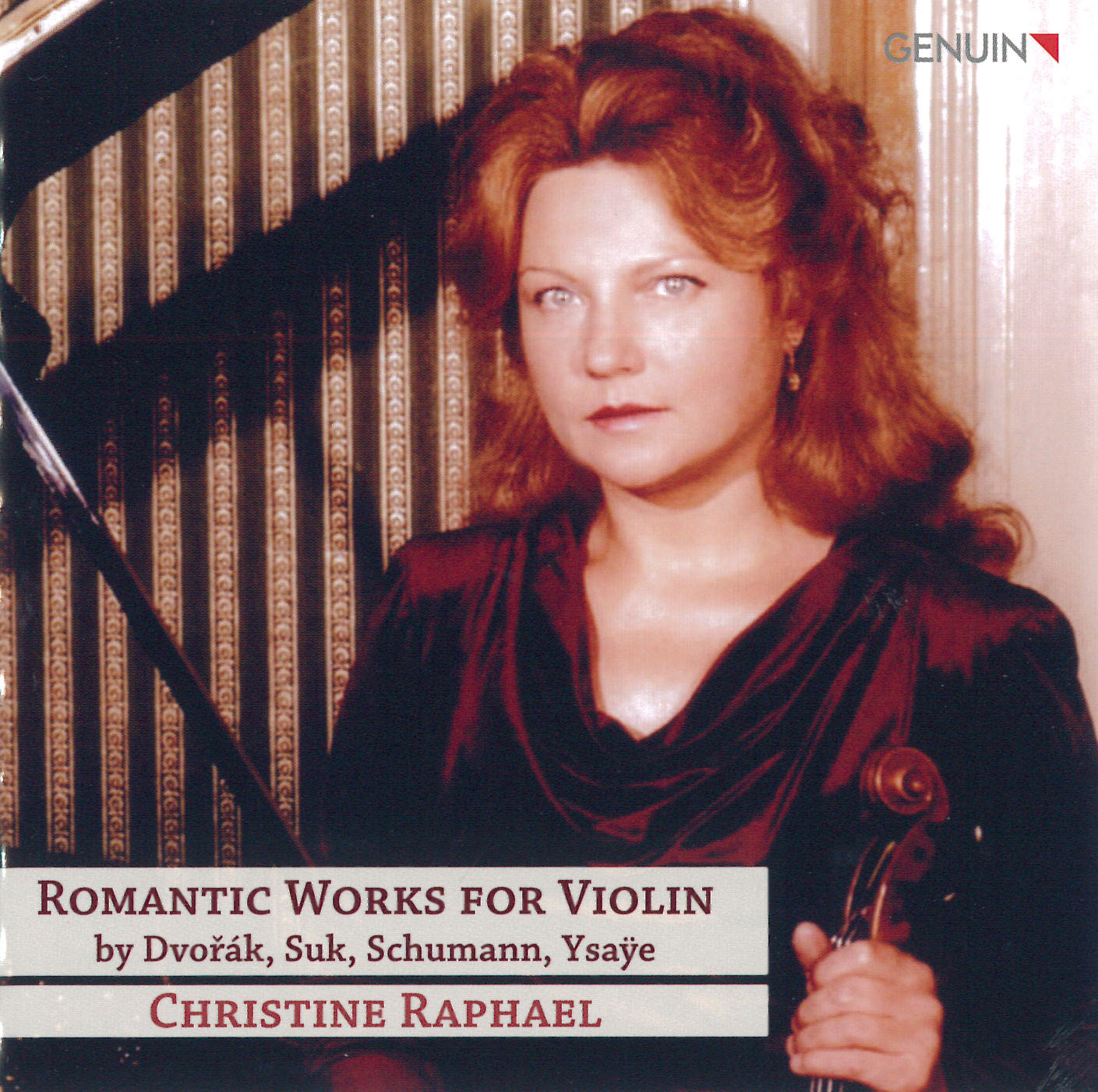
07_romantic_violinGENUIN has released a CD of Romantic Works for Violin (GEN 10535) featuring the German violinist Christine Raphael, who died 3 years ago in her mid-60s. The Dvorak concerto and two pieces for violin and string orchestra by Ysaÿe are coupled with two selections with piano accompaniment: Suk’s Four Pieces Op.17 and Schumann’s Three Romances Op.94. Recorded between 1977 and 1985, apparently for German radio broadcasts, this is a good testament to a solid, if unspectacular, player.


01_geminianiGeminiani - Pièces de clavecin
Hank Knox
early-music.com EMCCD-7772

Francesco Geminiani arrived in London in 1714; by 1739 he had published the harpsichord music from which Hank Knox makes his selection for this CD. Geminiani probably developed his individual style in Paris, learning from Rameau and others. Hank Knox introduces us to a prelude bearing the hallmarks of this individuality. From his commentary it is clear that Geminiani never rested until he had added all the complex scoring he considered necessary. His gayment and vivement movements are demanding but reward the listener and player with lively and entertaining motifs. This is Hank Knox at his most inspired.

Geminiani’s tendrement movements are appropriately named with their pleading quality, although the movement marked gracieusement et tendrement is both more taxing on the player and far livelier than its two near-namesakes. And then for the more traditional lover of the harpsichord there are two minuets, the second lasting almost ten minutes – an early music eternity! This is baroque harpsichord at its most conventional and most complex.  Finally, an amoureusement shows just why Geminiani’s student Charles Avison so admired his master: he placed him alongside Handel (often semi-seriously styled England’s greatest composer between Purcell and Elgar) and Corelli who enjoyed cult-like status in London.

This is an enjoyable CD; Hank Knox may take a real pride in bringing Geminiani’s harpsichord music to a larger audience.


pandolfiPandolfi - The Violin Sonatas of 1660
Mark Fewer; Myron Lutzke; Kenneth Slowik
Friends of Music FoM 36-802 (www.markfewer.com)

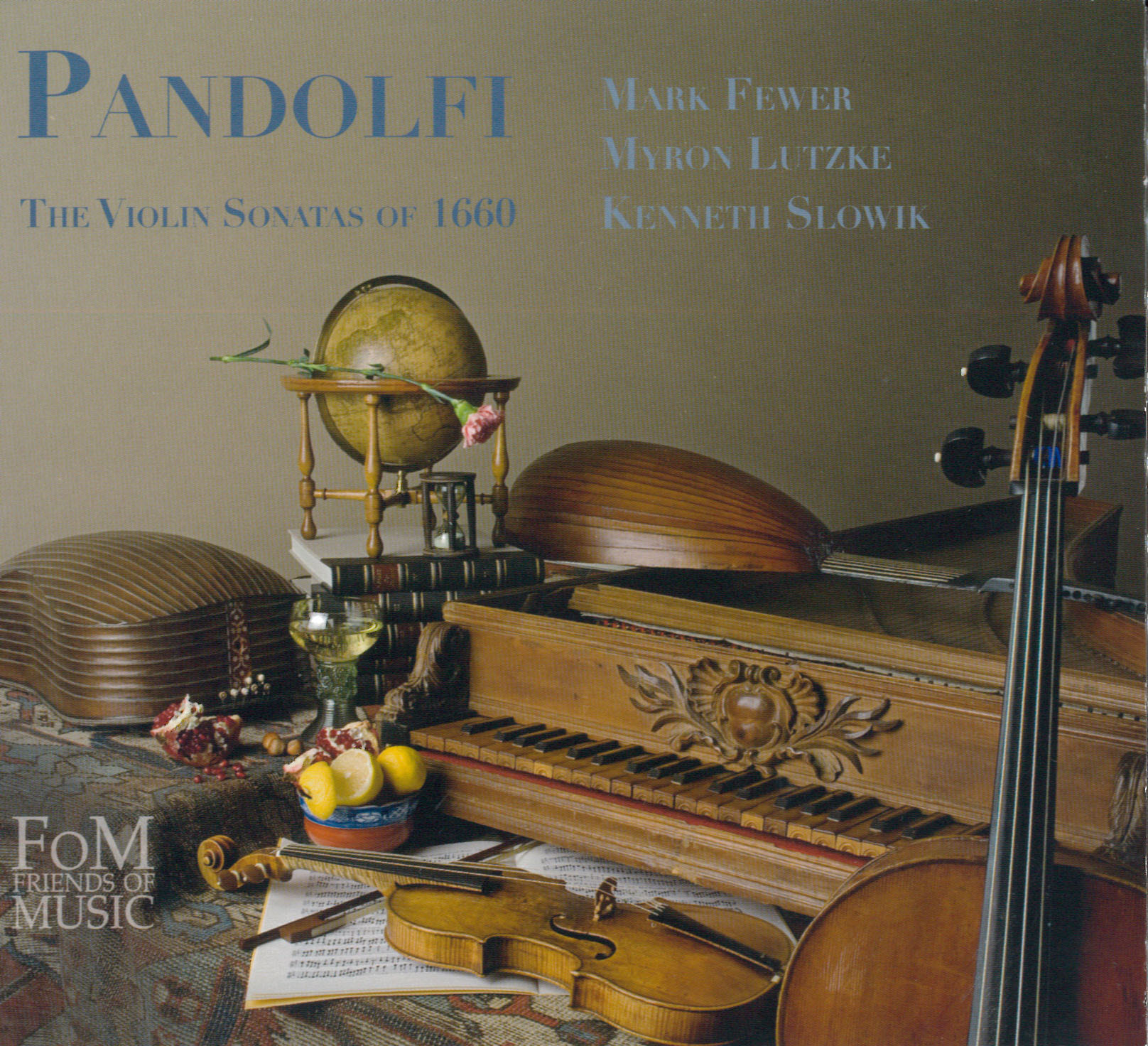
Though little is known about the 17th century Italian violinist and composer Giovanni Antonio Pandolfi Mealli, his two marvellous collections of sonatas for solo violin and continuo place him squarely in the good company of Dario Castello, Biagio Marini, Tarquinio Merula and others of what we might call the first generation of sonata-writers. Unlike the Classical multi-movement form, instrumental sonatas of the early to mid-17th century are usually in one extended movement, full of changes of mood, tempo, articulation and musical ideas. As such, they are dramatic and full of possibility for an imaginative performer. In his excellent liner notes accompanying this recording, harpsichordist Kenneth Slowik comments on how operatic these pieces are; that they could in essence be seen as instrumental “scenas” full of passion and pathos.

We should be tremendously grateful to the Friends of Music at the Smithsonian for supporting this recording and making it possible. Mark Fewer is one of Canada’s finest violinists and is possessed with a profound and open musical mind. It’s rare to find a player as comfortable in such a wide variety of musical styles as Fewer is. He tucks into these sonatas with wild abandon, though never loses sight of the good taste and stylistic know-how needed to approach this “early” music. His range of virtuosic and tender playing makes this disc of twelve sonatas an absolute pleasure to listen to from beginning to end. He’s ably supported by Slowik and cellist Myron Lutzke, though I did feel at times that the continuo colour could have been enhanced by the presence of a theorbo.

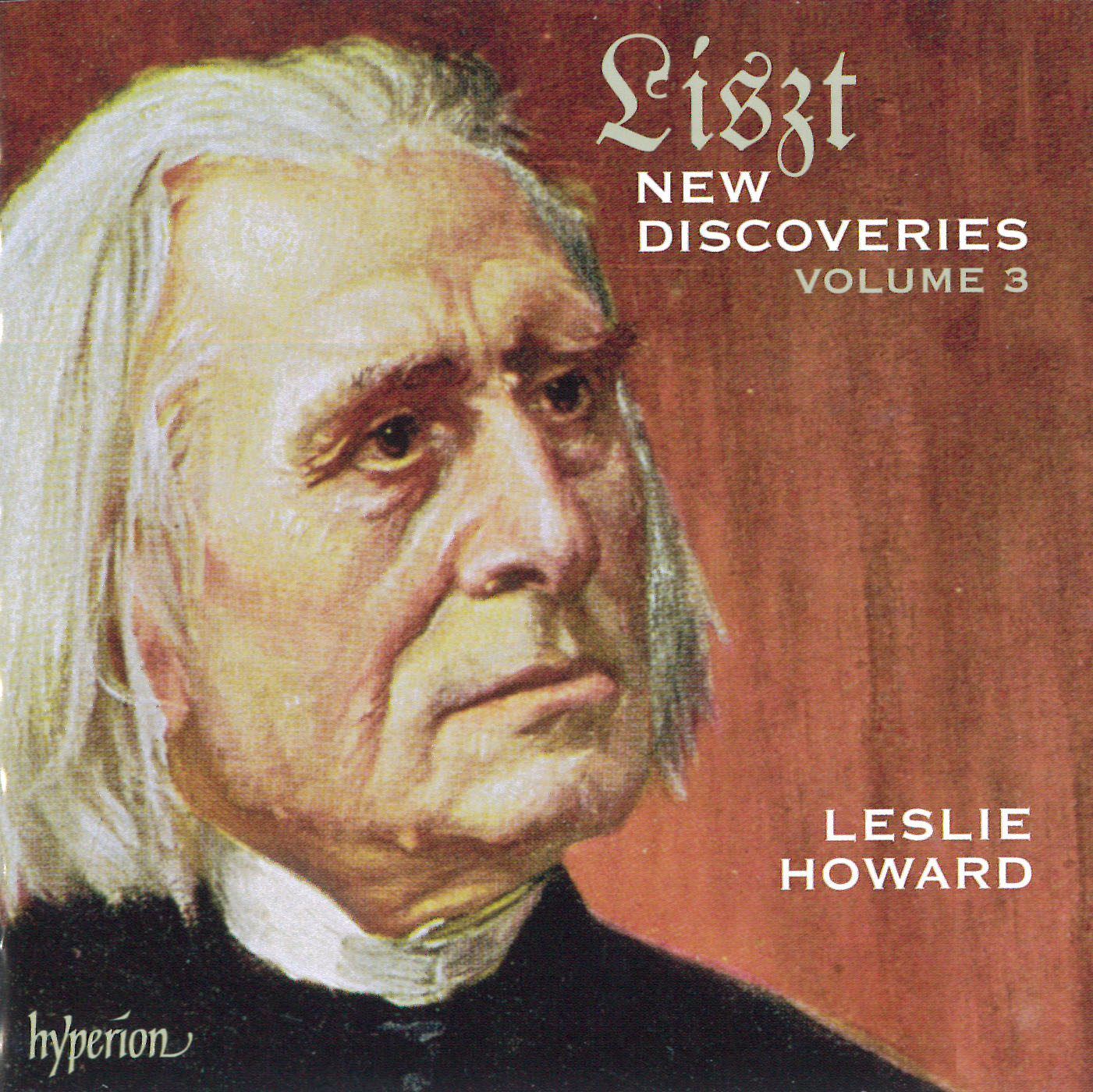
01_liszt_howardLiszt - New Discoveries Vol.3
Leslie Howard
Hyperion CDA67810

It’s hard to imagine that there could be any music by Liszt that remains unpublished and possibly even undiscovered. Somehow our modern age quietly assumes we’ve got it all, printed, bound, recorded and filed away. So it falls to the passionate scholars to continue searching for new works whose suspected existence is owed to fragmentary sketches in notebooks, allusions in letters, etc. Performers too can be such champions as is Leslie Howard, currently making a series of recordings of the entire Liszt repertoire including unpublished and newly discovered works.

Howard has recorded many of these pieces from Liszt’s original manuscripts and in a few cases has had to complete endings or otherwise fill in missing sections. The forty-eight works contained in this 2 CD set are quite short but intriguing nonetheless. Some will be familiar but many will be new to Liszt-philes. Listeners may recognize the Magnificat S182a as an early version of the more elaborate Alleluia S183/1. While Liszt seems to have discounted the early Magnificat it is an effective piece in its chorale-like simplicity with echoes of J.S. Bach throughout.

The set also includes two versions of a Romance from 1842-3, an arrangement of Schlummerlied for one of Liszt’s students, Carl Lachmund and numerous other pieces that exist only in single copy manuscripts in libraries throughout Europe.

Recorded on a Steinway in an acoustically lovely Catholic church in North East London (UK), these performances make a substantial artistic and historical contribution to the body of Liszt works.

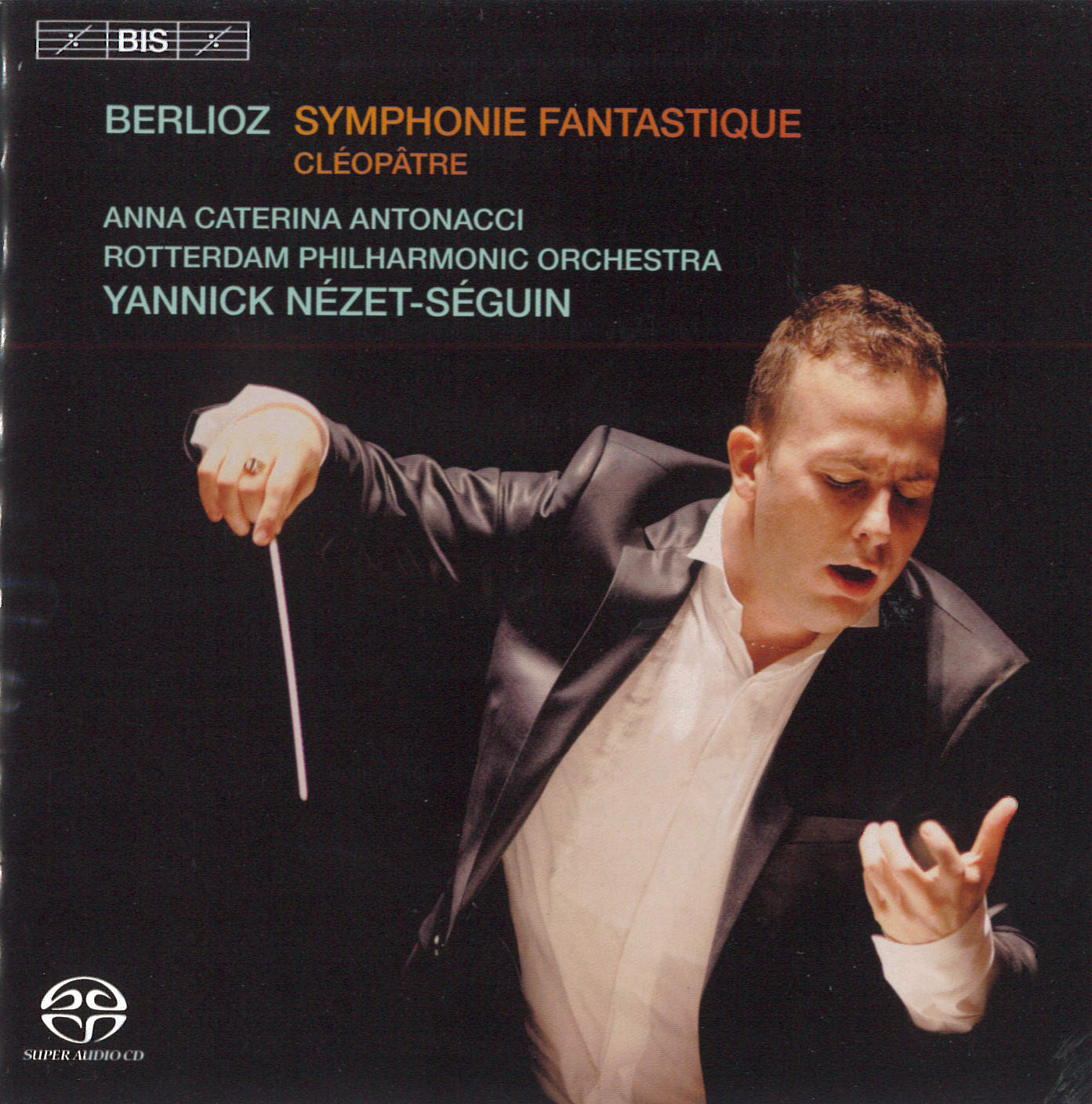
02_berlioz_seguinBerlioz - Symphonie Fantastique; Cléopâtre
Anna Caterina Antonacci; Rottendam Philharmonic Orchestra; Yannick Nézet-Séguin
BIS SACD-1800

Can you think of a large-scale work that embodies the spirit of French early Romanticism better than Berlioz’ Symphonie Fantastique? Completed in 1830, the symphony marked the 27-year-old composer’s first major success, hailed as truly revolutionary both in size and in concept. And who better to undertake such a monument than supernova conductor Yannick Nézet-Séguin with the Rotterdam Philharmonic on this BIS label SACD? Nézet-Séguin’s career has catapulted to stratospheric heights in a very short time. After studying in his native Montréal, he made his European debut in 2004, and within four years had succeeded Valery Gergiev as Music Director of the Rotterdam Philharmonic. He was recently named Music Director Designate of the Philadelphia Orchestra commencing in the 2012-13 season.

From the opening notes – a series of repeated Gs - the listener senses something magical about this performance. Nézet-Séguin approaches the music with a deep-rooted sensitivity, carefully shaping it at all times, and easily capturing the multi-faceted moods contained within. The orchestra – particularly the winds and strings – respond with a warm and resonant sound.

The second movement Valse is light and elegant, while the fourth movement, the March to the Scaffold is given the dramatic intensity it deserves. The finale - the Dream of a Witch’s Sabbath, in which the hero finds himself surrounded by ghostly figures, is all at once bombastic, grotesque, and terrifying. Not surprisingly, the music is adeptly handled by a perfect pairing of conductor and orchestra, who bring the mad frenzy to a rousing conclusion.

An added bonus on this CD is the short cantata La Mort de Cléopâtre written two years earlier for the Prix de Rome. Soprano Anna Caterina Antonacci gives a dramatic and sensitive performance, thus rounding out this most satisfying disc, easily among the best currently available.

Saint-Saëns - Music for Wind Instruments
National Arts Centre Wind Quintet; Stéphane Lemelin
Naxos 8.570964

For some the name Saint-Saëns may evoke the musty ectoplasm of the Danse macabre or, likewise ghastly, the Carnival of the Animals embellished with Ogden Nash verses intoned by a tanned and taut celebrity. Actually, Saint-Saëns was a serious composer of high calibre, an extraordinary piano prodigy who wrote successfully in every genre. This disc of works for winds and piano brilliantly performed by National Arts Centre Orchestra principals reveals the wealth of expression and imagination within the composer’s classical French orientation.

In the clarinet, oboe and bassoon sonatas of 1921, the 85-year-old composer is still at his peak. Of these “swan songs” the clarinet sonata is the most extended and varied of the three, while the oboe sonata conveys a sense of antique classicism. The pure, pensive repose of the bassoon sonata is rendered effectively by Christopher Millard. Its opening movement pays homage to Saint-Saëns’ close lifelong associate Gabriel Fauré in its chromatic twists of harmony. The final movement with its slow tempi and absence of virtuosity is particularly affecting.

The early Tarantella and the Caprice on Danish and Russian Airs are unique, attractive works for upper winds with piano. Some pianists come to grief with the virtuosity of Saint-Saëns’ chamber music, but not Canadian pianist Stéphane Lemelin who is a specialist in nineteenth-century French repertoire. Immaculate ensemble work between winds and piano is notable throughout. Rounded off by the Romance arranged for horn and piano, the disc is a must-buy for woodwind and chamber music enthusiasts.

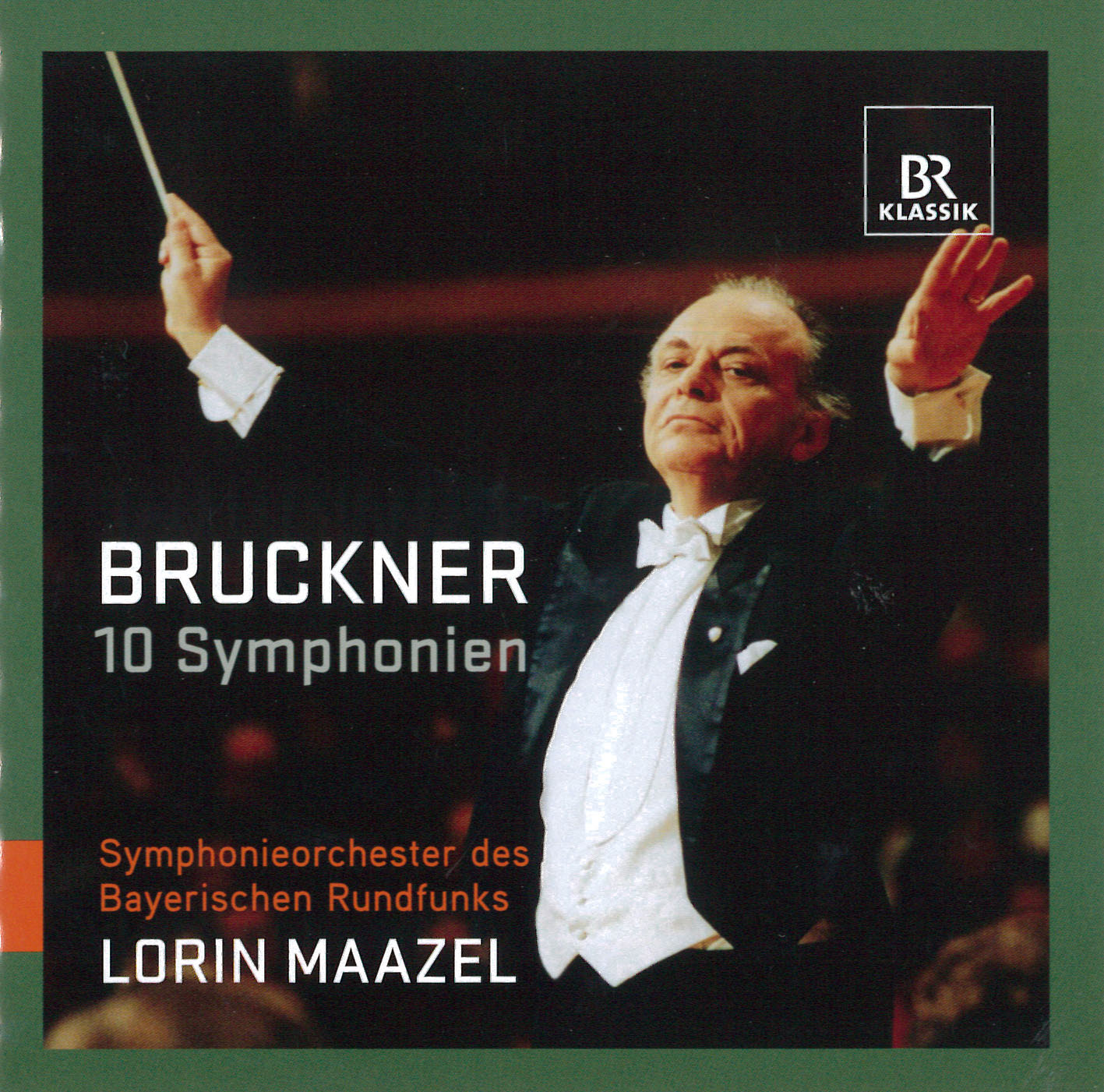
04_bruckner_10symphoniesBruckner - 10 Symphonies
Bayerischen RSO; Lorin Maazel
BR Klassik 900703

Anton Bruckner is an unfortunate example of what can happen if an artist has not enough confidence and listens to too many interfering people. Poor fellow. He was not only castigated by the critics (e.g. Hanslick) in his lifetime, influencing him to make changes in his scores, but even after his death his fame was belittled by English critics who ridiculed his work as “symphonic boa constrictors” or “symphonies that turn back on themselves.” Even in the 1960s this prevented him reaching North America although he was already famous in Europe thanks to the German-Austrian school of conductors. It all turned around in the 70s and at present his fame is at its highest. There are several symphony cycles available: Karajan, Jochum, Barenboim, Wand, Chailly, Skrowaczewski and more and now this fine set from the Bayerischen Rundfunkorchester, led by its music director at the time, Maestro Lorin Maazel. It was recorded in 1999 in one continuous set of live sessions; each symphony occupies one disc except the magisterial 8th which takes up two. As a curiosity, the so called Symphony 0 (Die Nullte) is added as an 11th disc. This piece was undeservedly withdrawn, but it’s by no means poor, with much of Bruckner’s latent talents emerging as the audience’s cheers attest.

As you perhaps remember from my earlier reviews, Bruckner’s symphonies progress step by step, each is better, deeper, more original than the previous. Then there are two quantum leaps of divine inspiration: between the 4th and the 5th and the 8th and the 9th. By the time we reach the 9th, we have reached Olympus.

Tempi are extremely important in music and nowhere more important than for Bruckner, where a misjudged tempo can easily sink the performance. There are two schools of thought. One is the slow, measured and broad tempo that allows the music to expand, enrich details and the immortal Celibidache was a great representative of this. Of course there is the pitfall of being too slow and if the conductor’s concentration is flagging, the music becomes boring. The other school goes with faster tempo which is more exciting and the shape of the music is easier to follow (e.g. Barenboim). Maazel belongs to the first category. His performances are on the slow side, but we are rewarded with tremendous insight and sensitivity in developing the themes. There is great control of dynamics from the almost inaudible pp to the thunderous ff - just listen to the feather light string tremolos at the opening of the 4th symphony. Another example is the beautiful Adagio of the 8th, one of the best performances on the disc, where it takes 22 minutes to reach a climax which is truly earth shattering.

This beautifully recorded set is highly recommended.

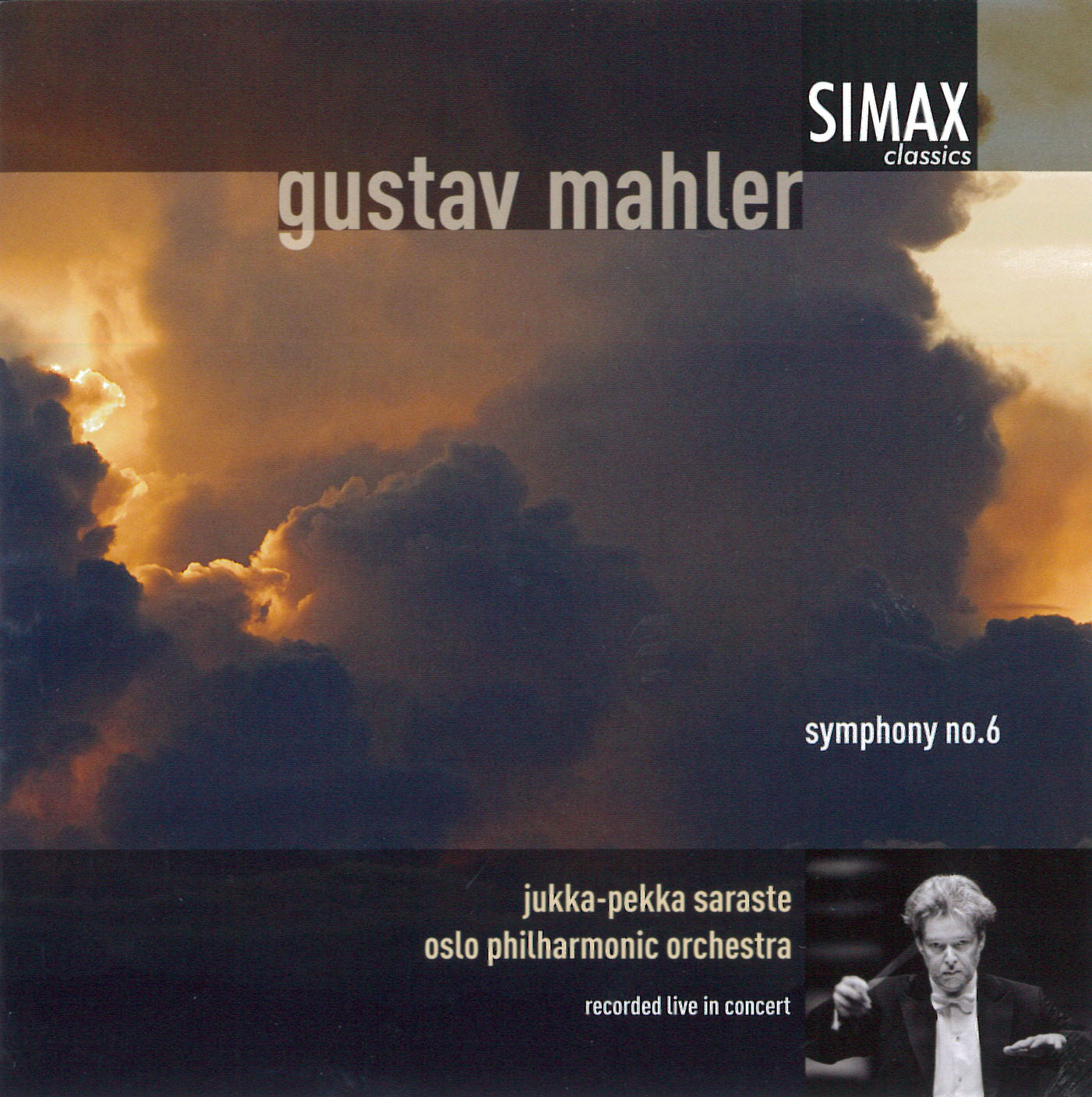
05_mahler_sarasteMahler - Symphony No.6
Oslo Philharmonic Orchestra; Jukka-Pekka Saraste
Simax PSC 1316

Jukka-Pekka Saraste, valiant conductor of the Toronto Symphony during a very difficult time in its history (1994-2001), was appointed music director of the Oslo Philharmonic in 2006, a position he continues to maintain. This new release of Mahler’s Sixth Symphony brings us up to date on his considerable accomplishments with this relatively unfamiliar but very fine Norwegian ensemble. Saraste’s characteristic steady, forward-thrusting tempi cast a refreshing new light onto the broad architecture of Mahler’s so-called Tragic Symphony, and though he is sensitive to the expressive nuances called for in the score, he is careful to avoid wallowing in maudlin excess. Though inexorable march tempos are very much the mainstay of this symphony, Saraste’s relative inflexibility flattens the hectic mood-swings of the Scherzo movement and underplays its demonic aspects. Otherwise however the dividends are impressive, none more so than in the magnificently played Finale, where the relentless tread of fate leads to a shattering conclusion, marked by literal hammer-blows of fate, the third of which, suppressed in most editions, is restored here in all its grim glory. Saraste’s impulse to ever-higher levels of tension results in a spine-tingling conclusion with the orchestra in glorious full throttle.

The sonic impact of this disc is quite spectacular considering that this is a recording of a live concert (without a trace of audience restlessness) from March 2010. Kudos to the engineers of the Norwegian Broadcasting Corporation for providing such a spacious and well-balanced sound stage for this accomplished orchestra. It’s well worth a listen!

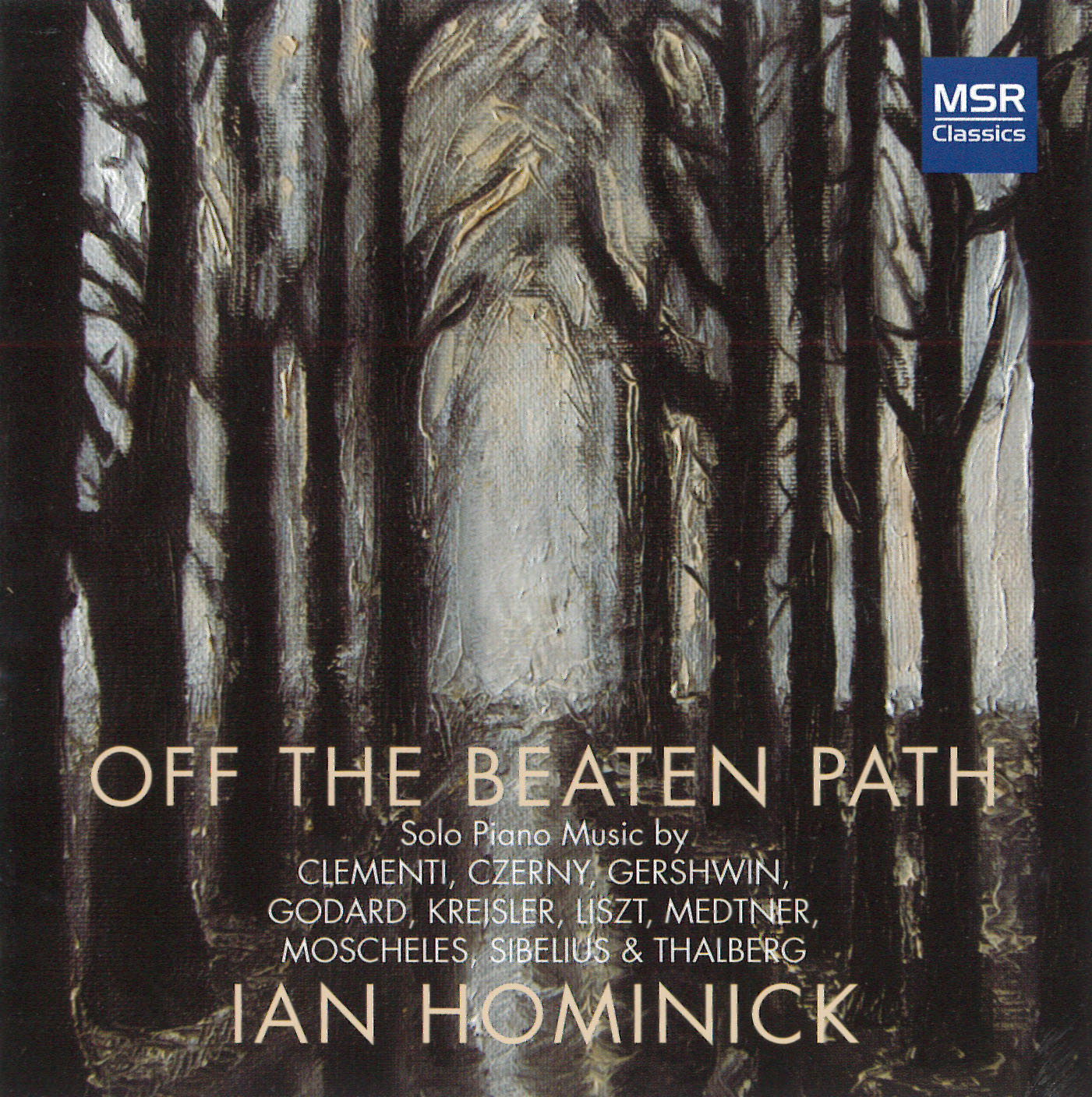
06_off_the_beaten_pathOff the Beaten Path
Ian Hominick
MSR Classics MS 1341 (www.ianhominick.com)

Even the most musically illiterate man on the street would undoubtedly be familiar with the names of Bach, Mozart, or Beethoven. But how about those other composers who perhaps lacked that creative spark of these geniuses, and who have been regarded as “lesser lights” ever since? Don’t they deserve at least some recognition as well? Pianist Ian Hominick certainly thinks so, and the result is this intriguing recording on the MSR Classics label, appropriately titled “Off the Beaten Track.” Featured here are 10 composers, most of whose music isn’t heard all that often. For an even balance, there is also music by Liszt, Sibelius, and Gershwin, resulting in a well thought-out program of piano music in different styles spanning a period of roughly 150 years. Canadian-born Hominick studied at Mt. Allison, and later, at Ohio State University where he was Assistant to Earl Wild and André Laplante. He is currently on faculty at the University of Mississippi.

The disc opens with a rousing little sonata by Muzio Clementi, containing a theme very close to one in found in Mozart’s The Magic Flute. Today, Clementi is remembered as a piano-maker and teacher, but this piece demonstrates not only his ability as a composer, but also Hominick’s level of technical prowess. More languorous is the Second Valse by Benjamin Godard, and the Nocturne by the 19th century piano titan Sigismund Thalberg. Fritz Kreisler? Wasn’t he a virtuoso violinist? Indeed, but included here is a charming Rondino on a Theme by Beethoven as transcribed by Godowsky. Most impressive is Die Lorelei by Franz Liszt, music that began as a vocal piece.

Hominick’s playing is bold and confident, displaying the dazzling technique required of this demanding repertoire. In complete contrast are the two closing selections, Gershwin’s Novelette in Fourths and Melody No.40. These have the Jazz Age written all over them, and bring this most enjoyable disc to a close.

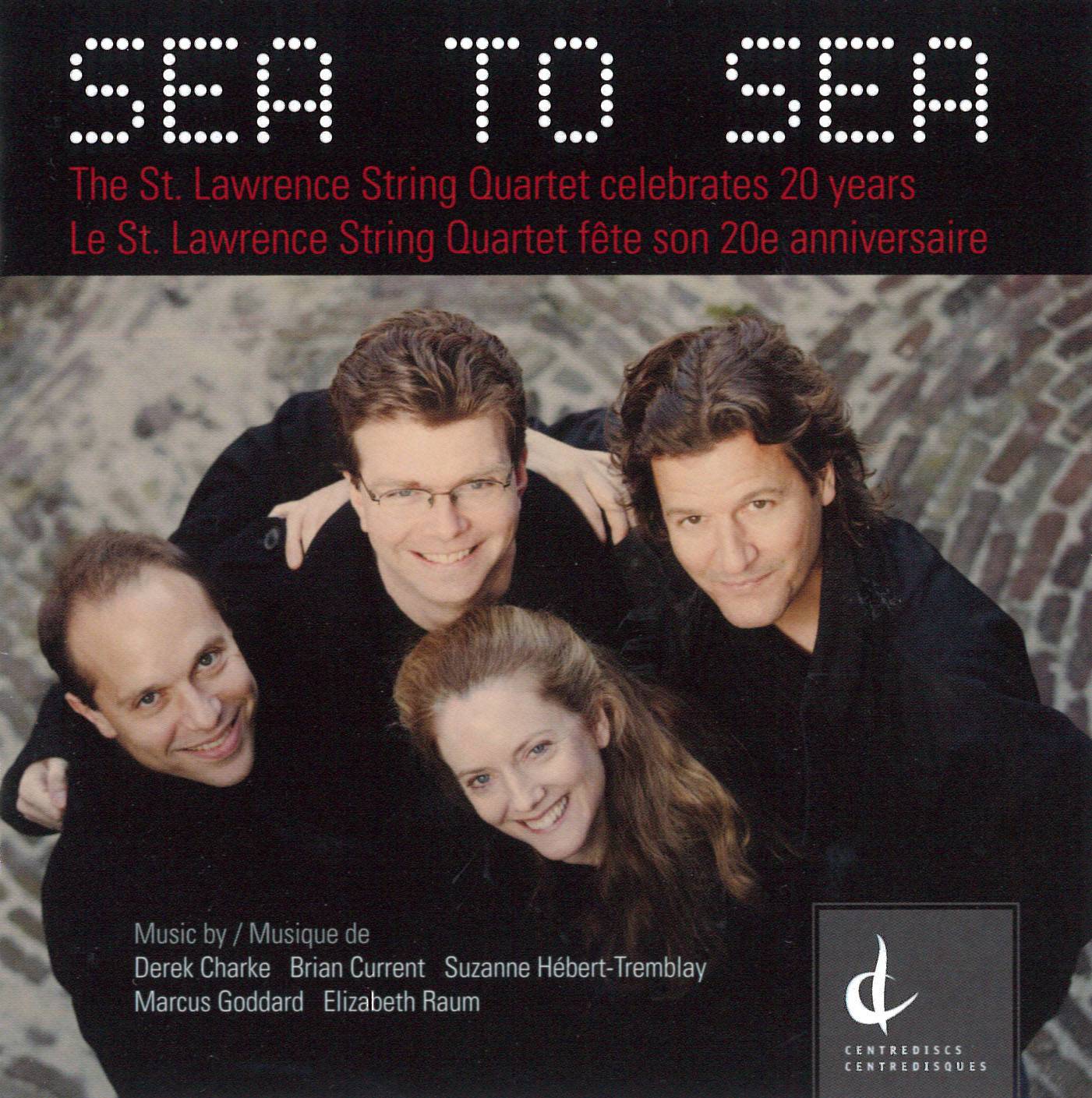
01_st_lawrence_quartetTo celebrate their 20th anniversary, the St. Lawrence String Quartet solicited proposals from across Canada for short works without electronics. The five pieces that were consequently created for 2009 formed an integral part of the group’s repertoire that anniversary year, and are presented on their latest outstanding CD from the Canadian Music Centre, Sea to Sea (Centrediscs CMCCD 16310). The works obviously differ in sound and form, but all are strong, interesting and very accessible. They are: Derek Charke’s Sepia Fragments, which made an immediate impact despite a rather baffling concept; Brian Current’s Rounds, the title referring to the frequent use of overlapping individual melodies; Suzanne Hébert-Tremblay’s A tire-d’aile (in a flurry of wings), inspired by the songs of Quebec birds; Marcus Goddard’s Allaqi, the Inuit term for a clearing in the sky, which has a strong rhythmical opening mimicking Inuit throat singing, and a lyrical second half based on Inuit folk song melodies; and Elizabeth Raum’s A Table at the Bushwakker, portraying a table-hopping evening at Regina’s noted Brewpub. Decidedly tonal in feel despite the use of a tone row, this last has one quite beautiful section of tender, rhapsodic music depicting an amorous couple oblivious to the noise around them. Recorded at the U of T’s Walter Hall in November 2009, all five works display strong, idiomatic writing throughout, with the SLSQ sounding as if they have been performing these pieces for years.

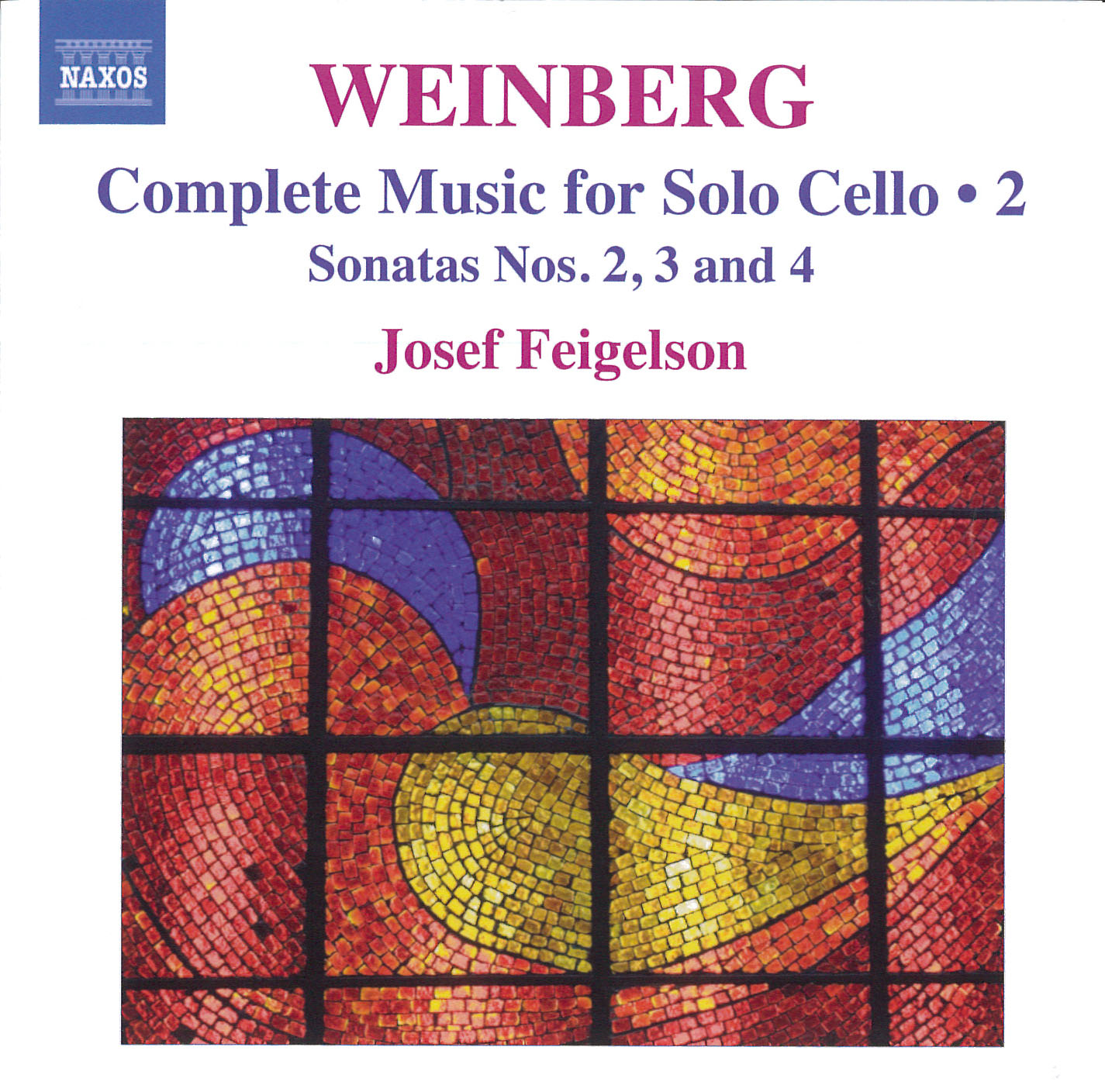
02_weinberg_celloEvery now and then a CD comes along that blows your socks off. Enter cellist Josef Feigelson with his stunning CD of the Complete Music for Solo Cello Volume 2 by the Polish/Soviet composer Mieczyslaw Weinberg, a colleague and friend of Shostakovich who died in 1996 (Naxos 8.572281). Previously available on the Olympia label, these World Premiere Recordings of the Sonatas for Solo Cello Nos. 2, 3 & 4 (plus the original - and tougher - first movement for the latter) were recorded in New York in November 1997. Feigelson played them from the manuscripts, which he acquired from the composer’s widow in Moscow, having recorded Sonata No.1 along with the 24 Cello Preludes in 1996. (Those recordings are now available on Naxos 8.572280.) If you are even remotely interested in music for unaccompanied cello then this CD is an absolute “must” and at the low Naxos price it’s a no-brainer. Buy it. Play it. And hang on to your socks.

03_diotima_onslow

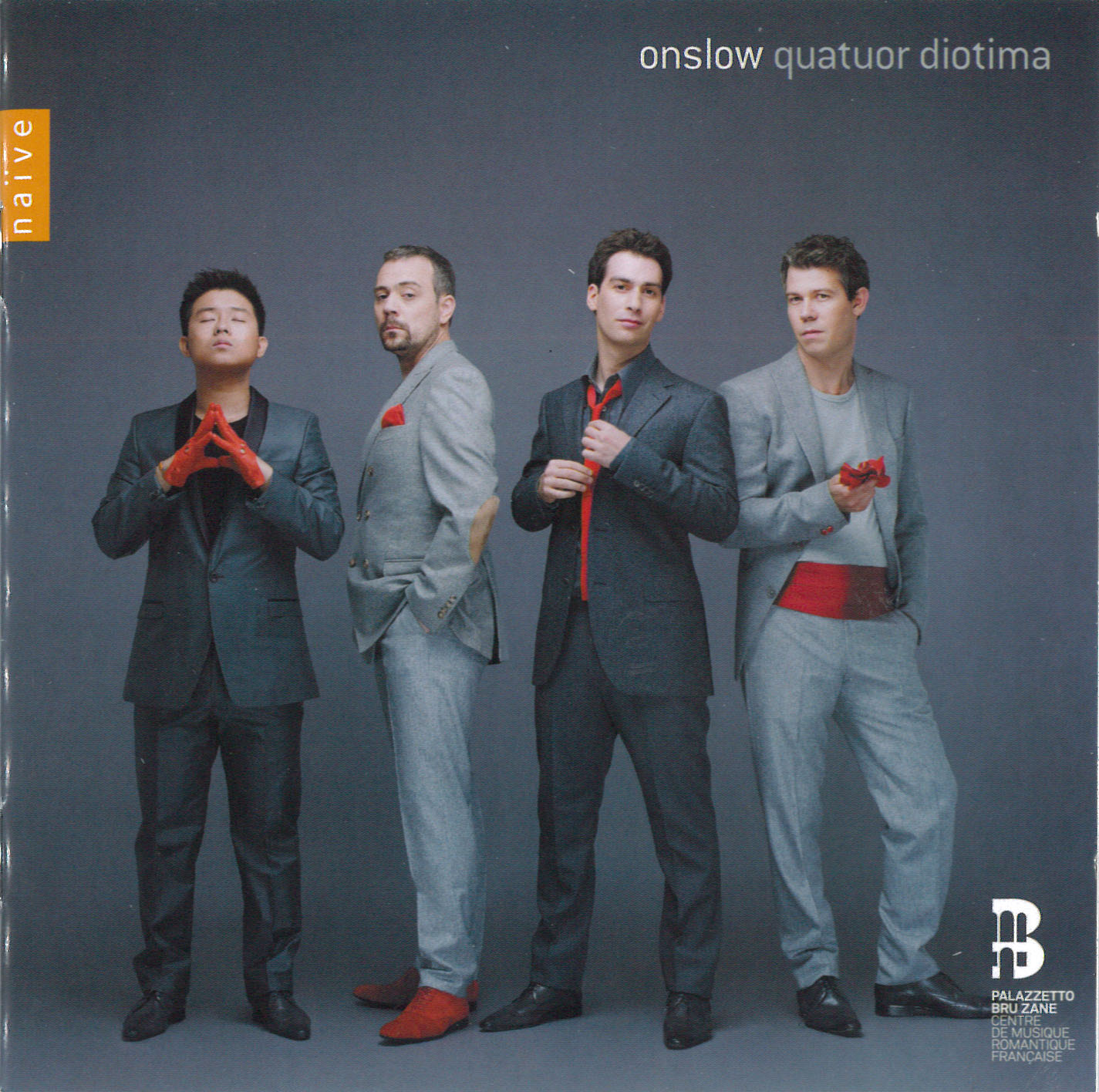
Despite his English name, George Onslow (1784-1853) was a French composer. Although highly regarded in his time – he was known as the French Beethoven! – his music was until recently neglected and difficult to obtain. A recent CD from the French ensemble Quatuor Diotima (Naïve V5200) features three string quartets from 1828 – Nos. 28, 29 and 30 – that Onslow wrote while still trying to come to terms with the impact of Beethoven’s late quartets, which he found both fascinating and disconcerting. They marked a change from a pre-Romantic style to one of intense expressiveness, a quality captured perfectly in these dazzling and clearly empathetic performances. The booklet notes describe this music as “exciting, personal, and amazingly neglected” - a perfect description.

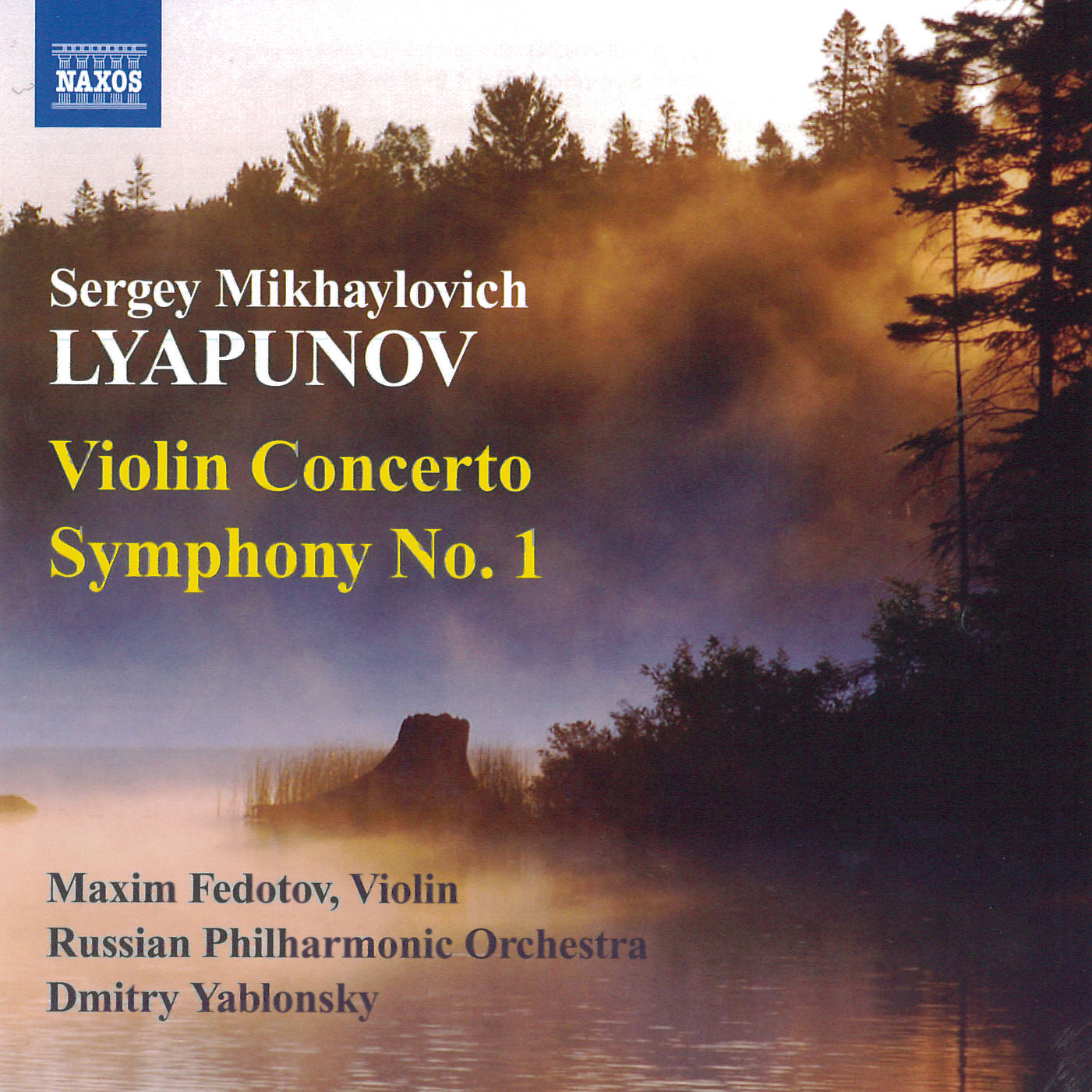
04_lyapunov

Naxos has issued another two excellent CDs featuring seldom-played violin concertos. Sergei Mikhailovich Lyapunov (1859-1924) was a Russian nationalist composer who studied with Balakirev and remained strongly influenced by him. His Violin Concerto in D minor, Op.61 is a one-movement work that sounds exactly as you would expect: big, Tchaikovsky-like melodies, a Romantic flow and a dazzling solo part. Maxim Fedotov is in superb form, with excellent support from the Russian Philharmonic Orchestra under Dmitry Yablonsky. The latter are also terrific in Lyapunov’s Symphony No. 1 in B minor, Op.12 (Naxos 8.570462).

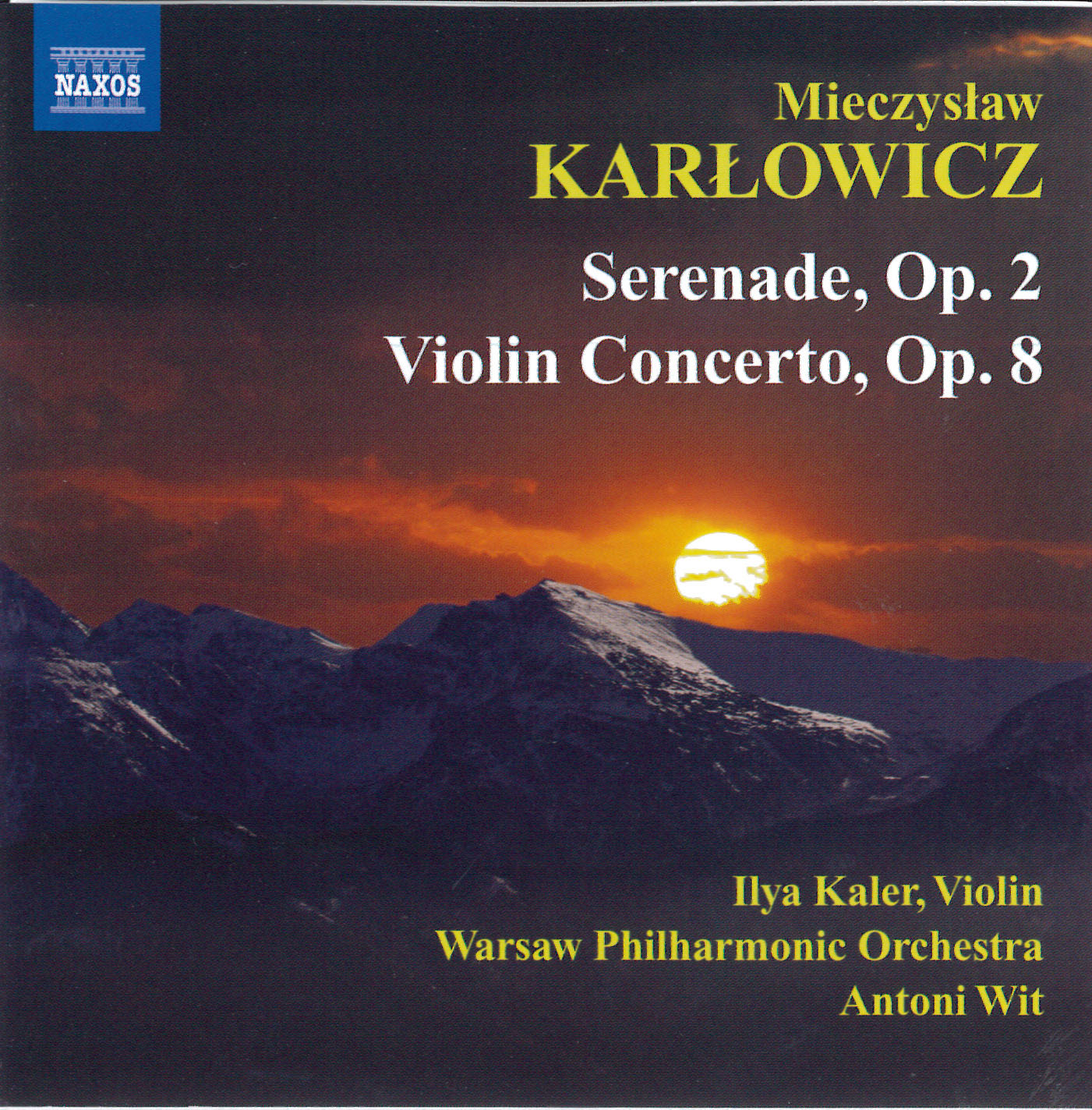
05_karlowiczYou can add Polish composer Mieczyslaw Karlowicz to your list of “strange composer deaths” - he was killed by an avalanche while skiing in the Tatra Mountains in 1909, aged only 32. His Violin Concerto in A Major, Op.8, a three-movement work that features an unusual opening cadenza, receives an outstanding performance from Ilya Kaler and the Warsaw Philharmonic Orchestra under Antoni Wit (Naxos 8.572274). Karlowicz’s first orchestral work, the Serenade Op.2, is somewhat reminiscent of Dvořák and Grieg, and has a particularly lovely slow movement. It’s obvious that a hugely promising talent was lost here.

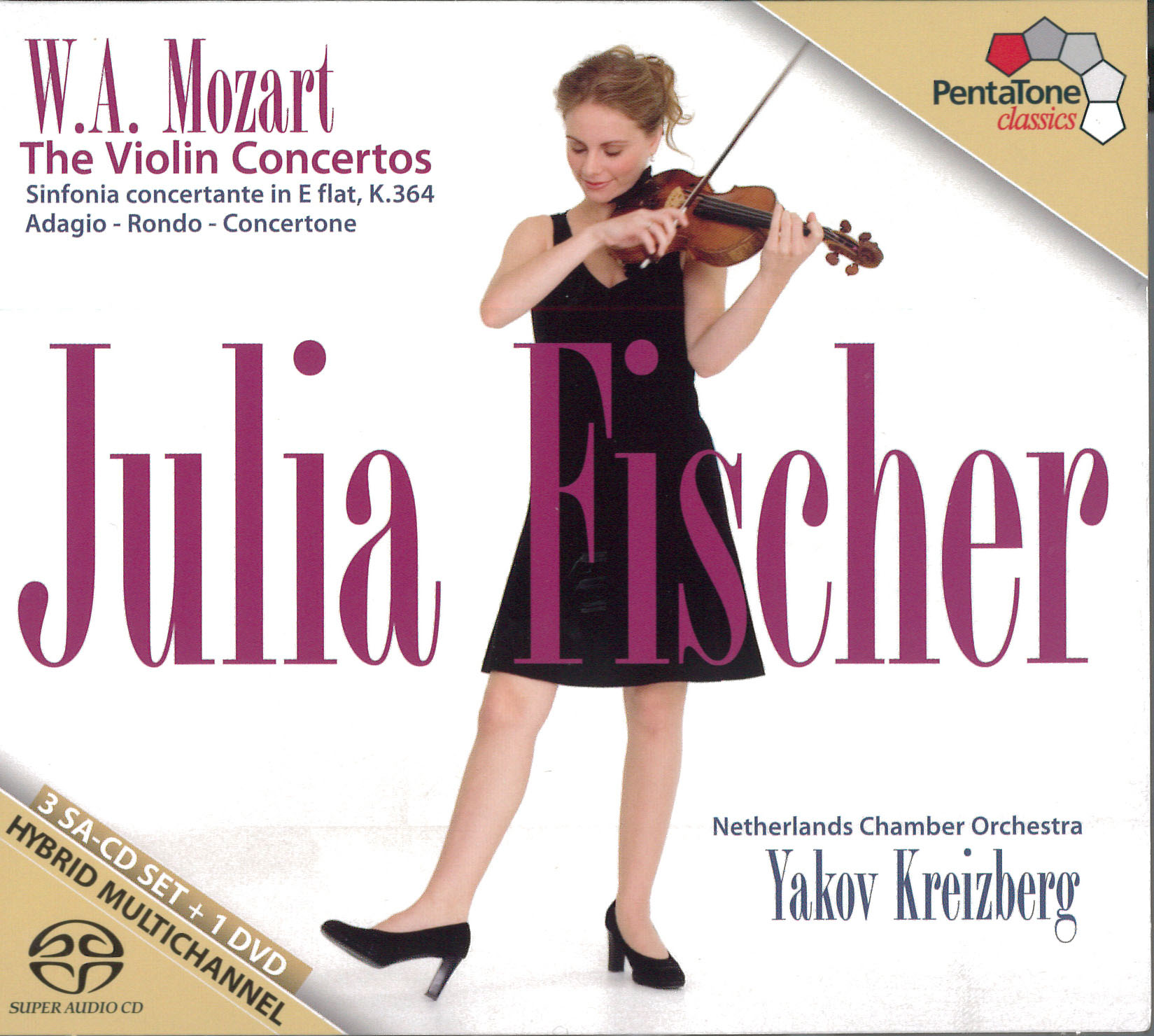
06_fischer_mozartFinally, PentaTone has re-issued the three individual Julia Fischer SA-CDs of the complete Mozart music for violin and orchestra in a digipak set together with a 25-minute DVD of footage from the recording sessions (PTC 5186 453). It’s a wonderful set: Fischer’s playing is warm, stylish and beautifully judged throughout; Yakov Kreizberg sets perfect tempi and draws superb playing from the Netherlands Chamber Orchestra; the sound quality is excellent. Concertmaster Gordan Nikolic is a perfect viola partner in the sublime Sinfonia concertante K364. This is one set that’s never going to be very far from my CD player.


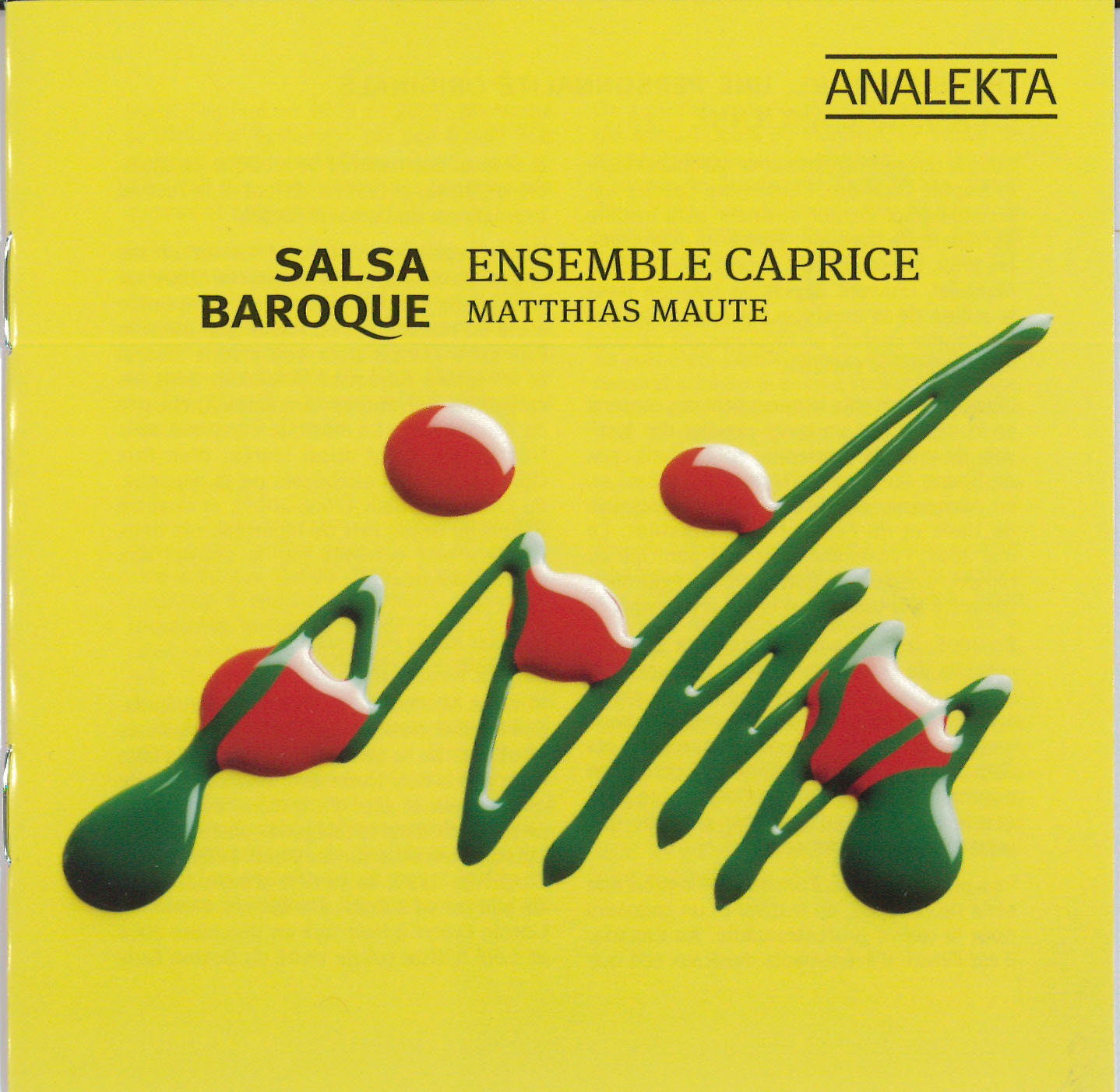
01_salsa_baroqueSalsa Baroque

Ensemble Caprice; Matthias Maute

Analekta AN 2 9957

Matthias Maute’s notes explain salsa baroque as being 17th and 18th century Latin American and Spanish music with a diffusion of harmonies and rhythms of Europe and Africa blended with Amerindian nuances and styles. Hybrid must be an under-statement.

The choice of pieces is itself varied as Zipoli’s pastorales vie with his battaglias and in turn mingle with Gaspar Fernandes’ compositions with their unsullied pre-conquistador titles. The opening (anonymous) chaconne combines easily recognizable baroque music with spirited Latin American embellishments; Variations on la Gayta and the lively singing of further settings bring home the passionate nature of this fusion of music from Spain and her new colonies. Listen to Lanchas para baylar for further confirmation. Those looking for something more indigenous need only listen to the second piece, the definitely non-Hispanic Hanacpachap cussicuinin. It is incomparably Latin American, mainly because it is dated to 1631 in Cuzco!

Looking at the cover design of this CD with its electronically-drawn drizzlings of Latin American dressings and then translating its title (baroque sauce), you might get the impression this is one for the tapas-bar yuppies. It is, in truth, a valuable introduction to music created by Spanish and Portuguese composers who were assigned to Latin America and influenced by the music they found there.


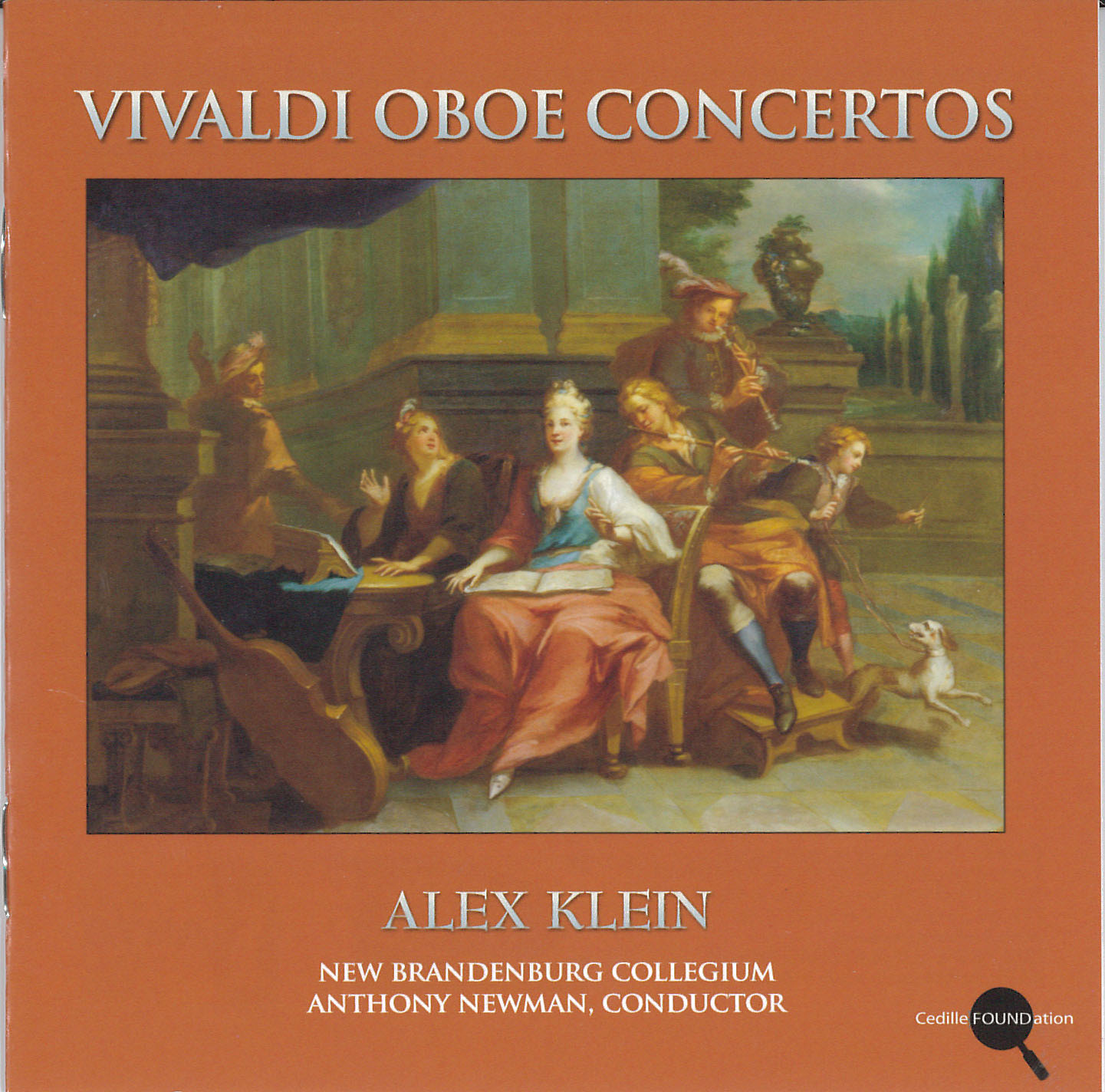
02_vivaldi_oboe_concertosVivaldi Oboe Concertos

Alex Klein; New Brandenburg Collegium; Anthony Newman

Cedille FOUNDation CDR 7003 (www.cedillerecords.org)

One of the most prolific composers of his time, Antonio Vivaldi (1675-1741) wrote a total of 14 concerti for oboe, plus an additional three for two oboes. This sampling of eight of them, from one of the world's finest oboists, is a recent re-release of material originally recorded in 1993. Alex Klein is probably best known as a former principal oboist of the Chicago Symphony, a position he held from 1995 to 2004, when he left the job due to focal dystonia, a neurological condition affecting the muscles in some of his fingers. (He has since recovered, and I had the pleasure of hearing him perform live in Kitchener a couple of years ago).

In addition to composing, Vivaldi also taught music at the Ospedale della Pietá, an orphanage for girls in Venice. In the insightful liner notes with this recording, Klein suggests that these works were perhaps written for these girls, with their particular talents and personalities in mind. Given the technical challenges of these concerti and the limitations of the oboe of the time, if this is true, these girls must have been true prodigies! Speculation aside, this recording presents these works in their best light, played here by a true virtuoso. Klein's technical mastery of the instrument is staggering – even the most virtuosic passages are executed with flawless precision, giving an impression of total ease; and embedded within the most technically demanding sections, Klein manages a sensitivity and subtlety of expression that only a true master can convey. This recording deserves undivided listening attention to fully appreciate the complexity and nuance of both the composer's work and this first class performance.


Back to top