Why do I so often talk about myself as I write this column? Personal connections open doors, and ears, especially with the esoteric field of contemporary music. As I learned during my time as general manager of New Music Concerts from founder Robert Aitken, hearing firsthand from the composer – for the audience at pre-concert chats and post-concert receptions – can really foster understanding and curiosity about challenging repertoire and approaches to music-making. Of course, I also had the opportunity to get to know the composers during their often-week-long rehearsal sessions with our musicians.

01a Tim Brady Possibility of a new work for String QuatetBrady: New Music Concerts was not my first opportunity to meet composers in person and discuss their work, however. From 1984 through 1991 I was the host of “Transfigured Night” on CKLN-FM and in my first year of broadcasting I had the pleasure of meeting Tim Brady, an accomplished jazz guitarist who also composes for the concert hall. I believe he was the first guest on my overnight radio program. We discussed an album of his piano music recorded by Marc Widner on the Apparition label. This was the first of many encounters with this prodigious artist over the past 40 years, including a subsequent interview about his Chamber Concerto commissioned for New Music Concerts’ 15th anniversary event in 1986. There were numerous collaborations during my own tenure with NMC, most notably when we presented his opera Three Cities in the Life of Doctor Norman Bethune in 2005 and the evening-long multi-media creation My 20th Century in 2009. I also had the opportunity to perform in Brady’s Instruments of Happiness project While 100 Guitars Gently Weep – Concerto for George at Luminato in 2018, so my relationship with Tim is many-faceted. 

In my column last issue, I speculated that Alice Ping Yee Ho may be Canada’s most prolific and most recorded composer, but I now realize that Brady’s output rivals hers, with some 30 CDs of his own, plus a dozen more that include his work. There are also four no longer available vinyl LPs, three of which are still in rotation on my turntable, including the abovementioned Music for Solo Piano

01b Tim Brady For Electric Guitar2025 saw two releases, a double CD of solo (although many layered) works, For Electric Guitar (peopleplacesrecords.bandcamp.com/album/for-electric-guitar) and The Possibility of a New Work for String Quartet: Tim Brady String Quartets Nos. 3-5 which features the Montreal-based Warhol Dervish String Quartet (leaf.music/leaf-music-tim-brady-and-warhol-dervish-string-quartet-present-the-possibility-of-a-new-work-for-string-quartet). This album’s name is derived from the String Quartet No.3 “The (Im)Possibility of a New Work for String Quartet.” 

Brady says “In March 2019 I woke up one morning with this idea in my head: It’s impossible to write another string quartet – so many have been written – there is literally nothing left to do with the medium. I needed to think of the string quartet not as a finished product (a score) but as a process for making music. So, I wrote a bunch of instructions on how the members of a quartet should compose their own quartet. These instructions are… ‘Write a fake folk tune,’ ‘Sustain notes in F minor’ ‘Make a big noise,’ etc.—it never tells them precisely where to go or what to do but jump-starts the collaborative process.” I find this iteration of the work – the players are instructed to tear up the score at the end of the performance to insure no two presentations will be alike – very convincing, and I was captivated by the “fake folk song,” a kind of a dirge reminiscent of some of the rustic children’s songs that Béla Bartók collected. Not having read the program note in advance, I had no clue that this wasn’t through-composed, it seemed so organic.

Since sketching the outline for that work Brady has evidently found a way to reconcile himself to the medium, and the two subsequent quartets are fully fledged contributions to the genre. Brady says String Quartet No.4 from 2020 is “quite sparse and transparent, and generally slow and meditative. I also use quarter-tone harmonies in a few places in this piece... It gives a soft, almost fuzzy feel to these chords which suits the reflective nature of the work.” 

“#5 was also totally unbidden. I woke up one morning in October 2022 (near the end of the pandemic when we all had time to sit and ruminate on many things, including string quartets) and had this idea: a really big multi-movement string quartet with lots of notes and big contrasts—why not? Say 30 minutes: a good chunk of time, something that the players and listeners could really sink their teeth (ears) into. The plan is five movements—including two slow movements, with ample opportunity for the players to push their rhythmic agility and ensemble acuity. It’s a bit of a ‘chops-buster,’ but Warhol Dervish give an impressive performance.” And that’s true of all three works. By the way, Brady tells us that he has since written a sixth string quartet.

Regarding For Electric Guitar I’ll simply quote from the press release: “The three works it encompasses are all solo guitar pieces that he composed for himself to play. Throughout its 80+ minute runtime… Brady manages to embrace a plethora of styles and approaches with languid ambiences and textures, driving post-minimalist composition, nods to prog and jazz, and vital gestural moments that relate to modern concert music. The titular piece even echoes the format of a concerto, with Brady varying his tone to allow him to behave as both the soloist and ensemble.” It’s a striking achievement. 

And if you found my mention of Brady’s 100 Guitars project intriguing you can check out the latest 

Installment from the 2025 Brisbane Festival on YouTube (youtube.com/watch?v=Kqfjd4aAsO4&t=11s), where you can also find the George Harrison tribute (youtube.com/watch?v=3M_4_FTW1wY).

Listen to 'For Electric Guitar' Now in the Listening Room

Listen to 'The Possibility of a New Work for String Quartet' Now in the Listening Room

02 Boulez Livre pour QuatuorBoulez: A couple of issues ago I wrote extensively about having the opportunity to spend some time with Pierre Boulez, one of the truly great composers and conductors of our era, during my time as general manager of New Music Concerts. The context of that reminiscence was the release of a seemingly definitive set of recordings of his collected works, Boulez the Composer (DG 4847513, 13 CDs) which came out to commemorate the 100th anniversary of his birth. I recently found a stunning complement to that collection, Quatuor Diotima’s own tribute to Boulez’s centenary, a recording of his Livre pour quatuor (pentatonemusic.com/product/boulez-livre-pour-quatuor). The album features the world premiere of the piece’s fourth movement, which the composer conceived in close cooperation with the members of Diotima (who, incidentally, performed for New Music Concerts back in 2011). 

“Working on Pierre Boulez’ Livre pour quatuor was one of the founding projects of the quartet when we began in 1996. However, the project had to be postponed due to an ongoing collaboration on the same score with the Parisii Quartet. About fifteen years later, Boulez agreed to initiate a new collaboration with us around this piece. This took place within the context of a four-concert cycle project, ‘Schoenberg / Beethoven’ in which we proposed to include each of the six movements of the Livre pour quatuor between the works of those two Viennese masters, involving the creation of the fourth movement, which had previously remained unfinished… Unfortunately, severe vision problems forced [Boulez] to give up composing and conducting. The task of reconstructing this unfinished movement was therefore entrusted to Philippe Manoury. We are proud to have been associated with this project and delighted to have finally been able to record this complete version of the Livre pour quatuor.” 
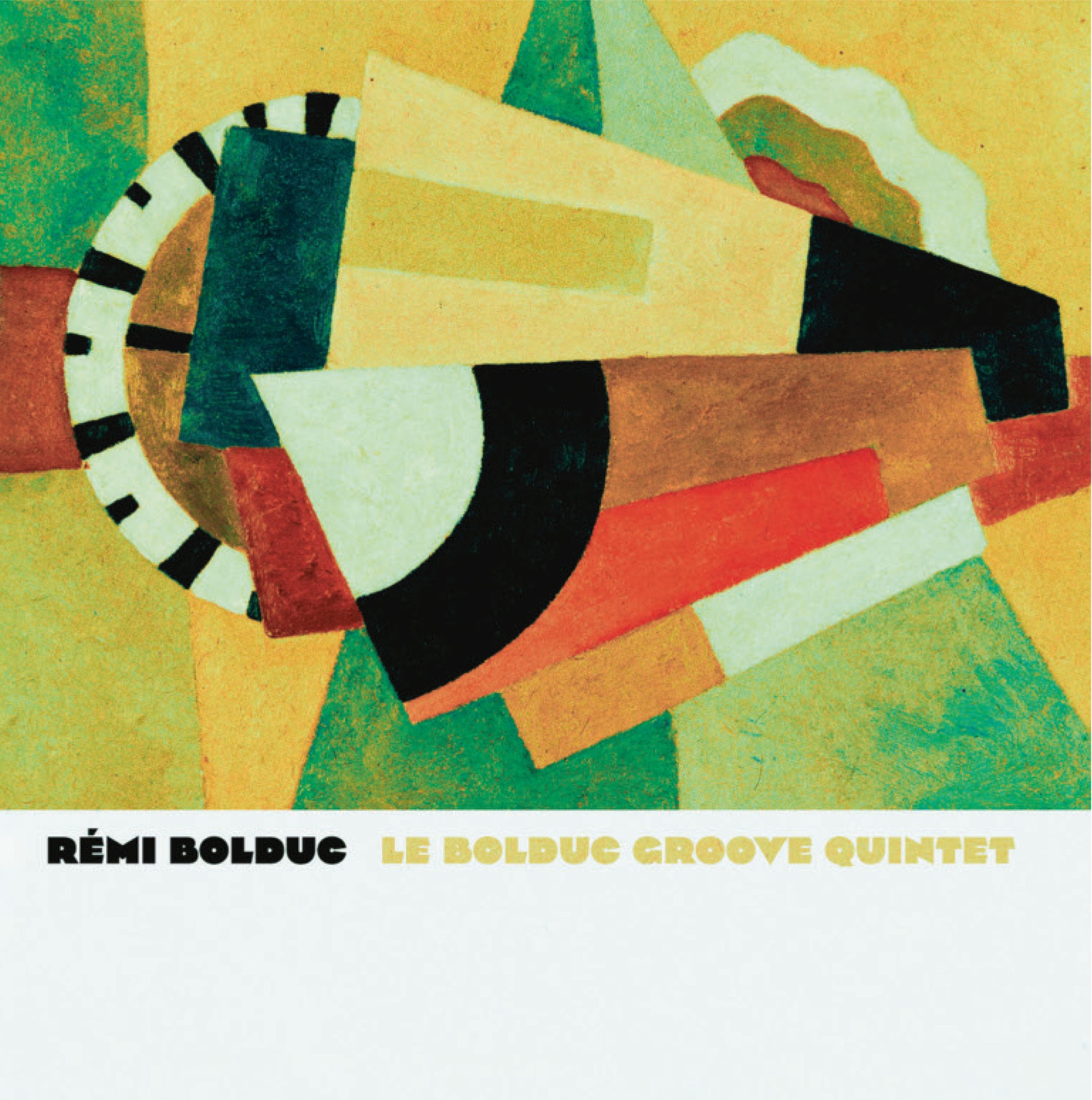
The Parisii’s 2001 recording of the then existing five movements was included in the DG set mentioned above. Thanks to this exquisite new release by the Diotima I can now consider my Boulez collection complete.

03 Lachenmann DiotimaLachenmann: Another iconic composer I had the pleasure of meeting through New Music Concerts is Helmut Lachenmann (b.1935). Known for his “musique concrète instrumental,” Lachenmann’s music makes extreme demands on the players, utilizing a plethora of unconventional playing techniques which produce unusual sounds from conventional instruments. Often entire pieces unfold without any traditionally “musical” tones, melodies or harmonies. This is exemplified on Lachenmann: Works for String Quartet (pentatonemusic.com/product/lachenmann-works-for-string-quartet), the fruit of a 25-year collaboration between Quatuor Diotima and that visionary composer. 

Their first meeting in 1998, originally just a one-week workshop, sparked a deep artistic bond and a shared fascination with his radical approach to sound and listening. This album is the result of hundreds of hours spent in rehearsal, performance, and conversation with the composer. It doesn’t make for easy listening, even in comparison to the rigours of the music of Boulez, but patient and careful listening will reward the adventurous musical soul. 

Quatuor Diotima is not the only ensemble to have benefited from working with Helmut Lachenmann. Back in 2003 an early iteration of the JACK Quartet came to Toronto for an intensive masterclass with him under the auspices of New Music Concerts. Fully matured, JACK would return to headline a concert co-presented by NMC with Music Toronto a dozen years later, but this encounter with Lachenmann was a formative experience for the young quartet. 

04 Wuorinen MeglaithWourinen: another iconic composer who graced the stage of NMC during my tenure is Charles Wuorinen (1938-2020). Perhaps best known for his opera Brokeback Mountain, Wuorinen’s uncompromising oeuvre encompassed solo works to large orchestral scores and included electronic compositions, such as 1970’s Time’s Encomium for which he won a Pulitzer Prize. A recent addition to his discography, MEGALITH (rezrecordz.com/megalith), comprises six works from the composer’s later years. JACK is joined by violist Miranda Cuckson and cellist Jay Cambell for Zoe (2012) which to my ear harkens back to the serialism of the Second Viennese School (rather than to the lush textures of Schoenberg’s own string sextet Verklärte Nacht). 

The disc begins with Spin 5, a concerted work from 2006 for solo violin (Alexi Kenney) and an ensemble of 18 musicians conducted by James Baker, and also includes a piano concerto, the title work from 2014, featuring Peter Serkin and the Saint Paul Chamber Orchestra under Matthias Pintscher. Filled out with an extended work for solo oboe (Jacqueline Leclair) and mixed sextet, Buttons and Bows for cello (Michael Nicolas) and accordion (Mikko Luoma), and Scherzo for solo piano (Tengku Irfan) this collection is a testament to the importance of one of the most challenging American composers of the last half century.

05 Travis Laplante JACKLaplante: While JACK Quartet is only peripherally involved in the Wuorinen recording, they are front and centre on Travis Laplante – String Quartets 1 & 2 (New Amsterdam Records travislaplante.bandcamp.com/album/string-quartets). The Brooklyn-based composer and saxophonist was deeply moved by the experience of reading W. A. Mathieu’s seminal theory book The Harmonic Experience. This led to an interest in resonance which led to studies with Mathieu, and ultimately to a PhD in composition at Princeton University. 

Laplante’s fascination with resonance guided him into the world of just intonation using the Helmholtz-Ellis notation system, and into collaborating with JACK Quartet who have extensive experience working within this musical framework. This is particularly noticeable in the first movement of String Quartet No.1 where the slowly unfolding muted opening has a medieval quality. The second movement, which also opens quietly, develops into minimalist textures and arpeggios referred to as [Philip] Glass-esque by the composer. 

String Quartet No.2 leads the listener to harmonic spaces that challenge our perception of beauty and resonance. The longing melodic payoff at the end of the piece comes only after moving through an intense harmonic passage that pushes and pulls consonant harmony to its extremes. JACK Quartet performs at the very edge of intensity where any push can break the music, yet they remain in total control…” 

I see I have, as usual, used up most of my allotment talking about myself, but there are several other striking discs which came our way that I want to bring to your attention before they get too “long of tooth.” To keep things brief, I’ll rely on the accompanying press releases for the basic info. I want to assure you, however, that after repeated listenings I can, in all cases, wholeheartedly embrace the publicists’ enthusiasms.

06 Sam DickinsonTo start, I want to make amends to one of our reviewers, Sam Dickinson, whose disc Gemini Duets (tqmrecordingco.com/sam-dickinson-gemini-duets) somehow fell through the cracks when it was released last spring. “Gemini Duets was envisioned as a mainly solo guitar album ‘with a few overdubs,’ but quickly grew into a broader project offering dense contemporary soundscapes, multi-tracked duets, and unaccompanied vignettes. This exciting new music was captured at the historic Sharon Temple in Aurora, Ontario by Ron Skinner. 
“Effects and electronics have been part of Dickinson’s sound since he first began playing guitar, and Gemini Duets has a healthy helping of these sounds without them taking away from the notes and song-forms.” Dickinson describes this mandate as “I’ve always been interested in how differently I play depending on my instrument and setup of choice. That said, I’m amply careful not to stray from the core of the music itself just to ‘experiment’ with new gadgets and gizmos.” 

The result is a solid offering based in straight-ahead jazz idioms ranging from contemplative and balladic tracks to playful turns and rich, resonant soundscapes.

07 MissingA co-commission and co-production of City Opera Vancouver and Pacific Opera Victoria, MISSING was created to confront the ongoing crisis of Canada’s Missing and Murdered Indigenous Women and Girls (MMIWG). More than half the cast and crew are of Indigenous background, yet as librettist Marie Clements – herself of Métis/Dene heritage – comments: “To me and to so many other people, this is not an Indigenous issue; it’s a human issue. As human beings we have a responsibility to end this, and so we’re asking for people to open their hearts, to be able to comprehend on an emotional level what’s really happening.” Guggenheim Fellowship and Juno Award-winning composer Brian Current (now artistic director of New Music Concerts) joined the project after the libretto was completed and composed the music in close partnership with the cast and cultural advisors. 

Set in Vancouver and along the Highway of Tears, MISSING was premiered in November 2017 at City Opera Vancouver and toured by Pacific Opera Victoria in British Columbia and Saskatchewan in 2019. This recording (Bright Shiny Things brightshiny.ninja/missing) features ATOM (Artists of the Opera Missing, including sopranos Cait Wood and Melody Courage and mezzo Marion Newman) and Toronto’s Continuum Ensemble. Conductor and musical director Timothy Long, says: “Being a Muscogee/Choctaw man, I have often felt alone in this musical world, but MISSING revealed the purpose of my path. The victims and the families looked like my family and me. It pivoted my life trajectory towards representing all Indigenous people.”

According to Current, “Working on MISSING alongside Indigenous artists and listening to families of the missing quietly shifted how I see the world. I hope this recording invites the same kind of awakening.” I think it will. 

In 2015 New Music Concerts commissioned Canadian Anna Pidgorna to create a piece based on her Ukrainian heritage for a concert featuring a new work by Odessa native Karmella Tsepkolenko. The result was Weeping, for mixed sextet based on rural Ukrainian traditional mourning songs, which Pidgorna had discovered through archival recordings during field work in Ukraine in 2012. Mesmerized by the sonic qualities and emotional power of these songs, a new chapter in her musical development began.

08 Anna Pidgorna Folksongs“Invented Folk Songs (redshiftmusicsociety.bandcamp.com/album/invented-folksongs) is a set of songs resulting from her traveling to Ukraine to study with traditional music practitioners. Returning from this period abroad, she subsequently arranged to study voice [at] Princeton with the intention of building her own hybrid vocal sound. The bold, powerful voice she has since cultivated, is couched here in matching ensemble textures that capture the drive and raw emotion of folk music, yet stray far from traditionalism in their form and sound. She has harnessed the strengths of both musical realms, rather than blending superficially. She finds the places where traditional playing overlaps with so-called extended techniques, and expands upon the compositional features of these folk songs that are ripe for experimentation… The lyrics, also written by Pigorna, function similarly, drawing on folkloric imagery and tropes to formulate relevant commentary, often with a strong feminist bent.” The booklet includes the lyrics in her hybrid Ukrainian dialects with full English translations.

Pidgorna is accompanied by the Ludovico Ensemble, a Boston-based chamber group specializing in modern music, known for focusing on specific and often unusual instrumentations. For this recording the instruments are violin, cello, double bass, cimbalom, piano and percussion.

Listen to 'Invented Folk Songs' Now in the Listening Room

09 Nicholas Finch CellostatusWhen I first started collecting contemporary “classical” music, I was intrigued to find that the Louisville (Kentucky) Orchestra, contrary to common wisdom, was specializing in modern music and trying to support itself by commissioning and recording new orchestral works. Evidently the practice continues to this day, some 90 years after the orchestra’s founding by Robert Whitney. 

Cellostatus (brightshiny.ninja/cellostatus), is the debut album from Louisville Orchestra principal cellist Nicholas Finch and the NouLou Chamber Players (Louisville), conducted by Jason Seber. Comprising three world premiere works – by Dorian Wallace, Alyssa Weinberg, and Ljova – commissioned by Finch and the ensemble, the album’s far-flung inspirations include the Kübler-Ross stages of grief (Wallace), the Latin word caligo meaning darkness or obscurity (Weinberg), and the ubiquity of the smartphone and social media (Ljova). Finch is in fine form, ably rising to all the diverse challenges in these attractive works.

10 Bach GambaMy introduction to Johann Sebastian Bach’s sonatas for viola da gamba and obbligato harpsichord was a recording on modern instruments by Leonard Rose (cello) and Glenn Gould (piano). I became enamoured of these “true contrapuntal jewels,” but I must say that hearing them on period instruments has opened my ears in a whole new way (atmaclassique.com/en/product/the-sonatas-by-bach-for-viola-da-gamba-and-obbligato-harpsichord)

“These works offer a dialogue of remarkable eloquence between two instruments engaging on equal footing, revealing both the expressive depth and architectural refinement of Bach’s chamber writing. 

Margaret Little and Christophe Gauthier offer a performance that is at once precise, flexible, and deeply expressive. Their musical rapport highlights the nuanced palette of the viola da gamba and the brilliance of the harpsichord, illuminating the emotional power of Bach in a recording that is both vibrant and elegant.” 

Two pieces by Antoine Forqueray — La Couperin and La Buisson — complete the program with their virtuosity and distinctly French refinement. A truly refreshing experience.

11 Beethoven Cello Keiran CampbellAs with the Bach sonatas, I first heard Beethoven’s cello sonatas recorded by Mstislav Rostropovich and Sviatoslav Richter, and my current favourite recording features Pieter Wispelwey and Dejan Lazić, again on modern instruments (Channel Classics CCS SA 22605). I must say, however, that a new period performance of Beethoven Cello Sonatas, Op. 5 by cellist Keiran Campbell and Sezi Seskir (fortepiano) (leaf.music/keirancampbell-seziseskir-beethoven) is growing on me for its sheer rawness and exuberance. 

“Performing on a fortepiano with its leather hammers, and on a gut-strung cello with a supple classical bow allows the players to recapture these beloved sonatas’ intended original sound. The two cello sonatas (Nos. 1 and 2) were composed in 1796, and saw Beethoven attempting to make the two instruments more equal while celebrating the capabilities of the five-octave piano.” 

Campbell is co-principal cello of Tafelmusik, and on faculty at the Chamber Music Collective, an intensive chamber music program on period instruments which focuses on post-1750 performance practice. Seskir is a co-founder of the Chamber Music Collective, and an associate professor of Music at Bucknell University. Together they bring new life to these timeless pieces.

Listen to 'Beethoven Cello Sonatas, Op. 5' Now in the Listening Room

12 Daniel HassCanadian cellist and composer Daniel Hass has built an impressive career that encompasses a diverse range of pursuits, genres, and achievements. He has performed as soloist with orchestras across Canada, the United States, and Europe; and has received numerous commissions, including one from the Glenn Gould Foundation, The Lord of Toronto, His Pavin, for cello and piano dedicated to Glenn Gould.

He wrote to me earlier this year to say “I’m excited to share my next milestone: my debut album Love and Levity (travislaplante.bandcamp.com/album/string-quartets). […] This recording features my original compositions for string quartet and piano quartet, performed by the Renaissance String Quartet and other collaborating artists. These quartets are Beethovenian at heart, in their thematic and structural tautness, but draw from contemporary musics such as Jazz and Folk along the way… [They] were written in the summer of 2021. There was a pandemic going on, and I spent most of the summer in my apartment, reading books and feeling the momentum of life melting away in the heat.”

While the COVID lockdown was not such a productive time for many people, Hass certainly put his isolation to good use, crafting these fine chamber works. 

David Olds can be reached at discoveries@thewholenote.com.

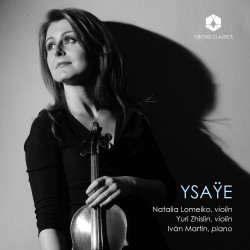
01 Ysaye SimovicViolinist Roman Simovic, who has been a leader with the London Symphony Orchestra since 2010, steps into the solo spotlight with Ysaÿe Sonatas, his recording on the orchestra’s label of the Six Sonatas for Solo Violin, Op.27 by the Belgian violinist and composer (LSO Live LSO5130 lsolive.lso.co.uk/products/lso5130-ysaye?srsltid=AfmBOopL6egsa4v3PWG1Q22V_sVFs0tBo5QtT2glavRI-d2JUGYw7X9G).

Inspired by a Joseph Szigeti Bach recital, Ysaÿe wrote the Sonata No.1 in G Minor in early 1923, dedicating it to – and tailoring it to the style of – Szigeti. By July he had written another five, the dedicatees being contemporary violinists Jacques Thibaud, Georges Enesco, Fritz Kreisler, Mathieu Crickboom and Manuel Quiroga. They are inspired works, looking back to Bach but also to the future with a variety of progressive techniques.

They continue to attract recording attention, this being my eighth CD review during the life of this column. This performance by Simovic, who is superb throughout, can stand shoulder to shoulder with any of them.

02 Paganini CotikViolinist Tomás Cotik describes his decision to record a selection of the Paganini 24 Caprices, Op.1 as a search for another challenge after recording solo violin music by Bach and Telemann. The result is his new CD Capriccio, a project that was clearly a labor of love (Centaur CRC 4130 tomascotik.com/album/paganini-capriccio).

Seventeen of the caprices are included – numbers 3, 4, 7, 8, 12, 15 and 19 are omitted – and Cotik opens and closes the disc with two Paganini pieces for violin and piano: the Cantabile in D Major, Op.17 and the Sonata a Preghiera, Op.24 “Moses Fantasy, the virtuosic set of variations on a theme from Rossini’s opera played entirely on the G string. Monica Ohuchi is the pianist.

Cotik’s playing is never flashy and always has a feeling of intelligent thoughtfulness. His booklet essay is, as usual, extensive and fascinating.

03 Duo ConcertanteThe Duo Concertante team of violinist Nancy Dahn and pianist Timothy Steeves is back with another top-notch recital on Maier-Franck-Schumann Sonatas for Violin & Piano (Delphian DCD34316 delphianrecords.com/collections/new-releases/products/maier-franck-schumann-sonatas-for-violin-piano).

There’s a connecting thread running through the three works here. In his 1851 Violin Sonata No.1 in A Minor, Op.105 Robert Schumann began moving away from balanced classical forms, employing a cyclical use of musical themes and material which was further developed by Amanda Maier in her 1874-75 Violin Sonata in B Minor, Op.6 and in particular by César Franck in his 1886 Violin Sonata in A Major.

Tempos are never rushed, but as always with this outstanding duo this never results in a loss of intensity. The Digipak liner note describes their playing as emotionally engaged and stylistically insightful, qualities that are fully evident on an excellent CD.

The back of the CD package, incidentally, says “Limited Edition 500 CDs”, but I can’t find anything to back this up.

Listen to 'Maier-Franck-Schumann' Now in the Listening Room

04 Bach GringoltsOn the 2CD set Johann Sebastian Bach Sonatas for Violin and Harpsichord violinist Ilya Gringolts, making his Arcana label debut, and harpsichordist Francesco Corti perform the six Bach sonatas BWV1014-1019, described as “the first great example of concertante sonatas for keyboard and melodic instrument” (Arcana A583 outhere-music.com/en/albums/j-s-bach-sonatas-violin-and-harpsichord).

Completed no later than 1725, the works brought the trio sonata to its fullest form, one of the two upper voices being assigned to the keyboard right hand and the bass to the left hand. These are superb performances, the deep, rich harpsichord sound in perfect balance with the crystal-clear, warm violin in playing that is vibrant and alive from beginning to end.

The set includes the fascinating world premiere recording of Tertia deficiens by the American Baroque violinist Andrew McIntosh, commissioned specifically for this project. The title refers to “false” or enharmonic thirds in early 18th-century tunings, written as augmented seconds but sounding in practice as small or “deficient” thirds.

05 Just BiberThe outstanding Baroque violinist Rachel Podger is in brilliant form on Just Biber, a CD featuring the remarkable violin music of the Austrian composer Heinrich Ignaz Franz Biber, with Podger’s own Brecon Baroque ensemble providing sensitive and effective support (Channel Classics CCS48525 outhere-music.com/en/albums/just-biber).

There are five sonatas from Biber’s 1681 collection Sonatæ Violino Solo: Nos. 1 in A Major, 2 in D Minor, 3 in F Major, 5 in E Minor and 6 in C Minor. They were dedicated to the Archbishop Maximilian Gandalf, Biber describing them as effectively a prayer for the Archbishop’s good health. They are extremely virtuosic, with extensive multiple stopping and occasional scordatura, although Podger handles everything with jaw-dropping ease and fluency. 

Also here is the Sonata Violino solo Representativa in A Major, with its imitations of different birds and animals. Its authorship is disputed in some quarters as possibly being a copy of the “Birdsong” work of Johann Heinrich Schmelzer, with whom Biber may have studied.

06 Metemorphoses PoulencMétamorphoses is a new CD featuring transcriptions and performances of ten of Francis Poulenc’s songs, plus the violin and oboe sonatas, by violinist Hongyi Mo, together with pianist John Etsell (Azica ACD-71382 azica.com/albums/metamorphoses-poulenc-on-violin-piano).

Mo describes the core intent of the album as being his desire to highlight the literary quality of Poulenc’s songs, the texts producing intense emotions in the engaging music. All ten songs – the three Métamorphoses, the Banalités Nos.2 (Hôtel) and 4 (Voyage), Deux Poèmes de Louis Aragon, Fiançailles pour rire No.5 (Violon), Bleuet and Les Chemins de l’amour – are from the period 1939-43, as is the sonate pour violin et piano, revised in 1949. The charming sonate pour hautbois et piano of 1962 is Poulenc’s last chamber work, written in his final year.

Mo has a warm, sweet sound ideally suited to these delightful works, and has a fine and sympathetic partner in Etsell in a beautifully judged recital.

Listen to 'Métamorphoses' Now in the Listening Room

07 Bartok ZimmermannThe start of musical modernism in the early years of the 20th century is at the heart of Frank Peter Zimmermann plays Szymanowski, Bartók, the new CD from violinist Zimmermann and pianist Dmytro Choni (BIS-2787 bisrecords.lnk.to/2787).

The central work on the CD, Szymanowski’s three-piece Mythes, Op.30 from 1915 was created with violinist Pawel Kochański, a player noted for his beautiful tone and whose collaboration was fundamental to Szymanowski’s writing for the violin, a new style emerging with sound colour becoming of greater significance.

A violinist also contributed creative impetus to the two works by Béla Bartók on the CD – this time Jelly d’Arányi, who introduced him to Szymanowski’s works, including Mythes. Some elements of the latter’s new mode of expression appear in Bartók’s Violin Sonatas Nos.1 & 2, Sz.75 and Sz.76 from 1921 and 1922 respectively, although other contemporary and folk music influences can also be felt.

Zimmermann and Choni deliver solid performances of three technically challenging but highly significant works. 

08 American VignettesAMERICAN VIGNETTES Contemporary Works for Cello and Piano features cellist Aron Zelkowicz and pianist Christina Wright-Ivanova, two Canadian expats now based in Boston, in works drawing from influences as varied as the blues, jazz, Broadway, spirituals, folksong and the Wild West (Toccata Next TOCN 0023 toccataclassics.com/product/american-vignettes-contemporary-works-for-cello-and-piano).

The five-piece Differences from 1996 by Carter Pann (b.1972) makes a terrific opener. The very effective 1995 jazzy triptych Manhattan Serenades by Gabriela Lena Frank (b.1972) is a first recording, as is the 2014 Noir Vignettes, four pieces of 1940s cinematic imagery by Stacy Garrop (b.1969).

Margaret Bonds (1913-72) was a protégée of Florence Price. Her Troubled Water from c.1952, originally for solo piano was based on the jubilee song “Wade in the Water” and arranged for cello by her in 1964.The 2004 Air by Kevin Puts (b.1972) and 1988’s six American Vignettes by Stephen Paulus (1949-2014) complete the recital. 

Highly entertaining works, superbly played and with outstanding booklet notes by Zelkowicz make for a really impressive release.

Listen to 'AMERICAN VIGNETTES' Now in the Listening Room

09 Branms StanfordThere’s another really lovely recording of the Brahms Cello Sonatas to add to the list, this time featuring the Welsh cellist Steffan Morris partnered by the Scottish pianist Alasdair Beatson (Rubicon Records RCD1196 rubiconclassics.com/release/brahms-cello-sonatas-stanford-ballata).

The Cello Sonata No.1 in E Minor, Op.38 was written in 1865 at an emotional time for the composer. It was originally in four movements before Brahms discarded the second movement. The four-movement Cello Sonata No.2 in F Major, Op.99, on the other hand, is a late work written during a summer lakeside holiday in Switzerland, the music being essentially warm and sunny throughout. Full-blooded playing, a lovely balance and recorded sound all contribute to outstanding performances.

The English composer Charles Villiers Stanford wrote his two-movement Ballata and Ballabile for Cello and Orchestra, Op.160 in 1918, and made a cello and piano arrangement the same year. It’s almost a cello concerto, just lacking an opening movement. The lovely Ballata, Op.160 No.1 closes an immensely satisfying disc.

10 Trace Johnson Works for CelloOn Trace Johnson: Works for Cello the American cellist presents what he describes as an audio diary in which he has assembled some of his most cherished pieces. Hsin-I Huang is the pianist (Albany Records TROY1984 albanyrecords.com/catalog/troy1984).

The CD is book-ended by two substantial works: a strong but tender reading of Samuel Barber’s Cello Sonata, Op.6 and the rapturous and quite beautiful three-movement Les Chants de L’Agartha from 2008 by the French composer Guillaume Connesson. 

Violinist Sahada Buckley joins Johnson in the central work on the disc, Erwin Schulhoff’s lovely 1925 Duo for Violin and Cello, which is heard between two works for unaccompanied cello: Laura Schwendinger’s 2018 All the Pretty Little Horses and Melinda Wagner’s really effective 2023 Limbic Notes. Jonathan Harvey’s Ricercare una melodia for Cello and Electronics from 1985 completes an excellent CD.

11 PassagesCellist Louise Dubin has undertaken extensive research into the works of the French cellist-composer Auguste Franchomme (1808-84), and world premiere recordings of several of his cello pieces are featured on her new CD Passages, together with music by Debussy, Fauré, Poulenc, Charles Koechlin and Philippe Hersant. The pianist is Spence Meyer (Bridge Records 9597 louise-dubin.com/shop).

Koechlin’s 1917 Sonata for Cello and Piano, Op.66 opens the disc and an exact contemporary – Debussy’s 1915 Sonata for Cello and Piano – closes it. The Franchomme works are his arrangement of Chopin’s Étude, Op.25/7, his Air Irlandais, Variè, Op.25/3 and his Nocturne, Op.14/2 for two cellos (Julia Bruskin joining Dubin in this) as well as Hersant’s three Caprices and the recently discovered Fauré Allegro moderato.

Maurice Gendron’s arrangement of Poulenc’s Sérénade completes an enjoyable recital of predominantly brief pieces.

Listen to 'Passages' Now in the Listening Room

12 Elgar Ades TetzlaffViolinist Christian Tetzlaff and the BBC Philharmonic Orchestra under John Storgårds present two English concertos written almost 100 years apart on Elgar, Adès, Elgar’s Violin Concerto in B Minor, Op.61 from 1910 being paired with Thomas Adès’ Violin Concerto (‘Concentric Paths’) from 2005 (Ondine ODE 1480-2 naxos.com/CatalogueDetail/?id=ODE1480-2).

The booklet notes consist entirely of an interview with Tetzlaff, with valuable insight into his approach to both concertos. Interestingly, he first played the Elgar just six years ago with this same orchestra and conductor, and had only played the Adès once before this recording. His tempi in the Elgar are closer to those in early recordings of the work, and although his performance is faster than some recent recordings there is never any sense of undue haste, especially in the slow movement, which Tetzlaff describes as “divine contentment.”

The Adès is a fascinating work of three movements – Rings, Paths, Rounds – with the lengthy middle Paths accounting for over half of the concerto. Tetzlaff sounds as if he has been playing it his whole life.

13 Bennett Duke HanslipIf you know the names Robert Russell Bennett and Vernon Duke at all it’s almost certainly in connection with their Broadway musical careers, in which case a new CD of their Violin Concertos with Chloë Hanslip and the Singapore Symphony Orchestra under Andrew Litton will be a revelation (Chandos CHSA 5371 chandos.net/products/catalogue/CHSA%205371).

Bennett (1894-1981), one of the great Broadway show orchestrators, had already started his Broadway career when studying with Nadia Boulanger in 1926-29; he wrote seven symphonies and at least five concertos. His Violin Concerto from 1941, written for Louis Kaufman is an attractive work very much aligned with the music of the period.

The Broadway composer Vernon Duke (1903-69), born Vladimir Dukelsky, entered the Kiev Conservatory at 11 and studied composition with Glière. He wrote for the Ballets Russe in Paris in 1924, and continued to compose under his birth name after settling in the United States and anglicising his name. His really impressive Violin Concerto from 1941-43, while an exact contemporary of the Bennett, inhabits a different world, being much less of the period and more purely classical, with occasional hints of his friend Prokofiev.

Litton is the pianist in Bennett’s brief but entertaining Hexapoda (Five Studies in Jitteroptera).

14 SilencedOn Silenced – Shostakovich, Bosmans, her first album for the label, violinist Hyeyoon Park with Gergely Madaras and the WDR Sinfonieorchester performs works by two composers who both had performances of their music banned by oppressive regimes (LINN CKD772 outhere-music.com/en/albums/silenced).

Shostakovich was working on his Violin Concerto in A Minor, Op.77 when the February 1948 Zhdanov decree on music made its performance impossible, the composer making several revisions before the work was finally premiered in 1955 after Stalin’s death. 

Performances of the music of the Dutch composer Henriëtte Bosmans (1895-1952) were banned following the Nazi invasion of the Netherlands in 1940. The work here, though – her Concert Piece for Violin and Orchestra – is from 1934, written after the death of her fiancé, the violinist Francis Koene. Despite several early performances it remained unpublished until 2022. It’s virtually a concerto, with three linked sections in a single movement of a passionate, restless intensity.

A student work by the teenage Shostakovich, his Theme and Variations in B-flat Major, Op.3 from 1921-22, apparently never performed in his lifetime, completes a fascinating CD.

15 Bosmans Cello ConcertosThere’s even more of Bosmans’ music on Henriëtte Bosmans Cello Concertos 1 & 2, with Raphael Wallfisch and the BBC Scottish Symphony Orchestra under Ed Spanjaard providing world premiere recordings on CD of her two cello concertos, although I believe the second concerto has since been recorded again (cpo 555 694-2 naxosdirect.co.uk/items/henriëtte-bosmans-cello-concertos-nos.-1-2-poème-1281531).

The opening work on the disc is Bosmans’ second Poème for cello and piano from 1922, orchestrated in 1923, a simply gorgeous piece that, despite a hugely successful premiere, fell into obscurity along with the rest of her music in the 1950s. The Cello Concerto No.1 from May 1922 was premiered in February 1923 by Marix Loevensohn, principal cellist of the Concertgebouw Orchestra from 1915 to 1936, whose student Frieda Belinfante was the dedicatee of the Cello Concerto No.2, which was finished in May 1923 and premiered the following January. After several further performances by Belinfante and Loevensohn it was never performed again after 1933.

It seems inconceivable that music of this quality and significance should languish in obscurity for so long, but hopefully these outstanding performances will put an end to such a huge injustice.

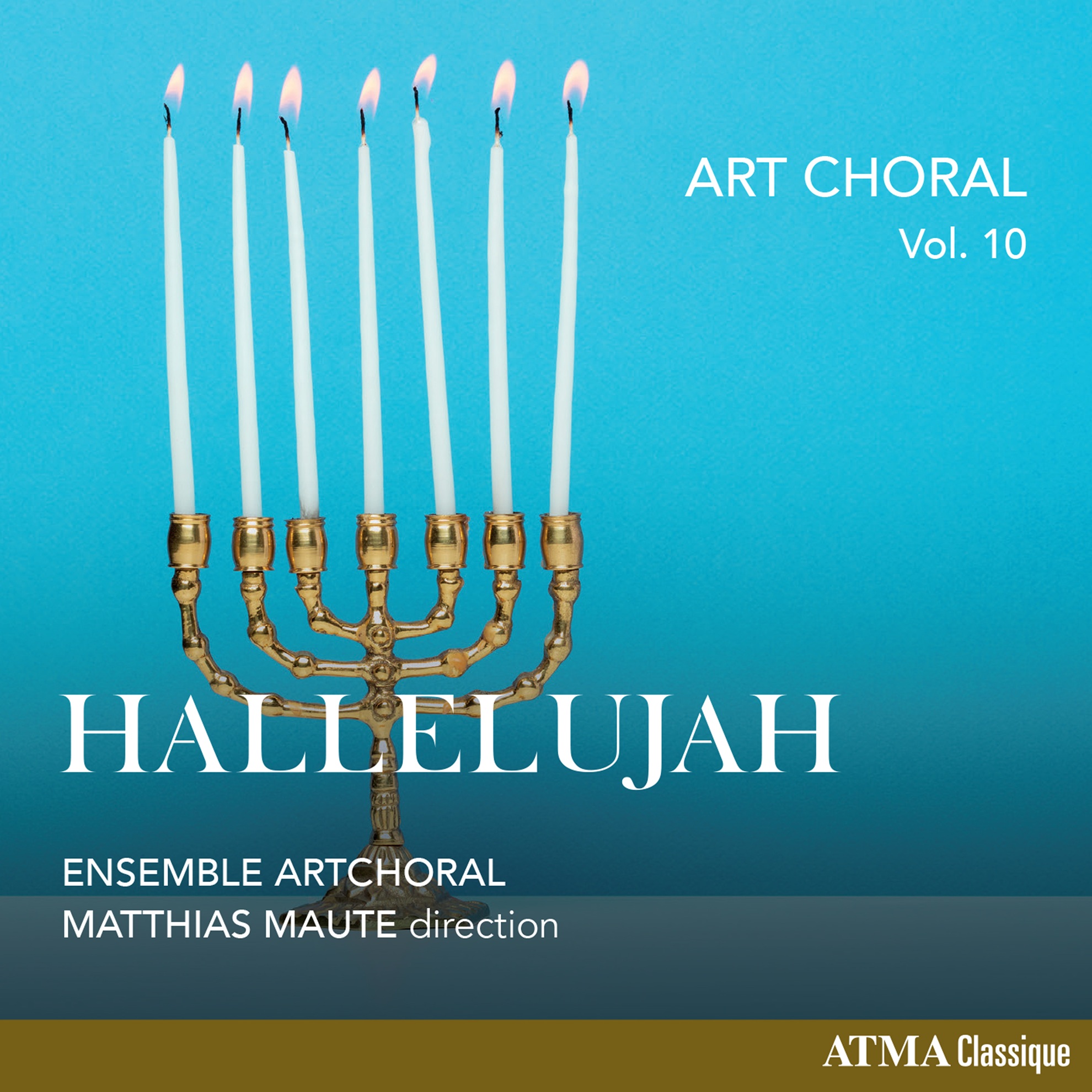
01 ArtChoral 9 CanadaArtChoral Volume 9 : Canada
ArtChoral
ATMA ACD 2428 (atmaclassique.com/en/product/art-choral-vol-9-canada-13-works-by-canadian-women-composers/?srsltid=AfmBOopAONdJfzD6t3YmW7bD2DEbyjH-sqpwqZxPkm1UC1VJ_Qq5Pzkv)

Volume 9 in the series of CDs by Montreal’s Ensemble ArtChoral presents 13 brief works by Canadian women, commissioned by ArtChoral with “complete freedom to choose their texts, themes and musical styles.”

Of those setting their own words, I particularly enjoyed Sandy Scofield’s The Sacred One, a strophic chant celebrating Indigenous women’s spiritual wisdom; Carmen Braden’s Now, at the First Fire of the Fall, a rhapsodic evocation of nature; and Sophie Dupuis’ Souv’nirs, sung in New Brunswick’s Brayon French dialect, confronting painful childhood memories with folk music-like simplicity.

Two spirited pieces employ Latin texts. In Marie Alice Conrad’s merry, foot-stomping Dum felis dormit, the chorus repeatedly sings the words of an ancient proverb – “While the cat sleeps, the mouse celebrates.” Kati Agócs’ propulsive Arise, Be Enlightened!, adapted from the Book of Isaiah, steadily gathers momentum until its final ecstatic climax.

I found two works especially moving. The emotionally stirring Dreamer’s Rock by Beverley McKiver, a Sixties Sweep survivor, is set to an inspirational, aspirational poem by Lisa Shawongonabe Abel, addressed to an Indigenous child. The haunting You’re Free to Love by Afarin Mansouri, herself a refugee from Iran, is adapted from her opera The Refugees, with text by Jennifer Wise. 

Pieces by Amy Brandon, Alice Ping Yee Ho, Katya Pine, Fiona Ryan, Karen Sunabacka and Leslie Uyeda complete this CD. Many thanks to Ensemble ArtChoral and its artistic director Matthias Maute for this remarkable compendium of Canadian (female) creativity.

01 Vivaldi Quatre NationsVivaldi – Les Quatre Nations (reconstructed)
Ensemble Caprice; Matthias Maute
ATMA ACD2 2879 (atmaclassique.com/en/product/vivaldi-the-four-nations-reconstructed)

At the end of his lifetime Antonio Vivaldi hoped to remedy some financial challenges through the creation of four concertos paying homage to four specific countries – France, England, Spain and the Mughal Empire (present day India). Sadly, the first three of the concertos are lost, but the fourth, titled (Il Gran Mogol) was discovered by a musicologist in Scotland in 2010. Matthias Maute, a composer and also director of the Montreal-based baroque orchestra Ensemble Caprice embarked upon a project to recreate the missing three concertos scoring them for recorder or transverse flute with strings and continuo. The result is this splendid recording on the ATMA label. 

In undertaking the new works, Maute explained it was all about giving a voice to one that was silenced by closely adhering to Vivaldi’s musical idiom and respecting the compositional techniques. 

His efforts are admirable, and from the beginning, the listener is struck by how successfully he captures Vivaldi’s Venetian style with specific musical elements associated with each nation. Moreover, each concerto is preceded by a short prelude musically connected to the work to follow. As an example, La Francia is preceded by an excerpt from Charpentier’s Mercure Galante while The Duke of Norfolk from The Division Violin by John Playford seems a fitting introduction to L’Inghilterra.

Throughout, Ensemble Caprice delivers a polished and energetic performance while the skilful playing by Maute and Sophie Larivière – each doubling on recorder and flute – melds perfectly with the strings.

While most of the music on this recording is inspired, rather than composed, by Vivaldi, Maute’s finely-crafted scores seamlessly blend with the one existing concerto and together they comprise a cohesive grouping. How could the red-headed priest not have approved?

02 Sheng Cai TchaikovskySheng Cai plays Tchaikovsky
Sheng Cai
ATMA ACD2 2947 (atmaclassique.com/en/product/sheng-cai-plays-tchaikovsky/?srsltid=AfmBOorK53RO9QaedPk34LVW93FD0Mo6O1kKQdfSQxkcBO6hMMZPEEeP)

History has never been overly kind in its appraisal of Tchaikovsky’s works for solo piano, some critics referring to it as unimaginative and even unpianistic. Nevertheless, this opinion is not shared by everyone, and the Chinese-born pianist Sheng Cai presents a formidable program on this ATMA recording. 

Cai began his musical studies at the Royal Conservatory of Music in Toronto, continuing at the Juilliard School and the New England Conservatory where he studied with Gary Graffman and Anton Kuerti. Since then, he has earned an international reputation through solo recitals and appearances with such orchestras as the Vienna Radio Symphony, the Vancouver Symphony, and the North Czech Philharmonic. 

The disc opens with Dumka Op.59 completed in 1886 for the Parisian publisher Félix Mackar. The lyrical, introspective opening is followed by more animated, dance-like sections, where Cai’s performance carefully balances technical brilliance with carefully nuanced phrasing.

The Six Pieces for Solo Piano Op.19 from 1873 are charming studies in contrasts, including the familiar Feuillet d’album, the capricious Scherzo humoristic, and the rousing Theme and Variations finale.

The most important work on the recording is the impressive four-movement Grand Sonata in G Major Op.37 from 1878. Grandiose is indeed the word here – the work has a decidedly symphonic feel to it to the point that it could be referred to as a “symphony for piano.” The first and final movements abound with technical difficulties, but Cai easily rises to the challenges with much bravado.

Rounding out the program are movements from the ballets Swan Lake and The Nutcracker. Here, the carefully conceived arrangements by Mikhail Pletnev and Cai himself artfully capture the essence of the original scores.

Unimaginative or unpianistic? Hardly. There is much to appreciate in this music and kudos to Cai, not only for a satisfying performance, but for shedding light on some deserving repertoire.

03 Jalbert ProkofievProkofiev – Piano Sonatas Vol.III
David Jalbert
ATMA ACD2 2463 (atmaclassique.com/en/product/prokofiev-piano-sonatas-vol-iii)

David Jalbert has for years now been numbered amongst Canada’s very best pianists. He has been recording sensitive renditions of Russian repertoire, and here he is in the third and final instalment of the Complete Piano Sonatas of Sergei Prokofiev which stand as a pinnacle amongst mid-20th century piano composition. They are not often assayed because of their stringent technical demands, especially these last few, written in close collaboration with Sviatoslav Richter. Richter premiered most of Prokofiev’s later sonatas, and this is rarefied territory which Jalbert masters with aplomb.

These pieces are not only intense, they have to be displayed in a relaxed way no matter the storm of notes creating the aesthetic tension. The thrilling climaxes in the Eighth Sonata never threaten to become clotted, with absolutely clear articulation through the tangled but never muddy Iines. The dynamics can become suddenly thunderous, or fall into transparent mid-distance textures, the volume wells up in a complex of contrapuntal lines, but there is never any banging on chords. Amazing stuff, and Jalbert really brings out the Prokofievian earmarks. 

There is a bit of chord banging in the makeweight Sarcasms from 1911 however, when  Prokofiev was still working on being a musical “Bad boy.” 

This is all borne by the absolutely exemplary capture of the piano sound, which is the best imaginable, placed in a resonant but not too roomy acoustic in the Isabel Bader Center in Kingston. The piano is not named. 

This is urgently recommended, and I will now seek out the first two volumes of this series, which augur to be the best integral set of some of Prokofiev’s greatest music.

04 NACO PoemaPoema 2. Terra Nova
Canada’s National Arts Centre Orchestra; Alexander Shelley
Analekta AN 2 8892 (nac-cna.ca/en/orchestra/recordings/poema-2)

This is the second issue from Analekta of an ambitious series of recordings that feature works of Richard Strauss, juxtaposed with newly commissioned concert items by young composers. It may be the first Canadian attempt to present a series of Strauss Tone Poems with a single orchestra, in this case the National Arts Center Orchestra conducted by their resident maestro Alexander Shelley. The commissioned Canadian composers are invited to reflect, critique, embrace, reject or deconstruct Strauss’ language at will.

This series has been titled Poema, and this is Poema2, further mysteriously subtitled Terra Nova. In much smaller print we discover the listing of Ian Cusson’s 1Q84 Sinfonia Metamoderna, paired with the ubiquitous Also Sprach Zarathustra. The Cusson piece does not seek to de-construct or criticize Strauss, but manages to extend his orchestral practices into an impressive style, using an extended instrumentation, but differing from Strauss’ orchestra. 

The orchestral lists show that the National Art Center Orchestra has been much extended with guest artists to provide the required massive forces. The venue, Southam Hall, is roomy, but not reverberant, and there is a good sense of space. An organ [digital] has been brought in, but it is merely adequate in that big open space. Shelley’s performance is a well paced 34 minutes long, and it has a great sense of coherence and flow. The strings  have enough impact but are recorded a bit diffusely.

On repeated listening the Cusson piece is for me by far the more interesting piece on this disc. Cusson, of French speaking Métis extraction, has produced a brilliant orchestral movement of some depth and complexity. At only ten minutes, it could have been much longer, but this is a commissioned piece, which usually comes with a time limitation (R. Murray Schafer’s No Longer Than Ten Minutes, a TSO commission based on Strauss’ Ein Heldenleben comes to mind). With a capacity of another 30 minutes of music on this disc, it is a pity that the commission should not have been for a longer piece from this evidently able composer. As it is, the new piece could seem like an afterthought, except that it is sure to grow on anyone who listens to it a few times.

05 Nebulae Valerie MilotNebulæ
Valerie Milot
2xHD 2XHDVM1286 (valeriemilot.com/audio)

Quebecoise harpist Valérie Milot has performed on over 100 recordings. She appears both as a soloist and in ensemble settings with such orchestras as Les Violons du Roy and Orchestre symphonique de Montréal. In 2008 she became the first harpist in nearly a century to win Prix d’Europe. 

Milot’s latest release, Nebulæ, features an intriguing cross section of solo harp music. Her album liner notes state that it is the audio portion of a dual project, in conjunction with a live performance tour which includes projections and  “exposes scientific and philosophical themes through the science of astral phenomena.” She encourages her listeners to reflect and meditate on their place in the universe.

 New works by Denis Gougeon and Amelie Fortin are featured, along with works by Debussy, Gluck, Liszt, etc. Harpist Carlos Salzedo’s composition Jeux d’eau, Op.29 has sudden descending glissandos, vibratos, lower and higher pitched sounds, repeated notes and a melody section adding colourful “watery” interest. The closing soft section with single detached notes is so enticing. 

Milot’s colleague Amélie Fortin composed Lux, a solemn piece with atonal sounds at times. An unexpected sudden silent space leads to more classic harp sounds like diverse pitches, high notes and melodies leading to a sudden ending. Milot’s arrangement of William Bolcom’s Graceful Ghost Rag has a more rock/jazz feel with accented melody, low notes and grooves. A full band sound is created by her virtuosic playing.

Regardless of whether you do or don’t meditate, Milot’s colourful harp playing here in 14 solo tracks is amazing musical listening.

01 Linda C Smith The PlainsLinda Catlin Smith – The Complete Piano Solos (1989-2023) Volume One: The Plains
Cheryl Duvall
Redshift Records TK565 (redshiftmusicsociety.bandcamp.com/album/linda-catlin-smith-the-complete-piano-solos-1989-2023-vol-1-the-plains)

Most music is best appreciated and understood when listened to intently and without distraction. Opportunities for such immersive and focussed listening experiences are, however, increasingly rare in our complicated and busy lives. The Plains, a single hour-long piece for solo piano composed by the American-born Canadian composer Linda Catlin Smith, comprises this entire 2025 album of the same name, is such a composition that not only benefits from such intense listening but demands it from its audience.  

Released on Redshift Records and performed here with aplomb by the Toronto-based pianist Cheryl Duvall, The Plains unfurls over some 65 exquisite minutes, drawing listener attention to the probing nature and soft intensity of this unique piece. Duvall, who has commissioned a series of hour-long compositions from Smith and other Canadian composers, clearly has the training and well-honed skill of interpreting fine contemporary music, as well as the ability to move freely across style and discipline that is needed to tackle an ambitious project such as this. 

Punctuating a relationship that began in the early 2000s when Smith was Duvall’s professor for a contemporary composition course at Wilfrid Laurier University, the process of recording The Plains inspired the pianist to take on Smith’s complete piano catalogue. As such, Vol 1. The Plains, which is available for purchase on Bandcamp, marks the initial foray, with three subsequent volumes forthcoming. Be on the lookout for those and enjoy. 

02 Re StringRe/String
Adam Cicchillitti; Steve Cowan; Collectif9
Leaf Music LM298 (leaf-music.ca/music/lm298)

Whoever said that nothing good ever comes from conferences clearly has not heard the music on Re/String. The CC Duo, composed of Canadian guitarists Adam Cicchillitti and Steve Cowan, joined forces in 2019 at the 21st Century Guitar Conference in Ottawa with the goal of exploring the bleeding edge of classical guitar in both performance and on record. And that they do.

 Here, on this 2025 release from Nova Scotia’s Leaf Music, the duo is joined by Montreal’s collectif9, a nine-piece string ensemble under the artistic direction of Thibault Bertin-Maghit, to creatively mine a fresh program of new musical work by a largely Canadian collection of exciting composers that includes Amy Brandon, Kelly-Marie Murphy, Patrick Roux, Bekah Simms and Harry Stafylakis. The music is both beautiful and engaging but also dark, creative, and exploratory, challenging Cicchillitti and Cowan to stretch the limits of their already considerable technique with virtuosic finger-style passages, percussive playing, alternate instrumental tunings, and cross-genre stylistic leaps that traverse the worlds of classical, rock, and even heavy metal. 

 A highly fêted group who has already been recognized with multiple awards at the prestigious Guitar Foundation of America’s International Ensemble Competition, Re/String will undoubtedly mark another creative and commercial success for this impressive duo who are committed to touring and keeping alive this vibrant collection of exciting new string music.

Listen to 'Re/String' Now in the Listening Room

03 Hamelin Found Objects Sound ObjectsFound Objects | Sound Objects
Marc-André Hamelin
Hyperion Records CDA68457 (hyperion-records.co.uk/dc.asp?dc=D_CDA68457)

I should disclose that I have been a follower of this artist for several decades, even before he came full time to Hyperion. Marc-André Hamelin has followed a process of constant refinement of his unique set of assets and musical strengths. He has a recent disc of Beethoven’s Hammerklavier sonata, and now we have a collection of thorny, magnificent items that hover beyond traditional harmony, and explore challenging new forms of pianistic expression. 

This new disc has perhaps one of the most impressive programs in recent years, and it seems to extend the challenging tone of his recent album of his own compositions, with seven pieces by six composers, many of whom are not generally familiar, plus one new item by Hamelin himself.

Frank Zappa starts the program with Ruth is Sleeping which is quite atonal and sets the tone of a searching modernism found in most of these pieces. Salvatore Martriano’s Stuck on Stella is full of pianistic surprises, but the third item Tip by John Oswald from 2021 is waywardly tonal, and it lapses into sudden snippets of hackneyed piano repertoire by composers such as Chopin and Ravel, that are woven into the texture but only as wisps of quotes that suddenly appear and dissolve without any development. This can be heard as a crossover piece, but there may be irony in the bluntness of the quotes.

In the middle place we get a John Cage piece for prepared piano, The Perilous Night, from 1944, which reduces and restricts the enormous pianistic potential to the scale of a tiny percussion ensemble, sometimes evoking a Gamelan, in simplistic rhythmic music that conjures primitive folk elements. The pianist plays percussively and is given many little rhythmic twists and changes, and there are no tunes or harmonies. 

For me the major interest is Stefan Volpe’s hyper-complex tour-de-force Passacaglia, from 1936, revised in 1971, which seems to cram in every possible compositional device which Hamelin manages with perfect expressive poise in spite of the torrent of notes. Another 14-minute complex musical organism is the Refrain by Jehudi Winer, a friend of Hamelin’s, which has a sense of very personal commitment. This piece from 2012, is one of my favourites with moments of a kind of lyricism.

The final Witches Sabbath, Hamelin’s own Hexxensabbath, seems an absolute release of fury, and frenzied dancing, and is almost a stunt in its complete abandon at banging at the piano the way I never thought possible from this always poised artist.  

The piano sound is, as usual with Hamelin, sumptuous and rich. I urge this collection for anyone who is ready for a bracing wake-up, since the program can have an eruptive effect on one’s disposition.

04 Experimental Music UnitSongs for Glass Island
Experimental Music Unit and Camille Norment
Redshift Records TK569 (redshiftmusicsociety.bandcamp.com/album/songs-for-glass-island)

Songs for Glass Island unfolds as a continuous 50-minute soundscape divided into ten songs although the work behaves like a single evolving organism in two parts. Its conceptual spark comes from Robert Smithson’s unrealized 1969 land-art proposal to encrust Miami Islet in the Salish Sea with 100 tons of tinted glass, a project eventually abandoned due to public opposition. Rather than illustrating the idea, the artists imagine the acoustic life of such a place: the resonances and spectral ecologies that might arise from a glass-covered island.

Created by Camille Norment with Experimental Music Unit members Tina Pearson, George Tzanetakis and Paul Walde, the album immerses the listener in the raw, elemental acoustics of glass—shattered, bowed, blown, rubbed and coaxed into states that feel both organic and otherworldly.

Part I opens with a burst of shattering textures that gradually dissolve into long, breath-infused tones. Low, whale-like undulations emerge for an extended sequence, with higher gestures appearing as counterpoint. The soundscape then shifts into bell-like and whistling tones in close harmonic clusters before giving way to rougher grating timbres. Part II enters in stark contrast, with spacious, resonant bell-like tones. Gradually, short articulations gather in layers over a low-register drone, bringing this glass-born world to a close.    

Throughout, the absence of electronic processing heightens the music’s intensity. Songs for Glass Island is a rare achievement, an acoustic world of glass rendered with breathtaking imagination and precision.

05 Gayle Young Robert Wheeler From Grimsby To Milan front coverFrom Grimsby to Milan
Gayle Young; Robert Wheeler
Farpoint Recordings fp104 (farpoint.bandcamp.com/album/from-grimbsy-to-milan)

From Grimsby to Milan is six avant-garde experimental, eclectic, at times loud/stormy, instrumental improvisations. Canadian composer, multi-instrumentalist, author and instrument designer Gayle Young (Grimsby, ON) plays her invention, the acoustic Amaranth, a microtonal zither that features 21 steel strings and 3 double-bass strings using a mix of guitar tuning pegs and triangular wooden bridges for tuning. American Robert Wheeler (Milan, OH), former Pere Ubu band synthesist, plays the electronic 1960s analogue synthesizer EML Electrocomp 101. Young and Wheeler first collaborated in a 2008 Toronto performance. This release was recorded in spring 2024 at Hamilton’s Grant Avenue Studios.

It may be difficult for some to enjoy this music but give it a try! Seaweed Slowly Shifting starts with single held notes, ripples, and high notes, then Young playing softer with pizzicato. More electronic louder held “in tune,” sometimes wobbling, notes move above string plucks and quasi melodies. Electronic drum-like banging leads to a relaxed decrescendo ending. Iceberg Star Chart starts subtly with lower held electronic notes below Young’s strums. A short silence is followed by high held notes and bangs; string strums with electronic backdrop of high notes and “watery” effect. Clear separate blending lines each match changing louder volumes making for accessible listening. Then a gradual more atonal low pitched zither solo melody. Ripple effect enters with an ascending line, electronic interjections and a sudden ending.  

These improvised duets vary from unified and close to contrasting, distant, detached tonal/atonal lines. Wheeler’s intriguing synthesizer percussion, howls, birdy chirps and sound bursts, and Young’s colourful sounds are majestic, breathtaking, attention-grabbing and smart!

Listen to 'From Grimsby to Milan' Now in the Listening Room

06 Kurtag Brigitte PoulinGyörgy Kurtág – Játékok
Brigitte Poulin
Leaf Music LM 302 (leaf.music/music/lm302)

Now 99 years old, György Kurtág has been writing tiny pieces for piano since 1973, gradually accumulating these miniatures into ten volumes of Játékok (“Games”). They are gaining increasing attention from major pianists, with excerpts recorded by Leif Ove Andsnes (2009) and Vikingur Ólafsson (2022). This year has now seen two releases dedicated exclusively to selections of these works: a two-disc set from Pierre-Laurent Aimard appeared in April, and October saw the release of a single-disc survey from Montreal-based Brigitte Poulin.

The 50 pieces on Poulin’s album range in length from 21 seconds to a little under three minutes, and include several world-premiere recordings. In these “Games,” Kurtág was inspired to explore sounds on the piano just as occurs with “children playing spontaneously, children for whom the piano still means a toy. They experiment with it, caress it, attack it and run their fingers over it.” Poulin is attuned to the intensity and variety Kurtág brings to these pieces, creating whole moods in just seconds of music. They range from playful to gentle, mournful to energetic, capable of communicating deep emotion in only a few moments and often in only a few notes.

Poulin’s range of sound is wide, from the most delicate pianissimi to resonant chordal clusters, fully attuned to Kurtág’s immense sound palette. She is attentive to Kurtág’s instructions when the music is notated precisely, but also creative when the composer provides only an approximate graphic notation. Listen to the sparkle of Thistles, the contrasts in Scherzo, and the quiet intensity of Quiet Talk with the Devil to get an idea of Poulin’s range and naturalness in this music. 

Whether sampled a few at a time, or taken together as a 70-minute suite, this recital is an impressive achievement that should be heard by all admirers of contemporary piano music.

Listen to 'György Kurtág: Játékok' Now in the Listening Room

07 Han Heung OdysseyThe Han & Heung Odyssey – Global Sounds of Resilience & Joy
Cecilia Kang; Angela Park
Albany Records TROY 2005 (albanyrecords.com/catalog/troy2005)

Korean-Canadian clarinetist Celia Kang commissioned seven of these ten short pieces to express musically two essences of Korean culture – han (suffering) and heung (joy); Canadian pianist Angela Park contributes in seven selections.

The WenYun Ensemble – vocalist Yeowan Choi and live-electronics performer Haeyun Kim – joins Kang in two pieces by Kim. Arirang Madrigal and Poetree share yearning vocalises and dreamy sensuality. Marc Mellits’ Andromeda portrays his grandparents’ migration from Eastern Europe to the U.S. with jaunty clarinet tunes over repeated electronic figurations. Kang’s clarinet turns jazzy in SiHyun Uhm’s Echoes of Hahoe: A Masked Reverie for clarinet, piano and electronics, based on Korean ritual dances.

The slow, ruminating Peace reflects Jessie Montgomery “making peace with sadness as it comes and goes.” Texu Kim’s Sweet, Savory and Spicy!! depicts a Korean chili paste with lively syncopations and discordant wails. Fragmented clarinet melodies over pulsating piano ripples evoke “boat song traditions, and how they resonate with people facing exile” in Kalaisan Kalaichelvan’s Do the waters stutter?

Eleanor Alberga’s Duo features abrupt clarinet phrases and pounding piano chords “internalizing han (a deep unresolved sorrow).” Kevin Lau’s Cradle embraces both han and heung in a disturbed lullaby, “honouring my mother’s resilience” (after childhood internment in India) “and the pain that must have accompanied the joy of raising her own family.” Sang Jin Kim’s gentle, bluesy Ballade ends the disc with “the quiet ache of han and the uplift of heung, where sorrow and joy intertwine.”

08 Four GenerationsFour Generations
Patrick Moore; Andrew Staupe
Navona Records nv6766 (navonarecords.com/catalog/nv6766)

Like the biblical series of “begat”s, these four works for cello and piano are linked by sequential relationships, in this case, those between teachers and students: Darius Milhaud taught William Bolcom, who taught Arthur Gottschalk, who taught Karl Blench.

Lasting only a little over four minutes, Milhaud’s Elégie (1945) is no lamentation; instead, it’s sweetly nostalgic, the cello’s long-lined lyricism shifting gently between major and minor modalities. Pulitzer-laureate Bolcom’s 18-minute Cello Sonata No.1 (1989) mixes, he writes, “traditional, popular and modernist musical languages…to form a serious piece of music with a serious sense of humor.” The always-eclectic Bolcom channeled Broadway blues (Allegro inquieto), Brahms (the lovely, sentimental Adagio semplice) and Bartók (the motorized Allegro assai) in this always-entertaining pastiche.

Gottschalk’s 23-minute Cello Sonata: In Memoriam (2006) presents, says Gottschalk, three “personality sketches” of “men who meant so much to me personally.” The first is alternatingly enigmatic and rambunctious, the second intensely melancholy, the third aggressively assertive. It’s a work with its own intriguing, multifaceted “personality.”

The seven movements of Blench’s gripping 26-minute Dreams and Hallucinations (2014, rev.2022) depict, writes Blench, the delusions of “The Man…a tragic character, trapped in his own mind.” Ominous, tolling chords, anguished wails, obsessive rhythms and nightmarish dissonances effectively create a disturbing sonic mirror of “The Man’s” disturbed mind.

Cellist Patrick Moore and pianist Andrew Staupe, both Texas-based, bring passion and depth to these very different, yet very engrossing compositions.

Back to top