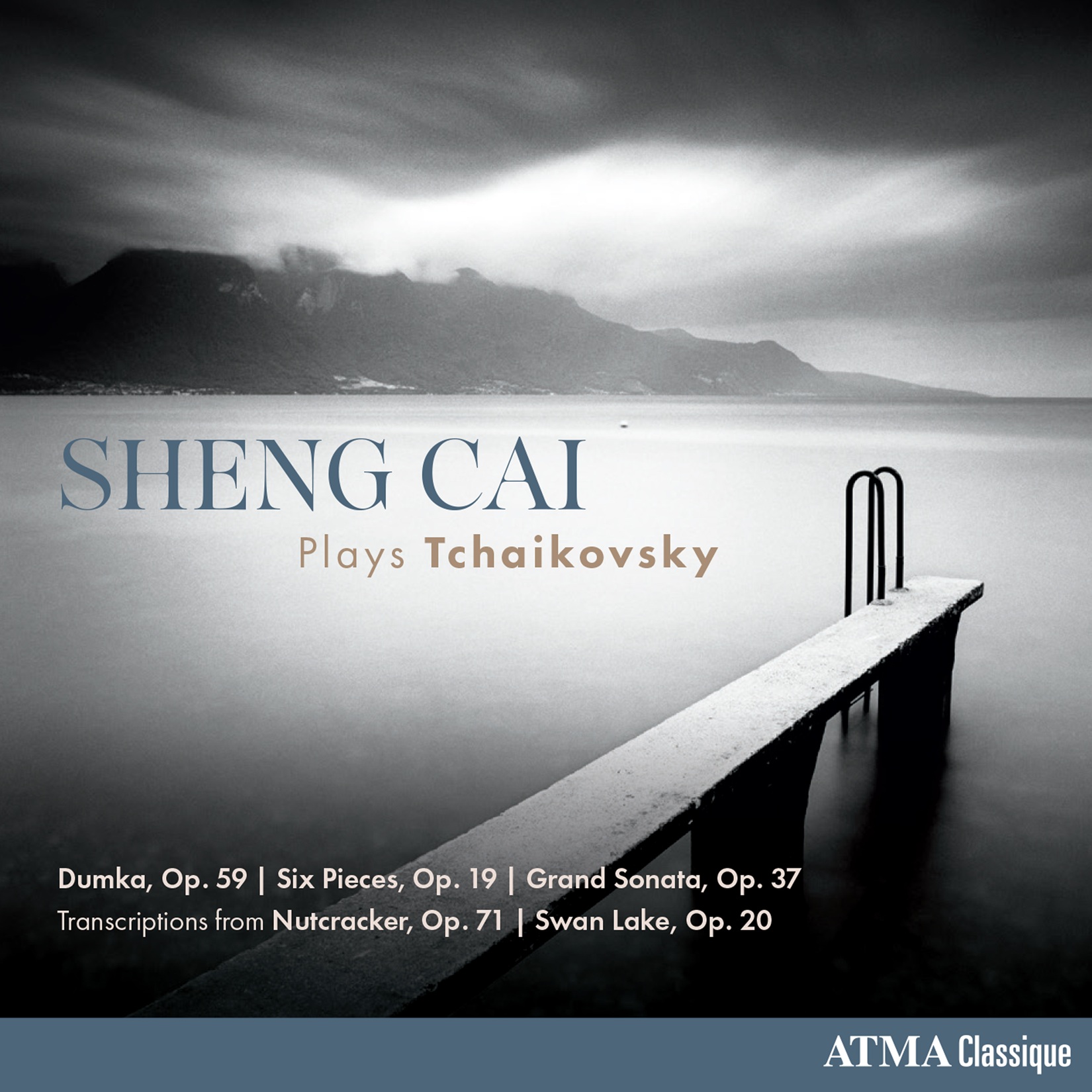
 Sheng Cai plays Tchaikovsky
Sheng Cai
ATMA ACD2 2947 (atmaclassique.com/en/product/sheng-cai-plays-tchaikovsky/?srsltid=AfmBOorK53RO9QaedPk34LVW93FD0Mo6O1kKQdfSQxkcBO6hMMZPEEeP)
History has never been overly kind in its appraisal of Tchaikovsky’s works for solo piano, some critics referring to it as unimaginative and even unpianistic. Nevertheless, this opinion is not shared by everyone, and the Chinese-born pianist Sheng Cai presents a formidable program on this ATMA recording.
Cai began his musical studies at the Royal Conservatory of Music in Toronto, continuing at the Juilliard School and the New England Conservatory where he studied with Gary Graffman and Anton Kuerti. Since then, he has earned an international reputation through solo recitals and appearances with such orchestras as the Vienna Radio Symphony, the Vancouver Symphony, and the North Czech Philharmonic.
The disc opens with Dumka Op.59 completed in 1886 for the Parisian publisher Félix Mackar. The lyrical, introspective opening is followed by more animated, dance-like sections, where Cai’s performance carefully balances technical brilliance with carefully nuanced phrasing.
The Six Pieces for Solo Piano Op.19 from 1873 are charming studies in contrasts, including the familiar Feuillet d’album, the capricious Scherzo humoristic, and the rousing Theme and Variations finale.
The most important work on the recording is the impressive four-movement Grand Sonata in G Major Op.37 from 1878. Grandiose is indeed the word here – the work has a decidedly symphonic feel to it to the point that it could be referred to as a “symphony for piano.” The first and final movements abound with technical difficulties, but Cai easily rises to the challenges with much bravado.
Rounding out the program are movements from the ballets Swan Lake and The Nutcracker. Here, the carefully conceived arrangements by Mikhail Pletnev and Cai himself artfully capture the essence of the original scores.
Unimaginative or unpianistic? Hardly. There is much to appreciate in this music and kudos to Cai, not only for a satisfying performance, but for shedding light on some deserving repertoire.