David Olds, left and Ken Whitely. Photo by Sharon LovettI’m writing this on my 72nd birthday, so I’m going to indulge myself a little. But actually, it seemed as if my birthday came early this year. On an unseasonally mild day in early March the telephone rang and a voice said, “This is Ken Whiteley and I’d like to bring you my new CD.”  

I’ve been a fan of the Whiteley clan’s various musical adventures for more than half a century but had not previously had the pleasure of making Ken’s acquaintance. As I said it was a nice day and so I decided to sit on my porch and play my 1966 Martin D12-20 12-string while I waited for him to arrive. After initial pleasantries, much to my delight, Ken said he’d like to try out my guitar – see the accompanying photo – and commenced to demonstrate how such a venerable instrument should be played. I’m a pretty good strummer but man, my Martin has never sounded as good as it did under his finger-picking finesse. What a treat!

Last June at Hugh’s Room I attended the 60th anniversary/reunion celebration of the Original Sloth Band’s first gig back in 1965 in Bracebridge. It was the first two LPs by this band, featuring Ken and his older brother Chris with Tom Evans, that began my interest in these multi-instrumentalists and their eclectic repertoire that spans roots, blues, early jazz, gospel and folk traditions. The eponymous first record came out in 1973 and in the intervening years Ken has released more than three dozen discs, many under his own name, others with family (The Whiteley Brothers), friends (Mose Scarlett and Jackie Washington) and such sundry groups as The Beulah Band and Junior Jug Band. 
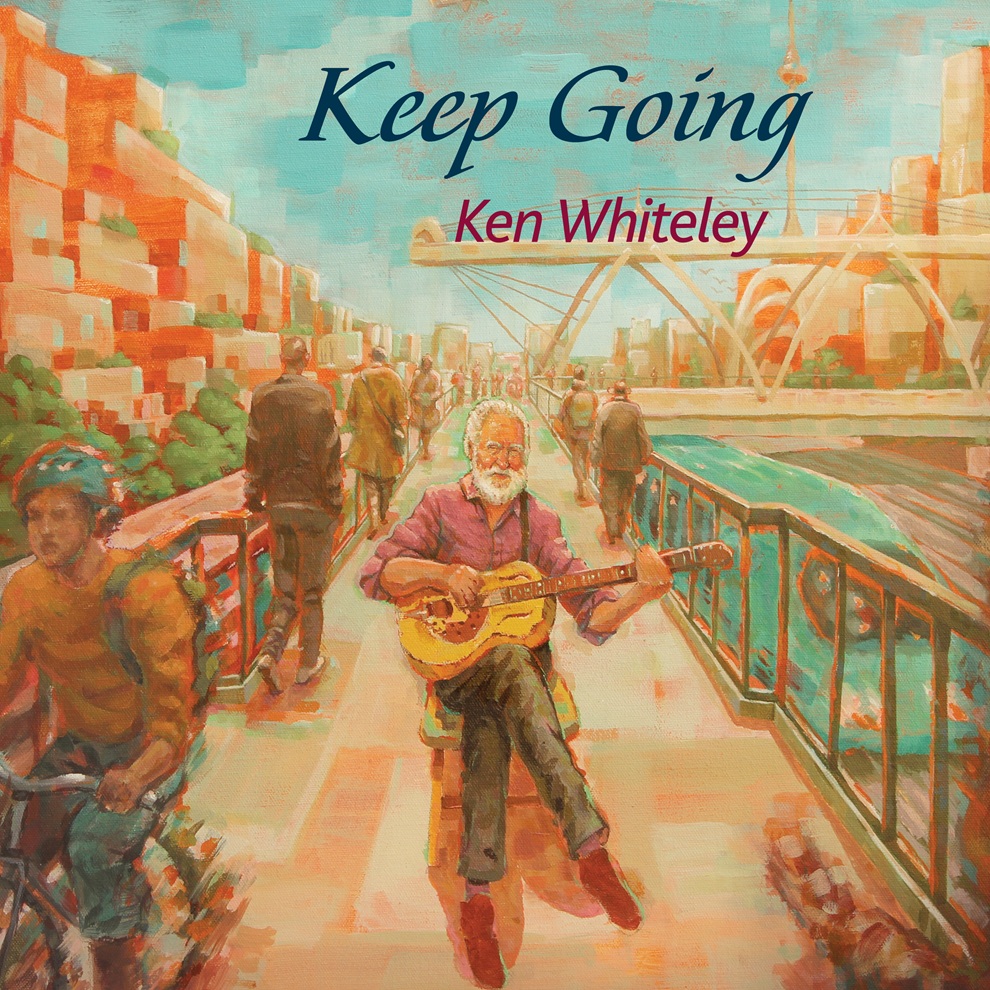
01b Ken WhiteleyAlthough Ken contributes the lion’s share of the accompaniments on most recordings, he is always joined by a host of stalwart journeymen (and women) and his latest CD, Keep Going (kenwhiteley.bandcamp.com/album/keep-going), is no exception. It’s an engaging mix of cover versions, original songs, and Whiteley arrangements of traditional tunes. He’s joined by brother Chris (harmonica and cornet), Bucky Berger (drums), Gord Mowat (bass) and vocalist Ciceal Levy, whose distinct harmonies blend marvellously and give an edge to Whiteley’s lead vocals. Eva Goldberg co-wrote and sings on the closer At the End of the Day, which features a haunting bass harmony by Pat Patrick.  

Whiteley’s notes are like a masterclass, giving the origin story of each tune and how he came to learn it. A case in point is Noah Lewis’ Going to German which Whiteley first performed in the 1960s as a member of Tubby Fats Original Allstar Downtown Syncopated Big Rock Jug Band. The backstory: German is a place just outside of Memphis where a state penitentiary is located. Another confusing title is Aberdeen, not in Scotland, but a town in Mississippi where Bukka White lived in the 1930s. 

On the opener Everybody’s Got to Be Tried Ken plays National steel guitar, Hammond organ and Fender bass, with Berger on drums and Chris on harmonica. On Going to German he plays 2 mandolins, mandola and mandocello, harmonica and bass harmonica. Other tracks find him adding string bass, washboard and piano. 

Although vocals and well-articulated lyrics are front and centre on most tracks, there is one instrumental, Whiteley’s own arrangement of Benny Goodman’s A Smooth One played on a Laskin acoustic guitar, which he says he believes is the first totally solo guitar piece he’s ever released. It’s sweet! 

Of particular note is the title track, a balladic anthem that came about after a fall on the ice in 2025 that resulted in a broken ankle. “Take my rest when I’m tired; I’m not fighting with nature’s laws; When I’m done I’ll keep going; This rest is just a pause; …While my heart keeps on beating; I’ll get back up when I’m down; Keep going, keep going…” Advice to live by. 

Concert Note: Ken Whiteley will celebrate his 75th birthday in a concert with friends (and family no doubt) at Hugh’s Room on May 2. It’s on my calendar. 
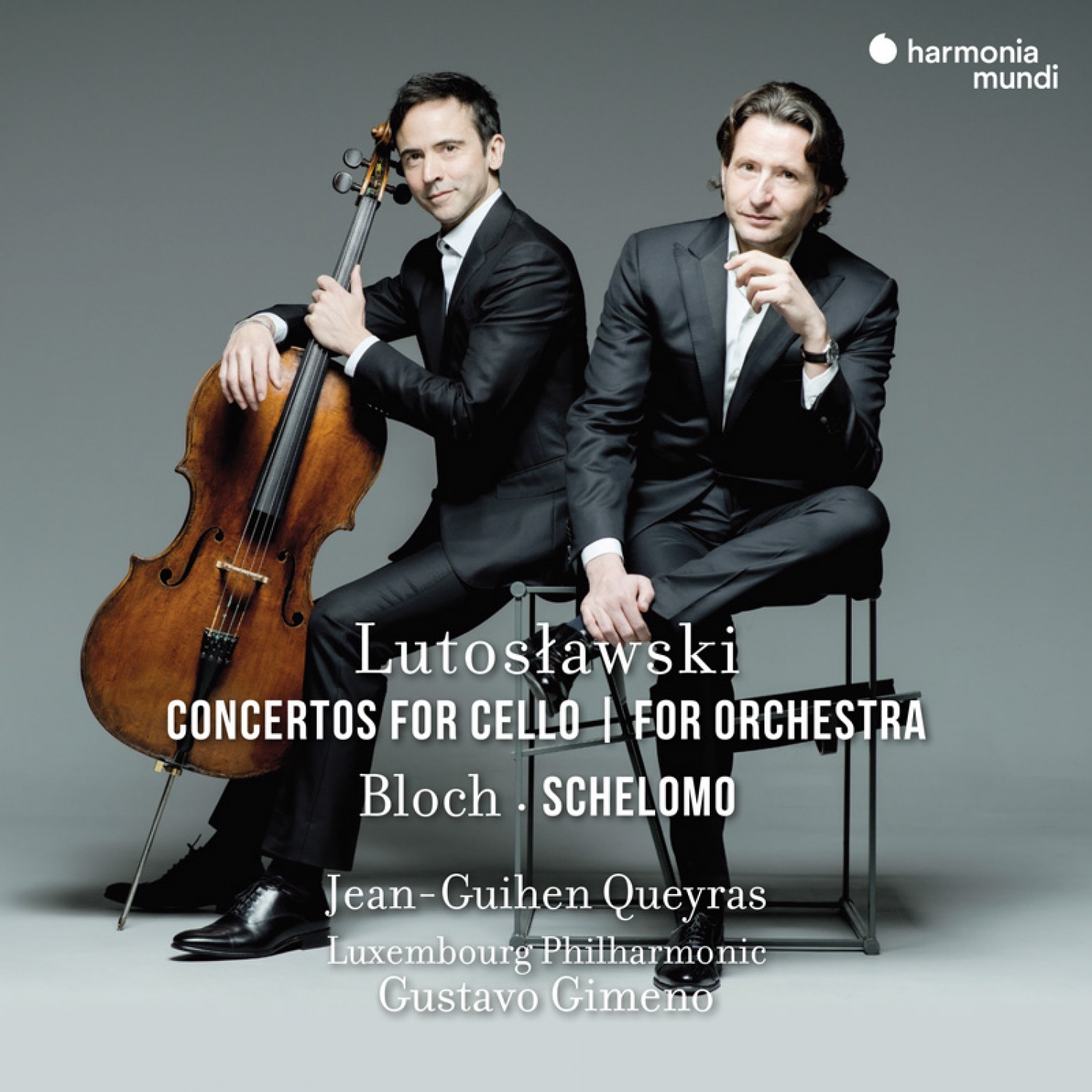
02 Jean Guihen Queyras LutoslawskiMany of my most memorable concert experiences have been shared with my dear friend André Leduc. For many years of my tenure at New Music Concerts (NMC), André was our photographer and documented the residencies of some of the most distinguished composers of our time. He and I agree that top among these were Witold Lutoslawski, who conducted the NMC Ensemble in 1993 just months before his death, and Pierre Boulez, laureate of the Glenn Gould Prize in 2002, who led our ensemble in the programme at Glenn Gould Studio during which the prize was presented. The ceremony also included the Toronto Award, given to a “protégé” selected by the winner, in this case the Montreal-born cellist Jean-Guihen Queyras, who has a thriving career in Europe. 

Lutosławski – Concertos for Cello | for Orchestra; Bloch – Schelomo (Harmonia Mundi HMM902714 store.harmoniamundi.com) features Queyras in Lutosławski’s cello concerto and the Bloch, with the Luxembourg Philharmonic conducted by Gustavo Gimeno, the Toronto Symphony Orchestra’s current music director. 

The Concerto for Orchestra is given a stunning performance to open the disc. It’s a relatively early work, written between 1950 and 1954, and owes an obvious debt to Bartók’s masterpiece in the same genre, while adding some contemporary stridency. 

Ernest Bloch’s Schelomo: Rhapsodie Hébraïque for Violoncello and Orchestra was completed in 1916, before the Swiss composer’s move to the USA, and is the final work in his Jewish Cycle. The cello is in full cantorial mode, declaiming what was originally conceived as a vocal text based on the Book of Ecclesiastes. Queyras is convincing in capturing the voice of King Solomon (Schelomo) that ranges from meditative to stentorian. 

For me (and André) the highlight of the disc is Lutosławski’s Concerto for cello and orchestra, written in 1970 for Mstislav Rostropovich. In the words of Dave Kopplin, it “consists of many simultaneous strands that at times seem related, at other times not, woven together in a fantastic quilt of sound…  conjuring up an image of controlled chaos.” It is acknowledged as one of Lutosławski’s most effective works and is a personal favourite. Queyras is in top form, rising to all the challenges and curves the composer throws at him, and Gimeno has full control over his orchestra in this stellar performance. 
03 HolligerAnother towering figure we had the pleasure of meeting was oboist and composer Heinz Holliger who spent a week working with NMC musicians in March 2005. He was featured with members of Accordes in Elliott Carter’s Oboe Quartet, conducted his own Turm-Musik for flute solo (Robert Aitken) and 23 players and supervised performances of several smaller works. Renowned as a pioneer of extended techniques for double reed instruments, he would often provide charts and instructions for realizing these new, often “non-musical” sounds to the composers he would commission. “Many of the pieces written for me were almost like recipes: the composers would receive a list from me of all the extended techniques available.”

With these often-extreme sounds in mind, I was quite surprised at how lyrical his latest CD con slancio is (ECM New Series 2807 deutschegrammophon.com/en/catalogue/products/con-slancio-marie-lise-schuepbach-heinz-holliger-14336). The title is Italian for “with enthusiasm, momentum or vigour” and the disc pairs recent solo works and duets by Holliger with pieces written for him by Toshio Hosokawa, Jürg Wyttenbach, György Kurtág, Rudolf Kelterborn and Robert Suter. Holliger is joined by Marie-Lise Schüpbach and they alternate on oboe and its darker-sounding sibling, the English horn. 

Holliger’s title work for solo oboe from 2018 opens the disc, and is later answered by Kurtág’s con slancio, largamente composed for English horn the following year. In this latter the lyricism I mentioned above comes to the fore, and we even hear a snippet of Bach. Both these pieces last roughly two minutes, as it the case for most of the works presented here. Notable exceptions are Hosokawa’s Musubi (2019) and Wyttenbach’s Sonata für Oboe solo (1961). Incidentally André and I got to know both of these composers during the time they spent with NMC in 2005 and 2009 respectively. Hosokawa’s duet for oboe and English horn, like its name would suggest – to tie, to bind – “knots the two players together only to let them unravel again.” 

Holliger describes Wyttenbach’s sonata thusly: “Jürg treats the oboe’s sound almost abstractly at times, creating a wonderful music that doesn’t always lie comfortably on the instrument. But that resistance is precisely what’s good about it. […] It is extremely demanding without ever lapsing into empty virtuosity.” Virtuosity abounds on this disc, but it is never empty. At more than an hour’s duration, one might think the sounds of just one oboe, or English horn, or the two combined, might get tiresome. But in the hands of this master and his associate, there’s no fatigue. It is an hour well spent. 
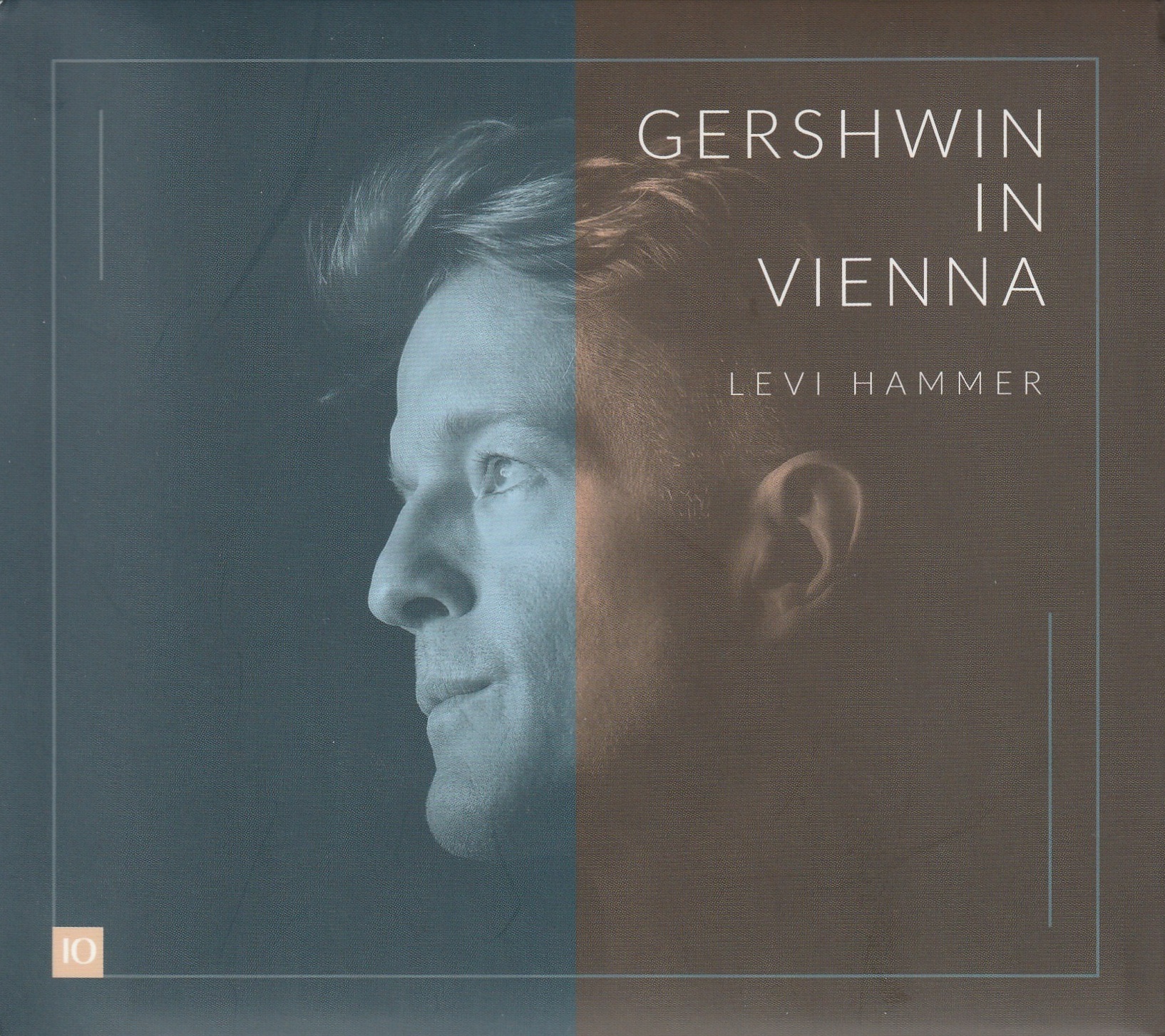
04 Gershwin in ViennaMy own knowledge of contemporary music is largely self-acquired, from reading books and, more particularly, from the liner notes of my extensive collection of LPs and CDs. Oh, and the 20 years I served as Robert Aitken’s assistant at New Music Concerts. Although I pride myself on my competency, this mode of acquisition has left a few gaps, and some prejudices as to what qualifies as “serious” music. After repeated urgings from my friend André, I belatedly – almost two decades after its publication – picked up The Rest is Noise: Listening to the Twentieth Century by Alex Ross. It’s a marvellous book – selected as one of the “Ten Best” of the year by the New York Times – that puts the art music of the whole century into perspective. 

I had never taken the music of George Gershwin terribly seriously, so I was surprised to learn from Ross that several heavyweights – Arnold Schoenberg and Alban Berg – did. This is the premise of the recording Gershwin in Vienna, conceived and performed by American pianist, conductor and curator Levi Hammer (Decurio DEC-015 awaiting URL from publicist). Hammer says “For two composers with vastly different backgrounds, Schoenberg and Gershwin mirrored each other in uncanny ways. Both were largely self-taught, both Jewish, both painters, and both relentlessly devoted to refining their craft.”

The disc includes Gershwin’s Jazzbo Brown Blues, Three Preludes, and 18 of the composer’s own piano transcriptions from the Great American Songbook. These are interspersed with Schoenberg’s Three Piano Pieces, Op. 11, and Six Little Piano Pieces, Op. 19; Berg’s Piano Sonata, Op. 1; and Webern’s Variations for Piano, Op. 27. I occasionally find the juxtaposition of Gershwin’s mostly sunny and rhythmic pieces with the austerity of those of the Second Viennese School somewhat jarring, but Hammer makes a strong case for his thesis in the liner notes. 

Gershwin spent time in Vienna in 1928 and did indeed interact with Schoenberg and Berg, who seem to have accepted him as the “real deal.” Berg arranged a private performance of his Lyric Suite for the American composer and Gershwin, at Berg’s urging, played some of his own piano works. Hammer draws convincing parallels between the Lyric Suite and An American in Paris and I must admit that on repeated listenings I am hearing hints of Gershwin’s sensibility in the middle piece of Schoenberg’s Op.11 (although it was written two decades before that encounter). 

Schoenberg’s grief at Gershwin’s death at the age of 38 – they had become friends after Schoenberg moved to California – is audible in his thick Viennese accent in a moving radio tribute included at the conclusion of this album, in which he says “…there is no doubt that he was a great composer. What he has achieved was not only to the benefit of American music, but also a contribution to the music of the whole world. I want to express the deepest grief at the deplorable loss to music, but may I mention that I lose also a friend who was very dear to me.” 
05 Barbara HanniganAn American Dream? is the latest release from Barbara Hannigan, a Canadian soprano whose career has blossomed on the international stage in the past three decades. To tie this in with earlier paragraphs I will mention that her first professional engagement was with New Music Concerts back in 1990 in a piece for multiple ensembles by Henry Brant. 

Hannigan is now as renowned as a conductor as she is as a singer, and even more surprising, as someone who can do both simultaneously, as she does here from the helm of the Gothenburg Symphony Orchestra (Alpha 1222 outhere-music.com/en/albums/american-dream-0). The context of this album is a celebration of American music, and I feel a little uncomfortable with that given the current state of the world, especially in relation to the current American president. With that in mind I’ll let Hannigan explain its origins:

“Growing up as a northern neighbour to the United States, I have been fascinated (and also intimidated) by aspects of the USA which seem built on an entirely different foundation than my country, Canada. America’s exuberant patriotism, embrace of capitalism, and flashy dominance in industry, sport, and entertainment have cast a long shadow. ‘The American Dream,’ an elusive notion popularized in 1931 during the Great Depression, promoted the ideal that ‘the United States is a land of opportunity that allows the possibility of upward mobility, freedom, and equality for people of all classes who work hard and have the will to succeed.’ It is indeed a dream, and for many, an impossible one, considering the various obstacles facing so many because of ongoing prejudices firmly attached to race, gender and social or financial standing. The divisions we now are witnessing in American society which have international repercussions, as an elected leader and supporting government behave in a manner that is difficult not to see in any other way than narcissistic and bullying, was an even stronger inspiration for me to put this album together. […] With this repertoire, I wanted to express my admiration for the incredible creativity and tenacity of America’s immigrants and their descendants, and also my sadness in observing what seems to have been lost.”

So obviously I’m okay with that, and it explains the question mark in the title of the disc. The programme begins, understandably enough, with George Gershwin. In 1942, five years after his death, conductor Fritz Reiner commissioned a suite from Gershwin’s masterwork to be arranged by Robert Russell Bennett, knowing that Bennett would be faithful to the composer’s wishes of style and sound. The resulting Porgy and Bess: A Symphonic Picture is a half-hour long tour de force that Hannigan brings masterfully to life. 

Did you know that Aaron Copland wrote a vampire ballet? It was news to me... but it seems that inspired by the film Nosferatu, and encouraged by his teacher Nadia Boulanger, he did indeed create a work based on an evil sorcerer named Grohg, who would bring cadavers to life and make them dance. Grohg was not a success, but some years later Copland resurrected (if you’ll excuse the pun) the work and published it as Dance Symphony. It is this incarnation of the ballet that is presented here.

The disc continues with The Carousel Waltz, the overture from Rodgers and Hammerstein’s wildly successful musical Carousel, and concludes with At the Fair, a suite of show tunes arranged by Hannigan and Bill Elliott, who also orchestrated the 12-minute bouquet of bonbons. The suite is bookended by two songs, the poignant Have I Stayed Too Long at the Fair?, and the showstopper Don’t Rain on my Parade from Jule Styne’s Funny Girl. Hannigan tells us “Both songs I sing in this suite were made famous by one of my great idols: the American singer, actor, director, producer and activist, Barbra Streisand. I wanted to juxtapose the personal and intimate nostalgia of the first song’s ‘older and wiser’ reflective mood with the final song’s youthful chutzpah and joie de vivre.” And joyous it is! 

David Olds can be reached at discoveries@thewholenote.com

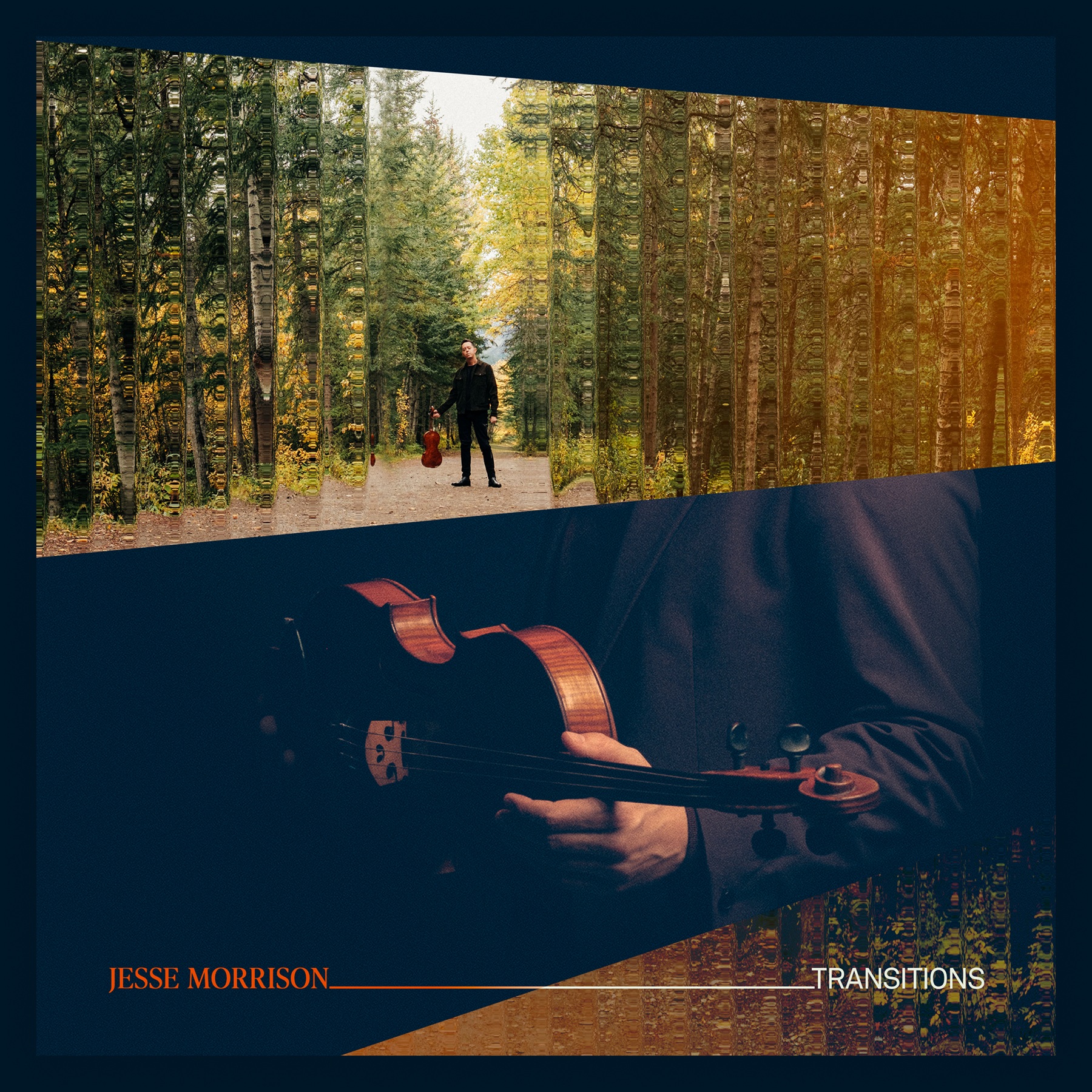
01 Transitions EP CoverTransitions is the outstanding debut solo album from violist Jesse Morrison, a performance graduate from the Glenn Gould School and the University of Toronto now with the Calgary Philharmonic Orchestra (Wolfe Records jessemorrisonviola.bandcamp.com/album/transitions).

The Partita for Solo Viola by the Boston-based composer Derek David, written “in adoration” of Bach’s solo instrumental works, was commissioned for this recording. Its six sections – Prelude, Allemande, Courante, Sarabande, Minuet, and Gigue and Fugue – are wide-ranging, both stylistically and emotionally; imagine someone playing the solo Bach Partitas who, unable to resist, constantly explodes into bursts of extreme modern technique. 

Skizzen für Siegbert (Sketches for Siegbert) by the Australian violist and composer Brett Dean was written as the compulsory piece for the 2012 Max Rostal Viola Competition. Dean played viola with the Berlin Philharmonic from 1985 to 1999, this piece being a tribute to his initial desk partner, Siegbert Ueberschaer, who died in 2011. Two reflective outer movements frame a virtuosic middle movement.

Five brief selections from György Kurtág’s Signs, Games and Messages and Telemann’s violin Fantasia No.1 in B-flat Major, played here in E-flat to allow for identical relationships between the strings, complete a terrific CD, with Morrison in complete technical and musical control throughout.

Listen to 'Transitions' Now in the Listening Room

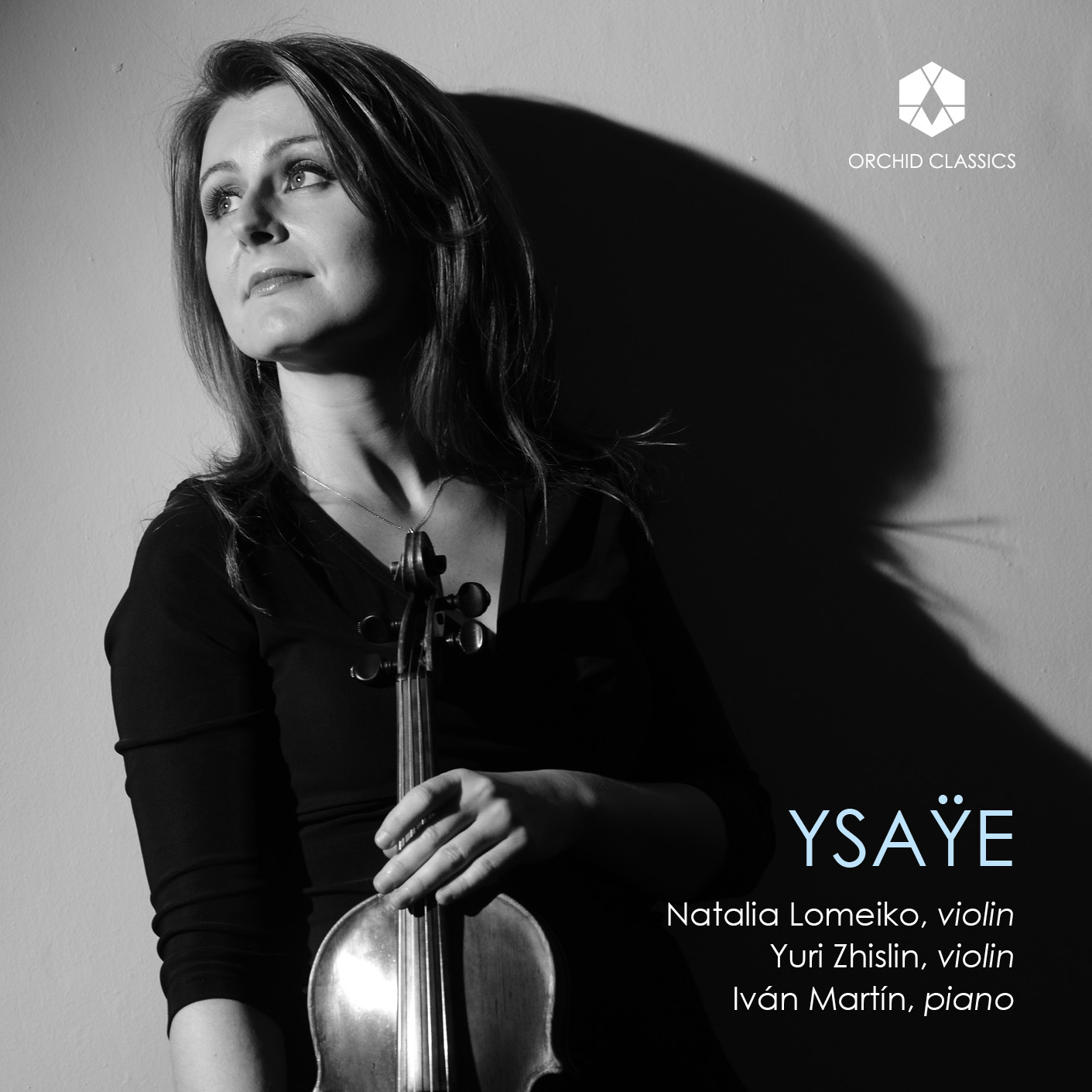
02 Natalia Lomeiko YSAYE Known as The King of the Violin, Eugène Ysaÿe was a dominant figure at the end of the 19th century, having studied with Wieniawski and Vieuxtemps and numbering Enescu and Thibaud – and later Milstein and Gingold – among his students. His solo sonatas have tended to overshadow his smaller works for violin and piano, which have been somewhat – and unjustly – neglected, but on the CD Ysaÿe violinist Natalia Lomeiko and pianist Iván Martín aim to put that right (Orchid Classics ORC100429 orchidclassics.com/releases/orc100429-ysaye).

The result is an outstanding recital of some of Ysaÿe’s most evocative and rarely heard works that merge Romantic lyricism with bold harmonic imagination. Included are: Grande valse de concert Op.3; Mazurka No.3 “Lontain passé Op.11; Poème élégiaque Op.12; Au rouet Op.13; Rêve d’enfant Op.14; and Extase Op.21. Lomeiko’s husband, violinist Yuri Zhislin joins her in Amitié Op.26.

Lomeiko has a fast vibrato and a rich, slightly nasal tone reminiscent of the great players of the 1940s and 1950s. It’s beautifully suited to the works in the programme, every one of which deserves a permanent place in the concert repertoire.

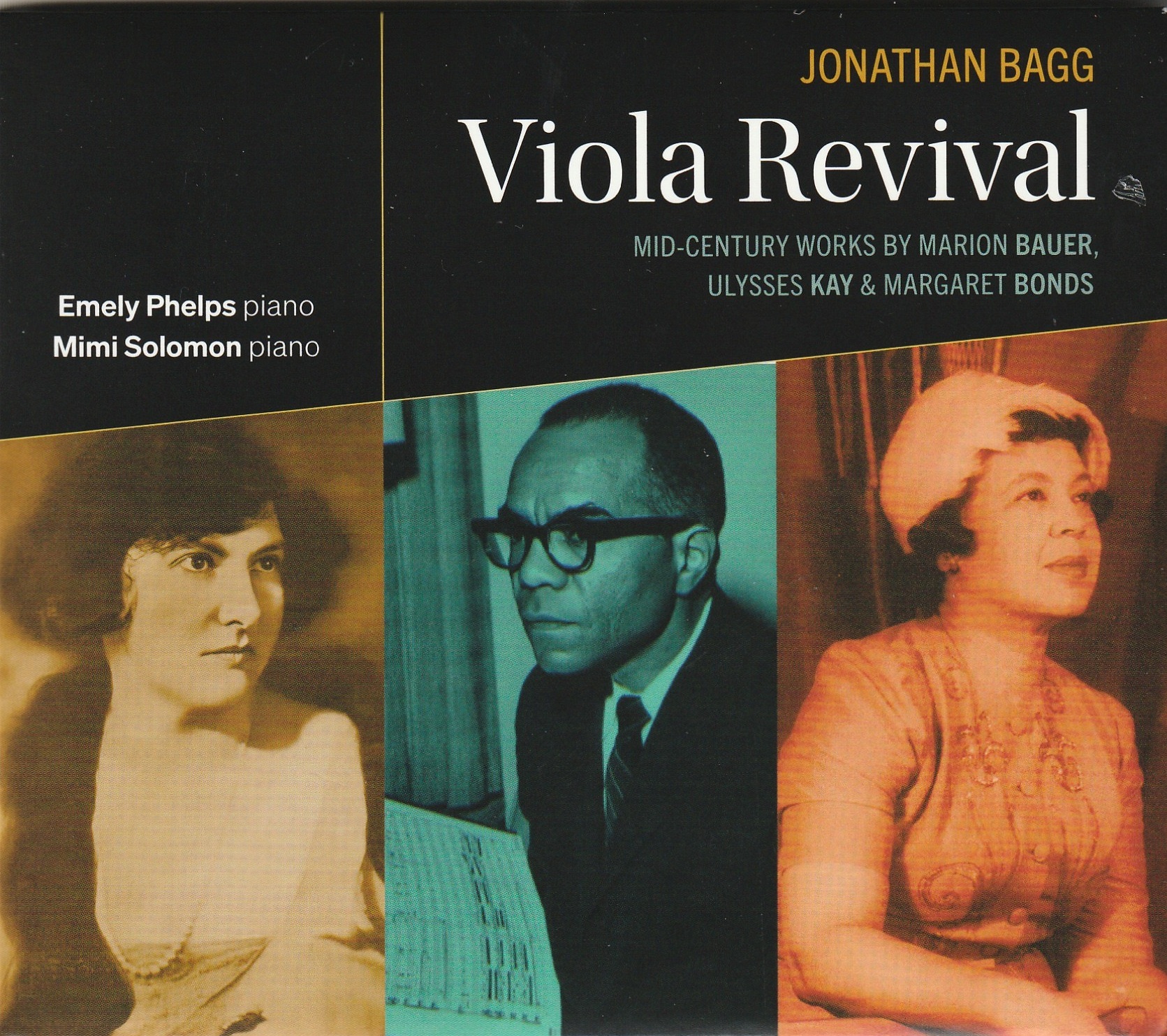
03 Viola RevivalOn the excellent CD Viola Revival violist Jonathan Bagg presents mid-century works for viola and piano by three significant African American composers who were not given the recognition they deserved during their lifetimes – Marion Bauer (1882-1955), Ulysses Kay (1917-95) and Margaret Bonds (1913-72). Emely Phelps is the pianist for most of the CD (New Focus Recordings FCR477 newfocusrecordings.bandcamp.com/album/viola-revival-mid-century-works-by-marion-bauer-ulysses-kay-margaret-bonds).

Bauer founded the American Music Guild in 1921 and co-founded the Society for American Women Composers in 1925 and the American Composers Alliance in 1937. Her Sonata for Viola and Piano, Op.22 from 1932 combines contemporary period stylings with French and late Romantic influences that reflect her early training with Nadia Boulanger.

Kay’s Sonata for Viola and Piano from 1942 was written at Yale University while Kay was studying with Paul Hindemith, whose neoclassical approach is reflected in the sonata.

Bonds was a student of Florence Price and active as a composer and pianist in Chicago. Her Troubled Water, based on the Negro spiritual Wade in the Water was a staple of her concerts, and was later arranged by her for cello and piano. Pianist Mimi Solomon joins Bagg in his arrangement for viola and piano.

Listen to 'Viola Revival' Now in the Listening Room

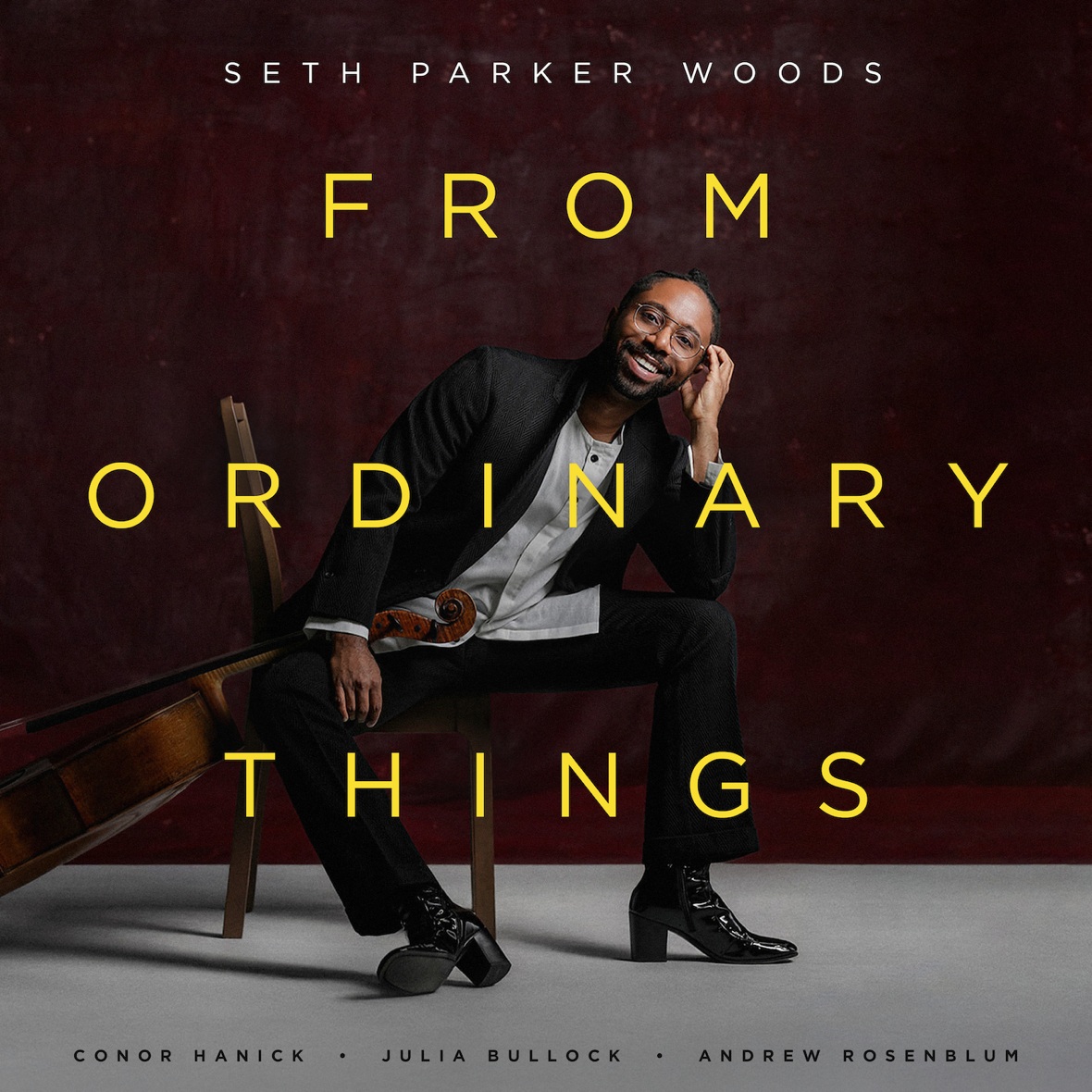
04 Seth Parker WoodsFrom Ordinary Things, the new CD from cellist Seth Parker Woods is described as a profoundly reflective album that explores identity, intimacy and human connection. Conor Hanick is the pianist for most of the disc (Platoon PLAT29870 platoon.lnk.to/fromordinarythings).

Soprano Julia Bullock joins the duo in the opening track, the simply lovely Shelter, the third song from André Previn’s Four Songs on Poems of Toni Morrison, whose poetry also provides the album’s title.

The composer and pianist George Walker (1922-2018) was a ground-breaking figure in American music, among his other firsts being the first African-American to win the Pulitzer Prize for Music. His three-movement Sonata for Cello and Piano shows his use of jazz-inflected rhythms and lyrical warmth, with a modernist edge.

Bullock is also the soprano in Oh Yemanja from the opera Scourge of Hyacinths by the Cuban-born American composer Tania León (b.1943), the first Latin-American woman to win the Pulitzer Prize.

Woods’ long-time collaborator Andrew Rosenblum is the outstanding pianist for Rachmaninoff’s achingly beautiful Cello Sonata in G Minor, Op.19, a beautifully-judged performance ending an immensely enjoyable disc.

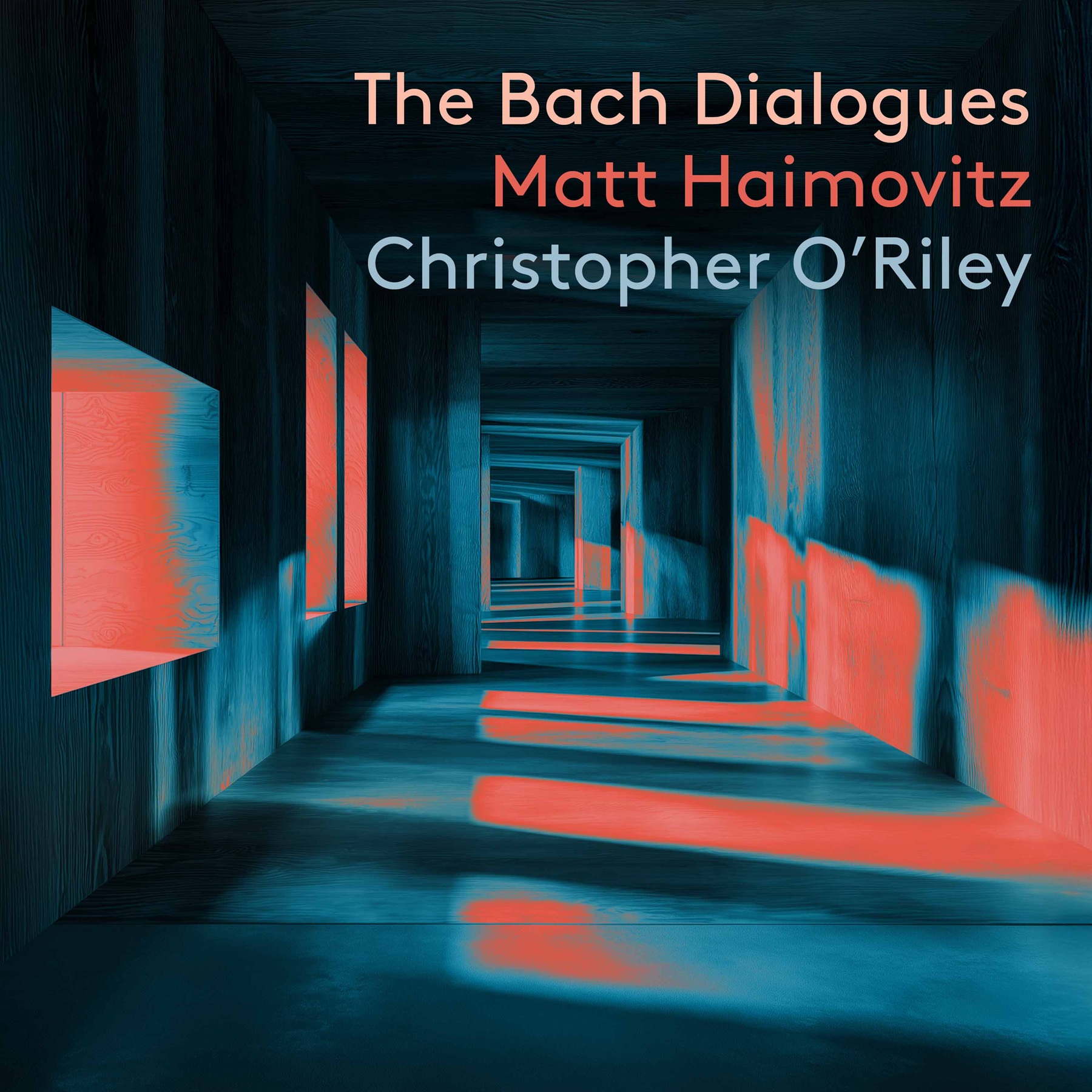
05 Bach DialoguesThe Bach Dialogues is a digital-only release with Matt Haimovitz on cello piccolo and Christopher O’Reilly on clavichord presenting beautifully resonant performances of the three Bach Sonatas for Viola da gamba and Cembalo in G Major, D Major and G Minor, BWV1027-29 and the Trio Sonata No.5 in C Major, BWV529 (Pentatone PTC 5187410 pentatonemusic.com/product/the-bach-dialogues-digital-only-album).

Haimovitz plays the 5-string cello piccolo that he uses for the Bach Solo Cello Suite No.6; it’s the ¾ cello from c.1710 that his parents bought for him when he was 10, converted to a baroque set-up by the addition of an E-string. He uses gut strings and a baroque replica bow.

The clavichord may apparently have been Bach’s favourite keyboard instrument, its action – different to that of the harpsichord – capable of a degree of dynamic shading and even basic vibrato. O’Reilly plays a 2010 copy of an 1806 Swedish instrument, somewhat larger and more powerful than a baroque original. Even so, the difference in volume levels required the performers to be isolated in the recording studio, listening to each other through headphones. 

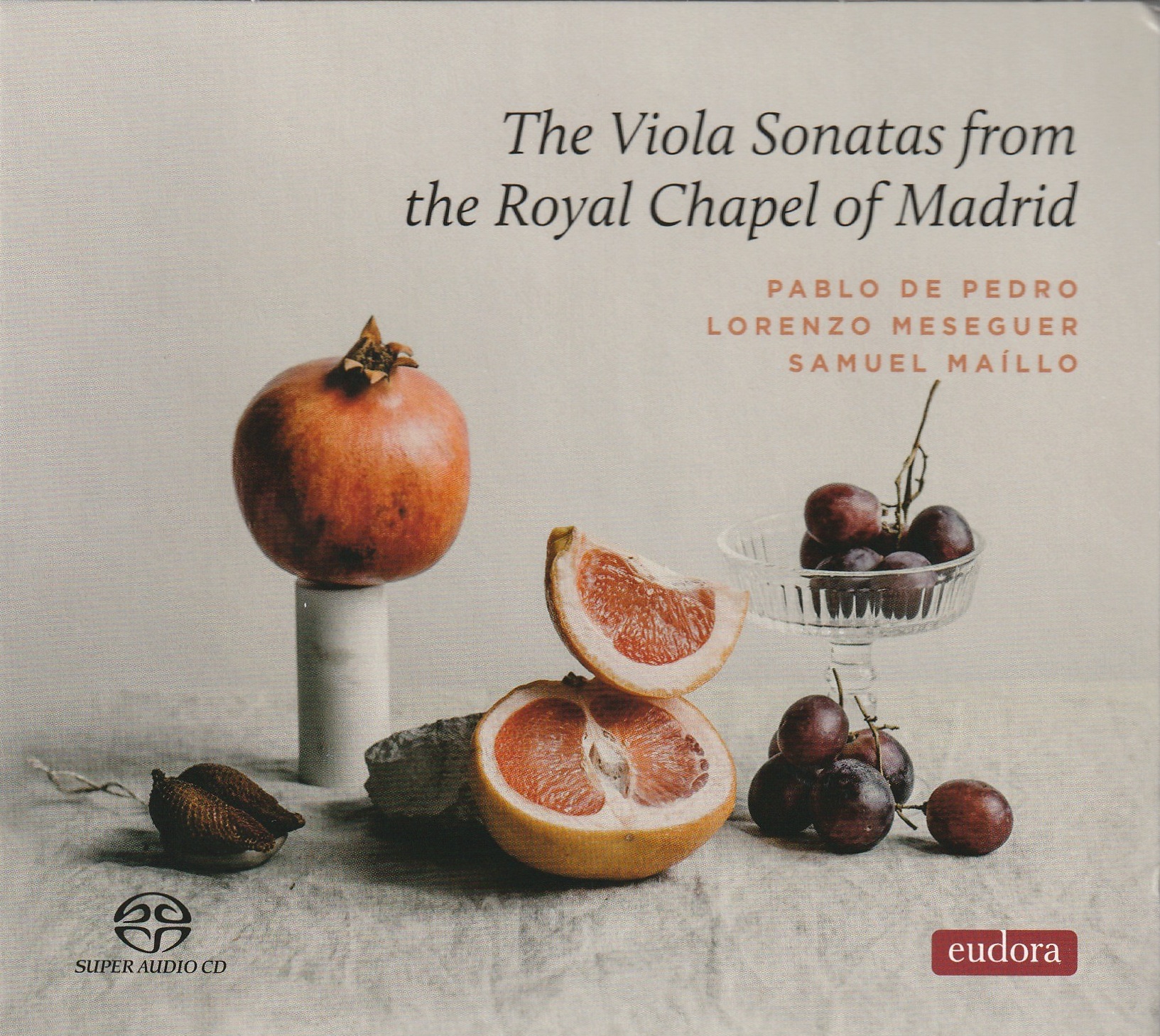
06 Viola from MadridThe Viola Sonatas from the Royal Chapel of Madrid is a recording project devoted to the 11 sonatas composed between 1778 and 1818 for the auditions held to obtain a viola position at the Royal Chapel in Madrid. Violist Pablo de Pedro is the excellent soloist, with cellist Lorenzo Meseguer and harpsichordist Samuel Maíllo providing the continuo (Eudora Records EUD-SACD-2601 eudorarecords.com/shop/catalogue/the-viola-sonatas-from-the-rotal-chapel-of-madrid). 

The second part of the three-part auditions was the sight-reading of a sonata composed for the purpose by one of the examination board members. The earlier works here – the three sonatas by Felipe de los Rios from 1778 and 1781 and the 1789 sonata by Gaetano Brunetti – are in three movements; from 1794, however, candidates were required to audition on viola and violin, and the viola sonatas were consequently shorter, in a slow-fast two-movement form. Sonatas by Juan Oliver y Astorga (1803, 1804, 1805 and 1807), José Lidón (1806), and Juan Balado (c.1818) complete a generous CD of almost 85 minutes.

One minor quibble: the recording balance strongly favours the cello, making the harpsichord – which it mostly doubles – barely audible throughout the CD.

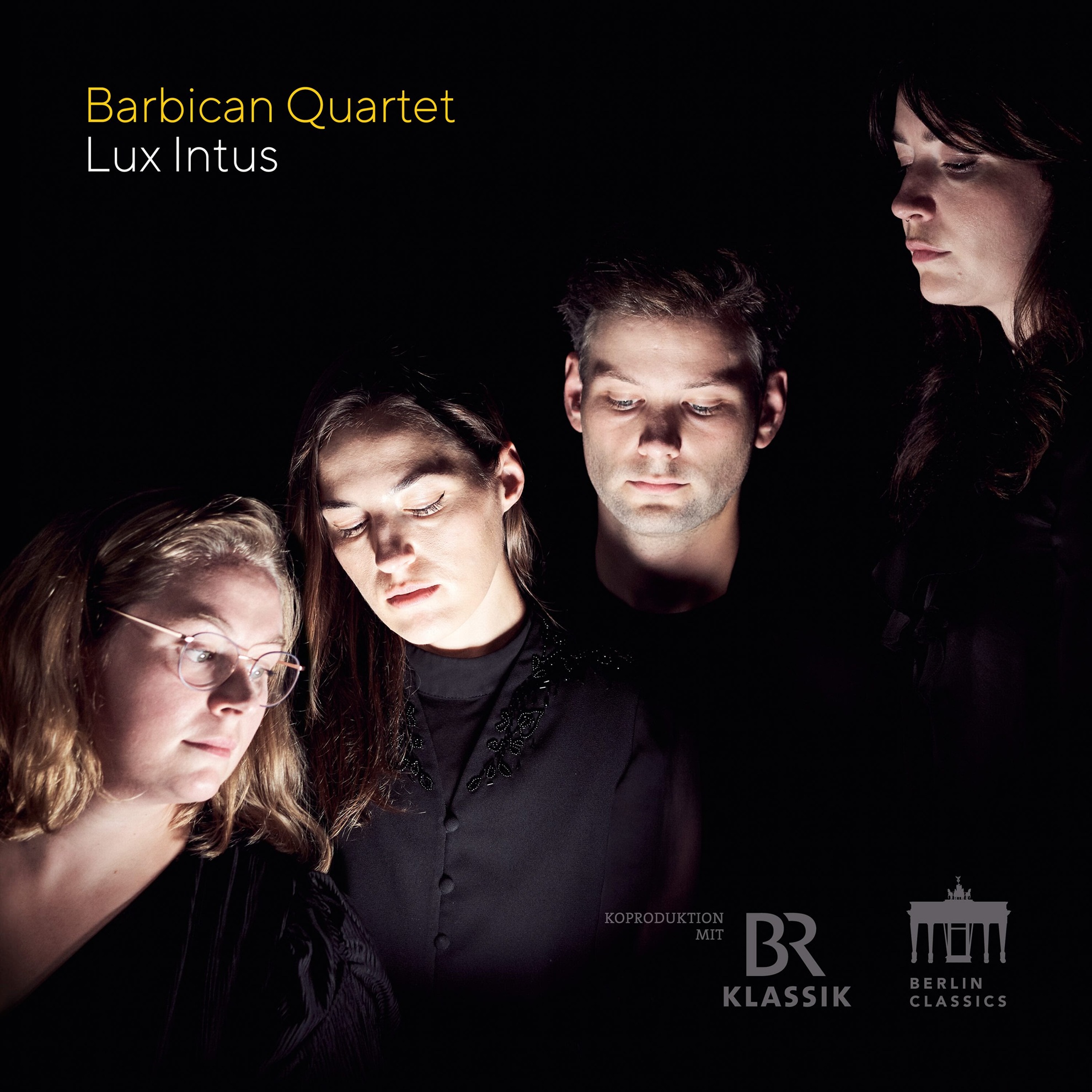
07 Barbican QuartetConnections abound throughout Lux Intus, the new CD from the London-based Barbican Quartet that is described as a search for the inner voice – the light within (Berlin Classics 0303340BC berlin-classics-music.com/en/album/885470044736-lux-intus).

In a string quartet that inner voice is the viola, which provides a link here. Mozart played viola in his own quartets, and a beautiful performance of his 1789 String Quartet in D Major, K575 “Prussian” opens the disc. Rebecca Clarke was a superb violist as well as a composer; her rapturous Poem for String Quartet from 1926 was premiered in the United States at the home of the music patron Elizabeth Sprague Coolidge.

More connections: it was Coolidge who in 1941 commissioned the String Quartet No.1 in D Major from Britten, himself an accomplished violist and at the time in self-imposed exile in the United States. It brings another superb performance from the Barbican.

Barbican violist Christoph Slenczka’s arrangement of Elgar’s Nimrod and the newly-commissioned Postlude by Sophia Jani complete another terrific CD by this young ensemble.

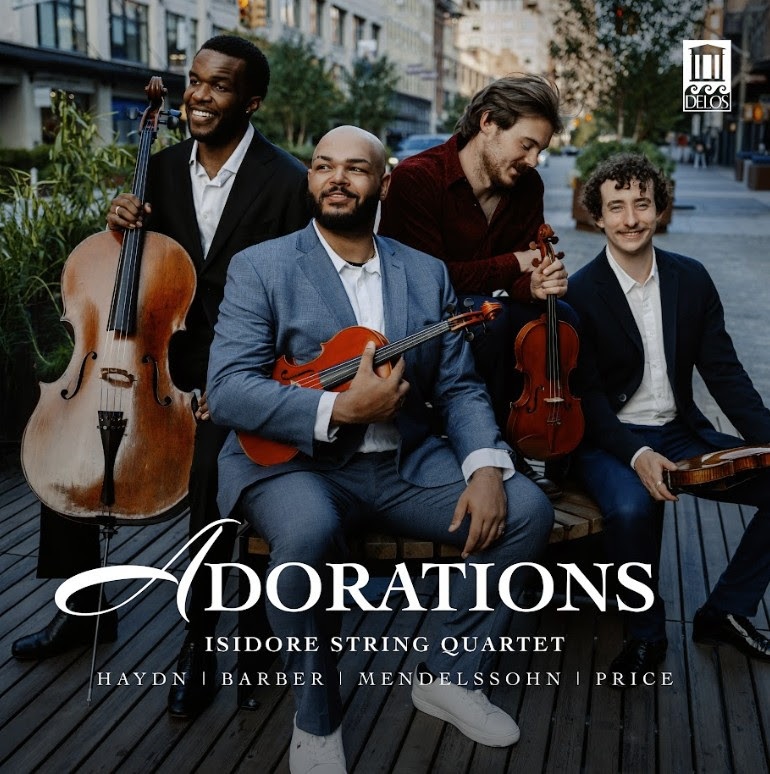
08 Adorations Isidore QuartetThe Isidore String Quartet has strong ties to The Juilliard School; it was formed there in 2019, was coached and mentored by the Juilliard Quartet members and takes its name from former Juilliard Quartet violinist Isidore Cohen. The quartet makes its recording debut with the new CD Adorations, dedicated to Juilliard Quartet cellist Joel Krosnick, who died last year (Delos DE3622 outhere-music.com/en/albums/adorations).

Described as a celebration of chamber music at its essence, the disc opens with a delightful performance of Haydn’s String Quartet in C Major, Op.20 No.2, which the Isidore ensemble played when winning the Banff International String Quartet Competition in 2022, also winning the Haydn Prize. An intensely focused reading of the Molto adagio from Barber’s String Quartet, Op.11 – the original Adagio for Strings – precedes Mendelssohn’s String Quartet in E-flat Major, Op.44 No.3 in another dazzling performance full of nuance and dynamic contrast.

Samuel Arraya’s arrangement of Florence Price’s brief but lovely Adoration closes a fine recital, recorded in the Rolston Recital Hall in Banff in August 2024.

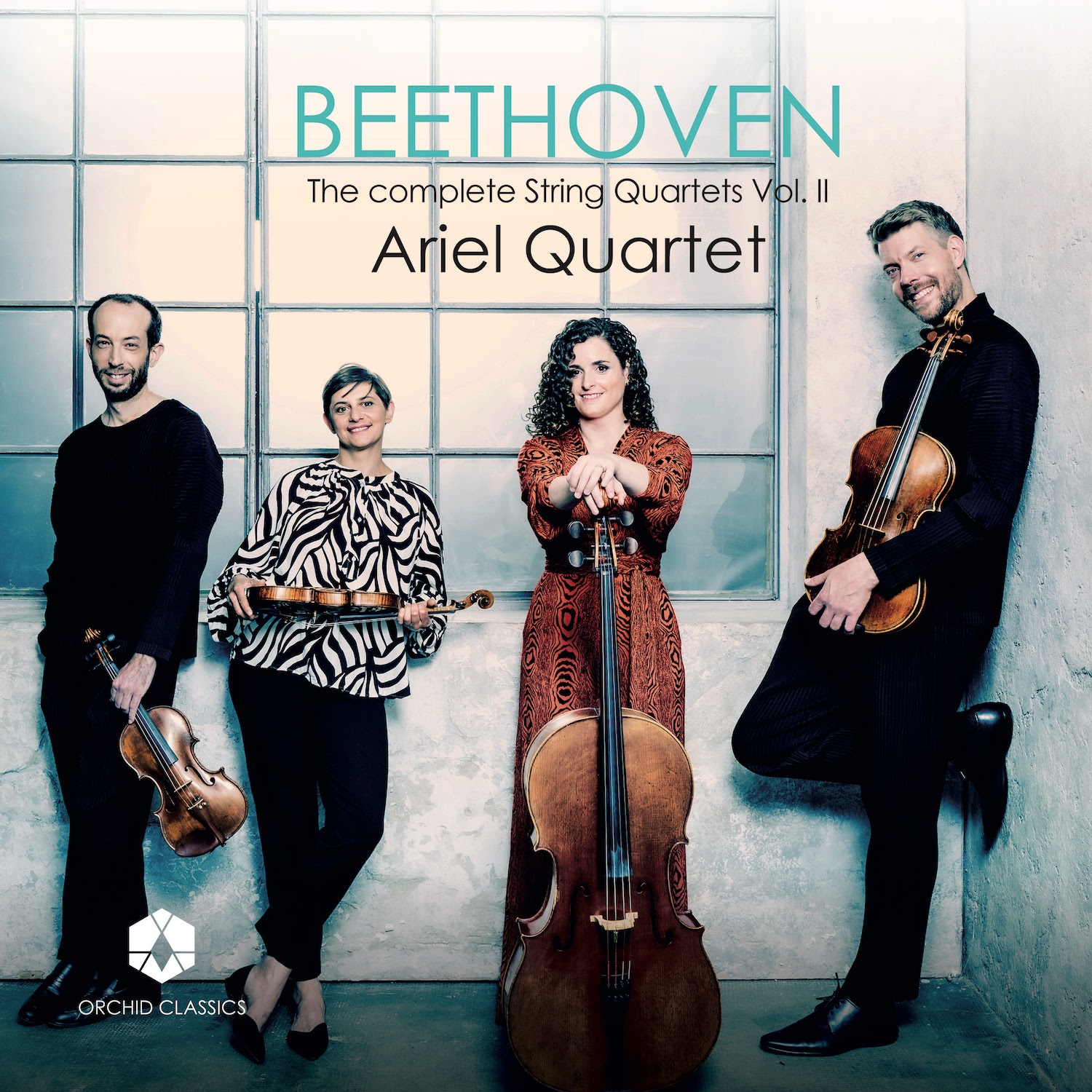
09 Beethoven Ariel QuartetThe Ariel Quartet continues its Beethoven quartet project with the 3CD set BEETHOVEN: The complete String Quartets Vol.II (Orchid Classics ORC100403 orchidclassics.com/releases/orc100403-beethoven-string-quartets-vol-2/).

The five works in this volume are the three Razumovsky Quartets Op.59 Nos.1-3, the String Quartet in E-flat Major, Op.74 and the String Quartet in F Minor, Op.95, “Quartetto serioso.” The immediacy and commitment I noted in their playing in the first volume is even more evident here, with superb sound, dazzling fast passages and outstanding nuance, dynamics and phrasing. The Op.59 No.3 C major quartet in particular is simply stunning.

Volume III is scheduled for release in June, with a box set of all three volumes planned for March 2027 to mark the 200th anniversary of Beethoven’s death. You might want to wait for the box release, because the standard this ensemble is setting is going to make it extremely difficult for any other set to be held in higher regard.

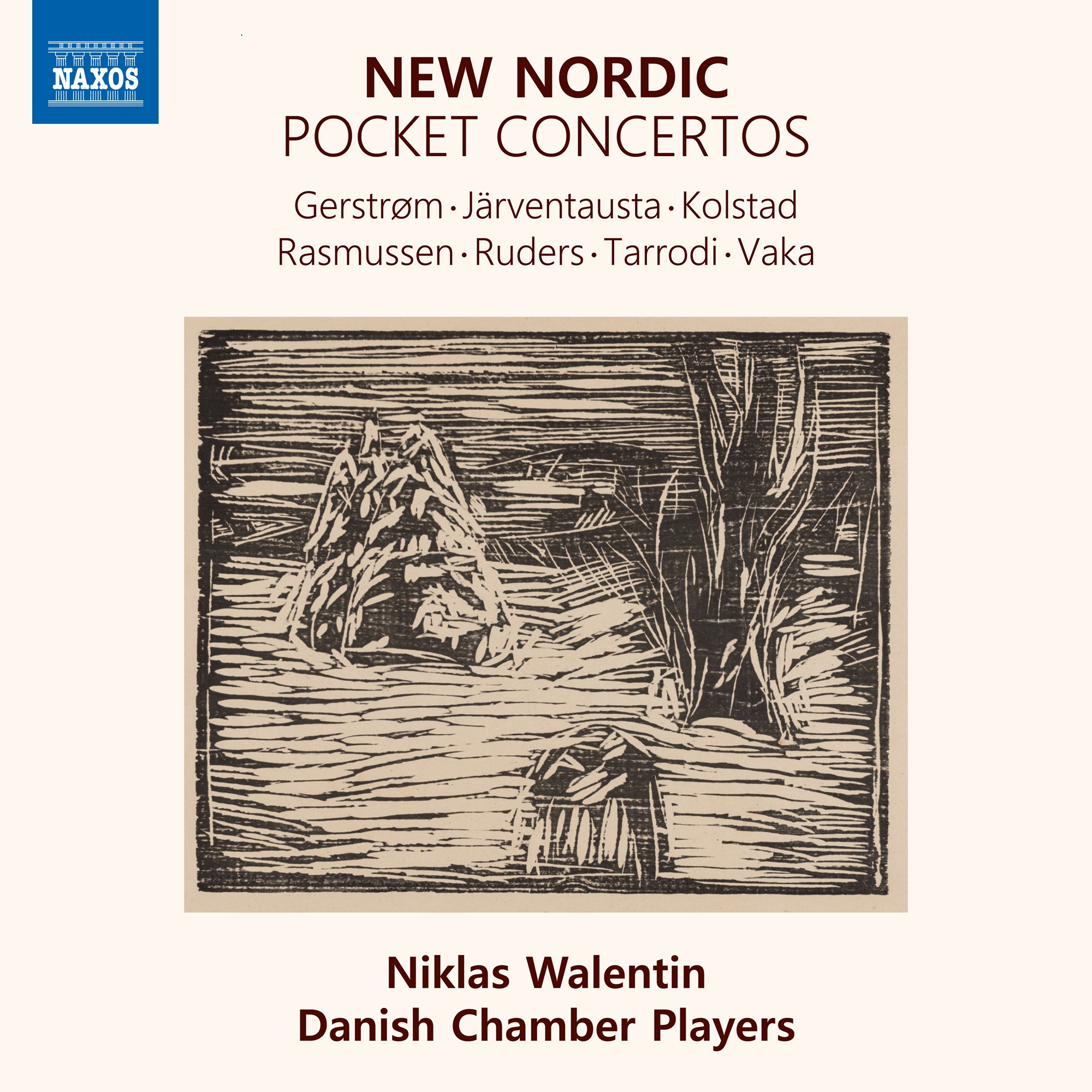
10 New Nordic PocketNew Nordic Pocket Concertos presents world premiere recordings of seven new violin concertos, all written for violinist Niklas Walentin and the eight-piece Danish Chamber Players, the condensed chamber format having been suggested by the restrictions imposed by the COVID lockdown. Anne Marie Granau is conductor for two of the works (Naxos 9.70401 naxos.com/CatalogueDetail/?id=9.70401).

The seven composers represent each of the Nordic countries: Andrea Tarrodi (Sweden), Arnannguaq Gerstrøm (Greenland), Aksel Kolstad (Norway), Poul Ruders (Denmark), Veronique Vaka (Iceland), Sunleif Rasmussen (Faroe Islands) and Joel Jãrventausta (Finland). Themes vary – glaciers and cracking ice, a lovely new Four Seasons (Tarrodi), the war in Ukraine (Kolstad) – as do styles and structures, from single-movement pieces through three- and four-movement works to Jãrventausta’s six brief Songs, Games & Dances, but there’s a great deal to hold your interest here in over 90 minutes of music.

Ruders brief Pocket Concerto (three two-minute movements) gives this fascinating addition to the violin concerto discography its title.

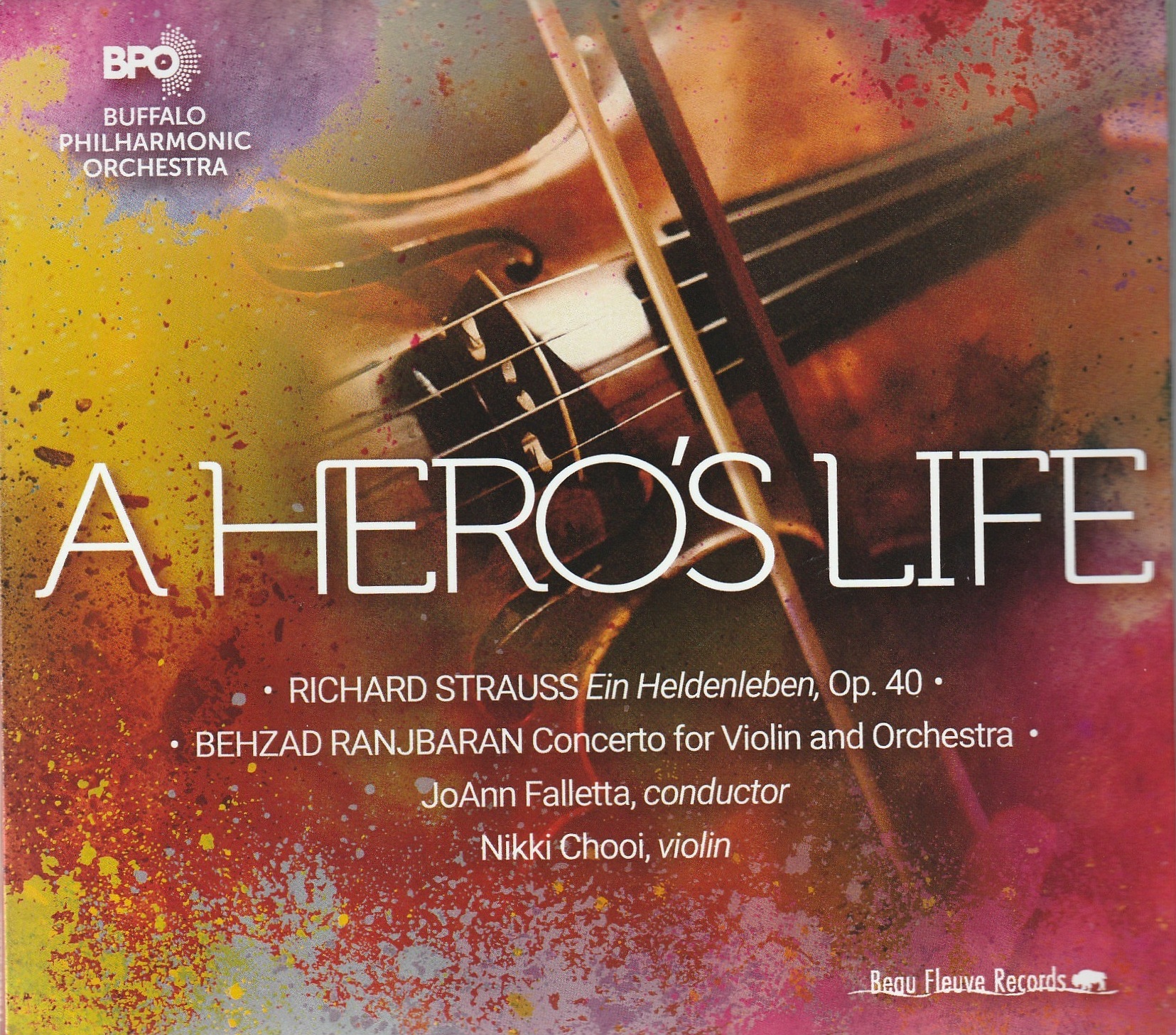
11 A Heros LifeThe main work on A Hero’s Life, the new CD from the Buffalo Philharmonic Orchestra and JoAnn Falletta is Richard Strauss’ Ein Heldenleben, Op.40 – a purely orchestral work, but one that features a violin solo that Falletta describes as one of the most astonishing in the orchestral repertoire. It’s beautifully played by the BPO concertmaster Nikki Chooi, who is the brilliant soloist in the other work on the disc, the outstanding 1994 Concerto for Violin and Orchestra by the Persian composer Behzad Ranjbaran (Beau Fleuve Records 783970-072641 bpo.my.salesforce-sites.com/ticket/#/instances/a0FUW000005gMSf2AM).

From his youth Ranjbaran was mesmerised by the sound of the kamancheh, the ancient Persian bowed instrument; it not only inspired a concerto described as a mixture of Eastern exoticism and extreme virtuosity but also informed his use of Persian modes and rhythms.

It’s baffling why a work of such immediate and immense appeal should have waited over 30 years for a commercial recording release. Falletta calls it “one of the great violin concertos of our time,” and it’s hard to disagree.

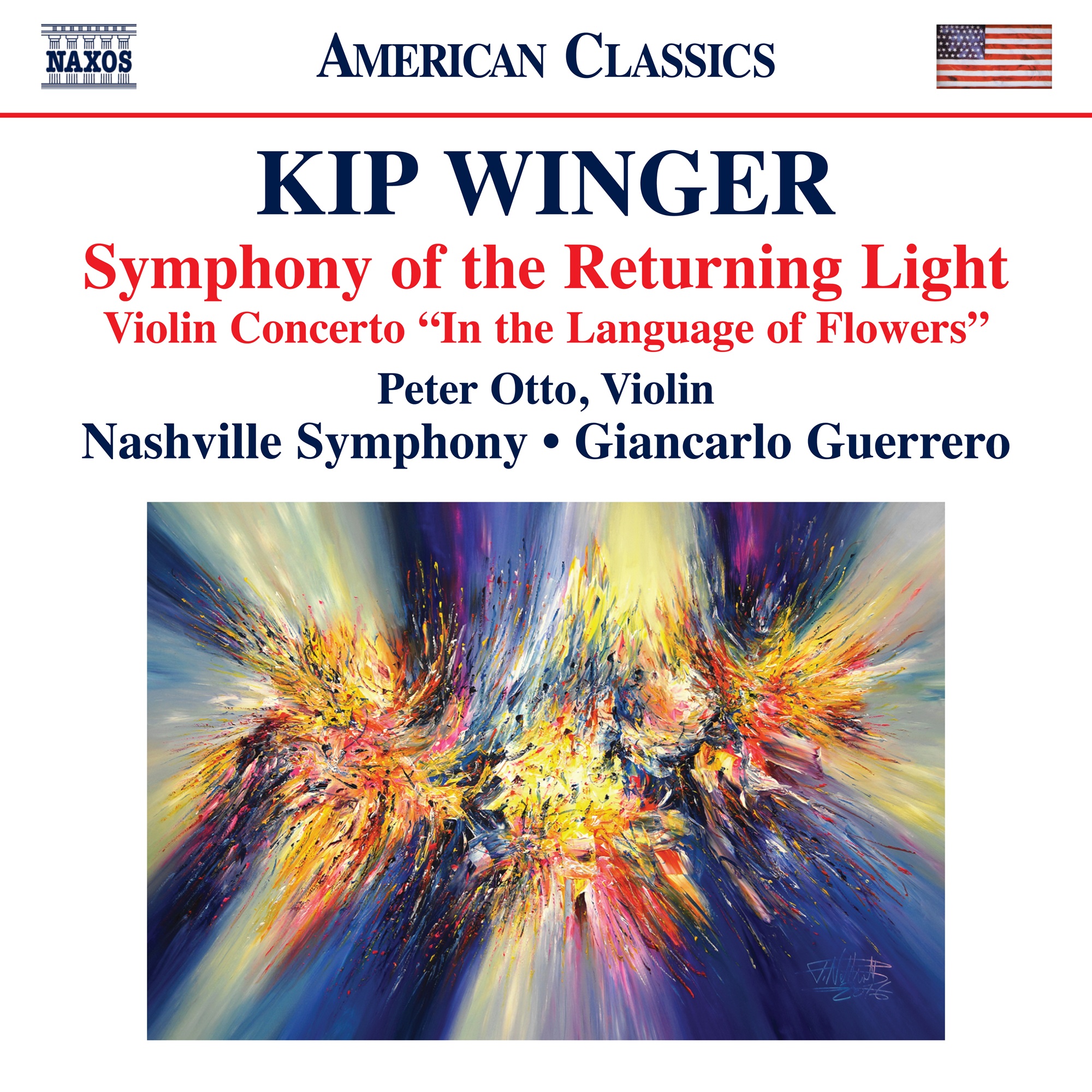
12 Kip WingerAfter a long and successful career in rock music Kip Winger has established himself as a leading voice in contemporary classical composition. The success of his 2017 ballet score Conversations with Nijinsky with the Nashville Symphony Orchestra led to music director Giancarlo Guerrero commissioning two works, the CD of Symphony of the Returning Light and the Violin Concerto “In the Language of Flowers” the result. Nashville concertmaster Peter Otto is the violin soloist (Naxos 8.559921 naxos.com/CatalogueDetail/?id=8.559921).

Both works have four movements and continually hold your attention and interest with confident and attractive writing. Otto is superb in the concerto, which features a strong, lyrical solo part and an absolutely lovely slow third movement. Morse code motifs abound throughout the impressive symphony, which Winger describes as something of an autobiographical piece centred on atonement.

Listen to 'Symphony of the Returning Light and the Violin Concerto In the Language of Flowers' Now in the Listening Room

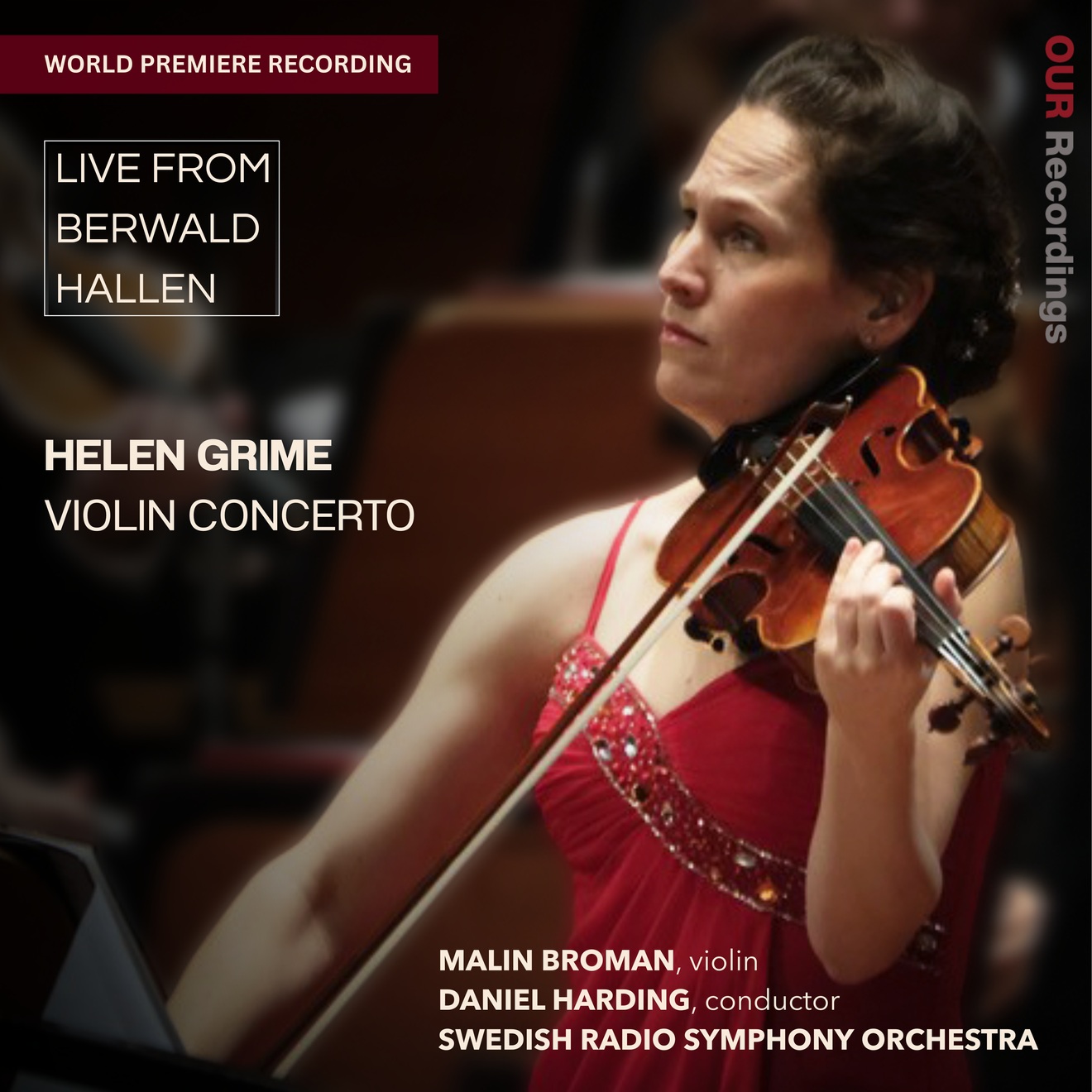
13 Live from Berwald HallenSwedish violinist Malin Broman is the soloist in the Helen Grime Violin Concerto – Live from Berwaldhallen, a new digital EP with the Swedish Radio Symphony Orchestra conducted by Daniel Harding (OUR Recordings 9.708671 ourrecordings.com/albums/live-from-berwald-hallen).

Grime, born in 1981, is a former Hallé Orchestra Associate Composer and is currently Professor of Composition at the Royal Academy of Music. She first worked with the artists on this recording in 2010, when she was “immediately struck by the ferocity, power, and passion” in Broman’s playing. Her concerto, resulting from several consequent collaborations with Broman is in one continuous movement, the three main sections connected by extensive, dreamlike passages.

Grime describes the concerto as “violent, virtuosic music covering the whole range of the violin… contrasted with more delicate and reflective filigree material that features oscillating natural harmonic passages and searching melodies.” Recorded live in the Berwald Hall in Stockholm in December 2016, it’s a striking work that will clearly repay repeated listening.

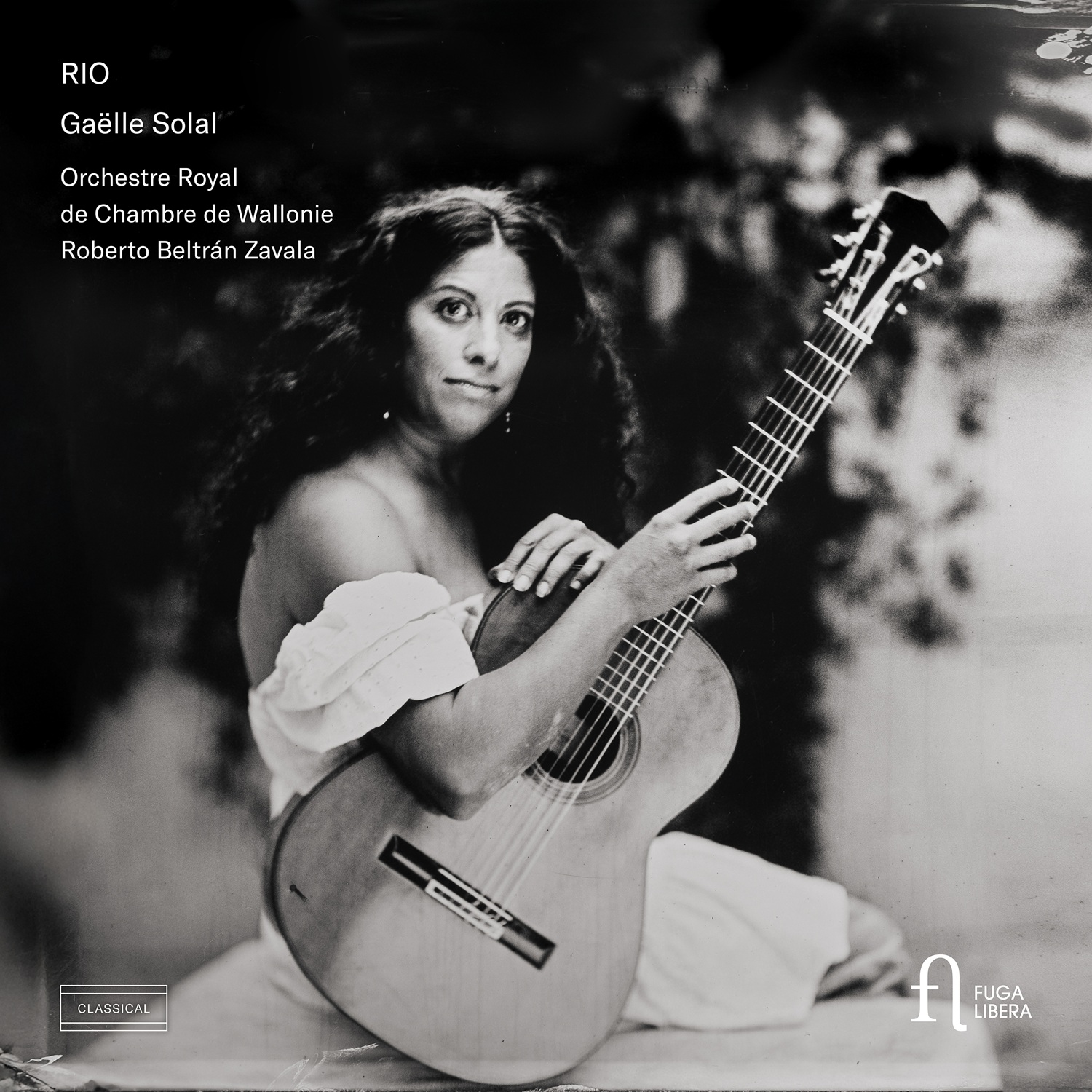
14 RioWhen the French guitarist Gaëlle Solal heard the Concerto O Saci-Pererê by the Brazilian composer Clarice Assad in 2017 she promised herself that she would learn it and also record it. The resulting world premiere recording was the starting point for the CD Rio, with the Orchestre Royal de Chambre du Wallonie conducted by Roberto Batrán Zavala (Fuga Libera FUG863 outhere-music.com/en/albums/rio).

Assad was born in Rio de Janeiro in 1978. The “Saci-Pererê” of her concerto is a mischievous elf from the legends of the Tupi-Guarani Indians of southern Brazil, and the musical depiction is full of strikingly original orchestration.

Villa-Lobos was also born in Rio. His Concerto for guitar and small orchestra W501 was written for Segovia, and draws beautifully clean playing from Solal, especially in the lengthy second-movement cadenza. Francisca “Chiquinha” Gonzaga (1847-1935), described as the forgotten pioneer of Rio de Janeiro’s music tradition wrote nothing for guitar, but Rio native Paulo Aragão arranged four of her melodies for guitar and orchestra. 

It’s another world premiere recording, as is the arrangement for guitar and string orchestra of Ernesto Nazareth’s lovely piano piece Brejeiro by Rio native Élodie Bouny.

01 New Jewish MusicNew Jewish Music Volume 5
Chœur de l’Orchestre symphonique de Montréal; Instrumentalists of the OSM; Andrew Megill
Analekta AN29265 (outhere-music.com/en/albums/new-jewish-music-vol-5-nobles-bardanashvili-klartag-trigos)

Just as the range of human experience is vast and wide, the expansiveness of Jewish music (Ashkenazi, Sephardic, Ladino, religious, secular) is equally nuanced, leaving a rich legacy of artistry and beautiful composition. Accordingly, New Jewish Music, Vol.5, is appropriately equally varied, a welcome collection platforming works of the 2024 laureates of the biennial Azrieli Music Prize: Jordan Nobles, Josef Bardanashvili, Yair Klartag, and Juan Trigos. 

Over 16 tracks performed by the Chorus of the Orchestre symphonique de Montréal (OSM) under the direction Andrew Megill, this fine new recording presents multiple musical traditions, experiences, and a diversity of voices while articulating themes from the cosmos during the time of the Aztec, to beautifully bringing to life the traditional Georgian influence heard on Bardanashvili’s five-part Light to My Path

Celebrating what is possible with a variety of ensemble sizes, this recording runs the gamut from the atmospheric sparseness and intimacy of Nobles’ a cappella piece Kanata – musically plumbing the vastness of the Canadian landscape – before augmenting in scope and size with members of the OSM for Trigos’ Simetrías Prehispánicas (Pre-Hispanic Symmetries). Bardanashvili adds saxophone, percussion and piano to the mixed choir for his work, while Klartag’s Parable of the Palace supplements the chorus with four double basses. 

New Jewish Music, Vol.5 is ambitious, musically satisfying and consistently excellent.

Listen to 'New Jewish Music Volume 5' Now in the Listening Room

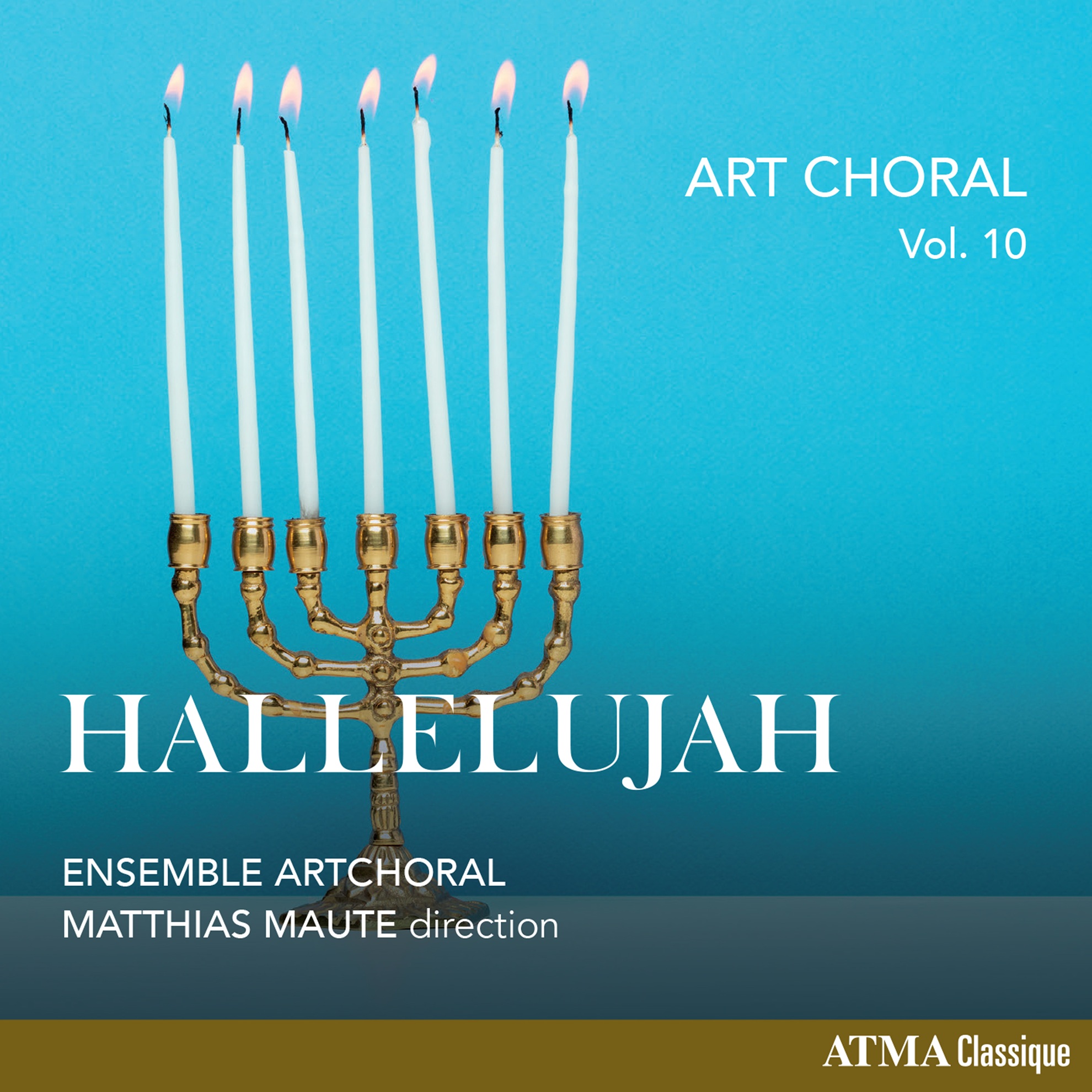
02 HallelujahArt Choral Vol.10: Hallelujah
Ensemble Artchoral; Matthias Maute
ATMA ACD22429 (atmaclassique.com/en/product/art-choral-vol-10-hallelujah)

Ensemble ArtChoral, one of the pre-eminent choirs in Canada, have been active for 40 years and are now the resident choir of Montreal’s Maison de Musique. This is the tenth volume of the ATMA series of recordings under the direction of Matthias Maute who has been at the helm since 2019. The other volumes are each devoted to a single focus, such as Renaissance, Classical, or Modern repertoire, and here the programme consists of Jewish a cappella music. The pieces all have texts that specifically relate to Jewish themes and all the composers were Jewish.

The best known item will probably be a setting by André von der Merwe of Leonard Cohen’s almost ubiquitous Hallelujah. This is now the choral version of the iconic anthem to own.

Seven other composers are represented with all the polish, panache, and dynamic range one could want. The Halevy piece is a setting of part of a Jewish service, with a very florid tenor Cantor part, for which they are joined by Gideon Zelermyer, an actual Cantor with the necessarily large vibrato one hears in Jewish worship. There is a piece by Meyerbeer, but the most characterful are the five pieces by Montreal composer Rona Nadler, who also wrote the album notes. Her pieces are in Hebrew and Yiddish and present well contrasted fragments of Jewish life.

Ernst Bloch, Leonard Bernstein and Kurt Weill also have pieces, and there are five items by the 16th century Salamone Rossi of settings in Hebrew of the Songs of Solomon in four to six parts. These performances with the lithe youthful sound of only 12 voices are compelling. 

Sound and technical production are ideal, recorded in a church in Mirabel Quebec in January 2023. I only wish the program could have been longer.

03 Canadian Art Song Project Long Walk HomeThe Long Walk Home
Nathan Keoughan; Peter Tiefenbach
Independent (canadianartsongproject.bandcamp.com/album/the-long-walk-home)

The Long Walk Home is Canadian Art Song Project’s (CASP) first independent release. Commissioned by CASP in 2015, this contemporary song cycle for baritone and piano is composed by Peter Tiefenbach with text by James Ostime. It premiered in March 2015 at U of T’s Walter Hall with baritone Geoffrey Sirett and pianist Tiefenbach. This recording features baritone Nathan Keoughan with Tiefenbach again at the piano.

This eight-movement song cycle has many musical styles like cabaret, musical theatre, Handel style operatic recitative, and art song. It tells the modern story of one man’s one-night experiences and emotional feelings. Opening Prologue starts with baritone “song” with wide ranging singing and chordal accompaniment until he meets a woman in a bar who invites him to her house. In Too Good …  (To Be True…) happy singing comes to a sudden silent stop when he sees another man in her house. An abrupt musical change of pace with grief stricken operatic singing and piano support. He runs away in Outta There to theatrical running music, then quiet singing above piano chords alternating with faster more atonal music. Message Received has operatic high pitch vocals and detached piano chords as he waits for his friend’s text answer. The other movements are equally mesmerizing.

Tiefenbach’s intelligent stylistic composing and piano performances are perfect. Keoughan’s vocal career in opera, music theatre and symphonic repertoire makes for great singing here. Ostime’s well written text runs the gamut from hilarious to emotionally sad. This is unforgettable, entertaining music!!

01 Fialkowska InvitationInvitation à la Valse
Janina Fialkowska
ATMA ACD2 2913 (atmaclassique.com/en/product/invitation-a-la-valse)

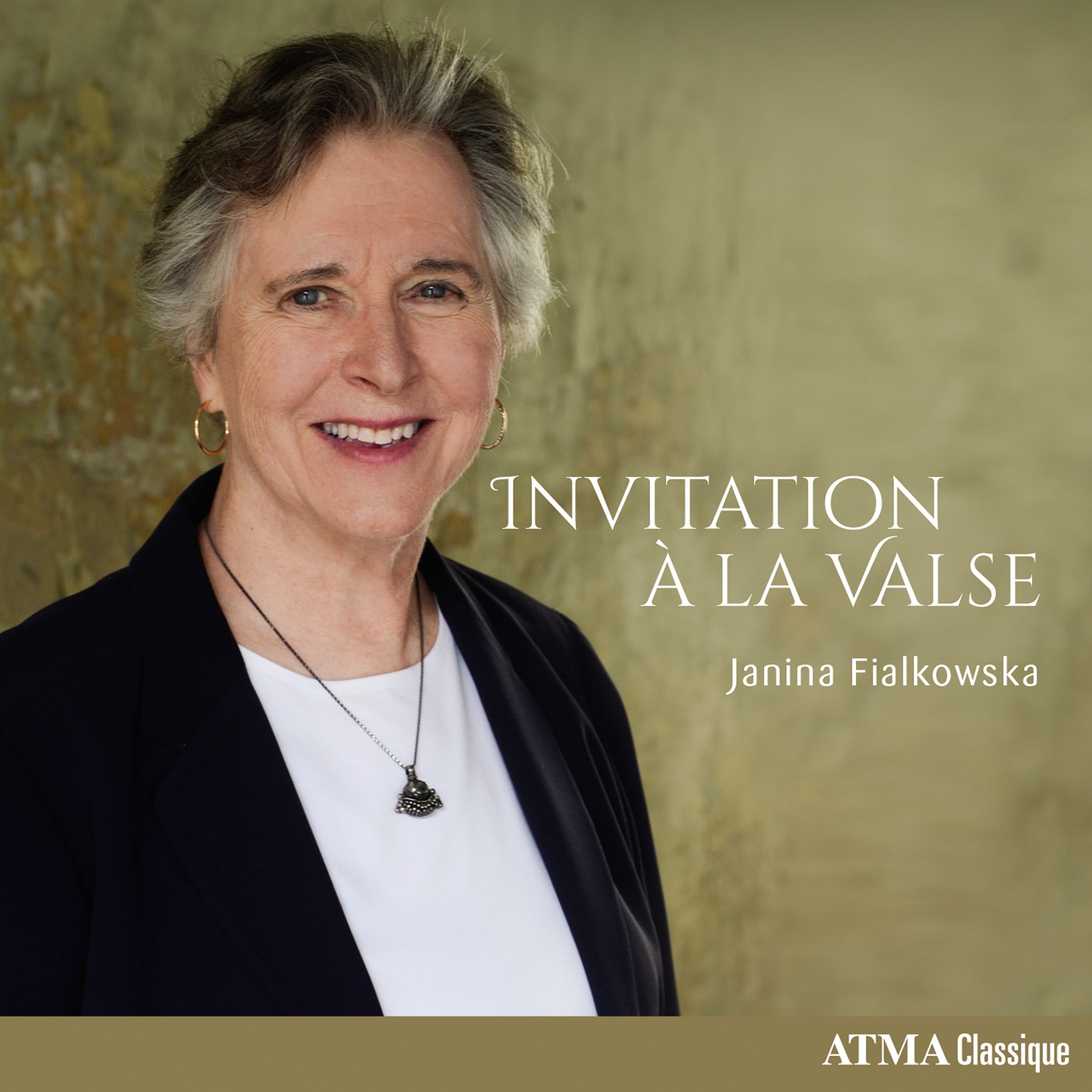
Beginning with Weber’s Invitation to the Dance of 1819 and ending with Ravel’s Valses nobles et sentimentales of 1911, Janina Fialkowska’s new recital album is a journey through almost a century’s worth of waltzes. Continuing with a dozen of Schubert’s Valses sentimentales D.779, two of Chopin’s most charming waltzes, and more rarely heard works by Liszt, Grieg, Sibelius and Tchaikovsky, the works tend toward the graceful and the refined. These works do not generally plumb great depths of expression, and Fialkowska’s approach is marked by an effortless elegance and a stylish use of rubato, never weighing the music down with unnecessary seriousness. There is a fluid, conversational flow that highlights the gentle, salon-like nature of this repertoire. 

This approach is perhaps less successful in Ravel’s homage to Schubert. Here, one might miss the underlying shadows and the sardonic bite of the harmonic language. The same flexibility of pulse that brings the recital’s 19th century waltzes to life can seem to hinder the forward momentum of Ravel’s crystalline writing. The Ravel, in particular, is also not helped by a rather closely recorded sound, also noticeable in the suddenly climactic final minute of Sibelius’ otherwise nostalgic Valse triste.

Nevertheless, this remains an hour’s worth of lovely music, lovingly performed. If the repertoire appeals, Fialkowska’s invitation is one you should certainly accept without hesitation.

02 In Her HandsIn Her Hands
Neave Trio
Chandos CHAN 20368 (chandos.net/products/reviews/Chan%2020368)

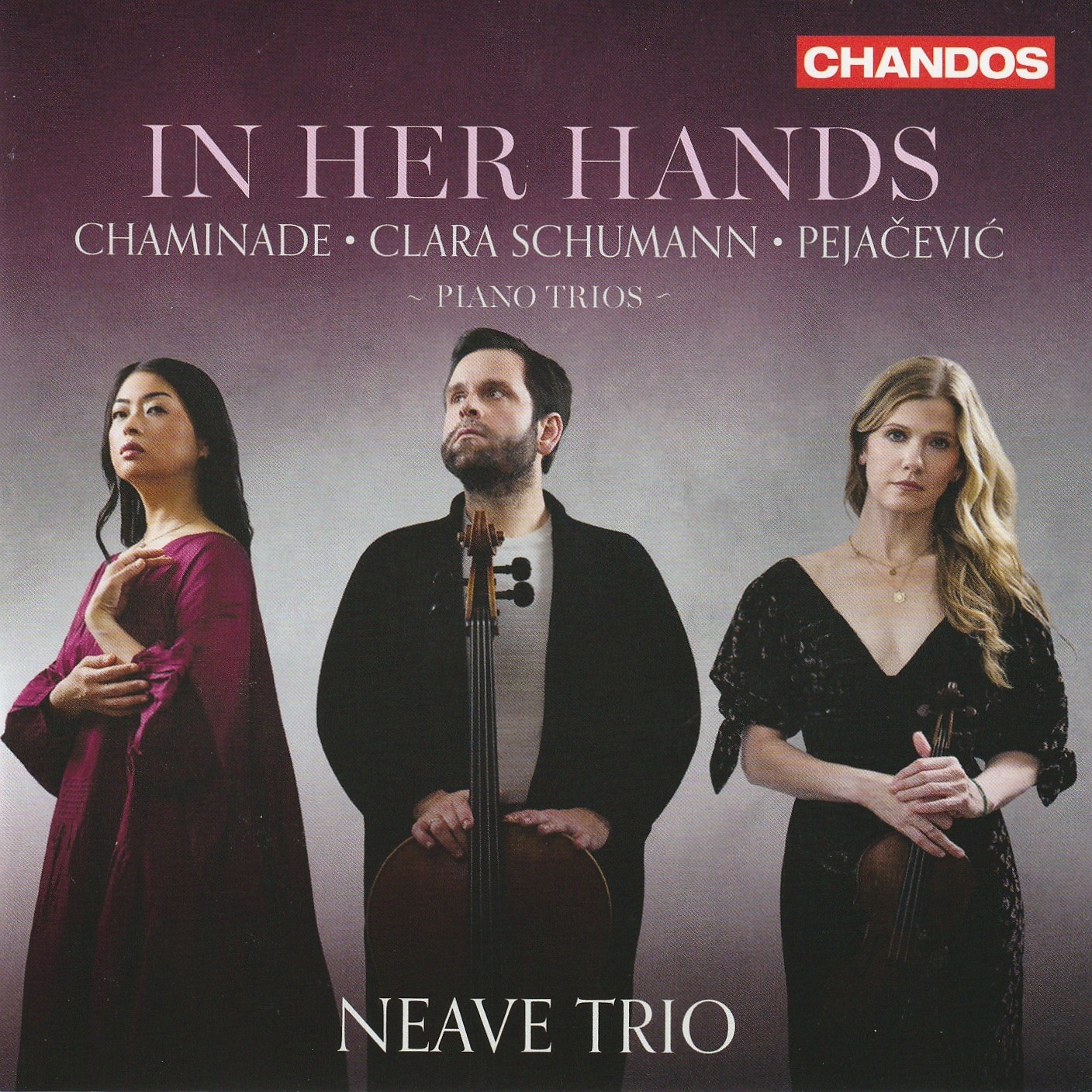
Piano trios by three women whose places in music history range from significant to tangential to obscure receive loving performances from the Neave Trio, ensemble-in-residence at Virginia Commonwealth University.

Trio in G Minor, Op.17 by Clara Schumann (1819-1896), her most substantial composition, naturally embraces the musical language of her husband Robert and friends Mendelssohn and Brahms, but avoids mere imitation. The angst-ridden Allegro moderato, filled with intense longing, is followed by the gentle, graceful Scherzo – Tempo di Menuetto. Clara, who inspired Robert’s innumerable love songs, evokes his romantic sensibility in Andante, a heartfelt love song “without words.” The invigorating Allegretto provides the trio’s “happy ending.”

Now all-but-forgotten, Croatian Dora Pejačević (1885-1923) composed over 100 orchestral, chamber and vocal works before dying of post-childbirth sepsis. Her sunlit Trio No.2 in C Major, Op.29 features, in turn, a sweet, rocking waltz (Allegro con moto), folk-like melodies and rhythms (Scherzo), dreamy sentimentality (Lento) and festive cheerfulness (Allegro resoluto).

Cécile Chaminade (1857-1944) generally considered “a composer of French salon music” – charming, lightweight songs and piano pieces – is slowly regaining the recognition and respect she once enjoyed for her larger-scale compositions, such as her Trio No.2 in A Minor, Op.34. Brilliantly exploiting the varied colours of the three instruments, Allegro moderato kaleidoscopically mixes celebratory grandiloquence, wistful lyricism and sprightly playfulness. Lento is a solemn hymn of hope within despair. Celebration returns in the skittish, rambunctious Allegro energico, ending this very enjoyable work and very enjoyable CD.

01 Robert Lemay Aeris et SpiritusRobert LeMay – Works for Brass and Piano
Yoko Hirota; Brian Roberts; Iris Krizmanic; Cathy Stone; Jennifer Stephen
Navona Records nv6807 (navonarecords.com/catalog/nv6807)

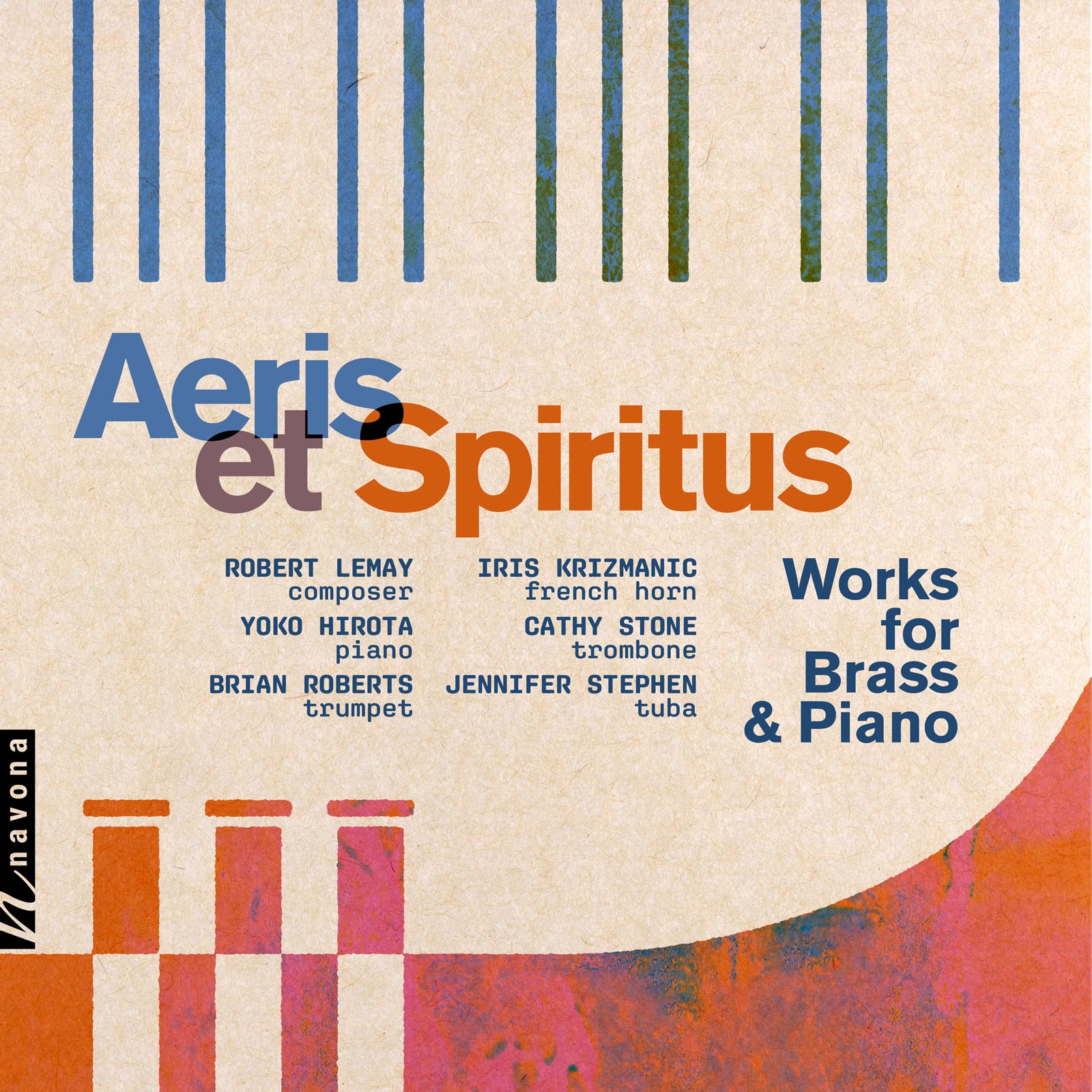
Recordings such as AERIS ET SPIRITUS, featuring the music of the Sudbury-based composer Robert Lemay performed by an ensemble of solo piano with trumpet, trombone, tuba or French horn, demonstrate not only how musically satisfying unorthodox instrumental settings can be, but how much creativity and possibility there remains within the genre of new Canadian classical music. 

The album, translated as “Cooper and Breath” features four original Lemay compositions that are all conversational in tone, highlighting beautifully performed and recorded exchanges between various brass instruments and the excellent piano work of Yoko Hirota. As articulated in the album’s accompanying notes, Lemay as composer was striving for duets with this collection (hence the aforementioned conversation analogy) rather than a work of brass with piano accompaniment. And although that difference may be subtle, this intention comes through on Breakpoint, for example, where Hirota’s piano chords and Brian Roberts’ high register trumpet work coalesce together not in the subservient relationship of soloist and accompanist, but rather uniting as a singular voice to collectively form a cohesive musical statement. 

In Deep Down, a series of four short musical sketches for piano and Jennifer Stephen’s stentorian tuba, a third sound of the human voice is subtly introduced into the musical conversation. Perhaps this is the breath referenced in the album’s title? Perhaps these are the improvisatory sounds of a focussed performance? Whatever the case may be, this inclusion brings further levity, and more musicality and intrigue to an already excellent collection out now on Navona Records.

02 Zihua TanWhat Came Before Me Is Going After Me
Zihua Tan; No Hay Banda
No Hay Discos NHD 006 (zihuatan.bandcamp.com/album/what-came-before-me-is-going-after-me)

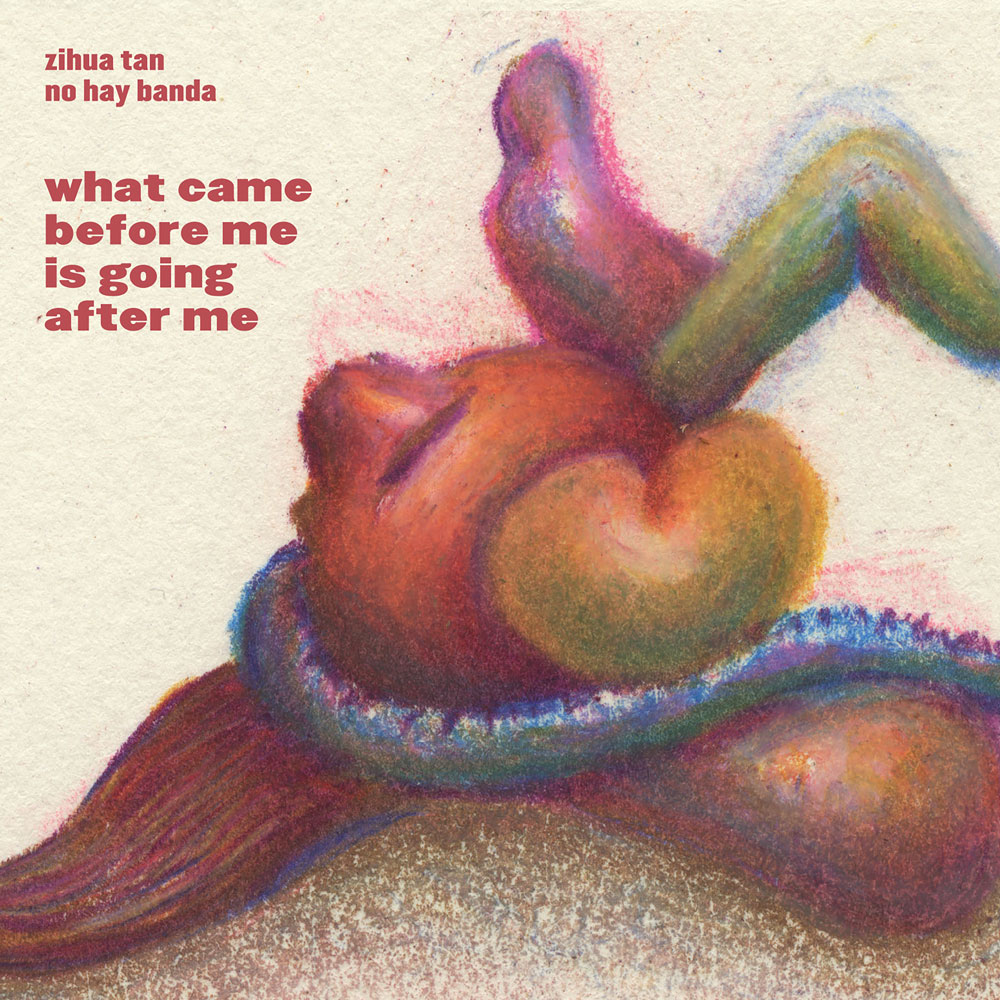
Montreal-based Zihua Tan has won many awards for his compositions worldwide, and his background as a semiconductor engineer informs his experimental sound capture design and finely articulate compositional style. 

His knowledge of amplification really shines on his debut album what came before me is going after me. Using a wide array of microphones, geophone, hydrophone and close-miking, Tan captures the finest nuances of tonalities and colours of even the most innocuous gestures, allowing his compositions to captivate without overpowering the instrumental delivery. This effect is mesmerizing and speaks to his musical philosophy of acoustic and electronic sounds being fluid and instruments being part of sonic possibilities rather than hierarchal forms as bases for sound. 

Percussionist Noam Beirstone delivers remnants present with a delicate nuance and the recording beautifully captures the work. (A video of this performance is available online and is well worth seeing, refreshingly embracing Tan’s philosophy by focusing the cameras throughout the instruments rather than on the performer.)

The second piece is the titular what came before me is going after me, a dreamy textural work in collaboration with Montréal presenter-ensemble No Hay Banda, featuring the quintet of violin, cello, voice, percussion and ondes Martenot. A work that might stretch the uninitiated to unconventional vocal sounds, Tan creates a fascinating exploration of texture and non-hierarchy of instrumentation, allowing the players to use all ways of making sound, and the listener to embark on their own personal attention unmanipulated by volume excesses or preconceived values. 

Much like the title of the work, (possibly a reference to Heraclitus, who reportedly said, “No man ever steps in the same river twice”) Tan’s creative compositions are a discovery of time and what was already there.

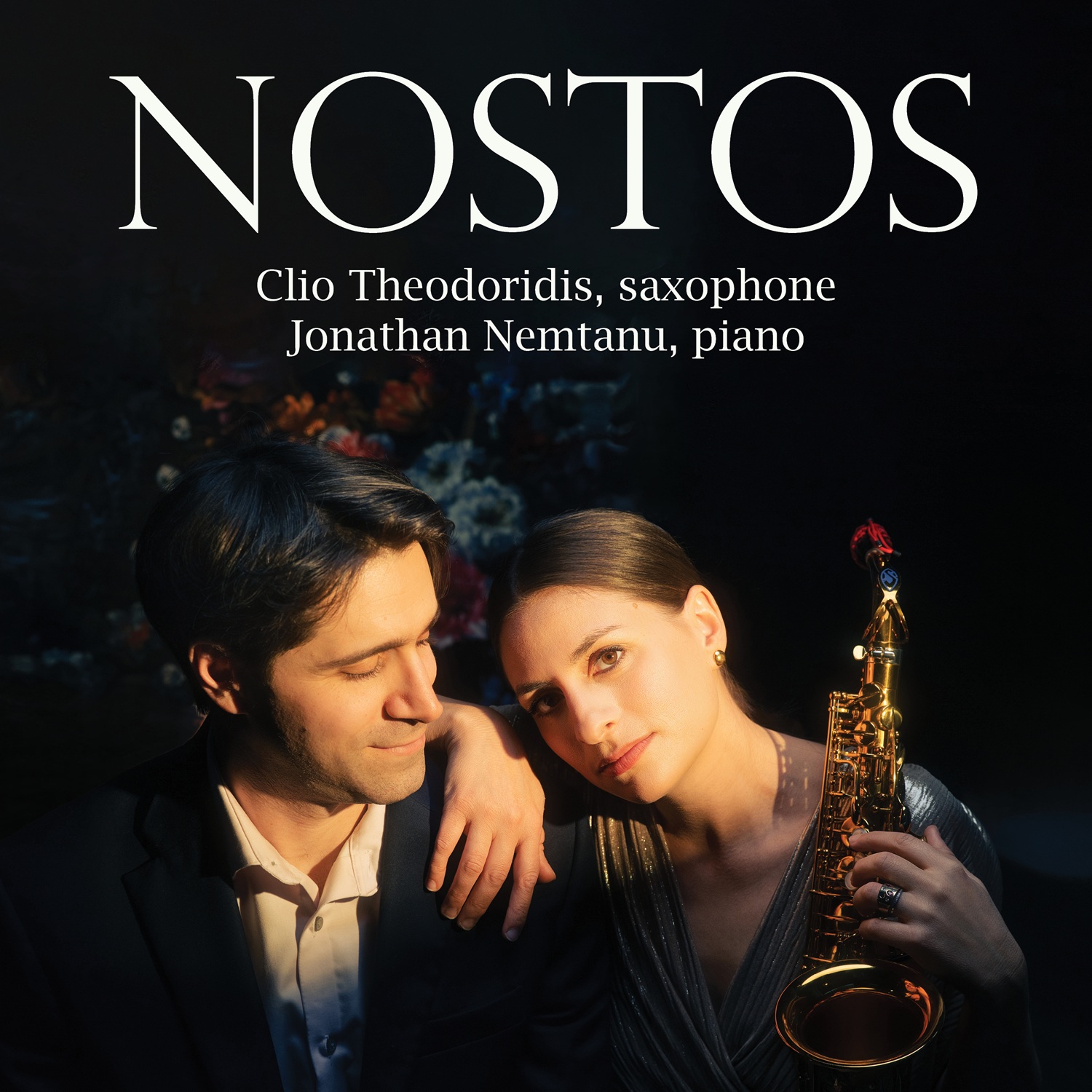
03 NOSTOSNostos
Clio Theodoridis; Jonathan Nemtanu
Leaf Music LM306 (leaf-music.lnk.to/lm306)

Clio Theodorisis was born in Athens and now performs and teaches saxophone with Quebec as her base. She has won several international awards, is an ambassador for Henri Selmer Paris and performs regularly with Jonathan Nemtanu in Duo Astor. 

The liner notes for Nostos (expressing the return to one’s homeland after a long absence), state that this album’s works trace a “musical and personal odyssey. From Pedro Itturalde’s Suite Hellénique, rooted in Greek heritage, to the contemporary works of Canadian composer Mathieu Lussier, this recording tells our own story: a life between two worlds, between past and present.” 

The album begins with the five-part Ocres rouges by the French clarinetist Alexis Ciesla which “draws inspiration from Klezmer landscapes and colours.” Its Andante - Meditativo movement is sparse and beautiful. The Allegro rythmico begins with some fine percussive saxophone pad work and then launches into several thrilling passages of fast fingers and minor scale runs. Fazil Say’s Suite for Alto Saxophone showcases the full range of Theodoridis’s technique and tone. The Andante movement is a highlight of the album as the saxophone is both delicate and forceful in its treatment of the gorgeous melodic twists and ascending lines. 

Lussier’s Récit et lied, Op 31 begins with a long solo introduction that reminds us slightly of Prélude à l’après-midi d’un faune, but then moves into several other intriguing directions. The closing work, Suite Hellénique is a lively end to this diverse album. 

The performances by Theodoridis and Nemtanu are masterful and inspired as they lead us through their journey across cultures and geography.

Listen to 'Nostos' Now in the Listening Room

04 Haas In Praise of InsomiaIn Praise of Insomnia
Andy Haas
Resonant Music 022 (andyhaas.bandcamp.com/album/in-praise-of-insomnia-2026)

New York city based Canadian experimental saxophonist Andy Haas is back with a solo release. Haas’ 12 short stereo studies here (roughly 29 minutes total) are manipulated live while he is combining the saxophone, circular breathing, and nano pulsar, an electro-harmonics electronics device. It was recorded on Winter Solstice, December 21, 2025. This is such original music with detailed live and electronic sounds which deserves countless repeated listening!

The second track Long Night of Omens opens with two held single sax notes at different pitches, until both start pulsating. This idea continues with two different note short ideas with almost tonal harmonies. Sudden held notes stop and close the movement. Experimental yet very accessible. 

This Dark Land is a lower melody of held notes with some pitches slightly bent. Then comes a  sax duet with slightly different sounds at once. An almost singalong melody now until a closing decrescendo leads to a held note stop. Track 10 Sleep Less has many musical moments like ascending/descending short melodic phrases, and repeated notes with minimalistic touches. The loud repeated notes are reminiscent of an alarm clock sounding when you can’t sleep. Squeeks and short melodies to closing are reminiscent of sleepless moments.  

Haas’ musical ideas and performances here are so enchanting. He has taken troubling insomnia and musically elevated its effects with his uncomplicated live works, simultaneous layering sax playing with superimposed electronic additions in easy to listen to modern music.

Listen to 'In Praise of Insomnia' Now in the Listening Room

05 Frank MorelliFrom the Soul
Frank Morelli; Wei-Yi Yang; Janna Baty; Callisto Quartet
Musica Solis MS202602 (musicasolis.com/from-the-soul-frank-morelli)

From the Soul is a collection of five chamber pieces for bassoon, three with piano, one with mezzo-soprano and one with string quartet, recorded by the American bassoonist Frank Morelli. Morelli is one of the top teachers of bassoon in North America, having taught for many years at such places as Yale, Juilliard, and even at our own Glenn Gould School, and his playing credentials include groups like the Orpheus Chamber Orchestra and the Chamber Music Society of Lincoln Center. He’s a player in demand and you can hear why on this disc: lots of fluidity on the instrument, and lots of expression. Some listeners might find the vibrato excessive, but life is short and I’ll always support the goal of more expression, not less. 

Morelli leads off the disc with Elegy for Innocence by Jeff Scott, an episodic and lyrical piece with some very pretty moments. The best music here comes from Wynton Marsalis and his 1999 jazz-infused piece Meeelaan written in three movements for bassoon and string quartet: some nice grooves, impressive turns of phrase and even some gritty moments where the normally mellow bassoon gets downright raunchy. My favourite piece on the album is Prayer, written in 2022 by Nirmali Fenn, in which the composer evokes the exotic sounds of the duduk, and the inside-the-piano effects are fascinating. The Callisto Quartet sounds cohesive and compelling on this disc, as does Morelli’s dramatic and expressive pianist Wei-Yi Yang.

01 Quinsin NachoffQuinsin Nachoff – Patterns from Nature
Quinsin Nachoff; Matt Mitchell; Ryan Keberle; François Houle; Satoshi Takeishi; Carlo De Rosa; Molinari String Quartet
Whirlwind Recordings (quinsin.com/patterns-from-nature)

Toronto born, Brooklyn-based saxophonist and composer Quinsin Nachoff brings us another momentous work in the form of Patterns from Nature, a full-scale 45-minute work that celebrates the convergence of music, film, and art with scientific research into pattern formation without merely mimicking it. So many elements have convened to create this work that it’s a wonder it could be contained to 45 minutes. Is it a chamber suite? A symphonic work, a film and full score, multimedia presentation, a narrative on the interrelationship of science, art, and the natural environment? It is all of these. As the composer explains: “I composed the music in parallel with filmmakers Tina de Groot, Lee Hutzulak, Gita Blak, and Udo Prinsen, allowing sound and image to evolve together in response to those natural forces. We are not illustrating the science, but working with it as a foundation, something to be interpreted, reshaped, and carried through the form and motion of the piece.” 

Drawing on the research of longtime collaborator (and University of Toronto Professor Emeritus) Physicist Stephen Morris’ work in emergent patterns in nature, Nachoff teamed up with the four filmmakers to integrate music, film and science, a project taking ten years to realize. The composition includes seamless marriages between notation and improvisation, highlighting improvising soloists for each movement: titled Branches, Flow, Cracks and Ripples they feature Nachoff himself, pianist Matt Mitchel, trombonist Ryan Keberle, clarinetist François Houle, percussionist Satoshi Takeishi and bassist Carlo De Rosa, with underpinnings from the Molinari String Quartet and direction from JC Sanford. Each movement entwines the explorations of the informing elements, and the ensemble moves effortlessly through melodic and textural elements of contemporary dialects with infusions of urban jazz keeping the human element present. The attention to detail creates a magnificent work. 

It was an interesting experience to view snippets of the films and photos available online after hearing the album; the added dimension creates a powerful multi-dimensional narration and it’s a shame they are not accessible with the album. One can only hope it is presented again in full soon.

The second work on the album features Nachoff’s three-movement saxophone concerto Winding Tessellations (2017); a seamless addition to the album and no less exquisite.

Listen to 'Quinsin Nachoff: Patterns from Nature' Now in the Listening Room

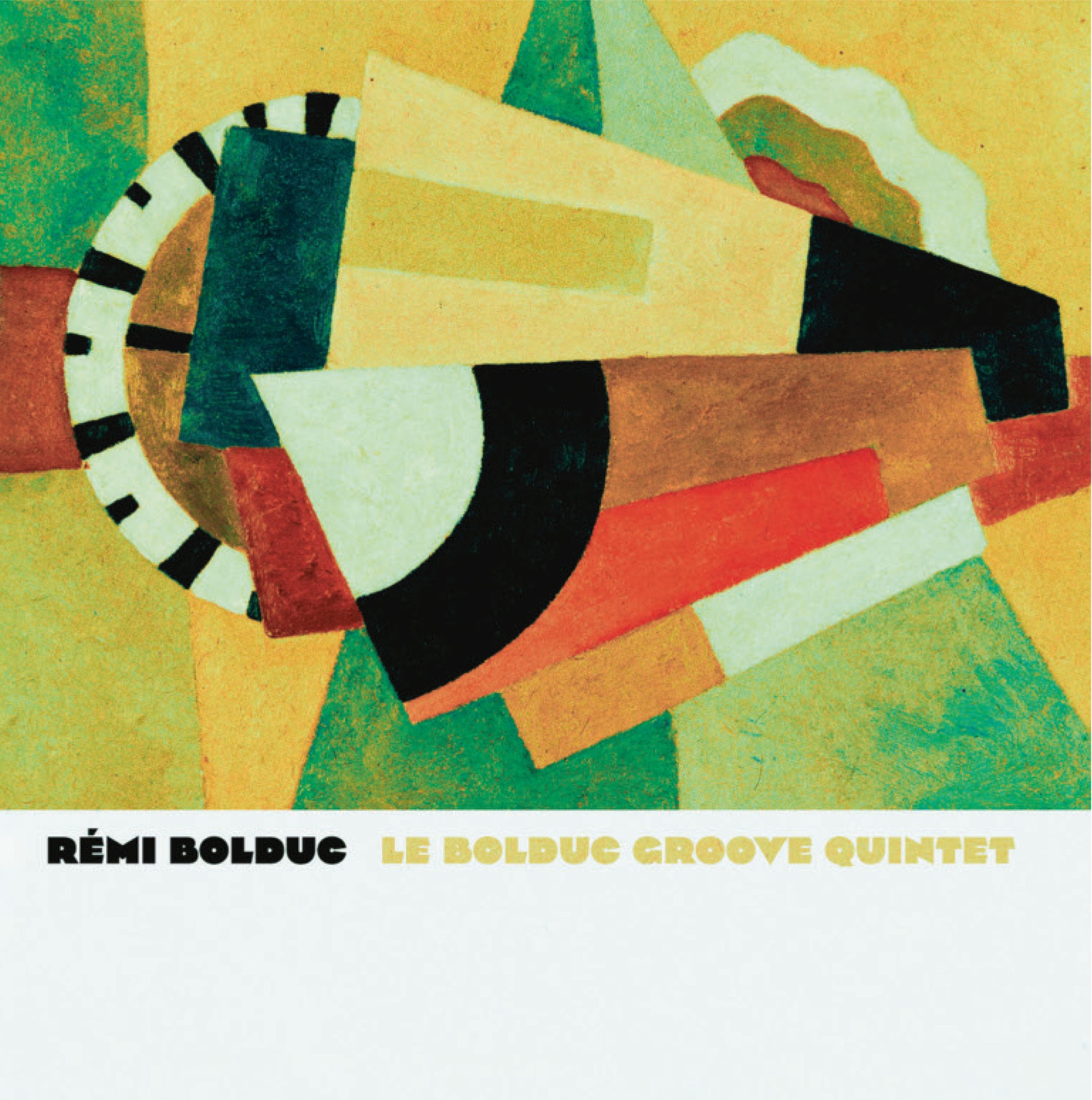
02 Le Bolduc Groove QuintetLe Bolduc Groove Quintet
Remi Bolduc
Independent (remibolduc.com/store)

Rémi Bolduc has long been recognized as one of Canada’s most expressive alto saxophonists and his latest album highlights his gift for balancing technical precision with an easygoing sense of swing. Built around a tight-knit ensemble, the record celebrates groove-driven jazz while leaving plenty of room for personality and improvisational spark. From the opening moments, the quintet establishes a rhythmic foundation that feels both sturdy and playful. Bolduc’s alto saxophone glides across the arrangements with clarity and warmth, delivering melodies that are memorable without sacrificing an exploratory spirit that defines modern jazz. His phrasing is crisp but relaxed, suggesting a musician deeply comfortable in his musical language.

The album’s strength lies in the chemistry between the players, featuring Canadian greats Chantel de Villiers on saxophone and vocals, Nick Semenykhin on guitar, Ira Coleman on double bass and Rich Irwin on the drums. The rhythm section locks in to keep the music moving forward, while piano and bass lines weave around Bolduc’s saxophone with ease. Rather than spotlighting a single voice, the quintet operates as a collective unit, allowing each instrument to contribute to the evolving texture. Groove is the central thread throughout the record. Whether leaning toward funk-inspired rhythms or classic post-bop momentum, the music maintains an inviting pulse that draws the listener in. Even during more intricate passages, the band never loses its sense of flow.

The record ultimately feels like a celebration of ensemble jazz at its most vibrant. Bolduc leads with confidence, but the real story is the shared energy of the group, creating music that is lively, polished, and unmistakably alive.

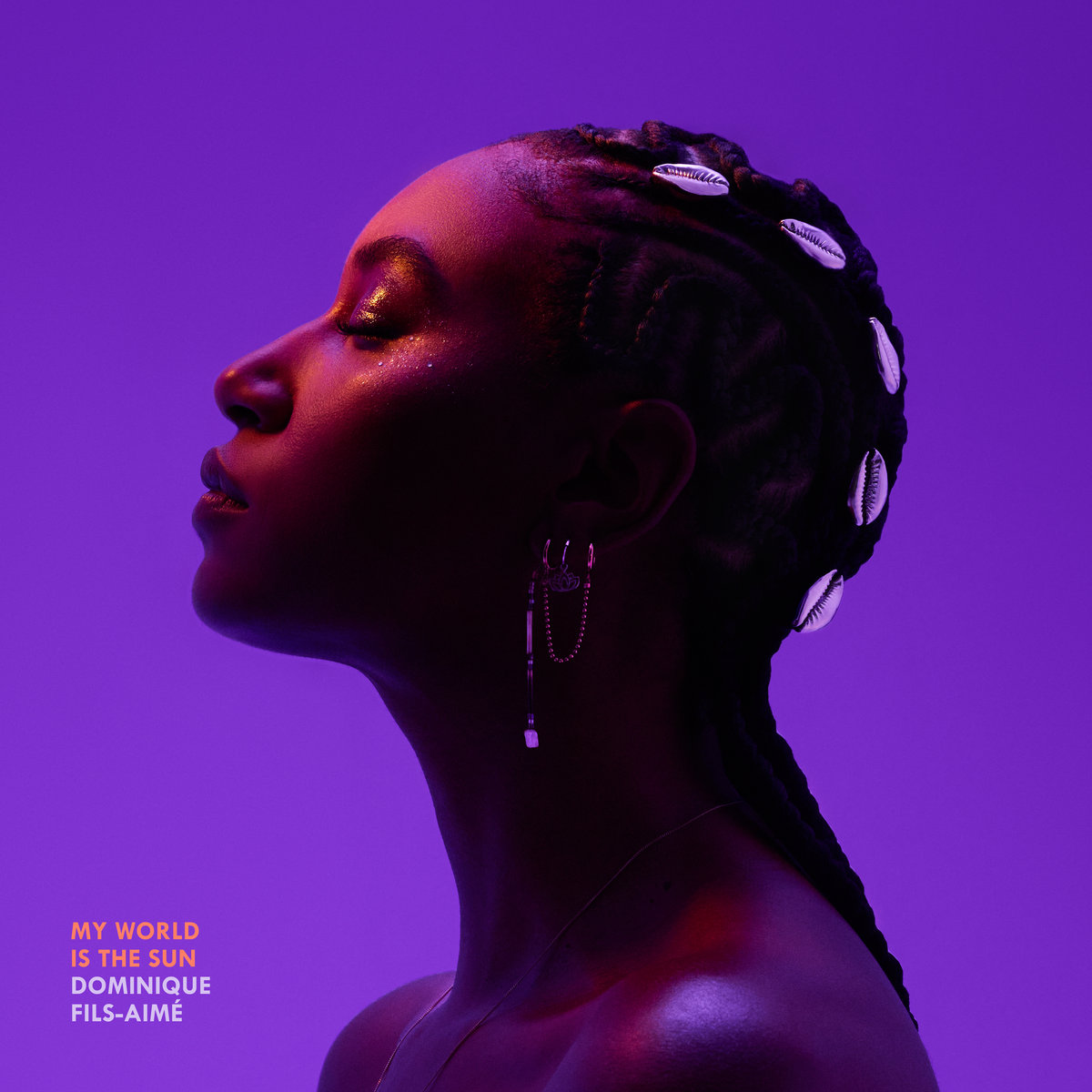
03 My World is the SunMy World is the Sun
Dominique Fils-Aimé
Ensoul Records (singwithmi.bandcamp.com/album/my-world-is-the-sun)

Captivating Montreal-based vocalist and composer, Dominique Fils-Aimé has already left her indelible mark on the international jazz world, having received two JUNO awards for “Vocal Jazz Album of the Year” as well as the 2024 FELIX Award for Best Album for her release, Run Deep. Her fifth studio release, My World is the Sun, features mainly her own distinctive compositions, as well as a deep dive into the marriage of blues, soul, jazz and other contemporary forms. Fils-Aime is well-known for her skill at lyrical interpretation, and regularly takes her audiences on surprising, moving and soulful journeys – and this recording is no exception. A sonic, sensory and emotional treat, rife with thought provoking lyrics as well as diverse musical motifs.

Fils-Aimé has assembled a fine musical coterie for this project, including producer/engineer Jacques Roy; Claudette Thomas on upright/electric bass; Jacques Roy on drums; Harvey Bien-Aimee on keyboards; David Osei Afrifa on piano; Hichem Khalifa on trumpet, Elli Miller Maboungou on percussion; Shawn Mativetsky on tabla; Etienne Miousse on guitar and Steeve St-Pierre on violin. The programme begins with Ma Melodie (Intro) written by Patricia Carli and Leo Missir. A simple and beautiful air, performed with a single, unapologetic guitar and Fils-Aimé’s warm, supple alto voice. A remarkable track is Sea of Clouds, where a mystical, chant-like melodic line, morphs into an esoteric journey, replete with gorgeously arranged, diatonic layers of vocals. 

Also stunning is The River. Soulful and healing, Fils-Aimé’s powerful vocal performance and arrangement embraces the heart of African-American Gospel music (whose roots extend deeply into mother Africa). A true stand-out is the thoroughly delicious Going Home. Composed by Nans Clastrier and Fils-Aimé, this song features fine guitar work as well as compelling lyrics and an intoxicating mood.

04 Jay DanleyTriago de Todo
Jay Danley
Independent (jaydanley.bandcamp.com/album/traigo-de-todo)

Jay Danley’s latest release is an album that feels less like a carefully plotted statement and more like an open musical sketchbook where styles drift in and out with playful ease. Drawing on jazz phrasing, Latin rhythms and funk textures, Danley builds a record that thrives on motion and curiosity rather than strict genre loyalty. What makes Traigo de Todo especially engaging is its sense of warmth. Even in its more meandering turns, the music is thoroughly inviting, full of melodic details that reward close listening. 

Soaring guitar lines intertwine with nimble percussion, while subtle keyboard colours expand the atmosphere without crowding it. There’s a relaxed confidence in the way the songs unfold, as though Danley trusts the listener to enjoy the journey rather than wait for a predictable destination. A great example of this can be heard in Coffee and Beignets, where the aforementioned elements combine into a satisfying whole. What also makes the album unique is its distinct hark back to ‘70s funk and soul sound, a noticeable element that carries through each tune. 

There’s a pleasant near restlessness that is also part of the record’s charm. Traigo de Todo ultimately plays like a musical travelogue, inviting listeners to wander through shifting sonic landscapes guided by curiosity, groove and quiet imagination at every turn along the way forward and beyond expectation or convention altogether. A great choice for listeners looking for something fresh, playful and alive.

Back to top