 The start of a New Year can represent a turn of the page, a change in direction, and the anticipation of new challenges. There’s a fresh resolve to hit the ground running, sometimes with an eagerness to leave the past year behind entirely. However, one must keep the value of reflection in mind – looking back and learning from doing so.
Take this series, for example. A year ago “When Music Meets Mindfulness” was just the kernel of an idea that has blossomed and developed with each succeeding interview into a kind of cumulative forum for communal learning, with each of the nine people interviewed adding nuance and personal perspective to the three central topics in our ongoing exploration of Mindfulness: Calming the Mind, Organizing Thoughts, and achieving a State of Flow – so that by reflecting on the past in ways which help to ground us in the present, we can be better prepared for the future.
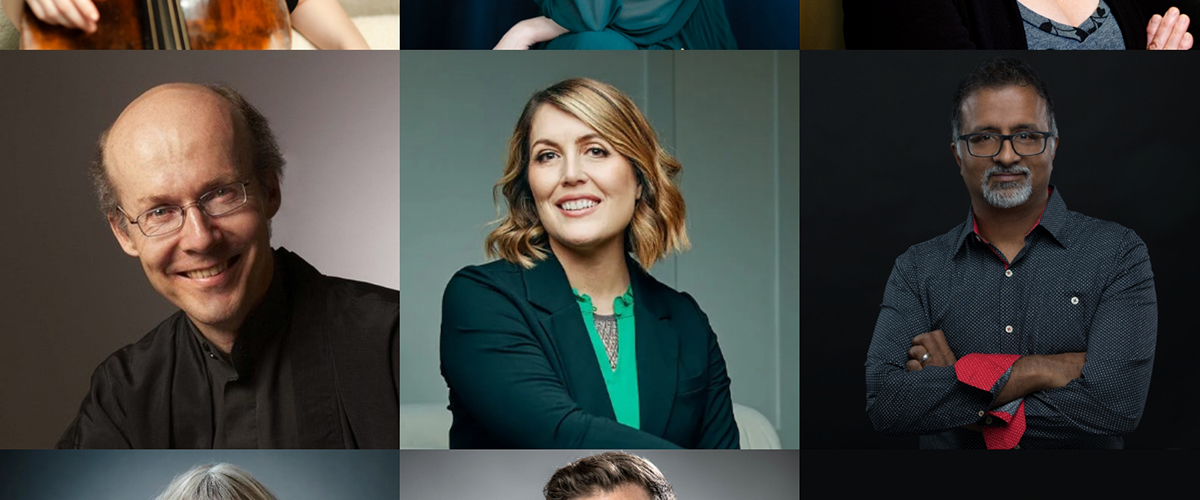
In this series’ first year, cellist Erika Nielsen talked about finding balance through understanding and embracing her bipolar condition. Pianist Christina Petrowska Quilico reflected on a virtuosic and adventurous career, built on the premise that the role of an artist is to serve the art form, not the ego. Composer Alice Ho spoke about becoming highly attentive to the subtle nudges of her own artistic instincts. David Fallis described his role as a conductor as listening first to what the musicians had already discovered. And mezzo-soprano Krisztina Szabó talked about how refining her own process of musical preparation in turn enables her to offer expertise and sympathetic support to vocal students.
Composer Britta Johnson offered up striking insights into her creative process by recounting how she channelled life experience into her critically acclaimed musical Life After. Composer and musical director Aaron Jensen described how sharing stories with musical colleagues and friends was at the heart of his creative approach. Percussionist Beverley Johnston described how she starts preparation by getting to know every detail of her repertoire in order to plan the placement of her instruments for ease of performance. And saxophonist/composer Sundar Viswanathan described how his experience of Vipassana Meditation guides and informs his musical practice, performance and creation.
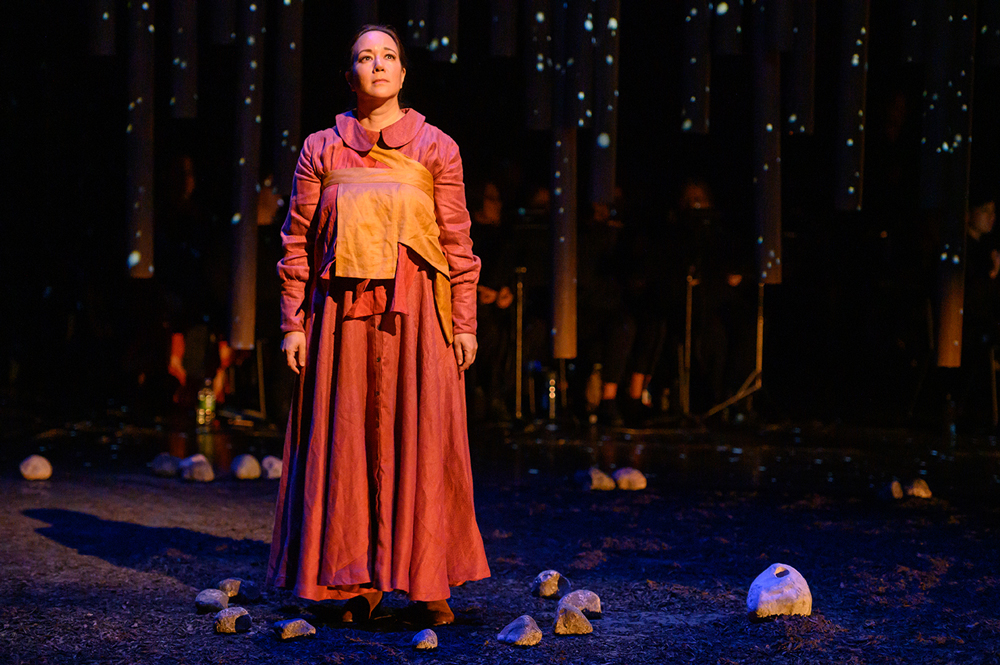 Our second season begins with yet another accomplished artist, known for her beautiful voice, warmth of presence, and confidence in leadership roles. Award-winning Marion Newman is a mezzo-soprano of Kwagiulth and Stó:lō First Nations with English, Irish and Scottish heritage. Her vocal repertoire ranges from traditional opera to premiering roles in ground-breaking new works, including the lead role in Shanawdithit (Nolan/Burry) with Tapestry Opera, and the role of Dr. Wilson in Missing (Clements/Current) with Vancouver City Opera – a role she reprised this past summer at Koerner Hall for Toronto Summer Music.
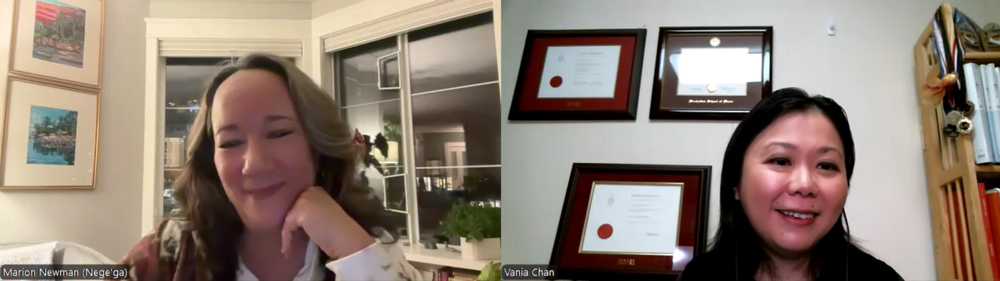
Marion and I first met working together on The Lesson of Da Ji (Chan/Ho), an opera commissioned by Toronto Masque Theatre. It was a pleasure to catch up with her in a wide-ranging, deeply reflective conversation.
All of these interviews are available on my YouTube channel – Vania Chan Music.
On calming the mind
After twenty-four years of living in Toronto, Marion says that moving back to her hometown has allowed for a much needed shift in pace:
“It’s become much easier to engage in calm since I moved back out West, to the town where I grew up. I’m in Victoria, and I live right on the ocean. There are seals, otters, and lots of different birds that hang out right here in front of me. I can just open the deck door, walk outside and breathe in the salty air. Suddenly, nothing else matters. You remember that you’re part of a much larger thing. Immediately, stress is relieved. I definitely like to go for walks or ride my bike. They’re great ways of getting that extra energy out, and letting my brain be free to think. If you’re engaged in some sort of motor skill then your brain is generally released to imagine, to ponder and to solve problems.”
On organizing thoughts
Marion recounted specific life moments, calling them “pivot” points. Shifting from aspiring concert pianist to successful professional singer was one. She found levity in the change, learning not to weigh down the joy of singing with the gravitas of “over-thinking.”
Moving to Toronto was “a wild pivot,” which led to exciting performance opportunities, and also growth in self-perception: “I found that Toronto really embraced me. Nobody knew a version of me from when I was younger, when I hadn’t figured things out yet. I could just authentically be me without having to undo perceptions. I could allow for all of those changes to occur and for a more adult version of me to emerge.”
The pandemic was another significant pivot point – stepping into the role of dramaturge, working with Calgary Opera on Namwayut, a collaborative project calling on Marion’s Indigenous perspective and capacity for leadership:
“That experience helped me to talk, to express what I’ve always had huge feelings about. A lot of those feelings I poured into music. Through that time of not being able to sing in public, I learned how to talk. Finding the courage to do something new, or that feels new … involves listening to what others are inviting you into, and believing in them, because they see you from an angle that you won’t look at yourself.”
On achieving a state of flow
Marion has continued to flourish as she has added other key roles to her creative life – Assistant Professor of Voice at the University of Victoria, the host of CBC’s Saturday Afternoon at the Opera, and co-founder of Amplified Opera, an organization committed to supporting artists from diverse backgrounds – all projects necessitating positive collaboration with colleagues and emotional and creative commitment, in a spirit of joy, gratification and fulfillment, knowing the hard work has already been done. She recalls entering one such moment of ease and spontaneity while singing the role of Shanawdithit.
“I remember the feeling of being the only person in the light, with that room so full of people. I gave away the worry about what comes next, and let myself go with the music. I realized that all the work has already been done by the composer and the librettist. All I have to do is listen to what they wrote, to go with the phrasing, the feeling, the meaning. There’s no more time to rehearse … what will happen, will happen. It would be best if I just quiet my mind and let my body do what it knows how to do, what we’ve been practicing, what I’ve been rehearsing.”
And on reflection...
At the end of our interview, Marion offered this thought:
“I’m recognizing that it has come full circle, our conversation. I’m thinking about where I am … about going back closer to home. In my culture, we learn who we are, and what we need to know, from where we are … from the land. The land has so much to teach us – the air, the sky, the bugs, the birds, the bees, the fish, and the killer whales. It’s amazing how much it matters to be connected to that…to listen. It has become more and more important to me to think about how I can give back – what I can do to help other people realize how much listening they could be doing, giving back the immense amount of care that’s been given to us from the earth.”
And coming next:
March/April: Lawrence Cherney, artistic director, Soundstreams
May/June: Lynn Helding, American voice teacher/vocologist.
Author and creator of this series, Vania Chan is a lyric coloratura soprano, artist researcher, and educator. Visit her website at www.vaniachan.com to learn more about upcoming projects.