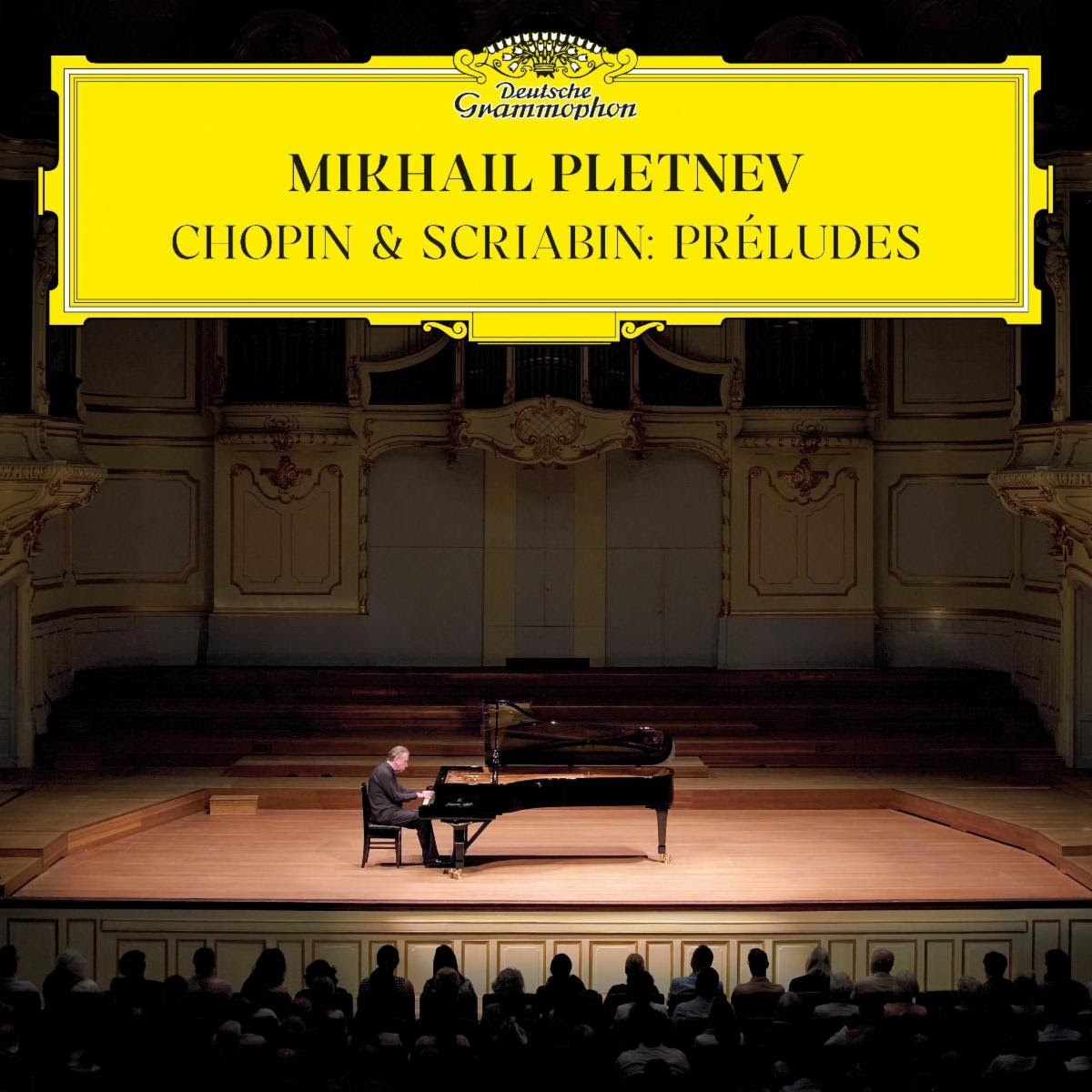
03 Pletnev Chopin ScriabinChopin & Scriabin: Preludes
Mikhail Pletnev
Deutsche Grammophon 5419773735 (store.deccaclassics.com/products/chopin-scriabin-24-preludes-cd?srsltid=AfmBOorvIu8gwUT_6TdcZw2LGlc5Be-7qAj3MxSpSnUCrf-ejgPCWJqz)

Since winning the gold medal at the International Tchaikovsky competition in 1978, Mikhail Pletnev has enjoyed a stellar career, not only as a pianist but also as a composer and pedagogue. Included among his activities are a large number of recordings for the DG label, both as soloist and conductor. Nevertheless, this latest one presenting Chopin’s 24 Preludes Op.28 and the 24 Preludes Op.11 by Alexander Scriabin, is his first studio recording after a 19-year hiatus. 

Romantic legend has it that Chopin composed the preludes while on his ill-fated sojourn in Mallorca with George Sand during the winter of 1839. Yet contemporary sources indicate that they were probably completed before the couple departed. Pletnev approaches these well-loved gems with an elegant sensitivity, perfectly capturing the ever-contrasting – and fleeting – moods while infusing his own personal mark within.

The opening prelude is taken at a much more leisurely pace than is commonly heard and the “Raindrop” Prelude No.15 in D-flat Major makes much less use of the pedal so the repetitive A-flat in the bass-Iine indeed resembles the sound of its namesake. Préludes such as the Third and Eighth reinforce Pletnev’s reputation for formidable technique, while demonstrating keenly balanced phrasing.

Less well known are the Preludes by Scriabin. The Russian composer greatly admired Chopin’s music, and this set similarly covers all 24 major and minor keys while following the same key sequence. Nevertheless, many have a mood of quiet introspection utilizing a lush harmonic language. Pletnev delivers a refined performance, always carefully nuanced, from the delicacy of No.5 to the more strident Nos.6 and 11.

A program of music both familiar and less so – welcome back Mr. Pletnev. It has been a long wait and we hope you’ll favour us with another recording soon.
04 TSO BartokBartók – Miraculous Mandarin; Concerto for Orchestra
Toronto Symphony Orchestra; Gustavo Gimeno
Harmonia Mundi HMM 905365 (store.harmoniamundi.com/format/1871527-bartk-the-miraculous-mandarin-concerto-for-orchestra)

This third issue of the Toronto Symphony Orchestra conducted by Gustavo Gimeno for French Harmonia Mundi is the best yet. Bartók is another 20th century giant whose masterpiece, the Concerto for Orchestra has been paired with one of his most imposing works, The Miraculous Mandarin in its seldom performed complete version. This includes some brief but telling choral elements, provided by the Toronto Mendelssohn Choir, and this is far preferable to the usually programmed Suite. The style of this ballet-pantomime is in Bartók’s most challenging Expressionistic vein, a constant and colourful, mostly atonal setting, with a stream of motives and musical events that are hard to fit into any sense of a narrative just from the volatile music. For me this piece is best taken as purely sonic experience, and in this production the TSO gives an overwhelming performance.

The famous Concerto for Orchestra is one of the more frequently done and recorded works of the 20th century, and always shows any orchestra at its best, being not only a challenge for countless solo instrumental turns, but also in ensemble and orchestral discipline. The competition is daunting on recordings, starting with the first great recording by the Chicago Symphony conducted by Fritz Reiner, who commissioned the piece from the dying Bartók in 1941 after he made it to the United States. The Concerto has since been recorded by most major orchestras and many aspiring conductors, and this new recording must be one of the best in recent times. Gimeno is competitive with Reiner.

There is a short, commissioned piece, the sediments, by TSO associate composer Emile Cecilia Lebel. This welcome work contrasts the event-packed Bartók pieces with calmer, sustained sonorities of complex overlaid chords later mixed with tam-tams. 

The sound has been perfectly captured with careful microphone placement in Roy Thompson Hall to create a resonant soundstage with a good sense of depth and uncluttered spatial openness. The annotations are especially informative.

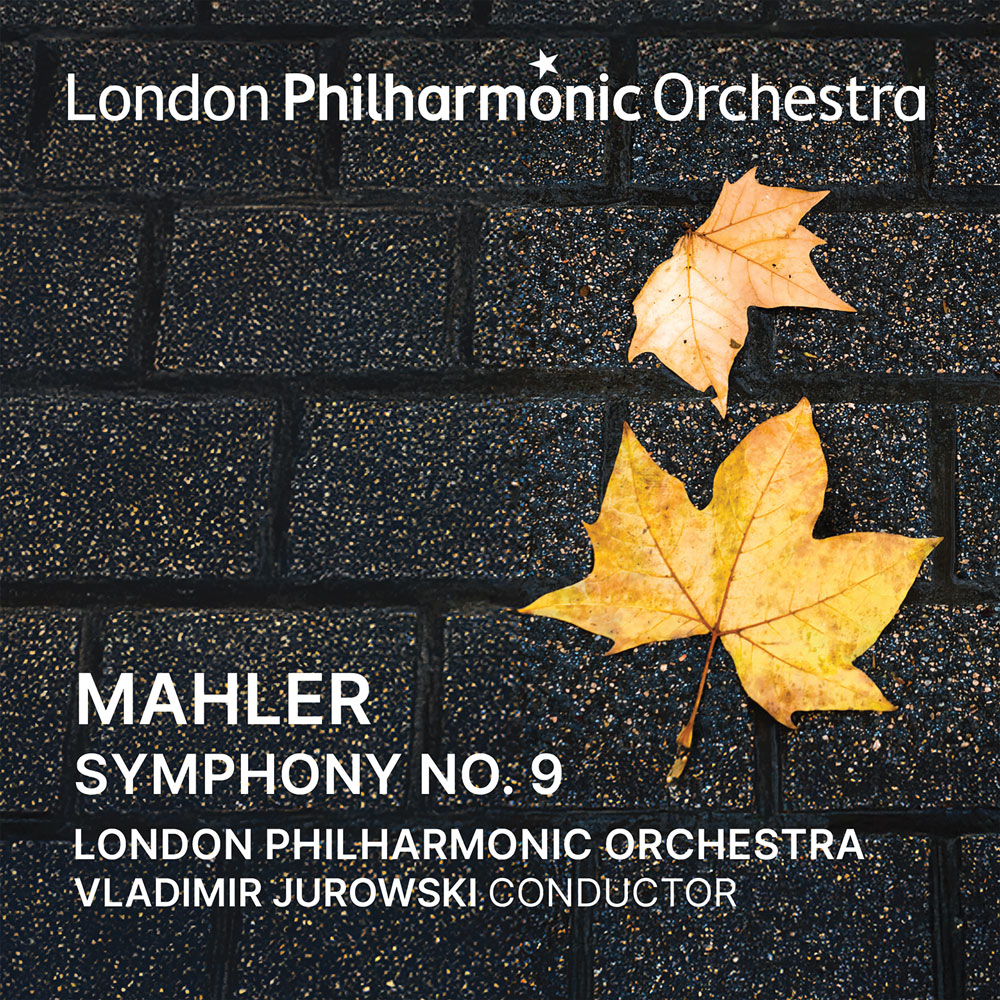
05 Mahler 9 JurowskiMahler – Symphony 9
London Philharmonic Orchestra, Vladimir Jurowski
LPO LPO-0139 (lpo.org.uk/recording/mahler-nine)

No composer ever expressed more turbulent inner demons in his music than Gustav Mahler. In his last completed symphony, the Ninth, he even confronted his own mortality, having been diagnosed with a life-threatening heart condition.

The symphony’s hesitant opening phrases, likened by Leonard Bernstein to Mahler’s irregular heartbeat, lead to nearly half-an-hour of musical angst, struggle, nostalgia and cataclysmic fortissimo climaxes before ending with serene resignation. The second movement sardonically parodies ländler folk dances using “wrong notes” and heavy-footed accents. The following Rondo-Burleske frames longing lyricism with music of angry aggression.

The extended Adagio has been called “a foreshadowing of eternity,” its tormented dissonances dissolving into a profoundly moving evocation of transfiguration, comparable to the sublime Adagios of two other Ninths, those by Beethoven and Bruckner.The extraordinarily drawn out closing minutes have always suggested to me a long series of faltering heartbeats, inexorably diminishing until the symphony’s final note, marked “ersterbend” (dying).

On December 3, 2022, Vladimir Jurowski returned to London’s Royal Festival Hall to conduct the London Philharmonic Orchestra, having served as its principal conductor from 2007 to 2021. In this “live” performance, Jurowski combined intense energy with generous rubatos, drawing superbly balanced, massive sonorities from Mahler’s huge orchestra, including an immense string section – 18 first violins, 16 seconds, 14 violas, 12 cellos and 10 double-basses – while carefully spotlighting the many beautifully played woodwind and brass solos. Bravi Jurowsky and the LPO!

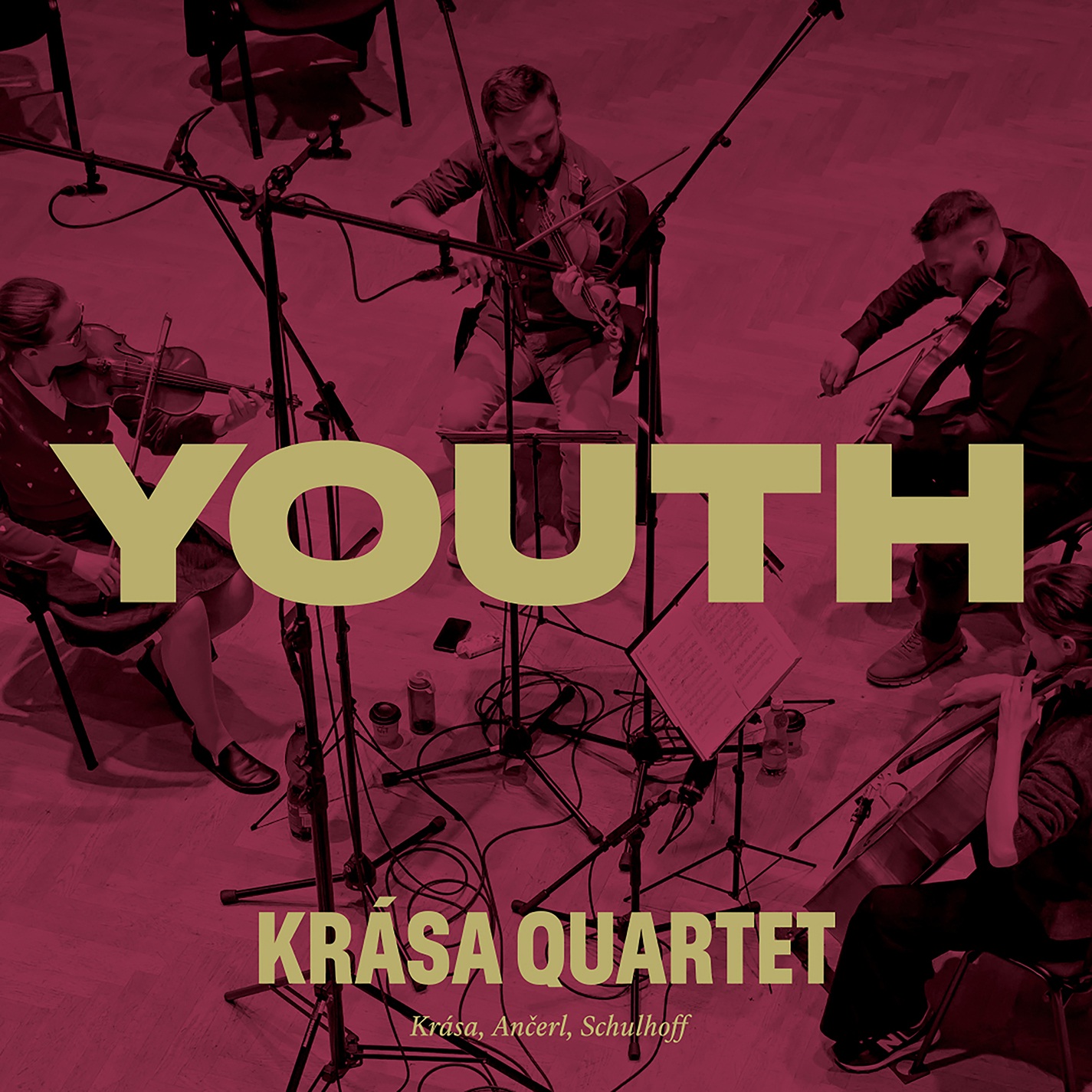
06 YouthYouth – Krása | Ancerl | Schulhoff
Krása Quartet
Supraphon ANI-145-2 (wearewarpedrecords.com/UPC/8594211850674)

The Prague-based Krása Quartet’s debut album honours three Czech-Jewish victims of the Nazis, including Hans Krása (1899-1944), the ensemble’s inspiration, who was murdered in Auschwitz. Influenced by Zemlinsky and Mahler, Krása’s early String Quartet, Op.2 (1921) mixes lyricism, harmonic instability and highly imaginative part-writing, juxtaposing sonorities from the violin’s highest register to the cello’s lowest. The opening Moderato features brooding, disquieted chromaticism; the whimsically titled Prestissimo-Molto Calmo-Volgare is a fantastical excursion through strident dissonances and kitschy clichés; the predominantly meditative Molto lento e tranqillo is interrupted by an intense, far-from-“tranquil” climax before slowly subsiding into silence. This youthfully audacious work contrasts markedly with Krása’s Theme with Variations (1935-1936) which tries too hard to please with its excessive sentimentality.

Karel Ančerl (1908-1973) survived internment in Auschwitz, albeit with permanently impaired health; his wife and son, however, died there. Ančerl, the Czech Philharmonic’s artistic director (1950-1968), emigrated after the Soviet invasion, becoming the Toronto Symphony’s music director from 1969 until his death. His robust Two Fugues (ca.1926-1927), brief student exercises, suggest Ančerl’s compositional potential before he opted instead for the baton.

Erwin Schulhoff (1894-1942), who died of tuberculosis while interned at Wälzburg, embraced diverse styles including jazz and musical Dadaism – his absurdist, silent piano piece In Futurum, consisting solely of rests, possibly inspired John Cage’s 4’33”. The young Schulhoff’s five-movement Divertimento (1914) alternates cheerful and melancholy folk-flavoured melodies. It’s an appealing work, but the real gem here is Krása’s boldly ingenious String Quartet.

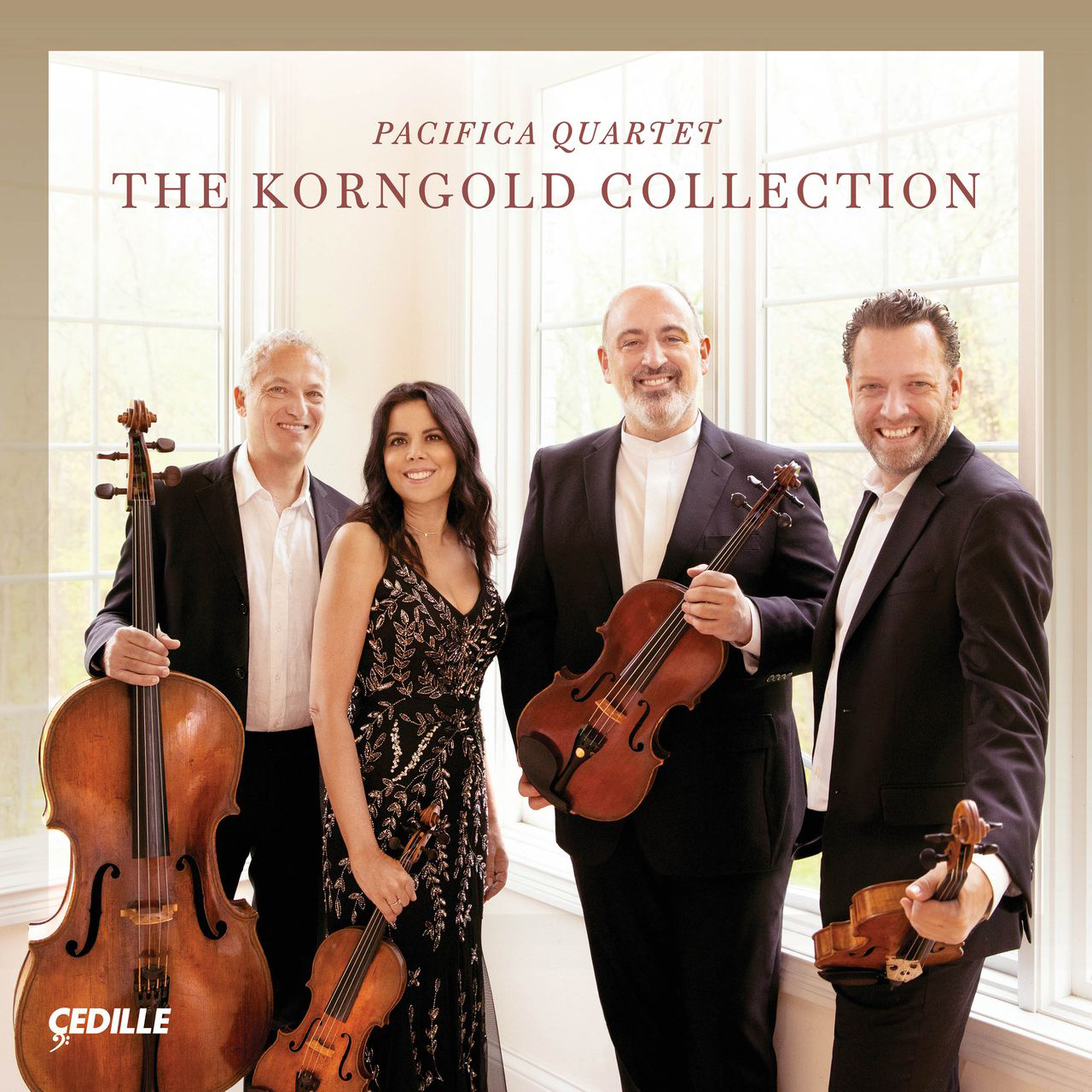
07 Korngold Collection copyThe Korngold Collection
Pacifica Quartet; Orion Weiss; Milena Pajaro van de Stadt; Eric Kim
Cedille CDR 90000 240 (cedillerecords.org/albums/the-korngold-collection)

Having created a legacy of gorgeous operatic and instrumental works, including four of the five pieces in this two-CD set, Erich Wolfgang Korngold fled Austria in 1938, just ahead of the Nazi Anschluss, to flourish anew as a Hollywood film composer.

Beauties abound in this album’s nearly two-and-a-half hours of music. In the richly-textured String Sextet in D Major, Op.10 by the teenaged Korngold, two joyously surging movements frame the moody Adagio and the Intermezzo’s charming Viennese waltz. Korngold’s signature combination of long-lined, achingly beautiful melodies and jaunty cheerfulness illuminate his Piano Quintet in E Major, Op.15 (incorporating themes from his song cycle Lieder des Abschieds) and his pre-Hollywood string quartets, No.1 in A Major, Op.16 and No.2 in E-Flat Major, Op.26.

As with his other final masterworks – the much-loved Violin Concerto and still under-performed Symphony – Korngold drew from his film scores for his String Quartet No.3 in D Major, Op.34. The Trio of the spiky Scherzo uses a nostalgia-laden theme from Between Two Worlds, the tender slow movement is based on The Sea Wolf’s haunting love music, and the bumptious Finale features a lighthearted tune from Deception.

Strangely, despite their loveliness, these five works are seldom heard in the concert hall. Bravi, then, to the Pacifica Quartet, quartet-in-residence at Indiana University, pianist Orion Weiss, violist Milena Pájaro-van de Stadt and cellist Eric Kim for their stirring performances that should help bring these unjustly neglected works to a wider audience.

Back to top