The last two WholeNote columns I wrote examined some general aspects of choirs and the practice of choral singing, a topic that did not meet with unanimous approval. A friend who can be relied on never to mince words said something to the tune of, “Can’t you just tell us what concerts are going on? All this navel-gazing about the meaning of choral singing is kind of self-indulgent.”

My first thought was that this comment was completely unjust. But just to make sure that I had not overreacted to reasonable criticism, I resolved to sternly inspect my actions and motivations. Hewing to a strict schedule, I spent every evening of the following week sitting on the back deck, drinking wine or coffee depending on my whim, moodily watching the sunset, writing about my feelings in my journal and listening to my favourite music.

At the end of the week I was absolutely certain there could be no possible justification for characterizing as indulgent someone as rigorous, self-denying and ascetic as myself. So, the final question of this tripartite series, in this last WholeNote column before the fall season begins, is this: What gives a choir its particular identity?

Choirs can define themselves by the era and musical repertoire, making their specialty baroque or contemporary music. Most choirs sing diverse repertoire, and in a crowded choral market, it is challenging for choirs to find a way to stand out from the crowd in a manner that will attract an audience. As our knowledge of the performance practices of earlier eras has increased, the “one size fits all” choir that sings repertoire from five centuries is becoming a thing of the past.

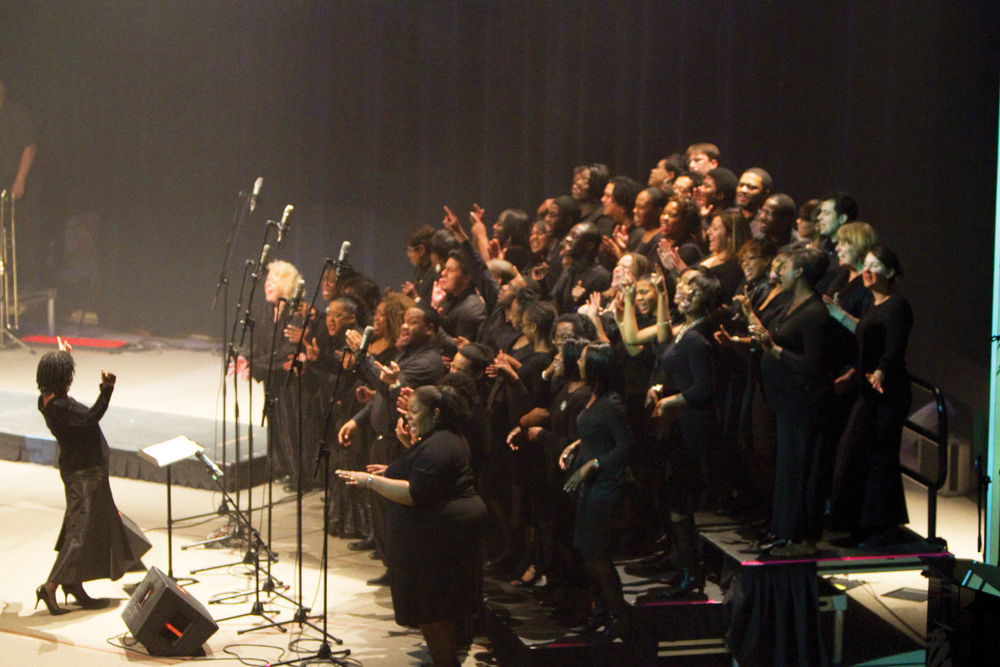
Some choirs build themselves around music associated with a particular culture or region of the world. The greater Toronto area is likely the most diversely multicultural region of Canada, and the culture of the area is enriched by those who come and bring a bit of their home country’s musical practices with them. Such groups often strive to strike a balance between being exemplars and proponents of past traditions, and exploring the way in which new influences can challenge and reshape those traditions. The Heritage Singers were formed in 1977 by Grace Carter-Henry Lyons, who came to Canada from Jamaica. Its members hail from diverse parts of Africa and the Caribbean. They will be singing at Harbourfront on July 31.
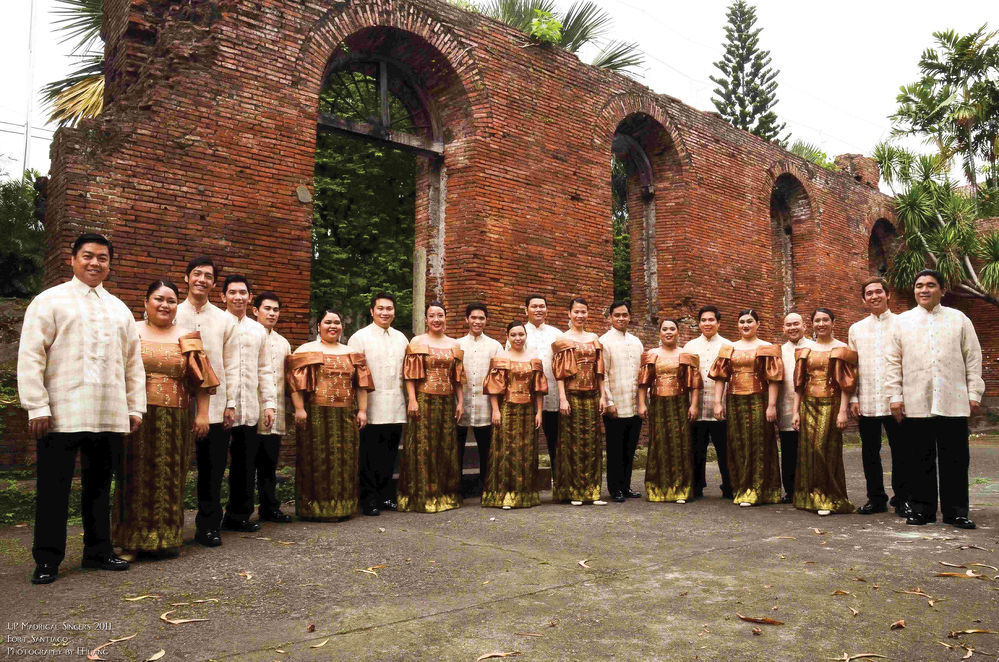
21Cross-cultural influences can give a choir its identity, as in the case of the Philippine Madrigal Singers. Hailing from the Pacific Rim and based out of the University of the Philippines, they sing diverse music but have made their specialty the European renaissance madrigal and have been hugely successful in Europe. They perform in Toronto on July 13. Incidentally, they perform their concerts seated — my kind of choir.

Often, groups are assembled for the express purpose of putting on a discreet performance. This summer is the first and, hopefully, inaugural year of the BlackCreek Summer Music Festival. Out of whole cloth, the festival has had to assemble a chorus for its concert performances. In the spring, the emails went out advertising work opportunities for choral singers. In this kind of situation, it is really the conductor that must pull together the group, quickly giving it an identity and aesthetic in a short rehearsal period. Listeners can judge whether or not this has been achieved at an August 27 performance of Beethoven’s Symphony No.9, with the great London Symphony Orchestra, conducted by Lorin Maazel.

Other festival performances this summer include the Arcady Singers performing Carl Orff’s Carmina Burana at the Boris Brott Festival on August 18, The Elmer Isler Singers at the Festival of the Sound (in Parry Sound) on August 6, and numerous concerts by the Elora Festival Singers during the Elora Festival, which runs July 8–31.

Choirs are often defined by (and sometimes named for) their conductor, such as the aforementioned Elmer Iseler Singers, and more recently, the relatively new Larkin Singers. One conductor whose presence is likely to be strongly felt in coming years is the new head of choral conducting at the University of Toronto, Hilary Apfelstadt. Originally from Nova Scotia, she has worked for years in the United States, at Ohio State University, and has guest conducted all over the world. She is this year’s conductor for the Ontario Youth Choir, an ever-changing group of young singers that assembles each summer to learn choral skills and give concerts. They will be performing on August 28 in Toronto.

Not so incidentally, Choirs Ontario, which coordinates the OYC program, celebrates its 40th anniversary with a gala reception and dinner after this concert. Choirs Ontario has been a staunch supporter of all the diverse choral groups of this region and it is a pleasure to congratulate them on 40 years of choral activism and advocacy.

Ben Stein is a Toronto tenor and theorbist. He can be contacted at choralscene@thewholenote.com.
Last issue I explored some of the reasons that people join choirs, focusing on such things as improving musical skills and singing great choral works. For many, the community aspect of group singing is of equal importance to music. If one is looking for a pastime, hobby, diversion, or social activity, group singing can fulfill all these needs.

But one can also see choral singing as a metaphor for the kind of cooperation that is necessary to make the world function. Each (vocal) part fulfills its particular role, according to its nature and ability. Some aspects of the group are more noticeable than others – altos tend to get buried in the mix – but each part is crucial to making up the whole, and the good quality of the choir is dependent on each section being able to make a healthy, secure and blended sound.

Still, music making is not an inherently democratic activity. The choir-as-society metaphor becomes more problematic when it is applied to the conductor, whose role is most regularly that of a benevolent dictator. But the conductor’s rule often only applies to the music making alone, while the larger power structure of the choir organization usually resides in a volunteer board of directors.

A dictatorial or abusive conductor may be tolerated for a time if they are getting an exceptional sound from the choir, but ultimately choral singers prefer to be treated well when making music, and know that musical excellence and courtesy in rehearsal are not mutually exclusive.

Any arts group has to negotiate the tension between focusing on the fun of the performance and maintaining a healthy culture of regular rehearsal. This mirrors the societal tug-of-war between rewarding achievement (tax breaks, incentives, high salaries) and looking after the mundane but necessary aspects of everyday life (roads, education, a social safety net).

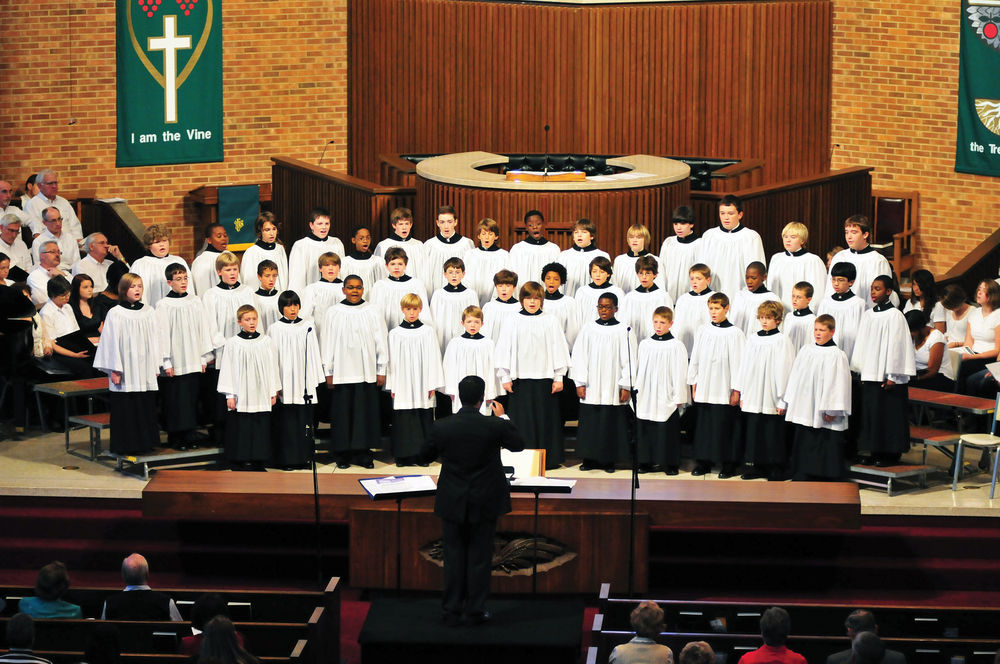
p20_chattanoogaboyschoir1Many choirs use music to fundraise and to champion causes. Two fundraising concerts of interest take place this month. On June 11, the Chattanooga Boys Choir sings works by Purcell, Schubert, Bach and Rutter to raise funds to help with the maintenance of the Casavant organ at Our Lady of Sorrows Catholic Church. On June 16, the Coro San Marco – a local choir that specializes in Italian repertoire – is performing a concert of opera arias and choruses, in support of Japanese earthquake relief.

Composers themselves can also directly address social concerns through their compositions. Paul Winter’s Missa Gaia/Earth Mass has become a choral favourite since its premiere recording first appeared in 1982. It uses the Mass text only as a jumping off point for settings of other lyrics including poetry and hymns that take the health of the earth as their focus.

p21_schuessler_singersThe Karen Schuessler Singers were founded in 1993, and they work out of London. They have a strong reputation for crafting inventive seasons and commissioning new works. They have made their own performance tradition of the Missa Gaia, and have been performing it since 1994. This year’s performance, on June 4, will include displays by Salthaven Wildlife Rehabilitation and Education Centre. Salthaven’s focus is on the rescue and rehabilitation of sick, displaced, injured and orphaned wildlife. They also do local education and outreach to raise environmental awareness.

Mozart’s Mass settings have become compositions for the ages, but at the time of their writing Mozart was as mired in politics as any working artisan. He wrote the majority of his mass settings in Salzburg, under the patronage of Archbishop Colloredo. Mozart was held to strict structural controls regarding both the style of music and length of composition that he was expected to produce. He disliked the autocratic style of the Archbishop, and wrote scathingly contemptuous letters to his father about the musicians for whom he was forced to write. For all that they were composed under arduous conditions, his Salzburg masses remain consistently popular. They are never less than professional, and all of them have moments of both inventiveness and insight. The Voices Choir performs Mozart’s 1779 “Coronation” Mass on June 25.

Politics is inherent in the traditional British Proms concert, in which ethnic pride is celebrated and satirized at the same time. No conductor does this better than Bramwell Tovey, who leads the TSO’s “Last Night of the Proms” with the Toronto Mendelssohn Choir, on June 21 and 22.

Some other events of interest during the summer months:

The excellent choir of the Church of St. Mary Magdalene has a Friday concert series on June 3, 10 and 17, featuring Mass settings by Victoria, Guerrero and Palestrina.

Further into the summer, the Elora Festival Singers perform several choral concerts each week of the the Elora Festival. Of particular interest is the July 21 performance of famed composer Arvo Pärt’s Passio, an intense setting of the Passion story. I can’t remember the last time (if ever) that this piece was performed in this area – this is a good opportunity to hear it live.

Finally, Choirs Ontario is a valuable resource that is perhaps less known to choral audiences than it is to choral organizations. It both fosters and coordinates choral opportunities for young singers, and is an important resource for the province’s choirs. The organization’s website (www.choirsontario.org) is worth checking out for a number of workshops and choral camps taking place between June and August.

Ben Stein is a Toronto tenor and theorbist. He can be contacted at choralscene@thewholenote.com.
What Doth a Good Choral Singer Make?

11bMany an eminent philosopher has pondered this question. Most have finally admitted defeat and returned to relatively safe areas of enquiry such as the nature of evil and Man’s place in the universe. But how many philosophers took the time to engage in amateur choral singing? Nietzsche and Wittgenstein would have been chewed up and spat out by some of the alto sections I’ve seen in action.

The very nature of The WholeNote “choral canary” issue is a tribute to the multivalent nature of choral singing in this region. There are groups of all sizes, abilities and musical focuses available to join. But among all these choices, the principles of good choral work are (or at least ought to be) a constant, no matter what type of choir is involved. Here are a few observations about the choral experience and the nature of being a good choral citizen.

Read more: The Choral “Right Stuff”

23_choral_cantemus3The easiest way to understand music’s place in our lives is to compare it to food. What are you in the mood for tonight? Perhaps you’re willing to brave an exotic, unfamiliar meal from a distant land. Maybe you’re looking forward to a familiar dish, which a notable chef promises to create anew with daringly unconventional spices, sauces and cooking practices. Or after a long week’s work, it may be time for nothing better than comfort food, not especially healthy but familiar and filling for the soul.

In music as with food, proper nourishment is achieved through balance. A steady diet of music that is redolent with sophistication and subtlety may yield a kind of spiritual dyspepsia and a desire for more straightforward, meaty fare. But an unbroken chain of fat-fried musical hamburgers is likely to bring on metaphysical bloat of the brain and hardening of the aesthetic arteries.

For composers, the monetary rewards of laying on the musical sugar-treacle must be tempting, as the popularity of Rutter and Lauridsen can demonstrate. On the other hand, proud and uncompromising creators who proffer a musical meal that is the aural equivalent of dry wooden sticks garnished with razor blades should not be overly surprised or aggrieved if most audience members politely decline the invitation.

This month’s column focuses on the familiar and its opposite. Nine out of ten Canadian choral clinicians urge concert-goers to choose at least one of each category in the coming weeks, for proper health and a balanced musical diet.

The weeks surrounding Good Friday are a common time of year to perform settings of the Requiem Mass text. On May 7 and 8, the Cantemus Singers sing Palestrina’s Missa Papae Marcelli, which history has deemed his most popular mass setting. French composer Maurice Duruflé’s popular setting can be heard on April 2, sung by the Alata Harmonia Chorus of Canada, and on April 22, Good Friday evening, at the All Saints Kingsway Anglican Church.

On April 9, the Amadeus Choir performs Mozart’s Mass in C Minor and Haydn’s Lord Nelson Mass. This work, written during the height of Austria’s involvement in the Napoleonic wars, is considered by some to be Haydn’s greatest choral achievement. Other concerts with music by Verdi, Bach, Brahms and Handel can be found in the listings.

Let us turn to premieres, lesser-known works and Canadian composers. Now don’t flip the page or touch that computer mouse, you big scaredy-cats. I promise you that yummy aural snacks await, even if the tastes and recipes are not always entirely familiar.

24_donald_patriquinOn May 7, Cantores Celestes Women’s Choir presents a program that includes Montreal composer Donald Patriquin’s Canadian Mosaic. Patriquin is an inventive and adept choral writer whose work deserves more hearing in this part of the world.

On May 1, the DaCapo Chamber Choir premieres Gerard Yun’s We Have Not Heard. This concert is part of the excellent Open Ears Festival, which runs from April 27 to May 1 in Kitchener. Specializing in non-traditional music making, this is one of the best modern music festivals around. It deserves much more attention, especially from audiences and media in the GTA.

The Upper Canada Choristers’ May 6 concert Come to the Ceilidh! has a Celtic theme with songs composed or arranged by Canadian composers Mark Sirrett, Stephen Hatfield, Stuart Calvert, Gary Ewer and Harry Somers. Somers in particular was a tough-minded modernist, and it is good to see choirs continue to meet the challenge of his music.

On April 9, the Healey Willan Singers give the Canadian premiere of English composer David Bendall’s Requiem setting. On April 22, the Metropolitan Festival Choir gives a Good Friday concert which features the Canadian premiere of Bob Chilcott’s Requiem, and a number of Canadian works as well. Chilcott was a member of the renowned King’s Singers before embarking on a distinguished career as a choral composer.

This is also a season of premieres for the Orpheus Choir of Toronto. On April 2, they present Eriks Esenvalds’ Passion and Resurrection, and Howard Goodall’s Eternal Light. (On May 11 they debut Imant Raminsh’s Quaternity: A Cantata of Seasons. Raminsh is a Latvian Canadian composer based on the country’s west coast, but he has had a fruitful relationship with many Ontario choirs.)

Three concerts are worth noting that bridge the gap between familiar and novel. Pax Christi Chorale and the Pax Christi Youth Choir give an April 17 concert in support of their audaciously titled new CD Great Canadian Hymns. This collection of all-new compositions is intended for use in church worship services. Nowhere more often than in a discussion of hymn-singing does one hear the phrase, “I like the old ones better,” so a new CD designed for such use is a welcome thing.

On May 7, the Toronto Children’s Chorus sings two relatively unfamiliar works by familiar composers, Brahms’ Four Songs for Two Horns and Harp and Verdi’s Laud Alla Vergine Maria. The former work is particularly beautiful, and worth hearing live.

Finally, a concert series that exemplifies the combination of old and new is Tafelmusik’s rendering of Beethoven’s Symphony No. 9 (April 7-10). Although this orchestra has played Beethoven before, this is its first foray into a work that is normally the purview of enormous choral forces.

The last movement of this symphony is both historically important and undeniably popular, yet many Beethoven aficionados find it the least satisfactory section of the work. Certainly, it is the symphony’s most loosely constructed movement. Personally, when I hear the oom-pah percussion of the tenor solo section, I immediately want to go a-wandering, my knapsack on my back, val-da-ree, etc. But for the vast majority, there is no denying the unique power of the choral movement, especially the taut mixture of serenity and tension in the final B Major interlude before the marching band-like race to the finish.

Benjamin Stein is a Toronto tenor and theorbist. He can be contacted at choralscene@thewholenote.com.
Last month I devoted a column to a discussion of Bach’s choral music, works that have probably become as central to the European choral canon as anything one can think of. This month, for contrast, I’ll write about lesser known and/or modern works being performed in March and April, and of choral endeavours that have sprung from other traditions as well. What follows is only a few of many excellent concerts this month – please consult the listings for more choices.

14_the_victoria_scholarsThe baroque French composer François Couperin (1668-1733) has traditionally been known for his innovative harpsichord compositions, and his influence on the keyboard works of later composers. In recent years musicians have been investigating his vocal works. While there are good recordings of Couperin’s choral music available, concerts of it are rare in this area. We have a chance to hear one of his early works, the Messe a l’usage ordinaire des paroisses (mass for regular parish use) performed by the Victoria Scholars on March 6. Belying its somewhat lumpish utilitarian title, it has the dancing rhythms typical of French choral music of this era.

Another composer better known for his keyboard works than choral music is 19th century German Josef Rheinberger. In recent years, the Lyrica Chamber Choir of Barrie has made a project of reviving Rheinberger’s work. On March 26, they perform his Missa Brevis Op.117.

I’ve known choral conductor Ron Cheung since we were young tenors in the Toronto Mendelssohn Youth Choir, in the years when it was conducted by choral wild man Robert Cooper. Ron founded the Voices Choir in 1996. In celebration of Ron’s 20th year of choral conducting and Voices’ 15th year in existence, they are presenting a programme on April 2 that includes Robert Schumann’s very rare late period setting of the Requiem text. It is not a work I know at all, but the inevitable “net search” reveals that it clearly has its champions. Schumann fans and others curious about his quirky, dynamic music might well want to give it a listen, especially performed live.

While the classical music world’s focus on the music of past centuries is often seen as conservative and unadventuresome, deeper investigation into neglected areas of musical history has resulted in the rediscovery and rehabilitation of female composers of past centuries. In honour of the centenary of International Women’s Day on March 8, St. Catharine’s “Primavera Concerts” are presenting an all day series of three separate concerts on March 5. Along with music by composers from earlier times – Hildegard von Bingen and the amazing Barbara Strozzi – the excellent Oriana Women’s Choir will perform works by Canadian choral heroes Ruth Watson Henderson and Eleanor Daley. These two composers constitute a genuine Canadian tradition of their own, and their works have anchored many a concert in this part of the world (including the Voices concert mentioned above).

15_karen_burkeI had the pleasure to participate in a choral event in December at which the Toronto Mass Choir performed. Many choirs make pleasant sounding music in a pleasant manner. The Toronto Mass Choir is the kind of group that arrests your attention with their exuberance and rhythmic drive. Choirs steeped in European traditions often stumble when executing gospel music. Two common elements of gospel performance are memorization and physical movement, the precise opposite of what most choirs are accustomed to. Freeing one’s hands of the necessity to hold a music folder allows singers to sway and clap on the off–beat. These elements are really not just options with gospel – they’re often as necessary to its performance tradition as agile coloratura is to Handel and Mozart.

Choirs can often be bribed to memorize music with extra goodies at break time, but movement while singing remains difficult for many groups – a basic shift in weight from one foot to the other can be enough to cause the pitch to drop and the tempo to drag. This kind of movement has to be built into the practice of the music from the beginning. While it is difficult, the advantage for choral singers is plain to see – a choir that programs a choral concert will likely be in better shape that season than ever before. Choirs interested in innovative marketing strategies might well consider the appeal of “choral–cize” concerts to a fitness–minded audience eager to work up a sweat. But I digress.

For choral musicians interested in getting their gospel chops in shape, Toronto Mass Choir and its dynamic director, Karen Burke, are hosting Power Up 2011, an annual gospel music workshop on the weekend of March 4-6. The weekend includes workshops in vocal improvisation and songwriting, and culminates in a mass choir performance on the Sunday evening of the weekend. More information can be found at the Choir’s website www.tmc.ca.

Lastly, on April 2, the Toronto Chamber Choir devotes an evening to the works of Josquin Des Prez (c. 1450 approx - 1521). Josquin was quite possibly the world’s first genuine choral superstar. In a time in which music was not disseminated easily, his pan–national popularity and influence is well documented in sources from the early Renaissance. Now even more remote to our ears than Monteverdi, Byrd or Palestrina, his music denotes mystery, lost customs and sounds and beliefs. But well performed, it is hardly austere – he wrote rowdy and rhythmic popular songs as well as settings of religious texts.

Full disclosure prompts me to acknowledge that I have a small part to play in this concert. Likely, the proper thing for me to do was to not have written about it in the first place. But live performances of Josquin’s music are rare enough in this part of the world that I really have no choice but to risk my journalist’s credibility by highlighting it for The WholeNote readers. In the battle between journalistic ethics and Josquin, Josquin’s got to win pretty much every time. ν

Benjamin Stein is a Toronto tenor and theorbist. He can be contacted at choralscene@thewholenote.com

Sometimes I wonder which musicians love more, to play or to argue about music. It’s probably the former – it can be a hard way to make a living, so you’d blasted well better love it. But if you get ten musicians in a room, you’ll get least eleven opinions about the right way to play/sing/compose a Scarlatti sonata/Fado song/12 bar blues/raga/tuba concerto.

21_dorothee_mields_photo_credit_ujesko_Among composers, J.S. Bach is the uncontested favourite for many musicians. But if we generally agree on Bach, the ideal way to play his music is anything but uncontested. This topic is probably more hotly debated among musicians than that of sports teams, movies or microbrewed beer. Well, perhaps beer is discussed more, but as this is a music column, I will leave that subject alone, and refrain from throwing down the gauntlet for Guinness, in consideration for the feelings of those who may prefer other, inferior brands.

Small armies of musicians and writers have done battle throughout the twentieth century regarding Bach orchestra and choir size, tuning, phrasing, trills, pitch level, instrumentation, phrasing and for all I know, whether or not Bach tapped his foot while playing. The lines have often been most contentiously drawn between those who play modern instruments, and proponents of “historically informed performance” (often shortened to the seriously groovy acroynym HIP) who favour instruments designed like those used in Bach’s time, and musical interpretations that are to some degree based on research into the musical and rhetorical practices of the 17th and 18th centuries.

Most would agree that there has been a détente of late – early music players have become a good deal less dogmatic in recent years, and modern instrument players have allowed themselves to find inspiration in some of the interpretive choices that have emerged from the researches and experimentation of early music players.

We have a chance to compare examples of these two different approaches in the coming weeks. Tafelmusik Orchestra and Chamber Choir are performing the Bach’s Mass in B Minor from 9-13 January, and Mendelssohn Singers (a pared down version of the Toronto Mendelssohn Choir) perform the St. John Passion on March 3.

The St. John Passion is a harrowing work, as intense as an Italian opera, filled with heroes, villains and a grim dénoument. While smaller ensemble Bach allows the interweaving of the various lines of music to be heard with greater clarity, a larger ensemble can convey a sense of grandeur, a sonic majesty that can overwhelm the listener.

Bach himself never actually heard his Mass in B Minor performed in full during his lifetime, which complicates the question of interpretation, as music researchers sometimes refer to documented information about an original premiere for clues to historically informed performance. Musicians have had to look instead at the musical resources with which Bach executed his weekly church cantatas, and have drawn conclusions in part from this information. Modern custom has tended to settle on a chamber choir and small orchestra, and it is in this manner that Tafelmusik will be performing the Mass.

But the debate continues. Large-scale Bach practitioners on modern instruments and smaller ensembles of Baroque players had learned to coexist with the wary respect of two neighbouring elephant herds. But then two musicologist/performers, Joshua Rifkin and Andrew Parrott, leapt cheetah-like across the savannah, stampeding both herds with meticulously researched books and essays (in 1981 and 2000, respectively) suggesting that the ideal ensemble for Bach cantatas (and by extension, the Mass in B Minor) was one singer on each vocal part. Using this paradigm, the ideal force for the Mass would be 8-12 voices at the absolute most, and often no more than four or six voices at any given time.

Many musicians have picked up on this idea, and it may be that Bach oratorio and cantata performances in the next century will bear little or no resemblance to the choral roar-outs of the past. But will we ever really dare to attempt to play Bach’s music as he was compelled to do? Even the proponents of one-to-a-part Bach often use adult female sopranos and altos, rather than the schoolboy singers Bach had at his disposal, and perhaps this is for the best. In his excellent Inside Early Music, which contains a series of illuminating interviews with early music performers, Bernard Sherman writes, “…when we imagine shivering Thomasschule students, at seven-thirty on a winter morning, performing a virtuoso chorus written three days earlier, we might ask if we could tolerate truly historical Bach.”

Well – like many musicians, mention Bach and I become somewhat distracted. Switching gears with some effort (and the help of a Guinness), I will finish by flagging some other concerts coming up during the next few weeks.

Albert Greer is a veteran Canadian conductor and singer who has dedicated his career to fostering excellent music making in this region. He has conducted Orillia’s Cellar Singers since 1977, and is planning to retire in 2012. The Cellar Singers perform Faure’s Requiem and a new work by popular Canadian composer Nancy Telfer on March 5.

22_john_burge2On February 12 the Grand Philharmonic Choir sings Vaughan Williams’ Dona Nobis Pacem and premieres Canadian composer John Burge’s Declaration, the lyrics of which are based on the text of the United Nation’s Declaration of Human Rights (which was drafted by Canadian law professor John Humphrey in 1948).

On February 26 the Tallis Choir presents an all French program of works by Martin, Poulenc and Duruflé. On the same night the Georgetown Bach Chorale performs works by Pärt and Bruckner.

On March 5 the Oakville Ensemble performs an all-English program of music by Byrd, Tallis, and Weelkes. And on the same night the Scarborough Philharmonic Orchestra and Toronto Choral Society combine forces to play Beethoven’s Ninth Symphony and Bruckner’s Te Deum.

Benjamin Stein is a Toronto tenor and theorbist. He can be contacted at choralscene@thewholenote.com.
What do we mean when we use the word “expressive” to describe a musical performance? Among musicians, it’s a common but somewhat amorphous term that comes in handy when being critical. It can be a stick to beat performers one dislikes (or envies), as in, “I was surprised at how inexpressive her singing was.” It’s a useful term for music teachers and conductors: “Let’s try that again with a little more expressiveness, shall we?” It’s also great fun to throw around in undergraduate music theory and analysis classes. State, “Now, let’s think about what Brahms was trying to express with this melodic use of a minor sixth.” Then add, “and this will be on the exam,” and enjoy it as the students’ demeanours shift from blank to terrified.

In choral music performance, in which singers are most often reading from printed music, the goal of expressiveness is to move beyond a bland execution of the notes on the page, using timbre, dynamic contrast, diction, blend and balance to find some kind of meaning or point of view in the musical performance. One particular challenge in the journey towards musical expressiveness is that what constitutes appropriate expression for one composer or musical era is entirely inappropriate for another. A darker timbral colour appropriate to German choral music of the late 19th century may be too heavy for music of the Italian Baroque, which generally benefits from a light and transparent sound.

The situation becomes more complicated as one engages with early music, which often has been revived after centuries of neglect. It is odd to think that Vivaldi’s Four Seasons, for instance, considered by most people to be a classic for the ages, was not in fact a universally popular piece until well into the 20th century. In this case and many others like it, the absence of a continuing tradition has compelled musicians to engage in a process of rediscovery. Although performance practice of early music is thoroughly informed by scholarship, research, virtuosity and decades of experimentation, we have to acknowledge the paradoxical reality that the performance tradition of much ancient music is a young and almost entirely modern construct.

The reason that the modern musical world might go to such trouble to revive the past is the subject for a future column. In the meantime there are a number of concerts on the horizon that illuminate the question of expressiveness in music, especially early music.

Toronto’s Tallis Choir, which specializes in music of the Italian and English Renaissances (very roughly, the 15th to early 17th centuries) attempts to bridge the gap from a modern concert performance to the original conditions in which this choral repertoire was first performed. Accordingly, their concert on December 4 featuring the music of Giovanni Gabrieli (c1554–1612) will attempt to create the conditions of a midnight Christmas mass in 1605, performed in St Mark’s Basilica in Venice. Gabrieli’s music was specifically composed to take advantage of the architectural structure of the Basilica. His singers were split into two full and separate choirs situated in two different sections of the church, and the call-and-response structure of the music (also known as “antiphony,” but only by particularly expressive musicians) created wonderful sonic effects. Other works by Gabrieli will be on the programme as well.

p25In a similar vein, Toronto’s St Michael’s Choir School is an institution that has dedicated itself in part to maintaining a performance tradition of choral music from the early Renaissance up to the modern era. Rather defiantly eschewing the larger Catholic church’s modern predilection for folk or popular music, the school, which was founded in 1937, represents one of the pockets of the world in which a working understanding of a composer like Gabrieli has never entirely stopped. Many skilled Canadian singers and conductors have got their training at “St Mike’s.” The central work of their December 11 Christmas concert is English composer Ralph Vaughan Willliams’ Fantasia on Christmas Carols. This work, written in 1912, has taken on the status of a chestnut, and it contains songs that have become well-known favourites for carol aficionados. But Vaughan Willliams was part of the folk music revival that took place in England at the end of 19th century, and in writing the Fantasia he was engaged in an act of reconstruction and promotion similar to the early-music musicians of a later generation (in intention if not in execution).

In choral performances of Christmas carols, so prevalent at this time of year, both expressiveness and early music performance practice can be central questions. Carol concerts are almost without exception musical compendiums that can encompass 13th-century chant, 20th-century gospel music, and everything in between. Choirs must be able to execute well music from wildly disparate stylistic areas.

Among the many excellent carol and seasonal concerts presented this December, space permits only a sampling (please consult The WholeNote listings for a comprehensive guide). The Etobicoke Centennial Choir’s Sacred Traditions will feature sacred music from the African, Jewish, and Christian repertoire, and play host to the Nutifafa African Performance Ensemble on December 4. Toronto’s Upper Canada Choristers will feature Cantemos, the UCC’s Latin-American ensemble, in a December 10 performance of music from, and inspired by, the Medieval epoch; and on the same day the Oakville Choral Society will present Bach’s Magnificat and other works. The Alexander Singers will include some Chanukah music along with Christmas repertoire on December 11. And the Cantemus Singers will present a Christmas Oratorio by the pre-Bach German composer Heinrich Schütz on December 12.

As this magazine also includes listings for the new year, I will finish by mentioning two concerts to watch for after Christmas: The Elmer Iseler Singers join the Esprit Orchestra on January 30 for a concert that includes Ligeti’s Lux Aeterna and Montreal composer José Evangelista’s Symphonie minute; and on February 5 the Mississauga Festival Choir performs a concert in support of the mentoring organization Big Brothers/Big Sisters of Peel.

Benjamin Stein is a tenor and theorbist. He can be contacted at choralscene@thewholenote.com.
Choral singing is generally considered to be fun and pleasurable. But often an encounter with a modern choral work – in which fun and pleasure may not necessarily be the composer’s primary goal – can feel like a child’s encounter with a disagreeable vegetable. “Why do conductors give us weird music to struggle through when we’re supposed to be having a good time? I’m paying choir dues for this?” On this subject, I am always struck by the range in attitudes among conductors, composers, singers and choral audiences.

Composers must by their very nature be champions of new music, and their desire to connect with either audience or singers may well be secondary to their drive to define an individual musical identity. Conductors must when programming strike a balance between the popular an profitable, and the adventuresome but potentially alienating. If they are lucky, they will have an organization that allows them some artistic license. In general, whatever their personal musical preferences, conductors have a sense of responsibility to work in tandem with living composers to bring new works into being.

Singers are usually the first people to create the sounds that the composer has imagined, and their response is often a visceral one: “This is difficult – I don’t like it.” Or perhaps, “This speaks to me, although it is unfamiliar.” Often a singer’s judgment of the music stems from this very subjective first encounter, and may or may not render an unfair verdict on the actual quality of the music itself.

marjan-mozetichAudiences as a rule have made their feelings known regarding much new music, and the problem that choral groups encounter when debuting new works is the one that has in many ways defined musical life in the previous century: the disconnect between modern composers and modern audiences. Still, composers tend to write more conservatively for choirs than they might for chamber ensembles, soloists or orchestras. And the liturgical background of a great deal of choral music tends to foster an audience-friendly aesthetic. A new composition that connects with an audience is a wonderful thing, and a good premiere can be an exciting experience for both audiences and musicians alike. There are a number of premieres and concerts featuring living composers coming up in the next few weeks that we can certainly hope will fit this paradigm.

The Cantabile Choirs of Kingston have become a choral juggernaut in that region, with seven different choirs and 300 voices performing separately and in tandem throughout the season. Their November 6 concert, “Silk Road,” features the premiere of a new composition by Slovenian-Canadian Marjan Mozetich. (The Cantabile artistic director, Mark Sirett, has his own premiere of a piece for choir, brass and organ that will be presented by the Toronto Mendelssohn Choir as part of their December 8 “Festival of Carols.”)

Cantabile Chorale of York Region’s November 14 concert features a setting of the Requiem mass by Welsh composer Karl Jenkins. Jenkins comes at composition from a jazz background and, like many modern composers, is as likely to draw from world-music influences as from European compositional techniques. His music is tuneful and has some of the hard-won simplicity of the compositions of Carl Orff.

The Mississauga Festival Choir performs Jonathan Willcocks’s An English Christmas as part of their December 4 concert. Willcocks is the son of Sir David Willcocks, whose Carols for Choirs has been a mainstay of Christmas choral singing for decades. His son has carved out his own impressive career as a conductor and composer, as well. Hamilton’s John Laing also combines conducting and composing. His operetta St. George and the Dragon is performed by the John Laing singers November 6 in Guelph and November 7 in St. Catharines.

The Nathaniel Dett Chorale’s Indigo Christmas (December 15 and 18) features works by three African American composers: Glenn Burleigh, Adolphus Hailstorks and Margaret Allison Bonds. These are likely Canadian premieres, although the NDC website isn’t clear about this. The most intriguing-sounding work is Bonds’ The Ballad of the Brown King, with settings of poetry by the great American writer Langston Hughes.

Premieres and performances of unfamiliar works give concertgoers the chance to help define for future audiences which pieces will become part of a regular concert tradition. This is an ongoing process – and works that were once unfamiliar but are now well known include Bernstein’s Chichester Psalms and Ramirez’s Missa Criolla (York University Concert Choir, November 23), Fauré’s Requiem (Amadeus Choir, November 6) and Britten’s St. Nicholas (Orillia’s Cellar Singers, November 6).

We are also heading into Messiah season, with a plethora of choices to satisfy Handelian addictions. In The WholeNote’s listings, you’ll find dozens of performances: small-ensemble Messiahs, opulent thousand-voice Messiahs – just about everything but Justin Bieber’s Messiah, or Messiah as interpreted by competing Led Zeppelin tribute bands.

Benjamin Stein is a tenor and theorbist. He can be contacted at choralscene@thewholenote.com.
Setting the Mass” (composing music for the Kyrie, Gloria, Credo, Sanctus/Benedictus and Agnus Dei) has for centuries been a central task for Western composers. The result is generally considered to be a window into heart of the composer in question, and a signal example of their piety and devotion. A public performance of a Mass is a way for people engaged in worship to pray, mourn, celebrate and in general to commune with others in praise of an elliptical, elusive, but deeply felt presence that is commonly known as God.

Or is it? Who or what do you worship when you hear a musical setting of the Mass text? Do you even worship at all?

These days, when a Mass-setting by a famous composer is as likely to be heard in a concert setting as in a church, how does a worshipful attitude manifest itself? Does one venerate the conductor? The composer (easy to venerate, since they are most likely to be dead)? Does one revere the sonic phenomenon of the very music itself, and the sensitivity and skill of the musicians involved? Perhaps we celebrate the familiarity of the experience – another night out in the company of the Verdi Requiem, or the yearly pilgrimage to a performance of Mozart’s famous D minor setting.

To what degree are concert-goers especially concerned with the ostensible object of all the musico-devotional fuss – the Christian God? If you happen to come from a non-Christian faith tradition, or profess to atheism or agnosticism – as many people filling a concert hall might well do – do you simply ignore the devotional texts and concentrate instead the music? In doing so, are you inescapably engaged in some kind of blasphemous process that’s likely to get you in trouble with your in-laws?

It’s probably safe to say that a concert performance of a Mass is neither a religious rite nor an exercise in group conversion. But there is unquestionably a qualitative difference between the above event and a symphonic concert or evening of chamber music: a sense of occasion and ritual, an echo of ancient paths newly trod. Even when neither concert-goer nor composer is especially devout – Rachmaninoff was not known for his piety, though a performance of his All Night Vigil might convince you otherwise – both the texts and the music continue to draw our fascination.

The concert Mass is really a phenomenon of the 19th century onward, and there are several examples of this kind of setting in the weeks ahead.

Fauré’s beloved Requiem setting had its premiere in the Paris church at which he was music director from 1896-1905. But it has continued to live in the concert hall, and it’s a very inviting piece for people of all backgrounds. Its delicate transparency and serenity have always seemed to me to evoke a dreamlike, pre-Christian world of classical balance and reserve. The Pax Christi Chorale perform it on October 24, along with music by English composer S.S. Wesley (2010 marks the 200th anniversary of Wesley’s birth).

On November 5 and 6, Kitchener’s Da Capo Chamber Choir teams up with the Kitchener-Waterloo Symphony in a concert of music by Schubert and Schumann. The choral part of the evening is Schubert’s Mass No.2 in G. Schubert wrote six masses, and this setting was written in 1815, when the composer was 18 years old. Structurally, the Mass in G is clearly indebted to Mozart and the Austro-German Mass tradition of the 18th century. But this setting also has the Schubertian quality of deceptive simplicity, a sweet credulousness that at first masks and then reveals a deep core of emotion. The concert also features Schubert’s “Unfinished” Symphony, an unfortunate name for a work that conveys a complete mastery of symphonic form, and never feels truly unfinished at all – as does, for instance, Mozart’s renowned but (it has to be said) sketchy D Minor Requiem.

p26Murray Shafer is most likely Canada’s pre-eminent composer, and Arvo Pärt is surely the most popular living composer currently setting sacred texts. Hampered with a kind of composer’s block in the 1960s, Pärt actually found creative inspiration in settings of sacred texts from medieval and renaissance eras. Pärt’s large-scale compositions are perfect examples of sacred works that have lived and breathed most often in concert spaces, often for audiences far removed geographically and philosophically from the Slavonic church traditions from which he draws his texts. On November 7, Soundstreams Canada assembles 180 singers from their University Voices programme, conducted by Tõnu Kaljuste, in a concert of works by these two composers, “The Mystical Worlds of Pärt and Schafer.”

The Toronto Symphony Orchestra and Toronto Mendelssohn Choir’s performance of Janáček’s Glagolitic Mass on November 10 and 11 is a highlight of this season. I can’t recall a recent date in which it was performed in this area. Janáček writes in an idiom that blends both erudition and a rhythmic, sensuous appeal, and his Glagolitic Mass has proved as enduringly popular to audiences everywhere as his operas have become. The unusual name of the Mass (the English translation morphs the beautiful Czech Mša glagolskaja into a strange cross between a ominous-sounding geological landform and mouthwash) refers to Glagolitsa, the oldest known Slavic alphabet. Janáček, enchanted by the sound of the language, assembled rather chaotic translations of the Mass texts, delighting concert-goers, infuriating linguistic scholars, and providing headaches for generations of choral singers accustomed to nice, safe languages like French, Italian, German, and good old Church of England Latin. Janáček’s work takes place as part of a potentially riotous concert that includes Tchaikovsky’s Marche Slav Op. 31, Prokofiev’s bumptious Lieutenant Kijé Suite, and a new work by Czech composer Krystof Maratka.

Consult The WholeNote’s listings for more choral concerts taking place over the next few weeks.

Benjamin Stein is a tenor and theorbist. He can be contacted at: choralscene@thewholenote.com.


What do a Medieval mystic, Santa Claus and Elvis Presley have in common? They are the centerpieces of contrasting concerts in Southern Ontario this July and August. Stylistic extremes are quite common in any healthy choral scene, but in the summer, when many choirs are on hiatus, the relative paucity of concerts makes the contrasts even more noticeable.

p20The Elora Festival (July 9-August 1) has as its centerpiece the excellent Elora Festival Singers, who are performing a range of music from works by Beethoven, Vivaldi and Handel to a Broadway concert with the great Jackie Richardson as soloist. But if I had to pick one concert to go to during the festival, I would opt for their performance of Benjamin Britten’s oratorio St. Nicholas, on July 25.

Britten is hardly a neglected composer, but I have always been curious as to why his St. Nicholas isn’t performed more often. Written in 1948, it shows all the poise and dash of the young composer of Peter Grimes, combined with the genuine friendliness towards the audience – not an especially widespread attitude in 20th-century composers – of The Young Person’s Guide to the Orchestra. The subject of the work is of course the Medieval bishop who was the source for the modern Santa Claus, and with Christmas concert attendance often being the economic anchor for many choral groups, I would have thought that this clearly seasonal work could do well against more familiar seasonal offerings by Handel, Bach, Monteverdi and others.

One possible explanation for St. Nicholas’s relative rarity in concert is its unusual scoring. Written in celebration of the centenary of the English boy’s school Lancing College, Britten made use of the school’s comprehensive musical resources to score the piece for tenor soloist, an adult mixed choir, a children’s choir, two pianos, organ, percussion and strings. To quote a character in Robertson Davies’s A Mixture of Frailties, it is “just the size to be neglected.” He might have been referring to St. Nicholas.

Britten’s conception of St. Nicholas himself is filled with nuance. Outwardly powerful, stern yet benign, the true character of the bishop is one of doubt and conflict. This powerful tenor role alternates between quiet soliloquies and fiery sermons, while the choral movements encompass childlike playfulness, pageantry, savage cannibalism, a wonderful depiction of a storm at sea and finally Nicholas’s death and ascent into sainthood. It is a rare treat to hear this work in concert, especially this time of year.

The Medieval mystic mentioned above is Hildegard of Bingen, and her music is the focus of a concert on August 8 given by Schola Magdalena, a five-voice ensemble of female singers based out of Toronto’s Church of St. Mary Magdalene. Hildegard was a medieval polymath of almost Leonardian scope, and recent researches into both early music and the work of female composers has brought her work, neglected for centuries, into new focus.

Medieval scholars often struggle with lost or incomplete sources in their attempts to shine a light on the past. They have been lucky with Hildegard, who left behind a clear legacy of songs, poems, books and letters that gives us insight both into the times in which she lived and the mind of an individual artist. Performers of her music have found a richness of invention, in which melody can be made to illuminate and enhance the meaning of the text in a way that can be challenging with even the most beautiful chant.

From a Medieval cleric to a modern composer’s take on a Medieval saint, to the proverbial King of Rock and Roll may seem like a unlikely leap – especially in a choral context. But Elvis Presley was a deeply religious man, who loved singing gospel music as a vocal warm-up prior to giving concerts, and whose earliest musical influences were the choirs and quartets that he heard attending church as a young child. On August 20 Hamilton’s Brott Festival Choir and National Academy Orchestra will perform Beethoven’s Ninth Symphony, in good classical fashion. But on August 4 the orchestra is joined by a Gospel choir to perform Elvis: The Way it Was with vocalist Stephen Kabakos. Though the concert will likely focus on Presley’s pop songs, anyone familiar with Presley’s gospel singing can hear clearly the degree to which a song like “Suspicious Minds” draws on that influence.

Performing popular music in a choral context is much trickier than it might seem. Ease with syncopated rhythms is an essential part of the performance of popular music, and classically trained musicians can struggle to free themselves from the straightjacket of notated music, in which syncopation is often difficult to convey convincingly and idiomatically. An awareness of the backbeat (accents on two and four in a 4/4 measure) needs to inform the performance at all times, and often singers must re-jig their vocal style as well. A legato vocal line that serves Handel and Mozart is usually too heavy and rhythmically undifferentiated for popular music.

I predict that even choirs mostly accustomed to classical repertoire will begin to delve with increasing frequency into the world of popular music. The challenge for choirs and choral directors will be to recognize that good execution of popular music takes skills that classical training has neglected, and adjust and even re-train accordingly. The term “performance practice” is often applied to early music: equal care and respect is needed in the area of popular and vernacular music as well.

p21Some last notes. The Elmer Iseler Singers perform on July 11 at Westben, and at Parry Sound’s Festival of the Sound on July 30 and August 8. The 2010 Ontario Youth Choir, directed this year by Iwan Edwards appear from 27-29 August, in London, Orillia and Toronto respectively. And in a final Gospel context, at Toronto’s Fringe Theatre Festival (June 30-July 11), the play “Maurice Carter’s Innocence” will feature a Gospel choir onstage, helping to illuminate and tell the true story of a miscarriage of justice that led to one man’s wrongful imprisonment, and of the determination of those who fought for his release.

Benjamin Stein is a tenor and theorbist. He can be contacted at: choralscene@thewholenote.com.


p25aI’ve been writing the “Choral Scene” column for The WholeNote since last fall – and my short time writing this column leads me to the happy conclusion that our local choral music scene is thriving and inventive.

To be sure, the final concerts of the season attest to the liveliness and diversity of the choral scene. For instance, on June 2, the Toronto Choral Society performs The Resting Place of Pioneers, an interesting programme that combines music and story to illuminate the journeys and exploits of the first settlers of Toronto. The centerpiece of the concert is Toronto composer Eleanor Daley’s tuneful and appealing setting of the Requiem text. In Newmarket on 5 June, the Blue Bridge Festival Choir and Orchestra perform two relatively rare choral pieces, Weber’s Mass in E flat and Vaughan Williams’s Serenade to Music. And on July 1, First Nation’s group the Ahkwesasne Women Singers will be singing at the Queen’s Quay Toronto Music Garden, combining traditional Mohawk songs with a new work by distinguished Canadian-Odawa composer Barbara Croall.

Four more concerts demonstrate the breadth of current choral activity. On June 2, the St. Thomas’s Anglican Church choir performs music to celebrate Canadian composer and music director Walter MacNutt, who served at St Thomas’s from 1954-1977. Toronto’s Jubilate Singers celebrate their 40th anniversary with a concert on June 5. On June 13 the Headwaters Concert Choir sings Inspiration, a fundraising concert for First Nations’ children in Ontario. And the Niagara Vocal Ensemble perform the intriguingly titled Night Music – A Women’s Voice in Stratford on June 28.

One of the hidden bargains of the early summer are the free concerts given as part of the Tafelmusik Baroque Summer Institute. Combining Tafelmusik musicians with the up-and-coming talents who attend the Institute, concerts run on June 7, 12 16 and 19. Prior to this, Tafelmusik will be closing its run of Handel’s sprawling Israel in Egypt on June 1. This massive work has some of Handel’s most dramatic and inventive choruses, and is in fact more choir-heavy than the more famous Messiah. Those looking for a Handel chorus fix to tide them over for the summer need look no further.

Those who prefer their choral music to come from religious sources and “serious” composers may turn their noses up at concerts that draw upon music from areas such as music theatre, film and television. But as anyone who has tried can attest, singing popular music well is a good deal harder than it may appear, and the work of a classically trained musician truly comfortable in popular styles is both rare and a pleasure to experience. In this crossover vein, the Choralairs of North York perform a free pops concert at Earl Bales Park Community Centre, and Toronto’s East York Choir presents a programme of opera and music theatre (both on June 6). As well, Burlington’s Harlequin Singers perform “Here Comes Broadway” on June 4-6, and Barrie’s Bravado! Show Choir performs “Reel Music” on June 11-12.

On the classical end, Bach’s Magnificat in D is performed on June 5 by the St. Anne’s Concert Choir and Orchestra, with all concert proceeds going to help repair the historic and unique St. Anne’s Parish. The Toronto Mendelssohn Choir and Toronto Symphony Orchestra perform Beethoven’s beloved Symphony No. 9 on 16-17 June. The two groups also collaborate the next night for “Scheherazade,” a Russian-themed programme of Khachaturian, Rimsky-Korsakov and Ravel. The Victoria Scholars perform “Choral Explorations” on June 2, as part of the Canadian Opera Company’s vocal series, and aficionados of British choral music can attend a “Concert of 20th Century Sacred Music” by the visiting Choir of St. Chad’s College, (University of Durham) at Toronto’s Church of St. Mary Magdalene on June 11.

June brings the opportunity to hear a new oratorio, the Dark Star Requiem, written by young Toronto-based composer Andrew Staniland. Tackling the twenty-five-year modern history of the AIDS epidemic, the Elmer Iseler Singers, Gryphon Trio and four vocal soloists perform this work on June 11-12 as part of the Luminato Festival. As well, three youth choir concerts take place this season, all on June 5: the Mississauga Children’s Choir presents “Eine Kleine Jazz Musik”; the Guelph Youth Singers present “Whistle While You Work,” songs of carpenters, clowns, goatherds, sailors and pirates; and the St. Mary’s Children’s Choir presents “It’s a Grand Night For Singing.”

Finally, on 14 June, the Cantabile Chorale of York Region performs “Strawberries and Song 2010,” with strawberries and ice cream, raffles and more. Any choral concert that includes strawberries gets my vote! Happy singing and concertgoing to all during the summer months.

Benjamin Stein is a tenor and theorbist. He can be contacted at: choralscene@thewholenote.com.

Back to top