 May 9 is Soundstreams’ final concert of their season, titled In Terra Pax (Peace on Earth) – described as a powerful and timely reflection on war, loss and resilience, curated by Vancouver-based Ukrainian-Canadian composer, vocalist and multi-media artist, Anna Pidgorna (winner of Soundstreams’ New Voices Curator Mentorship Program).
Pidgorna has a threefold role in the event: as curator of the program as a whole; as composer of a new commission titled Black Crow; and as vocalist, not only in her own piece, but also in a work by Estonian composer Tõnu Kõrvits, extending her presence across the program.
We had a wide-ranging, lengthy conversation in mid-April – about the challenges of working artistically with grief, including her own experiences related to the current Russian war on Ukraine; about Black Crow, and the artistic choices it dictated, and about how the other works she selected for the program echo this theme.
Pidgorna’s Black Crow, for voice, piano, and string orchestra, inspired by the poetry of the late Victoria Amelina, sits at the conceptual heart of the program in several ways, perhaps most centrally in its links to the Ukrainian singing tradition of lamentation or holosinnya. “What I really love about the music is the specific vocal timbre and the grittiness of it, and I wanted to incorporate that singing timbre into my own compositions. To find a singer who is able to do that, as well as being someone who can read music at a high enough level to sing contemporary classical music, is nearly impossible. It became necessary for me to learn how to do it. I discovered that I really enjoy singing, and it opened up a new, more embodied way of composing for me as well.”
The other works she selected for the program echo these central themes. The piece by Kõrvits, was chosen because of Estonia’s support of Ukraine during the war; a work by Ukrainian composer Oleksiy Voytenko captures the atmosphere she experienced while visiting Ukraine in 2023; and Canadian composer Kelly-Marie Murphy’s Ashes evokes the destruction force of fire, which so often accompanies war. The program also includes Benjamin Britten’s Lachrymae, a series of variations on music by Renaissance composer John Dowland and is steeped in melancholy, written in the aftermath of World War II as Britten grappled with the devastation and moral weight of war.
There is a fuller account of my conversation with her on the WholeNote website.
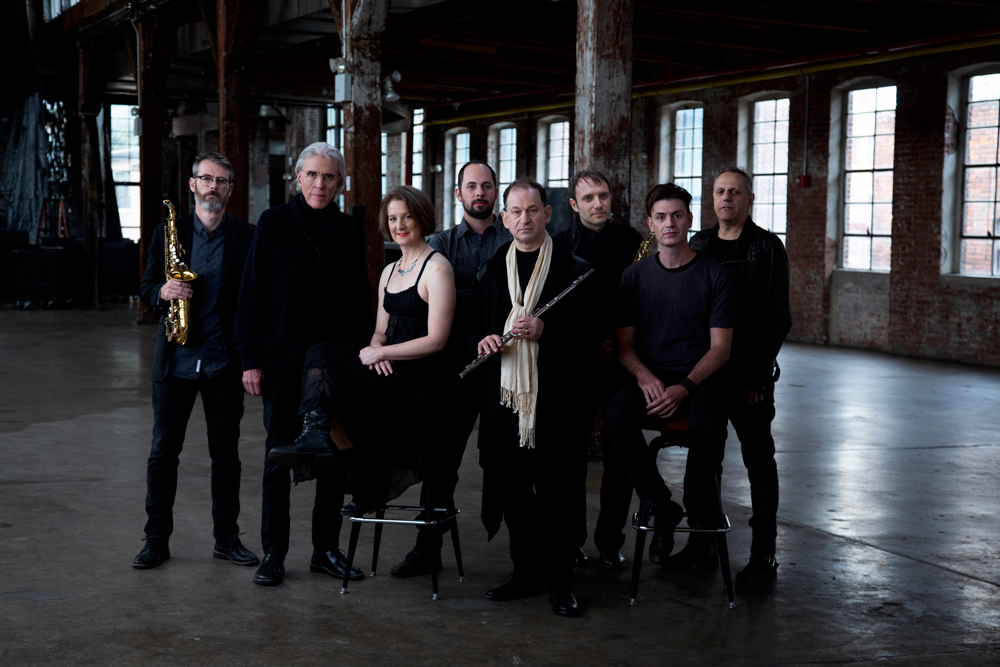
Luminato Festival, times two
Philip Glass Ensemble: On June 20, the Philip Glass Ensemble arrives at the Luminato Festival (Koerner Hall) to perform a selection of early works from 1974-1984! The ensemble was formed in 1968 after Glass returned to New York following his studies with Ravi Shankar. Much like Pidgorna, he discovered that there were no performers equipped to realize his developing style of rhythmically intricate music, so he created his own group, which he described as a laboratory for developing a new performance practice.
The June program includes Glassworks, a studio album designed as an entry point into his musical language, as well as Dance I from his opera Einstein on the Beach. Here, rapid, highly interlocking rhythmic figures create a sense of music as pure motion, energy unfolding in time. Also on the program is Grid, from the film Koyaanisqatsi, which evokes the relentless machine-like rhythms of modern life, alongside Funeral, an early scene from Akhenaten, one of Glass’s most significant operas. Centred on the Egyptian pharaoh Akhenaten (14th century BCE), whose reign marked a profound spiritual shift, this work contrasts with the others through its slow-moving harmonic fields and solemn, ritualistic character.
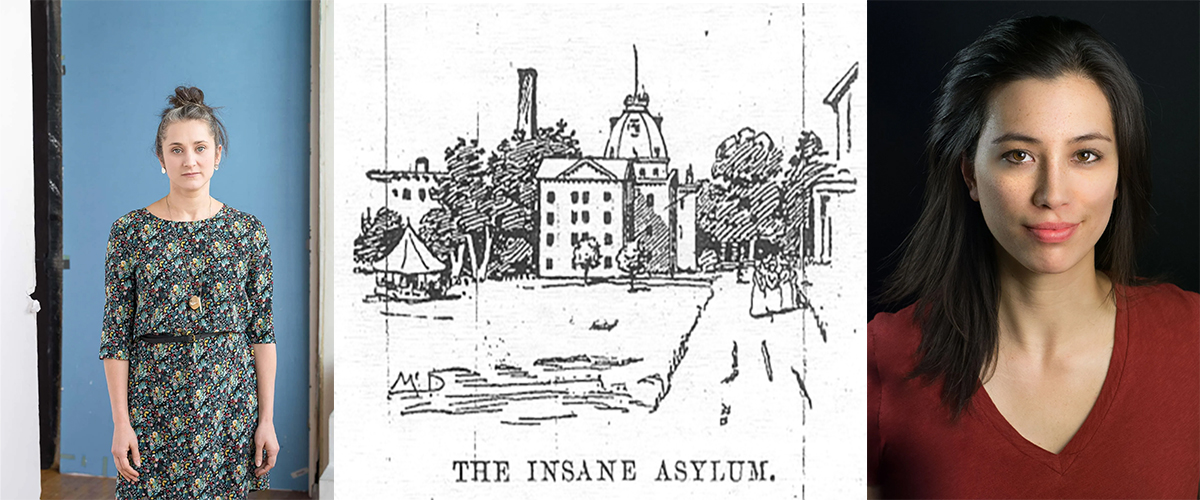
10 Days in a Madhouse: Running from June 16 to 21, at the Bluma Appel Theatre, there will be four performances of 10 Days in a Madhouse, a 2023 opera composed by American René Orth with libretto by Toronto-based playwright Hannah Moscovitch. This is a co-commission from Opera Philadelphia and Tapestry Opera based on journalist Nellie Bly’s 1887 undercover exposé in which she feigned insanity to investigate conditions inside a women’s asylum in New York. Moscovitch’s libretto moves backward in time, and plays deftly with audience assumptions, by inviting them to initially question Bly’s sanity before revealing the institutional context. The work connects 19th-century events to ongoing issues around gender, mental health, and authority over women’s bodies and voices.
Orth recently completed a three-year tenure as Composer-in-Residence at Opera Philadelphia. Her score features lyrical, expressive vocal writing set within shifting textures and timbres that create a sense of instability, mirroring the protagonist’s experience inside the asylum. This is further intensified by dissonant, fragmented passages, creating a musical language that pivots quickly between emotional states. Elements of post-minimalist repetition are also present, at times recalling the propulsive momentum associated with Philip Glass.
New Music for Old Hands Concert Series
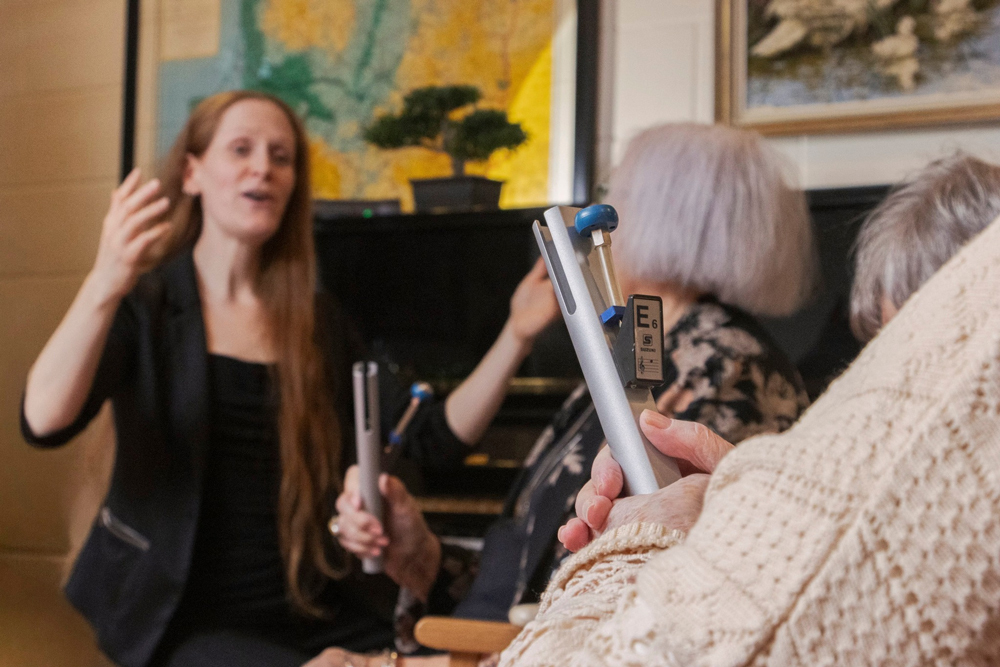
In contrast to the high-profile Luminato Festival, a newcomer to this column – the grassroots, community-based New Music for Old Hands Concert Series, curated by Toronto composer and performer Laura Gillis. Beginning May 2, the series presents biweekly concerts through June 20 at the Labdara Lithuanian Nursing Home in Etobicoke. Gillis’s work focuses on collaborative music-making in non-traditional settings, particularly with older adults and people in long-term care. Her projects are often process-based and participatory, involving non-professional musicians. One such project, Vintage Voices, documents the musical memories and voices of long-term care residents.
The first three events in this five-part series feature the Labdara Bell Choir, an ensemble Gillis conducts. For the series, she has invited several guest musicians to present their work, beginning with Adam Scime on May 2 who will discuss his approach to music-making through his work Morning Rain. On May 16, Louise Campbell will explore creating participatory music practices, lead an interactive activity for audience members, and discuss Music Dairies, a project she co-created with Anne McIsaac, a woman living with Parkinson’s Disease. Lieke van der Voort will join virtually from Germany on May 30 to share Old Flames, a new work for voice and electronics, and discuss her work as a vocalist, improviser and composer. On June 13, Alex Eddington will present “The First Song I Remember...” and speak about his work in collaborative community music-making. The series concludes on June 20 with Martin van de Ven, who will present Mellow Bells, speak about Klezmer traditions, and perform works from that repertoire.
The series places contemporary music in a uniquely intimate setting, emphasizing participation, dialogue, and intergenerational exchange.
New Music Concerts
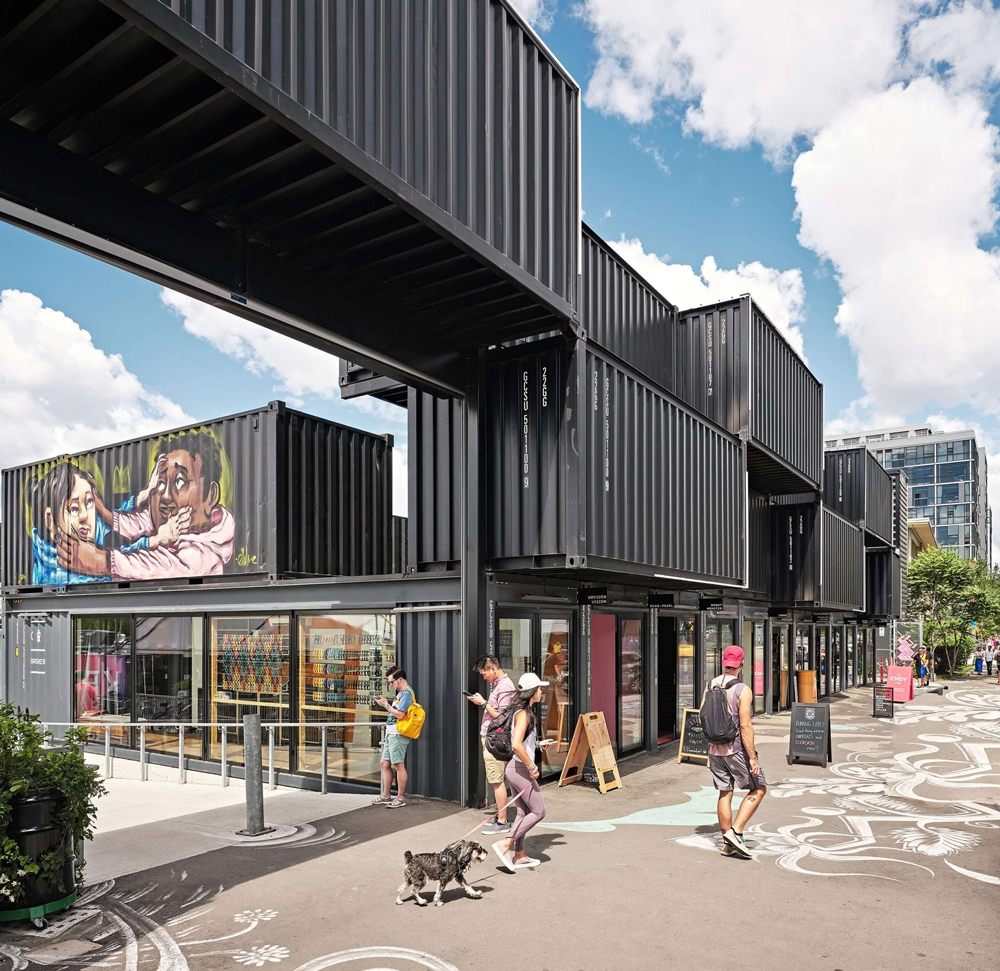
Another festival taking place this spring is the Future Resonance Festival, presented by New Music Concerts in partnership with the University of Toronto Faculty of Music. The festival includes a public conversation addressing the question: What would the musical canon look like if it began today? How might a reimagined canon influence ideas of diversity, lineage and innovation? The conversation takes place on May 29 at the STACKT market, a hybrid cultural space near Bathurst and Front.
A concert follows on May 30 featuring the Swara Sutras Ensemble, a flexible collective assembled for specific performances. The ensemble’s name suggests “a network of musical threads, drawing on the Sanskrit word Swara (musical note), and Sutra (thread or principle).” Known for its cross-cultural and experimental approach, the group brings together instruments from multiple traditions alongside new technologies, creating hybrid sound worlds that blend acoustic and electronic textures. The program includes works by composers Steven Webb, Tsz Long (Fish) Yu, Andrew Staniland, Laurie Radford, and Myriam Boucher.
The Toronto Symphony
During May, the TSO presents the premieres of two commissioned works. On May 1, a new piece by Toronto composer Cris Derksen is featured as part of the orchestra’s Art of Healing Program, presented in partnership with CAMH. On May 14 and 16, a Cello Concerto by American composer, violinist, and educator Jessie Montgomery receives its North American premiere, set alongside excerpts from The Flying Dutchman and a suite from Götterdämmerung. The work was co-commissioned by the TSO together with orchestras from New York, Chicago, Cincinnati and the National Symphony Orchestra based in Washington D.C.
On May 21 & 23, a work by Philip Glass receives its Canadian premiere. Meetings Along the Edge, one of the best-known tracks from Passages (1990), a collaborative album by Philip Glass and Ravi Shankar. The performance is paired with Shankar’s Sitar Concerto No.2 “Raga-Mala.”
Wendalyn Bartley is a Toronto-based composer and electro-vocal sound artist. sounddreaming@gmail.com.