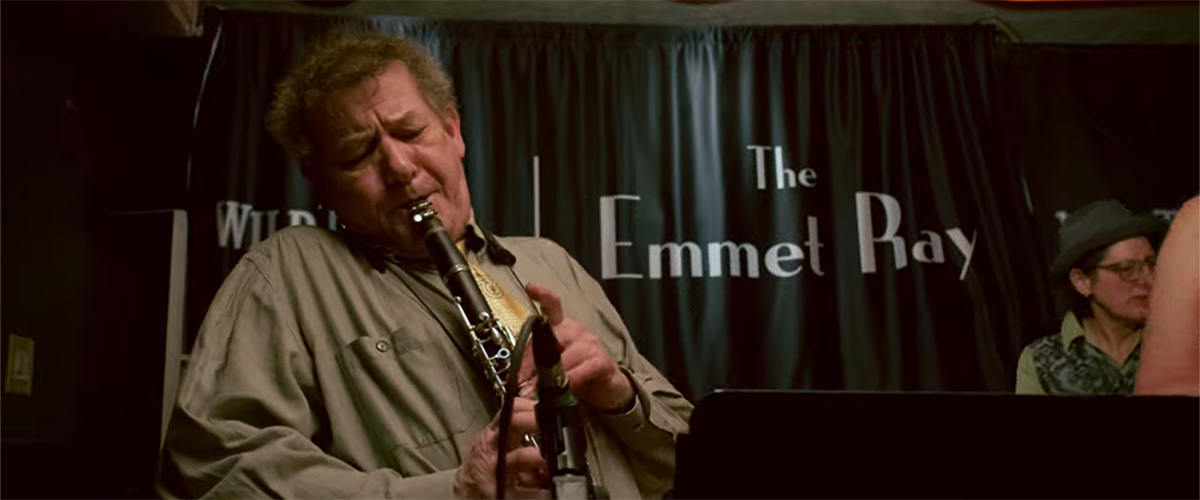
 Shortly after moving back to Toronto following my graduate studies in composition at McGill University in the late 1980s, I attended a concert by Hemispheres in the Great Hall at the Music Gallery, then located at Queen and Dovercourt. Bob Stevenson was one of the performers, playing the clarinet. I was intrigued by the ensemble’s sound—a large group bringing classical and jazz musicians together.
After the concert, I approached Nic Gotham, Hemispheres’ artistic director, and offered to write a piece for them. Months later, my piece Matrix was performed. Listening back, I felt unsure about what I had written. It sounded messy to my ears. With no experience writing for jazz musicians, I felt I’d taken an embarrassing leap into the dark.
That evening, Bob came up to me. I had met him years earlier when he performed a student work of mine, and I often heard him play in various concerts around the city. He told me simply that Matrix was a good composition. His generous remarks helped calm my doubts.
Fast forward seven years: Bob – now artistic director and conductor of Hemispheres – proposed recording my piece for the ensemble’s 1998 CD Chaser. What I heard was transformative. Under his direction, the music had become something utterly different from that first performance, shaped with a musical coherence I hadn’t known was there.
This is who Bob was: someone who could hear into the cracks and breathe musicality into what were, as he liked to say, just a bunch of dots on the page.
He was a consummate artist, moving easily between roles as composer, clarinetist and bass clarinetist, conductor, artistic director, copyist, philosopher, and creative thinker. Yet it wasn’t only his breadth that distinguished him. It was the way he refused to be boxed in. As his partner, Moira Clark, told me, this resistance to classification was fundamental to who he was. “He hated classifications such as jazz or classical or rock,” she said, “and loved Miles Davis, who felt the same way and said it was ‘just all music’.”
Bob’s recent passing came as a shock to many in Toronto’s music community. His musical influence spanned five decades and an astonishing range of genres, including new music, jazz, classical, opera, klezmer, gamelan, dance, music theatre, and improvisation. His life moved through all these worlds as someone who genuinely belonged in each one. And again and again, he helped build communities where that kind of artistic crossing was possible.
Early Toronto Experimentation
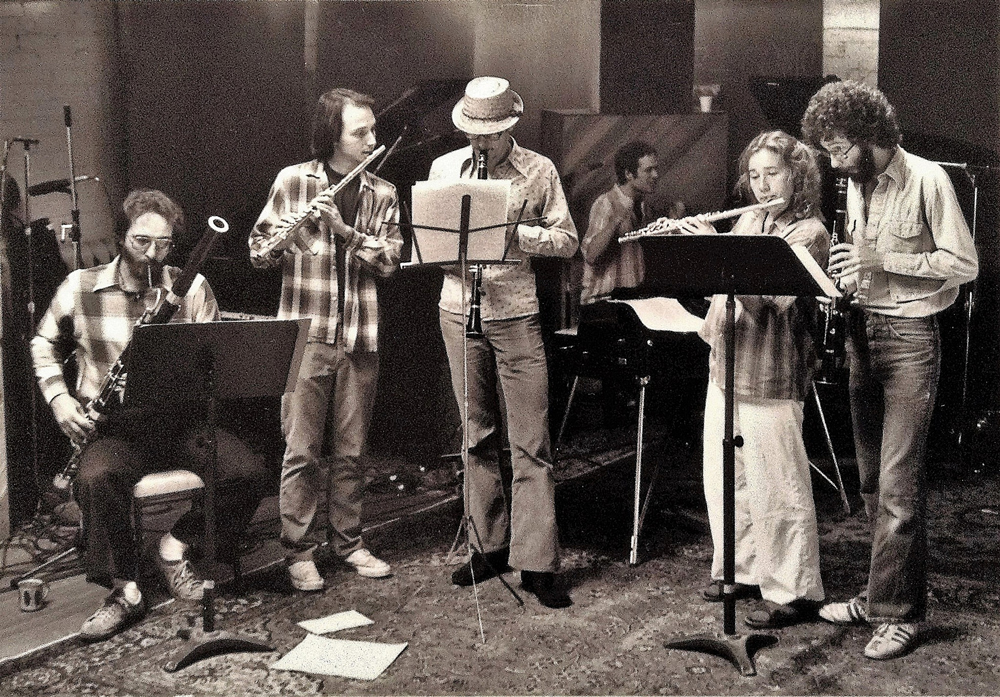
In the late 1970s and early 1980s, Toronto’s experimental scene was thriving, though often far from the spotlight. Much of this work took place in artist-run centres and out-of-the-way spaces, within a non-commercial underground culture of risk-taking and invention whose contributions have too often faded from public memory. It was, nevertheless, a period of intense artistic experimentation that mattered deeply to Bob.
During those years, Bob formed a strong artistic bond with Andrew Timar, and after completing his studies in the late 1970s at The University of Western Ontario (as Western University in London, Ontario was then called), was invited by Timar to join the New Music Co-op, an ensemble that had its beginnings in the Music Department at York University. Bob joined once the group became independent, and was active as both a performer and composer.
Out of this collaboration, Bob and Andrew, together with dancer Terrill Maguire, formed the MusicDance Orchestra, active from 1979-1984. Conceived as a performance ensemble that placed musicians and dancers on equal footing, it became part of Toronto’s avant-garde ecology.
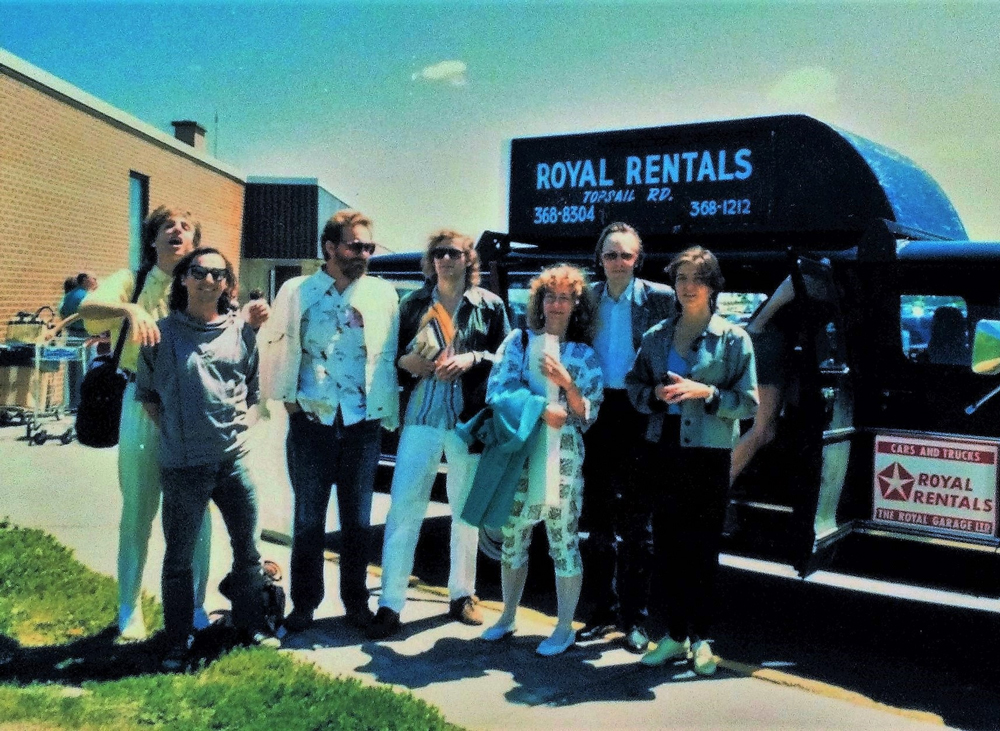
In the MusicDance orchestra, the relationship between movement and sound was fluid and immediate: musicians interpreted their scores by following, responding to, or anticipating the dancers’ gestures. Bob’s piece Go ahead Wes was described in one review as dense and full of clashing sonorities “that were reflected in the dancers who pulled, pushed, dragged and dangled each other, reacting viscerally to the blaring extremes of musical colors.” Another piece he wrote for the ensemble was Cheap Sunglasses (1981) with choreographer Holly Small.
Bob’s boundless curiosity also led him into the world of Indonesian music, as a founding member of the Evergreen Club Contemporary Gamelan – the first performing ensemble of gamelan instruments in Canada – where once again, he reunited with Timar, performing some traditional Indonesian repertoire but primarily contemporary compositions. Bob’s own piece Tombeau d’Alsace was featured in the ensemble’s first concert in 1983. (Evergreen may also have been one of the few ensembles in which Bob did not play his primary instrument.)
Arraymusic
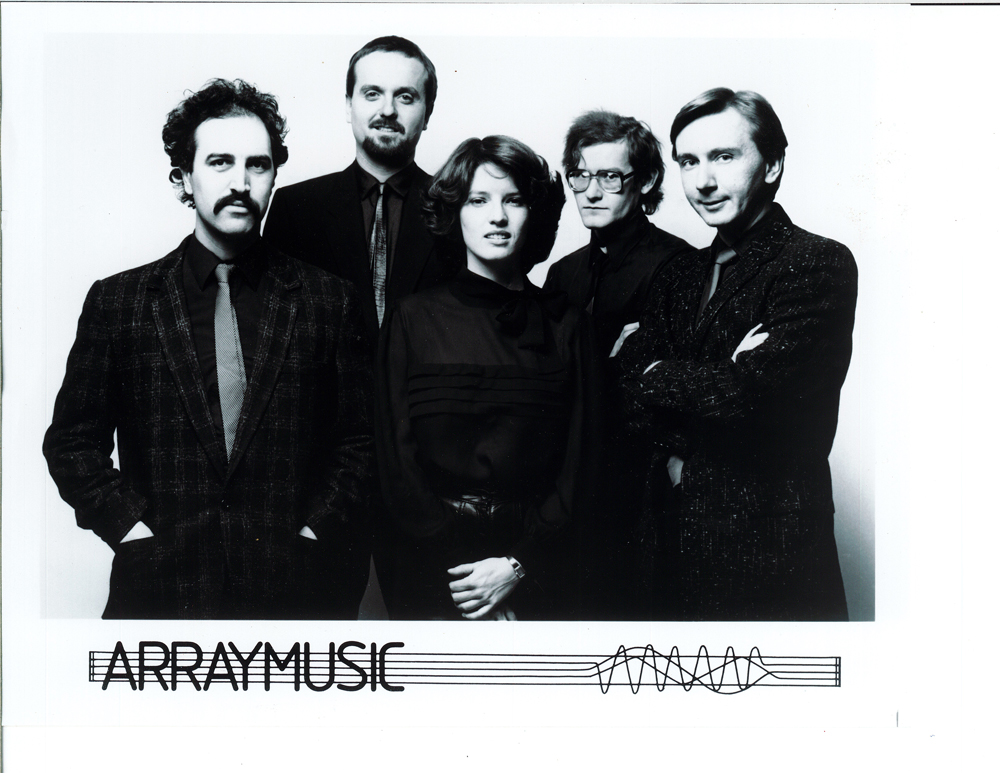
If Bob had a central musical home in Toronto, it was Arraymusic, a pioneering ensemble that has been a leading force in Canadian contemporary music since 1972. His first performance with the group took place in March 1982, appearing in Louis Andriessen’s Workers Union, and in a premiere work jointly composed by Alexina Louie and Marjan Mozetich. He went on to become a permanent member of the Array ensemble, and in 2005 stepped into the role of Artistic Director, a position he held until 2010.
During the 1980s, many of Arraymusic’s concerts included dance collaborations, and Bob continued working closely with choreographers. One such work was No Face is Obscured (1984), created once again with Holly Small. I also remember a magical evening in March 1989 at the Great Hall when he performed Steve Reich’s New York Counterpoint, for solo clarinet with multiple pre-recorded clarinet lines unfolding through Reich’s distinctive process of shifting rhythmic patterns. A work that demands both disciplined focus and stamina, it became part of Arraymusic’s touring repertoire and was later recorded for the ensemble’s 1991 album Chroma.
After John Cage’s death in 1992, and while working on his piece Journey for Arraymusic, Bob told me he had a dream visitation from Cage, with the result that the work drew on Cage’s aleatoric techniques, relying on chance in determining how to ask the performers to move from station to station across the stage. Another significant work he wrote for Arraymusic was Nostalgia, a more personal opera with a libretto based on letters his father wrote to his mother while in combat during the Second World War.
In the early 1990s, Bob added conducting to his range of creative activities. His good friend and colleague Shannon Peet told me how active he was as a composer, performer and conductor in her production of the New Music Across America Festival. Both this festival and the 1990 Montreal version involved collaborations with Arraymusic, 5th Species and Hemispheres.
5th Species woodwind quintet commissioned Bob to write Ephemeron, later broadcast on CBC’s Two New Hours. At the festival, he conducted this work as well as one by Denys Bouliane. From this productive and dynamic period emerged Critical Band, an ensemble devoted to microtonal repertoire, of which Bob was also a member.
But if Bob’s life in new music during this period revealed his rigour and curiosity, his involvement with klezmer revealed something equally essential: joy. During the 1990s and into the 2000s, Bob was a member of the Flying Bulgar Klezmer Band, known for mixing traditional klezmer repertoire with jazz and improvisation. His involvement led to countless gigs at Jewish weddings and bar mitzvahs, where his playing brought both passion and sophistication to the dance floor.
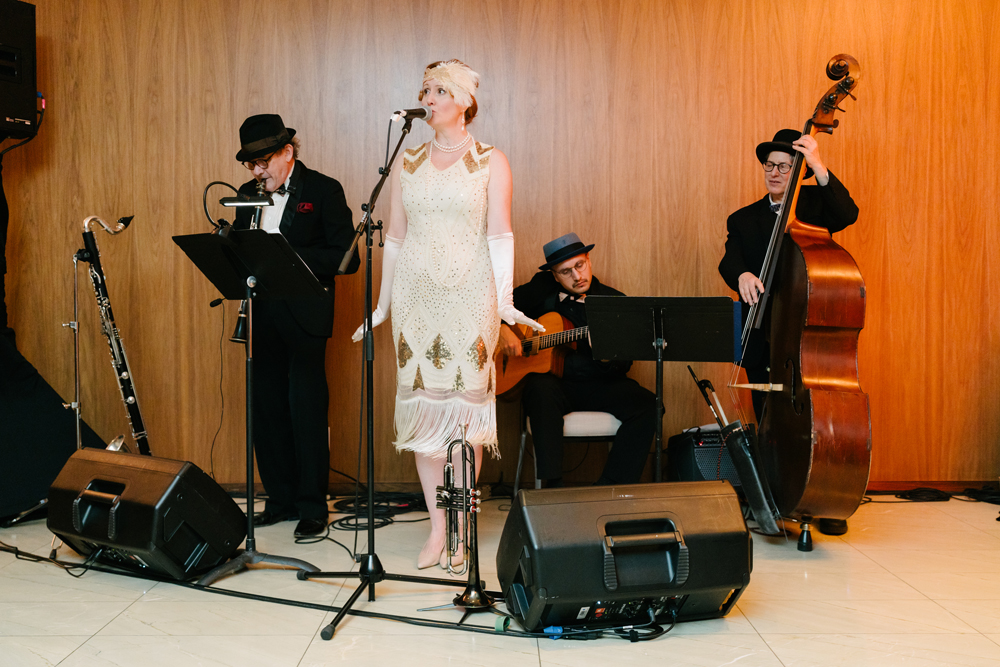
Later Years: Around 2010, Bob made a conscious decision to focus on playing with jazz and improvising musicians in smaller club venues such as The Painted Lady and Communist’s Daughter. Performing with the improvisational group Rambunctious, which explored different ideas of “dance music,” led him to Corry Ouellette, leader of the Sonny Balcones—a jazz ensemble that blends 1930s and 40s swing with French and New Orleans styles, as well as torch songs. Bob played with the group for nine years.
In my conversation with Corry, she shared Bob’s answers to a questionnaire she had given to the band members to use for writing bios. His responses offer a window into his musical personality. His first instrument was “cast aluminum pot lids,” and he began playing clarinet at ten years old. His musical influences were “all the musicians I’ve ever heard,” and his preferred performance setting was “anywhere that I’m in the physical presence of listeners.”
Alongside this openness was a fierce commitment to craft. When asked what he found most challenging about being a musician, he answered candidly: “Many people think that playing music is an idiot savant sort of thing. That it just comes to me, that there’s no discipline or investigation of the material I’m working with. That I’m just feeling my way. No, I’m not. Truly. True creativity is based on precision and discipline.”
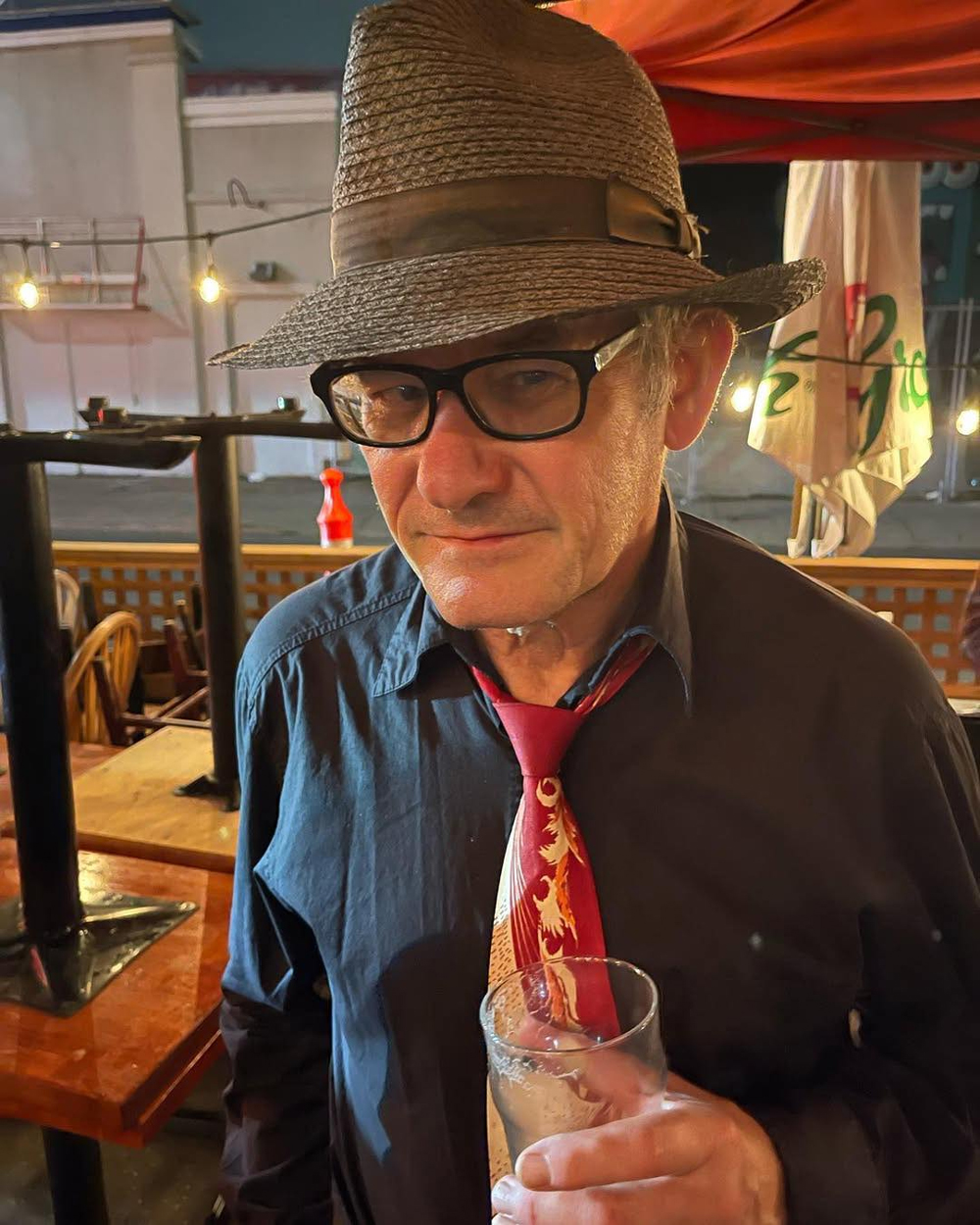
Musical breadth: As this tribute suggests, the breadth of Bob’s musical life was extraordinary. When asked what he most wished others knew about him, he answered: “I work in a lot of different musical styles and disciplines. Most people I work with in one approach are unaware of the other aspects of my career.”
Conducting, he added, was one thing he wanted to do more of.
Bob continued composing into his later years. In 2016, he wrote Two Fancies for New Music Concerts as a celebration of Robert Aitken’s 75th birthday. His interest in flute music also led him to write Symphony of Charms (2019) for the flute ensemble Charm of Finches. Unfortunately, its premiere was cancelled due to the pandemic, and the group later disbanded. Over the past few years, Bob had been working on pieces that combined composition and improvisation for a small ensemble, with his most recent work titled Coil (2025). And in 2024, he joined up with Andrew Timar to play again with the Evergreen Club for their 40th anniversary, this time on clarinet.
I knew Bob as a sensitive, intelligent, and soulful person, passionate about musical ideas and social justice. He listened with rare intensity and brought that same depth of listening into everything he touched: the concert hall, the club, the rehearsal studio, the dance floor, and his personal friendships. May you continue to find your way in sonic ecstasy, my friend.
There will be a celebration of Bob’s life in April.
Wendalyn Bartley is a Toronto-based composer and electro-vocal sound artist. sounddreaming@gmail.com