p13aAtruism: technology shapes culture. One could argue that we are less the children of Stravinsky, Schoenberg, Bessie Smith and the Beatles than we are of Thomas Edison, Scott de Martinville and Charles Cros, and their progeny, the anonymous technicians who developed digital sound in the 1970s.

And yet the things that influence musicians most deeply remain unchanged. No recording matches the excitement of a masterful live performance. No online musical forum or resource replaces the one-on-one human connection between teacher and student through which musical ideas are most essentially conveyed.

We envy, admire and emulate musicians of renown. But we retain a special love for our teachers and mentors, who have touched us in way that a concert or recording never can. Agrade school music teacher, a private instructor, a conservatory lecturer; sometimes stronger as teachers than performers; sometimes well known, often not. It is they that give each of us the tools to add our unique voice to the music.

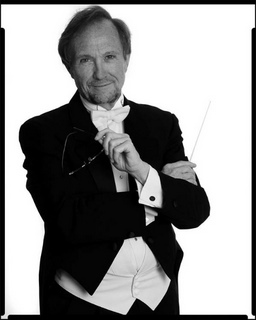
By all accounts, Deral Johnson was one such teacher. He taught choral music for 20 years at the University of Western Ontario, and after his death, March 24 this year, tributes from the musicians he touched poured in to The WholeNote and other forums. An expatriate American, Johnson taught in Texas and Colorado before moving to London in 1969. He threw himself into the Canadian music scene with a zeal and enthusiasm for which he became renowned, championing the music of Schafer, Cabena and Telfer, and training many distinguished Canadian musicians, including conductor and producer Robert Cooper, and University of Toronto voice professor Darryl Edwards.

Choral conductors who studied with Johnson include Michael Bloss, Lynn Janes, Jenny Crober, Ken Fleet and Carol Ratzlaff, all of whom direct choirs in and around Southern Ontario. Many of his former students speak glowingly of his combination of humour, rigour, kindness and passion. Margaret Thibideau, a former choral conductor, writes, “There was nothing quite like singing Gospel with Deral – it was fun, uplifting, and all I can say is that I have never had the privilege of finding anyone who even comes close to his high standards of musicianship or excellence.” Johnson will be missed both by those who knew him personally and those who felt his influence.

Meanwhile, the choral scene that Johnson helped develop and foster is in good form this spring. For instance, Robert Cooper’s Orpheus Choir performs the rarely heard Handel Oratorio Athalia on May 8, in a concert that showcases their Sedgwick Scholars (up-and-coming vocal talents who both sing in the choir and handle the solos). It is a mentoring programme now in its 20th year.
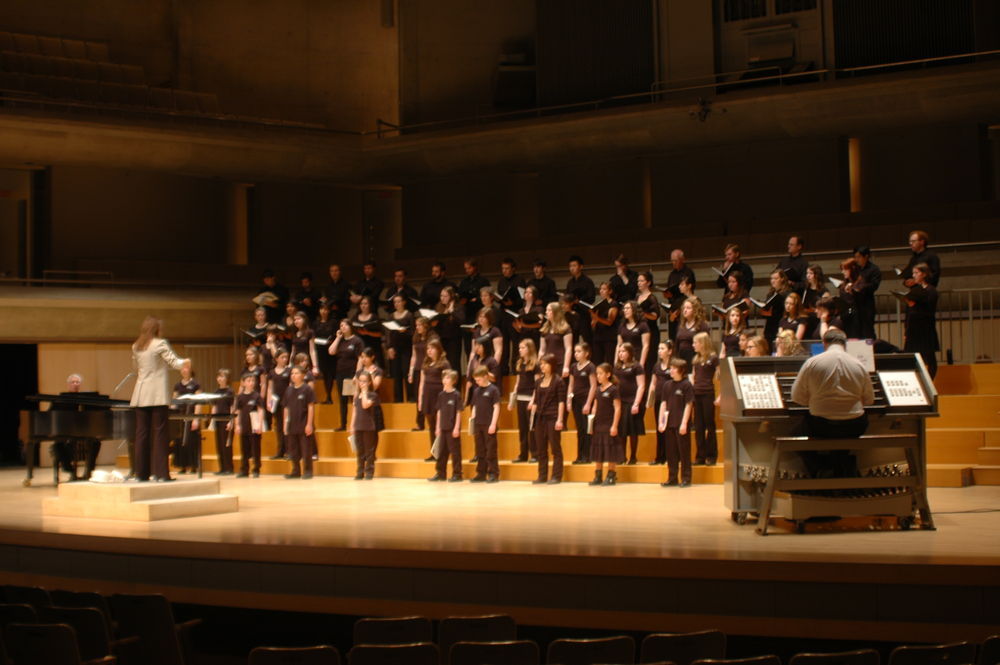
p14_viva_youth_singers_530And Carol Ratzlaff’s Annex-based Viva! Youth Singers have a 10th anniversary celebration concert, May 16. The concert features commissioned new works by composers James Rolfe and Juliet Palmer, as well as a musical by Leslie Arden. With singers from 4 to 25 and a wide range of choirs to choose from (including one for parents!), the choir’s proud lineage is clear.

The number of choral concerts at this time of the year is astounding, and sorting through them a fascinating task.

For one, thing, this appears to be the spring of the “crossover” programme. Concerts including a mixture of Broadway, opera and cabaret music are being given by the Toronto Sinfonietta (May 1), Alexander Singers and Players (May 6-7), the East York Choir (June 6), the Harlequin Singers (June 4-6), and the Oriana Women’s Choir, in a programme centred around the music of George Gershwin (May 8). Concerts focusing on the beloved music of Gilbert and Sullivan are given by Chorus Niagara (May 15-16) and the Etobicoke Centennial Choir (May 28-29).

There are also many concerts of works from the classical canon. On May 2 the Toronto Classical Singers sing an all-Mozart concert. On May 8 the Burlington Civic Chorale does the same, in a programme that includes two masses as well as rarer Mozart choral works. On the same evening the Peterborough Singers sing Mendelssohn’s majestic Elijah, and Kitchener’s Grand Philharmonic Choir sing the Verdi Requiem. The Durham Philharmonic Choir’s May 15 concert include’s excerpts from Hadyn’s Creation, and on the same evening Orchestra London and Philharmonic Choir perform Beethoven’s Missa Solemnis.

From May 28-30 the Kitchener-Waterloo Symphony, Grand Philharmonic Choir and Children’s Chorus perform that perennial favourite, Orff’s Carmina Burana. Three concerts featuring works by Bach are given by Orchestra London and Chamber Choir (May 5), Toronto Chamber Choir (May 16) and the St. Anne’s Concert Choir and Orchestra (June 5), in a benefit concert towards repairs for the St. Anne’s Parish. On May 1 the Tallis Choir focuses on the music of Purcell and his contemporaries, and on June 06 Unionville Symphonia and Chorus sing the Duruflé Requiem and the Haydn Te Deum.

And there are several of choices for modern and folk-based mass settings as well. The Amadeus Choir’s concert on May 15 includes Ramirez’s Misa Criolla and Toronto composer Sid Robinovitch’s Canciones por las Americas. The Toronto Beach Chorale’s May 2 concert includes Paul Winter’s Missa Gaia. Other multicultural offerings include a concert by the University of Toronto Gospel Choir (May 1), Plamen Ukrainian Women’s Vocal Ensemble (May 2), the Victoria Scholars’ “Postcard from Around the World” (June 6), the Toronto Jewish Folk Choir’s 84th annual spring concert (May 30) and the Nathaniel Dett Chorale’s “And Still We Sing,” featuring the steel pan work Legacy, in a programme focusing on music of the Caribbean islands (May 26 and 29).

That’s not all! In this magazine, and on our website, you’ll find many promising mixed end-of-season programmes by a wide variety of choirs. See The WholeNote’s listings for more choral events.

Benjamin Stein is a tenor and theorbist. He can be contacted at: choralscene@thewholenote.com.

In the wake of Canada’s triumphant performance at the Vancouver Olympics, I can’t help but wonder: where are our live broadcasts of choral concerts, anticipated for months by the music press, watched by millions on television, attended live by thousands of screaming fans with “Tenors Rule and Basses Drool” scrawled across their naked chests?

I propose that Canada found the International Choral Olympics. Singers will be luxuriously sequestered in the Chorister’s Village and fed only the best coffee and cookies during rehearsal breaks. Gold, Silver and Bronze medals will be awarded in such events as loudest fortissimo in the last movement of Beethoven’s Ninth Symphony; most obscure languages learned phonetically over a six-week period; choir best able to sing a cappella without tuning problems. But the ultimate Choral Olympic event will be the Broadway Medley Marathon. Choirs able to prevail in this grueling contest could look forward to years of lucrative endorsement contracts with throat lozenge manufacturers and Andrew Lloyd Webber’s publishing company.

Of course, such potential riches could tempt choirs to cheat. Any winning ensemble will thus have to be carefully reviewed for unfair tactics such as extra rehearsal time, longer coffee breaks, illicit coaching in North German pronunciation of “ich” and most crucially, going home after dress rehearsal for a restful night’s sleep instead of convening at the pub for several hours. Such heinous practices will have no place in the Choral Olympics.

I challenge choral enthusiasts to envision a Canada in which a young boy grows up dreaming not of being the next Sidney Crosby, but a member of the bass section of the North Woodchuck, Sask. Community Chorale. Let us build this dream together!


Down to Earth

Becca Whitla 3In the meantime, choirs continue to compete for our ears in upcoming weeks. Several groups present spring and Earth-themed concerts. The University of Guelph choirs present “Force of Nature” (April 11); the Annex Singers perform excerpts from Orff’sin “Songs of the Earth” (April 17);Hamilton’s John Laing Singers present “Spring’s Joy” (April 24); and the Echo Women’s Choir, Povera Chamber Choir and Holy Trinity Choir combine in a massed celebration of Earth Day entitled “Hymnody of Earth: A Ceremony of Songs for Choir,
Hammer Dulcimer and Percussion” (April 17).

There are also several choices for Good Friday and Easter (several notable concerts were mentioned in last month’s column – please go to www.thewholenote.com to read about them). On April 2, the Toronto Mendelssohn Choir performs “Sacred Music for a Sacred Space.” On the same night, the Newman Festival Chorus and Orchestra present Bach’s St. Matthew Passion. The Elmer Iseler Singers play catch-up on April 7 with “The Glory of Easter.” Other Good Friday evening concerts are by the All Saints Kingsway Anglican Church Choir in Toronto, the Cantabile Chorale of York Region in Thornhill, and the Durham Community Choir in Oshawa.

Themed concerts include the Brampton Symphony Orchestra Chorus in an all-French programme entitled “La Vie en Rose”: (April 1), and Toronto’s Kir Stefan Serb Choir’s “Slavic Sacred And Traditional Music” (April 24). In Bradford, Achill Choral Society sings movie music in “Sounds of the Silver Screen” (April 24-25). On April 25 the Elora Festival Singers present cabaret and theatre music in “Spring Fever.”
For those who like to see choral singers unleash their inner diva or divo, two opera-centred concerts are given this month by the Kingston Choral Society and Kingston Symphony Orchestra (April 25) and the Toronto Mendelssohn Choir (“A Night at the Opera,” April 28).

Toronto’s Cantemus Singers present an intriguing programme entitled “The Fairer Sex: A celebration of women in Renaissance madrigals and motets” (April 17-18). Combining music that praises female saints and holy women with some deliciously salacious and decidedly secular madrigals, this sounds like a ideal programme to which one might bring a date.

For those interested in large scale works: the NYCO Symphony Orchestra and Chorus perform Beethoven’s Mass in C (April 10). On the same night, Amadeus Choir celebrates its 35th anniversary season with an all-Mozart programme that includes the D minor Requiem and his lesser known Vespers. The latter work, one of two Vespers settings by Mozart, is a true gem, preferred by many to his Salzburg masses.

Catherine Robbin 1The Mozart Requiem is also being performed by Hamilton’s Central Presbyterian Church choir on April 2, and by the Pax Christi Chorale on April 24-25. The King Edward Choir performs a winning combination of Mozart’s Mass in C Minor and Poulenc’s Gloria in Barrie (April 10) and the Mississauga Choral Society sings Fauré’s Requiem (April 11). Cantores Celestes Women’s Choir perform Pergolesi’s luminous Stabat Mater on April 17. A portion of proceeds from this concert will go to the Because I am a Girl foundation.
As an alternative to lengthy works, choirs often combine smaller scale works in pleasing and varied programmes. On April 10, the Healey Willan Singers.offer a mixed programme in Toronto, while the Georgetown Bach Chorale and Chamber Orchestra perform various works by Vivaldi in a concert that also includes the composer’s well known Four Seasons. Similarly styled concerts are given by the Voices Chamber Choir (April 17) and the Tactus Vocal Ensemble (April 18-19). A combination hymn-sing and concert is given by the Glenview Choir and North Toronto Salvation Army Band (April 25).

Spring also affords us an opportunity to see what the next generation of choral singers has been working on this year. The Church of St. Simon-the-Apostle hosts a “Young Musicians Showcase” on April 16, in a fundraising concert. The Viva! Youth Singers perform a free noon-hour concert (April 7). The Toronto Secondary School Music Teachers’ Association presents band, string, and choral students in the “59th Annual Sounds of Toronto Concert” (April 15). The Oakville Children’s Choir hosts four other boys choirs in a concert entitled “Let the Boys Sing!”(April 17). And the Toronto Children’s Chorus performs “All Creations Sing,” featuring a rare appearance by revered mezzo-soprano Catherine Robbin (April 1).

Finally, on April 17, “Singing Together: A Celebration of Cultures” assembles a panoply of choirs worth listing in their diversity: the Caribbean Chorale of Toronto; Toronto Maple Leaf Chorus; CroArte Chorale; Chinese Canadian Choir of Toronto; Schola Cantorum; Edelweiss Chor; Nayiri Armenian Choir; Coro San Marco; and Creative Notes. Such a concert, which could only take place in sprawling, multicultural Toronto, suggests that we already have a pan-cultural choral Olympics of our own well under way.


Benjamin Stein is a tenor and theorbist. He can be contacted at: choralscene@thewholenote.com.


As I wrote in last month’s column, much Western choral music denotes and illuminates the celebrations and rituals of the Christian year. Over a span of many centuries, European temporal powers employed composers and performers to create thousands of religious masses and motets giving praise to God.

page 15 robert cooper 4These works reflected the genuine piety of religious and political leaders, in a way in which a post-Enlightenment society can scarcely understand. But at the same time, those who commissioned these works surely understood the power of art to reinforce their temporal power. A performance of a mass was more than pleasant musical setting of a sacred text. It was a statement of cultural and ethnic identity,  and a potential rallying point in times of strife.

At the beginning of the 21st century, many find themselves in the odd position of encountering religious choral music most often in the rarified atmosphere of the concert setting, rather than as part of a sacred service. Although we may come to know much of this music well, we have little knowledge of, or interest in, the societies from which it sprang. We’re more likely to venerate Mozart than we are to regard with much interest or respect the autocratic Salzburg Archbishop who employed him to fill his church with music.

Composers’ mass settings had their part to play in the sectarianism and strife of past centuries. But what do they mean to us today, in a society in which religious plurality is buttressed by law, and multiculturalism is an essential if imperfectly realized aspect of Canadian identity?

A definitive answer to this question is (thankfully) beyond the scope of this article. But upcoming performances of Bach’s St. John Passion, given by Chorus Niagara and led by veteran conductor Robert Cooper on March 6-7, illuminate this ongoing question. One of the most important works of the classical repertoire, the St. John Passion can be alarming in its depiction of the Jewish hordes as a mob of Christ-killers, in light of some of the anti-semitic excesses of 18th-century Europe.

But while anti-semitism has by no means disappeared from the modern world, the concert setting in which Bach’s music is now most often heard in many ways removes it, in a positive sense, from the more problematic aspects of the Baroque church. What is left is Bach’s extraordinary settings of the Passion scriptures. The finger-pointing inherent in the text is to a great degree mitigated by music filled with compassion, tenderness, and a vast understanding of human frailty.

Various other sacred settings can be enjoyed in the weeks to come. The Elora Festival Singers sing Rachmaninoff’s Vespers (Guelph, March 21); The Etobicoke Centennial Choir sings Beethoven’s Mass in C and Bernstein’s Chichester Psalms (March 27). The Hart House Singers perform Brahms’ German Requiem (also March 27). Mozart’s Coronation Mass and Piano Concerto No. 21 will be heard at Jubilee United Church on March 28. And Cardinal Carter Academy for the Arts performs Fauré’s Requiem and Duruflé’s Messe Basse as part of an all-French programme on 30 March.

Good Friday, which this year falls on April 2 , brings with it many concerts. One can choose from among the following: Cantabile Chorale of York Region’s The Rose of Calvary; Toronto Chamber Choir’s Membra Jesu Nostri, an oratorio setting by J.S. Bach’s idol, Dietrich Buxtehude; the Durham Philharmonic Choir’s programme that includes Fauré’s Requiem; and the Metropolitan United Church Festival Choir performing Brahms’ German Requiem. As well, the Grand Philharmonic Choir of Kitchener performs Bach’s Mass in B Minor in Kitchener with a as good a group of solists as one is likely to hear anywhere: Suzie Leblanc,Laura Pudwell, Michael Schade, and Russell Braun.

page 16 David FallisOther unusual “non-mass” concerts are of note in March and April. Lovers of Brahms can also hear two interesting choral works: Rinaldo, and the beautiful Alto Rhapsody, performed by the Victoria Scholars on March 7. David Fallis conducts the March 13 debut concert of Choir 21, an intriguing new ensemble specializing in 20th century music (though I note that they are throwing in some Hildegard of Bingen as well). The excellent Toronto Children’s Chorus teams up with American counterparts the Boston City Singers, for a March 5 concert that includes Schumann’s often overlooked Mädchenlieder. And the Tafelmusik Orchestra and Choir mount a programme, from March 10 to 14, entitled “Bach in Leipzig,” which focuses on Bach’s work in the final stage of his career, as Cantor of the Thomasschule and music director of Leipzig’s two largest churches.

Two world music/classical-hybrid concerts stand out in March. Echo Women’s Choir is a lively Toronto ensemble led by husband and wife team Becca Whitlaw and Allan Gasser. These musicians are as at home with folk music as they are with classical music, and their repertoire choices always reflect this easy pairing. Their offering on March 20 is “Ceilidh: A Down-East Kitchen Party.” Also, in a short number of years, world music ensemble Autorickshaw has established itself as one of the more inventive and interesting groups around. They team up with the Jubilate Singers on March 27.

Benjamin Stein is a tenor and theorbist. He can be contacted at: choralscene@thewholenote.com.

P20The first months of any new year are not often wildly busy for choirs. Western choral repertoire is in many ways shaped and anchored by the holidays of Christmas and Easter, and it’s during these times of the year that ensembles jostle for audience attention. One way to avoid the traffic jam is to schedule a concert prior to spring, and hope that the desire for live choral timbres will entice concert-goers to brave the cold. Two large-scale works loom behemoth-like over the southern Ontario choral scene during the coming weeks.

The
Toronto Symphony Orchestra and Toronto Mendelssohn Choir lead the charge with Verdi’s Requiem on February 18. This work, which will be led by guest conductor Gianandrea Noseda, is a study in contrasts. Verdi imbues the text with all the drama of a 19th-century Romantic opera composer, but also pays homage to earlier traditions of mass-setting with the fugal writing that pervades the choruses. The four soloists must have voices with enough operatic heft to sail above Verdian orchestration, but be able to tune the delicate a cappella section of the “Lacrymosa.” like singers of Renaissance motets. It’s a rewarding work for singers and audience alike.

On February 28, Toronto’s Orpheus Choir combines with the Guelph Chamber Choir to sing a programme with Rachmaninoff’s
Vespers as the centerpiece. The Vespers has a certain notoriety among choral singers for having some of the lowest bass writing in the choral repertoire. A colleague protested to Rachmaninoff that few basses would be able to handle the tessitura set out in several of the movements. Rachmaninoff replied simply, “I know my countrymen.” Perhaps what Rachmaninoff meant to say was, “I know what my countrymen sound like after a night of drinking Russian vodka.”

Thanks to the LCBO, it ought to be possible for southern Ontarian choristers to use this method as well. Watch the Orpheus and Guelph basses carefully as they ascend the steps: if any of them stagger or weave, you know what has occurred. There are of course other methods for lowering one’s voice to which choral singers might resort; staying up all night works very well, or singing with a cold in winter, which can be seen as a particularly Canadian solution to this problem.


Joking aside, Rachmaninoff’s
Vespers is very simply one of the highlights of the European choral repertoire. It combines brilliantly the lucid part-writing of a classically trained composer with the dusky, incense-imbued mystery and ritual of the Russian Orthdox Church. This sequence of motets is not, strictly speaking, a Vespers service. Rather it is a selection from what is known in the Russian Orthodox Church as the All-Night Vigil, a combination of the three canonical hours Vespers, Matins and First Hour. The work was an instant success in Russia when premiered in 1915, although it was suppressed for a period following the 1917 revolution. Its haunting austerity is perfect suited to a Canadian winter.

For those whose tastes run to less gigantic mass-settings, there are a few other options. The John Laing Singers of Hamilton and the Univox Choir of Toronto both perform concerts that showcase the Fauré
Requiem (February 7 and 26, respectively); the Durham Philharmonic Choir takes on Gounod’s Messe Solennelle de Sainte Cécile in Oshawa (February 21); the University of Western Ontario Singers sing Mozart’s D minor Requiem in London (February 26). On March 6, the Bell’Arte Singers sing Howells’ Requiem, the Oriana Women’s Choir sing a mixed programme that includes Canadian composer Imant Raminsh’s Missa Brevis, and the Tallis Choir performs the serene but passionate music of Spanish Renaissance composer Tomás Luis de Victoria.

Elsewhere, there are concerts by the Georgetown Bach Chorale (Norval and Caledon on February 6 and 7, respectively) and the Da Capo Chamber Choir in Kitchener (February 27).
The Uxbridge Chamber Choir presents a programme that includes American composer Morten Lauridsen’s setting of the Lux Aeterna text and Brahms’ whimsically named but decidedly un-frothy Liebeslieder Waltzes (March 7).

Themed concerts are being given by several groups.
A Celtic Valentine features the  University of Toronto Women’s Singers in a concert that includes Celtic fiddlers and dancers (February 12). The Burlington Civic Chorale offers a Valentine Cabaret in Guelph (February 13). The Mississauga Choral Society sings Broadway melodies in Broadway With Heart (February 20), the Toronto Beach Chorale weds choral singing to hits from the 50s to the 70s with Sweet Sixteen (February 27), and the Toronto Welsh Male Voice Choir honours the 1st of March with a St. David’s Day Concert.

On 17 and 20 February, the Nathaniel Dett Chorale performs
Voices of the Diaspora, a concert that showcases music of the Gullah people. The Gullahs, based in South Carolina and the Georgia Sea Islands, have preserved more traditional elements of African culture than any other pan-African group in North America. It should be interesting to see what the Detts come up with in this programme. The Amadeus Choir is busy as well, mounting their own Celtic concert on March 6.

Altogether, the next couple of months offer a rich variety of concert choices. We can congratulate ourselves that Canadians will brave the cold not only for hockey, skiing and curling, but for choral singing as well.


Benjamin Stein is a tenor and theorbist. He can be contacted at: choralscene@thewholenote.com.


p23_TaurinsFrom Medieval times to well into the 19th century, to state in company that December was the month to sing carols would have drawn a quizzical look or a mocking laugh. Carols were lively celebratory songs sung all year round, with dance rhythms and vivid, colloquial lyrics. Their subject matter could be anything from celebrations of the spring planting and the summer harvest, to robust appreciations of good food and drink on a cold winter’s night. Medieval carolers assembling music for dancing at a village party would have regarded Mendelssohn’s stately, regal music attached to Wesley’s poem “Hark the Herald Angels Sing,” as distinctly unpromising.

In our time, the word “carol” has become a catch-all term for the various musics sung around Christmas time: popular songs, with subjects like the dreaded Rudolph and Frosty, stirring and high-toned hymns like the Mendelssohn mentioned above, plainchant or folk music from diverse sources arranged into massive vocal workouts by modern choral specialists such as Rutter and Willcocks.

One thing that has remained the same from ancient times to the present is that this music is meant to be sung and enjoyed in a group setting. For many people, a carol concert is often the only time in which they are called to raise their own voice, in an era in which music is ubiquitously supplied by electronic means of every type. Little wonder then, at the enthusiasm with which we attend Christmas concerts, and the array of choices that invite us this December.

Christmas concerts are offered by the Bravado! Show Choir (Barrie, 4-6 December), the County Town Singers (Oshawa, 4-5 December), Toronto Accolades (6 December) and the East York Choir has an inventive programme titled “To Drive the Cold Winter Away” (6 December). Other Christmas programmes on the first weekend of December are offered by the Mississauga Festival Choir, Mississauga Children’s Choir, the Toronto Symphony Orchestra, the Bell’arte Singers, the Echo Women’s Choir and the Irish Choral Society of Canada, among others. The following weekend, look for concerts given by the Annex Singers, Kingston Symphony Orchestra and Choral Society, and the Hannaford Street Silver Band in collaboration with Amadeus Choir. A notable concert not concerned with Christmas repertoire this December is that of the visiting Moscow Male Jewish Cappella on 13 December. (See The WholeNote’s listings for details on all of the above.)

On 19 December, the Toronto Chamber Choir gives an intriguing concert of Finnish and Swedish music from the Piae Cantiones. This 1582 collection of Latin songs from Sweden was plundered for its musical riches by English hymn composers in the 19th century, and it’s the source for many well known English language hymns and carols, such as “Unto Us A Boy Is Born” and “Good King Wenceslas.” It should be fascinating to hear melodies from Piae Cantiones sung by an ensemble that specializes in historically informed performance, as an alternative to modern arrangements of ancient carols that are often sugary or bombastic by turns.

Performances of Handel’s Messiah account for another significant aspect of December music-making. While Messiah is not the most difficult choral work in the repertoire, to get through a series of performances with the vocal cords intact requires careful management of the voice, combined with a conductor who utilizes choral forces reasonably. I remember participating in one harrowing Messiah, directed by a conductor who shall remain nameless, in which the dynamic range was forte to triple-fortissimo for almost every chorus. It didn’t help that he was using Mozart’s orchestration, which calls for added brass and woodwind players, who of course learn early on in their training that singers are to be drowned out whenever possible. The audience loved the show, and the conductor came out for repeated bows, stepping across the prostrate bodies of exhausted choristers as he did so.

Toronto concertgoers may choose between Messiah performances by the Elmer Iseler Singers and the Vocal Horizons Chamber Choir on 4 December, Aradia Ensemble’s “Dublin Messiah” (after the original 1742 performance) on 12 December, Tafelmusik’s Baroque interpretation from 16-19 December, and the Toronto Symphony’s series with the Toronto Mendelssohn Choir from 18-21 December. Two sing-along versions are being offered by Eglinton St. George’s United Church (13 December) and Tafelmusik (20 December).

Outside Toronto, there are Messiah offerings by Aradia Ensemble in Port Hope (5 December), the Grand River Chorus in Brantford (6 December), Elora Festival Singers in Elora (13 December) and Orchestra London (16 December).

Notable works other than Messiah are often combined with Carol concerts in December. Britten’s luminous Ceremony of Carols is part of concerts by the John Laing Singers (Hamilton, 5 December), the Toronto Mendelssohn Choir (9 December) and the Toronto Children’s Chorus (19 December).

Bach’s wonderful group of six cantatas that comprise the Christmas Oratorio contain some of his very best choruses and arias. The Pax Christi Chorale performs cantatas IV and V on 5-6 December, and the Toronto Choral Society sings Christmas Oratorio excerpts on 5 December. The latter group reprises part of this programme on 13 December, in a benefit concert for Street Haven Women’s Choir.

The Canadian Sinfonietta and Toronto Cantata Chorus perform Rutter’s Magnificat as part of their “Holiday Sounds from the 20th Century,” the Cantores Celestes Women’s Choir performs Vivaldi’s Gloria (RV58), and the Jubilate Singers sing Charpentier’s delicate Messe de Minuit, all on 5 December.

In the aftermath of such seasonal festivities, January is generally understood to be Worldwide Choral Hangover Month. Singers soak their throbbing vocal cords in hot chocolate or more grown-up substances; choir librarians gaze in dismay at the piles of music to be re-filed; conductors put icepacks on their forearms and ignore the phone. In other words, we’re all hibernating in January. But a few concerts stand out for those not sated by December offerings.

The Grand Philharmonic Choir and Kitchener-Waterloo Symphony weigh in with The Dream of Gerontius on 16 January, as part of the ongoing celebrations of Howard Dyck’s final season as conductor of the GPC. On 30 January The Elmer Isler singers and the Toronto Children’s Chorus combine with the Polish Chamber Choir in a concert of works by Penderecki, Gorecki, and Palej, in collaboration with Soundstreams.

Looking ahead to February, the Georgetown Bach Chorale will mount a programme that includes the Allegri Miserere and Bruckner’s setting of Christus factus est (6 Febuary), and the John Laing Singers will sing works that include the Fauré Requiem and Britten’s Festival Te Deum (February 7). These are slim pickings compared to December’s riches – but elegant and intriguing choices worth seeking out in the cold first weeks of the new year.

Benjamin Stein is a tenor and theorist. He can be contacted at: choralscene@thewholenote.com.

Back to top