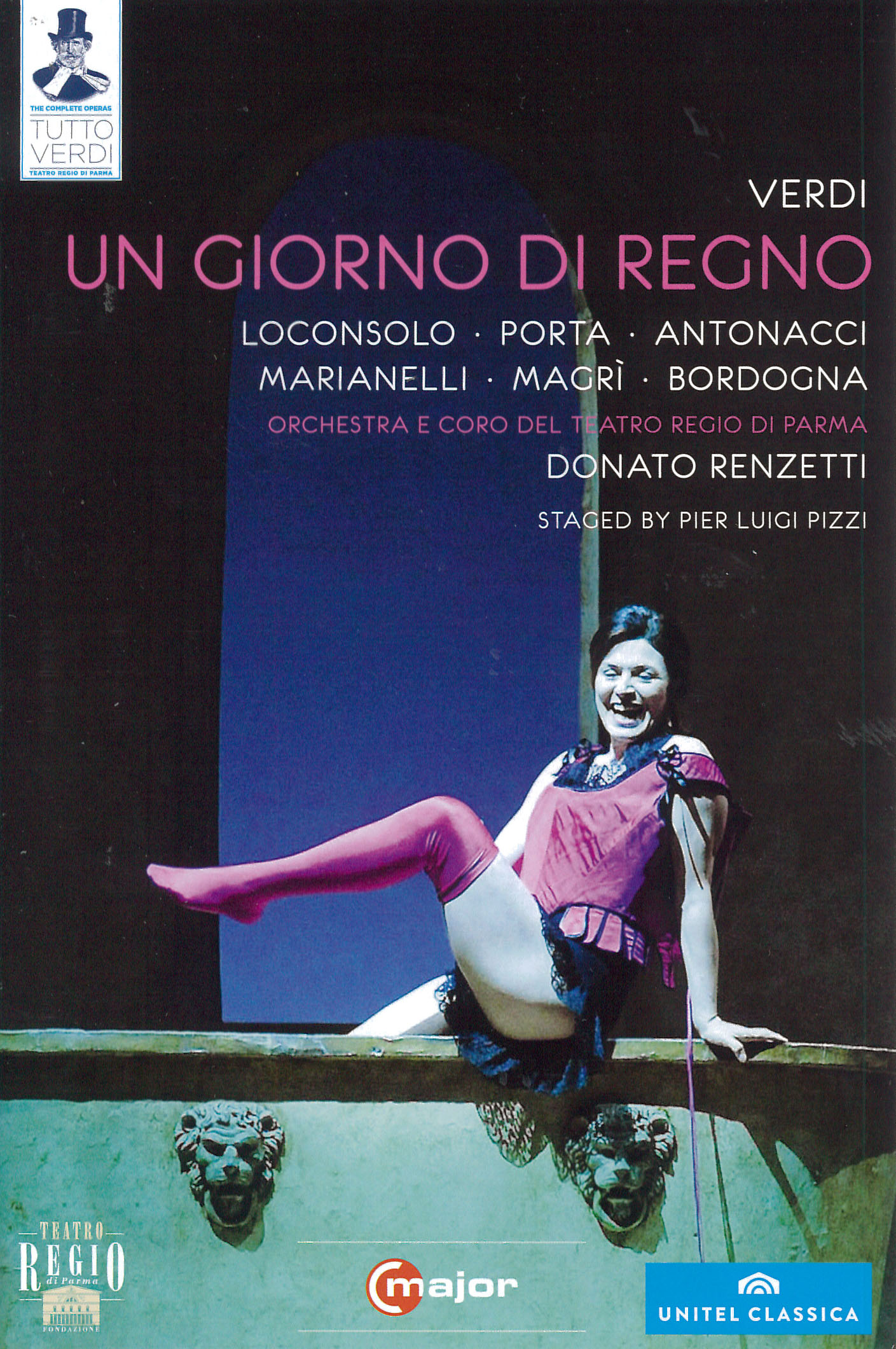
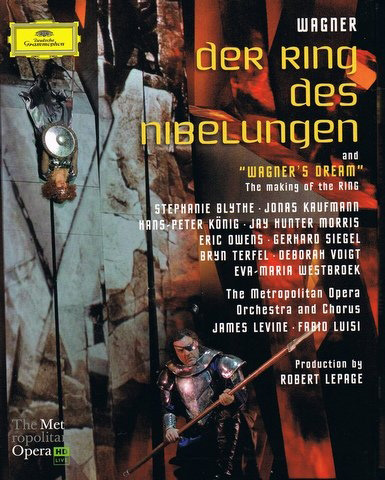
03 Lepage RingWagner – Der Ring Des Nibelungen; Wagner's Dream, a documentary
Robert Lepage; Metropolitan Opera
Deutsche Grammophon 073 4770 (8 DVD) 073 4771 (5 Blu-ray)

This set is derived from the Live from the Met broadcasts from the 2010/11/12 seasons and is the second Ring cycle from the Met for the home screen. The first was the Otto Schenk/Gunther Schneider-Siemssen cycle that was seen on PBS in the early 1990s. While watching these new discs I thought about this earlier set and had a peek. The peek turned into a marathon. Every aspect of that cycle pleases me; the mise-en-scène, the cast and Levine’s direction. It remains the perfect document exemplifying the traditional productions of the last 100 years (DG 073043-9, 7 DVDs).

Dutifully returning to the Lepage Ring, as it is now referred to, was an utterly different experience, drawing undue attention to and distracted by the stage-wide row of planks waving around and wondering what they will do next. Viewing these four music dramas in the theatre over three years, many were disappointed, perplexed and intolerant of such a radical departure from tradition.

Wagner’s Dream is an engrossing, informative documentary of the philosophy, concept and construction of “The Machine,” the brainchild of Robert Lepage. We are in on its fabrication in Quebec and the installation at the Met. Then the inevitable little hitches as stage people, the choreographer and the singers familiarize themselves with this 9,000 pound machine and its ability to produce the desired result. The Machine, it dawned on me, is simply an elaborate new form of scrim, adjustable in countless ways to also provide planes according to the needs of the scenes, while the projected images serve only to evoke the surroundings and not to furnish them. Once the penny dropped, it all seemed so obvious. I no longer lamented the absence of traditional three-dimensional sets but was well aware of the atmosphere and environment.

This was to be Levine’s Ring but due to his declining health he was able to conduct only Das Rheingold (October 9, 2010) and Die Walkure (May 14, 2011). The cycle was completed by Fabio Luisi who had assumed the post of principal conductor of the Metropolitan Opera on September 6, 2011: Siegfried (November 5, 2011) and finally Götterdämmerung (February 11, 2012).

Singers in the principal roles remain constant across the four dramas including Bryn Terfel as Wotan, Stephanie Blythe as Fricka, Hans-Peter König as Fafner and Hunding and Hagen while Gerhard Siegel is Mime and Eric Owens is Alberich. This is Deborah Voigt’s first Brunnhilde and Jay Hunter Morris’ first Met Siegfried but the viewer would never guess it, so “to the manner born” are their performances. I see and hear them as ideally cast. Morris was born and raised in Paris, Texas and in conversation has not lost his charming Texas drawl. The many interviews with each tell their stories.

Jonas Kaufmann appears only in Die Walkure where the attraction of his Siegmund to Eva-Maria Westbrook’s Sieglinde is exquisitely intense. Performances from Voigt, Morris, Terfel and König are outstanding but there are no lesser players. Conversations and interviews with the principals caught between acts in the original transmissions are included as separately tracked extras.

The Met orchestra has been honed to perfection over the years and their enthusiasm and sensitivity can be movingly gentle or strongly dramatic with enormous horsepower where called for.

This unique set will be irresistible for many Ring fans, and diehard traditionalists may be pleasantly surprised.


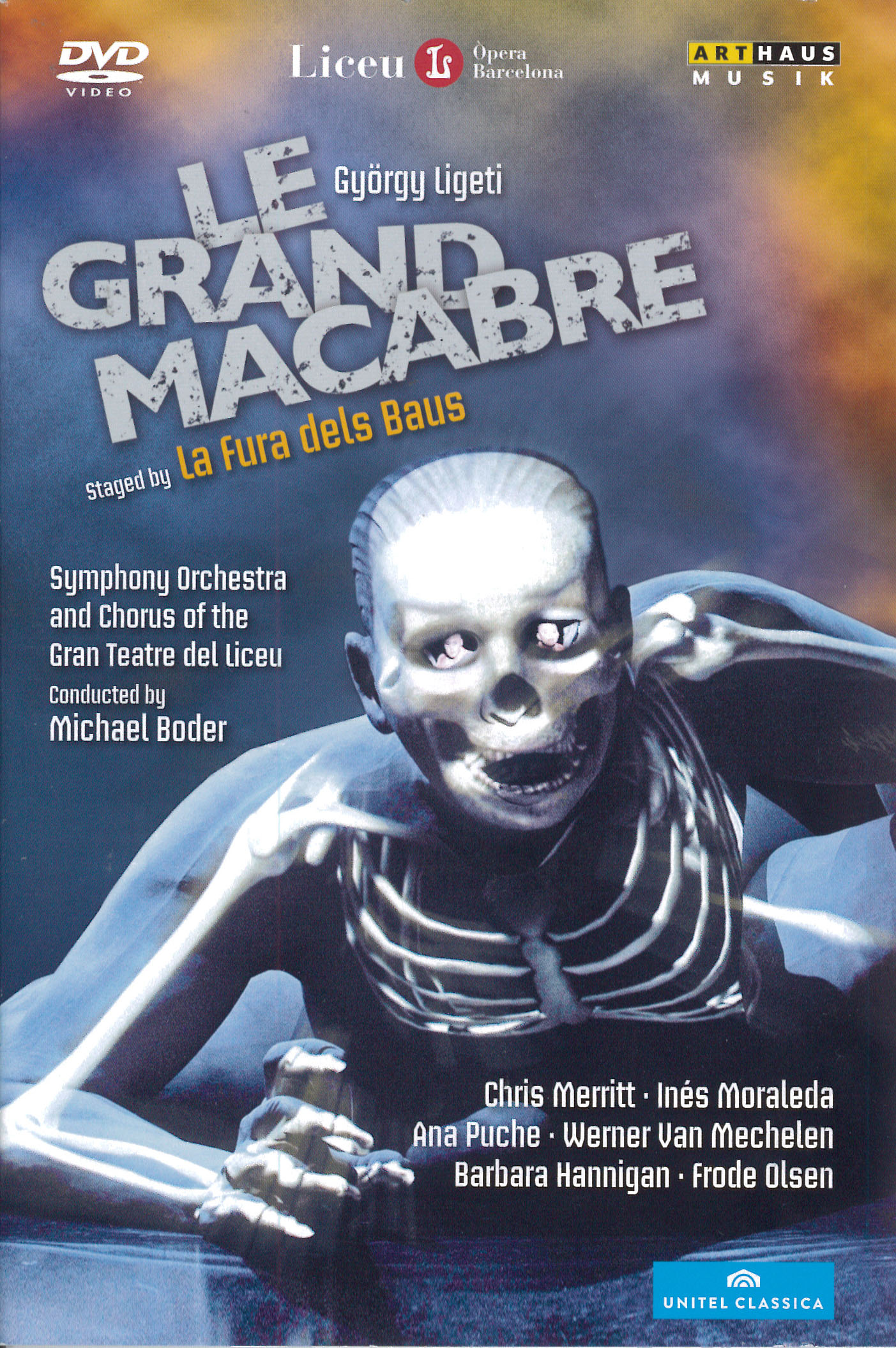
04 Grand MacabreLigeti – Le Grand Macabre
Chris Merritt; Ines Moraleda; Ana Puche; Werner Van Mechelen; Barbara Hannigan; Frode Olsen; Symphony Orchestra and Chorus of the Gran Teatre del Licau; Michael Boder
ArtHaus Musik
101 043

Ligeti owes some of the popularity of his music to futuristic images: the hypnotic passages in Stanley Kubrick’s 2001: A Space Odyssey were incredible background to Ligeti’s music. It is then little wonder that a combination of his difficult, relentless and entrancing music, with fascinating and at times shocking staging by La Fura dels Baus, results in such an explosive combination. The La Fura ensemble is Europe’s answer to the theatrical wizardry of Robert Lepage’s ExMachina. After a visually stunning production of Weill’s Mahagonny on the same label, Le Grand Macabre sets the bar even higher. The stage, dominated by a female shape, vaguely reminiscent of Picasso’s large-boned nudes, is transformed by tricks of light and projections into a phantasmagoria of nightmarish images, truly a “Grand Macabre.”

The tale of a false prophet of an impending apocalypse was written by Ligeti between 1974 and 1977, but he completely reworked it in 1996. Opera as a genre forces Ligeti to accommodate the most difficult of instruments, the human voice. Hence the presence of both melody and tonality in this intense work. The striking visuals will transfix even the most reluctant modern opera followers, but this is not to say that the singing is not amazing. Werner Van Mechelen inhabits the role of Nekrotzar, the prophet of doom, with ease and class, while Barbara Hannigan as Gepopo and Brian Asawa as Prince Go-Go shine in their respective roles.

This is certainly not a production that leaves the listener toe-tapping or humming a familiar aria. Instead, one will be forced to think, reflect and then put the DVD back on. Such is the power of Ligeti’s music and futuristic imagery.


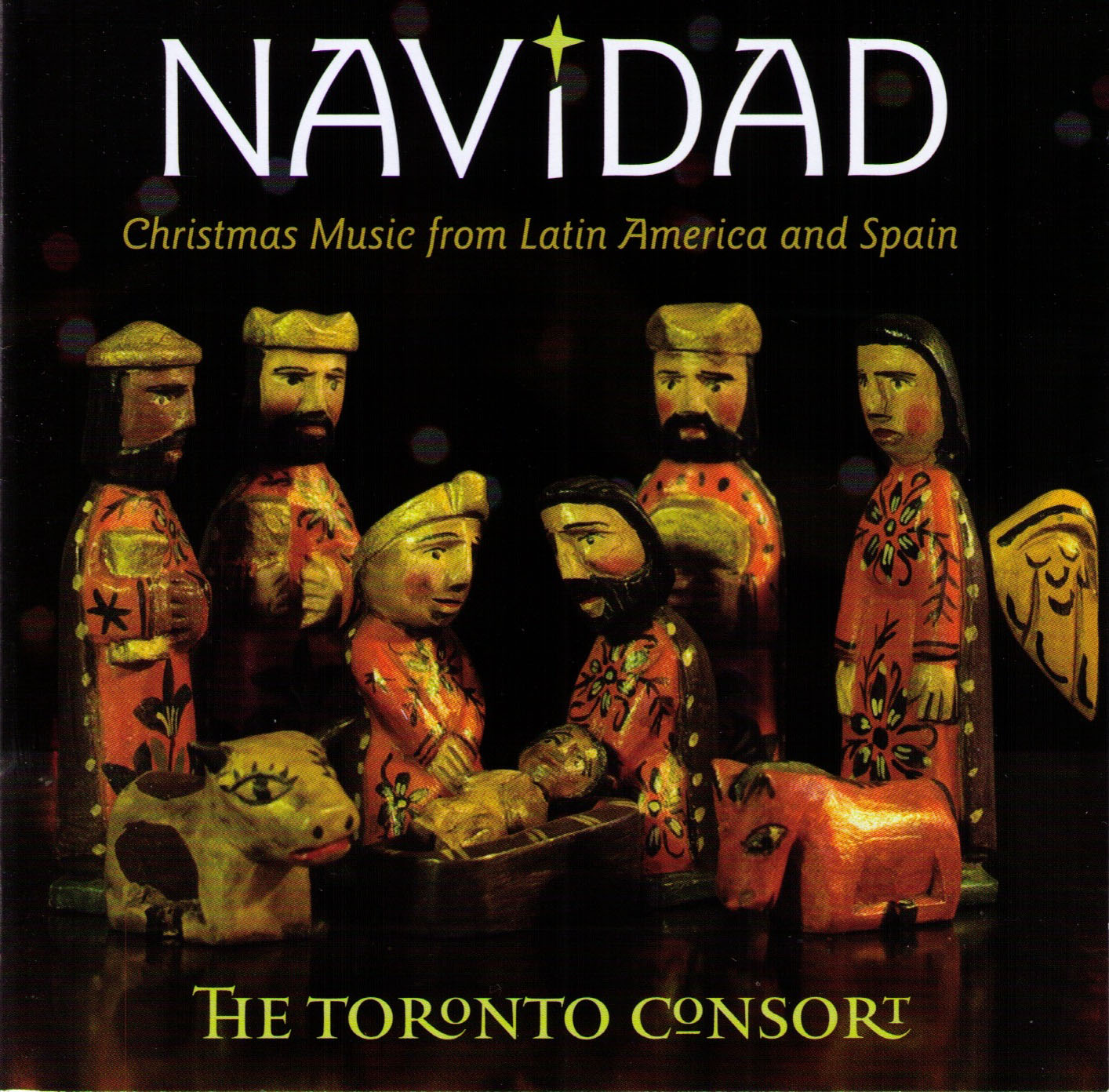
05 Navidad Toronto ConsortNavidad
Toronto Consort; David Fallis
Marquis MAR 81435

The Toronto Consort’s Christmas offering this year features villancicos and dances from 16th and 17th century Latin America and Spain. More earthy and fun than the more formal church music, the villancico traditionally mimicked ethnic speech patterns and was accompanied by folk instruments. So, true to form (and similar to the Toronto Consort’s treatment of early popular English music), some of the stresses and pronunciation you hear in selections such as Riu, riu, chiu may at first sound a little rough around the edges, but serve well to portray the joyful, lusty nature of the peasant class. In fact, as pointed out in David Fallis’ detailed liner notes, people actually got up in Church and often danced to these, “much to the consternation of church authorities.”

Other songs on this disc, such as the sweet and tender lullaby Xicochi and the mystic Ay, luna que reluzes provide a lovely contrast to soothe and inspire. The players have picked up some less familiar instruments suited to the repertoire, with Terry McKenna and Lucas Harris on vihuela (shaped like a guitar, tuned like a lute), Julia Seager-Scott on baroque harp and Dominic Teresi on bajón (an instrument similar to the bassoon). With lively notes as well as lovely voices and good-humoured too, this is an excellent recording to liven up the Christmas season.

The Toronto Consort performs Michael Praetorious’ Mass for Christmas Morningat Trinity-St. Paul’s Centre on December 14, 15 and 16.

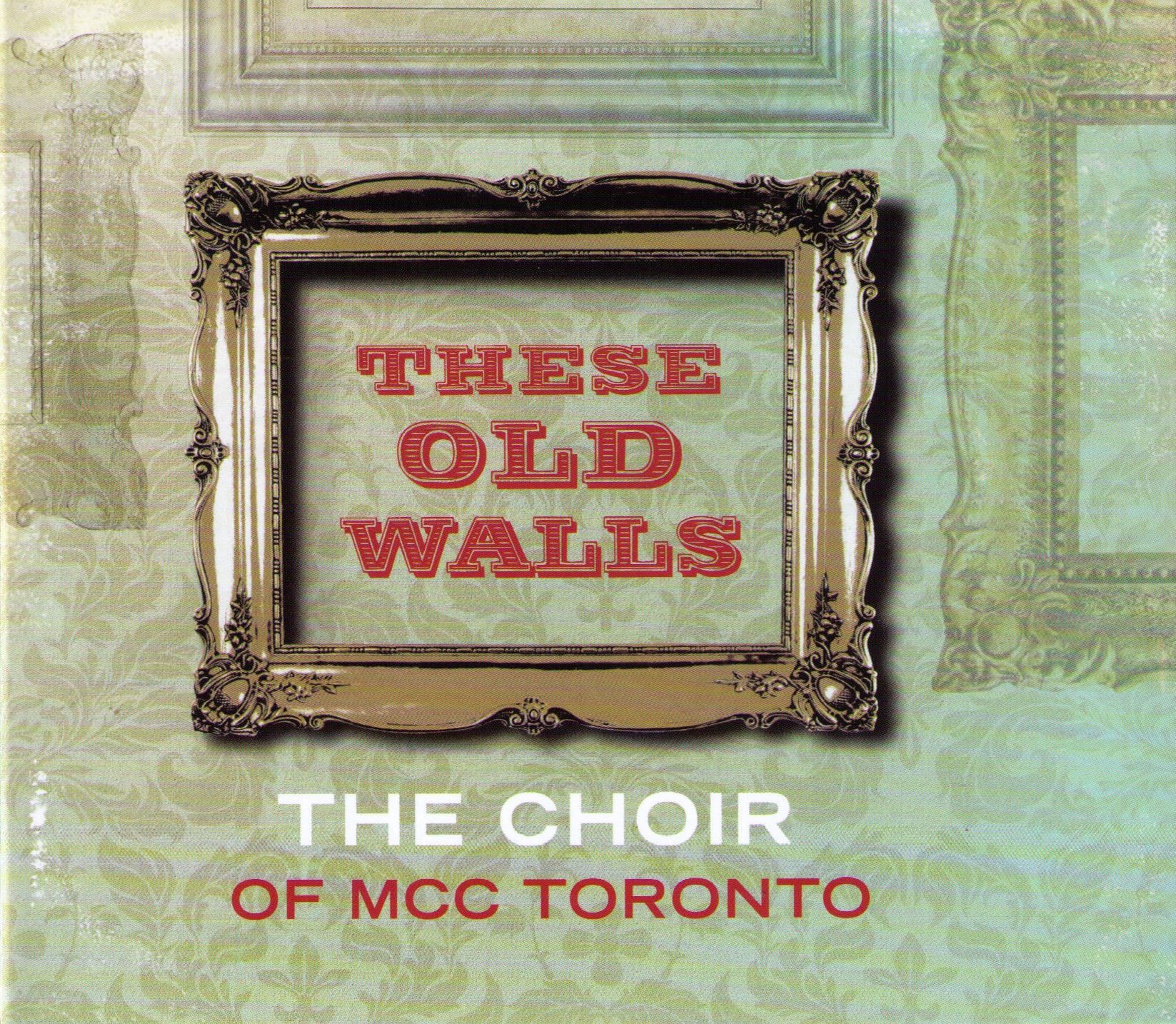
06 These Old Walls MCC ChoirThese Old Walls
The Choir of MCC Toronto
Independent (www.mcctorontochoir.com)

It is a joy to hear a group with so much heart, energy and enthusiasm as this 50-voice community choir based at the Metropolitan Community Church of Toronto and led by Diane Leah. This is the same choir who gave Jack Layton such a wonderful send-off last year at the public celebration of his life. In fact, listening to this recording, I was struck with an incredible feeling that love, hope, healing and reconciliation are truly at the heart of this community.

This choral collection of hymns, anthems, spirituals and popular songs is nicely complemented with the addition of soulful singer Stephanie Martin, cellist Amy Laing and bassist George Koller with Tom Jestadt and Paul Ormandy, drums/percussion, and Colleen Allen on sax/flute. Also adding to the musical interest are breakout groups from within the choir who’ve chosen some good numbers and great names: Pride & Joy singing the title track, Tet’atet with All through the Night and the A-Men performing Billy Joel’s Lullabye (Goodnight, my Angel). And it’s not often one gets to hear a Cuban folk song like Son de Camaguey in the same program as call & response song John the Revelator, a piece so rousing that one might very well have to mind These Old Walls lest they come tumbling down!

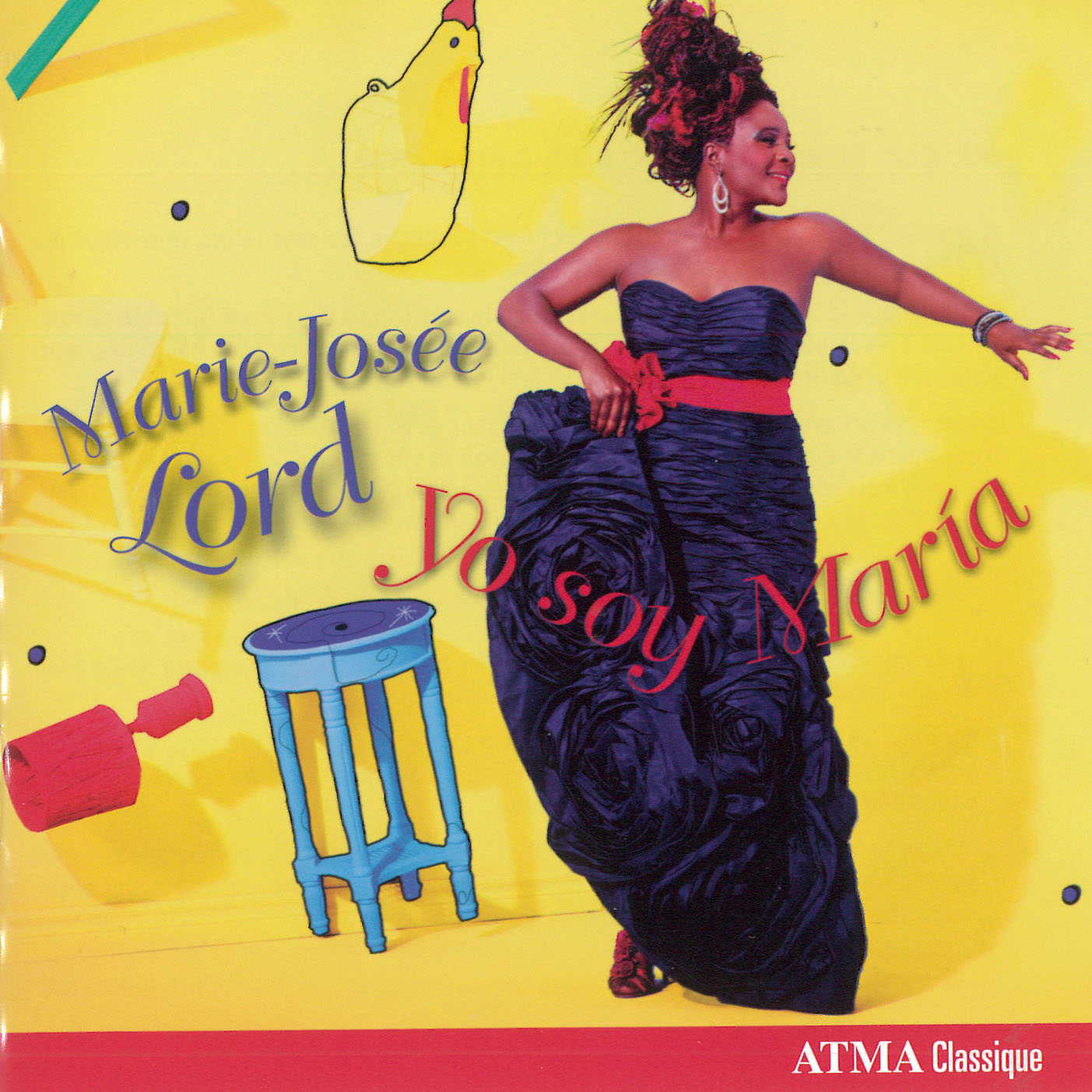
07 MJ LordYo soy Maria
Marie-Josée Lord
ATMA ACD2 2663

Yo soy Maria is the follow-up album to the JUNO-nominated, stunning debut, self-titled Marie-Josée Lord. As such, it may display just a touch of the sophomore slump. Lord is a popular artist. She makes that very clear at every appearance, including the recent, standing room only and filled with standing ovations, Toronto debut at Koerner Hall. She rejects the label of opera diva in her pre-concert intro and later interjections from the stage. Whatever her protestations (which the audience clearly loved), SHE IS A DIVA. That is mostly by virtue of her incredible voice, the sharp-as-a-blade, soft-as-velvet dramatic soprano that absolutely amazes not just with its power and range, but most of all, the precise control so apparent in the quiet moments. If you were to combine the voices of Jessye Norman and Renée Fleming, with a dash of Maureen Forrester, you just might create something akin to Lord’s apparatus, but it is very much an original voice, not imitating or emulating anyone else.

Lord embraces music of all provenance, from operatic arias to popular songs and renders it all her own. On her new album, the eyebrow-raising chestnuts such as Besame mucho sound interesting all of a sudden. Kyrie from Misa Criolla is a tour de force, but the Aria from Bachianas Brasileiras No.5 does not reach the sublime heights achieved by Bidu Sayao or Arleen Auger. Overall, I still get the impression that Lord is most comfortable in French, her native tongue. Despite that, in concert she was a credible Violetta and incredibly moving Rusalka. Something tells me a third album is afoot. It will, of course, be a bestseller, just like the other two. She is, after all, a popular artist with a fantastic voice.

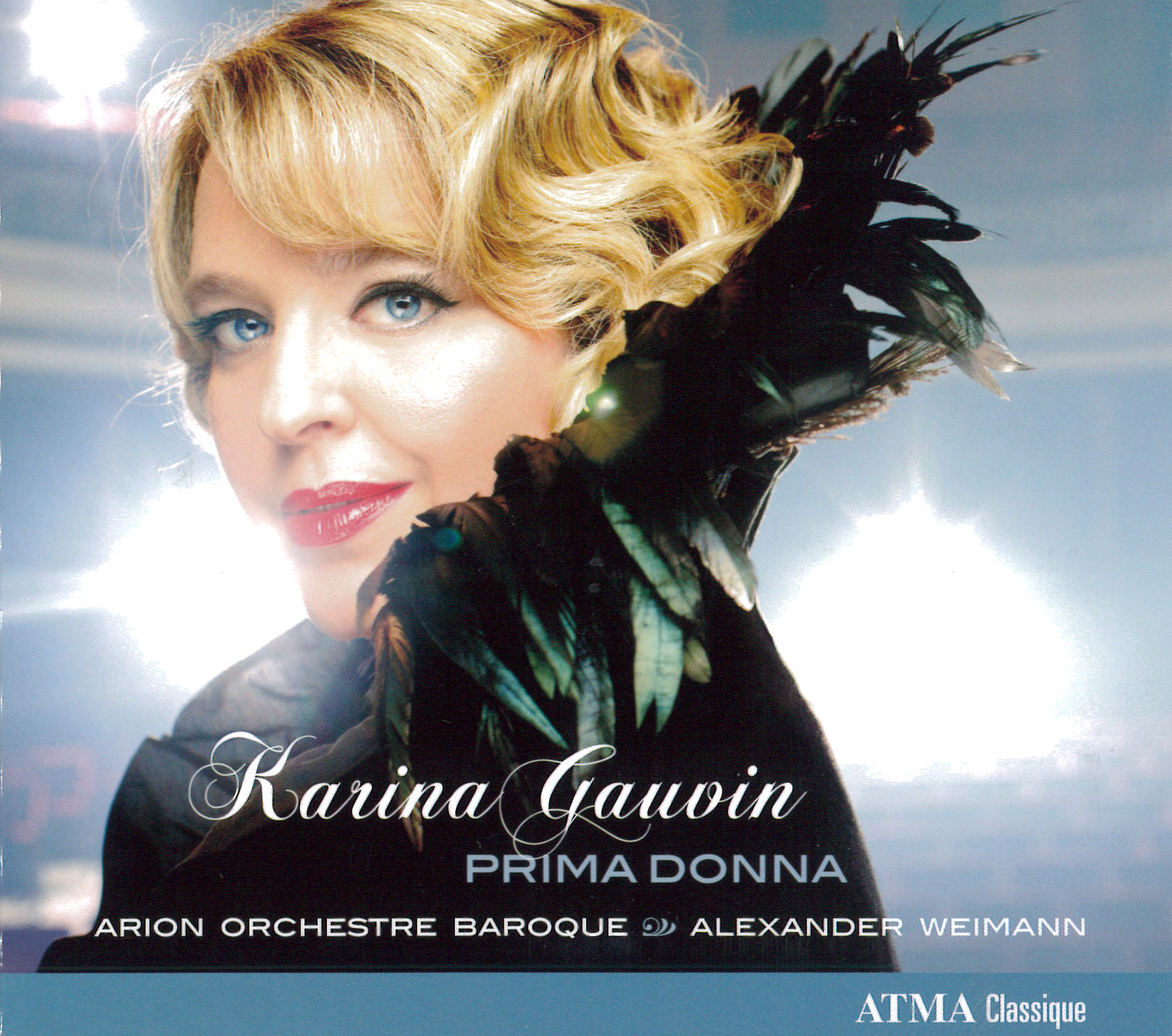
01-Karina-GauvinPrima Donna
Karina Gauvin; Arion Orchestre Baroque; Alexander Weimann
ATMA ACD2 2648

The soprano Karina Gauvin has an extensive recorded repertoire which ranges from Purcell in the 17th century to Britten in the 20th, but it is the music of Handel with which she is most closely associated. She has performed in the recording of three complete operas (Alcina, Ezio and Ariodante) as well as in a solo recital and a recording of duets from Handel’s oratorios with Marie-Nicole Lemieux.

The decision to centre a recording on one of Handel’s singers is not new. In 1996 Harmonia Mundi brought out a collection of four discs, each of which contained music composed by Handel for specific singers: the soprano Francesca Cuzzoni, the mezzo Margherita Durastante, the castrato Il Senesino and the bass Antonio Montagnana. The disc under review is, however, the first recording to centre on Anna Maria Strada del Pò. It contains six arias by Handel with the addition of one piece by Vivaldi and another by Leonardo Vinci.

There have in recent years been a number of recorded anthologies of baroque arias, by Handel and by others, but this disc ranks with the best: Gauvin is equally at home with the coruscating swiftness of “Scherza in Mar” (from Lotario) as with the sustained pathos of “Verdi piante” (from Orlando). For some years much music from the opere serie by Handel and Vivaldi has been available but it is good to see that a not so well-known composer like Leonardo Vinci is beginning to get his due.

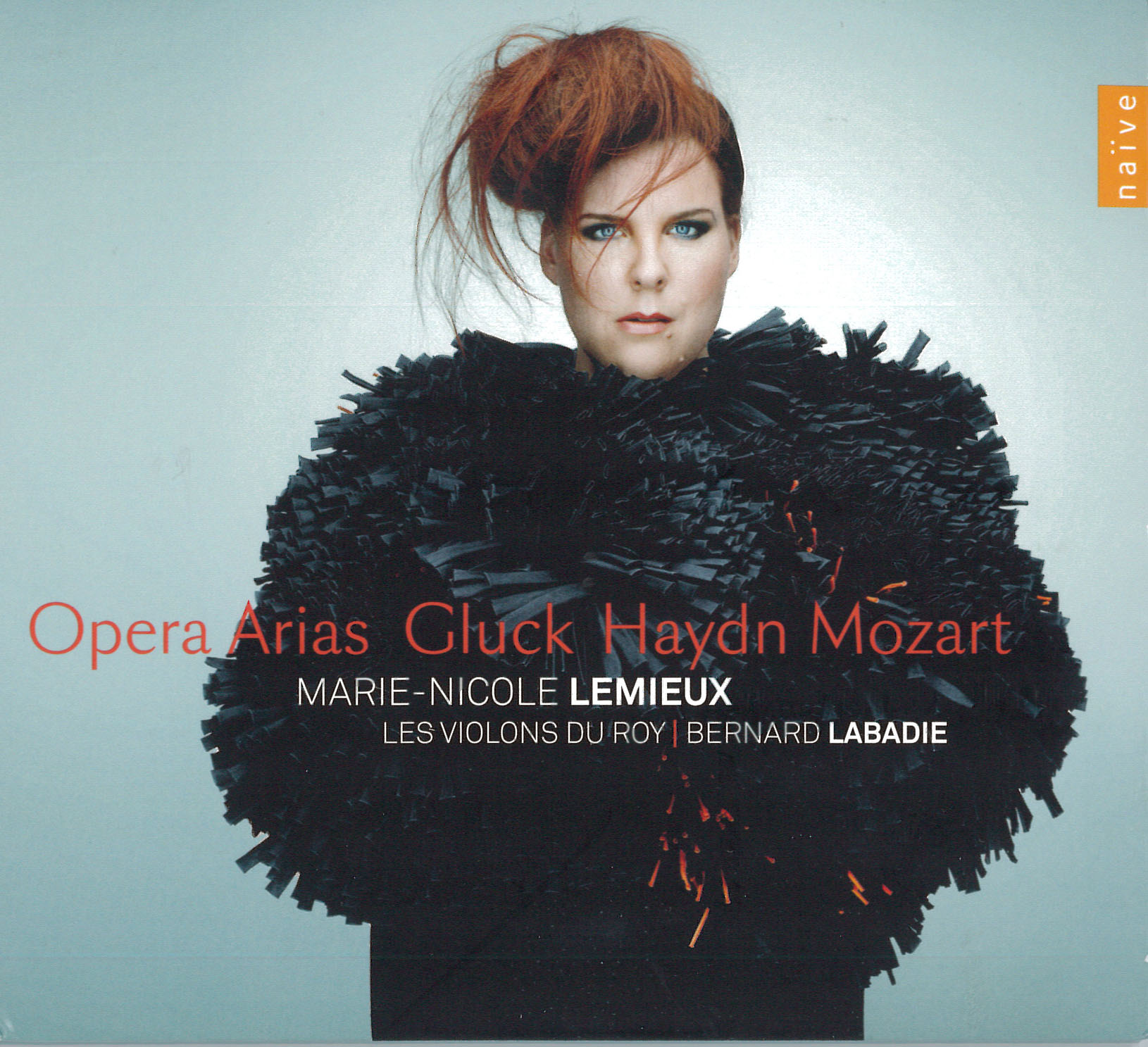
02-LemieuxOpera Arias: Gluck; Haydn; Mozart
Marie-Nicole Lemieux; Les Violons du Roy; Bernard Labadie
Naïve V5264

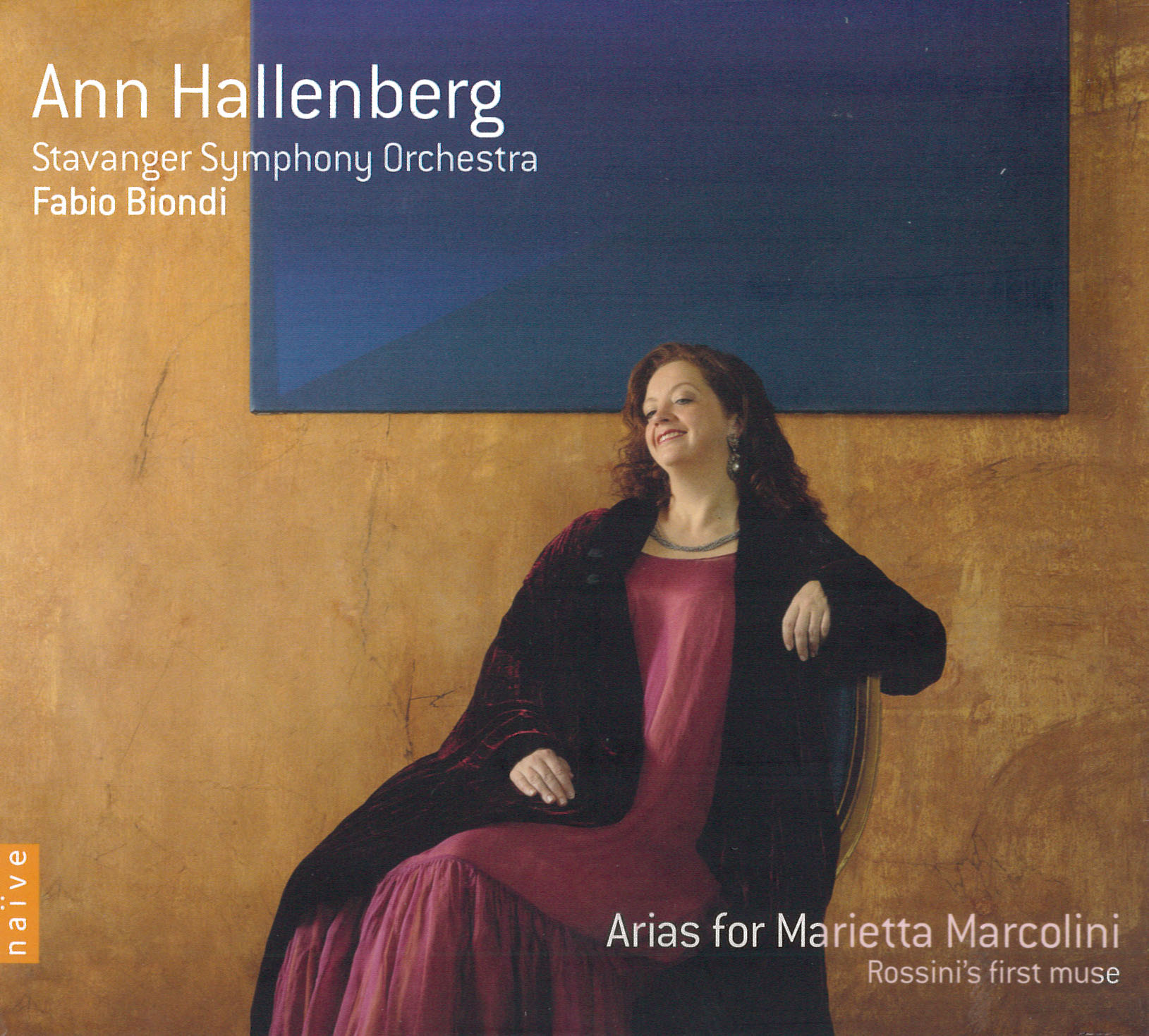
Review is not the right word. This piece of writing should be more like an extended and exalted praise for a childcare worker from Quebec turned star mezzo-soprano of the highest calibre. Lemieux has distinguished herself time and time again ever since her big win at the “Queen Elizabeth” in Belgium in 2000 and offers began pouring in. And today she is still young, only 37.

Her most recent recording on the prestigious French label, naïve, is an adventure into the 18th century, the world of Mozart, Gluck and Haydn. For the average listener her selections of this repertoire, apart from a few exceptions, will be mostly unknown, but let me assure you that same listener will become a devotee by listening to them all.

Lemieux immediately plunges into a spirited attack of early Mozart (“Mitridate di Ponto”), a fiendishly difficult aria where she shows off some miraculous deep notes in full forte reminding me of the great Marilyn Horne. This is followed by beautiful, lyrical, restrained piano singing from a rather unknown Haydn opera (L’isola disabitata). Already a considerable feat, but more surprises are coming. With Iphigenie en Aulide by Gluck she is in familiar, i.e. French, territory where she creates shockwaves singing Clytemnestra’s fire-eating aria with fierce passion. There will be many more great moments by the time she finishes with Haydn’s “Sudo il guerriero,” another bravura showstopper. To make things even better, and even more Canadian, she is accompanied by the world class Les Violons du Roi under Bernard Labadie, a group I’ve had the privilege of reviewing before in these pages. An unconditionally excellent recommendation.

04-Schoenberg-SongsSchoenberg – Complete Songs
Claudia Barainsky; Melanie Diener;
Konrad Jarnot; Christa Mayer;
Markus Schafer; Anke Vondung; Urs Liska
Capriccio 7120

A collection of complete songs by one composer is a fascinating object. As much of a record as it is a key to the composer’s development, it allows the listener to trace the styles, fascinations with different poets and composers, homages, pastiches and breakthrough moments. When the composer is someone as misunderstood and still controversial as Schoenberg, such a collection can be nothing short of a revelation. This 4-CD edition traces his involvement in lieder from the self-taught early fascination with Brahms, the “apprenticeship” under Zemlinsky, the influence of Wagner, the push towards the “end of tonality” and finally, the 1933 coda of the Three Songs, Op.48 — the only dodecaphonic songs written by him and indeed, his last foray into the genre.

Throughout his life, Schoenberg struggled for acceptance of his new ideas about music, but for the most part his supporters were his fellow composers. Zemlinsky, Mahler and Schoenberg’s students, Webern and Berg, were his greatest proponents. The general public remained indifferent and at times hostile to his ideas and music. This collection reveals a composer who at times was as poignant and romantic as Schubert, as dramatic as Brahms and as tuned to human emotions as Mahler. What helps are two artistic choices: firstly, all of the songs are presented with piano-only accompaniment, even the Gurrelieder, better known in their later orchestral renditions. The second choice is equally fortuitous: one great pianist, Urs Liska, and six diverse, but equally talented singers. This edition is a must-have in any music lover’s library.

07-Helen-PridmoreJanet
Helen Pridmore
Centrediscs CMCCD 17512

This is an album of works created for and performed by the British-born, Nova Scotia resident, singer and teacher Helen Pridmore. Its great strength is a closer than usual collaboration between an extraordinary performer and her chosen composers.

In Emily Doolittle’s Social Sounds From Whales at Night, we are often unsure where actual recordings of humpback whales end and Helen Pridmore’s vocalism begins — an eloquent and effective way to deliver this work’s message of the seamless continuity between life forms on Earth. The humpback’s songs (or calls or conversations) translated into human vocal music provide Pridmore with the opportunity to display her very accurate microtonal ear.

Martin Arnold’s Janet is built of short phrases that are electronically “gated” so that, as Pridmore sings, we hear all the piece’s elements — two vocal tracks plus banjo and electric guitar along with ambient environmental sounds — at the same time. But when she pauses, all sounds pause with her. The melodies — vaguely modal-sounding to reflect the Scottish ballad which inspired this piece — eventually turn on themselves to provide passages of effortless-sounding dissonance, while a long and clear downward melodic drift ensures formal cohesion. The banjo’s timbre brings a certain hominess to the music which was recorded, in fact, in several rooms of Pridmore’s home.

Another striking piece on this recording is Ian Crutchley’s Helen Pridmore Sings, and Sings and Sings! wherein the soloist is invited to perform fragments of a broad and deliberately bewildering variety of songs and styles from Handel to Marlene Dietrich to the theme from (70s TV series) Happy Days and even from Emily Doolittle’s composition on this same album.

Clearly, the composers have all been attracted to Pridmore’s unique skill set and manner of working. The resulting music takes full advantage of her attractive and flexible voice, impressively extended technical and stylistic range and — perhaps most important of all — adventuresome spirit.


Back to top