16 Ourself Behind OurselfjpgOurself Behind Ourself, Concealed
Tasha Warren; Dave Eggar
Bright Shiny Things (brightshiny.ninja)

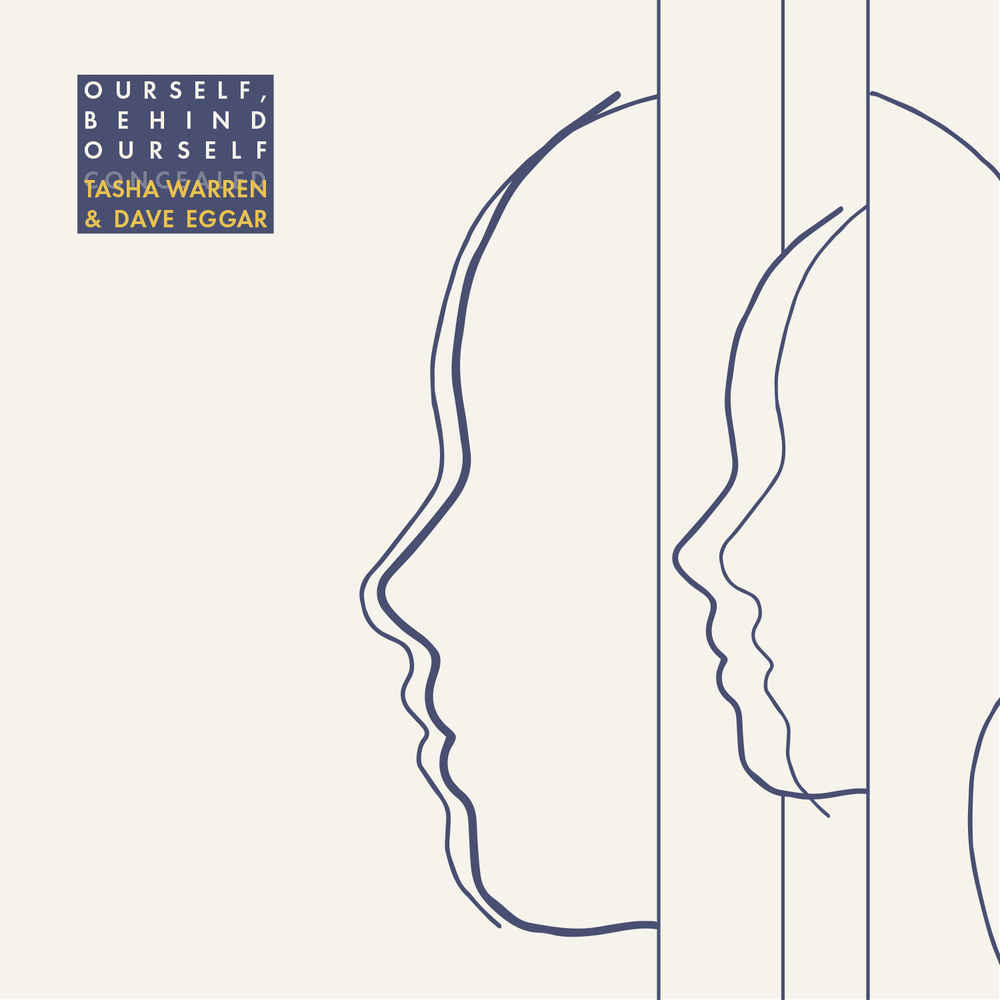
A line from the ever-elliptic Emily Dickinson’s poetry provides the title for this new release of various works commissioned by clarinetist Tasha Warren and composer/cellist Dave Eggar.

It’s hard to give this disc its due, on account of the similarly dark and perhaps overlong nature of the opening selections. 

The producers might’ve done better to reorder the tracks. The latter three are the strongest: not so deadly in earnest, more concise and jaunty. Maybe I’m worn out by the entire “responses to the pandemic” genre I’ve been touting lately, or by moroseness in general. Lalin (Haitian Creole for La Lune) by Nathalie Joachim, opens with a nocturne, then continues into a pointillist dancing depiction of the composer’s Haitian home. Phantasmagoria by Meg Okura (who joins the ensemble on violin) and Snapshots by Pascal Le Boeuf (joining on piano) also get the blood moving through the veins, with some decidedly upbeat character; I detect some Joni Mitchell in Snapshots. The duo benefits greatly by both composers’ energetic performances. 

Paquito D’Rivera’s African Tales opens proceedings. Purporting to move through musical landscapes of that vast continent, Rivera avoids overt references and recognizable styles. A soliloquy for bass clarinet leads to Eggar’s first entry; the two travel in tandem before dividing tasks. I hear influences of Donatoni and Messiaen.

Cornelius Boots’ Crow Cavern, and Black Mountain Calling by Martha Redbone, come next. By turns angry and sombre, and at nine minutes each (similar in length to African Tales), they stretch one’s patience. Interesting pieces, but the D’Rivera is a tough act to follow. 

Close miking provides lots of key noise, reed hiss, bow hair, finger pluck. The two principals seem to focus on extremes of expression, not on getting everything pristine, which is refreshing.
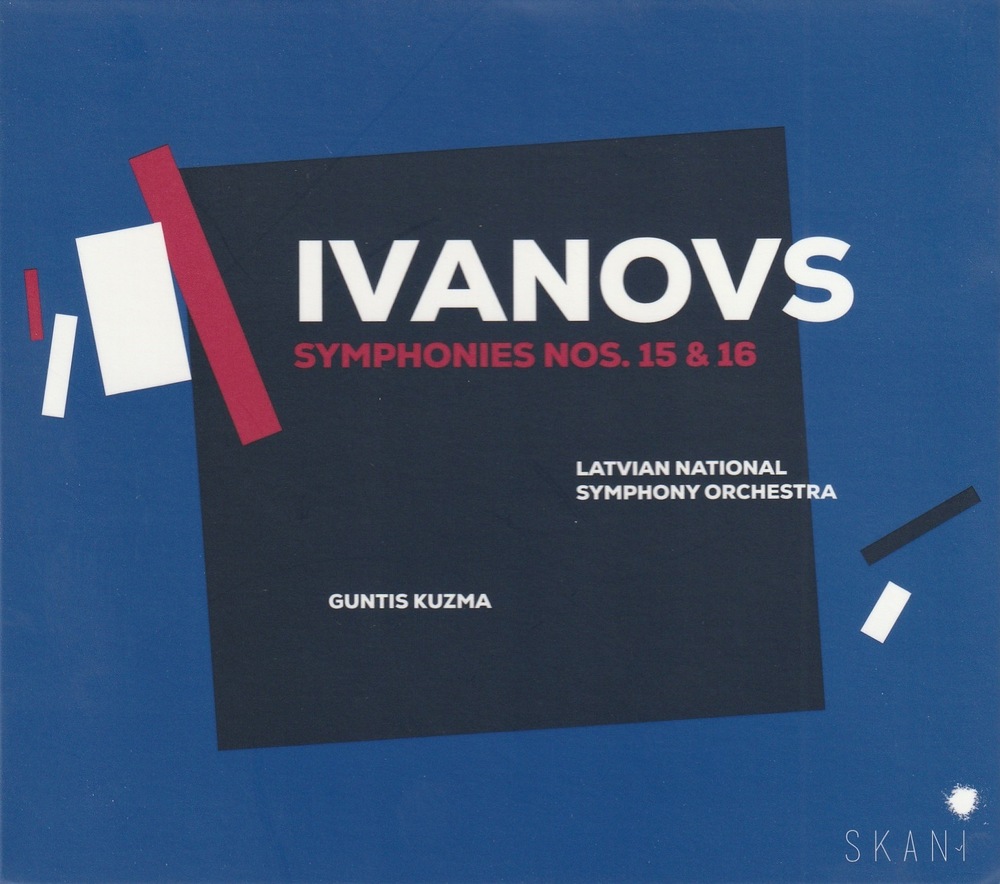
17 IvanovsJānis Ivanovs – Symphonies 15 & 16
Latvian National Symphony Orchestra; Guntis Kuzma
LMIC SKANI 126 (skani.lv)

I’d never heard any of the 21 symphonies by Latvian composer Jānis Ivanovs (1906-1983) before listening to the two on this CD, each lasting about half an hour, both filled with dark sonorities, propulsive energy and clamorous dissonances.

 Violence and disaster dominate Ivanovs’ Symphony No.15 in B-flat Minor (1972), subtitled “Symphonia Ipsa.” In the opening Moderato, quiet, tentative apprehension is suddenly shattered by brutal explosions. Heated struggle ensues in the Molto allegro’s agitated, snarling rhythms and desperate pleading. The grim, mournful Molto andante (Adagio) conjures, for me, a desolate battlefield strewn with bodies; brief, snide, sardonic phrases seemingly comment on the absurd futility of the preceding bloodshed. Nevertheless, martial mayhem returns in the Moderato. Allegro with cacophonous fanfares and pounding percussion before the symphony ends in a slow, ghostly procession.

Restless, fluctuating moods pervade Ivanovs’ Symphony No.16 in E-flat Major (1974), perhaps memorializing the victims of No.15. In the Moderato. Allegro moderato, gloomy, throbbing despair, sinister foreboding and dissonant shrieks are intermittently relieved by unexpected, hymn-like concordances and even touches of Sibelius. The Allegro busily churns with mechanized rhythms leading to the distressed Andante. Pesante. Here, dispirited resignation turns into anger and determined resistance until a gentle bassoon solo intones consolation. The Allegro moderato drives relentlessly to a strident triumphal chorale, ending in a simple major chord, the first happy moment on this CD.

Powerful music powerfully performed by conductor Guntis Kuzma and the Latvian National Symphony Orchestra.

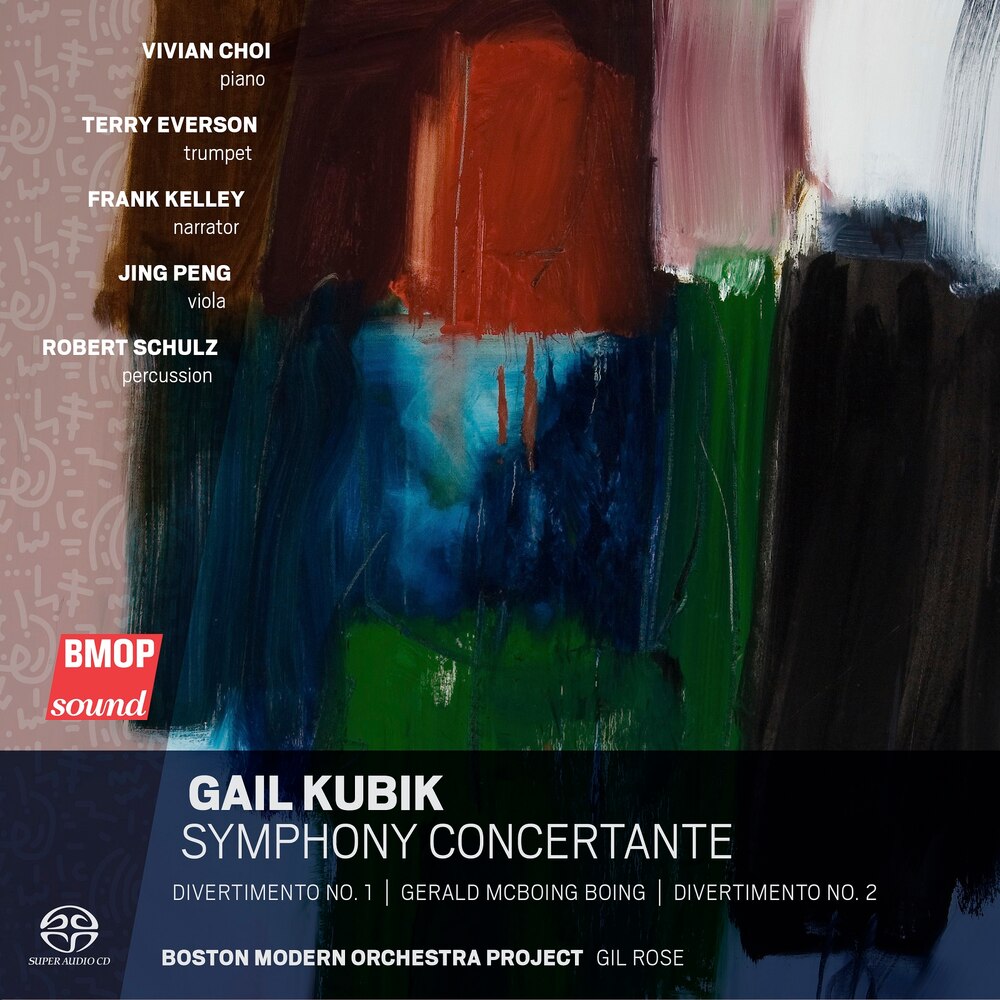
18 Gail KubikGail Kubik – Symphony Concertante
Boston Modern Orchestra Project; Gil Rose
BMOP Sound 1085 (bmop.org)

Three members of the Little Orchestra Society of New York were pestering conductor Thomas Scherman for solo opportunities, so Scherman commissioned Oklahoma-born Gail Kubik (1914-1984) for a work that would “kill three birds with one stone.” Using his trademark mix of Stravinskian neo-classicism, Coplandesque Americana, Hollywood and jazz, Kubik drew from his 1949 score for C-Man, a crime-caper B-movie, for the 1952 Pulitzer Prize-winning Symphony Concertante for Trumpet, Viola, Piano and Orchestra. The brightly orchestrated first movement is filled with fragmented melodies and snappy syncopations. In the middle movement, uncomfortably shifting tonal centres reinforce the viola and muted trumpet’s long-lined desperation over thumping piano chords. A jazzy rondo features the solo instruments taking turns in the spotlight before the work ends with a raucous orchestral blast.

Gerald McBoing Boing (1950), based on Dr. Seuss’ story about a boy who “couldn’t speak but made noises instead,” won the Academy Award for Best Animated Short. Unusually, Kubik composed his 13-minute, percussion-heavy score before the visuals were created to fit the music and narration, here provided by Frank Kelley.

Both Kubik’s five-movement, 15-minute Divertimento No.1 (1959), scored for 13 players, and his six-movement, ten-minute Divertimento No.2 (1958), requiring only eight players, are predominantly perky, with movements including Humoresque, Burlesque, Dance Toccata and Scherzino (Puppet Show). Seascape (in No.1) and Dialogue (in No.2) offer some pleasing breathing space. It’s all persuasively performed by conductor Gil Rose and the Boston Modern Orchestra Project. Entertaining throughout!

Listen to 'Gail Kubik – Symphony Concertante' Now in the Listening Room

19 Slatkin conducts SlatkinSlatkin conducts Slatkin
Various Artists and Orchestras; Leonard Slatkin
Naxos 8574352 (naxosdirect.com/search/8574352)

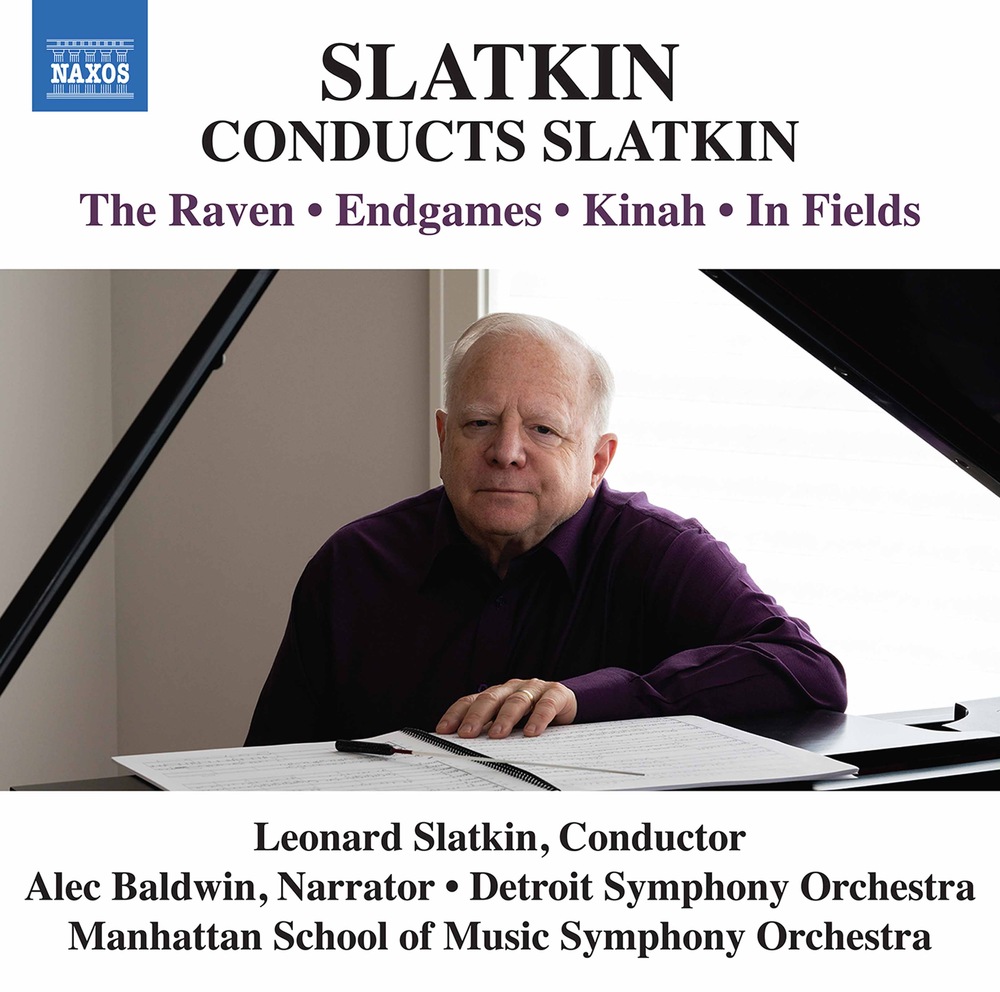
“Not many know that I have been active as a composer,” writes Leonard Slatkin, who here conducts three of his orchestral works.

Slatkin’s 13-minute Kinah (2015) pays tribute to his distinguished parents, violinist Felix Slatkin and cellist Eleanor Aller. In 1963, two days after they had rehearsed Brahms’ Double Concerto, Felix suddenly died. Kinah (Hebrew for elegy) features metallic chiming and a noble, long-lined string melody, ending with hushed, haunting, incomplete phrases from Brahms’ concerto. In this recording of its world premiere, Leonard’s brother Fred plays the solo part on their mother’s cello. 

Slatkin says that his 12-minute Endgames (2014) “celebrates the unsung instruments of the orchestra whose players sit at the far ends of the woodwind section.” Scored for piccolo, alto flute, English horn, E-flat clarinet, bass clarinet, contrabassoon and strings, it includes a cheerful, vigorous dance and a sweetly serene middle section, finishing with familiar quotations for each solo instrument, guaranteeing smiles of recognition from the audience. In the 26-minute The Raven (1971), atmospheric, cinematic background music accompanies Alec Baldwin’s recitation of five poems by Edgar Allan Poe.

This CD includes In Fields (2018), a nostalgic four-minute piece by Leonard’s son Daniel (b.1994), archival recordings of Felix playing arrangements of Brahms, Dvořák and Bizet, and a soundtrack excerpt from the 1946 film Deception, in which Aller, who premiered Korngold’s Cello Concerto, plays a bit of Haydn’s Cello Concerto in D Major, with Korngold conducting his newly composed cadenza for it!

20 Matthew SchreibeisMatthew Schreibeis – Sandburg Songs
Tony Arnold; Various Artists
Albany Records TROY1856 (albanyrecords.com)

Hong Kong-based American composer Matthew Schreibeis’ elegantly urbane music seems eminently suited to capturing the pastoral imagery of Carl Sandburg’s poetry, which forms the second half (or so) of the repertoire of this album, Sandburg Songs. 

Schreibeis’ voice is unique. His songs appear to come from a pen dipped in the ink of Erik Satie and Alfred Schnittke. However, being his authentic self in all of this music, Schreibeis’ notes leap in divergent directions into a mysteriously poignant realm completely of his own creation. He is also stoically authentic to melodic and harmonic flights made in a spectral dimension not unlike Gérard Grisey.

The composer’s sound world seems to unfold in a series of moist landscapes that dissolve one into the other. His conceptions are extraordinarily vivid though, and he can conjure the reality of an extremely complex landscape with relatively spare noted phrases written for the piano or guitar as he does on the piece, Inner Truth and the cycle, They Say. 

The considerable range of his compositional palette is revealed twice on this recording. The curtain rises on the clarinet-violin duet Noticing and on In Search of Planet X, where a piano makes it a trio. Schreibeis’ power is unveiled on the fully orchestrated Sandburg Songs cycle, replete with piano, strings, reeds, woodwinds and percussion from the Zohn Collective conducted by Timothy Weiss. Carl Sandburg’s breathtaking verse soars in the keening soprano of Tony Arnold.

Listen to 'Matthew Schreibeis – Sandburg Songs' Now in the Listening Room

Editor’s note: Matthew Schreibeis was originally scheduled for a composer residency at the Faculty of Music, University of Toronto in this month but that has been postponed due to the Omicron variant. A new work for violin and vibraphone written for faculty members Mark Fewer and Aiyun Huang is now scheduled to have its premiere at the soundSCAPE Festival in Italy this July (soundscapefestival.org) where Fewer, Huang and Tony Arnold will be among the featured musicians. Schreibeis’ Toronto residency is tentatively planned to take place this fall.

21 AuznieksKrists Auznieks – Coiled Horizon
Auziņš, Čudars, Arutyunyan Trio; JIJI Guitar; Sinfonietta Riga; Normunds Šnē
LMIC SKANI 091 (skani.lv)

The COVID-19 pandemic has brought unrest worldwide, with no country handling it the same. Canada has tended to err on the safer side, while the United States has largely thrown caution to the wind. Right in between these approaches, Europe has found a fascinating middle ground when it comes to maintaining arts and culture during turbulent times. 

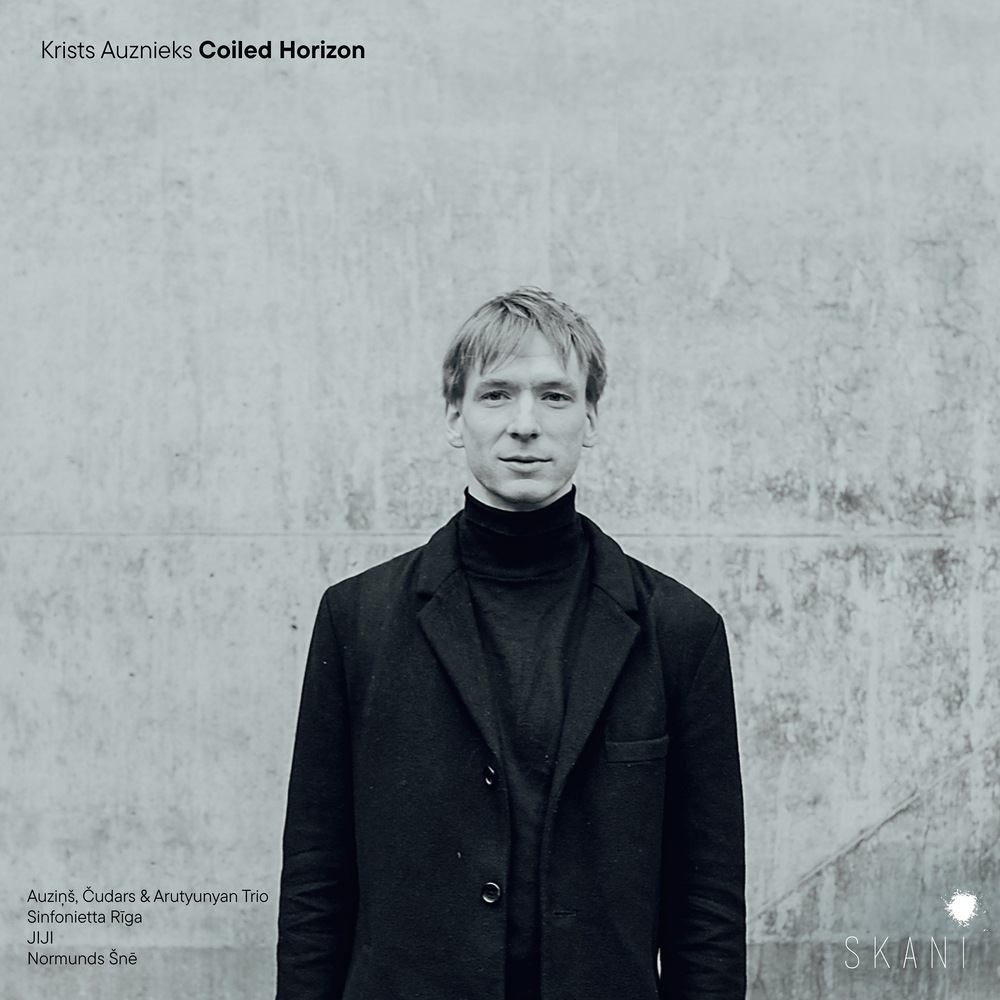
The Sinfonietta Riga Chamber Orchestra of Latvia found themselves amidst this turmoil when attempting several times since 2020 to record exciting new guitar music by Krists Auznieks. Once the music was finally able to be performed live in 2021, the results became the album Coiled Horizons. It features two different approaches to the guitar: music for trio, performed by saxophonist Kārlis Auziņš, guitarist Matīss Čudars and the drumming/percussion of Ivars Arutyunyan, followed by an orchestral work that features the aforementioned Sinfonietta Riga Chamber Orchestra and classical virtuoso JIJI playing electric guitar. 

The album begins slow and ambient but draws the listener in immediately with a generous soundscape. Despite sounding like an adventurous jazz trio at first, Auziņš, Čudars and Arutyunyan wait until close to 20 minutes into the disc before providing something close to a “groove.” This makes for a beautiful transition into the album’s more classical sounding second half. 

The orchestral finale to this recording is a specimen to behold, fusing dense 20th-century composition with virtuosic guitar playing. No matter how ambient the first half gets, and however dense the second, this is a treat to listen to as foreground or background music.

Back to top