Read the Review
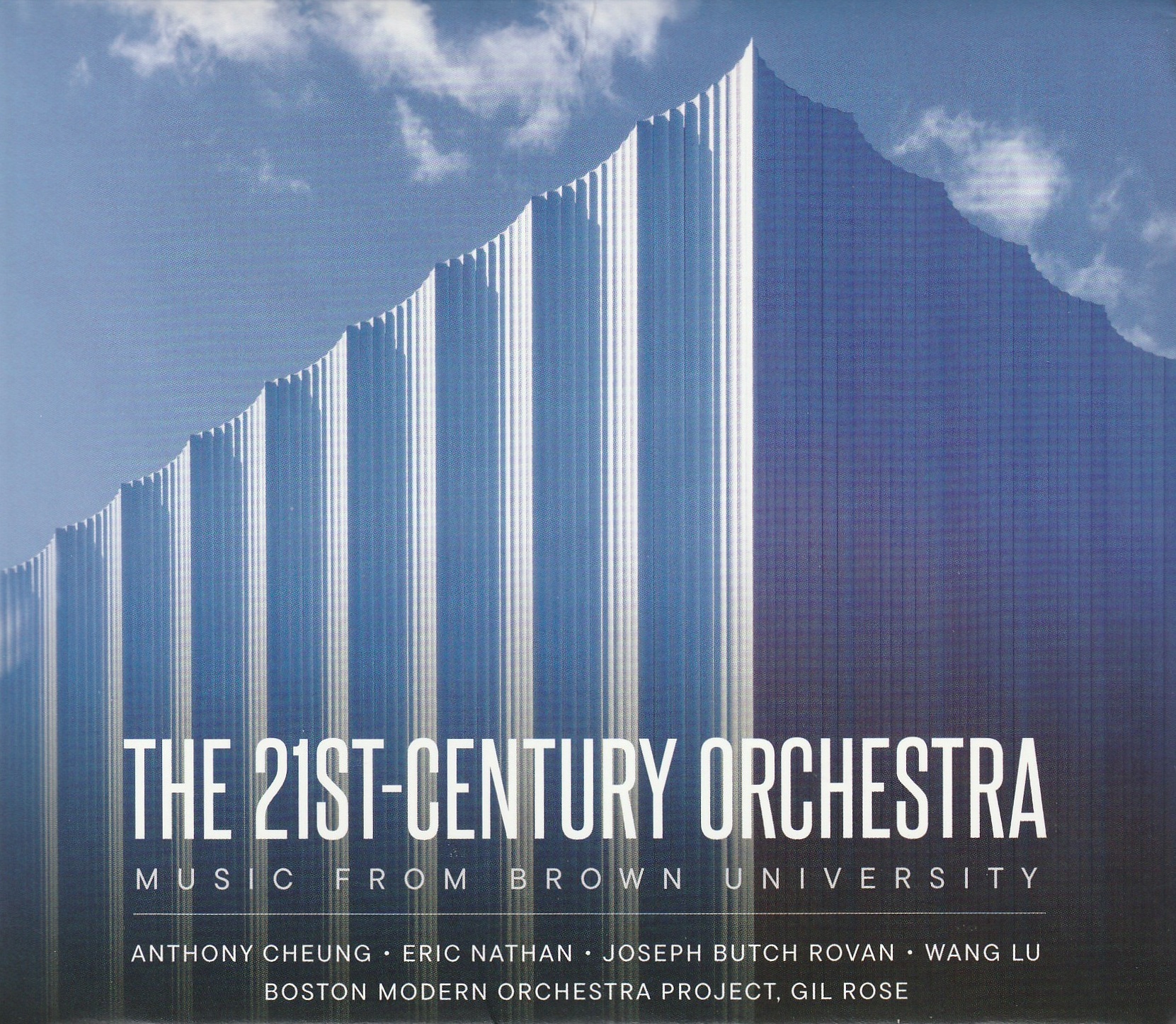
Four internationally-performed composers, all professors at Brown University in Providence, Rhode Island, are each represented here by about 15 minutes of music composed between 2020 and 2024.
The swirling strings, clamorous brass and explosive percussion of Wang Lu’s six-minute Surge opens the CD, followed by Voices of the Orchard, derived from her opera The Beekeeper. It’s perturbed music, filigreed with tints of chinoiserie, frenetic piccolo birdcalls, whispering musicians and, as in Surge, lots of percussion.
In Joseph Burch Rovan’s Scattering, conductor Gil Rose wears on his left hand a device Rovan invented and named TOSHI (The Orchestra-Synthesis Human Interface). Rose’s hand movements, specified in the score, trigger electronically produced chimes, shimmers and breathing sounds heard from speakers around the hall. Sections marked Feverish and Elegiac evoke, for me, suspenseful cinematic chase scenes ending with slowly expiring “breaths” representing, writes Rowan, the COVID pandemic and the murder of George Floyd, both occurring during Scattering’s creation.
Anthony Cheung’s Volta, like its eponymous poetical-structure counterpart, delights in sudden, unexpected changes. It’s a sonic ride through an old-fashioned amusement park “Tunnel of Love” featuring spooky objects lurching from the darkness. Unsettling, but fun.
In Between II, says Eric Nathan, was inspired by the forest near his home. The orchestra simulates the sounds of windblown leaves – some musicians breathe into harmonicas, trumpeters produce non-pitched trills, percussionists swish and crackle. Resembling the moods and drama of Sibelius’ forest tone poem Tapiola, this is Nature austere, imperious, monumental.

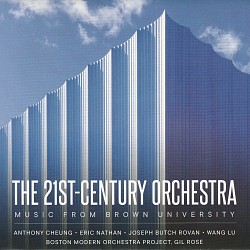

 The 21st-Century Orchestra