
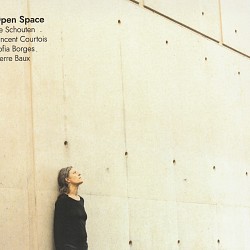




Open Space - Fie Schouten
 Open Space
Fie Schouten
relativepitchrecords.bandcamp.com/album/open-space-2
Read the Review
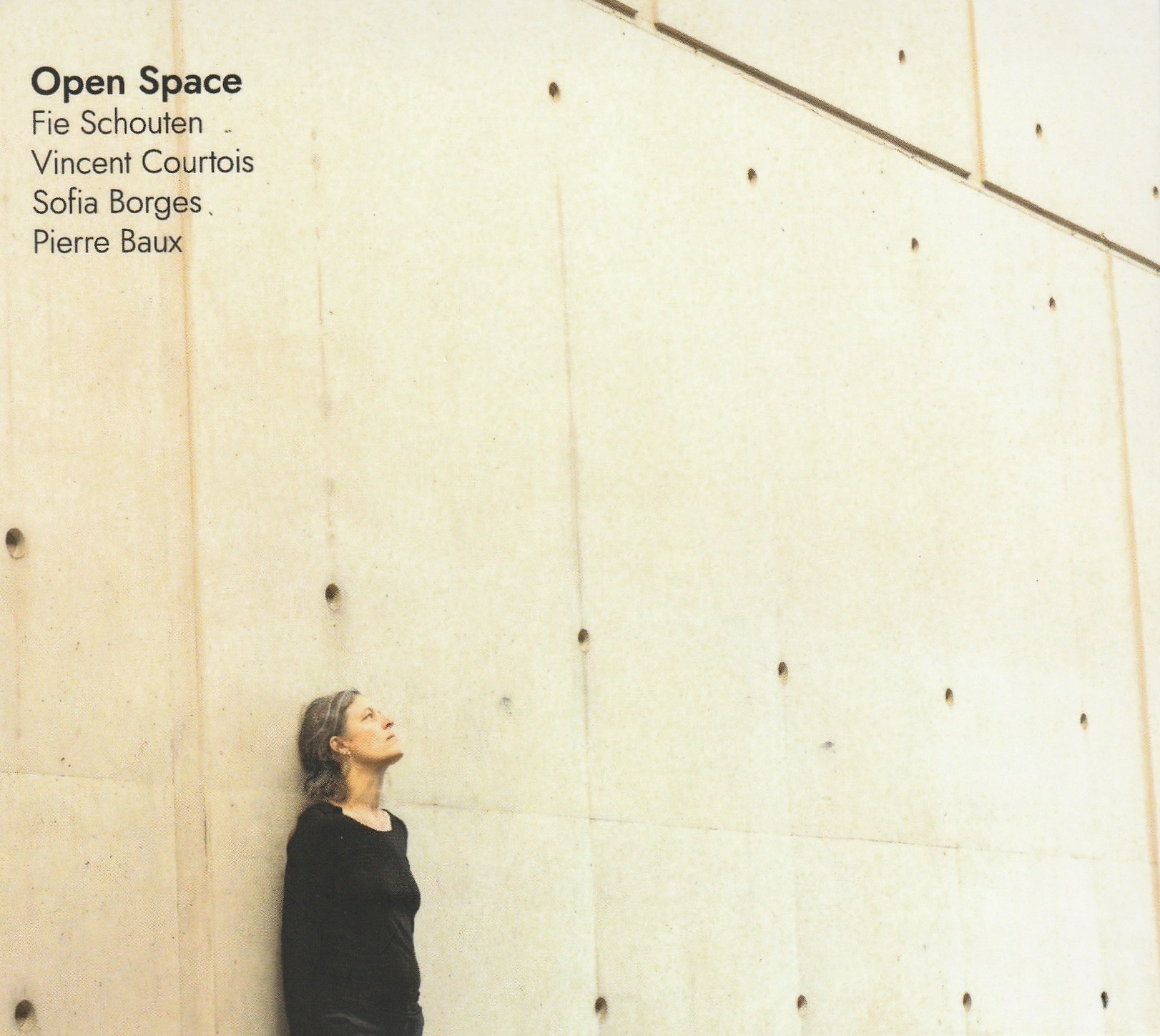
The second takes another French author, Georges Perec, as its point of departure. Although Perec’s La vie mode d’emploie (Life a User’s Manual) is one of my very favourite books, I was unfamiliar with his Espèces d’espace (Species of Spaces) and intrigued when the next recording crossed my desk. Dutch bass clarinetist Fie Schouten uses Perec’s short descriptive novel as the outline for Open Space (relativepitchrecords.bandcamp.com/album/open-space-2). Her frequent collaborators Vincent Courtois (cello) and Sofia Borges (drums) are joined here by actor Pierre Baux, whose distinctive narration of Perec’s texts (in French) is an integral part of the ten group improvisations based on the chapters of the book. Perec’s premise is the depiction, through various list-like constructions, of the various spaces in which we exist, from the confines of a bed, a room, an apartment, the building in which the apartment is located (and here he references his masterwork La vie), a street, a neighbourhood, a city, the (artificial) borders which divide countries, and, ultimately, the world and its place in the universe. The book, and its interpretation by these creative musicians, is intriguing and wholly satisfying. I thank Schouten for expanding my knowledge and appreciation of Perec’s oeuvre.