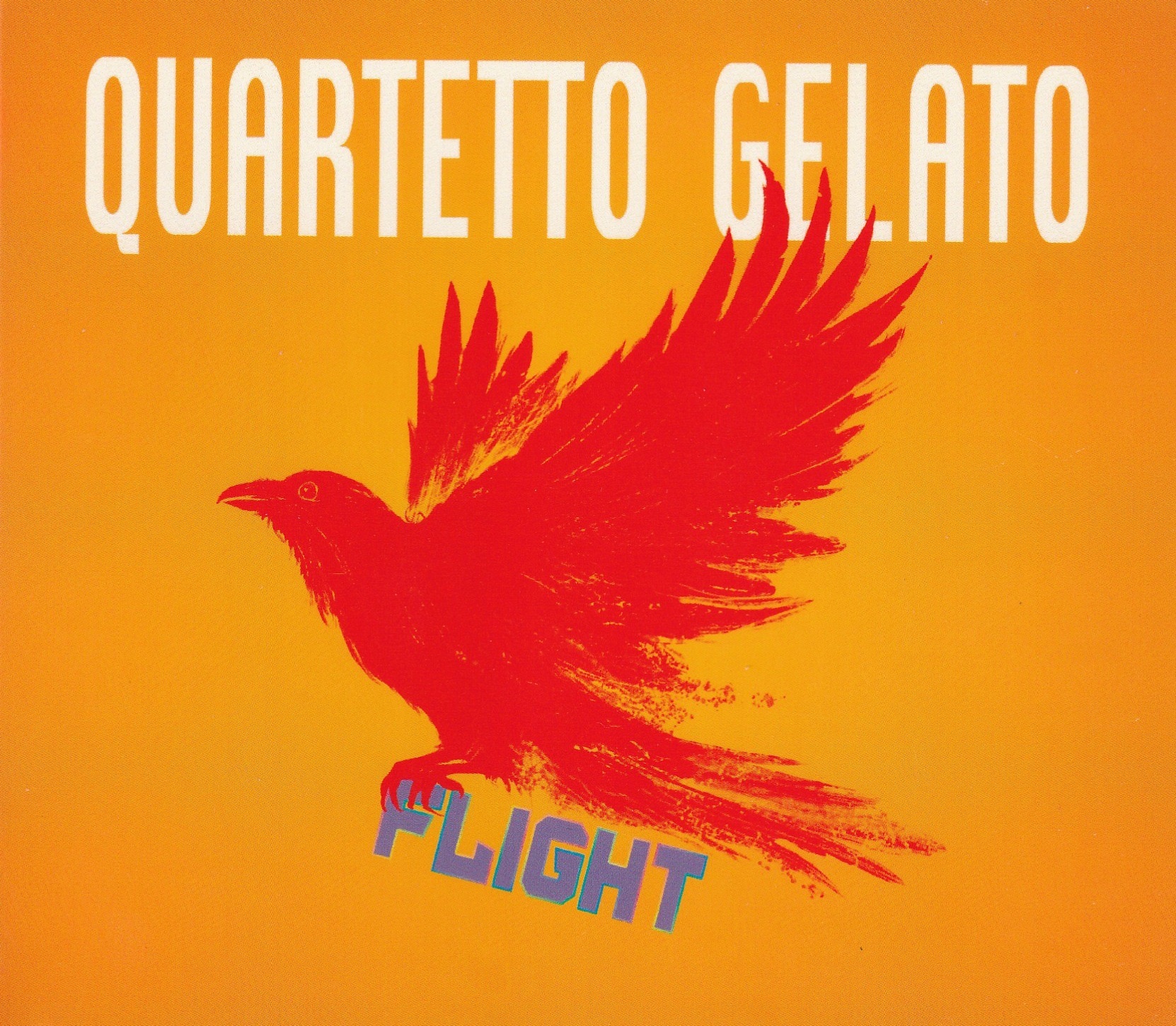
01 Quartetto GelatoQuartetto Gelato, is a highly successful GTA-based classical crossover ensemble formed back in 1989 by tenor and violinist Peter de Sotto, oboist Cynthia Steljes, George Meanwell (cello and guitar), and Claudio Vena (accordion and viola). In the nearly four decades since its founding the group has undergone myriad personnel changes, with de Sotto, the last original member, retiring in 2019, but has always maintained the high-spirited, virtuosic and eclectic performance style that has made it a crowd favourite for nearly four decades.

The current lineup includes Colin Maier (oboe, English horn, musical saw), Tino Popovic (continuing de Sotto’s tradition of violin and vocals), Matti Pulkki (accordion) and Dobrochna Zubek (cello). Flight (QGPI 011 quartettogelato.ca/store) is the group’s tenth release (11th counting the 2005 compilation Favourite Flavours) and it confirms their standing as topflight entertainers. There are several truly extraordinary tracks including Brahms’ Polka, a breakneck paced take on the somewhat staid composer’s famous Lullaby; Rodeo and Juliet, a mashup of Copland, Tchaikovsky, Prokofiev and Rota themes cleverly woven together by former member Charles Cozzens; a blazing Summer from Vivaldi’s Four Seasons; and the concluding Gypsy Rhapsody. It’s startling how full a sound Gelato achieves with just four instrumentalists. There are some stunning individual moments too, like Maier’s musical saw solo in Casals’ Song of the Birds and Popovic and Zubek’s dramatic realization of the Handel/Halvorsen Passacaglia. Never a dull moment!

Listen to 'Flight' Now in the Listening Room
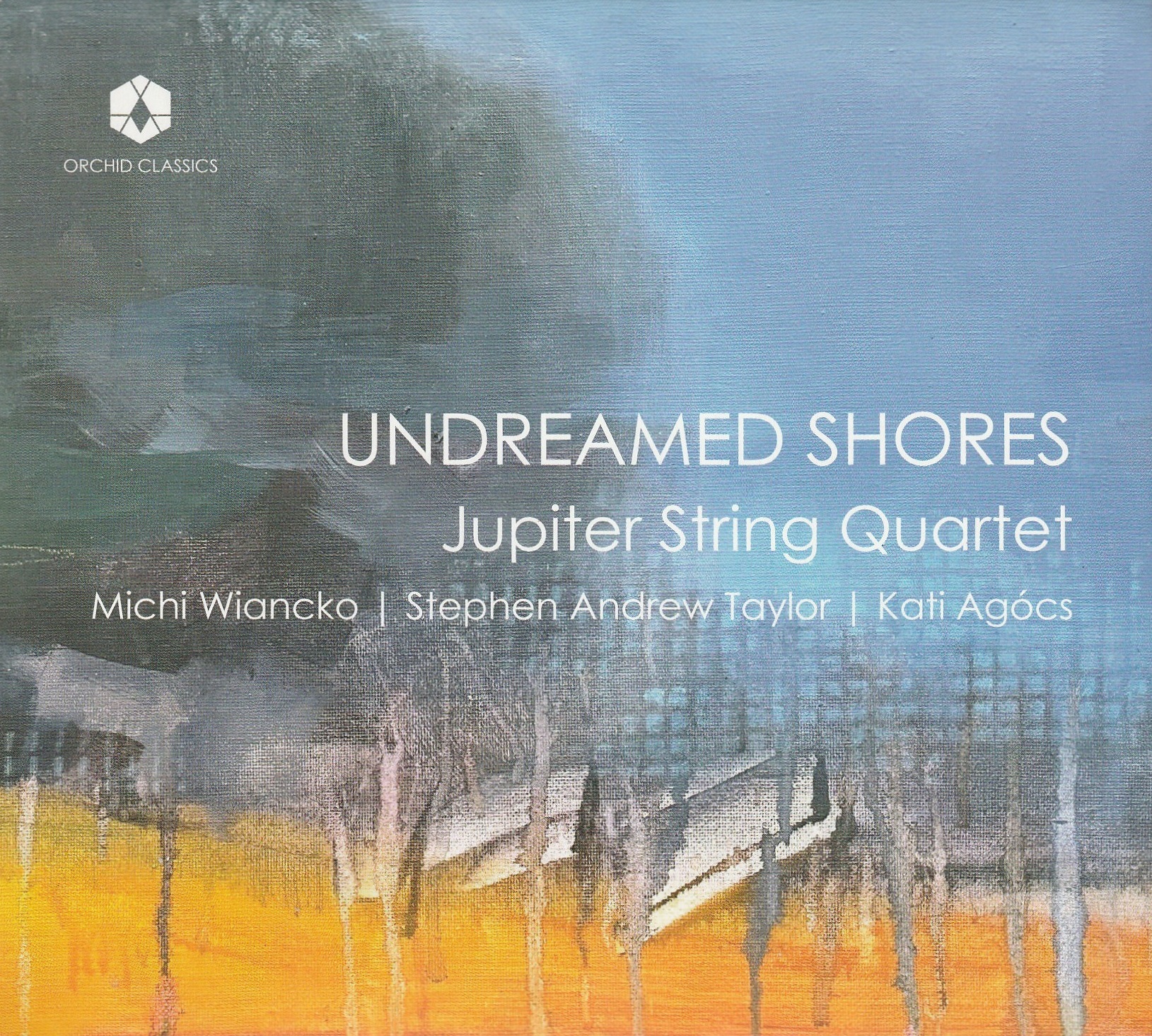
02 Jupiter QuartetCanadian Kati Agócs tells us that Imprimatur (String Quartet No.2) is “A meditation on spiritual lightness… [that] explores how a single idea imprints itself upon the memory through rapturous re-imagination.” It unfolds over 15 minutes in which the five movements (preceded by a Recitative and followed by a Coda) flow into one another without pause, creating a haunting dialectic of darkness and light and ultimately resolving in a triumphal, rising motif. Imprimatur was commissioned in honour of the 15th anniversary of the Jupiter String Quartet and it is the closing work on the ensemble’s Undreamed Shores (Orchid Classics ORC100444 www.orchidclassics.com/releases/orc100444-undreamed-shores/). 

The disc opens with a work by Michi Wiancko, To Unpathed Waters, Undreamed Shores which “celebrates the power of the natural world while carving out space to explore the notions of regeneration, hope and wildness in relationship to ecological grief.” Across the seven movements an arc is formed beginning with life in the water, through butterflies and the microbiome beneath New York’s Central Park, before lamenting Invisible Eviction which depicts the world on fire. Next up is a song of kinship and mourning that leads to an eventual call to action in the final movement’s insistent entreaty to Rise Up, before quietly receding like gentle, lapping waves.

Stephen Andrew Taylor’s single-movement Chaconne/Labyrinth – which the composer likens to the COVID lockdown, being “stuck in a loop, but at the same time lost in a maze, desperately seeking a way out” – is the centrepiece of this intriguing disc. 

Undreamed Shores is the Jupiter Quartet’s final recording with its original lineup. Going forward, violinist Nelson Lee will be replaced by Mélanie Clapiès. The other founding members are Meg Freivogel (violin), Liz Freivogel (viola) and Daniel McDonough (cello). Now celebrating 25 years, the group is in fine form here, convincingly capturing the varied moods of these works. 
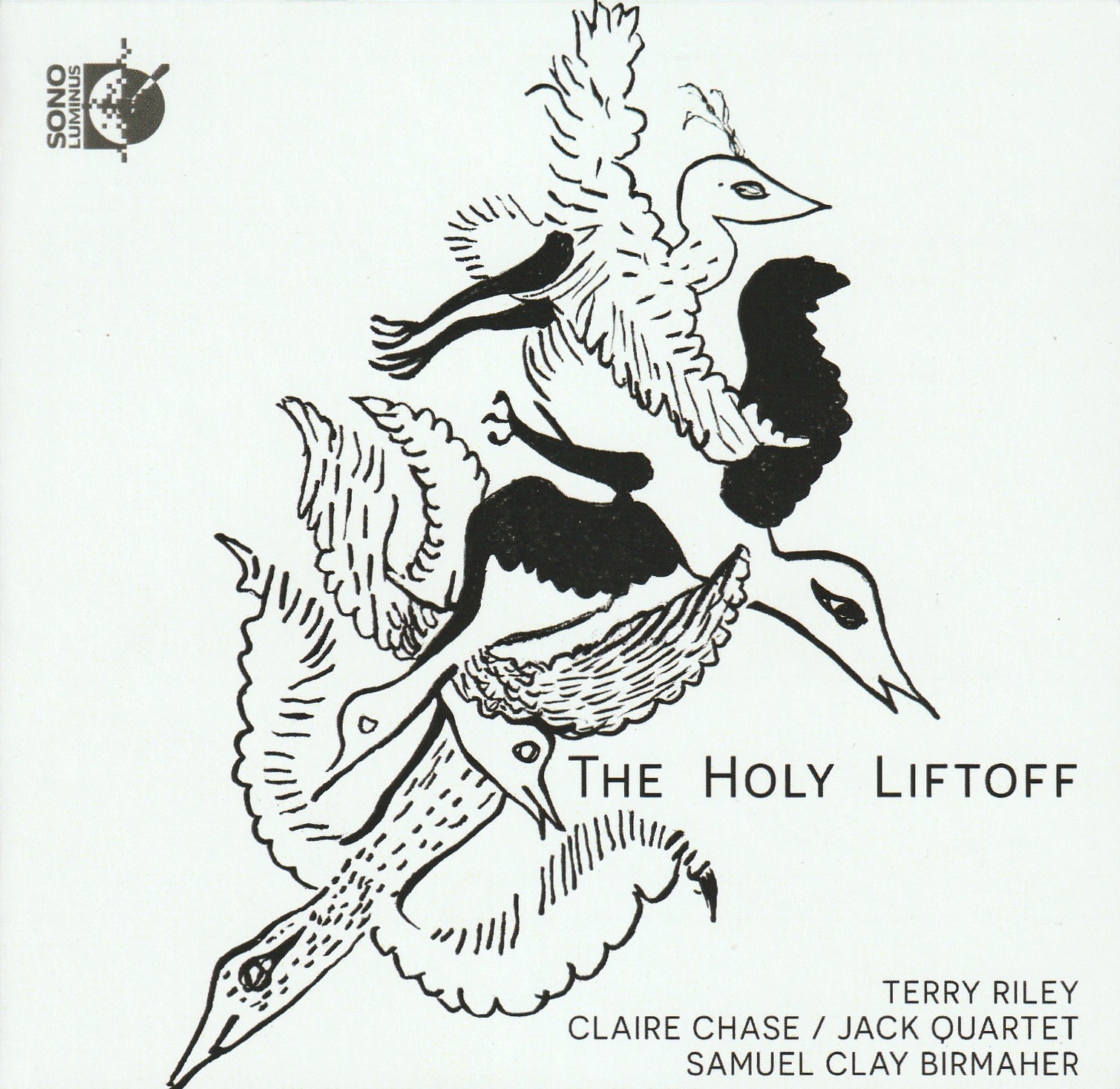
03 Terry RileyThe Holy Liftoff (Sono Luminus DSL-92290 sonoluminus.com/sonoluminus/holy-liftoff) features American flutist Clare Chase with the JACK Quartet in a work based on a book of sketches Terry Riley began in 2022. This is the 11th installation in Chase’s monumental 24-year Density 2036 project commemorating the centenary of Edgard Varèse’s seminal work for solo flute, Density 21.5. 

The Holy Liftoff grew out of an improvised four-part chorale which Riley developed in consultation with Chase and later notated amidst a parade of cartoon characters and other illustrations that became an integral part of the score. The huge volume of material can be reorganized or expanded to accommodate all kinds of performance scenarios so that no two performances will be the same. 

In the programme booklet Riley says of the variable score, “people are intelligent enough and sensitive enough, to look at my work and know how to make a beautiful representation of it.” The hour-long version recorded here was realized by Samuel Clay Birmaher in close collaboration with Chase and Riley. It is scored for a flute choir of up to 18 voices (multi-tracked by Chase) and string quartet, and includes layered sounds of stones, birdsong, wind, and Riley’s spoken voice. 

While the overall feel of the music is meditative and uplifting, with sections of Riley’s signature minimalist repetitions and occasional ecstatic moments, there is one particularly moving lamentation, The Tragedy of What We Lost, in memory of the victims of the Uvalde school shooting in Texas in 2022. The mood once again lifts with Angels in the Snooker Parlor and Horizon Streakers Rag, leading some 20 minutes later to final pulsing movement Escape. 
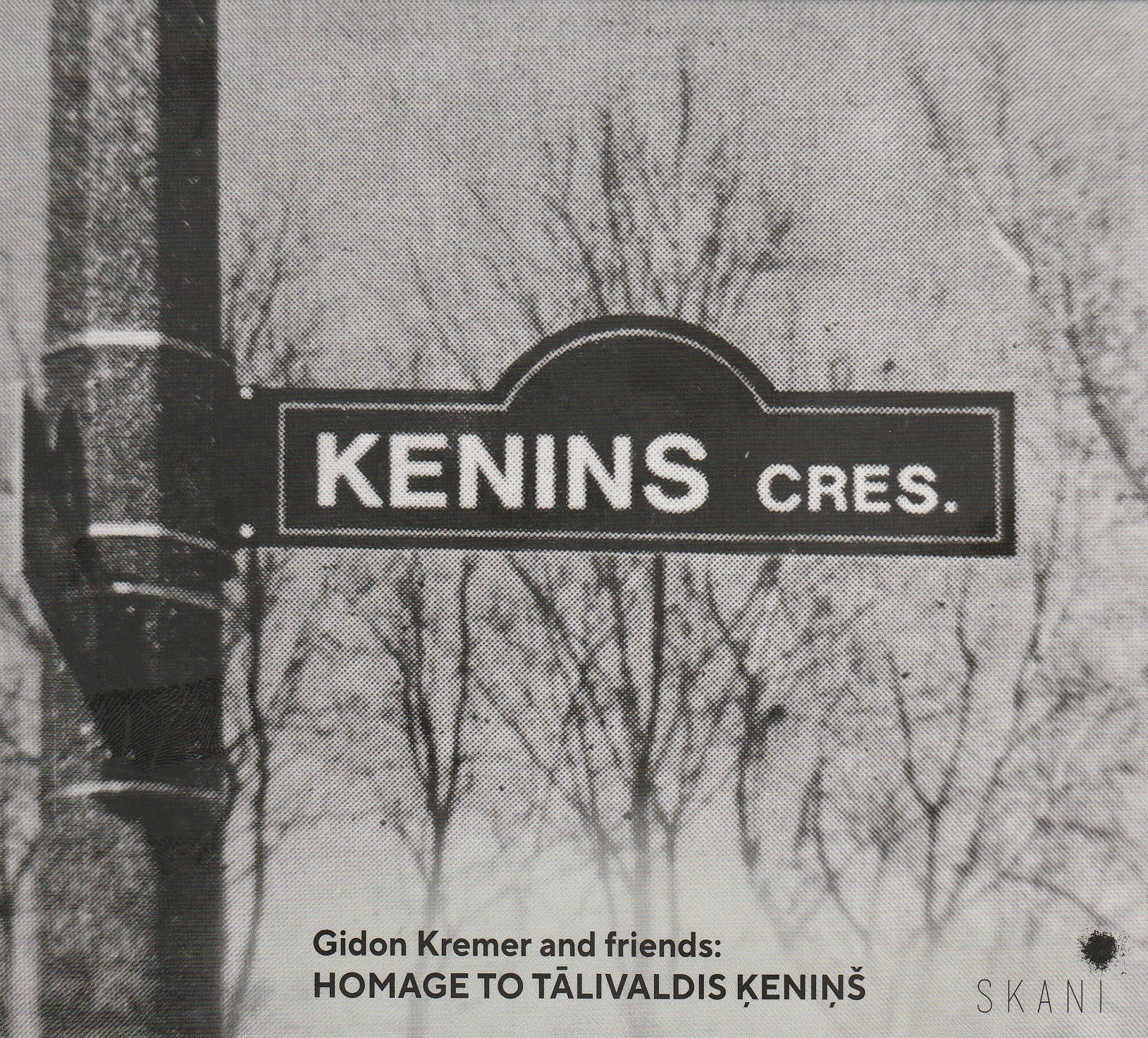
04 Kenins CresKenins Cres. – Homage to Tālivaldis Ķeniņš is a new disc from the Latvian Music Information Centre featuring Gidon Kremer and Friends (SKANI 178 lmic.lv/en/skani/catalogue?id=260). The cover depicts a street sign in the Ottawa suburb of Kanata, named to honour the distinguished Latvian-born Canadian composer. 

The selection of chamber works spans four and a half decades of Ķeniņš’ creative output. The earliest is a movement from the Cello Sonata for which he won first prize in composition at the Conservatoire National Supérieur de Musique de Paris (where he was studying with Messiaen and Tony Aubin among others) in 1950 and garnered him a UNESCO fellowship. The latest is the Quintet for Piano and Strings composed for a concert celebrating his 75th birthday hosted by the Toronto Latvian Concert Association in 1994. That concert was broadcast on CJRT-FM where I had the privilege of producing a weekly month-long radio series on Ķeniņš for the station’s annual Canadian Composer Portraits series, with host Alex Baran. It was an honour, and a real pleasure, to meet and work with “Tali,” a highlight of my time at the station. 

There have been a number of recordings of Ķeniņš’ music produced by the CBC and the Canadian Music Centre over the years, but since his death almost all have come from Latvia, which is somewhat ironic in that he fled his native land after the second Soviet occupation in 1944 and never returned to live there. After his studies in France, Ķeniņš immigrated to Canada in 1951 where he spent his entire professional career as organist, educator and composer. It was only in his later years that he returned to Latvia for occasional visits, but that country has embraced him as a native son and acknowledged him as one of its most important composers in a way that Canada has not. This despite his being one of the most prolific orchestral composers Canada has ever produced, with eight symphonies and 12 concertos in his varied oeuvre.

In addition to the works listed above, the disc includes Aria per corde for string quintet, Concertino barocco “Ommaggio à JS Bach” for two violins, Piano Quartet No.1, a movement from Concerto for Violin, Cello and Strings, and Colloquens patriae – reflections on a theme by Imants Zemzaris. As the artist credits suggest, the outstanding performances feature Kremer and some of the best musicians from the Baltic states, along with his ensembles Kremerata Lettonica and Kremerata Baltica Nonet in the larger works. A truly memorable tribute to a truly wonderful composer. 
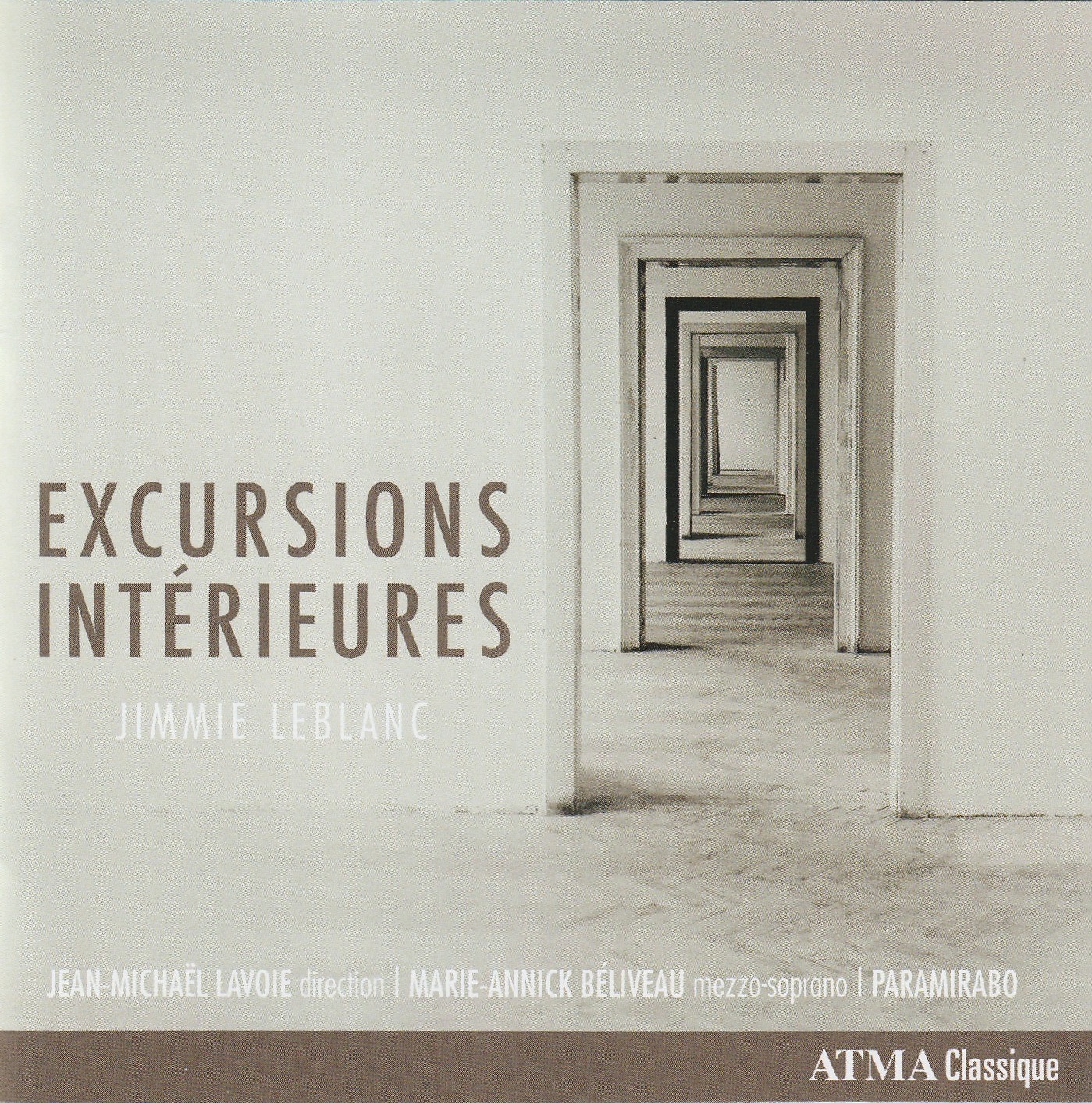
05 Jimmie LeblancThe Prelude from Bach’s Cello Suite No.1 in G Major is quoted in the final movement of Ķeniņš’ Quintet for Piano and Strings, and it also makes a cameo, along with a kaleidoscope of other familiar works and the occasional ringtone, in Commedia della musica. This is first of three challenging instrumental works that appear on Excursions intérieures, a portrait disc devoted to Quebec composer Jimmy Leblanc featuring ensemble Paramirabo under the direction of Jean-Michael Lavoie (ATMA ACD2 2906 atmaclassique.com/en/product/excursions-interieures). 

Commedia dell’arte is a theatrical genre that appeared in the 16th century as a satire of the social mores of the time. Leblanc tells us that “In Commedia della musica, I wondered what musical archetypes could allow me to paint a portrait of our world today […] to summon musical personalities who through allusions, quotes or technical borrowing, seemed to me to be able to translate an aspect of our reality: who could come to talk to us about infobesity, cyber-attack, multiplicity, sacredness, globalized mobility, climatic upheaval, terrorism, and of course ... of love ...” He goes on to warn us that “any resemblance to known (musical) characters is not fortuitous!” It’s a riotous carnival ride. 

Although Leblanc’s music is visceral – abrasive at times and constantly forceful, with repeated pedal points and driving rhythms – it is often based in intellectual exercises. In … and the flesh was made word, a title which turns a phrase from the Gospel of Saint John on its head, he says “I wanted to explore textures designed as if they were more tactile, and less discursive. In phase with this poetics, I used the formantic structures of the vowels of the French language, and I approached the textural aspect by exploring various categories of Denis Smalley’s Spectromorphology, such as granulation, iteration, sound streams, and periodicity.” 

“Designed as the second part of a diptych whose initial gesture is constituted by … and the flesh was made word., with Clamors of Being I sought to deepen my approach to textural writing. To do so, I relied on a similar structure, but adopted a more distanced attitude in terms of energy and expression, making use of subtler transitions and materials more closely related to one another.”

These three works, originally composed between 2015 and 2017 were revised in 2024 for this recording, as was the half-hour long tour de force Excursions intérieures I : Désir de verre, after a poem by Michaël Trahan, in which soprano Marie-Annick Beliveau is captivating. The work explores the question of the “unity of the Ego, of its coherence, its continuity or its multiplicity.” With Trahan, Leblanc found “a textual source that allowed me to explore this reality musically. […] in the way our inner world is made up of both fundamentally intimate things […] and populated by external realities that come to us from the outside...” We hear distorted echoes of works by Schumann, Brahms, Purcell, Mozart, Puccini, Donizetti, adding “external perspective to the ideas born of my own sensitivity, multiple perspectives on a psyche drawing its universality from its asubjective character.” This powerful music is not for the timid, but well worth the journey for adventurous souls. 
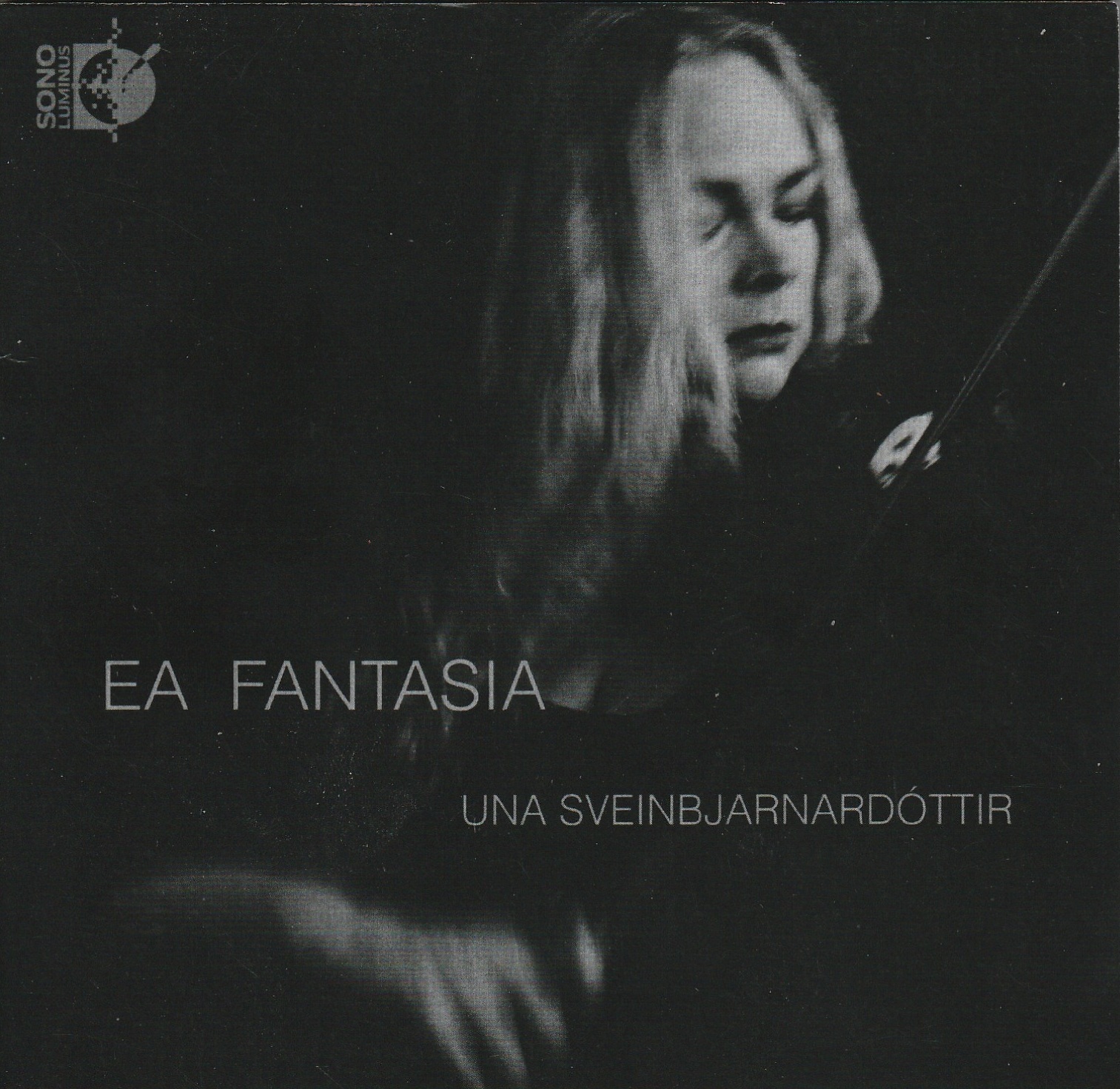
06 EA FantasiaThe next disc is another adventurous outing, but in a quieter sort of way. EA FANTASIA, solo violin works performed by Una Sveinbjarnardottir (Sono Luminus DSL-92288 sonoluminus.com/sonoluminus/ea-fantasia) is primarily a contemporary music disc, but it begins with a lovely work by Nicola Matteis Jr. (c.1670-1737) which was the violinist’s inspiration for this project and her own title track. Alla Fantasia is a dramatic three-and-a-half-minute moto perpetuo of arpeggiated chords reminiscent both of Bach’s Chaconne, and, anachronistically, of Arvo Pärt’s Fratres, which draws us in immediately. 

After this compelling busyness the mood abruptly changes with Fragile Stillness by Lilja María Ásmundsdóttir, inspired by an Icelandic weather phenomenon froststillur, where there is no wind and a crisp, frozen atmosphere. This leads to Meditation by Karólína Eiríksdóttir which, although starting quietly develops an angular quality where spiking melodies are punctuated with left hand pizzicato. Sveinbjarnardottir tells us that ever since first playing Meditation in 2006 this Icelandic solo music project has been “melting in my veins.”

While most of the composers are pure Icelanders, there are two transplants represented. Englishman John Speight wrote Soliloquy in 2012. Its two contrasting movements are “slow and thoughtful” and “crazy and furious” in the words of Sveinbjarnardottir. This is actually true of the disc as a whole, with its alternating sensibilities. The other “come from away” is Canadian Veronique Vaka Jacques, whose Ofdune – an Old English word meaning “downward” or “off the hill” – is grounded in Icelandic geology and topography. 

The disc, which also includes works by María Huld Markan, Tryggvi Baldvinsson, and Sveinn Lúðvík Björnsson, ends gently with Sveinbjarnardottir’s gospel music inspired arrangement of Jón Nordal’s Each Tiny Step from a play by Icelandic Nobel Prize winning author Halldór Laxness. 
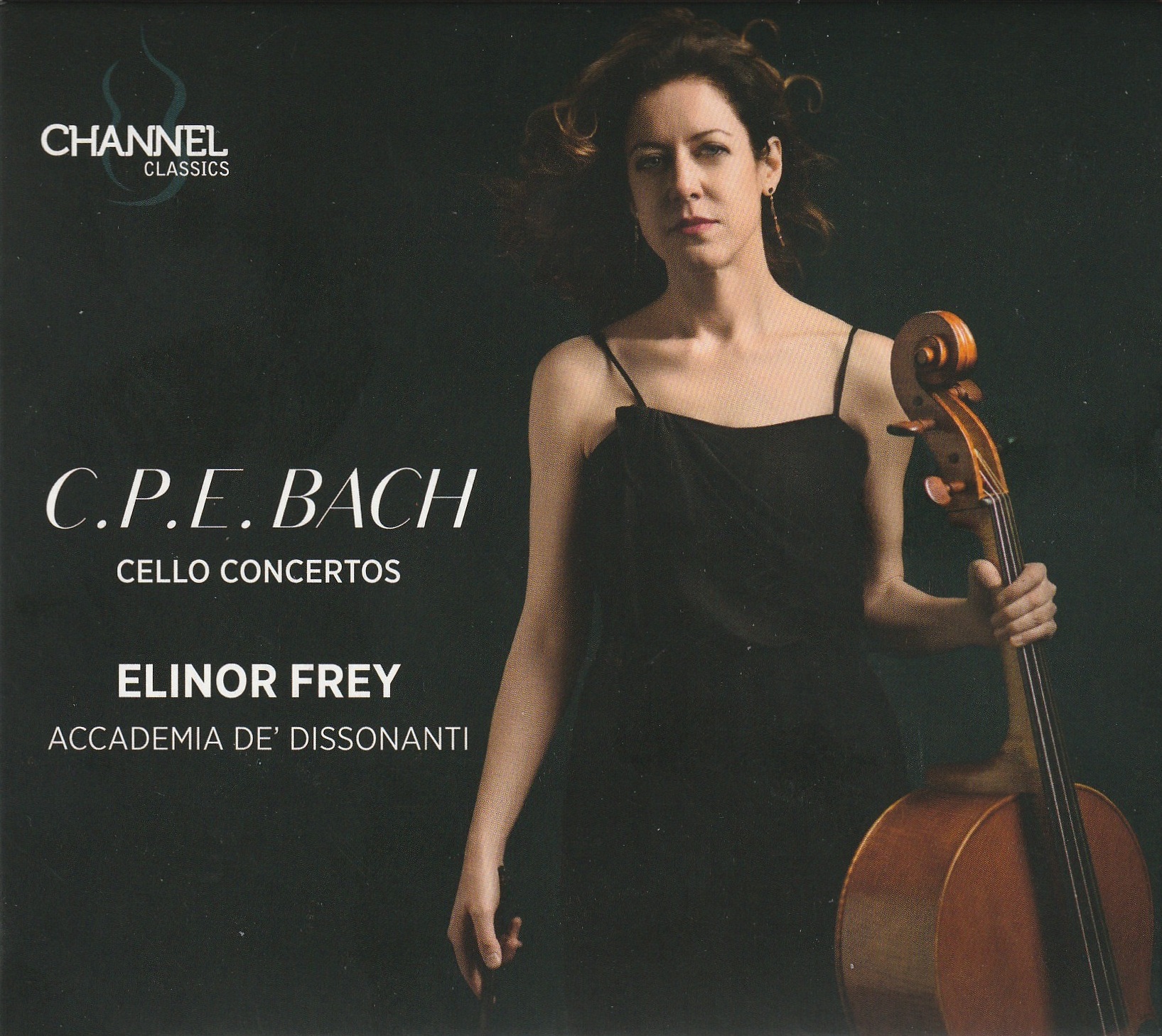
07 CPE BachFounded by Elinor Frey in 2020, Accademia de’Dissonanti is an ensemble and artistic institution which presents concerts, publications, and educational academies centred on historical performance and creative research. A recent release on Channel Classics, CPE Bach – Cello Concertos (CCS 50426 outhere-music.com/en/albums/c-p-e-bach-cello-concertos) features Frey as soloist in stunning performances. accademiadedissonanti.com/en lists several dozen string players, a number of keyboard and continuo players, traverso and other historical winds and two composers (Michael Oesterle and Dalit Warshaw) affiliated with the project. This disc, which is obviously devoted to Bach, utilizes a smaller contingent of the musicians and although the booklet does not specify the participants a Facebook video of the Concerto in A Minor, Wq 170 shows Frey supported by nine string players and harpsichord, with violins, violas and bass all standing. The group achieves a surprisingly full sound that belies the size of the ensemble. 

 The three concerti presented were all composed between 1750 and 1753. Frey’s comprehensive booklet notes suggest that the first two, dating from Bach’s time in Berlin, were composed with accomplished amateurs in mind. The third however, written a couple of years later in Potsdam, shows a level of difficulty that would indicate a skilled professional as the intended soloist, likely Ignaz Mara, cellist of the royal Kammermusik. 

Frey tells us that “In Bach’s time, performing and preparing a piece was done to suit the soloist’s strengths and to allow them to show off their own creative voice. […] For this recording I have used a vocabulary of ornamentation gleaned from the music of Bach, Benda, Quantz, and other nearby musicians, to enhance and intensify what is already on the page.” The result is a convincing and satisfying interpretation of works that deserve to be more widely known. Both the sound quality and the energy of the musicians are resplendent.
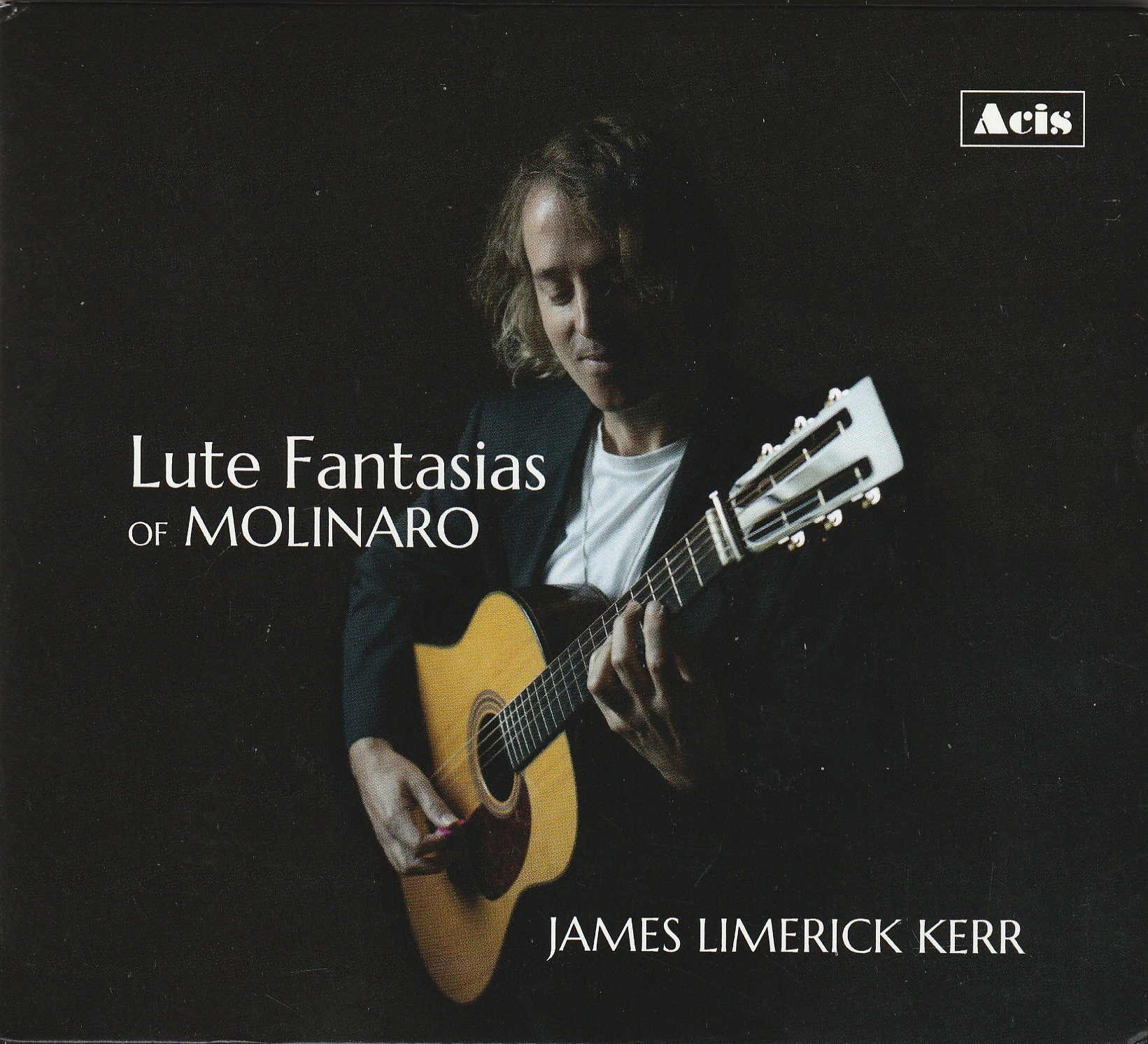
08 Lute FantasiasI’ll finish with a quick mention of a lovely, mostly contemplative album by American guitarist James Limerick Kerr. His approach to 17th century lute music is distinctly modern rather than historically informed, although he does show a healthy respect for the repertoire. In his notes to Lute Fantasies of Molinaro (Acis APL78376 acisproductions.com/lute-fantasias-of-molinaro-james-kerr-pressdpk-1) Kerr references Julian Bream, whose own approach to lute playing was controversial, as the first modern player to bring Molinaro’s music to contemporary attention. He also cites such respected “period” performers as Paul Beier and Paul O’Dette whose recordings sparked his interest in this composer, as well as Peter Poulos, whose comprehensive scholarship on the life and works of Molinaro was informative and inspirational. 

Kerr performs the music of Simone Molinaro (1570-1636) in his own arrangements for “hybrid picking guitar.” This involves using both a plectrum (guitar pick) and finger style picking. The instrument he uses is a “slope shouldered ‘jumbo’ Brazilian rosewood and Adirondack spruce 12-fret steel-string guitar handmade by Circle Strings in Vermont.” The resulting reverberant sound is crystalline and clean with a minimum of left-hand finger-on-string noise. It’s a thoroughly joyful listening experience.
A number of decades ago my wife and I attended a fabulous concert by superlative percussionist (now Dame) Evelyn Glennie at the George Weston Recital Hall. The piece that has stuck with me for all these years was PRIM by Icelandic composer Áskell Másson, a ten-minute composition using only one snare drum. The result was transfixing (you can see a performance on YouTube). I would never have imagined that a single drum could be so compelling.

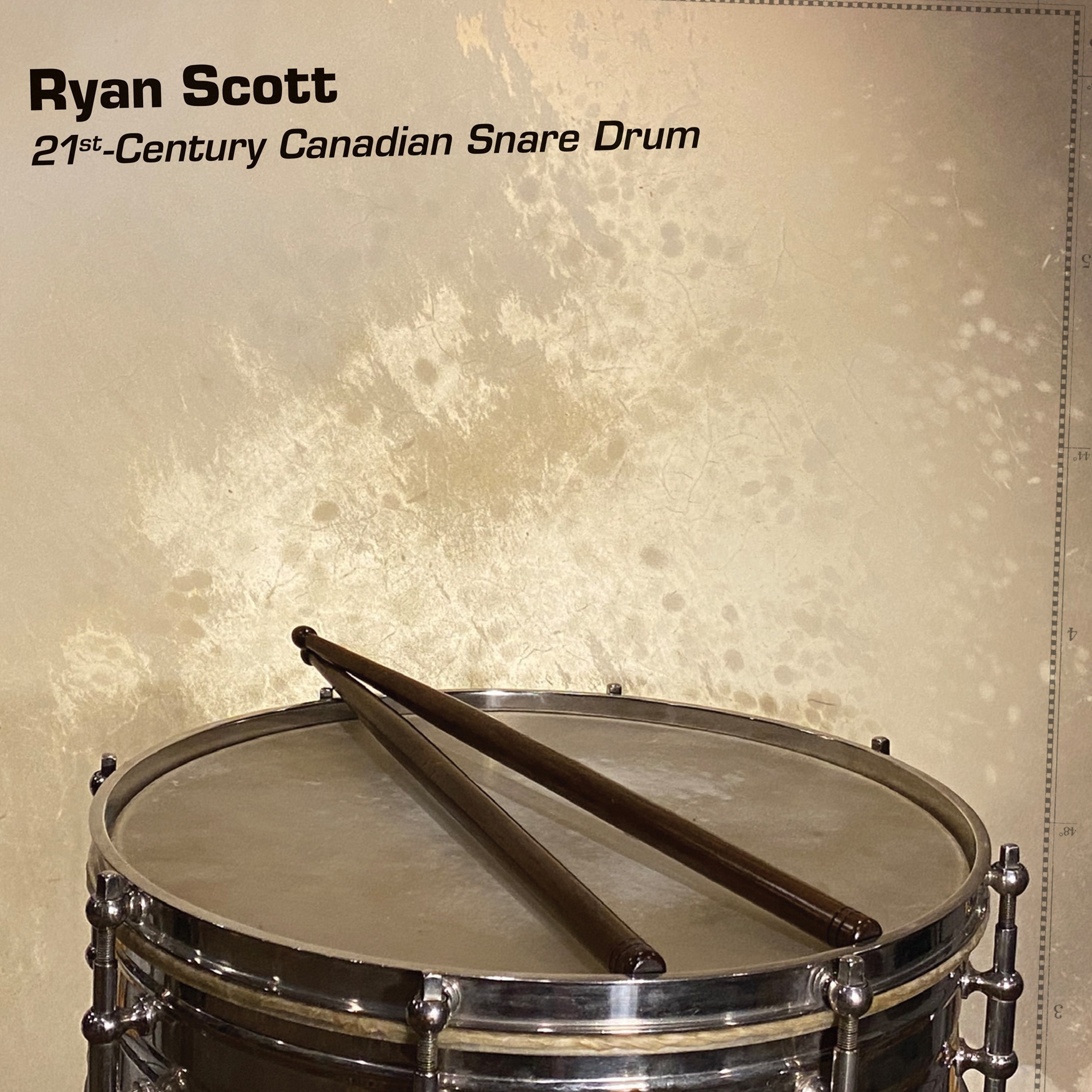
01 Ryan ScottThat being said I was a little daunted when I encountered Ryan Scott’s new double CD 21st Century Canadian Snare Drum (collectionqb.bandcamp.com/album/21st-century-canadian-snare-drum). Any qualms I had were quickly put to rest as I began to listen. While the snare drum does indeed figure prominently in the 14 works, almost all of them include additional resources, be it spoken word, electronic processing, prerecorded soundtracks, or requiring Scott to perform in other ways. One notable exception is Michael Oesterle’s brilliant, ironically titled hush (2022) with its seven minutes of just sticks on skin. Anna Höstman’s pebbles also uses the unadorned drum in a piece inspired by the words of artist Rockwell Kent, while Scott whistles and hums fragments of melodic material. 

Andrew Staniland’s ANTIGRAVITYDRUM begins with the drum alone, its snare springs disconnected. Two and a half minutes later an engaging soundtrack begins, filled with electronic effects and MIDI-instruments in counterpoint with the still snare-less drum. Bekah Simms’ Skinscape IV involves Scott’s interaction with an electronic, disembodied version of the snare drum, transforming “something intimately familiar into something processed and alien.” Christina Volpini’s only ghosts finds Scott producing a harmonica drone over a soundtrack reminiscent of waves upon a shore. FOMO (Fear of Missing Out) by Kati Agócs is scored for snare drum, kick drum and two large metal plates. It is a sparse piece in which “the soloist enacts a kind of stream-of-consciousness pantomime, searching for something inchoate, elusive, and potentially unreachable.” 

Perhaps the most idiosyncratic work is Brian Current’s abrasive Infantry which delves into the militaristic implications of the snare, with pre-recorded texts by soldiers from different backgrounds and periods of history and percussive interjections. The set concludes with Nicole Lizée’s The Dark Night.fm, in which “analogue synths and slowed-down voice smears… wrap themselves around Scott’s nimble percussion and vocal interjections.” 

All of the above, plus works from Amy Brandon, Monica Pearce, Vincent Ho, Emilie Cecilia LeBel, Jason Doell and Hiroki Tsurumoto ensure that these discs never devolve into “too much of a muchness.” They provide a welcome showcase for the diversity of Canadian composition at this point in time and a stunning platform for the many talents of Ryan Scott (principal percussionist of Esprit Orchestra, artistic director of Continuum Contemporary Music and a member of the Canadian Opera Company Orchestra).

Listen to '21st Century Canadian Snare Drum' Now in the Listening Room

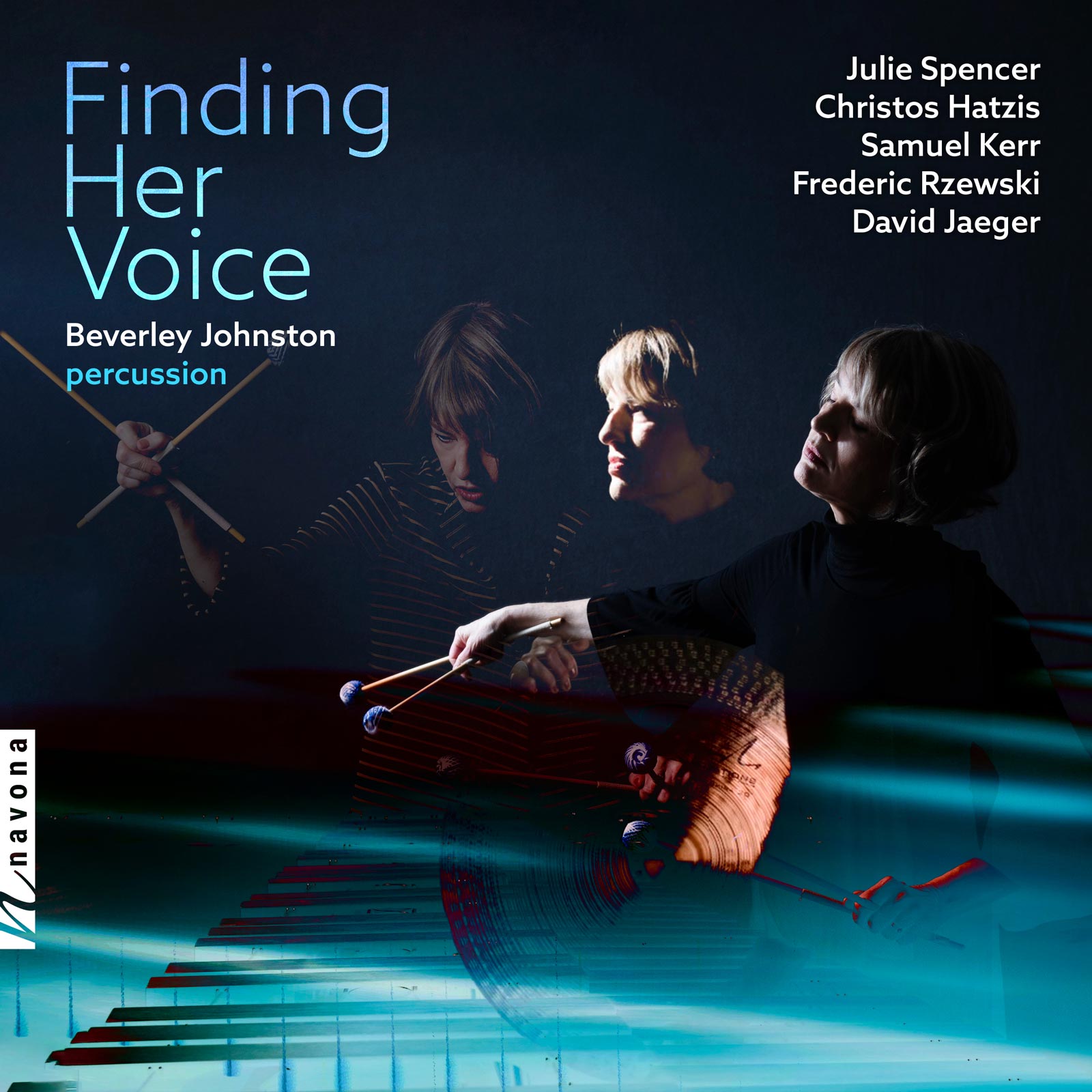
02 Beverly JohnstonFor the past number of decades another Toronto percussionist has made a name for herself as a virtuoso solo artist. Beverley Johnston’s repertoire stretches from her own transcriptions of the music of Bach, to the most intricate of contemporary works, often employing her super-sized five octave marimba. Her most recent release Finding Her Voice (navonarecords.com/catalog/nv6823) is “a journey through sound, history and identity… celebrating the enduring resonance of women’s voices across time.” Johnston presents works by Julie Spencer, Christos Hatzis, Samuel Kerr, Frederic Rzewski and David Jaeger, and two compellingly meditative structured improvisations of her own. 

The instrumentation ranges from assorted quiet percussion in Spencer’s Angels in Arches of Hildegard’s Bingen (in which Johnston is also called upon to intone the text), vibraphone (Hatzis and Jaeger), marimba (Kerr), flowerpots (Rzewski) and temple bowls, temple bells and Thai gongs (Johnston). The Hatzis and Jaeger works also include playback of electroacoustic sounds, and in Kerr’s November we hear the haunting voice of the late character actor Kenneth Welsh reciting a poem by Robert Frost. In each case rich sound worlds are created using minimal resources, a case in point being Rzewski’s To the Earth in which the performer strikes simple clay pots while reciting words that honour the earth. 

Jaeger’s Lyrics II pays homage to Canadian composer, broadcaster and co-founder of New Music Concerts Norma Beecroft, referencing her pioneering work in electronic music. We also hear a brief quotation from Beecroft’s celebrated The Living Flame of Love. The disc ends with Johnston’s vocal interpretation of Sara Teasdale’s poem The Crystal Gazer, accompanied by ever more intense Thailand gongs, providing a dramatic close to this beautifully realized album. 

03 Robert Humber into air coverWhen I first encountered Newfoundland composer Robert Humber’s into air – four multitracked pieces (redshiftmusicsociety.bandcamp.com/album/into-air) I expected an album of music that would sound like Steve Reich’s Counterpoint series, with its tuneful overlaid minimalist lines. While there are moments here that do suggest that medium, the overall impression is quite different. 

The title work, for five violins (all performed by Adrian Irvine) begins quietly, with distinct separate lines which gradually come together in a doppler-like cloud. The second movement is an agitated storm reminiscent of a demented Vivaldi. The final movement is quiet and somehow gentle, despite bows grating on the strings and strident upper register meanderings. 

Mothmouth for three guitars performed by Ben Diamond opens with gentle string scrapes and ringing harmonics that gradually give way to busy contrapuntal picking. Murmurations for six layered pianos (Stephen Eckert) is reminiscent of the “continuous music” of Lubomyr Melnyk before transitioning to Reich-like phasing and then morphing into other worlds including that of Philip Glass. This is more what I expected from my first glimpse, but less derivative than I feared. 

The disc ends with a work for solo cello and cello octet (all performed by Heather Tuach). Humber says that singing in circles emerged from a time that he felt himself “approaching a breaking point. I was isolated, anxious and without purpose.” The angst-filled lament begins with an extended solo cadenza lasting more than half of the 14-minute work, before the octet joins for a melancholy but somehow peaceful resolution. 

I was the general manager of New Music Concerts from 1999 through 2019 and having mentioned NMC’s co-founder Norma Beecroft and its present artistic director Brian Current above, it’s only fitting that I should include Robert Aitken, who served as artistic director for the organization’s first half century. 

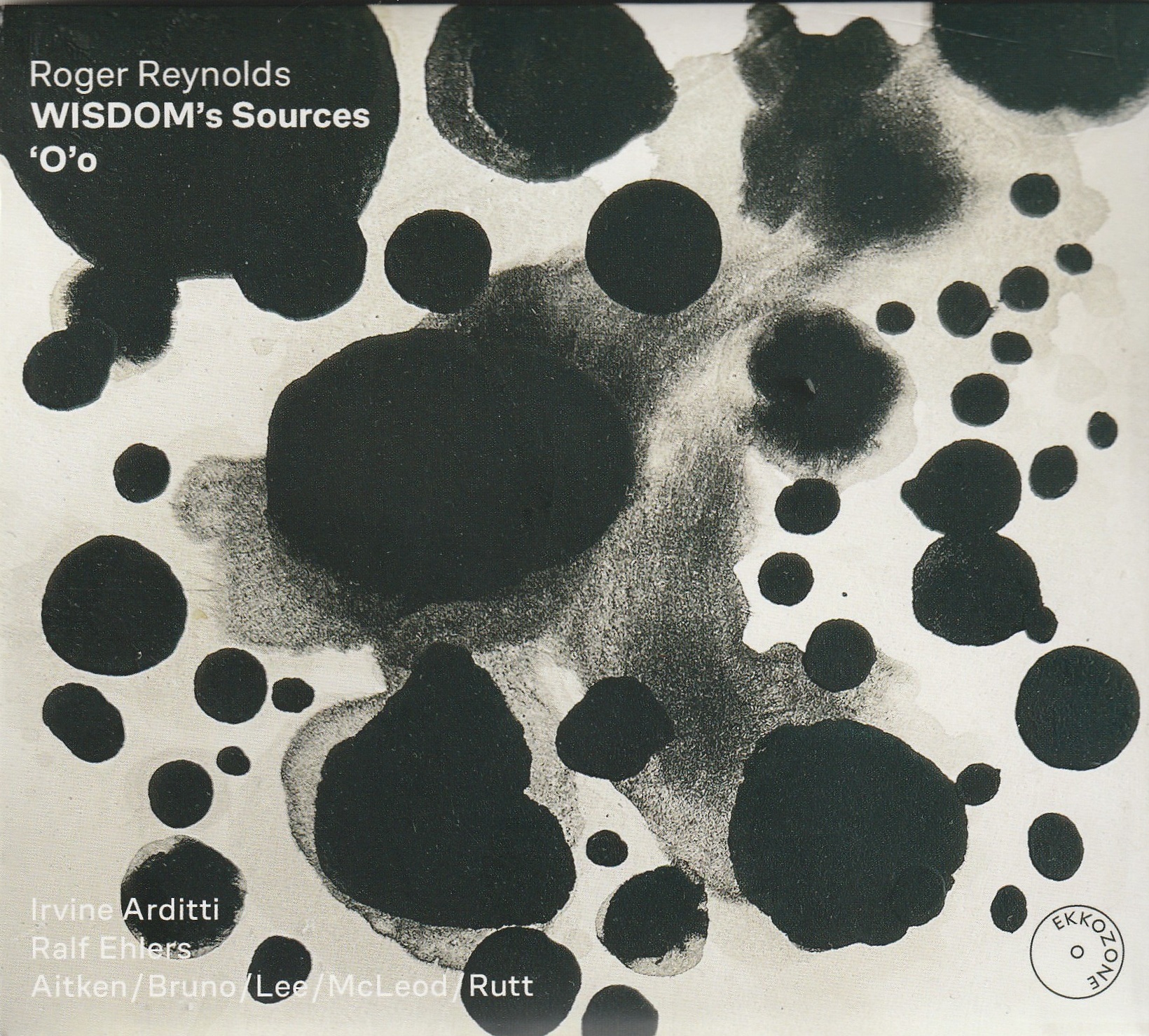
For many years Aitken, a world-renowned flutist, had lamented the dearth of works for flute and string quartet. Over the centuries composers had opted to follow the template set by Mozart with his quartets for flute, violin, viola and cello. Aitken’s complaint was that whenever he was invited to perform with an established string quartet, one of the violinists would have to sit out. He has endeavoured to rectify this over the years by commissioning new works for the full five players. A recent example is ‘O‘o by Pulitzer Prize laureate Roger Reynolds, premiered by NMC in May 2018 during the 21C Festival. 

04 Roger ReynoldsRoger Reynolds: WISDOM’s Sources | ‘O‘o (ekkozone.com/recording/roger-reynolds-wisdoms-sources-oo) features the performers from that Royal Conservatory concert, Robert Aitken and the Iris Ensemble (Yolanda Bruno, Mark Lee violins, Rory McLeod, viola and Leana Rutt, cello) who worked with Aitken and Reynolds at the Lunenburg Academy of Music Performance in Nova Scotia in advance of this recording. The subject of the mournful work is the extinct Hawaiian ‘O‘o bird, the last known sighting of which was in 1934 on the slopes of Mauna Loa. Programme notes tell us that “Both male and female of this particular species sang to each other, and what made their plight especially poignant was the persistence of the [last] male, who survived another four years after the female died, continuing to sing to his absent mate.” Reynolds found recordings of the ‘O‘o’s songs at Cornell University’s Lab of Ornithology and transcribed them. He uses the ensemble to provide “a metaphorical habitat, a sonic environment within which the outlines of a calling and responding would gradually emerge.” 

In his 80th year at the time of the recording, Aitken is in top form as he leads a group of fine young players in this emotionally charged, important addition to the flute quintet repertoire.

The disc also includes WISDOM’s Sources, an extended, extremely challenging work for violin and viola, written for Irvine Arditti and his longtime Arditti Quartet colleague Ralf Ehlers. The players are required to “vocalise – without words – and gesture physically” in ways that the composer says “add investment and whole-body arousal.” Composed during COVID with its imposed isolation and resultant frustrations, Reynolds turned to philosophy for inspiration. The first movement is dedicated to the Greek tragedian Aeschylus, the second to the Tirukkural, a classic Tamil text on morality, and the third to the writings of Pan-Africanist civil rights activist W.E.B. Du Bois, specifically his The Souls of Black Folk. I’m afraid I don’t have words to describe this excruciating commentary on that terrible COVID time. It simply must be heard.  

“The sense of space (height, width and depth) is palpable: the music reaches out to embrace us; withdraws into the distance; then, like a steam locomotive, comes suddenly roaring back. Invisible bands march across the soundstage in two different directions at different speeds, a solo viola mutters an occult hymn-tune as the rest of the orchestra sprays fireworks in all directions; the chorus intones wordless transcendental benedictions as the music fades away into silence. We were all completely blown away…” Those are the words of Grateful Dead bassist Phil Lesh describing a performance of Charles Ives’ Fourth Symphony by Leopold Stokowski and the American Symphony Orchestra which he attended with his bandmates in 1967.   

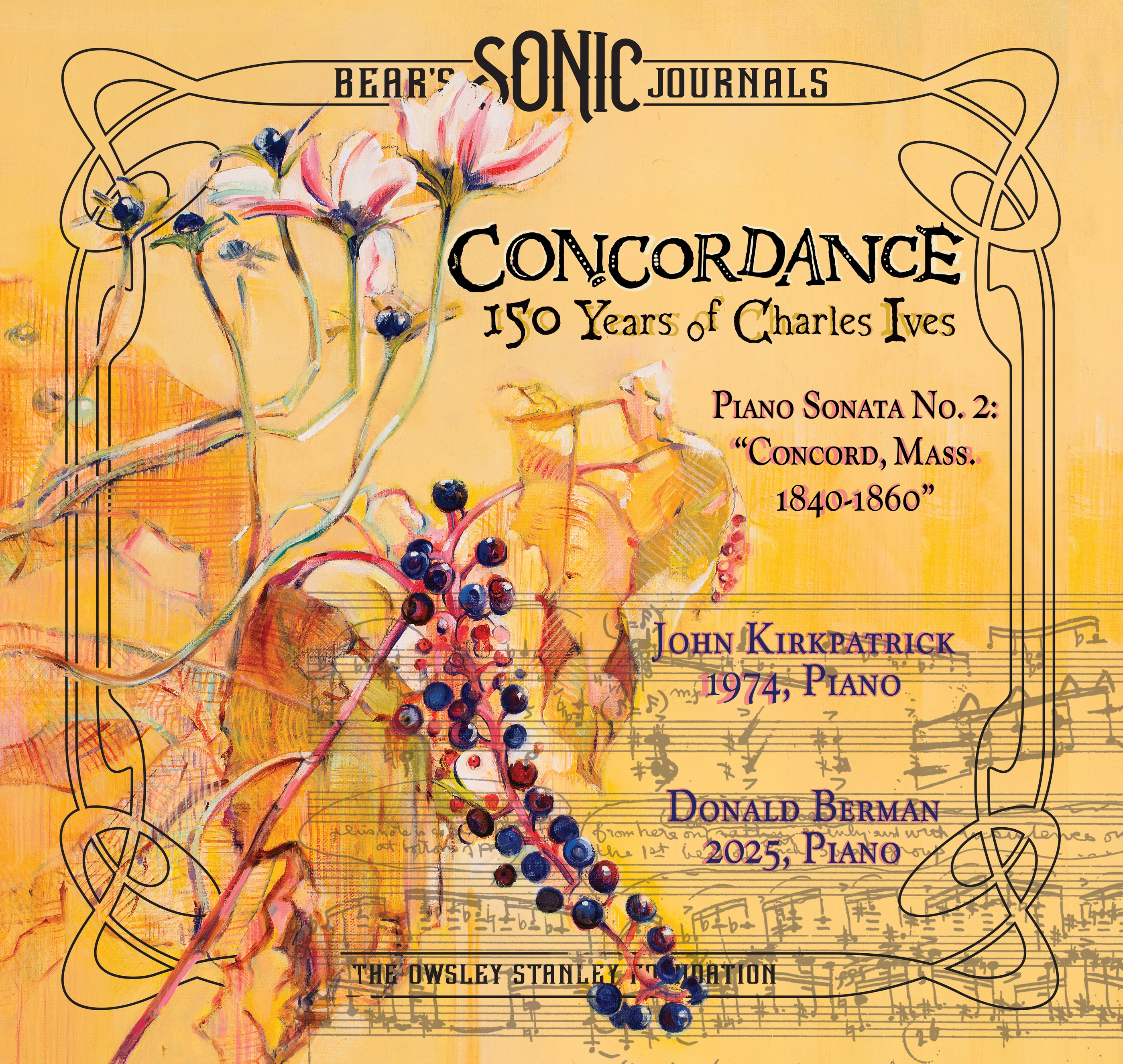
05 Ives ConcordanceBack in February 2025 I thought I had probably had my last say about the music of Charles Ives. The year of his sesquicentennial had just concluded, and it seemed that all imaginable archives had been mined. Imagine my surprise when over a year later a new double CD Concordance: 150 Years of Charles Ives appeared under the banner of Bear’s Sonic Journals presented by the Owsley Stanley Foundation (owsleystanleyfoundation.org/concordance-150-years-of-charles-ives). 

The hard-bound book that contains the two CDs includes 116 pages of essays, detailed programme and production notes, photographs, anecdotes and appreciations accompanying two live performances of the Piano Sonata No.2 “Concord, Mass. 1840-1860” recorded half a century apart. The first, from 1974, featuring Ives’ collaborator John Kirkpatrick who gave the first complete performance of the work some three decades earlier, was recorded by “Bear” aka Owsley Stanley, the long-time Grateful Dead soundman who documented virtually every Dead performance over the years. The second, staged specifically for this project, features Donald Berman playing in an “intimate home performance space just next to a trail that leads through the woods to Walden Pond” in the heart of Concord, home of the Transcendentalist movement celebrated in Ives’ sonata. 

The 2025 recital includes four works written especially for Berman, presented as Concord Legacy: Other Transcendentalists. The contributors are Eve Beglarian – As Syllable from Sound (on Emily Dickinson), David Sanford – Underground (on Harriet Tubman), Marti Epstein – The Piano at Palace Beautiful (on Louisa May Alcott) and Elena Ruehr – Summer on the Lakes, in 1843 (on Margaret Fuller). The artists provide notes giving their compositions a context within the whole. I find them each a satisfying extension of the Ives sonata, with Epstein’s Alcott meditation particularly apt. 

As I have often said before, I like it when my reading and my listening coalesce. When I learned about Phil Lesh’s involvement in the Concordance project, I was moved to read his Searching for the Sound – My Life with the Grateful Dead. There I learned that before his days on the road playing bass, he was a classically trained musician and studied composition for a time with 20th century icon Luciano Berio. Who knew?

06 Hanes GARGANTUATwo other recordings led me to literature recently. The first was a suitably bombastic treatment of François Rabelais’ GARGANTUA by composer Simon Hanes, scored for three drum sets, three electric basses, three trombones, three French horns and three soprano voices (Pyroclastic Records PR 46 simonhanes.bandcamp.com/album/gargantua). From the opening of A Series of Waves Tremble in a Sea of Blood, to my ear reminiscent of Max Roach’s 1961 classic Garvey’s Ghost with high vocalise from Abbey Lincoln, I was hooked. The subsequent movements vary, but all are in some way or another representative of Rabelais’ rambunctious, audacious, irreverent, scatological and often bawdy writing. Other musical inferences include Frank Zappa’s Mothers of Invention, the munchkins from The Wizard of Oz, renaissance motets (albeit with closer harmonies) and period pageantry, medieval sackbut chorales, and the profane dissing of contemporary street rap. Yet another eclectic and extraordinary offering from Kris Davis’ Pyroclastic label.

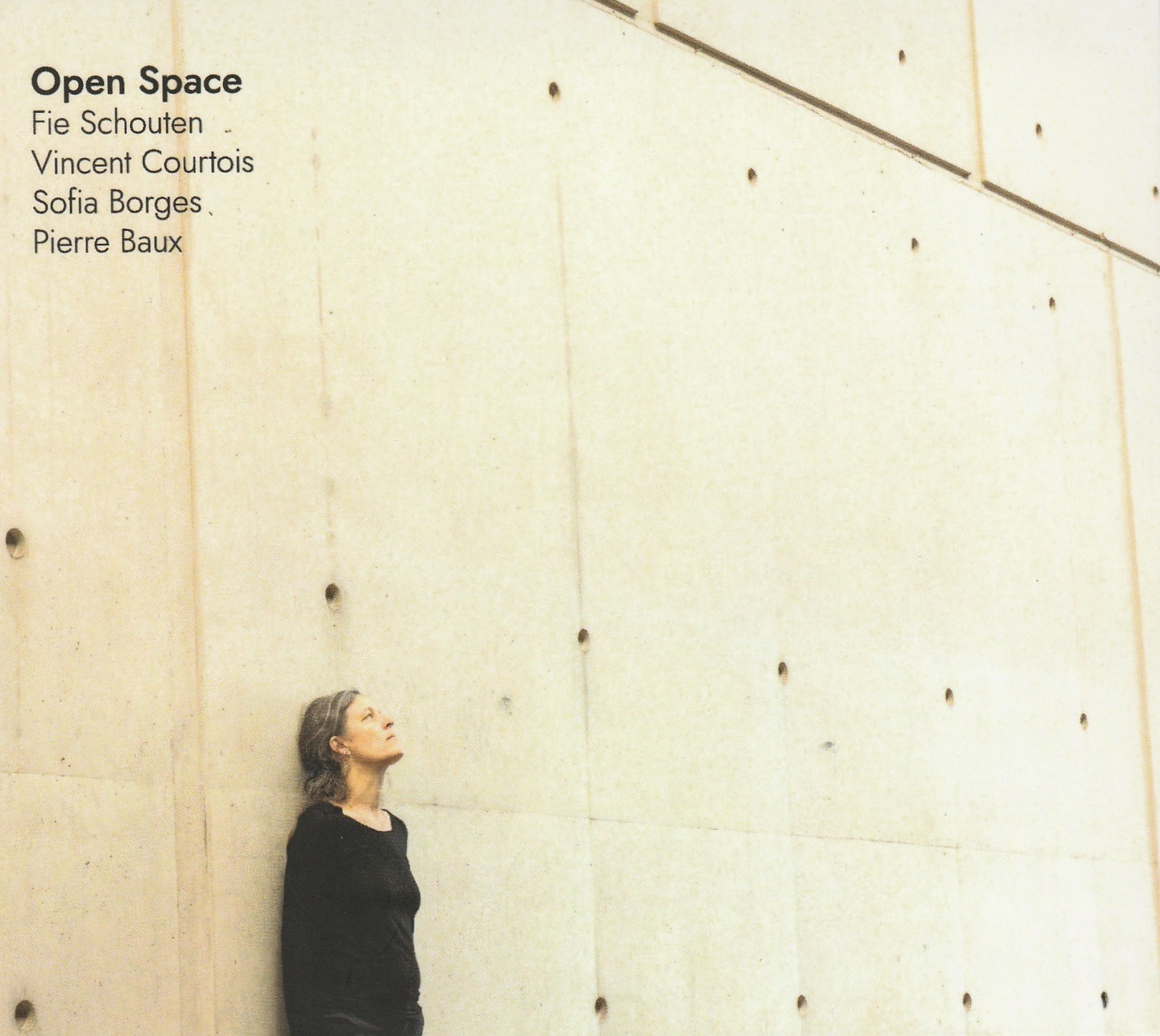
07 Fie SchoutenThe second takes another French author, Georges Perec, as its point of departure. Although Perec’s La vie mode d’emploie (Life a User’s Manual) is one of my very favourite books, I was unfamiliar with his Espèces d’espace (Species of Spaces) and intrigued when the next recording crossed my desk. Dutch bass clarinetist Fie Schouten uses Perec’s short descriptive novel as the outline for Open Space (relativepitchrecords.bandcamp.com/album/open-space-2). Her frequent collaborators Vincent Courtois (cello) and Sofia Borges (drums) are joined here by actor Pierre Baux, whose distinctive narration of Perec’s texts (in French) is an integral part of the ten group improvisations based on the chapters of the book. Perec’s premise is the depiction, through various list-like constructions, of the various spaces in which we exist, from the confines of a bed, a room, an apartment, the building in which the apartment is located (and here he references his masterwork La vie), a street, a neighbourhood, a city, the (artificial) borders which divide countries, and, ultimately, the world and its place in the universe. The book, and its interpretation by these creative musicians, is intriguing and wholly satisfying. I thank Schouten for expanding my knowledge and appreciation of Perec’s oeuvre.

Listen to 'Open Space' Now in the Listening Room

08 Eric St LaurentThe next disc I’ll mention only in passing because I don’t quite know what to say about it other than the fact that I like it, perhaps more on each subsequent listening. I’ll let Toronto guitarist and the project’s mastermind Eric St. Laurent’s cryptic press release set the scene: “A team of French speaking music engineers from Alfa Centauri lands in 1822 Bogotá, where they start jamming with a local dance band. At the bar, Duke Ellington smokes a cigar while playing Wordle on his phone… A more conventional bio would mention the meeting of Surf Guitar, Latin Rhythms and exotic vocal melodies in French and Spanish. But where would be the fun in that?” 

St. Laurent and his band Science Fiction Cumba, comprised of Calvin Beale (electric bass), Irene Torres (voice and keyboards), Chendy Léon (voice and percussion) and Luisito Orbegoso (voice, percussion and trombone) released Volume 1: Arizona (eric-st-laurent.bandcamp.com/album/science-fiction-cumbia-volume-1-arizona) in April and I can hardly wait for Volume 2. Highlights for me include Torres’ vocal work on the opening track Jean Gendron, St. Laurent channeling Dick Dale’s guitar stylings in Moonlight on Vermont, and a wonderful cover of Joe Jackson’s Steppin’ Out with Orbegoso’s trombone doing yeoman duties on the earworm melody. Léon’s percussion is pervasive and captivating. My only regret is the meagre 20-minute duration of the disc. 

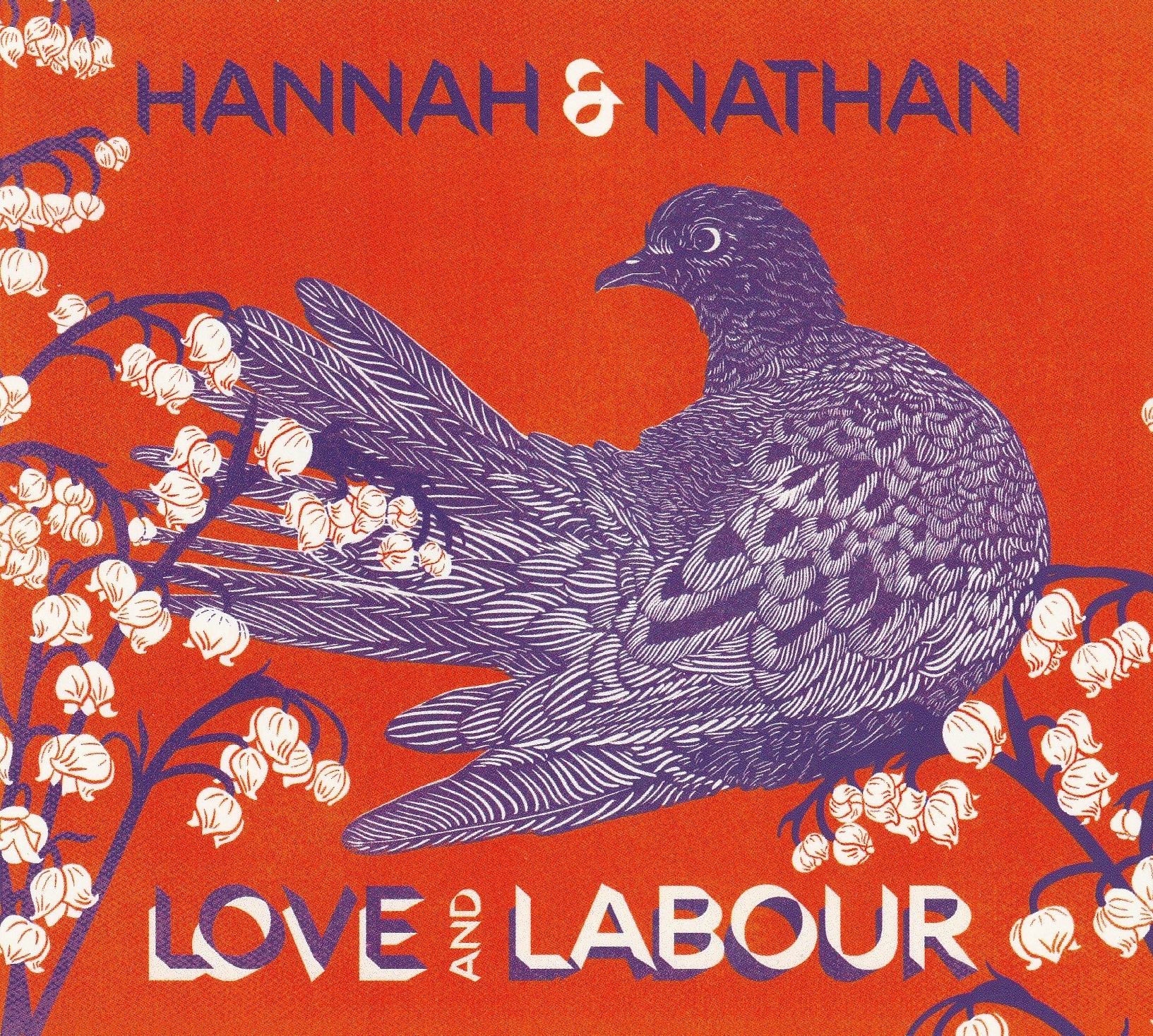
09 Hannah and NathanI’ve exceeded my space allotment, but there are two late arrivals I feel compelled to recommend before the long summer break. Love and Labour is the debut release by Hannah and Nathan, a duo whose roots-based contemporary songwriting reflects traditional Appalachian and “Old Timey” influences (hannahandnathanmusic.com/music). Their banjo frailing, fiddle and guitar playing, with high lonesome vocal harmonies, is complemented with tasteful and engaging upright bass, pedal steel and drums. Hannah and Natham will be playing various festivals around Ontario this summer.

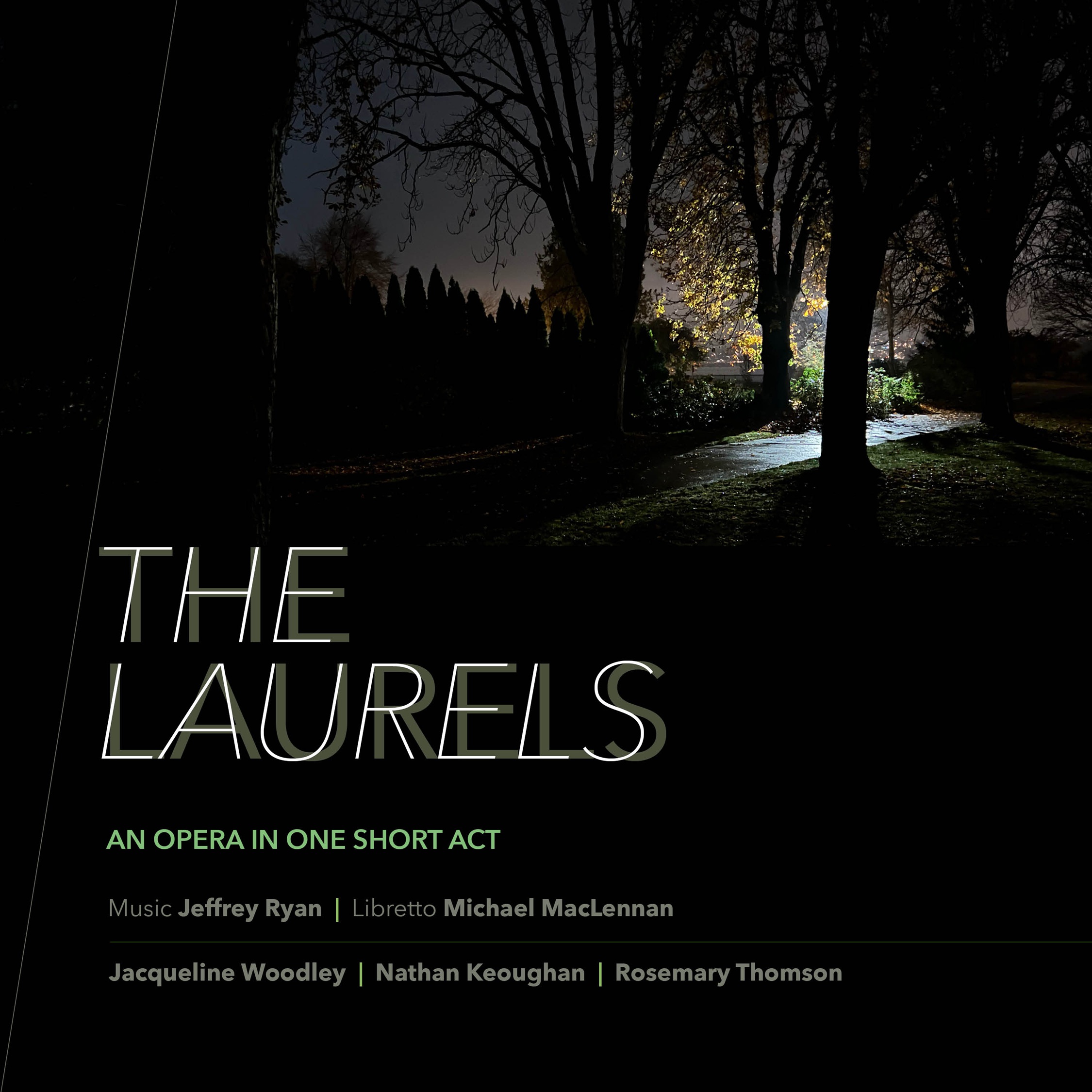
10 Jeffrey RyanTHE LAURELS is a short one-act opera — a contemporary retelling of the Daphne and Apollo myth, conceived as a thriller charting one woman’s psychological unravelling in the aftermath of a harrowing crisis. Composed by Vancouver-based Jeffrey Ryan with libretto by Torontonian Michael Lewis MacLennan, the opera features Jaqueline Woodley as the tormented soprano with baritone Nathan Keoughan and an ensemble led by Rosemary Thomson. The digital release is available here: redshiftmusicsociety.bandcamp.com/album/the-laurels.

Listen to 'THE LAURELS' Now in the Listening Room

David Olds can be reached at discoveries@thewholenote.com. 

David Olds, left and Ken Whitely. Photo by Sharon LovettI’m writing this on my 72nd birthday, so I’m going to indulge myself a little. But actually, it seemed as if my birthday came early this year. On an unseasonally mild day in early March the telephone rang and a voice said, “This is Ken Whiteley and I’d like to bring you my new CD.”  

I’ve been a fan of the Whiteley clan’s various musical adventures for more than half a century but had not previously had the pleasure of making Ken’s acquaintance. As I said it was a nice day and so I decided to sit on my porch and play my 1966 Martin D12-20 12-string while I waited for him to arrive. After initial pleasantries, much to my delight, Ken said he’d like to try out my guitar – see the accompanying photo – and commenced to demonstrate how such a venerable instrument should be played. I’m a pretty good strummer but man, my Martin has never sounded as good as it did under his finger-picking finesse. What a treat!

Last June at Hugh’s Room I attended the 60th anniversary/reunion celebration of the Original Sloth Band’s first gig back in 1965 in Bracebridge. It was the first two LPs by this band, featuring Ken and his older brother Chris with Tom Evans, that began my interest in these multi-instrumentalists and their eclectic repertoire that spans roots, blues, early jazz, gospel and folk traditions. The eponymous first record came out in 1973 and in the intervening years Ken has released more than three dozen discs, many under his own name, others with family (The Whiteley Brothers), friends (Mose Scarlett and Jackie Washington) and such sundry groups as The Beulah Band and Junior Jug Band. 

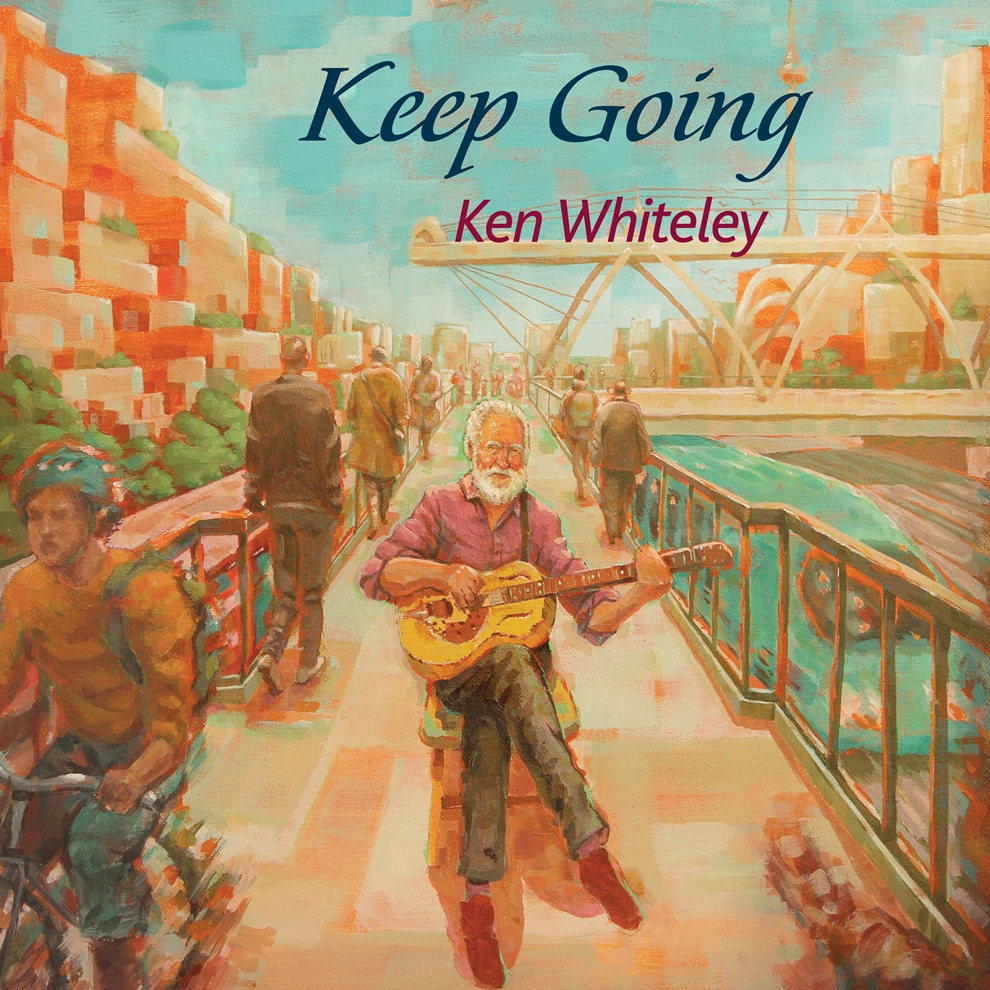
01b Ken WhiteleyAlthough Ken contributes the lion’s share of the accompaniments on most recordings, he is always joined by a host of stalwart journeymen (and women) and his latest CD, Keep Going (kenwhiteley.bandcamp.com/album/keep-going), is no exception. It’s an engaging mix of cover versions, original songs, and Whiteley arrangements of traditional tunes. He’s joined by brother Chris (harmonica and cornet), Bucky Berger (drums), Gord Mowat (bass) and vocalist Ciceal Levy, whose distinct harmonies blend marvellously and give an edge to Whiteley’s lead vocals. Eva Goldberg co-wrote and sings on the closer At the End of the Day, which features a haunting bass harmony by Pat Patrick.  

Whiteley’s notes are like a masterclass, giving the origin story of each tune and how he came to learn it. A case in point is Noah Lewis’ Going to German which Whiteley first performed in the 1960s as a member of Tubby Fats Original Allstar Downtown Syncopated Big Rock Jug Band. The backstory: German is a place just outside of Memphis where a state penitentiary is located. Another confusing title is Aberdeen, not in Scotland, but a town in Mississippi where Bukka White lived in the 1930s. 

On the opener Everybody’s Got to Be Tried Ken plays National steel guitar, Hammond organ and Fender bass, with Berger on drums and Chris on harmonica. On Going to German he plays 2 mandolins, mandola and mandocello, harmonica and bass harmonica. Other tracks find him adding string bass, washboard and piano. 

Although vocals and well-articulated lyrics are front and centre on most tracks, there is one instrumental, Whiteley’s own arrangement of Benny Goodman’s A Smooth One played on a Laskin acoustic guitar, which he says he believes is the first totally solo guitar piece he’s ever released. It’s sweet! 

Of particular note is the title track, a balladic anthem that came about after a fall on the ice in 2025 that resulted in a broken ankle. “Take my rest when I’m tired; I’m not fighting with nature’s laws; When I’m done I’ll keep going; This rest is just a pause; …While my heart keeps on beating; I’ll get back up when I’m down; Keep going, keep going…” Advice to live by. 

Concert Note: Ken Whiteley will celebrate his 75th birthday in a concert with friends (and family no doubt) at Hugh’s Room on May 2. It’s on my calendar. 

02 Jean Guihen Queyras LutoslawskiMany of my most memorable concert experiences have been shared with my dear friend André Leduc. For many years of my tenure at New Music Concerts (NMC), André was our photographer and documented the residencies of some of the most distinguished composers of our time. He and I agree that top among these were Witold Lutoslawski, who conducted the NMC Ensemble in 1993 just months before his death, and Pierre Boulez, laureate of the Glenn Gould Prize in 2002, who led our ensemble in the programme at Glenn Gould Studio during which the prize was presented. The ceremony also included the Toronto Award, given to a “protégé” selected by the winner, in this case the Montreal-born cellist Jean-Guihen Queyras, who has a thriving career in Europe. 

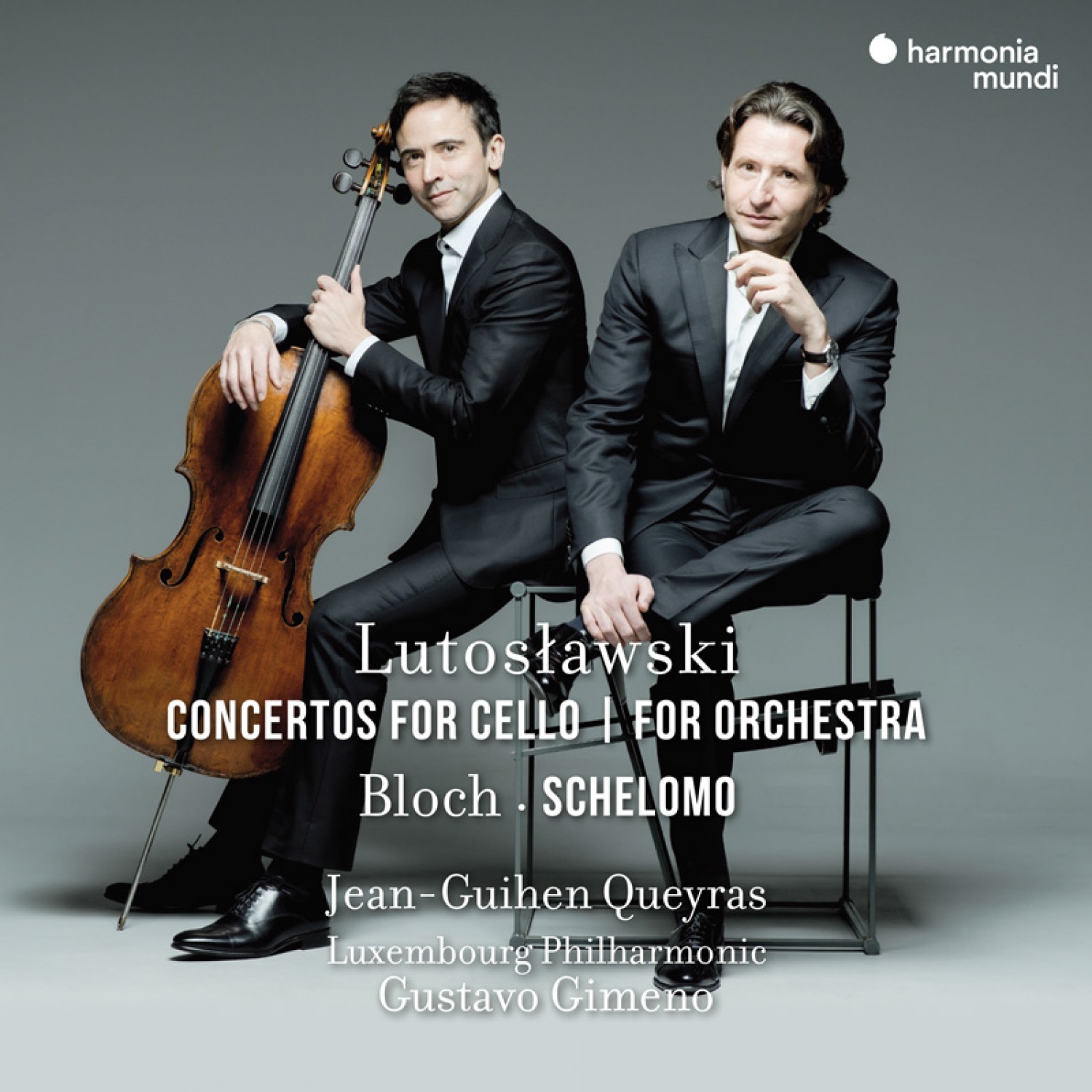
Lutosławski – Concertos for Cello | for Orchestra; Bloch – Schelomo (Harmonia Mundi HMM902714 store.harmoniamundi.com) features Queyras in Lutosławski’s cello concerto and the Bloch, with the Luxembourg Philharmonic conducted by Gustavo Gimeno, the Toronto Symphony Orchestra’s current music director. 

The Concerto for Orchestra is given a stunning performance to open the disc. It’s a relatively early work, written between 1950 and 1954, and owes an obvious debt to Bartók’s masterpiece in the same genre, while adding some contemporary stridency. 

Ernest Bloch’s Schelomo: Rhapsodie Hébraïque for Violoncello and Orchestra was completed in 1916, before the Swiss composer’s move to the USA, and is the final work in his Jewish Cycle. The cello is in full cantorial mode, declaiming what was originally conceived as a vocal text based on the Book of Ecclesiastes. Queyras is convincing in capturing the voice of King Solomon (Schelomo) that ranges from meditative to stentorian. 

For me (and André) the highlight of the disc is Lutosławski’s Concerto for cello and orchestra, written in 1970 for Mstislav Rostropovich. In the words of Dave Kopplin, it “consists of many simultaneous strands that at times seem related, at other times not, woven together in a fantastic quilt of sound…  conjuring up an image of controlled chaos.” It is acknowledged as one of Lutosławski’s most effective works and is a personal favourite. Queyras is in top form, rising to all the challenges and curves the composer throws at him, and Gimeno has full control over his orchestra in this stellar performance. 

03 HolligerAnother towering figure we had the pleasure of meeting was oboist and composer Heinz Holliger who spent a week working with NMC musicians in March 2005. He was featured with members of Accordes in Elliott Carter’s Oboe Quartet, conducted his own Turm-Musik for flute solo (Robert Aitken) and 23 players and supervised performances of several smaller works. Renowned as a pioneer of extended techniques for double reed instruments, he would often provide charts and instructions for realizing these new, often “non-musical” sounds to the composers he would commission. “Many of the pieces written for me were almost like recipes: the composers would receive a list from me of all the extended techniques available.”

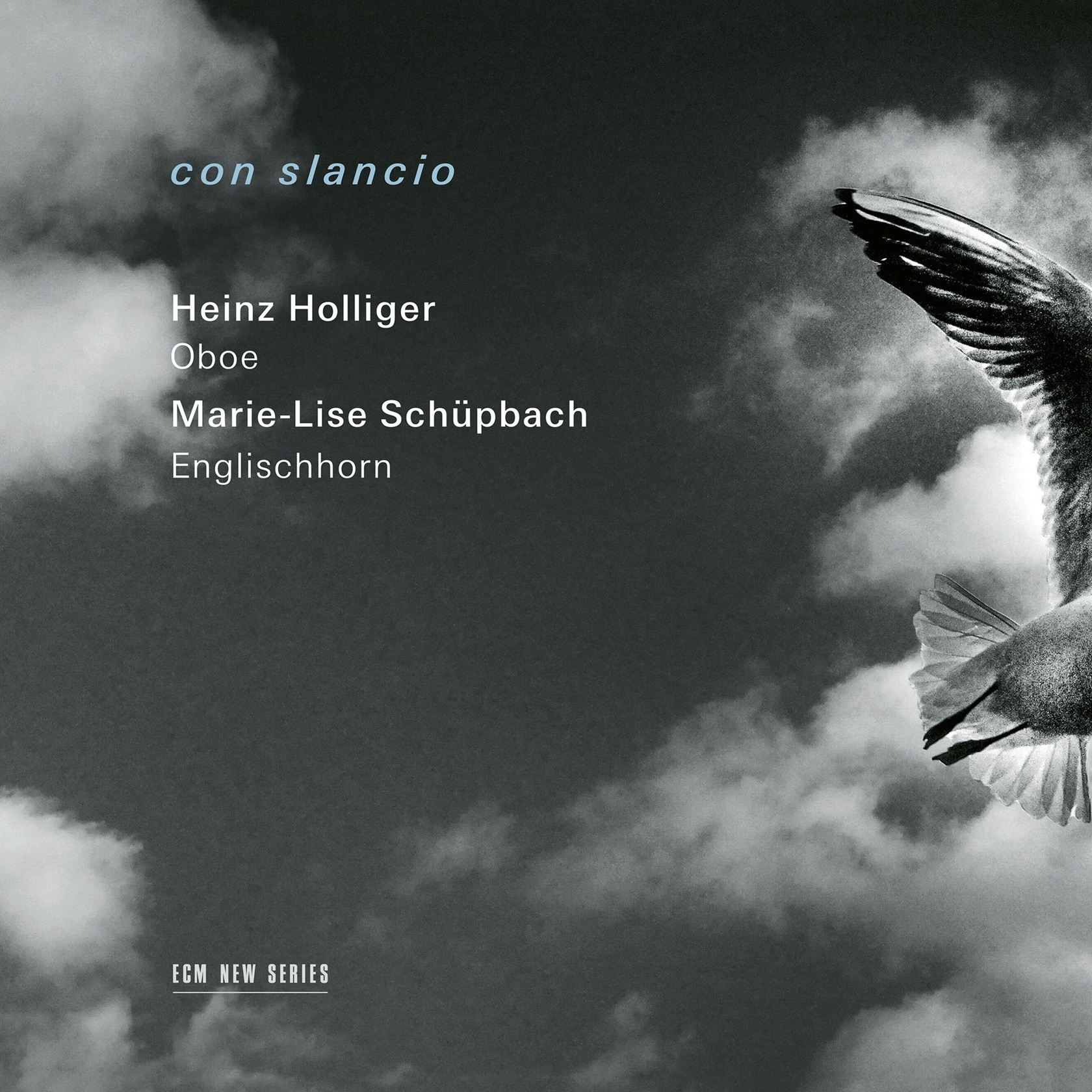
With these often-extreme sounds in mind, I was quite surprised at how lyrical his latest CD con slancio is (ECM New Series 2807 deutschegrammophon.com/en/catalogue/products/con-slancio-marie-lise-schuepbach-heinz-holliger-14336). The title is Italian for “with enthusiasm, momentum or vigour” and the disc pairs recent solo works and duets by Holliger with pieces written for him by Toshio Hosokawa, Jürg Wyttenbach, György Kurtág, Rudolf Kelterborn and Robert Suter. Holliger is joined by Marie-Lise Schüpbach and they alternate on oboe and its darker-sounding sibling, the English horn. 

Holliger’s title work for solo oboe from 2018 opens the disc, and is later answered by Kurtág’s con slancio, largamente composed for English horn the following year. In this latter the lyricism I mentioned above comes to the fore, and we even hear a snippet of Bach. Both these pieces last roughly two minutes, as it the case for most of the works presented here. Notable exceptions are Hosokawa’s Musubi (2019) and Wyttenbach’s Sonata für Oboe solo (1961). Incidentally André and I got to know both of these composers during the time they spent with NMC in 2005 and 2009 respectively. Hosokawa’s duet for oboe and English horn, like its name would suggest – to tie, to bind – “knots the two players together only to let them unravel again.” 

Holliger describes Wyttenbach’s sonata thusly: “Jürg treats the oboe’s sound almost abstractly at times, creating a wonderful music that doesn’t always lie comfortably on the instrument. But that resistance is precisely what’s good about it. […] It is extremely demanding without ever lapsing into empty virtuosity.” Virtuosity abounds on this disc, but it is never empty. At more than an hour’s duration, one might think the sounds of just one oboe, or English horn, or the two combined, might get tiresome. But in the hands of this master and his associate, there’s no fatigue. It is an hour well spent. 

04 Gershwin in ViennaMy own knowledge of contemporary music is largely self-acquired, from reading books and, more particularly, from the liner notes of my extensive collection of LPs and CDs. Oh, and the 20 years I served as Robert Aitken’s assistant at New Music Concerts. Although I pride myself on my competency, this mode of acquisition has left a few gaps, and some prejudices as to what qualifies as “serious” music. After repeated urgings from my friend André, I belatedly – almost two decades after its publication – picked up The Rest is Noise: Listening to the Twentieth Century by Alex Ross. It’s a marvellous book – selected as one of the “Ten Best” of the year by the New York Times – that puts the art music of the whole century into perspective. 

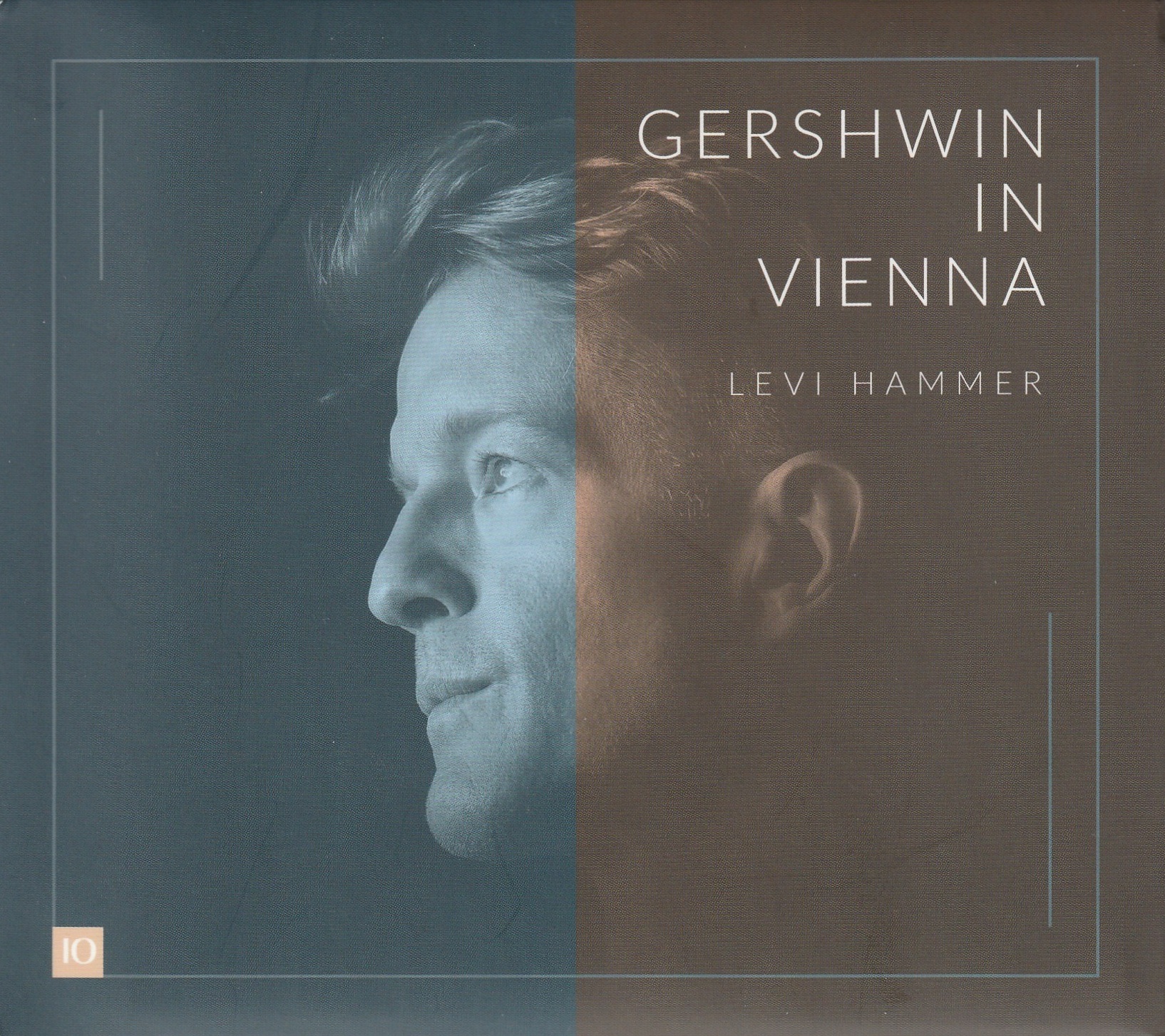
I had never taken the music of George Gershwin terribly seriously, so I was surprised to learn from Ross that several heavyweights – Arnold Schoenberg and Alban Berg – did. This is the premise of the recording Gershwin in Vienna, conceived and performed by American pianist, conductor and curator Levi Hammer (Decurio DEC-015 awaiting URL from publicist). Hammer says “For two composers with vastly different backgrounds, Schoenberg and Gershwin mirrored each other in uncanny ways. Both were largely self-taught, both Jewish, both painters, and both relentlessly devoted to refining their craft.”

The disc includes Gershwin’s Jazzbo Brown Blues, Three Preludes, and 18 of the composer’s own piano transcriptions from the Great American Songbook. These are interspersed with Schoenberg’s Three Piano Pieces, Op. 11, and Six Little Piano Pieces, Op. 19; Berg’s Piano Sonata, Op. 1; and Webern’s Variations for Piano, Op. 27. I occasionally find the juxtaposition of Gershwin’s mostly sunny and rhythmic pieces with the austerity of those of the Second Viennese School somewhat jarring, but Hammer makes a strong case for his thesis in the liner notes. 

Gershwin spent time in Vienna in 1928 and did indeed interact with Schoenberg and Berg, who seem to have accepted him as the “real deal.” Berg arranged a private performance of his Lyric Suite for the American composer and Gershwin, at Berg’s urging, played some of his own piano works. Hammer draws convincing parallels between the Lyric Suite and An American in Paris and I must admit that on repeated listenings I am hearing hints of Gershwin’s sensibility in the middle piece of Schoenberg’s Op.11 (although it was written two decades before that encounter). 

Schoenberg’s grief at Gershwin’s death at the age of 38 – they had become friends after Schoenberg moved to California – is audible in his thick Viennese accent in a moving radio tribute included at the conclusion of this album, in which he says “…there is no doubt that he was a great composer. What he has achieved was not only to the benefit of American music, but also a contribution to the music of the whole world. I want to express the deepest grief at the deplorable loss to music, but may I mention that I lose also a friend who was very dear to me.” 

05 Barbara HanniganAn American Dream? is the latest release from Barbara Hannigan, a Canadian soprano whose career has blossomed on the international stage in the past three decades. To tie this in with earlier paragraphs I will mention that her first professional engagement was with New Music Concerts back in 1990 in a piece for multiple ensembles by Henry Brant. 

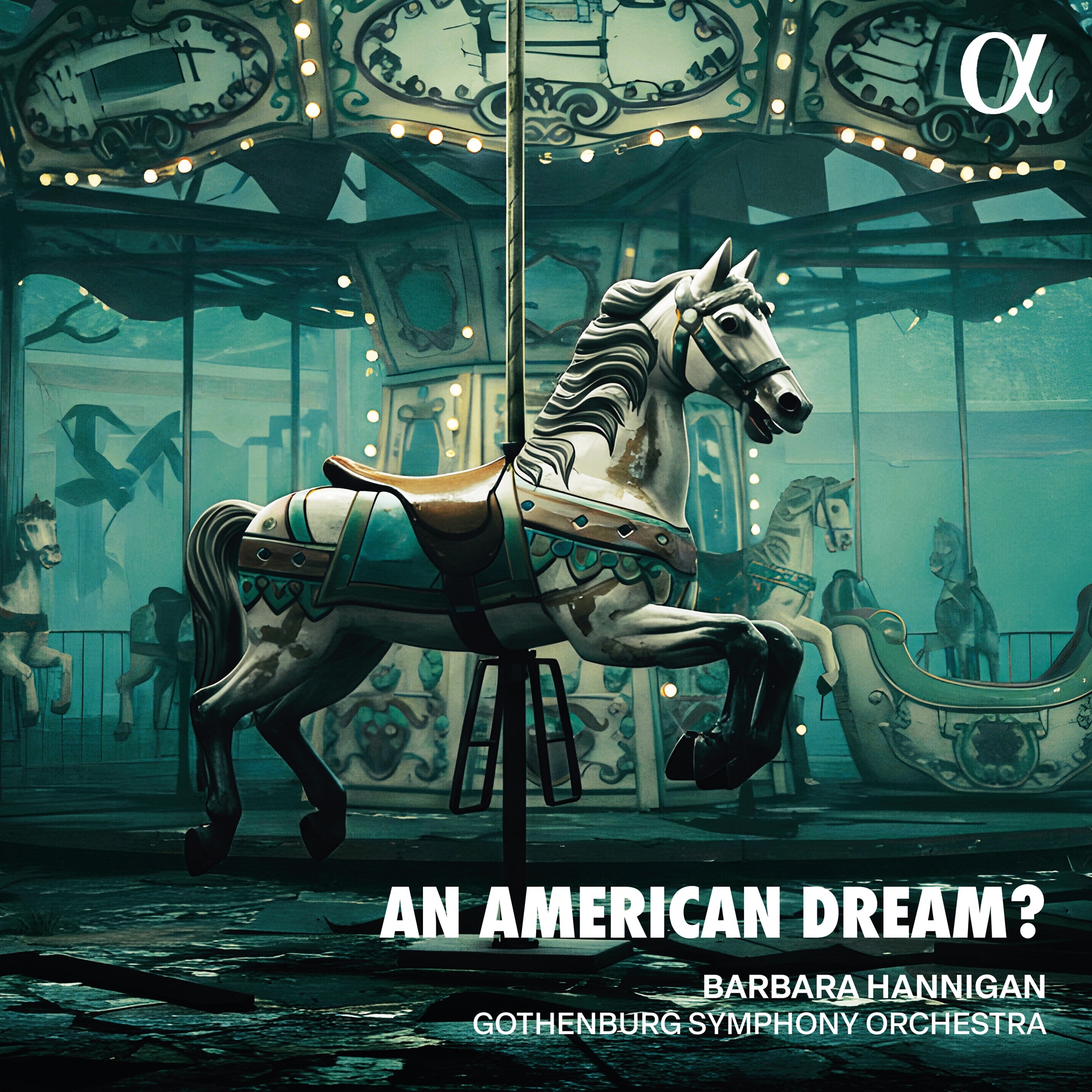
Hannigan is now as renowned as a conductor as she is as a singer, and even more surprising, as someone who can do both simultaneously, as she does here from the helm of the Gothenburg Symphony Orchestra (Alpha 1222 outhere-music.com/en/albums/american-dream-0). The context of this album is a celebration of American music, and I feel a little uncomfortable with that given the current state of the world, especially in relation to the current American president. With that in mind I’ll let Hannigan explain its origins:

“Growing up as a northern neighbour to the United States, I have been fascinated (and also intimidated) by aspects of the USA which seem built on an entirely different foundation than my country, Canada. America’s exuberant patriotism, embrace of capitalism, and flashy dominance in industry, sport, and entertainment have cast a long shadow. ‘The American Dream,’ an elusive notion popularized in 1931 during the Great Depression, promoted the ideal that ‘the United States is a land of opportunity that allows the possibility of upward mobility, freedom, and equality for people of all classes who work hard and have the will to succeed.’ It is indeed a dream, and for many, an impossible one, considering the various obstacles facing so many because of ongoing prejudices firmly attached to race, gender and social or financial standing. The divisions we now are witnessing in American society which have international repercussions, as an elected leader and supporting government behave in a manner that is difficult not to see in any other way than narcissistic and bullying, was an even stronger inspiration for me to put this album together. […] With this repertoire, I wanted to express my admiration for the incredible creativity and tenacity of America’s immigrants and their descendants, and also my sadness in observing what seems to have been lost.”

So obviously I’m okay with that, and it explains the question mark in the title of the disc. The programme begins, understandably enough, with George Gershwin. In 1942, five years after his death, conductor Fritz Reiner commissioned a suite from Gershwin’s masterwork to be arranged by Robert Russell Bennett, knowing that Bennett would be faithful to the composer’s wishes of style and sound. The resulting Porgy and Bess: A Symphonic Picture is a half-hour long tour de force that Hannigan brings masterfully to life. 

Did you know that Aaron Copland wrote a vampire ballet? It was news to me... but it seems that inspired by the film Nosferatu, and encouraged by his teacher Nadia Boulanger, he did indeed create a work based on an evil sorcerer named Grohg, who would bring cadavers to life and make them dance. Grohg was not a success, but some years later Copland resurrected (if you’ll excuse the pun) the work and published it as Dance Symphony. It is this incarnation of the ballet that is presented here.

The disc continues with The Carousel Waltz, the overture from Rodgers and Hammerstein’s wildly successful musical Carousel, and concludes with At the Fair, a suite of show tunes arranged by Hannigan and Bill Elliott, who also orchestrated the 12-minute bouquet of bonbons. The suite is bookended by two songs, the poignant Have I Stayed Too Long at the Fair?, and the showstopper Don’t Rain on my Parade from Jule Styne’s Funny Girl. Hannigan tells us “Both songs I sing in this suite were made famous by one of my great idols: the American singer, actor, director, producer and activist, Barbra Streisand. I wanted to juxtapose the personal and intimate nostalgia of the first song’s ‘older and wiser’ reflective mood with the final song’s youthful chutzpah and joie de vivre.” And joyous it is! 

David Olds can be reached at discoveries@thewholenote.com. 

Back to top