Strings Attached - May 2026
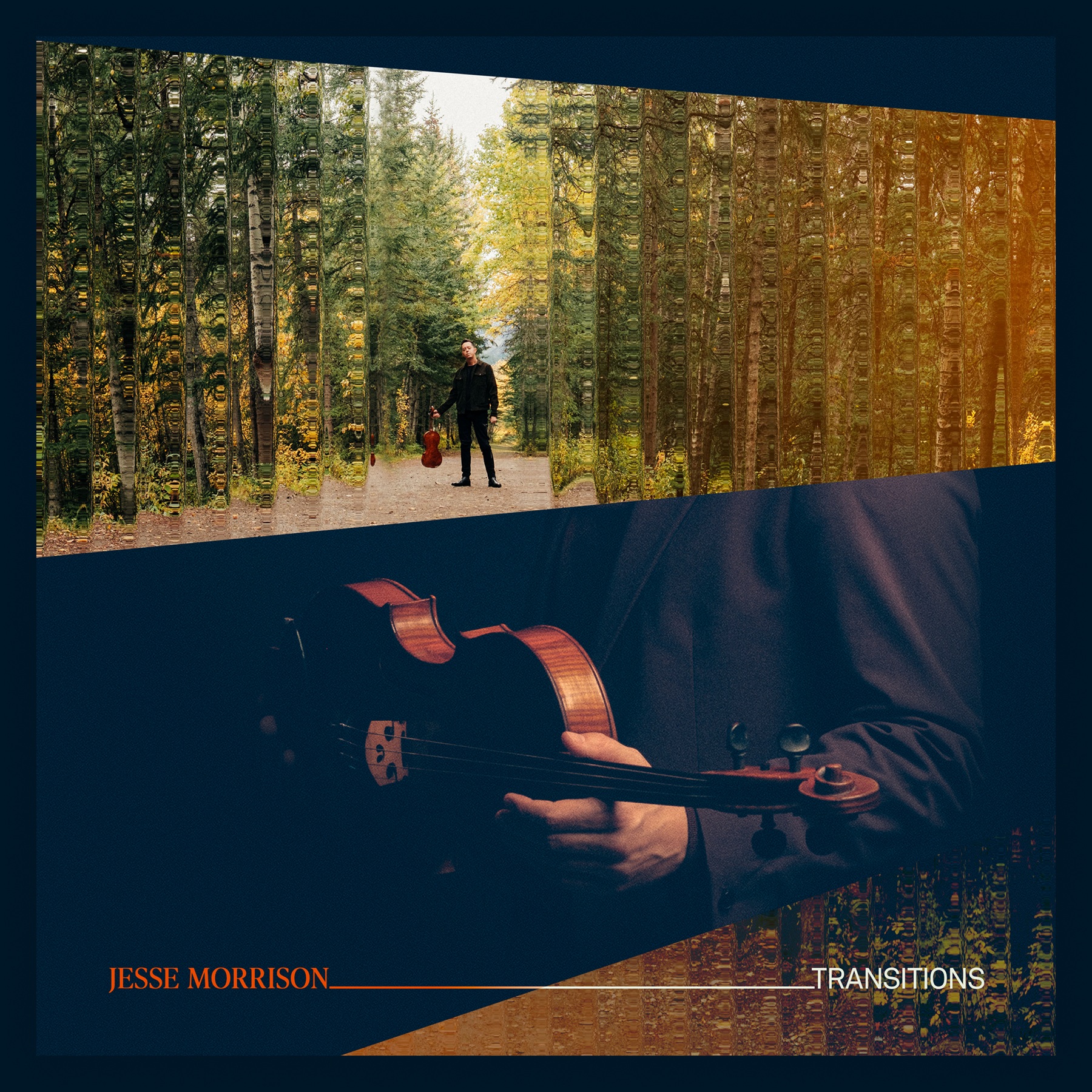 Transitions is the outstanding debut solo album from violist Jesse Morrison, a performance graduate from the Glenn Gould School and the University of Toronto now with the Calgary Philharmonic Orchestra (Wolfe Records jessemorrisonviola.bandcamp.com/album/transitions).
The Partita for Solo Viola by the Boston-based composer Derek David, written “in adoration” of Bach’s solo instrumental works, was commissioned for this recording. Its six sections – Prelude, Allemande, Courante, Sarabande, Minuet, and Gigue and Fugue – are wide-ranging, both stylistically and emotionally; imagine someone playing the solo Bach Partitas who, unable to resist, constantly explodes into bursts of extreme modern technique.
Skizzen für Siegbert (Sketches for Siegbert) by the Australian violist and composer Brett Dean was written as the compulsory piece for the 2012 Max Rostal Viola Competition. Dean played viola with the Berlin Philharmonic from 1985 to 1999, this piece being a tribute to his initial desk partner, Siegbert Ueberschaer, who died in 2011. Two reflective outer movements frame a virtuosic middle movement.
Five brief selections from György Kurtág’s Signs, Games and Messages and Telemann’s violin Fantasia No.1 in B-flat Major, played here in E-flat to allow for identical relationships between the strings, complete a terrific CD, with Morrison in complete technical and musical control throughout.
Listen to 'Transitions' Now in the Listening Room
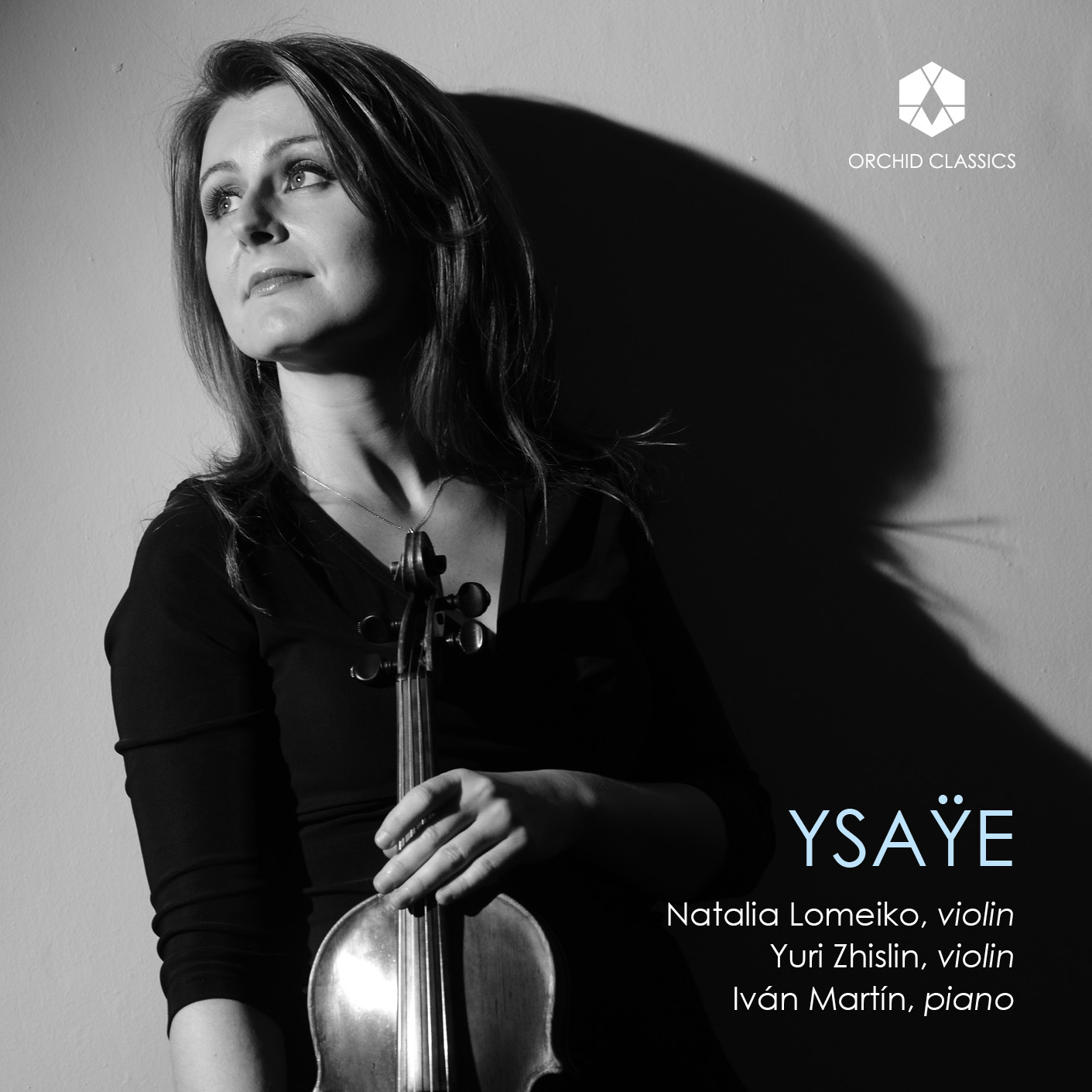 Known as The King of the Violin, Eugène Ysaÿe was a dominant figure at the end of the 19th century, having studied with Wieniawski and Vieuxtemps and numbering Enescu and Thibaud – and later Milstein and Gingold – among his students. His solo sonatas have tended to overshadow his smaller works for violin and piano, which have been somewhat – and unjustly – neglected, but on the CD Ysaÿe violinist Natalia Lomeiko and pianist Iván Martín aim to put that right (Orchid Classics ORC100429 orchidclassics.com/releases/orc100429-ysaye).
The result is an outstanding recital of some of Ysaÿe’s most evocative and rarely heard works that merge Romantic lyricism with bold harmonic imagination. Included are: Grande valse de concert Op.3; Mazurka No.3 “Lontain passé Op.11; Poème élégiaque Op.12; Au rouet Op.13; Rêve d’enfant Op.14; and Extase Op.21. Lomeiko’s husband, violinist Yuri Zhislin joins her in Amitié Op.26.
Lomeiko has a fast vibrato and a rich, slightly nasal tone reminiscent of the great players of the 1940s and 1950s. It’s beautifully suited to the works in the programme, every one of which deserves a permanent place in the concert repertoire.
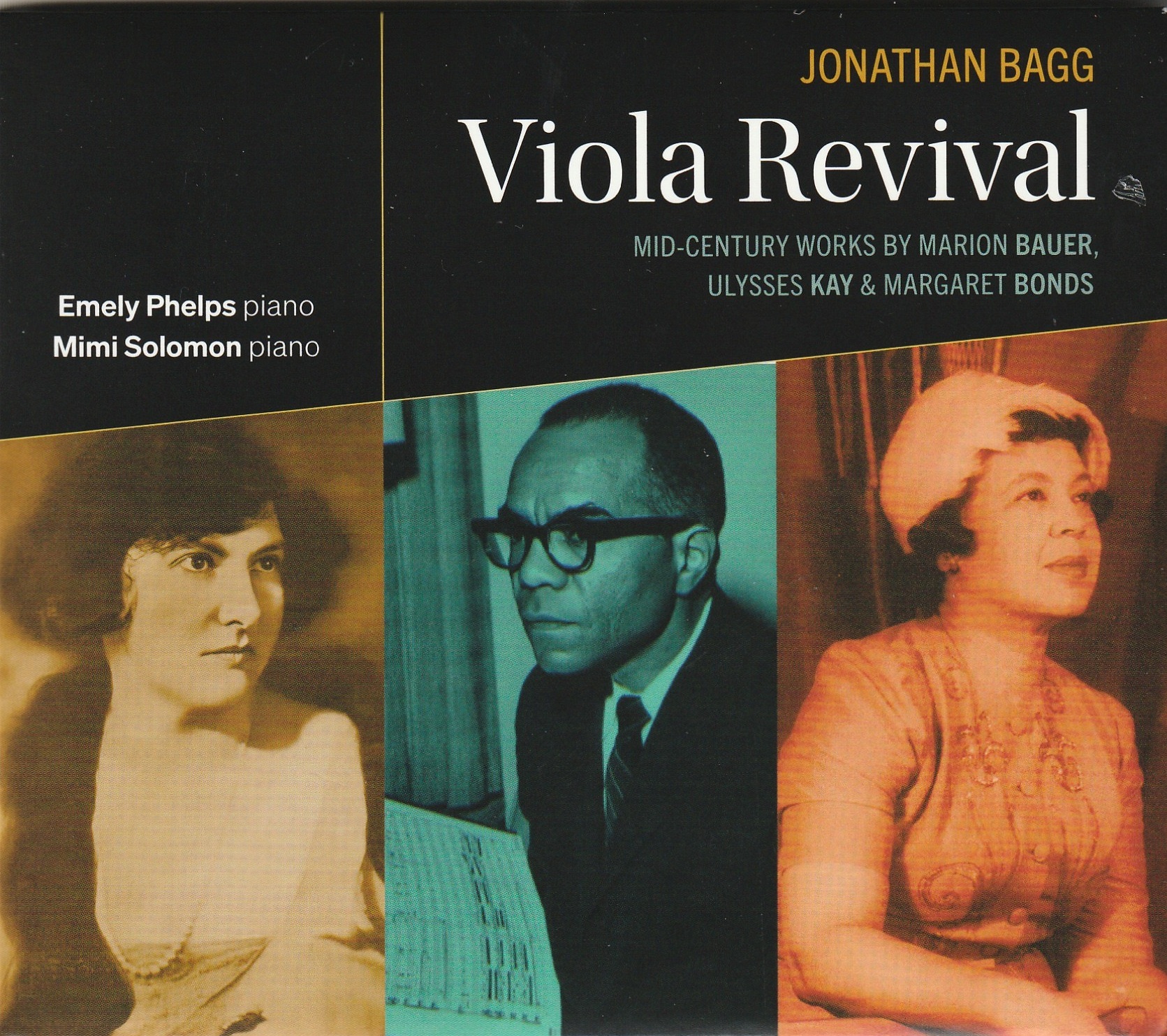 On the excellent CD Viola Revival violist Jonathan Bagg presents mid-century works for viola and piano by three significant African American composers who were not given the recognition they deserved during their lifetimes – Marion Bauer (1882-1955), Ulysses Kay (1917-95) and Margaret Bonds (1913-72). Emely Phelps is the pianist for most of the CD (New Focus Recordings FCR477 newfocusrecordings.bandcamp.com/album/viola-revival-mid-century-works-by-marion-bauer-ulysses-kay-margaret-bonds).
Bauer founded the American Music Guild in 1921 and co-founded the Society for American Women Composers in 1925 and the American Composers Alliance in 1937. Her Sonata for Viola and Piano, Op.22 from 1932 combines contemporary period stylings with French and late Romantic influences that reflect her early training with Nadia Boulanger.
Kay’s Sonata for Viola and Piano from 1942 was written at Yale University while Kay was studying with Paul Hindemith, whose neoclassical approach is reflected in the sonata.
Bonds was a student of Florence Price and active as a composer and pianist in Chicago. Her Troubled Water, based on the Negro spiritual Wade in the Water was a staple of her concerts, and was later arranged by her for cello and piano. Pianist Mimi Solomon joins Bagg in his arrangement for viola and piano.
Listen to 'Viola Revival' Now in the Listening Room
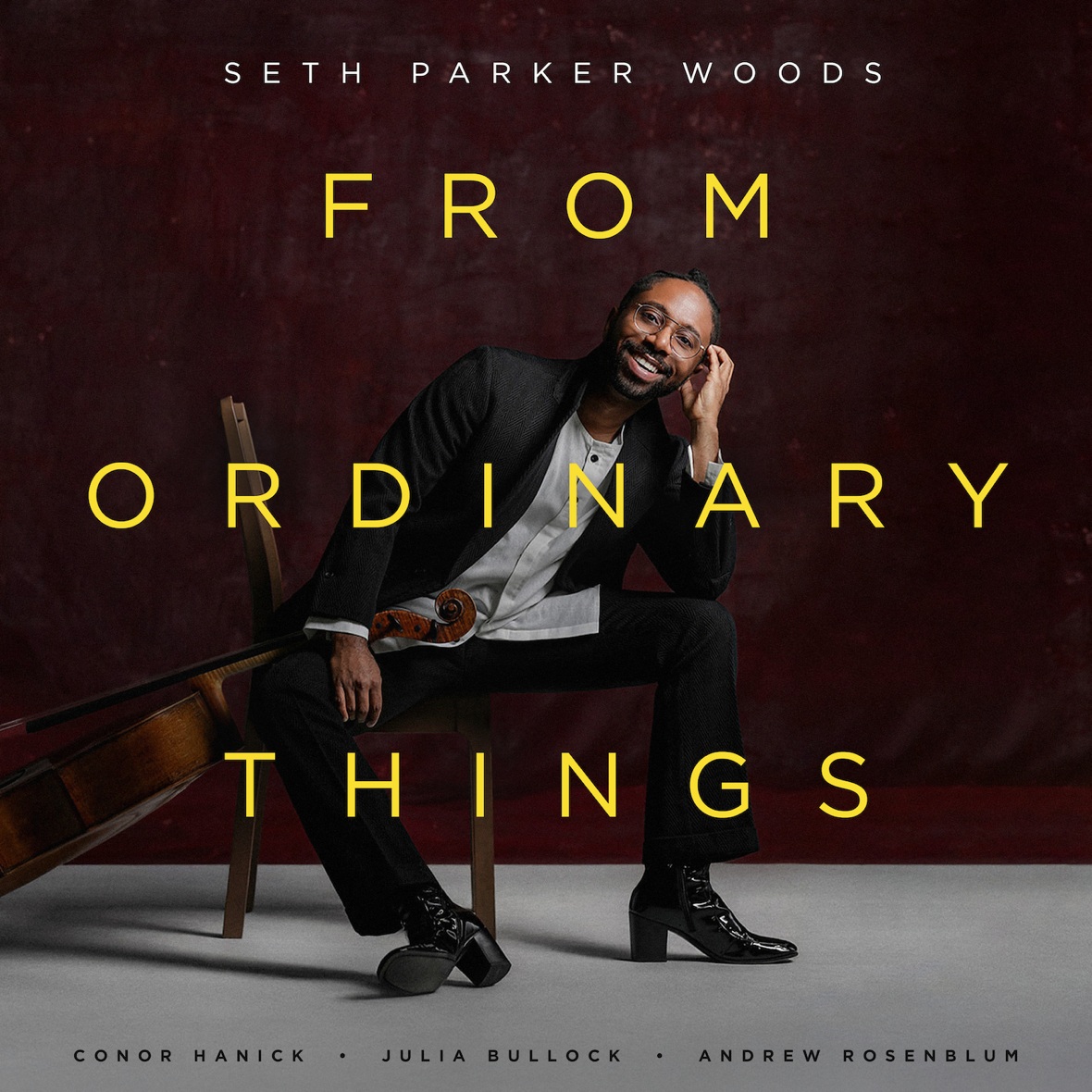 From Ordinary Things, the new CD from cellist Seth Parker Woods is described as a profoundly reflective album that explores identity, intimacy and human connection. Conor Hanick is the pianist for most of the disc (Platoon PLAT29870 platoon.lnk.to/fromordinarythings).
Soprano Julia Bullock joins the duo in the opening track, the simply lovely Shelter, the third song from André Previn’s Four Songs on Poems of Toni Morrison, whose poetry also provides the album’s title.
The composer and pianist George Walker (1922-2018) was a ground-breaking figure in American music, among his other firsts being the first African-American to win the Pulitzer Prize for Music. His three-movement Sonata for Cello and Piano shows his use of jazz-inflected rhythms and lyrical warmth, with a modernist edge.
Bullock is also the soprano in Oh Yemanja from the opera Scourge of Hyacinths by the Cuban-born American composer Tania León (b.1943), the first Latin-American woman to win the Pulitzer Prize.
Woods’ long-time collaborator Andrew Rosenblum is the outstanding pianist for Rachmaninoff’s achingly beautiful Cello Sonata in G Minor, Op.19, a beautifully-judged performance ending an immensely enjoyable disc.
 The Bach Dialogues is a digital-only release with Matt Haimovitz on cello piccolo and Christopher O’Reilly on clavichord presenting beautifully resonant performances of the three Bach Sonatas for Viola da gamba and Cembalo in G Major, D Major and G Minor, BWV1027-29 and the Trio Sonata No.5 in C Major, BWV529 (Pentatone PTC 5187410 pentatonemusic.com/product/the-bach-dialogues-digital-only-album).
Haimovitz plays the 5-string cello piccolo that he uses for the Bach Solo Cello Suite No.6; it’s the ¾ cello from c.1710 that his parents bought for him when he was 10, converted to a baroque set-up by the addition of an E-string. He uses gut strings and a baroque replica bow.
The clavichord may apparently have been Bach’s favourite keyboard instrument, its action – different to that of the harpsichord – capable of a degree of dynamic shading and even basic vibrato. O’Reilly plays a 2010 copy of an 1806 Swedish instrument, somewhat larger and more powerful than a baroque original. Even so, the difference in volume levels required the performers to be isolated in the recording studio, listening to each other through headphones.
 The Viola Sonatas from the Royal Chapel of Madrid is a recording project devoted to the 11 sonatas composed between 1778 and 1818 for the auditions held to obtain a viola position at the Royal Chapel in Madrid. Violist Pablo de Pedro is the excellent soloist, with cellist Lorenzo Meseguer and harpsichordist Samuel Maíllo providing the continuo (Eudora Records EUD-SACD-2601 eudorarecords.com/shop/catalogue/the-viola-sonatas-from-the-rotal-chapel-of-madrid).
The second part of the three-part auditions was the sight-reading of a sonata composed for the purpose by one of the examination board members. The earlier works here – the three sonatas by Felipe de los Rios from 1778 and 1781 and the 1789 sonata by Gaetano Brunetti – are in three movements; from 1794, however, candidates were required to audition on viola and violin, and the viola sonatas were consequently shorter, in a slow-fast two-movement form. Sonatas by Juan Oliver y Astorga (1803, 1804, 1805 and 1807), José Lidón (1806), and Juan Balado (c.1818) complete a generous CD of almost 85 minutes.
One minor quibble: the recording balance strongly favours the cello, making the harpsichord – which it mostly doubles – barely audible throughout the CD.
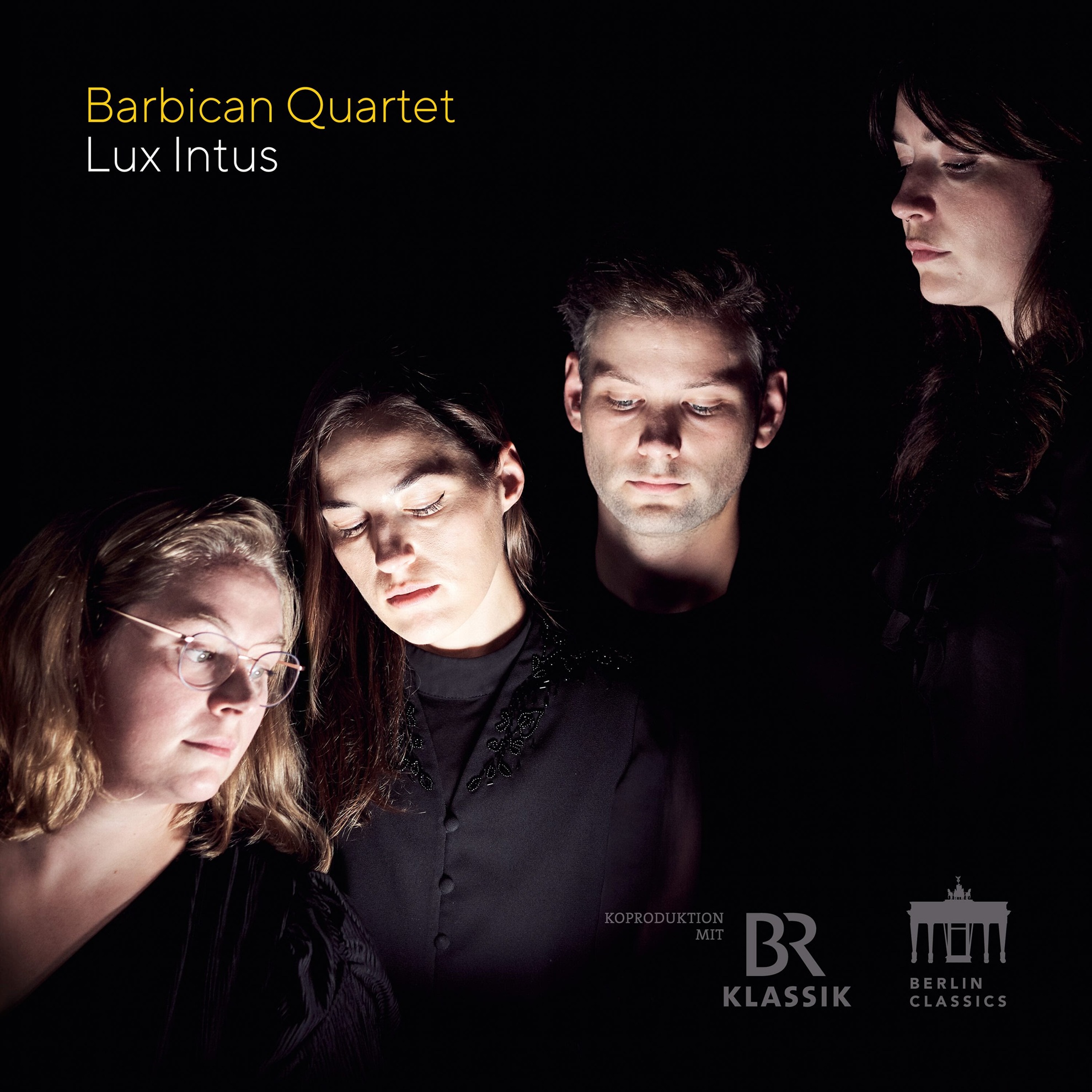 Connections abound throughout Lux Intus, the new CD from the London-based Barbican Quartet that is described as a search for the inner voice – the light within (Berlin Classics 0303340BC berlin-classics-music.com/en/album/885470044736-lux-intus).
In a string quartet that inner voice is the viola, which provides a link here. Mozart played viola in his own quartets, and a beautiful performance of his 1789 String Quartet in D Major, K575 “Prussian” opens the disc. Rebecca Clarke was a superb violist as well as a composer; her rapturous Poem for String Quartet from 1926 was premiered in the United States at the home of the music patron Elizabeth Sprague Coolidge.
More connections: it was Coolidge who in 1941 commissioned the String Quartet No.1 in D Major from Britten, himself an accomplished violist and at the time in self-imposed exile in the United States. It brings another superb performance from the Barbican.
Barbican violist Christoph Slenczka’s arrangement of Elgar’s Nimrod and the newly-commissioned Postlude by Sophia Jani complete another terrific CD by this young ensemble.
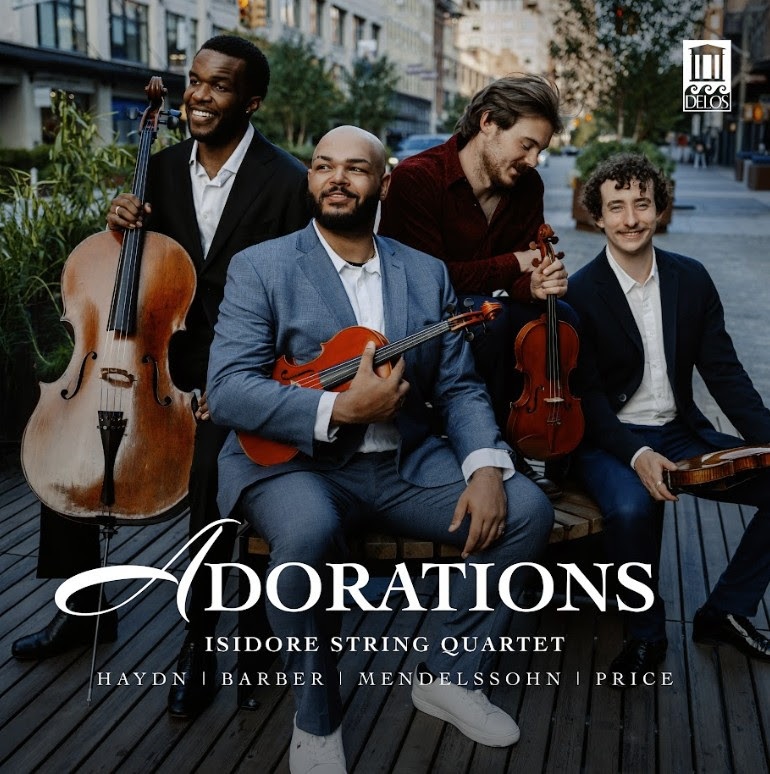 The Isidore String Quartet has strong ties to The Juilliard School; it was formed there in 2019, was coached and mentored by the Juilliard Quartet members and takes its name from former Juilliard Quartet violinist Isidore Cohen. The quartet makes its recording debut with the new CD Adorations, dedicated to Juilliard Quartet cellist Joel Krosnick, who died last year (Delos DE3622 outhere-music.com/en/albums/adorations).
Described as a celebration of chamber music at its essence, the disc opens with a delightful performance of Haydn’s String Quartet in C Major, Op.20 No.2, which the Isidore ensemble played when winning the Banff International String Quartet Competition in 2022, also winning the Haydn Prize. An intensely focused reading of the Molto adagio from Barber’s String Quartet, Op.11 – the original Adagio for Strings – precedes Mendelssohn’s String Quartet in E-flat Major, Op.44 No.3 in another dazzling performance full of nuance and dynamic contrast.
Samuel Arraya’s arrangement of Florence Price’s brief but lovely Adoration closes a fine recital, recorded in the Rolston Recital Hall in Banff in August 2024.
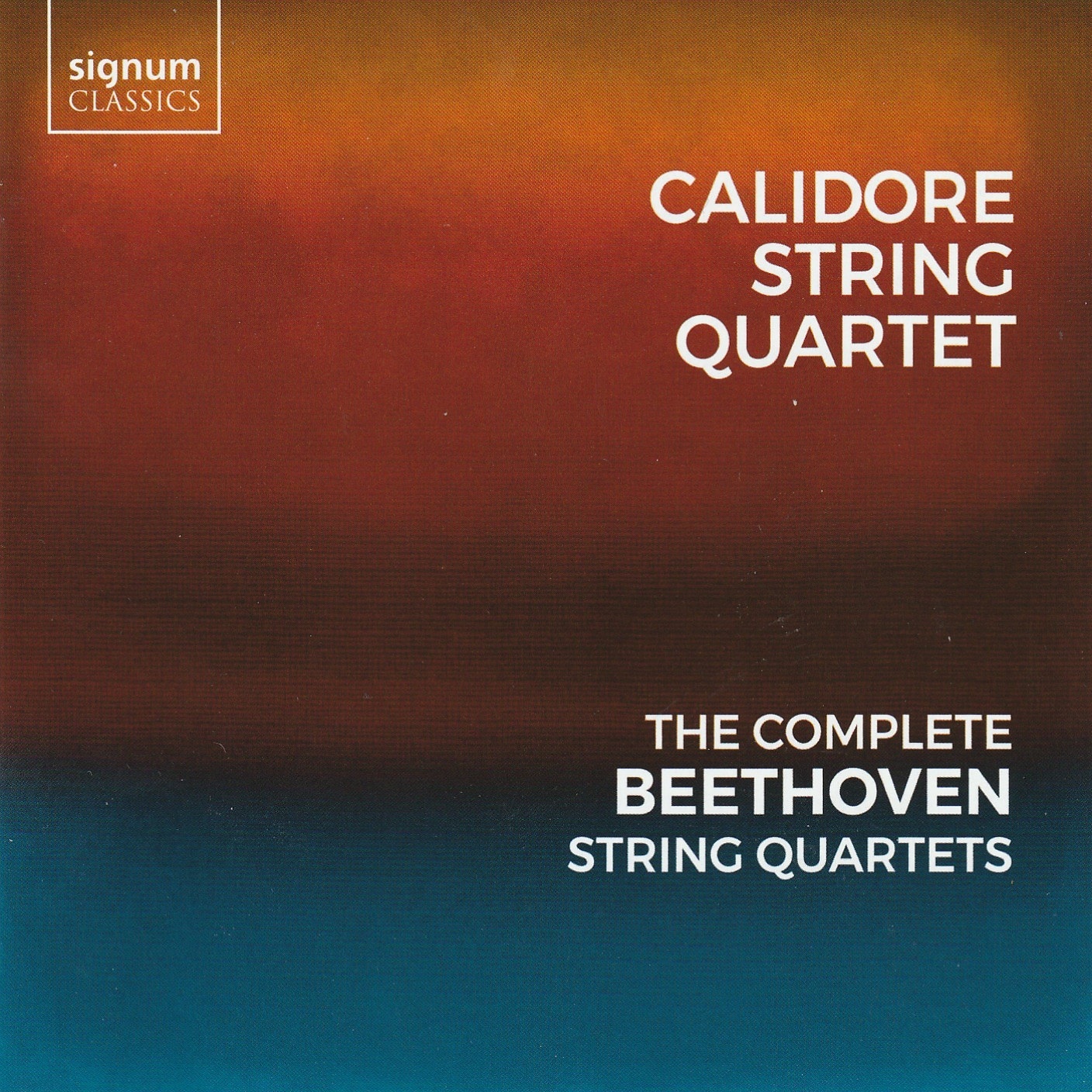
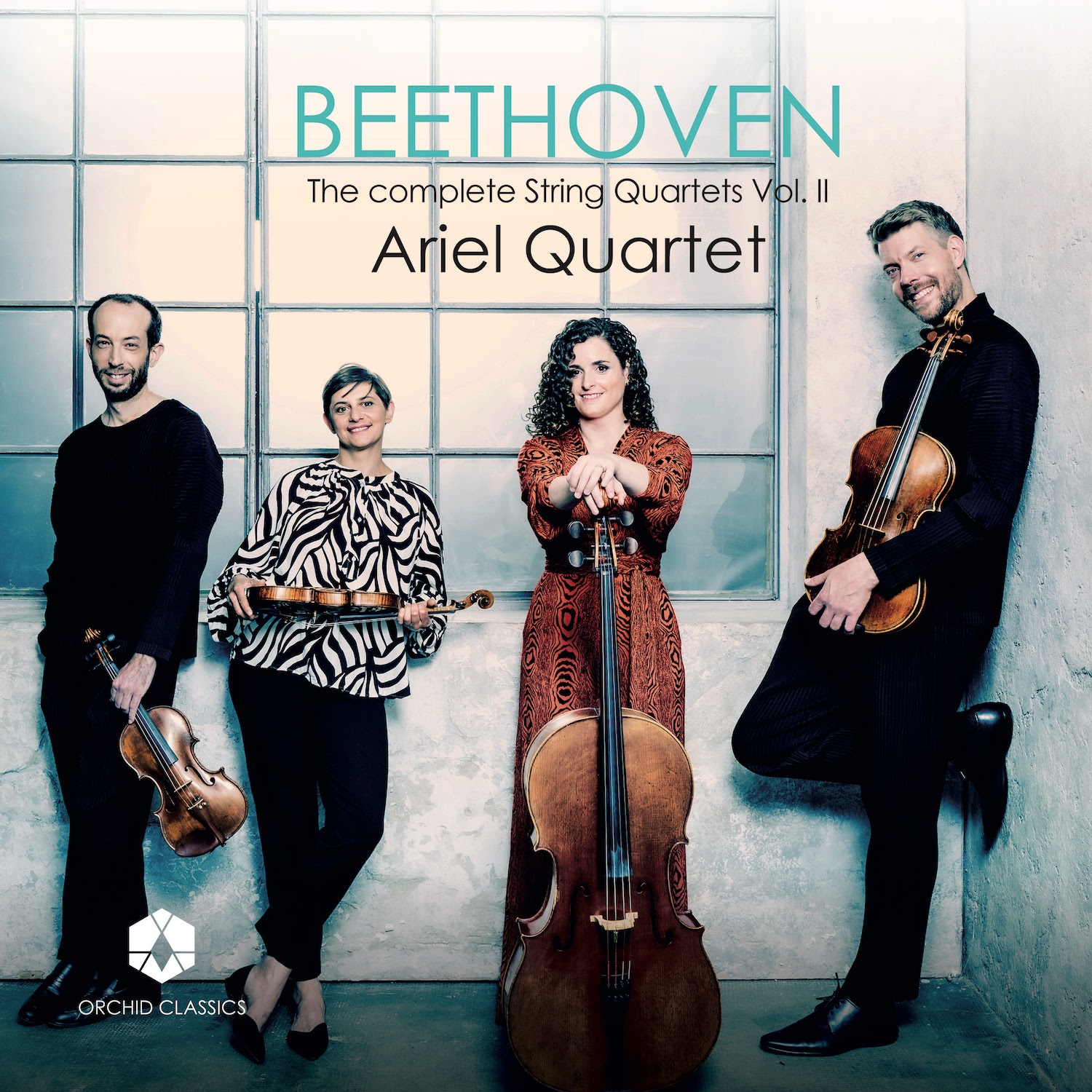 The Ariel Quartet continues its Beethoven quartet project with the 3CD set BEETHOVEN: The complete String Quartets Vol.II (Orchid Classics ORC100403 orchidclassics.com/releases/orc100403-beethoven-string-quartets-vol-2/).
The five works in this volume are the three Razumovsky Quartets Op.59 Nos.1-3, the String Quartet in E-flat Major, Op.74 and the String Quartet in F Minor, Op.95, “Quartetto serioso.” The immediacy and commitment I noted in their playing in the first volume is even more evident here, with superb sound, dazzling fast passages and outstanding nuance, dynamics and phrasing. The Op.59 No.3 C major quartet in particular is simply stunning.
Volume III is scheduled for release in June, with a box set of all three volumes planned for March 2027 to mark the 200th anniversary of Beethoven’s death. You might want to wait for the box release, because the standard this ensemble is setting is going to make it extremely difficult for any other set to be held in higher regard.
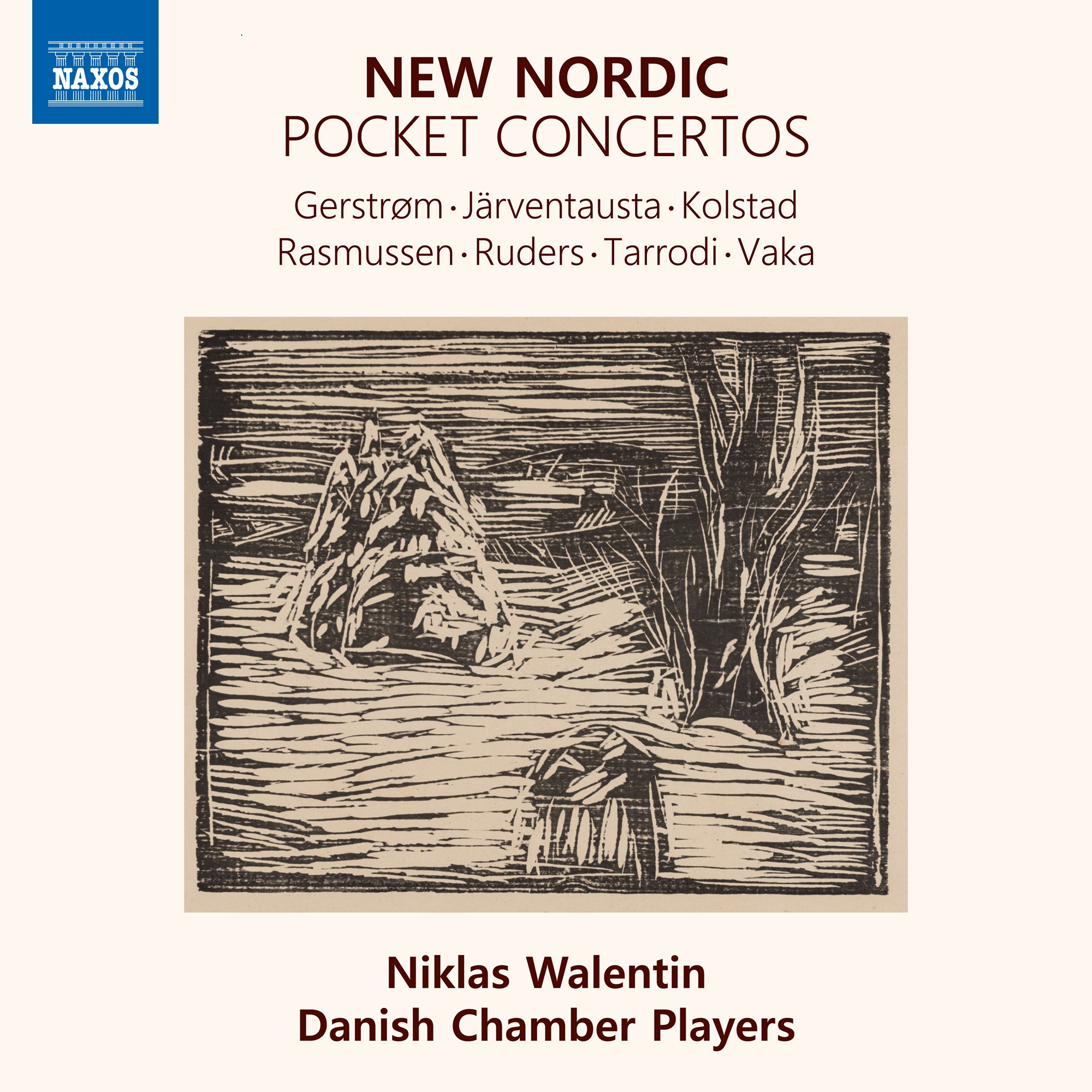 New Nordic Pocket Concertos presents world premiere recordings of seven new violin concertos, all written for violinist Niklas Walentin and the eight-piece Danish Chamber Players, the condensed chamber format having been suggested by the restrictions imposed by the COVID lockdown. Anne Marie Granau is conductor for two of the works (Naxos 9.70401 naxos.com/CatalogueDetail/?id=9.70401).
The seven composers represent each of the Nordic countries: Andrea Tarrodi (Sweden), Arnannguaq Gerstrøm (Greenland), Aksel Kolstad (Norway), Poul Ruders (Denmark), Veronique Vaka (Iceland), Sunleif Rasmussen (Faroe Islands) and Joel Jãrventausta (Finland). Themes vary – glaciers and cracking ice, a lovely new Four Seasons (Tarrodi), the war in Ukraine (Kolstad) – as do styles and structures, from single-movement pieces through three- and four-movement works to Jãrventausta’s six brief Songs, Games & Dances, but there’s a great deal to hold your interest here in over 90 minutes of music.
Ruders brief Pocket Concerto (three two-minute movements) gives this fascinating addition to the violin concerto discography its title.
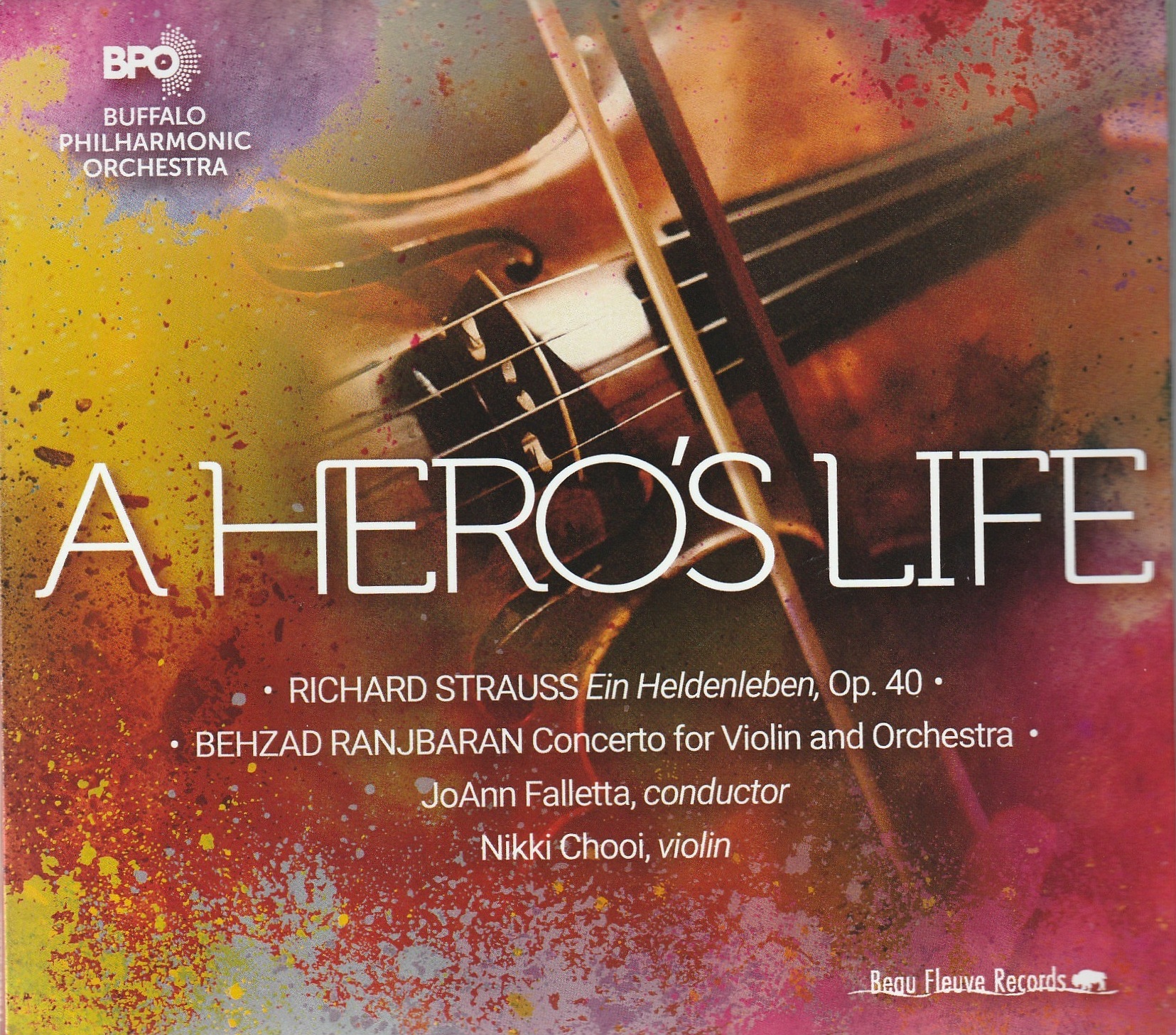 The main work on A Hero’s Life, the new CD from the Buffalo Philharmonic Orchestra and JoAnn Falletta is Richard Strauss’ Ein Heldenleben, Op.40 – a purely orchestral work, but one that features a violin solo that Falletta describes as one of the most astonishing in the orchestral repertoire. It’s beautifully played by the BPO concertmaster Nikki Chooi, who is the brilliant soloist in the other work on the disc, the outstanding 1994 Concerto for Violin and Orchestra by the Persian composer Behzad Ranjbaran (Beau Fleuve Records 783970-072641 bpo.my.salesforce-sites.com/ticket/#/instances/a0FUW000005gMSf2AM).
From his youth Ranjbaran was mesmerised by the sound of the kamancheh, the ancient Persian bowed instrument; it not only inspired a concerto described as a mixture of Eastern exoticism and extreme virtuosity but also informed his use of Persian modes and rhythms.
It’s baffling why a work of such immediate and immense appeal should have waited over 30 years for a commercial recording release. Falletta calls it “one of the great violin concertos of our time,” and it’s hard to disagree.
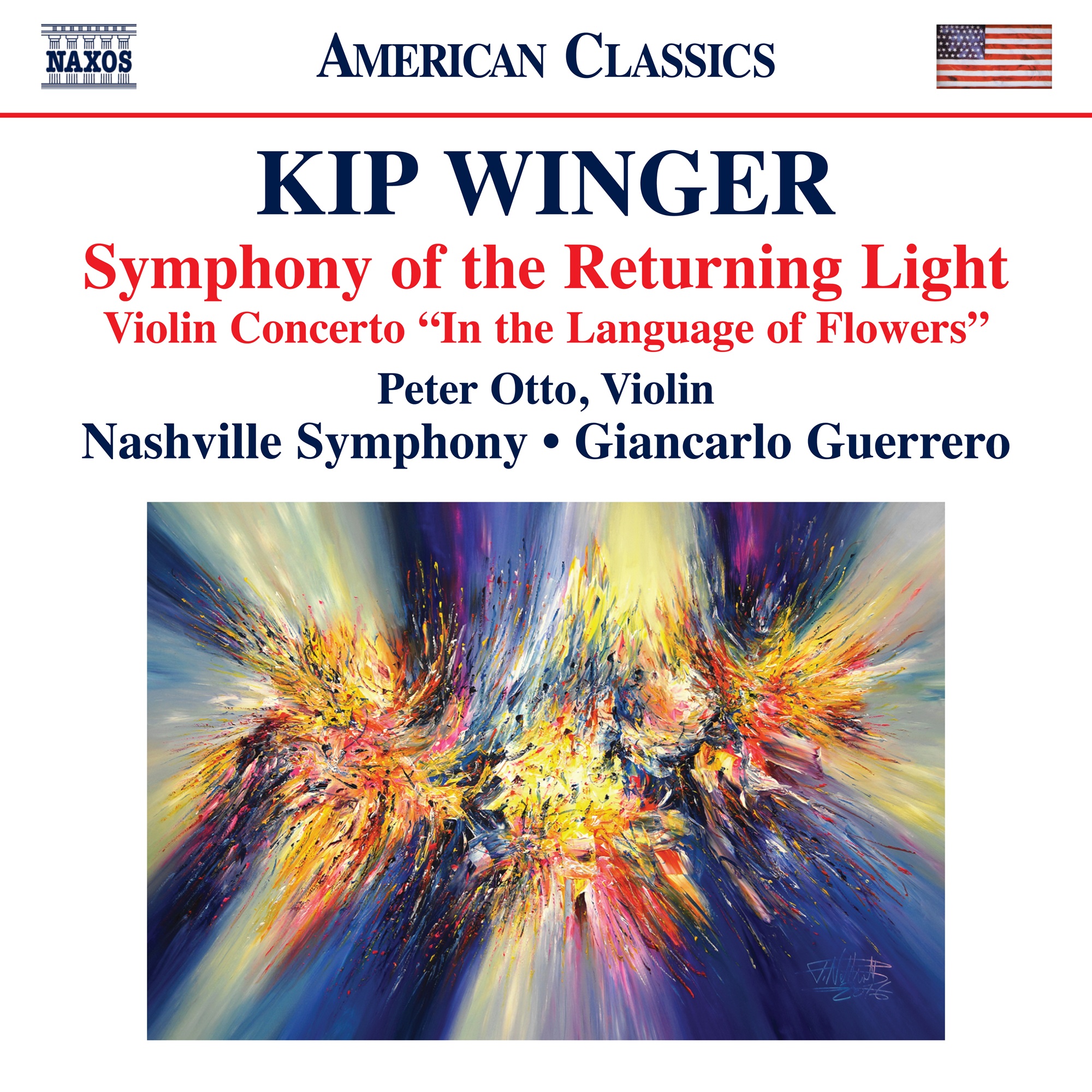 After a long and successful career in rock music Kip Winger has established himself as a leading voice in contemporary classical composition. The success of his 2017 ballet score Conversations with Nijinsky with the Nashville Symphony Orchestra led to music director Giancarlo Guerrero commissioning two works, the CD of Symphony of the Returning Light and the Violin Concerto “In the Language of Flowers” the result. Nashville concertmaster Peter Otto is the violin soloist (Naxos 8.559921 naxos.com/CatalogueDetail/?id=8.559921).
Both works have four movements and continually hold your attention and interest with confident and attractive writing. Otto is superb in the concerto, which features a strong, lyrical solo part and an absolutely lovely slow third movement. Morse code motifs abound throughout the impressive symphony, which Winger describes as something of an autobiographical piece centred on atonement.
Listen to 'Symphony of the Returning Light and the Violin Concerto In the Language of Flowers' Now in the Listening Room
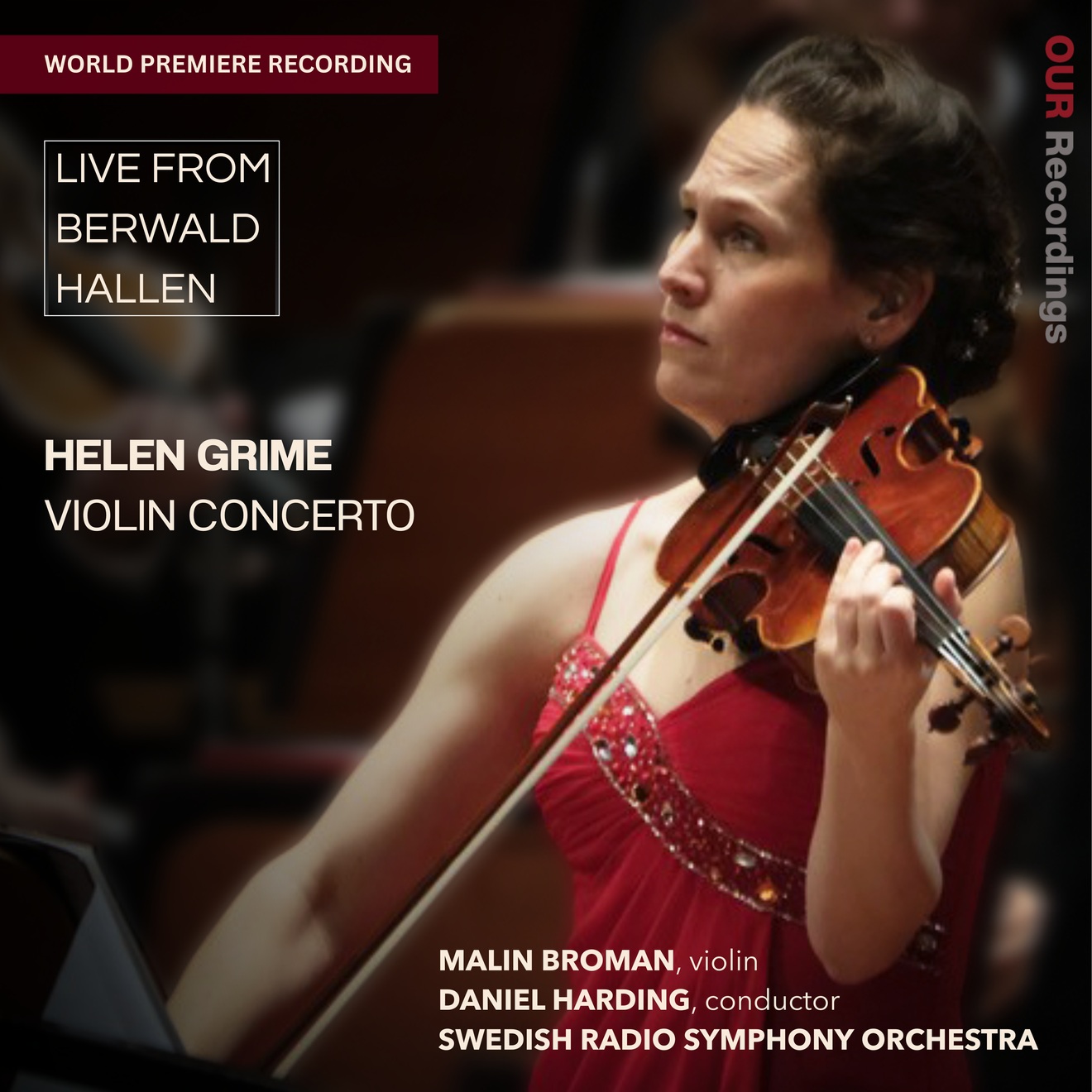 Swedish violinist Malin Broman is the soloist in the Helen Grime Violin Concerto – Live from Berwaldhallen, a new digital EP with the Swedish Radio Symphony Orchestra conducted by Daniel Harding (OUR Recordings 9.708671 ourrecordings.com/albums/live-from-berwald-hallen).
Grime, born in 1981, is a former Hallé Orchestra Associate Composer and is currently Professor of Composition at the Royal Academy of Music. She first worked with the artists on this recording in 2010, when she was “immediately struck by the ferocity, power, and passion” in Broman’s playing. Her concerto, resulting from several consequent collaborations with Broman is in one continuous movement, the three main sections connected by extensive, dreamlike passages.
Grime describes the concerto as “violent, virtuosic music covering the whole range of the violin… contrasted with more delicate and reflective filigree material that features oscillating natural harmonic passages and searching melodies.” Recorded live in the Berwald Hall in Stockholm in December 2016, it’s a striking work that will clearly repay repeated listening.
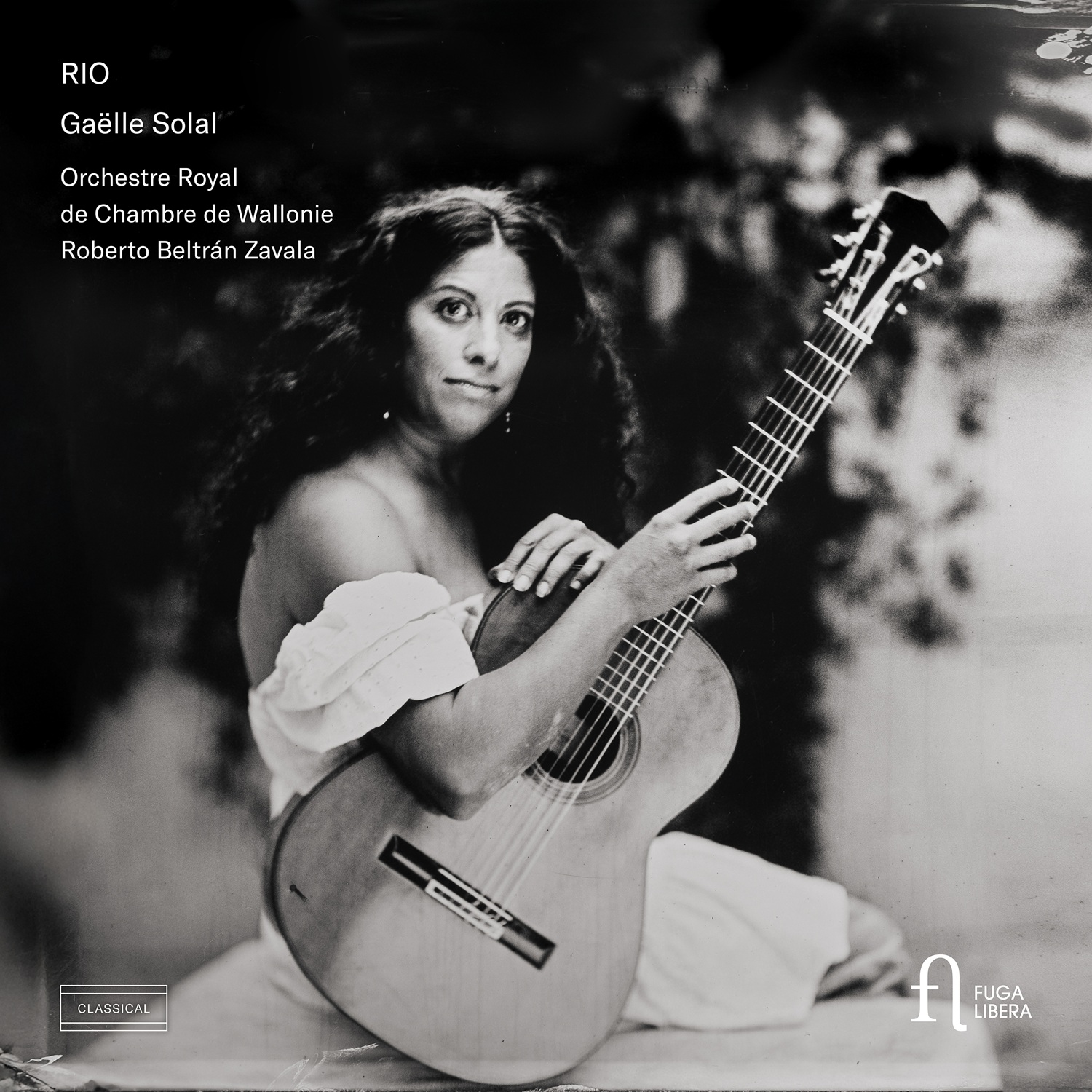 When the French guitarist Gaëlle Solal heard the Concerto O Saci-Pererê by the Brazilian composer Clarice Assad in 2017 she promised herself that she would learn it and also record it. The resulting world premiere recording was the starting point for the CD Rio, with the Orchestre Royal de Chambre du Wallonie conducted by Roberto Batrán Zavala (Fuga Libera FUG863 outhere-music.com/en/albums/rio).
Assad was born in Rio de Janeiro in 1978. The “Saci-Pererê” of her concerto is a mischievous elf from the legends of the Tupi-Guarani Indians of southern Brazil, and the musical depiction is full of strikingly original orchestration.
Villa-Lobos was also born in Rio. His Concerto for guitar and small orchestra W501 was written for Segovia, and draws beautifully clean playing from Solal, especially in the lengthy second-movement cadenza. Francisca “Chiquinha” Gonzaga (1847-1935), described as the forgotten pioneer of Rio de Janeiro’s music tradition wrote nothing for guitar, but Rio native Paulo Aragão arranged four of her melodies for guitar and orchestra.
It’s another world premiere recording, as is the arrangement for guitar and string orchestra of Ernesto Nazareth’s lovely piano piece Brejeiro by Rio native Élodie Bouny.