11 OVK3Meeting Place - Convergence
OVK3
Modica Music (modicamusic.bandcamp.com/album/meeting-point)

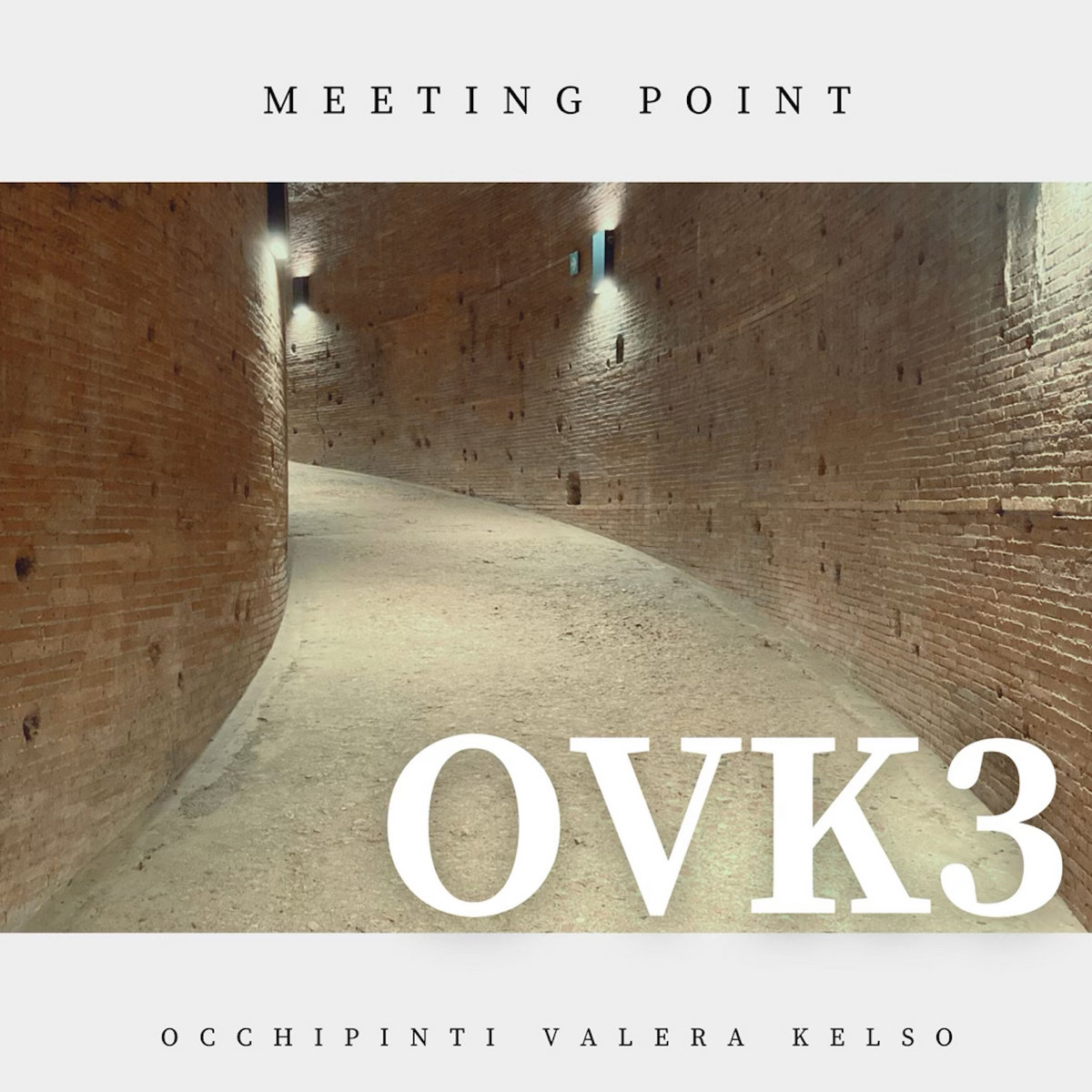
This album features an impeccable trio playing beautiful music where each musician shines individually, the air filled with distinctive sounds. Pianist-composer Manuel Valera contributes seven out of nine tunes here, each one being a piano trio’s dream. Left hand countermelodies and incredible rhythmic emphasis abundantly bring out the most dynamic of interactive tendencies within the group. OVK3’s sound embodies quietude, crispness and brightness in equal measure, skating briskly across the liberating open plane of Mark Kelso’s feathery ride cymbal, always in control, each hit bringing the picture into more life-like definition. 

IKelso’s rhythmic gestures are open air and Valera’s ideas are the feeling of sudden lucidity while Roberto Occhipinti’s lines are pure butter, in the midst of a constant phase change each note placed in the most tender of places with an impossibly fluid throughline. There is the feeling of comfy tension where the listener ingests a meal numerous morsels at a time. 

Occhipinti provides an original here, El Rey, and it is emblematic of something that never rests or ceases, and yet it leaves a firm, digestible imprint on the mind. The inclusion of Soul Eyes, track eight, made this Mal Waldron fan happy.

12 Tuesdays at La RevTuesdays at La Rev
Peter Hill; Reg Schwager
Independent (peterhill.bandcamp.com/album/tuesdays-at-la-rev)

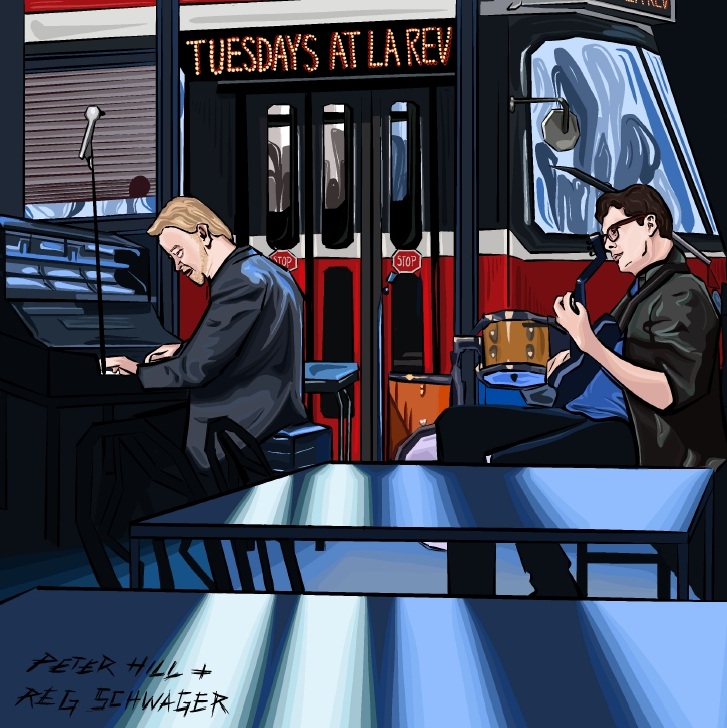
On Tuesdays at La Rev, pianist Peter Hill and guitarist Reg Schwager pay tribute to the late Indira Nanavati Cadena, who provided them with the opportunity to develop a musical partnership. As the owner-operator of La Rev, a Mexican restaurant and live music venue in Toronto’s Junction neighbourhood, Cadena was kind and generous to artists. She booked a weekly residency for Hill – best-known as an accompanist to countless Toronto singers – allowing him to stretch out with fellow instrumentalists. In genius guitarist Reg Schwager he found a kindred music spirit: both are men of few words, who know hundreds – if not thousands – of tunes, and who share an unwavering dedication to the jazz tradition. 

The eclectic program includes some very pleasant surprises. The first of these is a lilting, lyrical take on Mexican composer Manuel Ponce’s famous aria, Estrellita, likely a nod to Cadena who was born in Acapulco. Other highlights include a sentimental reading on Un Canadien Errant; a bright version of the oft-forgotten Alice Blue Gown where Hill’s jaunty piano playing truly shines; and a Latin take on Cole Porter’s I Love You, Samantha, which was far less interesting when Bing Crosby crooned it in the film High Society. 

This sophisticated and spirited recording will surely warrant repeated listening. On tunes such as Poor Butterfly, Oh, Lady Be Good and The Blue Room, words can hardly do justice to the tantalizing taste of these two Toronto treasures.

Listen to 'Tuesdays at La Rev' Now in the Listening Room

13 Winnipeg Jazz OrchEast Meets West: Connections - Jean-Nicolas Trottier and Fred Stone
Winnipeg Jazz Orchestra
Chronograph Records CR-115 (winnipegjazzorchestra.bandcamp.com/album/east-meets-west-connections)

Winnipeg has produced countless great musicians, many of whom leave the prairie metropolis for other parts of the continent. Those who remain have curated a vibrant musical community, taking advantage of a city that is simultaneously intimate enough to celebrate local talent, but large enough to provide artists with opportunities and exposure. 

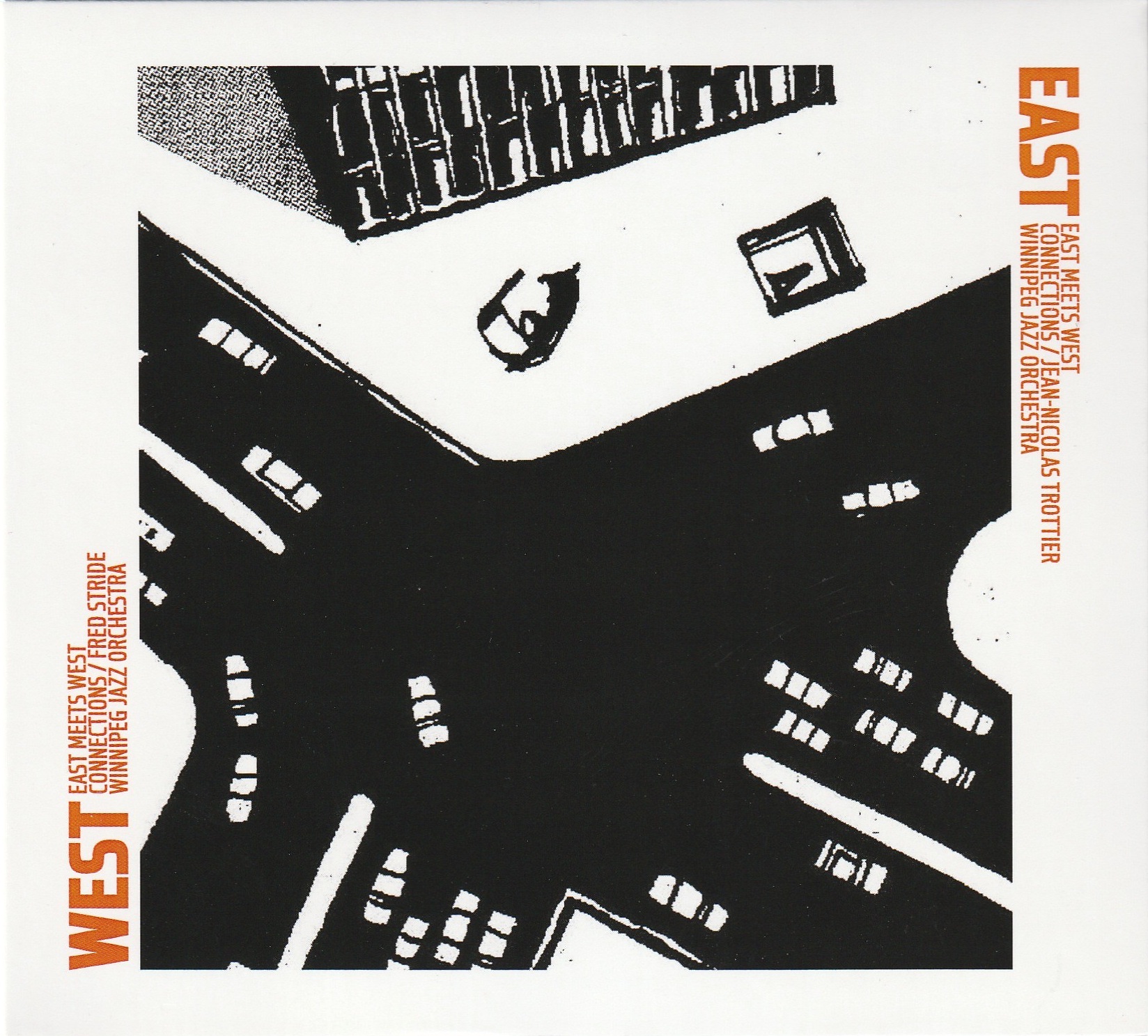
The Winnipeg Jazz Orchestra marked their eighth release with East Meets West: Connections. The album commissioned composers Fred Stride and Jean-Nicholas Trottier, from the west and east of the country respectively, to pen a nine-movement suite that features the who’s who of Winnipeg jazz. I had the pleasure of reviewing the group’s penultimate release Tidal Currents, which I described as “short but sweet.” Connections offers listeners an album just shy of 50 minutes in duration. It flies by, but not without plenty of musical goodness to sink one’s teeth into. The suite flows organically, and eschews track numbers. 

Niall Cade plays the first improvised solo on the album, on Trottier’s Sounds of Joy. This was my first time hearing Cade, and I’m sure it won’t be my last. It is tough to feature everyone as an improviser when the ensemble is this large, but we are graced with solos from many unique artists, including pianist Will Bonness, trumpeter Jonathan Challoner, and a nylon string guitar solo on The Healing Song from Larry Roy. 

I haven’t named each individual soloist, or addressed each track of the suite, but a more chronological description wouldn’t do the album’s production arc justice. I recommend this recording to keen contemporary jazz fans, and suggest listening to it in its entirety. Each track can stand on its own, but the album truly flows when heard uninterrupted. 

14 Jacob WutzkeJacob Wutzke - You Better Bet
Jacob Wutzke; Rachel Therrien; Lucas Bubovic; Bryn Roberts; Ira Coleman
Cellar Music CM090224 (jacobwutzke.bandcamp.com/album/you-better-bet)

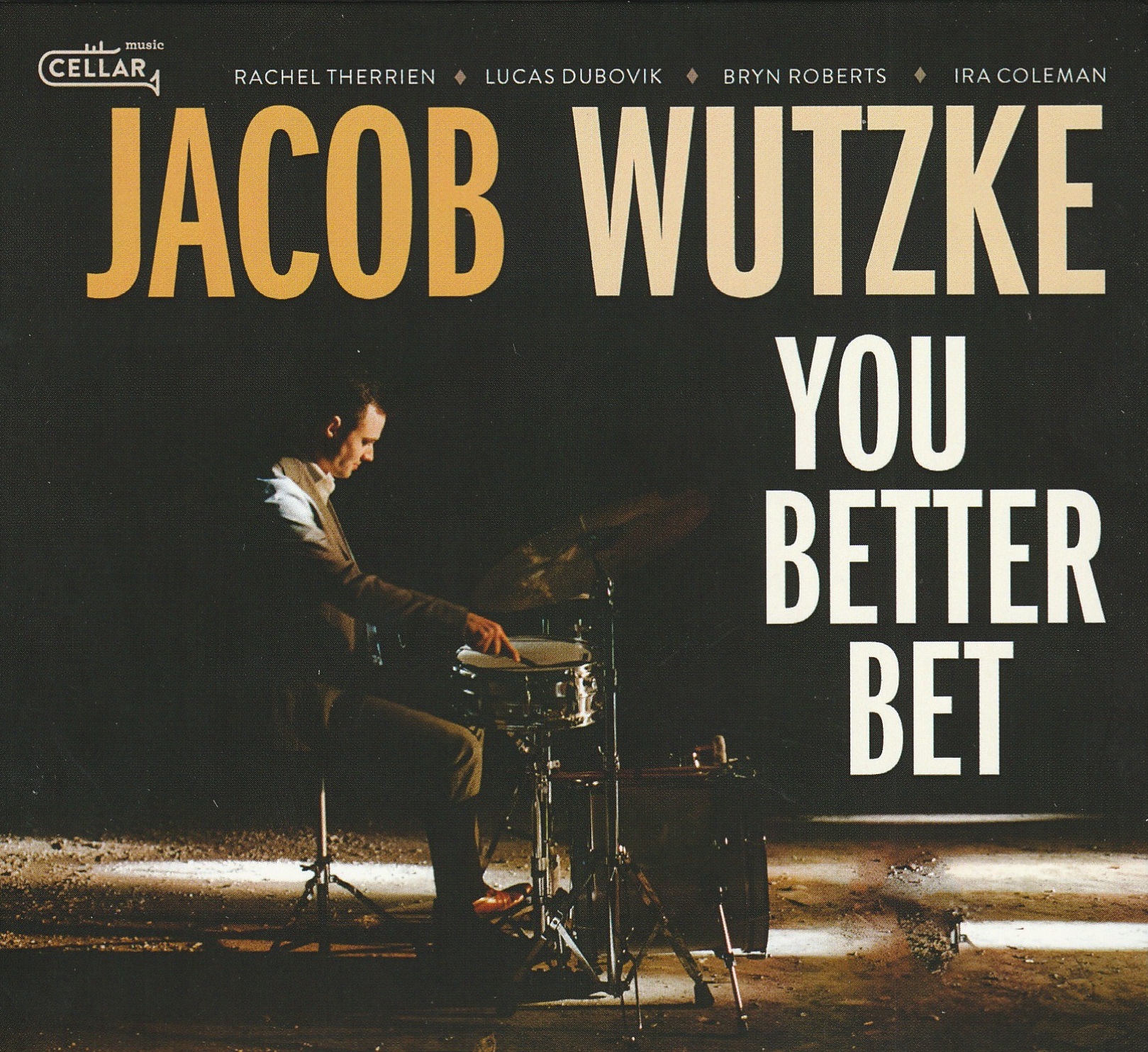
Tony Williams (1945-1997), not only made a spectacular impression as an innovative jazz drummer when he debuted with Miles Davis’ Second Great Quintet at the age of 17, but the songbook of sophisticated compositions that he left behind means that both his music, as well as his dynamic drumming, continues to be mined by subsequent generations of jazz players. On You Better Bet, Jacob Wutzke’s terrific second recording following 2022’s Show Yourself, the Montréal, now New York-based, drummer and composer, explores Williams’ creative legacy, not only in terms of his percussive approach, but his ensemble style and compositions.

Although it would be logical to think then that the catalyst for this recording would be Williams’ ongoing influence on the young Wutzke, the story does not end there. Instead, things crystallized when longtime Williams bassist Ira Coleman relocated to Montreal and took a teaching job at Wutzke’s alma mater  McGill University, from where he graduated with a Masters in 2022, and the two musicians began to collaborate. Using some of the original charts that Coleman had kept from his tenure with Williams, written in the late drummer’s hand no less, a group was formed, along with an idea to compose some additional stylistically synchronous music and record the proceedings. Enter the immensely talented Rachel Therrien, Lucas Dubovik and Bryn Roberts, on trumpet, tenor, and piano respectively, and this fine new hard-hitting recording is the result.

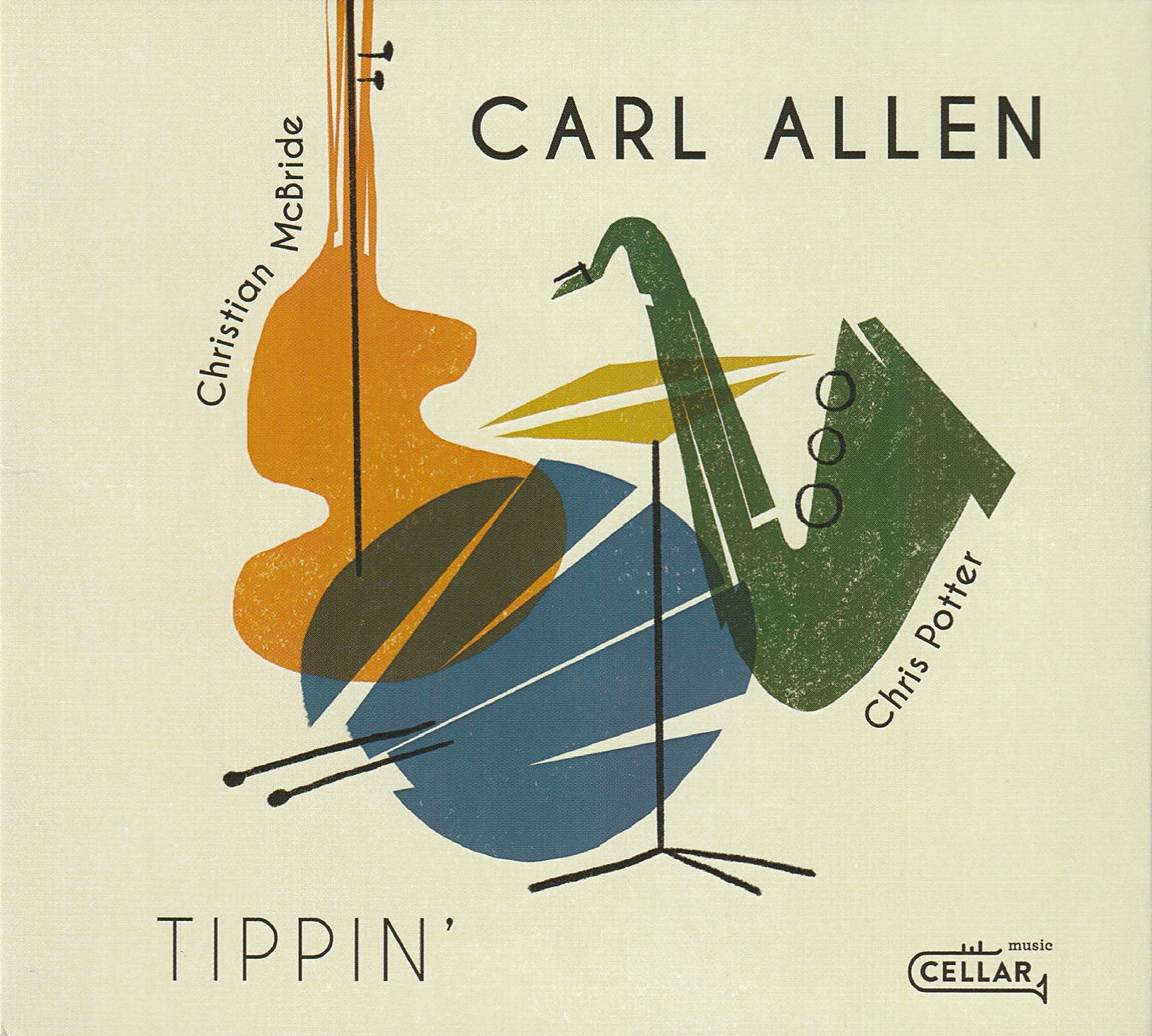
15 Carl AllenTippin'
Carl Allen; Christian McBride; Chriss Potter
Cellar Music 011424 (carlallen.bandcamp.com/album/tippin)

Canadian Cory Weeds’ Cellar Music is an extremely well curated label, and they’ve accomplished the commendable feat of achieving a unified sound amidst a diverse catalogue. Tippin’ is drummer Carl Allen’s first album as a bandleader in over two decades, and he’s chosen to showcase himself in an intimate trio format. Allen’s work as both a sideman and a leader features grounded and swinging aesthetics, and he’s chosen 12 unique pieces of music that allow him to shine in a playful and interactive manner. 

The drummer is joined by two fellow Americans, saxophonist Chris Potter and bassist Christian McBride. They are all stalwarts of the New York jazz scene, and the album is recorded across the Hudson River at the legendary Van Gelder Studio in New Jersey. The trio becomes a quartet for Kenny Barron’s composition Song For Abdullah, when Canadian multi-instrumentalist John Lee joins the group on piano. Lee has released several albums with Cellar Music and fits right in as a guest on this uplifting number. 

The trio takes advantage of contrasting sounds and textures, with Potter doubling on soprano sax and bass clarinet, and McBride contributing some immaculate bowed melodies and solos. Allen penned two of the album’s compositions, Hidden Agenda, and Roy’s Joy, a nod to the late trumpeter Roy Hargrove. These fit neatly alongside a smattering of contemporary jazz pieces and torch songs.  

Charlie Parker’s Parker’s Mood is the first track of the album, and it sets the mood for what’s to come. A recording that’s simultaneously spot-on and virtuosic, but “chill” and intimate enough for a more casual jazz listener to enjoy.

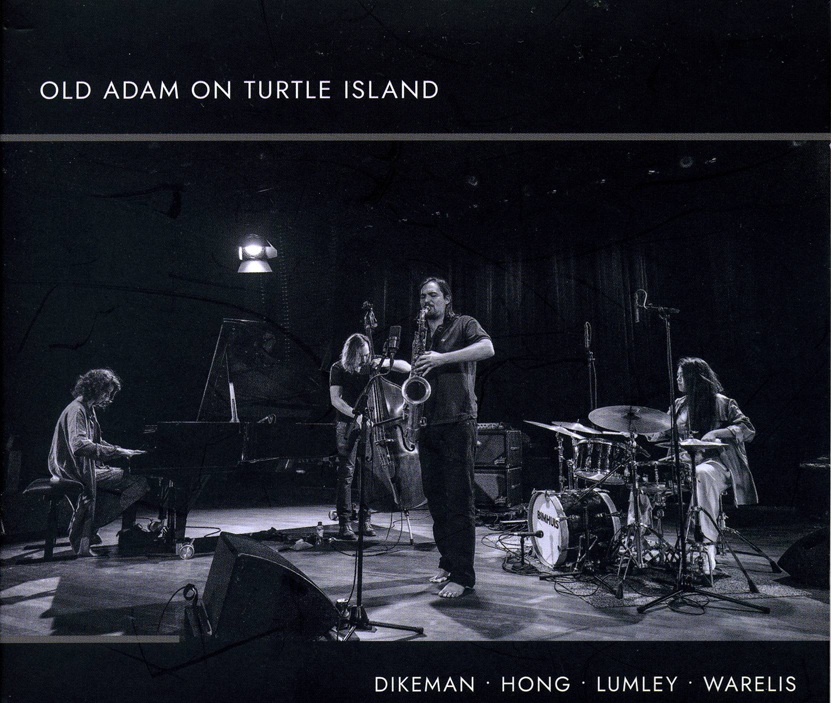
16 Old Adam on Turtle IslandOld Adam on Turtle Island
Dikeman/Hong/Lumley/Warelis
Relative Pitch RPR 1203 (
relativepitchrecords.bandcamp.com/album/old-adam-on-turtle-island)

As intense as it is international, Old Adam on Turtle Island’s two extended tracks showcase the collective skills of four Amsterdam-based players in creating modern layered improvised music. The disc is built around the seemingly inexhaustible ability of American tenor saxophonist John Dikeman to propel note bending screaming smears, split tones and altissimo shrieks with constant ferocity as rolling clips from Polish pianist Marta Warelis alternately decorate or drive the expositions. Korean drummer Sun-Mi Hong’s measured clunks or reverberations underline sequences with beats more felt than heard, while Canadian bassist Aaron Lumley divides his string sweeps between rhythmic continuity and interludes which add to the strident polyphony without upsetting linear motion.

The encounter reaches its apogee on Groove - Choral - Manifest, the second track, which is introduced by Lumley’s multi-string sul ponticello slides and stops. Superseding weighted drum ruffs and tolling keyboard clips, hefty pizzicato sweeps prod Dikeman and Warelis to filet enough discursive keyboard shakes and bellicose overblowing to reveal a moderated horizontal group finale.

With enough solid interludes to allow each musician to depict progressive and reactive skills, the session is also elevated to a definition of creative music sophistication.

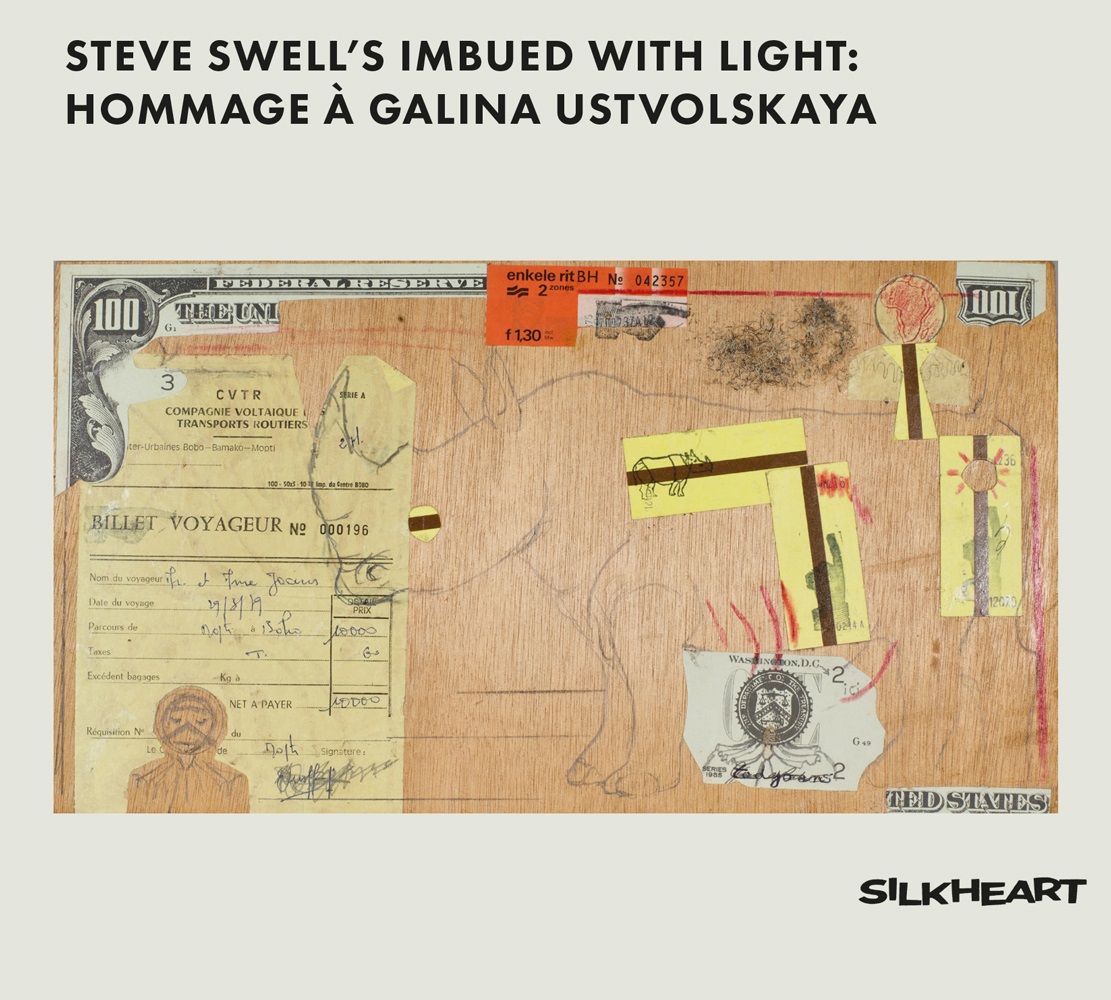
17 Steve SwellHommage à Galina Ustvolskaya
Steve Swell’s Imbued With Light
Silkheart SHCD 166 (silkheart.bandcamp.com/album/hommage-galina-ustvolskaya)

Surrounded by a coterie of six fellow New York improvisers, trombonist Steve Swell blends these players’ tones to honour the oeuvre of Russian composer Galina Ustvolskaya (1919-2006). A unique home-grown avant-gardist whose music was often out of the Kremlin’s favour, her idiosyncratic creations are saluted by Swell and company with a nine-section suite influenced by her sound blocks and frequent triple forte sequences.

The instrumentation means that these salutes highlight more than Ustvolskaya’s favorite motifs like percussive piano dynamics played by Robert Boston or Chris Hoffman’s strained spiccato cello slices. Also highlighted are Sara Schoenbeck’s pinched bassoon undulations, which introduce Essential Workers and often harmonize with Ben Stapp’s tuba burps; as well as Harris Eisenstadt’s percussion patterning. Swell’s brass skills contribute as do Herb Robertson’s trumpet yelps, grace notes or squeaky toys which produce layered cadences on Composite #12.  

With slurry honks, gutbucket snarls and speedy note bending, at times in unison with the other brass, the trombonist puts an individual stamp on such pieces as Hammer, Rocks and Toe The Wet Sprocket. Simultaneously his portamento connections with metronomic keyboard work and tuba stops confirm the tunes’ horizontal evolution – and unexpected marching band resemblances – despite frequent interludes of thematic mutation. 

This CD should introduce more people to Ustvolskaya’s works and at the same time confirm how exceptional the Swell septet’s tribute to her music is since it’s created with its own distinctive sounds.

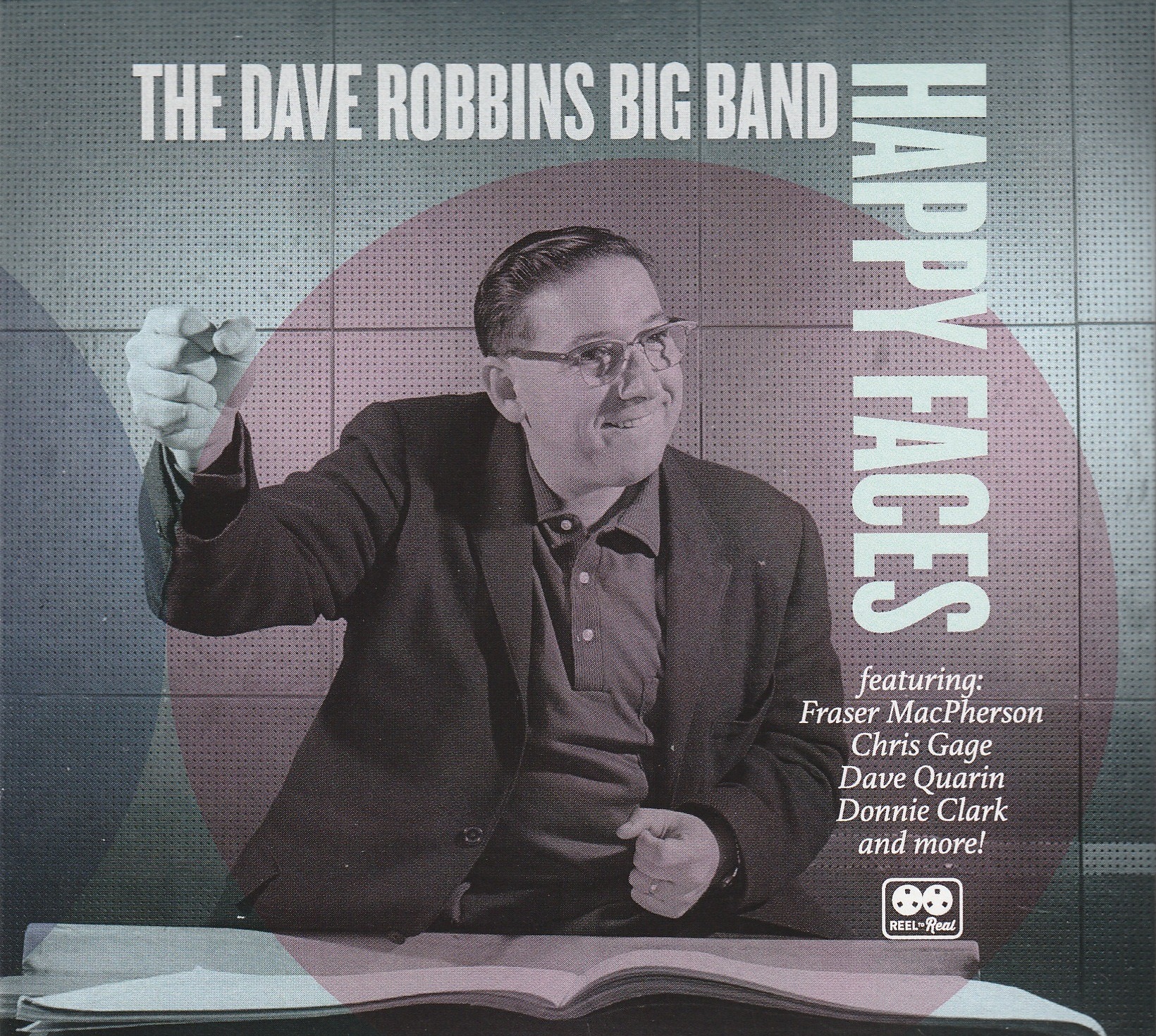
01 Happy FacesHappy Faces
Dave Robbins Big Band
Reel to Real Records RTRCD015 (thedaverobbinsbigband.bandcamp.com/album/happy-faces)

The big band is often associated with being a kind of period piece of the proverbial Swing Era and we tend to forget that the best of them can come to represent the very epitome of an all-encompassing concert instrument. Truth be told this vaunted position is not only the exclusive domain of the flashiest outfits such as the Duke Ellington and Count Basie, or the Benny Goodman and Lionel Hampton orchestras either.

On this disc the redoubtable American/Canadian bandleader Dave Robbins and his illustrious colleagues explore the fire power of controlled chamber music that arises when various brass, reeds and woodwind instruments, and piano, bass and drums, are put in the hands of some quite legendary musicians. Happy Faces, the resultant album is a magisterial edifice of music in numerous lyrical and colourful contexts, each one reflecting the singular ability of each of the contributing musicians to swing with proverbial style and abandon. 

Robbins (1923-2005) was a generous purveyor of musical good taste, and it is not only charts such as Have Vine Will Swing and Africa Lights that provide indubitable evidence of this. There are reasons beyond those charts to savour the disc. Fraser MacPherson’s tenor saxophone on March Winds Will Blow, and Don Clark’s trumpet solo on Asiatic Raes is another; as is Don Thompson’s tasteful contrabass on the abovementioned Have Vine Will Swing

Released on Cellar Live’s Reel to Real label for historic performances, Happy Faces comprises Jazz Workshop broadcasts recorded at Vancouver's Cave Supper Club between 1963 and ’65. It is an elegant reminder of the swinging legacy of Dave Robbins.

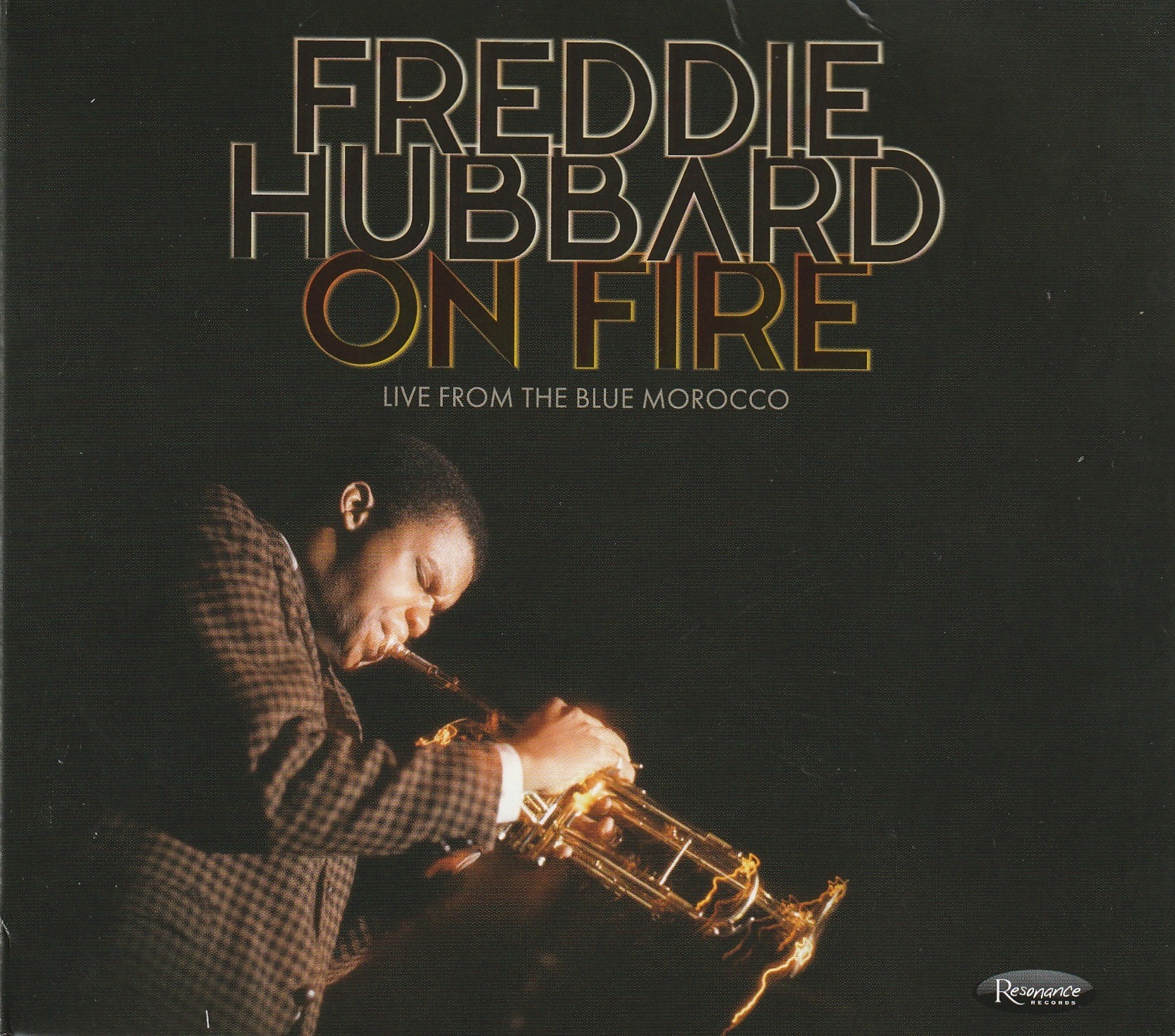
02 Freddie Hubbard On FireOn Fire - Jazz from the Blue Morocco
Freddie Hubbard
Resonance Records HCD 2073 (resonancerecords.org/artists/freddie-hubbard)

Few jazz trumpeters have had the initial impact or sustained achievement of Freddie Hubbard. Born in 1938, he made a substantial impact in New York in 1960, in both hard bop circles and the avant-garde, recording his first date as a bandleader for Blue Note and appearing on Ornette Coleman’s landmark Free Jazz. In the following year, he joined Art Blakey’s Jazz Messengers and appeared on John Coltrane’s Olé and Africa/Brass. Merging elements of both schools in his own music, Hubbard also managed to combine the trumpet’s brassy power with the fluency of line associated with saxophonists.

On Fire is a two CD or three LP set recorded at a Bronx club called Blue Morocco in 1967. While one might lose the precise separation of a recording studio, a live recording has a special spontaneity and the real scale of a performance. Hubbard’s own contribution to the standard repertoire, the waltz Up Jumped Spring, stretches to 17 minutes, while separate traditional standards – Bye, Bye Blackbird and Summertime – combine for 40 lively minutes. 

Hubbard is joined here by his regular working band, youthful musicians (ages range from 23 to 26) who would all go on to have significant careers. On Hubbard’s True Colors, he and tenor saxophonist Bennie Maupin press the envelope to explosive free jazz. Throughout pianist Kenny Barron, bassist Herbie Lewis and drummer Freddie Waits contribute to the overall excitement, making individual statements as well as supporting Hubbard’s creative energies.

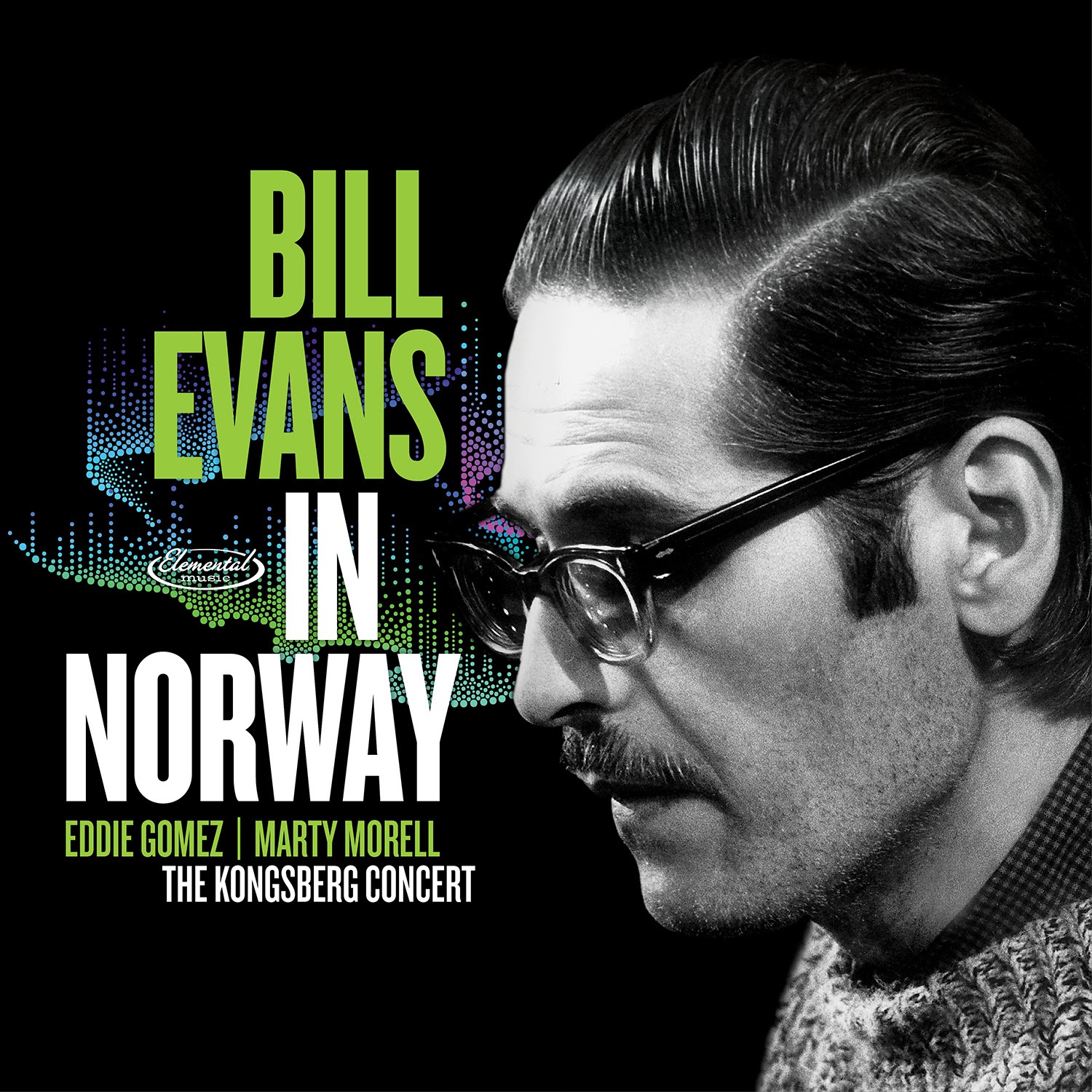
03 Bill Evans in NorwayBill Evans in Norway - The Kongsberg Concert
Bill Evans; Eddie Gomez; Marty Morell
Elemental Music (elementalmusicrecords.bandcamp.com/album/bill-evans-in-norway-the-kongsberg-concert)

To say that iconic jazz pianist Bill Evans has been a profound influence on several generations of jazz pianists would be something of an understatement. Evans (who passed in 1980) emerged as a sideman on the New York scene in the 1950s, and through his work with a long list of jazz luminaries, Evans not only helped usher in contemporary jazz (with all of its modern expressions), but also perfected the Art of the Trio as we know it today. This never previously released music was originally recorded at a concert at Norway’s Kongsberg Jazz Festival in June 1970. The recording was produced for this release by “Jazz Detective” Zev Feldman. Evans is joined here by his longest-running trio – Eddie Gomez on bass and Marty Morrell on drums. This comprehensive, annotated recording includes rare interviews with Evans with extensive notes by Evans scholar Marc Myers.

The brilliantly restored programme includes a cornucopia of standards from legendary tunesmiths, and features fresh versions of two Evans compositions, 34 Skidoo and Turn Out the Stars. At the time of the performance, Evans was in a particularly positive space, which is very much apparent in the lively tempos and energy of the trio. Harold Arlen’s Come Rain or Come Shine is performed here with a free, extended bass solo by Gomez, framed by the relentless rhythm of Morell.  Evans jumps in with joy, in a celebration of both the melody and its improvisational possibilities. 

During What Are You Doing the Rest of Your Life the audience is reverential as they experience both the sheer artistry and great sensitivity of Evans. Other standouts include an almost modal, up-tempo Autumn Leaves, a sumptuous piano performance of Denny Zeitlan’s Quiet Now and the nearly unbearable beauty of Bernstein’s Some Other Time. Every track here is a gem – and a living tutorial of how jazz should be understood and played.

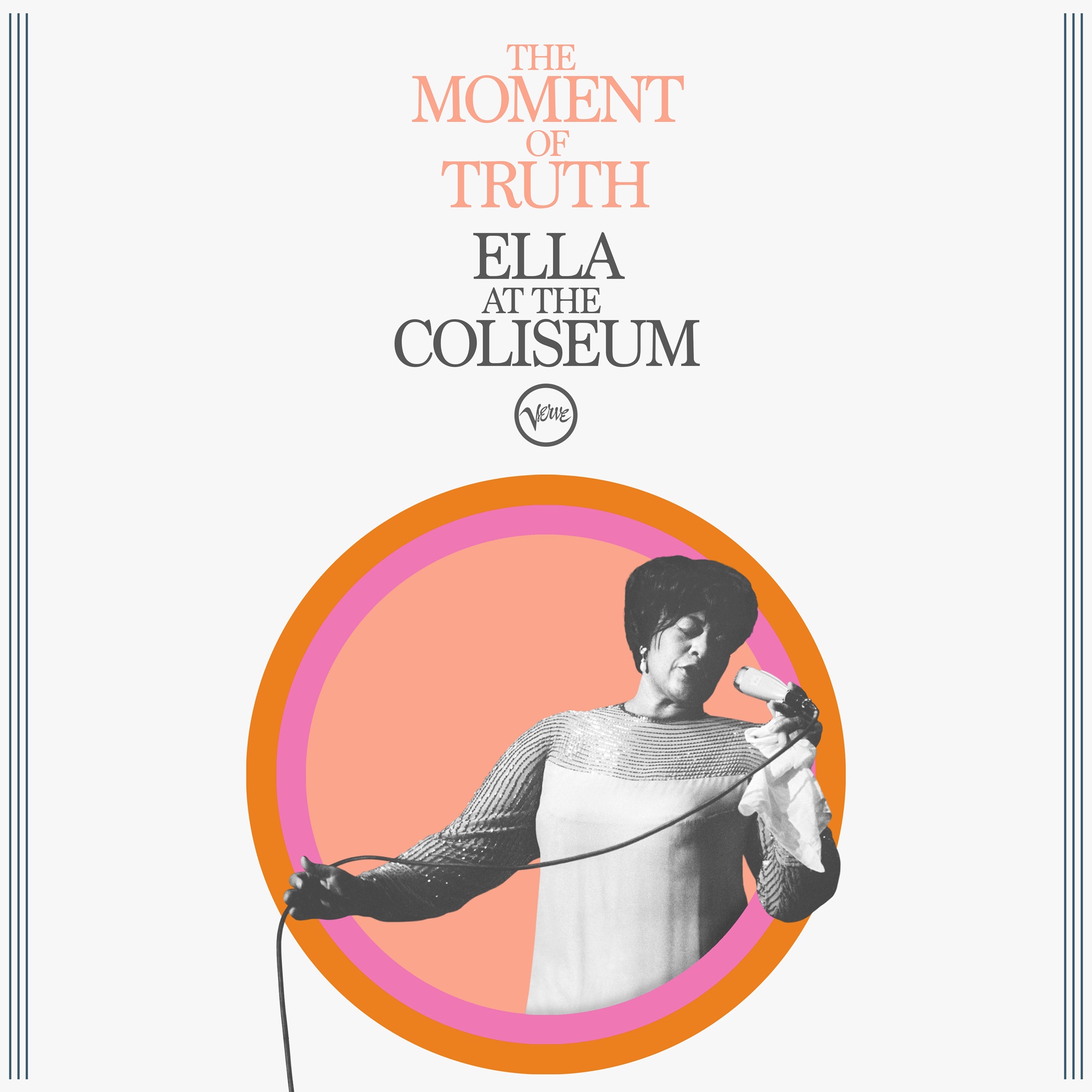
04 Ella The Moment Of TruthMoment of Truth - Ella at the Coliseum
Ella Fitzgerald
Ume 602475454267 (shop.ellafitzgerald.com/products/the-moment-of-truth-ella-at-the-coliseum-digital)

Now this right here is a true discovery! On June 30, 1967 at the Oakland Coliseum Arena, Ella Fitzgerald appeared with her trio, members of the Duke Ellington Orchestra, and entertained a rapturous audience that inspired her deeply.

While the First Lady of Song’s voice was a few years beyond the peak of her powers, it was still a magnificent instrument at the time of this recording. She still had the bell-like tone for ballads (You’ve Changed), the sensational ability to swing like a gate (The Moment of Truth), and a childlike imagination in her scat singing (In a Mellow Tone). Most impressive is her adventurous phrasing throughout; the coda on Don’t Be That Way stretches the title phrase effortlessly into upwards of 40 notes, in what is just one of several jaw-dropping moments in the set.

The inclusion of songs never before heard in Fitzgerald’s discography make this album particularly exciting, especially the pitch-perfect version Alfie, which of course was a big hit the year before this concert, and Music to Watch Girls By, a great example of her ability to make a silk purse out of a sow’s ear. Bye Bye Blackbird is loose as a goose with the delicious spontaneity of a late-night jam session.

Audiophiles should know that the mixing and mastering of this album are very impressive – it feels like you are right there in the audience, cheering on one of the greatest artists in jazz history.

Only a vanity project if designed that way, multiple recordings from a single artist can offer more than collating obscure or famous souvenirs of a storied career or celebrating a brace of hits. When it comes to creative music, multiple discs give the creator more space to showcase original music in one package and a chance for the listener to hear in complete detail perspectives the individual innovator wishes to present. Dealing with musical auteurs here, each of these sets serve a different purpose. One is new music attached to receiving an important artistic honour. Another presents different tranches of a musician’s oeuvre as he celebrates an important age milestone. The third collects idiosyncratic performances of wholly original music.
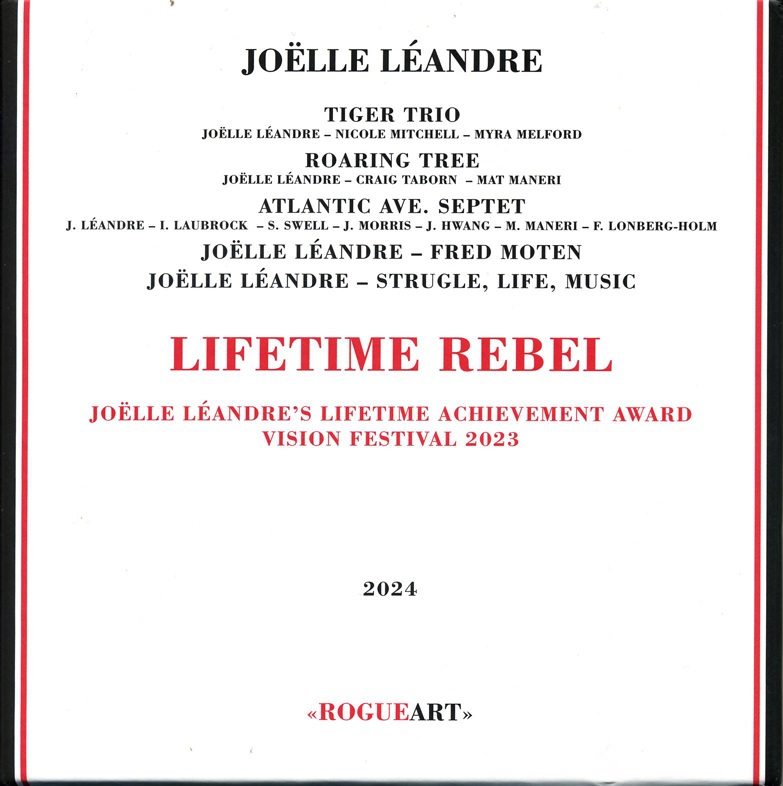
01 Joelle LeandreHonouring her as the first non-American recipient of the Lifetime Achievement award presented annually by New York’s Vision Festival Lifetime Rebel (RogueArt ROG-0137 rogueart1.bandcamp.com/album/lifetime-rebel) assembles concerts from French bassist Joëlle Léandre. Three CDs recorded during the 2023 festivities feature her with her Tiger Trio of flutist Nicole Mitchell and pianist Myra Melford; on another with her Roaring Tree group with pianist Craig Taborn and violist Mat Maneri; and a third matches her bass and voice with the spoken words of Fred Moten. Another disc, presenting her Atlantic Ave. Septet, was recorded six months later in France with trombonist Steve Swell, tenor/soprano saxophonist Ingrid Laubrock, violinist Jason Hwang, violist Maneri, cellist Fred Lonberg-Holm and guitarist Joe Morris. Interestingly enough, every other player featured is American. These international connections and her unique role in the music world are touched on, along with other subjects in the included DVD where Léandre, who will be 74 this year, is interviewed about her long career with first notated and then improvised music, interspaced with bass solos. 

While the interaction with Moten gives Léandre a chance to demonstrate her immediate response to poetic prompts, Moten’s citing of various jazz heroes within his stream of consciousness, seemingly disjointed tales about neighborhoods, travel and relationships don’t really connect to Léandre’s sounds. His poetics seem more fanciful than logical. Moten singing a snatch of Lush Life comes across as less musical than the yells and yodels Léandre appends to her string improvisations that reach an early climax as she mumbles and string bumps to underline his salute to other bass playing avatars. 

More balanced, the Tiger Trio improv is swifter and tougher with pieces starting from a connective centre and moving outwards. Mitchell’s transverse arabesques growl and trill with the same finesse; her highest notes resembling human vocals while her thickened quavers balance the bassist’s sul ponticello strokes, which sometimes appear to slice the strings and wood like a sharp axe blade. Melford’s measured comping means that connection and expression are never lost and her quick key clips and tingles are dynamic enough to cement forward motion even as Mitchell peeps and Léandre vocally whoops, mumbles and pants. 

The Roaring Tree trio’s set of improvised chamber music is involved in contrapuntal expositions involving intense keyboard leaps on one side and buzzing pitches from the bass and viola on the other. Maneri’s strident clipping and spiccato slashes decorate the four tracks’ top layer while Léandre’s responsive buzzes maintain the bottom. Everything comes to a head on Roaring Tree #4 where the set’s finale involves moving a portamento piano turnaround into pedal point with vital arco extensions from the others, as the exposition moves from andante to allegro to prestissimo. 

Latterly, the Atlantic Ave. Septet’s nearly 43-minute performance of Atlantic Ave. #1 captures a fully realized composition by the bassist which uses the ensemble's capabilities to broaden the piece which reflects aspects of her musical persona. Bisected by several tutti interludes during which the players ascend the scale with confidence, the polyphonic movement encompasses harmonized, almost romantic sequences with space for individual expression. Although the five string players sometimes move as a block, a jazz-like walking bass line and harsh col legno string banging arise solely from the cellist and bassist. Hwang and Maneri alternate between swelling unison strokes and aviary squeaks. Swell’s plunger tones roughen up any string cushioning as do Laubrock’s thin soprano sax squeaks. Despite sections of cacophony, Léandre and Swell combine for a break that’s almost baroque, while the saxophonist’s tenor contributions inject an element of modern jazz into the piece. Beside her distinctive tough wood smacks and pizzicato pacing, by the conclusion the bassist vocalizes her now familiar Bedlam-style grumbles and faux operatic bel canto cries. Confirming the individuality of her composition, this quirk is manifest seven-fold at the beginning, the end and at mid-point as all the musicians vocally mutter, yell, gurgle, laugh and hector before circling back to their instruments. 
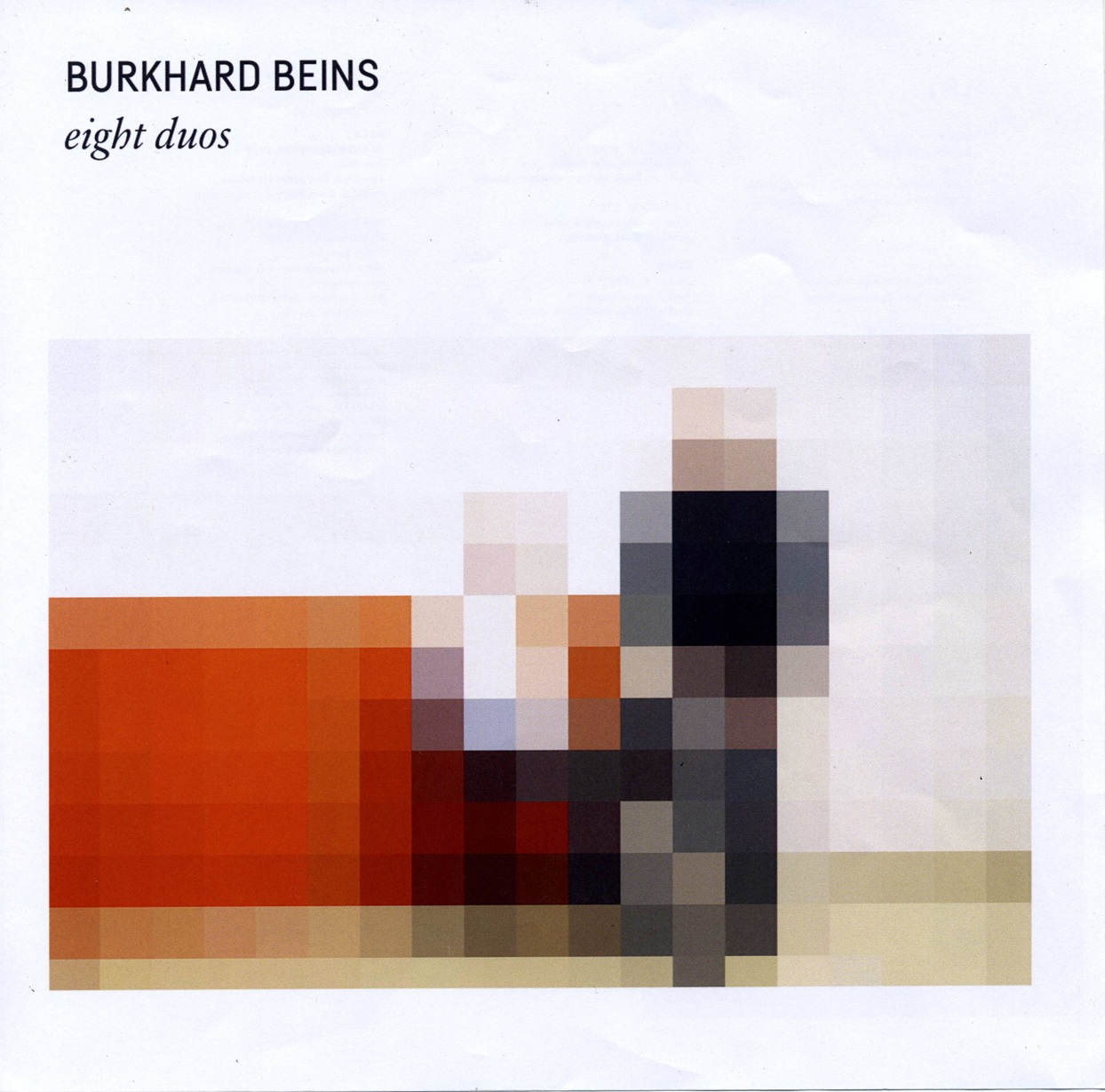
02 Burkhard BeinsSignificant birthdays can also be a reason for exploratory musicians to reflect on their legacy. To celebrate his 60th birthday last year Berlin-based composer/improviser Burkhard Beins has released Eight Duos (Ni Vu Ni Connu LP 053-055 nivuniconnu.bandcamp.com/album/eight-duos), whose eight selections feature his collaboration with a cross section of the city’s other sound makers. Beins, who also creates sound installations, has for decades been involved in the German capital’s evolving Echtzeitmusik or real-time music scene. Here he varies his instrumentation on every track bringing out an amplified cymbal, bass drum, snare drum, drum kit, analog synthesizers, walkie talkie and samples at various times, with his partners playing acoustically or heavily involved with electronics. Unleash with pianist Quentin Tolimieri, is probably the closest to jazz. Using a full kit Beins’ echoes and rattles complement the pianist’s linear dynamics that slide down the scale and then reverse in such a manner that Tolimieri’s sudden stops and hammered keys end up as percussive as Beins’ beats. In contrast Transmission, where Beins’ synthesizer and samples are interlaced with the antennas, receivers and tape machines of Italian Marta Zapparoli, is solely affiliated to voltage. The rugged oscillations by both distend to mirrored affiliations which centre on extensive textures that commingle as widening electric lawnmower-like drones and unvarying rumbles are only infrequently pierced by suction-like projections, muffled rocket-launching explosions, airy whooshes and backwards flanges and shakes. The result is almost opaque until the final dissolve. Still the most characteristic duets involve two individual Echtzeitmusik theoreticians: idiosyncratic trumpeter Axel Dörner and Andrea Neumann, who plays inside piano and mixing board. Initially low key, Expansion blends board hisses and reverb with Neumann’s careful string slides that meld tolling, buzzing and clipped timbres. Beins’ isolated cymbal vibrations and strained scratches end with reverberations sounding like distant thunder. The joint murmurs simultaneously suggest vibrant colours and crepuscule. A variant of this, Dörner’s technique on Unlock is to never emphasize a whole note but instead create brass architecture from half valve spits, hollow strains, toneless breaths, growly smears and distant whistles. Occasionally side snare scratches and foreshortened drum top rubs match up with trumpet strategy combining tongue and palm percussion sizzles.
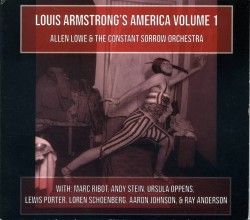
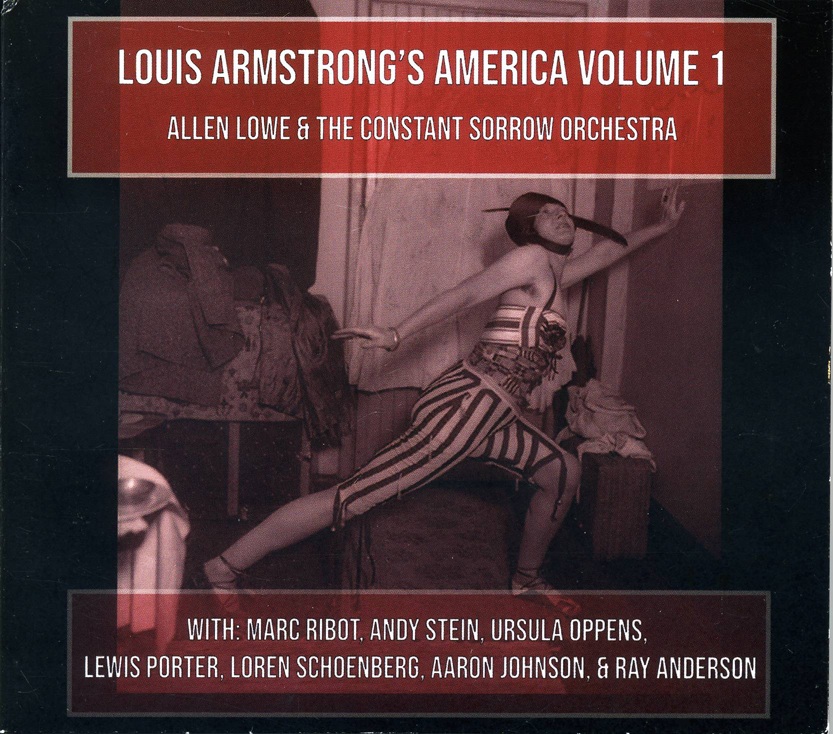
03a ArmstrongVolOneThe oddest sessions here are the two-volume four-disc Louis Armstrong’s America Vol. 1 and Vol. 2 (ESP 5109/5110 allenloweesp.bandcamp.com/album/louis-armstrongs-america) performed by tenor saxophonist Allen Lowe & the Constant Sorrow Orchestra. Despite what the title may suggest this isn’t a salute to Satchmo’s music, but instead 69 unique tunes composed by Lowe that mix the styles of jazz created during Armstrong’s lifetime (1901-1971). Played by a total of 24 musicians in different small groups, the postmodern performances feature variations of every style from Classic Jazz to Free Jazz, with pivots into blues and tinges of rock.

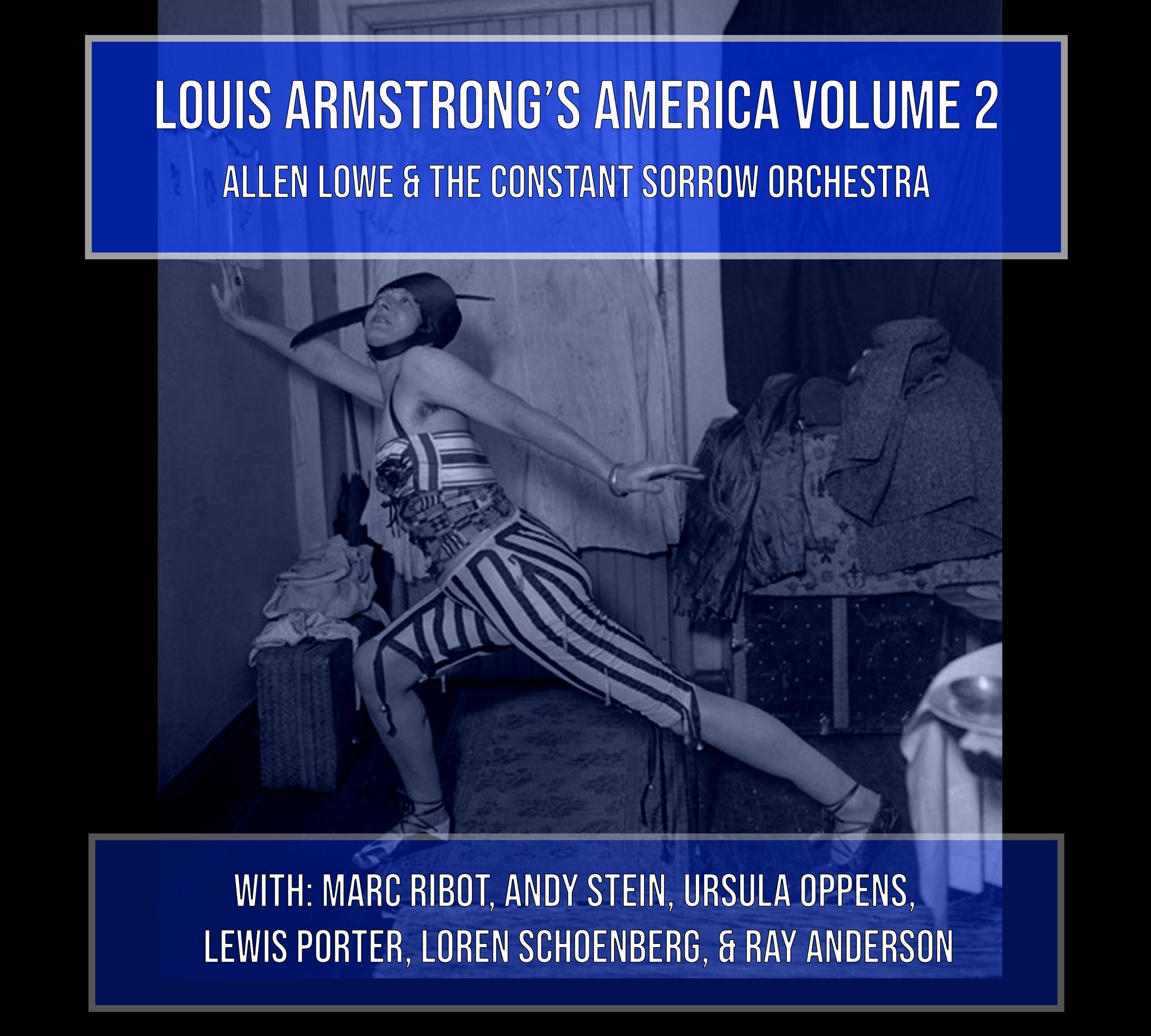
03b ArmstrongVolTwoA writer as well as a musician Lowe whose career sideline for cancer treatment is referenced throughout with multiple versions of the non-sentimental ballad I Should Have Stayed Dead, reflects his POMO orientation in quirky song titles which are inside jokes for jazz fans. Duke Ellington’s Black and Tan Fantasy becomes Black and White Fantasy and a jolly march with Ray Suhy’s clanking banjo, Aaron Johnson’s slippery clarinet and Frank Lacy’s muted trumpet prominent. Hello Dali, a contrafact of Hello Dolly, joins synthesizer gurgles, some bebop licks and ends with the famous few notes from Beethoven’s Fifth Symphony. Under the Weather, a take off on Armstrong and Earl Hines’ Weatherbird, rolls along with pianist Loren Schoenberg emulating Hines’ swift and splattering patterns and Lowe’s slippery Swing Era sax solo. A salute to an early ragtime popularizer Mr. Harney Turn Me Loose has pianist Matthew Shipp melding his free jazz timing to a raggy beat; while Shufflin’ The Deck (Take 5, Please) turns the Dave Brubeck quartet’s Take Five into a simple shuffle as Johnson languidly and pianist Jeppe Zeeberg vigorously create a Bizarro version of Brubeck/Paul Desmond duets. When Dave Schildkraut Goes Marching In blends When The Saints featuring slap bass and banjo with hard tenor sax riffs and bass drum accents in the style of the obscure bop saxophonist of the title. Meanwhile guitarist Marc Ribot adds his searing rock-blues flanges on tunes like Riot On The Sunset Strip – named for the 1967 drug exploitation film – where Lowe quotes Lonely Avenue within his slurpy, honking solo. Trombonist Ray Anderson comes across as the session’s MVP, adding modernized gutbucket slurs and rippling tailgate extensions mated with Johnson’s clarion Trad clarinet on Back Home Rag; and contrasts his basement plunger tones with tap-dancing like drumming on Mr. Jenkins Lonely Orphan Band a take off on both Sgt. Pepper's and the New Orleans orphanage band where Louis Armstrong learned to play cornet. There’s even a sly salute to modern notated music with John Cage Turns the Page (or: 3:02) where Lowe and company burlesque Cage’s infamous “silent” piece by shaking loosened strings, slapping piano wood, muffle drum pops, advance brief reed cries and above all noisily shred and crunch paper.

Multiple sets can be used by musicians to celebrate honours, notable age milestones or to express multiple ideas without having to précis a musical vision. All are equally valid.


01 Scott Grant 5Horizon Song
Scott Grant 5
Cellar Music CMR221123 (scottgrant5.bandcamp.com/album/horizon-song)

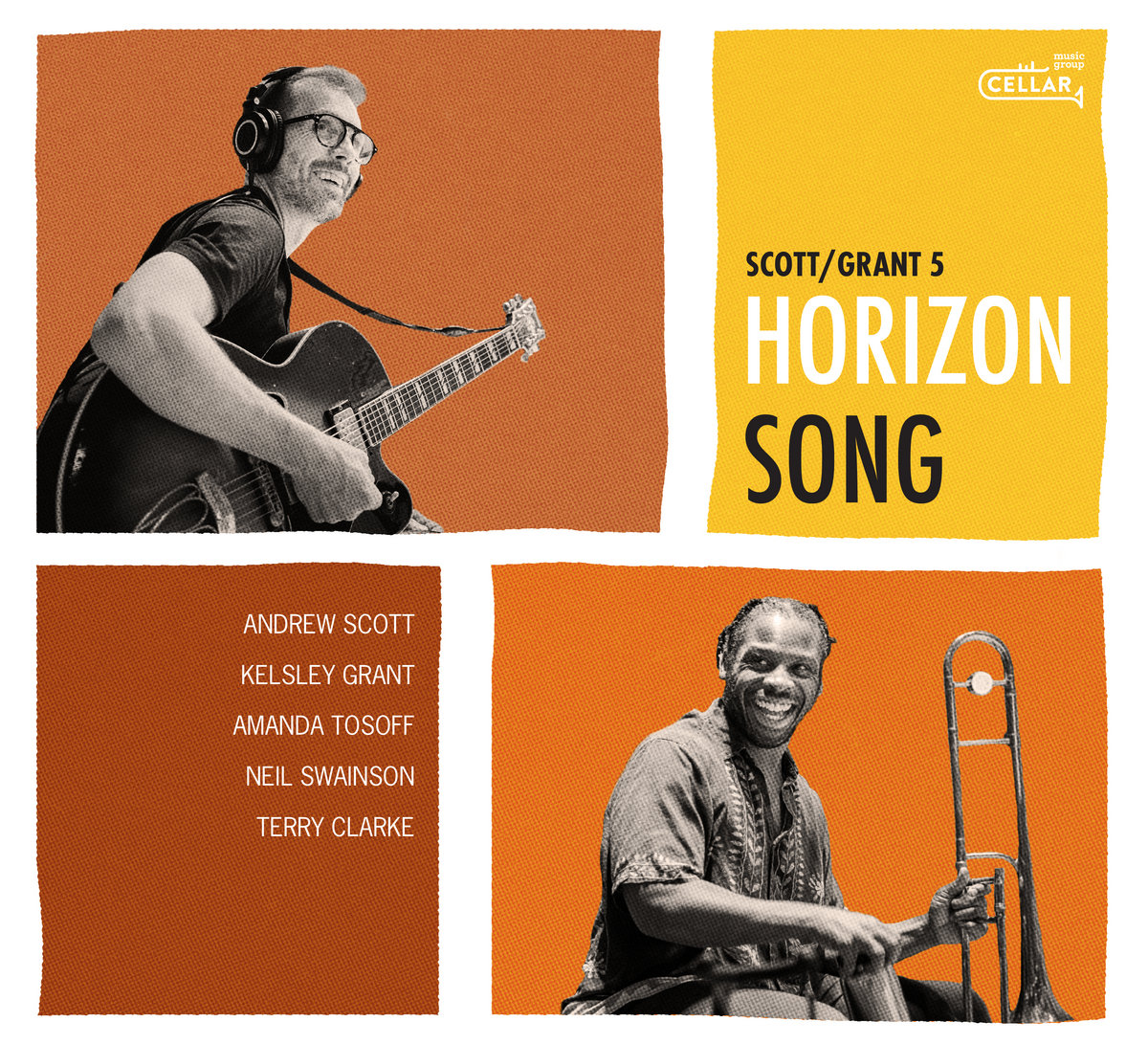
Horizon Song by the Scott / Grant 5 offers tasty twists to a detail-oriented listener, while being palatable and polite enough to put on over dinner. A friend described a track they’d heard on the radio as “smooth,” but this was a positive nod to the group dynamic rather than an accusation of innocuousness. 

The album is right at home within the Cellar Music Group catalog, and with excellent casting. Scott and Grant are guitarist Andrew Scott and trombonist Kelsley Grant, with Amanda Tosoff, Neil Swainson and Terry Clarke rounding out the quintet. This rhythm section gives Horizon Song’s nine tracks the ample swing and groove they require, while sounding current and interactive enough to appeal to a contemporary audience. This might just be the through-line of the album: embracing classic aesthetics, but never trapped in a time capsule. 

All of Horizon Song’s tracks are originals, with Scott penning seven tunes and Grant contributing two beautiful waltzes. The tracks go together seamlessly and feature each member of the quintet. The album’s title track might just be the aforementioned “smooth” sounding piece, and there’s plenty of contrast from the snappy Punctuality to the groovy The Problems of Your Future.  

Scott breaks up his guitar sound with nylon-strings on a few tracks, and Tosoff doubles on electric keyboard, all captured beautifully at the Gordon Wragg Recording Studio in Toronto. I have critiqued an album or two from this studio for sounding “cold” while precise, but there is grit and warmth to Horizon Song that brings to mind recordings from the 60s and 70s. Whatever your usual listening tendencies, you’ll find something here to enjoy.

02 Samuel Bonnet Trio LIVE IN HARMONYLive! In Harmony
Samuel Bonnet Trio
Divertissement Mercier (samuelbonnetguitar.bandcamp.com/album/live-in-harmony)

Samuel Bonnet is a jazz guitarist currently living in Montreal. Born in Israel, he studied classical and jazz guitar in France, graduating in musicology at the University of Paris. In 2009 he moved to Montreal to study classical guitar. Bonnet’s unique jazz sound relies on using a nylon stringed classical guitar amplified to produce a rich and nuanced sound. Jazz has a history of including classical guitar: for example in the bossa nova tunes of Carlos Jobim and the legendary New York guitarist Gene Bertoncini who, decades ago, studied classical guitar to reinvent his jazz playing.

Live! In Harmony is Bonnet’s second trio recording and the performances are from the Jazz Room (Waterloo, ON) and Rucher de Bolton (Quebec). This album shows jazz at its essential elements: a clean amplified acoustic guitar, upright bass (Jonathan-Guillaume Boudreau) and drums (Simon Bergeron) playing unique arrangements of eight standards. All the arrangements are thoughtful and original. For example, the Nardis cover is quite beautiful beginning with a swishing drum intro which introduces the delicate guitar melody, where Bonnet throws in a few harmonics, and includes a contrapuntal interplay with the bass. The audience’s applause on all tracks adds to a sense of immediacy. The trio’s performances of these and other tunes can also be found on Bonnet’s YouTube Channel.

Listen to 'Live! In Harmony' Now in the Listening Room

03 Alain BedardParticules Sonores
Alain Bedard Auguste Quartet
Effendi FND174 (alainbedardauguste.com)

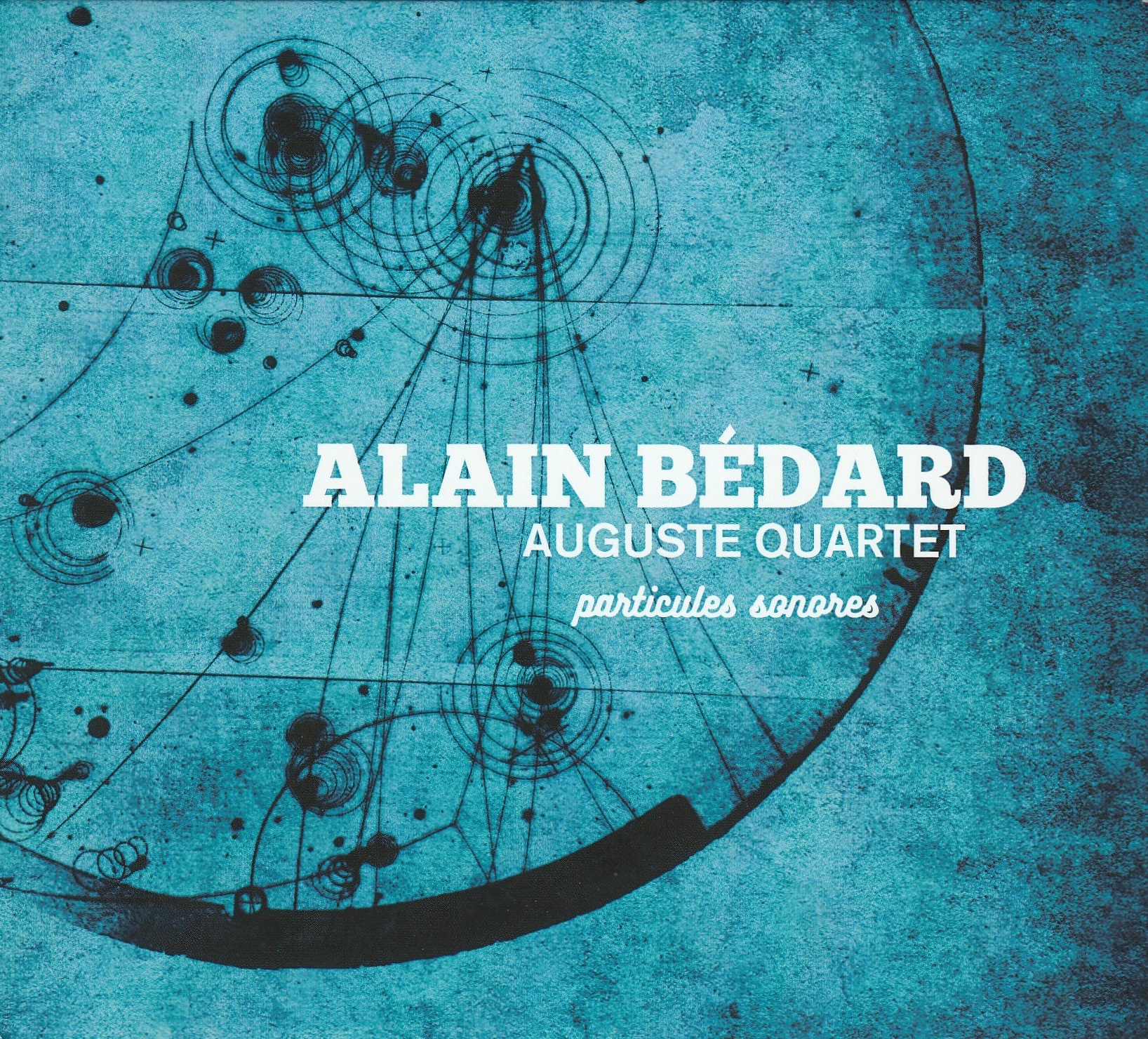
For the nearly 20 years, in six albums and numerous tours that have taken this ensemble throughout the globe, Alain Bédard and his storied Auguste Quartet have been considered one of Canada’s most prestigious quartets. Now, with their latest release, the ensemble helmed by bassist/composer Bédard explores the nature of particle physics and music. The compositions have been penned by quartet members Bédard, Marie Fatima Rudolph and Michel Lambert The quartet is comprised of these stellar, primarily Quebec-based musicians, along with Mario Allard on saxophones. 

There are ten envelope-pushing tracks here, all at once challenging, innovating and thrilling, including Bédard’s inveigling Profumo Chaneleone. It features a visceral, facile piano solo from Rudolf and superb drumming from Lambert, while Bédard’s solid bass lines anchor what chooses to be anchored and propels the rest through this complex, modal composition. Also, Lambert’s A Goose Story captures both the delight and horror of fairy tales, incising us with percussive arrows and mesmerizing us with his dynamic percussion. 

Another delight is the light-hearted Il Cappello de mia Sorella (My Sister’s Hat), which steps out of the stratosphere for a bit, bringing us a thoroughly lovely track, filled with the highest possible musicianship. Celestes (adapted by Bédard) deep dives into bebop heaven, replete with a ridiculous tenor solo from Allard and another dose of stirring piano from Rudolf. The closer, Bis du Gras Mollet  (Bédard) is another example of divine quantum entanglement and the power of music-driven sound particles to communicate, calm, thrill and amaze within the organized chaos of jazz.

04 Diane RoblinBreath of Fresh Air
Diane Roblin & Life Force
Zsan Records ZSAN2415 (dianeroblin.com)

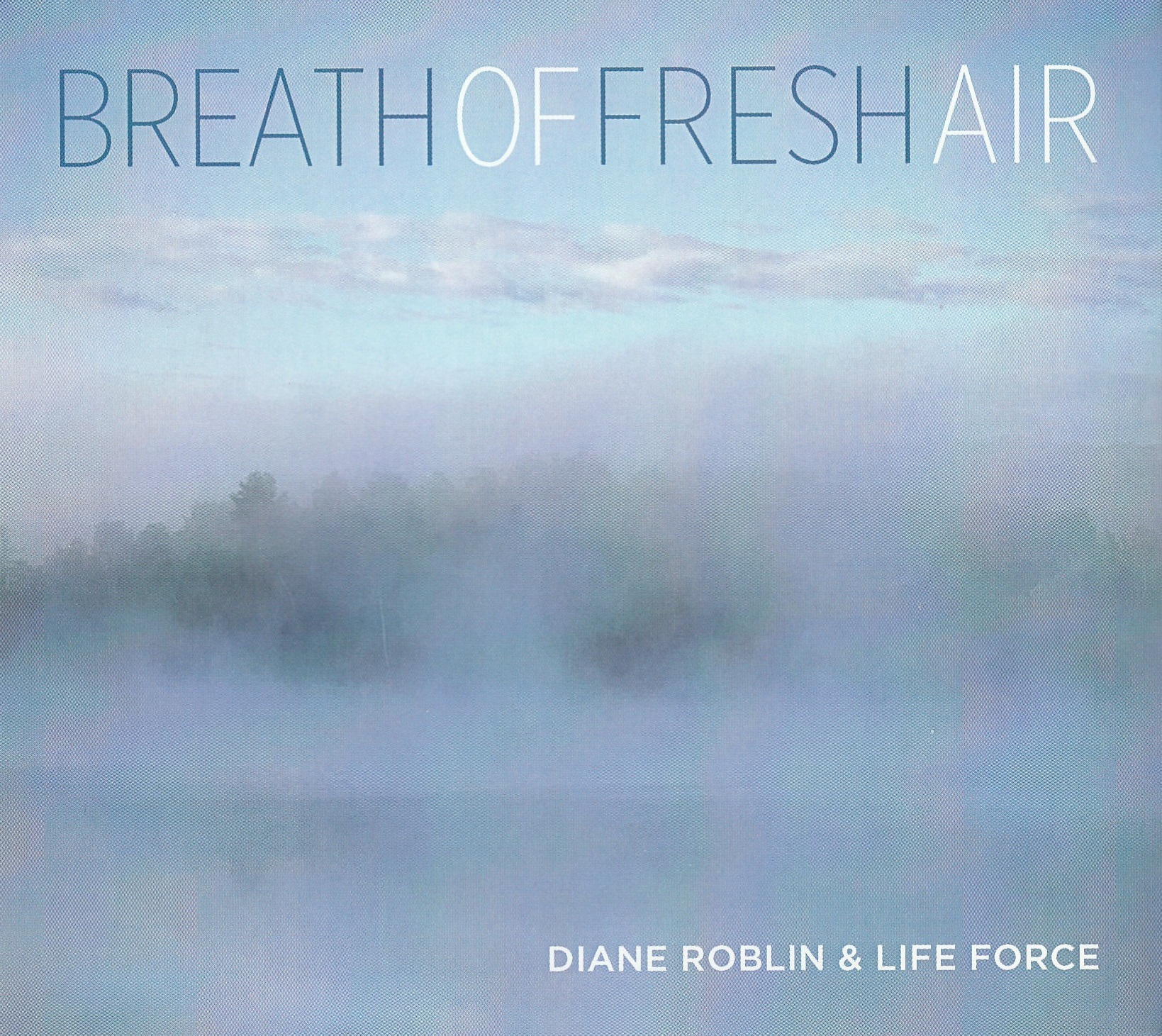
Diane Roblin is one of our most gifted and creative jazz pianists and composers. She is well respected on both electronic and acoustic keyboards, as well as for her penchant for genre blending, and expressing her ideas through compositions and motifs that cover the gamut from free, avant-garde jazz modalities into the realms of soul, fusion, rock and everything in between. Her latest salvo (produced by composer/bassist extraordinaire, George Koller) finds Roblin in an expansive musical wonderland, drawing on her many diverse influences, and performed by her expert, dynamic ensemble featuring Kevin Turcotte on trumpet and flugelhorn; John Johnson on soprano and alto sax; Jeff LaRochelle on tenor sax and bass clarinet; George Koller on acoustic and electric bass and Tim Shia on drums.  

First up is, Ladyfinger, funky cool, rhythmic and chordally complex. Roblin never over-plays here and is always focused on the conversation with her ensemble, while Koller provides a lush spine for Roblin to slide up and down. A tight, sibilant horn arrangement is the perfect contextual partner, as well as the beautifully rendered and articulated solo from Johnson. The title track has Roblin’s pianistic dynamism and facility at the forefront, while Turcotte’s trumpet moves sinuously throughout – his lovely tone infusing every note with musical eloquence, segueing into a fine tenor solo from LaRochelle.  

Another gem is Drifting into Dreamland, again underscoring Roblin’s special skill for constructing challenging melodic lines. On Renewed on Thanksgiving Day, LaRochelle’s bass clarinet intro seems to carry a veil of nostalgia and melancholy which is also reflected by the arrangement. This superb recording closes with Cadenza – a solo offering from Roblin that takes the listener on a trip through the vistas and valleys of her pianistic skill as well as her natural communicative abilities. A breath of fresh air, indeed.

Listen to 'Breath of Fresh Air' Now in the Listening Room

Back to top