15 Sean Friar Before and AfterSean Friar – Before and After
NOW Ensemble
New Amsterdam (newamrecords.com)

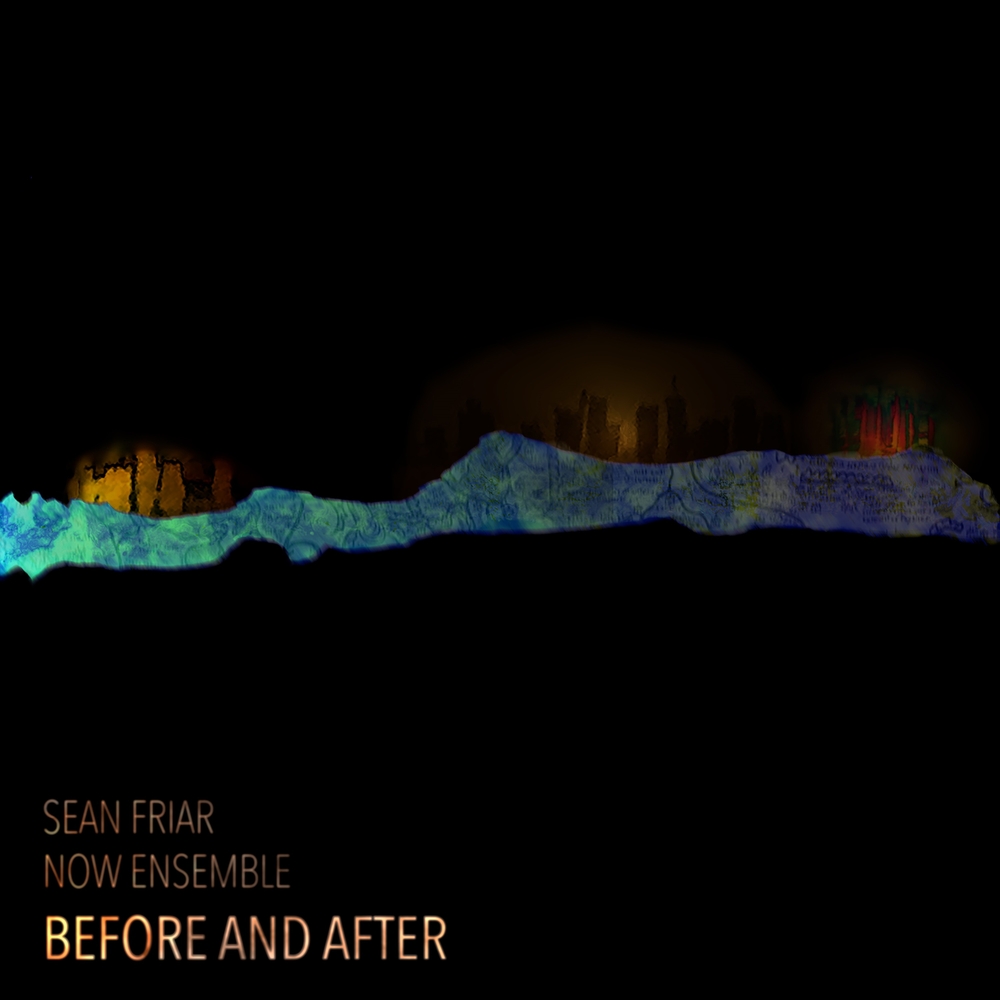
Maybe all art has ever been able to offer is solace. NOW Ensemble’s newest release, Before and After, is the compositional work of Sean Friar. His big ideas concern the rise and fall of human civilization, the tininess of our individual lives, perhaps the meaninglessness of it all? And yet, here are these beautifully crafted pieces that we can immerse our ears into and forget – or release – our grief.

Tracks one and two run together: Chant establishing a kind of jangling consonance, and Frontier fracturing it before subsiding into unison resignation. Spread repeats a manic cadential figure plucked on electric guitar? or inside the piano?: an ostinato that underlies the spread of melodic efforts to find a home. 

This extemporal description is in keeping with the creative impetus of the work. Developed from improvised fragments, Friar sent his ideas as sketches to the performers in 2017; they each fleshed them out and over the intervening period performed various versions. The process culminated in this recording, made pre-pandemic (lest anyone think Spread is a reference to COVID). 

These first three tracks are followed by five more. Sweetly keening, Cradle links with Artifact in a way reminiscent of the first two tracks, although Artifact is much shorter; in turn it segues directly into the pop-happy Rally. Solo is, oddly a work for several voices, but perhaps it’s about the loneliness of facing certain existential truths. Not to be a downer, but the final haunting track is called Done Deal.
16 Ourself Behind OurselfjpgOurself Behind Ourself, Concealed
Tasha Warren; Dave Eggar
Bright Shiny Things (brightshiny.ninja)

A line from the ever-elliptic Emily Dickinson’s poetry provides the title for this new release of various works commissioned by clarinetist Tasha Warren and composer/cellist Dave Eggar.

It’s hard to give this disc its due, on account of the similarly dark and perhaps overlong nature of the opening selections. 

The producers might’ve done better to reorder the tracks. The latter three are the strongest: not so deadly in earnest, more concise and jaunty. Maybe I’m worn out by the entire “responses to the pandemic” genre I’ve been touting lately, or by moroseness in general. Lalin (Haitian Creole for La Lune) by Nathalie Joachim, opens with a nocturne, then continues into a pointillist dancing depiction of the composer’s Haitian home. Phantasmagoria by Meg Okura (who joins the ensemble on violin) and Snapshots by Pascal Le Boeuf (joining on piano) also get the blood moving through the veins, with some decidedly upbeat character; I detect some Joni Mitchell in Snapshots. The duo benefits greatly by both composers’ energetic performances. 

Paquito D’Rivera’s African Tales opens proceedings. Purporting to move through musical landscapes of that vast continent, Rivera avoids overt references and recognizable styles. A soliloquy for bass clarinet leads to Eggar’s first entry; the two travel in tandem before dividing tasks. I hear influences of Donatoni and Messiaen.

Cornelius Boots’ Crow Cavern, and Black Mountain Calling by Martha Redbone, come next. By turns angry and sombre, and at nine minutes each (similar in length to African Tales), they stretch one’s patience. Interesting pieces, but the D’Rivera is a tough act to follow. 

Close miking provides lots of key noise, reed hiss, bow hair, finger pluck. The two principals seem to focus on extremes of expression, not on getting everything pristine, which is refreshing.

17 IvanovsJānis Ivanovs – Symphonies 15 & 16
Latvian National Symphony Orchestra; Guntis Kuzma
LMIC SKANI 126 (skani.lv)

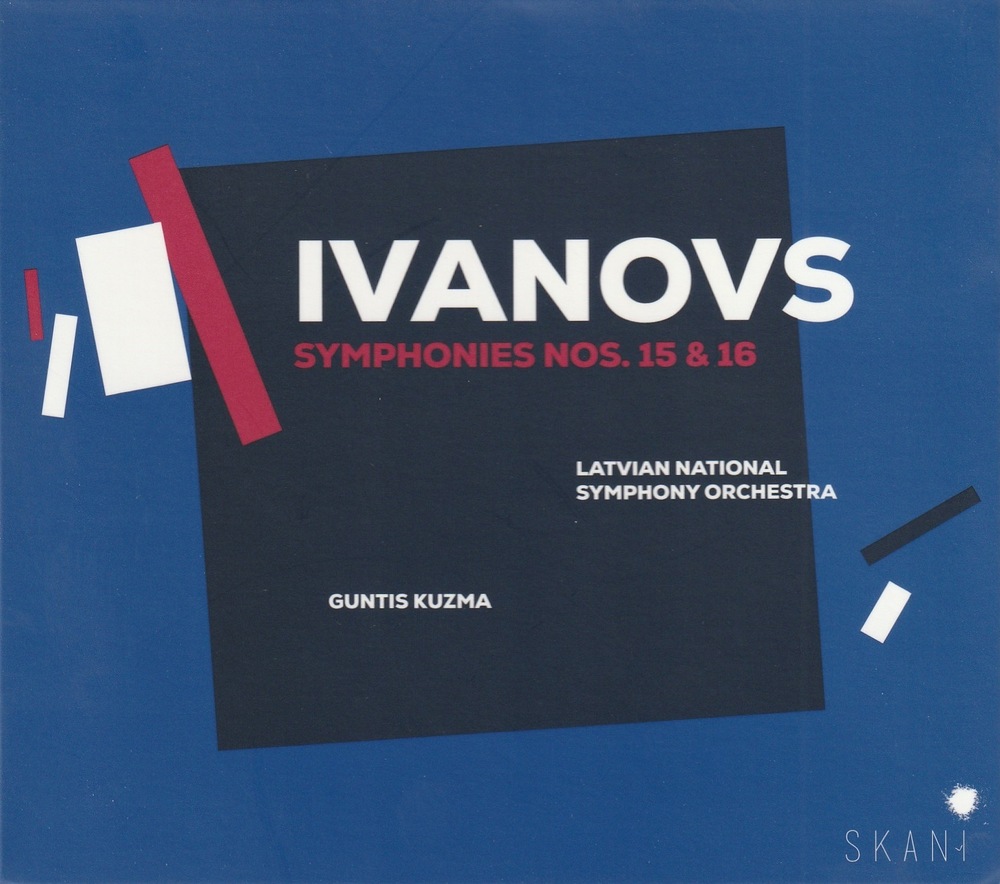
I’d never heard any of the 21 symphonies by Latvian composer Jānis Ivanovs (1906-1983) before listening to the two on this CD, each lasting about half an hour, both filled with dark sonorities, propulsive energy and clamorous dissonances.

 Violence and disaster dominate Ivanovs’ Symphony No.15 in B-flat Minor (1972), subtitled “Symphonia Ipsa.” In the opening Moderato, quiet, tentative apprehension is suddenly shattered by brutal explosions. Heated struggle ensues in the Molto allegro’s agitated, snarling rhythms and desperate pleading. The grim, mournful Molto andante (Adagio) conjures, for me, a desolate battlefield strewn with bodies; brief, snide, sardonic phrases seemingly comment on the absurd futility of the preceding bloodshed. Nevertheless, martial mayhem returns in the Moderato. Allegro with cacophonous fanfares and pounding percussion before the symphony ends in a slow, ghostly procession.

Restless, fluctuating moods pervade Ivanovs’ Symphony No.16 in E-flat Major (1974), perhaps memorializing the victims of No.15. In the Moderato. Allegro moderato, gloomy, throbbing despair, sinister foreboding and dissonant shrieks are intermittently relieved by unexpected, hymn-like concordances and even touches of Sibelius. The Allegro busily churns with mechanized rhythms leading to the distressed Andante. Pesante. Here, dispirited resignation turns into anger and determined resistance until a gentle bassoon solo intones consolation. The Allegro moderato drives relentlessly to a strident triumphal chorale, ending in a simple major chord, the first happy moment on this CD.

Powerful music powerfully performed by conductor Guntis Kuzma and the Latvian National Symphony Orchestra.

18 Gail KubikGail Kubik – Symphony Concertante
Boston Modern Orchestra Project; Gil Rose
BMOP Sound 1085 (bmop.org)

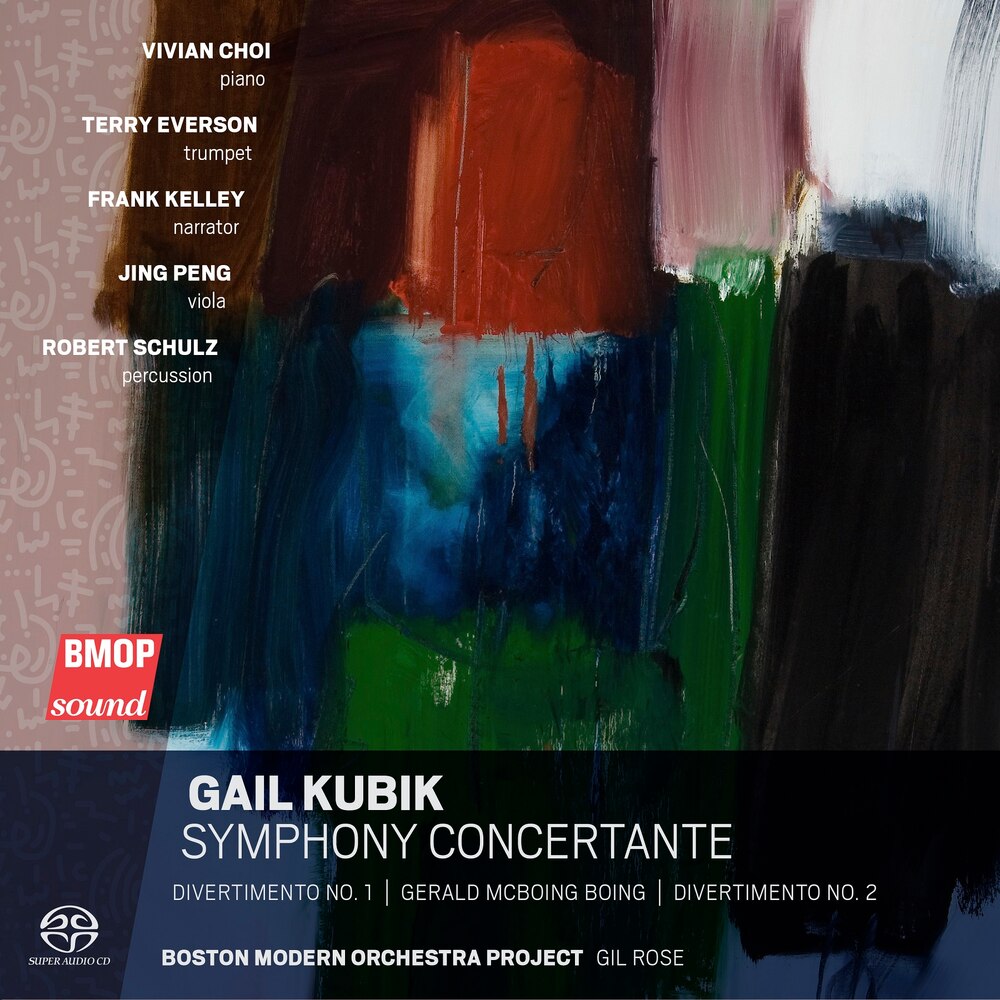
Three members of the Little Orchestra Society of New York were pestering conductor Thomas Scherman for solo opportunities, so Scherman commissioned Oklahoma-born Gail Kubik (1914-1984) for a work that would “kill three birds with one stone.” Using his trademark mix of Stravinskian neo-classicism, Coplandesque Americana, Hollywood and jazz, Kubik drew from his 1949 score for C-Man, a crime-caper B-movie, for the 1952 Pulitzer Prize-winning Symphony Concertante for Trumpet, Viola, Piano and Orchestra. The brightly orchestrated first movement is filled with fragmented melodies and snappy syncopations. In the middle movement, uncomfortably shifting tonal centres reinforce the viola and muted trumpet’s long-lined desperation over thumping piano chords. A jazzy rondo features the solo instruments taking turns in the spotlight before the work ends with a raucous orchestral blast.

Gerald McBoing Boing (1950), based on Dr. Seuss’ story about a boy who “couldn’t speak but made noises instead,” won the Academy Award for Best Animated Short. Unusually, Kubik composed his 13-minute, percussion-heavy score before the visuals were created to fit the music and narration, here provided by Frank Kelley.

Both Kubik’s five-movement, 15-minute Divertimento No.1 (1959), scored for 13 players, and his six-movement, ten-minute Divertimento No.2 (1958), requiring only eight players, are predominantly perky, with movements including Humoresque, Burlesque, Dance Toccata and Scherzino (Puppet Show). Seascape (in No.1) and Dialogue (in No.2) offer some pleasing breathing space. It’s all persuasively performed by conductor Gil Rose and the Boston Modern Orchestra Project. Entertaining throughout!

Listen to 'Gail Kubik – Symphony Concertante' Now in the Listening Room

19 Slatkin conducts SlatkinSlatkin conducts Slatkin
Various Artists and Orchestras; Leonard Slatkin
Naxos 8574352 (naxosdirect.com/search/8574352)

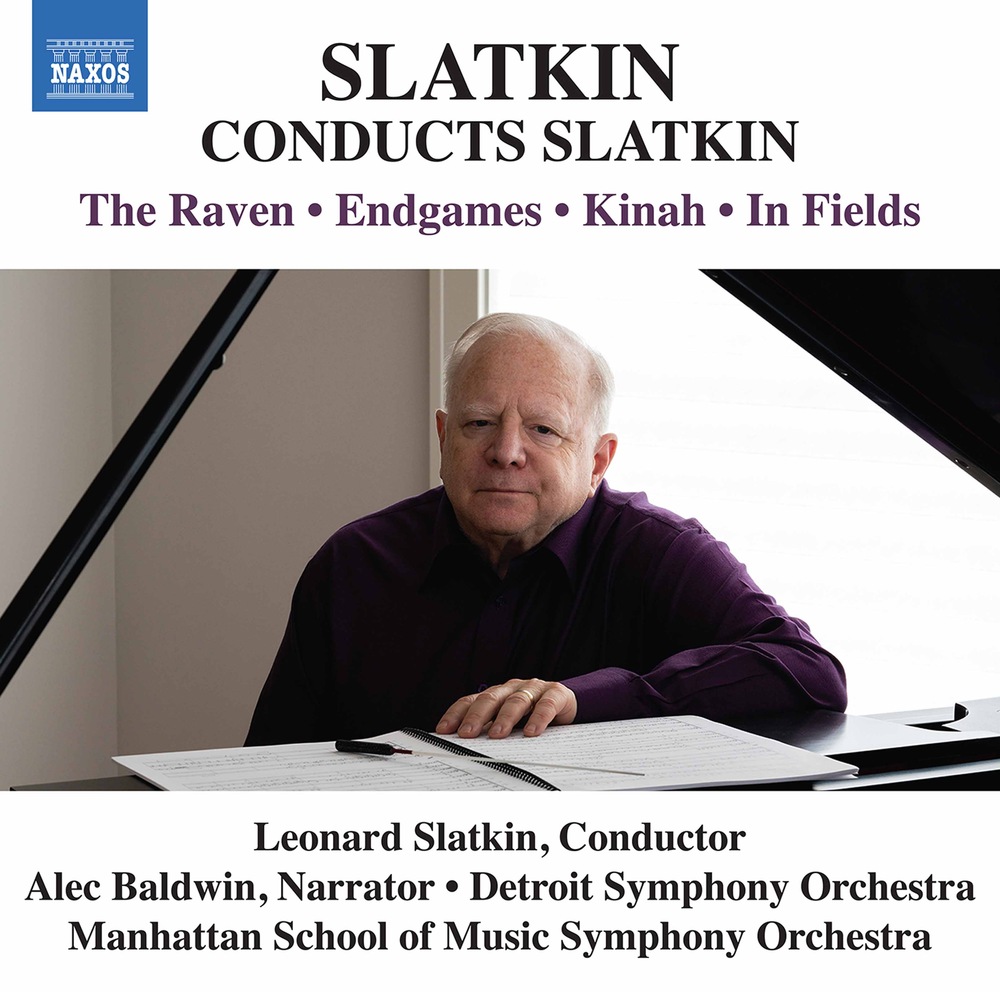
“Not many know that I have been active as a composer,” writes Leonard Slatkin, who here conducts three of his orchestral works.

Slatkin’s 13-minute Kinah (2015) pays tribute to his distinguished parents, violinist Felix Slatkin and cellist Eleanor Aller. In 1963, two days after they had rehearsed Brahms’ Double Concerto, Felix suddenly died. Kinah (Hebrew for elegy) features metallic chiming and a noble, long-lined string melody, ending with hushed, haunting, incomplete phrases from Brahms’ concerto. In this recording of its world premiere, Leonard’s brother Fred plays the solo part on their mother’s cello. 

Slatkin says that his 12-minute Endgames (2014) “celebrates the unsung instruments of the orchestra whose players sit at the far ends of the woodwind section.” Scored for piccolo, alto flute, English horn, E-flat clarinet, bass clarinet, contrabassoon and strings, it includes a cheerful, vigorous dance and a sweetly serene middle section, finishing with familiar quotations for each solo instrument, guaranteeing smiles of recognition from the audience. In the 26-minute The Raven (1971), atmospheric, cinematic background music accompanies Alec Baldwin’s recitation of five poems by Edgar Allan Poe.

This CD includes In Fields (2018), a nostalgic four-minute piece by Leonard’s son Daniel (b.1994), archival recordings of Felix playing arrangements of Brahms, Dvořák and Bizet, and a soundtrack excerpt from the 1946 film Deception, in which Aller, who premiered Korngold’s Cello Concerto, plays a bit of Haydn’s Cello Concerto in D Major, with Korngold conducting his newly composed cadenza for it!

20 Matthew SchreibeisMatthew Schreibeis – Sandburg Songs
Tony Arnold; Various Artists
Albany Records TROY1856 (albanyrecords.com)

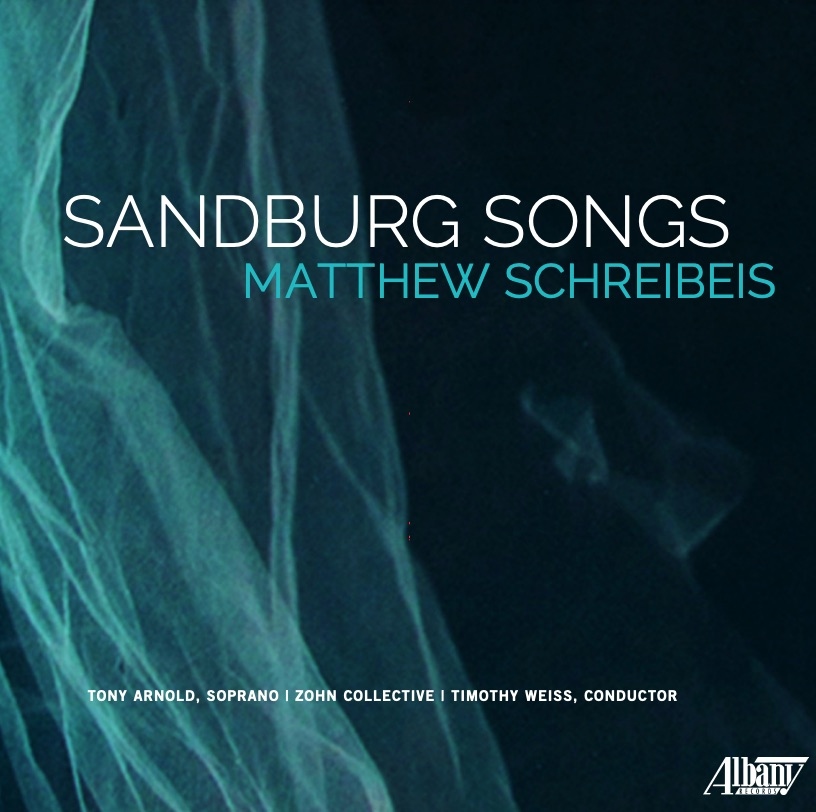
Hong Kong-based American composer Matthew Schreibeis’ elegantly urbane music seems eminently suited to capturing the pastoral imagery of Carl Sandburg’s poetry, which forms the second half (or so) of the repertoire of this album, Sandburg Songs

Schreibeis’ voice is unique. His songs appear to come from a pen dipped in the ink of Erik Satie and Alfred Schnittke. However, being his authentic self in all of this music, Schreibeis’ notes leap in divergent directions into a mysteriously poignant realm completely of his own creation. He is also stoically authentic to melodic and harmonic flights made in a spectral dimension not unlike Gérard Grisey.

The composer’s sound world seems to unfold in a series of moist landscapes that dissolve one into the other. His conceptions are extraordinarily vivid though, and he can conjure the reality of an extremely complex landscape with relatively spare noted phrases written for the piano or guitar as he does on the piece, Inner Truth and the cycle, They Say

The considerable range of his compositional palette is revealed twice on this recording. The curtain rises on the clarinet-violin duet Noticing and on In Search of Planet X, where a piano makes it a trio. Schreibeis’ power is unveiled on the fully orchestrated Sandburg Songs cycle, replete with piano, strings, reeds, woodwinds and percussion from the Zohn Collective conducted by Timothy Weiss. Carl Sandburg’s breathtaking verse soars in the keening soprano of Tony Arnold.

Listen to 'Matthew Schreibeis – Sandburg Songs' Now in the Listening Room

Editor’s note: Matthew Schreibeis was originally scheduled for a composer residency at the Faculty of Music, University of Toronto in this month but that has been postponed due to the Omicron variant. A new work for violin and vibraphone written for faculty members Mark Fewer and Aiyun Huang is now scheduled to have its premiere at the soundSCAPE Festival in Italy this July (soundscapefestival.org) where Fewer, Huang and Tony Arnold will be among the featured musicians. Schreibeis’ Toronto residency is tentatively planned to take place this fall.

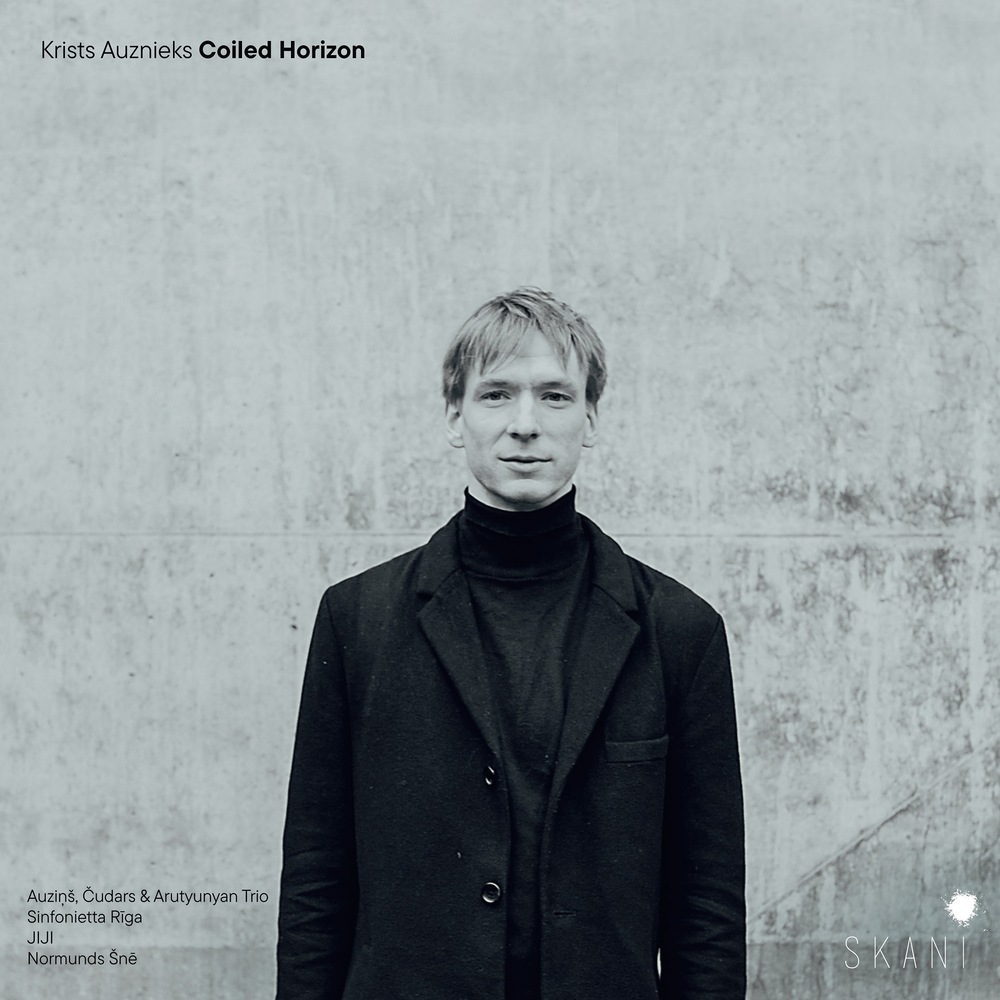
21 AuznieksKrists Auznieks – Coiled Horizon
Auziņš, Čudars, Arutyunyan Trio; JIJI Guitar; Sinfonietta Riga; Normunds Šnē
LMIC SKANI 091 (skani.lv)

The COVID-19 pandemic has brought unrest worldwide, with no country handling it the same. Canada has tended to err on the safer side, while the United States has largely thrown caution to the wind. Right in between these approaches, Europe has found a fascinating middle ground when it comes to maintaining arts and culture during turbulent times. 

The Sinfonietta Riga Chamber Orchestra of Latvia found themselves amidst this turmoil when attempting several times since 2020 to record exciting new guitar music by Krists Auznieks. Once the music was finally able to be performed live in 2021, the results became the album Coiled Horizons. It features two different approaches to the guitar: music for trio, performed by saxophonist Kārlis Auziņš, guitarist Matīss Čudars and the drumming/percussion of Ivars Arutyunyan, followed by an orchestral work that features the aforementioned Sinfonietta Riga Chamber Orchestra and classical virtuoso JIJI playing electric guitar. 

The album begins slow and ambient but draws the listener in immediately with a generous soundscape. Despite sounding like an adventurous jazz trio at first, Auziņš, Čudars and Arutyunyan wait until close to 20 minutes into the disc before providing something close to a “groove.” This makes for a beautiful transition into the album’s more classical sounding second half. 

The orchestral finale to this recording is a specimen to behold, fusing dense 20th-century composition with virtuosic guitar playing. No matter how ambient the first half gets, and however dense the second, this is a treat to listen to as foreground or background music.

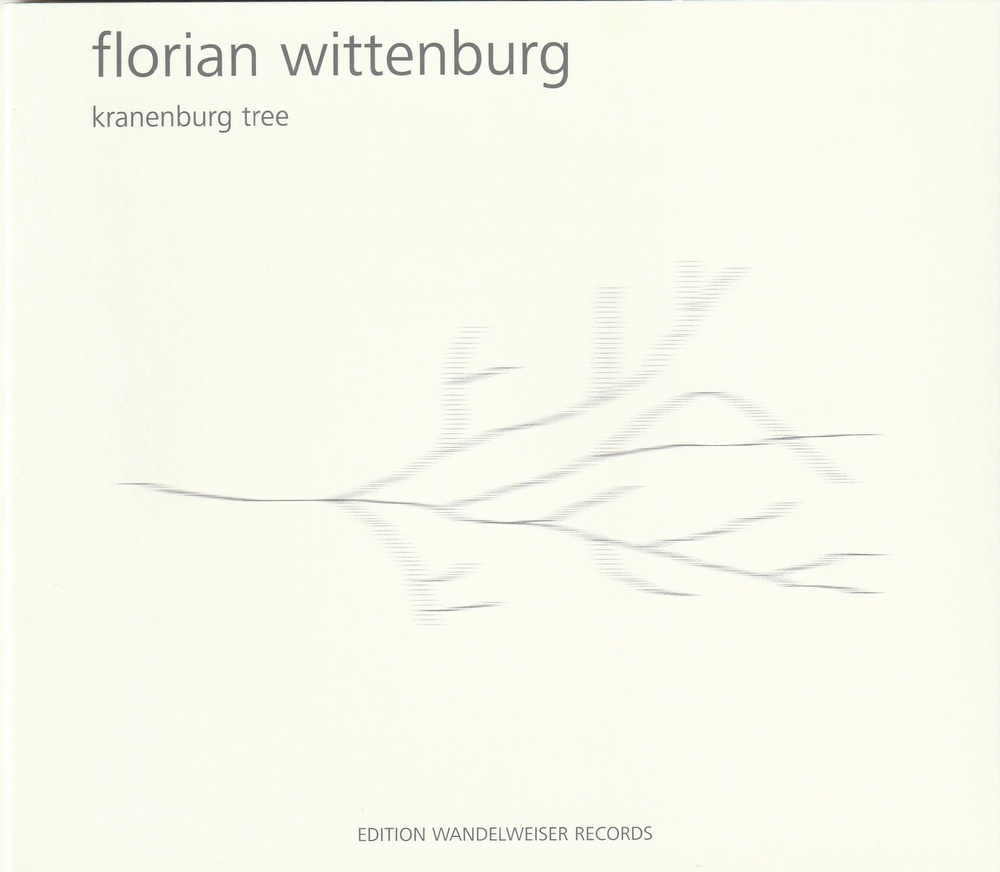
22 Florian WittenburgKranenburg Tree
Florian Wittenburg
Edition Wandelweiser Records EWR2104 (florianwittenburg.com)

German composer/musician Florian Wittenburg was musically inspired by a small tree at the former Kranenburg train station. He took a photograph of it and then used it as a template for sketches in the Metasynth software program, with which one can draw/paint music. The four resulting tree/branch drawings are the basis for this four-part ambient electronic music composition. 

Each kranenburg tree part is just over six minutes in length, and includes a calming connective drone sound Wittenburg describes as a “branch.” Part 1 opens with a long held colourful note that resonates throughout the part. A subsequent pulse, build in volume, additional notes and higher pitch is very engaging. More intense drone with pulse in Part 2, which builds with many held notes, until a totally unexpected sudden slide downwards to a single pulsing tone fade. Part 3 is dramatic as higher and lower drone pitches, washes and “crashing” drone cymbal-like sounds add texture until the closing sweeter drone fade. Part 4 opens with another held note from nowhere. Love the very high pitch drone above it and spacious sound effects, which disperse to a single note fade. Each part is separated by a one-minute track of reflective spacious silence. 

I understand Wittenburg’s musical inspiration here – since childhood I have loved sitting under trees and listening to them grow. This release is a great tree-listening addition. At under 30 minutes, it is short in length but multiple listenings will illuminate countless sweet electronic music moments.

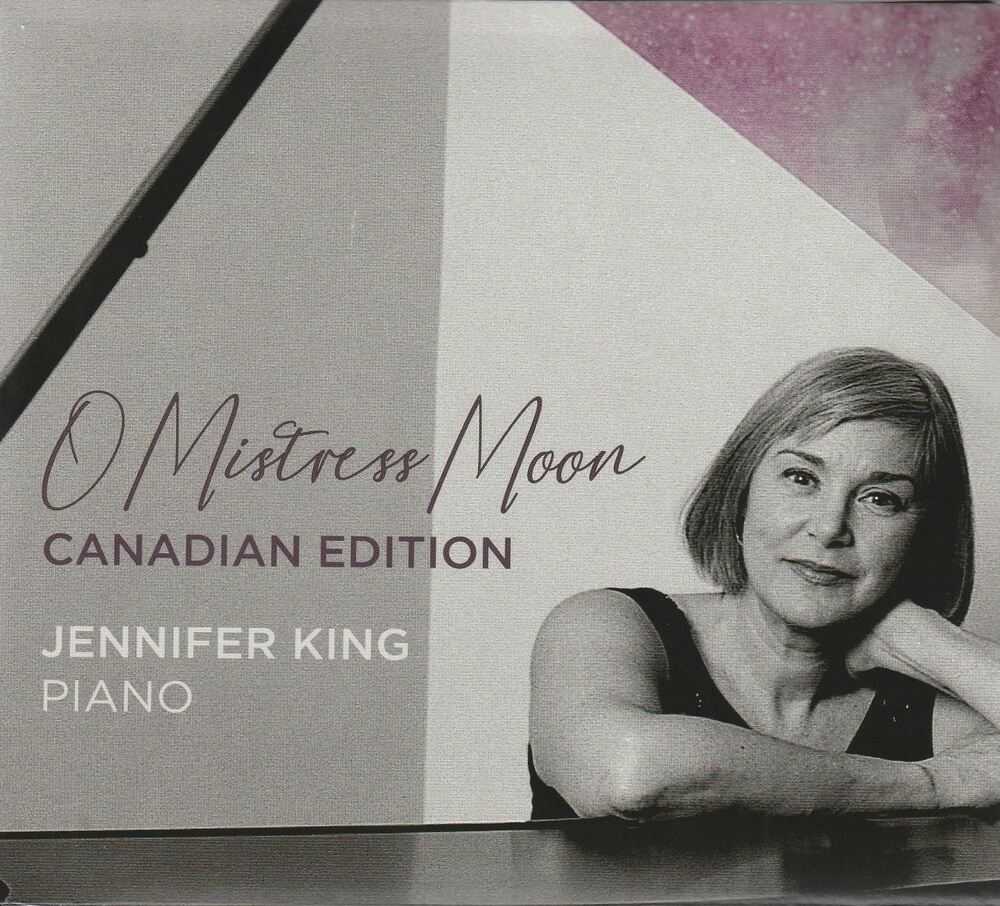
23 Jennifer King Mistress MoonO Mistress Moon – Canadian Edition
Jennifer King
Leaf Music LM245 (leaf-music.ca)

The moon is an ever-popular musical inspiration. Canadian pianist Jennifer King chose 12 solo piano works by six Canadian composers for their environmental relationship to the moon, night and outer space in this “Canadian version” sequel to her earlier recording. Each was released as a single to a monthly full-moon cycle related to folk and Mi’kmaq symbolism. Together, King’s self-described “musical meditative journey” takes off! 

Opening track, In the Falling Dark 1 by Derek Charke, sets the musical twilight moon stage with chorale opening, repeated notes, calming sparse parts and improvisations. Kevin Lau’s The Dreamer is an accessible mystical dreamworld soundscape held together by repeated E flat “heartbeat” notes. Sophie Carmen Eckhardt-Gramatté’s Nocturne shows off King’s expertise in playing an expressive Chopin/Schumann influenced work. Sandy Moore’s three Nocturnes combine classical and modern music. Nocturne 3’s lyrical opening makes for relaxing moon watching until lower pitches and fast lines build dramatic tension before returning to a hopeful reflective closing. 

Three Richard Gibson works include Espaces in which I love the outer space tranquility created silences interspersed by few notes, ringing strings and atonal moments. Emily Doolittle’s Gliese 581c looks at a planet from outer space with faster high and contrasting dark sounds. Short, crisp, sudden flash-freeze chords and slower frost forming overlapping patterns in Amy Brandon’s brilliant Frost Moon. Jean Coulthard’s Image Astrale is dramatic out of this world sonic listening featuring contrasting harmonic textures.

King’s sensitive performances make for moving moonlight listening.

Listen to 'O Mistress Moon' Now in the Listening Room

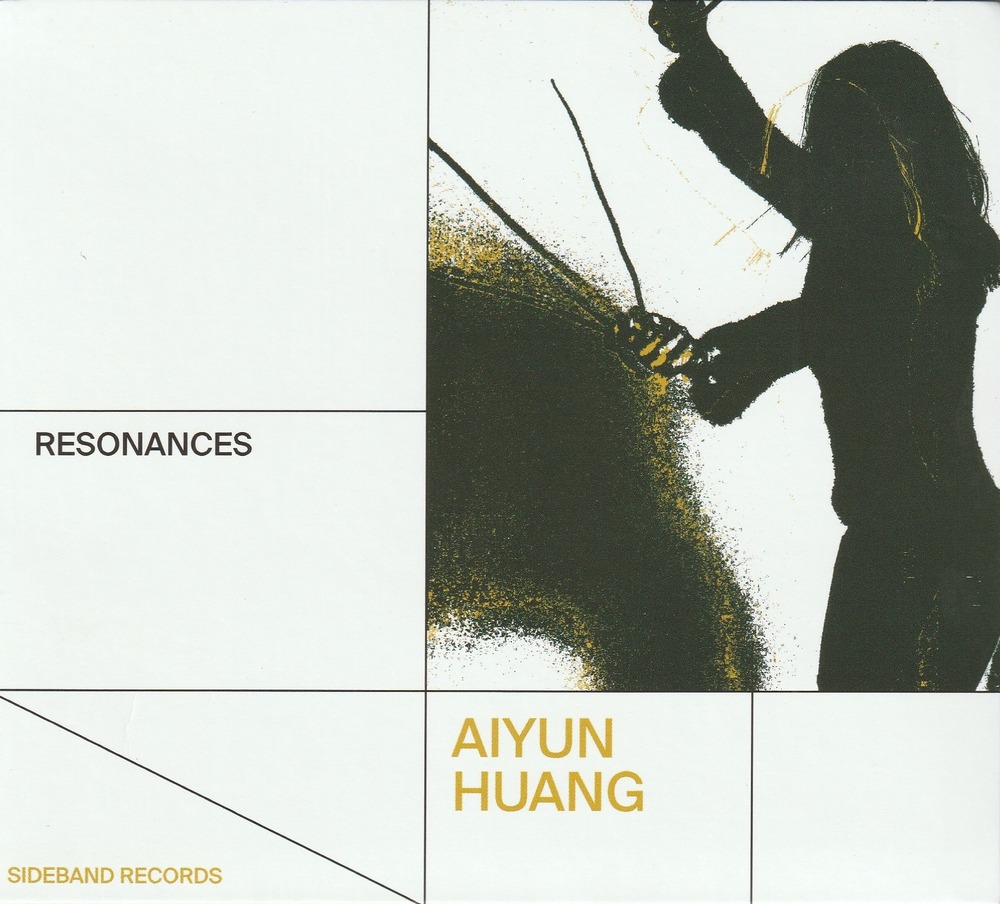
01 Aiyun HuangResonances
Aiyun Huang
Sideband Records 06 (sidebandrecords.com)

Virtuoso percussionist Aiyun Huang has recorded a selection of new works that challenge the performer in different ways. In each, the listener is immersed in varying intimate and unique sound worlds. In a piece titled Désastre, Inouk Demers produces a dreamy landscape that evokes slowly descending sonic blankets upon the watershed resonance of gongs and cymbals. This homogenous and enchanting piece creates a wondrous metallic stasis – fittingly so, as the work’s title suggests something falling from the stars. Chris Mercer’s Concerto Chamber places an acoustic guitar into the percussion setup and asks the percussionist to strike it with mallets, slides, rubber balls and a triangle beater. Mercer cleverly infuses his piece with these novel percussive guitar sounds amid a flurry of spellbinding auras that are highly impressive and otherworldly in their creative expanse. In Valerio Sannicandro’s Disentio (translated as “extension”), Huang exhibits her world-class command over the vibraphone in a piece full of expression and angular melodic leaps. Canadian composer Chris Paul Harman creates hypnotic intricacies in Verve – an evocative piece that spans the entire range and resonant capabilities of the marimba. The soloist must use their voice to execute percussive utterances that alternate with tambourine and drum punchiness. With each piece, Huang delivers a performance of the highest quality – a testament toward why she is among the leading percussion soloists of our time.

02 Soaring SpiritsSoaring Spirits
UBC Symphony Orchestra & Choirs; Jonathan Girard
Redshift Records TK492 (redshiftrecords.org)

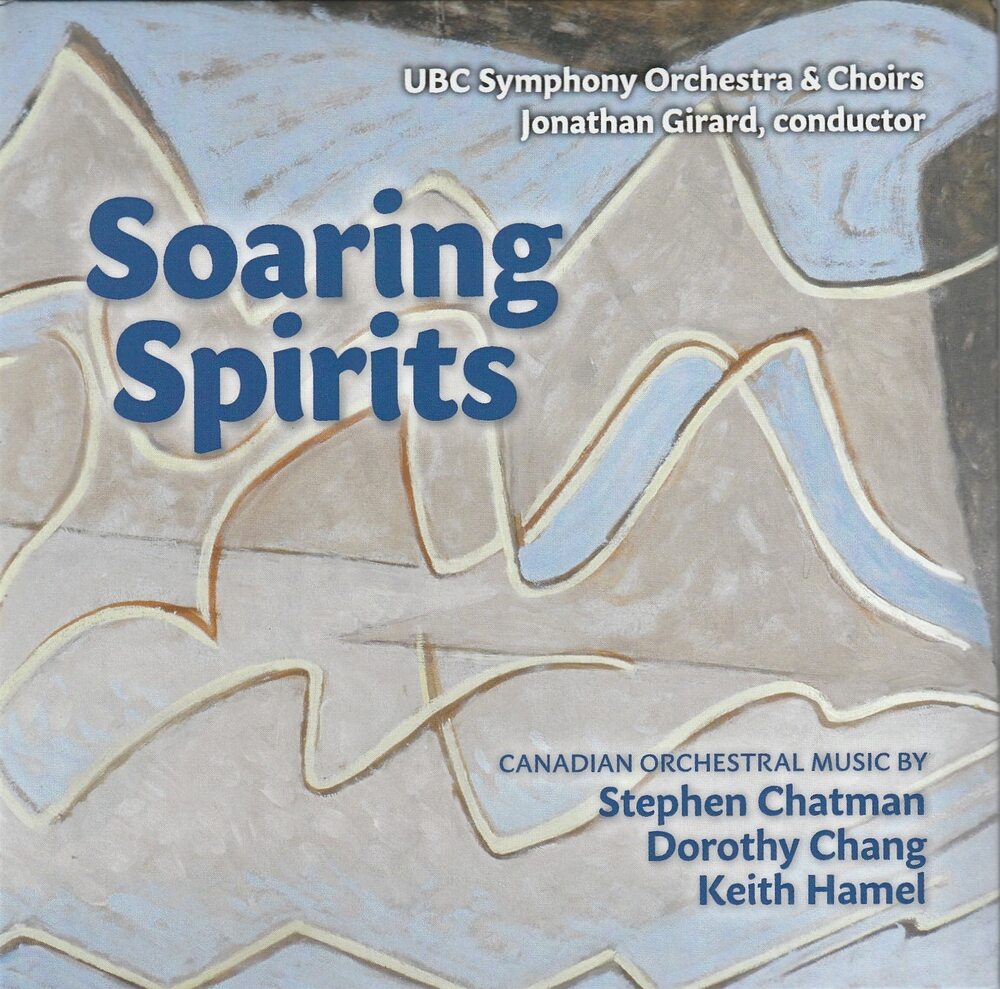
Jonathan Girard conducts the UBC Symphony Orchestra and Choirs in a release of newly recorded orchestral music by three of Canada’s most visible composers. Stephen Chatman’s A Song of Joys alternates between boisterous pulsations and tender interludes throughout its seven movements. The text is based on fragments of Whitman’s Leaves of Grass, and Chatman intended the work to be a companion piece to Beethoven’s monumental ninth symphony. The last movement builds to a resounding climax using the full power of the orchestra and choir. 

In Dorothy Chang’s Flight, the listener is introduced to a delicate and mysterious dream world amid darkened melodic enchantment produced by the solo flutist and supporting strings. The piece quickly takes a turn for the dramatic with raucous jabs and swirling gestures. Chang’s brilliant writing for the flute (performed by Paolo Bortolussi) and command over novel orchestral colours produces a deep artistic statement and significant contribution to the Canadian orchestral repertoire. 

Keith Hamel’s Overdrive is a ten-minute ride of intense orchestral fireworks. Enduring piano trajectories reinforce accented cross play and shimmering fissures throughout. Hamel creates a sense of temporal multiplicity that could easily be extended in a work of considerably increased length. The orchestra performs the demanding passages with a confident musicality – bringing to life what is clearly a gifted compositional voice. 

Under Girard’s baton the university orchestra delivers a recording of rather challenging repertoire with impressive musicality and a professional level of performance prowess.

03 Light Through DarkLight Through Dark
Bill Gilliam; Bill McBirnie; Eugene Martynec
Independent (gilliammcbirniemartynec.bandcamp.com/releases)

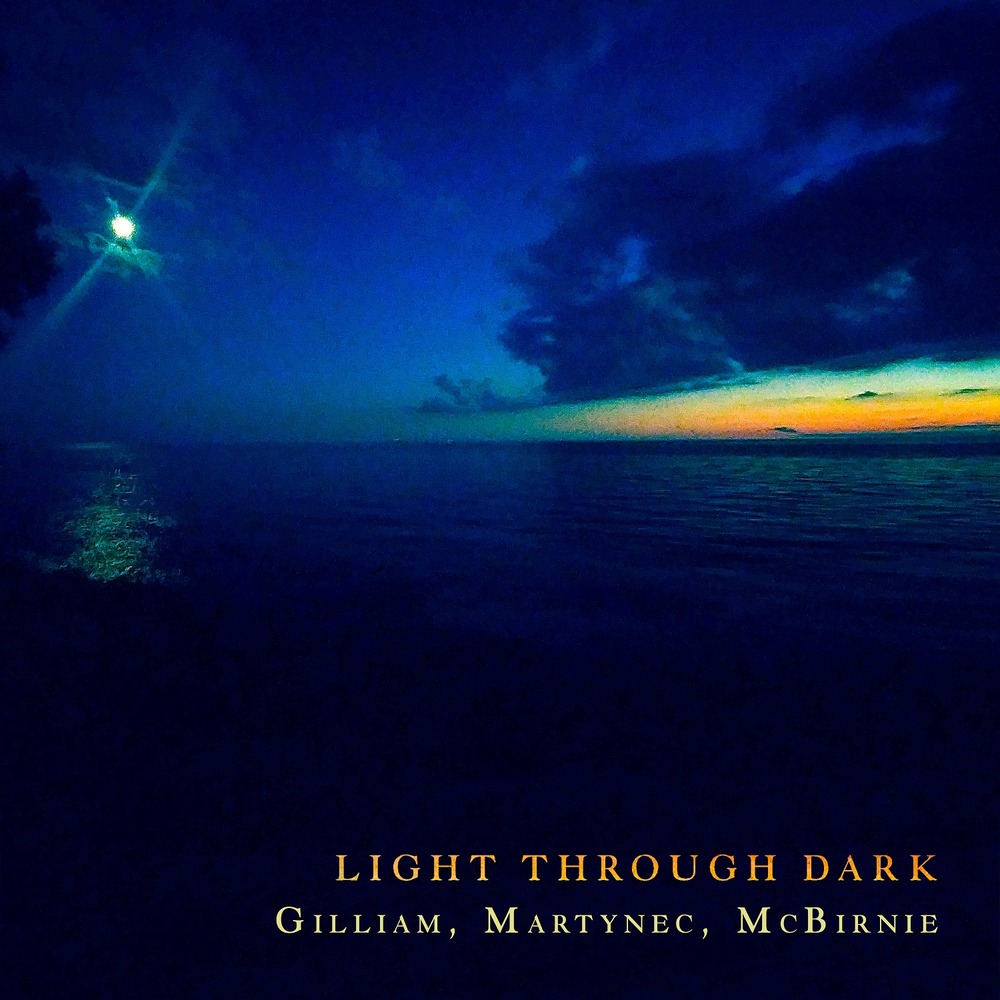
It’s clear from the first of the seven tracks of Light Through Dark that the Toronto trio of pianist Bill Gilliam, flutist Bill McBirnie and Eugene Martynec on electroacoustics possesses big ears and hearts. Each, however, has different roots. One of the city’s top jazz and Latin flute specialists, McBirnie is renowned for his outstanding technique as much as for exceptional improvising chops in bebop, swing and Latin idioms. Gilliam has been active in town since the 1980s as a composer and pianist exploring in his words the “boundaries between new music, improvisation, electroacoustic music and contemporary jazz.” Martynec on the other hand has been on the scene as guitarist and record producer for even longer. He’s mostly focused today on performing live interactive electroacoustic music with other improvisers. Both Gilliam and Martynec are core members of the Toronto Improvisers Orchestra.

The moody and languid opener Time Floats – Japanese Suite, Part 1 centres on McBirnie’s low metal alto flute melodies in which he tastefully introduces shakuhachi (Japanese bamboo flute) nuances into its warm breathy vibrato. Martynec chooses harp, koto and mbira-sounding timbres to weave around the flute throughline, while Gilliam complements with seamlessly effective keyboard work. 

The other two parts of the Japanese Suite, Icy Still and Crane Flight, continue the shakuhachi theme and sonic imagery. Collectively the trio’s music is inventive, technically adroit and elegant at the same time. Most of all, we can hear their “mutual fascination with the mystery of creating entirely spontaneous music,” as aptly stated in the liner notes.

04 Saman ShahiSaman Shahi – Microlocking
Various Artists
People Places Records (peopleplacesrecords.bandcamp.com)

Microlocking, a new release by the award-winning, Iranian-Canadian composer Saman Shahi, delves deeply into the world of microtonality. By locking in and interconnecting pitches, colours and layers of sound, he creates dialogues and open-ended statements that require an alert ear but inevitably include elements of beauty, even in the sometimes chaotic landscape.

Shahi keeps making surprising turns in his compositional career. His musical trajectory is firmly based in classical music but has included explorations of world music, rock and electronics, all featured on this album. The compositions are vibrant and compelling, especially in the way Shahi treats the solo instruments. Microlocking I, II and III have a distinct character, progressing from spacious to denser textures. Microlocking I, written for six digital pianos (three of which are tuned a quarter-tone sharp) mesmerizes with the constant ripples of ostinato sounds. The colours resulting from uneven pitches bring in the sense of the past, nostalgia. Microlocking II, on the other hand, is very much rooted in the present immediacy of the sound. Written for solo electric guitar, it is a dreamland of techniques and effects, and soloist Andrew Noseworthy pulls it off with flair. Microlocking III for solo accordion (Matti Pulkki) and electronics (Shahi) pushes the boundaries of the sound even further, as if imagining the sound of the future. The surprising but fitting conclusion comes in the form of a remix of Microlocking I by electronic music producer Behrooz Zandi, binding together the aspects of Shahi’s music – the expressiveness and probing sonority, wrapped up in minimalism.

05 Flute in the WildFlute in the Wild
Jaye Marsh; Darren Hicks; Heidi Elise Bearcroft; Andrew Morris; John Rice; Christina Marie Faye; Richard Herriott
Centrediscs CMCCD 28921 (cmccanada.org/product-category/recordings/centrediscs)

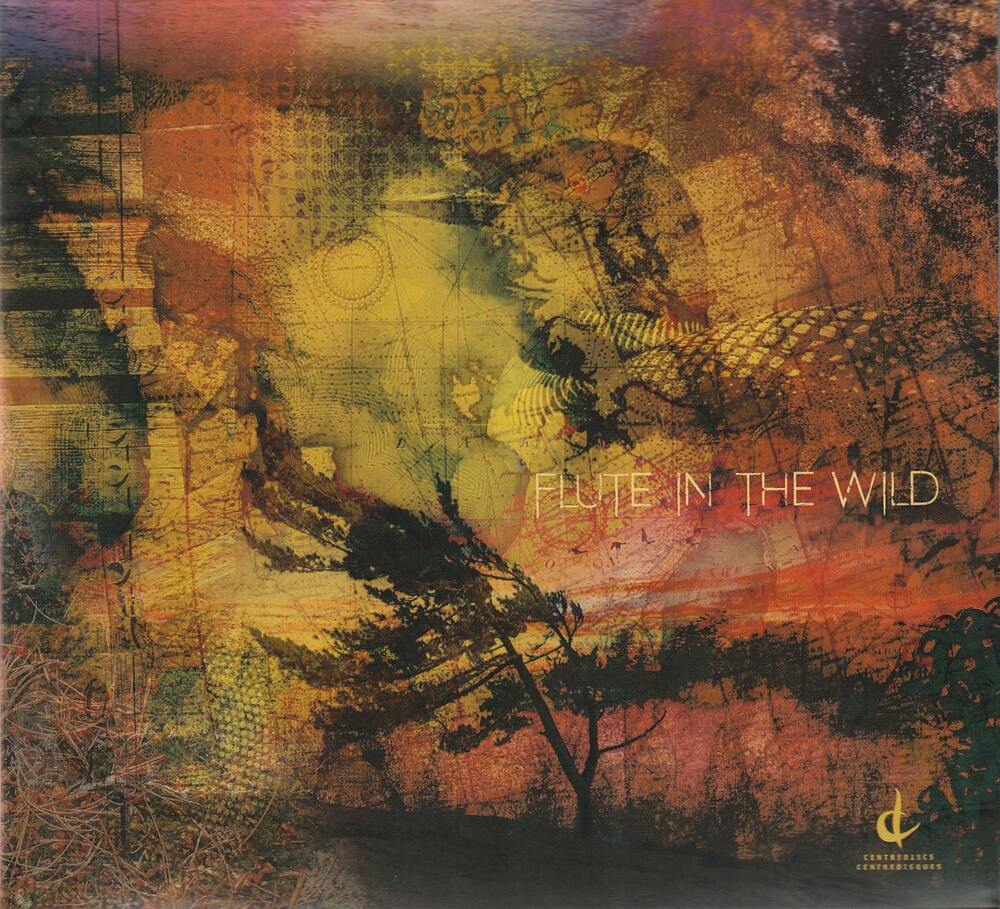
A solo flute in lofty, avian dialogue with recorded loon calls: this CD’s opener, Diane Berry’s five-minute Calling (2013), inspired Ontario-based flutist Jaye Marsh to ask three friends “to express their experience of our shared landscapes” for her debut disc, producing four works completed in 2021.

Two are by the well-established Elizabeth Raum. In her 16-minute Northern Lights, flute, harp (Heidi Elise Bearcroft) and percussion (Andrew Morris) generate phosphorescent sonorities mirroring the aurora’s ephemeral, glittering pulsations before fading into afterimages. Bassoonist Darren Hicks joins Marsh and Bearcroft in the sweetly nostalgic, 17-minute Bridal Veil Falls, five movements illuminating sonic snapshots from Raum’s childhood visit to Manitoulin Island: A Walk along the Path, Morning Rain, Mist over the Falls, Porcupines (delightfully gawky music!) and Kagawong River.

Narrator John Rice, a Wasauksing First Nation elder, tells of traditional harvests, songs and dances in Richard Mascall’s five-movement, 23-minute Niibin (Summer) but the music, for flute and piano (Christina Marie Faye) seems bland and understated; I miss the character and energy that made Mascall’s earlier Georgian Bay Symphony commission Manitoulin, which also incorporated Indigenous melodies and rhythms, so powerfully stirring.

Virtuoso pianist Richard Herriott accompanies Marsh’s alto flute in his five-minute Twilight Song of Trinity Bay that “reveals,” writes Herriott, “a lonely church…at fog-ridden twilight.” The flute’s drifting, searching melodies, underlined by the piano’s bell-like tolling and rippling arpeggios, immediately transported me to a Newfoundland coastline, remote and shrouded. 

Kudos to fine flutist Jaye Marsh for this (mostly) enchanting CD!

06 BlackwoodLost and Found
Blackwood
Leaf Music SCCD n006 (leaf-music.ca)

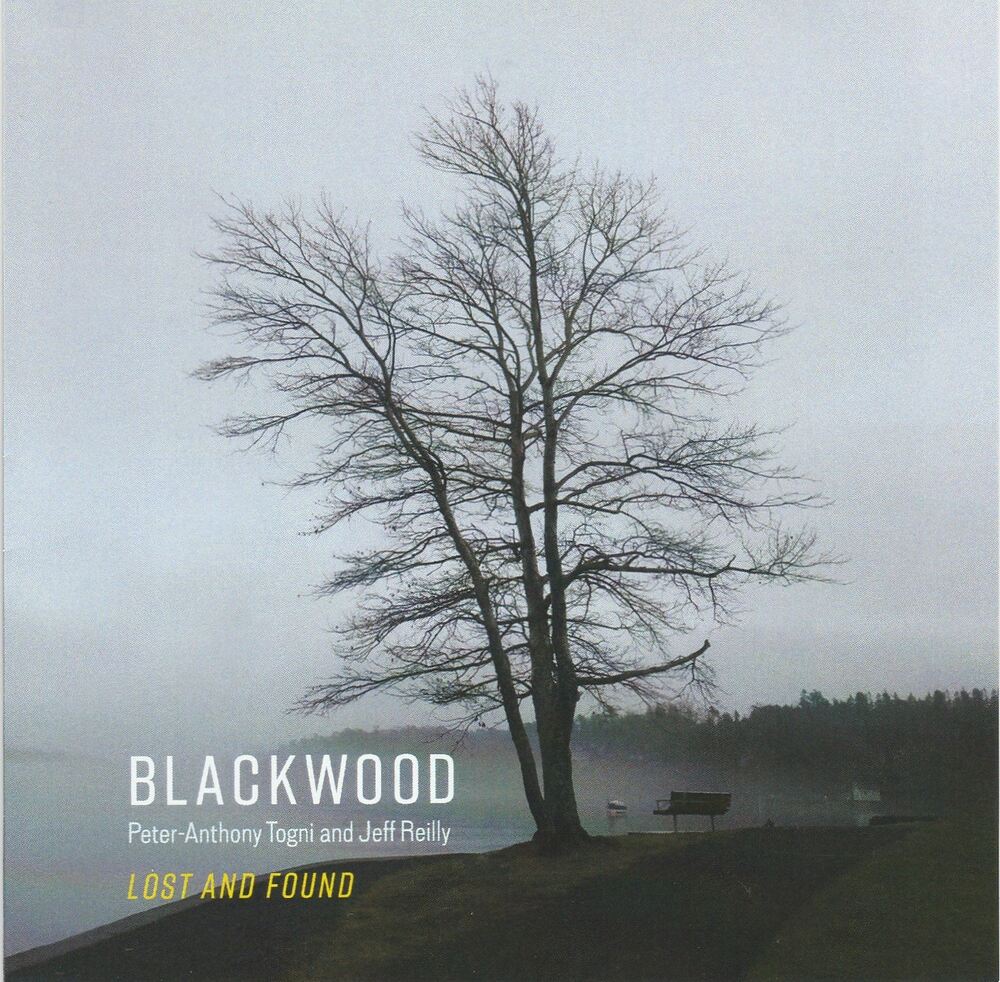
The last piece on Lost and Found is titled Welcome, Peter-Anthony Togni’s attractive slow jazz number. But here, I’ll use that title to segue into comments: this disc of compositions by Togni and Jeff Reilly is indeed welcome; and as the debut release of the Blackwood Duo –Reilly, bass clarinet and Togni, piano – it is most welcome, one of the best things I heard in 2021. Ave Verum by Togni and Reilly is remarkable for the bass clarinetist’s rich sound in the low register, followed by wide registral leaps and dives, and soft non-vibrato tones fading into overt key clicks. Togni’s evocative piano joins the lower instrument with a chant passage in the male voice register. Recorded effectively at the reverberant Trinity St.-Stephen’s church in Amherst, Nova Scotia by engineer Rod Sneddon, it gives me an impression of unmeasured vastness. 

In Reilly’s much different title track, Lost and Found, his clarinet opens expressively, taking off with virtuosic runs, trills, sharp attacks and crescendos or diminuendos while the piano repeats chords suggestive of jazz. His humorous self-describing Suddenly, Snow begins with both instruments in a wild staccato passage, after which the piano’s running bass and comping coincide with an extremely agile bass clarinet; this piece reminds me that brevity is a feature in the pacing and texturing of this disc’s eight works. In contrast, Reilly’s To Dream of Silence opens with long tones in both instruments, including exquisitely controlled pianissimos. Bravo!

07 Louise BessettePort of Call: Curaçao
Louise Bessette
Analekta AN 2 9845 (analekta.com/en)

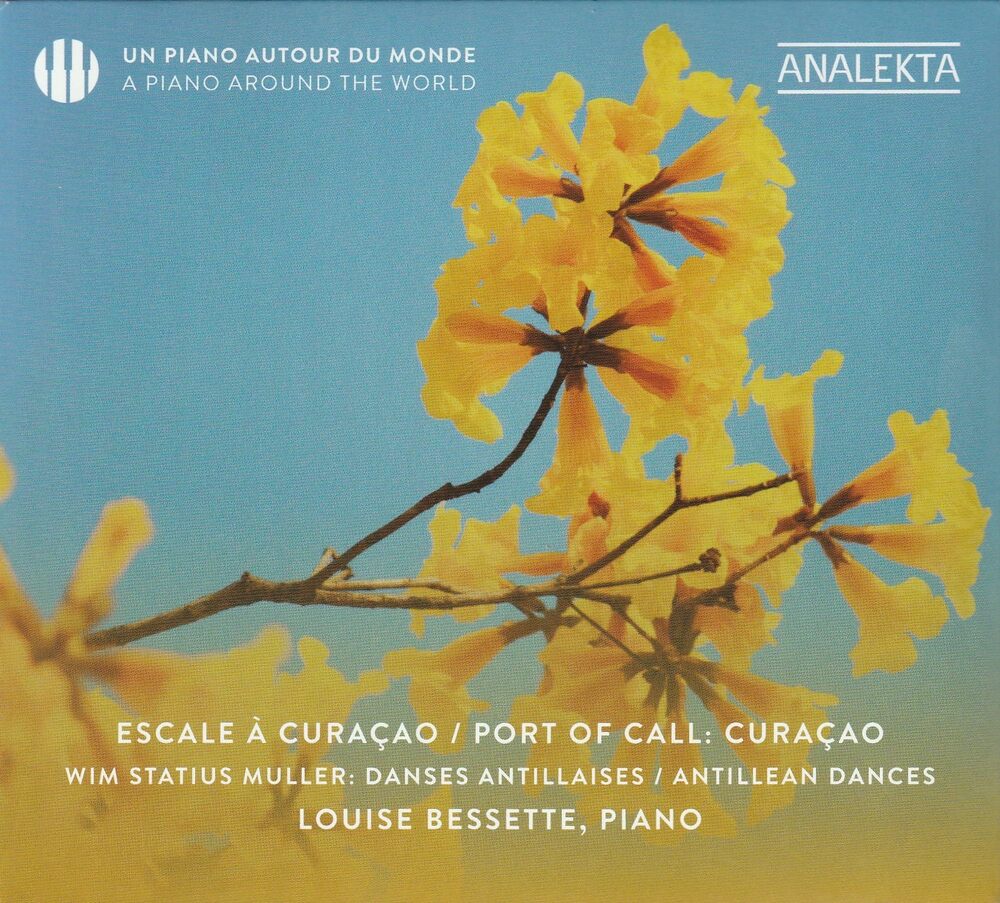
Acclaimed Canadian pianist Louise Bessette launches her admirable new recording series of solo piano works, A Piano Around the World. Here, in Port of Call: Curaçao, she is the first to record these 22 pieces from Antillean Dances composed by Curaçao composer/pianist Wim Statius Muller (1930-2019), nicknamed the Chopin of Curaçao. After studies at Juilliard and teaching at Ohio State University, Muller worked over 30 years at security and counterespionage, returning to Curaçao and music after his retirement!

Muller’s music resonates and combines influences of Caribbean folk music and Chopin, whose music was introduced to Curaçao in the Netherlands Antilles in the 19th century. Opening track Tumba di Johan Op.2 No.1 is a mix of classical and popular as Bessette’s controlled playing with rubato, left-hand rhythms and right-hand melodies create a dance feeling. Piet Maal –Valse Op.2 No.13 is a more Chopin-like waltz performed with melodic subtle colour shifts, clear phrasing and balance between the hands, as is Muller’s renowned romantic Nostalgia – Valse Op.2 No.22. Bessette plays the more dance-along South American sounds with perfection, like in Kalin-Tumba Op.2 No.19, reminiscent of Piazzolla, and faster modern Chuchubi – À la rumba Op.4 No.5.

Bessette must be commended for taking on such a complex illustrious solo project. Her world-class virtuosic playing and understanding of classical and folk styles, clear production values and order of tracks bring uplifting sonorities and lasting vitality to Muller’s wide-ranging piano works.

Back to top