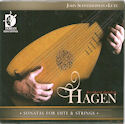
02_hagenBernhard Joachim Hagen - Sonatas for Lute and Strings

John Schneiderman;

Elizabeth Blumenstock; William Skeen

Dorian Sono Luminus DSL-90907

buy
@Grigorian.Com

Though he spent his professional life as a violinist employed by the Margrave of Brandenburg-Bayreuth, Bernhard Joachim Hagen was also a lutenist of the first order. But as this CD’s notes suggest, he may well have thought himself an anachronism by the time he died in 1787, so moribund was the lute by that time. Hagen left behind a number of works for the lute, all of which are found in a collection of manuscripts now preserved in Augsburg. This disc offers up his six sonatas for lute, violin and cello, performed by three celebrated specialists from the USA.

These are Rococo trio sonatas, with expertly balanced parts for the violin and lute and a continuo-esque line for the cello. From the cheerful and careful opening Allegro of the F major sonata through the remaining three-movement sonatas, the transparent texture and melodic delicacy of Hagen’s writing is sensitively performed. And though some of the slow movements lack musical depth, their refined delicacy is expertly expressed.

Schneiderman, Blumenstock and Skeen play with grace, poise and sensitive attention to even the smallest details, and the intimacy of this repertoire is immediately apparent here. This is a charming glimpse into the very late life of the Baroque lute, a generation after the great Silvius Leopold Weiss, and Hagen could ask for no better champions of his music.

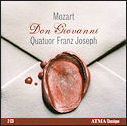
03_mozart_donMozart - Don Giovanni

Quatuor Franz Joseph

ATMA ACD2 2559

This 2-CD set gives us a fascinating example of musical transcriptions at the end of the 18th century. Montreal’s Quatuor Franz Joseph, using period instruments, specializes in works from that era, and here they perform Mozart’s wonderful 1787 opera in an almost complete - although unfortunately anonymous - transcription for string quartet published by Simrock of Bonn around 1798.

Transcriptions of popular works were extremely common, being the only way the music could be enjoyed away from the theatre or concert salon; Don Giovanni, for instance, spawned almost 600 various arrangements in the century following its premiere.

Questions arise, of course: Is it necessary to record the whole opera? Does it work? Is it boring? Well, Yes; Yes; and No. This is a genuine 18th century work of very high quality, and there would be little point in excerpting it. There is a transparency to the sound that allows all the vocal lines to be clearly heard, and as these are cleverly woven through the score there is no sense of “melody with accompaniment”. Sure, you lose the fullness of the voices and orchestra, but the richness of the part-writing belies the number of players, and, as the excellent booklet notes point out, the arrangement seems to bring out the purely musical aspect of the work without overly affecting its dramatic qualities.

And boring? - even at over 60 minutes per disc, this outstanding performance simply flies by!

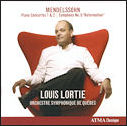
04_mendelssohnMendelssohn - Piano Concertos 1 & 2; Symphony No.5

Louis Lortie; Orchestre Symphonique de Quebec

ATMA ACD2 2617

buy
@Grigorian.Com

To mark the 200th anniversary of the birth of Felix Mendelssohn ATMA has released a disc featuring both of his piano concertos and the Symphony No. 5 - the “Reformation”, with the Québec Symphony Orchestra and Louis Lortie, as both soloist and conductor. Lortie has come a long way since his fine debut recording of the complete Chopin Etudes on the Chandos label in 1989. Now recognized as one of the world’s foremost pianists, he is as comfortable with conducting from the keyboard as he is with performing, as this disc clearly demonstrates.

Mendelssohn composed his two piano concertos seven years apart, the first in 1830 while in Italy (completing it in Germany), and the second in England, shortly after his marriage to Cécile Jeanrenaud. While the second is perhaps more serious in tone, both have many similarities – brisk solo passages requiring considerable dexterity, lyrical slow movements, and an overall sense of fine craftsmanship. Not surprisingly, Lortie rises to the challenges admirably, and together with the OSQ, both concertos are performed with great panache. This is indeed a most conducive pairing of soloist and orchestra.

Mendelssohn’s Symphony No. 5 was completed in 1830, honouring the 300th anniversary of the Lutheran faith. Under Lortie’s competent baton, the OSQ again treats the music with the respect it deserves, achieving a grand and noble sound. While the second movement was taken at a brisker pace than I would have liked, it certainly didn’t detract from this most satisfying performance. So to all concerned - félicitations on some fine music-making!

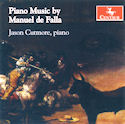
05_de_fallaPiano Music by Manuel de Falla

Jason Cutmore

Centaur CRC 2952

(www.JasonCutmore.com)

Pianist Jason Cutmore displays stellar star quality as he performs the piano music of Manuel de Falla. Falla’s compositional output may be described as prolific. His style embraces a wide range of sources, both in melody and harmony, but it is always Spanish in its roots. He wrote specifically for the piano but also arranged some of his other instrumental works for the keyboard. Both genres are represented here.

Two transcriptions are exceptionally noteworthy. Originally scored for chamber orchestra, El amor brujo is technically not as demanding as the other tracks but the folksy Spanish gypsy dance qualities are glorious. From the pantomime El Sombrero de Tres Picos, the piano transcription musically evokes the anger and the frustration of the upset Miller in its guitar-like passages and tumultuous chords. Cutmore plays with a passion and understanding that is never trite.

Of the original piano works, Fantasia Baetica is breathtaking in its compositional and performance values. Originally written for Artur Rubenstein, here is a really virtuosic gem. Cutmore proves that he is a master technical wizard as he seamlessly plays with a clear vision of colour, sound and rhythm.

Jason Cutmore understands de Falla’s piano music, making this an intelligent, musical and enjoyable listening experience.

Concert note: Jason Cutmore performs music of de Falla, Soler and Poulenc for the Kitchener-Waterloo Chamber Music Society on November 1.

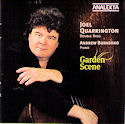
06_quarringtonGarden Scene

Joel Quarrington; Andrew Burashko

Analekta AN 2 9931

This astounding new album from Canada’s premiere bass player Joel Quarrington is proof positive that the rarely-heard, husky voice of the double bass is indeed capable of the expressive cantilena we normally associate with the cello. This is partially accounted for by the fact that Quarrington tunes his double bass in perfect fifths (an octave lower than the cello) rather than the customary fourths, with a consequent enhancement of the instrument’s acoustics, but it is the sheer musicality of his playing that really wins the day. He is ideally partnered here by his long-time friend and sympathizer Andrew Burashko.

The album includes transcriptions of works by Korngold (the title track) and Henri Casadesus (a transposed version of his faux-classical Viola Concerto In the Style of J.C. Bach). Actual bass pieces include the celebrated Elegy in D major by the 19th century bass virtuoso Giovanni Bottesini and a slew of sugary bon-bons commissioned by Serge Koussevitsky from Reinhold Glière. Following this pleasant onslaught of bel canto salon music comes the real find, a powerful, world premiere recording of the remarkable Sonata for Solo Bass composed in 1971 by the prolific Soviet composer Mieczyslaw Weinberg. The first-class acoustics of the album were produced by Toronto jazz bassist Roberto Occhipinti. An extended podcast preview of this recording and related Quarrington interviews are available from Peter Jones’ web site at doublebasscast.com.

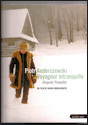
04_anderszewskiPiotr Anderszewski - Unquiet Traveller
Bruno Monsaingeon
Medici Arts 3077938
buy
@Grigorian.Com

Voyageur intranquille, Unquiet Traveller, opens with pianist Piotr Anderszewski boarding the train that, by choice, will be his home, complete with grand piano and a kitchen, until the end of this tour. So begins the documentary of an extraordinary musical figure.

During this winter’s journey across Poland we will listen in on his conversations about musical aesthetics, love, and the composers for whom he has a special affinity. He speaks about his personal journey and the decisions that have led him to this point in his life.

His profound favourite composer is Mozart and he is delighted to vocalise passages from The Magic Flute, reducing the orchestral accompaniment to some basic keyboard figures. We also hear him in various venues across Europe playing Bach, Chopin, Szymanowski, Beethoven, Brahms, and Schumann. The film ends with a most affectionate tribute to Lisbon, now his home.

Anderszewski has the rare gift of sharing every performance with his audience, conveyed by his sincere, overflowing personality. Incidentally, he plays only works he likes!

Born in Warsaw in 1969, Anderszewski is a pianist with ample technique and an intriguing personal philosophy, proof that there is true musical force in his generation.

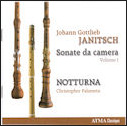
01_janitschJohann Gottlieb Janitsch
Sonate da camera Volume 1
Notturna; Christopher Palameta
ATMA ACD2 2993

For all his militarism, Prussia’s Frederick the Great supported composers who left their mark on music; the role of J.J. Quantz in developing the modern flute comes to mind. Frederick’s most senior musicians included Johann Gottlieb Janitsch whose manuscripts were stored at the Berlin Singakademie; World War Two (when the Singakademie was plundered) deprived us of many of Janitsch’s works.

Twenty-seven quadro sonatas did survive. Christopher Palameta brings us five; that in G Minor (O Haupt voll Blut und Wunden) takes precedence and with good reason. The opening bars of the Largo are at once celestial and solemn; the all-but-forgotten Janitsch is no composer of dull chamber music.

Throughout the recording Palameta’s passion for the oboe is clear. Two of the three used are copies of contemporary oboes from Leipzig, one from Saxony. Both oboists in Notturna rise masterfully to the varied and demanding challenges of the Allegro in the C Minor Sonata Op 4.

It would be wrong to ignore the contribution of the strings to this recording. Janitsch was fond of using the viola which he selects slightly more frequently in his sonatas than either the flute or the violin. Two violas certainly add a slightly darker quality to the Vivace of the Sonata in E Minor Op 5B.

Through his own inspirational direction Palameta has literally revived Janitsch’s music; three of these five sonatas are recorded here for the first time ever.

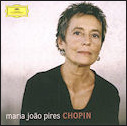
02_piresChopin
Maria João Pires
Deutsche Grammophon 477 7483
buy
@Grigorian.Com

Nothing but good can be said about this set issued by DGG to celebrate Maria João Pires’ 20 years with the Gesellschaft and entirely devoted to Chopin. Now in her sixties, this rather elusive artist, inspiring teacher and ardent philanthropist has avoided the trimmings of easy fame and the nowadays so prevalent jet-setting. Even on this disc, instead of just playing “popular pieces” she focuses on Chopin’s last five years, beginning with the Third Sonata and ending with his ultimate work, the Mazurka in f minor.

Chopin as we know died very young, at age 39 and his last years were plagued with illness, an unhappy love affair and other pressures. Although already the most original innovator for the piano, by extending the keyboard to its full length and making new harmonies using the enharmonic scales and chromaticism, in his last years he even tried to break out of this bond by rejecting the tonal centre entirely. In this respect he was paving the way to Debussy and Scriabin. The 3rd sonata is “profoundly chaotic and using an energy towards an entirely new logic” (Pires). Her playing, with the beautifully seductive expression of the 2nd theme of the opening movement, the filigree dexterity of the Scherzo, the heartrendingly delicate Lento and the emotionally turbulent, exhausting Finale, makes it the most momentous performance on the disc.

The very complex Polonaise Fantasie is another example of this “new logic” that seems to go in many directions, but with the pulsating, syncopated and sometimes barely present dance tempo solidly maintained she holds the piece triumphantly together. There is also a curiosity, the Cello Sonata (with Pavel Gomziakov), and a number of Mazurkas, Nocturnes and Waltzes to round out the disc, among them the Minute Waltz played in just under 2 minutes!

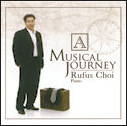
03_rufus_choiA Musical Journey
Rufus Choi
Cambria CD-1188

An eclectic program of piano music played by the Korean-American pianist Rufus Choi is featured on this Cambria label CD, music described in the notes by the artist as “in the grand romantic style”. Choi is a graduate of both the Juilliard School and the Musik Hochschule in Hanover, Germany. He was a first prize winner at the inaugural Jose Iturbi International Music Competition in Los Angeles in 2007.

The disc opens with Four Chorale Preludes by Bach as arranged by Ferruccio Busoni. These are tasteful adaptations - indeed, Busoni was a brilliant arranger, and the pieces sound as convincing for solo keyboard as they do for chorus. Yet as successful as Choi is at capturing the mood of noble grandeur, I have the impression that he is more at home with the type of piece that follows - the Rachmaninoff Piano Sonata #2 from 1913. This is music of exceptional difficulty, requiring formidable technique. Happily, Choi rises to the challenge admirably, tossing off the difficulties with apparent ease, while at the same time, approaching the quieter, more introspective passages with great sensitivity.

Admittedly, I’ve never been a big fan of Liszt’s transcriptions of music by other composers – too much tinsel and glitter, and often too many notes! Having said that, there are two such compositions featured here, a piece by Chopin titled Meine Freuden from his Chants Polonais Op.74, and Schumann’s popular Widmung. Once again, Choi seems in his element, both in these and in the concluding work, the famous Liszt Hungarian Rhapsody No, 2, a technical tour de force. Here he pulls out all the stops, and delivers an impressive performance, in true command of the music at all times. A most satisfying musical journey indeed, by a young artist on the threshold of a promising career.

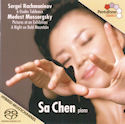
05_sa_chenRachmaninov - 6 Etudes;
Mussorgsky - Pictures at an Exhibition;
A Night on Bald Mountain
Sa Chen
PentaTone PTC 5186 355
buy
@Grigorian.Com

The name of pianist Sa Chen is perhaps unfamiliar to most music-lovers today, but will undoubtedly become more famous in years or even months to come, judging from the prodigious talents exhibited on this new SACD of Russian music on the PentaTone label. Born in Chongqing, China, Sa Chen began her musical studies at the Sichuan Conservatory, and she later continued at London’s Guildhall School and the Hochschule für Musik in Hanover. Although she has been the recipient of prizes from age 14 onward, it was at the International Chopin Competition in 2000 and later at the Van Cliburn Competition, that her reputation was secured. A critic once wrote: “Fleet- fingered pianists are a dime a dozen today – where are the musicians?” From the haunting opening measures of the Rachmaninoff Etude-Tableau Op.33 No.2, it’s clear that Sa Chen is a musician of the first-rank, one who combines a flawless technique with an innate musicality. She presents 6 Etudes in all, drawn from Opp.33 and 39, and throughout, her playing is marked by a delicacy of shading with never a moment of bravura for its own sake.

As equally demanding as the Etudes-Tableaux is A Night on Bald Mountain, Modest Mussorgsky’s first major work for orchestra - a tale of spirits, witchcraft, and bells tolling at dawn, a sort of 19th century Thriller, 90 years before Michael Jackson. The piano transcription is as difficult as it sounds, and Sa Chen approaches the music with a splendid panache. Nevertheless, in my opinion, she leaves the best until last, with Mussorgsky’s Pictures at an Exhibition from 1874. Inspired by a group of paintings by Victor Hartmann, the work encompasses a myriad of contrasting moods, and Sa Chen captures them all effortlessly, thereby bringing to a close this most satisfying disc.

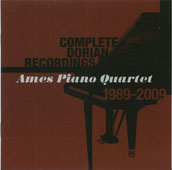
06_ames_piano_quartetComplete Dorian Recordings 1989-2009
Ames Piano Quartet
Dorian Sono Luminus DSL-90908
buy
@Grigorian.Com

Founded in Ames, Iowa, in 1976, and currently the resident chamber music ensemble at Iowa State University, the Ames is that rarity in the chamber music world - a designated and permanent piano quartet. Only pianist William David remains from the original line-up, but with just one personnel change in the past 20 years the group’s unanimity of thought and interpretation is very evident.

Apart from three CDs of 20th-century works on the Albany label, the Ames has recorded almost exclusively for Dorian, with a repertoire of French, German, Czech and Russian piano quartets from the Romantic era through the mid-1900s. All 7 Dorian CDs are included in this box set, together with a bonus CD of the Chausson and Saint-Saëns quartets originally issued by the Musical Heritage Society in 1989.

The Dorian discs cover the three Brahms piano quartets, the two by both Fauré and Dvorak, and the single opuses of Schumann, Richard Strauss, Widor, Taneyev, Paul Juon, Suk, Novak and Martinu. An effective arrangement of Borodin’s Polovetsian Dances by Iowa State alumnus Geoffrey Wilcken completes the Russian CD, although it’s completely ignored in the otherwise comprehensive booklet notes.

Recording dates are not listed, but despite the 20-year span there is a remarkable consistency in the exceptionally high performance level, as indeed there is in the sound of the recordings themselves, which are always warm, resonant and beautifully balanced. At under $50, this is an outstanding set.

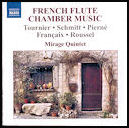
04_french_flute_chamberFrench Flute Chamber Music
Mirage Quintet
Naxos 8.570444

I’m not sure how “real” the Mirage Quintet is – a quick Google of the name reveals no references to concerts performed anywhere, and the ensemble’s discography seems to consist entirely of this recording.

But never mind. Even if the group is just a mirage, its players are all fine musicians: Canada’s reigning flutist, Robert Aitken; leading studio musician and Aitken’s long-time recital partner, harpist Erica Goodman; violinist Jacques Israelievitch, recently retired as concertmaster of the Toronto Symphony Orchestra; and violist Teng Li and cellist Winona Zelenka, both current principals of that orchestra.

The music is also quite fine: several works are thoroughly impressionistic in style, others are touched with neo-classicism, but all are very French. CD collectors shouldn’t be discouraged if some of the early 20th-century compositions recorded here are unfamiliar.

Marcel Tournier was himself a harpist, as his lush writing for the instrument suggests. But his Op.34 Suite isn’t just a showpiece for the harp; it’s true chamber music, with a sophisticated interplay of instrumental forces. I particularly like the way the Mirage players dig into the final movement’s big, emphatic chords with an expansive sweep.

Similarly, Florent Schmitt’s Suite en rocaille Op. 84 is an elegant work – although there’s an edgy urgency in the second and fourth movements. And Gabriel Pierné’s Variations libres et finale derives an archaic quality from the composer’s use of the Lydian mode. Jean Françaix’s Quintette is a charming piece; and so is Roussel’s Sérénade Op. 30, although its instrumental effects and harmonic leanings also give it a quirky, modernist quality.

This isn’t the deepest music ever written – it’s a little too suave to be profound. But it is enjoyable, and very well performed.

Colin Eatock

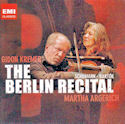
03_berlin_recitalThe Berlin Recital
Gidon Kremer; Martha Argerich
EMI Classics 6 93999 2

The first thing that strikes you about this 2CD set, recorded in concert at the Berlin Philharmonie in December 2006, is the obvious disparity between the two featured composers, Schumann and Bartok. The links suggested in the booklet notes - two pianist-composers who wrote for every musical genre and were both interested in musical education - are unconvincing and tenuous at best, but what does make these two an interesting pairing is not their supposed similarities but their clear and contrasting differences.

Each is represented by a sonata for violin and piano - No.2 of Schumann, No.1 of Bartok - and a solo work - Bartok’s solo violin sonata for Kremer and Schumann’s Kinderszenen for Argerich.

The duo works could not be more different in sound or style, with Schumann’s conservative approach treating the somewhat subdued violin as part of the overall texture, while Bartok treats the two instruments independently, making great technical demands of the players. Kremer and Argerich have been performing together for many years (they recorded the Schumann sonatas for DGG in 1986) and it shows - they clearly think and feel as one.

The solo works, too, are simply light years apart. Both receive outstanding performances here, but Kremer’s stunning playing in the fiendishly difficult Bartok really steals the show.

Audience presence is apparent before and after each work, but thankfully never for a moment during the performances.

Two Kreisler encores, Liebeslied and Schon Rosmarin, round out this attractively-priced set.

Terry Robbins

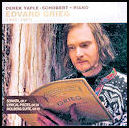
02_grieg_pianoGrieg - Sonata; Lyrical Pieces;

Holberg Suite
Derek Yaple-Schobert
XXI XXI-CD 2 1604

Claude Debussy once referred to the piano music of Edvard Grieg as “pink bon bons filled with snow.” Today this seems an unkind description, for generations of pianists have delighted in these small gems (myself included), and rightly so – Grieg was a supreme miniaturist, easily capturing a wide range of moods on a small canvas.

This new CD featuring pianist Derek Yaple-Schobert on the XXI label, is a delight, and offers a thoughtfully-chosen program of Grieg’s piano music, ranging from the familiar to the less well-known. A native of Montreal, Yaple-Schobert (who bears an eerie physical resemblance to the young Grieg himself) has long had an affinity with music by Nordic composers, having studied in both Denmark and Sweden. Here, he opens not with one of the small pieces, but with Grieg’s Sonata in E minor, an early work from 1865. The playing is confident and boldly self-assured, as befits the impassioned mood of the music. More lyrical – and certainly more familiar – are Shepherd Boy and Notturno from the Six Lyrical Pieces Op.54 (the entire set is included) which Yaple-Schobert treats with great finesse. By contrast, the March of the Trolls, a quick-paced rustic dance with its ostinato rhythms provides him an opportunity to demonstrate an impressive technique.

One of Grieg’s most familiar and popular pieces, the Holberg Suite has been heard so often in its version for string orchestra that we tend to forget that it originally began as a solo piano piece. In Yaple-Schobert’s capable hands, the neo-Baroque spirit comes through admirably, and from the beginning, he has no trouble in convincing us that this music is as well suited to the solo keyboard as it is to a string orchestra. So I would say gratulerer (congratulations) to Mr. Yaple-Schobert on a fine recording. Bon bons filled with snow? I think not!

Richard Haskell

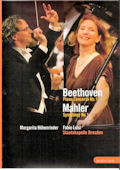
01_Mahler_BeethovenBeethoven - Piano Concerto No.1;

Mahler - Symphony No.1

Margarita Höhenrieder; Staatskapelle Dresden; Fabio Luisi

EuroArts DVD 2057718

Margarita Höhenrieder is one of those artists who have the personality, intellect and intellectual insight to enhance a sparkling performance. Her playing has refreshing spontaneity and contagious enthusiasm to spare. Not to mention her absolute technical command. Listening to and watching her play the concerto on this disc is a great treat to the extent that I have enjoyed playing it several times over the past week and shall do so again next week. After years of hearing this concerto, my favourite of the five, I find this performance to be refreshing and newly enjoyable throughout. Luisi and his orchestra are inspired to be on the same wavelength.

Luisi took over the Dresden opera in 2004 and the orchestra 2007. The Staatskapelle Dresden is now among the handful of greatest orchestras around. The Mahler First, another long-time favourite, is given a powerful performance that is delivered with uncommon simplicity. What initially seems to be a low key approach is in fact a great Mahlerian triumph with a coda that must be seen and heard to be believed. Impeccable timing and phrasing are trademarks of this conductor as witness his recordings with the MDR Orchestra of several Mahler symphonies and recently the major symphonic works of Richard Strauss with the Staatskapelle Dresden on RCA.

These performances were recorded live in the Philharmonie in Gasteig, Munich on April 9, 2008. Enthusiastically recommended.

Bruce Surtees


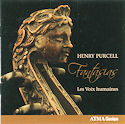
01_purcell_les_voix_humans Purcell - Fantasias

Les Voix Humaines

ATMA ACD2 2591


Henry Purcell composed his fifteen Fantasias and In nomines just after becoming the organist at Westminster Abbey. Composed for consorts of three to seven viols, they are remarkable in their contrapuntal fluidity and surprising in their occasional dissonance in even modern day terms. They are played with acuity and sensitivity here by the gifted Montreal viol ensemble, Les Voix Humaines, on historic instruments with a local connection.


Here's a bit of background on the instruments themselves. The Hart House Viols are one of so many hidden treasures lurking in the corners of Toronto buildings. Purchased by the Massey Foundation in 1929, Vincent Massey had the set of viols housed at U of T's Hart House and in 1935 they became the property of that illustrious institution. In 2008, in a stroke of musical brilliance, Susie Napper and Les Voix Humaines had the viols refurbished to playing condition for this wonderful release.


This winning combination of compositions, instruments and performers is breathtaking. Of note is Fantasia V in Bb major Z.736 for its twists of rhythm and tempo. In Fantasia IX in a minor Z.740 the aural colours are subtle and intriguing, especially in the slower sections. The treble viol holds middle C throughout the Fantasia upon one note in F major, Z. 745 creating a sonic foundation for the other viols to play around - a kind of early music forerunner of Terry Riley's In C.


Les Voix Humaines prove themselves yet again to be world class musicians. This is a very enjoyable musical experience.

Tiina Kiik
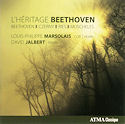
 

02_beethoven_horn 


The Beethoven Heritage (Romantic music for horn)

Louis-Philippe Marsolais; David Jalbert

ATMA ACD2 2952


The French horn probably isn't the first instrument that springs to mind when you think of solo sonatas with keyboard accompaniment, but this fascinating CD features duo works from a pivotal period - both physically and musically - in that instrument's history.


The hand-stopped natural horn was gradually replaced by the valve horn from about 1813 on, and the works here reflect the changes that were occurring in the instrument's solo repertoire around the same time.


Beethoven wrote his Op.17 F major sonata for one of the greatest natural horn virtuosi, Giovanni Punto, in Vienna in 1800; it was a significant event, as sonatas were new ground for an instrument traditionally featured as a soloist only in concertos.


The three other composers represented here were all pianist friends of Beethoven. Ferdinand Ries' Sonata in F was inspired by an 1811 visit to Kassel, home of the horn virtuosi Schunk brothers; Carl Czerny's Andante e polacca for natural horn was probably written for Eugene Vivier's Vienna visit in 1848, Czerny having written a work for valve horn some 18 years earlier. Both of Ignaz Moscheles' works for horn and piano are here: the Introduction et Rondeau Ecossais from 1821; and the Rossini-inspired Thème varié of 1860.


Performing these works on a modern horn, Louis-Philippe Marsolais shows complete mastery of a notoriously difficult instrument, leaving nothing to be desired in his technical assuredness, dynamic range, tone quality and expressive nuance. Pianist David Jalbert provides outstanding support. 

Terry Robbins
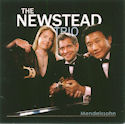
 

03_mendelssohn_trios 


Mendelssohn - Piano Trios

Newstead Trio

Prince Productions Prince 9809 P

www.newsteadtrio.com


To date, the Newstead Trio has released five CDs, mostly for the small Prince label, based in Lancaster, Pennsylvania. Consisting of American violinist Michael Jamanis, Canadian cellist Sara Male and Chinese pianist Xun Pan, the group's recorded repertoire has ranged from Mozart to Piazzolla.


Just in time for Mendelssohn's 200th birthday, they've released a disc of the composer's two piano trios. This is well-trodden ground: the Beaux Arts, Florestan, Borodin and many other fine groups have recorded this repertoire - and in the face of such abundance the value of this recording is questionable. On the other hand, it can be argued that it's brave and admirable for a yet another ensemble to record such well known repertoire, as it invites comparison with the best.


With this in mind, I'm happy to say that with this new disc, the Newstead musicians have clearly demonstrated they can play this music as well as anyone. From the opening of the Op. 49 Trio in D Minor, it's apparent that they're at home with both the Classical and Romantic qualities that co-habit Mendelssohn's scores. Balance and ensemble are exemplary, and throughout the playing is marked by a strong sense of direction. Some of the most expressive playing on this disc can be heard in the second movement of the Op. 66 Trio in C Minor, which for some unfathomable reason remains the lesser known of these two works.


Unfortunately, there are a few flies in this ointment: a boomy murkiness in the bass, and also at times a glassy quality to Male's cello. Still, there's much to be admired - and the question of whether the world wants one more disc of the Mendelssohn trios will be answered soon enough by the CD-buying public. 

Colin Eatock
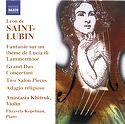


04_saint-lubin Leon de Saint-Lubin - Virtuoso Works for Violin, Vol.1

Anastasia Khitruk; Elizaveta Kopelman

Naxos 8.572019


Although born in Italy, the now-forgotten 19th century violin virtuoso and composer Leon de Saint-Lubin spent virtually all of his life in Austria and Germany, enjoying a highly successful career in Vienna and in Berlin, where he died at the age of 44 in 1850. His works mirror a period when German music was developing from the Classical to the Romantic style: there are echoes of Beethoven here, along with touches of Schubert, Mendelssohn and Spohr, and even hints of early Brahms.


It's difficult to make a definitive judgement from a few selected works - he also left unpublished operas, symphonies and concertos - but clearly Saint-Lubin was not only an outstanding violinist but also a more than competent composer, highly-regarded in his time and obviously capable of some excellent piano writing.


Khitruk is brilliant throughout this stunning CD, particularly in the unaccompanied Lucia di Lammermoor Fantaisie Op.46 and the Thalberg Theme and Etude transcription, and has a sympathetic partner in Kopelman in the duo selections.


A very few Saint-Lubin pieces have been recorded before, with mixed opinions regarding their merit, but nothing on this scale; I found it an absolute revelation.


The CD cover implies that this is only Volume 1, suggesting more to come; there are, apparently, five unpublished Saint-Lubin violin concertos - now there's a project!


Recorded in Newmarket and the CBC's Glenn Gould Studio by the usual Kraft & Silver team, the sound quality is exemplary.


Terry Robbins


Back to top