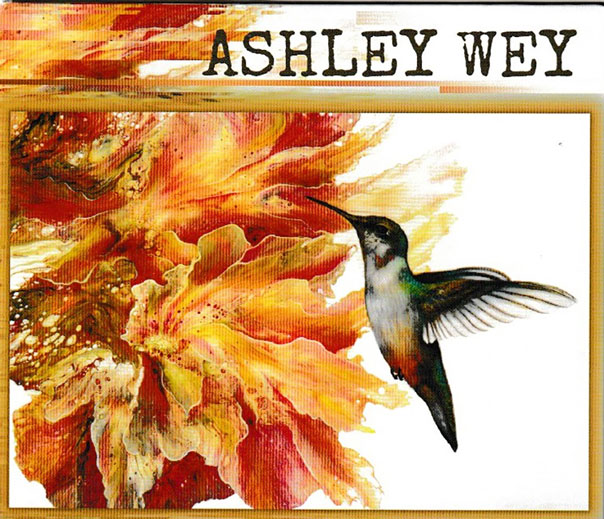
10 Ashley WeyHummingbird
Ashley Wey
Independent (ashleywey.bandcamp.com/album/hummingbird)

When pianist, vocalist and composer Ashley Wey opened for the great Lisa Fischer (of Rolling Stones and 20 Feet From Stardom fame) in Wey’s hometown of Victoria in 2018, she wrote a song for the occasion, inspired and actually titled by Fischer! Thus, Hummingbird became the name of both the album and title track of Wey’s most recent release. It’s also her first to feature mostly original music (written over a 15-year period).

Wey is an “uncategorisable” artist who, while firmly grounded in the jazz tradition, is equally at home in the worlds of alternative folk and indie pop – “genre-blending,” rather than genre-bending. I had the pleasure of hearing Wey perform live in Victoria this past spring, at Superior Jazz, a project by Victoria-based jazz vocalist, Heather Ferguson (whose debut album I reviewed in the Feb/Mar 2023 WholeNote). Wey impressed me with her versatility, generosity, energy and playfulness, qualities, along with some of that genre-blending, apparent throughout the album.

An overriding feeling of expansiveness repeatedly came up for me in listening to Hummingbird. It’s there, in abundance, in the title track, as well as in other instrumental tracks, Sterioso, Initially and Finally and Destiny – a lovely, fluid, Metheny-esque expansiveness that I found beautifully compelling. 

Along with her solid piano work were Wey’s breezily playful vocals on that old nugget, Just Squeeze Me. I could “hear” her smiling! 

Joining Wey are her longtime trio collaborators, Louis Rudner on bass and drummer Nicholas Bracewell, both masterful. Hummingbird will indeed leave you humming.
11 Josh ColeKind Mind
Josh Cole; Karen Ng; Michael Davidson
Cassiar Records CR02 (cassiarrecords.bandcamp.com)

Through much of jazz history, from New Orleans beginnings to free jazz, the music’s shifting character has been defined by relationships between formal structure and improvisation. In recent years that has changed, with some individual musicians embracing everything from completely composed to through-improvised forms. What distinguishes Josh Cole’s Kind Mind is not its place on the spectrum but the rough division into those extremes. 

Kind Mind, both CD title and band name, is bassist/composer Cole’s trio with Karen Ng (alto saxophone, clarinet and synthesizer) and Michael Davidson (vibraphone, marimba and pedals). That attention to sonic variety extends to Cole’s sampler, field recordings and synthesizer. Of 11 tracks on a concise 38-minute CD, six are credited to Cole, five to the three trio members. Those credited to Cole emphasize overlapping melodic gestures spread among Cole, Ng and Davidson. The effect is both lyric and timeless, almost ambient, made by instrumental sounds as engaging as you might hear, all apparent in Cole’s opening The Subway with Ng largely reconfiguring melodic content. Next up, talking makes it worse, credited to all three musicians, is taut free improvisation, marked by Cole’s scratching pizzicato and the flow of passionate saxophone and abstract vibraphone. In two tracks, totalling just 6’30” Kind Mind has constructed two different musical worlds, with several more to come. 

With some variations that pattern repeats, but with some looping and extensive field recordings enriching the experience, becoming increasingly hypnotic. The dilemma for the reviewer? I found I could listen to it forever.

12 Andrew RathbunThe Speed of Time
Andrew Rathbun; Gary Versace; John Hebert; Tom Rainey
Steeple Chase SCCD 31950 (andrewrathbun.com)

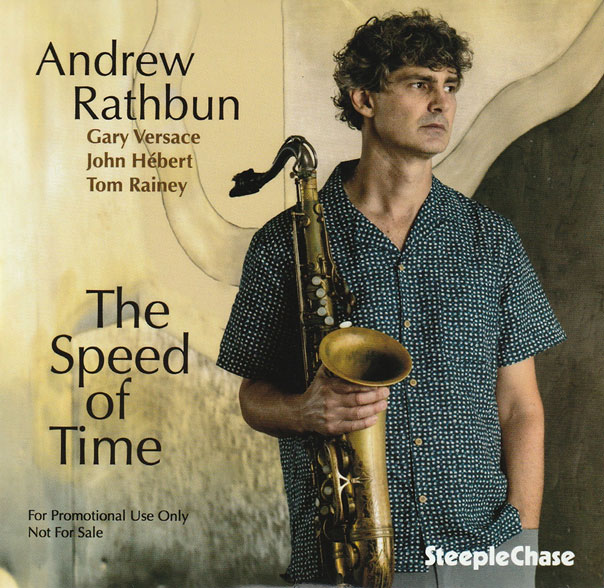
Andrew Rathbun is a saxophone player and composer who grew up in Toronto, earned a Master’s from the New England Conservatory in Boston and a PhD in Jazz Arts from the Manhattan School of Music. His compositions and performances have appeared on his own and others’ albums for over 20 years. Rathbun states that the works on The Speed of Time are «all connected with how the world has unfolded over the past few years» and are «influenced by the strange fluctuations» of his «perception of time during that period.» 

The Speed of Time offers pieces that are both sophisticated and funky. For example, the title composition has a very grooving piano ostinato that leads to a melodically complex saxophone line; the solos swing while also showing a strong intellectual component. Rathbun has a forceful and urgent tone on tenor sax that is not overblown. Widen the Doorway injects some great sax harmonies to add colour and contains vibrant sax and drum solo work. Rathbun’s soprano sax on Wandering is clear and beautiful. He cites Wayne Shorter as an influence but on Velocity Unknown I also hear the playful lyricism of Steve Lacy. The Speed of Time is an excellent album greatly aided by the subtle and fiery musicianship of Rathbun, Gary Versace (piano) and Tom Rainey (drums).

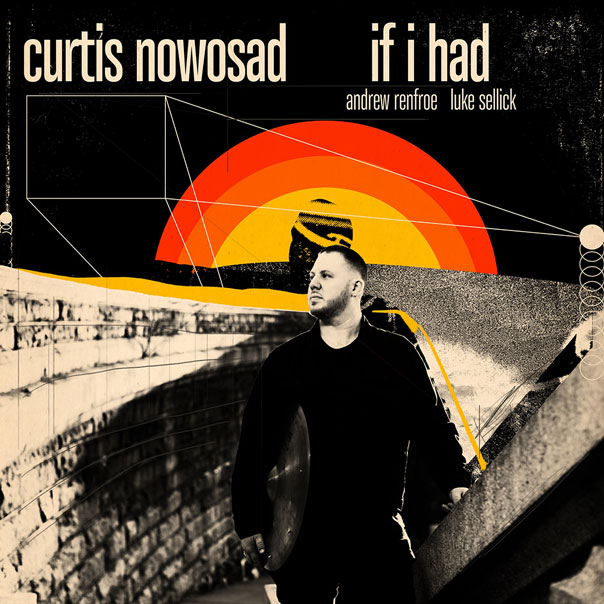
13 Curtis Nowosad If I HadIf I Had
Curtis Nowosad; Andrew Renfroe; Luke Sellick
Independent (curtisnowosad.com)

Curtis Nowosad, a drummer and composer born in Winnipeg and currently living in New York City, released his first album in 2019. In my WholeNote review of this eponymously titled work I stated its choice of covers such as Gil Scott-Heron’s Home Is Where the Hatred Is and Nina Simone’s Sea Line Woman combined “socially conscious history with assured jazz performances.” 

Nowosad has now released an EP called If I Had containing covers of four songs by Nick Drake (Road), Pete Seeger (If I Had a Hammer), Jimmy Webb (By the Time I Get to Phoenix) and Stevie Wonder (Heaven is 10 Zillion Light Years Away). These choices follow his tradition of mixing great classic songs with ones that are socially conscious. It is a pleasure to listen to these interpretations: Andrew Renfew’s guitar work is gorgeous and really shines on Phoenix while Luke Sellick (bass) and Nowosad (drums) offer complex and solid backing. Nowosad throws in seemingly effortless fills while keeping a solid and funky groove.

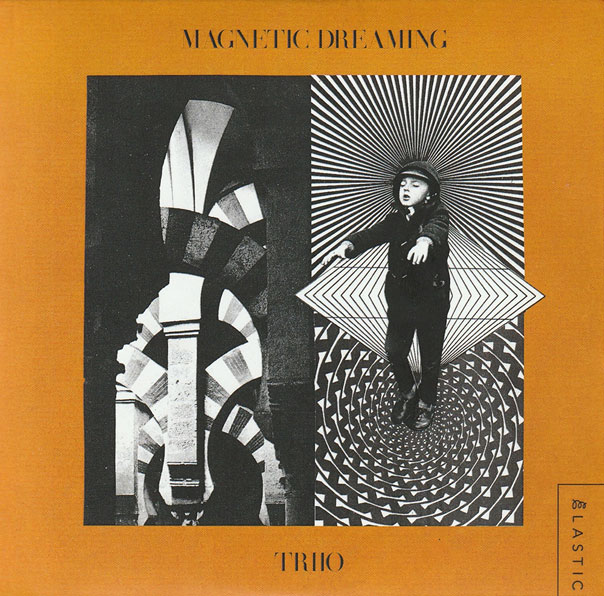
14 TriioMagnetic Dreaming
Triio
ER ER005 (alexfournier.bandcamp.com)

Extended plays can often be too concise, tapering off right as they begin, inviting a listener too late to an event that had long reached its peak. Triio’s Magnetic Dreaming follows you from the beginning, immediately arresting by means of hypnosis; vibraphone suggestions over chill-inducing ambient guitar swells. The music itself is a six-part suite – recorded during the sessions of last year’s longer Six-ish Plateaus – and rather than sounding like an accessory, it absolutely flourishes on its own terms. Its form is said to be influenced by “dream logic,” which is almost a perfect description of these woozy yet gentle transitions between states of consciousness. Each passage blends into the next with incredible patience, leaving one to float between its many dimensions, completely oblivious to where they just arrived from.

Alex Fournier’s steady bass intro on the climactic What Cycle or Identity, in Lie Group or Waking sounds like it’s emanating from the core of the Earth, creating a strong sense of unease that clenches the gut. As Stefan Hegerat’s drum groove borders increasingly on live turntablism, Bea Labikova and Naomi Carroll-Butler’s dual saxophone-clarinet attack remains steadfast; apocalyptic whispers piercing through a warm film noir fog. Tom Fleming (guitar) and Michael Davidson (vibraphone) lay an intoxicating foundation on the EP’s intro that, when scrubbing through each track, flows into each subsequent second supernaturally, with every drone feeling like a return flight to the mothership.

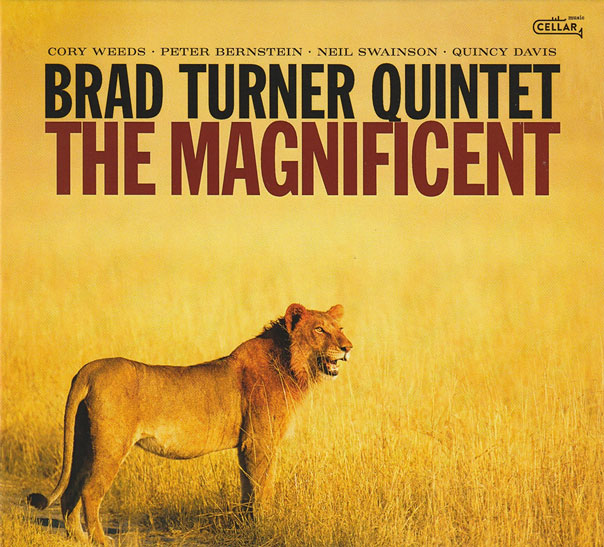
15 Brad TurnerThe Magnificent
Brad Turner Quintet
Cellar Music CM011523 (cellarlive.com)

All nine of the compositions here were penned by Brad Turner, with Cory Weeds and Turner producing. The title is an homage to a late great trumpeter, harkening back to the 1956 Blue Note release, The Magnificent Thad Jones. For this project, Weeds encouraged Turner to select a “band of his dreams” which, in addition to Turner on piano and trumpet, includes Weeds on tenor saxophone, Peter Bernstein on guitar, Neil Swainson on bass and Quincy Davis on drums.

 First up is the melodic You’re OK, replete with a stunner of a trumpet solo from Turner. His tone, intonation, ideas, expressiveness and sheer technical skill are mesmerizing. The equally gifted Bernstein seems to sing through his guitar, using all of the possible emotional colours. Next is Barney’s Castle – an up-tempo, bop burner, in which the ensemble moves as a one-celled organism, gliding through dynamic, unison horn lines. Weed’s exquisite sound and rhythmic sensibility create a heady mix and Davis masterfully drives the ensemble down the pike, while Swainson establishes the tempo in his unique, potent way. 

Another standout is the languid and sultry Virtue Signals. Turner has said that this track is “simply a complete chromatic scale (though ornamented and disguised) in descent” – and yet the lithe beauty of the composition is palpable. Bernstein shines here, as does Turner on piano. The title track does not disappoint, and the cohesion of the musicians’ ideas and approach are nothing short of luminous. A true highlight is the almost unbearably gorgeous Theme for Jocie – a ballad written for Turner’s partner and fellow trumpeter Jocelyn Waugh, where Turner wraps his warm, evocative, trumpet sound around every note.

16 Rubim di ToledoThe Drip
Rubim de Toledo
Independent (rubim.com)

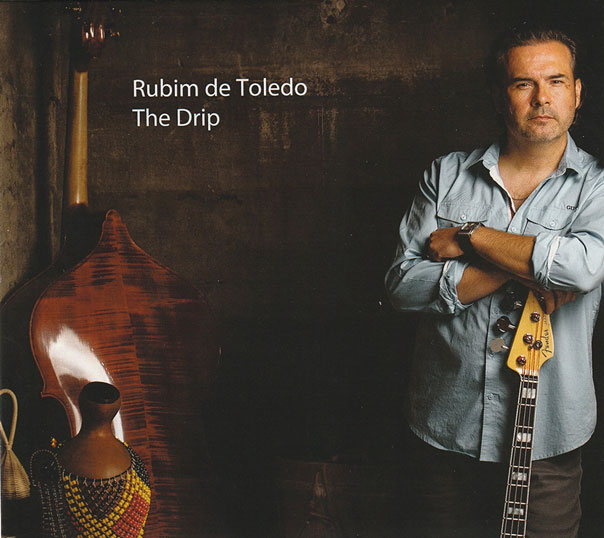
If there exists one word to try and encapsulate the sheer abundance of groove in The Drip, it would be “punch” (“pop” would be a close second). In any case, this descriptor would need to be of the onomatopoeic variety, because this album is a verb, not a noun. Nine tracks of back-to-back-to-back momentum and drive, every break in the sonic stream implies re-entry. Syncopated bliss, tracks like Rhythm Chante deploy Karimah’s repeated phrases and Audrey Ochoa’s staccato trombone blasts to paint the proverbial town electric. One cannot help but feel that the totality of this experience is tailor-made to be taken beyond the studio, into a live space befitting its live energy. 

Switching between upright and electric bass, Rubim de Toledo is a curator of low end, opting with upright when more percussive attack is desired, and amping up when emphatically doubling horn lines. Across this galaxy of funk, it is de Toledo that remains integral to the sound of the ensemble. As much as there are standout tracks throughout, the elephant in the room here is certainly The Long Way (Up). Contrasting beautifully against the gauntlet of upbeat punchiness that proceeds it, this song has a very minimalist intro courtesy of guitarist Felix Tellez’s sustained arpeggios and Jamie Cooper’s ride cymbal alchemy. Just as that initial build to a climax begins to feel inevitable, Rubim de Toledo yanks on the reins and brings us home.

17 Allemano CanonsCanons
Lina Allemano
Lumo Records LM 2023-15 (linaallemano.bandcamp.com)

Trumpeter/composer Lina Allemano’s interest in the canon form, in which parts are repeated exactly within a composition, surfaced on her recent quartet CD, Pipe Dream, but here the form appears in various permutations, both in composed works with elements of improvisation and a series of improvisations by BLOOP, Allemano’s duo with Mike Smith contributing live processing and effects. While some playfulness is evident, Allemano’s expressive focus provides reflective balance.     

The opening 3 Trumpet Canon introduces a pattern of expanding complexity, one overdubbed trumpet following another until the initiating horn is sputtering a series of barely articulated sounds, the other parts following. There’s more playful creativity with German trombonist Matthias Müller as he and Allemano match wits on the duet of Canon of Sorts, while Bobby’s Canon, with cellist Peggy Lee and clarinetist Brodie West, is elegant chamber music. Butterscones and Twinkle Tones, with frequent collaborators bassist Rob Clutton, synthesist Ryan Driver and guitarist Tim Posgate emphasize collective creativity. 

The alternating improvised tracks by BLOOP are highlights, with Allemano’s spontaneous melodies “canonized” and altered in Mike Smith’s electronic repetitions and distortions, whether he’s slowing down the trumpeter’s phrases on Shadows or distorting and muffling her phrases within seconds of Wilds’ outset. On Moons, Smith turns Allemano’s shifting phrases and tonal explorations into a compound canon, while the concluding Ponds is also the richest track, with the keening lyricism of her trumpet lines multiplying in a warm universe.

18 SOGSOG
Lina Allemano; Uwe Oberg; Matthias Bauer; Rudi Fischerlehner
Creatives Sources CD 777 CD (creativesourcesrec.com)

Having fully integrated herself into the burgeoning Berlin free improv scene, Toronto trumpeter Lina Allemano helps make SOG a memorable instance of stretching instruments to their limits without losing cadenced evolution. Associates are Germans, bassist Matthias Bauer and pianist Uwe Oberg and Austrian percussionist Rudi Fischerlehner.

Consisting of three extended tracks and a brief encore, the music touches on delicacy as well as dissonance. The former quality is expressed when focused trumpet grace notes brush up again chiming piano lines promoting quiet interludes among the generally invigorating sounds. A colourist, Fischerlehner’s wooden clave slaps, bell shakes and idiophone rattles pace the expositions, while Bauer’s sluicing bass line provides a proper pulse. That leaves space for Oberg and Allemano, who take full advantage.

Expressive at varied tempos, the pianist sweeps from singular clips to extended glissandi with ping-ponging emphasis maintaining linear flow. Allemano meets Oberg and Fischerlehner’s rhythmic animation on Il Vortice with squeaky slides and bitten off single notes. The extended El Remolino finds her intermittently exposing the melody above drum punches and keyboard rumbles as she slides through a practice book of technical development including hand-muted squalls, clenched teeth growls and half-valve spits. Like Oberg though she makes the exposition less about technique and more about emotional transference.

There’s no indication of what SOG translates to in any language. Maybe it stands for Session Obviously Good – but that slogan might itself be too limiting.

19 Angelica SanchezNighttime Creatures
Angelica Sanchez Nonet
Pyroclastic Records PR30 (pyroclasticrecords.com)

Expatriate Canadian Kris Davis is developing her Pyroclastic record label into a stellar chronicle of a contemporary jazz idiom that’s often as distinguished by compositional content as improvisatory flair. The latest enlistee is Angelica Sanchez, a fellow pianist-composer whose intensely lyrical small-group work has been documented over the past two decades. Here Sanchez makes a dramatic leap as a composer, writing for a nine-member ensemble, while drawing inspiration from a nocturnal forest far from her New York City home. 

Rather than typical nocturnes, Sanchez’s compositions abound with contrast, from subtle dissonances to complex rhythmic overlays. There is a jagged spikiness to C.B. the Time-Traveler and waves of dissonant polyphony on Land Here, all of it somehow framed in discovery and surprise. Ring Leader moves from a rhythmically even guitar line with sudden brass punctuations to an improvised duet of multiphonic tenor saxophone and drums. 

While her fleetly inventive, sometimes multi-directional piano can come to the fore, Sanchez also surrounds herself with musicians whose individual voices go beyond ensemble skills, including saxophonists Michaël Attias and Chris Speed. Two musicians bring particularly unusual instruments to both ensemble and solo roles, Ben Goldberg his contra alto clarinet and Thomas Heberer his quarter tone trumpet.    

Occasionally referencing Carla Bley, Sanchez also includes works by two other composers, performing Duke Ellington’s Lady of the Lavender Mist and Chilean composer Armando Carvajal’s Tristeza, a mysterious wandering through the ensemble’s individual voice before an ultimate collective theme statement.

20 tyshawn continuingContinuing
Tyshawn Sorey Trio
Pi Recordings 98 (pirecordings.com)

In 2022 drummer/composer Tyshawn Sorey, largely associated with extended composition and cutting-edge free jazz, added another dimension to his wide-ranging practice, creating a traditional jazz trio with pianist Aaron Diehl and bassist Matt Brewer to explore the broad repertoire of mainstream modern jazz. It began with Mesmerism and continues here. 

The trio emphasizes understated virtuosity, developing themes with an almost orchestral feel, reminiscent of classic piano trios led by Duke Ellington, Ahmad Jamal and Red Garland in ways that expand both form and interaction. The possibilities for depth are enhanced by slower tempos and extended lengths (from 10’25“ to 15’43”). The trio isn’t simply playing these pieces: they inhabit them.     

Wayne Shorter’s Reincarnation Blues is magisterially slow, the tempo emphasizing the precise sonority of each instrument, represented almost equally in the mix, Diehl’s punctuating chords and phrases delivered with trumpet-like brightness. By the conclusion, the listener is swimming in Diehl’s dense arpeggios and clusters while Sorey and Brewer maintain a rock-solid architecture. The program only gets richer with Ahmad Jamal’s Seleritus, at once elegant and spare, initially highlighting Brewer’s bass. Matt Dennis’ Angel Eyes resides in a tradition of exalted ballads, while In What Direction Are You Headed? by the late pianist Harold Mabern, a teacher of Sorey to whom this CD is dedicated, demonstrates the persistent relevance of classic soul jazz, as codified by Horace Silver and Bobby Timmons.    

Like its predecessor, Continuing is music to be savoured.

01 Sultans of StringWalking Through Fire
Indigenous Collaborations with Sultans of String
Independent MCK2301 (sultansofstring.com)

This powerful project is the result of inspired musical and poetic collaborations between an array of gifted Indigenous artists from a wide variety of musics and tribal identities, and the highly regarded, multiple award-winning Sultans of String, which includes producer Chris McKhool on violin and viola, producer Kevin Laliberte on nylon-, steel-string and electric guitars, Drew Birston on electric and acoustic bass and Rosendo “Chandy” Leon Jr. on drums and percussion. These diverse artists – Indigenous and non-indigenous have joined together in the spirit of the Truth and Reconciliation Commission’s 94 Calls to Action and Final Report, which sparked the co-creation of Walking Through Fire – the title of both the CD and live touring performances, which began on the National Day for Truth and Reconciliation this year. 

There are 14 original tracks here, each inspiring, thought-provoking and brilliantly produced. Works of particular beauty include A Beautiful Darkness featuring Ojibwe vocalist Marc Märileinen, backed by a thrilling wall of sound, punctuated by McKhool’s haunting violin lines; Kó, with luminous and resonant vocals by Dene artists Leela Gilday and Leanne Taneton and The Rez – a deeply moving ballad featuring both rock and fiddling motifs alongside a stirring, soulful vocal from young, contemporary Ojibwe performer Crystal Shawanda. 

Also unforgettable is the soul-searing Take Off the Crown, where the incomprehensible horror of the murdered children is explored in a place beyond tears, introduced by “Digging Roots” member Raven Kanatakta (Anishinaabe Algonquin/Onkwehón:we Mohawk). Our Mother The Earth is also a gem, featuring masterful work from the Sultans of String as well as the vocal gravitas of the eminent Dr. Duke Redbird (Chippewa/Anishinaabe). This project is a rare gift from all of the artists involved… the gift of creativity, collaboration and hope for our future.

02 Vineet VyasSatyam
Vineet Vyas
Independent (vineetvyas.com)

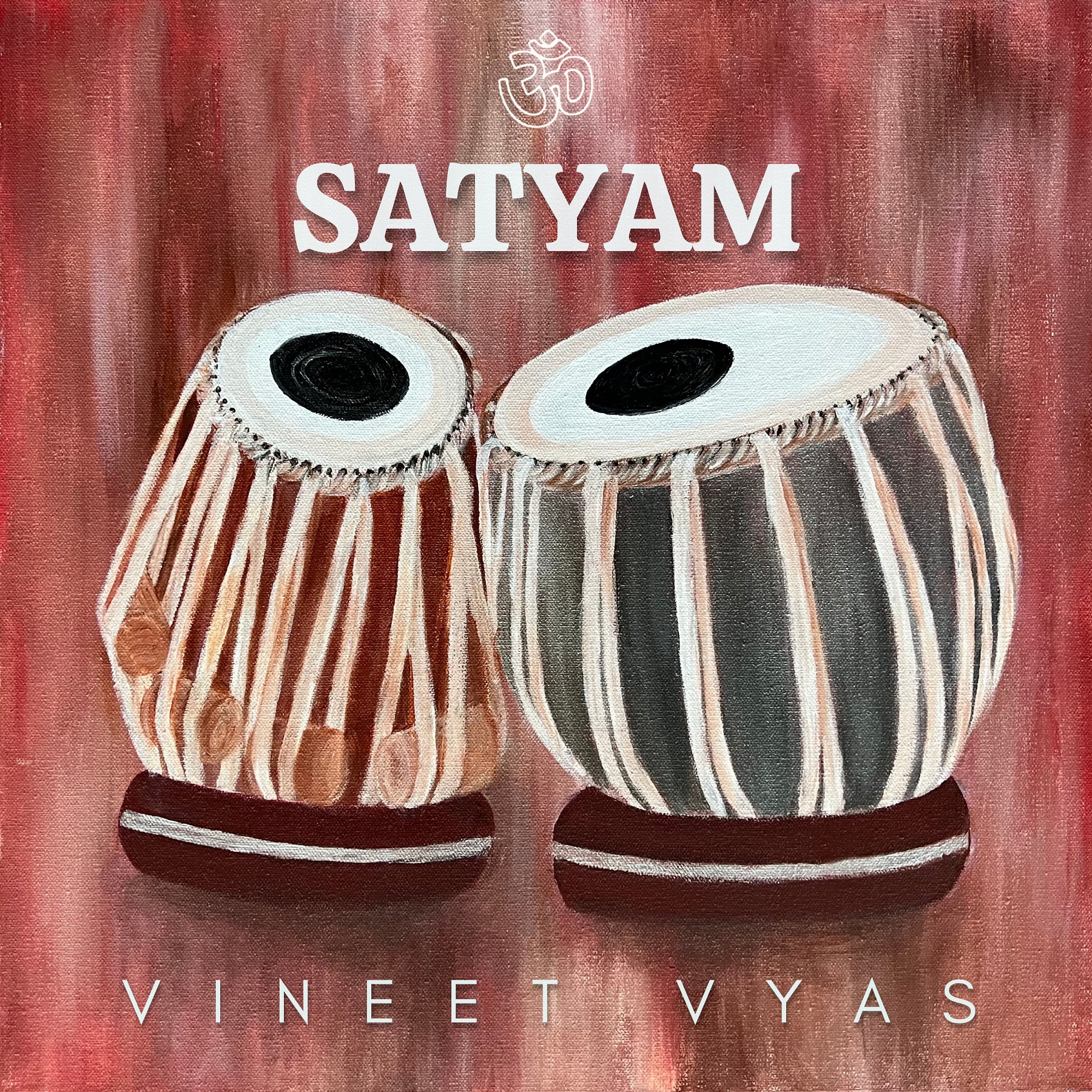
Toronto-based tabla virtuoso Vineet Vyas’ musical path encompasses both the Canadian East Coast and one of the preeminent music traditions of India. Born into a family of Hindustani classical musicians in Nova Scotia, he began lessons on the tabla early. 

Already showing promise, in 1987 his studies modulated to the next level. That year he began instruction in the traditional guru-shishya parampara manner with tabla master Pandit Kishan Maharaj in Varanasi, India. Vyas credits that intense training and sadhana (dedication) to his guru for enabling him to establish himself as a tabla musician on the international stage. 

Vyas’ seven-track album Satyam, his third solo outing, was nominated for Global Recording of the Year at the 2023 (Canadian) East Coast Music Awards. Satyam – a Sanskrit concept referring to examining the truth – musically evokes the Hindu myth of princess Savitri, her husband prince Satyavan and their struggle with Yama, the goddess of death. Spoiler alert: after extensive musical conflict, the last track resolves in a peaceful coda. 

While the record features Vyas’ tabla mastery throughout, Satyam also leans heavily on seven skilled musicians who provide melodies based on Hindustani ragas. They contextualize, support and sometimes also defy the often sonically dense and mathematically intense drumming. In addition to the gripping Savitri narrative, Ajay Prasanna (bansuri), Rajib Karmakar (sitar), Pankaj Mishra (sarangi), Justin Gray (electric bass) and Bageshree Vaze (vocals) make substantial contributions to Satyam’s success as a listen-through album.

Listen to 'Satyam' Now in the Listening Room

03 WanderlustWanderlust
Lara Deutsch; Adam Cicchillitti
Leaf Music LM269 (leaf-music.ca)

During the mid-2010s I went to New York to research an article about some of the unusual characters that dot the historical jazz landscape. After a considerable crosstown public bus journey one day, I found myself sitting across from Bernard Stollman, whose career and life is too fantastical and wide-ranging to discuss here. Briefly, however, I was speaking to Stollman about that incredibly fertile 18-month period from 1963 to 1965, when he oversaw and released 45 largely freely improvised albums on his label ESP-DISK. Although the label would become best known for its association with Albert Ayler and Sunny Murray, ESP-DISK’s first release was Ni Kantu En Esperanto (Let’s Sing in Esperanto), a vocal album capturing a collection of folk songs in that “universal language” created by L.L. Zamenhof in 1887.

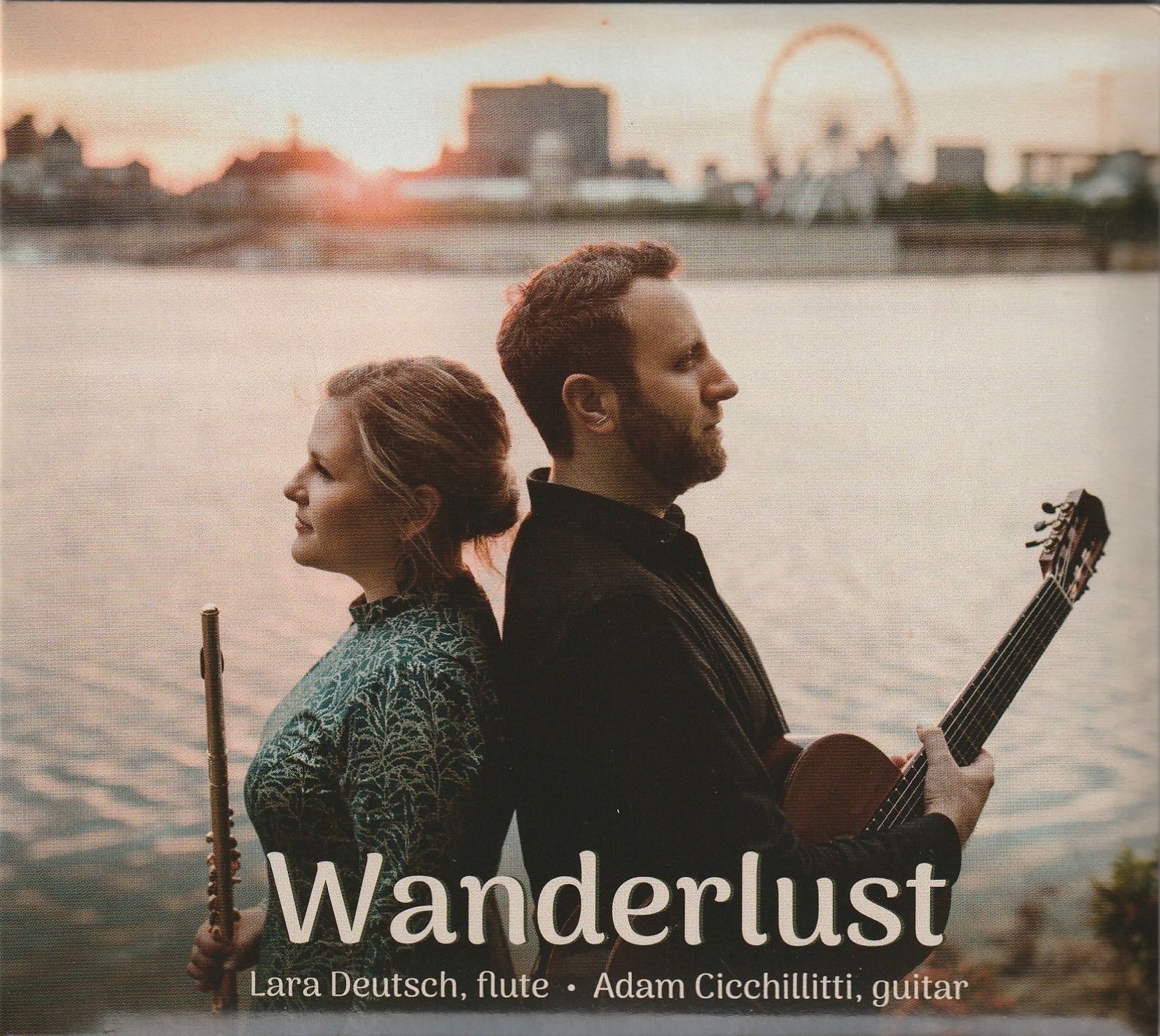
What, you may ask, does any of this have to do with Wanderlust, the terrific Leaf Music collection of folk pieces by flutist Lara Deutsch and guitarist Adam Cicchillitti? I suppose it is that while enjoyably listening to this 2023 recording – which threads together eight disparate pieces representing a multiplicity of musical regions and cultures by way of gorgeous playing, telepathic musical interaction and two expertly cultivated instrumental sounds – I was again reminded that Zamenhof’s quest for a “universal language” had, in fact, already been realized. It’s called music. This aptly named travelogue recording, treats the music of Argentina, Romania, Japan and elsewhere with the equity of aplomb and care it deserves, foregrounding beauty while ensuring that nothing is lost in translation. 

Listen to 'Wanderlust' Now in the Listening Room

04 Ivan LindsMy Heart Speaks
Ivan Lins
Resonance Records (resonancerecords.org/product/ivan-lins-my-heart-speaks-cd)

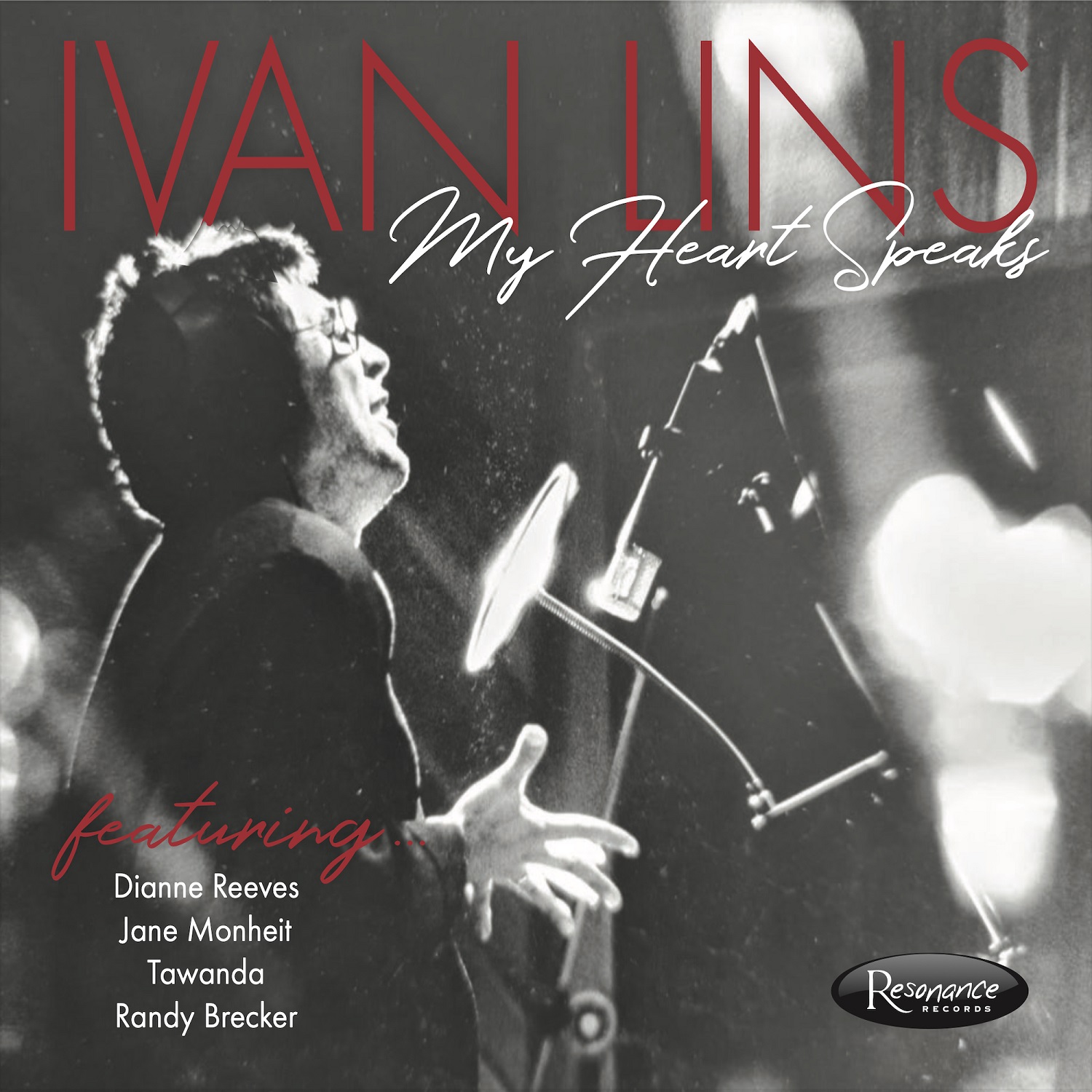
All of the compositions here were written by the esteemed Ivan Lins (who has penned more than 600 tunes in his illustrious 50-year career), and all arrangements are by Kuno Schmid. Lins’ dynamic core ensemble includes Josh Nelson on piano, Leo Amuedo on guitar, Carlitos Del Puerto on bass and Mauricio Zottarelli on drums and percussion, as well as the gorgeous inclusion of the Republic of Georgia’s Tbilisi Symphony Orchestra, conducted by Vakhtang Kakhidze. The recording was produced by Schmid and George Klabin and the stunning CD package itself features compelling liner notes from the eminent author and arts journalist, James Gavin.

The first selection is the sumptuous Renata Maria, which features Lins’ recognizable tenor in a lovely melodic foray, enhanced by lush symphonic string lines, a superb guitar solo by Amuedo and Lins’ palpable sense of joy. Next up is the title track, replete with a luminous Dianne Reeves sailing directly into the listener’s heart, effortlessly wielding her languid and sultry-four octave range. Congada Blues features the core ensemble, and surrounds us with a deep, percussion-enhanced tribal resonance, punctuated by a fine bass solo from Del Puerto. 

Other beauties here include the up-tempo, jazzy cooker Easy Going, the melancholy waltz, Corpos (Bodies) and Missing Miles, which features perhaps the most lush and thrilling symphonic elements on the project, as well as a superb wordless vocal from Lins and a deeply moving, muted solo from trumpeter extraordinaire, Randy Brecker. The final track, Nada Sem Voce (Nothing Without You) returns the music to the essential unit of piano and rhythm section – rendering it all the more emotional and directly communicative.

05 Poetry is BloodPoetry is Blood
Keith Garebian
Independent KGCD2301 (kgarebian@gmail.com)

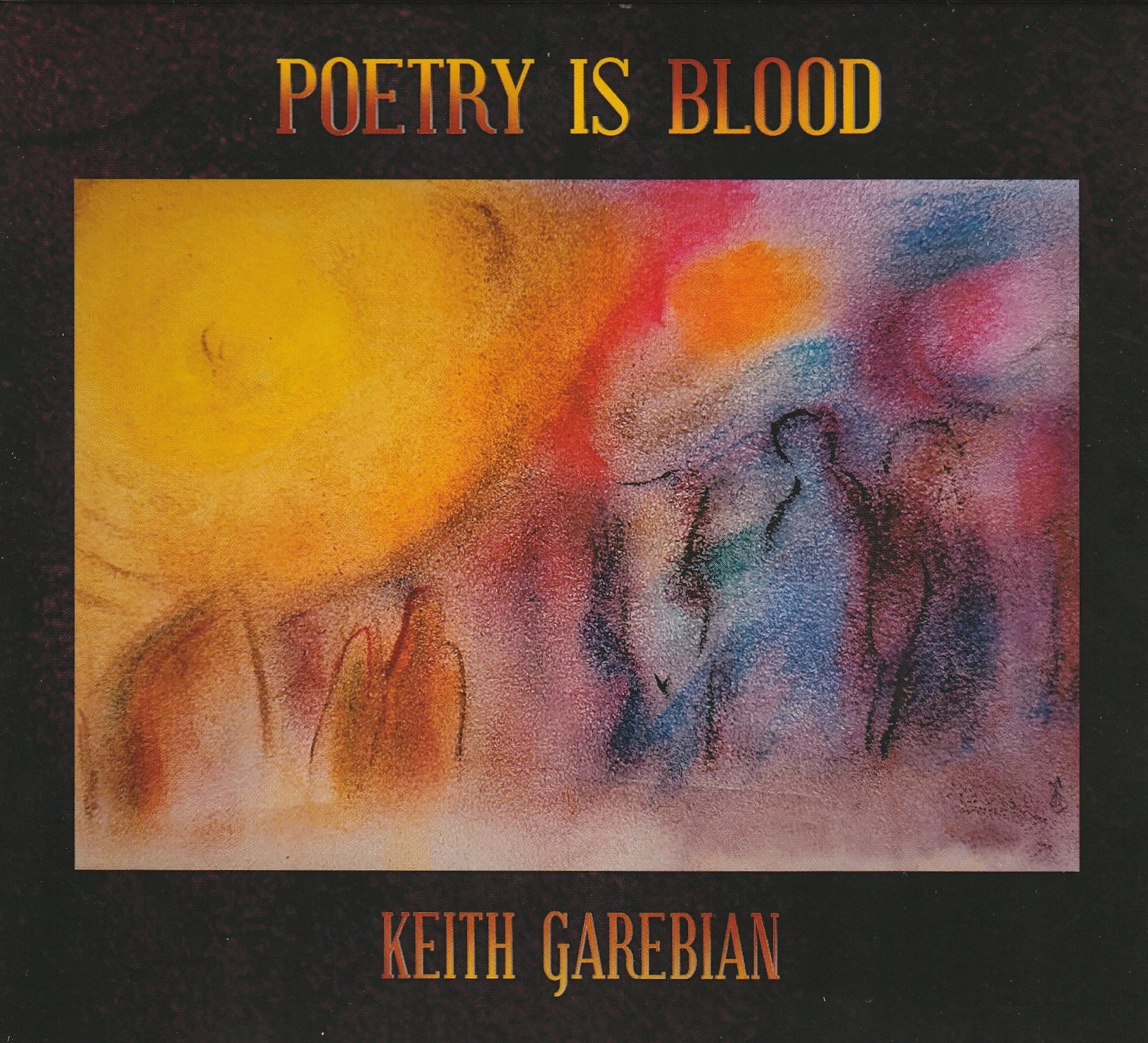
Much in the same way that musical improvisation is sometimes referred to as “liquid composition,” and, conversely, composition as “frozen improvisation,” there exists a simpatico relationship to the best poetry and musical collaborations. Great poetry is indeed musical, and the best musical offerings poetic. 

Although prior to listening to the thoughtful, and thought-provoking, recording Poetry is Blood by Keith Garebian (with musical contributions from the great Ernie Tollar), my reference for successful fusions of poetry and jazz was limited to Jack Kerouac’s October in the Railroad Earth or American Haikus, where the late Beat writer’s prose is accompanied by some combination of Steve Allen, Al Cohn, and Zoot Sims. While admittedly genre non-adjacent to my aforementioned Kerouac reference, Garebian’s 2023 release, supported by a Mississauga Arts Council grant, is an equally compelling offering. Presenting 18 poems taken from some 40 contained within Garebian’s 2018 book of the same name, this recording explores both dark and introspective themes as related to the ongoing Armenian genocide. As such, engaged listeners once again bear witness to the power of art to comment upon, contextualize and humanize tragic events that, in our 24-hour news cycle, may wax and wane in our collective imagination, but are nonetheless important to be reminded of and educated about. 

Read by the author in his fine voice and accompanied by Tollar on both flute and percussion utilizing a call-and-responsive trope of effective musical communication, the recording is not an easy listen, given the sobering magnitude of the subject matter. But for those looking to expand their knowledge of this unfolding world event through deeply personal and effective poetry and creative reflection, this recording comes highly recommended. 

Back to top