07 pot pourri 01 marco poloThe Musical Voyages of Marco Polo
Maria Farantouri; En Chordais; Ensemble Constantinople; Kyriakos Kalaitzidis
World Village WVF 479092

Italy to China in Marco Polo’s footsteps, interpreted stage by stage by local music, inspired Kyriakos Kalaitzidis to coordinate and to compose a virtual journey along the Silk Road.

Early music enthusiasts will get their eye (or ear) drawn in with the well-known Lamento di Tristano which weaves its sedate course by bringing together Western European and Middle-Eastern instruments. This same combination forms Kalaitzidis’ choice for one of his own compositions, the equally sedate Marco’s Dream. What a contrast then with his second composition, Gallop, which conjures up Marco Polo confidently and swiftly crossing the Silk Road on his mission.

As Marco Polo moves eastward the music escorts him, as its style changes. In Migrants Circles lyrics by the 14th century Iranian poet Hafez are inspired by a Chinese melody. Kiya Tabassian (sitar and voice) brilliantly conveys the winding and demanding nature of Marco Polo’s journeyings.

 Then the traveller reaches Uzbekistan for perhaps the most impassioned song on the CD: Ey Dilbari Jonomin (Oh, my heart-stealing beauty) where the voices of Kalaitzidis and Nodira Permatova are allowed to express the song’s haunting quality, accompanied only by oud, viola and violin. All too soon we are back on the road east with Five steps, a piece played on Nepalese sarangi to guide us to Mongolia, where Chandmani nutag evokes the latter’s grasslands and streams.

Finally, China. Yi Zu Wu Qu (dance of the Yi nation) is a thoughtful piece for solo pipa, contrasting with the complex seven-part Musical Voyages of Marco Polo. And then a final inspiration. Greek legend Maria Farantouri sings Xenos (the stranger), conveying Marco Polo’s feelings of being a stranger in a new life. Farantouri, long considered one of the foremost interpreters of Greek music, has lost none of her touch. Enjoy this expressive journey.


07 pot pourri 02 amanda martinezMañana
Amanda Martinez
Independent (amandamartinez.ca)

Latina songstress, broadcaster, actor and composer/lyricist, Amanda Martinez’ latest CD, Mañana is a zesty musical “Caldo” – brilliantly and authentically produced by Javier Limon and George Seara. The 12 tracks provide a tasty banquet of original, Mexican and Tejano-inspired compositions, served up with healthy doses of a tropically infused blend of the tart and the sweet. On Mañana, Martinez wears several hats – as artist, composer and lyricist, and the recording itself is a tribute to the musical influences of her beloved Mexico, imbued with contemporary and traditional motifs as well as stylish arrangements and superb musicianship and vocals from her fine ensemble.

Martinez’ co-creators include the talented bassist Drew Birston, singer Fernando Osorio, skilled guitarist Kevin Laliberte, Javier Limón (arranger and co-producer) and writers Elsten Torres, Daniel Martinez Velasco, Claudia Brant and Nana Maluca. All songs on Mañana are sung in Spanish, with the exception of three: “Frozen” – featuring Martinez’ intriguing narrative lyric, “Le Chemin,” rendered in flawless French, and the youthfully romantic and salsa-rific, “Let’s Dance,” sung in English. Martinez’ clairent, musical tone melded with her sibilant, colonial Spanish is a delightful treat for the ear, the heart and the soul. Her pure and supple voice is capable of communicating a range of potent emotions – from the deeply sensual to heartbreaking innocence.

Superb tracks include the optimistic and traditionally arranged “Esperanza Viva” – a fine composition by Brant and Maluca; the lilting Dias Invisibles, which is an inspired collaboration between Martinez and guitarist Laliberte replete with some delightful Burt Bacharach-ish horn lines. Also of particular beauty is Martinez and Limón’s “Ahora si te Canto” – a tender and evocative ballad, laden with lush and almost mystical, Iberian modalities as well as thoroughly stunning violin work by Osvaldo Rodriguez.

Concert note: Amanda Martinez launches Mañana with a concert at the Winter Garden Theatre on April 5. 

terry 01 angele dubeauAngèle Dubeau and La Pietà are back with another CD of short contemporary works on BLANC (Analekta AN 2 8737), a disc very similar to her Silence, on joue! CD from two years ago. That the approach seems to work so much better this time is almost certainly due to the fact that BLANC celebrates Dubeau’s return after a year spent battling cancer. In the booklet notes, Dubeau says that during her battle, music brought her “comfort, tranquility and sometimes, an essential escape.” The album is the story of her fight against illness, and how she “…serenely, came out of it stronger.”

Perhaps not surprisingly, then, there is much more of a sense of program here, plus a real feeling of emotional involvement – and, indeed, of serenity and strength. There are 14 tracks on the CD, with Osvaldo Golijov’s Close Your Eyes, Adrian Munsey’s The Distance Between and Marjan Mozetich’s “Unfolding Sky,” from his Postcards from the Sky, sounding particularly beautiful. Cat Stevens’ Morning Has Broken and Mark O’Connor’s Appalachian Waltz are presented in lovely arrangements; there are two pieces by Dave Brubeck and one by Ennio Morricone. Also represented are Garry Schyman, Joe Hisaishi, François Dompierre, Ryuichi Sakamoto and Shawn Phillips.

Recorded at McGill University’s Schulich School of Music last November, the sound quality is warm and resonant. Part of the proceeds from sales of the CD will go to support the Quebec Breast Cancer Foundation.

terry 02 prokofiev jonathan crowToronto Symphony Orchestra concertmaster Jonathan Crow is joined by pianist Paul Stewart on Prokofiev’s Works for Violin and Piano, his latest CD on the ATMA Classique label (ACD2 2535). The recording was made in April 2008, though, when Crow was still concertmaster of the Orchestre Symphonique de Montréal. The three works here – the Sonatas for Violin and Piano No.1 in F Minor and No.2 in D Major and the Five Melodies – were all also featured on the recent 2-CD release of Prokofiev’s complete works for violin by James Ehnes, reviewed in this column just two months ago.

There is a warmth and clarity to Crow’s playing, as well as a nice range of tonal colour. The Sonata No.1 in F Minor, by far the major work on the disc, is given a powerful reading, and the D major sonata, a transcription of Prokofiev’s light-hearted Flute Sonata, showcases the brightness of Crow’s playing. Stewart is an excellent partner, and there is strong but sensitive playing from both performers throughout an excellent disc.

The recording was made in the acoustically superb Salle Françoys-Bernier hall at Domaine Forget in Saint-Irénée, Québec.

terry 03 pfitznerSeveral of the CDs in the outstanding Hyperion series Romantic Violin Concertos – currently at Volume 15 – have been reviewed in previous editions of this column, but Volume 4 in the companion Romantic Cello Concerto series is the first I have received; it features concertos by the German composer Hans Pfitzner, who lived from 1869 to 1949 (CDA67906).

I have long known Pfitzner’s name in connection with his opera Palestrina, the work for which he is still mostly remembered, but it occurred to me that I couldn’t recall ever actually having heard any of his music. And what a loss that turns out to be, if the works on this revelatory CD are anything to go by. Pfitzner wrote three cello concertos: the Concerto in A Minor, Op.posth.,  is a student work from 1888 that was not performed in public until 1977; the Concertos in G major, Op.42 and A minor, Op.52, date from 1935 and 1943 respectively.

Don’t be put off by Pfitzner’s stern, dour face in his photographs: his music is firmly in the German late Romantic tradition of Brahms, Bruch and Humperdinck, and it really is gorgeous stuff – warm, rich, melodic, finely crafted, beautifully orchestrated, giving the soloist ample opportunity to display the instrument’s range and character.

The German cellist Alban Gerhardt is in his element here, and gets wonderful support from the Rundfunk-Sinfonieorchester Berlin under Sebastien Weigle. Violinist Gergana Gergova joins Gerhardt for the Duo Op.43 for Violin, Cello and Small Orchestra, a delightful work from 1937 that brings a marvellous and beautifully-recorded CD to a close.

terry 04 beethoven isserlisYou’re always guaranteed a thought-provoking CD whenever cellist Steven Isserlis is the soloist, and his latest offering on Hyperion (CDA67981/2), a 2-CD set of the Beethoven Cello Sonatas (although Complete Works for Cello and Piano would be a more accurate title) is no exception.

There are many performer pairings to choose from in recordings of these works, of course, but what makes this particular set so interesting is Robert Levin’s accompaniment on a copy of an 1805 fortepiano. The works consequently have a quite different sound, with the reduced volume and sustainability giving the keyboard an almost harpsichord-like quality, especially with the left-hand Alberti bass patterns and the heavy, almost percussive, low left-hand octaves. While it might reduce the volume, however, it certainly doesn’t reduce the scale of these works, which span Beethoven’s early, middle and late periods. In fact, the keyboard sound perfectly complements and contrasts the dark, rich sound of Isserlis’ 1726 Stradivarius cello. And what a sound it is: sweet and clear in the higher register, but strong and forceful – almost rough – in the lower register.

CD1 has the two Op.5 sonatas and the A major Op.69; CD2 has the two Op.102 sonatas together with three sets of Variations – on See the conqu’ring hero comes from Handel’s Judas Maccabaeus and on Ein Mädchen oder Weibchen and Bei Männern, welche Liebe fülen’ from Mozart’s Die Zauberflöte – and Beethoven’s own transcription of his Op.17 Horn Sonata.

The performances are outstanding, bristling with character throughout. Add the usual terrific booklet notes by Isserlis himself, and the almost 80 minutes per disc, and it’s simply impossible to give this set anything but the highest recommendation.

terry 05 arensky triosBritain’s Leonore Piano Trio is outstanding in the two Arensky Piano Trios (Hyperion CDA68015). Anton Arensky’s Piano Trio No.1 in D minor Op.32 was written in 1894 and, in keeping with the commemorative nature of the piano trio form established by Tchaikovsky some 12 years earlier, was conceived as a memorial to the cellist Karl Davidoff, the director of the St. Petersburg Conservatory during Arensky’s student days there. The cello consequently has a very prominent part in the Trio.

Pianist Tim Horton sets the stage with a beautiful opening; violinist Benjamin Nabarro adds a warm, sweet tone, especially in the lower register; and cellist Gemma Rosefield’s passionate playing leaves nothing to be desired. The Piano Trio in F Minor Op.73 dates from the early 1900s, not long before Arensky’s death in 1906 and at a time when the composer was in poor health. It’s another terrific work, and one that draws more outstanding playing from the Leonore ensemble.

Among Arensky’s pupils in his harmony class at the Moscow Conservatory was Sergei Rachmaninov, and the latter’s Vocalise is presented here in an arrangement by Rachmaninov’s friend Julius Conus, who was also one of Arensky’s students at the Conservatory. Everything about this outstanding CD is just right: the works themselves; the great ensemble playing; the interpretations; the excellent dynamics and phrasing; and the real passion and sensitivity displayed throughout. Add the excellent balance and sound quality, and it’s a real winner.

Berlin-based Chinese violinist Ning Feng is a new name to me, but it clearly shouldn’t be; he’s been active at a very high level for the best part of 10 years, and his three previous CDs – two of them solo recitals – on the Channel Classics label were issued to great critical acclaim.

terry 06 ning fengHis latest offering on the same label pairs Bruch’s Scottish Fantasy with the Tchaikovsky Violin Concerto, with Yang Yang conducting the Deutsches Symphonie-Orchester Berlin (CCS SA 34913).

Ning has a bright, clear tone, and obviously finds no technical challenges in the music. He exhibits somewhat of a laid-back approach in the Bruch, avoiding any tendency to rush, but it does seem to be a bit emotionally detached at times. There’s the same approach in the Tchaikovsky, but with much better results. The sweet, singing tone is always present, but the constant feeling of holding back at the beginning of the faster, busy passages doesn’t halt the flow at all – in fact, it has just the opposite effect, allowing us to hear the details without a sense of rushing, and allowing the momentum to build naturally as the music progresses.

The recorded sound is fine, but the balance seems to be a bit strange at times; there are moments in the Bruch in particular when Ning seems to almost disappear.

terry 07 langaard quartetsI was delighted to see that Volume 2 of the outstanding series of the complete String Quartets by Danish composer Rued Langgaard (1893-1952) has been released (DACAPO 6.220576). Volume 1 was reviewed in depth in this column in July 2012, at which time I noted that Denmark’s Nightingale String Quartet was simply superb in the first volume of a series of all nine quartets by a composer described in the excellent booklet notes as an eccentric outsider who was virtually ignored by the Danish musical establishment in his lifetime.

Most of Langgaard’s string quartets were written in his youth, between 1914 and 1925. This second volume features three works from the Great War years: Rosengaardsspil (Rose Garden Play) from 1918 (in a world premiere recording), String Quartet in A-flat major from 1918, and String Quartet No.4 “Sommerdage” (Summer Days) from 1914-18, revised in 1931. All three quartets use material inspired by Langgaard’s unrequited love for a young girl he met in the summer of 1913 while on holiday with his parents in Sweden; the house they stayed in was called “The Rose Garden.”

Once again, the performances by the prize-winning all-female Nightingale Quartet are outstanding – warm, passionate, expressive, and displaying great ensemble playing. I ended the review of Volume 1 by saying: “Beautifully recorded at the Royal Danish Academy of Music and issued on Denmark’s national record label, these performances are as close to definitive as you can get. Wonderful stuff, and I can’t wait to hear the rest of the series.” Well, two volumes down and one to go, and I’m still just as enthusiastic!

Since jazz’s beginnings, the measure of a musician’s talent has not only been how well the person improvises, but also how he or she interprets standards. In the 21st century a standard song has evolved past its Tin Pan Alley origins, plus distinctive purely jazz compositions have entered the canon. But while more conservative players treat standards as immutable, the CDs here are noteworthy because their creators distinctively re-imagine standards.

waxman 01 obligatoIn an exercise that’s breathtakingly difficult, drummer Tom Rainey and his quintet take a collection of hyper-familiar tunes and upend them in such a way that it sounds as if they’re being played for the first time. Rainey, plus Canadian pianist Kris Davis, bassist Drew Gress, trumpeter Ralph Alessi and saxophonist Ingrid Laubrock, turn Obbligato (Intakt Records CD 227 intaktrec.ch) into a showcase for new ideas. Starting with the hoary Just in Time, the five cannily layer dissonant variations onto the basic theme before conjuring up the head. These restructurings take in songs by Duke Ellington, Dave Brubeck, Jerome Kern and Jule Styne among others. Secret Love, for example is given a sharpened, stop-time treatment, with an extended octave-jumping solo from Laubrock, decorated with smeared triplets from Alessi. Meanwhile whinnying brass and cymbal swishes back up steady vamping on You Don’t Know What Love Is until the pressurized torque explodes into the muted melody. With sophisticated timing, Davis shows her skills by plucking the recognizable melody of Reflections, while the saxophonist is constructing a related buoyant theme out of pinpointed smears and rests. Most extraordinarily, before the trumpeter creates a quivering impressionistic variant of Prelude to a Kiss, Rainey validates his percussion refinement, with one of his few solos. Putting in motion many parts of his kit, he moves the narrative forward without turning to bombast.

waxman 02 riversidescdAnother variation on this theme is interpreting another musician’s compositions while seamlessly adding your own themes in a similar style. That’s what American trumpeter Dave Douglas and Montreal reedist Chet Doxas do on Riverside (Greenleaf Music GLM 1036 greenleafmusic.com). A salute to the music of influential clarinetist Jimmy Giuffre, the quartet, filled out by electric bassist Steve Swallow and drummer Jim Doxas, Chet’s brother, performs tracks from this CD at The Rex on April 19. Although New Englander Douglas and Quebecer Doxas come from dissimilar backgrounds than Texas-born Giuffre, their originals reflect the same sort of Southwestern spaciousness in which the clarinetist’s trios specialized. Their sophisticated transformations are substantiated by slotting Douglas and Doxas tunes near Giuffre’s. Maintaining a loping swing throughout, the quartet also redefines a Giuffre standard like The Train and the River by carving out parts for drums and trumpet, unlike the original. Making the melody speedier and hard hitting doesn’t destroy its fragile beauty though. Cantering along via the drummer’s clip-clops and Swallow’s guitar-like plucks, Douglas’ Front Yard attains the same easy swing in which Giuffre specialized, harmonizing his muted trumpet and Doxas’ chalumeau clarinet. Doxas’ extended Sing on the Mountain/Northern Miner reflects his command of the moderato idiom as well, as contrapuntal trumpet tones and leisurely tenor sax slurs intertwine. Nonetheless, the quartet’s originality is confirmed with Douglas’ Backyard, a vamping blues line. While Douglas’ brassy tongue slurps and the drummer’s rapping backbeat create a tune much weightier than anything by Giuffre, its contrapuntal call-and-response organization maintains the mood.

waxman 03 luce bentFormulating a variation of this concept is Dutch pianist Michiel Braam, whose arrangements for his Flex Bent Braam septet on Lucebert (BBBCD 16 michielbraam.com) re-energizes jazz and pop standards while linking them with eight originals based on epigrams by an innovative poet whose nom-de-plume was Lucebert. Don’t fear the highbrow trappings however; during the CD`s almost 80 minutes the pianist stitches together a sincerely jaunty program of his own shrewd compositions plus tunes by Thelonious Monk, Cole Porter and Dizzy Gillespie among others. Mocking and celebrating the standards in equal measure, the band finds unexpected echoes in many of the often-played themes. Get out of Town for instance could be the product of a small swing-era combo with slick piano glissandi and Joost Lijbaart’s drums swaying like a metronome. Straight No Chaser is set off with a treatment confirming its dance-like undercurrent via smacked cymbals and snorting work from altoist Bart van der Putten and baritonist Oleg Hollmann. The concept is enhanced when Braam’s compositions are examined alongside the standards. Gentle and ornamental with brassy expressiveness, his Drift-Urge is architecturally organized the same way as I May Be Wrong/So What? which follows it. Trombonist Wolter Wierbos’ slurs plus Angelo Verploegen’s whinnying trumpet create a distinctive overlay as the heaving reeds and pounding piano keys attach Braam’s initial melody to the familiar tune structures, while Tony Overwater’s bass playing confirms the rhythmic suture. Plunger trombone smears, high-pitched trumpet triplets and sharp alto sax bites are exciting in themselves during Zorg-Care; yet they remind the ear of Let’s Cool One which precedes it. All in all, swing plus significance is applied to every number.

waxman 04 whammieAnother standards’ challenge crucially met on The Whammies: Play the Music of Steve Lacy Volume 2 (Driff Records CD 1303 driffrecords.com) is remaining individual during a complete program of one composer’s tunes. With soprano saxophonist Lacy, one of jazz’s idiosyncratic stylists whose his compositions are enduringly linked to his performances, The Whammies’ interpretations are simultaneously novel and deferential. It helps that alto saxophonist Jorrit Dijkstra studied with Lacy; drummer Han Bennink played with Lacy; and pianist Pandelis Karayorgis has an intuitive command of Monk’s work, which influenced Lacy’s writing. You can measure this by comparing how The Whammies handle Monk’s Shuffle Boil and Lacy’s Monk-dedication, Hanky-Panky. Balancing supple lyricism and whinnying trombone cries plus Karayorgis’ runs on the first, the band expresses source fealty. Whereas by emphasizing violinist Mary Oliver’s arpeggiated sweeps and trombonist Jeb Bishop’s low-pitched smears Hanky-Panky becomes the next step away from Monk’s music. A comparable neat trick turns up on Somebody Special which Lacy composed for Duke Ellington’s vocalist Ivie Anderson. As Bennink’s rolls and rim shots reference swing band rhythms, Oliver’s spiccato suggests both Anderson’s light-paced singing plus Ray Nance’s fiddle tricks with Ellington, while Bishop’s deep-dish slurs relate back to Tricky Sam Nanton. Not that every track is a mirror of a mirror of a mirror however. Feline becomes a near chamber music salute to Marilyn Monroe; while the wide-ranging polyphony and polyrhythms that characterize Threads, dedicated to Albert Einstein, connect some musical threads that include drum whumps, spidery piano licks and a contrapuntal showdown between Bishop’s plunger tone and the calliope-like squirms from Dijkstra’s lyricon. The lyricon’s moog-like tones plus bass string strops from Nate McBride and irregular piano key clips are just some of the contributions to the note pileup that is Lumps. Yet Bennink slaps and clatters his cymbals enough to maintain the tune’s absurdist nursery-rhyme pulse.

waxman 05 diehochstSetting out even more difficult sleights of hand is the French-German Die Hochstapler band, whose The Braxtornette Project (Umlaut Records ub004 umlautrecords.com) interprets compositions by Ornette Coleman and Anthony Braxton. To make this two-CD set more novel different groupings, most with trumpeter Louis Laurain, alto saxophonist Pierre Borel, bassist Antonio Borghini and drummer Hannes Lingens in common, mash up compositions by both men into extended medleys. The players’ skills are such that the commonality between Coleman’s blues-based lines and Braxton’s austere theses becomes obvious. With additional players making up a double quartet Die Hochstapler audaciously recalibrates Coleman’s Free Jazz composition as Part IV by bookending it with two variants on Braxton’s 348. Making the former tune more atonal and minimalist plus soothing what was originally played in a stentorian manner, tremolo jazziness is added to 348. More generic are Part II and Part III played only by the quartet. Stringing together an almost equal number of Braxton and Coleman tunes in each, the first medley emphasizes the music’s historical jazz motifs while the latter’s admixture plays out the compositional resemblances, mulching improvisation and atonality. Although the horns jump and judder throughout the ten tune-fragments that make up Part II, Lingens’ rugged drumming and Borghini’s sweeping thwacks regularize the underlying pulse to such an extent that staccato trumpet peeps and reed squeals indulge in satisfying vamps. Plus the bass and drum team shepherd the medley so that individual compositions’ tensile strength is apparent alongside the more obvious musical japes. Part III not only exposes a hitherto unknown eastern influence in Braxton lines such as 53 and 69D, but also moves the connected narrative through numerous variations. At times a theme is taken apart with horn peeps and bites; elsewhere unrelated shards are harmonized. Considering that Coleman tunes like Joy of a Toy, Deedee and W.R.U. are included, no matter how rapid or agitated the performance sounds, transitions include bonded swinging.

Standards are defined that way because of their universality. Yet these bands demonstrate how familiarity can be excitedly mixed with new interpretations.

broomer 01 bill coon quartet - scudder s grooveVancouver-based guitarist/composer Bill Coon has spent quite a bit of time working with singers like Denzal Sinclaire and Kate Hammett-Vaughan. They clearly hear Coon’s rare ability to provide optimum framing for a melody. His lyrical gift is much in evidence on Scudder’s Groove (Pagetown 006, billcoon.com), a magically tuneful set in which standards and Coon compositions alike seem to bubble up through the warm, glassy sound of his guitar. His trio rendering of My Funny Valentine is a model of jazz ballad playing. Coon gets solid support from bassist Darren Radtke and drummer Dave Robbins, while the late Ross Taggart on tenor saxophone is a perfect partner. Taggart swings magnificently on the opening version of Lady Be Good and Coon’s Thelonious Monk-inspired But I’m Glad You Did, while his playing on Ballad for Someone and the title track resonates with the same depth of feeling that Coon brings to them.

broomer 02 crema fotografia smCoon’s special contribution to Canadian jazz singing is immediately apparent on Laura Crema’s Fotografia (lauracrema.com), as the Vancouver singer opens her fourth CD with just Coon’s guitar momentarily embracing her voice. That initial lack of adornment is emblematic of Crema’s work: she favours substance over decoration, eschewing both affectation and surface perfection in favour of direct, emotional renderings of her disparate and imaginative material, including Ellington’s Azure, a duet with Coon; John Lennon’s Beautiful Boy, a vocal duet with bassist Adam Thomas; a compelling Wild Is the Wind with pianist Sharon Minemoto; three songs by Antonio Carlos Jobim; and two originals by Crema and Minemoto. Somehow Crema ties them together, along with a concluding version of Kurt Weill and Maxwell Anderson’s Lost in the Stars that leaves the best possible impression, its dreamlike ambience shot through with emotional grit. 

broomer 03 jeff presslaffComposer/trombonist Jeff Presslaff left his native New York City for Manitoba in 1997, but he’s found an intriguing way to merge the two locales in The Complete Rebirth of the Cool (Cellar Live CL071113 cellarlive.com). In 1949 Miles Davis was at the centre of a group developing fresh concepts in jazz orchestration, among them Gil Evans, Gerry Mulligan and John Lewis. The result was Davis’ Nonet, a group that included French horn and tuba, as well as likelier jazz instruments. Collected on an LP in 1957, the group’s 78s were dubbed The Birth of the Cool. Presslaff has assembled a group in Manitoba with identical instrumentation and commissioned compositions inspired by the original Nonet’s works. It’s generally true to the subtle textures and harmonies of the originals, though at times it turns ponderous. Trumpeter Dean McNeill provides the livelier What Fourth, while Jon Stevens’ brooding November Night explores more contemporary sonics.

broomer 04 greg de denusThat early Miles Davis project was also a meeting ground for some of the key figures in the third stream movement that would seek to fuse elements of jazz and classical music, including Evans, Lewis and Gunther Schuller, the Nonet’s French horn player. “Third stream” may only be cited as an historical category these days, but it’s a pervasive methodology for many musicians. Greg de Denus is a young Toronto pianist whose background includes studies with such distinguished musicians as Don Thompson, Fred Hersch and Dave Douglas. The quality of the instruction is more apparent than specific influences in Solo Piano, Live at Gallery 345 (Pet Mantis Records PMR009 petmantisrecords.com), which has de Denus working through a program in which composition and improvisation are often indistinguishable. There’s a rhapsodic sweep to much of this music, de Denus’ pyrotechnics often tending toward chromatic fantasia on pieces like Pocket Jacks. It even touches Steve Swallow’s Falling Grace and Thelonious Monk’s In Walked Bud, which has as much Rachmaninov as Bud Powell. De Denus is true to the tradition of French Impressionism in jazz, summoning up the spirit of Duke Ellington in Alter Ego. When de Denus slows down, he produces the elusive Folksing, a study in sonority that’s as beautiful as it is original.

broomer 05 houseofmirrors coverThe influence of classical models is also apparent in much of the work of clarinetist/saxophonist Peter Van Huffel, the Kingston, Ontario native whose recent residences include New York and Berlin (Van Huffel also has a duo with Greg de Denus). The group House of Mirrors continues Van Huffel’s partnership with singer Sophie Tassignon, with pianist Julie Sassoon and bassist Miles Perkin (originally from Winnipeg) completing the group on Act One (Wismart W 105 wismart.de). The piece is a long suite with both composed and improvised materials, summoning up everything from medieval song to jazz, School of Vienna abstraction and European free improvisation. It’s held together by sheer virtuosity and the focal point of Tassignon’s mercurial voice.

broomer 06 anna webberSaxophonist/clarinetist Anna Webber is another Canadian expatriate with similar musical breadth and co-ordinates: originally from British Columbia, she has resided successively in Berlin and Brooklyn. She has an absolute gem as a memento of her Berlin stay, Percussive Mechanics (Pirouet PIT 3069, pirouet.com). Webber leads aseptet ofmostly German percussionists in a suite of her compositions that seems to simultaneously connect to African music, New York minimalism and the late serialism of Boulez’ Le marteau sans maître. There’s real power here, with a sense of mystery and essential coherence arising from the evolving rhythmic language and its ability to absorb certain kinds of almost-random fractures. Webber the tenor soloist comes to the fore on the title track, rising over the underlying patterns with expansive detailed runs delivered with machine-gun precision. 

08 bruce 01 bergIn 1991 a new record label came into being when Continuum/Testament issued seven CDs that restored several esteemed recordings from the past of interest to music lovers and collectors alike. Their first disc (SBT1001) featured acclaimed hornist Aubrey Brain, Adolf Busch and Rudolf Serkin playing the Brahms Horn Trio, Op.40 (rec.1933) coupled with Reginald Kell playing the Brahms Clarinet Quintet with the Busch String Quartet (rec.1937). The others for that year were two more Kell programs, discs by Richard Tauber, Yehudi Menuhin and a CD of Ten Top Tenors, a CD that included Caruso, Roswaenge, Thill, Martinelli and others. Quite unexpected was a CD of Alban Berg that included the Violin Concerto played by Louis Krasner, who commissioned the work, with the BBC Symphony conducted by Anton Webern! (SBT1004). The source was Krasner’s own acetates which were far less than pristine, but that was soon overlooked after experiencing this enthralling and unique performance. Today, some 500 releases later, Testament is at the forefront of issuing and reissuing licensed recordings of outstanding performances of every classical genre by artists that are now deservedly legendary, including conductors, instrumentalists, singers, symphony orchestras, chamber groups and two Ring Cycles, Keilberth from Bayreuth (1955) and Kempe from Covent Garden (1957). From the last few months, here are four out-of-the-ordinary releases of special interest:

08 bruce 02 bohmA 2-CD set from the 1962 Salzburg Festival features an August 19 performance with Karl Böhm and the Berlin Philharmonic (SBT2.1489). The program opens with Mozart’s Symphony No.40 played in tempi that may sound to some ears to be on the slow side. However, that was how Böhm heard it and how he played it over the years in Dresden and everywhere else. As such the elegance is very pleasing. Hearing Dietrich Fischer-Dieskau singing Kindertotenlieder was always a moving experience and with Böhm and the Berliners supporting him, the 37-year-old singer is inspired. The big, after-the-intermission work is Also Sprach Zarathustra. DG had recorded a Böhm version in 1958 but this later performance is far more powerful, probing and intense. Böhm does not stay on the surface of the score to give a brilliant effect but is fully aware of and reveals the brooding energy beneath. A performance of this magnitude most certainly adds new dimensions to this mighty tone poem.

08 bruce 03 karajan verdiThe Verdi Requiem was played by the Berlin Philharmonic ten days earlier at the same 1962 Salzburg Festival, on this occasion conducted by Herbert von Karajan. The soloists were Leontyne Price, Giulietta Simionato, Giuseppe Zampieri and Nicolai Ghiaurov with the Singverein der Gesellschaft der Musikfreunde Wien. Testament’sCD (SBT 1491) of the ORF’s recording was authorized by the Salzburg Festival. Frankly, I wondered why issue yet another Karajan Verdi Requiem. From the ethereally balanced strings and voices of the “Requiem and Kyrie,” the performance unfolded, not as expected but as a haunting and respectful homage to Verdi, empathizing with his emotions and his inspiration to write the work. The soloists and chorus are fully enrolled, all rising to the occasion.

08 bruce 04 britten requiemThe world premiere performance of Britten’s War Requiem, given in Coventry Cathedral on May 30, 1960 is finally available on CD (SBT 1490). Taking part in this historic event were Peter Pears, Heather Harper, Dietrich Fischer-Dieskau with The City of Birmingham Symphony Orchestra, The Coventry Festival Choir, Boys of Holy Trinity, Leamington and Holy Trinity, Stratford and John Cooper, organ, all conducted by Meredith Davies and the Melos Ensemble conducted by Benjamin Britten. The genesis of this work, commissioned in remembrance of the bombing of Coventry, is well known, together with the many obstacles to be overcome. This is from the BBC’s original recording digitally remastered in 2013. There have been some picayune criticisms of the occasional untidiness in the playing and some off-the-beat entries or that the recording does not make certain passages as clear as they would be in a modern studio recording. For heaven’s sake! This is not an audition tape! It’s an “historic document”! We can now hear how that notable first performance sounded to the people in attendance 54 years ago. There is a sense of occasion throughout the performance from instrumentalists and singers alike as all three soloists demonstrate their total absorption in their roles. I find this monaural recording to be gripping, convincing and eminently moving.

08 bruce 05 mewton-woodNoel Mewton-Wood was an Australian pianist, born in Melbourne in 1922. He studied at the Melbourne Conservatorium and was passionate about all forms of music. In the 1930s he studied with Artur Schnabel and later with Frank Bridge. He had an enormous talent and was highly regarded and respected by his peers and many conductors, especially Beecham with whom he performed often. Britten chose Mewton-Wood to premiere the revised version of his piano concerto and later to accompany Pears while he, Britten, was occupied with Gloriana. Pears commissioned pieces to be featured in their upcoming May 1953 concert. Later that year, devastated by the death of his partner, the 31-years young Noel Mewton-Wood knowingly ingested cyanide. The four-movement Britten Piano Concerto mentioned above was recorded in 1946 by Mewton-Wood with the London Symphony conducted by Basil Cameron. This BBC recording, previously un-released together with the songs commissioned by Pears for their recital, is now on Testament (SBT 1493) with comprehensive notes. The vivacious Britten concerto is played with great gusto and the song cycles, To Poetry by Mátyás Seiber and Voices of the Prophets by Alan Bush were recorded at the time for broadcast by the BBC. 

02 vocal 01 schubert winterreiseSchubert – Winterreise
Jan Kobow; Christoph Hammer
ATMA ACD2 2536

The best live performance of Die Winterreise I ever heard took place in Edinburgh many years ago. The singer was a young German tenor, at that time completely unknown to me. His name was Jonas Kaufmann. I understand that Kaufmann’s recording of Winterreise has just been released; I cannot wait to get my hands on it.

Winterreise was composed for a high voice. When sung by a lower voice, the songs have to be transposed. There is nothing wrong with that but the character of the songs changes. When performed by a singer with a dark voice like Hans Hotter or Thomas Quasthoff, there is a correspondence between the darkness of the songs and that of the singer’s voice. But when we hear a tenor, the brightness of the voice and the sadness of the songs give us a poignant contrast. This tenor, Jan Kobow, is able to cope with the high tessitura of these songs but he also has a very even low register. The pianist Christoph Hammer is also very good; he plays not a modern grand but a fortepiano of the period (an early 19th century Brodmann).

The accompanying booklet is informative but the English translation is full of mistakes: “re majeur” is D major, not D flat major; C minor, not B minor, is the relative minor of E flat major; and so on. I also regret that the wanderer of the poems is called “a hiker.”

Of the available recordings with a tenor, I think my personal preference is with Christoph Prégardien, but that may change once I hear the new Kaufmann!


02 vocal 02 wagner tristanWagner – Tristan und Isolde
Stephen Gould; Nina Stemme; Kwangchul Youn; Michelle Breedt; Johan Reuter; Rundfunk Berlin; Marek Janowski
PentaTone PTC 5186 404

The wonderful score of Tristan und Isolde is what placed Wagner among the gods and to listen to this new PentaTone recording in natural stereo sound sensitive to the slightest dynamic change, with singers perfectly balanced, will give this statement true justification. The 200th birthday of Richard Wagner is celebrated in Germany, not by issuing more DVD’s, but recording his ten masterworks in live concert performances the best way possible, with state-of-the art technology and the best available artists.

An international cast is led by Swedish soprano Nina Stemme who literally inhabits Isolde with tempestuous outbursts, the ecstasy of love and the final transfiguration expressed by her magnificent voice and persona. A worthy partner in suffering, American heldentenor Stephen Gould journeys valiantly through the gruelling role of Tristan. South African mezzo Michelle Breedt is a passionate, deeply sympathetic Brangaene, excelling in her second act soliloquy. Korean basso Kwangchul Youn is a noble, wronged and magnanimous König Marke, while Johan Reuter’s brave and loyal Kurvenal is fine, but unfortunately no match for the Fischer-Dieskau of yore.

Marek Janowski is probably the best kept secret of our times. Now at 75 and still going strong, I always thought of him as a hard -working conductor, travelling all over Europe and bringing many orchestras up to the level of excellence and winning prizes and awards along the way. His orchestra of tenure, the Berlin Radio Symphony produces magical sounds I haven’t heard since Furtwängler, so one literally melts away in ecstasy in the welter of sound. And indeed there is ecstasy of the highest order in this performance of the Liebestod where the enigmatic Tristan chord finally gets resolved into pure harmony.


02 vocal 03 gurreliederSchoenberg – Gurrelieder (reduced orchestra by Erwin Stein)
Stig Andersen; Anne Schwanewilms; Lilli Paasikivi; Fernando Latorre; Arnold Bezuyen; Jon Frederic West; Orquesta Sinfónica de Bilbao; Günter Neuhold
Thorofon CTH2606/2

Schoenberg’s magnum opus of 1911, as written, requires many more musicians on stage that the regular symphony orchestra employs, plus six soloists and an enormous choir. Erwin Stein, a one-time student of the composer, arranged the work for fewer players in order that it would reach a wider audience. He did this in consultation with Schoenberg in 1922/23. In addition to requiring smaller orchestral forces Stein also reduced the choir and did some transposing to make it less demanding. Schoenberg approved Stein’s work, realizing the practicality of making performing Gurrelieder less demanding. In fact, in 1929 Schoenberg conducted Stein’s version of the songs from “Part 1” for broadcast on Berlin radio.

The strings in the original number 84, in Stein’s version 60; flutes 8 vs. 4; oboes 5 vs. 3; clarinets 7 vs. 4; bassoons 5 vs. 3; horns 10 vs. 6; trumpets 7 vs. 4; trombones 7 vs. 4; harp 4 vs. 2. The two timpanists, six percussionists and single celeste remain untouched. However Stein introduces a piano. That is a final total of 156 players versus 102. Still, that is a formidable number to which must be added the six soloists and the choirs.

In this first recording of the reduced forces version conductor Günter Neuhold shows that he understands the work; the orchestra is right there and I hear no reason to be picky with any member of the ensemble. So how does it sound? There is clarification in the crowded passages and the only downside (to my ears) was the absence of the richness and texture of the larger version. But the lines are easier to follow now, although I missed the complex flavours of the original to which I am accustomed. Listeners less saturated with the original will be well pleased. The recorded sound is translucent and very impressive.

Recorded in concert in Bilbao at the Palacio Euskalduna on March 8 and 9, 2012 the enthusiastic applause from the audience after the glorious sunrise scene is well deserved.


02 vocal 04 britten peter grimesBritten – Peter Grimes on Aldeburgh beach
Alan Oke; Giselle Allen; Britten-Pears Orchestra; Steuart Bedford
ArtHaus Musik 102179

The troubled Aldeburgh fisherman Peter Grimes has rowed home at last in a unique production presented on the pebbly shores of the Suffolk village by the festival that Benjamin Britten established there in 1948. Lacking a facility large enough in the town to accommodate the large chorus and sets for the presentation of this most celebrated of Britten’s stage works, Aldeburgh Music boldly proposed to celebrate the centennial of the composer’s birth with ”Grimes on the Beach.” Compromises aside (a pre-taped orchestra and headset microphones to amplify the soloists), the weather co-operated and the risk proved well worth the effort.

The three evening performances of June 2013 have been expertly assembled by Margaret Williams into a cinemascope format film which amplifies the concert experience with close-ups, cutaways and specially commissioned atmospheric videos accompanying the four orchestral interludes. The title role is sung by the redoubtable Alan Oke in his first appearance in this role, ably abetted by Giselle Allen as the ever-sympathetic Ellen Orford. The cast also includes David Kempster as Balstrode, Robert Murray as Bob Boles and Catherine Wyn-Rogers as Mrs. Sedley.

Britten stalwart Steuart Bedford pre-recorded the students of the Britten-Pears Orchestra in a raw yet energetic studio session. The excellent chorus is drawn from members of Opera North and the Guildhall. The static, multi-purpose set consists of a number of oddly angled fishing boats that serve as pub, church and shacks as needed while the costuming is vintage 1945 dowdiness. The overall solidity of the vocal ensemble and the exceptionally clear diction make for a most engaging evening best enjoyed indoors, comfortably far from the crashing waves and pesky seagulls of the rugged North Sea.


02 vocal 05 benjamin written on skinGeorge Benjamin – Written on Skin
Christopher Purves, Barbara Hannigan; Bejun Mehta; Victoria Simmonds; Allan Clayton; Royal Opera; George Benjamin
Opus Arte OA 1125 D

Composer George Benjamin and British playwright Martin Crimp’s latest project is the opera Written on Skin, produced to great acclaim in 2012. It recounts the legend of the 12th century Catalan troubadour Guillem de Cabestaing and his fatal ménage à trois, represented here by the principal roles of The Protector (baritone Christopher Purves), his wife Agnès (Canadian soprano Barbara Hannigan) and The Boy (countertenor Bejun Mehta). The Protector has hired The Boy (incongruously much balder than his employer in this production) to craft a manuscript about this medieval lord’s mighty realm and deeds (“written on skin” refers to the vellum upon which medieval calligraphers crafted their illuminated manuscripts). Soon enough Agnès and The Boy fall in love and Agnès realizes how cruel her husband really is. The Protector himself also falls under his erotic spell. The affair ends quite messily with the husband killing The Boy and serving up his heart to his wife, who elects to throw herself off a balcony rather than submit to her misogynist husband ever again.

To the left of the stage a group of contemporary scholars in lab coats act as puppet masters, putting these characters from the past through their paces. The narrative of this psychodrama is abstract and freely poetic, with the characters referring to themselves in the third person throughout and the action shifting rapidly between past and present. Benjamin’s chromatic vocal writing is consistently mellifluous and his sensitive and radiant orchestration never fails to impress. Mehta’s eerie male soprano perfectly conveys his otherworldly, angelic character, Purves’ insightful interpretation lends an element of humanity to his nefarious character and Hannigan’s moving portrayal of a woman coming to self-awareness is both vocally gorgeous and dramatically incisive.

In an age when contemporary British operas too often resort to shock-and-schlock tactics it is a pleasure to encounter such a concise and sophisticated jewel of an opera.

Editor’s Note: Composer George Benjamin and soprano Barbara Hannigan will be the featured guests at all three concerts of next year’s Toronto Symphony Orchestra New Creations Festival where an opera-in-concert version of Written On Skin will be performed with surtitles on March 7, 2015. 

03 early 01 monteverdi madrigalsLove and Loss – Monteverdi Madrigals
Arcangelo; Jonathan Cohen
Hyperion CDA68019

The works on this CD consist of a well-chosen selection from the last three books of madrigals by Claudio Monteverdi. The ensemble Arcangelo was founded in 2010 by the British conductor Jonathan Cohen. Its performances have been acclaimed and the group has issued six CDs, of which this is the latest. On this recording the group consists of six singers and twelve instrumentalists. They are joined by the tenor James Gilchrist, who, eloquently and movingly, narrates Il Combattimento di Tancredi e Clorinda, a passage from Tasso’s La Gerusalemme liberata, in which the Christian knight Tancredi mistakenly kills his beloved. The record ends with the sestina, Lagrime d’amante al sepolcro dell’amata, written as a lament for the soprano Caterina Martinelli, who was to have sung the title role in Monteverdi’s Arianna but who died from smallpox when she was 18.

John Whenham, who contributes a fine essay, suggests that the ballet Volgendo il ciel may have been sent to Vienna in 1636 for the coronation of the new emperor. Halfway through, the score indicates that music for a dance is played, but Monteverdi did not write that music. On this recording a beautiful chaconne by Tarquinio Merula is added. That insertion works very well.

Perhaps the finest item on the record is the duet for two sopranos, Ohimè, dov’è il mio ben, beautifully sung by Katherine Watson and Anna Dennis. It is full of deliciously painful dissonances which are then slowly resolved.

These are all terrific performances.


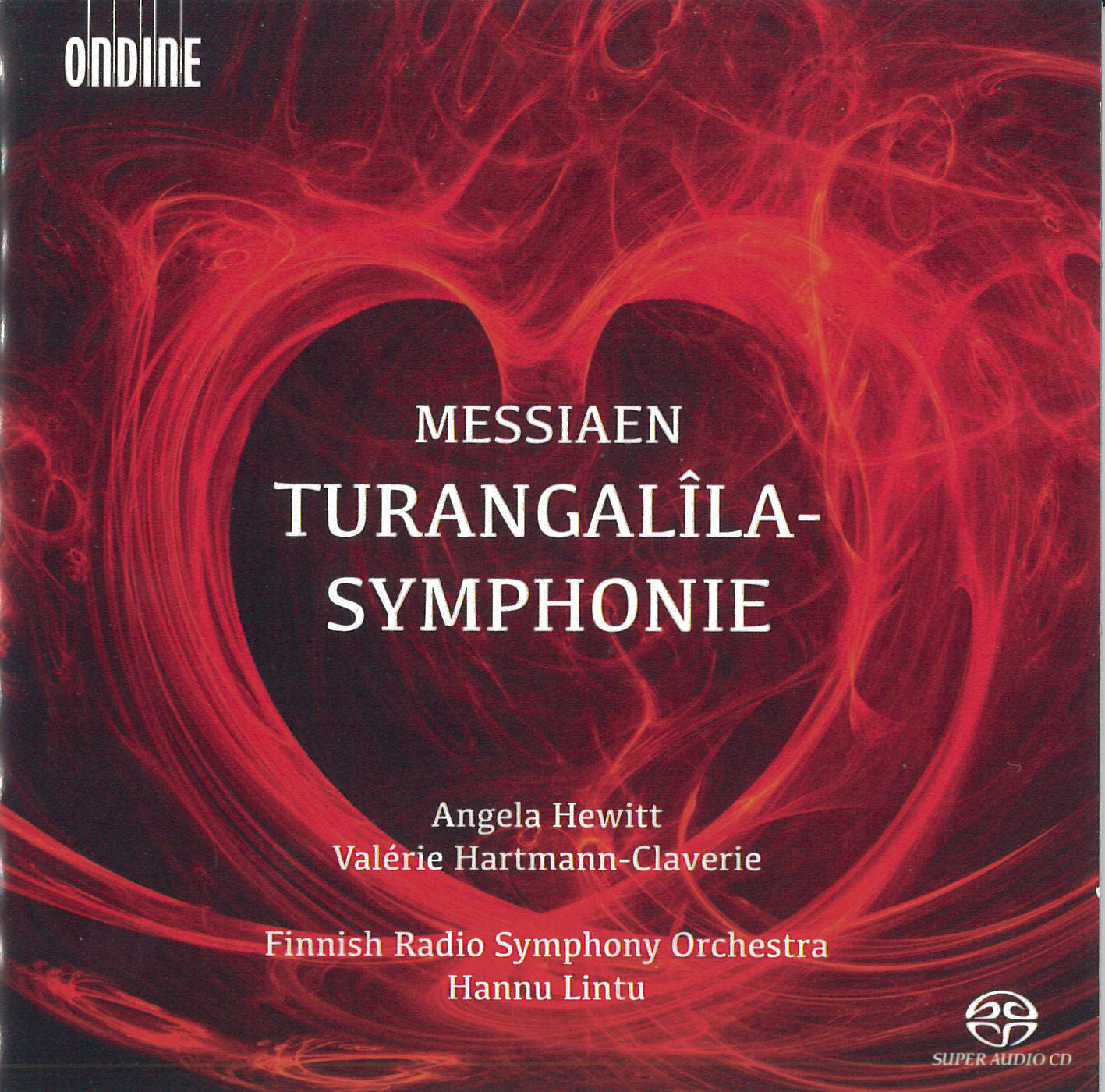
04 classical 01 beethoven hewittBeethoven – Piano Sonatas Opp.22; 31/3; 101
Angela Hewitt
Hyperion CDA67974

It’s no surprise that accomplished musicians develop such acute discernment of their composers’ muses. One simply comes to expect that ongoing intimacy with the creative utterances of someone like Beethoven will produce a deep and evolving understanding of how the music must be played. It transcends academic debate and argument about historical authenticity. It’s a conviction that doesn’t waver. It’s just “right.”

Hewitt plays three sonatas which offer a historical progression clearly marked by Beethoven’s evolving compositional form and musical language over 17 years. The unmistakable echoes of Haydn and Mozart, the classical turns of phrase and stylistic ornaments place the Op.22 solidly at the end of the 18th century. But by the time we hear the Op.101 there are serious rumblings in the depths and a hint of recklessness that we have come to recognize as the Beethoven of the fifth and ninth symphonies.

It must, however, be tempting to take the classical bait of the early work and play it as though we need to be reminded that Haydn and Mozart are standing behind us. Hewitt in fact does the opposite. With appropriate recognition of the classical architecture, Hewitt unleashes the spirit of the young Beethoven and shows us how the composer at mid-life has already seen his destiny. There is no mistaking the volcanic potential of this pen when it meets manuscript. Major keys and scherzos notwithstanding, this young composer is already shaking his fist at the universe.

Concert Note: Angela Hewitt is featured in Beethoven’s Emperor Concerto with the Toronto Symphony on March 20 and 22 at Roy Thomson Hall.

04 classical 02 mercadanteSaverio Mercadante – Flute Concertos Nos.1, 2 & 4
Patrick Gallois; Sinfonia Finlandia Jyväskylä
Naxos 8.572731

Saverio Mercadante (1795-1870), well-known and respected in his time as the composer of many operas, has since been overshadowed by his contemporaries Rossini, Donizetti and Bellini. Insofar as he is remembered today, despite occasional revivals of his operas, it is because of his flute concertos, which were rediscovered by Jean-Pierre Rampal about 50 years ago.

As one might expect of music of Mercadante’s time, these concertos are cornucopias of melodic invention, sometimes spirited, sometimes lyrical, coupled with passages of stunning virtuosity. The long orchestral passage at the beginning of the first movement of the concerto in E minor, for example, sounds as if it could be from the overture to a comic opera; it would take little to make a case for these concertos having been the inspiration for the opera fantasies composed by Taffanel, Borne and Fürstenau some 60 years later.

As for Patrick Gallois, you could almost think it was his teacher, Rampal, playing. You hear the same effortless articulation and movement between registers, the same absence of mannerisms and the same purity of sound. What I didn’t hear was Rampal’s exquisitely refined phrasing and an indefinable quality in the sound, which mysteriously conveys what might be called the meaning of the music. The performance by Gallois’ collaborators, Sinfonia Finlandia Jyväskylä, is precise and sensitive to every nuance of the soloist. These are engaging and beautifully produced performances of a significant byway of the flute repertoire.


04 classical 04 liszt at operaLiszt at the Opera
Louis Lortie
Chandos CHAN10793

Louis Lortie and Chandos records have put together a wonderful Juno-nominated CD of Liszt’s opera transcriptions. Lortie dazzles us with smooth, elegant virtuosity in O du mein holder abendstern (Tannhauser) and Spinnerlied aus dem Fliegenden Hollander. His scales, arpeggios and trills shimmer and sparkle with a light, feathery touch. The speed and flourish of his technique leave us breathless. The beautiful melodic lines are also performed with warm tone and sensitivity. His phrasing is sublime and his fingers sing out the arias.

What I really liked was the freedom with which he teased us with carefree cascades of orchestral sound. In the Valse de L’opera Faust de Gounod Lortie flirted with the music and the rhythms danced with devilish intricacy. His spectacular finger dexterity allows Lortie to play cleanly but with resonance. There is a natural flow that never overshadows the music but enhances it. He has immaculate control of dynamics and can perform pianissimos as gentle whispers and fortes like a full orchestra. His tone can be warm and gentle. The only minor moments of harsher tone were in two of the Wagner transcriptions. The Overture to Tannhauser and the Prelude and Liebestod from Tristan und Isolde are the only pieces in which I missed an actual orchestra. However, Louis Lortie is an extraordinary Liszt interpreter who definitely deserves that Juno nomination and a win for this CD.

The program notes are also excellent. They give a real insight into the era when opera transcriptions were numerous.


04 classical 05 thielemann brahmsBrahms – The Complete Symphonies; Discovering Brahms
Staatskapelle Dresden; Christian Thielemann
Cmajor 715108

Sets of the complete Brahms symphonies on DVD are not all that common, so this one featuring the Dresden Staatskapelle with Christian Thielemann is indeed a welcome arrival. It features live performances from 2012 and 2013 recorded at two different venues, in the NHK Hall in Tokyo, Japan (1 & 3) – during the 10th NHK Festival – and at the Semperoper in Dresden (2 & 4).

A conductor very much of the old-school German tradition, Thielemann studied at the Hochschule für Musik in Vienna and later worked as an assistant to no less a conductor than Herbert von Karajan. He has been chief music director of the Staatskapelle Dresden since October, 2009.

From the moment he raises his baton to a most appreciative Japanese audience in the Symphony No.1, it’s clear to everyone that this music holds a special place for both him and his orchestra. The ensemble invokes a deeply romantic spirit throughout, from the tempestuous opening movement to the jubilant finale. Little wonder this darkly uplifting music is often referred to as “Beethoven’s Tenth.”

In contrast to the tragically noble character of Brahms’ First Symphony, the Second is all placid geniality, so much so that it has often been referred to as his “Pastoral.” Recorded in the Semperoper in Dresden (before a seemingly less appreciative audience!) the orchestra demonstrates a keen clarity and finely judged balance. Thielemann is sometimes known for “pushing boundaries” with respect to tempos, but that is clearly not the case in these performances.

The collection also contains a bonus disc in the form of a 52-minute interview with Thielemann where he reflects on Brahms’ symphonies. During the conversation, he alludes to the solidity of the scoring, and the difficulty in achieving a cohesive orchestral sound, an aspect in which the Staatskapelle Dresden succeeds brilliantly. Indeed, it’s this wonderful melding of orchestral timbres that make the SD’s interpretations so appealing. One of the high points for me in the set (and there are many) is the famous third movement of Symphony No.3. For this poignant and wistful music, Thielemann coaxes a luxuriant sound from the players, the mellow brass perfectly complementing the warmth of the strings – and principal horn Erich Markwart deserves kudos for his hauntingly lovely solo.

Special mention must also be made of the exemplary camerawork in both venues. The shots of both Thielemann and members of the orchestra provide a live presence and further enhance these superb performances. It’s been said that Thielemann has the ability to make familiar repertoire sound new again and he certainly succeeds in doing so here. This set is a must-have for any serious music lover, a sublime combination of wonderful music magnificently performed. Highly recommended.


Back to top