06 Gentiane MGCan You Hear the Birds?
Gentiane MG, Levi Dover; Mark Nelson
Effendi FND 178 (gentianemg.com/music)

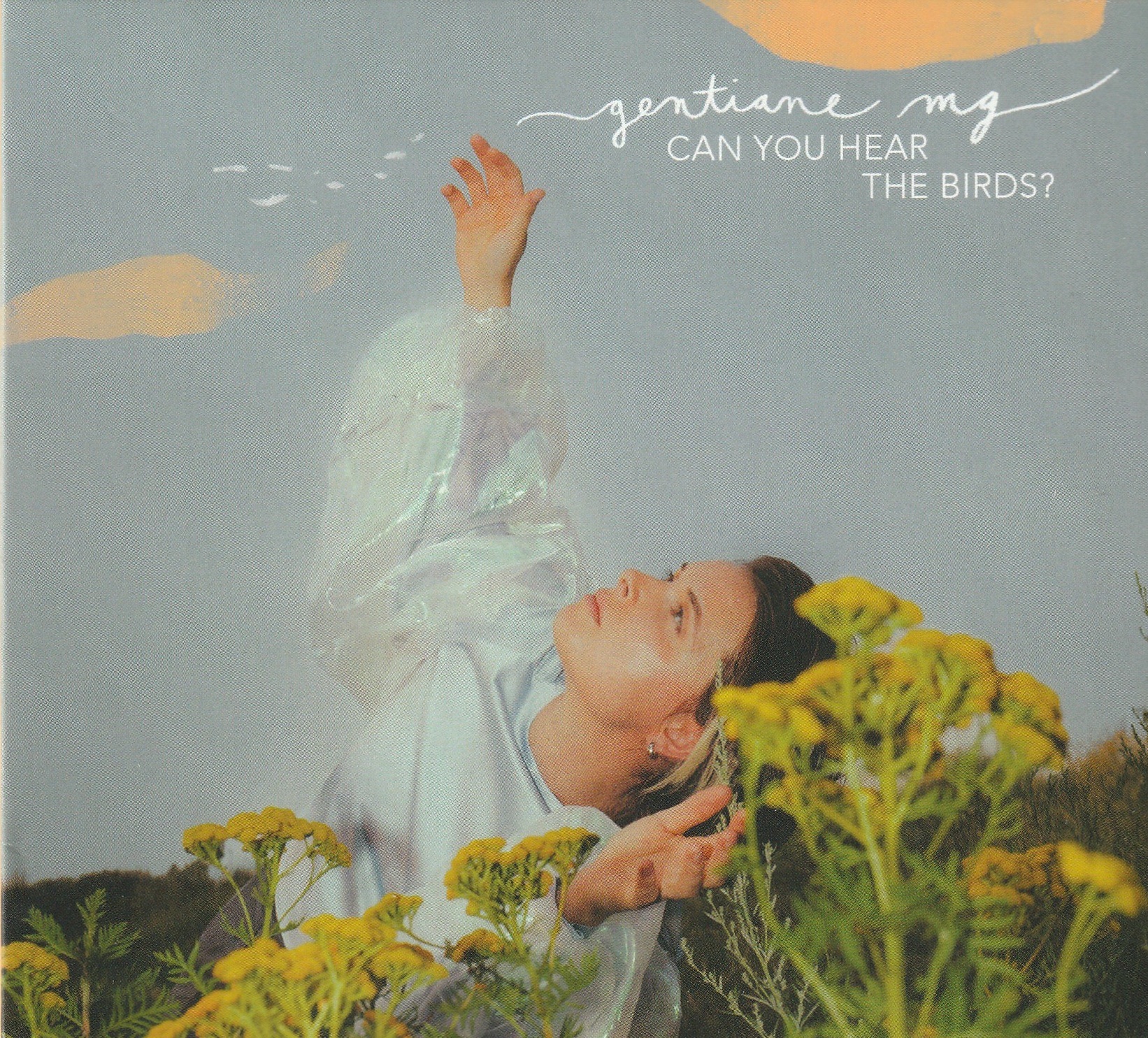
Can You Hear the Birds is Montreal-based pianist Gentiane MG’s fourth album as a leader and features an exciting set of original trio music. The album has a unique design aesthetic, which Gentiane and her team have made ample use of in its promotion, but the musical performance speaks for itself as well.

The trio features bassist Levi Dover and drummer Mark Nelson. They act as creative partners in this endeavour, while simultaneously laying down the accompaniment and groove listeners expect from a traditional piano trio format. The music pleasantly obscures what is improvised and what is composed, adding to the suite-like flow of the album’s programming. There are open and sparse moments throughout Can You Hear the Birds, alongside tightly arranged sections, notably intricate basslines doubled in the piano’s low register on tracks like Standing on a Cloud

I try to avoid direct musical comparisons, for their tendency to cheapen a review, but an overarching sensibility present on this album is that of the finest European jazz. To me Quebec has always felt simultaneously more European, and more American, than other provinces in Canada. How does that relate to Can You Hear the Birds? There is both a stylishness, and an element of visceral grit present, that I don’t hear articulated on the average Canadian jazz album. In some ways this is inevitable, as Gentiane MG and her trio are in a league of their own far above “average.”

07 Worst Pop Band EverThe Least Greatest Hits Vol.1 & 2
Worst Pop Band Ever (Drew Birston; Adrean Farrugia; Chris Gale; Dafydd Hughes; LEO37; Tim Shia)
Independent n/a (wpbe.bandcamp.com/album/the-least-greatest-hits-vol-1-2)

The somewhat whimsical name of this genre-bending jazz ensemble belies the clear excellence of the exceptional musicians and composers who founded the group more than two decades ago – and continue to record, write and tour throughout Canada, North America and the immediate world! With the release of their new two-volume collection, the group re-visits, explores and in some cases re-imagines 15 memorable compositions that have been a solid part of this popular group’s diverse repertoire. The majority of the compositions here were penned by the ensemble and are described as having influences that range from Wayne Shorter and J Dilla to Levon Helm. 

This group dances on that fine line between improvisational jazz and indie pop, and is always full of surprises and fresh perspectives. The superb Toronto-based core ensemble includes upright and electric bassist Drew Birsten, pianist/keyboardist Adrean Farrugia, Chris Gale on tenor and baritone sax, Dafydd Hughes on synths and keyboards, turntable-est/vocalist LEO37 and drummer/percussionist/synthesist Tim Shia. The luminous guest artists on the project include vocalists Caity Gyorgy, Elizabeth Shepherd and Rhonda Stakich as well as trumpeter Rebecca Hennessy and soprano saxophonist Hsien Minyen. 

Included in the wealth of fine material here are several standouts, including Shia’s Love is for Losers, which features a moving piano solo from Farrugia as well as a stunning tenor solo from Gale, enhanced by an ironic and groovy lyric rendered by Gyorgy. Vacation for the Emotionally Challenged is a funky, percussive dive propelled by Shia’s skilled percussion work, and the sumptuous blues Too Much News again highlights Farrugia’s gorgeous technique on Rhodes. Other gems include Year of the Tiger and Believe Beleft Below – all rendered with consummate musicianship, taste and even a bit of humour!

08 Matt GreenwoodDaybreak
Matt Greenwood
Independent (mattgreenwood.bandcamp.com)

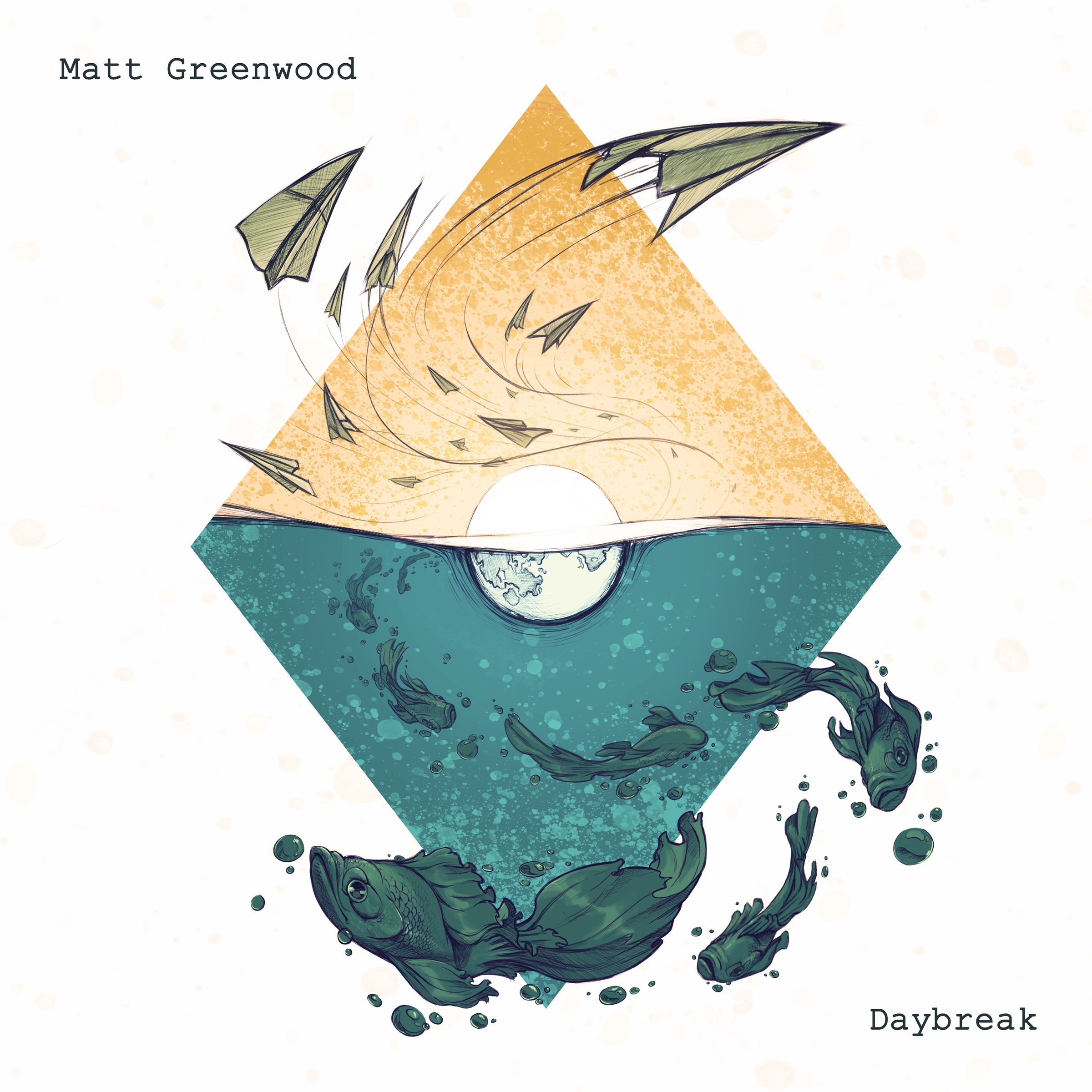
Guitarist Matt Greenwood returns with his sophomore album Daybreak, which he aptly describes as “diving deeper into guitar-driven sonic landscapes with renewed purpose.” The album is substantially more “produced” than its 2023 predecessor Atlas, and Greenwood uses studio technology to craft a lush aesthetic atop an intimate guitar-trio base. 

Born in Zimbabwe, Greenwood earned his undergraduate degree in Toronto, where he was introduced to bassist Mike Downes and drummer Mark Kelso. Zimbabwean percussionist Othnell “Mangoma” Moyo guests on the tracks 1000 Paper Cranes and Guide My Hand, lending them their own unique sound without altering the album’s stylistic tone. The latter track brought to mind a phrase a jazz purist colleague used to say, along the lines of “this is what pop music would sound like in a perfect world.” That idea resurfaced several times while listening to Daybreak, as its compositions and arrangements blend elements of indie, folk, and pop while incorporating enough harmonic sophistication to engage even the most esoteric listeners.

Downes and Kelso are perfectly versatile personnel for this genre-eschewing album, adding sensitivity to rambunctious moments, and confidence to subtler ones. The ensemble’s sounds are recorded immaculately, which is a commendable feat with music this dynamic. Greenwood’s writing makes use of Downes’ consummate bow playing on several melodies, adding yet another dimension to the diversity of sounds. Daybreak should appeal to listeners across the gamut of genres, which is a recommendation in itself.

09 Aretha TillotsonKinda Out West
Aretha Tillotson
Bent River Records BRR-202508CD (arethatillotson.bandcamp.com/album/kinda-out-west)

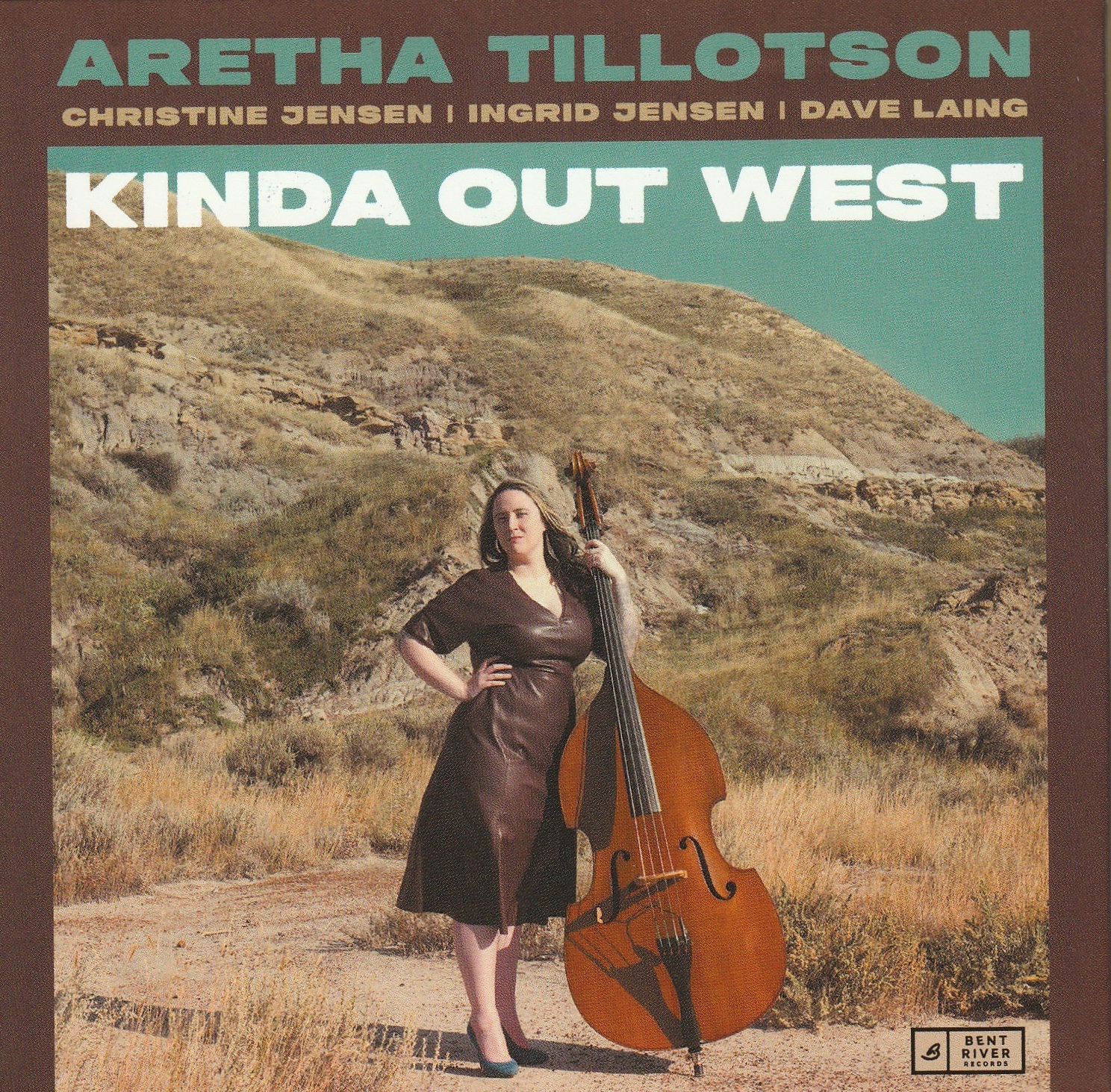
Aretha Tillotson teaches bass and theory at MacEwan University in Edmonton and has played with many prominent jazz groups over the past several years including touring with the Ingrid and Christine Jensen quintet. In 2024 she won a Western Canadian Music Award for Jazz Artist of the Year. Kinda Out West is her second album as leader and I imagine the title is a reference to Sonny Rollins’ Way Out West (1957) which has just bass and drums behind Sonny’s tenor. 

Kinda Out West has a similarly sparse instrumentation with Ingrid (trumpet) and Christine (alto sax) Jensen along with Dave Laing on drums and Tillotson on bass. Tillotson has written all nine unique and bopping tunes on this album. Jill of All gives us a sonically edgy melody while maintaining an awesome bass/drum groove. Christine Jensen begins her solo with a (Rollins) Pent Up House quote and then moves into a melodic flurry with a sweet wailing tone reminiscent of Ornette Coleman. 

The title tune begins with a tasty and bouncy drum solo and then moves into a happy and loopy melody played with trumpet and alto sax. Eventually the bass picks up the melody and extrapolates it into several marvelous ideas while maintaining the bounce. Sphere of Influence’s melody has definite similarities to Monk’s Well You Needn’t while the improvisations move far beyond mere imitation. 

Kinda Out West is quirky and inventive and each musician is allowed to showcase their own style while contributing to a fabulous collective effort.

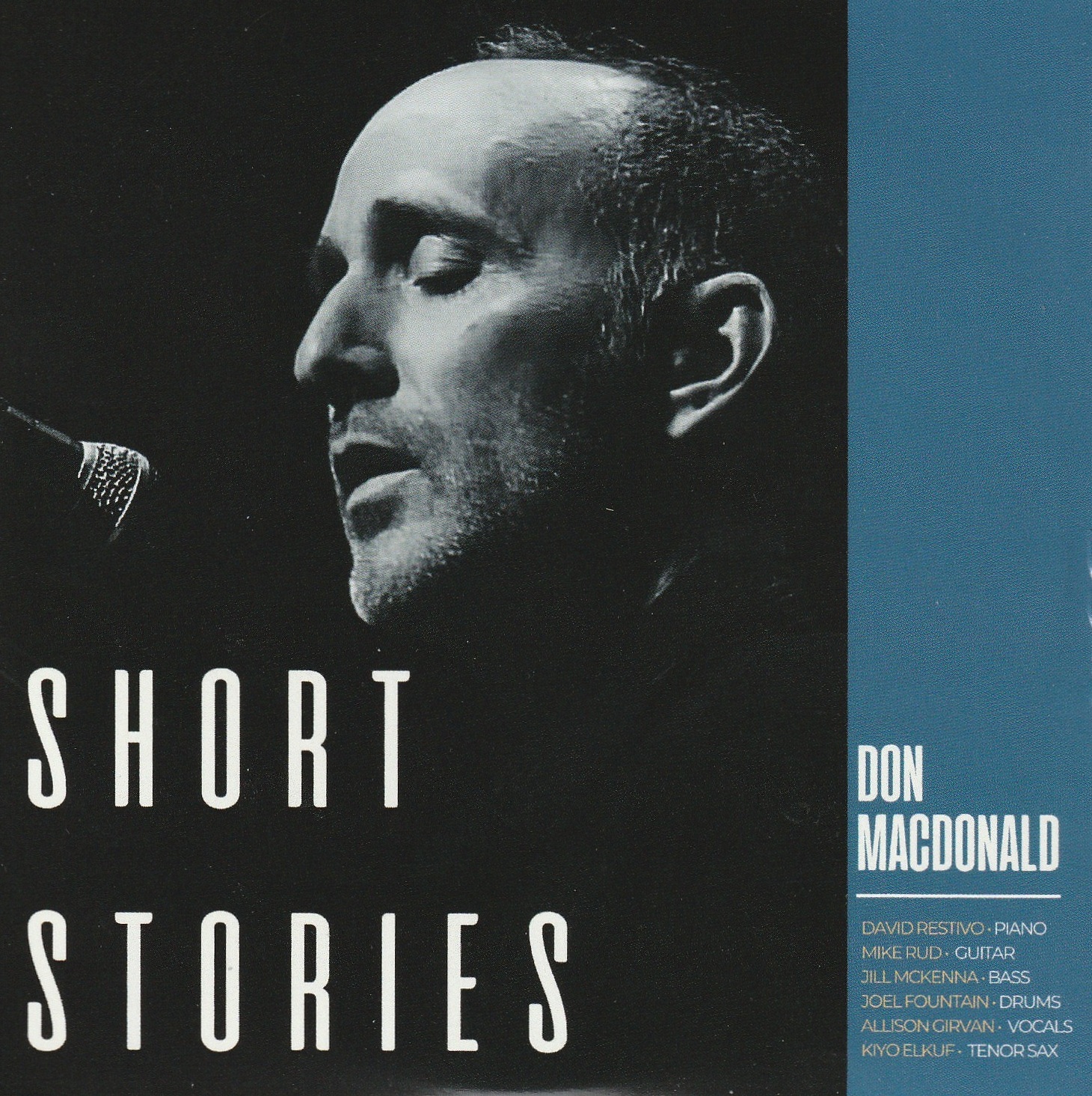
10 Don MacdonaldShort Stories
Don Macdonald; David Restivo; Mike Rud; Jill McKenna; Joel Fountain
Independent (donmacdonald.bandcamp.com/album/short-stories)

In-your-face instrumentation from the first few chords, sweet velvety delivery from MacDonald with great rhythmic finesse, lyrics that are direct and concise. There is a prevailing immediacy to proceedings here, making it no trouble at all to feel immediately anchored to the presentness of the here and now. 

The mere recording quality of a session is not something often worth remarking on, but there is staggering definition given to the absolute tippy-top of each and every piano voicing, each pizzicato pluck, every brushstroke, the tail end of each fricative consonant. The listener is never left with anything but a fulsome image of the combo, never yearning for the further prominence of any single element. Due to the album title, one might notice the various forms of storytelling at play here. MacDonald’s syllabic placement, time feel and seamless use of emphasis grants these words a unique emotional quality. Then there are the words themselves, intimate and making spellbinding use of perspective. Lastly, brevity itself is as effective a narrative tool as anything else here, almost acting as its own character. 

Seven originals, three re-interpretations – and the less versed when it comes to the Great American Songbook would hardly hear the difference – these songs just have that classic quality about them. Oh, and that Bob Dylan rendition? Exquisite.

11 Winnipeg Jazz OrchestraForgotten Stories Suite
Winnipeg Jazz Orchestra; Sean Irvine
Chronograph Records CR-118 (winnipegjazzorchestra.bandcamp.com/album/forgotten-stories-suite)

This is, simply put, big band music as a creative medium done justice. 

Sean Irvine provides the poetry, lyrics and music for the entire suite, and really achieves something special. There is multi-disciplinary artistry where each arrow in one’s quiver is given its own treatment, its own time of day, its own level of care. This is another kind entirely, one where Irvine completely renders distinctions between these artforms unimportant, or even obsolete, showing that one can indeed be an extension of another. 

Music provides colour to these words as organic as the act of breathing. The Winnipeg Jazz Orchestra is more than a mere mouthpiece for one person’s vision too. Quinn Greene’s recitations give the text heft and impact. Karly Epp’s vocals act as a translator from English to the sublime. The dynamism and interplay of the horns act as punctuation, spiritual grammar, and they offer moments that speak for themselves, such as the low brass hit prior to the line “...fear of the unseen” in 2 Brothers

The rhythm section switches up the groove enough times to make one’s head pirouette. As the suite consists of five distinct yet profoundly interrelated movements, Irvine’s brush strokes trawl and traverse the continuum between macro and micro narrative gestures. At its core, this is music about resilience through trauma, and stands as a towering testament to the healing powers of community. Big band music done justice, because it is about justice.

12 Raquel MarinaKind Words
Raquel Marina
Independent n/a (raquelmarina.bandcamp.com/album/kind-words)

Raquel Marina’s artistry holistically shines through on her debut collection of all-original music. The songs are immensely intricate, vivid paintings of language, harmony and tone that constantly reward every additional detail the ear may pick up on repeat listenings. 

There is an incredible equilibrium struck between sonic cohesion and track-for-track diversity, with the entire spectrum of emotive and melodic expression feeling blanketed by the time the needle finally lifts. Thoughts of You being sequenced second in the tracklist might exemplify this effect the most, with its building tension around a one note pedal and mesmerizing horn figures echoing the peaks of Marina’s phrasings coalescing to give a strikingly heavy mournful feeling, the kind of watershed moment that might more typically cap off an album side. 

Even at a lean seven songs however, this album has no shortage of these instances that feel drenched in meaning. The soloing throughout is top notch, and each improviser comes across almost verse-like in their approach to being in dialogue with Marina’s songwriting. Julien Bradley-Combs’ guitar solo on May You Know is for all intents and purposes, a tonal continuation of the inquisitive, conversational themes established in the lyrics. My Bohemian Hour deserves a special mention for being a show-stopping ballad, a soberingly minimalistic performance and an incredibly lucid piece of poetry.

Listen to 'Kind Words' Now in the Listening Room

13 PresenciaPresencia
Nebbia / Banner / Andrzejewski
ears&eyes records EE 25-245 (camilanebbia.bandcamp.com/album/presencia)

A truly integrated trio, Presencia’s nine group-composed tracks highlight the interactive skills of Berlin-based young veteran improvisers: Argentinean tenor saxophonist Camila Nebbia, UK bassist James Banner and German drummer Max Andrzejewski. They combine without artifice in perfectly timed sequences that move from dissonant to delicate. Although Nebbia’s reed textures are most upfront with tropes ranging from honking wallows to thinning whistles and note bending smears, Andrzejewski’s paradiddles, ruffs and cymbal splashes constantly expand the tracks’ rhythmic centre, while Banner’s resounding strums and occasional arco thrusts solidify low-pitched evolution while sketching out clenched string stains that colour the trio’s interactions.  

String thumps and clunking drum smacks frame shaking acrid reed whistles that define the widening interface on Plateau/Her Name Causes Shudders for instance, while on Arid a wallowing exposition is defined by the saxophonist’s stentorian buzzes and whistles, with bass string pumps underlying the few brief pivots to straight-ahead open-horn sound elaborations.  

Lyrical or treble toned sequences are secondary to note-bending and percussive narratives from the trio members. As well, unexpected taut string bowing, slippery elevated reed tones and slick percussion accents throughout confirm the individuality and versatility of the group. Plus the three’s determined and unambiguous presence provides an introduction to, or another instance of, talent confirming from musicians who will definitely have more to communicate from now on.

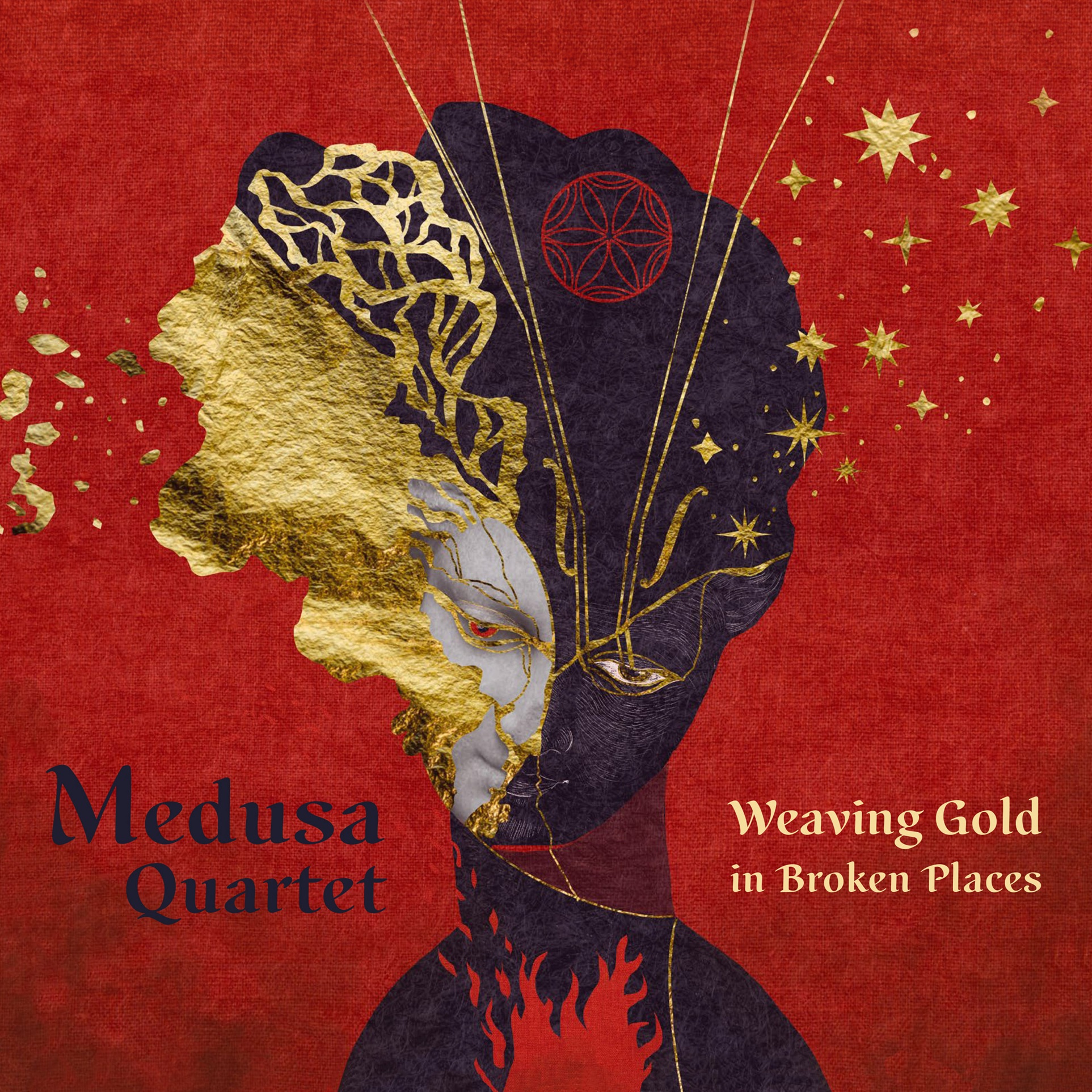
02 Medusa Quartet Weaving GoldWeaving Gold in Broken Places
Medusa Quartet
Independent (medusaquartet.bandcamp.com/album/weaving-gold-in-broken-places-2)

Toronto-based Medusa Quartet – Saskia Tomkins, Marta Solek, Lea Kirstein and Geo Hathaway – create unique global, chamber, and folk music on violin, viola and cello, and such rarely-heard bowed traditional string instruments like the Polish suka, Płock fidel, and Swedish nyckelharpa. Their inspiration to musically blend international, traditional folk and original music in their first full-length album is drawn from Japanese practice of Kintsugi, which mends broken pottery with gold. 

Each composition on this ten-track release is a combination of such styles as chamber, pop, classical and world music. The title track, for violin, nyckelharpa, viola and cello, is composed by Kirstein and arranged by Medusa. It starts slow, with a low pitched, somewhat “sad” melody. This develops into different melodic sections with tight group playing, syncopated rhythms, slightly higher pitched sections, then back to the low theme and a rewarding brief ritardando closing of this folk/classical string quartet.

Kujawiak/Oberek are contrasting Polish dances arranged by Medusa for nyckelharpa, violin, płock fiddle, suka, and cello, the first traditional and the second composed by Sołek. Kujawiak starts slowly, in the lower registers. Love the lower grounding backdrop notes under the expressive melody. Fast Oberek enters with repeated melody lines and toe-tapping rhythms to closing. 

Vulgar Bulgar, composed by Tomkins, features great syncopated melodies, and the pairing of loud rock-like and Bulgarian rhythms. Medusa musicians perform here on nyckelharpa, violin, lyra, and cello and are joined by guest hand percussionist Persian Naghmeh Farahmand.

A “must-listen-to” recording!

Listen to 'Weaving Gold in Broken Places' Now in the Listening Room

“With strings” has always been a loaded expression when it comes to jazz and improvised music. Except for a few exceptions – Stuff Smith and Stéphane Grappelli among them – the original idea of adding string players to a project invariably suggested sweetening harsher sounds by diluting them with clouds of measured catgut tones. Sometime late in the last century as rhythmic affinity and serious improvisation became options for those playing every instrument, that stigma began to dissipate. Today when someone who is mainly an improviser interacts with those whose primary instruments are string-attached, it’s in the spirit of mutual sound exploration as these discs demonstrate.

01 Joe McPheeA long-time innovator as well as a multi-instrumentalist, American Joe McPhee has been involved with every type of configuration in a career going back to the mid-1960s. On We Know Why the Caged Bird Sings (RogueArt ROG-0141 rogueart1.bandcamp.com/album/we-know-why-the-caged-bird-sings), he  plays tenor saxophone, intones rhetoric that plays on Maya Angelou’s 1969 autobiography I Know Why the Caged Bird Sings and generally creates a 12-track piece of sonic art that illuminates Angelou’s prose. His associates are three American string players: violist Mat Maneri, cellist Fred Lonberg-Holm and bassist Michael Bisio. Only vocalizing on the title track, McPhee expresses his other variations on racism and trauma with the occasional guttural scream slotted alongside extended reed techniques which are in turns knife-sharp, gatling-gun speedy and truncheon smacking resonating. 

Although there are instances, such as on Low Seas when the arco stress from the string trio’s instruments is so pressurized that it seems about to split the wooden bodies, singly or together most of their expositions create droning ostinatos or layer top-to-bottom clenched responses to reed expressions which bottom scoop or altissimo cry in profusion. Throughout and especially on the five-part Singing Birds suite contrapuntal sequences are divided, though parallel. The violist moves from hard stops to infrequent melodic formalism; the cellist adds to the narrative with shaking staccato thrusts or reflective twangs with guitar-like facility; and the bassist preserves the horizontal flow with prominent pizzicato crunches or concentrated arco sweeps. Discordant timbres are more prominent than dulcet ones throughout, with stop time and elevated sweeps concentrated to up the excitement level. But Maneri’s smoother motifs and McPhee’s saxophone trills individually prevent the narratives from becoming too weighty.  

New Forms, New Sounds, the most extended piece, illuminates many tropes most prominently. Here McPhee’s heraldic reed exposition takes on a strained oboe-like tone as broken octave projections dig out maximum invention. Surrounding that sequence prolonged string sawing from the others is soon replaced by individual motifs that are affiliated but not harmonized. Alongside the saxophonist’s prolonged smears and tongue stops, the Maneri adds spiccato strokes, Lonberg-Holm horizontal vibrations and Bisio a low-pitched continuum. Stretched but almost linear the sequence is completed as string glissandi and reed lowing move past cacophony to propel the four tones to a profound interaction.

02 Kris Davis SolastalgiaFar more formal and precise than Joe McPhee and Strings’ production is Kris DavisThe Solastalgia Suite (Pyroclastic Records PR 44 krisdavis.bandcamp.com/album/the-solastalgia-suite). The Canadian pianist performed it during a Wrocław concert alongside members of the Polish Lutosławski String Quartet: violinists Roksana Kwaśnikowska and Marcin Markowicz, violist Artur Rozmysłowicz and cellist Maciej Młodawski. 

Davis’ eight-part suite was created by concern about the climate emergency. However, throughout it’s often the quartet’s turn towards harmonized and tender timbres which make some sequences more commonly soothing and pretty than ones emblematic of impending ecological disasters. That often means that when string swells turn elegant or even melancholy, the keyboard responses involve delicate chording or intermittent tremolo formalism as well. More generic to the theme are interludes when group vibrational timidity is replaced by strained string stops or squeaky runs along with prepared piano plinks and patterns that bring a sense of urgency to the program. 

Propelled group glissandi up and down the scale by the quartet is answered with hard driving comping and soon the quartet’s intermittent string stops and rubs, replacing equanimity with energy. The most obvious instances of this occur on the concluding Degrees of Separation and the mid-point Ghost Reefs. Ghost Reefs also has the pianist’s most prominent jazz-like implementation, using antiphonic and contrapuntal motifs that propel piledriver sequences from both Davis and the quartet. Spiccato variations from clenched string movements join with keyboard pitter patter to suggest a threnody to endangered underwater limestone structures.  

The longest and speediest section, Degrees of Separation has its share of sul ponticello string swabs and slices overlaid with emphasized piano motion that judders alongside the quartet’s contributions. But once a midpoint crescendo is reached descending keyboard elaborations and layered string cushioning create animated motifs yet also preserve a linear framework for a satisfactory resolution. Positive as it might be, The Solastalgia Suite may appeal more to those more comfortable with modern notated music rather than free improvisation. 

03 Satoko FujiiWith a somewhat similar set-up to Davis and the Lutosławski quartet, the GEN sextet headed by Japanese pianist Satoko Fujii on Altitude 100 Meters (Libra 206-077 satokofujii.bandcamp.com/album/altitude-1100-meters-2) advances a much different variation of a string-focused performance. Part of this may be that while the Fujii-composed suite referencing Nagano prefecture’s highlands also features her piano, the violins of Yuriko Mukoujima and Ayako Kato and the viola of Atsuko Hatano. Instead of a cellist the group includes bassist Hiroshi Yoshino and drummer Akira Horikoshi. 

It’s not just the bass and drum contributions that make Altitude 100 Meters so distinctive but how Fujii’s pieces encompass inspired improvisational sequences integrated within the lyrical and horizontal narratives. A track like Part 3 Early Afternoon for instance, embodies jazz-like tropes including drum ruffs, rumbles and rebounds, double bass plucks and concentrated keyboard strums. These not only persist as higher-pitched string plucks suffuse the exposition, but also egg on the violins and viola to speed up from andante to presto in tandem with the other three players. Climax creates a distinctive aural afterimage. Still, after balancing light and dark, flexible and firm motifs throughout earlier parts of the suite, lyrical output from the intertwined string trio is as prominent as drum rumbles and double bass buzzes on the concluding Part 5 Twilight as all six reach a conclusive crescendo. 

At the same time, while there are interludes that focus on the pianist’s sophisticated note clusters, in-and-out of time sense and speedy leaps to equally emphasize both sides of the keyboard, the arrangements bring in other voices as well. Mukoujima takes up a good chunk of solo space on pieces like Part 2 Morning Sun and the nearly 20-minute Part 4 Light Rain for instance. Her concentrated sweeps stacked on top of darkened string group glissandi define on Morning Sun’s dramatic build up as succinctly as bassist Yoshino’s sprightly string strops and pumps until string pressure moves the theme down to earth. Then on Light Rain, Mukoujima’s doubled squeaky bow swipes boost the track’s intensity alongside percussive keyboard comping and the bassist’s clean stops and strums. Additionally, textures from the string trio move from distant sweetening to the forefront with pitch ascending spiccato swipes, and then in the track’s penultimate minutes, join with piano cadences and measured drum thumps to confirm the suite’s vitality and urgency.

04 Death of KalypsoIf vitality and urgency are at a premium on Altitude 100 Meters, imagine how the dynamics and pressure were organized on The Death of Kalypso (Thanatosis Produktion THT 32 anglesellekari.bandcamp.com/album/the-death-of-kalypso), a jazz-opera composed by Swedish saxophonist Martin Küchen. Throughout, sequences mix textures from his seven-piece Angles group, augmented by a four-piece string section, with string and wind arrangements from Angles keyboardist Alex Zethson and featuring voice and vocal arrangements by Swedish vocalist Elle-Kari (Sander). 

With a libretto based on Homer’s Odyssey, the story relates how the nymph Kalypso, more commonly spelled Calypso, who detained Odysseus, whose more familiar Roman name was Ulysses, for seven years and later killed herself because he spurned her love. Happily, this modern retelling avoids the more lachrymose aspects of the tale, with the singer’s emotionalism reflected only in her lyrical, but straightforward bel canto dramatization. More importantly the 12-part suite depends as much on Elle-Kari’s interaction with the instrumentalists as her story telling. Sorrowful expressions for instance pair her soprano utterances with My Hellgren’s mournful cello swipes; while a track such as Kalypso in Karlsbad, haunted by dreams uses multi-tracking to back her solo with numerous harmonized voices as well as elevating her breathy passionate tones even higher by contrasting her voice with similar sympathetic responses from the string quartet’s vibrations, Magnus Broo’s plunger trumpet lines and slick metal bar dusting from Mattias Ståhl’s vibraphone. 

In fact Ståhl is as much a presence on The Death of Kalypso as the vocalist. Not only do his measured pings provide a commentary on the singer’s sometimes strained expositions, but he adds weightless sparkles to the purely instrumental tracks. Cutting the woods for instance could easily stand on its own as it mates piano and vibe rebounds, swift smacks from drummer Konrad Agnas, Broo’s elevated triplets and finely accelerated velocity from all 12 players surmounted by baritone saxophonist Fredrik Ljungkvist’s measured reed pumps. 

There may not be room in the standard repertoire for another jazz opera, but the creativity of Küchen – who limits himself to a few, brief pinpointed reed asides – and his associates offer a proper place for the inclusion of a string section in this work. Added at points for middle European romanticism, the string group also provides integrated thrusts and judders to define the narrative as obviously as tick-tock drumming, metronomic keyboard pulses and brass and reed obbligatos do elsewhere.

Stretching the definition of “with strings” in as many directions as possible, each of these productions shows how intrinsically any group of instruments can fit into improvised and jazz-affiliated music.

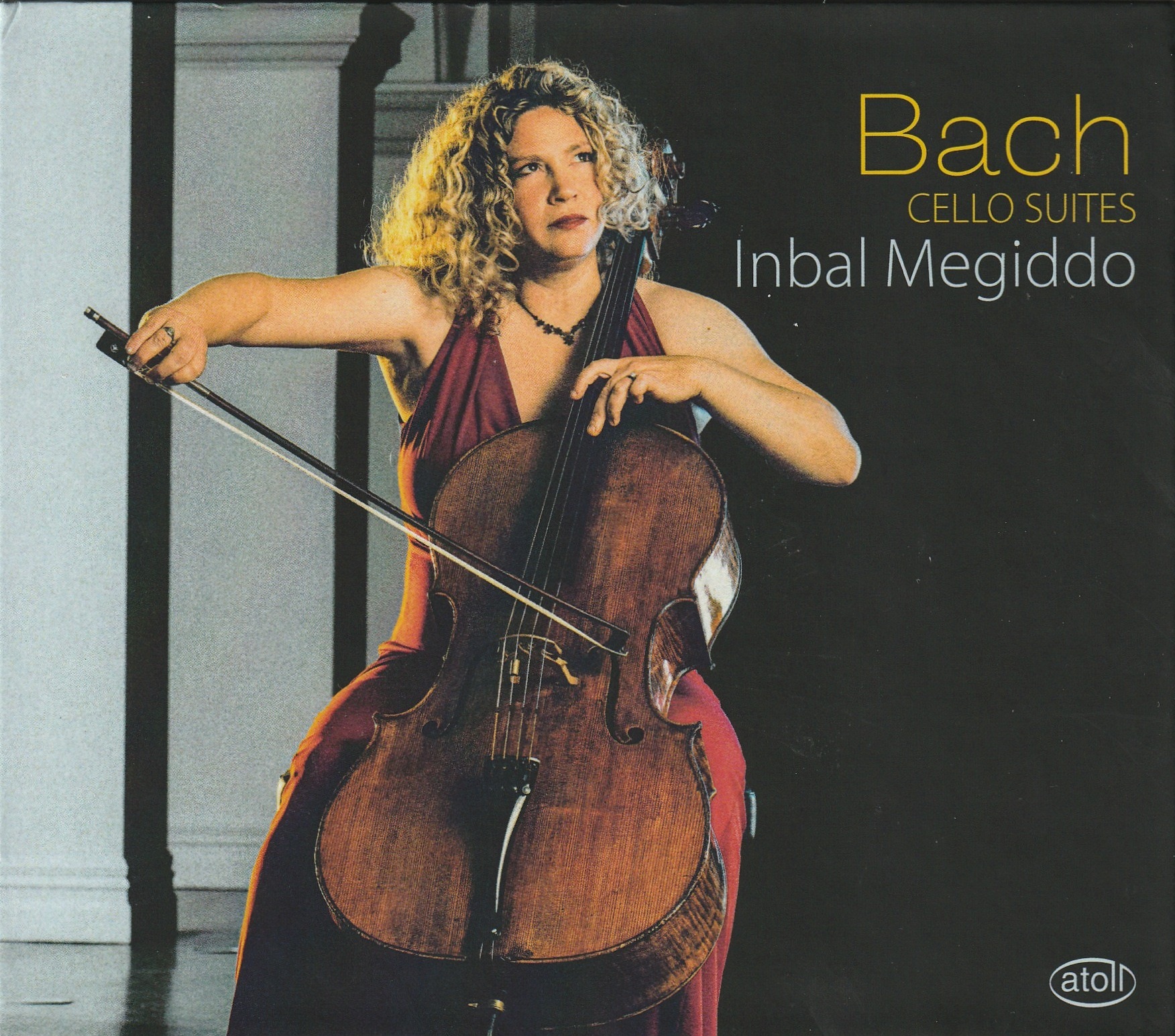
01 Bach MeggidoThere’s another complete set of the Bach Cello Suites, this time from the New Zealand-based cellist Inbal Megiddo (Atoll Records ACD233 atoll.co.nz/album.php?acd=233).

From the opening notes of the Suite No.1 in G Major, BWV1007 there’s a lovely use of rubato – no strict tempo here, but a rhythmic freedom which her mentor Aldo Parisot rightly says “gives an improvisatory feel to the music.” Beautifully shaped, expressive and sensitive, it sets the tone for all that follows.

Megiddo likens the Suites to an emotional and spiritual journey that mirrors life’s experience, convincingly equating each suite with a progressively later stage of life. Gorgeous tone, faultless intonation, all beautifully recorded – it’s been a long time since I’ve enjoyed listening to these wonderful works this much.

Listen to 'Bach Cello Suites' Now in the Listening Room

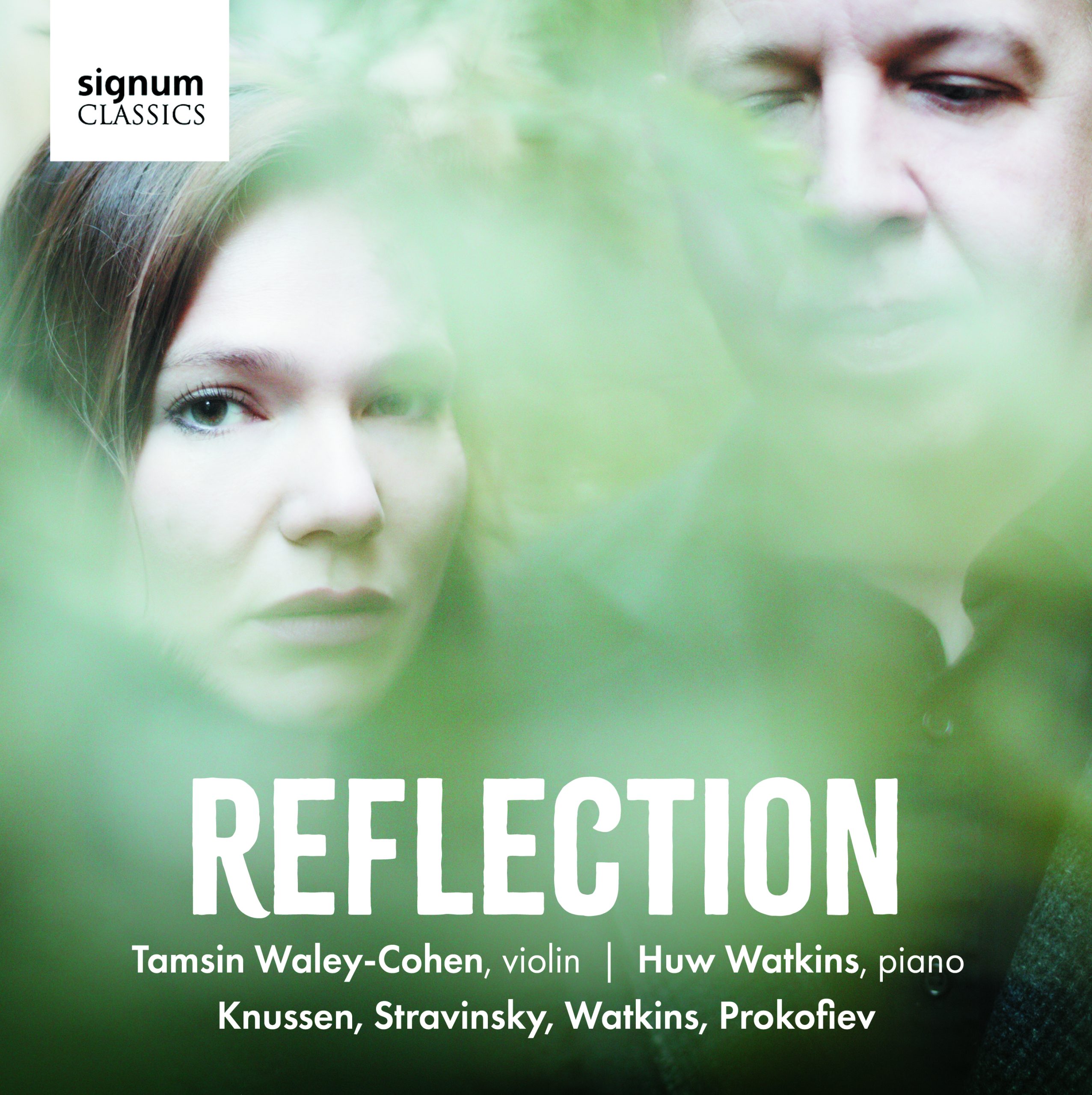
02 ReflectionReflection, the new CD from violinist Tamsin Waley-Cohen and her long-standing duo partner pianist/composer Huw Watkins was inspired by Reflection Op.31a, written for the duo in 2016 by British composer Oliver Knussen, who died in July 2018 (Signum Records SIGCD968 signumrecords.com/product/reflection/SIGCD968).

The duo immediately wanted to record it, but it wasn’t until they performed Watkins’ own Violin Sonata in 2020 that Waley-Cohen felt they had found the right accompanying piece; both works are world-premiere recordings. The Watkins sonata is a striking work, written for Waley-Cohen and influenced by the qualities he sees and admires in her playing; despite some climactic passages, it has what the composer calls a prevailing mood of calm introspection.

Also on the CD are Stravinsky’s Duo Concertant, K054 and Prokofiev’s Violin Sonata No.1 in F Minor, Op.80, works by two favourite composers of Waley-Cohen, Watkins and Knussen.

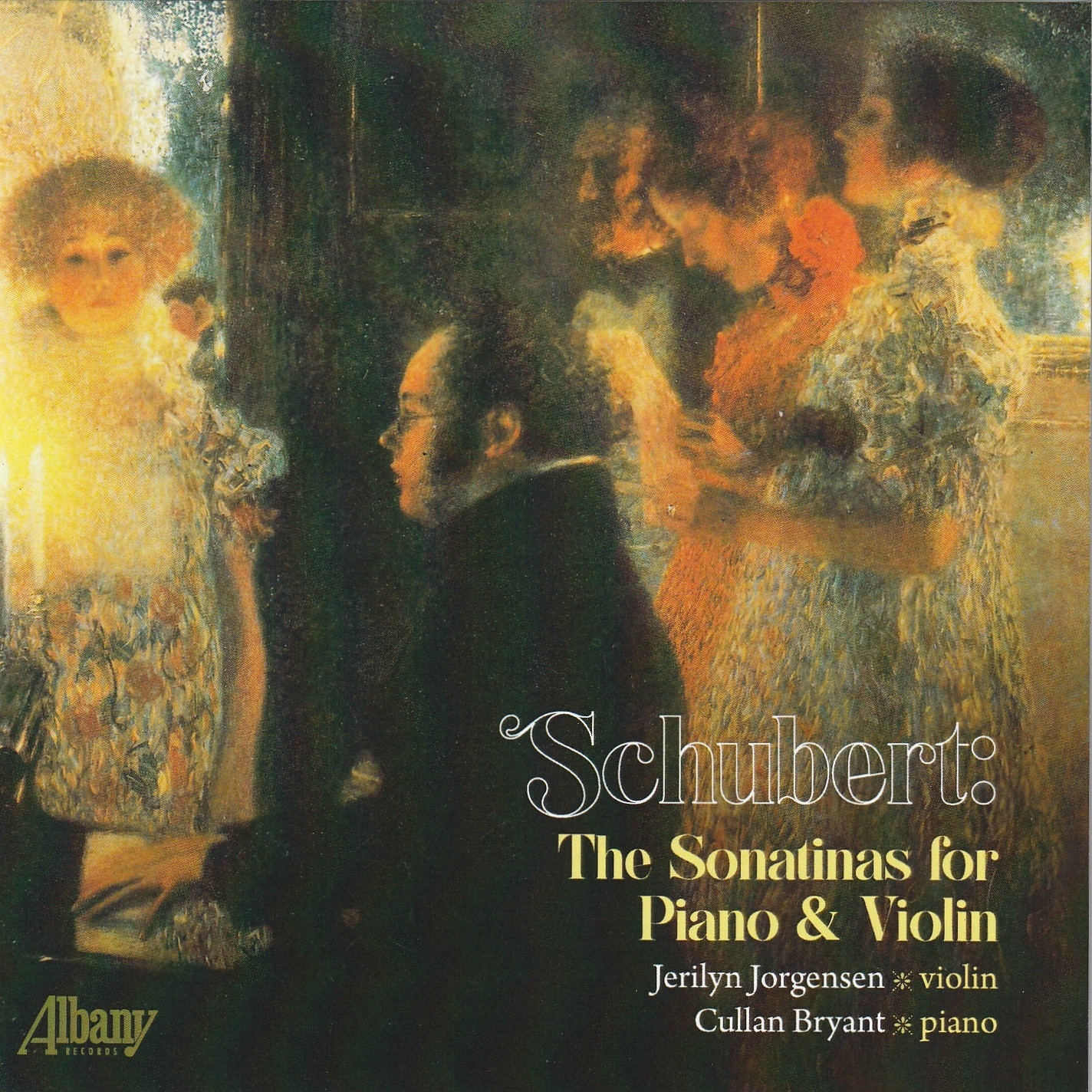
03 Schubert ViolinViolinist Jerilyn Jorgensen and pianist Cullan Bryant are the duo on Schubert: The Sonatinas for Piano & Violin (Albany Records TROY2012 albanyrecords.com/catalog/troy2012).

The three Violin Sonatas in D Major D.384, in A Minor D.385 and in G Minor D.408 from 1816 were published posthumously in 1836 as Sonatinas Op.137. In her insightful notes Lidia Chang suggests that the term sonatina was a deliberate marketing choice, indicating a lesser degree of difficulty with the many capable amateur players of the time in mind, a view supported by the fact that the style of the works suggests that they were intended not for the concert hall but for private performance.

Jorgensen and Bryant established a career presenting classical period historical performances, and this CD appears to be in that vein. The violin playing is low-key and understated, with very little consistent vibrato, and the keyboard is presumably a period instrument, the CD having been recorded in Ashburnham MA, home of the Frederick Collection of Historic Pianos, which Bryant has used as an instrumental source since the late 1990s. No confirmation in the notes, however.

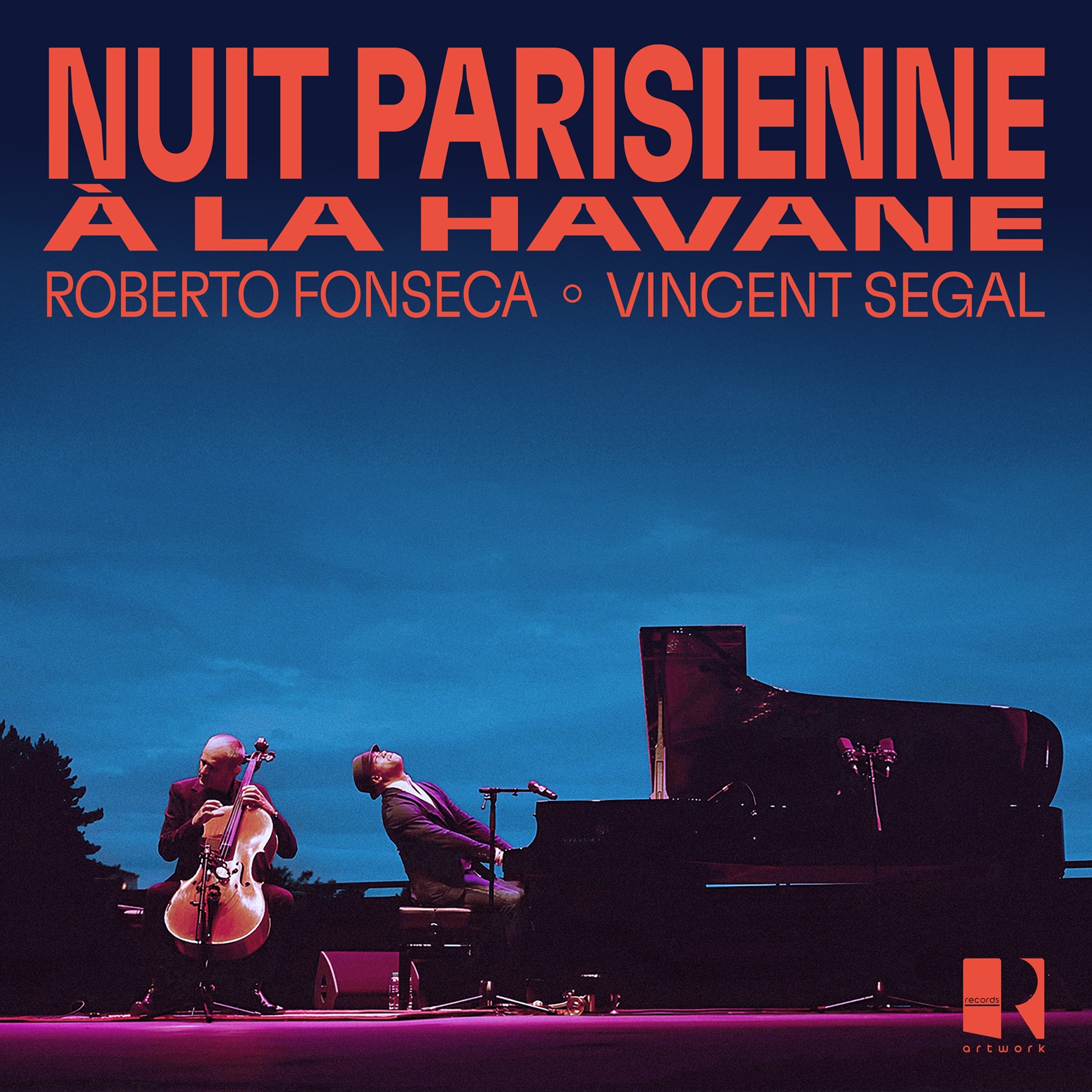
04 Nuit ParisienneIf the thought of a Cuban pianist and a French cellist playing and improvising together appeals to you then you really should listen to Nuit Parisienne à la Havane, the new CD from pianist Roberto Fonseca and cellist Vincent Segal (Artwork Records ARTR0016CD store.pias.com/release/559357-vincent-segal-roberto-fonseca-nuit-parisienne-la-havan).

Fonseca – who includes the Buena Vista Social Club among his early activities – and Segal have created an intimate, finely crafted encounter that bridges classical influences, Afro-Cuban traditions and contemporary improvisation. The CD was recorded spontaneously over five days, with no preparation – they “simply sat down and began to play,” balancing carefully composed material with moments of improvisation. 

Fonseca admits to being strongly influenced by classical music, especially Bach and Chopin, and the interplay here between classical and jazz piano is captivating and immensely entertaining. Segal’s cello is a joy throughout.

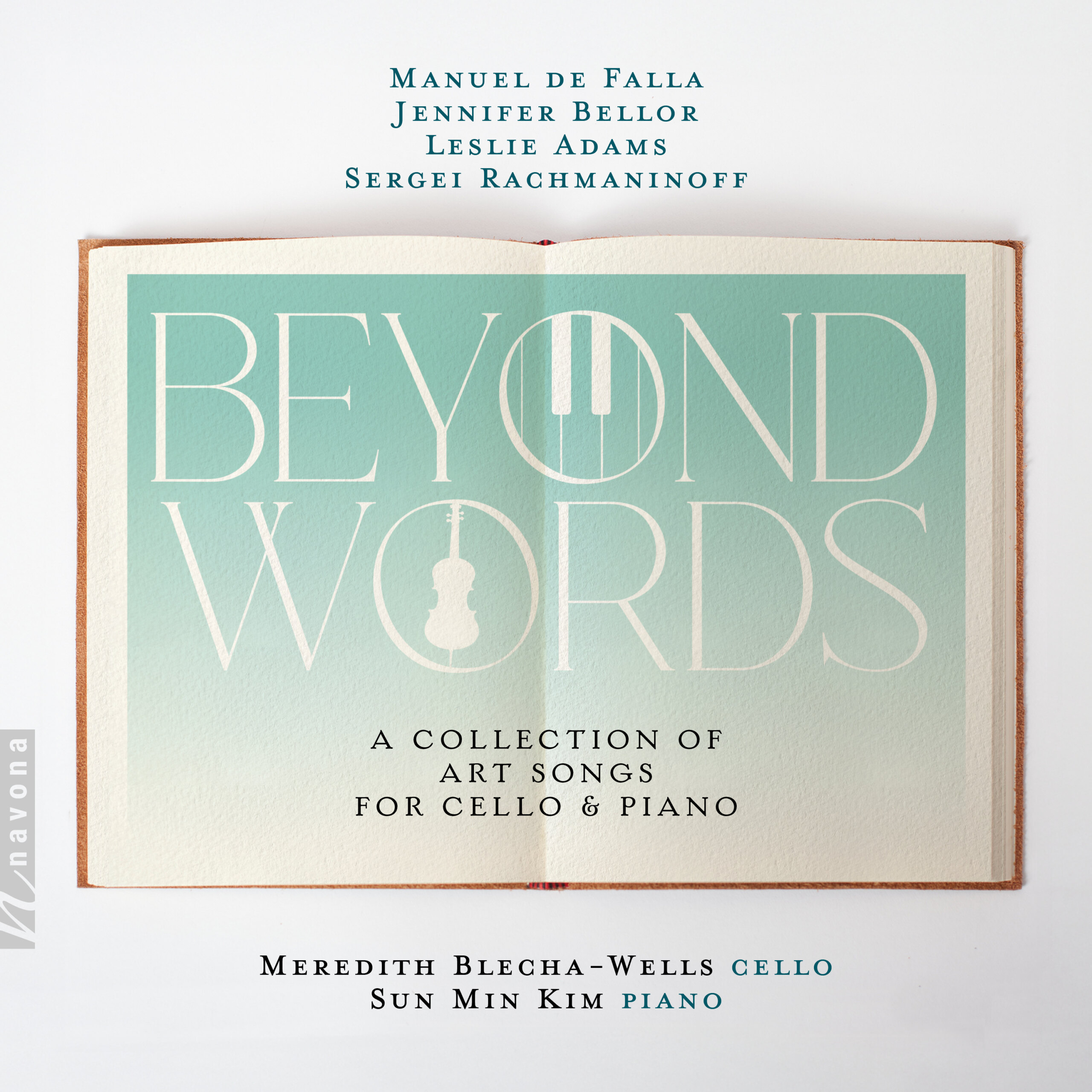
05 Beyond WordsBEYOND WORDS – A Collection of Art Songs for Cello and Piano features cellist Meredith Blecha-Wells and pianist Sun Min Kim in a recital of vocal works reimagined for their instruments, highlighting music’s power to communicate emotion beyond language (Navona NV6788 navonarecords.com/catalog/nv6788).

Two American works are at the heart of the recital: the lovely Aria for Cello and Piano by H. Leslie Adams (1932-2024) and Jennifer Bellor’s three-part Smile and a Sigh – Song of Flight, Echo and Long These Days – originally for soprano, electric guitar and piano, and arranged here by the performers.

Blecha-Wells and Kim are also responsible for all the remaining transcriptions on the disc. The CD opens with eight Rachmaninoff songs, selected from his various Romances Opp.4, 21, 34 and 38, and closes with de Falla’s six-part Suite populaire espagnole.

Blecha-Wells has a warm, smooth tone and a lovely sense of line, with Kim a fine accompanist. Cello and piano sound are both beautifully recorded on an excellent release.

07 Beethoven Calidore QuartetIn Beethoven complete string quartet news, the three volumes of The Complete Beethoven String Quartets released by the Calidore String Quartet between February 2023 and January 2025 have now been reissued as a 9CD box set (Signum Classics SIGCD925 signumrecords.com/product/beethoven-cycle-4-complete-box-set/SIGCD925).

From the outset the releases garnered a very positive response, with reviews in this column noting ensemble playing of the highest quality and expecting the resulting box set to be an exceptionally strong option – which, in a highly competitive field, it clearly is. 

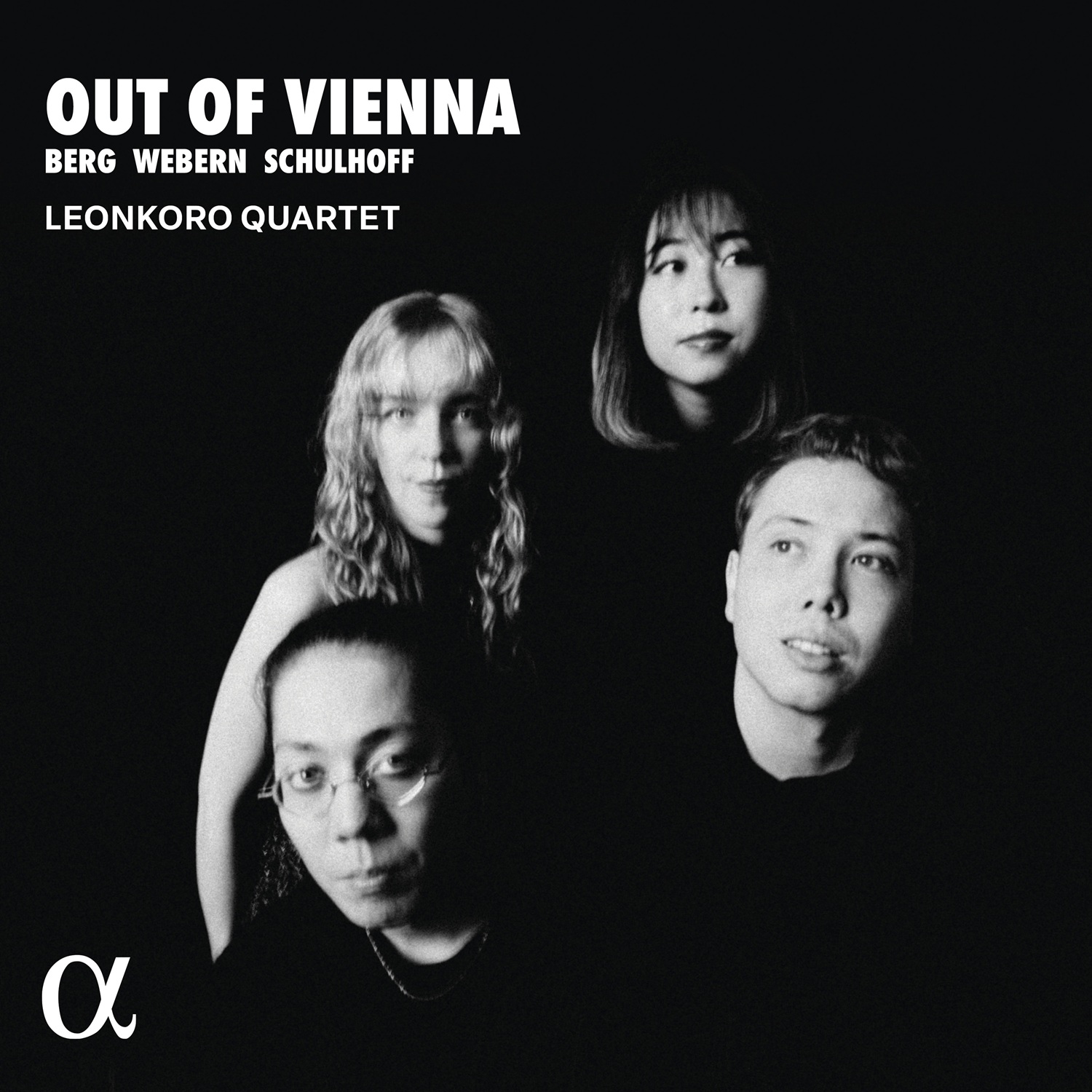
08 Out of ViennaOut of Vienna – Berg, Webern, Schulhoff, the outstanding debut album on the Alpha Classics label by the Leonkoro Quartet is a fascinating exploration of Viennese music for string quartet in the early 20th century ALPHA1196 leonkoroquartet.com/en/media).

Berg’s 1926 Lyric Suite is an intimate and passionate depiction of his deep love for Hanna Fuchs-Robettin, the sister of Franz Werfel and the wife of an industrialist friend of the composer. Hanna’s annotated copy of the study score from Berg (“May it be a small monument to a great love”) details the use of their initials (B-F and A-Bb in German notation) and personal numerology, as well as significant quotes from other works.

Schulhoff’s Five Pieces for String Quartet from 1923-24 are described as looking at the Baroque genre through surrealist – and sometimes sarcastic and mocking – lenses.

Webern’s Five Movements for String Quartet, Op.5 from 1909 was the first string quartet work to use the free atonal style that Webern had started in his Lieder Op.3 – “a concentration of means that tended towards aphorism.” He told Berg that the work mourned the 1906 loss of his mother. His beautiful Langsamer Satz, an early work from 1905 is essentially a love poem to his future wife.

Concert note: The Leonkoro Quartet perform Haydn, Bosmans and Schubert at Music Toronto on March 5. 

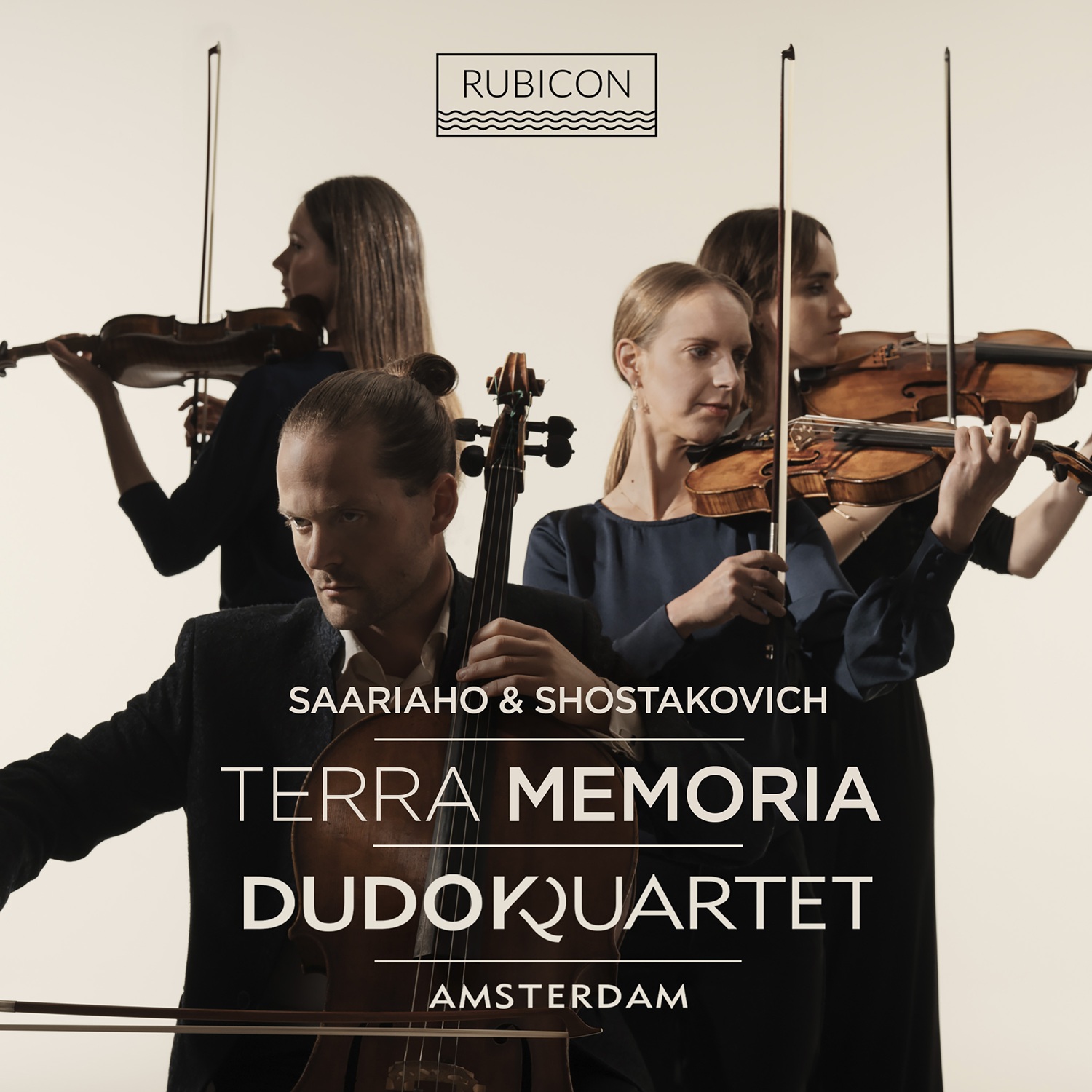
09 Dudok QuartetWorks by Shostakovich and Kaija Saariaho are presented on Terra Memoria, the new CD from the Dudok Quartet Amsterdam (Rubicon Classics RCD 1218 dudokquartet.com/albums/terra-memoria-saariaho-shostakovich).

Shostakovich’s String Quartet No.3 in F Major, Op.73 was highly regarded by the composer, who originally gave each of the five movements a title suggesting an anti-war stance – Blithe ignorance of the future cataclysm; The eternal question: why? and for what?, for instance – before deciding to withdraw them. It remains a powerful personal statement in his unmistakeable style.

The title track is Saariaho’s atmospheric 2007 Terra Memoria for String Quartet, her second work in the genre. It has the dedication “for those departed,” remembering those no longer with us, “Terra” (earth) referring to the material of their complete lives and “memoria” to its transformation in our memories.

Transcriptions of seven of Shostakovich’s 1933 24 Preludes Op.34 complete the disc, with two (numbers 1 and 22) arranged by the Dudok’s violinist Judith van Driel and five (numbers 2, 4, 6, 7 and 12) by their cellist David Faber.

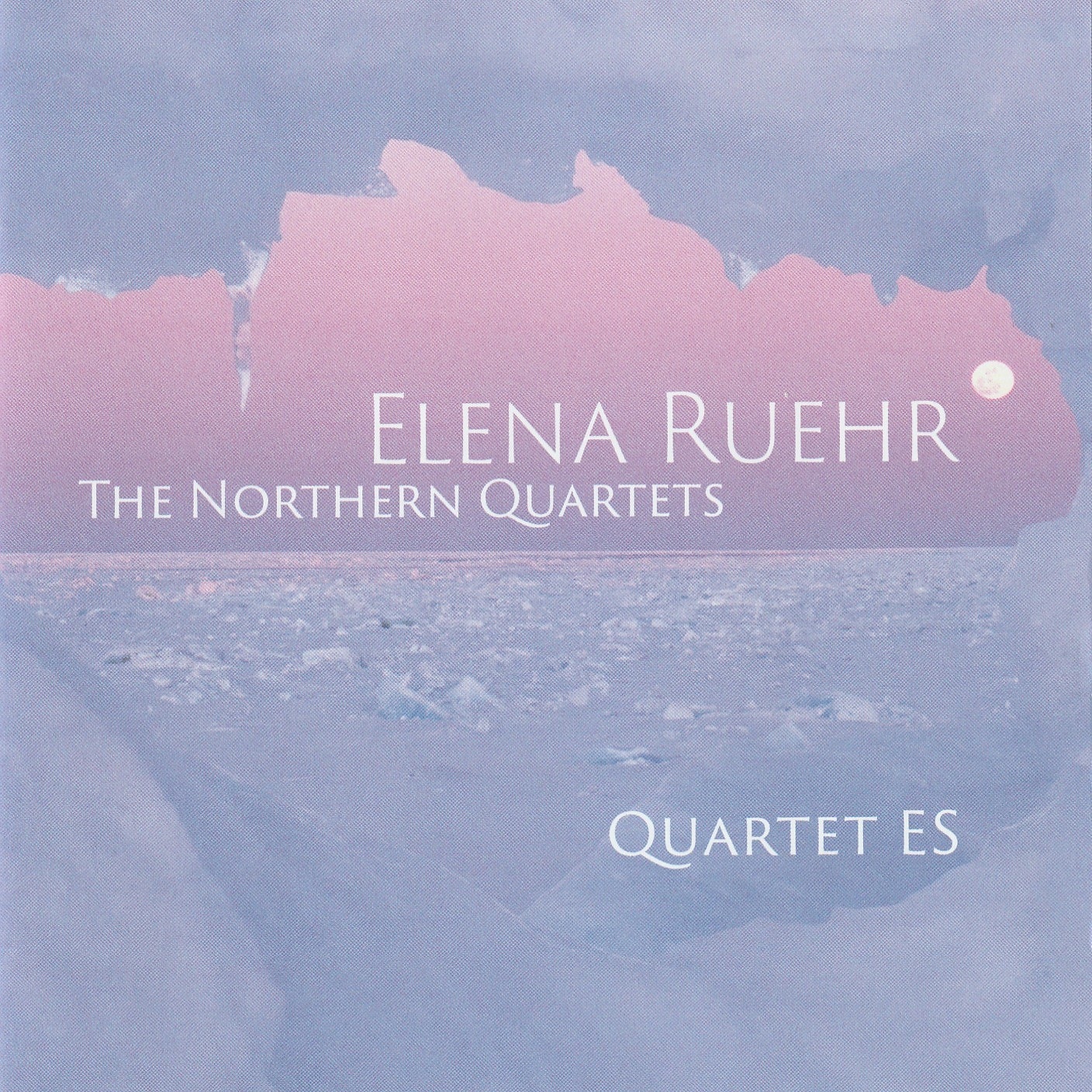
20 Elena RuehrOn Elena Ruehr: The Northern Quartets the Quartet ES performs the programmatic set of three string quartets that Ruehr wrote for them following a casual suggestion that she write some new quartets about places she loves (AVIE AV2798 avie-records.com/releases/elena-ruehr-the-northern-quartets).

String Quartet No.9 “Keweenaw” explores the Keweenaw Peninsula on Michigan’s Upper Peninsula where Ruehr grew up. The five movements include A Thimbleberry Ripens in the Sun, A Blizzard and Lake Superior at Night. String Quartet No.10 “Long Pond” evokes the small lake in Cape Cod where Ruehr has spent a lot of time, the quartet opening with Moonrise and ending with a Nor’easter storm.

Iceland was the inspiration for the String Quartet No.11 “Reykjavik” in anticipation of its premiere there, Ruehr admitting to having been inspired by Górecki’s Symphony of Sorrowful Psalms and Barber’s Adagio for Strings when writing it.

The works are all strongly tonal and immediately accessible, creating a distinctive array of soundscapes and fully supporting Ruehr’s remark that you don’t need to know the programmatic elements to enjoy the music. 
11 Mozart QuintetsThe string quintet developed alongside the string quartet, but never matched the latter’s prominence in the chamber music world. The new 3-CD set Mozart String Quintets, featuring violinists Oleg Kaskiv and Alexander Grytsayenk, violists Eli Karanfilova and Valentyna Pryshlyak and cellist Pablo de Naverán presents all six of the works Mozart wrote for the genre, with a viola instead of a cello as the fifth instrument (Claves Records CD 50-3127-29 claves.ch/products/mozart-the-string-quintets?srsltid=AfmBOoqfo6k0fgxKgUYsw9OI9DT5AGRFn3Ltpzw-14bjh4tbwIdE1pxu).

  Michael Haydn has been credited with creating the form in 1773, the same year that Mozart wrote his String Quintet in B-flat Major, K174 on returning from a trip to Italy. The String Quintets in C Major K515, in G Minor K516 and in C Minor K406/516b (the latter a transcription of an earlier Serenade for Wind octet) date from 1787, the String Quintet in D Major K593 from 1790 and the String Quintet in E-flat Major K614, the last chamber work he completed, from 1791.

There’s bright, joyful playing here that still plumbs the emotional depths of these superb works.

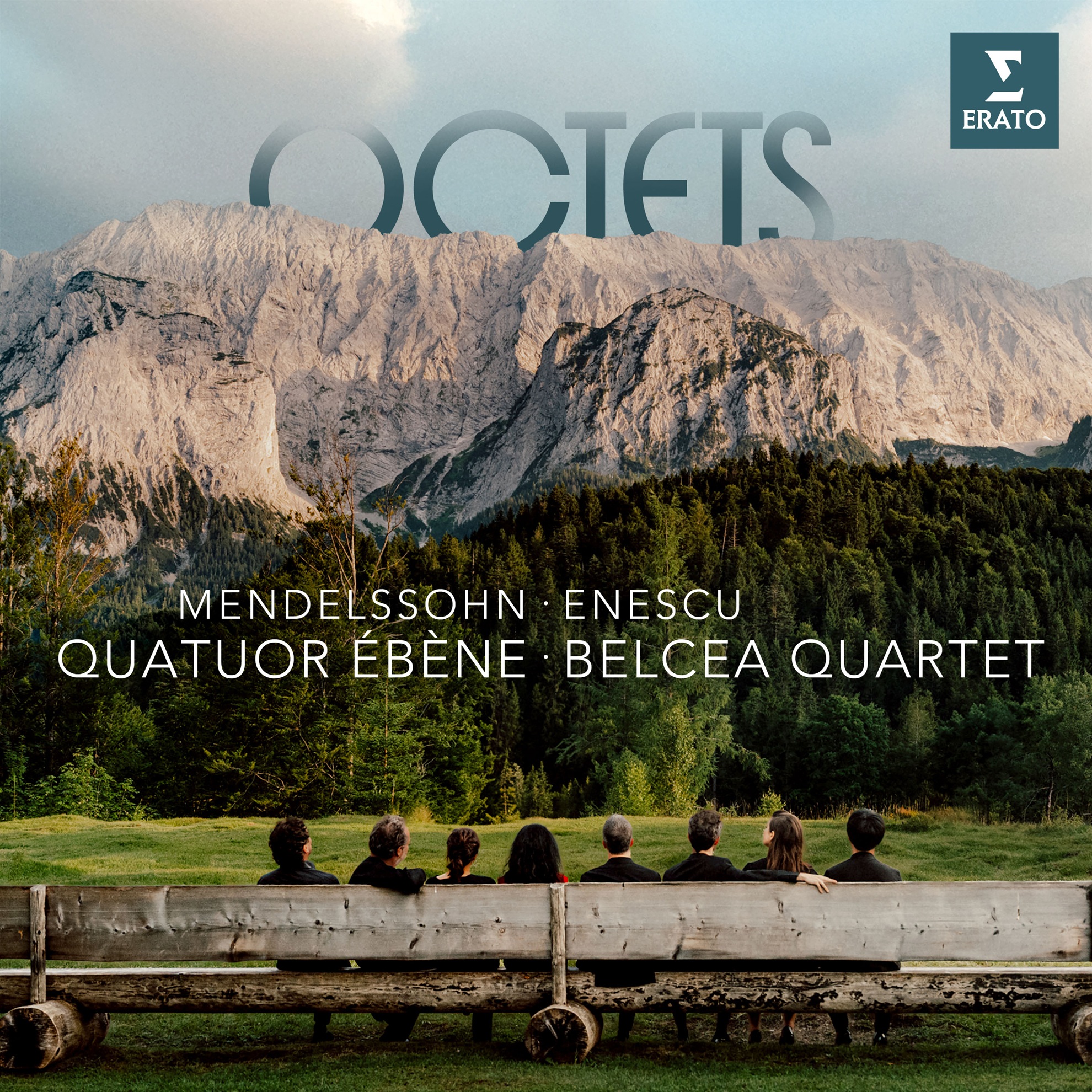
12 Mendelssohn EnescuTwo remarkable works by teenage composers are featured on Enescu & Mendelssohn Octets, with the Paris-based Quatuor Ébène and the London-based Belcea Quartet continuing a relationship they first began ten years ago (Erato 5021732997296 warnerclassics.com/release/octets-mendelssohn-enescu).

“Phenomenally gifted,” says the release blurb of both composers – if anything, an understatement. It’s still difficult to believe that Mendelssohn’s wonderful Octet in E-flat Major, Op.20 from 1825 was written by a 16-year-old, and George Enescu’s Octet in C Major, Op.7 from 1900, when the 18-year-old composer was living in Paris, inspires equal admiration. It’s an expansive and passionate work that reflects the influences of the time – Strauss, Wagner, Debussy – as well as folk music from the Romanian composer’s homeland.

Both works receive full-blooded performances. There are numerous recordings of the Mendelssohn available, but the addition of the Enescu renders this excellent release even more attractive.

13 Viola ConcertosThe Brazilian Rafaell Altino has been principal viola with the Odense Symphony Orchestra for 28 years, and they join him in three 21st-century Danish Viola Concertos by Karsten Fundal (b.1966), Christian Winther Christensen (b.1977) and Søren Nils Eichberg (b.1973), all written for him. David Danzmayr conducts the Christensen, Pierre Bleuse the Fundal and Eichberg (Dacapo DAC-DA2044 dacapo-records.dk/en/recordings/fundal-viola-concertos).

Fundal’s 2008 Viola Concerto (Lightened Darkness/Darkened Light/Dwindling Recall) is an engrossing work, brilliantly orchestrated with a full range of textures and sonorities. The three sections grow less dense in texture, with the solo viola gradually disappearing over the final six minutes against a barely audible background of what sounds like falling water.

 To call Christensen’s 15-minute composition from 2019 a Viola Concerto seems a misnomer: seven brief sections, mostly mixtures of sounds and effects with barely a hint of orchestration. The release sheet mentions “strings tapped with rods rather than bowed, instruments patted and scraped, and woodwinds blown without reeds. Rarely does anything sound fully or in the foreground.” Make of that what you will.

Eichberg’s 2016 Charybdis (Wirbeirausch ) restores our faith. It’s named for the whirlpool and sea monster in Homer’s Odyssey and was inspired by the force of natural destruction, the viola being “caught in the spiraling vortex of the orchestra.” Brilliant stuff!

14 English Works for CelloCompositions by Edward Elgar, John Ireland and Frank Bridge are featured on English Cello Works, a new Naxos CD with the Danish cellist Andreas Brantelid, the Swedish pianist Bengt Forsberg and the Royal Danish Orchestra under Thomas Søndergård (8.573690
naxos.com/CatalogueDetail/?id=8.573690).

Brantelid digs deep in an expansive and passionate opening to the Elgar in a live recording of a 2021 Copenhagen concert. It’s a terrific performance all through, with lovely phrasing, plenty of nuance and a fine mix of intensity and expressive sensitivity. The orchestral support is equally fine.

Ireland’s Cello Sonata in G Minor from 1928 is fittingly described here as fusing brooding, terse muscularity with lyricism and bravura. Brantelid and Forsberg provide a compelling reading, as they do with Bridge’s Cello Sonata in D Minor, H125, a two-movement work begun in 1913 but not completed until 1917, the trials and tribulations of the First World War which intervened possibly accounting for the differences between the Romantic opening movement and the more melancholic and defiant second.

Elgar wrote Liebesgruß (Love’s Greeting) in 1888 as an engagement present for his piano student Caroline Alice Roberts; it was published by Schott the following year in various arrangements under the title Salut d’amour. The cello and piano version closes an outstanding CD.

15 Shostakovich Cello ConcertosThe two Shostakovich Cello Concertos were both written in collaboration with Rostropovich, whose artistry inspired the composer to expand the cello’s expressive capabilities with virtuoso technique and profound emotional depth. They are presented on a new Avanti Classic CD in live performances by Alexander Kniazev and the Yokohama Sinfonietta under Kazuki Yamada (AVA 10672 avanticlassic.com/releases/shostakovich-cello-concerto-cd).

Both concertos offer insights into Shostakovich’s relationship with the Soviet regime. Concerto No.1 in E-flat Major, Op.107 from 1959, with its extraordinary solo cello cadenza third movement is from a relatively relaxed period following the 1953 death of Stalin, but it is still somewhat ambivalent and cautious.

 Concerto No.2 in G Major, Op.126 from 1966 is darker and more introspective; the composer’s health was deteriorating, and he was under increased scrutiny after reluctantly joining the Communist Party in 1960.

The two concertos were recorded in performance in Philia Hall, Yokohama in January 2015 and February 2018 respectively, and are accurately described as capturing the dark intensity and emotional richness of Shostakovich’s music.


Paul FrehnerPaul Frehner – Horizon: Madog
Jeremy Huw Williams; Ensemble Paramirabo; Angela J. Murphy
Navona Records NV6819 (navonarecords.com/catalog/nv6819)

In the realm of rock music, the question “what was the first ‘concept’ album” is a good conversation starter for audiophiles and amateur music historians alike. While the debate often ends in a tie (between Frank Zappa’s Freak Out and The Beatles’ Sgt Pepper’s Lonely Hearts Club Band), a better question might be: “what constitutes a so-called concept record in the first place?” And while that question will not be solved within this column, I am confident that a tri-language opera (French, English, and Welsh) that explores the theme of post-apocalyptic environmental renewal through the life of a “back-to-the-lander” named Madog who looks for non-technologically mediated means of connecting communication practices across diverse communities, would certainly count as “conceptual.”

Released on Navona Records earlier this year and composed by Western University professor Paul Frehner, with what I can only imagine was an extraordinarily challenging to write libretto by Angela J. Murphy, Horizon: Madog creatively takes fans of contemporary classical music and opera on exactly such a conceptual and exploratory journey. Calling upon his background as rock guitarist, Frehner takes inspiration from progressive rock and avant-garde jazz, blending diverse musical styles on this interesting and exciting project. Also featuring a new composition for analog synthesiser, the entire recording is a welcome addition to the canon of Canadian operatic composition and electroacoustic music, as well as offering a testimony to the creativity that can result when collaborations across composers, soloists, and ensembles work effectively and musically together to good end.

01a Goldberg Double ReedBach – Goldberg Variations for double reed trio
Tacamis Trio
Leaf Music LM 307 (leaf-music.lnk.to/lm307PR)

Bach – Goldberg Variations
Baroque Chamber Orchestra of Colorado; Frank Nowell
Navona Records nv6821 (navonarecords.com/catalog/nv6812)

Even in 2026, the genius of J.S. Bach is revealed in new and exciting ways. His Goldberg Variations, a war horse within the Baroque canon, was originally composed for the two-manual harpsichord, but has been interpreted using just about every instrumental and vocal combination imaginable. A hallmark of technical difficulty, the piece demands much from its performers who need to find their own opportunities for dynamism (the original harpsichords offered no dynamic touch sensitivity) and personalization within what at this point is a plethora of wonderfully recorded and creatively interpreted performances. Good thing then that there are still imaginative and skilled musicians out there willing to take up the mantle of responsibility and find ever new ways of approaching this great work. And two fine new 2026 recordings, Bach – Goldberg Variations by the Baroque Chamber Orchestra of Colorado and Bach: Goldberg Variations for double reed trio by the Tacamis Trio do just that. 

I had the good fortune to attend the Tacamis Trio’s album launch party at the wonderful Arts & Letters Club of Toronto recently and to hear the skilled double-reed maneuvering and interpretive aplomb that this talented young trio brings to the Goldbergs. Comprised of oboist Caitlin Broms-Jacobs, English hornist Tracy Wright, and bassoonist Allen Harrington, who collectively form the double reed section of the Manitoba Chamber Orchestra, Tacamis’ unique instrumental combination and compelling ensemble sound mined the expressive expansiveness of a well-chosen selection of the 30 variations, plus a few beautiful Renaissance pieces. Both the performance and their most recent recording on Leaf Music highlight the groups musicality, ability to weave together compelling contrapuntal lines using an unorthodox, but beautiful, collection of instruments, and their symbiotic performance style that undoubtedly comes from working together, as they have done, in both the MCO and the Winnipeg Symphony Orchestra for over a decade.

01b Goldberg Baroque OrchestraWhile the intimacy of the trio format can tease out the delicate intricacies of Bach’s piece. It is indeed an impressive undertaking when an orchestra, in this case the terrific Baroque Chamber Orchestra of Colorado (featuring a new arrangement by violist Alexander Vittal), takes on Bach’s famous aria and its subsequent creative inventions. Vittal’s version captures both said delicacy, along with the intensity and expansiveness that, for example, Variation 2 deserves, and which an impressive large scale orchestra such as this can handle admirably. 

Both recordings are excellent and while listening to them back-to-back, one gets the sense of not only how seamlessly Bach’s timeless piece can move within various ensemble shapes and sizes, but how in the skilled hands of the many wonderful musicians represented here, there is still much to discover and much joy to be had from a work that is nearly 300-years old.

Listen to 'Bach: Goldberg Variations for double reed trio' Now in the Listening Room

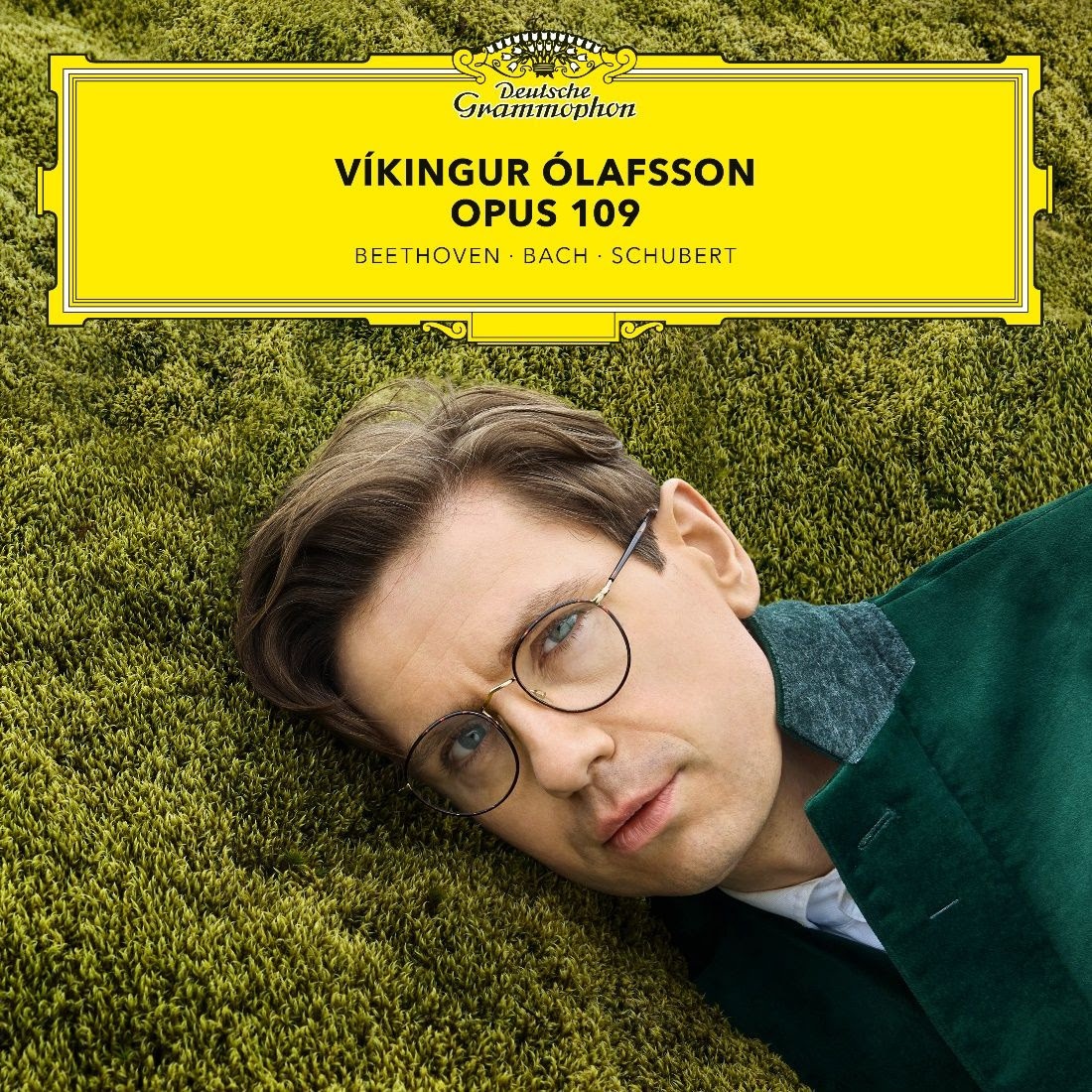
02 Olafsson Opus 109Opus 109 – Beethoven | Bach | Schubert
Vikingur Ólafsson
Deutsche Grammophon 13812 (deccaclassics.com/en/catalogue/products/opus-109-beethoven-bach-schubert-vkingur-olafsson-13812)

Born in Reykjavik in 1984, Grammy award winning pianist Víkingur Ólafsson completed his studies at the Juilliard School, and since then has earned an international reputation, performing with such orchestras as the Berlin Philharmonic and the Royal Concertgebouw. Ólafsson signed a contract with DG in 2016 and in ten years, has made some 30 recordings, this latest one featuring music by Bach, Schubert and Beethoven.

The disc opens with the Prelude No.9 in E Major from Bach’s Well-Tempered Clavier – all of a minute and 44 seconds – a seemingly odd choice for an opener. Equally intriguing is his decision that every composition on the recording be in the key realm of E, stemming from Ólafsson’s synaesthesia (in his mind, the key translates into vibrant shades of green.)

Beethoven’s Sonata Op.90 from 1814 that follows is sometimes referred to as “a struggle between head and heart.” Ólafsson plays with a strong assurance, easily meeting the demands of the two contrasting movements.  

He returns to Bach with the Partita No.6, long regarded as the grandest of all the Partitas and a true study in contrasts. While the notes are well articulated, both the Corrente and Air are taken at a much brisker pace than is commonly heard. 

The early Sonata in E Minor D586 by Schubert precedes the final composition, Beethoven’s three-movement Sonata No.30 Op.109. The work is a marked departure from the traditional sonata form and Ólafsson offers an energetic and expressive interpretation.

A quibble in this recording is the sound quality. It seems possible that the mic may have been placed too closely to the keyboard, resulting in a particular imbalance and a somewhat less resonant sound. While this might be overlooked, it somewhat mars an otherwise engaging performance.

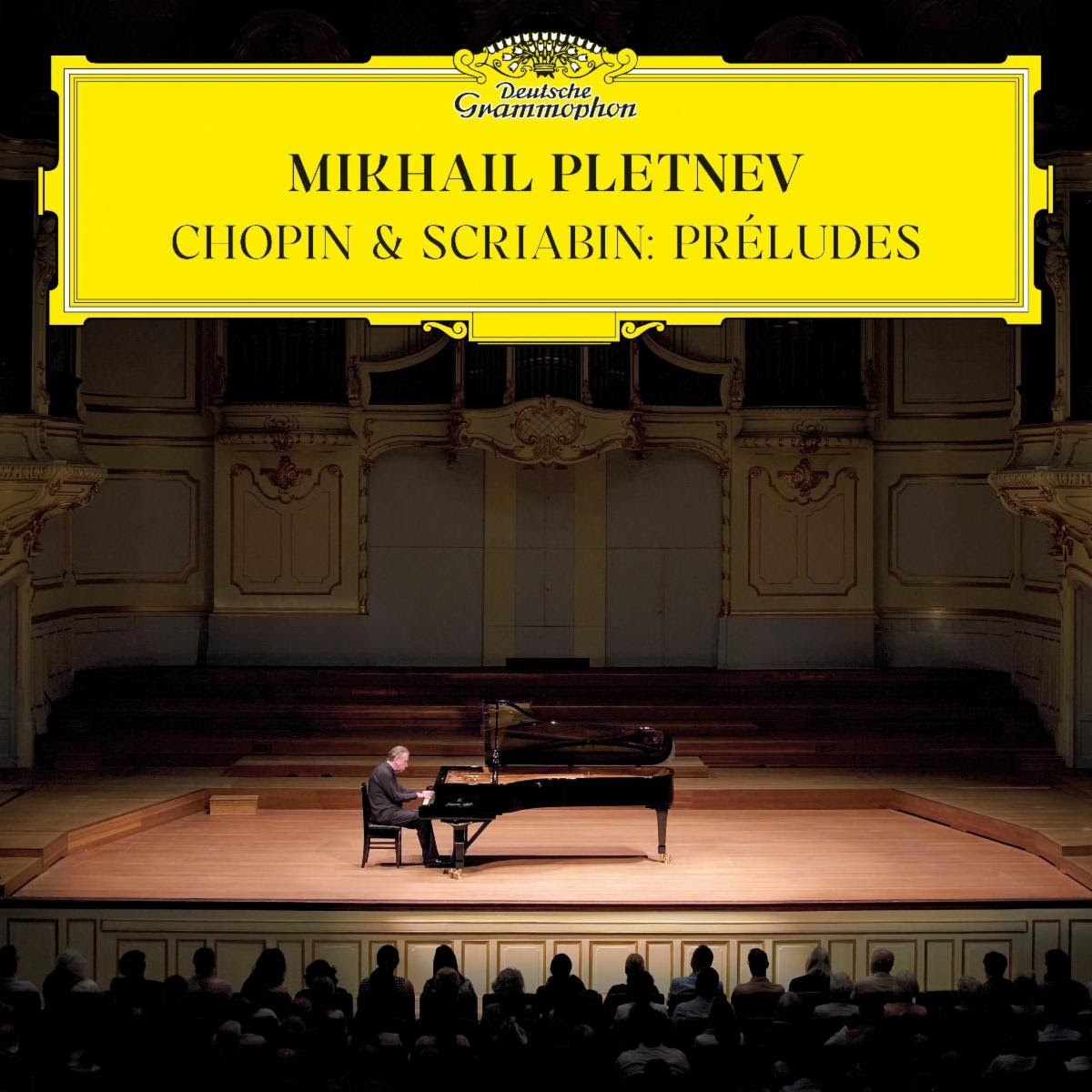
03 Pletnev Chopin ScriabinChopin & Scriabin: Preludes
Mikhail Pletnev
Deutsche Grammophon 5419773735 (store.deccaclassics.com/products/chopin-scriabin-24-preludes-cd?srsltid=AfmBOorvIu8gwUT_6TdcZw2LGlc5Be-7qAj3MxSpSnUCrf-ejgPCWJqz)

Since winning the gold medal at the International Tchaikovsky competition in 1978, Mikhail Pletnev has enjoyed a stellar career, not only as a pianist but also as a composer and pedagogue. Included among his activities are a large number of recordings for the DG label, both as soloist and conductor. Nevertheless, this latest one presenting Chopin’s 24 Preludes Op.28 and the 24 Preludes Op.11 by Alexander Scriabin, is his first studio recording after a 19-year hiatus. 

Romantic legend has it that Chopin composed the preludes while on his ill-fated sojourn in Mallorca with George Sand during the winter of 1839. Yet contemporary sources indicate that they were probably completed before the couple departed. Pletnev approaches these well-loved gems with an elegant sensitivity, perfectly capturing the ever-contrasting – and fleeting – moods while infusing his own personal mark within.

The opening prelude is taken at a much more leisurely pace than is commonly heard and the “Raindrop” Prelude No.15 in D-flat Major makes much less use of the pedal so the repetitive A-flat in the bass-Iine indeed resembles the sound of its namesake. Préludes such as the Third and Eighth reinforce Pletnev’s reputation for formidable technique, while demonstrating keenly balanced phrasing.

Less well known are the Preludes by Scriabin. The Russian composer greatly admired Chopin’s music, and this set similarly covers all 24 major and minor keys while following the same key sequence. Nevertheless, many have a mood of quiet introspection utilizing a lush harmonic language. Pletnev delivers a refined performance, always carefully nuanced, from the delicacy of No.5 to the more strident Nos.6 and 11.

A program of music both familiar and less so – welcome back Mr. Pletnev. It has been a long wait and we hope you’ll favour us with another recording soon.

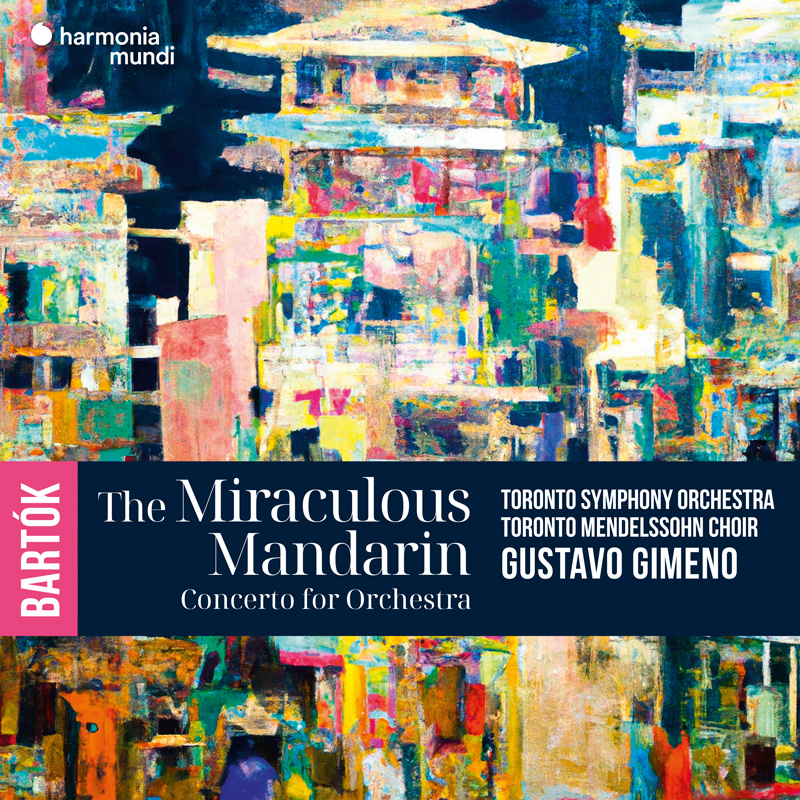
04 TSO BartokBartók – Miraculous Mandarin; Concerto for Orchestra
Toronto Symphony Orchestra; Gustavo Gimeno
Harmonia Mundi HMM 905365 (store.harmoniamundi.com/format/1871527-bartk-the-miraculous-mandarin-concerto-for-orchestra)

This third issue of the Toronto Symphony Orchestra conducted by Gustavo Gimeno for French Harmonia Mundi is the best yet. Bartók is another 20th century giant whose masterpiece, the Concerto for Orchestra has been paired with one of his most imposing works, The Miraculous Mandarin in its seldom performed complete version. This includes some brief but telling choral elements, provided by the Toronto Mendelssohn Choir, and this is far preferable to the usually programmed Suite. The style of this ballet-pantomime is in Bartók’s most challenging Expressionistic vein, a constant and colourful, mostly atonal setting, with a stream of motives and musical events that are hard to fit into any sense of a narrative just from the volatile music. For me this piece is best taken as purely sonic experience, and in this production the TSO gives an overwhelming performance.

The famous Concerto for Orchestra is one of the more frequently done and recorded works of the 20th century, and always shows any orchestra at its best, being not only a challenge for countless solo instrumental turns, but also in ensemble and orchestral discipline. The competition is daunting on recordings, starting with the first great recording by the Chicago Symphony conducted by Fritz Reiner, who commissioned the piece from the dying Bartók in 1941 after he made it to the United States. The Concerto has since been recorded by most major orchestras and many aspiring conductors, and this new recording must be one of the best in recent times. Gimeno is competitive with Reiner.

There is a short, commissioned piece, the sediments, by TSO associate composer Emile Cecilia Lebel. This welcome work contrasts the event-packed Bartók pieces with calmer, sustained sonorities of complex overlaid chords later mixed with tam-tams. 

The sound has been perfectly captured with careful microphone placement in Roy Thompson Hall to create a resonant soundstage with a good sense of depth and uncluttered spatial openness. The annotations are especially informative.

Back to top