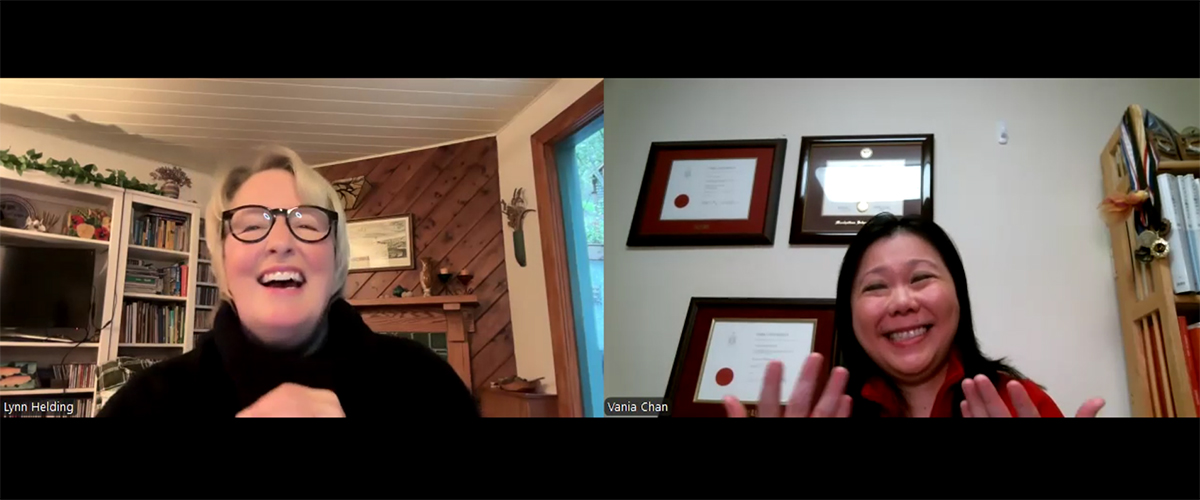
 I was in search of answers to all things related to singing – for my own personal vocal technique, my dissertation thesis, vocal pedagogy, career advice, etc. – when I came across Lynn Helding while poring over articles in the Journal of Singing. Reading through her articles, I found myself drawn both to her research and to the openness of her communication.
A mezzo-soprano, having performed throughout the US and internationally, Lynn is open about sharing her own personal journey, including her encounters with vocal technique issues in graduate school and how she found her own inspiration through voice teacher and researcher Richard Miller and his groundbreaking book The Structure of Singing.
Now a widely recognized figure in the field of voice pedagogy, Lynn uses the term vocologist to designate her special training and qualifications. She is a Professor of Practice in Voice and Vocal Pedagogy at the University of Southern California, Thornton School of Music, works with a variety of vocalists on a myriad of vocal problems at the USC Voice Center, Keck Medicine of USC, and is in demand as a presenter on cognitive topics, presenting at major voice conferences, symposia and schools of music around the world.
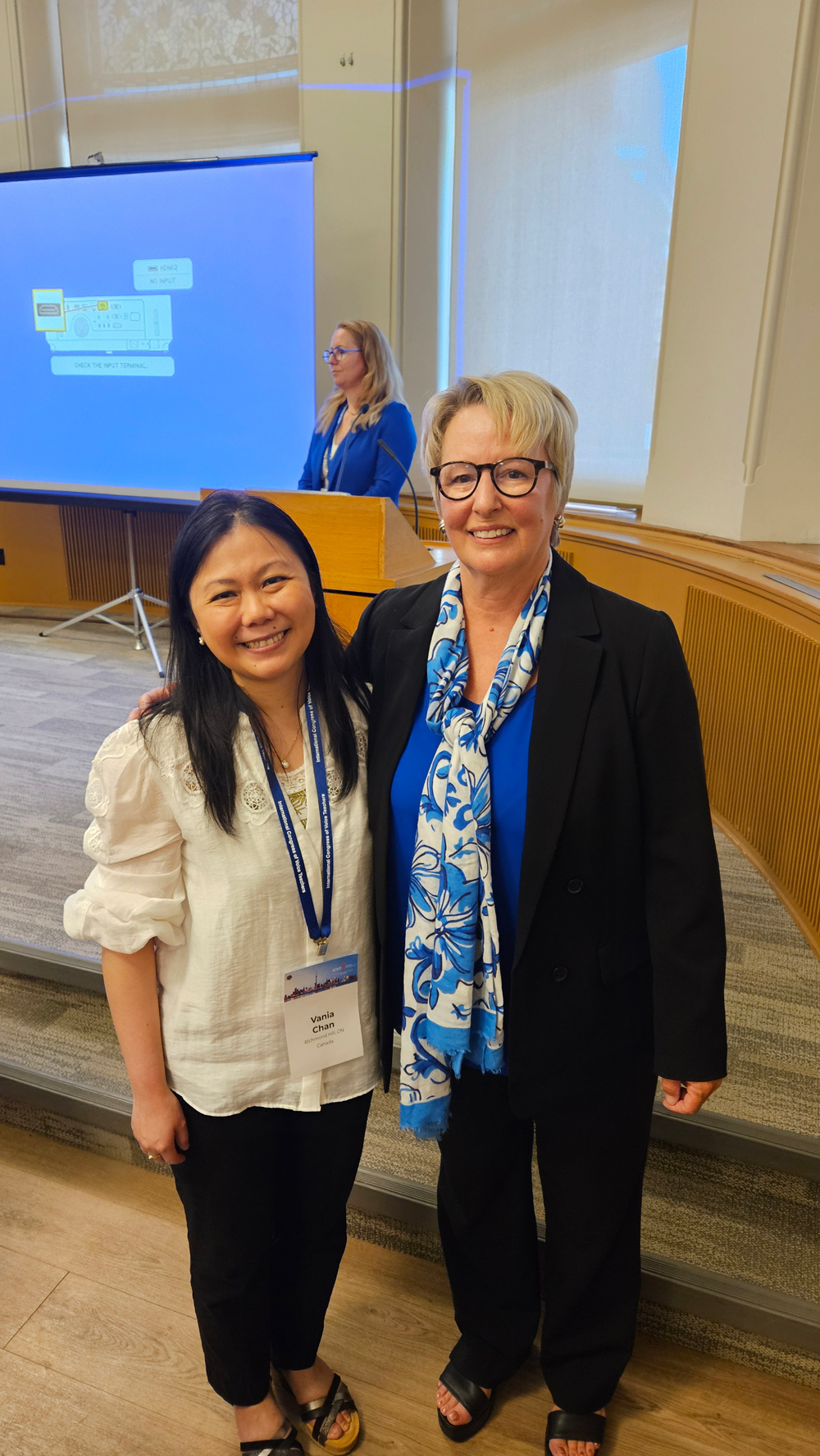
I finally met her in person at the 2025 International Congress of Voice Teachers in Toronto. I had brought with me my copy of her book The Musicians’ Mind: Teaching, Learning, and Performance in the Age of Brain Science, in my opinion, an essential read for any musician interested in learning about optimizing their mental well-being and cognitive abilities. After sharing a laugh over the fact that my copy was festooned with sticky tabs, she kindly signed it, and later graciously took the time to join this ongoing conversation about music and mindfulness.
As is usual for this series, our interview was broken down into three parts – Calming the Mind, Organizing Thoughts and Flow. The ensuing enlightening and hearty discussion could have gone on for hours. This article offers only a few glimpses into it, with much more to be gleaned from the video interview on my YouTube Channel – Vania Chan Music.
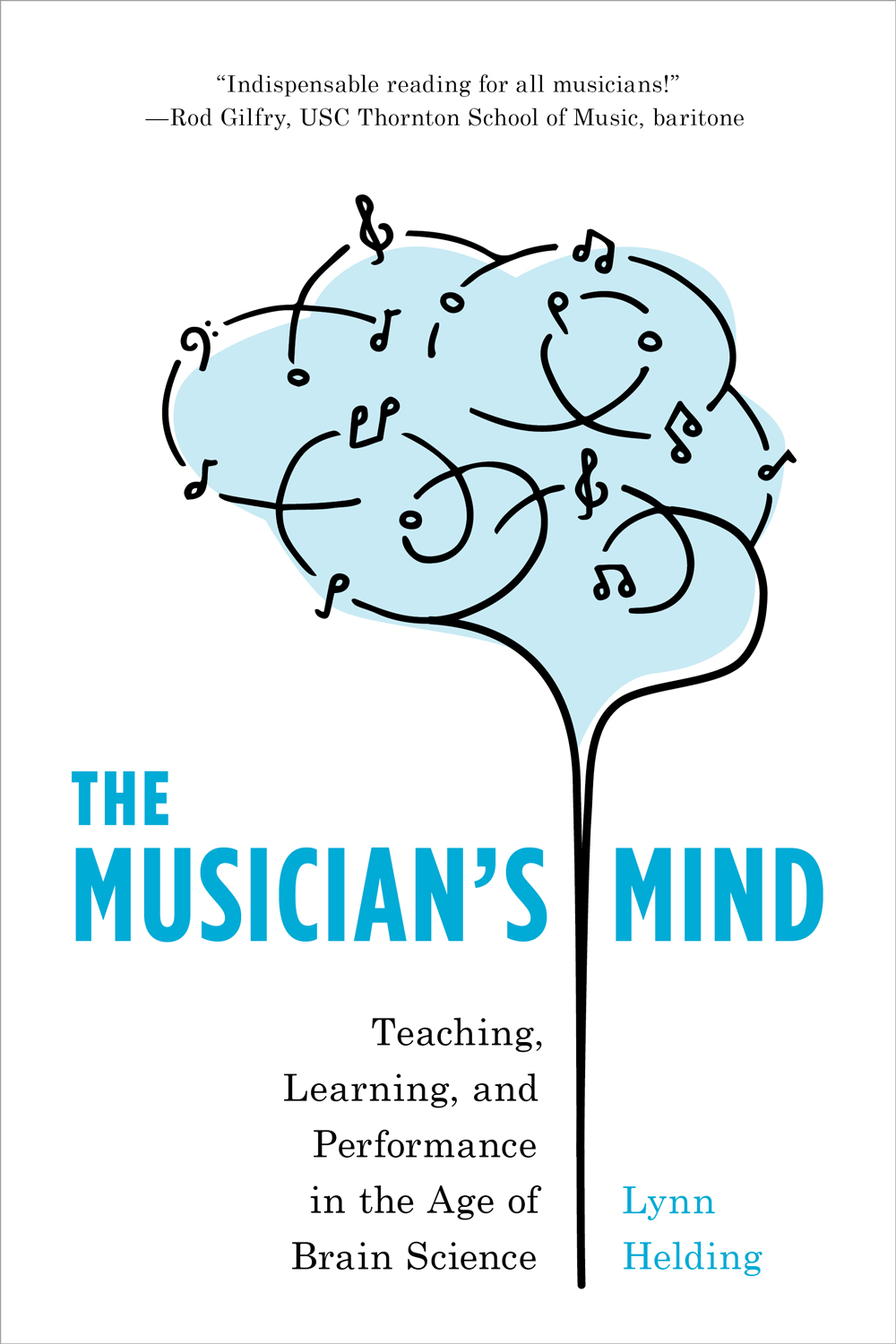
Calming the Mind led us to a chapter in her book, titled “The Digital Brain”, in which she covers a variety of crucial issues from multi-tasking to internet addiction. I asked if she could offer any strategies to counteract the digital overload, which is overwhelming our cognitive load capacity.
Lynn: It’s really important to understand this world we are living in that some have dubbed the “attention economy.” We are in a new digital age, where human attention has become commodified and is actually quite valuable. We “pay attention” – pay as in you have a fund and withdraw from it. Human memory is fallible, because our attention is so easily hijacked. That’s what the attention economy is all about – a billion dollar industry focused on how best to capture humans’ attention and keep it. We have new words that have entered into the lexicon of this century, such as “doomscrolling” – hacking into our dopamine circuits to keep us scrolling (through social media). People realize “I’ve been sitting on the sofa for two hours looking at cat videos!” Most people describe a feeling similar to eating junk food. You don’t feel good. You feel befuddled. Your circuits feel a little bit junky. I think people are starting to realize that our attention has eroded.
And on the topic of multitasking, she offered this:
There’s something called the “task-switch cost”. Let’s say you’re in the practice room, you’re focused, your attention is there, and all of a sudden your phone goes off. Whether you take the call or not, whether you look at the text or not, your attention has already been hijacked because you’re already wondering whether you should take the message or keep doing what you’re doing. What happens in that task switch-moment? You don’t go back to the same level of learning. You actually go back to a slightly degraded level of learning; you’re losing learning time. We have to put in our own self-controls, which is, to turn the phone off. Walk in nature. My husband and I hike a couple of times a week in a nature preserve that’s completely off-grid; I never take my phone, EVER! Gardening, vacuuming the living room, some of those mundane tasks - those are also ways for people to really centre themselves. I’m interested in how we interface with our normal, regular world.
In Organizing Thoughts, we talked about a form of training called deliberate practice, coined by psychologist K. Anders Ericsson. In Lynn’s book, she describes how a deliberate practice regimen, designed by the teacher and followed by the student, targets specific movements, notes successes, scrutinizes flaws, and - by analysis - continually redesigns the regimen, and that there is nothing vague about this type of practice. She elaborated on this quote in our conversation:
The requirement of “effort” sets deliberate practice apart from mindless routine/repetition and playful engagement. If we’re talking about learning in a cognitive sense, there has to be some effort. Practice what is difficult, not what is easy. Playing the same thing over and over again that you already play really well is a mindless routine. Playful engagement (improvising, noodling around) has its place, but it’s not deliberate practice. With deliberate practice, you have to have a plan; the more specific, the better.
To get specific, one needs to get “smaller” – “I’m going to become a better singer” (too big). “My ‘A’ (pitch) is really good, but my ‘B’ is out of range. I think I’m using too much muscle. I still need to figure out how to get more resonance.” That’s a real advisable goal … Be very specific about the exact exercises that are going to target that. You have to pay hyper attention when you’re learning a new technique. With motor-learning (singing is a motor-skill) the “everydayness” of deliberate practice is the most important thing; way more important than the amount of time you spend. If you practice an hour a day over six days, six hours, one day off a week, you will get somewhere. But if you take that same six hours and do three on Saturday and three on Sunday because your lesson’s on Monday, there’s really good evidence that not only will you not get anywhere, you’ll probably end up worse off.
Finally, we rounded off our conversation with the topic of Flow. Lynn made it a point to highlight the misconception that Flow is a state of nirvana in which everything becomes easy, everything becomes automatic, and attention is no longer required:
There’s a counterargument – It is effortful attention, and effortful attention has been achieved through deliberate practice. The goal is not to “deliberate practice” so much that all of your systems run automatically. Instead, you have a heightened sense of awareness. You are in control of your skills and attentive to the reflexes. When we deliberate practice, we build chunks (organize pieces of information into larger, manageable units). “Chunking” is huge in cognitive theory. It’s like Lego blocks, you’ve got all these Lego blocks lying all around you, and you can pick them up and put them together at your will. Singers adjust to singing in a different hall, to different collaborator(s), etc. You’re not zoning out; your awareness is heightened. Ericsson calls it “building reliable retrieval structures” – when I go to grab that high note, I know where it’s going to be, I know exactly how it feels.
In other words, a “flow” performance is only “seemingly” effortless because the performer has already set up the detailed groundwork. With certain skills mastered, the performer is then free to place “effortful” attention on other aspects of the performance.
Don’t forget art. That’s what we can pay our attention to. We’re not running on automatic pilot, so much as we’re checking the boxes and saying – I learned these things, I keep them in shape, by deliberate practicing every day. Eventually, we have that space left over to devote to communication, art, and emotion. That’s the freeing part.
All the featured artists’ interviews are available in their entirety on my YouTube channel – Vania Chan Music.

Up Next: Award winning world/fusion artist Suba Sankaran.
Author and creator of this series, Vania Chan is a lyric coloratura soprano, artist researcher, and educator. Visit her website: www.vaniachan.com to learn more about upcoming projects.