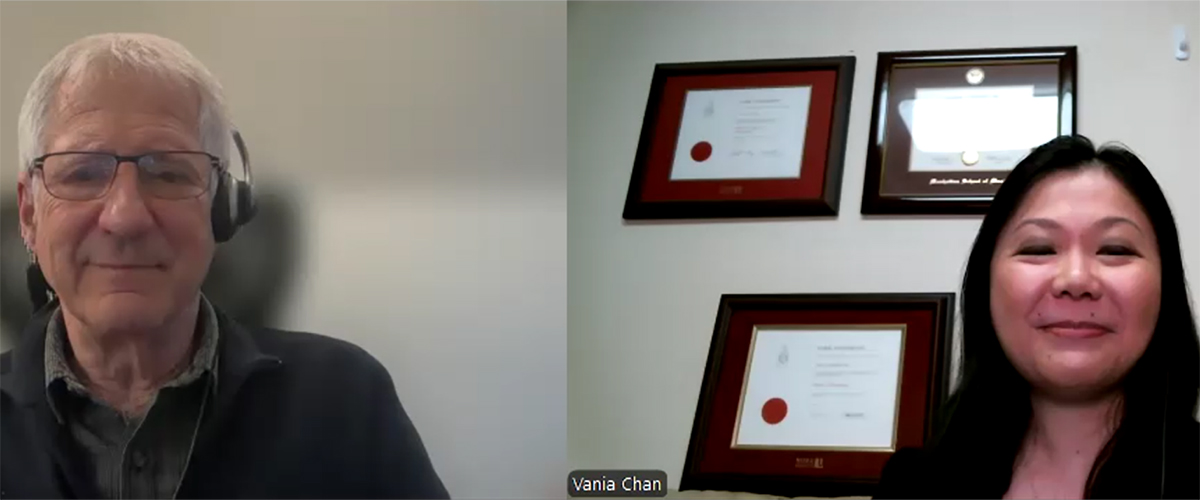
 A fixture in the Toronto music scene for half a century, Lawrence Cherney is the Artistic Director of Soundstreams. Often referred to as Canada’s “Ambassador of New Music”, he founded Soundstreams back in 1982, and has continually worked with the company to produce an eclectic annual series, featuring new music in ground-breaking concerts, music theatre and opera.
Musicians who have worked with him and with Soundstreams have been exposed to an assortment of diverse repertoire, challenging our musical skills and encouraging us to expand our artistic perspectives. From when I first performed years ago in the company’s staged production of Airline Icarus (Current/Piatigorsky) to the present season, I’ve been able to chat with Lawrence every once in a while. I’ve always enjoyed hearing about his unique musical experiences and his thoughts on artistic culture and on music’s relevance and role in today’s society.
Lawrence generously offered his time for another conversation, this time as a guest on “When Music Meets Mindfulness”. We structured our conversation around the core concepts of mindfulness, highlighted in this series: Calming the Mind, Organizing Thoughts, and Flow.
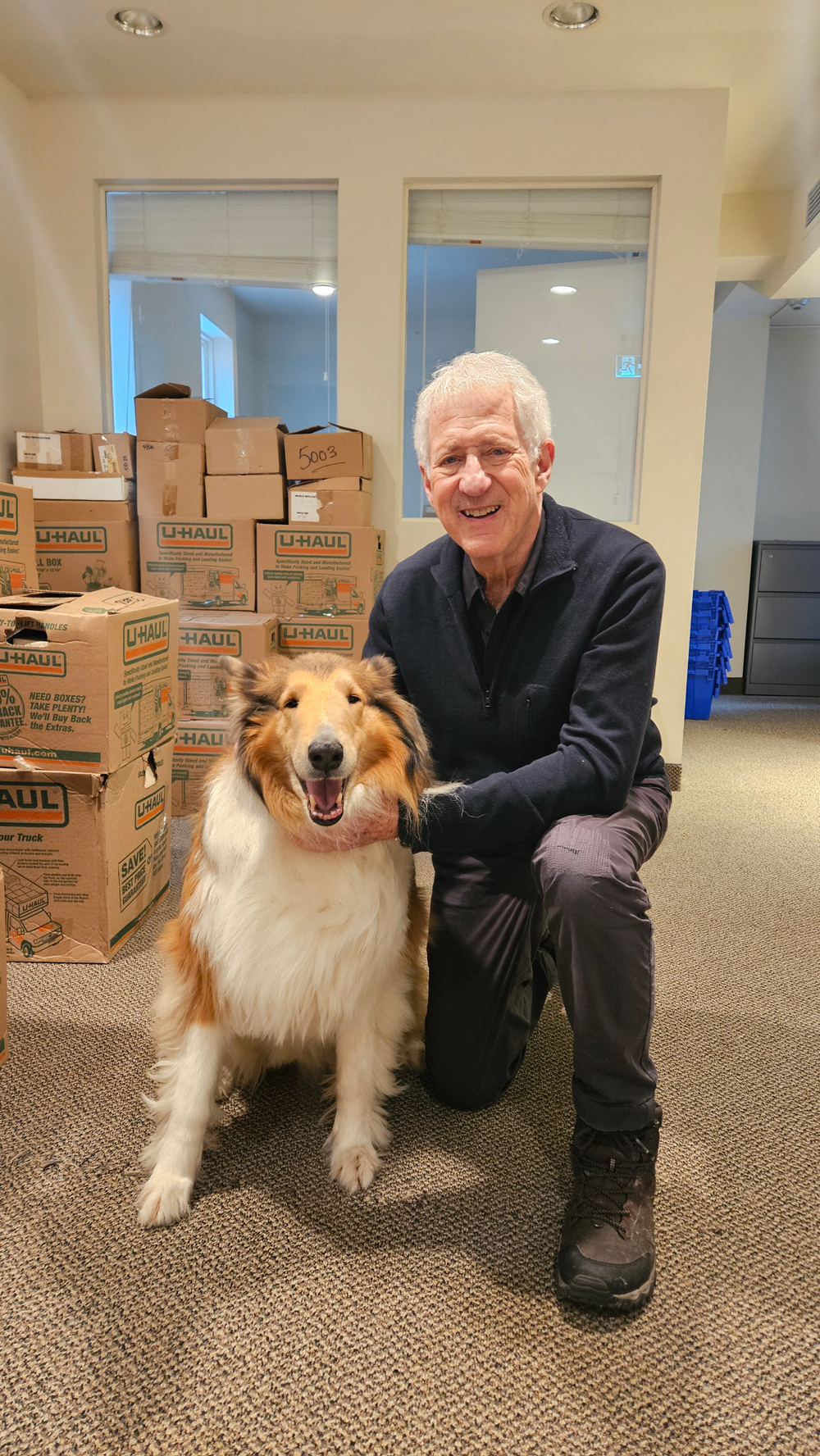
Our discussion of ways to “Calm the Mind” began on a light-hearted note, with Lawrence offering a lovely example through his connection with his dog Jonah:
I have the most wonderful eight-year-old collie. When I go out with my dog on walks … I enter into his world. It’s not that his world is so simple compared to mine, but it’s really different. He’s very much in the moment. Whether it’s enjoying a trail out in a forest or even in a city park, either way, I relax and connect with people and things and the environment around us in a way that’s really different from my ordinary life. Even in the bitter, bitter cold of winter, late in the evening when it’s time for a dog walk … maybe I’m not sure I want to go out … but, 30 seconds into the walk, I’m so glad I did. Maybe that’s my favourite way of changing my connection to the world. Jonah is quite famous! Pretty much around the city, everybody knows Jonah. I’m the guy with the dog. I’m the guy with the beautiful collie.
Organizing Thoughts: Last November, Soundstreams opened its 43rd season at Trinity St. Paul’s with a program titled “Mass for the Endangered”. The title work was an oratorio for chamber ensemble and choir, written by American composer Sarah Kirkland Snider, with poetry by American artist Nathaniel Bellows. According to the composer, the work “embodies a prayer for endangered animals and the imperilled environments in which they live. ”The program was rounded out by works in keeping with the theme of environmental crisis and raising awareness, including Olivier Messiaen’s Catalogue d’Oiseaux (The Catalogue of Birds), featuring 13 pieces for solo piano. Soundstreams partnered with FLAP Canada, an organization dedicated to protecting birds from harm in the built environment (human-made/modified physical surroundings). The alignment of this program’s creative goals with environmental concerns is an example of organized thinking. Lawrence shared his thoughts on how the arts and artists can creatively respond to a world encumbered by chaotic thoughts and emotions:
What we can do in the arts is speak about the unspeakable. Whether it’s climate justice, or some of the terrible things that do go on in our world, we need to find a way to come to terms with those things that is different from watching it on the news, or in the way we absorb information in our daily lives. There’s a lot of grief and fear and emotions that are difficult to deal with. With great music – we can’t save the world, but what we can do is give expression to those emotions. It isn’t a cure, but sometimes the arts help us to come to terms with grief. In coming to terms with those things, sometimes it enables us to take action. It empowers us to do something positive.
“Flow”: As a solo oboist of international distinction, Lawrence was no stranger to the phenomenon of “the flow state” when the performer’s mind-body connection is fine-tuned to the point that the resulting performance seems effortless. In our conversation, he recounted a more recent flow experience from the perspective of an audience member – pianist Louise Bessette’s performance of Messiaen’s Catalogue d’Oiseaux in this season’s opening concert:
In watching and listening to Louise play, I have this sense of total calm. At the same time she’s playing a million notes, all correctly, all in the right place. No matter how frenetic or how calm the music actually is, there’s a sense of serenity to what she’s doing. The last thing you ever want an audience to think is – boy is that ever hard! What one wants and hopes for is that it seems impossibly easy. That’s a deceptive term, because what does it mean to be easy? It means there’s this sense of calmness and serenity being transmitted by the performer to the audience. I think it’s that kind of serenity that allows the audience to absorb it (the music and its meaning) to the maximum.
We discussed Canadian composer Claude Vivier, who, Lawrence claims, “defies being categorized.” Known for drawing creative inspiration from living dangerously, Vivier had his life cut short, murdered at the age of 34 by a serial killer. His compositional themes revolving around the search for eternity, death, love and connection with others, continue to resonate. His work Love Songs, composed for seven voices, is being remounted this season by Soundstreams, as part of their upcoming April 9 program called “I Want to Tell You Everything.” The show’s title is the name of a newly commissioned work by composer Thierry Tidrow, who was tasked to write a companion piece to Vivier’s work. Following the program’s April 9 debut in Toronto, at the Jane Mallett Theatre, the Soundstreams ensemble then goes on tour, bringing the program to Dublin, Ireland and to Chicoutimi, Quebec.
Lawrence made a strong case for remounting and “coming back to works”: music is transient, reflecting the flow of time; music changes with people, and there are endless possibilities for creativity and growth with each interpretation; when a work is performed multiple times at different points in time, it connects everyone involved, and contributes to a sense of unity, a wholeness that is much bigger than all of us:
What is most rewarding is to come back to works. It’s true of all good music. There’s no time when one feels that somehow this is the definitive interpretation. All good music, whether it’s old or new, no matter what period it’s written in, every time it’s performed, it’s literally being born again. That’s why touring is important … with more performances, an interpretation never stays the same. Two years later, the performers may be the same, but they’re not the same as they were two years ago. It’s going to be a different audience. Every time a piece is done, somehow it’s building on and connecting to the hundreds of performances that might have already been done of that piece. It’s never an isolated thing. It’s an organism that lives every time in relation to what was before, in the present and even into the future. That’s what I find really exciting about good music that’s well-played.
This featured artist interview is available in its entirety (along with previous artist interviews) on my YouTube channel – Vania Chan Music.
And coming next, in May/June, Lynn Helding, American voice teacher/vocologist.
Author and creator of this series, Vania Chan is a lyric coloratura soprano, artist researcher, and educator. Visit her website: www.vaniachan.com to learn more about upcoming projects.