Vivant_Banner.jpgThat “Music heals” – if not the body then at least the soul – is one of the most popular sayings about the power of music; its benefits oft-touted to prove the good that it can do for its listeners and practitioners.

But it doesn’t though – at least, not always. Like any physically and emotionally demanding experience, music can put an enormous strain on the bodies and minds of the people who make it. For many, a career in music can lead to serious stresses – stresses that often don’t get talked about. It’s time, for performers and listeners alike, to begin a dedicated conversation about how music can heal and help people – and on the other end, how people doing musical work can exercise the self-care necessary for keeping a life in music from becoming harmful.
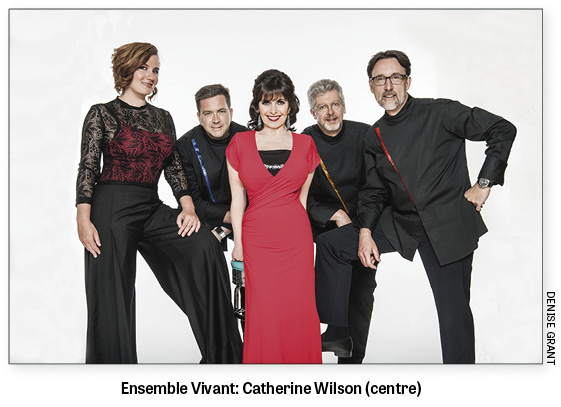
2203-Music_and_Health.jpgEnsemble Vivant is one group that makes the connection between music and health an intimate and integral part of its work. Founded and headed by pianist Catherine Wilson, the group is a pioneer on the piano-chamber music scene, culling its repertoire from both classical and jazz worlds. It’s also the flagship ensemble for Wilson’s not-for-profit Euterpe – an organization that conducts research on the healing effects of exposure to live concert performances, and provides musical opportunities based on that research for children and communities in need.

Ensemble Vivant’s current project is “Christmas Tidings,” a month-long tour from November 27 to December 23, to ten cities across Southern Ontario. The music itself is a variety of seasonal repertoire, much of it adapted from the ensemble’s 1992 album of the same name. What makes this particular tour stand out from other holiday shows, however, is its incorporation of Euterpe initiatives. At each concert, the ensemble will be collaborating side by side with a different children’s choir, providing guidance as well as professional performance and rehearsal opportunities for local students.

Wilson is the driving force behind this initiative, and with good reason. “Playing in a community band in junior high school provided a safe haven, allowing me to escape from an extremely strife-ridden background,” she says. “The band was family for me and planted the seeds for my love of chamber music.” Wilson goes on to explain that for her, a key goal of Euterpe, and of the work that Ensemble Vivant does alongside it, is ensuring that those who otherwise wouldn’t have access to high-calibre concert experiences get the same types of music-making and concertgoing opportunities that made such a difference in her own life.

In terms of her own life in music today, Wilson recognizes the health threats of performing professionally, but maintains that seeing the healing benefits of music in action through her Euterpe research and performances provides ample motivation for seeking and finding solutions.

“There are a variety of physical stresses to being a concert pianist. Staying healthy physically, avoiding injuries and not becoming too worn down is always a challenge,” Wilson explains. “I swim regularly and see a top physiotherapist. I have endured several long-term setbacks over the years…yet it is music that has always been my main source of psychological strength. Industry stresses, physiological and psychological stresses notwithstanding, the music-making is a labour of love…and is what excites us and keeps us healthy. Giving through music is healing and enriching for our audiences, as well as for us.”

Ensemble Vivant’s tour begins in Orillia on November 27 and travels across the province, wrapping up on December 23 in Ottawa with the Cross Town Youth Chorus. For details on the tour, visit ensemblevivant.com.

Artist’s Health: I first visited the Artists’ Health Centre this summer, when a sudden change in my work schedule led to a minor injury in my wrist. Becoming aware of the services and the resources they offer for artists of all disciplines has been hugely helpful – both for managing the healing of my own injury and for navigating how musicians can become more open generally about challenges with mental and physical health.

Based out of Toronto Western Hospital and run in partnership with the Artists’ Health Alliance, the Al and Malka Green Artists’ Health Centre is a clinic offering both medical and complementary care for professional artists. Patients must self-identify as creative professionals and meet at least one of the centre’s requirements for what constitutes being a professional artist. Services include acupuncture, chiropractic medicine, craniosacral therapy, registered massage therapy, physiotherapy, psychotherapy (for individuals and in groups) and shiatsu therapy – all with a special focus on accommodating the career paths, lifestyles and income levels of professional arts workers.

Susannah McGeachy, the clinic’s nurse practitioner, is typically a musician’s first one-on-one contact with the Centre. Her job, which includes assessing the client’s needs, referring them to other centre professionals and giving them interim guidance on how to manage their condition, means that she sees a lot of different professional musicians – with a lot of different complaints.

“I deal with a wide variety [of issues], but there are certainly recurrent themes,” says McGeachy. “I would say that generally, soft tissue injuries are pretty common – things like sprains and strains that aren’t always allowed to rest and heal the way that they need to because of the demands of a musician’s professional practice. Things like chronic tendinitis – broadly, we call them overuse injuries, where you can get inflammation and damage from using a very small muscle group to do the same kind of motion again and again, many times. Another thing that comes up often is the challenges that musicians face around mental health and anxiety, sometimes associated with what I call being in ‘constant evaluative situations’ like auditions and performances, with a certain level of career unpredictability.”

With the level and volume of issues that McGeachy sees, it’s clear that our music industry needs to change – both in the way it employs musicians and in the stigmas in the performing arts around prioritizing self-care. “I know it’s a complex thing,” McGeachy says, “but I think that with performance and rehearsal scheduling, more attention and awareness needs to be paid to the physical demands on the musicians – who are often performing a lot of very different repertoire in a short period of time, and having these ‘bursts’ where there’s a lot of physical demand, both in terms of the pieces themselves and the travelling that musicians have to do. I think with orchestras, for example, and even sometimes in educational institutions, the work happens with much more regard to venues, conductor availability, and things like that – but it doesn’t always seem like there’s an eye on getting a good balance of repertoire – physically – and giving the musicians rest and recovery time.

“There’s this idea in the music industry,” McGeachy continues, “that it’s important to play as many gigs as you can, and that however those fall, the musicians are just sort of expected to rise to the challenge. And I think that systemically, that makes it very hard for individual musicians to know how to take good care of themselves.”

And as for advice to musicians, about how they can focus on self-care, and why it matters?

“Your body is your instrument as much as your instrument is your instrument,” says McGeachy. “If you think about the care and attention that a musician gives to making sure that their instrument is well-tuned and protected and not exposed to the elements...what I think musicians don’t always realize is that they are an even more intricately made instrument than the one that they’re playing. And that really to make a long-term career out of this work, it’s important to learn your body as early as possible. It’s about forming practices that will allow you to do what you love for as long as you want.

Overall, I think the biggest message that I try to drive home with musicians is to learn to listen to their bodies,” she says. “To not play through pain. To break up practising into shorter sessions, especially if something hurts. And to warm up: I think that musicians often think of musical warm-up but not physical warm-up. Before playing, it’s important to do some physical warm-up to increase your heart rate and circulation – a brisk walk, jumping jacks, or a few flights of stairs. It sounds silly, but it’s pretty basic physiology – it decreases the risk of injury. And otherwise, musicians are people too, so doing the things that are good for everybody: regular exercise; a well-balanced diet; drinking lots of water; and doing things that you love, and promoting your own balance and mental health.”

McGeachy also mentions that her door is often open and that the Centre is always happy to see people (artistshealth.com) – so musicians, if you’re ever in need, be sure to look them up.

The potential for music-making to act as a healing experience for people – and the potential for a musical career to become mentally and physically unhealthy as well – is worth discussing. If you have your own story about music and self-care, as a musician, or as a listener, feel free to send it along, to editorial@thewholenote.com. I’m sure that there will be others who can relate.

I’ve dealt in the past with injury and anxiety, and it isn’t an easy subject to communicate about. I’ve known professional musicians who have neglected their well-being because they felt that self-care was fundamentally at odds with living in the service of their craft. I’ve known music students who have been reluctant to tell teachers about playing while hurt, because they were afraid to be seen as a liability within their studios. Unless performers and listeners keep having conversations about how music affects the minds and bodies of people, for better and for worse, it will remain difficult for people to recognize that self-care and musical commitment need not be at odds with one another. In fact, for many professionals, those two things make the most sense when they can feed off of one another.

Let’s get talking.

Sara Constant is a Toronto-based flutist and musicologist, and is digital media editor at The WholeNote. She can be reached at editorial@thewholenote.com.
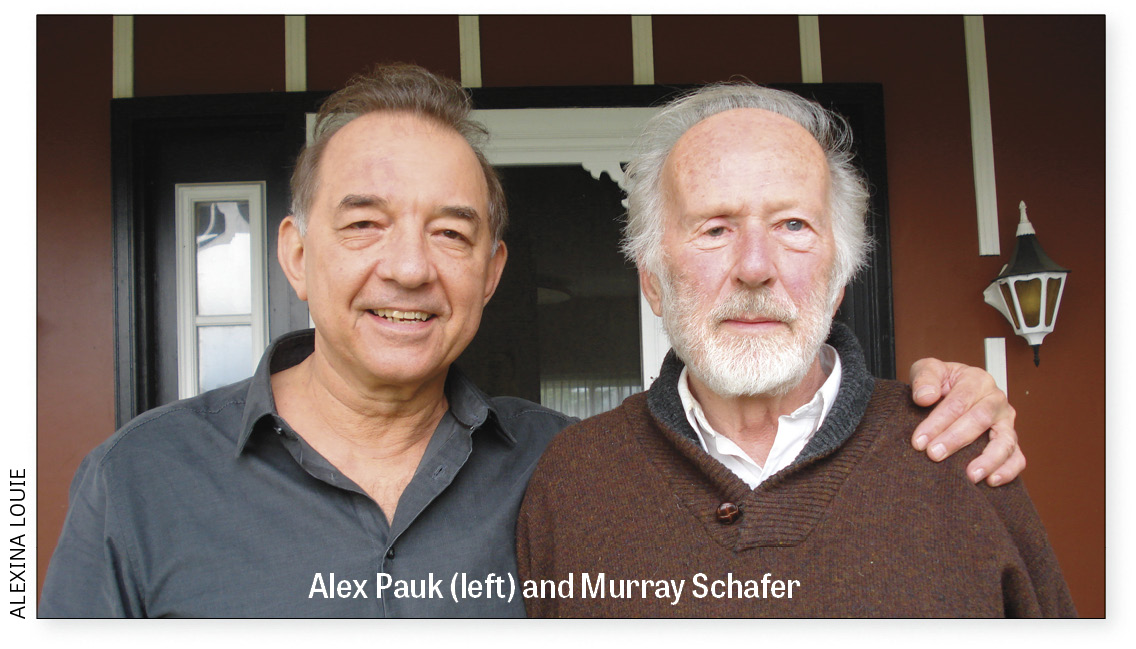
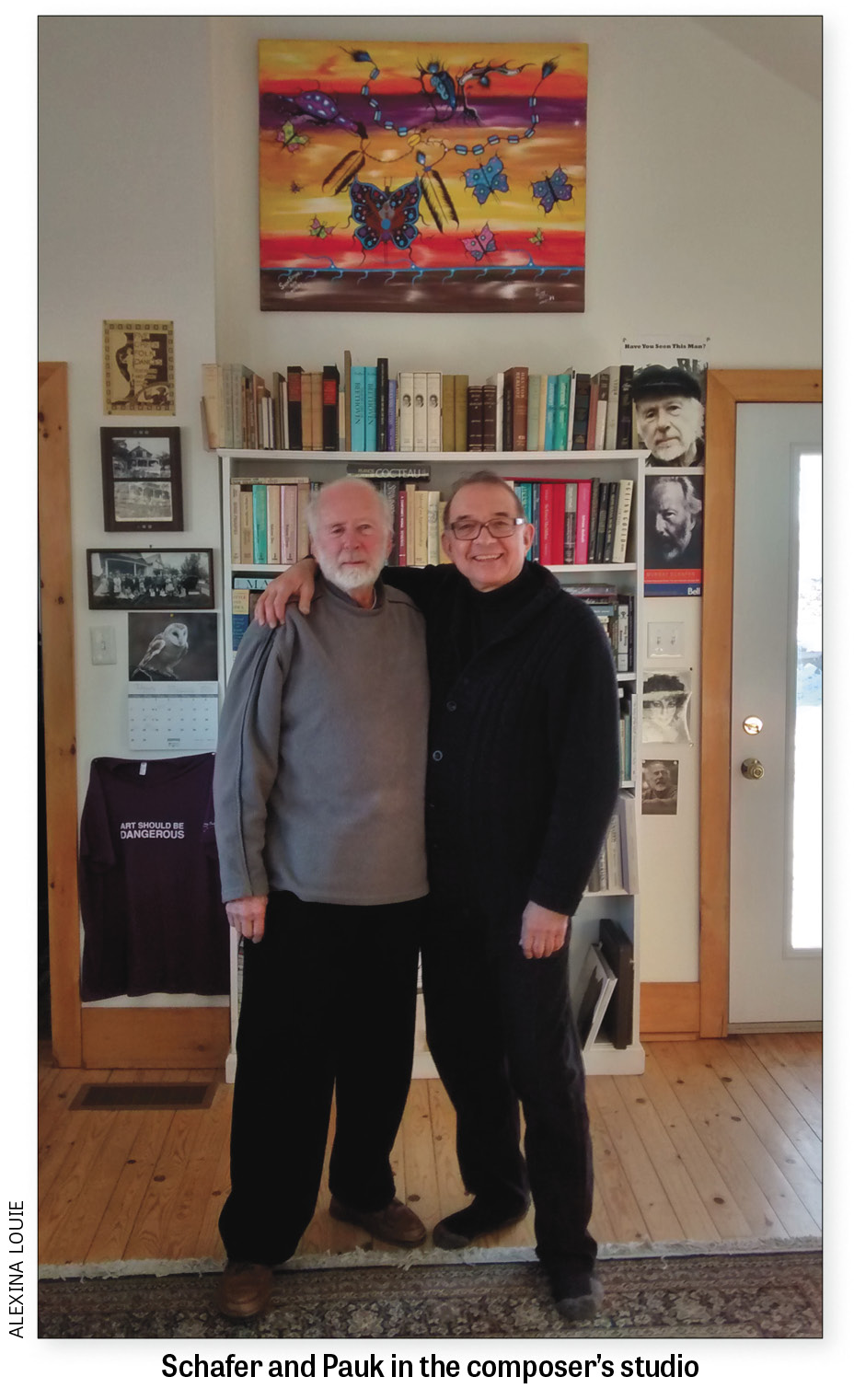
2202-CBC2-Photo1.jpgEsprit Orchestra founder and music director Alex Pauk will take the podium at Koerner Hall on the evening of October 23 to lead his orchestra in a heartfelt tribute to Canadian composer and cultural icon, Murray Schafer (b. 1933). Pauk has collaborated with Schafer for over 42 years on a wide range of innovative musical projects that includes 60 performances of Schafer’s works with Esprit alone, not to mention many others that began when the two met in Vancouver in 1973. “The time is right for this tribute,” Pauk told me. “It’s right for Murray, it’s right for Esprit and it’s right for me.” He went on to say that the concert “reflects the amazing relationship between Murray, me, Esprit and the audience.”

When they first met, Pauk was engaged by the Vancouver Youth Symphony Orchestra (VYSO) and Schafer was in his last years of teaching at Simon Fraser University (SFU). In 1974 Pauk conducted Schafer’s North/White, a work composed that year for full orchestra and snowblower, with the VYSO. At that time, Pauk was looking for academic work at SFU, and he asked Schafer if he might help or offer advice. Schafer’s reply may have turned Pauk’s fate. He said: “You’ll be better off if you stick to conducting contemporary music, and the rest of us will be better off too.”

The VSYO released Pauk from his conducting position in 1977, in what Pauk felt was a reaction to his programming of “too much contemporary repertoire.” But by then Pauk had met the Romanian/French composer/conductor Marius Constant. Constant was touring the world conducting contemporary repertoire, including his own, and he found frequent conducting opportunities in Vancouver with the CBC Vancouver Orchestra. Constant provided a career archetype for Pauk, one that matched the guidance Pauk had received from Schafer. He befriended Constant, and the two discovered they shared artistic interests. For example, Constant remarked how very interesting the works of Schafer were, particularly those he had conducted with the Radio Orchestra in Vancouver.

The freshly inspired Pauk returned to Toronto in 1980 with a mission to create a contemporary music orchestra and in 1983 founded Esprit Contemporaine, soon to be renamed Esprit Orchestra. The works of Schafer figured prominently in Esprit’s programming from the very beginning. Alex told me that it was while preparing a performance of Schafer’s Dream Rainbow Dream Thunder that he was suddenly struck by the realization that Schafer’s ear and skill with the art of orchestration was extraordinary. He realized as well that “Schafer’s orchestral music is about ideas – BIG ideas!” And his sonic palette was designed to project those powerful musical aspirations.

This observation about Schafer’s extraordinary gift for writing orchestral music was not lost on me, as I began to expand my own appreciation of his music through hands-on experience. Having created Two New Hours, the network contemporary music series on CBC Radio Two (1978-2007), I began recording and broadcasting concerts with Esprit Orchestra almost from its inception. Among the many fascinating new orchestral compositions my broadcast team and I encountered, it was the works of Schafer that stood out. We were impressed with the orchestration, the breadth and power of the ideas and simply the realization that Schafer’s writing sounded brilliant in every way, especially given the exceptionally high standard of performance delivered by Esprit. These were the characteristics that would make for compelling radio, and we were inspired to do our utmost to help make these works sound as vivid and convincing on air as they were in the concert hall.

I had known Murray since first meeting him in 1971 during the Dayspring Festival at Toronto’s Metropolitan United Church. His artistic leadership was immediately apparent, as he showed no fear whatsoever for being out among the throng, constantly challenging and provoking people. He was also fearless about taking music away from its comfort zone in the concert hall. A wilderness lake was just as good a venue for music, complete with its built in audience of loons, chipmunks, frogs and, yes, even bears and wolves.

My engineers and I went with Murray and his hand-picked group of musicians to Wildcat Lake in the Haliburton Forest and Wildlife Reserve to make a radio program called Wolf Music in 1996. This was to be a radio program made of Schafer’s music, played in the wilderness, interspersed with his gently spoken reflections on the relationships between mankind and nature. The recordings we made at dawn when the wind was still, using groups of microphones positioned around the lake were eventually assembled, synced in our editor and broadcast, both on CBC’s Two New Hours and also in Germany, on Westdeutscher Rundfunk. Wolf Music received a special citation at the 1998 Prix Italia in Assisi. The recording is available on the Centrediscs label (CMCCD 8902).

This adventure proved to be a mere test for us to determine whether it might be feasible to record and broadcast the 1997 Patria Music/Theatre Projects’ production of Schafer’s environmental opera, Princess of the Stars. On the strength of Wolf Music, this subsequent challenge was agreed to, and the entire cast of singers, canoe paddlers, stagehands, puppets and the members of Esprit Orchestra, all decamped to Wildcat Lake for the duration of the production in the late summer of that year. The Two New Hours team went along too, and several performances were recorded and eventually broadcast on CBC Radio Two. In 1999 that production won a medal for excellence in broadcasting in the International Radio Festival of New York.

2202-CBC2-Photo2.jpgNearly 20 years and hundreds of compositions later, Schafer has written music for all situations: the wilderness, the countryside and, alas, even the concert hall. I had several opportunities to commission works from Schafer for broadcast on Two New Hours, including the dramatic aria, Thunder, Perfect Mind. This work, based on an ancient Egyptian text, had its premiere in a performance by Esprit Orchestra and Pauk, with soprano Eleanor James, Schafer’s wife, at Jane Mallett Theatre in Toronto in 2004. We subsequently recorded the work in Glenn Gould Studio for release on Atma Classique. That recording, which also includes James’ performances with Esprit and Pauk of Schafer’s Letters from Mignon and an orchestration of his early work, Minnelieder, is currently available in the Atma Classique catalogue.

The Esprit concert at Koerner Hall later this month will include a rarely performed Schafer composition, Adieu Robert Schumann (1976) – a CBC commission, written for Maureen Forrester), incorporating writings from the diaries of Clara Schumann detailing her ailing husband Robert’s decline, and using as well fragments of Schumann’s own compositions. The soloist, Krisztina Szabó, speaking about her role as Clara Schumann, says she is “struck by the poignancy of Clara’s thoughts,” as she watches her husband slip away. Szabó, who grew up singing Schafer’s choral music as a member of the Toronto Children’s Chorus and who has been a soloist in other Schafer works says, “I love the evocative colours in his vocal writing … “I find that Schafer’s music calls to me.”

Two works on the concert that are more commonly associated with Esprit are the Concerto for Flute and Orchestra (1985), which was, in fact, the first work of Schafer ever performed by Esprit, in 1987, and the Esprit-commissioned Scorpius (1990), a sort of orchestral scherzo. Esprit has programmed these works often and, in the case of Scorpius, has realized excellent value from one of their five Schafer commissions.

Flutist Robert Aitken, the soloist in Schafer’s flute concerto, says this will be his 18th performance of the work. He told me: “It’s the most successful flute concerto of our time. Whenever it’s played, it’s a huge success, it always steals the show.” Pauk added, “It’s simply one of the great flute concertos of all time.”

Esprit’s tribute to Schafer underscores a long and fruitful relationship between Canada’s most revered composer and the country’s only symphony orchestra exclusively devoted to the creation and performance of contemporary music. Pauk told me that “Schafer’s music embraces so many dimensions, ideas, emotions, theatricality, spirituality and even humour, all unified within a musical experience.” He says that this completeness is what makes Schafer so enduring, and this concert is perfect proof of that.

Murray Schafer and Eleanor James will attend the Esprit concert on October 23; one week later, on October 30, coincidentally also at the Royal Conservatory of Music, they will be present as harpist Judy Loman launches a 2-CD compilation of Schafer’s complete works for the harp. Loman told me: “Because it’s my 80th birthday, it has now become my birthday present to myself to include the launching of this CD.” Schafer composed seven major works for the harp, five of them for Loman and two for her students, Lori Gemmell and Heidi Krutzen. The CD, titled Ariadne’s Legacy, will be available from Centrediscs, the record label of the Canadian Music Centre.

David Jaeger is a Toronto-based composer, producer and broadcaster.

ChaseBanner.jpg

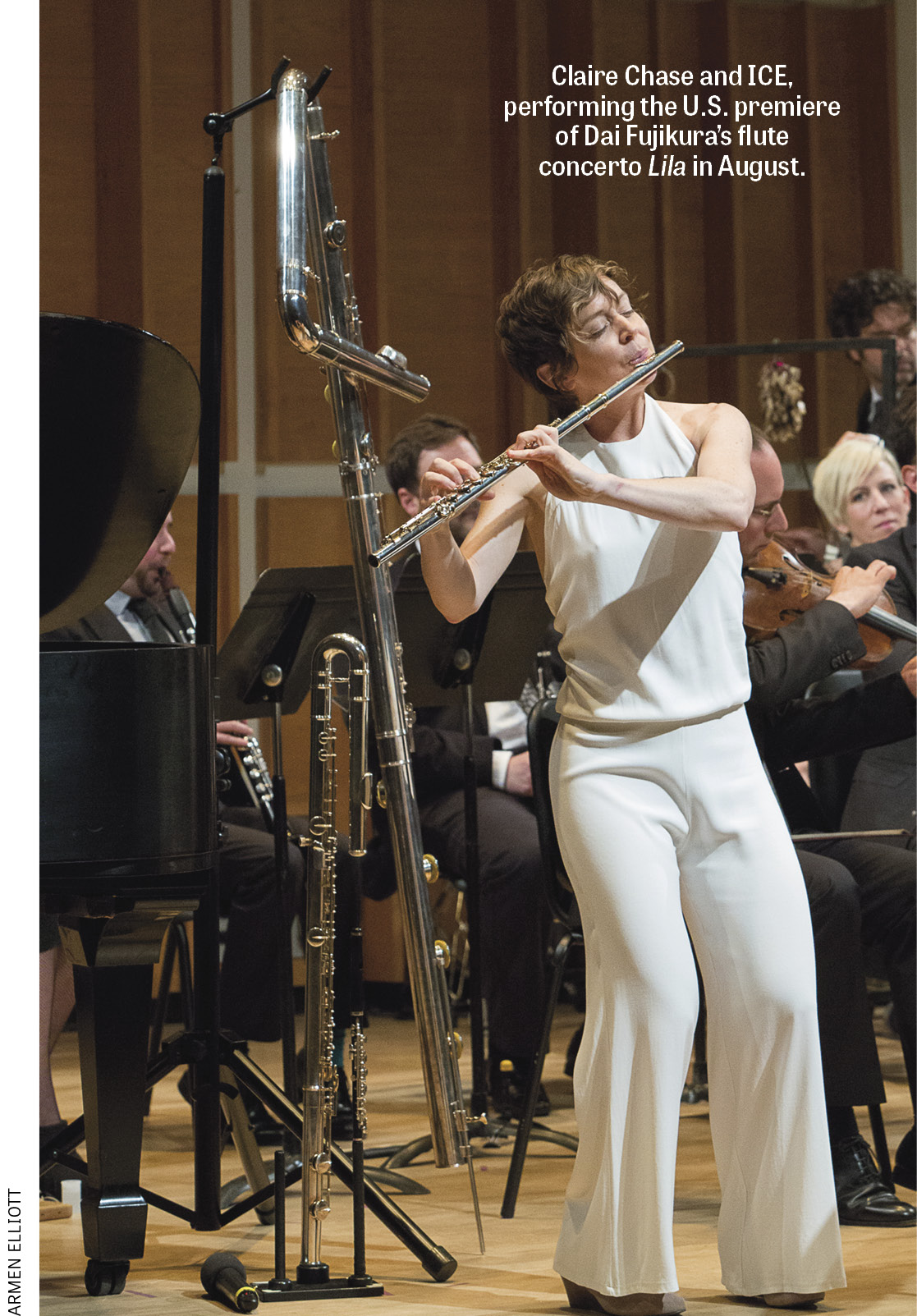
2202-Feat1-Chase.jpgWhen Claire Chase speaks there is a sense of urgency in her voice, as if she’s always on the verge of a discovery that she can’t wait to reveal. It’s not exactly an incorrect assumption to make – Chase is famous for being a musician who is always reaching ahead of her time. As flutist/founder of New York’s ICE (International Contemporary Ensemble) and an active performer of newly composed works, Chase has always looked towards the future – creating the music that until now has yet to be heard.

To that end, she’s already accomplished a lot. Praised in The New Yorker as “the young star of the modern flute,” Chase is one of new music’s most relentless advocates. She’s a prolific soloist and recording artist, and a frequent collaborator with composers both established and emerging. She’s a recipient of a 2012 MacArthur “Genius Grant” for her work in visioning an artist-driven business model that emphasizes giving performing musicians the freedom to direct their own career paths. She’s also, incidentally, slotted as a co-artistic director of summer music at the Banff Centre for 2017 – but in the meantime, she comes to Toronto this month as a guest of Soundstreams, for two shows inspired by the musical future of the flute.

Density 2036. The first, “Density 2036,” is part of a 22-year-long centenary celebration in the making. Tracing its roots to the premiere of Edgard Varèse’s solo flute masterwork Density 21.5 in 1936, Chase’s project is a series of annual commissions, leading up to a 24-hour flute recital in the year 2036. Each year she collaborates with a different roster of composers to premiere a recital-length solo set, with the objective of performing all 22 years’ worth of music as a 100th-anniversary celebration of the Varèse original.

On October 4 at Buddies in Bad Times Theatre, Chase (along with sound engineer Levy Lorenzo) will open Soundstreams’ new Ear Candy concert series with a selection of music from the last three years of the Density project. The show will sample from a daunting breadth of musical language: two older works – Steve Reich’s Vermont Counterpoint and of course, Varèse’s Density 21.5 – as well as pieces from Density 2036’s three-year archive of commissions, including recent works from Marcos Balter, Mario Diaz de León and Du Yun.

When it comes to Chase’s choice of composer-collaborators, nothing is out of bounds. “The only rule that I’ve given myself for the project is that every time a piece is created through Density, the piece that follows it has to be a complete departure,” she says. “I don’t want to repeat collaborations. I don’t want to repeat language. I want every new Density birth to really be a birth – so in choosing composers, I’m interested in those who are really going far outside their comfort zones…and who are as fiercely and fearlessly committed [as I am] to the idea of creating something new: new for them, new for me, new for the instrument.

“It’s a very difficult thing to ask someone to do,” Chase concedes. “But I love that question. I love the space that it opens up. I love the vulnerability and the malleability that results. So I look for people who are up for that adventure – and who want to jump off that proverbial cliff with me.”

As the soloist leading that cliff-top jump, preparing for an end goal 22 years in the future is no easy task. However, for Chase it is in part this long-term, cumulative nature that gives Density 2036 its appeal. “It’s about the idea of really setting the bar high for myself,” she says. “Of saying, okay, what would it be like to build up to being able to play continuously for 24 hours when I’m 58 years old? It’d be an Olympic sporting event – but it’d have to also be something that really is in service of the music. How could I do that and what would my training look like over these decades? It was such an interesting question that I had to start the project immediately.

“And it’s about saying, okay, the goal is to create this repertory. If I can commit seriously to making it, performing it, and putting it out there for myself, but be just as committed to disseminating it and making sure that it is available for other flutists – for them to study, to learn, to make it their own, to play it better than I can – then that would be really cool.”

Magic Flutes. Chase’s second Toronto appearance, titled “Magic Flutes,” will open Soundstreams’ mainstage season at Koerner Hall on October 12. At first glance the concert program, which includes works by long-revered composers for the flute like Debussy and Takemitsu, fulfills all the expectations of a standard flute recital. But at Soundstreams – especially with Claire Chase in tow – “standard recitals” are not what they do. A second look reveals that the show will feature five flutists (Chase, joined by Marina Piccinini, Patrick Gallois, Robert Aitken and Leslie Newman) positioned in what Soundstreams bills as a “surround-sound” setup, pairing classic 20th-century flute repertoire with less-known works and a world premiere from local composer Anna Höstman. According to Soundstreams artistic director Lawrence Cherney, the show takes its cue from the tale of the Pied Piper, and harnesses the potential of the flute as “both a force for good, and a force for evil.”

And if Soundstreams plans to reshape what the flute can do – and what it can represent – in this concert, then Chase is game. “What excites me most about the flute,” Chase explains, ”is that it is our oldest musical instrument. Our little tube, our little pipe, was the first musical instrument, other than the voice, and percussion in its earliest iteration. That’s really moving to me, really inspiring to me, and it makes me think about all the ways that this instrument – and the way that we tell stories through it – can still evolve.”

Ideally, we are getting smarter,” Chase continues, laughing. “Ideally our brains are evolving. And so our instruments and the way that we play them, but most importantly the way that we communicate with them – the new languages we develop through them – we have a responsibility to evolve that as well. And flute is front and centre in that effort, because it was the first.”

A Self-Identified Termite. Of course, musical evolution, at least as Chase describes it, is a multifaceted thing – not only about the music that performers play and how they play it, but about shifting the social structures upon which that music is built, for the better. The work that won Chase her MacArthur fellowship focused on just this. Her own unique brand of musical entrepreneurship – what she calls an “artist-driven organizational model” – is about giving performers the agency to perform with intent, and to direct their own professional development. It’s about seeing the musical artist as a whole person, and strengthening the connective tissue between that person and the spaces around them.

Says Chase: “This model is [about enabling] the artist as a fully empowered agent of the work of her community. That’s something that’s deeply important to me. It’s the reason I formed ICE; it’s also the reason why I am an advocate for many other organizations and ensembles. I just believe deeply in the power of young artists doing for one another what, frankly, institutions are doing a lousy job of doing for us. I think that in some ways that message has been misconstrued to say, ‘oh, we can do this for ourselves, you guys are off the hook!’ That’s not it at all. It’s more of a termites-vs-elephant way of looking at the world. And as a self-identified termite, I believe it’s my duty, and it’s our duty, to help do for one another what is not going to happen with these big cultural gatekeepers.”

And the advice she would give to young artists, who are hoping to do just that?

“My best advice is from Oscar Wilde: that you should ‘be yourself, because everyone else is taken.’ That’s the truest way to say it. It’s not just that being yourself is something we all walk around doing effortlessly. It’s a lifetime of work and it’s a daily slog…it’s also a daily joy, to figure out who we are.

“But being committed to being ourselves and celebrating that, indeed, ‘everyone else is taken,’ is not the path that is encouraged by all institutions, by all teachers…It’s certainly not the path I was encouraged to take. It’s not the reigning conservatory advice. In fact, what we’re taught to do, in many music programs, is exactly the opposite. It’s, ‘how can I make myself more like this mold? How can I follow this path? How can I follow the shine of this person?’ Of course we learn from each other, by repetition and by emulation. But we also learn by noticing, and by feeling, and by trusting ourselves. If there’s one thing that I can do to help a younger generation of flutists and artists trust themselves and trust one another, it would be that.”

It’s clear that she lives by her own advice. The sense of who Chase is as a person is intimately tied to what she does. The sense of her own individuality, her own physicality, permeates her playing, such that audiences can hear in the music her own unique voice. It’s a hopeful thought, that she believes that we all can trust our own paths, our own selves, our own potential shine. And a success story, as well – because that’s what she did, and she is luminous.

Sara Constant is a Toronto-based flutist and musicologist, and is digital media editor at The WholeNote. She can be reached at editorial@thewholenote.com.

2202-Feat2-ShenYun.jpg

On October 23 at 2pm the unique Shen Yun Symphony Orchestra will perform at Roy Thomson Hall, one of the last three performances in a tour which includes Taiwan, Tokyo, New York, Boston, Chicago and Washington D.C.

As we know, simply maintaining, let alone touring, a symphony orchestra is a large, complex and challenging undertaking, so where does this orchestra come from and who is responsible for it? The short answer is that the orchestra is based in New York and is part of Shen Yun Performing Arts. And from the Shen Yun Performing Arts website: “In 2006 a group of leading Chinese artists – all Falun Dafa practitioners - came together in New York with one wish: to revive the true, divinely inspired culture of China and share it with the world.”

Who these specific artists were and who is responsible for the organization’s ongoing operation is not revealed. The reason for this probably lies in this statement a little further along in the website: “Over the past 60 years the [Chinese] communist regime has treated Chinese values – centred on the idea of harmony between heaven and earth – as a threat to its existence…bringing 5,000 years of civilization to the brink of extinction.” According to the website the Chinese government has felt so threatened by Shen Yun’s presence that it has sent out competing shows and even gone so far as to slash the tire of a tour bus in Canada.

Art and ideology: The threat that art poses to ideology is not so difficult to understand: one has only to reflect on the impact of the signal sent rippling through the Soviet Union when Glenn Gould was allowed to present a program of Bach’s music in Cold War 1957, or the McCarthy-led crackdown on the arts in the U.S. at the same time. The current Chinese situation becomes a little murkier when one considers that this same government’s Ministries of Education and of Culture support and sponsor the Beijing Modern Music Festival, to which Toronto’s New Music Concerts recently toured, a tour recapitulated in NMC’s September 30 opening concert. It would appear that the largely secular and formalistic music of contemporary Western composers is no longer perceived by the Chinese authorities as a similar threat to that posed by the music and dance of Shen Yun.

Shen Yun’s artistic methodology is to bridge traditional Chinese and Western musical cultures, integrating traditional Chinese instruments into an otherwise “standard” symphony orchestra which performs symphonic orchestrations of traditional Chinese music, sometimes interspersed with arrangements of Western Classical repertoire. (With the number of Chinese students who have embraced the Western musical tradition, studying it in China as well as at North American and European music schools there is a potentially huge pool of Western-trained orchestral musicians for Shen Yun to draw on.)

One of these is violinist Chia-chi Lin, now in her tenth year with the Shen Yun Symphony as a member of the first violin section. She was also the conductor of the pit orchestra for the Shen Yun Dance Company’s performances in Toronto last May. She studied at Rice University and at the Peabody Conservatory before becoming the principal second violinist of the Honolulu Symphony Orchestra, then moving on to become a member of the Pittsburgh Symphony for several years before joining Shen Yun.

After one of the performances at the Sony Centre last May I sat down with her to chat. She told me that while she had been happy with her job in Pittsburgh, she moved to Shen Yun because of the Falun Dafa connection and its mission to revitalize traditional Chinese music and dance. (Her connection with Shen Yun also includes the vice presidency of Fei Tian College in New York which trains young dancers and musicians in the traditional Chinese art forms.)

Shen Yun’s mission is to infuse traditional Chinese music and dance with new life to rescue them from the threat of extinction; paradoxically it is doing this by means of a fusion of Chinese and Western musical resources, so that it transcends race and nationality. Likewise, the message of harmony and connection between heaven and earth is one which is equally central to many of the composers whose music is performed in the concerts listed in this magazine.

I recently came upon these words about the impact of music by French writer, Amin Maalouf, in a concert program. They are worth repeating in this context. “In addition to the aesthetic emotion, we feel another which is even more intense – a sense of magical communion with reconciled humanity.”

Flutist Allan Pulker is chairman of the board of The WholeNote.

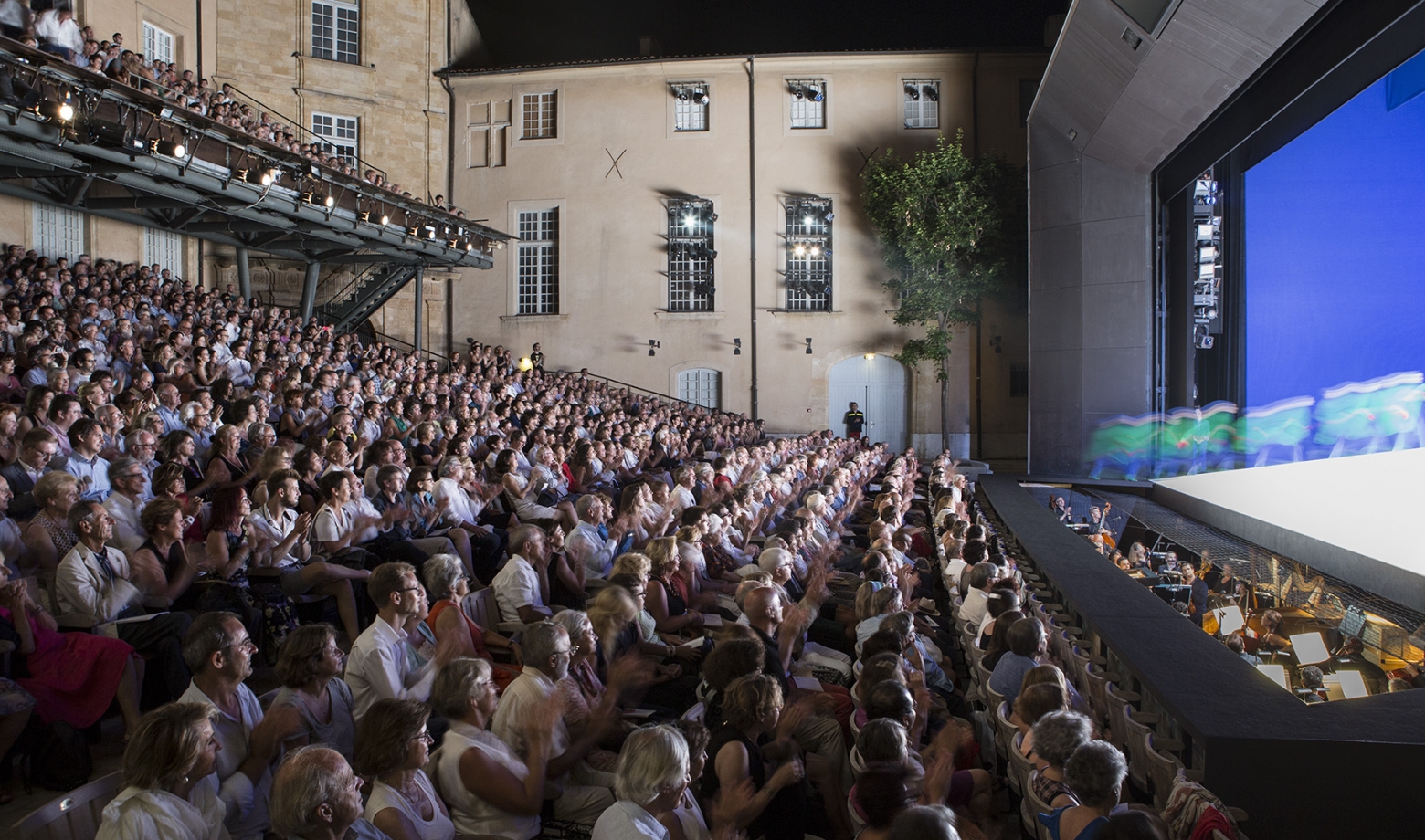
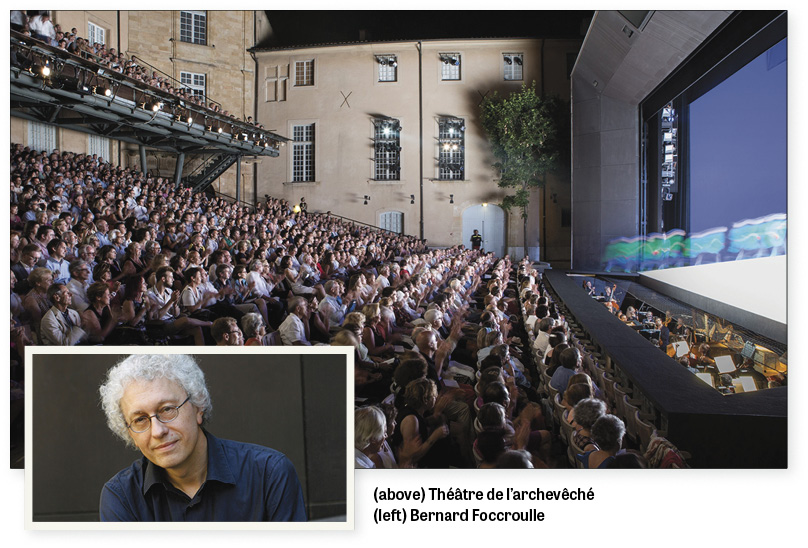
AIX_MAIN_20juilletpublicarcheveche.pttdef.04.jpgAIX marks the spot 1The end-of-June late-morning sun promises to fry the brains of the assembled Who’s Who of international opera critics. No one dares though to leave the press conference in the cloisters of the Théâtre de l’archevêché until we deal with what we are here to discuss, and that is not just the Festival d’Aix-en-Provence.

So we wait, as a trio of officials fills the shiny air with bright promises of newly re-imaged old work – Mozart meets Mussolini in Così fan tutte to open the festival’s 68th iteration – and as company director Bernard Foccroulle, frazzled-looking most times yet now cool as a glaçon – extols outreach programs, “school support,” administrative breakthroughs … We wait, plastic water bottles draining as steadily as the temperature mounts. Then: “Brexit.”

The word, spoken not shouted, came from out of nowhere – maybe from Foccroulle himself? Or who knows? It didn’t matter. It was as if a code had just been cracked; a world of information started spilling out.

The “British exit” was inevitably the talk of this European summer, its implications growing thornier with every new detail. For this assembled music crowd, the very thought of the United Kingdom’s decision to sever all ties from the European Union (EU) was a stark reminder that unfettered border crossing has been to opera’s advantage, long before Handel took his act from Halle to London.

Bottom line: if there’s a Brexit-induced clawback of arts funding in Europe or a redistribution of funds, the shrinking effect will be felt soon enough worldwide most particularly when it comes to operatic co-production.

For opera and theatre in England, minus the 16 percent of its budget originally from the EU, it will mean a “great sadness,” Katie Mitchell, Aix’s genius-in-residence, chimed in from somewhere behind Foccroulle at the festival-starter press conference. (Note: the formidably stern Mitchell, frequently called Britain’s “greatest living director,” has worked mostly away from England the past few years. Her introspective take on Debussy’s Pelléas et Mélisande is likely to be one of this festival’s two legacies.) Brexit pushes the EU-needy English National Opera even closer to the brink of collapse, if that were indeed possible (although some fightback came this summer by way of the company’s Tristan und Isolde, with sculptor Anish Kapoor’s sets drawing much of the attention).

The more the talk continued, the more the sense of worry grew. What, for example, would Brexit auger for the broader reaches of the co-production ideal of the sort that has the Canadian Opera Company bringing Richard Jones’ Aix debut production of Handel’s Ariodante to the Four Seasons Centre, October 16 to November 4 this year, a co-production with the COC, Dutch National Opera and Lyric Opera of Chicago? (As a matter of interest, the record, going back to the 2006/07 season, shows that the COC has presented 19 co-productions including this year’s October 6 to November 5 Norma, directed by Kevin Newbury, a co-production with San Francisco Opera, Lyric Opera of Chicago and Barcelona’s Gran Teatre del Liceu.)

And what will Brexit mean for an Aix festival that’s arguably the world’s centre for international musical wheeling and dealing? Foccroulle looks less than happy at the thought. “Artists need to travel,” he tells me after the press conference. “And for opera it is crucial to work with other cultures, other languages, other ways of producing art – also to be in contact with other disciplines. How much is dictated by the European Union? Well, a lot is facilitated by it, supported and subsidized.”

If any torpid Mediterranean city can be described as go-go, it’s Aix. The city downtown has its share of timeless moments. Cours Mirabeau, the coolest summer-strolling corridor this side of Barcelona’s La Rambla, is lined by a row of former grande bourgeoise homes on the south. Some are now banks. Here and there are any number of nearby ornate fountains – “Aix” comes from the word for water – such the Baroque Fontaine de Quatre-Dauphins where dolphin-like gargoyles spew water (not a quartet of future French kings, as the fountain’s name might suggest). This is not to forget painter Paul Cézanne’s airy studio that’s an obligatory visit for every bus tour heading north of town.

Aix’s cultural clout has been on the rise pretty much since the festival’s founding in 1948 as home for Mozart aficionados. It’s a photography and arts research centre. The festival itself can now brag about 97.9 percent full houses for opera and slightly over 94 percent for the many concerts. Otherwise Aix is France’s version of Silicon Valley with high-end university research facilities and credit card microchip processing plants edging their way out into some of the best olive-growing hectares in all the South of France. (“There are a great many wise people there” was written into the founding act for the Royal University in Aix, 1413.)

Translated: this means money. Elsewhere, to describe anyone in the arts as a “money person” might be an insult. But not in Aix and not when it comes to Foccroulle who also happens to have led Brussels’ La Monnaie for the past decade and a half. Foccroulle, leaving the

festival after the 2017 season, is the king of co-production, with Aix connecting opera academics from Ghent’s LOD muziktheater to the Polish National Opera in Warsaw, and with a good half-dozen co-productions on the bubble at any given time. Pierre Audi, of the Dutch National Opera in Amsterdam, will have a lot on his plate when he takes over Aix in 2018.

Foccroulle’s most lasting accomplishment – and his most audacious manoeuvre – may well lie in resetting Aix’s compass from North to South, a reset requiring a lot of creative thinking. (Cairo was a significant Aix connection/collaborator this year.) Foccroulle may be further emboldened in this decision by the recognition accorded to Aix's longtime nearby bigger coastal rival, Marseille, as European capital of culture. It seems the European south is now more than boule-playing by old guys. (Picking Marseille evidently preceded the debut airing of Marseille, the French-made big-city corruption yarn – on Netflix in Canada – barely kept alive by the bulky genius of Gérard Depardieu.)

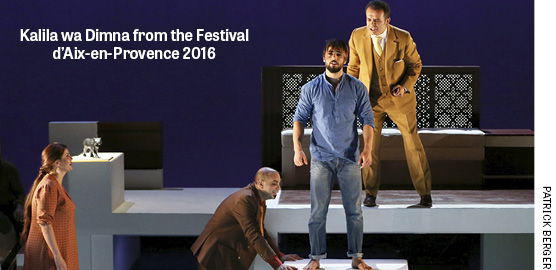
How do we integrate opera into a world where globalization is changing everything? Foccroulle asks himself. “We have to open the doors to other cultures,” he answers. “That’s the reason for [Moneim Adwan’s] Kalila wa Dimna and for our Mediterranean program.”

AIX_marks_the_spot_-_2.jpgLike Aix, other major European arts festival such as the Edinburgh Festival and the Holland Festival, both starting in 1947, were post-war efforts to better unite Europe. Foccroulle sees beyond that.

“When I arrived here ten years ago, I was often asked what was the identity of the festival,” he tells me. “They were expecting me to answer in terms of programming of directors and so on and so forth. I think our role however is the big mutation of the role of opera in a global world. That means doing many things to open doors for living artists. In Italy, for example, young artists, young composers and directors have nothing to do because the Italian opera houses don’t offer them anything. The older generation does almost everything. We also have to open the doors to other cultures and to regenerate opera through new forms.”

In keeping with this southern strategy, for his Così fan tutte French film director Christophe Honoré has re-imagined Lorenzo Da Ponte’s 18th century Neapolitan comedy as a grim Fascist parable set in the Italian-run Eritrea of the late 30s. Remarkably, the grumbling after the opening was that Honoré didn’t push the malevolent comedy as savagely far as it could go. The Trump effect?

Back to Katie Mitchell’s Pelléas, the opening of which saw a less-than-full house (which did, however, include Christine Lagarde, head of the International Monetary Fund). The work is already being described as her masterpiece – the true successor to her 2012 international hit, Written on Skin, by George Benjamin and Martin Crimp. But for this to play out, in my view, future co-productions of Mitchell’s Freudian dreamworld where its secrets are about more secrets, will require considerably more orchestral oomph than was provided by Esa-Pekka Salonen leading the Philharmonia Orchestra. They will also have to find a Mélisande with some of the daring physicality, aggressive sexuality and exhilarating singing Canadian soprano Barbara Hannigan brought to the role in this production. Aix’s reputation at being good at money may be facing some challenges. Its reputation for great casting remains intact.

Aix's Axis
North-South Reset

Katie Mitchell’s mysterioso production of Debussy’s Pelléas et Mélisande will probably emerge as the mainstream signature work from this season’s Festival d’Aix-en-Provençe. But the production mostly likely to have reverberations far into the future is Kalîla wa Dimna by Palestinian composer Moneim Adwan.

As a bilingual chamber opera in French and Arabic based on an eighth century translation of fables by Persian poet/scholar Ibn al-Muquaffa, everything about it is a world-first, we’re told. Yet there’s nothing new, or never-before, about its accessibility. Told in flashback by Kalîla (the Hawaii Pacific University-trained contralto, Ranine Chaar, at Aix), the story of a manipulated despot driven to violent extremes has a contemporary feel by way of the libretto by Fady Jomar and Catherine Verlaguet. Dimna (sung by Adwan himself) is a young hotshot on the make, a human jackal – toy animals are used in fetish fashion as narrative illustrations – waiting for the low-hanging spoils of the back-stabbing intrigue he creates.

A sense of nondescript modernity was conveyed by the sets by Eric Charbeau and Philippe Casaband; Nathalie Prats’ lumpen costumes were equally unimaginative. So visually, this Kalîla won’t change the world. No matter. Adwan’s score elevates everything to another level. Accompanied by an onstage quintet led by conductor/ fiddler Zied Zouari – an electro/groove player on his own time – Kalîla wa Dimna offers one of the most impressive melds of Middle Eastern melismas and straight-up western tonality I’ve come across.

So if a category needs to be found for Kalîla it might be filed under “folk opera” – closer to Béla Bartók’s Bluebeard’s Castle than to George Gershwin’s Porgy and Bess, please – or as important “regional theatre,” as COC director Alexandre Neef characterized it to for me shortly after he’d seen it at Aix.

The festival has gone in this direction before only last year with Serbian-Canadian composer Ana Sokoloviç’s Svabda (Wedding) which like Kalîla was offered at the festival’s Théậtre du Jeu de Paume. Opened only a few years back, this jewel-box space is found tucked away around the corner from the Musée Granet, an exceptional mid-size gallery that can trot out A-list Cézannes or Picassos whenever pressed to do so, which is never enough.William Christie’s Il ritorno d’Ulisse in patria was an earlier success at the Jeu de Paume.

Kalîla wa Dimna wasn’t meant to stand alone this season. The world premiere of another cross-cultural Aix commission, Czech composer Ondřej Adámek’s Seven Stones was on the festival’s early schedule only to be “postponed” at relatively the last moment according to a festival spokesperson, “mainly for budget reasons to avoid taking financial risks. This should allow the festival to also find additional co-producers.” (As it is, Seven Stones has enormous cross-cultural possibilities as the story of a mineralogist who goes on a worldwide search from Europe to South America for the single stone about to be hurled at the woman saved by Christ after being accused of adultery.)

Only days after the Kalîla wa Dimna premiere, Lyon Opera, only a few hours up the autoroute, produced its new Abduction from the Seraglio, by Mozart, with new dialogue by Wajdi Mouawad, the French-Lebanese writer/director intended to rethink the work’s burlesques of Muslim Turks.

“You have to constantly redefine what you are, especially as a large organization,” Neef went on. “You don’t give up your core. You do what you do best. And there’s always a temptation to run after the next thing. But you don’t just keeping doing what you do. I was very fascinated with Kalîla wa Dimna. I was taken with the storytelling. In Canada we have a wide indigenous population and we have not told their stories in a big way.”

Ariodante auf Orkney

Let’s see now. With Handel’s Ariodante – Richard Jones’ version premiering at the Four Seasons Centre with the Canadian Opera Company October 16 to November 4 – we have a love-wracked title character who makes Hamlet seem like a laugh riot, living in Scotland’s Orkney Islands, you know, remote, lonely and windswept where they have mean, seaweed-eating North Ronaldsay sheep, little summer to speak of and folks going around in thick woolly sweaters that render most forms of sexual contact tricky, if not extremely itchy.

Jones’ punky production, which premiered in 2014 at the Aix Festival, goes whole hog, er, whole sheep, with this Orkney claustrophobia vibe. Besides excess tartan there’s lots of wallpaper. “What made my mind up about the production was Jones’ idea to move the setting from Scotland itself to the Orkneys,” says COC general director Alexander Neef. “He turns it into an even more remote place. Handel thought Scotland itself was a remote place.”

The new setting is Scotland of the recent past, where the heroine, Ginevra, suffers mightily to be with the man she loves, Prince Ariodante – British mezzo soprano Alice Coote, a Jones favourite, for the COC performances – only to be accused of being unfaithful to him.

“The story is wintry,” Jones tells me enthusiastically on the phone, his tone anything but wintry. “The music is baroque but the setting is 1970s Scotland. There is a tension between the two. People look at it more acutely because of that.”

Besides tension we get lying, cheating, the hero’s attempted suicide and lots of knitwear. How much fun is that? Well, lots actually. “Yes, there is this sense of melancholy that is found in many pieces of the period which I find intoxicating,” says COC music director, Johannes Debus. Despite a childhood spent as a pianist/fiddler in Baroque-rich West Germany, he’s making his Handel-conducting debut with Ariodante. “There is a lushness to the score. Opera at his time was an entertainment at an extremely high level; an entertainment is a form to allow you to forget your daily life.”

Debus was born in 1974, the year David Bowie released Diamond Dogs. Rock is not foreign to his musical thinking: his understanding of it will not likely inhibit his still-growing reputation. Ariodante, produced in 1735, was the by-product of an aggressive new marketing venture by Handel which would have made Andrew Lloyd Webber proud. In 1734, Handel moved his company from the Haymarket’s King’s Theatre to John Rich’s Theatre Royal, newly installed at Covent Garden, to find a better location and a company with a chorus and dancers. (Speaking of location: along with the COC and Aix, this Ariodante is a co-production with the Dutch National Opera and Lyric Opera of Chicago.)

“Handel always had dancers in mind: this music itself was based on dance, the sarabande, the gavotte and the bourée,” Debus continues. “Baroque music uses words the way rock does: there is always a certain rhythmical aspect to them. It’s an expression of youth. And there is the aspect of popularity in the music itself. The singers at the time were all pop stars of the period, idolized by everyone. When people went to the opera then it was not as it is today. They chatted. They might have sung along to the music. There was no holy, sacred atmosphere.”

Ariodante’s Aix debut was interrupted by France-wide strikes by arts-related workers fearful of cutbacks in their benefits. One British singer had her entrance blocked by “about 40 protestors who were blowing klaxons.” By then though, the current Handel revival – one to rival the composer’s last period of  rediscovery in the 1920s – was in full swing. “I was a latecomer to Handel,” COC general director Alexander Neef admits, “but once I rounded that corner I saw him next to Mozart and Verdi.”

The Aix success this season of Krzysztof Warlikowski’s young and restless take on Handel’s Il trionfo del tempo e del disinganno, confirms what Jones and Debus believe is Handel’s intrinsic connection to today’s popular culture. Handel wrote for the street and his own generation. Il trionfo, Handel’s first oratorio, was written when he was just 22.

Jones himself comes to Ariodante through the prism of pop not opera seria. The formulaic courtliness observed by Handel’s characters and understood by his audience is not replicated in Jones’ direction, although his characters, turning themselves into manipulatable puppets, are looking for motivation from somewhere. But where, the TV? The movies? Today’s sitcom, not George II’s 18th century court, informs this Ariodante.

Maybe this hardly promises the signature shock and awe involved in some of Jones’ earlier productions like his recent grit‘n’grimy version of A Midsummer Night’s Dream, his Royal Shakespeare Company debut, which had him labelled a “vandal.”

Believing that “theatre and opera are marginal to most people,” Jones says, “I am selfishly willing these great works work. And I am trying to work with people who can stimulate.”

Debus is on board with that. “I cannot say I have a vast experience with Baroque music although I’ve conducted it here and there and one of my favourite composers is Bach,” he says. “At the end though, no matter how much you do research on how the music may have been played at the time, in the end it’s the interpretation that makes the music work. You have to have someone with the right instinct for the music and the vastness of the emotion there. The result can be a very lively performance that also touches you.”

Back to top