06 Songs for a New CenturySongs for a New Century
Jonathan Miller; Lucia Lin; Randall Hodgkinson; Marc Ryser
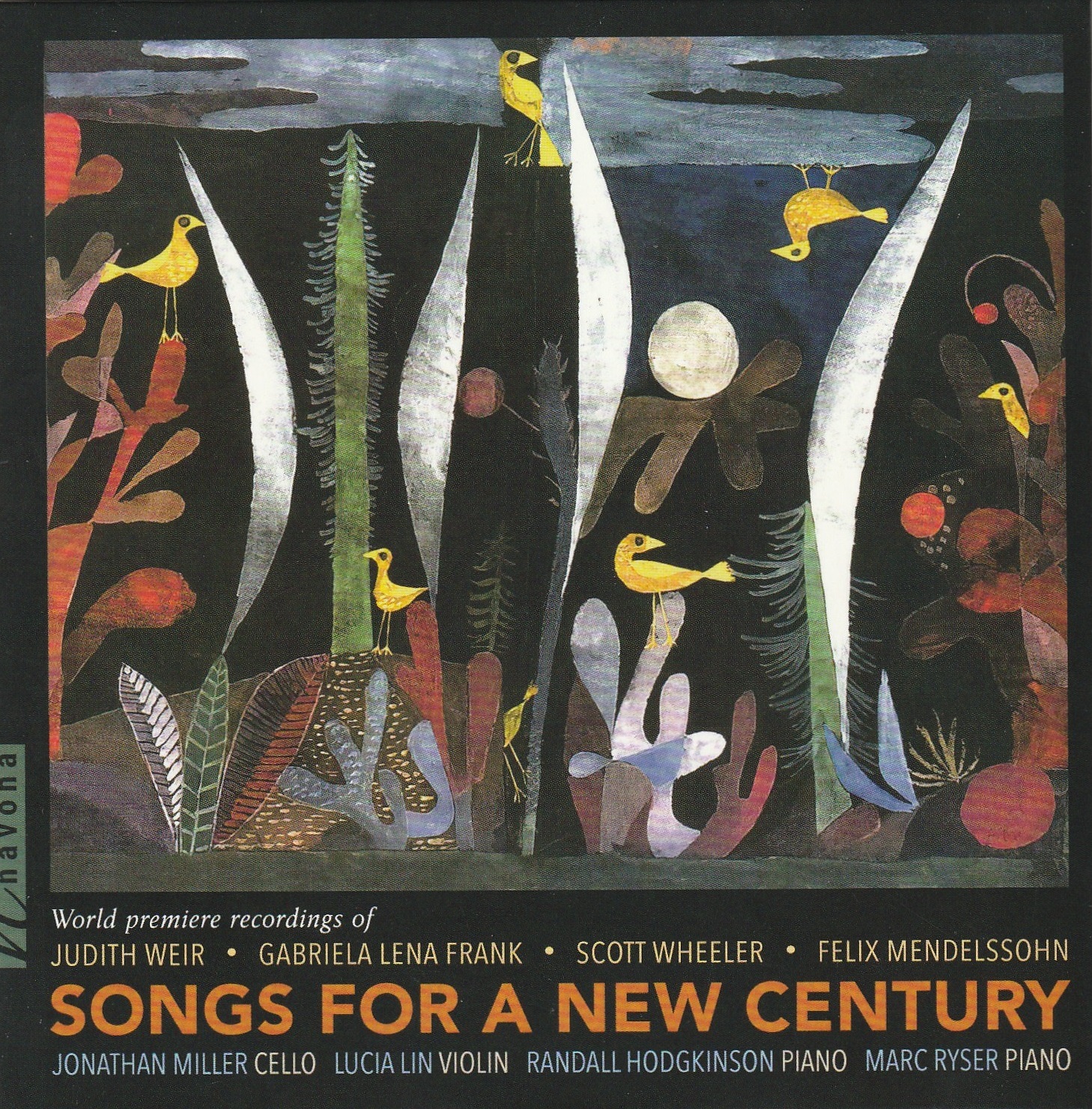
Navona Records nv6623 (navonarecords.com/catalog/nv6623)

Jonathan Miller, long-time Boston Symphony Orchestra cellist and founding artistic director of the Boston Artists Ensemble, commissioned well-established American composers Gabriela Lena Frank and Scott Wheeler along with Judith Weir, Britain’s current Master of the King’s Music, to bring Mendelssohn’s concept of “songs without words” into “a new century.”

The disc opens with Mendelssohn himself, his Song without Words, Op.109 for cello and piano and five Songs without Words for piano, arranged by Mendelssohn’s friend, cellist Alfredo Piatti. Miller and pianist Marc Ryser find some dark drama within these graceful pieces, often considered lightweight.

Miller and violinist Lucia Lin perform Frank’s duo Operetta. I found all five movements pervaded by agitated discontent. Operettas typically attempt to make people smile; this one doesn’t.

Pianist Randall Hodgkinson joins Miller in Weir’s Three Chorales. In Angels Bending Near the Earth, the cello gently swings up and down over piano tinkles. In Death’s Dark Vale moves from gloom to hopefulness. O Sapienza, variations on a Hildegard von Bingen hymn, features long-lined lyricism from the cello amid irregular piano splashes.

Miller and Ryser reunite in Wheeler’s Cello Sonata No.2 “Songs without Words,” composed, writes Wheeler, in his upstate New York woodlands studio. In Among the trees, abrupt piano discords punctuate the perturbed cello line. Unaccompanied pizzicati in the cello’s lowest register dominate Forest at night. The cello resumes its moody musings in Barcarolle before joining with the piano to conclude this CD with lyrical optimism.
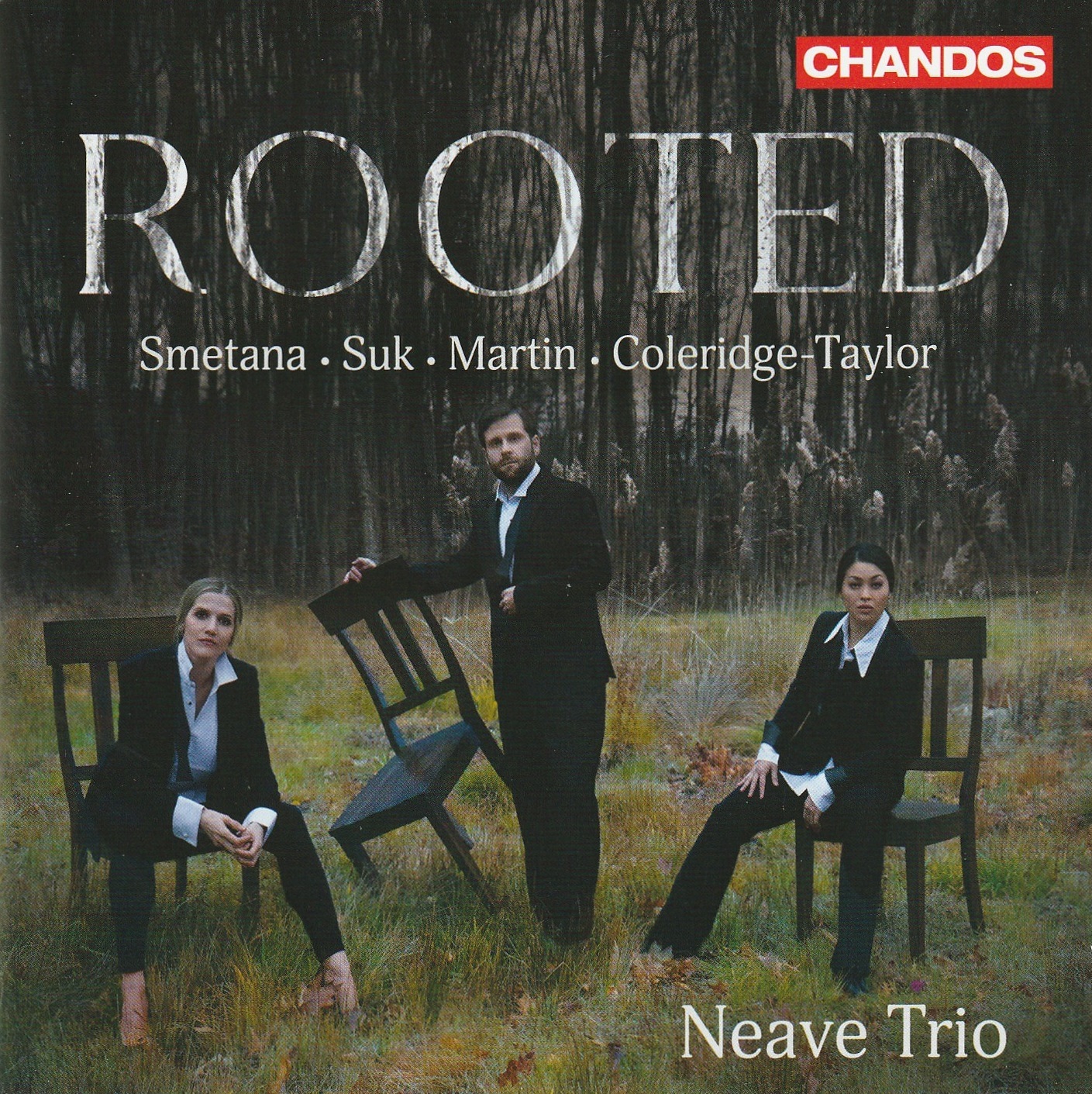
07 Neave TrioRooted
Neave Trio
Chandos CHAN 20272 (neavetrio.com/discography)

“Tradition-rooted” folk music links this CD’s compositions, vividly performed by America’s Neave Trio. Bedřich Smetana wrote his 27-minute Piano Trio, Op.15 (1855) shortly after his four-year-old daughter’s death from scarlet fever. Anguished outbursts fill the first movement, briefly interrupted by sweet, simple melodies, perhaps representing little Bedřiška. The second movement features folk-like dances, ranging from gently poignant to ponderously brutal. The finale alternates between a wild Presto, a precursor to the Furiant in Smetana’s Bartered Bride, and a heartbreakingly beautiful melody, an ambiguous conclusion to this emotional roller-coaster.

The other works are shorter, each around 16 minutes. Josef Suk even called his piece Petit Trio, Op.2, completed while studying with Antonin Dvořák (Suk later married Dvořák’s daughter Otilie). Like Smetana, Suk composed a series of Czech folk-flavoured dances, less dramatic but cheerfully robust and sentimental.

Samuel Coleridge-Taylor arranged Five Negro Melodies from his Twenty-four Negro Melodies (1905) for piano. Sometimes I feel like a motherless child leads the group; I was unfamiliar with the others. As with many works Coleridge-Taylor derived from African or African-American sources, I found these arrangements essentially European in style and feeling, with minimal ethnic authenticity.

The two outer movements of Swiss composer Frank Martin’s Trio sur des mélodies populaires irlandaises (1925) readily conjure images of Irish countryfolk dancing rumbustiously to the squealing of bagpipes. In the middle movement, the cello croons a love song over harp-like piano sparkles. A happy ending to a disc that began with tears.

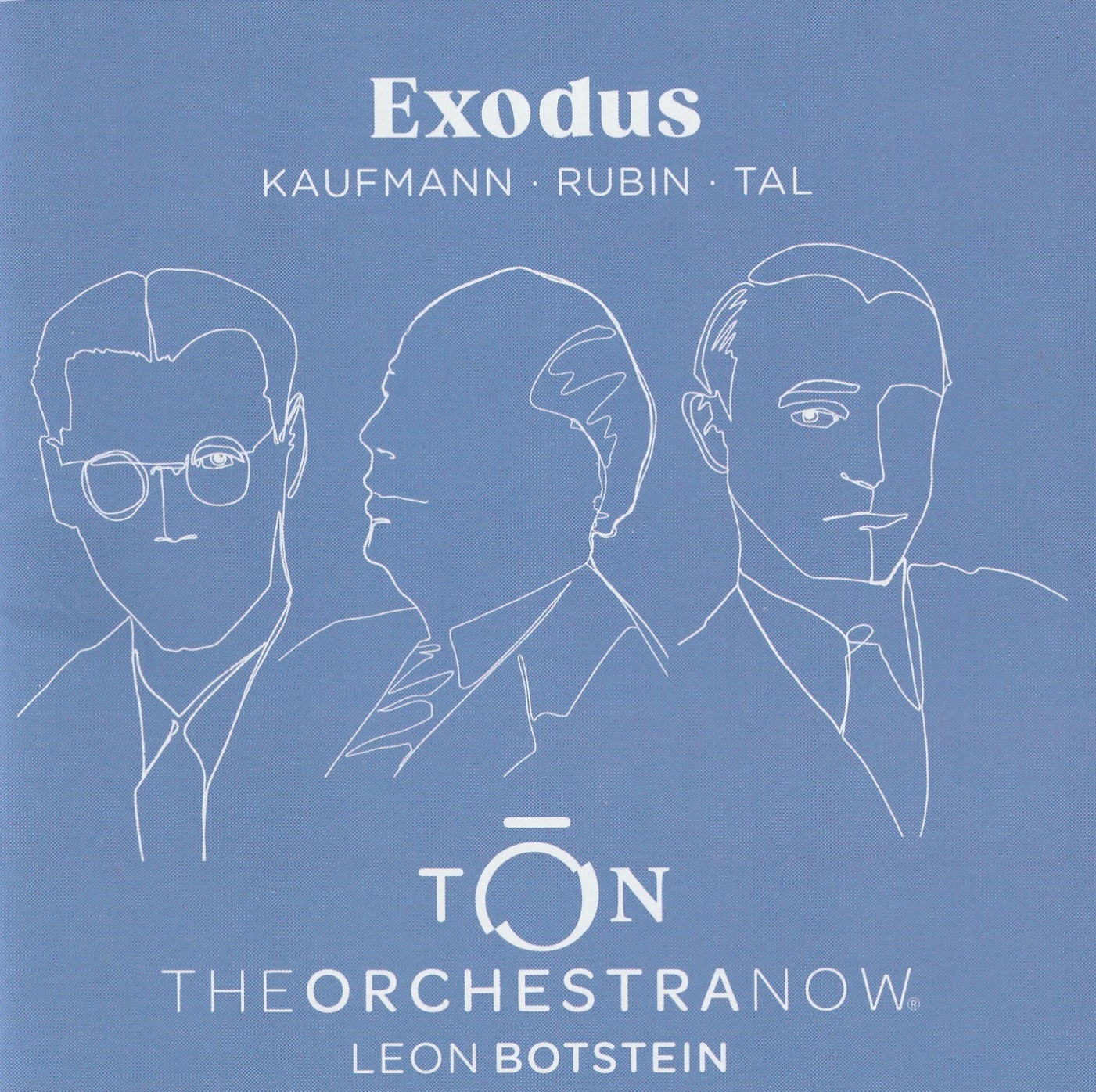
08 ExodusExodus
The Orchestra Now; Leon Botstein
Avie Records AV2713 (avie-records.com/releases/exodus-walter-kaufmann-•-marcel-rubin-•-josef-tal)

During the 1930s, some Jews able to make their own “exoduses” fled Nazism, including the composers on this CD: Walter Kaufmann (1907-1984) went to India, Marcel Rubin (1905-1995) to France, Josef Tal (1910-2008) to Palestine.

Recognition of Kaufmann has accelerated since my September 2020 WholeNote review of Kaufmann’s debut CD by Toronto’s ARC Ensemble. In the June 2024 WholeNote I reviewed the first CD of his orchestral works, praising his Indian Symphony (1943) for its “soulful woodwind solos, pulsating strings, dramatic brass and percussion.” Here’s a second recording of that symphony. At 17:32, nearly two minutes longer than the previous recording, conductor Leon Botstein’s performance enhances the music’s exotic atmosphere and grandeur.

Conceived during wartime, Rubin’s powerful, 34-minute Symphony No.4 “Dies Irae” (1945, rev.1972) was revised when the disillusioned Rubin, reacting to contemporary events, replaced two optimistic movements with the grim Pastorale. The dirge-like opening Kinderkreuzzug 1939 takes its title from Bertolt Brecht’s poem (included in the booklet) describing “lost children” fleeing “the nightmare.” The four-note motto of the medieval Day of Wrath chant dominates the second movement’s sardonic march; the chant then underlines the Pastorale’s passacaglia, wandering through painful memories before ending meditatively.

Tal’s 23-minute Exodus (1947), composed during the outbreak of hostilities prior to the UN’s establishment of Israel, employs biblical verses from Exodus and Psalms, emphatically sung in Hebrew by brawny-voiced baritone Noam Heinz. Botstein and The Orchestra Now generate brilliantly-coloured sonorities from Tal’s “Hollywood epic”-style score.

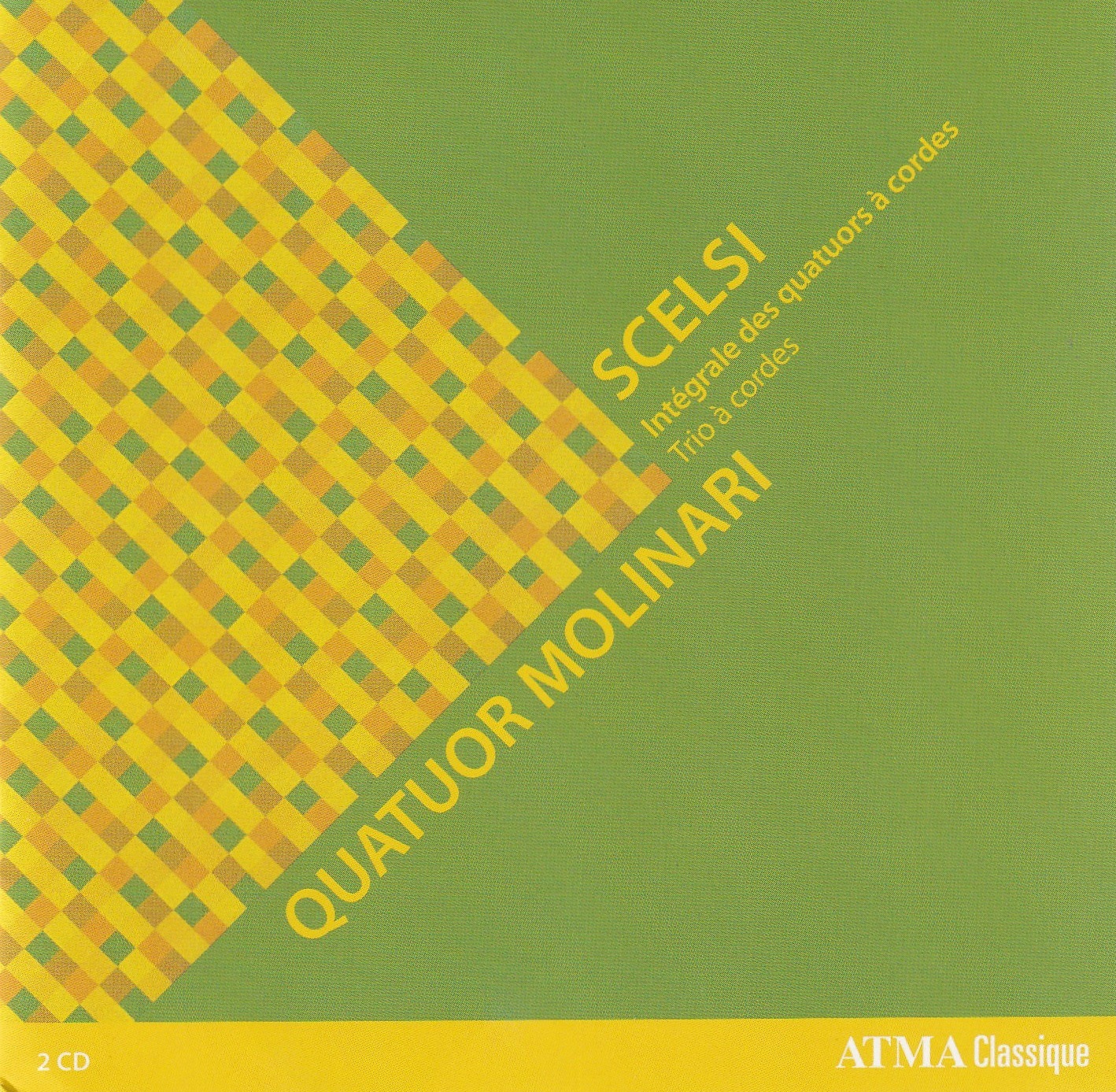
01 ScelsiScelsi – Integrals des quatuors a cordes; Trio a cordes
Quatuor Molinari
ATMA ACD2 2849 (atmaclassique.com/en/product/giacinto-scelsi-complete-string-quartets-and-string-trio)

Italian composer Giacinto Scelsi wrote some of the most sublime music of the past century. It’s also some of the most radical. He was notoriously secretive, even forbidding photos of himself.  Yet these string quartets, which span a forty-year period, are so personal that heard together they reveal much about this remarkable composer whose musical language was transformed by a profound spiritual awakening. 

This is the first complete recording of Scelsi’s five string quartets since the legendary Arditti Quartet’s from 1990. It’s a significant addition to the Montreal-based Molinari Quartet’s invaluable series of complete string quartets by key modern composers. The Molinari brings the precision and clarity required for the close listening Scelsi’s music demands, plus a contemplative soulfulness. ATMA’s stellar sound does the rest. 

You can already hear Scelsi pushing boundaries in the post-Schoenbergian String Quartet No.1 from 1944 – the gong effects, the pitch-bending. But after a devastating mental breakdown he came to reject its engaging rhythms, intricate counterpoint, complex harmony and delightful thematic developments.

 Immersing himself in theosophy and eastern religions, Scelsi spent months at the piano repeating one note over and over. He eventually switched to an Ondioline, an early electronic keyboard. It allowed him to explore the infinity of sounds contained in a single pitch through alterations like microtones, vibrato, glissandi and ostinato. The searing Trio from 1958 initiates his new language, a year before his acknowledged breakthrough work, Quattro Pezzi su una nota solo

 The more expansive Second Quartet followed two years later. There’s an especially thrilling passage which reveals the Molinari’s mastery of Scelsi’s strange and wonderful style when the heightened drama of the fourth movement resolves into the dreamy incantations of the last movement. He gave each of the five movements of the Third Quartet titles describing conflict, liberation and catharsis, though there’s more catharsis than conflict. In the more fraught Fourth Quartet the Molinari unfurls an enthralling sweep of colours and textures in a single movement. 

 The Fifth Quartet was Scelsi’s last major work. Distilled into seven transcendent minutes, it serves as a fitting memorial to this remarkable composer.

Listen to 'Scelsi: Integrals des quatuors a cordes; Trio a cordes' Now in the Listening Room

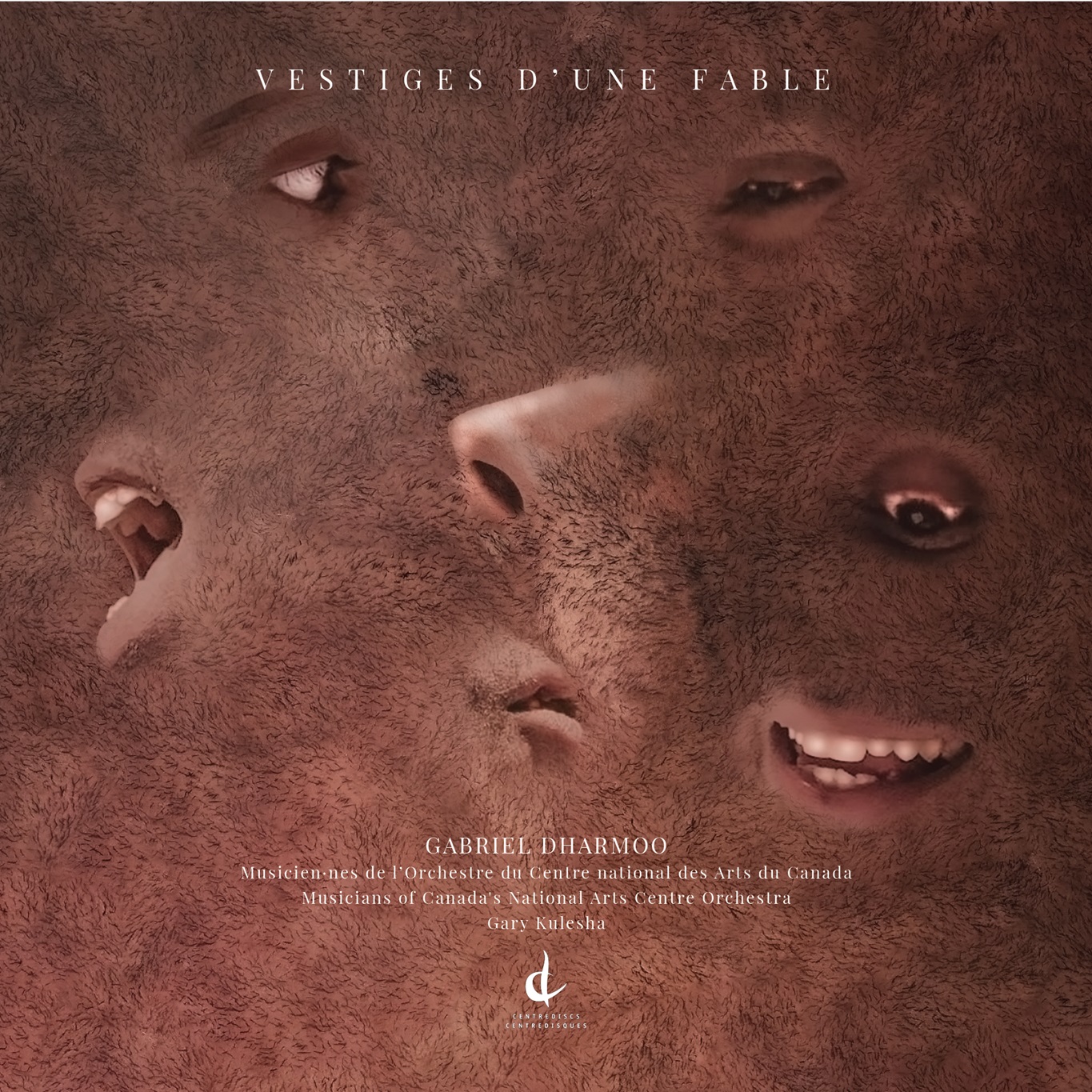
02 Gabriel DharmooGabriel Dharmoo – Vestiges d’une fable
Members of NACO; Gary Kulesha
Centrediscs CMCCD 34324 (cmccanada.org/shop/cmccd-34324)

Gabriel Dharmoo makes you laugh and then wonder if that was the right response, and then laugh again. So yes, it is fine to hear and feel the mirth behind the title track of his recent release: Vestiges d’une Fable (2014, current arrangement 2023) for voice (originally for soprano but here the composer’s own) with flute cello and piano. The musicians on the disc are select members of the National Arts Centre Orchestra, conducted by Gary Kulesha. The players are excellent, and Kulesha very capably marshals their forces. 

Dharmoo produces theatrical, evocative, even surreal music. Vestiges references his mocumentary performance piece Anthropolgies imaginaires, and the fog in our poise (2016) “evokes the ceremonial music of an imaginary culture” per the liner notes. Like the writer Jorge Luis Borges, Dharmoo posits alternate worlds from which to explore our own. His voice in Vestiges seems drawn from an alien cabaret, or one where the creatures we know sing text we can almost understand. The final track, sur les rives de (2011), gives us his impressions of the opposite and contrasting banks of the Ganges river. 

Moondaal Moondru (2010) at 18:10 is the substantial centre-weight of the disc, the piece comes in taut sections, with virtuosic outbursts sometimes punctuating a droning whine. Dharmoo lacks nothing in orchestrational skill, and his moods are clearly if unsettlingly depicted. There’s a roll and a rhythm to the music, and I suggest you move with the underlying pulse to best experience it. 

Back to top