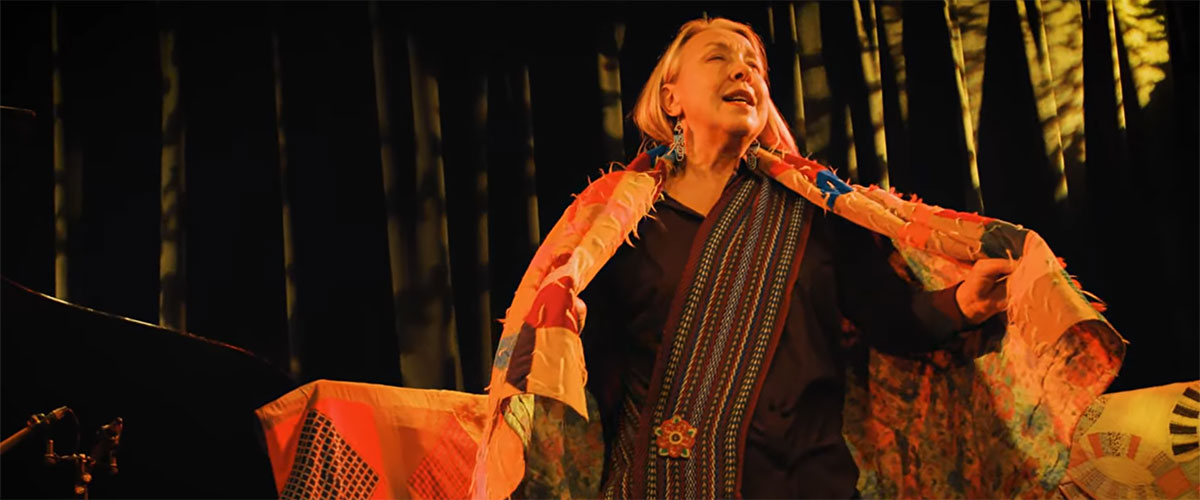
 For Rebecca Hass, land, story, song, and a blanket are the key ingredients in The Song Blanket, which came to the University of Western Ontario on September 25, and University of Toronto on September 29. As the culmination of years-long journey to retrace her Métis heritage, Hass’s self-dubbed “theatrical gathering” challenges the expectations of the traditional recital format, blurring the lines between performer and audience to ask the question: what does it mean to live on this land, and how is that relationship expressed through music and objects?
Following workshops and performances in Mexico City, Ithaca (NY), and New York City, Hass’ shows in London and Toronto were a homecoming of sorts, with her Métis roots being in Georgian Bay. The show’s traversing journey across the continent mirrors Hass’ life and career; after spending her formative years in Ontario, she has performed at almost every major opera company in Canada and currently focuses on her roles as a storyteller, curator, coach, and Director of Engagement and New Work at Pacific Opera Victoria.
 The Song Blanket is the realization of a commission of songCIRCLE project by the New York-based Sparks & Wiry Cries, but Hass’ journey of self-reclamation, which led her creating a CBC radio documentary, begins earlier. Following intensive work with composer Ian Cusson and dramaturg Valerie Planche, Hass fashioned an hour-long original work combining music with monologues about Hass’ childhood memories with her grandmother and father; in addition to singing and narrating, Hass also plays the flute and hand drum.
At the work’s core is Hass’ relationship with her Métis grandmother’s blanket, which Hass drapes around herself at various points in the show. The blanket was key both for her journey of self-discovery and for what Hass aims to achieve with her show: “I have a sense that we're all in our heads,” she says. “I didn't want the show to be passive, and I think the physical element is part of it.” Blankets aren’t just specific to Hass’ cultural identity. She adds that “every culture has a relationship with the idea of blankets, like making blankets for babies, or as a gift when people get married [...] I could hold it [the blanket] with confidence and talk about it, but it also was an inclusive way to welcome an audience into the story.”
The blanket’s universal nature might be why The Song Blanket has found resonance and appeal in multiple cities and countries with both Indigenous and non-Indigenous audiences. Another element of the show’s broad reach? Hass has worked with different singers in each city to share the stage with her, performing a song from their own culture at various points in each show. In Mexico City, three women sang Mexican pop songs; in London, Camila Rodriguez performed an Argentinian song and Bethany Horst a medley of traditional Mennonite hymns. Hass says that these songs help the audience “connect deeper and faster” with her work: “there are people from their community, speaking to them in a way they understand, and singing a song that makes sense to that audience.”
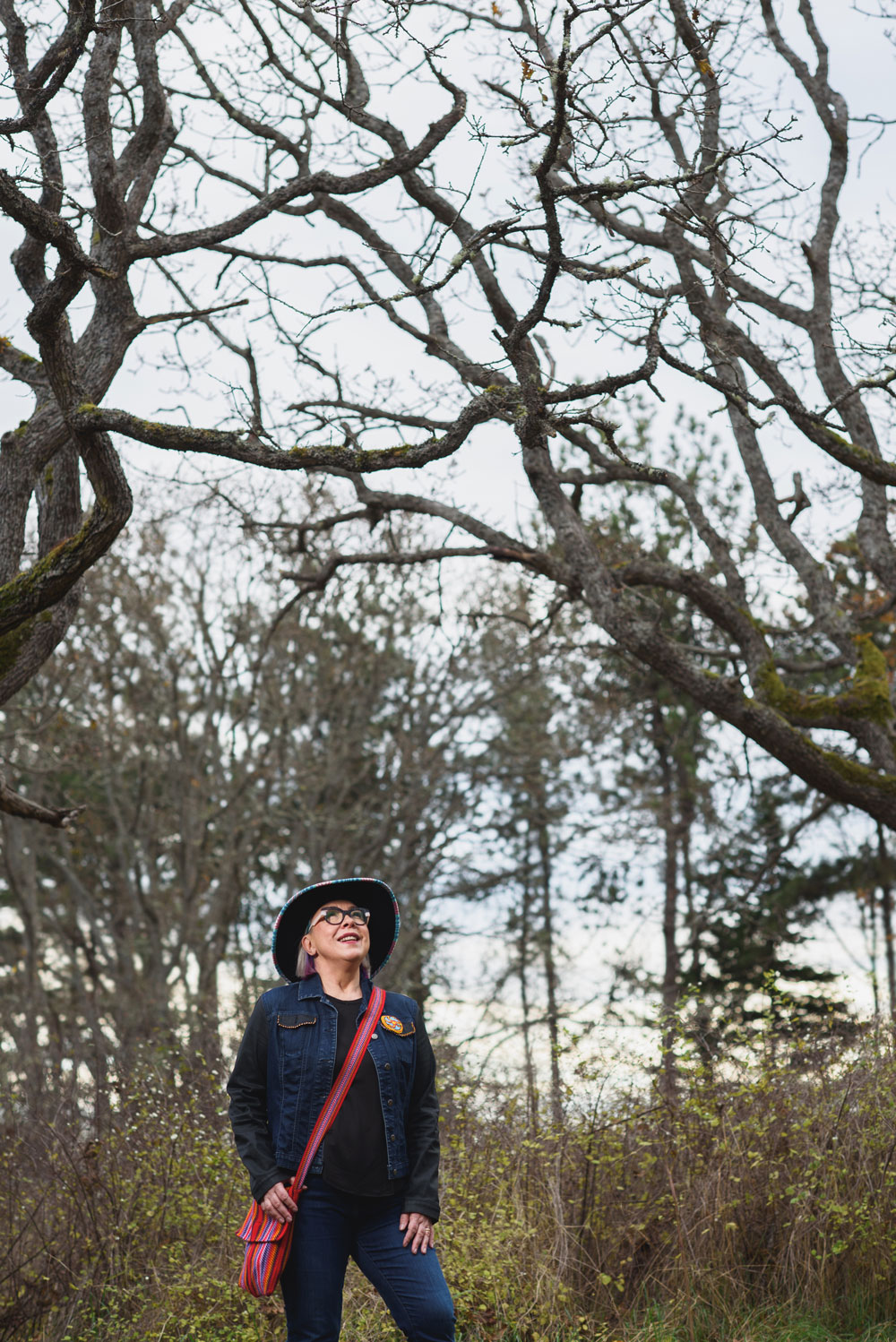 Changing how we do recital: With this inclusion, Hass also hopes to “change how we do recital, and how we do song sharing. Yes, I want the audience to go on a journey, but why shouldn't the artists also go on the journey?” In many parts of the show, Hass invites her co-performers and the audience to sing together. This act of togetherness, an uncommon feature of a typical recital, is a reminder that The Song Blanket is ultimately intended for every audience member to think about their own connection to where they are now, regardless of where they came from. “We are all dislocated - I think that's part of my plea in this show,” says Hass. “Everyone's ancestors, at one time, were in relationship to the land. So it doesn't matter that it's not your traditional territory, and it's not where your ancestors were. I want you to think about the fact that now that you live here, you need to make a relationship at this place, and you should remember that it's all alive, and you need to care for it.”
The generosity of Hass’ artistry has wide echoes for those who share the stage with her, both in the present and future. When working on the music with Ian Cusson, a fellow Georgian Bay-Métis composer, Hass says they both shared a desire “to write for aging voices,” she says. “My voice doesn't work like it used to. And we talked a lot about it, and he said many singers have come to him, and he's interested in older women's voices. So, The Song Blanket is totally constructed for an older woman's voice, which is also pretty unique.” It is Hass’s hope that the show does not end with her: “I want it to be a story that someone else could do at some time, so it's not always going to be me. And that somebody else could step in and do the show any day.”
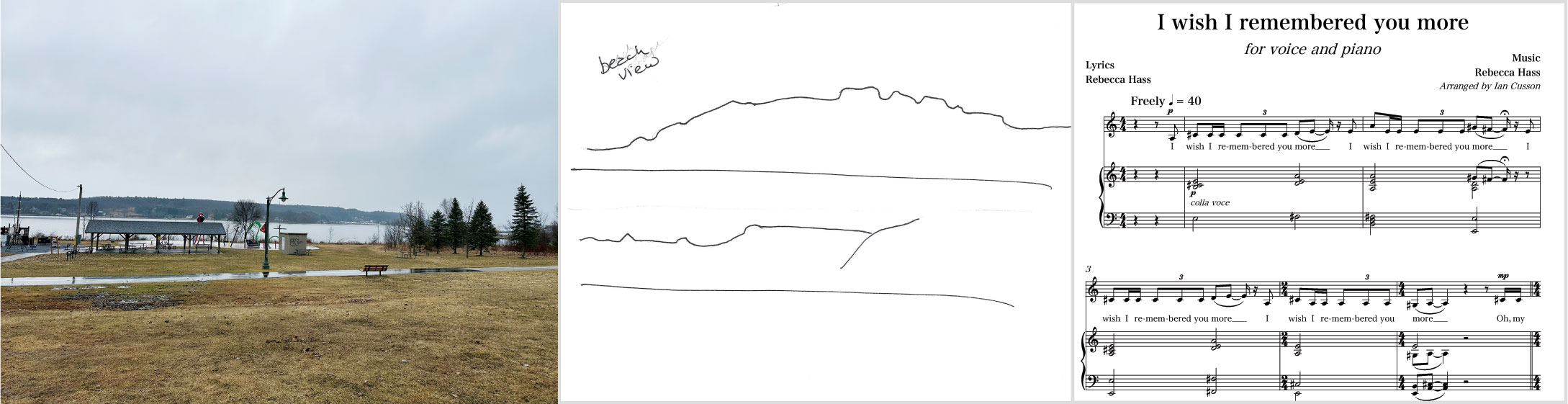
Versatile as it is, The Song Blanket is, at its core, a deeply personal and individual account of how a woman has grappled with her Métis identity that was left “in the closet” by her grandmother. “All I can do is tell my personal story, my family's history, and then people will do with that as they wish,” she says. “I was very conscious of telling only the teachings I carried, only what I know of my story, and not as a representation of anyone else's story.” When researching her family history, Hass drove with Cusson to the plot of land that was given to her Métis ancestors when they were relocated to Georgian Bay following the War of 1812. Looking out on the trees on the coastline - the same view that her predecessors saw - Hass traced the shape of their rise and fall, forming a line that she later transformed into the melody of the song “I wish I remembered you more.” Land didn’t just inspire The Song Blanket; it became the music, too.
A few years after that trip, Hass feels the renewed significance of being back in Ontario, close to the place where her entire journey began. “I have these recollections of my time being on the land as a child,” she says, telling me that she recently took pictures of milkweed in Hamilton because it reminded her of her childhood. “In some ways, it has a very special kind of a resonance.”
Having written for Total Baroque and Martlet, Lucas Hung follows stories at the intersection of artistic endeavour and public perception, and strives to illuminate the connections between programmers, performers, and the public. He can be reached at lucashungmedia@gmail.com.