 Perhaps it’s time to re-examine and, in doing so, renew our appreciation for Roy Thompson Hall. Such was my experience and opportunity on June 30, 2026.
In 2025, St Vincent (Anne Erin Clark), in collaboration with Jules Buckley and a 60-piece symphonic orchestra, presented a career-spanning set of hits and fan favourites in front of BBC cameras and a sold-out audience as part of the Royal Albert Hall’s historic “Night at the Proms” festival. The performance went mega-viral, inspiring such demand that it was requested and released as an official album, the success of which then sparked the limited tour of which the June 30 RTH show was a part.
I am no stranger to St Vincent, or to Roy Thompson Hall.
In 2018, St Vincent was at the pinnacle of indie/art rock, drawing comparisons to eclectic interdisciplinary greats like David Bowie, Lou Reed, etc. In a twist that would help catapult her to global stardom, one of those very greats, David Byrne, became something of a private mentor, occasional collaborator, and biggest public cheerleader. She was appearing in living rooms across the world on American late-night television. She was on the covers of top-flight fashion magazines.

And there she was, in April 2018, in front of me and at least 50,000 others, on the main stage of Coachella.
It can not be overstated how difficult it can be even for the world’s biggest artists to succeed on that stage (just Google “Drake Coachella” for a firehose of disappointed reviews). Anne and co. demanded full attention, with a set that had the entire polo field alive with crackling electric energy. Rotating platforms had the whole band acting as human disco balls, sending beams of light hundreds of feet in all directions, while her gritty but precise guitar cut through the thick atmosphere like lightning. Costume changes, on an epic scale.
So how on earth does this translate to a space like Roy Thompson Hall?
The answer is that it doesn’t, and it works surprisingly well.
Electing to forego any video screens, elaborate lighting, set pieces, or even (gasp!) costume changes, the juxtaposition was so extreme that the hall, which regular attendees likely do not think of as such, became truly intimate.
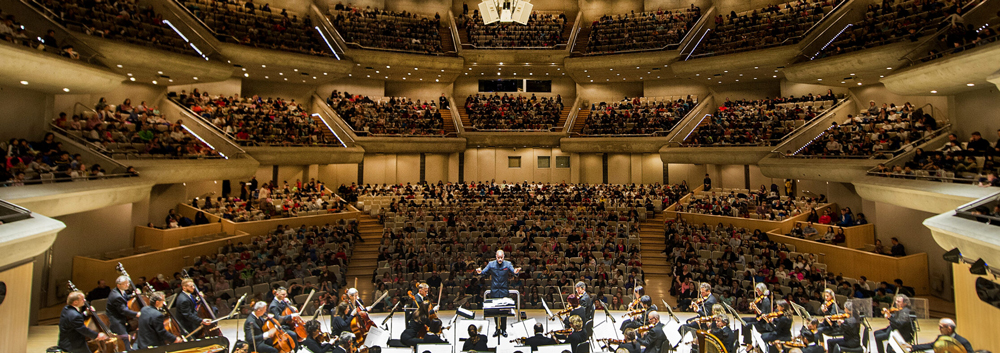
I attended with a dear friend from a small town in Southern California. It was his first time in Toronto, let alone Roy Thompson. For clarity, we were seated towards the very back of the lower bowl.
When St Vincent walked on stage, amidst the applause, he leant over and said excitedly, “Oh my God, she’s RIGHT THERE!”
And he was right. St Vincent was right there, in the flesh, present in body and mind, close enough to interact, close enough to hear and be heard without amplification, though amplification there certainly was. The hall shrank, and we were no longer at “the back of the lower orchestra”. We were in the VIP seats. An experience more commonly reserved for the elites rubbing elbows over Wagyu tacos at the front of the Hollywood Bowl, or side-stage at Coachella.
I will disappoint some readers by forgoing a lengthy review of the program itself. For those unfamiliar, the entire original performance from the Royal Albert Hall is free to watch online, and is highly recommended both for fans and newcomers. To keep things succinct and avoid spoilers for those who haven’t seen it, Buckley has done a masterful job here of realizing what are effectively orchestral pop arrangements. His conducting of the arrangements is focused and unpretentious, never drawing unnecessary focus.
The edge and grit of the original songs is retained, while the rest of the symphonic canvas is painted in a way that is accessible enough for the average pop listener, without becoming frustrating, bland, or saccharine to the seasoned orchestral ear. You do not need to know the chorus to 2017’s “Los Ageless” to find yourself singing along by the second time it comes around.
And in the relatively intimate confines and analogue acoustic space of Roy Thompson, she heard us. She heard the audience singing along, and truly seemed to pause and revel in that moment, perhaps for the first time in years hearing an audience that sounded “intimate” back. Moments later, she left the stage, not for a costume change, but to run up the aisles, hugging fans. My friend, a lifelong fan never able to get closer than a hundred feet, never close enough to see the whites of her eyes, got one of those hugs. He assured me it will remain a core memory for the rest of his life.
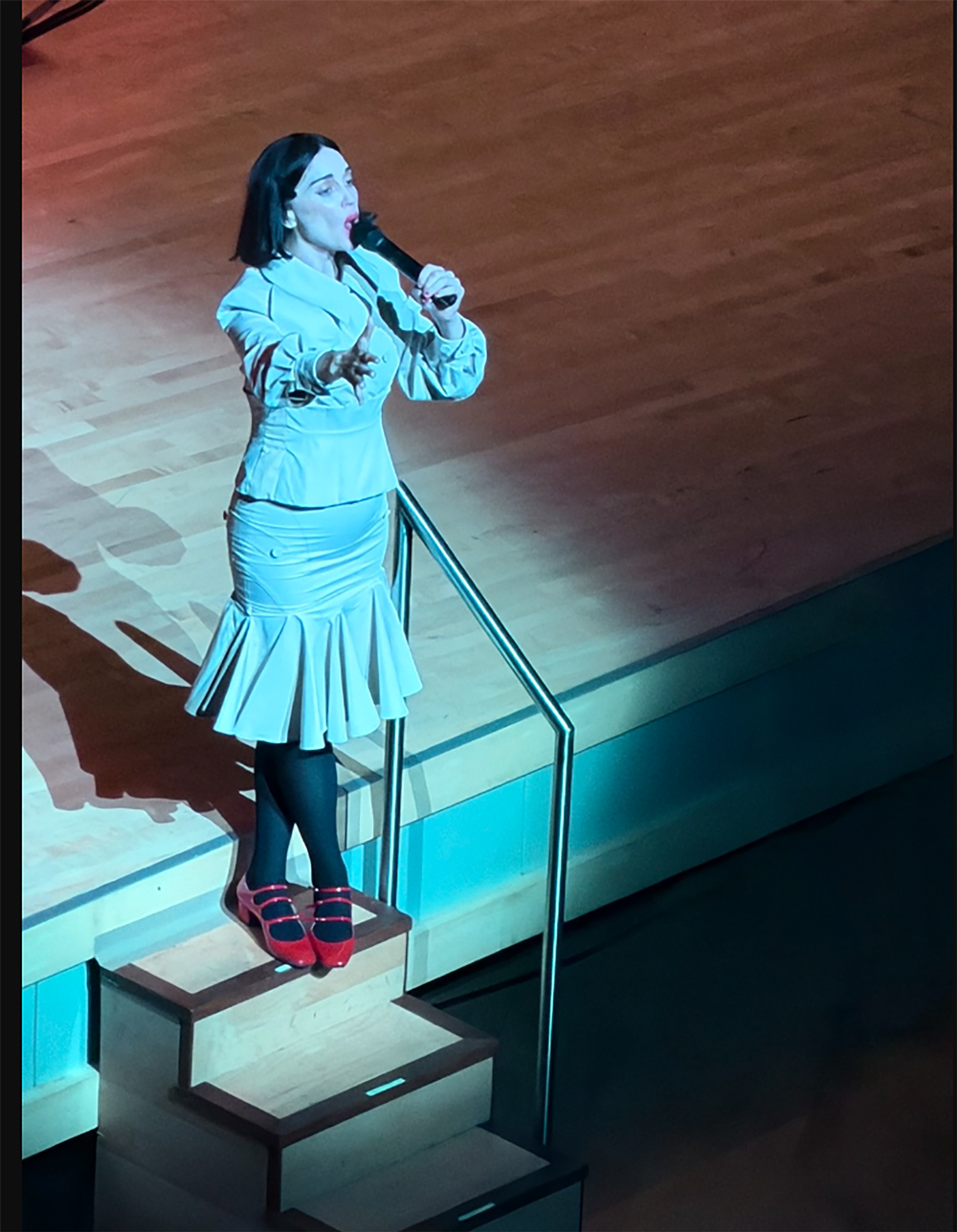
And just in case anyone was worried that she’s lost her edge for showmanship, the costume changes were replaced by her own fabulous outfit, and her assistant, in a pencil dress with matching high heels, providing her with an identical-but-differently-painted copy of her artist line signature guitar for nearly every song. The swagger knows no confines, small or large.
Luca Perlman is a decades-long patron of, and performer at, an extensive list of Toronto’s most and least prestigious venues. And, yes, son and frequent debate partner of publisher David Perlman.