No one should ever need an excuse to attend a concert of the music of iconic English composer Benjamin Britten. But if modern music remains something you consider forbidding or unpleasant, find a reason to hear some Britten — experiencing some of his music live could be an enjoyable way to forge a new perspective. This is the centenary year of Britten’s birth and there will be many opportunities to hear his works. This year’s focus on modern music in the Choral Scene column gives me a chance to devote some space to this important composer.
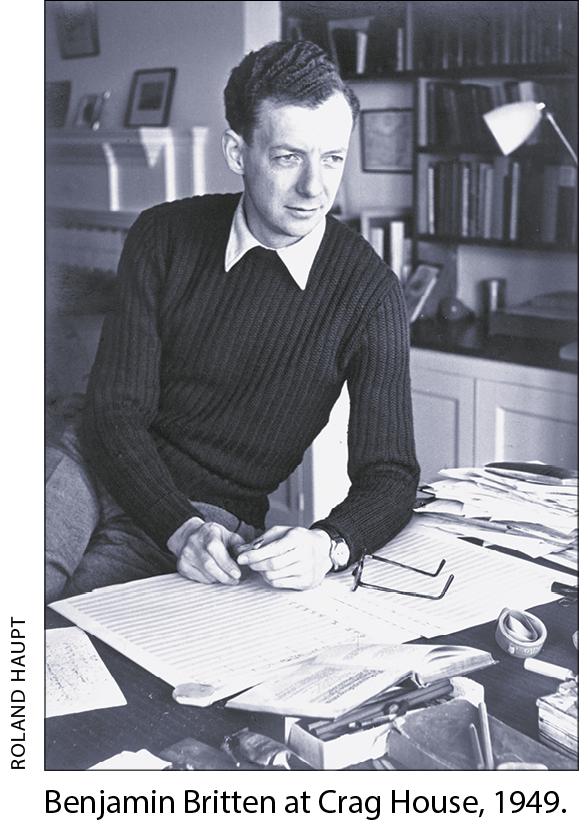
choral scene - still singing brittens praises 1Celebrated from an early age, Britten enjoyed both respect from his colleagues and a rare level of public popularity throughout his career. His first opera, Peter Grimes, was an international hit in 1945. He continued to compose operas throughout his career, but also wrote forall manner of choirs, ensembles and solo instrumentalists.

Britten founded his own music festival in 1948 — The Aldeburgh Festival — and maintained a profitable relationship with Decca Records that ensured that his works would be recorded almost as soon as they were produced. The stereotypical model of the 20th century modernist composer — a writer of unpleasant and inaccessible music, ignored by and scornful of the crowd — is not one that Britten ever believed in or embodied.

Of course, only in the museum-like culture of classical music would a composer who was born a century ago and died in 1976 even be considered modern. Surely for those who are interested in new sounds, other composers have gone farther since. Why bother with Britten?

I’d argue that like Beethoven and Mozart, Britten’s music appeals on many different levels. His ability to draw on and interpret elements of popular music, folk song and baroque music (notably that of Purcell, whose work Britten helped revive) has always attracted listeners who like strong tunes and lively rhythms.

But his individual voice and singular musical outlook moulded and developed these popular elements in unique ways. He was no musical conservative, playing it safe with conventional sounds. His work often took melodies and obvious chord changes and nudged the musical language sideways into areas that no one could anticipate or expect. A lot of mid-century music that is more simplistic – or more experimental — has dated more obviously than the best of Britten’s work.

While Britten will likely be most remembered for his operas — which contain stunning choral sections, notably in Peter Grimes, Billy Budd and Death in Venice — his music also furthered the English cathedral choral tradition.

English choral music of the Renaissance and early Baroque was brilliant and accomplished, but then languished in the decades that followed until the end of the 19th century, when it was revitalized by the the work of composers such as Holst, Elgar and Vaughan Williams. Britten further enlivened this tradition in the 20th century with oratorios and anthems that balanced immediate appeal with inventiveness and innovation. Several concerts take place in the coming weeks that will give choral audiences a chance to hear some of these compositions.

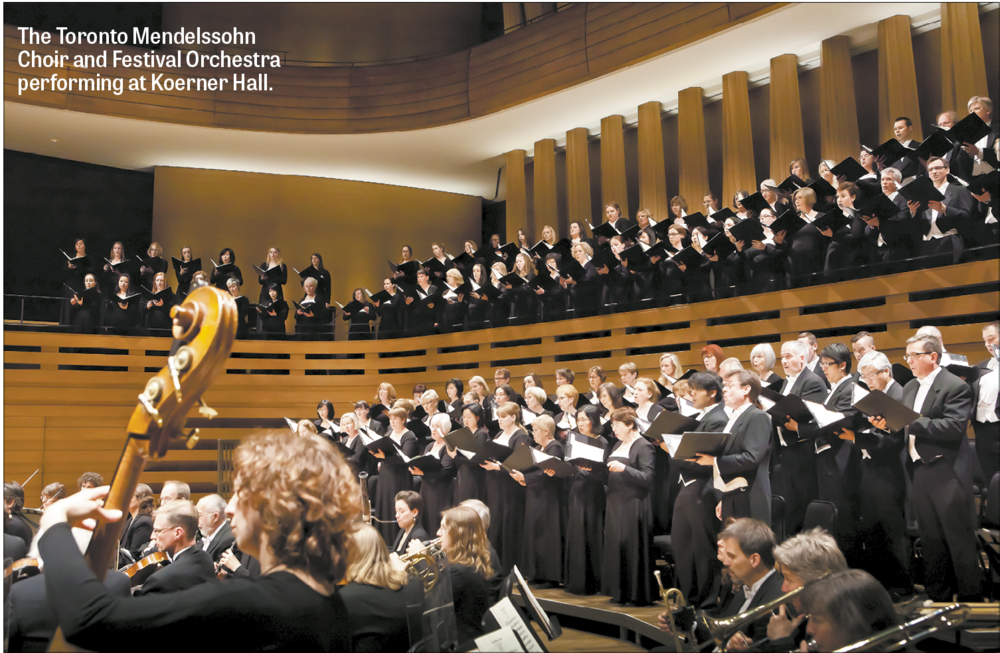
Toronto Mendelssohn Choir performs a Britten double bill November 20, with his Saint Nicolas (1948) and The Company of Heaven (1937). Saint Nicolas, of course, is the fourth-century Greek bishop and saint whose legendary exploits form the basis for the modern Santa Claus. But Britten’s cantata is thankfully free of any kind of cutesiness or sentimentality, and instead presents a portrait of Nicolas as vulnerable, dynamic and conflicted.

Because the cantata was written to be performed in part by schoolchildren, the music is also both mischievous and exuberant, especially in the choral sections. St Nicolas has wonderful moments — an exciting musical depiction of a storm at sea which Nicholas calms with prayer (“He Journeys to Palestine”), and a grisly but entertaining sequence in which children eaten by starving villagers are brought back to life (“The Pickled Boys”).

This work is great fun for children and youth to perform and attend, especially when staged. It really ought to be a Christmas perennial, a familiar favourite on the level of other choral works regularly performed at that time of year.

Unfortunately, a performance of St. Nicolas is relatively rare, and a performance of his 1937 The Company of Heaven is even rarer. I have never actually heard this piece live, and am looking forward to attending this concert. The theme of the cantata is of angels — the “company of heaven” — and their metaphysical battle with evil. Britten assembled poetry on this theme from diverse sources ranging from the Bible to Christina Rossetti and William Blake. Some of the poetry is set to music, some is recited. Britten combines his own music with a setting of the hymn “Ye watchers and ye holy ones,” a standard of the Anglican tradition, and one that would have had deep resonance for a nation on the edge of war.

Orpheus: Another opportunity to hear Britten comes courtesy of the Orpheus Choir of Toronto, which performs his 1938 cantata World of the Spirit on November 5. Britten was a life-long pacifist whose loathing of cruelty, especially involving children, is a theme that recurs in many of his compositions. Britten lived briefly in America during the beginning of WWII, in part because his pacifist leanings were not well received in pre-war Britain. World of the Spirit, a piece that draws on varied texts that express love, hope and tolerance, is both manifesto and plea. This performance is the Canadian premiere of this rare work, so attending the concert is a chance to take part in a bit of Britten’s own ongoing history.

This concert also features a very special event. John Freund, a great lover and supporter of music in Toronto, is also a survivor of the Nazi concentration camps Terezin and Auschwitz. He will read from his memoir I Was One of the Lucky Few: The Story of My Childhood. The readings will be interspersed with choral music and visual imagery, in the kind of multimedia presentation that has become an Orpheus Choir specialty.

I hope I’ve persuaded those unfamiliar with Britten to consider having a listen at some point this year. But I’m conscious that I’ve neglected other groups in doing so, especially since the number of choral concerts taking place increases exponentially as the end of the calendar year approaches. Here are “quick pick” listings for some of the other choral offerings available this month — there is some very inventive programming taking place.

Quick Picks
choral scene - still singing brittens praises 2All the following are well worth checking out in the listings.

Nov 2, 7:30: Chorus Niagara. Handel: Grand and Glorious. Beyond GTA.

Nov 2, 8:00: Renaissance Singers. Psalms of David. Beyond GTA.

Nov 9, 8:00: DaCapo Chamber Choir. Evening Song. Beyond GTA.

Nov 9, 8:00: Guelph Chamber Choir. Passion of Joan of Arc
(Carl Dreyer’s 1928 silent film with live music). Beyond GTA.

Nov 9, 7:30: Amadeus Choir. The Writer’s War: A Tribute to War Correspondents.

Nov 13, 7:30: St. James Cathedral. Mozart’s Requiem.

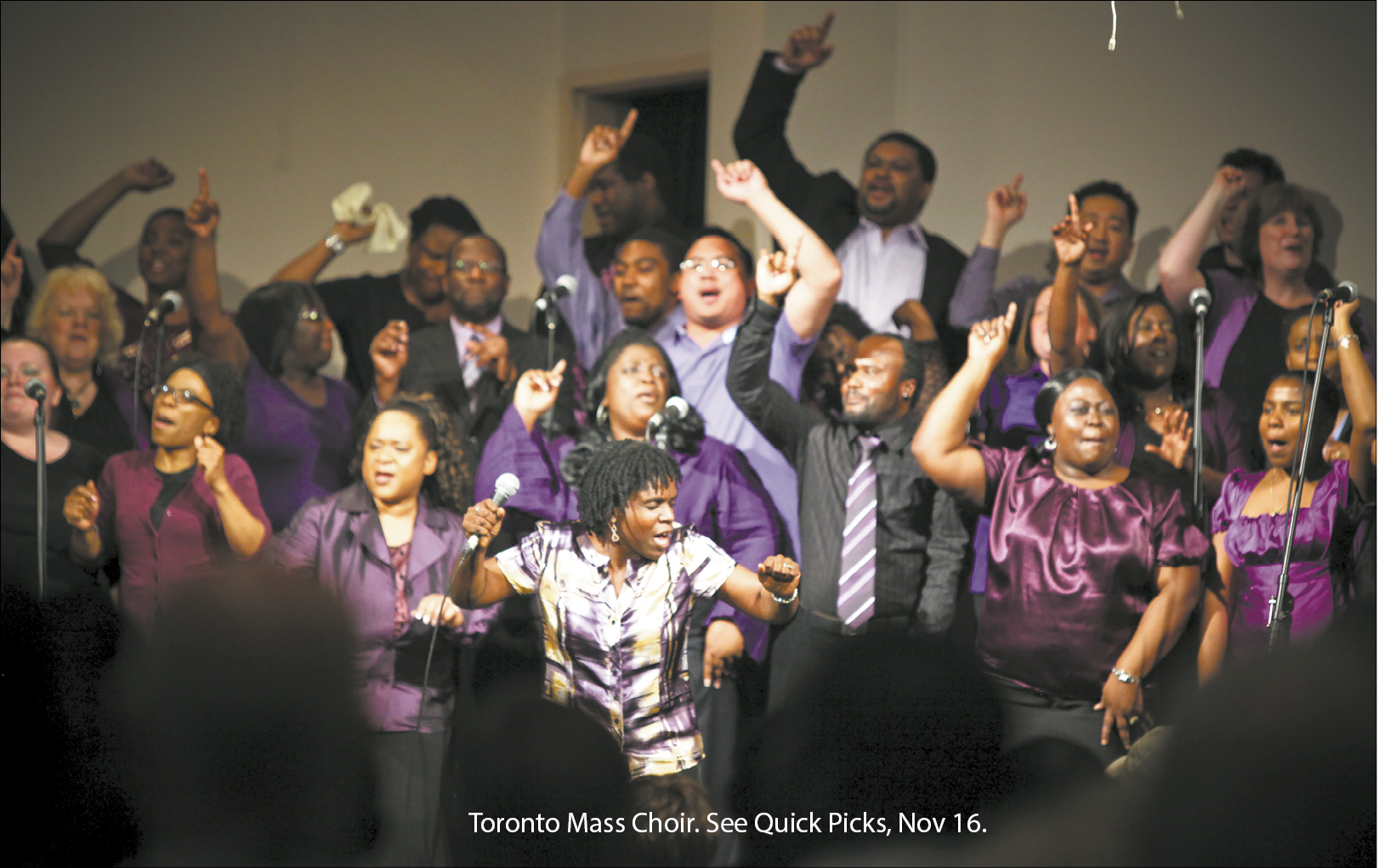
Nov 16, 7:00: Church of the Ascension. Toronto Mass Choir.

Nov 22, 7:30: Georgetown Bach Chorale and Baroque Soloists.

Bach: Christmas Oratorio Part One and Magnificat.

Nov 23, 7:30: Cantemus Singers. Sing Noel!

Nov 23, 7:30: Jubilate Singers. This Shining Night.

Nov 23, 8:00: Bell’Arte Singers. Of Remembrance and Hope.

Nov 27, 7:30: Toronto Children’s Chorus. Take Flight. 

Ben Stein is a Toronto tenor and theorbist. He can be
contacted at choralscene@thewholenote.com.
Visit his website at benjaminstein.ca.
photo for choral quick picks.
choral scene 1Those of you dropping in on this column for the first time will have missed the start of a discussion of modern music begun here last month, revolving around the question: why did composers start writing music that sounded so weird?

Short answer: It’s a complex subject that touches on global economics, cultural history, evolutions in class and ethnic mobility, the changing nature of music education and concert-going, religion in society, European nationalism, industrialization and technological progress in instrument building.

So let’s move on. In practical terms, 1) choral audiences sometimes want to hear music they haven’t heard before and 2) choral composers want to keep composing new repertoire. So how do we bring the two parties together to meet on the dance floor? Like any healthy relationship, it takes a leap of faith and a bit of compromise.

So, to the audience member who runs for the doors at the hint of an unfamiliar or apparently unpleasant sound: you have to be willing to give these new musical experiences not just a first, but a second and third chance. The first time you went up on a two-wheel bike you probably wobbled and fell. But you persevered, ’cause you had some sense that on the other side of the challenge were new vistas of excitement, freedom and enjoyment.

And to those composers who write in a way that ignores the two reasons why the vast majority of people listen to music — pleasure and solace: you will simply lose your audience — a principled but self-destructive path that many mid-20th-century composers chose.

The musician who wants to connect with listeners must be willing to meet them at least part of the way. This means being open to musical elements that have appeal to non-musicians — traditional tonal harmonic systems, melodic contour that has a comprehensible arc and graspable structure, rhythmic grooves that are anchored in movement and dance, and other elements of popular, folk and indigenous music.

If you think this is the kind of pandering to which no artiste should stoop, go back and listen to pretty much every composer of note from the last 500 years — they knew their dance numbers and their folk songs, their pub cheers and theatre numbers and children’s lullabies and they infused their compositions with these elements, even as they extended the boundaries of where music could go and what it could express. They knew that to both thrive and survive, they had to consider the needs of the people around them as much as their own.

The point I made in last month’s column is that many modern composers are already doing this. The mid-20th century experiments of atonality and serialism, Musique concrète, aleatoric music and spatialization — I know, I know, even the names are off-putting — have almost been entirely abandoned. Or, they are being combined with an aesthetic that does not insist on purging music of the elements the non-specialist listener identifies as music.

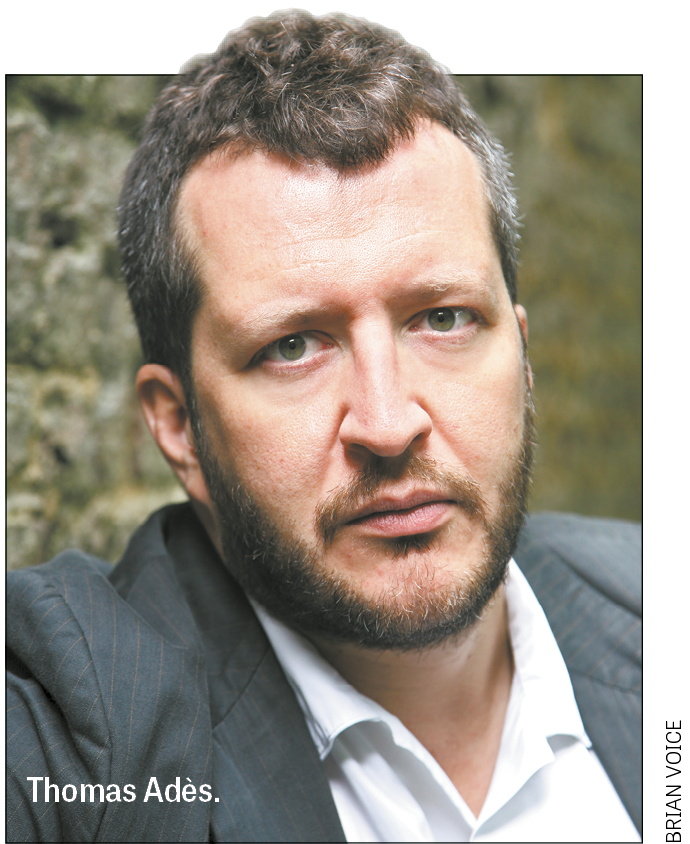
English composer Thomas Adès writes very much in this conciliatory mode. His Dances from Powder Her Face is being performed on October 31 and November 1 and 2 by the Toronto Symphony, the Toronto Mendelssohn Choir and Toronto Children’s Chorus. The concert also includes Benjamin Britten’s Serenade for Tenor, Horn and Strings and Carl Orff’s choral favourite Carmina Burana.

Carmina was a hit when it was first performed in Frankfurt in 1937, and has never waned in popularity. Orff wrote in a manner that wedded the varied and complex sonorities of the modern orchestra to music of deceptive simplicity. In some ways Orff’s music can be seen as the distant ancestor of the groove-based compositions of postmodernists Glass and Reich. Adès’ music also shares certain qualities with Orff’s, combining fun with edginess and possessing an earthy, sensual quality that seems to evoke bar fights and assignations rather than concert halls.

Dances from Powder Her Face, a Canadian premiere, is presumably a suite of music from Adès‘ chamber opera of the same name. The piece may or may not involve choir, but if not, and you want to hear some of his vocal music, take a chance and listen to the opera from which the Dances is derived. I think many listeners ought to be intrigued by some of the arresting vocal and instrumental writing that illustrates the scandal-ridden story of the Duchess of Argyll.

Britten’s Serenade is also a brilliant work. Many ensembles will be programming Britten’s works this year — 2013 being his birth centenary — and if you are willing to take a leap into unfamiliar 20th-century music, Britten is a very good place to begin.

Britten worked throughout his career almost entirely within the framework of “extended tonality.” What is this, exactly? Extended tonality is to traditional tonality as X-Man Wolverine is to pocket knives — that is, more dangerous but cooler.

On October 19 the Grand Philharmonic Choir performs Britten’s War Requiem, considered to be one of the 20th century’s masterworks. Premiered in 1962, it blends the traditional requiem mass text with poems by Wilfred Owen. Owen perished in the First World War, but not before writing poetry that ripped the veils of piety and patriotism away from the gruesome reality of WWI trench combat.

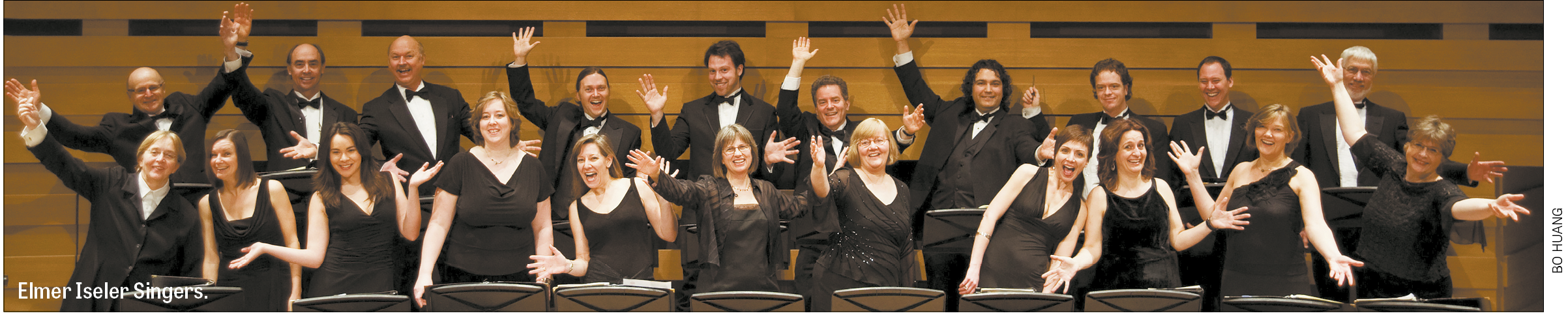
choral scene 2On October 20 the Elmer Iseler Singers will perform St. Cecilia Sings! A Tribute to Benjamin Britten, a concert that also includes music by Howells, Schubert, Vaughan Williams and Canadian Eleanor Daley, who has amassed a body of choral music that is becoming part of the standard repertoire of many Canadian choirs.

On November 6 at Grace Church on-the-Hill, and again on November 15 at Temple Sinai synagogue, the Temple Sinai Ensemble Choir, Toronto Jewish Folk Choir and Upper Canada Choristers join forces during Holocaust Education Week to perform music that addresses the same theme as the Britten requiem — war’s destruction.

The evening includes an original composition by cantor/composer Charles Osborne titled I Didn’t Speak Out, based on the famous indictment of apathy in the face of evil attributed to German theologian Martin Niemoeller. The concerts are free. More information can be found here.

Finally, modern composition reaches back to ancient tradition, as the Pax Christi Chorale hosts the Great Canadian Hymn Competition on October 6. PCC has fashioned itself the sponsor of new works in an area that is notoriously conservative — hymn singing. As with concert music, the continued vitality of the tradition depends on new works. Hosting the event is one of Canada’s greatest singers, Catherine Robbin. More information can be found here. 

Benjamin Stein is a Toronto tenor and theorbist. He can be contacted at choralscene@thewholenote.com. Visit his website at benjaminstein.ca.

In my last column before the summer I promised to address the reluctance of audiences to attend performances of new music, citing the extreme example of one determined listener who vetted a concert over the phone in order to make sure nothing on the program was too modern.

This is a problem not just for choral concerts, but for new music in general. The quantity of words committed to paper on this subject is responsible for the demise of several large forests. In brief, the two opposing stances are:

choral 11) Modern music feh. Why should I pay good money to hear something that sounds like a battalion of cats attacking a giant mutant chihuahua while a chorus of bull walruses sings the Nauruan national anthem backwards?

2) Modern music is the future, this piece in particular is pure genius, and everyone in the concert hall gets it except you. What is your problem? Why can’t you get with the program? Go away and listen to Bach’s Minuet in G on auto-repeat. If you get bored, listen to a can-can by Offenbach or something.

Okay, it’s not always so bad, but it’s pretty darn close. Keeping it brief, let me see if I can both give a bit of historical context and offer a solution to the problem.

1) During the last century, classically trained composers wanted to innovate, like most artists do.

2) Some innovators composed music that sounded unpleasant — torturous, in fact — to many listeners. Never ask why this happened. Believe me, you don’t want to know. If you hear a composer start to talk about it, run away.

3) Some other innovators wrote music that wasn’t quite so scary, but it still was odd enough to spook those who were used to Mozart, Tchaikovsky, etc. This stuff sometimes had key signatures, but a lot of people still found it nauseating.

4) But nobody cared anyhow, because as it turned out, you didn’t have to listen to modern music anymore to be all cultured and superior. You could listen to the Beatles (rock), John Coltrane (jazz), or non-Western classical music (“exotic” instruments and timbres) and still feel like you were a cut above. A lot of this music was just as intricate as the new classical stuff but sounded way nicer.

5) Over time it became clear that nobody wanted to listen to the most difficult new music except weird people and snobs. The composers grew up and had children, but their kids weren’t weird snobs and they didn’t like it either. Most of them got into hip-hop, actually.

6) Eventually composers got tired of only being listened to by snobby weirdos, and started writing music again that non-musicians — that is, most normal people — could like and appreciate.

7) Now we have to convince everyone that new music isn’t as bizarre as the stuff their grandparents hated. A lot of it isn’t. Really! In fact it’s pretty tame. Composers want to be your friends. So will you please come back and listen?


Now, you may go to a concert in which nice pleasant classical music by dead guys is played, and then the stupid musicians will throw in some new stuff as well. Sorry about that — we kind of like to mix it up. Please don’t leave. You will upset the composers’ mums, ’cause they are all still alive and their feelings get hurt when you walk out or throw things at their sons and daughters. But don’t worry — if you happen to get stuck at a concert with totally discordant music, you have two sure-fire methods of recourse:

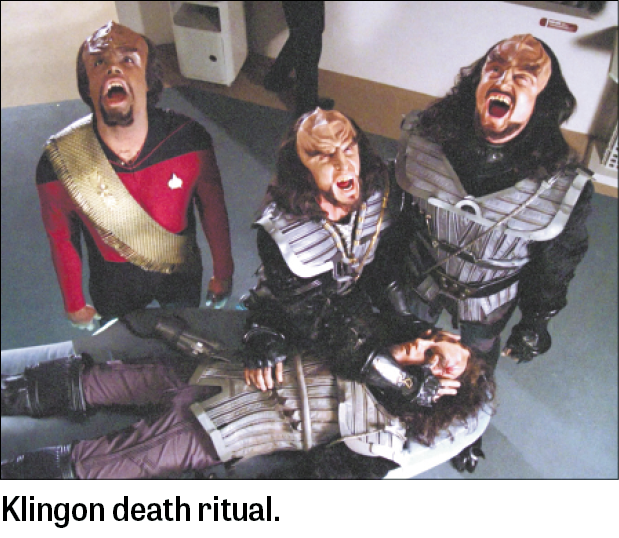
1) Before the concert, watch (on YouTube) the episode of Star Trek: TNG in which Lieutenant Worf listens to Klingon opera (“Unification II,” season 5, 1991). Then pretend Klingon opera is the music you’re going to hear. Be brave like Worf and listen to it.

2) Think of scary movies. Actually, think of any movie in which bad things happen. Listen (on YouTube) to Leonard Bernstein’s score for On the Waterfront (1954) and Bernard Herrmann’s score for Psycho (1960). Not so bad, right? Next time you’re at a new music concert, close your eyes and imagine that you’re being menaced by a lunatic or getting beat up by dockyard thugs. This will render the musical experience much more enjoyable.

I hope this solves the problem and encourages you to take a chance on the new stuff. If not, I’ll have no choice but to write about this subject again, but seriously this time. Trust me, you don’t want that. Now, on to the concerts.

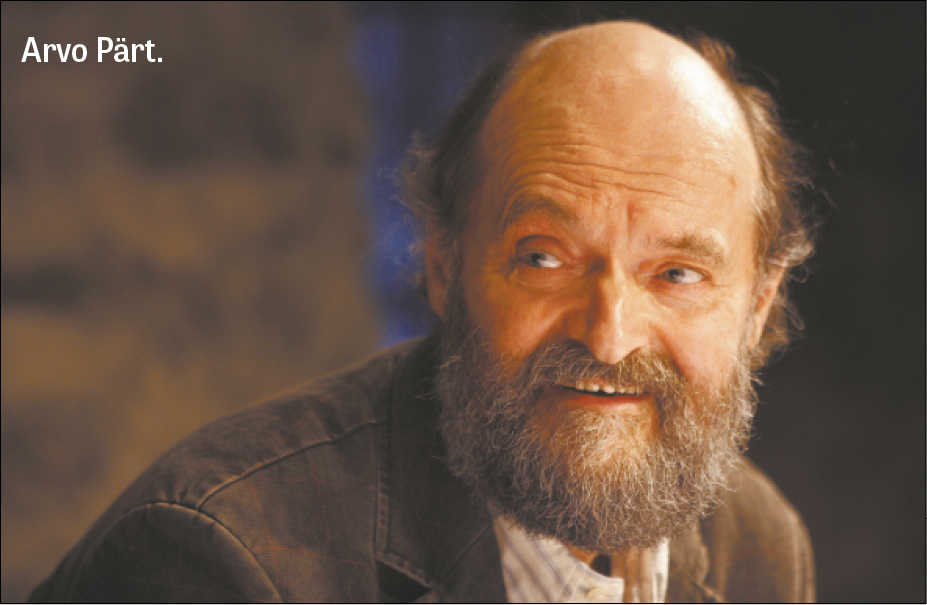
choral 2Estonian composer Arvo Pärt is an example of a composer whose work has depth, edge and substance, but has also found popular, mainstream appeal with many audiences — especially choral audiences, which can be quite a conservative bunch. Soundstreams Canada has long been a central champion of Pärt’s music in Canada, and their house choir, Choir 21, boasts some of the strongest choral singers in the region. This is a chance to hear this music masterfully executed.

The concert on October 1 will include the Canadian premieres of two Pärt works, Adam’s Lament and L’abbe Agathon, and the world premieres of two Canadian works, James Rolfe’s Open Road, and a new commission (written for a very special reason which will be revealed at the concert) by young Canadian-Estonian composer Riho Maimets. I do not know his work, but I am familiar with Rolfe, and I can assure wary concert-goers that this will certainly be a moving and delightful concert. If you are new to modern choral works, this is an excellent chance to experience composers and musicians working at the top of their game. Guest conductor Tõnu Kaljuste is one of the world’s great choral musicians.

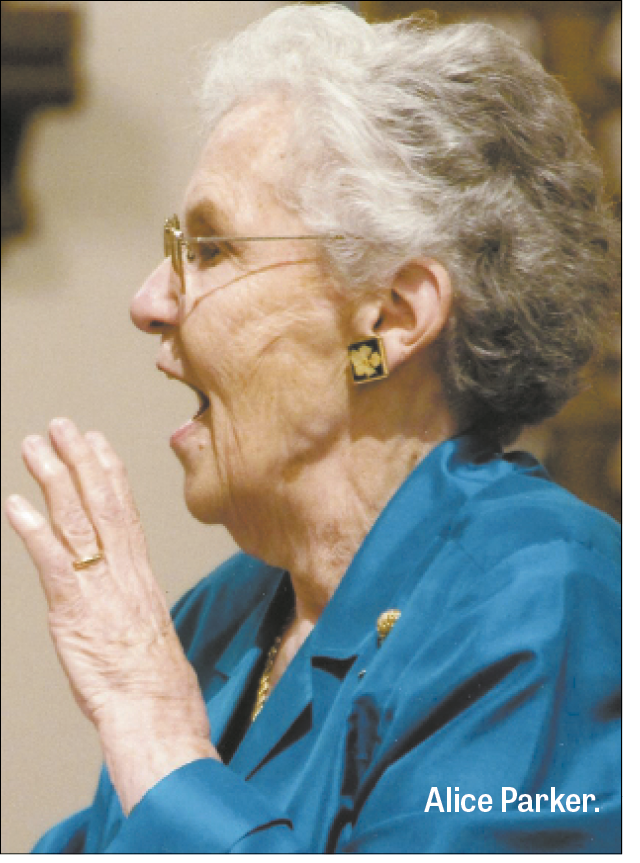
choral 3Another notable choral visit takes place in October, but registration for the event is under way even as I write. American choral composer, arranger, author and conductor Alice Parker is coming for SING!, a three-day workshop and community songfest from October 25 to 27. Parker is a choral legend (now well into her ninth decade) who has devoted her life to choral music. During the weekend Parker will lead community singing, give a workshop on hymnody in worship, lecture at the University of Toronto, preach at Yorkminster Park Baptist Church and conduct a massed choir of over 200 singers in a grand finale concert. The gala finale will include a who’s who of Toronto choral groups: the University of Toronto MacMillan Singers, U of T Women’s Chamber Choir & Men’s Chorus, Exultate Chamber Singers, Orpheus Choir of Toronto, Cawthra Park Secondary School Chamber Choir and Yorkminister Park Baptist Church Choir.

The weekend’s events require no registration — this is an amazing opportunity for choral aficionados to watch or work with a master musician. The event is co-sponsored by Yorkminster Park Baptist Church, the Royal Canadian College of Organists and the Southern Ontario Chapter of the Hymn Society as well as by the University of Toronto Faculty of Music. For more info email the head of U of T’s choral program, hilary.apfelstadt@utoronto.ca.

Incidentally, Hilary Apfelstadt, as well as running choral activities at U of T, has further embraced Toronto’s choral culture by taking on the directorship of the Exultate Chamber Singers. One of Toronto’s top community choirs, established by John Tuttle (another choral legend), Exultate makes choral music at the highest level.

New music needs new singers and new energy, and there is always room for another choir in the city. This year choral fans can welcome the newly established Aslan Boys Choir and their artistic director Thomas Bell.

Targeted at boys aged 8 to 13, the choir’s mission statement is “to prepare boys for life and leadership through musical excellence and cultural enrichment.” Aslan is apparently still auditioning — if you have a child who enjoys choral singing, you can contact the choir at 416-859-7464 or aslanboyschoir@gmail.com to arrange an audition.

I would certainly encourage interested parties to find out more — chorus singing was a revelation to me at that age and opened up my awareness of both choral music and yes, modern composition.

I will be highlighting other modern works of the concert season in the months to come. A tip of the hat to west coast soprano Carolyn Sinclair for the Klingon opera solution to modern music. On with the show! 

Benjamin Stein is a Toronto tenor and lutenist.
He can be contacted at choralscene@thewholenote.com.
Visit his website at benjaminstein.ca.


choral torontomasschoirIn my last column I promised to address the reluctance of audiences to attend performances of new music, even to the point of vetting concerts over the phone to make sure nothing on the program is too modern.

One reader wrote in to observe that time often sifts through and discards the inferior music of past eras, leaving a core of proven masterworks that form the basis of performers’ standard repertoire; with a finite amount of time and resources for concert-going, it is reasonable to concentrate on works that have some guarantee of quality and durability.

I wrote back and pointed out that time was actually an unreliable source and judge of quality. Many composers whose work was neglected to various degrees after their deaths were revived by later musicians, found an audience, and now are considered important. Into this category fall Bach, Mahler, Vivaldi, Monteverdi, as well as composers popular with early music audiences such as Dowland, Gesualdo and Biber.

Hearing well-known works repeatedly can be both pleasurable and a way to a deeper understanding of these compositions. But there is great fun, satisfaction and real excitement in feeling that you are singing (or listening to) something new and unusual.

The reader and I agreed in a pleasant email exchange that an active, engaged audience was needed, to be receptive to musicians who champion both new and neglected works. Only with these kind of listeners can time and successive audiences find which composers speak to them most deeply.

For those interested in being part of a vanguard of new, varied and interesting choral projects, there are fascinating opportunities this July and August at Stratford Summer Music.

The festival, somewhat overshadowed in the past by the town’s renowned Shakespeare festival season, has in recent years emerged as a hub of innovative summer programming. This year, their focus is on choral music.

This year Stratford Summer Music is inviting interested choral singers of all ages, abilities and experience to participate in a series of events titled “We Sing the World – a Choral Symposium,” over the course of four days, July 18 to 21. The musicians leading rehearsals, panel discussions, concerts, workshops and lectures are a mixture of Canadian and international choral music experts. The festival’s two themes are the environment and world culture; the workshops and discussions will address how world culture and environmental concerns are influencing and shaping choral music in the new century.

Participants will form a chorus that will rehearse during the symposium and perform a concert at the end of the weekend. Registration information can be found at stratfordsummermusic.ca.

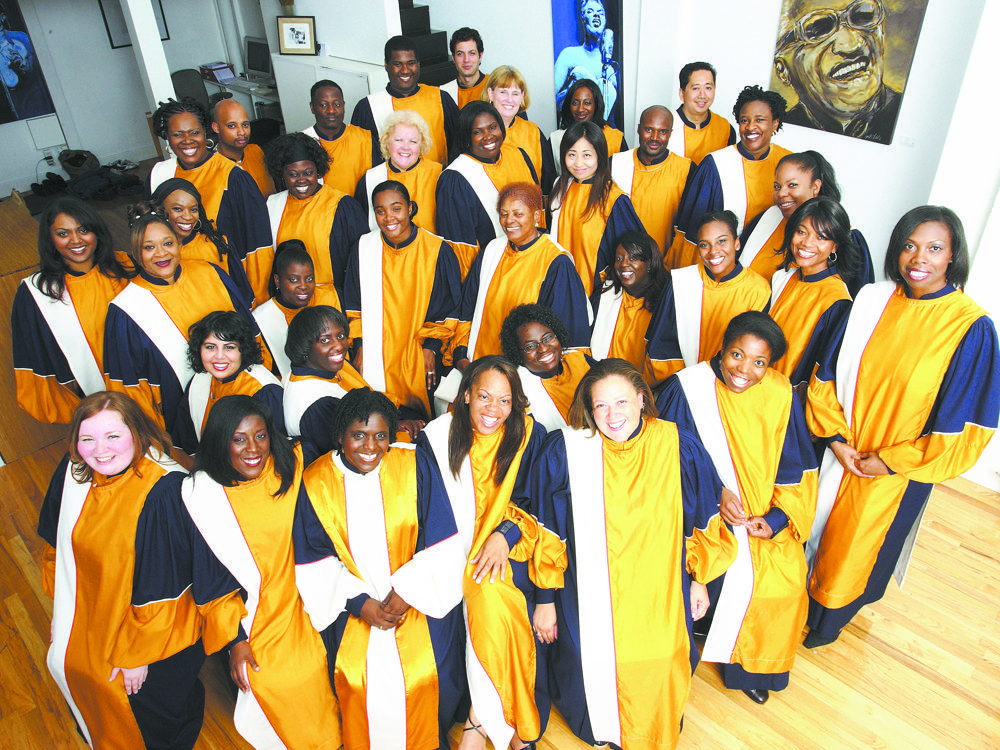
The festival’s programming is stylistically diverse, situating classical choral singing within the larger context of world music and modern vocal techniques. Concerts will include appearances by the famous Vienna Boys’ Choir (July 26 to 28); Johannesburg’s Mzansi Youth Choir (August 22 to 24); Anúna, the Irish national choir (as part of the choral symposium); and an August 4 concert by the Toronto Mass Choir, one of the city’s best gospel music ensembles.

The festival is also devoting a substantial part of the summer to an exploration of the work of legendary Canadian composer R. Murray Schafer, perhaps the most internationally renowned Canadian composer alive. On July 18, the opening day of the choral symposium, Schafer celebrates his 80th birthday.

Schafer has been an iconoclast from the beginning, rebelling against the stultifying conventions of the classical concert paradigm from the 1960s onward, setting his music dramas in lakes and woodland locales. Schafer’s innovations seem prescient now, as young classical musicians are venturing away from the concert hall with increasing frequency and looking to bars, clubs and other non-traditional spaces to try to connect with audiences. (His Music for Wilderness Lake will be performed along the Avon River at 7am from July 19 to 21).

At the same time, there are strongly traditional elements in Schafer’s work that connect him to European Romantic strains in myth, opera and literature. His work often depicts metaphysical struggles between good and evil, light and dark. Sexuality, particularly female sexuality, is sometimes presented as a destabilizing, threatening force.

Activities focusing on Schafer’s work include an 80th birthday dinner July 18, an exhibition of hand-drawn scores opening July 17 (Schafer’s scores are notable for their unusual artistry and draftsmanship, incorporating visual imagery as well as traditional music notation), lectures, symposia and concerts.

Other concerts and festivals of note:

At the Elora Festival, there are many opportunities to see the Elora Festival Chorus, which is appearing in at least eight separate shows. Notable concerts with an anniversary theme are “Coronation: Crowning Glory” on July 20, which is a celebration of Queen Elizabeth’s 1953 coronation, and a centenary celebration of the birth of Benjamin Britten on July 28.

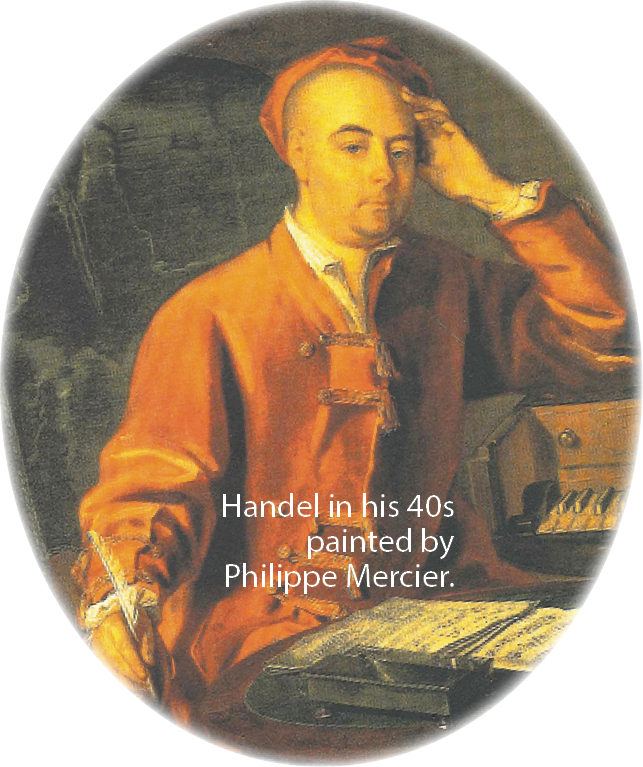
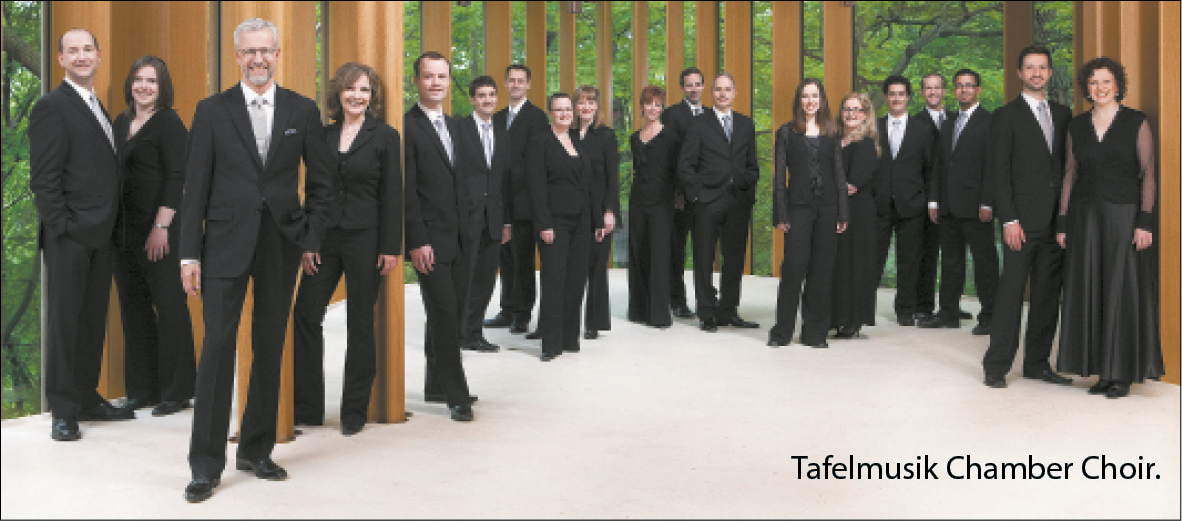
The Tafelmusik choir and orchestra take part in a very intriguing blend of dance and music on June 21 and 22, as part of the Luminato Festival. The ensembles accompany choreographer Mark Morris’ interpretation of Handel’s L’Allegro, il Penseroso ed il Moderato.

Handel’s setting combines John Milton’s two poems, L’Allegro and Il Penseroso, in a metaphysical dialogue. L’Allegro (roughly, the lively one) is happy, active — something of a party animal, actually — and Il Penseroso (the introspective one) is pensive, ruminative, even a bit gloomy. The two poems are companion pieces that explore opposite approaches to life, spirituality and sensation.

Handel and his librettist interspersed the two poems, creating a dramatic tension between the classic Eros and Thanatos principles. Recognizing that whichever text came last would get the final word on the argument, they added new text and a third character, il Moderato, that attempts to mediate and find a middle path between the two extremes.

Whether this succeeds as a dialectical synthesis is a matter of opinion. The new text comes down rather on the side of il Penseroso, and l’Allegro — whose approach strikes me as more fun — is treated as a bit of an unruly teenager in need of curbing. But this was very much in harmony with the aesthetic of the time, which was ultimately about balance, grace and proportion in all things. Handel’s music mines the text and finds many opportunities for word painting and expressiveness. The show also incorporates the images of poet/draftsman/painter William Blake and has been a hit since its premiere in 1988.

The Kokoro Singers, based in the southern Ontario region, perform “Earth, Air, Fire, Water” on June 9 in Guelph and on June 15 in Dundas. The concerts feature works by Hatfield, Whitacre, Ticheli and Thompson.

On June 15 the Cabbagetown Classical Youth Choir performs its annual spring concert, which features excerpts from Mozart operas and other works. The choir’s mandate is to give singing opportunities to children of families in difficult economic circumstances, and they are soliciting funding to help with this worthy goal. The concert is the finale of an operatic workshop for youth, and features a special appearance by legendary Canadian bass-baritone Gary Relyea.

From England, the Bradfield College Tour Choir is visiting Canada. This youth choir has performed all over Europe, and in the US as well. Their musical director, Anne Wright, is originally from Toronto. They are singing in Niagara Falls on July 4, and in Toronto on July 3 and 6. The July 3 concert takes place at Casa Loma.

Hamilton’s Arcady Singers sing several concerts as part of the Brott Music Festival, which takes place in venues in Burlington, Hamilton and Ancaster. On June 20 they will be featured in a performance of Beethoven’s Ninth Symphony; on August 1 they take part in a concert performance of Verdi’s Aida; and on August 15 the festival’s grand finale is Mahler’s Symphony of A Thousand, which is really an oratorio for choir and soloists.

On July 28 the Hart House Singers perform “The REAL Glee: Songs made famous by Yale, Harvard and Hart House Glee Clubs.” Glees — part songs for small ensembles — have been around for centuries. The modern high school glee club is a mixture of standard choir and show choir, a kind of choreographed choir/music theatre hybrid. But up to the middle of the 20th century, glee club music was a collegiate phenomenon with a particular aesthetic and style. It combined folk songs, school songs, 19th century parlour music and archaic sounding Latin lyrics in a manner that has almost disappeared. This concert — which will also feature modern songs that might be more familiar to the Glee television audience — is a chance to revisit and enjoy this charming repertoire.

The Elmer Iseler Singers appear in Parry Sound at the Festival of the Sound on July 18, in a mixed concert of popular Canadian music that includes Srul Irving Glick’s The Hour Has Come. This tuneful and accessible piece, premiered by the Toronto Mendelssohn Choir in 1985, has become something of a Canadian choral standard. The Toronto Mendelssohn Choir also appears at the festival on August 11, singing Orff’s Carmina Burana.

Speaking of unconventional locations, the Westben Festival (various dates between June 8 and August 4) takes place in Campbellford, which is in the mid-Ontario region of Northumberland County. All the concerts take place at the Westben Barn. Westben Youth and Teen Choruses will be taking part in a version of Bizet’s Carmen July 4 to 7, a concert of selections from Broadway musicals June 9 and a performance of Beethoven’s Choral Fantasy June 29.

That’s all, folks. Enjoy the music and have a great summer! 

Ben Stein is a Toronto tenor and theorbist. He can be contacted at choralscene@thewholenote.com. Visit his website at benjaminstein.ca.

1808-choralMore than any other musician before Wagner, Beethoven exemplified the idea of composer as spiritual leader, the artist as visionary genius who compels the support of performers, teachers and historians to realize his dreams and ideas.

Beethoven is an approachable genius, though. His achievements are leavened and humanized by his vulnerability, his awkwardness bordering on misanthropy and his loneliness. Through the insights we garner from his letters and notebooks we are witness to his very human struggles with friends, family and colleagues, to his frantic rewriting and experimentation with his own work.

With few exceptions, every note of Beethoven’s oeuvre feels like something is at stake. To be involved in a performance of his work sometimes seems, in a small way, like sharing in his struggles. As much as any of his works, the Missa Solemnis — performed in Toronto on May 15 by the Toronto Mendelssohn Choir — exemplifies this phenomenon.

It’s generally accepted that Beethoven did not write sympathetically for voices. He was certainly not alone in this. In many instances Bach appeared to think of the voice as an instrument with a human being attached. Many of both composers’ solo and choral vocal lines, beautifully wrought, are only possible to execute faithfully as long as the singer does not have to breathe for minutes on end.

The choral section of Beethoven’s famous Ninth Symphony is a half-hour long vocal rollercoaster ride that taxes both the solo quartet and the choir with sustained high tessitura writing, dynamic extremes that require skilled vocal control, long instrumental-style passages with no room to breathe, all combined with the challenge of being heard over the wall of sound created by brass, winds, strings and tympani.

The Missa Solemnis is the same thing, multiplied by three.

It is the extreme nature of the vocal writing in the Missa Solemnis that makes it especially challenging. Beethoven’s cruelly high melodic lines and virtuosic instrumental writing were well beyond the capabilities of the players and singers of the time, and the first performance of the work (in Russia, 1824) was famously ragged. It was not published in its entirety until after his death.

But in writing music that outstripped the capabilities of the musicians of the time, Beethoven founded the idea of the composition as artistic and spiritual summit, to which musicians must aspire and strive. Wagner and Stravinsky would continue this tradition, forcing musicians to develop new technical prowess, matching their abilities to new sounds that the world had never experienced. The Italian verismo vocal training of the late 19th and early 20th centuries founded a tradition of vocal heft that could deliver the heaviness of sound required by late Beethoven composition and the music that followed in its wake.

The Missa Solemnis is infused with the same spirit as the Ninth Symphony and other late period Beethoven — a musical expression of faith locked in combat with doubt. Extremes of mood convey an almost desperate sense of Beethoven’s desire to connect to the world around him.

The Toronto Mendelssohn Choir is perhaps the only group in the region that can marshal the forces for such a mammoth work. A large-scale choir in the 19th century mode, the TMC is well equipped to be able to handle the technical elements of the work and to have a fighting chance to avoid being swamped by the orchestra. This is a massive undertaking for any ensemble and a chance to hear it live is not to be missed.

The Missa Solemnis is a kind of apotheosis of the European mass tradition, but innumerable other mass settings exist to cater to all tastes. A homegrown Canadian example that draws on one important strain in our history is the Celtic Mass for the Sea written by Scott MacMillan, a legendary folk musician from the East Coast. For their “Celtic Tide” concert on June 1 the VOCA Chorus has assembled a kind of Canadian Celtic supergroup, experienced and renowned players who bring their deep knowledge of Irish folk tradition to the music.

The VOCA Chorus, led by veteran conductor and pianist Jenny Crober, has made a specialty of combining classical works with folk and popular elements. Their Celtic-themed concerts have been increasing in popularity each year, and tickets for this current concert are reportedly in high demand.

Celtic Mass for the Sea was commissioned by the CBC in 1988 and has garnered many performances since then. The work blends the exuberant nature of Celtic rhythms with the resonance of the ancient mass text. Macmillan is planning to travel to Toronto to attend the performance and will give a pre-concert lecture on the work.

Further on the subject of modern Canadian works: I took part in a concert recently where the hapless ticket seller was quizzed about the nature of the music involved. The potential concert-goer wanted to make certain that whatever works were on the program would not be too “modern.” Assurances that the most modern composer of the evening died in 1986 were barely sufficient.

Yes, this happened. It’s common enough, really, so there’s no point in being all snobby about it. Many people actively fear contemporary music, and I’ll address that in depth in future columns. But folks, your friends, neighbours and colleagues are exploring new works in their various choirs every week. All of them, or at least most of them, make it back after rehearsal with their sanity intact. If they can do it, so can you. Here are a few concerts to consider this month.

This year’s celebrations of Ruth Watson Henderson’s 80th birthday continue with a concert of her works by the Oriana Women’s Choir on May 25. Read my appreciation of Watson Henderson’s work in my October 2012 column.

On May 4 and 5, Waterloo’s DaCapo Chamber Choir performs “Leonardo Dreams,” a concert featuring works by the ensemble’s conductor Leonard Enns, fellow Canadian Glenn Buhr and American Eric Whitacre, all of whom write very well for choir and whose works have enjoyed repeated success with audiences.

Enns’ and Watson Henderson’s works are also featured in a concert by Barrie’s Lyrica Chamber Choir on May 25, along with works by Healy, Estacio and Mozetich.

On May 24 and 25, another woman’s chorus, Etobicoke’s Harmony Singers, performs an all-Canadian program of popular works, with songs by k.d.lang, Joni Mitchell, Barenaked Ladies and Michael Bublé. On June 2 the VIVA! Youth Singers perform Dean Burry’s A Medieval Bestiary, which is a cantata specially written for children’s voices. Burry’s work is both well wrought and appealing, and ought to be a very good introduction to classically styled music theatre for children.

On the subject of youth choirs, I recently had the pleasure of doing some vocal coaching for the Bach Children’s Chorus. It was an education to watch conductor Linda Beaupré — as experienced a choral musician as we have in Toronto — work with the next generation of choral singers. Her Bach Chamber Youth Choir, performing on May 11 with the Bach Children’s Chorus, is a rare youth ensemble catering to mid- and older teens interested in choral singing.

Finally, a free concert: the Caribbean Chorale of Toronto performs at the Church of St. Stephen on May 5. 

Ben Stein is a Toronto tenor and theorbist. He ca e contacted at choralscene@thewholenote.com. Visit his website at www.benjaminstein.ca.

Choral Scene 1I’m writing this column on March 18, a year to the day after the unexpected passing of Bruce Kirkpatrick Hill, an event that affected many choral singers throughout the city (read my column about this here). In honour of a man who loved choral music and the choral community, I’m going to dispense with my usual rants and jokes and get right to as many concerts as possible.

Off the top, a nod to a concert that will be over before the magazine is out: The Toronto Mendelssohn Choir’s “Sacred Music Concert” takes place on Good Friday March 29. The concert includes Palestrina’s Missa Papae Marcelli — likely the composer’s best known work — and Allegri’s Miserere. This composition from 17th century Italy is a haunting setting of the Latin translation of Psalm 51. Choral and plainchant passages alternate with a virtuosic solo quartet. As well, Canadian composer Timothy CorlisGod So Loved the World is premiered here. Based in Vancouver, Corlis is an experienced choral singer that has moved on to composition.

For those who like Handel’s oratorios (and like an alternative to that other minor work of his that always gets performed at Christmas), there are two opportunities to hear Solomon, a work written in 1748. It is full of inventive choral writing and has a number of beautiful solo arias. Oddly, both performances are taking place on the same weekend of April 20–21. Solomon is performed in Oakville by the Masterworks of Oakville Chorus & Orchestra and in Toronto by the Pax Christi Chorale.

Choral Scene 2More Handel in the form of odes, serenades and oratorio choruses can be heard performed by the virtuoso Tafelmusik Chamber Choir, May 1–5 and 7, in “A Handel Celebration.” This concert will be a terrific opportunity to hear the breadth of expression in Handel’s choral works.

For those who would like to hear some choral jazz and gospel this spring, on April 6, We Are One Jazz Choir performs in Beach United Church’s monthly series titled Beach Jazz & Reflection. This concert is funded in part by a freewill offering. On April 5 and 6 the York University Gospel Choir performs at the Ivan Fecan Theatre at York University.

Paul Halley’s Missa Gaia: Earth Mass is a popular work that has been performed many times since it was composed in 1982. To some degree Missa Gaia anticipated the focus on environmentalism that is now part of mainstream social and political discourse, and that has been made all the more urgent because of the increasing threat of global warming. The work is performed by the students of the Cardinal Carter Academy for the Arts on April 3 and 5.

On April 13 the Healey Willan Singers presentEspaña” a Latin-themed concert that includes music by Brazilian composer Heitor Villa-Lobos. Villa-Lobos was a brilliant composer who wrote music of both flamboyance and depth. This concert includes his Missa Sao Sabastiao, first performed in 1937. I’m not aware of any recent concerts of Villa-Lobos’ work, so this is a rare opportunity for Torontonians.

On April 20, the Cantores Celestes Women’s Choir presents a concert titled “The Circle of Days.” This includes Fauré’s Requiem, the premiere of Belarusian-American Sergey Khvoshchinsky’s setting of Dona Nobis Pacem, and David Hamilton’s The Circle of Days. The concert takes place at Runnymede United Church and is a fundraiser to help buy sewing machines and other materials for the Ituna community in Zambia.

If things seem a bit loud in Aurora on April 27, the “Aurora Choral Celebration” is probably the reason. I count at least five choirs that will be taking part in this event, which will undoubtedly be fun and lively, and an opportunity to hear many enthusiastic choral singers. Works include Handel’s Ye Boundless Realms of Joy (one of the composer’s Chandos Anthems, written for a church setting between 1717 and 1719) and All The Little Rivers by veteran Canadian composer and choral activist Larry Nickel.

This month provides two opportunities to hear Brahms’ renowned German Requiem. The Etobicoke Centennial Choir performs it on April 6 and the Achill Choral Society performs it on April 28 in Colgan.

Another late-Romantic setting of the Requiem text takes place on May 4, when Chorus Niagara performs the Verdi Requiem in St. Catharines. The opposite of an introspective setting like that of Brahms, this version when executed well is overwhelming, a sonic force of nature like an earthquake or volcano. The concert celebrates the occasion of Chorus Niagara’s 50th anniversary.

On May 5 the Echo Women’s Choir presents an eclectic program titled “Mouth Music” that includes The Road to Canterbury, by American composer Malcolm Dalglish, a setting of Chaucer’s Prologue to the Canterbury Tales, and William Westcott’s In the Almost Evening, a setting of lyrics by Canadian writer Joy Kogawa. Eastern European choral music is a specialty of this choir, and the concert includes songs from Bulgaria, Macedonia and the Republic of Georgia.

Often, the focus on large-scale religious works of the European classical canon can obscure the reality that composers also wrote music to celebrate the joys and pleasures of temporal love. On May 4 and 5 the Cantemus Singers’ “Love Songs,” a concert appropriate for spring, includes works by Josquin, Byrd, Janequin and Schütz. These composers are the backbone of the early music repertoire and this is a rare opportunity to hear their music performed live.

Having just given a lecture on making a living as a musician last month, I am more than usually aware of how difficult it can be to fund music making. Choirs are fighting hard for both audience share and the funds necessary to execute concerts, as ticket sales can never approach more than a fraction of performance expenses.

Two choirs are holding their own fundraisers. On April 6 the Amadeus Choir presents “A Celtic Celebration.” The event includes live and silent auctions. Lydia Adams, the choir’s conductor, also leads the Elmer Isler Singers and is a central figure in Canadian choral endeavour. On April 20 the Toronto Jewish Folk Choir hosts a fundraising concert of solos and songs titled “Sing Me a Song in Yiddish.”

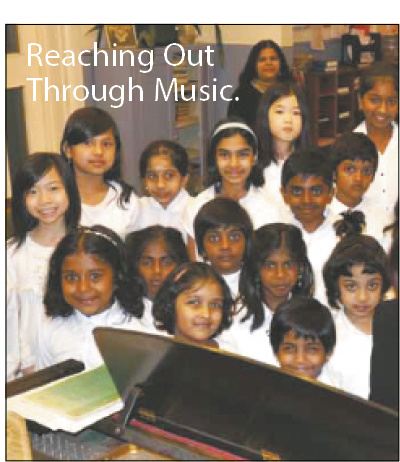
Choral Scene 3Last but perhaps most urgently, Reaching Out Through Music program holds a benefit concert and silent auction on April 20, which includes the participation of the St. James Town Children’s Choir. Many of the families of St. James Town are struggling to provide basic care for themselves and their children. The Reaching Out Through Music was created to provide children with group and private music lessons. For young people in economic need music can be a focus for discipline, self-expression and hope. This is one of the most important areas of musical outreach in the city.

Finally, I would like an opportunity to write more extensively about the phenomenon of the show choir, and will do so at some point. This combination of singing and stage work may well be the future of choral music in North America. Show Choir Canada conducts its national championships on April 20 and 21 in the Queen Elizabeth Theatre at Exhibition place. This is an event that will be excellent for children and may be a way to inspire their interest in choral singing. 

Ben Stein is a Toronto tenor and theorbist. He can be contacted at choralscene@thewholenote.com Visit his website at www.benjaminstein.ca.

1806 Choral SceneLast month I argued that classical music’s shift, from cultural pinnacle to just one of many multicultural entertainment options, was a good thing. But classical musicians who love, believe in and make a living from playing music that has to fight with increasing difficulty for listeners’ ears and market share, may feel differently. What are the challenges for these musicians in a new century?

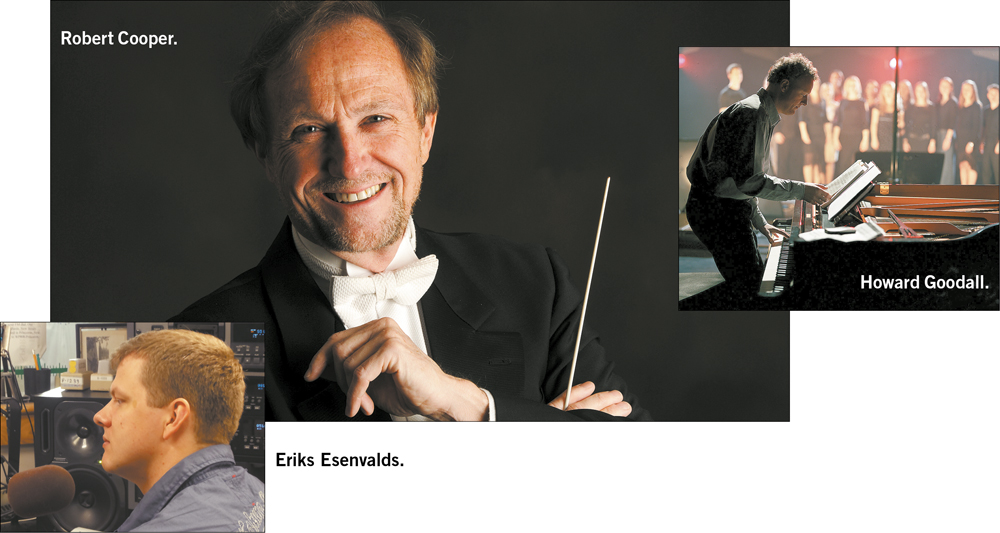
One advocate for this tradition is veteran Canadian conductor Robert Cooper. And one possible solution to the question above is exemplified by Cooper’s work with the Orpheus Choir of Toronto.

A tireless musical dynamo, Cooper conducts Chorus Niagara and the Opera in Concert Chorus as well as the Orpheus Choir. A personal aside: he was the first conductor I sang for, in the Toronto Mendelssohn Youth Choir, the youth wing of Canada’s Toronto Mendelssohn Choir.

My prior experience of music centred around folk guitar and the Beatles, and my first encounter with choral music, from the Renaissance to the modern era, was both exciting and disorienting. But Cooper was an excellent choral ambassador for me and other young musicians. I remember being struck at the energy of this diminutive but authoritative figure who insisted on precision, focus and depth of engagement.

Cooper was also for many years the producer of CBC’s Choral Concert, along with host and fellow conductor Howard Dyck. Between them these musicians introduced the country to the world’s excellent choirs and promoted the work of Canada’s best ensembles.

Cooper celebrates his tenth anniversary as conductor or the Orpheus Choir this year. Asked about his work with Orpheus, he points out that the group is for hire as a recording ensemble and can handle pops and carol concerts — the meat and potatoes of any working ensemble. But Cooper has led the choir towards repertoire that he finds the most interesting — the lesser-known works of great composers and works by contemporary composers who are a modern extension of that tradition.

Modern choral composers have, for the most part, left behind the modernist experiments of the early to mid-20th century and are writing in idioms that extend the possibilities of tonal music, rather than eschew it. On March 22 the Orpheus Choir performs a double bill of two substantial but approachable modern works, English composer Howard Goodall’s Every Purpose Under the Heaven and young Latvian Ēriks EšenvaldsPassion and Resurrection.

Goodall has enjoyed a very successful career and is a well-known choral personality in Britain. His television lectures on music carry on the Bernsteinian tradition of using modern technology to educate new generations on music history. His music is instantly accessible, but challenging to execute well and stylishly.

This concert is the Canadian premiere of Every Purpose Under the Heaven, which was first performed in 2011 at Westminster Abbey. It was commissioned to commemorate the 400th anniversary of the King James Bible, likely the most renowned translation of this text yet written. While later versions drew on more accurate scholarship, the King James is a cultural touchstone that has drawn and inspired musicians and writers for centuries.

The Ešenvalds  composition, Passion and Resurrection, is an intense work that blends tonal elements with turbulent rhythms and harmonies. Compared sometimes to the choral works of Arvo Pärt, it seems to sidestep elements of romantic and modernist musical gesture and combine instead elements of folk music, Northern European liturgical chant and an individual spiritual vision. The composer has often worked with the Latvian State Choir, considered to be one of the best choral ensembles in the world.

In a nod to the increasingly important role of theatre in choral presentation, and a welcome change from the dry-as-dust concert hall paradigm that we all endured last century, the Orpheus Choir’s rendition of Passion and Resurrection will use sound and lighting design to heighten and enhance the music making. And as an added bonus, the composer himself will also be travelling to Toronto to attend the event and give a lecture about his work.

Concerts to note: This is the time of year that concerts often take place on Good Friday and include requiems and masses. Church choirs often marshall their forces for appealing and interesting concerts, many of which have free admission or very reasonable ticket prices. Please have a look in the listings to see what is being offered. Some unusual concerts of note:

The Hart House Singers perform Dvořák’s Mass in D on March 17. Admission is free and food donations to the U of T Foodbank are welcome.

On March 19, the touring Grinnell Singers, from Ohio’s Grinnell College, presents a concert that includes A Bluegrass Mass. I’ve never heard this work, but I love it already. This concert is also free, and takes place at the Franciscan Church of St. Bonaventure in Toronto.

Does Toronto hold special appeal to Ohioans? Ohio’s Avon Lake High School Chorale also performs a free concert at Kingston Road United Church on March 22.

On March 23 the Mohawk College Community Choir performs works by two late 19th century European organist/composers: Maurice Duruflé’s very appealing Requiem and Josef Rheinberger’s setting of the Stabat Mater. The Metropolitan Festival Choir also performs the Duruflé work on Good Friday, March 29.

For those who would like to further explore French choral repertoire, the Victoria Scholars Men’s Choral Ensemble performs “The French Connection”on March 3, with music by Caplet, Debussy, Fauré, and Poulenc.

On March 5 the Toronto Children’s Chorus takes part in “Fujii Percussion and Voices,” an event presented by Soundstreams. This concert sounds fascinating. Canadian musicians team up with the virtuoso Fujii family of Japan to perform modern works by Canadian and Japanese composers. The Fujii family are percussionists who specialize in the sanukite, a mallet instrument fabricated from an unusual volcanic stone located in the Sanuki region of Japan. 

Ben Stein is a Toronto tenor and theorbist. He can be contacted at choralscene@thewholenote.com. Visit his website at www.benjaminstein.ca.

In december 2012 a photo essay appeared in the New York Times showing the destruction of a piano abandoned on a New York sidewalk. A series of successive photos told a putatively moving story, accompanied by music sombre and dramatic by turns, in which the piano was stared at, played idly by passersby and ultimately destroyed and carted away.

choralscene  schola magdalenaWhat was more illuminating than the photos themselves were the comments posted online as the essay travelled over the internet. A number could be paraphrased as “What a sad comment on the current state of the arts, as the piano is trashed just like the culture.” The mixture of ruefulness and self-satisfaction was galling.

In art and everywhere else, the good old days were never good, folks. Culture is always in flux, and time alters our view of art that is initially considered trashy or meretricious — like Shakespeare, Delta blues or cable television — into something elevated and timeless. Anyone nostalgic for an Elysian epoch in which classical culture was ascendant throughout the West and there was a piano, a violin and a Beethoven score in every humble home, simply hasn’t read any history.

In 2009 American music historian Elijah Wald published How the Beatles Destroyed Rock ‘n’ Roll: An Alternative History of American Popular Music. Once you get past the misleadingly quarrel-picking title (good for generating a bit of buzz, anyhow), this book has many excellent insights about how we listen to music, and how our perception of it evolves over time.

Wald makes the point that the ability to record music irrevocably changed our experience of it. John Phillip Sousa coined the term “canned music,” and felt that recorded music would degrade people’s ability to create it themselves. In many ways he was correct. Wald states: “virtually all dancing is now commonly done to recordings.” Singing of lullabies at home and at religious services, two areas in which live music still functions, can easily be replaced with recorded music.

At the same time, Wald observes that we now have instant access to “the finest artists, alive or dead, who have ever been recorded anywhere in the world, and we can hear it whenever we want, wherever we go, in whatever order and whatever volume we please.” This has given modern musicians “a breadth of experience and created a wealth of fusions that would have been unimaginable” in the past. From the point of view of cross-cultural awareness and opportunity, you could argue that the good old days are right now. Let us look at the stylistic mixture of several concerts coming up in the next few weeks.

TCC on the move: Perhaps I am not especially sympathetic to pianos, abandoned or otherwise, because I regard them as such a poor instrument on which to introduce young children to music. When asked by parents about the advisability of beginner piano lessons, I usually start ranting about the dangers of subjecting children’s formative musical experiences to the piano’s complicated key mechanism and rigid tuning system. If the parents are still listening after an hour, I finish with a diatribe about singing and movement’s centrality to the development of musical skill.

My apologies, piano teachers. But what better support can I offer for these heretical notions than the excellent Toronto Children’s Chorus, which is helping raise the next generation of singers and choral conductors. They combine music and movement as they perform “Dance All Around the World” on February 23.

Sondheim Vivace: American musical theatre icon Stephen Sondheim’s brilliant scores are a resource that more choirs should explore. Choral versions of musical theatre songs lean towards the classic composers or the mid-20th century, or the juggernaut mega-musicals of the 1980s. Sondheim’s work is searching and complex, witty and sardonic, and a good choral performance of it can be rewarding for both audience and singers. Conductor and singer Linda Eyman is responsible for a busy pocket of Toronto music making — she conducts four separate choirs and maintains a private singing studio as well. One of her ensembles, Vivace Vox performsSondheim! Sondheim!”on February 24, including selections from Company, Into the Woods, Follies and Sweeney Todd, among others.

Bell’Arte’s 25th: Toronto’s Bell’Arte Singershas drawn many excellent Toronto singers into its ranks. They celebrate a quarter century of work with their “25th Anniversary Concert: Memories and Reflections” on March 2.

Gesualdo Sinister: In an art form that does not lack for odd characters, Italian Renaissance composer Carlo Gesualdo is one of the oddest and most sinister figures in history. The title of the Tallis Choir’s March 2 concert, “Gesualdo: Murderer & Musician,” states the case straightforwardly. I won’t relate the shocking story here. Instead, attend the concert to find out more, and don’t cheat by resorting to an online check. Gesualdo’s music is always worth hearing live — its anarchic harmonic shifts and haunting word painting are a high point of Renaissance madrigal writing. Some of his work sounds uncannily like some of the choral compositions of 20th century Austrian composer Ernst Krenek, and many modernist composers were drawn to his madrigals .

Rossini Solenelle (times two): Toronto audiences have a rare opportunity to hear Rossini’s Petite Messe Solenelle not once, but twice. The Toronto Mendelssohn Choir performs the work on February 9, and the Toronto Classical Singers sing it on March 3. The work was written in 1864, four years before the famed opera composer’s death. It is an engaging piece, first performed with a quirky piano and harmonium accompaniment. Rossini orchestrated it later on. Fans of bel cantoItalian vocal style will find much to love, especially the tenor solo showstopper, “Domine Deus.”

Magdalena goes modern: Schola Magdalena is a chamber ensemble of women’s voices, conducted by choral multi-tasker Stephanie Martin. Usually focused on early music , they make a foray into modern works in a concert sponsored by NUMUS, a very good contemporary music organization based out of Waterloo. This concert takes place on February 7 in Waterloo and again at the Church of St. Mary Magdalene in Toronto.

These are only a few of the excellent concert choices available in the coming weeks — please check out the listings and find out about the many other excellent choirs around. 

Ben Stein is a Toronto tenor and theorbist. He can be contacted at choralscene@thewholenote.com. Visit his website at benjaminstein.ca.

Asked to identify the true meaning of Christmas, those of us who look to the Grinch and Ebenezer Scrooge for spiritual guidance and inspiration might come up with a list that included traffic jams, grumpy people lined up at cash registers, un-spiked eggnog, Christmas cards=writer’s cramp, Christmas presents=credit card bills, snow=slush/shovelling/chiropractor fees.

choral scene john rutter photo credit jennifer bauer.Confronted with Tiny Tim, Cindy Lou Who and a few sad puppies in Santa hats, we might grudgingly acknowledge that somewhere in the midst of the chaos there is a chance to connect with family and friends and maybe do the odd bit of singing as well.

Choral musicians would likely add favourite composers, songs, oratorios and operas to the Christmas mix. The name of English composer and arranger John Rutter would show up on a few top ten lists — or on a few “to be avoided whenever possible” lists, because Rutter can be a polarizing name, especially as pertains to Christmas music.

Rutter’s original Christmas carols and carol arrangements have been a regular part of choral concerts since at least the 1970s, when his composition and recording work at Cambridge began to attract attention. While his academic background has led to work as a fine editor of choral music, it is his compositions that have made him an instantly recognizable name in choral circles.

For many people, Rutter’s work is synonymous with Christmas singing, and works like “Candlelight Carol” and “Star Carol” are compositions fit to stand alongside other famous and familiar seasonal songs. Others deem his music saccharine and sentimental, relentlessly middle of the road like Dunstan Ramsey’s description of himself as a reliable dinner guest in Robertson Davies’ Fifth Business: classy, heavily varnished, and offensive to no one.

My own opinion of Rutter’s work probably leans closer to the latter category. I find that his over-busy arrangements of carols often obscure the strength and simplicity of the old tunes and his musical tropes and lyrical sentiments usually leave me unmoved. But any derision I might have felt for this composer disappeared after seeing his musical skills in action firsthand.

Some years ago I sang for a choir that was recording some of Rutter’s works and Rutter himself came to conduct. Towards the end of the sessions and after one particularly gruelling day of recording, we broke for dinner, the tired singers spilling out onto the street. As I was leaving, I noticed that Rutter was bent over the piano, scribbling intently on a piece of manuscript paper. As I left, I said a word to him about the day’s endeavours, and he muttered a distracted reply.

When we returned for the evening session, he presented the singers with copies of a hymn that he had written while everyone else had been on break. While its derivations were obvious — its melodic contour and structure echoed a couple of well-known English Anglican hymns — it was a solid composition, fully realized, arranged and ready to record, written in under an hour.

Since then, any time I’ve heard negative comments about Rutter I’ve remembered that example of professionalism, technique and inspiration. Whether one responds to his aesthetic or not, no one can deny the deep craft imbedded in his music. Any composer or arranger who denigrates it might set themselves the comparable challenge of writing an appealing melody, effective vocal arrangement and straightforward, heartfelt lyrics, even without a 60-minute time limit. It’s much more difficult to do well than it might appear.

Rutter: Here are some (but by no means all) upcoming concerts that include works by Rutter.

On December 1 the Guelph Youth Singers perform “Winter Song,” a concert that includesRutter’s Brother Heinrich’s Christmas. The Mississauga Festival Choir performs Rutter’s Magnificat on the same day.

On December 7 and 8 the Sound Investment Community Choir perform “A Christmas Gift,” a concert that includes Rutter’s Gloria. They are joined by the Trillium Brass Quintet. Markham’s Village Voices perform this piece on December 1, Toronto Beach Chorale performs it on December 9

On December 7 the Upper Canada Choristers’ “Tomorrow Shall Be My Dancing Day”features Rutter’s The Reluctant Dragon, a Christmas fable based on a story by Kenneth Grahame (of The Wind in the Willows fame).

And other concerts that will provide you with a Rutter fix include:

Vivace Vox’s “Songs of Light” and the Guelph Chamber Choir’s “Carols for Christmas” (both on December 2.) On December 16, Toronto’s Church of Saint Simon-the-Apostle has their familiar “Nine Lessons and Carols”service. Other carol services and concerts are going on all over the region, so please look at the listings for the many available options.

Lyrica Chamber Choir of Barrie’s December 8 concert, “Let All Mortal Flesh,” features works by Rutter and Norwegian-American composer Ola Gjeilo, whose accessible work has become popular in the USA, but is relatively new to this part of the world.

20 joan-adult true-north-brassAnd not: I am happy to note concerts by two choral ensembles that had previously flown under my radar. The Kokoro Singers, founded in 2004, perform concerts in Ancaster and Guelph on December 8 and 9. The Volunge Lithuanian Choir, founded in 2006, performs a free concert on December 9.

On December 15, the Nine Sparrows Arts Foundation hosts “City Carol Sing” in support of food banks across Canada. The concert features several excellent ensembles — the Larkin Singers and the True North Brass among them — as well as a chance to hear renowned tenor Richard Margison and his daughter Lauren Margison, a notable singer in her own right.

2013 concerts to watch for: Conductor and keyboardist Philip Fournier is making a name for himself as a purveyor of early music in Toronto. A concert of music by Praetorius, Sweelinck, Couperin, Perotin (one of the earliest known composers of the European canon) and Palestrina takes place on January 12 at the elegant The Oratory of St. Philip Neri on King Street West.

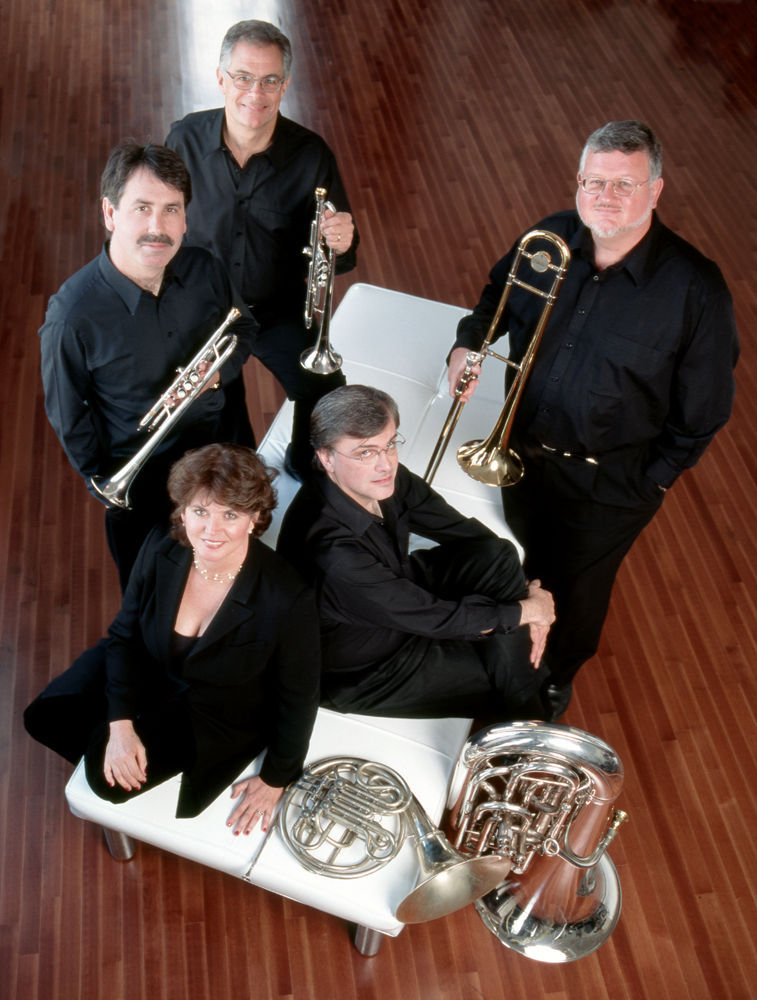
The Elora Festival Singers perform the famous unfinished Mozart D Minor Requiem, K626, on January 20, for a concert and lunch event in Elora.

An opportunity to hear the Toronto Mendelssohn Choir takes place on January 26, at the Choral Conductors’ Symposium concert. This event is part of the TMC’s choral development program, in which upcoming conductors get a chance to work with a large professional ensemble. It is a terrific opportunity for young conductors who often find themselves bribing friends, family and viola players to muster enough of the requisite four sections to fill a living room. The event is free to the public, and takes place at Yorkminster Park Baptist Church in Toronto.

On February 3 the Shevchenko Musical Ensemble gives a concert that will include Serbian and Ukranian folk songs.

On the same evening, different choral ensembles from the University of Toronto join together to perform Beethoven’s Mass in C and Brahms’ haunting Nänie.

Ben Stein is a Toronto tenor and theorbist. He can be contacted at choralscene@thewholenote.com. Visit his website at benjaminstein.ca.

21-23-choral-barnes-option-1Paintings and sculptures occupy physical space. Da Vinci’s Mona Lisa resides in the Louvre in perpetuity, guarded and revered, physical manifestations of “great art” in a hallowed space, ready for us to come and venerate.

Music, by contrast, is a manipulation of sound and time and lives in our minds and ears. Music is a physical experience not a physical object. Without our minds and ears to translate, it cannot exist.

Music needs to be iterated and reiterated to continue to live. The giants of the musical canon seem inviolate and firmly rooted, but even established musical giants have been as subject to trend and fashion as any other musician. Bach needed Mendelssohn to reintroduce his work to the world. Mahler’s work was headed for obscurity when it was championed by musical lion Leonard Bernstein. Vivaldi’s inescapable Four Seasons was actually a forgotten work at the beginning of the 20th century. Its rise in popularity corresponded with the rise of recording technology and turned a relatively obscure composer into a household name.

Because of its need to be constantly renewed, music is subject to the world’s often wayward and chaotic currents of artistic fashion (as is literature, theatre and architecture). Economics, technology, trend and fashion play a greater role in shaping our tastes than we understand or will admit to.

In Canada, a young nation swamped by European and American cultural and economic influence, we are continually reminding ourselves and each other that what we create here is worthy of advocacy. Canadian musicians whose careers may not have extended past national or even regional borders need and deserve our continued interest and awareness, especially after they are no longer in a position to promote themselves.

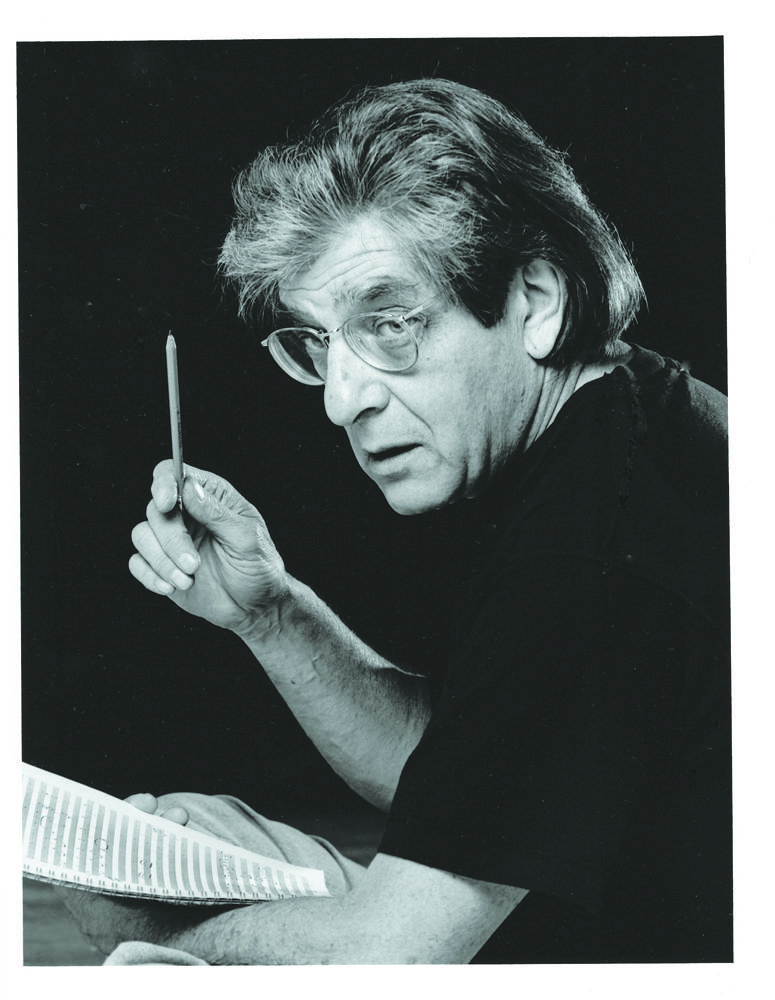
Barnes: One such composer is Milton Barnes who had a rich and varied career centred in Southern Ontario but ranging over North America. He had fruitful associations with many musicians, ensembles and dance companies. Trained in modernist compositional techniques, he ultimately moved to a more accessible style that factored in his background as a jazz drummer, his ease with popular music and his knowledge of traditional Jewish music.

Eleven years after his death, it would be easy for Barnes’ work to pass into disuse — new composers are fighting for space in a crowded local and global market and Canadian artistic history is so young it is hard to conceive of it as a tradition to be fostered, celebrated and renewed.

So it is good to see two Toronto choirs collaborating in a concert in part devoted to Barnes’ music. The Jubilate Singers have consistently created unusual and inventive programs. The Jewish Folk Choir is one of Toronto’s most long-running groups and has a long, varied and fascinating history of social and political engagement. It has been a staunch advocate for Jewish-Canadian music.

The two groups’ collaboration is named “L’khayim: A Celebration of Jewish Music,” and takes place on November 25. The concert showcases works in Yiddish, Ladino (a linguistic amalgam of Hebrew, Spanish and Aramaic influences) and Hebrew. Klezmer ensemble Shtetl Shpil are the guest instrumentalists. It will feature Barnes’ lively Sefarad, a tuneful suite that he wrote in 1996 to celebrate the 3,000th anniversary of the City of Jerusalem.

Soundstreams: Contemporary composition has also needed fierce advocacy, in part because of the fierceness with which audiences have resisted it. Over the course of the 20th century, the idea of the inherent superiority of European-derived composition has broken down completely and those who desire an intellectual component to music have been able to find it in various types of world music, jazz and other areas of popular music.

To remain relevant, contemporary music groups have had to bridge gaps between the European tradition and other stylistic areas. Toronto’s Soundstreams, which celebrates its 30th anniversary this year, has never wavered from its contemporary music mandate. But it has certainly expanded both its own and its audience’s understanding of what contemporary music entails. Their programs are notably free of pretension and over-seriousness; their mandate to involve and inspire young musicians gives their season a sense of liveliness and fun.

As part of its anniversary celebrations, Soundstreams is hosting a concert with the Latvian Radio Choir, considered to be one of the world’s top choral ensembles. A truly professional outfit, they give over 60 concerts a year. Choral aficionados definitely don’t want to miss this one.

The icing on the cake: as part of its commitment to outreach and education, Soundstreams will host four choirs from Canadian universities for this concert which will allow young musicians the experience of working with the Latvian Radio Choir in a mentorship capacity. The concert includes a number of Russian and Latvian works, a piece by John Cage and music by a nice range of contemporary Canadian composers.

21-23-choral-moonriseOther concerts of note

On November 3 the Hamilton Children’s Choir gives a fundraising concert in support of the choir’s performance at the Xinghai International Choir Championships. Please come out and support this endeavour.

On November 17 and 18 the Cantemus Singers perform an early music program that includes Charpentier’s In Nativitatem Domini.

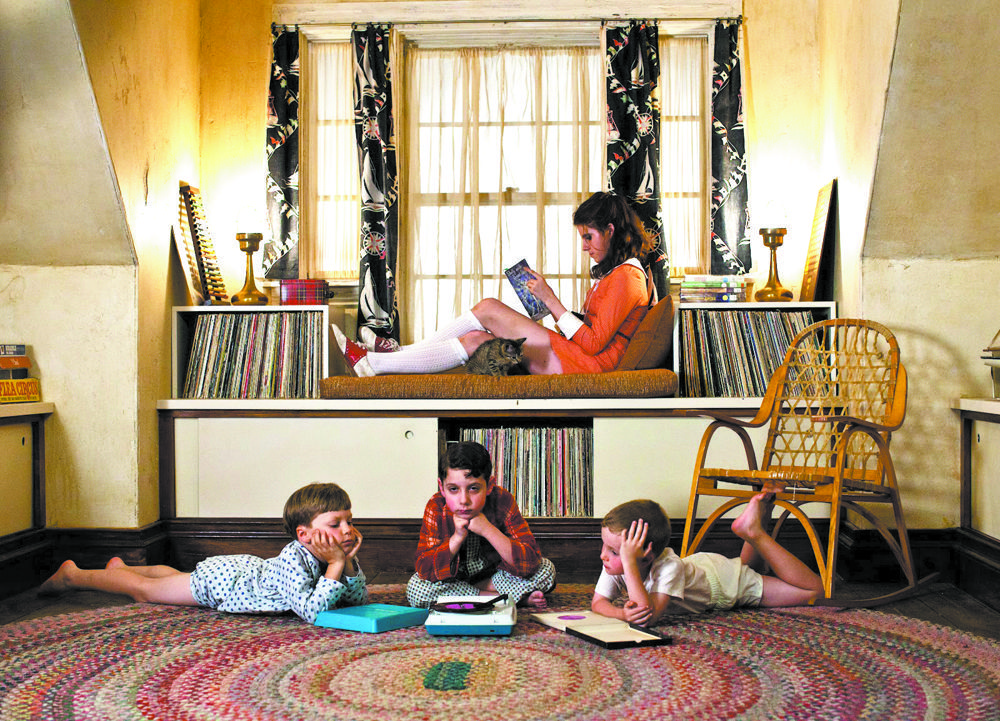
The recent Wes Anderson film Moonrise Kingdom (now available on DVD) brilliantly utilized the music of Benjamin Britten throughout, including Britten’s wonderful and popular children’s opera Noye’s Fludde. On November 23 there is an opportunity to hear this work live, as the VIVA! Youth Singers take part in a staged version.

In a similar vein, the Elora Festival Singers perform Menotti’s festive Amahl and the Night Visitors on November 25. This opera is a touching and humorous work and an excellent introduction to opera for children.

As we head into the Christmas season, many choirs gear up for seasonal concerts. Next month, there is an astonishing number of concerts taking place on December 1, too many to list effectively. Please have a look at the listings to see how many varied and interesting choices there are on that Saturday evening. 

Ben Stein is a Toronto tenor and theorbist.  He can be contacted at choralscene@thewholenote.com.  Visit his website at benjaminstein.ca.

Conductors learn that, in certain situations, to hear a sound exactly when you want it, you must indicate it slightly ahead of time. I’m uneasily contemplating this temporal disconnect as I write this column, several days before preparing for a big concert I’m conducting and playing in (a chamber performance of Monteverdi’s 1610 Vespers). As I write, the concert is several days in the future, but it will have been over for several weeks by the time you read this.

All of which should allow for a neat segue to an elegant, erudite little rumination on the nature of music and our perception of time. But I don’t have any time to write about time! I’ve got to practise this score. Or rather, last month, just slightly ahead of the time I should have been devoting to this column, I was practising a score and ... oh, forget it. Here are some choral concerts coming up soon, helpfully grouped into different areas of interest.

Requiems: November is the month for remembering the Commonwealth participation in WWI and Canadian choirs often program requiems for this time of the year. Here are several of note:

On November 3, the Cantabile Chorale of York Region performs Eternal Light a requiem setting by British composer Howard Goodall. Goodall’s work has enjoyed a popular reception in his home country, and this particular requiem setting has won an award as well.

The Islington United Church Choir performs Fauré’s Requiem on October 28. This piece is always worth a listen. Fauré’s elegant, unaffected writing is a welcome contrast to more bombastic settings of the requiem text.

The Orpheus Choir has transformed itself into one of Toronto’s vanguard groups for championing new music. On October 27 they perform Requiem for Peace by Canadian composer Larry Nickel. Nickel is a Vancouver-based composer who has had works commissioned by many groups, including some of the top west coast chamber choirs. Choir director Robert Cooper is also celebrating his tenth year as the Orpheus’ director. There will be more about that milestone in a future column.

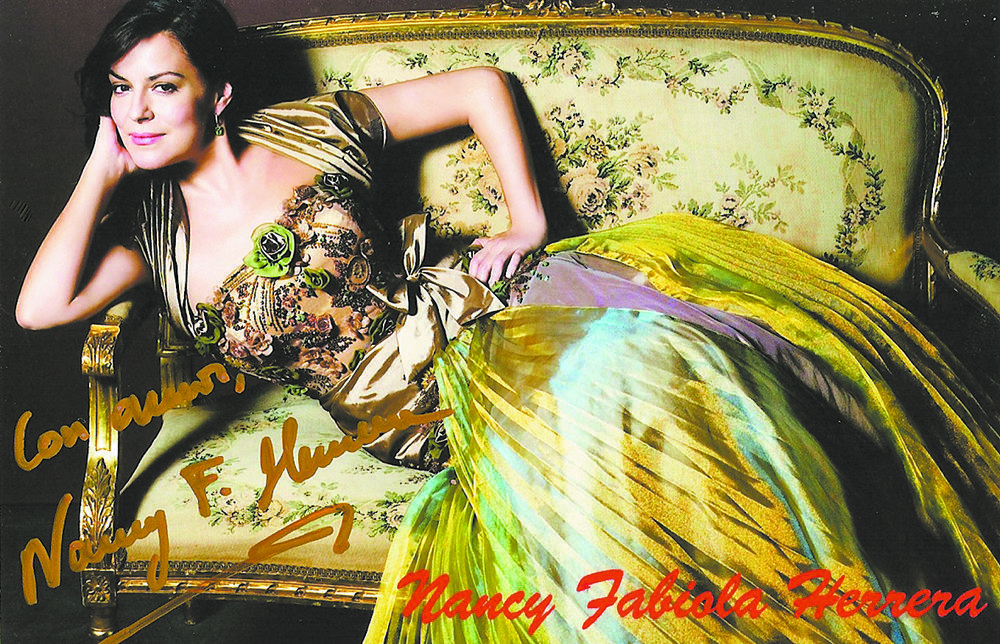
choral scene nancy fabiola herrera option 1Opera: Spanish composer Manuel de Falla’s rarely performed one-act opera, La vida breve is being given two concert performances in a Toronto Symphony Orchestra program featuring the Toronto Mendelssohn Choir on November 1 and 3. Falla composed in the first half of the 20th century and his music is a wonderful blend of modernist elements with indigenous Spanish sounds. To hear this work live is a rare opportunity.

The standard judgment of English baroque composer Henry Purcell’s Dido and Aeneas is that the music is brilliant — it is — but that the libretto is weak. I am not convinced that this is true; I have heard singers do subtle and moving wonders with the text, imbuing the words with perception and sorrow. Judge for yourself as the Georgetown Bach Chorale performs a concert version of this opera on October 26 and 27.

Opera aria concerts are always fun, although they are sometimes criticized for removing arias from their dramatic context. I say, why not? We know that all sopranos die beautifully, all tenors die bravely, all basses are evil and all mezzos are seductive. Think I’m wrong? Find out as Brantford’s Grand River Chorus performs “Great Moments from Opera“ on October 27.

Benefit concerts: On November 3 seven Toronto Beach area choirs perform together and separately in a benefit for the East End Refugee Committee. On November 4 the Mississauga Choral Society presents “Malawi Benefit Concert: Voicing Our Care,” performing music themed around social justice and global issues.

choral scene 2 georgetown bach choraleLiturgical text settings: There is a small Bach choral festival taking place over the next few weeks. On October 13 the Tallis Choir combines Bach motets with music by German Romantic composers whose music was inspired by Bach, Brahms, Bruckner, Rheinberger and Mendelssohn.

Bach’s church cantatas are miracles of formal design and emotional depth and are very difficult to execute. Two choirs that are rising to the challenge are the Toronto Beach Chorale, who perform Cantata BWV131, “Aus der Tiefe,” on November 3; and the Pax Christi Chorale who perform cantatas 80 and 147 on October 21. The second cantata, of course, contains the chorus well known in English as “Jesu, Joy of Man’s Desiring,” perhaps Bach’s most familiar melody.

On Oct 13 Toronto’s St. Anne’s Church choir performs Mozart’s Solemn Vespers. Mozart wrote two settings of the vespers, K321 and K339, and both settings wipe the floor with every mass Mozart ever wrote during his tenure in Salzburg. Go and hear it.

Other concerts of note: On October 13, 14, 20 and 21 the Peterborough Singers perform Carl Orff’s Carmina Burana. This popular work is the musical equivalent of a house party — wild, chaotic fun with everyone trying to be heard over the percussion. The famous opening chorus has been used in every movie featuring medieval knights that you have ever seen.

On October 19 and 20 the Tallis Choir is the guest of the Toronto Consort in a concert of works from the English Renaissance, some of which the Consort recorded for the popular television program The Tudors. Scandalous rumours that series star Jonathan Rhys Meyers will appear for a special midnight date with a lucky ticket holder have no basis in reality and did not originate here.

The Toronto Chamber Choir is one the few choirs in the area that regularly programs early choral music. In an October 28 concert titledKaffeemusik: The Mysterious Pierre A-la-mi-re” featuring music by renaissance composers Josquin, Ockeghem, de la Rue and Willaert, the choir illuminates the fascinating story of brilliant music copyist Pierre Alamire and the stunning manuscripts that he created.

Three special tribute concerts: An October 21 concert by Toronto’s Vesnivka Choir features a tribute to Marta Krawciw-Barabash, the late founder and president of the Toronto Ukrainian Music Festival. They are joined by the Orion Men’s Choir and the Toronto Ukranian Male Chamber Choir.

On October 13 Toronto’s Xiao Ping Chorus celebrates its 20th anniversary with a concert of opera arias and art songs with music from both Western and Eastern traditions.

Finally, on November 3, University of Toronto choirs join together in a special concert commemorating the 80th birthday of Canadian composer Ruth Watson Henderson.This composer’s music has been programmed consistently by choirs in Southern Ontario and beyond, but within contemporary music circles her work tends to be overlooked or even ignored.

I hope that this changes. Watson Henderson’s music is not wildly experimental or technically innovative in the “reinvent the wheel” manner that contemporary composition series regularly demand. Instead, it is classical in the best sense — it balances popular appeal with artistic depth and rigorous formal design. It needs impeccable diction and great sensitivity to text, tuning and musical structure.

I am very glad to see this anniversary celebration taking place, and I truly hope that the next generation of choral conductors understands that this composer has created a body of work in which all Canadian choral musicians can join in taking pride. 

Ben Stein is a Toronto tenor and theorbist. He can be contacted at choralscene@thewholenote.com. Visit his website at benjaminstein.ca.

Back to top