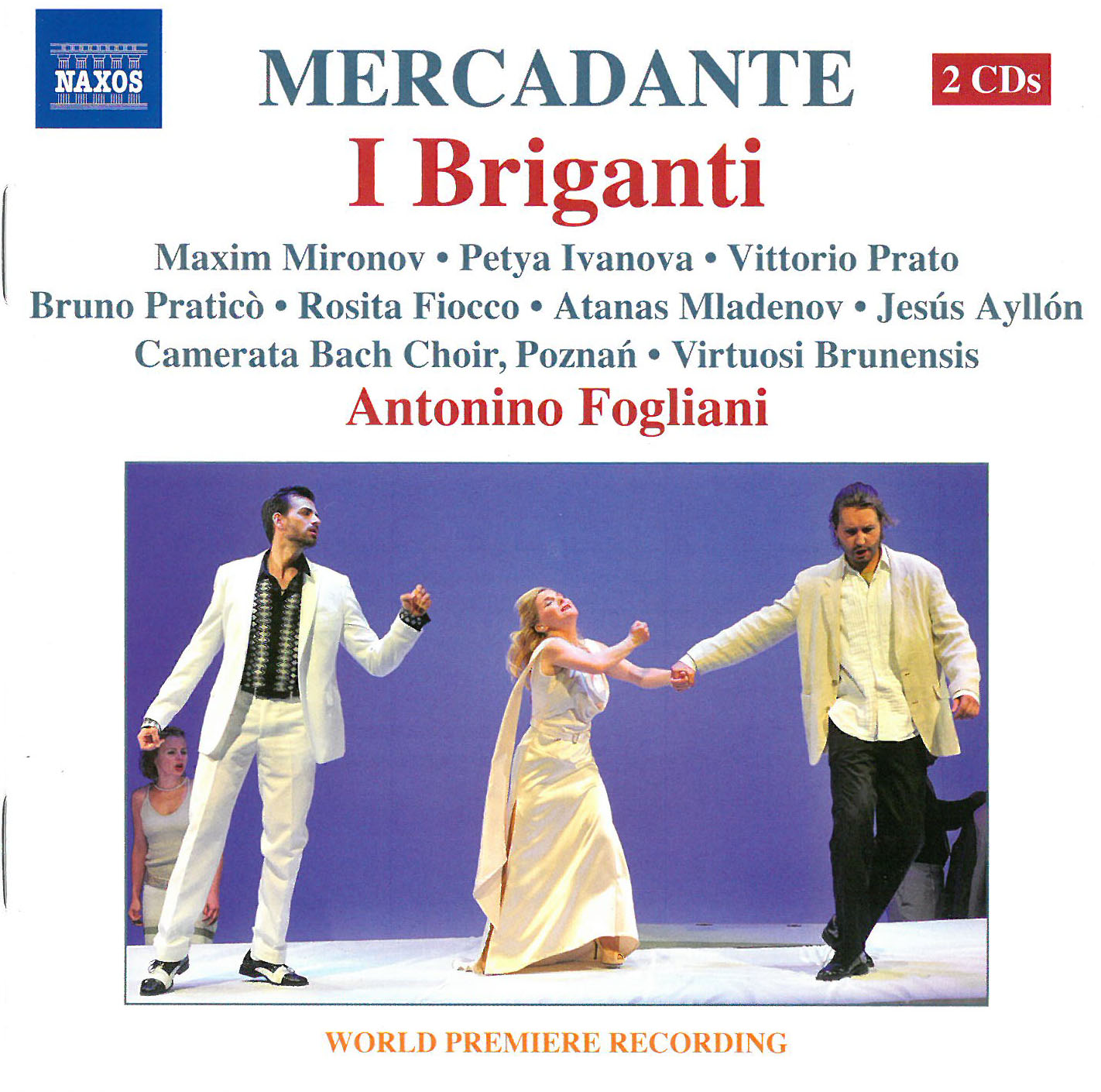
01 Vocal 03 MercadanteMercadante – I Briganti
Soloists; Camerata Bach Choir, Poznan; Virtuosi Brunensis; Antonino Fogliani
Naxos 8.660343-44

Saverio Mercadante was a prominent early 19th-century Italian composer. He wrote 57 operas. Few people living now will have seen any, although there are now recordings of several, mainly on the Opera Rara label. The present CD was recorded live at the XXIV Rossini in Wildbad Festival in July 2012. The libretto is based on Schiller’s play Die Räuber, as is Verdi’s later opera I Masnadieri. The cast on this recording is cosmopolitan: the tenor is Russian, the soprano Bulgarian, the baritone Italian, the chorus Polish and the orchestra Czech. The soloists are very good and they perform with virtuosity and with gusto.

This world premiere recording uses a new edition based on research by Michael Wittmann, who also contributes an informative note. He argues that Mercadante’s operas represent a movement away from the elaborate decorations of bel canto opera in favour of a greater emphasis on the dramatic aspect. It was left to Verdi, Wittmann suggests, to take this a stage further and to place “veracity of expression above its beauty.” I find the argument convincing but I also think that we should appreciate the opera on its own terms, not just as a missing link between Bellini and Verdi.


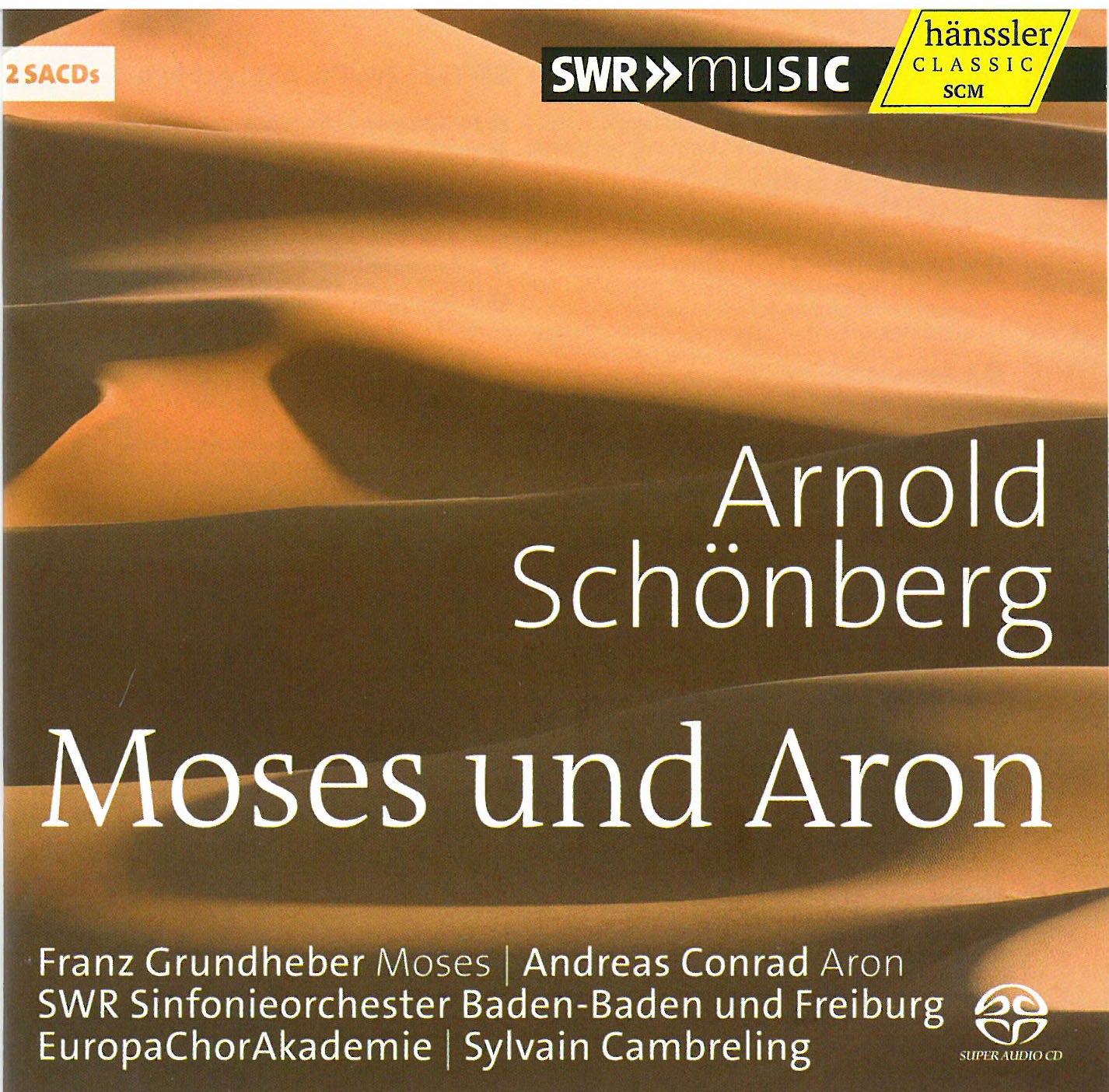
01 Vocal 04 Moses und AronSchoenberg – Moses und Aron
Franz Grundheber; Andreas Conrad; SWRSO Baden-Baden und Freiburg; Sylvain Cambreling
Hanssler Classic 93.314

Arnold Schoenberg’s self-authored libretto for his dodecaphonic biblical spectacular Moses und Aron (the latter protagonist is intentionally respelled so that the title contains exactly 12 letters) calls for the on-stage appearance of rape, murder, butchery and camels. (Take that, Verdi!) Though he intended the work to include three acts, the composer completed only the first two from 1930 to 1932. In essence however the work is closer in spirit to an oratorio and is often effectively presented as such. Recordings of Moses have been slow but steady following the composer’s death in 1951, with about a dozen available in various formats. What has kept this opera in the shadows (it was not staged in this hemisphere until the Metropolitan Opera presented it in 1999) has less to do with the lurid scenario than the extensive and hugely demanding choral writing – the most recent staging in Wales saw the chorus rehearsing the work for some 18 months.

I consider the true stars of this new recording to be the members of the elite EuropaChorAkademie who have thoroughly mastered the score with spectacular results. In the lead roles the magisterial Franz Grundheber makes a lasting impression in the half-sung, half-spoken interpretation of the tongue-tied Moses and is effectively paired with the forceful Heldentenor of Andreas Conrad as his eloquent spokesman Aron. The French conductor and new music specialist Sylvain Cambreling leads the SWR radio orchestra (sadly scheduled to be dissolved in 2016) in a finely balanced and lucid account of the score miraculously cobbled together from no less than four different performances in as many venues during a 2012 European tour.


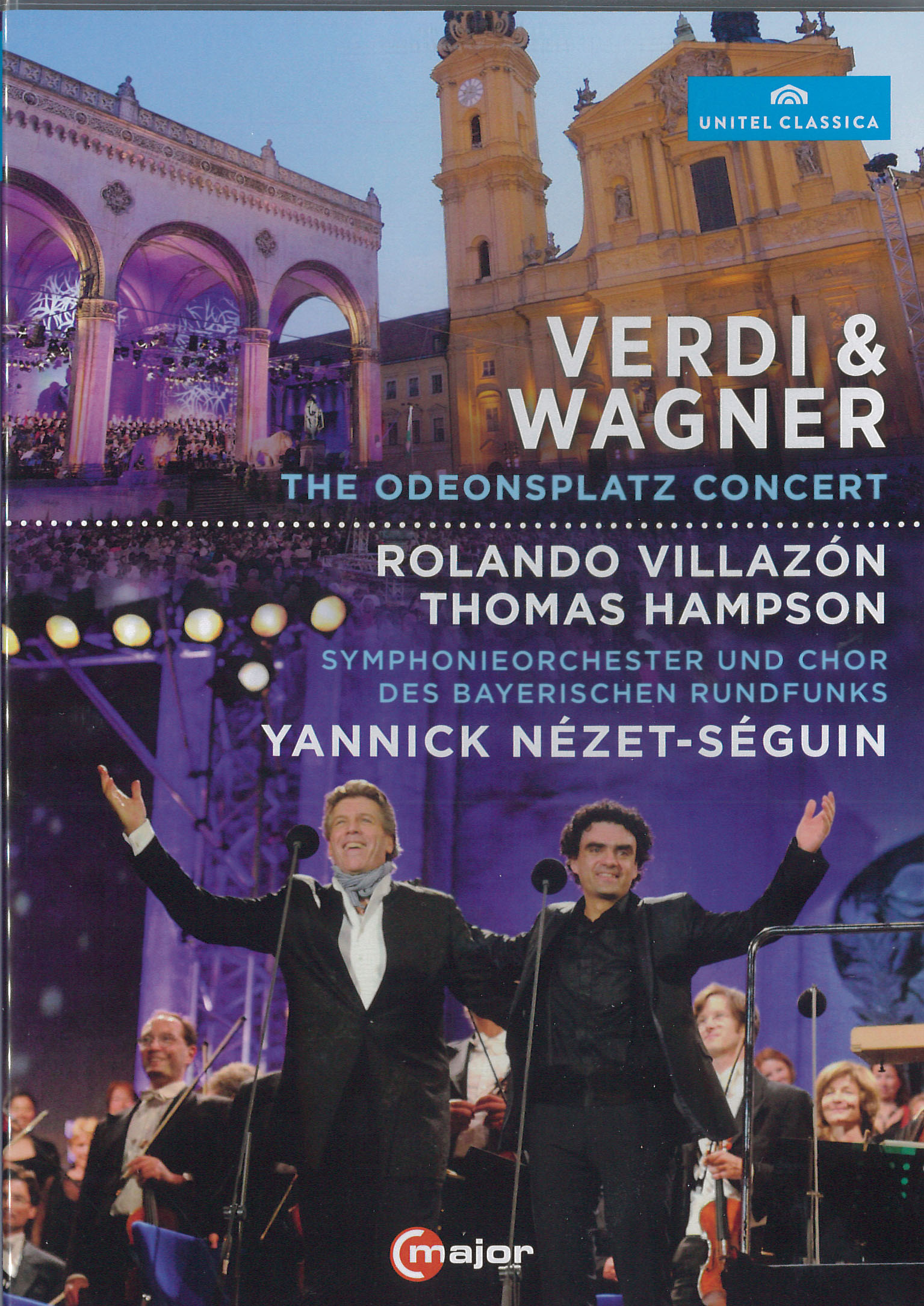
02 Vocal 01 Verdi WagnerVerdi & Wagner – The Odeonsplatz Concert
Rolando Villazón; Thomas Hampson; Bayerischen RSO; Yannick Nézet-Séguin
Cmajor 716708

Last July to celebrate the bicentennials of Verdi and Wagner, a huge outdoor concert took place in Munich, the Bavarian capital with obvious connections to Wagner and his royal patron, Ludwig II. The show was held in Munich’s epicentre, the vast quasi-Renaissance Odeonsplatz, under an arcaded loggia large enough to house a full symphony orchestra and chorus. The loggia, full of allegorical symbols of German glory and guarded by two fierce-looking stone lions, was lit in glorious colours to suit the mood of each item performed.

Curiously enough the two singing stars, tenor Rolando Villazón and baritone Thomas Hampson, apart from some Massenet, sang mostly unknown and second rate Verdi (I would seriously question the inclusion of an aria from Il Corsaro, Verdi’s worst opera that even the Maestro himself hated outright) and only one Wagner, the Ode to the Evening Star from Tannhäuser beautifully sung by Hampson and timed perfectly to coincide with the evening shadows descending over the square. In Verdi I felt the only major success for the soloists was the “Liberty” duet from Don Carlo. Even Massenet was better represented.

Fortunately the most resounding hits were the orchestra and chorus with some of Verdi’s and Wagner’s finest choruses and overtures, led with aplomb by Montrealer and now world-renowned conductor, Yannick Nézet-Séguin. His youthful exuberance was infectious and he brought out idiomatic and superbly pointed performances like the rousing Entry of the Guests amplified by the wonderful natural acoustics so that it must have been heard all over Munich. Electricity was in the air and everybody noticeably sat up and listened, except perhaps for those morose stone lions.


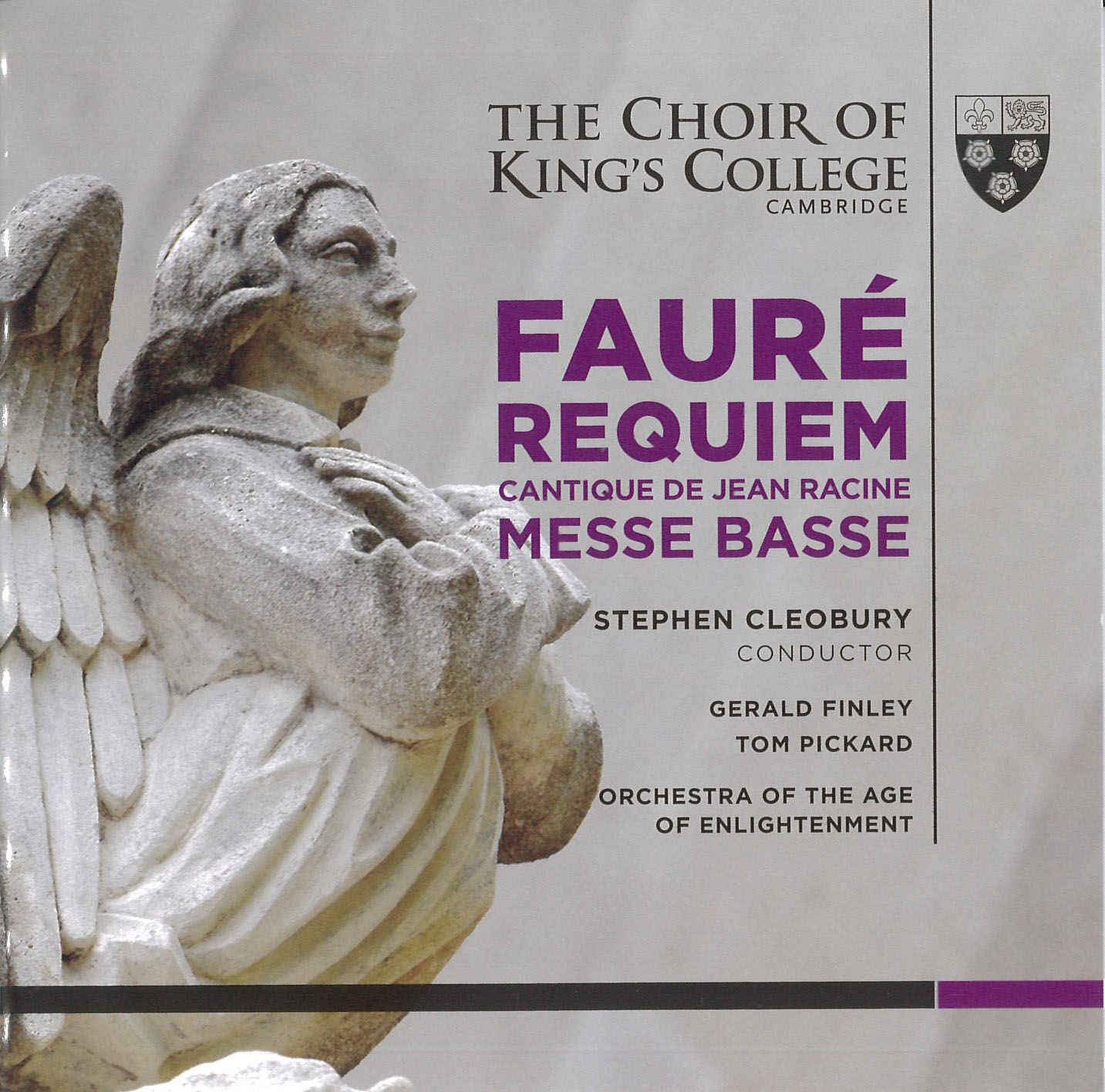
02 Vocal 02 Faure RequiemFauré – Requiem; Cantique de Jean Racine
Gerald Finley; Tom Pickard; Choir of King’s College Cambridge; Orchestra of the Age of Enlightenment; Stephen Cleobury
Choir of King’s College Cambridge KGS0005

While one wonders what yet another recording of Fauré’s Requiem will bring to light, the Choir of King’s College Cambridge is the first to record Marc Rigaudière’s new reconstruction of the earliest complete liturgical performance of the Requiem, essentially recreating the work’s premiere, including the organ stops from L’église de la Madeleine in Paris. Also, the incorporation of instruments and techniques typical of those of a French orchestra of the late 19th century are used to great effect by the Orchestra of the Age of Enlightenment. As a result, the performance does convey quite a different character than others; somehow even more gentle and contemplative in nature through the use of slower tempi and extremely controlled, even subdued choral passages, with the exception of the Dies Irae.

Chorus alumnus Gerald Finley’s gorgeous bass-baritone solos are wonderfully dramatic. In fact, the original version uses fewer dynamic markings. After a full performance of the original work, the choir presents a contrasting version of the Offertoire, edited by John Rutter, quite unique in and of itself and extended in Fauré’s 1900 version with the chorale O Domine. Also included on the CD is a lovely performance of Cantique de Jean Racine in its original version for choir and organ and Messe Basse, originally composed for women’s voices, sweetly rendered by the choir’s trebles. 


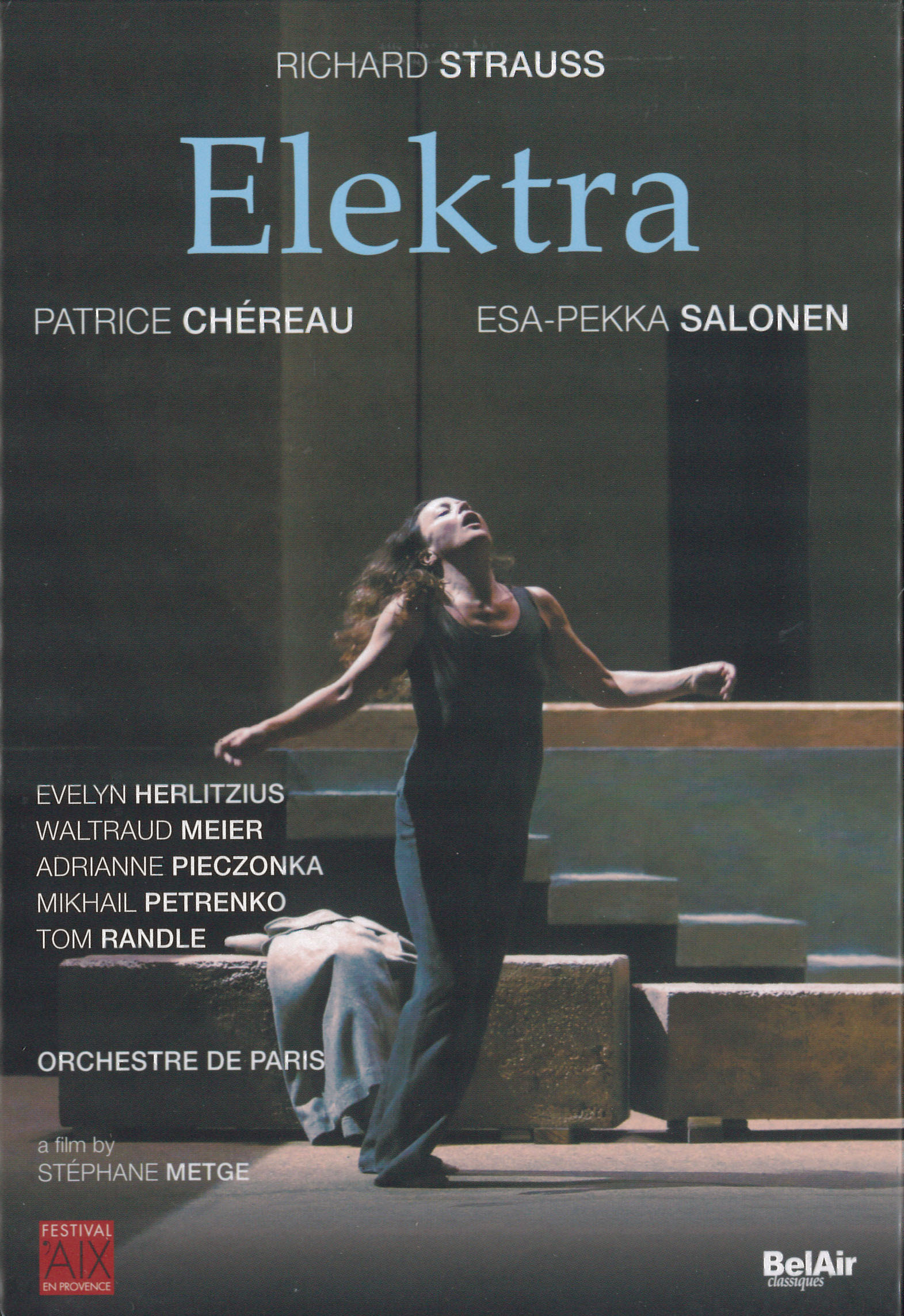
02 Vocal 03 Strauss ElektraStrauss – Elektra
Herlitzius; Meier; Pieczonka; Petrenko; Randle; Orchestre de Paris; Esa-Pekka Salonen
Festival Aix-en-Provence; BelAir Classiques BAC110

Richard Strauss’ overheated take on the ancient Sophocles tragedy about one of history’s most infamous dysfunctional families, pushed into fin-de-siècle extremes and Freudian overtones, may have shocked pre-WWI audiences, but even so it provided the composer with a sizable enough income to buy himself a villa in the Bavarian Alps. This latest revival of Elektra became the focal point of the Aix-en-Provence festival in the summer of 2013 in the hands of possibly the greatest director of our generation, Patrice Chéreau, made all the more poignant because he passed away a few months thereafter. His brilliant intellect, inspiration and intuitive feel for music and theatre is manifest from the overall concept to the minutest detail.

Compared with past productions that turned Elektra into a bone-chilling nocturnal bloodthirsty horror show, Chéreau avoided all sensationalism and concentrated on the psychology and interplay of characters, especially the three women principals. As Elektra, German soprano Evelyn Herlitzius is a primal, elemental force, almost like an animal who simply howls through an hour and three quarters at fever pitch, but also capable of tender moments in the “Recognition” scene (with Mikhail Petrenko as Orestes)  where Strauss for the first time reaches a major key, a sublime climax of the score. By contrast Chrysothemis, her sister, probably the only normal person among the women, is beautifully sung and acted with maternal instinct and compassion by Torontonian Adrianne Pieczonka who is rapidly achieving world fame. The most problematic – for Chéreau – was the handling of the murderous mother Clytemnestra, traditionally made into a half-insane complex-ridden grotesque witch, but here a woman of dignity, more to be pitied than hated and portrayed superbly by Waltraud Meier.

Finally I must emphasize the enormous contribution of Esa-Pekka Salonen whose firm control of dynamics brings out the subtle inner voices that often disappear in the monolithic sound of a giant Straussian orchestra.


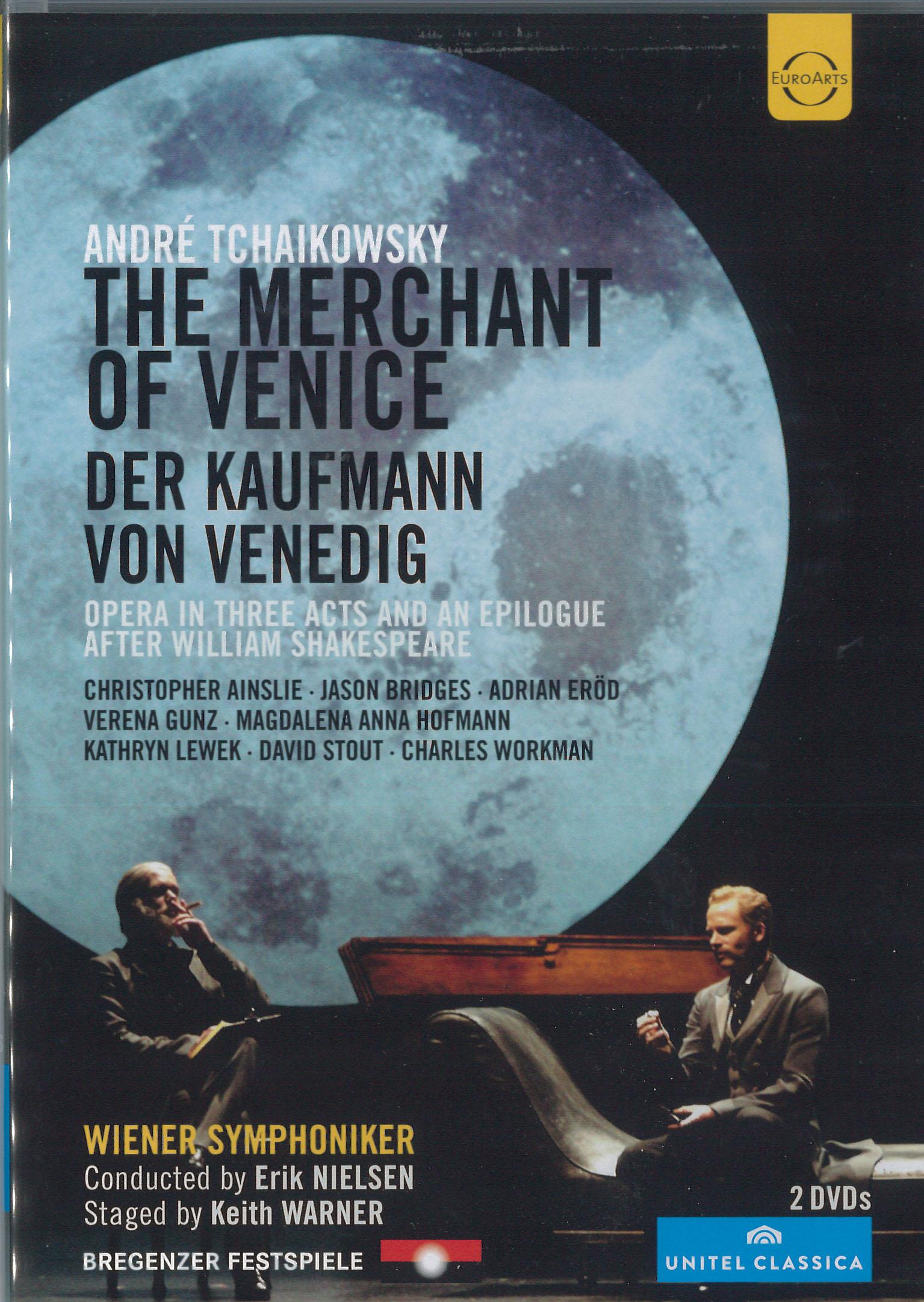
02 Vocal 04 Merchant of VeniceAndré Tchaikowsky – The Merchant of Venice
Ainslie; Bridges; Eröd; Gunz; Hofmann; Lewek; Stout; Workman; Wiener Symphoniker; Erik Nielsen
Unitel Classica 2072708

Re-discovery of a forgotten opera usually happens to obscure Baroque or Bel Canto masterpieces, which for unfathomable reasons have been gathering dust in some musty old library. More often than not, they enter standard repertoire for a brief period of revival, only to be forgotten again. Let’s hope that fate will not befall The Merchant of Venice – an opera 30 years out of its time. Nearly produced by the English National Opera in 1984 two years after the composer’s death, this opera finally received its due at the 2013 Bregenz Festival. The Festival’s artistic director, David Pountney, is a champion of forgotten composers and André Tchaikowsky, born Robert Andrzej Krauthammer in Poland, is definitely well deserving of such re-discovery.

Survivor of the Warsaw ghetto (which he escaped with an assumed “Christian” name of Andrzej Czajkowski on his fake papers) and the communist rule, Tchaikowsky was an acclaimed pianist. He placed amongst the finalists of the 1955 Chopin Piano Competition and 1956 Queen Elisabeth of Belgium Competition. Despite those early accolades, he decided to dedicate himself to composition. His output, if not huge, is thoroughly engrossing; alas Merchant is the only opera. And what an opera – there is no doubting its dramatic bona-fides: Tchaikowsky makes his own mark by imbuing Antonio with gay yearnings, absent in Shakespeare, and scoring the role for a countertenor. The Bregenz production casts Christopher Ainslie in that role, against the remarkable Adrian Eröd as Shylock.

As a final irony, the composer got to centre stage before his work did – he willed his skull to the Royal Shakespeare Company to be used in Hamlet as a prop. That acclaimed 2008 production, filmed by the BBC, featured David Tennant as the brooding prince and André Tchaikowsky’s skull as Yorick.


02 Vocal 05 Birstwistle GawainHarrison Birtwistle – Gawain
Royal Opera House; Elgar Howarth
NMC D200

I wish I liked this disc more. Everything is first rate: the source – medieval epic Sir Gawain and the Green Knight; Harrison Birtwistle – composer and master of orchestration; skilled librettist David Hersant; a stellar cast; the Royal Opera Orchestra under Elgar Howarth; excellent sound; and comprehensive notes. Throughout Act 1, underlying violence and sorcery at King Arthur’s court is manifest in the atonal, expressionist score’s volcanic low brass eruptions and pervasive percussion. After the jaded king demands new adventures of his knights, the Green Knight appears; Gawain accepts his challenge, which requires mutual beheading! All is plotted by sorceresses Morgan le Fay and Lady de Hautdesert. Act 1 seems belligerent without respite, and without the benefit of staging in this CD recording becomes tedious listening.

The quieter Act 2 seems a resolution to Act 1’s dissonance. Gawain reaches the Green Knight`s abode and is tested by Lady de Hautdesert`s seductive advances. Here, castanet sounds are amusing (as earlier were temple block clip-clops while Gawain prepared for riding). Surviving the beheading scene ordeal, Gawain returns exhausted to Arthur`s court proclaiming “I am not a hero.” To paraphrase Keats, I feel the palpable design of an anti-war allegory.

Soprano Marie Angel (Morgan Le Fay), and mezzo Anne Howells (Lady de Hautdesert) are particularly brilliant; bass-baritone John Tomlinson (Green Knight) and baritone François Le Roux (Gawain) too are standouts. Difficult vocal challenges are more than met by a rasping Fool (Omar Ebrahim), a praying countertenor Bishop (Kevin Smith), the royals and other knights.


02 Vocal 06 Falling ManKenneth Fuchs – Falling Man
Roderick Williams; London Symphony Orchestra; JoAnn Falletta
Naxos 8.559753

It was through an accident of timing, rather than by design, that I got to hear the haunting composition Falling Man, by Kenneth Fuchs, on September 11, 2014. Based on the 9/11 novel by Don DeLillo, the music immediately evokes comparisons with John Adams’ On the Transmigration of Souls, the brilliant tribute to the victims of the World Trade Centre terrorist attack. Where Adams wrote music that is elegiac and impossibly transcendent, Fuchs offers a much more personal reflection, tender and almost dazed in the aftermath of disaster. Though structurally dodecaphonic, the music does not strictly adhere to any blueprint, delivering lyrical and nearly romantic themes of a personal heartbreak in the face of a very public tragedy.

A champion of Fuchs’ music, JoAnn Falletta conducts the LSO brilliantly; but the real star of this recording is Roderick Williams, whose soft, velvety baritone belies the harsh descriptions of falling ash and human artifacts raining down on Wall Street that horrible morning. The companion pieces on the album, based on poems by John Updike and William Blake, including the incomparable Tyger, do not reveal such immediate connection with our recent past and deserve to be listened to on their own, within a different context.


01 Vocal 01a Alma  Gustav01 Vocal 01b Mahler LiederAlma & Gustav Mahler – Lieder
Karen Cargill; Simon Lepper
Linn LC 11615

Mahler – Lieder
Bernarda Fink; Anthony Spiri; Gustav Mahler Ensemble; Tonkünstler Orchester Niederösterreich; Andrés Orozco-Estrada
Harmonia Mundi MNC 902173

Scottish mezzo Karen Cargill, trained in Glasgow, Toronto (with Patricia Kern) and London, is in the early stages of a burgeoning career. This recording marks her debut recital on the Glasgow-based Linn record label. The disc offers a comparatively rare opportunity to hear the Fünf Lieder by Alma Mahler (1879-1964) published in 1910, along with two major song cycles by her husband Gustav. The young Alma Schindler, Mahler’s fetching 22-year-old composition student and sometime lover of Alexander Zemlinsky when the two first met, was persuaded to abandon her creative pursuits before agreeing to marry the first of her many husbands in 1902, though at the end of his life (1860-1911) a repentant and cuckolded Gustav arranged to have her songs published by Universal Edition. Zemlinsky’s influence looms large in these erotically chromatic and assuredly accomplished Lieder which are given highly sympathetic readings here. The set is followed by Gustav Mahler’s Fünf Rückert Lieder and the four-movement Lieder eines fahrenden Gesellen, closing with a passionate rendition of the Urlicht movement from his Second Symphony. Cargill is blessed with an enormous and opulent voice which in full flight can reach operatic volumes, notably so in the triumphant conclusion of Um Mitternacht from the Rückert Lieder, though a certain breathiness becomes apparent when her powerful voice is drawn back. Veteran accompanist Simon Lepper provides immaculate support throughout. The otherwise enjoyable and well-recorded disc seems rather skimpy at a mere 53 minutes.

An artist of exceptional sensitivity and great emotional depth, Bernarda Fink is an Argentinian singer of Slovenian extraction best known for her Baroque-era performances. With this disc she reveals a sympathy for the music of Mahler comparable to the great Mahler singers of the past such as Christa Ludwig and Janet Baker. The programming of this excellent Harmonia Mundi release (aptly subtitled “A Life in Songs”) is innovative, including two very rarely heard early songs, Im Lenz and Winterlied; Arnold Schoenberg’s 1920 arrangement for chamber ensemble of the complete Lieder eines fahrenden Gesellen; the mournful Kindertotenlieder cycle with full orchestra; and selections from his Rückert Lieder in various orchestral and piano versions for a generous duration of 78 minutes. Pianist Anthony Spiri and Fink collaborate wonderfully well together and the young Colombian conductor Andrés Orosco-Estrada (recently appointed to lead the Houston Symphony) proves equally sensitive to the subtle nuances of her deeply felt interpretations. This is truly a recording to treasure.


Back to top