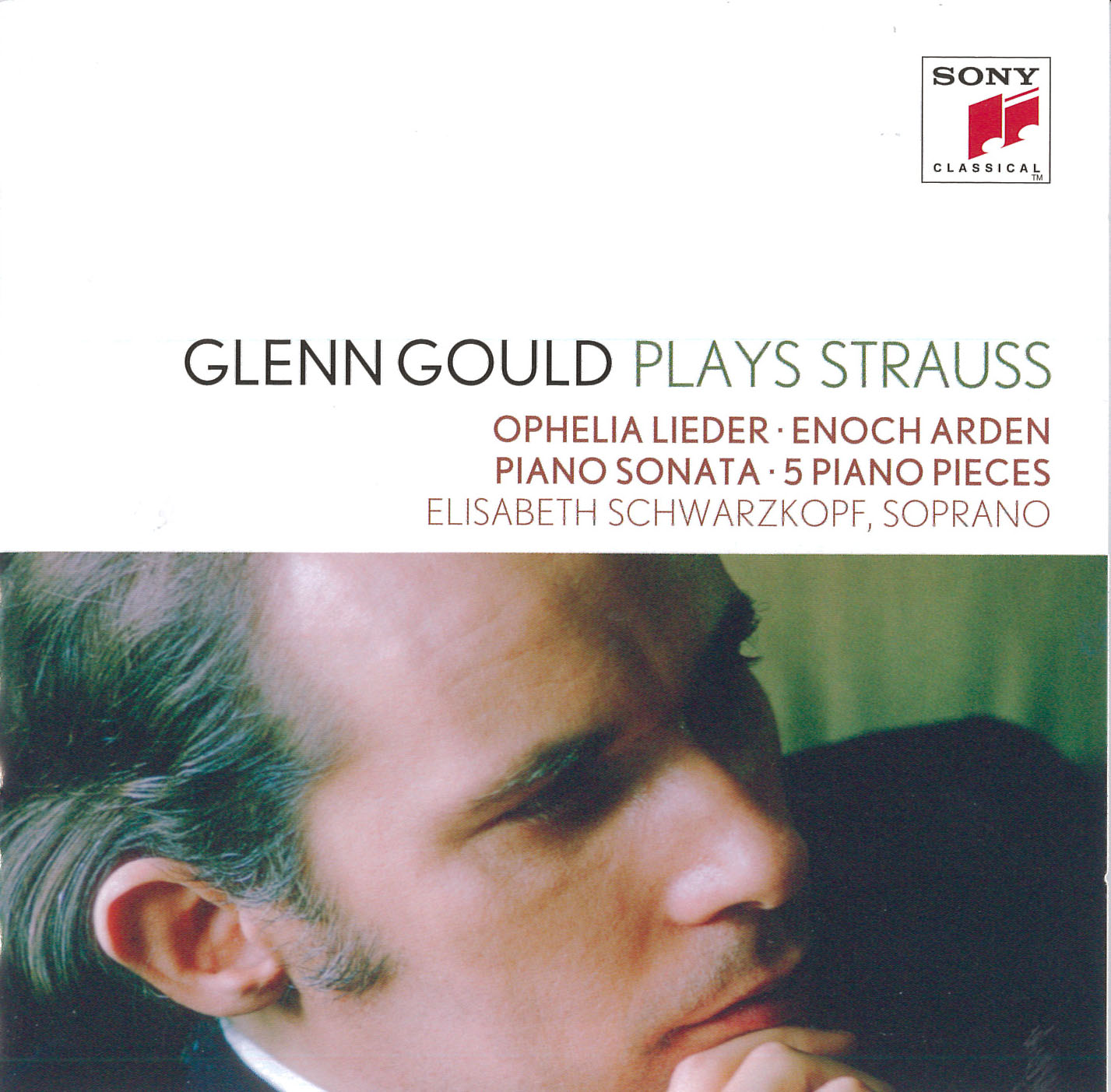
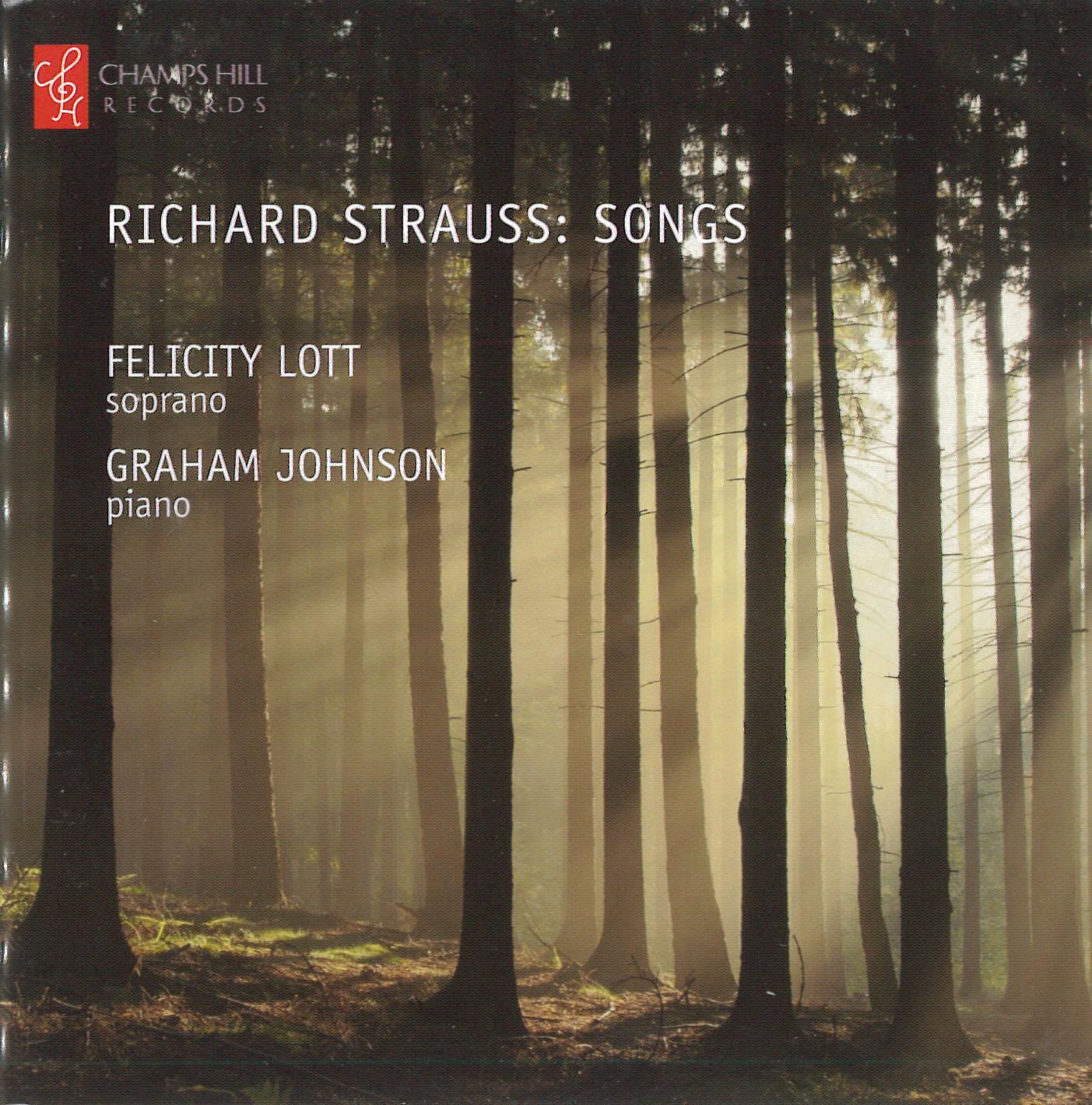
05a-Gould05b-LottGlenn Gould plays Strauss
Glenn Gould; Elizabeth Schwartzkopf; Claude Rains
Sony 88725413702

Richard Strauss: Songs
Felicity Lott; Graham Johnson
Champs Hill Records CHRCD037

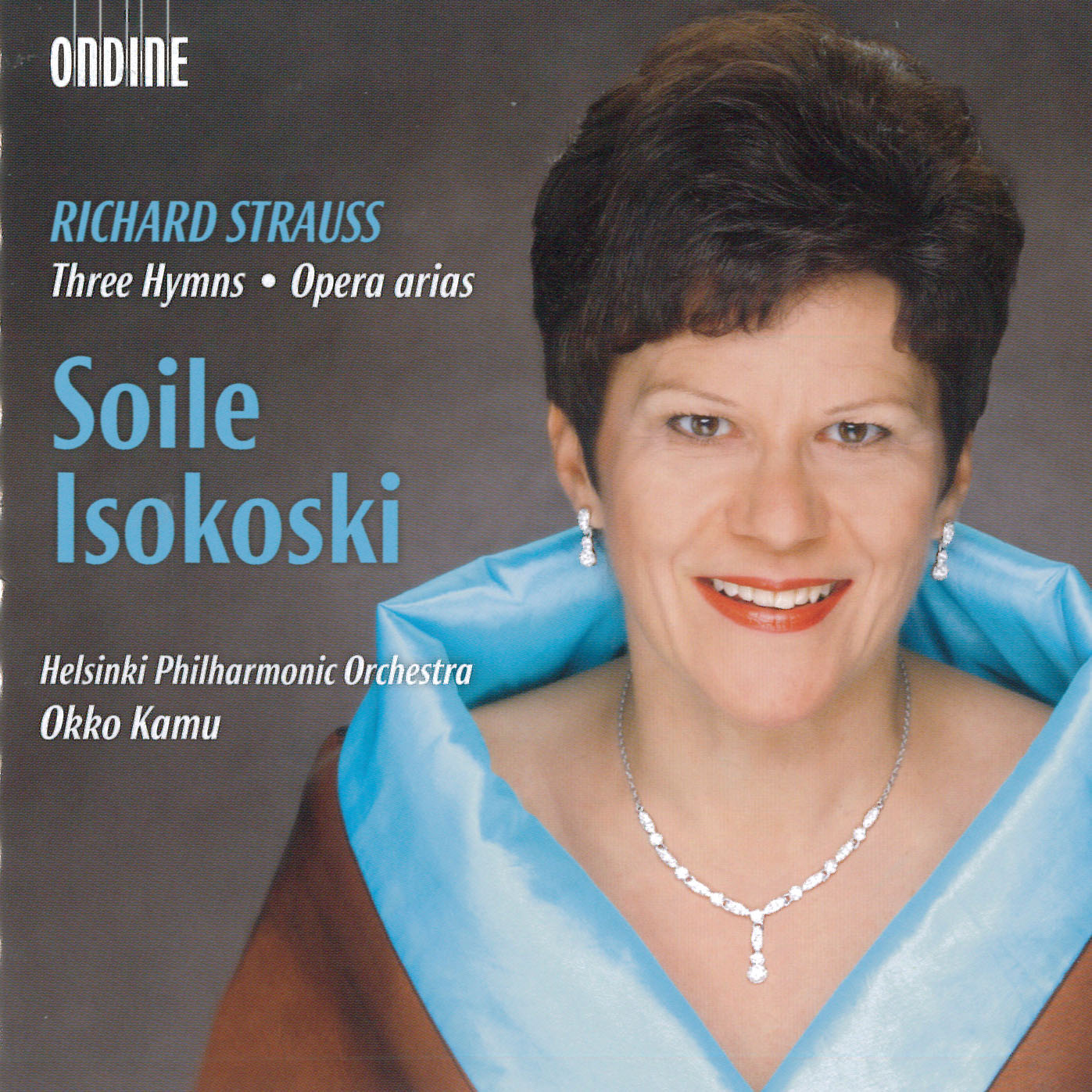
05c-IsokoskiRichard Strauss: Three Hymns; Opera arias
Soile Isokoski; Helsinki Philharmonic; Okko Kamu
Ondine ODE 1202-2

Glenn Gould was an enthusiastic advocate of Richard Strauss, as expressed in performances, writings, lectures and documentaries, but just a handful of recordings. The Sony 2-disc set Glenn Gould Plays Straussfeatures the rare and unique performances he chose to record. As he once expressed surprise that so few concert pianists performed the Piano Sonata in B Minor, Op.5, it seems fitting that this was the very last work that Gould recorded before his death. The sonata, and the Five Pieces, Op.3 featured on this recording, were romantic, nostalgic works of Strauss’ youth, and Gould’s playing masterfully enhances by turn all the inherent innocence, angst, rapture and exuberance. Included in this collection is Gould’s first Strauss recording of an obscure melodrama based on a blank verse poem by Tennyson. Enoch Arden, a romantic triangle resulting in a mariner’s unhappy loss,is narrated by actor Claude Rains with Gould on piano deftly and sensitively interpreting the orchestral score. Equally fascinating is the uneasy collaboration in 1966 with Elisabeth Schwarzkopf on the Ophelia Lieder, Op.67. In addition to dealing with an overheated studio with air far too dry for singing, the famed soprano was forced to comply with Gould’s insistence on improvising the accompaniment. Nevertheless, she soldiered on, producing an exquisite performance in which she imbues the madness of Ophelia with a tremulous, eerie quality that never diminishes her rich tonal palette.

In Richard Strauss: Songs, recorded in 2003 and just rereleased by Champs Hill, soprano Felicity Lott includes no less than 26 Strauss lieder, also including a marvellous and dramatic performance of the Ophelia songs, with piano accompaniment (superbly unadulterated) by pianist Graham Johnson. This and the other repertoire presented as a program divided into five thematic sections, seems a virtual tribute to Strauss’ wife Pauline de Ahma. Married in 1894, Strauss’ wedding gift to his bride was the four Op.27 songs, and these as well as many of the others included on this CD were written for her. The couple gave many recitals together until she retired from singing in 1906, after which her temperamental and fiery nature continued to be an inspiration for the female characters in his operas. Through emotive colouring and smooth sensuality, Lott artfully navigates the difficult terrain offered by this demanding and breath-defying repertoire.

For our third Strauss selection, we move to orchestral accompanied songs: Three Hymns/Opera Arias featuring another expert Strauss interpreter, Finnish soprano Soile Isokoski whose powerful and luminous voice soars over the Helsinki Philharmonic in excerpts from Ariadne auf Naxos, Der Rosenkavalier and Capriccio. Although the Three Hymns, Op.71 is a work rarely recorded because of its almost excessive demands for the soloist, Isokoski clearly has the fortitude to carry off a brilliant performance.

It might be mentioned at this point that all three of our featured sopranos recorded these works in their 50s. It makes me wonder if a lifetime of experience is a requirement for the effective interpretation of and stamina to execute the highly emotive and electrifying songs of this composer.


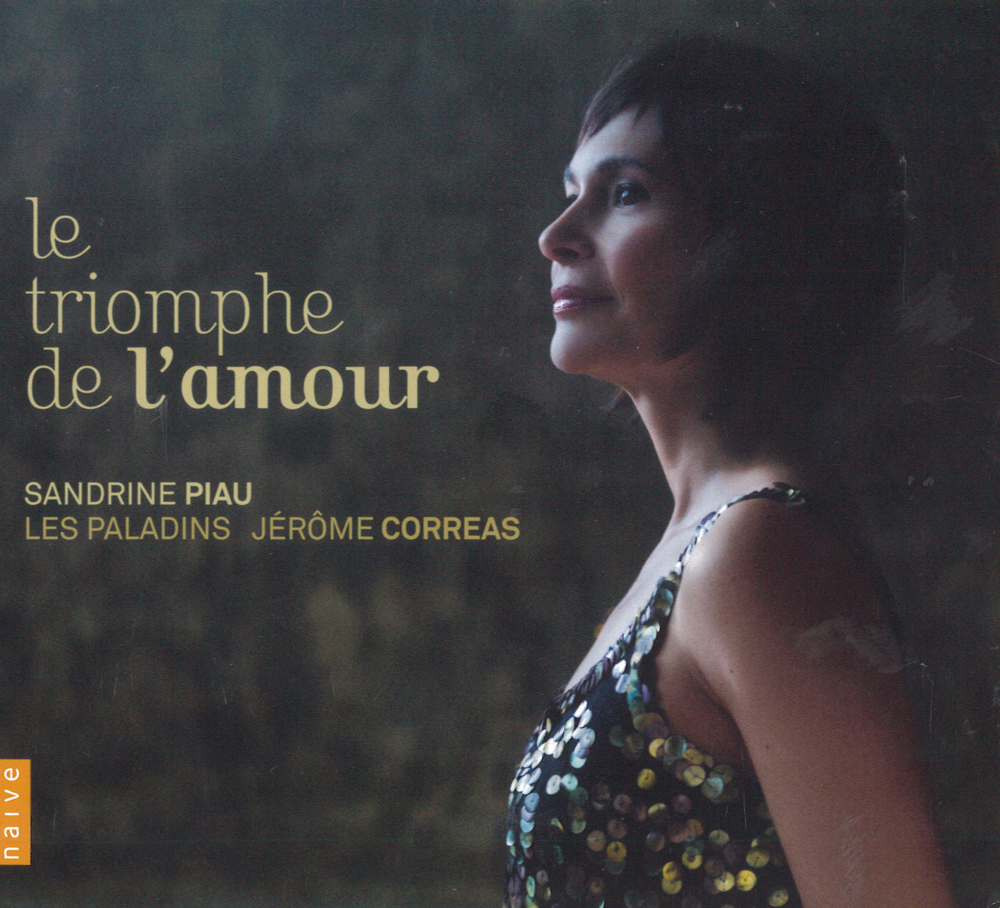
01-Sandrine-PiauLe Triomphe de l’amour
Sandrine Piau; Les Paladins;
Jerome Correas
Naïve OP 30532

The recorded repertoire of the soprano Sandrine Piau is extensive; it also covers a remarkably wide field, from Purcell and Biber in the 17th century to Frank Martin and Benjamin Britten in the 20th. It is, however, as an interpreter of baroque music, both opera and oratorio, that Piau is best known and it is French baroque opera, from Lully and Charpentier in the 1680s to Sacchini in 1783, which forms the subject matter of the disc under review.

As the title suggests, the arias are all about love: about desire, about jealousy, about grief for the death of the beloved. Piau has an agile and expressive voice. She displays an impressive coloratura in the disc’s opening aria from Grétry’s L’amant jaloux and even more so in the fearsome passage work of the extract from Sacchini’s Renaud. Her technique is, however, never offered for its own sake. This is best heard in the sadness and the passion of the aria from Campra’s Idomenée and in the long sustained lines of the arias from Charpentier’s David et Jonathas and from two Rameau operas: Les paladins and Les indes galantes. There are also several instrumental tracks; of these the dance sequence from Rameau’s Les fêtes de Ramire is especially attractive.

We can look forward to Piau’s appearance with Tafelmusik early in the new year. Meanwhile we have this disc, which I recommend with enthusiasm.

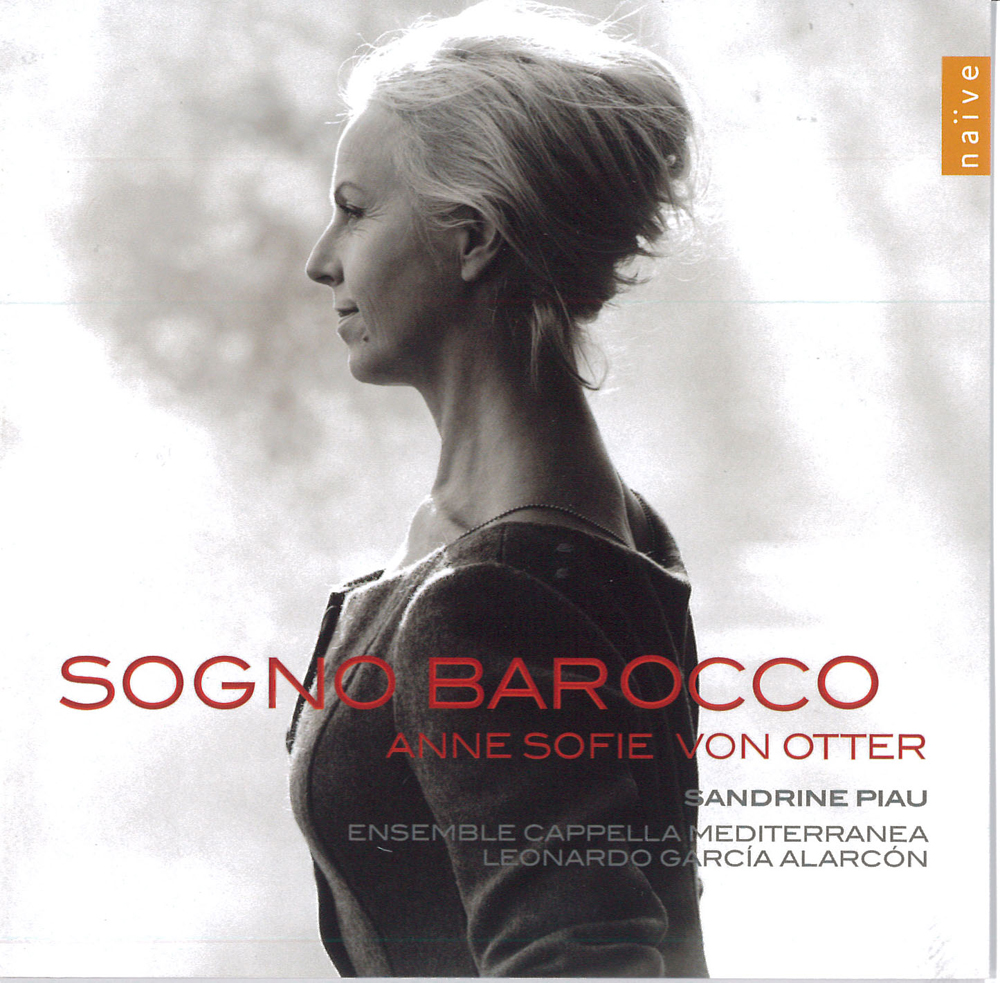
02-von-OtterSogno Barocco
Anne Sofie von Otter; Sandrine Piau; Ensemble Cappella Mediterranea; Leonardo Garcia Alarcon
Naïve V 5286

The mezzo-soprano Anne Sofie von Otter has never been known as an early music singer, in the limiting sense of that term, but she has sung in some very fine recordings of early music. The CD under review is a very welcome addition to her repertoire: it both begins and ends with Monteverdi; in between there is music by Cavalli, Rossi and Provenzale. The first Monteverdi item is the solo madrigal, Si dolce è ‘l tormento, which has in the past been recorded by other fine singers, notably Janet Baker, Montserrat Figueras and Philippe Jaroussky, as well as by von Otter herself. There are two duets from L’incoranazione di Poppaea, in which von Otter sings Nero to Sandrine Piau’s Poppaea, while the concluding piece is Penelope’s great lament in Il ritorno di Ulisse in patria. Of especial interest too is Rossi’s lament by the Queen of Sweden on hearing the news of the death of her husband Gustavus Adolphus on the battlefield. It is complemented by Provenzale’s parody of that lament.

Von Otter is in great voice throughout the recording, which I recommend with enthusiasm. The three duets with Piau are especially fine. We shall be able to hear Piau in concert with Tafelmusik in the new year; von Otter last sang in Toronto in February 2011, but I remember her from a much earlier occasion, when she did a fabulous recital at the George Weston Recital Hall. When shall we hear her again?

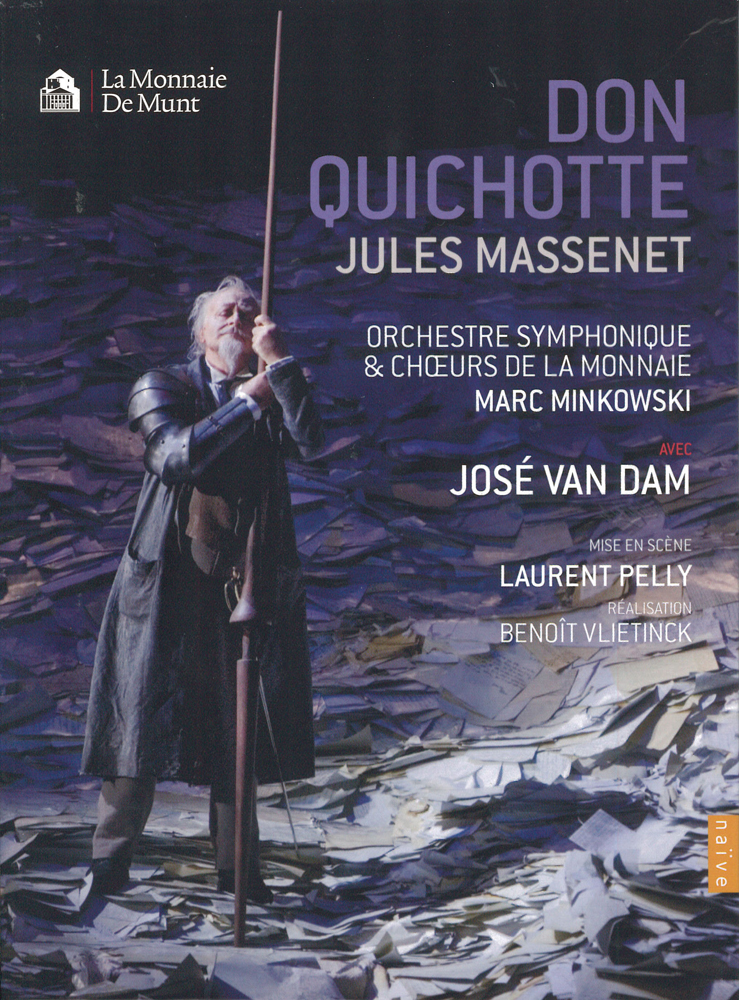
03-Massenet-Don-QuichotteMassenet – Don Quichotte
Jose Van Dam; Orchestre symphonique et choeurs de la Monnaie; Marc Minkowski
Naïve DR 2147

One of the last operas of Jules Massenet, a moving incarnation of an “impossible dream” and the inevitable reality of old age, is celebrating its 100th anniversary, performed to perfection at the Royal Opera House of Belgium. A grand event attended by the Queen who contributed to the show by financing four new young singers. It also became a farewell performance for José van Dam, who dazzled the world in the title role for decades. He was also a vocal coach for the young singers; an inspirational figure indeed.

As to what was involved to realize this magnificent occasion there exists an excellent long, exhaustive documentary. It shows the almost superhuman painstaking efforts step by step from the directorial concept, the rehearsals, the building of the scenery with millions of sheets of paper, the coaching of the choir and the tireless efforts of the young assistant conductor. Finally the godlike arrival of conductor Marc Minkowski and the mercurial presence of le directeur, Laurent Pelly, whose enormous contribution this video increasingly demonstrates.

Because of the very difficult task of coping with a huge, episodic novel, the composer decided to select a few key episodes, like the iconic windmill adventure and came up with a dramatically cohesive structure with one of the most moving endings in opera. José van Dam is ideally suited for Don Quixote, a role originally written for Chaliapin. As a Frenchman would, Massenet expanded the role of the woman in the story into a sophisticated, tempestuous and beautiful femme fatale (Cervantes’ Dulcinea was never like this!). The role is exquisitely sung and acted by Silvia Tro Santafe, a Spanish mezzo with a spectacular vocal range. And we mustn’t forget the third principal, Werner van Mechelen, a Belgian baritone who made Sancho Panza his own.

A joy to watch, never boring, much laughter and touching tenderness make this a very rewarding evening’s entertainment.

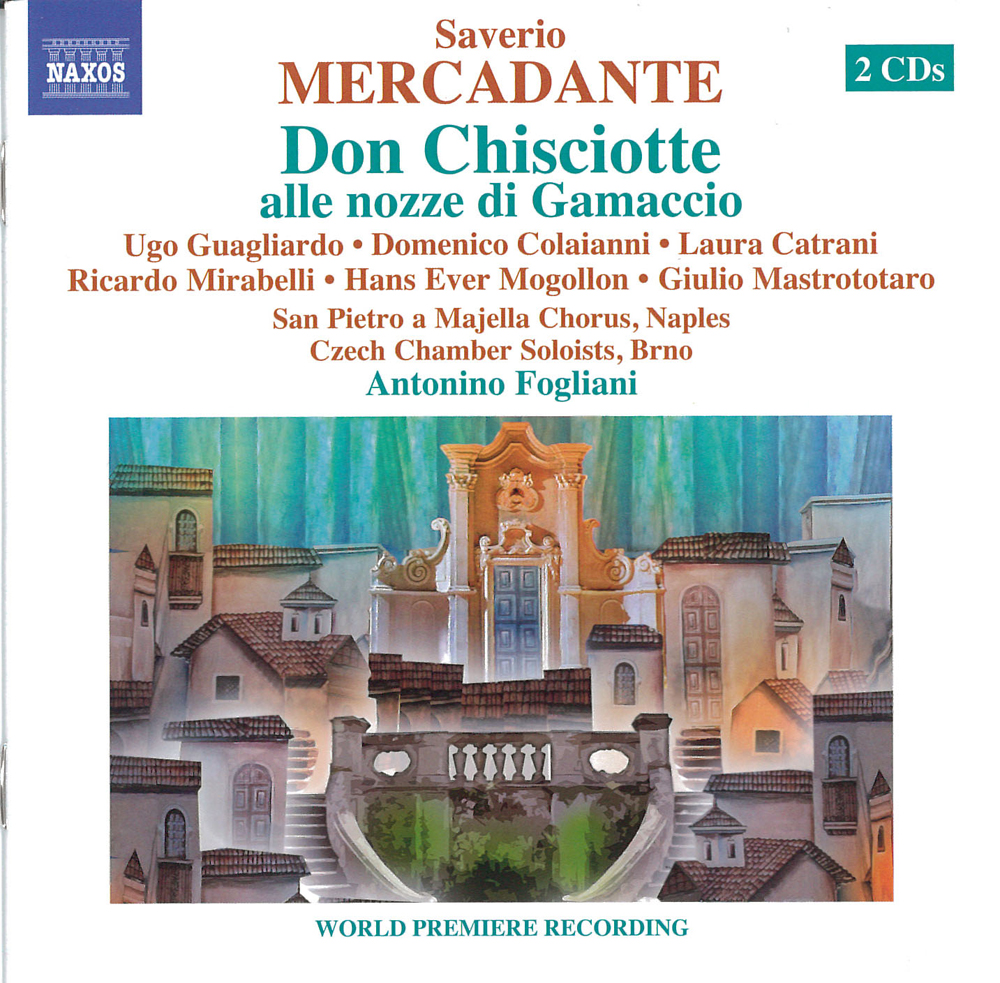
04-Mercadante-Don-ChisciotteMercadante – Don Chisciotte
alle nozze di Gamaccio
Ugo Guagliardo; Domenico Colaianni; Laura Catrani; San Pietro a Majella Chorus, Naples; Czech Chamber Soloists, Brno; Antonino Fogliani
Naxos 8.660312-13

Cervantes’ huge, epoch making novel from 1605, the first “novel” ever written, has inspired more than one musical treatment not to mention the magnificent tone poem by Richard Strauss, but there is one curiosity just recently emerged. At the well established and respected Rossini in Wildbad Festival, a totally forgotten opera (not performed in the last 150 years!) was unearthed. The composer was Saverio Mercadante (1795-1870), a contemporary of Rossini and Donizetti, an Italian who did much of his work in Spain. His music is much under the influence of Rossini with some originalities explained competently in the liner notes.

To me the interesting thing is how each composer approached this enormous novel. Massenet compressed the work into a few significant scenes, but Mercadante chose an entirely different venue by selecting only one episode, the 20th chapter, where Don Quixote prevents a forced marriage of a farm girl to a wealthy suitor instead of her poor lover. The music is delightful throughout with all-pervasive Spanish rhythms, but the opera really takes off when Don Quixote (Ugo Guagliardo) enters the scene. The entry of the powerful basso profundo voice with vocal acrobatics and strong characterization turns the opera into the extraordinary, much like what Rossini did in his Maometto Secondo. Laura Catrani, the country girl and her lover Hans Ever Mogollon (tenor) are beautiful fresh voices and there is no weakness in the supporting roles either. Rossini specialist Antonino Fogliani conducts with a strong impulse and forward momentum to draw a thunderous ovation.


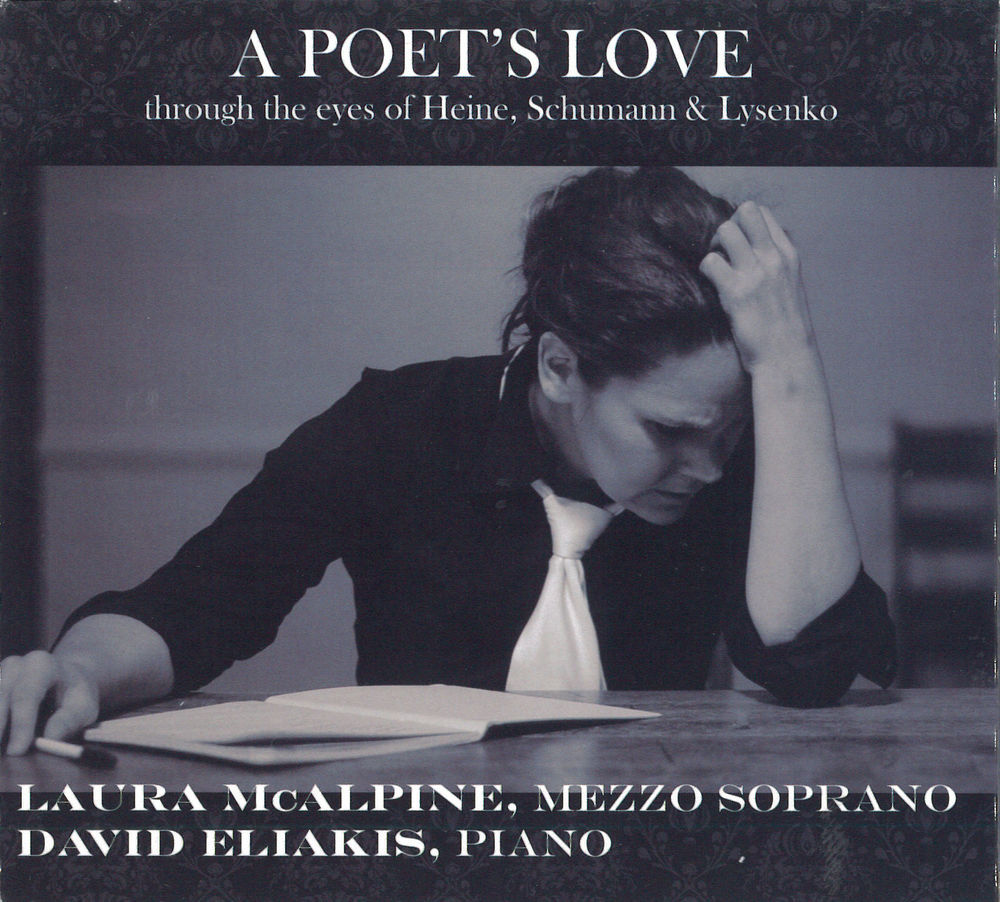
A Poet’s Love through the eyes of Heine, Schumann & Lysenko
Laura McAlpine; David Ellakis
Independent
lauramcalpine@mac.com

Two song cycles based on selected texts from Heinrich Heine’s Buch der Lieder are offered on this recording, the first being Robert Schumann’s famed and well-loved Dichterliebe. This cycle is most often performed by male voice, yet, lest we be mistaken that Laura McAlpine’s fine performance is without precedent, this was actually first dedicated to a woman, German soprano Wilhelmine Schröder-Devrient.

McAlpine’s clear, expressive voice does justice to the light-hearted as well as the more dramatic songs. While I sometimes feel she could achieve even more expressiveness by taking more liberties with the rhythm “as written,” pianist David Eliakis provides an excellent foil by use of measured rubato that, nonetheless, stays perfectly in sync with the singer.

The second part of the recording is a cycle of texts by Heine set by Ukrainian composer Mykola Lysenko (1842–1912). Despite pressure to embrace “Great Russian” culture from the Russian Imperial Music Society which had funded his studies abroad, Lysenko devoted himself to Ukrainian music, setting all his vocal compositions, including this, in his native language. A challenge for many singers, but McAlpine has clearly done her research, mining her resources as well as her family heritage to deliver these texts naturally and with fine artistic sensibility.


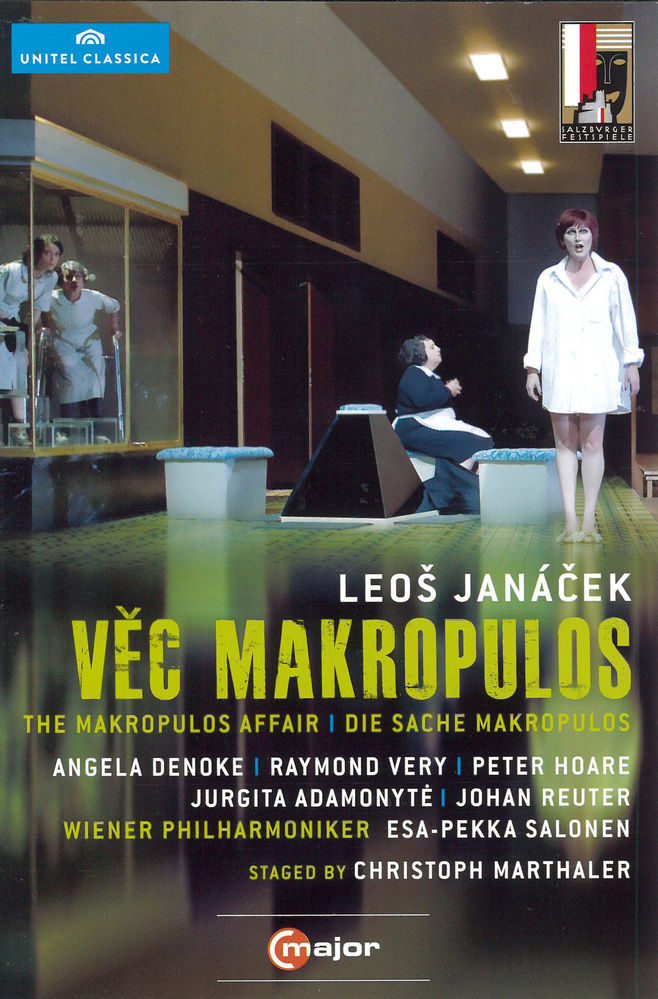
Janácˇek – The Makropulos Affair
Angela Denoke; Raymond Very;
Peter Hoare; Jurgita Adamontye;
Johan Reuter; Wiener Philharmoniker; Esa-Pekka Salonen
Cmajor
709508

Success came late to Leoš Janáček (1854–1928) and his best, most deeply felt operas were written in his 70s. The idea of eternal life comes naturally to any person at that age and when he came across Karel Čapek’s play on this subject he eagerly accepted it for his new opera in 1926. His heroine, Emilia Marty (née Makropulos), a beautiful woman who managed to live over 300 years with a miracle drug invented by her father, a Greek alchemist in the court of Rudolf II in 1585, was in fact a personification of Janáček’s unrequited but very passionate love for a much younger woman. The opera’s strong emotional drive and beautiful music can be attributed to this “happy” coincidence.

One can rest assured that anything coming out of the Salzburg Festival is a world-class, extraordinary event. Director Christoph Marthaler takes full advantage of the Gross­festpielhaus’ wide stage with a tripartite arrangement. The centre is made out to be a courtroom, as the opera centres on a lawsuit and most of the action takes place here. On the left is a glass soundproof box where two women cleaners discuss eternal life while chain-smoking themselves to death, but the dialogue cannot be heard.

Acting, even more than the singing, is crucial here. All of the cast is perfect in both respects, but Angela Denoke, one of today’s best with credits too numerous to mention, a stunning German singer/actress (following a tradition carried by Elizabeth Soderstrom and Anja Silja) towers above the others and it seems as if the opera has been written for her. A great coup for the Festival in securing Esa-Pekka Salonen as conductor, whose interpretive skill, depth of musical understanding and inspirational leadership is almost unequalled in today’s shallow, sensation-and-cheap-thrill-seeking world.


Jake Heggie – Dead Man Walking
Joyce DiDonato; Philip Cutlip; Frederica von Stade; Measha Brueggergosman; Houston Grand Opera; Patrick Summers
Virgin Classics50999 6024632 5

In the last few years, Broadway producers looking for a sure-fire success embraced the idea of making popular movies into musicals The Producers, Spiderman, How to Succeed in Business, Sister Act, Once, Priscilla Queen of the Desert — this list could go on. Not nearly as often, a modestly successful and thoughtful film becomes an opera. Dead Man Walking — the movie — may still be remembered because of Susan Sarandon’s portrayal of the anti-death penalty crusader, Sister Helen Prejean. Unlike many films, this is a great subject for an opera. The themes of life and death, crime and redemption, desperation and grace play well on the grand stage. They would not, however, play half as well were it not for the music of Jake Heggie, an American composer whose personal love of the operatic genre is showcased in the inspired use of the negro-spiritual and pop-music idioms.

Just over a decade after its premiere, this opera shows a lot of staying power. The performances are impressive — Joyce DiDonato, reprising the role originated by Frederica von Stade, layers the performance with nuances of conviction, weakness, doubt and anger. Measha Brueggergosman delivers a powerful performance in the small role of Sister Rose. Finally, von Stade this time appears as the murderer’s mother, rounding off this stellar cast of mezzos and dramatic sopranos. This is so much more than just an opera of a film — this is by now a part of American standard repertoire.

01_purcell_madnessPurcell – Love’s Madness
Dorothée Mields; Lautten Compagney Berlin; Wolfgang Katschner
Carus 83.371

Welcome to the antidote for those who believe that Purcell’s works comprise over-ornate, highly theatrical operas. There was another side to Purcell suppressed for many (notably Victorian) years.

This is no compilation of songs for love-sick swains snubbed by ice-cold maidens. It gives ample examples of the “mad songs” that emerged in 17th century England, as musicians were inspired by the sometimes tenuous division between sane and insane. This is demonstrated by Dorothée Mields’ strident performance of Purcell’s Bess of Bedlam and ‘Tis women makes us love, two of several such songs in this anthology. Her interpretations leave no one in any doubt as to the amount of insanity these songs express!

Then there are the more conventional pieces by Purcell: the songs from Dido and Aeneas and from the musical theatre productions he made his own, the expertly-played consort pieces, e.g. the Fantazia of 1680, and O, Solitude sung with a purity reminiscent of Alfred Deller’s countertenor version.

Finally, traditional and often anonymous songs complete this highly varied 31-track(!) selection. Thomas Ravenscroft’s The Three Ravens comes with imaginative recorder playing which conveys just how touching and moving this ballad is.

Yes, an introduction to Purcell’s unknown side and to the “mad song” but a not inaccurate appetizer of English 17th century music.

Back to top