03 NordheimArne Nordheim –
Complete Accordion Works
Frode Haltli; Raoul Björkenheim;
Hans-Kristian Kjos Sørensen; Norwegian Radio Orchestra; Christian Eggen
Simax PSC 1328

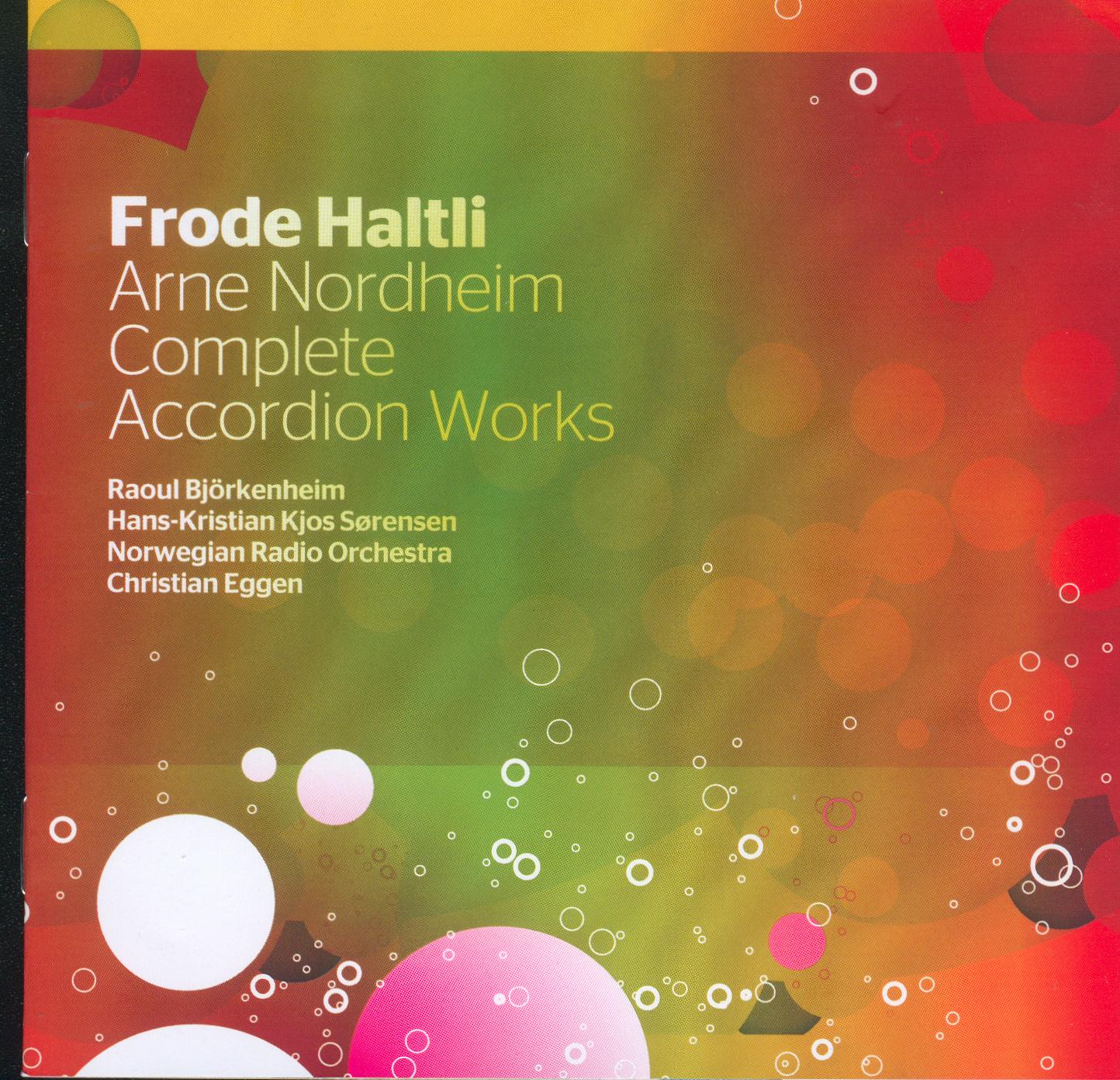
The contemporary music world currently has many accomplished and talented accordionists performing compositions written for the instrument by some of the greatest composers of the 20th and 21st centuries. In just over 50 years, the number of essential accordion repertoire pieces has grown exponentially due to collaborations between instrumentalists and the composers courageous enough to put pencil to paper. One such early important collaboration was between Danish accordionist Mogens Ellegaard (1935–1995) and Norwegian composer Arne Nordheim (1931–2010). The resulting four groundbreaking works are all featured here for the first time on one release by the colourful Norwegian accordionist Frode Haltli.

The serialism-influenced Signals (1967) for accordion, electric guitar and percussion is still fresh and innovative-sounding. Dinosauros (1971) is a monster technical work for accordion and tape, with its cluster sounds, stereophonic effects and huffing from the air button. Spur (1975) for solo accordion and orchestra begins and ends with a luscious long tone (originally meant for a trombone soloist). Unfortunately, the accordion is occasionally slightly too forward in the mix making the parts sound unbalanced. In Flashing (1986) for solo accordion, Nordheim masterfully draws from his compositional experience. All the clusters, melodies and effects are clearly defined, with Haltli’s superb contrapuntal playing adding to the inherent lyricism of the work.

Haltli clearly understands the compositions and yet is unafraid to include his personal colourful sound. A must-listen-to release for Nordheim and accordion fans alike!
01 American MavericksAmerican Mavericks
San Francisco Symphony;
Michael Tilson Thomas
SFSMedia SFS 0056

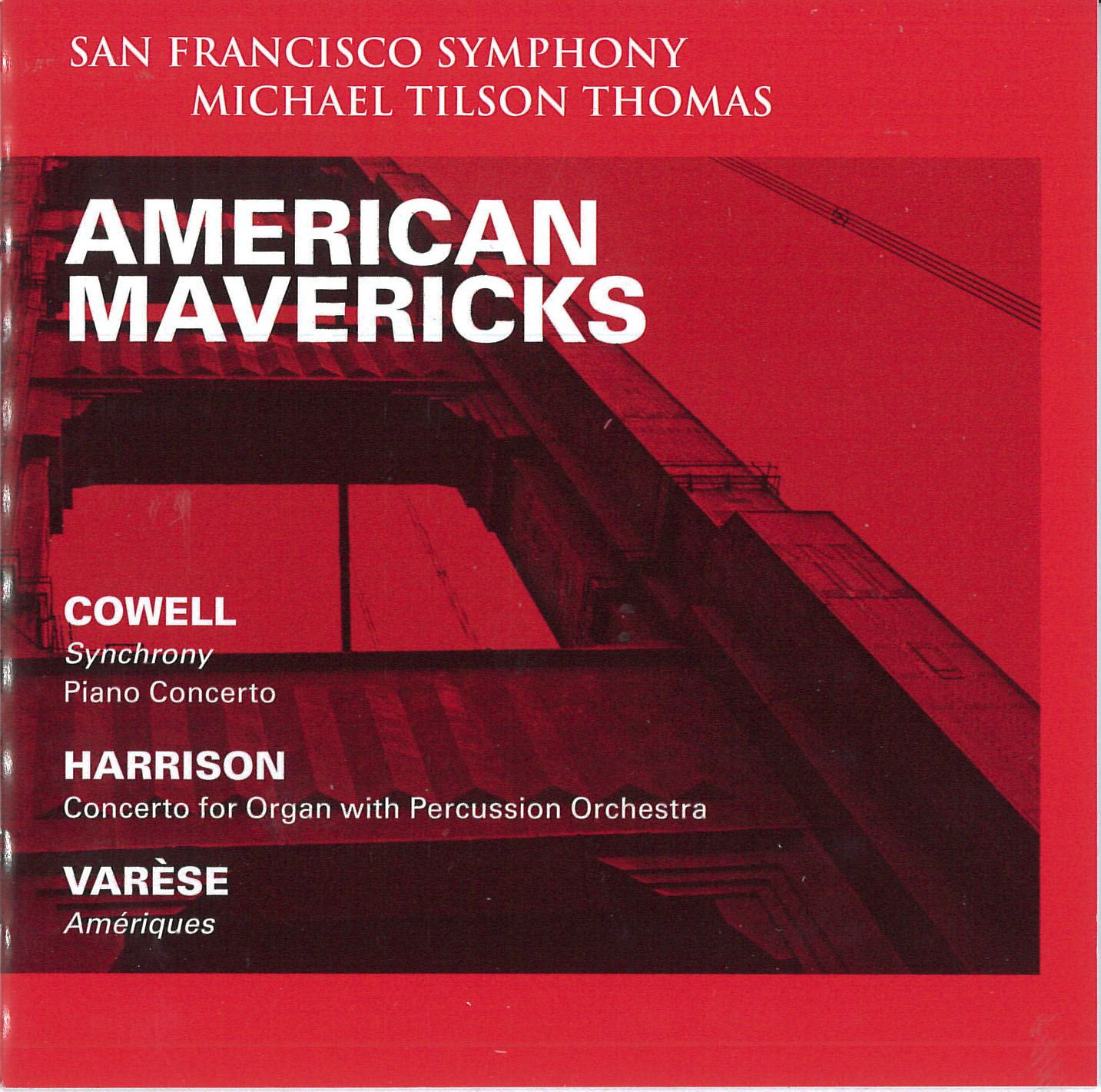
The lion’s share of this captivating disc of American music is devoted to two major works by the innovative Henry Cowell (1897–1965), an early proponent of what came to be known as “World Music” and a pioneer of new sounds from his own instrument, the piano. His fascinating 1930 Synchrony for orchestra was originally titled Synchrony of Dance, Music, Light and was intended as a vehicle for the American dance pioneer Martha Graham, who unfortunately lost interest in this multimedia project. There is undoubtedly a scenario behind this work which might help explain its episodic character. Unfortunately the very meagre program notes leave us in the dark. Cowell’s rather more conventional three-movement Piano Concerto was also composed in that year, with the composer himself the pianist for the premiere performances. Both scores make prominent use of Cowell’s trademark “chord clusters” — aggressive conglomerations of notes played by closed fists or open palms — which caused quite a sensation at the time. Pianist Jeremy Denk is the soloist in a rousing rendition of this very propulsive work.

Lou Harrison (1917–2003), a student of Cowell’s, carried on his mentor’s interest in Asian musical traditions with a particular emphasis on Balinese music. His Concerto for Organ with Percussion Orchestra, completed in 1973 though incorporating elements from as far back as 1951, features an excellent performance from Paul Jacobs. The five movements of the concerto form a convincing and satisfying synthesis of Eastern and Western elements seasoned with a strong French influence reminiscent of Messiaen. The percussion section of the orchestra is in particularly fine form in this invigorating score.

A superlative performance ofthe landmark 1927 version of Amériques by Edgard Varèse (1883–1965) brings the album to a close on a spectacular note. Tilson Thomas has always had an uncanny knack for voicing the most dissonant of chords into a harmonious blend and here he outdoes himself. These splendid live performances from 2010 and 2012 are indispensable fodder for devotees of any of these unbranded composers.

02 PentlandBarbara Pentland – Toccata
Barbara Pritchard
Centrediscs CMCCD 18312

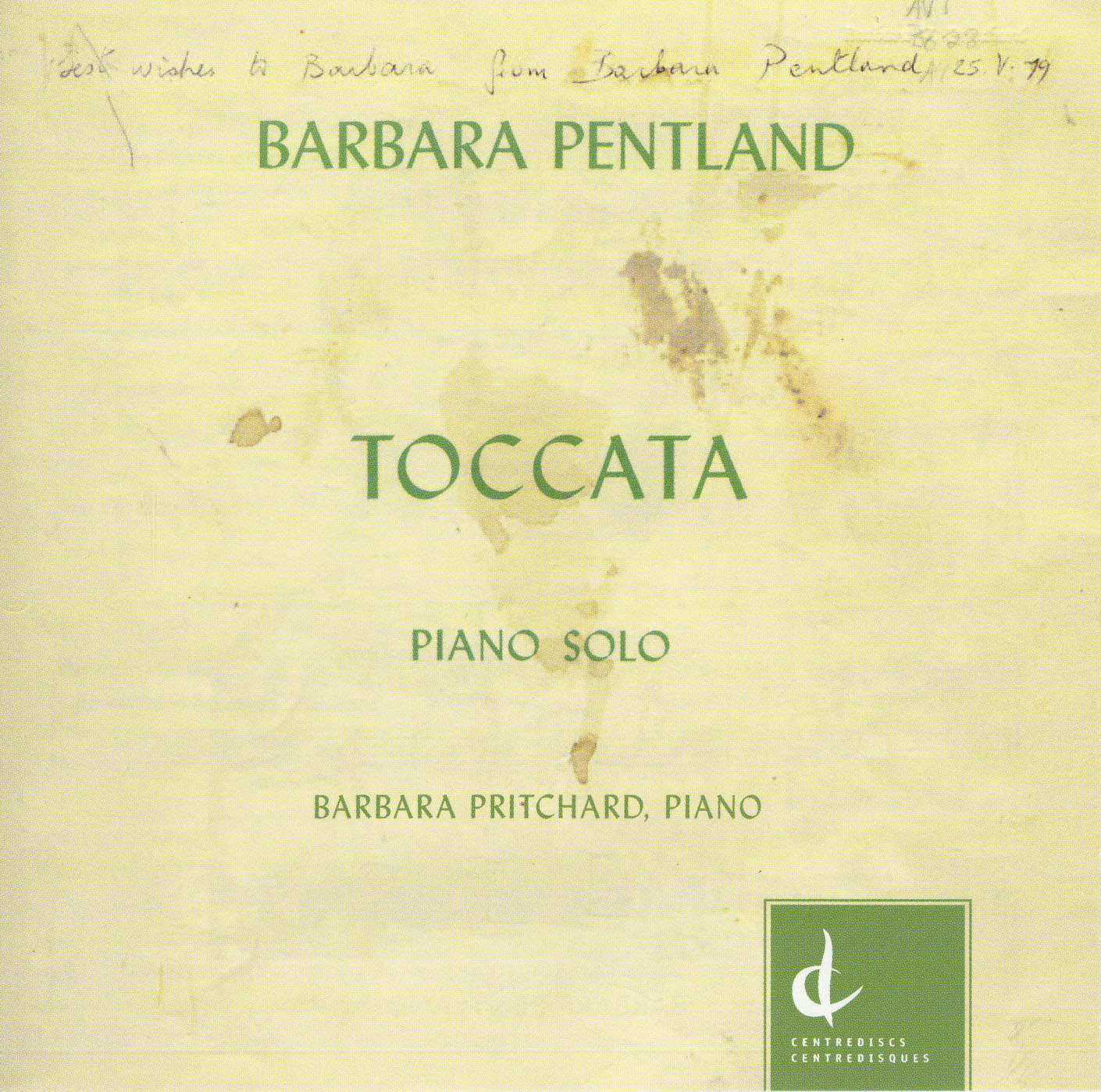
I am very happy that Centrediscs, a label on which I also record, has released this CD of the solo piano music of Barbara Pentland. She was one of Canada’s leading composers who also had a place in the international avant-garde. Although she favoured serial techniques she did not let the rules restrict her. Her music sings and flows with imagination and colour. These are not the dry ascetic pieces you might expect from a serialist.

The first piece on the CD, Toccata (1958), is modelled on the toccatas of Frescobaldi and reflects the baroque virtuosic style of fast trills, arpeggios and hand crossings. Barbara Pritchard played this piece for the composer and gives an exemplary performance.Ephemera (1974–78) is made up of several short pieces named Angelus, Spectre, Whales, Coral Reef and Persiflage.This is an extraordinary set of works and Pritchard’s sensitive tone and attention to detail make this impressionistic-sounding music a mesmerizing experience. The humour that Pentland injects into two of these pieces is charming. A hint of Reveille in Persiflage is quirky and fun.

Tenebrae (1976) is full of brooding shadows lovingly played by Pritchard. Dirge from 1948 and From Long Agofrom 1946 illustrate Pentland’s early style and you can hear the influence of Copland, Stravinsky and Bartók on her work. Vita Brevis (1973) and Horizons (1985) complete this excellent CD which should encourage pianists of all levels and musicians of any taste to discover the marvellous, musical world of Barbara Pentland.

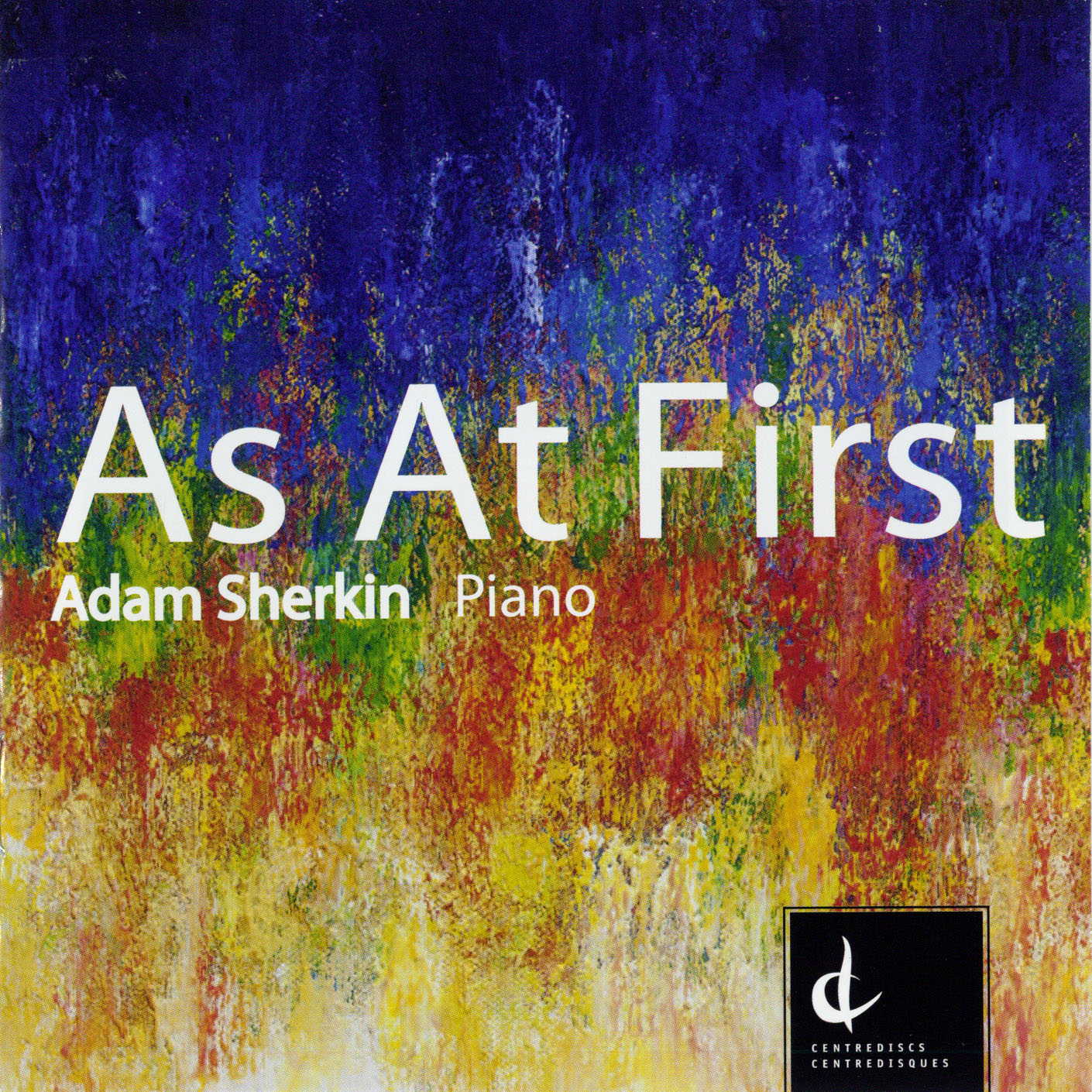
03 SherkinAdam Sherkin – As At First
Adam Sherkin
Centrediscs CMCCD 18212

This new recording finds Adam Sherkin at a fascinating early point in his career as a composer. Sherkin trained first as a pianist, and the works on this CD of his solo piano compositions show him processing this experience. Having engaged the piano repertoire as broadly and comprehensively as one could ask of an artist of 29 years, classical piano music remains his central point of reference. Clearly evident are the influences of an entire gallery of European piano keyboard composers from the Baroque through the late 18th, 19th and 20th centuries. Mozart and Haydn are overtly acknowledged in this recording (in the pieces called Amadeus A.D. and Daycurrents, respectively), but the presence of Bach, Liszt and Shostakovich are no less clearly felt at various points in the proceedings.

Influences aside, what do we perceive of Sherkin himself? It’s a fair question in this case, because his compositions must accommodate the performer’s own fulsome expressivity: the dynamic range of his playing is wide, tending to the forte; his articulation is crisp with a fondness for jabbing accents; his phrasing often features a late-Romantic emotionalism in its rubato, but can also — albeit less frequently — settle into a calmer metric momentum. And here is what is interesting about this portrait: as a composer, he is dealing with the conflicting attractions of self-expression on one hand, as in the solo piano music of Schoenberg or Scriabin for example, and a less subjective, more outward and “American” approach on the other, as in the music of John Adams, with whose solo piano music Sherkin is well acquainted. It is a typically 21st century creative quandary, and Adam Sherkin has taken up the struggle with energy and panache.

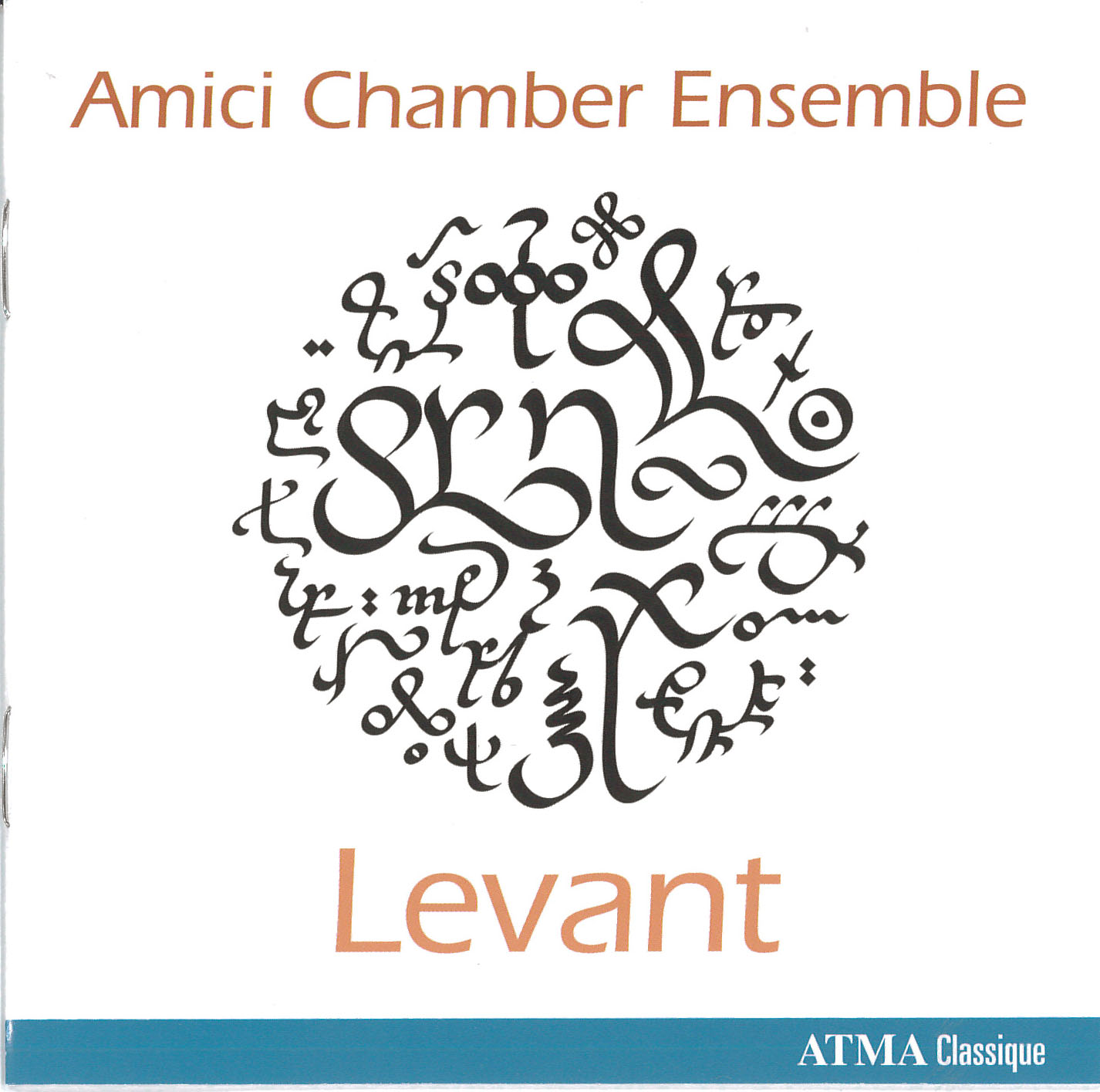
04 Amici LevantLevant
Amici Chamber Ensemble
ATMA Classique ACD2 2655

Clarinettist Joaquin Valdepeñas, cellist David Hetherington and pianist Serouj Kradjian are joined by first-rate guests (Benjamin Bowman and Stephen Sitarski, violins, Steven Dann, viola) to perform a wide range of pieces which make up the passionately played program of this superb recording. The music of familiar composers such as Glazunov and Prokofiev sits alongside that of little-known Gayané Chebotaryan, Solhi Al-Wadi, Marko Tajčević and other artists inspired by the “sounds and colours of the Middle East,” as explained in Kradjian’s informative liner notes.

Highlights include Prokofiev’s Overture on Hebrew Themes, involving all the musicians and featuring Valdepeñas’ gorgeous clarinet sound, and the Seven Balkan Dances by Tajčević, a 20th century Yugoslav composer. The performance of these dances is highly spirited and showcases the artistry and virtuosity of the core ensemble.

The program is punctuated by chants by the spiritual teacher George Gurdjieff, arranged for solo piano by Thomas de Hartmann. These contemplative pieces, sensitively played by Kradjian, act as a welcome foil to the larger, longer and more intense ensemble pieces.

The disc ends with a sensational solo piano work — Levante, by Osvaldo Golijov — brilliantly rendered by Kradjian.

The string playing by Hetherington and guests is rhapsodic and committed and the whole disc exudes polish and thoughtful musicianship. Special mention should be made of Carlos Prieto’s engineering.

Concert notes: Amici provides live music to accompany classic silent (and neo-silent) films by Buster Keaton, Man Ray and Guy Maddin at the Bell Lightbox on February 3 at 3:00. They will be joined by soprano Isabel Bayrakdarian and other guests in music of Beethoven, Chausson, Poulenc and Montsalvatge at Koerner Hall on March 1 at 8:00.

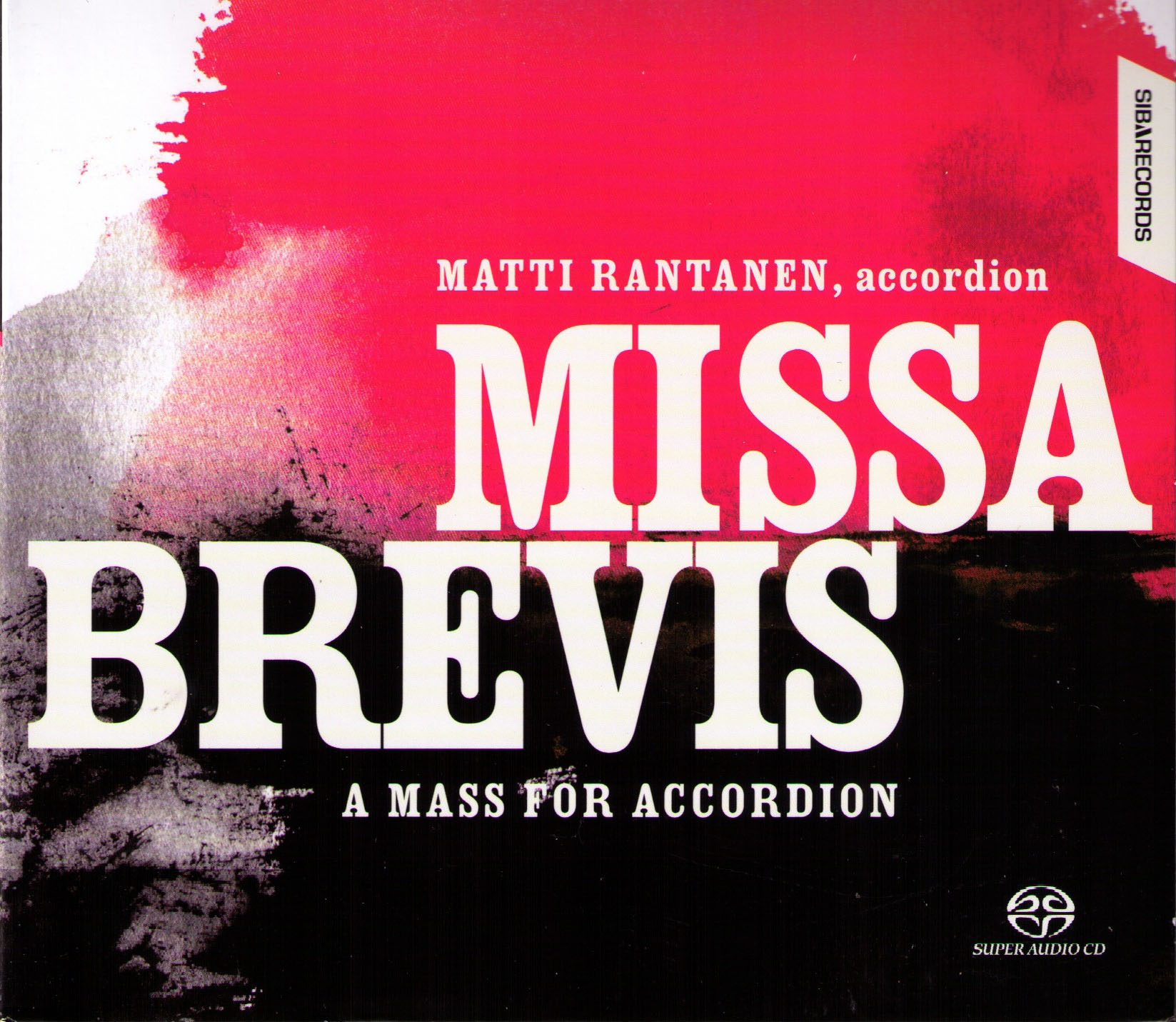
01 Rantanen MissaBrevisMissa Brevis – A Mass for Accordion
Matti Rantanen; Marko Ylonen
Siba Records SACD-1009

Finnish accordionist Matti Rantanen is one of the bedrocks of European “classical” accordion as a teacher at the Sibelius Academy and an international performer. Here he performs mainly solo music with numerous liturgical references.

The transcriptions of Haydn and Mozart are well conceived. Rantanen’s expertise makes each work sound legitimate on the accordion, however a wider dynamic range in the Haydn and more playfulness in the Mozart would have added to the listening experience. Though originally written for cello and piano/organ, Ahti Sonninen’s Hymns of Zion for cello and accordion is a lyrical tone poem duet with cellist Marko Ylonen.

The title track Missa Brevis – A Mass for Accordion is a modern take on the old form. The accordion emulates the qualities of the church organ with its held long tones, florid arpeggios and chunky chords, while the range of dynamics, multi-note glissandos and subtle differentiations on articulation are so very accordion exclusive. Similar sentiments surface in Tapio Nevanlinna’s Hug. Petri Makkonen’s Chorale Prelude is exquisite. A former accordion student of Rantanen, Makkonen’s personal relationship with the instrument must have aided in his balanced writing of a florid right hand against held low tones in the left. Unfortunately, the huge glissando connecting the opening section to the middle lyric melody comes across as a “trick” instead of a bridge. The last two chords are delightful.

Rantanen’s musical personality makes this recording a thoughtful and intriguing expose of fine accordion musicianship and composition.

Back to top