03 Light Through DarkLight Through Dark
Bill Gilliam; Bill McBirnie; Eugene Martynec
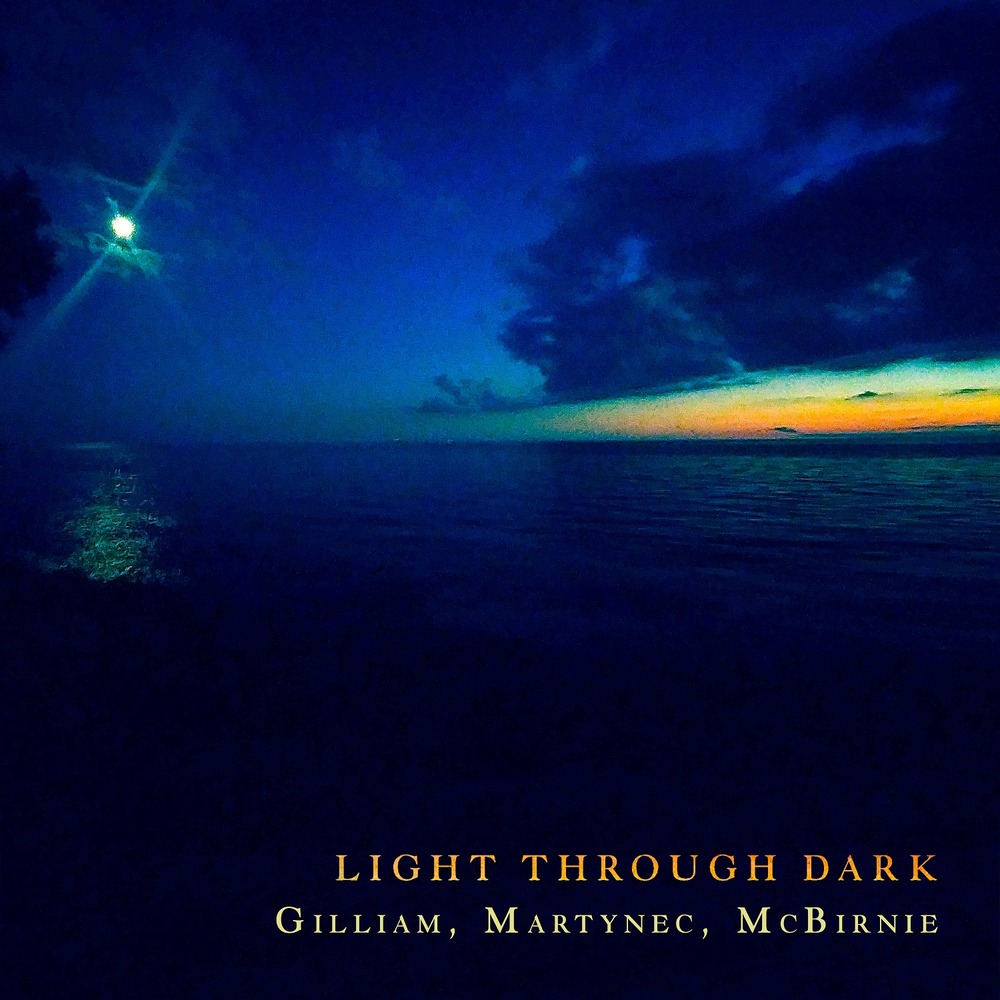
Independent (gilliammcbirniemartynec.bandcamp.com/releases)

It’s clear from the first of the seven tracks of Light Through Dark that the Toronto trio of pianist Bill Gilliam, flutist Bill McBirnie and Eugene Martynec on electroacoustics possesses big ears and hearts. Each, however, has different roots. One of the city’s top jazz and Latin flute specialists, McBirnie is renowned for his outstanding technique as much as for exceptional improvising chops in bebop, swing and Latin idioms. Gilliam has been active in town since the 1980s as a composer and pianist exploring in his words the “boundaries between new music, improvisation, electroacoustic music and contemporary jazz.” Martynec on the other hand has been on the scene as guitarist and record producer for even longer. He’s mostly focused today on performing live interactive electroacoustic music with other improvisers. Both Gilliam and Martynec are core members of the Toronto Improvisers Orchestra.

The moody and languid opener Time Floats – Japanese Suite, Part 1 centres on McBirnie’s low metal alto flute melodies in which he tastefully introduces shakuhachi (Japanese bamboo flute) nuances into its warm breathy vibrato. Martynec chooses harp, koto and mbira-sounding timbres to weave around the flute throughline, while Gilliam complements with seamlessly effective keyboard work. 

The other two parts of the Japanese Suite, Icy Still and Crane Flight, continue the shakuhachi theme and sonic imagery. Collectively the trio’s music is inventive, technically adroit and elegant at the same time. Most of all, we can hear their “mutual fascination with the mystery of creating entirely spontaneous music,” as aptly stated in the liner notes.
04 Saman ShahiSaman Shahi – Microlocking
Various Artists
People Places Records (peopleplacesrecords.bandcamp.com)

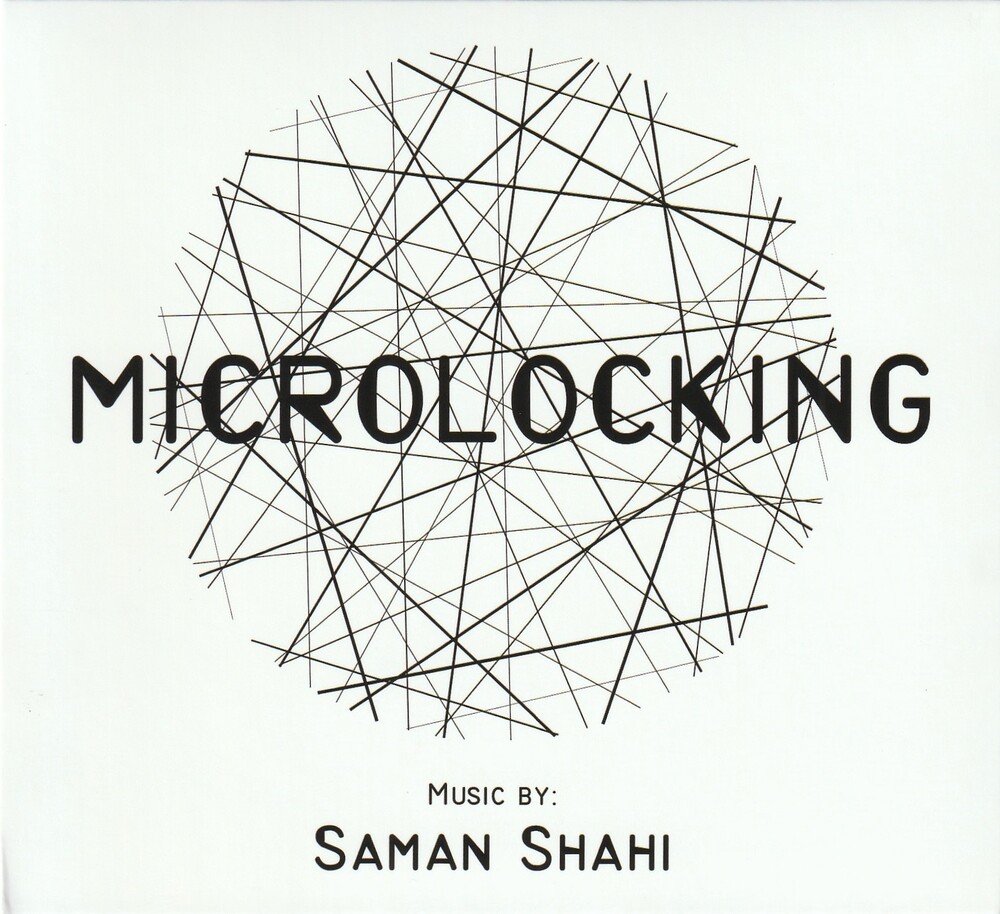
Microlocking, a new release by the award-winning, Iranian-Canadian composer Saman Shahi, delves deeply into the world of microtonality. By locking in and interconnecting pitches, colours and layers of sound, he creates dialogues and open-ended statements that require an alert ear but inevitably include elements of beauty, even in the sometimes chaotic landscape.

Shahi keeps making surprising turns in his compositional career. His musical trajectory is firmly based in classical music but has included explorations of world music, rock and electronics, all featured on this album. The compositions are vibrant and compelling, especially in the way Shahi treats the solo instruments. Microlocking I, II and III have a distinct character, progressing from spacious to denser textures. Microlocking I, written for six digital pianos (three of which are tuned a quarter-tone sharp) mesmerizes with the constant ripples of ostinato sounds. The colours resulting from uneven pitches bring in the sense of the past, nostalgia. Microlocking II, on the other hand, is very much rooted in the present immediacy of the sound. Written for solo electric guitar, it is a dreamland of techniques and effects, and soloist Andrew Noseworthy pulls it off with flair. Microlocking III for solo accordion (Matti Pulkki) and electronics (Shahi) pushes the boundaries of the sound even further, as if imagining the sound of the future. The surprising but fitting conclusion comes in the form of a remix of Microlocking I by electronic music producer Behrooz Zandi, binding together the aspects of Shahi’s music – the expressiveness and probing sonority, wrapped up in minimalism.

05 Flute in the WildFlute in the Wild
Jaye Marsh; Darren Hicks; Heidi Elise Bearcroft; Andrew Morris; John Rice; Christina Marie Faye; Richard Herriott
Centrediscs CMCCD 28921 (cmccanada.org/product-category/recordings/centrediscs)

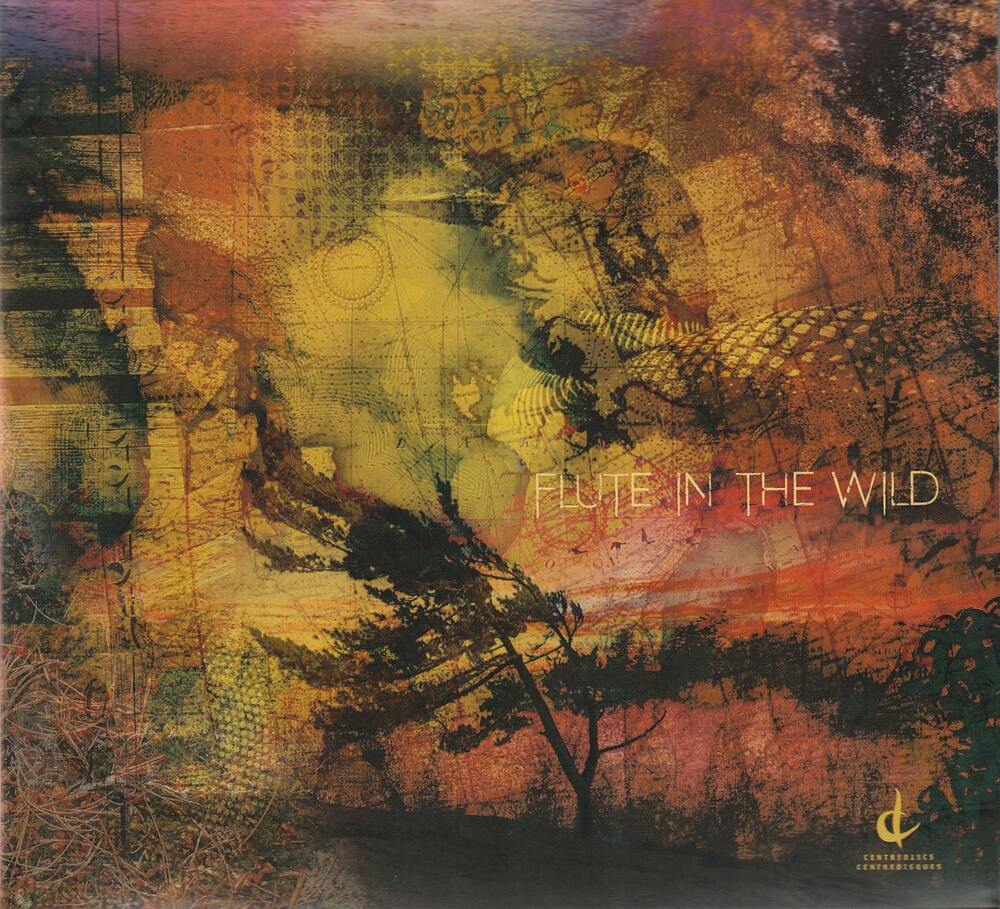
A solo flute in lofty, avian dialogue with recorded loon calls: this CD’s opener, Diane Berry’s five-minute Calling (2013), inspired Ontario-based flutist Jaye Marsh to ask three friends “to express their experience of our shared landscapes” for her debut disc, producing four works completed in 2021.

Two are by the well-established Elizabeth Raum. In her 16-minute Northern Lights, flute, harp (Heidi Elise Bearcroft) and percussion (Andrew Morris) generate phosphorescent sonorities mirroring the aurora’s ephemeral, glittering pulsations before fading into afterimages. Bassoonist Darren Hicks joins Marsh and Bearcroft in the sweetly nostalgic, 17-minute Bridal Veil Falls, five movements illuminating sonic snapshots from Raum’s childhood visit to Manitoulin Island: A Walk along the Path, Morning Rain, Mist over the Falls, Porcupines (delightfully gawky music!) and Kagawong River.

Narrator John Rice, a Wasauksing First Nation elder, tells of traditional harvests, songs and dances in Richard Mascall’s five-movement, 23-minute Niibin (Summer) but the music, for flute and piano (Christina Marie Faye) seems bland and understated; I miss the character and energy that made Mascall’s earlier Georgian Bay Symphony commission Manitoulin, which also incorporated Indigenous melodies and rhythms, so powerfully stirring.

Virtuoso pianist Richard Herriott accompanies Marsh’s alto flute in his five-minute Twilight Song of Trinity Bay that “reveals,” writes Herriott, “a lonely church…at fog-ridden twilight.” The flute’s drifting, searching melodies, underlined by the piano’s bell-like tolling and rippling arpeggios, immediately transported me to a Newfoundland coastline, remote and shrouded. 

Kudos to fine flutist Jaye Marsh for this (mostly) enchanting CD!

06 BlackwoodLost and Found
Blackwood
Leaf Music SCCD n006 (leaf-music.ca)

The last piece on Lost and Found is titled Welcome, Peter-Anthony Togni’s attractive slow jazz number. But here, I’ll use that title to segue into comments: this disc of compositions by Togni and Jeff Reilly is indeed welcome; and as the debut release of the Blackwood Duo –Reilly, bass clarinet and Togni, piano – it is most welcome, one of the best things I heard in 2021. Ave Verum by Togni and Reilly is remarkable for the bass clarinetist’s rich sound in the low register, followed by wide registral leaps and dives, and soft non-vibrato tones fading into overt key clicks. Togni’s evocative piano joins the lower instrument with a chant passage in the male voice register. Recorded effectively at the reverberant Trinity St.-Stephen’s church in Amherst, Nova Scotia by engineer Rod Sneddon, it gives me an impression of unmeasured vastness. 

In Reilly’s much different title track, Lost and Found, his clarinet opens expressively, taking off with virtuosic runs, trills, sharp attacks and crescendos or diminuendos while the piano repeats chords suggestive of jazz. His humorous self-describing Suddenly, Snow begins with both instruments in a wild staccato passage, after which the piano’s running bass and comping coincide with an extremely agile bass clarinet; this piece reminds me that brevity is a feature in the pacing and texturing of this disc’s eight works. In contrast, Reilly’s To Dream of Silence opens with long tones in both instruments, including exquisitely controlled pianissimos. Bravo!

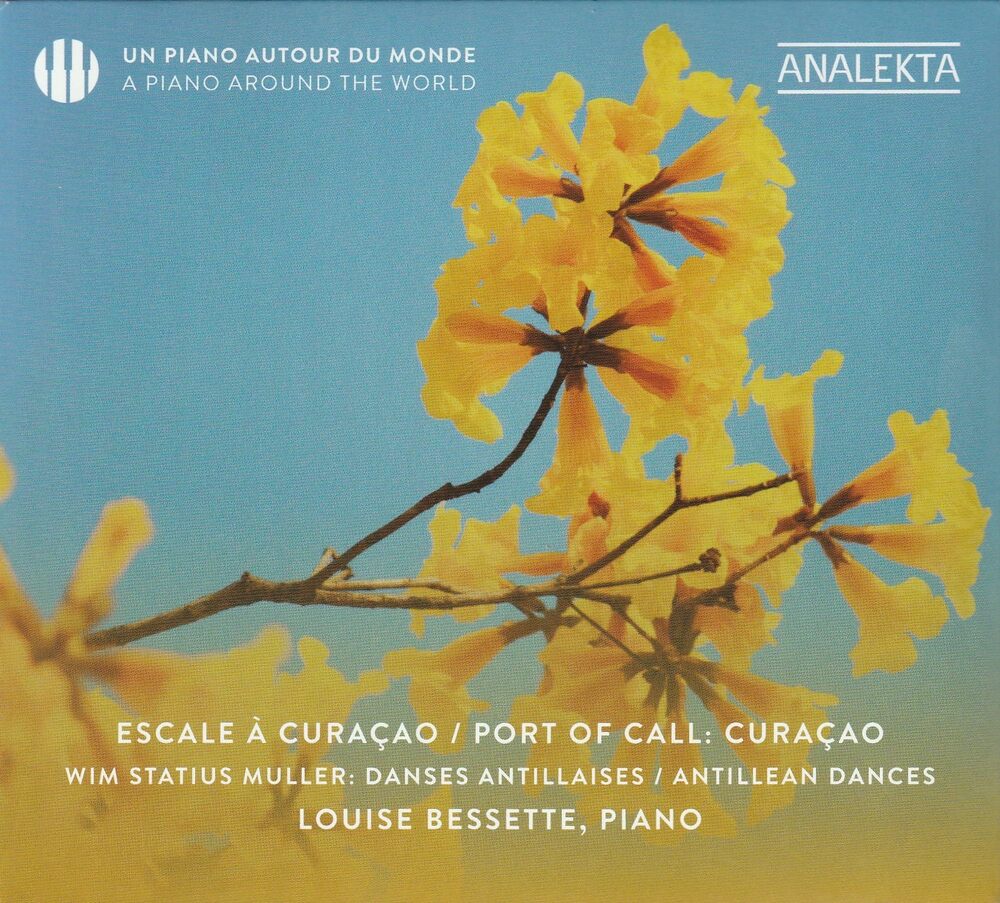
07 Louise BessettePort of Call: Curaçao
Louise Bessette
Analekta AN 2 9845 (analekta.com/en)

Acclaimed Canadian pianist Louise Bessette launches her admirable new recording series of solo piano works, A Piano Around the World. Here, in Port of Call: Curaçao, she is the first to record these 22 pieces from Antillean Dances composed by Curaçao composer/pianist Wim Statius Muller (1930-2019), nicknamed the Chopin of Curaçao. After studies at Juilliard and teaching at Ohio State University, Muller worked over 30 years at security and counterespionage, returning to Curaçao and music after his retirement!

Muller’s music resonates and combines influences of Caribbean folk music and Chopin, whose music was introduced to Curaçao in the Netherlands Antilles in the 19th century. Opening track Tumba di Johan Op.2 No.1 is a mix of classical and popular as Bessette’s controlled playing with rubato, left-hand rhythms and right-hand melodies create a dance feeling. Piet Maal –Valse Op.2 No.13 is a more Chopin-like waltz performed with melodic subtle colour shifts, clear phrasing and balance between the hands, as is Muller’s renowned romantic Nostalgia – Valse Op.2 No.22. Bessette plays the more dance-along South American sounds with perfection, like in Kalin-Tumba Op.2 No.19, reminiscent of Piazzolla, and faster modern Chuchubi – À la rumba Op.4 No.5.

Bessette must be commended for taking on such a complex illustrious solo project. Her world-class virtuosic playing and understanding of classical and folk styles, clear production values and order of tracks bring uplifting sonorities and lasting vitality to Muller’s wide-ranging piano works.

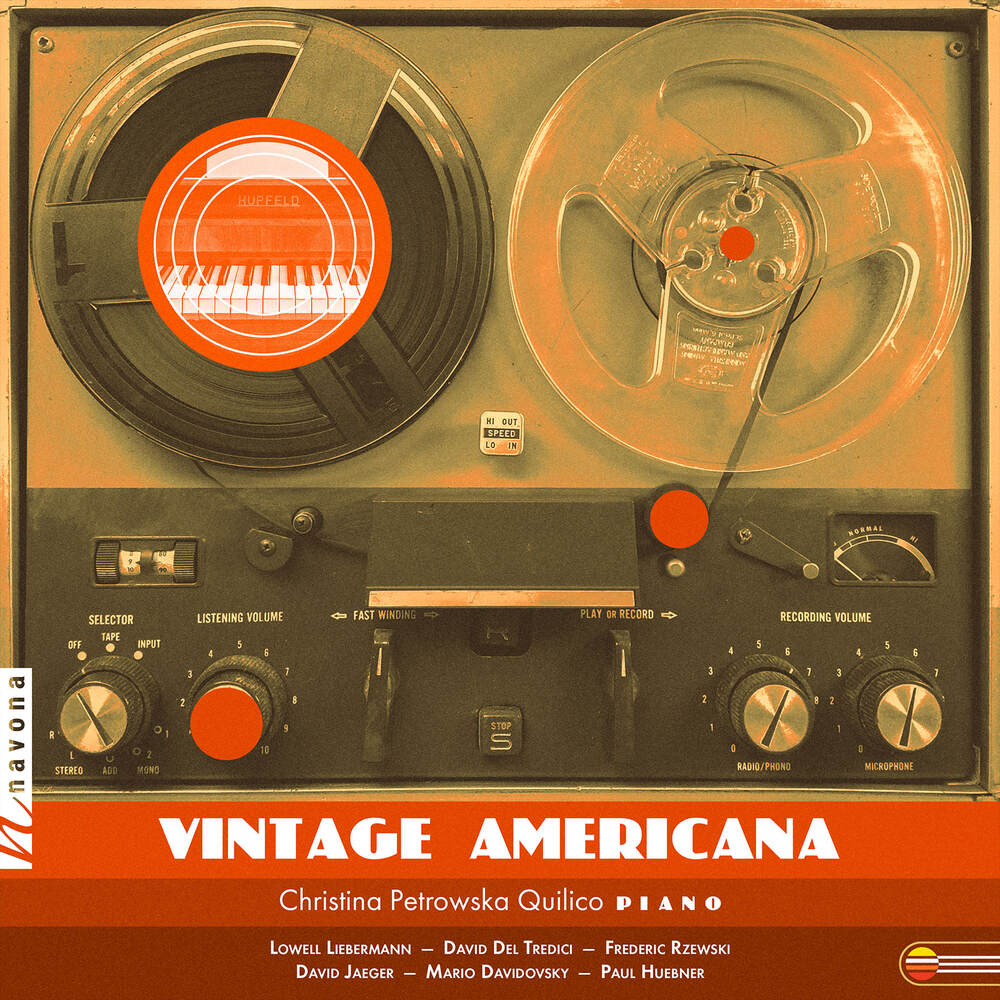
08 Vintage AmericanaVintage Americana
Christina Petrowska Quilico
Navona Records nv6384 (navonarecords.com/catalog/nv6384)

The towering Canadian piano virtuoso Christina Petrowska Quilico performs six works on her latest release, Vintage Americana. This absorbing display of musicianship leaves no doubt that she can interpret works from any compositional aesthetic with world-class execution. Lowell Liebermann’s Apparitions is an anguished work with abundant opportunity for expressive interpretation and Quilico brings a very personal touch to phrasing the work. The four Fantasy Pieces by David Del Tredici highlight her range on the instrument. The Turtle and the Crane composed by Frederic Rzewski is a whirling flurry of repeated notes and rising harmonic pillars that are continuously interrupted by tip-toeing islands of contrasting moods that seem to be menacingly at odds with the more mechanical material.  

In a work by the only Canadian on the disc, American ex-pat David Jaeger delivers a substantial tone poem of considerable expression and artistic depth. Utilizing electronics in the work, Jaeger produces highly compelling and dramatic atmospheres, drawing the listener into a dark sonic landscape. Titled Quivi Sospiri (taken from the third canto of Dante’s Inferno), Jaeger depicts a shadowy journey through a series of remarkably cogent moments of piano wizardry above deep and enigmatic electronic ambiences. 

Mario Davidovsky’s Synchronism No.6 (also using electronics) is a brilliant work. The immediately arresting nature of artistic expression gives pause and it is no wonder this work was awarded the Pulitzer Prize in 1971. Petrowska Quilico performs Davidovsky’s masterpiece with stunning mastery and her interpretation can easily be considered among the most significant among the many recordings of this important work. In her seemingly inexhaustible efforts toward releasing recordings of the highest quality, Petrowska Quilico delvers yet another gift for our ears.

Listen to 'Vintage Americana' Now in the Listening Room

Back to top