“With strings” has always been a loaded expression when it comes to jazz and improvised music. Except for a few exceptions – Stuff Smith and Stéphane Grappelli among them – the original idea of adding string players to a project invariably suggested sweetening harsher sounds by diluting them with clouds of measured catgut tones. Sometime late in the last century as rhythmic affinity and serious improvisation became options for those playing every instrument, that stigma began to dissipate. Today when someone who is mainly an improviser interacts with those whose primary instruments are string-attached, it’s in the spirit of mutual sound exploration as these discs demonstrate.
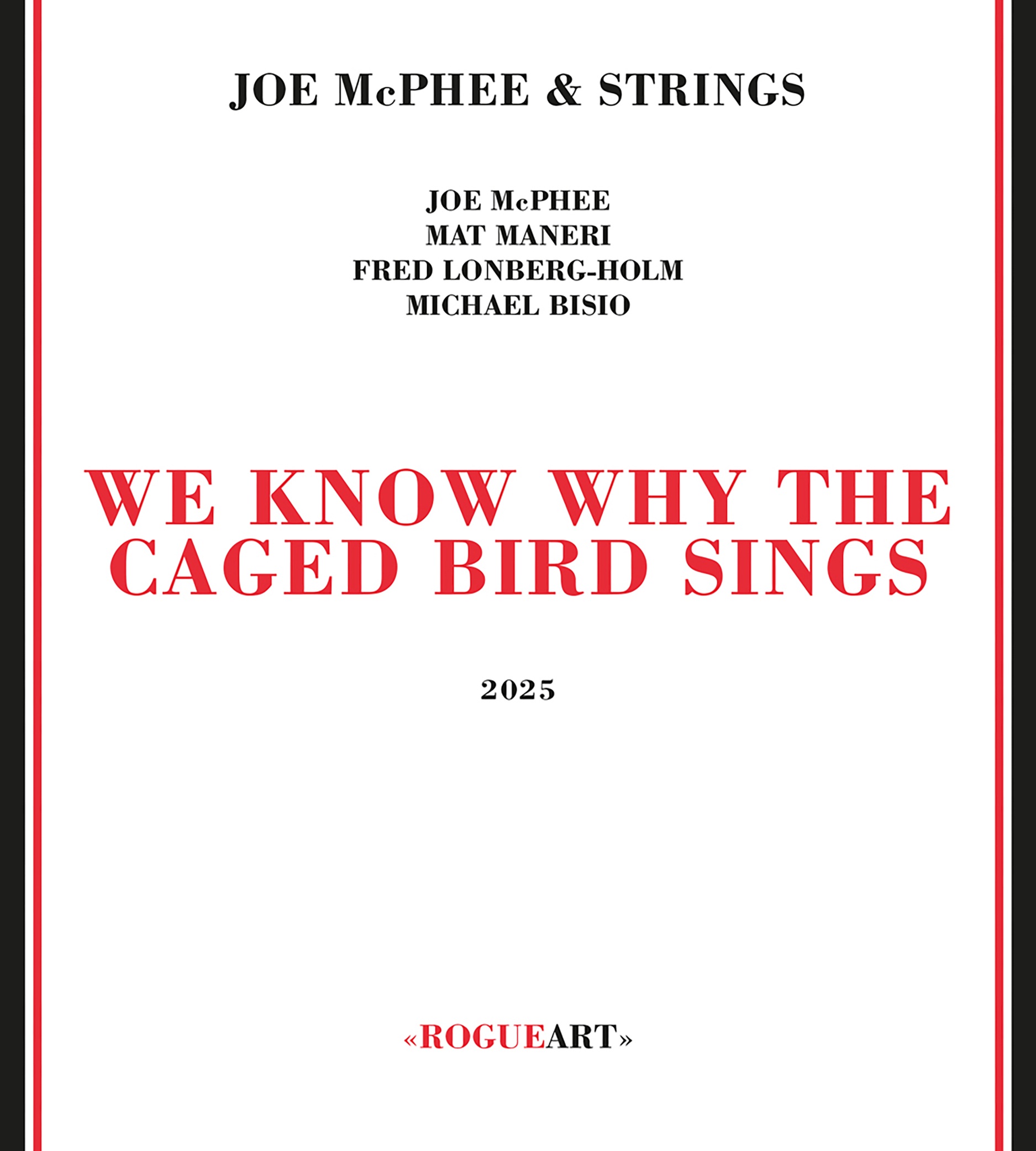
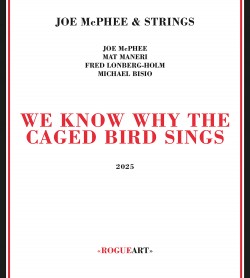 A long-time innovator as well as a multi-instrumentalist, American Joe McPhee has been involved with every type of configuration in a career going back to the mid-1960s. On We Know Why the Caged Bird Sings (RogueArt ROG-0141 rogueart1.bandcamp.com/album/we-know-why-the-caged-bird-sings), he plays tenor saxophone, intones rhetoric that plays on Maya Angelou’s 1969 autobiography I Know Why the Caged Bird Sings and generally creates a 12-track piece of sonic art that illuminates Angelou’s prose. His associates are three American string players: violist Mat Maneri, cellist Fred Lonberg-Holm and bassist Michael Bisio. Only vocalizing on the title track, McPhee expresses his other variations on racism and trauma with the occasional guttural scream slotted alongside extended reed techniques which are in turns knife-sharp, gatling-gun speedy and truncheon smacking resonating.
Although there are instances, such as on Low Seas when the arco stress from the string trio’s instruments is so pressurized that it seems about to split the wooden bodies, singly or together most of their expositions create droning ostinatos or layer top-to-bottom clenched responses to reed expressions which bottom scoop or altissimo cry in profusion. Throughout and especially on the five-part Singing Birds suite contrapuntal sequences are divided, though parallel. The violist moves from hard stops to infrequent melodic formalism; the cellist adds to the narrative with shaking staccato thrusts or reflective twangs with guitar-like facility; and the bassist preserves the horizontal flow with prominent pizzicato crunches or concentrated arco sweeps. Discordant timbres are more prominent than dulcet ones throughout, with stop time and elevated sweeps concentrated to up the excitement level. But Maneri’s smoother motifs and McPhee’s saxophone trills individually prevent the narratives from becoming too weighty.
New Forms, New Sounds, the most extended piece, illuminates many tropes most prominently. Here McPhee’s heraldic reed exposition takes on a strained oboe-like tone as broken octave projections dig out maximum invention. Surrounding that sequence prolonged string sawing from the others is soon replaced by individual motifs that are affiliated but not harmonized. Alongside the saxophonist’s prolonged smears and tongue stops, the Maneri adds spiccato strokes, Lonberg-Holm horizontal vibrations and Bisio a low-pitched continuum. Stretched but almost linear the sequence is completed as string glissandi and reed lowing move past cacophony to propel the four tones to a profound interaction.
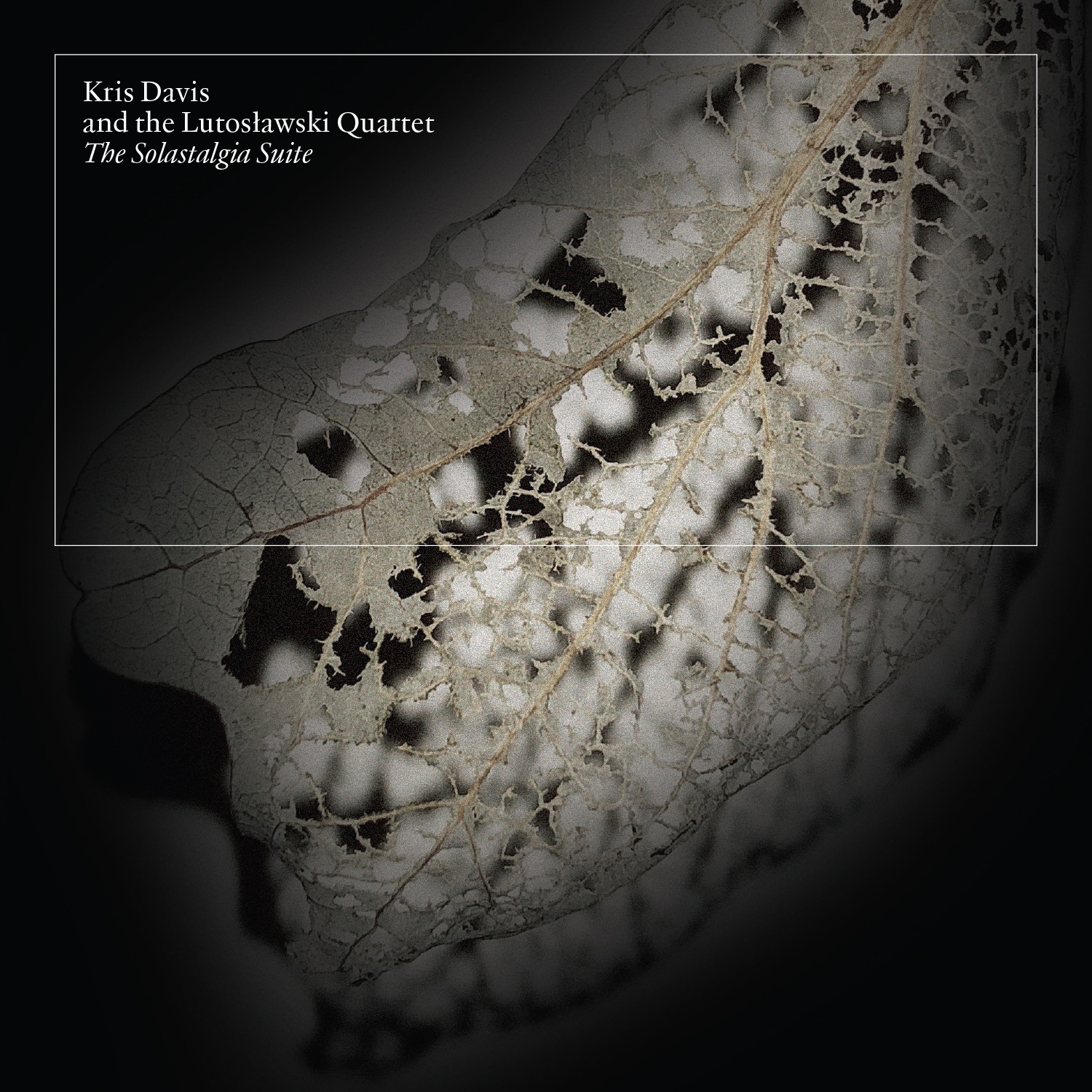
 Far more formal and precise than Joe McPhee and Strings’ production is Kris Davis’ The Solastalgia Suite (Pyroclastic Records PR 44 krisdavis.bandcamp.com/album/the-solastalgia-suite). The Canadian pianist performed it during a Wrocław concert alongside members of the Polish Lutosławski String Quartet: violinists Roksana Kwaśnikowska and Marcin Markowicz, violist Artur Rozmysłowicz and cellist Maciej Młodawski.
Davis’ eight-part suite was created by concern about the climate emergency. However, throughout it’s often the quartet’s turn towards harmonized and tender timbres which make some sequences more commonly soothing and pretty than ones emblematic of impending ecological disasters. That often means that when string swells turn elegant or even melancholy, the keyboard responses involve delicate chording or intermittent tremolo formalism as well. More generic to the theme are interludes when group vibrational timidity is replaced by strained string stops or squeaky runs along with prepared piano plinks and patterns that bring a sense of urgency to the program.
Propelled group glissandi up and down the scale by the quartet is answered with hard driving comping and soon the quartet’s intermittent string stops and rubs, replacing equanimity with energy. The most obvious instances of this occur on the concluding Degrees of Separation and the mid-point Ghost Reefs. Ghost Reefs also has the pianist’s most prominent jazz-like implementation, using antiphonic and contrapuntal motifs that propel piledriver sequences from both Davis and the quartet. Spiccato variations from clenched string movements join with keyboard pitter patter to suggest a threnody to endangered underwater limestone structures.
The longest and speediest section, Degrees of Separation has its share of sul ponticello string swabs and slices overlaid with emphasized piano motion that judders alongside the quartet’s contributions. But once a midpoint crescendo is reached descending keyboard elaborations and layered string cushioning create animated motifs yet also preserve a linear framework for a satisfactory resolution. Positive as it might be, The Solastalgia Suite may appeal more to those more comfortable with modern notated music rather than free improvisation.
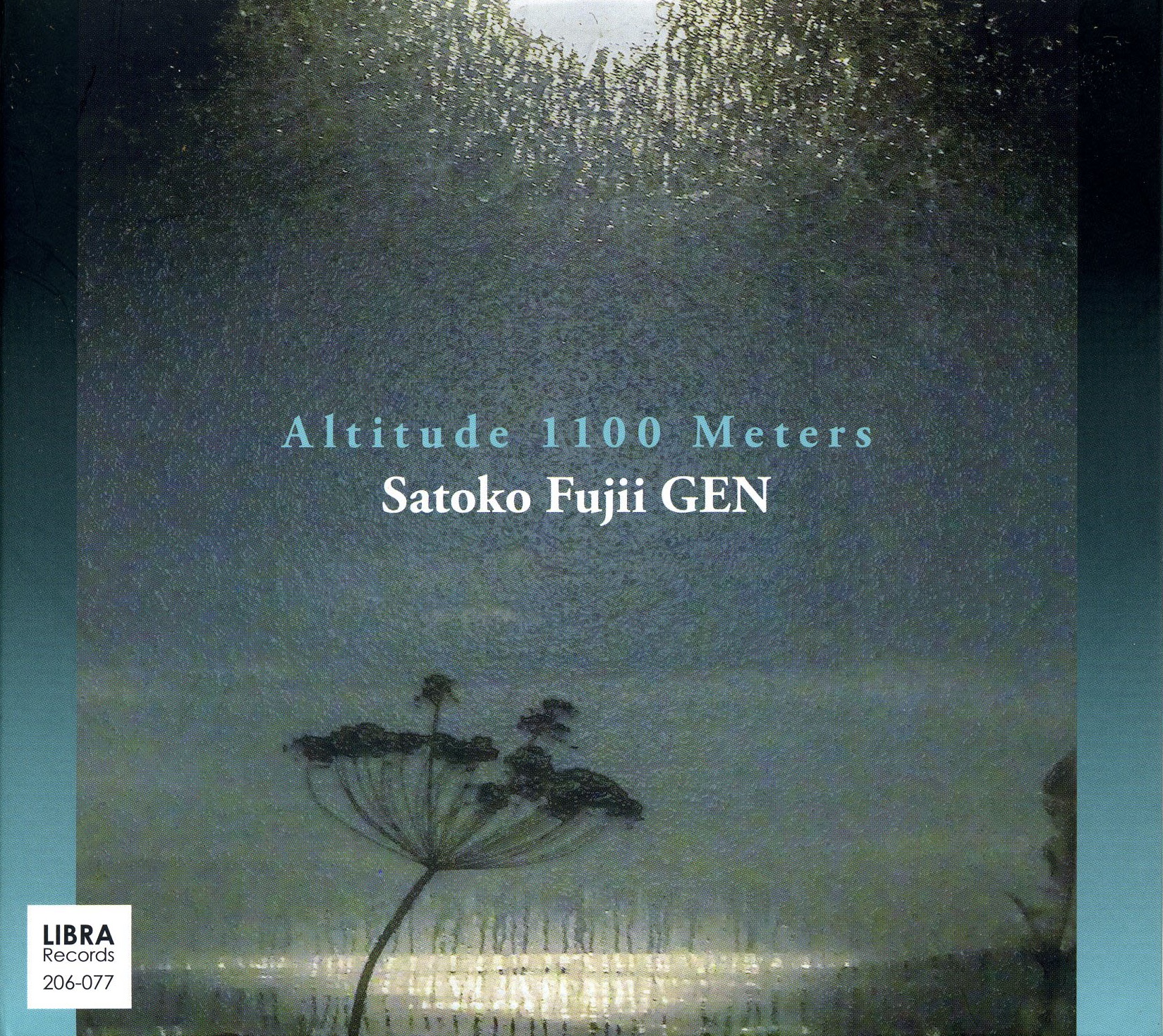
 With a somewhat similar set-up to Davis and the Lutosławski quartet, the GEN sextet headed by Japanese pianist Satoko Fujii on Altitude 100 Meters (Libra 206-077 satokofujii.bandcamp.com/album/altitude-1100-meters-2) advances a much different variation of a string-focused performance. Part of this may be that while the Fujii-composed suite referencing Nagano prefecture’s highlands also features her piano, the violins of Yuriko Mukoujima and Ayako Kato and the viola of Atsuko Hatano. Instead of a cellist the group includes bassist Hiroshi Yoshino and drummer Akira Horikoshi.
It’s not just the bass and drum contributions that make Altitude 100 Meters so distinctive but how Fujii’s pieces encompass inspired improvisational sequences integrated within the lyrical and horizontal narratives. A track like Part 3 Early Afternoon for instance, embodies jazz-like tropes including drum ruffs, rumbles and rebounds, double bass plucks and concentrated keyboard strums. These not only persist as higher-pitched string plucks suffuse the exposition, but also egg on the violins and viola to speed up from andante to presto in tandem with the other three players. Climax creates a distinctive aural afterimage. Still, after balancing light and dark, flexible and firm motifs throughout earlier parts of the suite, lyrical output from the intertwined string trio is as prominent as drum rumbles and double bass buzzes on the concluding Part 5 Twilight as all six reach a conclusive crescendo.
At the same time, while there are interludes that focus on the pianist’s sophisticated note clusters, in-and-out of time sense and speedy leaps to equally emphasize both sides of the keyboard, the arrangements bring in other voices as well. Mukoujima takes up a good chunk of solo space on pieces like Part 2 Morning Sun and the nearly 20-minute Part 4 Light Rain for instance. Her concentrated sweeps stacked on top of darkened string group glissandi define on Morning Sun’s dramatic build up as succinctly as bassist Yoshino’s sprightly string strops and pumps until string pressure moves the theme down to earth. Then on Light Rain, Mukoujima’s doubled squeaky bow swipes boost the track’s intensity alongside percussive keyboard comping and the bassist’s clean stops and strums. Additionally, textures from the string trio move from distant sweetening to the forefront with pitch ascending spiccato swipes, and then in the track’s penultimate minutes, join with piano cadences and measured drum thumps to confirm the suite’s vitality and urgency.
 If vitality and urgency are at a premium on Altitude 100 Meters, imagine how the dynamics and pressure were organized on The Death of Kalypso (Thanatosis Produktion THT 32 anglesellekari.bandcamp.com/album/the-death-of-kalypso), a jazz-opera composed by Swedish saxophonist Martin Küchen. Throughout, sequences mix textures from his seven-piece Angles group, augmented by a four-piece string section, with string and wind arrangements from Angles keyboardist Alex Zethson and featuring voice and vocal arrangements by Swedish vocalist Elle-Kari (Sander).
With a libretto based on Homer’s Odyssey, the story relates how the nymph Kalypso, more commonly spelled Calypso, who detained Odysseus, whose more familiar Roman name was Ulysses, for seven years and later killed herself because he spurned her love. Happily, this modern retelling avoids the more lachrymose aspects of the tale, with the singer’s emotionalism reflected only in her lyrical, but straightforward bel canto dramatization. More importantly the 12-part suite depends as much on Elle-Kari’s interaction with the instrumentalists as her story telling. Sorrowful expressions for instance pair her soprano utterances with My Hellgren’s mournful cello swipes; while a track such as Kalypso in Karlsbad, haunted by dreams uses multi-tracking to back her solo with numerous harmonized voices as well as elevating her breathy passionate tones even higher by contrasting her voice with similar sympathetic responses from the string quartet’s vibrations, Magnus Broo’s plunger trumpet lines and slick metal bar dusting from Mattias Ståhl’s vibraphone.
In fact Ståhl is as much a presence on The Death of Kalypso as the vocalist. Not only do his measured pings provide a commentary on the singer’s sometimes strained expositions, but he adds weightless sparkles to the purely instrumental tracks. Cutting the woods for instance could easily stand on its own as it mates piano and vibe rebounds, swift smacks from drummer Konrad Agnas, Broo’s elevated triplets and finely accelerated velocity from all 12 players surmounted by baritone saxophonist Fredrik Ljungkvist’s measured reed pumps.
There may not be room in the standard repertoire for another jazz opera, but the creativity of Küchen – who limits himself to a few, brief pinpointed reed asides – and his associates offer a proper place for the inclusion of a string section in this work. Added at points for middle European romanticism, the string group also provides integrated thrusts and judders to define the narrative as obviously as tick-tock drumming, metronomic keyboard pulses and brass and reed obbligatos do elsewhere.
Stretching the definition of “with strings” in as many directions as possible, each of these productions shows how intrinsically any group of instruments can fit into improvised and jazz-affiliated music.


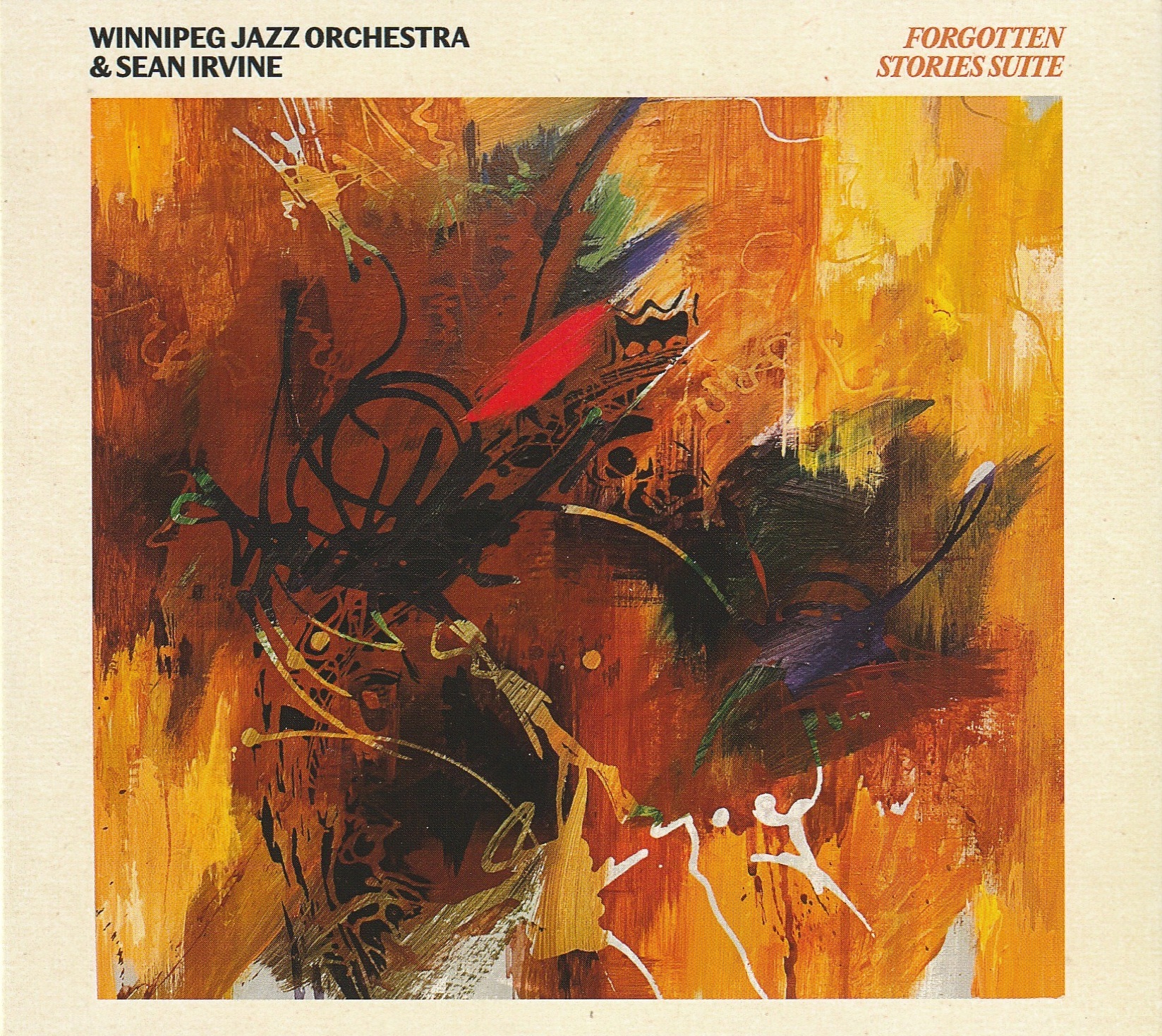 Forgotten Stories Suite