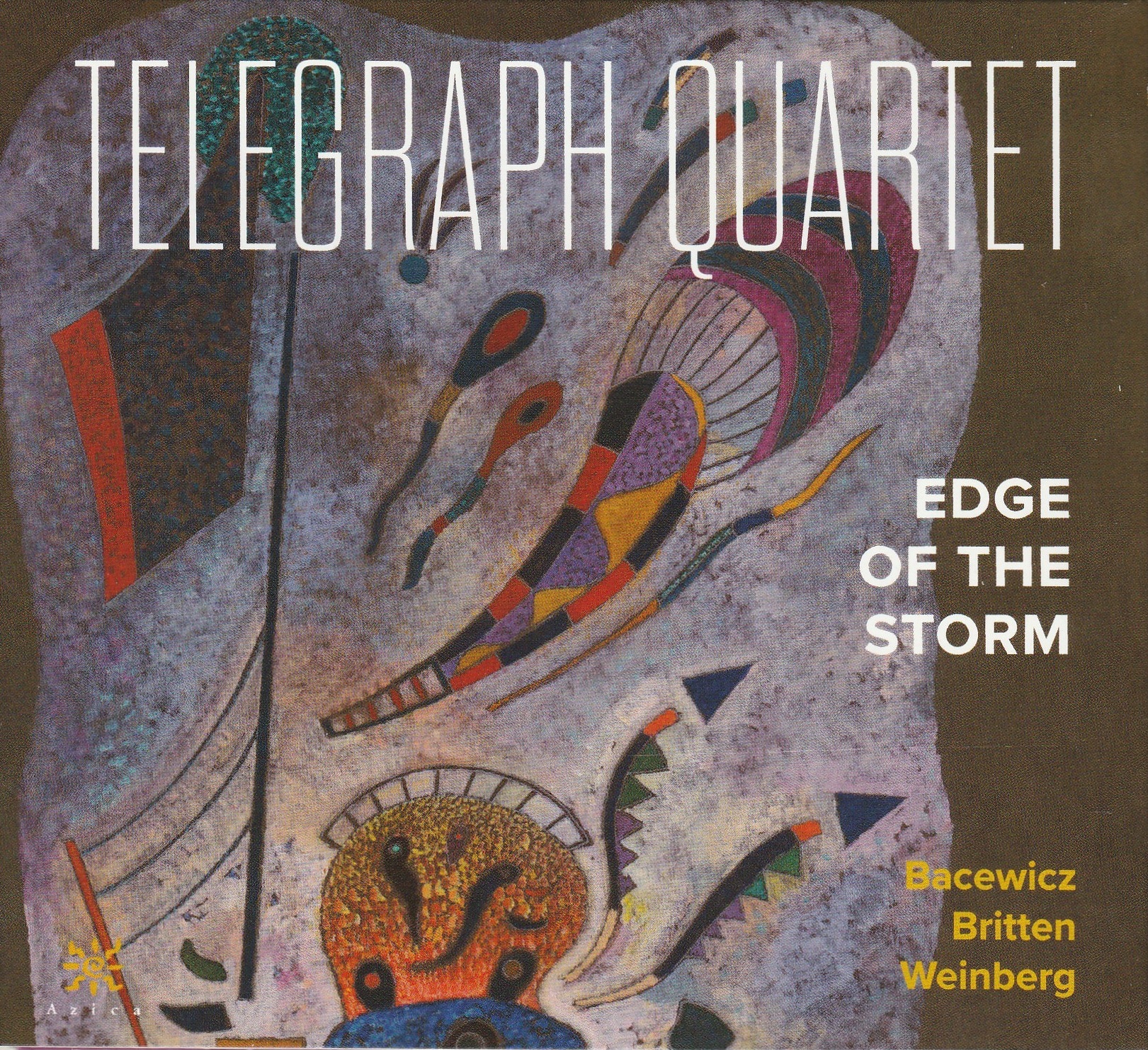
I’m not always sold on how artists describe the genesis of their CDs – violinist Nancy Zhou, for example, describes her new release STORIES (re)TRACED as a personal response to the question “What does it mean to be human?” – but when it results in a recital as stunning as this, who really cares? (Orchid Classics ORC100379 orchidclassics.com/releases/orc100379-stories-retraced).
Zhou has a strong, clear tone and virtuosity to spare, but always with a striking musicality and interpretative power. Works by two composers who were close friends open and close the disc: Ysaÿe’s Sonata No.4 in E Minor, Op.27 No.4, which was dedicated to Fritz Kreisler, and the latter’s Recitativo & Scherzo-Caprice, Op.6, both superbly played. The Bartók Sonata for Solo Violin, Sz.117 and Bach’s Partita No.1 in B Minor, BWV1002 form the middle section, the Bartók in particular a towering and memorable performance.
It’s a really outstanding CD, with the remarkable Zhou at times sounding anything but human.
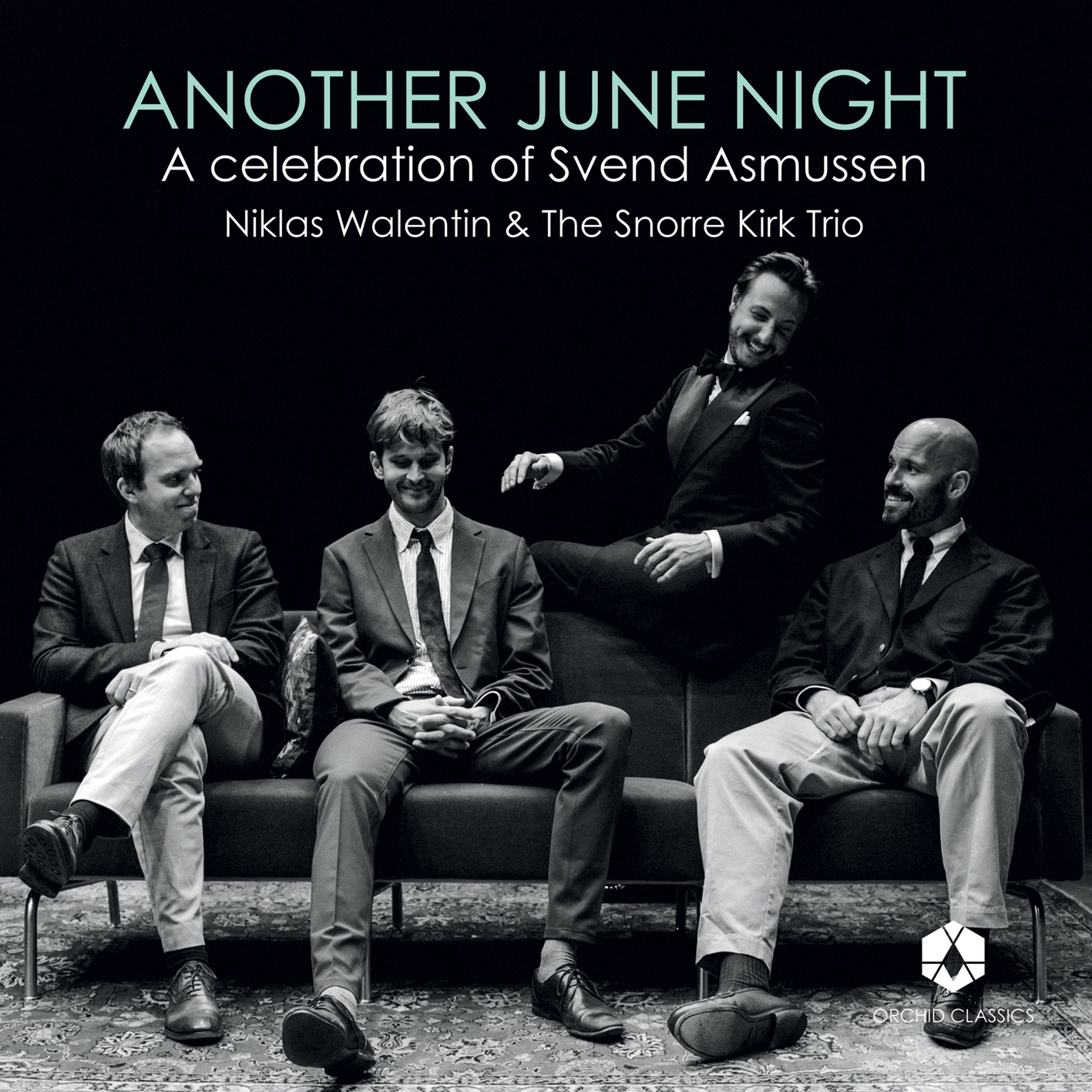
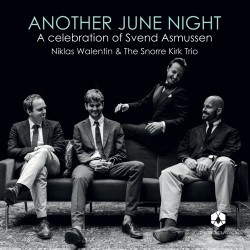 On Another Night – A Celebration of Svend Asmussen the Danish violinist Niklas Walentin and the Snorre Kirk Trio of drummer Kirk, pianist Calle Brickman and bassist Anders Fjelsted present “a heartfelt tribute” to Svend Asmussen, one of Denmark’s greatest jazz violinists who died in 2017 aged 100 (Orchid Classics ORC100320 orchidclassics.com/releases/orc100320-another-june-night).
There’s a deep personal connection here: the 10-year-old Walentin met the 90-year-old Asmussen back-stage after a concert, with the two violinists later sharing a unique friendship. Asmussen gifted Walentin a collection of 11 of his jazz arrangements, and they are presented here with the violin solos remaining as true to the written form as possible.
And just look at some of the 11 track titles: Don’t Get Around Much Anymore, Someone to Watch Over Me, Basin Street Blues, All the Things You Are (a Bach-flavoured violin solo), Embraceable You, Fascinating Rhythm, Sophisticated Lady, The Nearness of You – it’s all absolute magic, with gorgeous arrangements superbly played.
It’s apparently only available as a download or a vinyl LP and not on CD.
 The almond tree duos is the world premiere recording of a work from 2019-2021 by violist and composer Melia Watras comprising 18 brief pieces for violin and viola. The violin duties are shared by baroque violinist Tekla Cunningham and violinists Rachel Lee Priday and Michael Jinsoo Lim (Planet M Records PMR-007 planetmrecords.bandcamp.com/album/melia-watras-the-almond-tree-duos).
The work can be performed in several ways, from stand-alone pieces through various combinations to a complete set; if the latter, the order should be as recorded here.
Watras encourages experimenting with combinations of modern violin and viola with baroque violin and viola. The end result here is a fascinating soundscape, the three violinists providing a variety of techniques, tonal colours and nuances to supplement Watras’ playing.
 There’s another set of the Ludwig van Beethoven Complete Violin Sonatas, this time a 3CD box with the German duo of violinist Lena Neudauer and pianist Paul Rivinius (cpo 555 550-2 naxosdirect.co.uk/items/ludwig-van-beethoven-complete-violin-sonatas-1281535).
While originally titled Sonatas for Piano and Violin the 10 works, written in Vienna between 1797 and 1812, permanently established an equal and balanced partnership between the two instruments. In that respect Rivinius is every bit Neudauer’s equal in a beautifully-judged progression from the three early Op.12 sonatas through a delightful “Spring” Sonata Op.24 to an imposing and powerful “Kreutzer” Sonata Op.47.
There’s not a false note or moment throughout an outstanding set that will stand comparison with any in the catalogue.
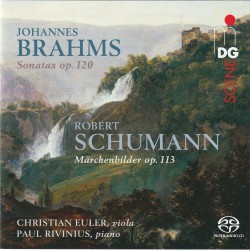 Pianist Paul Rivinius appears again, this time with violist Christian Euler, on Brahms | Schumann Works for Viola and Piano, a CD featuring works from relatively late in each composer’s career (Musikproduktion Dabringhaus und Grimm MDG 903 2353-6 euler-viola.com/en/tontraeger/new-release-2025-brahms-schumann).
The central work on the disc is Schumann’s Märchenbilder Op.113 or Fairy Tale Pictures from 1851, a work that has no individual titles that might suggest the content of the four movements.
In 1890 Brahms decided to retire from composing, but the following year he met the clarinetist Richard Mühlfeld and was inspired to write four works for him: the Clarinet Trio Op.114, the Clarinet Quintet Op.115 and the two Clarinet Sonatas in F Minor Op.120 No.1 and E-flat Major Op.120 No.2. The latter are here in the composer’s own arrangements, which he apparently felt were “clumsy and unpleasant.” Changes to accommodate the viola were mostly octave transpositions, but here Euler has “decided to play the original clarinet version consistently and to fully exploit its large range.” It’s an interesting choice.
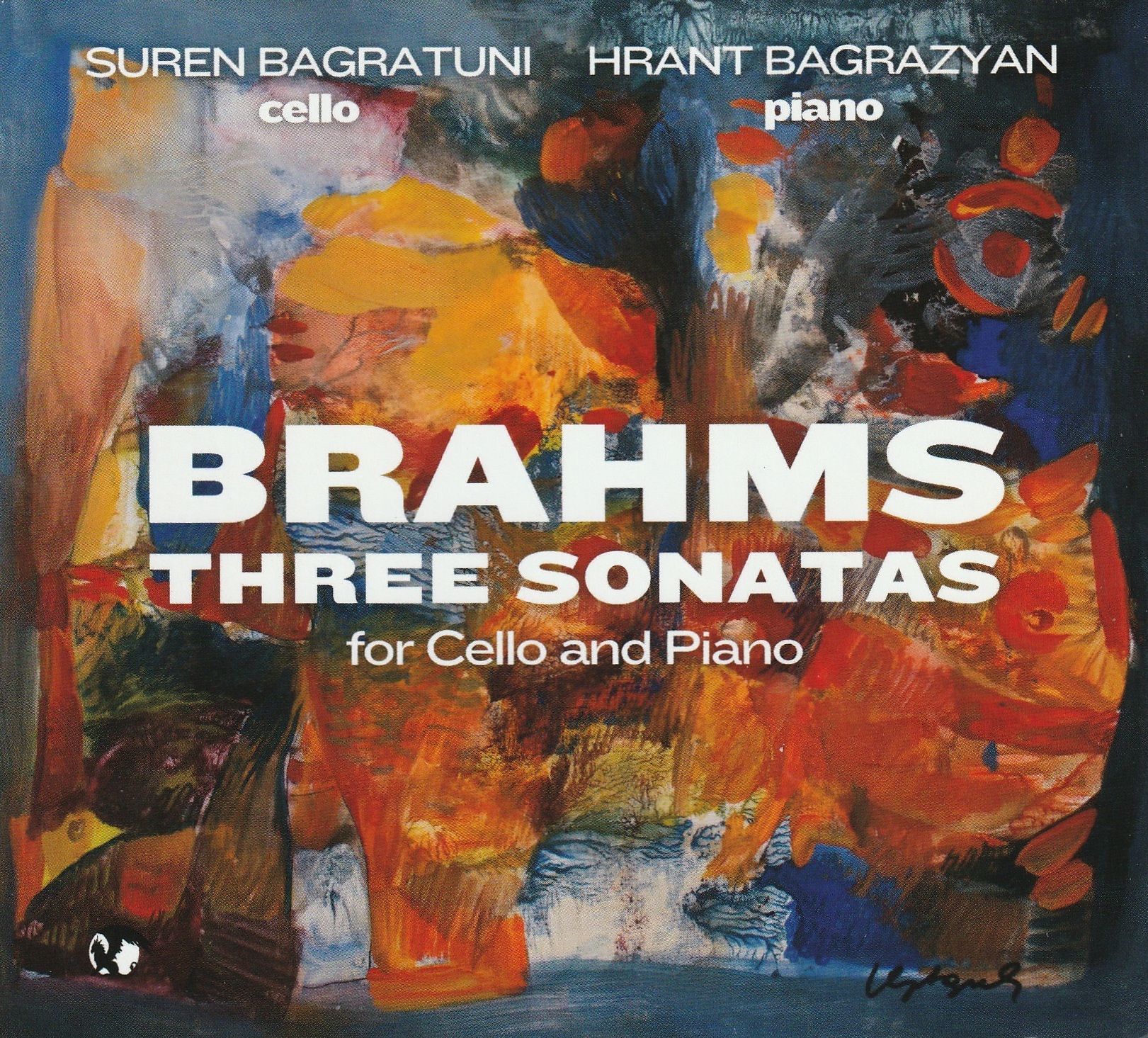
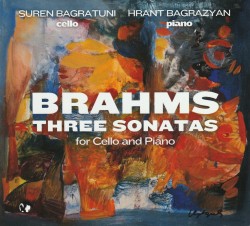 On Brahms Three Sonatas the Armenian duo of cellist Suren Bagratuni and pianist Hrant Bagrazyan perform the two cello sonatas as well as the composer’s own transcription of his first violin sonata (Blue Griffin records GBR677 bluegriffin.com/cd-catalog/p/brahms-three-sonatas-for-cello-and-piano-suren-bagratuni-and-hrant-bagrazyan?rq=bagratuni).
The Sonatas for Cello and Piano in E Minor, Op.38 and in F Major, Op.99 are given expansive readings, with both players displaying a rich, warm tone. It’s simply lovely Brahms.
The central work on the CD is Brahms’ transcription, transposed from G major to D major, of the Violin Sonata No.1, Op.78. I sometimes have issues with cello transcriptions of violin sonatas, partly because of the alterations to the melodic line – there are several octave drops in the first movement in particular here – but also because they usually bring the instrumental part down into the piano mid-range, altering the nature of the tonal colour. Here, though, that extra warmth is a positive addition, and there’s no denying the sheer beauty of the playing.
 French cellist Juliette Herlin and Canadian pianist Kevin Ahfat are the duo on Herlin’s debut CD Dialogue: Debussy & Schumann, a recital of music by two composers whose artistic kinship is often overlooked, and whose music has long been a part of the cellist’s life (Orchid Classics ORC100382 orchidclassics.com/releases/orc100382-dialogue).
The more substantial tracks are Schumann’s Fantasiestücke Op.73, Adagio & Allegro in A-flat Major Op.70 and Drei Romanzen Op.94, and Debussy’s 1915 Cello Sonata in D Minor. Herlin arranged the two Schumann Liederkreis and Debussy’s L’âme évaporée and Beau soir, with the latter’s Nuit d’étoiles, Intermezzo and Rêverie completing the disc.
Herlin has a warm, sweet tone well-suited to the music, and is given fine support from Ahfat on a charming CD that rarely really catches fire.
 On the 2CD set From Eastern Europe the husband and wife team of cellist Marie-Elisabeth Hecker and pianist Martin Helmchen present six works by 20th-century Russian composers (Alpha Classics ALPHA827 outhere-music.com/en/albums/eastern-europe).
CD1 has the Shostakovich Cello Sonata in D Minor, Op.40, Schnittke’s remarkable Cello Sonata No.1 and Stravinsky’s Suite Italienne, K034B, drawn from his neoclassical ballet Pulcinella.
CD2 features Weinberg’s Cello Sonata No.2, Op.63 and Prokofiev’s Cello Sonata in C Major, Op.119, the recital closing with a fine reading of the Rachmaninov Cello Sonata in G Minor, Op.19, surely one of the most glorious works ever written for cello and piano.
Hecker won the First Prize and two Special Prizes at the 2005 Rostropovich Competition and is clearly in her element here, beautifully supported by Helmchen.
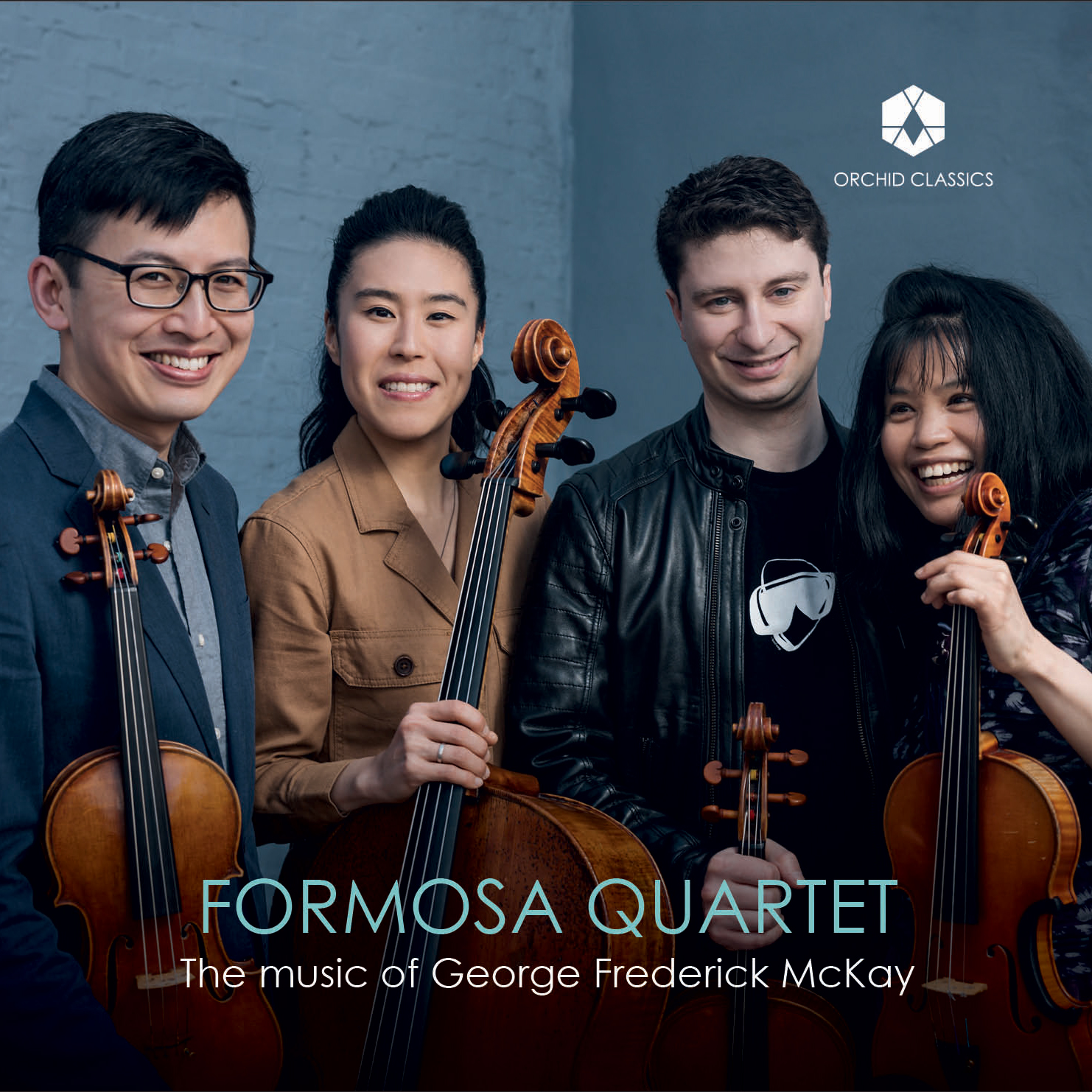
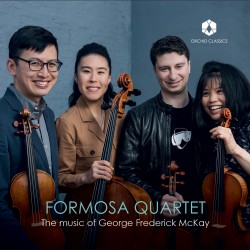 The Music of George Frederick McKay sees the Formosa Quartet present the first commercial release of the string quartets of the mid-century American composer George Frederick McKay (1899-1970) (Orchid Classics ORC100381 orchidclassics.com/releases/orc100381-formosa-quartet).
McKay founded the Music Department at the University of Washington, where he was the Professor of Music for 41 years until 1968. The string quartets occupy a prominent place in his large output, and are described here as reflecting his distinctive musical language, shaped by influences ranging from Civil War era folk songs and Native American melodies to avant-garde satire from the West Coast urban scene.
The String Quartets No.1 “American Sketches” and No.2 “appassionato” are from 1935 and 1937 respectively, while the String Quartets No.3 “Poem of Life and Death” and No.4 “Mister Del Balboa” are both from 1950. They’re strongly tonal, immediately accessible and finely crafted works, given strong performances on this welcome release.
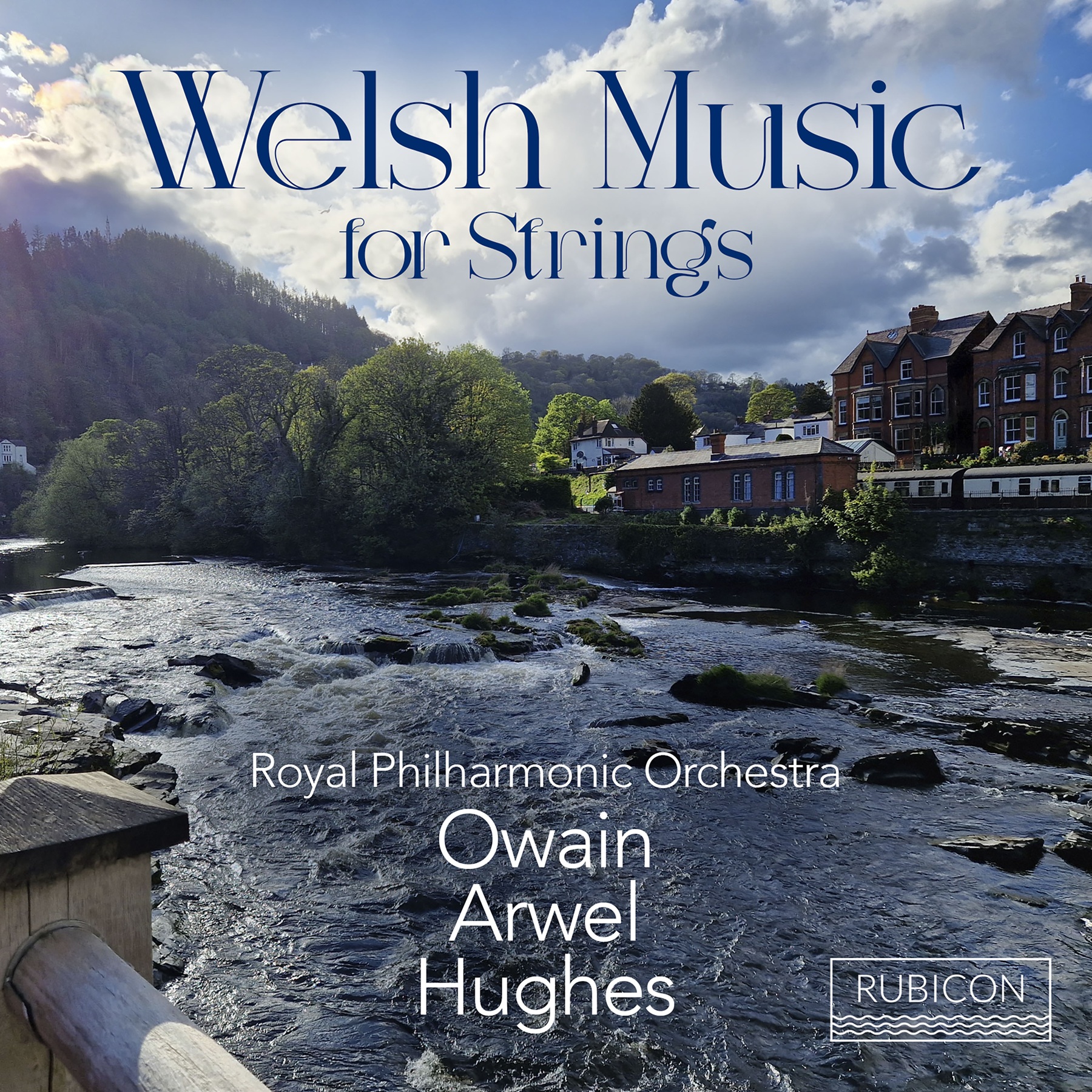
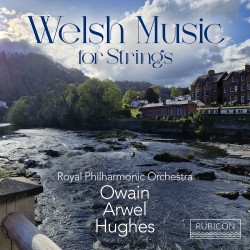 Welsh Music for Strings is a CD of world premiere recordings with the Royal Philharmonic Orchestra under Owain Arwel Hughes (Rubicon Classics RCD1198 rubiconclassics.com/release/welsh-music-for-strings).
The simply beautiful Elegy by Grace Williams (1906-77) was written in 1935 for the newly-formed BBC Welsh Orchestra. Described as “a prayer without words” the stunning O Sacred Heart, by leading contemporary composer Paul Mealor (b.1975), was written especially for this album.
The short but upbeat Romance by Morfydd Owen (1891-1918) is an early work from a woman composer who died tragically young. The heartfelt Aberfan, by Christopher Wood (b.1945) was written for the 50th anniversary of the 1966 Welsh disaster.
There are two works by Arwel Hughes (1909-88), the father of the conductor: Gweddi (A Prayer) for soprano, chorus and strings, featuring Jessica Robinson and the Côr Llundain, and the lush Divertimento, recently discovered by his son.
The three-movement 1961 Music for Strings by William Mathias (1934-92) completes a really lovely disc.
 String music by the Czech composer Viktor Kalabis (1923-2006) is presented on the new CD from violinist Gidon Kremer, who is joined by cellist Magdalene Ceple and the Kremerata Baltica under Fuad Ibrahimov in a recital of works by a lesser-known composer whose career was impacted by both the Nazi occupation of his country and the Communist regime that followed it (Hyperion CDA68474 hyperion-records.co.uk/dc.asp?dc=D_CDA68474).
The earliest work here is the three-movement Chamber Music for Strings, Op.21 from 1963. The two-movement Diptych for Strings, Op.66 and the four-movement Duettina for Violin and Cello, Op.67 are both from 1987. Kalabis described the Diptych as “chaste of expression – a study of new sonic possibilities of string ensemble,” but there are some hauntingly beautiful moments here – especially in the Op.21 – in music that seems to reveal more the more you listen to it.
Performances, as you would expect from Kremer and his friends, are exemplary.
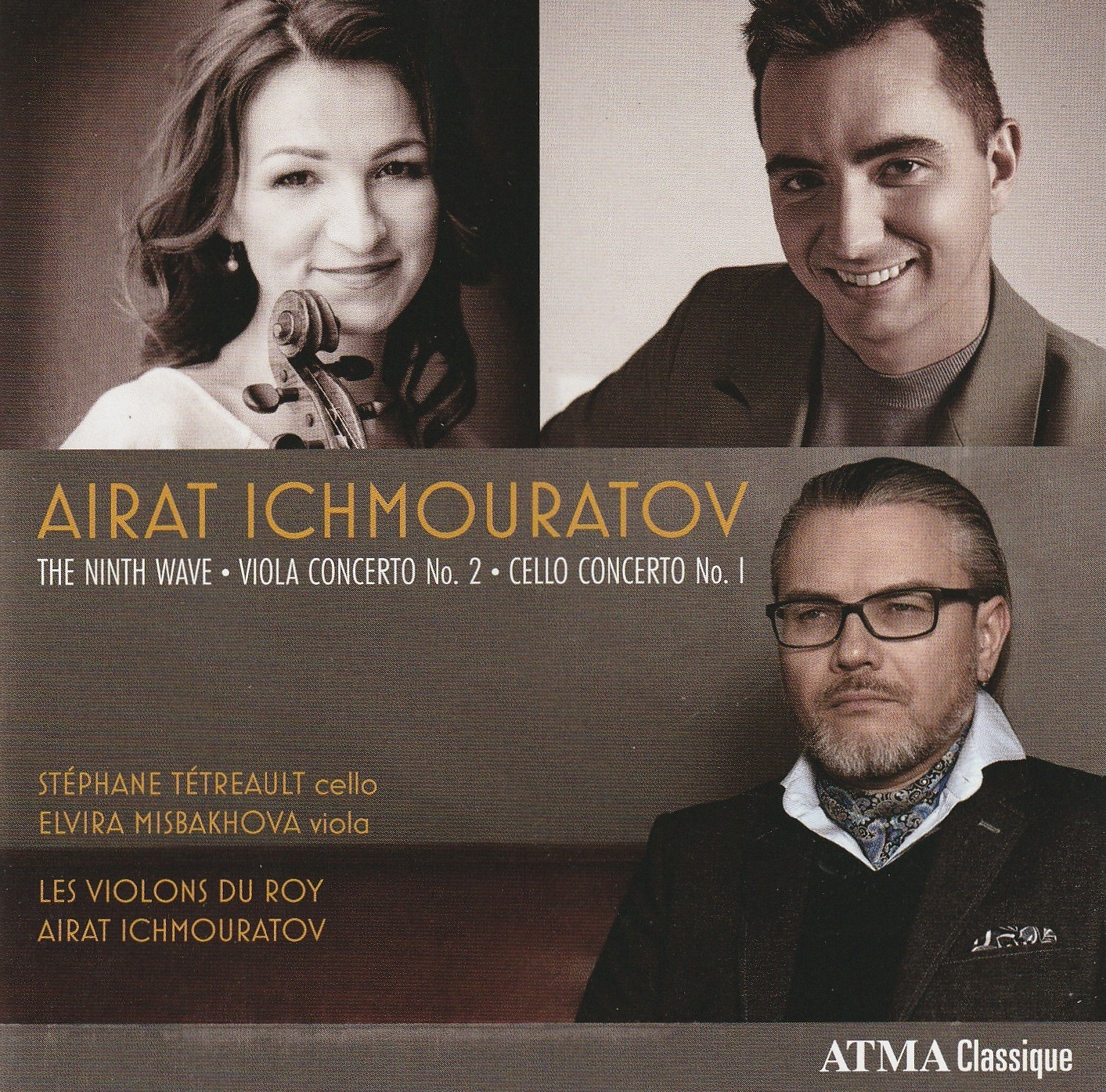
 Compositions inspired by artworks are featured on Airat Ichmouratov, a CD of music by the Russian-born Canadian composer, with cellist Stéphane Tétreault, violist Elvira Misbakhova and Les Violons du Roy under the direction of the composer (ATMA Classique ACD2 2896 atmaclassique.com/en/product/ichmouratov-the-ninth-wave-viola-concerto-no-2-cello-concerto-no-1).
The 2018 Tone Poem for Strings: The Ninth Wave Op.61 is a response to the painting of that name by the Russian marine artist Ivan Aivazovsky, Ichmouratov saying that he used impressionist techniques to capture the restless spirit of a turbulent ocean.
For his 2015 Concerto for Viola No.2, Op.41 Ichmouratov imagined a scene from the childhood of J. S. Bach, the three movements being written in a neo-Baroque style while also embracing Ichmouratov’s own neo-Romantic voice.
Three paintings – Intrigues, Repentance and Moto perpetuo – by the Montreal-based artist Natasha Turovsky inspired the 2008 Concerto No.1 for Cello and Strings with Percussion, Op.18 and provided the titles for the individual movements. Commissioned and premiered by Les Violons du Roy, it has a striking middle movement mourning the victims of the mid-century Soviet era.
 The outstanding Hamilton guitarist Emma Rush is back with the Life & Times of Catharina Pratten, a delightful and fascinating CD featuring the music of the 19th-century guitarist and composer Madame Sidney Pratten and her associates (Independent emma-rush.com/the-life-and-times-of-catharina-pratten).
A child prodigy, Pratten was born in Germany in 1824, her family moving to England in 1829. She performed, composed and taught virtually up to her death in 1895, her three guitar methods and her book Learning the Guitar Simplified offering valuable insight into 19th-century guitar performance. There are seven of her pieces here, along with short works by her father Ferdinand Pelzer, her husband Robert Sidney Pratten, the Swiss child prodigy Giulio Regondi, the German guitarist and composer Leonard Schultz, Francisco Tarregá (who visited Pratten in London), the English virtuoso (and Pratten student) Ernest Shand, and Pratten`s student and biographer Frank Mott Harrison.
Rush plays two guitars from the 1850s, both associated with Pratten, in an immensely satisfying and beautifully played recital.
 There`s more outstanding guitar playing on Cançioneta – Works for Guitar, with the English guitarist Frederick Lawton providing a snapshot of lesser-known mid-20th-century Spanish guitar music (Navona NV6723 navonarecords.com/catalog/nv6723).
The main composer here is the pianist Federico Mompou (1893-1987), who is represented by his six-movement Suite Compostelana, composed for Andrés Segovia in 1962, and two selections – Nos.6 & 10 – from his 15-piece Cançions y Danzas piano series, the former arranged by Paolo Pegoraro and the latter transcribed by the composer.
Manuel de Falla`s Homenaje a Debussy is here, as are the three-movement Suite Valenciana by Vicente Asencio (1908-1979) and the delightful four-movement Sonata by Antonio José (1902-1936).
Lawton`s playing seems effortlessly clean, and his phrasing and musicality are first class. The recording was made using vintage microphones in order to give a warm and saturated tonal colour to the performances, and it certainly produced the desired effect on a terrific CD.
 The Canadian Guitar Quartet of Steve Cowan, Jérôme Ducharme, Christ Habib and founding member Louis Trepanier is in superb form on Empty Houses, a fascinating programme of compositions and arrangements (ATMA Classique ACD2 2883 atmaclassique.com/en/product/empty-houses).
The delightful Prologue, fougue et allegro trépidant was written by Habib’s teacher Patrick Roux for the CGQ’s 20th anniversary, the three movements referencing Chopin, Piazzolla and Bach. The other original compositions are Pulsar, by Belorussian-American composer and guitarist Olga Amelkina-Vera – its exciting rhythms gradually slowing to nothingness – and Renaud Côté-Giguère’s four-movement title track, described by the composer as an overview of his musical influences.
The hugely-effective Allegro con spirit from Mozart’s Sonata for Two Pianos, K488 (one hand=one guitar!) was arranged by Trepanier, who also arranged Areias Brancas, Orfeu Negro, a compilation of musical themes by Antônio Carlos Jobim and Luiz Bonfa from the 1959 French-Brazilian film Orfeu Negro that introduced the Bossa Nova to the outside world.
 The Thunder Bay flamenco guitarist and composer Matt Sellick, now Toronto-based, has spent much of the past decade orchestrating many of his flamenco guitar pieces and performing them with the Thunder Bay Symphony Orchestra, conducted here by Evan Mitchell on the resulting album Watching the Sky (Independent mattsellick.com).
Five of these pieces in their original form were included on Sellick’s 2014 CD After Rain, reviewed here in February 2015, and despite this being an intriguing and well-crafted project it’s difficult to feel that the orchestrations have enriched and enhanced the compositions; rather, they seem to detract from the original intimacy and impact and too often reduce the guitar to a rhythm accompaniment role. The guitar’s crispness – and After Rain had real punch – also tends to get softened in the recording balance.
The result is more of a Latin album than a flamenco album revisited, with occasional shades of José Feliciano – not a bad thing by any means. As such it has its attraction and its merits, but if you really want to know just how good a composer and guitarist Matt Sellick is then revisit After Rain.


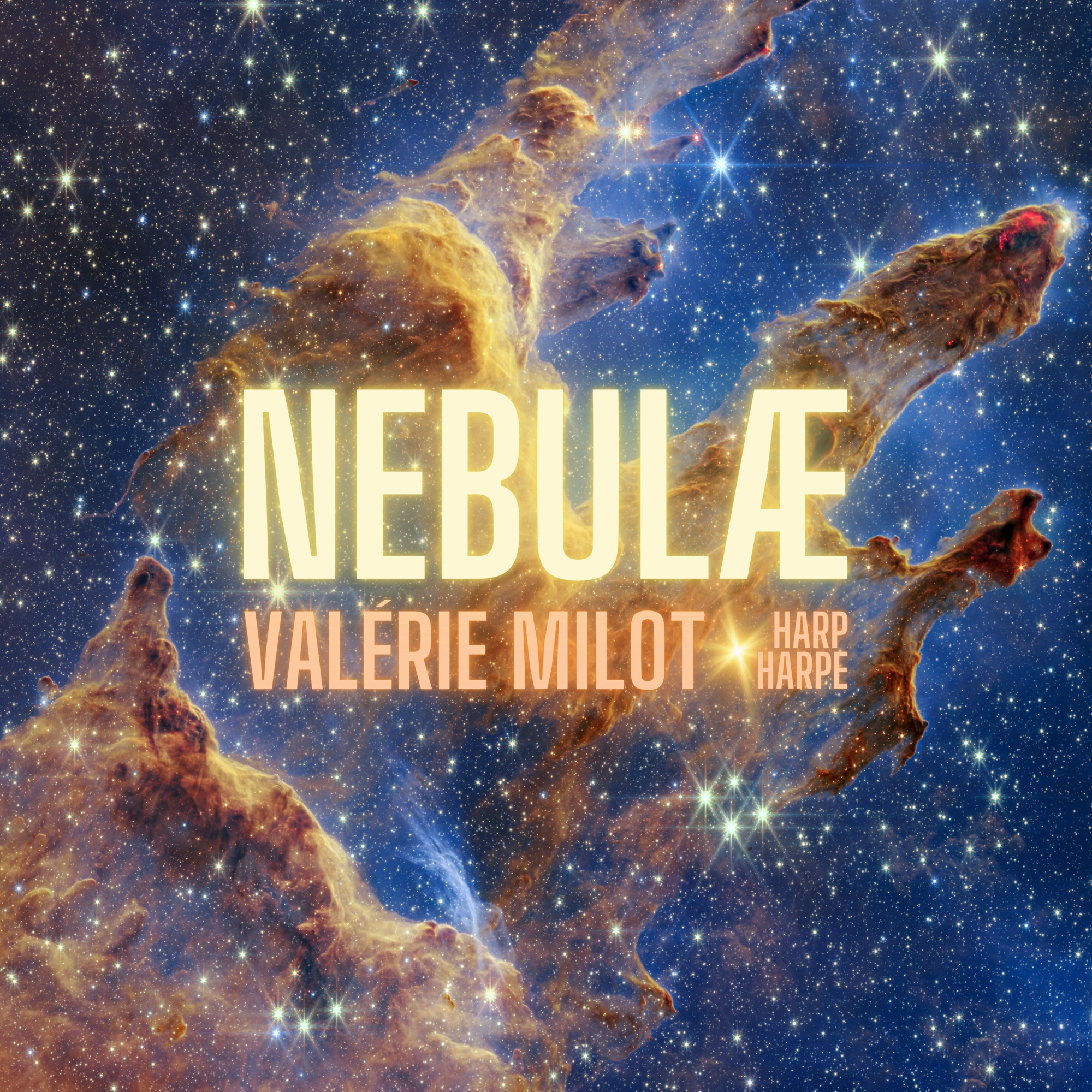 Nebulæ