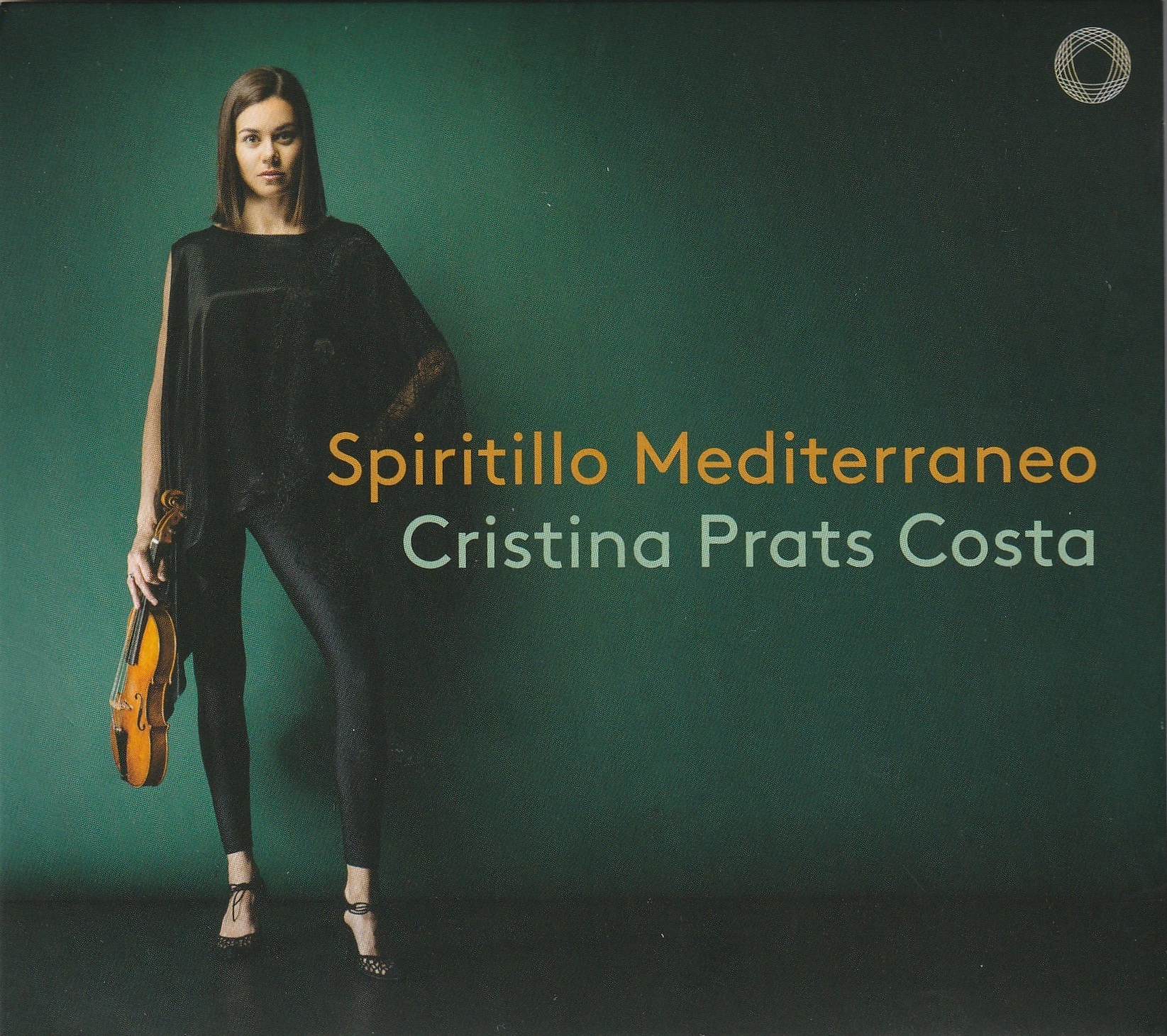
 The Spanish violinist Cristina Prats Costa, who has played with Tafelmusik and the Toronto Consort, makes her solo album debut with Spiritillo Mediterraneo, on which she invites listeners into the vibrant and expressive sound world of 17th- and early 18th-century Mediterranean music. She is supported by Charlotte Nediger (harpsichord), Lucas Harris (archlute, theorbo, Baroque guitar), Michael Unterman (cello), Joseph Phillips (viola da gamba and bass) and Nagmeh Farahmand and Esmeralda Enrique on percussion (Pentatone PTC 5187 582 pentatonemusic.com/product/spiritillo-mediterraneo).
Costa stresses that the Mediterranean was not a boundary in this period but a crossroads, blending Italian virtuosity, Spanish rhythmic fire and French elegance. Composers represented are Andrea Falconieri, Heinrich Ignaz Franz von Biber, Nicola Matteis, Santiago de Murcia, Gaspar Sanz, Antonio Vivaldi, Johann Schop, José de Nebra and Jean-Féry Rebel. It’s a dazzling array of spirited, colourful music that simply jumps out at you from the CD, all brilliantly played and with outstanding recording ambience and balance.
Tafelmusik connections abound: Nediger and Unterman are members; Julia Wedman is the producer; Tafelmusik’s Toronto base Trinity-St. Paul’s United Church was a recording venue; and the “wonderful” 17th-century Bolognese violin that Costa uses was loaned to her by Aisslinn Nosky.
The album “explores the imagination, freedom, and ornamented dialogue that defined Baroque performance,” says Costa, and it does so quite superbly.
Listen to 'Spiritillo Mediterraneo' Now in the Listening Room
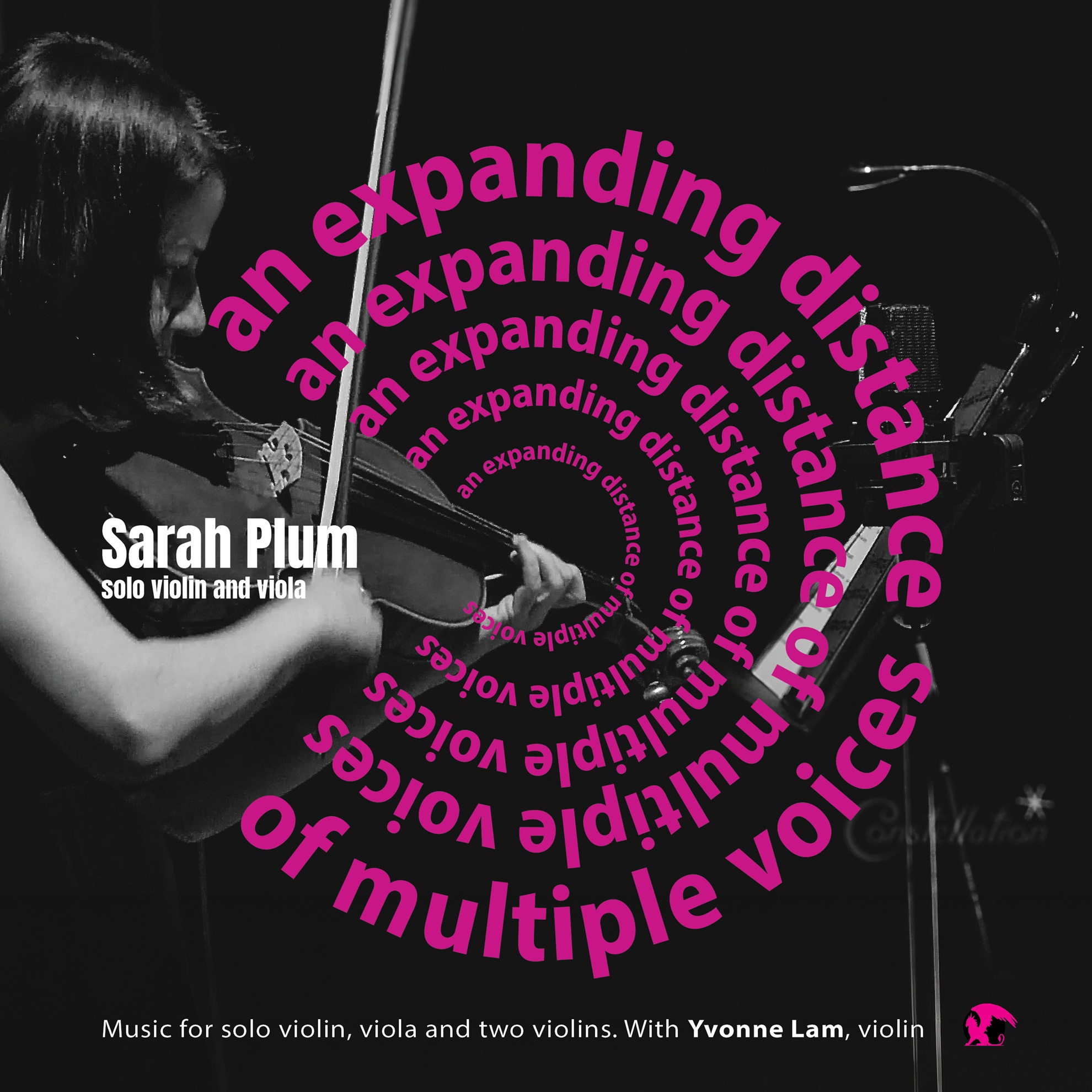 Sarah Plum adds to her already significant discography with An expanding distance of multiple voices, an album of six contemporary works for solo violin and viola (Blue Griffin BGR729 sarahplum.bandcamp.com/album/an-expanding-distance-of-multiple-voices).
The title work is a five-movement suite of variations by Jeffrey Mumford (b.1955). Olive Cotton, by Osnat Netzer (b.1979) was originally for solo cello and transcribed for viola by Plum in 2020.
Canticle (in memoriam David Foster Wallace) by Sidney Corbett (b.1960) was written for Plum, at whose suggestion a Bach solo sonata was the inspiration. Moves and Remains for scordatura violin from 2017 by Tonia Ko (b.1988) is a meditation on the will to linger, inspired by a Virginia Woolf quote.
Yvonne Lam joins Plum on Elegy for two violins by Mari Takano (b.1960), also written for Plum, and Sirens for solo violin and reverb pedal from 2018 by Ben Fuhrman (b.1982) closes the disc. All bar the Mumford are world-premiere recordings.
Plum’s technique in challenging works is faultless, but it’s her close affinity with the music that ensures such convincing interpretations.
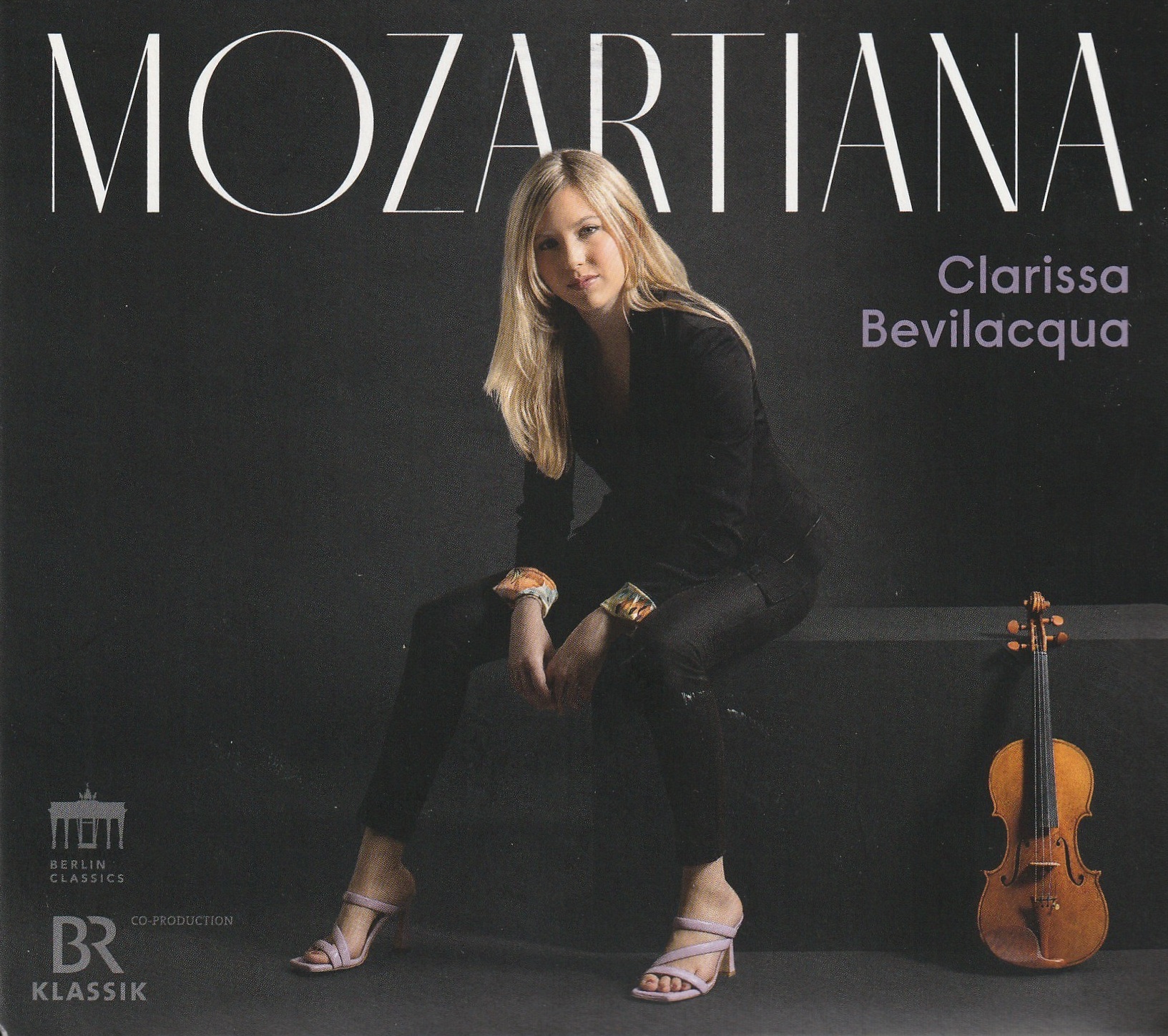 Mozartiana, the new CD from violinist Clarissa Bevilacqua is a reflection on Mozart’s legacy (Berlin Classics 0304344BC berlin-classics-music.com/en/album/885470044910-mozartiana).
Florian Willeitner’s To be Mozart or not to be! was commissioned for the 2020 Salzburg International Mozart Competition which Bevilacqua won at age 18. Based on motifs from the K216 G Major violin concerto it’s at the centre of a recital that opens with the delightful Sonata for Violin and Piano in B-flat Major Op.7 by Franz Xaver Mozart, Mozart’s youngest son.
Hindemith’s solo Sonata Op.31 No.2 ends with variations on the Mozart song Komm, lieber Mai. An aria from Le Nozze di Figaro is the source for Beethoven’s early 12 Variations on “Se vuol ballare” in F Major, WoO40. Larissa Cidlinsky joins Bevilacqua in Schnittke’s Moz-Art for two violins, based on fragment K416d.
Three works were written especially for this album: Sophia Jani’s Cadenza for Violin and Piano; Jorge A. Bosso’s Ascoltate, dei della vendetta (Der Hölle Rache) and Giovanni Sollima’s Trazom, a dazzling end to a really impressive CD.
Martina Consonni is the excellent pianist in the Mozart, Beethoven and Jani works.
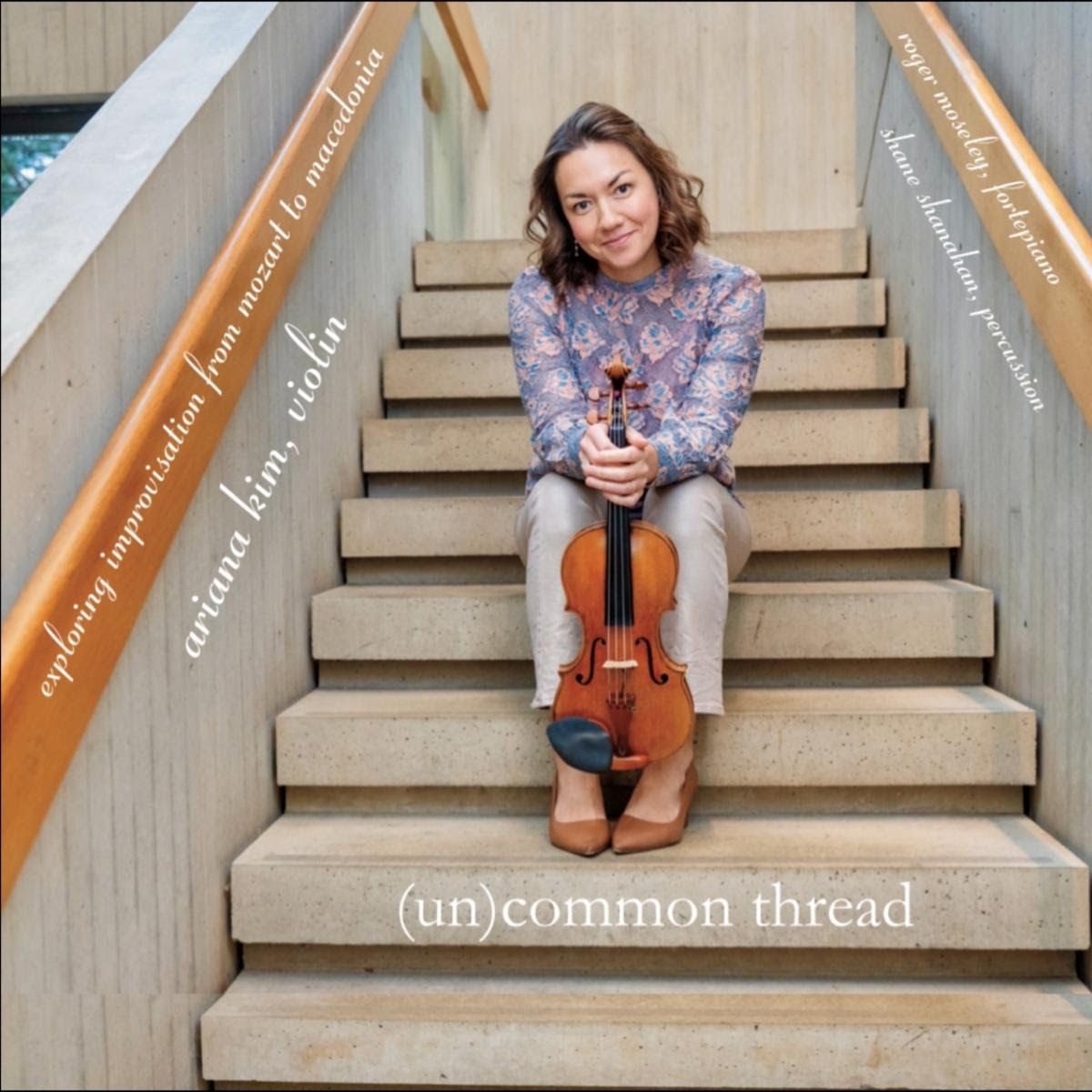 On (un)common thread the trio of violinist Ariana Kim, pianist Roger Moseley and percussionist Shane Shanahan explores musical improvisation through two seemingly disparate lenses: 18th-century violin sonatas with fortepiano and world folk music with percussion, Kim noting that the album was born from a curiosity and love for improvisation in the languages of Western classical and Americana traditions (Saffron Soul Records SNH-ED-519061 arianakimviolin.bandcamp.com/album/un-common-thread-exploring-improvisation-from-mozart-to-macedonia).
For the first half of the CD Kim uses gut strings and Moseley an historical replica pianoforte, with tuning dropped to 430 Hz. The resulting performances of Mozart’s Sonata in B-flat Major for Violin and Pianoforte K454 and Beethoven’s Sonata in E-flat Major for Violin and Pianoforte, Op.12 No.3 are an absolute delight.
An improvisation for solo violin, Bahudari (Raga Aalapana) reflecting Kim’s stint studying South Indian music in Mysore, acts as a bridge to the second half of the disc, all of which is for violin and percussion. Shanahan’s three pieces Audacity, Oil Field Fires and Khanda Jog, reflecting his roots in folk music from India, the Middle East and West Africa share the programme with traditional Macedonian and Bulgarian folk music and Kim’s own improvised Migrating Home for violin and looper pedal.
It’s a fascinating journey.
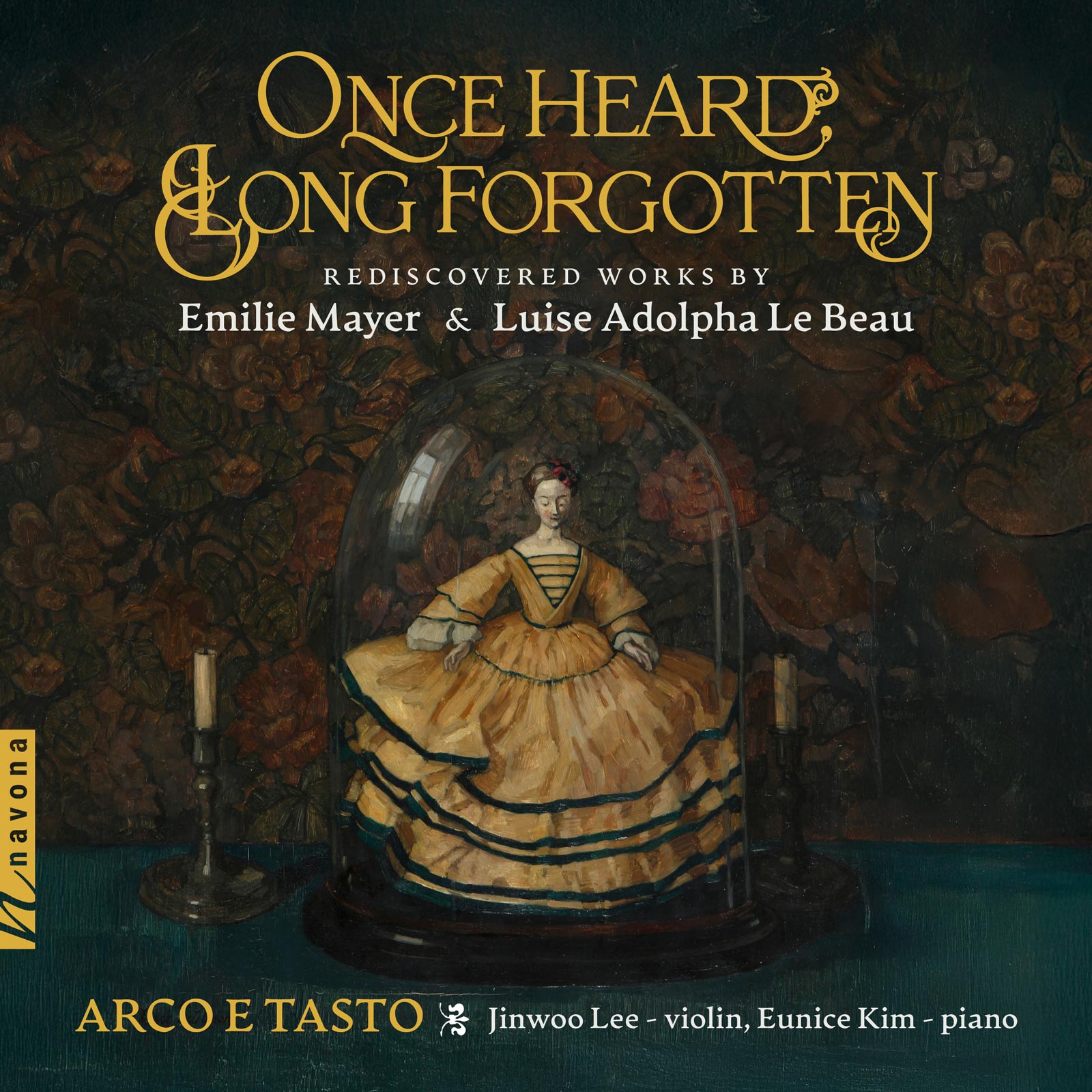 Two women who made significant contributions to the German Romantic violin and piano repertoire are celebrated on the digital release Once Heard, Long Forgotten – Rediscovered Works by Emilie Mayer & Luise Adolpha Le Beau, in really persuasive and beautiful performances by the Arco e Tasto duo of violinist Jinwoo Lee and pianist Eunice Kim (Navona NV6852 navonarecords.com/catalog/nv6852).
Mayer (1812-83) and Le Beau (1850-1927) both came from non-musical families, started composing at an early age, never married and pursued serious musical studies across Germany. Unlike Fanny Mendelssohn and Clara Schumann, however, they had no established family connection to counter the discrimination that women endured.
Le Beau’s Violin Sonata Op.10 is strongly reminiscent of Grieg, and her Romance Op.35 and Elegy Op.44 are beautifully crafted. Mayer’s Violin Sonata in E-flat Major and in particular her gorgeous Violin Sonata in F Major, Op.17 explain why she was once known as the “female Beethoven.” Her lovely Notturno Op.48 closes a hugely satisfying release.
Warm, crystal-clear violin playing and supportive piano playing, all beautifully recorded, make a compelling case for two composers whose music cries out to be much better-known.
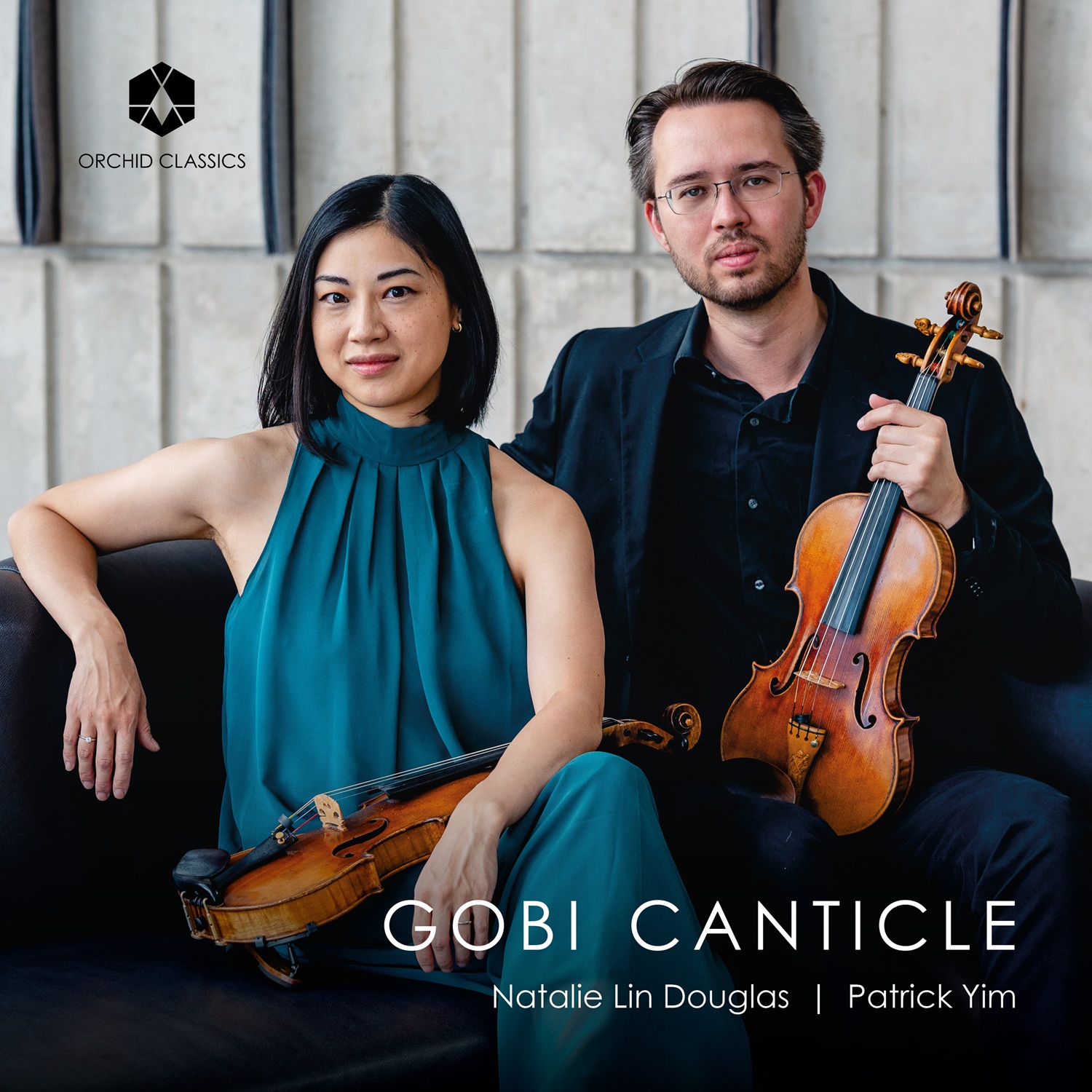 On Gobi Canticle the duo of Natalie Lin Douglas (violin) and Patrick Yim (violin and viola) perform duo works by ten contemporary composers of Asian heritage, all but one of the works a premiere recording (Orchid Classics orchidclassics.com/releases/orc100426-gobi-canticle/).
Lei Liang’s fascinating title track, which uses ritual chants and folk melodies from Mongolia as its source sets the stage for a delightful recital of works for violin duo or violin and viola by Zhou Tian (b.1981), Chen Yi (b.1953), Kai-Young Chan (b.1989), Yao Chen (b.1976), Texu Kim (b.1980), Meilina Tsui (b.1993), Clarence Mak (b.1959) and Jungyoon Wie (b.1990), all of whose works were written post-2000. The one exception is the 1959 Retrogade by Doming Lam, who died aged 96 in 2023.
Yim says that these works “combine personal experience, seasonal imagery, and cultural tradition, showcasing the rich heritage of Asia and the innovative, colourful, and exciting voices of today’s leading composers.” Advanced techniques and technical challenges abound in a finely-played programme that creates a fascinating soundscape.
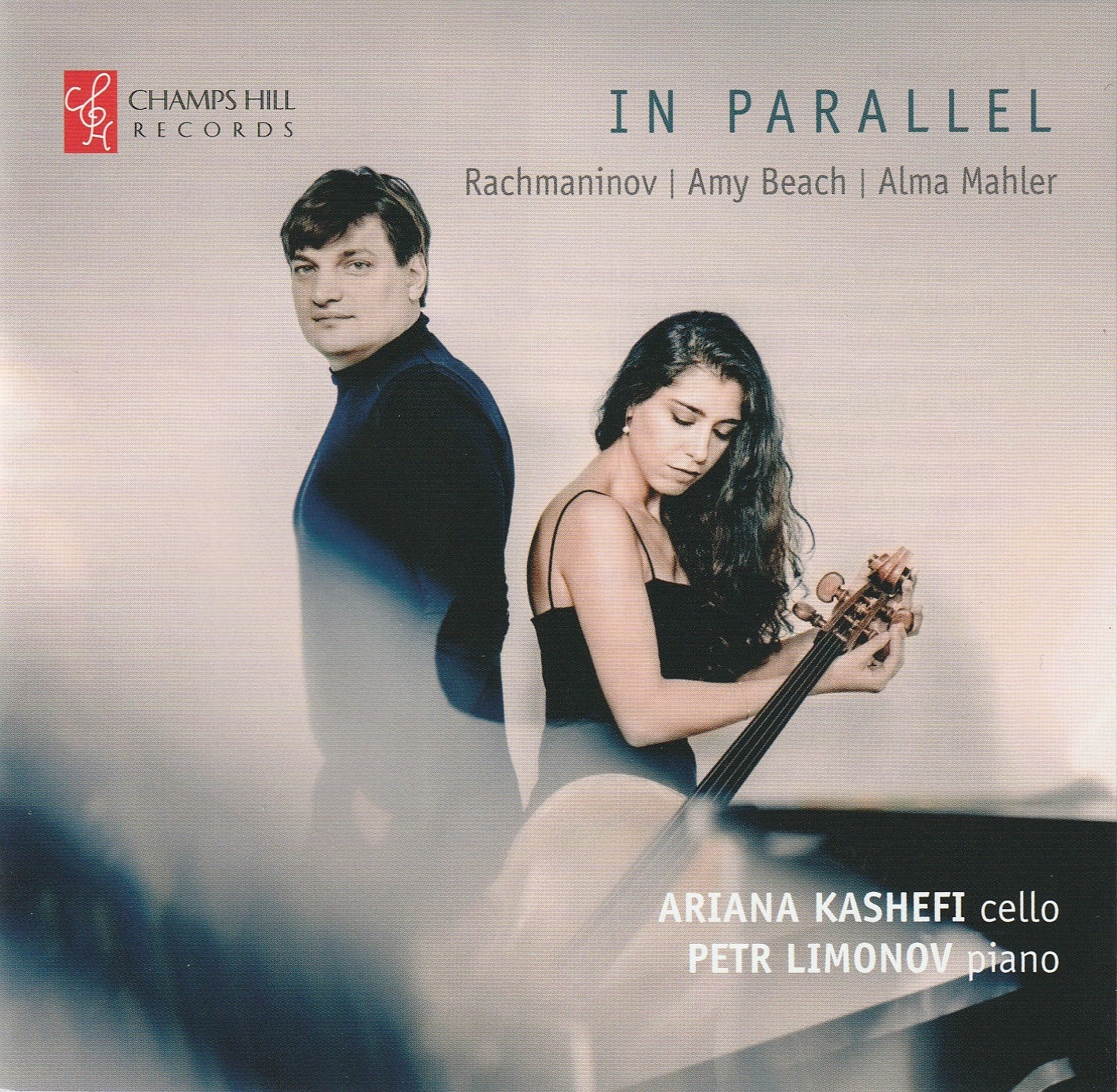 There’s yet another simply gorgeous performance of the ravishing Rachmaninov Cello Sonata Op.19, this time by the British-Persian cellist Ariana Kashefi and the Russian-born British pianist Petr Limonov on In Parallel, a new CD featuring turn-of-the-century works by Rachmaninov, Amy Beach and Alma Mahler (Champs Hill Records CHRCD177 propermusic.com/collections/ariana-kashefi-petr-limonov?srsltid=AfmBOoqrOGc1jvgiMjGyjYaes4VJw5bWgDInlj6efkb8txxiG5O7mVpr).
All three composers were writing at about the same time – hence the CD’s title – and despite being from very different backgrounds shared a deeply expressive romantic spirit. The Rachmaninov sonata is by far the biggest work on the CD, but the rich warmth, passion and sensitivity that define the performance are present throughout the disc. The other Rachmaninov pieces are the song Zdes‘ khorosho Op.21 No.7 and the piano Prelude Op.23 No.10 in a contemporary arrangement by the cello sonata’s dedicatee Anatoly Brandukov.
Beach is represented by Dreaming, Op.15 No.3 from the four Sketches for piano and by her own cello arrangement of the 3 Pieces for Violin and Piano Op.40, with Alma Mahler’s dreamlike song Die stille Stadt ending a quite beautiful CD.
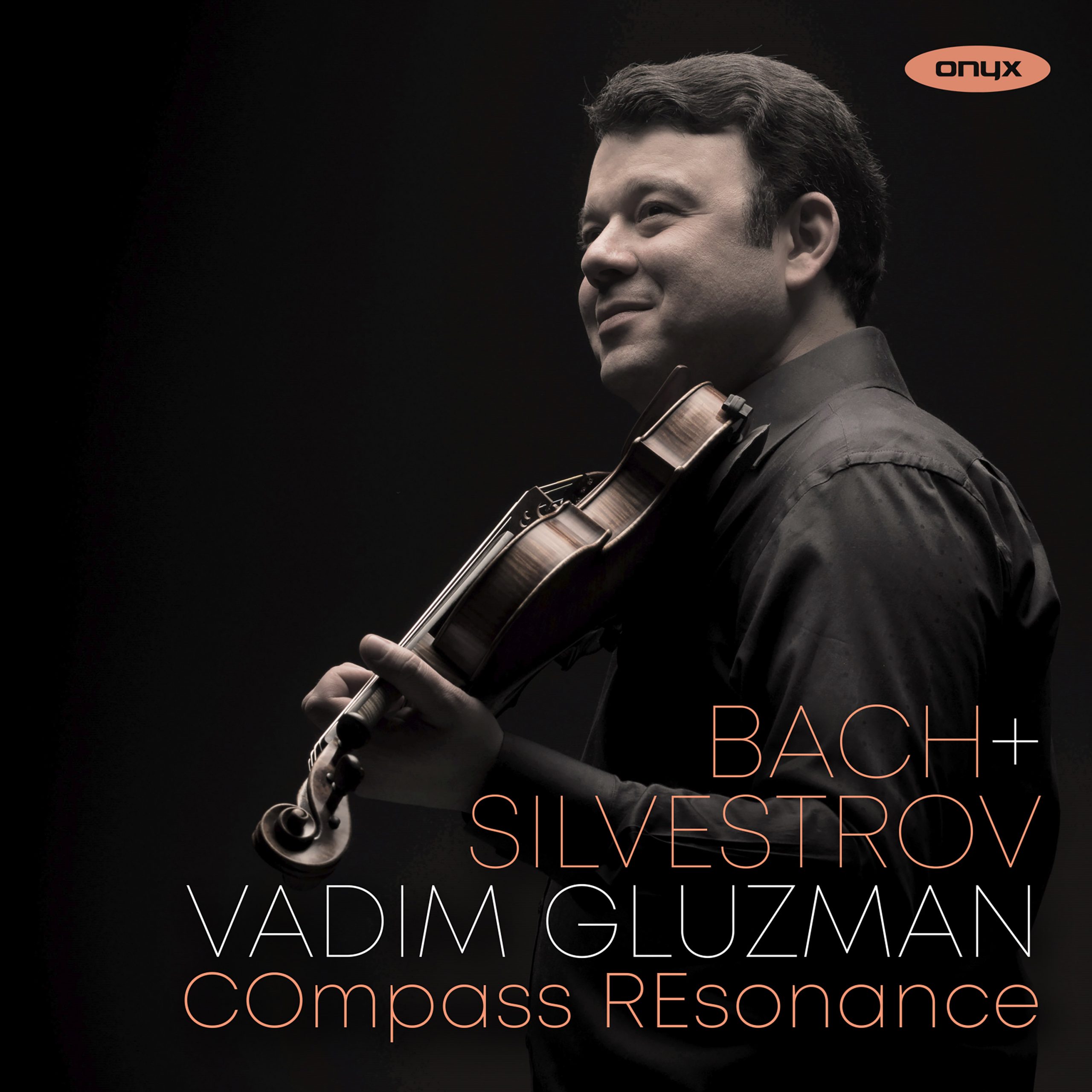 On Bach + Silvestrov violinist Vadim Gluzman joins the Boulder, Colorado based string chamber ensemble COmpass REsonance (CORE) in simply outstanding performances of J.S. Bach’s Violin Concertos in A Minor BWV1041, E Major BWV1042 and D Minor BWV1043, with the group’s music director Zachary Carrettin the second violin in the latter work. Three works by Valentyn Silvestrov influenced by and dedicated to Bach complete the disc (ONYX4273 onyxclassics.com/release/bach-silvestrov).
Using baroque bows and modern tuning, and comprised of two first violins, two second violins and one each of viola, cello and bass plus harpsichord continuo, the CORE ensemble produces a captivatingly intimate sound, the solo violin never predominating but running through the orchestral soundscape like a silver thread through a tapestry.
The Silvestrov works, which Gluzman feels are united with the music of Bach “by purity, spirituality and clarity of expression,” are the 2 Serenades for violin solo from the 2008/9 Tryptych, played between the concertos, and the 2009 Hommage à J.S.B. as the final track, Mina Gajić the pianist in the latter.
The Bach in particular is breathtakingly beautiful playing; if you only want one CD of these concertos you’d be hard pushed to find a better one.
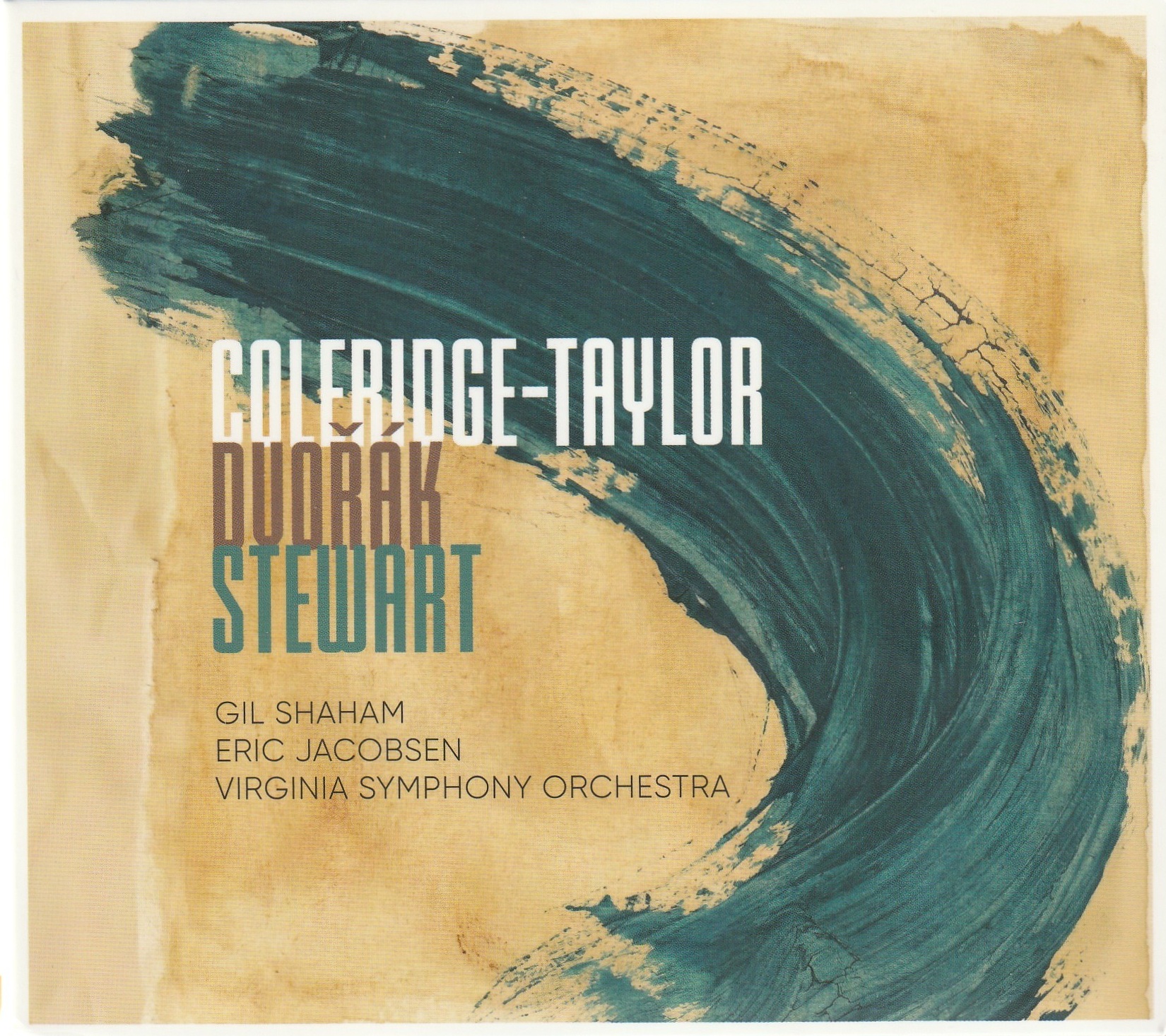 Two composers who both found inspiration and success in the United States are featured on a new CD from Gil Shaham and the Virginia Symphony Orchestra under Eric Jacobsen, with performances of the violin concertos by Coleridge-Taylor and Dvořák recorded live in March 2023 (Canary Classics CC27 canaryclassics.com/album/coleridge-taylor-dvorak-stewart).
Coleridge-Taylor’s Violin Concerto in G Minor, Op.80 has an opening that could easily make you think it was by Max Bruch, and an orchestral texture that Shaham understandably says sounds “almost Elgarian.” Its style, however, belies its composition date, having been written for Maud Powell in 1912, a year before The Rite of Spring and when Schoenberg was moving towards throwing tonality out of the window.
Both composers expressed their ethnic identity in the concertos, the African-English Coleridge-Taylor with the infusion of Negro Spirituals and Dvořák, in his Violin Concerto in A Minor, Op.53 with Czech folk traditions.
The premiere of F. Harper, Op.46 No.2 from Curtis Stewart’s VSO-commissioned The Famous People, a series of re-compositions based on Dvořák’s Slavonic Dances, each dedicated to a significant Black leader, acts as an encore.
Shaham’s stylish playing, as always, is an absolute delight.
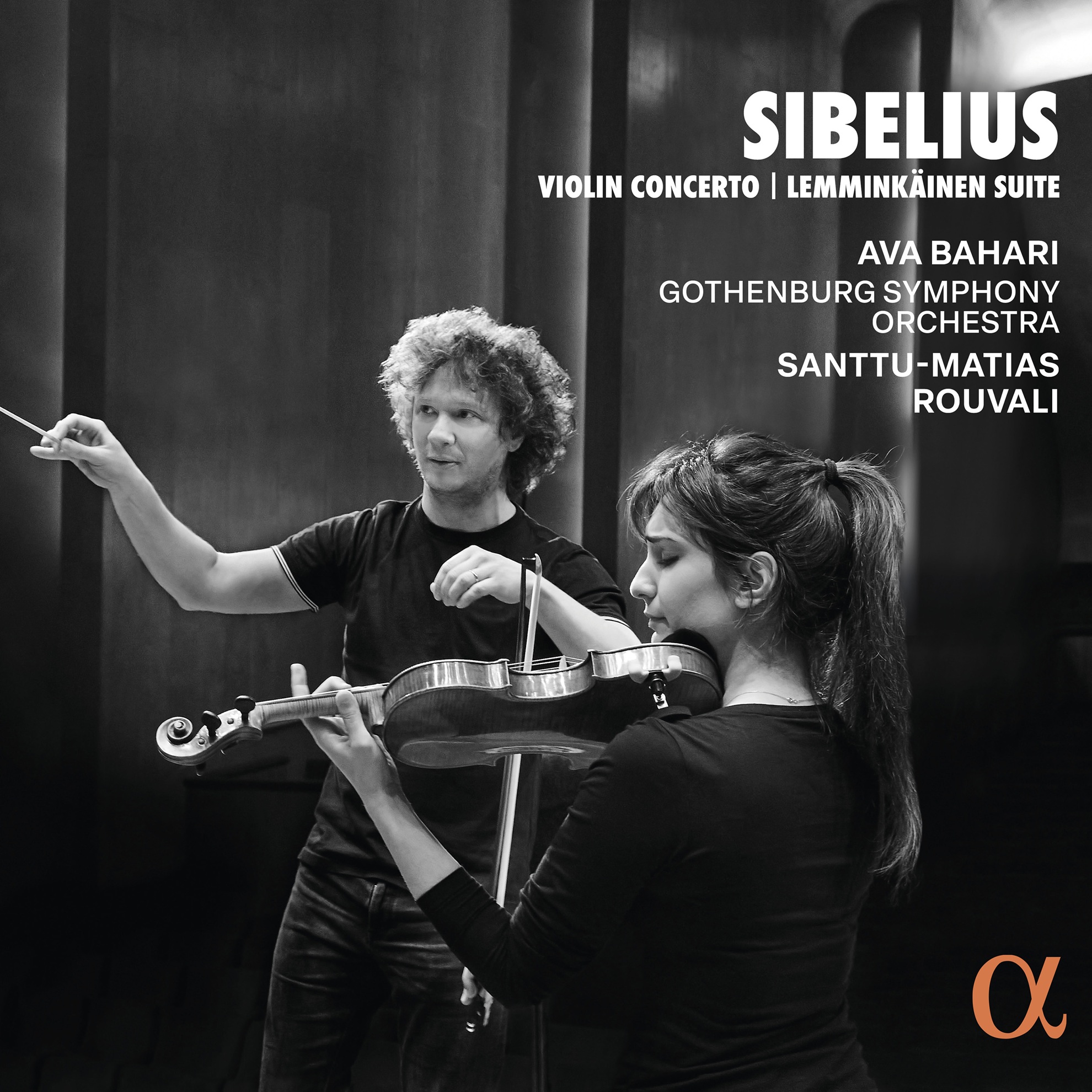 Conductor Santtu-Matias Rouvali and the Gothenburg Symphony Orchestra have spent five years recording the Sibelius symphonies and symphonic poems, and they continue the cycle with Sibelius Violin Concerto & Lemminkäinen Suite, with the young Swedish violinist Ava Bahari the exquisite soloist (Alpha Classics ALPHA 1215 outhere-music.com/en/albums/sibelius-violin-concerto-lemminkainen-suite).
There’s a brooding darkness and intensity to a first movement that still retains warmth and has a real impetus, the same rhythmic drive and momentum also propelling the finale. Bahari’s strength is never overpowering, but always supremely confident and superbly nuanced. The orchestral support is exceptional, with outstanding brass and an at times revelatory attention to inner details.
The Lemminkäinen Suite Op.22 from 1896 consists of four legends from the Finnish epic verse collection The Kalevala, Lemminkäinen being the dashing young hero of the tales. The inner movements, including The Swan of Tuonela are descriptive pieces, while the two outer movements point inexorably towards the composer’s mature symphonic style.
Again, absolutely superb orchestral playing, brilliantly recorded.
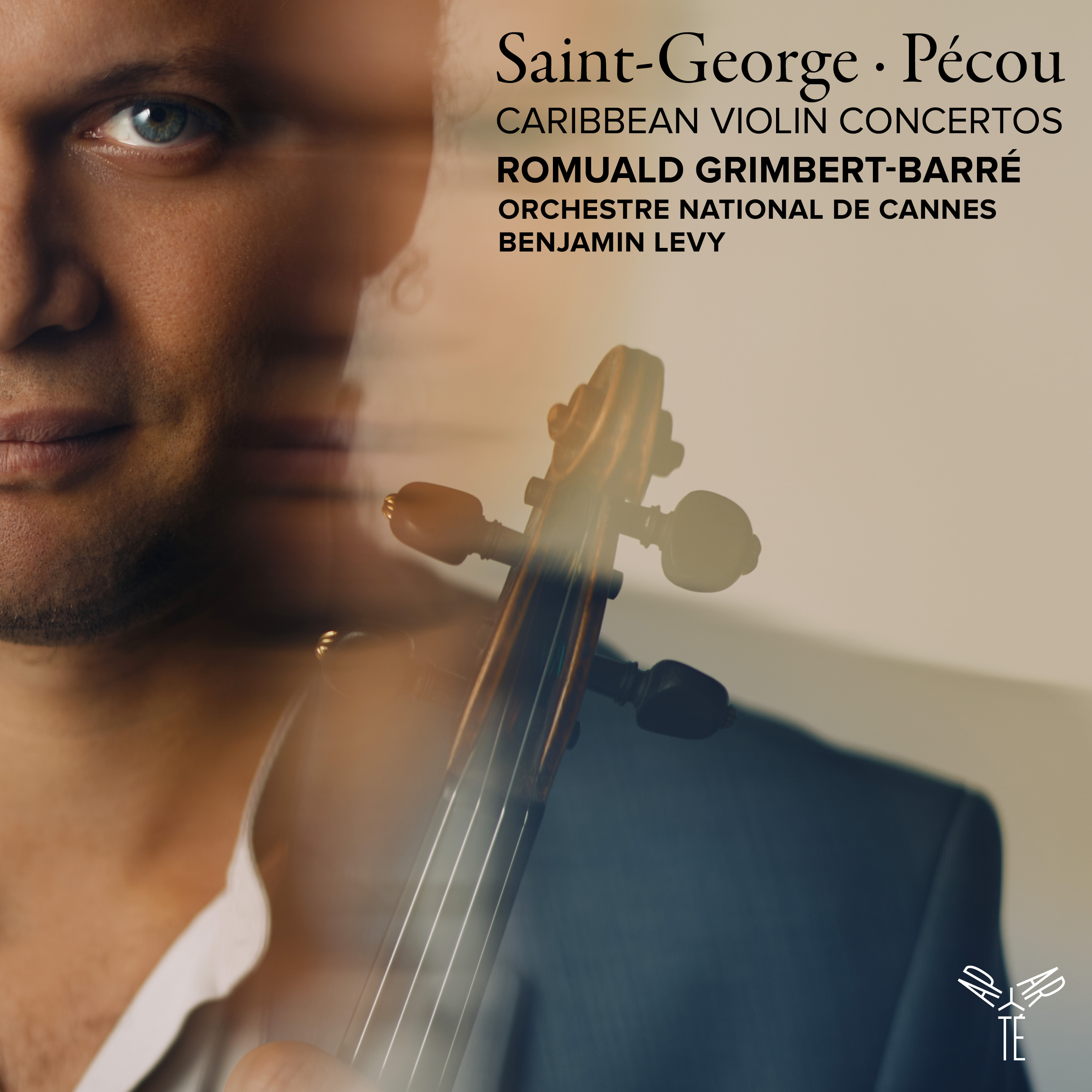 Saint-George & Pécou Caribbean Violin Concertos presents a new recording of two violin concertos by Joseph Bologne, Chevalier de Saint-George, this time paired with a brand new concerto dedicated to the Guadeloupe-born musician, fencer, horseman, soldier, revolutionary and Freemason who captivated Paris in the second half of the 18th century. Romuald Grimbert-Barré is the violinist, supported by the Orchestre National de Cannes under Benjamin Levy (Aparté AP421 romualdgrimbert-barr.bandcamp.com/album/saint-george-p-cou-caribbean-violin-concertos).
The two Saint-George works are the Violin Concerto in A Major, Op.5 No.2 from 1775 and the Violin Concerto No.9 in G Major, Op.8 No.2 from 1777. Both are delightful works stylistically close to Mozart’s five concertos of 1773 and 1775.
Thierry Pécou’s 2025 Concerto “Hommage au Chevalier de Saint-George” for violin and chamber orchestra receives its premiere recording here. Pécou has the violin part represent the man himself by referring to key elements in his life and works – his fencing and military career, his birthplace and his Freemasonry – although it’s difficult to discern anything other than a standard contemporary concerto.
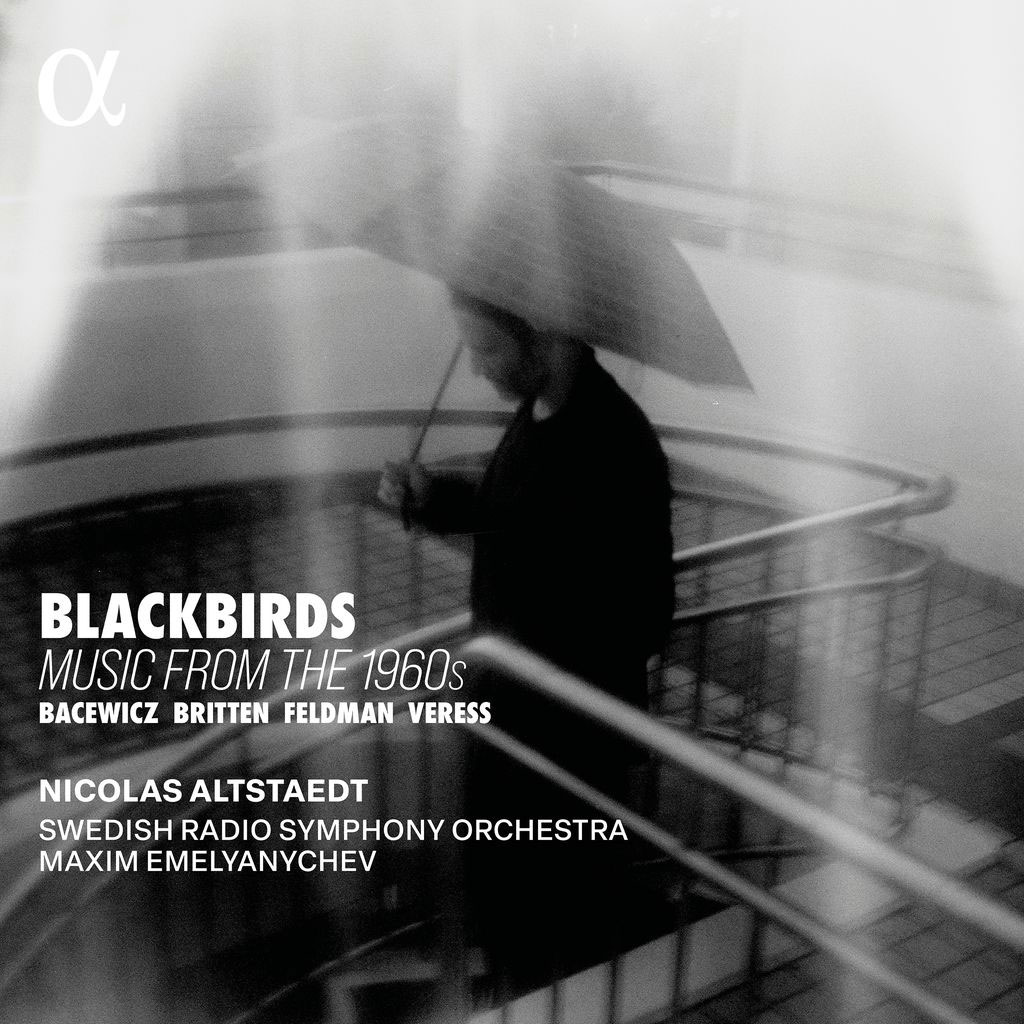 On Blackbirds – Music from the 60s cellist Nicolas Altstaedt presents an eclectic programme ranging from solo cello to cello and orchestra. Maxim Emelyanychev conducts the Swedish Radio Symphony Orchestra and is also the pianist in two of the works (Alpha Classics ALPHA 1213 outhere-music.com/en/albums/blackbirds).
The 1963 Cello Concerto No.2 by Grażyna Bacewicz is difficult to describe, the cello being less a solo instrument in the traditional manner but more an intrinsic part of the scoring, described by the composer as a connecting thread essentially holding everything together.
Morton Feldman’s Durations II for Cello and Piano from 1960 is a brief, very slow and very quiet piece with independent choice of tempo and note lengths for both performers, Feldman wanting “a minimum of attack. Dynamics are very low.” No editing was possible, this being the last of four takes.
There are solid performances of Britten’s Cello Sonata Op.65 from 1961 and the 1967 Sonata for Solo Violoncello by Sándor Veress, a work that clearly should be much better known and more frequently performed.
A rather strange version of Paul McCartney’s Blackbird closes the disc, with lutenist Thomas Dunford’s soft instrumental and vocal tracks almost drowned out by the superimposed cello variations.
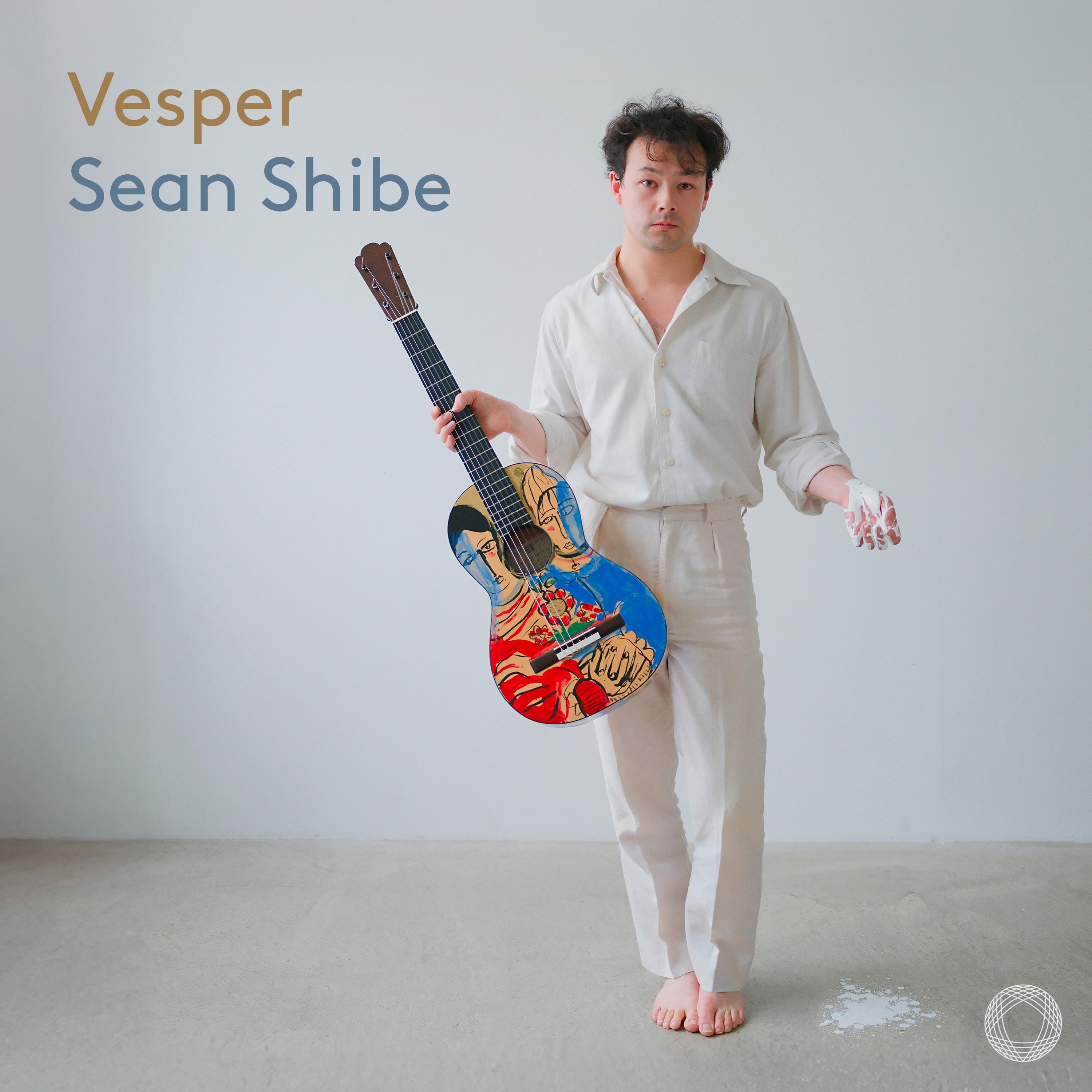 I could spend the entire column discussing Vesper, the remarkable CD of premiere recordings of guitar music by Thomas Adès, Harrison Birtwistle and James Dillon that the Scottish guitarist Sean Shibe describes as exploring the potential of the guitar in the first quarter of the 21st century (Pentatone PTC 5187 518 pentatonemusic.com/product/vesper).
Merely listing the works – Adès’s Forgotten Dances (2023) and Habanera (2016), Birtwistle’s Beyond the White Hand: Construction with Guitar Player (2014) and six other short pieces, and Dillon’s 12 Caprices (2025) – doesn’t begin to describe the intrinsic relationships addressed in the 32-page booklet essays by Hugh Morris and Jonathan Leathwood.
For the Julian Bream-commissioned Beyond the White Hand Leathwood worked with Bream and Birtwistle, who wrote Guitar and White Hand and two other short pieces for his son Silas, whose friend Forbes Henderson arranged the three Birtwistle piano pieces here for guitar and also introduced Shibe to Bream’s esteemed luthier Simon Ambridge, whose Hauser-style guitars Shibe plays on the CD.
The end result is an integrated recital of the highest musical quality, with Shibe’s all-encompassing technique producing a stunning array of what he calls “a startlingly wide range of unique, and, often, totally new sonorities.”