Why do I so often talk about myself as I write this column? Personal connections open doors, and ears, especially with the esoteric field of contemporary music. As I learned during my time as general manager of New Music Concerts from founder Robert Aitken, hearing firsthand from the composer – for the audience at pre-concert chats and post-concert receptions – can really foster understanding and curiosity about challenging repertoire and approaches to music-making. Of course, I also had the opportunity to get to know the composers during their often-week-long rehearsal sessions with our musicians.
 Brady: New Music Concerts was not my first opportunity to meet composers in person and discuss their work, however. From 1984 through 1991 I was the host of “Transfigured Night” on CKLN-FM and in my first year of broadcasting I had the pleasure of meeting Tim Brady, an accomplished jazz guitarist who also composes for the concert hall. I believe he was the first guest on my overnight radio program. We discussed an album of his piano music recorded by Marc Widner on the Apparition label. This was the first of many encounters with this prodigious artist over the past 40 years, including a subsequent interview about his Chamber Concerto commissioned for New Music Concerts’ 15th anniversary event in 1986. There were numerous collaborations during my own tenure with NMC, most notably when we presented his opera Three Cities in the Life of Doctor Norman Bethune in 2005 and the evening-long multi-media creation My 20th Century in 2009. I also had the opportunity to perform in Brady’s Instruments of Happiness project While 100 Guitars Gently Weep – Concerto for George at Luminato in 2018, so my relationship with Tim is many-faceted.
In my column last issue, I speculated that Alice Ping Yee Ho may be Canada’s most prolific and most recorded composer, but I now realize that Brady’s output rivals hers, with some 30 CDs of his own, plus a dozen more that include his work. There are also four no longer available vinyl LPs, three of which are still in rotation on my turntable, including the abovementioned Music for Solo Piano.
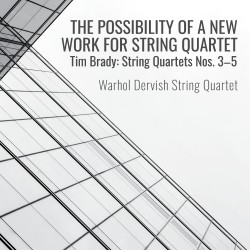
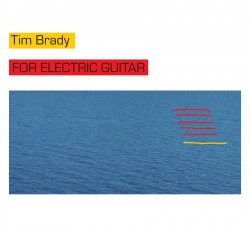 2025 saw two releases, a double CD of solo (although many layered) works, For Electric Guitar (peopleplacesrecords.bandcamp.com/album/for-electric-guitar) and The Possibility of a New Work for String Quartet: Tim Brady String Quartets Nos. 3-5 which features the Montreal-based Warhol Dervish String Quartet (leaf.music/leaf-music-tim-brady-and-warhol-dervish-string-quartet-present-the-possibility-of-a-new-work-for-string-quartet). This album’s name is derived from the String Quartet No.3 “The (Im)Possibility of a New Work for String Quartet.”
Brady says “In March 2019 I woke up one morning with this idea in my head: It’s impossible to write another string quartet – so many have been written – there is literally nothing left to do with the medium. I needed to think of the string quartet not as a finished product (a score) but as a process for making music. So, I wrote a bunch of instructions on how the members of a quartet should compose their own quartet. These instructions are… ‘Write a fake folk tune,’ ‘Sustain notes in F minor’ ‘Make a big noise,’ etc.—it never tells them precisely where to go or what to do but jump-starts the collaborative process.” I find this iteration of the work – the players are instructed to tear up the score at the end of the performance to insure no two presentations will be alike – very convincing, and I was captivated by the “fake folk song,” a kind of a dirge reminiscent of some of the rustic children’s songs that Béla Bartók collected. Not having read the program note in advance, I had no clue that this wasn’t through-composed, it seemed so organic.
Since sketching the outline for that work Brady has evidently found a way to reconcile himself to the medium, and the two subsequent quartets are fully fledged contributions to the genre. Brady says String Quartet No.4 from 2020 is “quite sparse and transparent, and generally slow and meditative. I also use quarter-tone harmonies in a few places in this piece... It gives a soft, almost fuzzy feel to these chords which suits the reflective nature of the work.”
“#5 was also totally unbidden. I woke up one morning in October 2022 (near the end of the pandemic when we all had time to sit and ruminate on many things, including string quartets) and had this idea: a really big multi-movement string quartet with lots of notes and big contrasts—why not? Say 30 minutes: a good chunk of time, something that the players and listeners could really sink their teeth (ears) into. The plan is five movements—including two slow movements, with ample opportunity for the players to push their rhythmic agility and ensemble acuity. It’s a bit of a ‘chops-buster,’ but Warhol Dervish give an impressive performance.” And that’s true of all three works. By the way, Brady tells us that he has since written a sixth string quartet.
Regarding For Electric Guitar I’ll simply quote from the press release: “The three works it encompasses are all solo guitar pieces that he composed for himself to play. Throughout its 80+ minute runtime… Brady manages to embrace a plethora of styles and approaches with languid ambiences and textures, driving post-minimalist composition, nods to prog and jazz, and vital gestural moments that relate to modern concert music. The titular piece even echoes the format of a concerto, with Brady varying his tone to allow him to behave as both the soloist and ensemble.” It’s a striking achievement.
And if you found my mention of Brady’s 100 Guitars project intriguing you can check out the latest
Installment from the 2025 Brisbane Festival on YouTube (youtube.com/watch?v=Kqfjd4aAsO4&t=11s), where you can also find the George Harrison tribute (youtube.com/watch?v=3M_4_FTW1wY).
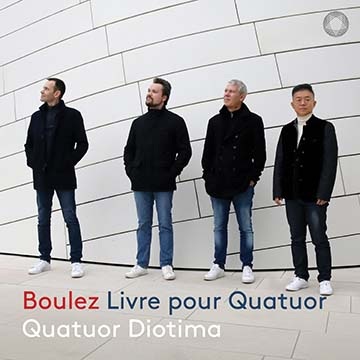
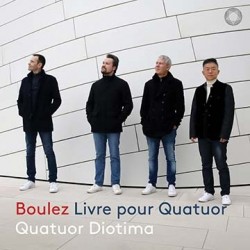 Boulez: A couple of issues ago I wrote extensively about having the opportunity to spend some time with Pierre Boulez, one of the truly great composers and conductors of our era, during my time as general manager of New Music Concerts. The context of that reminiscence was the release of a seemingly definitive set of recordings of his collected works, Boulez the Composer (DG 4847513, 13 CDs) which came out to commemorate the 100th anniversary of his birth. I recently found a stunning complement to that collection, Quatuor Diotima’s own tribute to Boulez’s centenary, a recording of his Livre pour quatuor (pentatonemusic.com/product/boulez-livre-pour-quatuor). The album features the world premiere of the piece’s fourth movement, which the composer conceived in close cooperation with the members of Diotima (who, incidentally, performed for New Music Concerts back in 2011).
“Working on Pierre Boulez’ Livre pour quatuor was one of the founding projects of the quartet when we began in 1996. However, the project had to be postponed due to an ongoing collaboration on the same score with the Parisii Quartet. About fifteen years later, Boulez agreed to initiate a new collaboration with us around this piece. This took place within the context of a four-concert cycle project, ‘Schoenberg / Beethoven’ in which we proposed to include each of the six movements of the Livre pour quatuor between the works of those two Viennese masters, involving the creation of the fourth movement, which had previously remained unfinished… Unfortunately, severe vision problems forced [Boulez] to give up composing and conducting. The task of reconstructing this unfinished movement was therefore entrusted to Philippe Manoury. We are proud to have been associated with this project and delighted to have finally been able to record this complete version of the Livre pour quatuor.”
The Parisii’s 2001 recording of the then existing five movements was included in the DG set mentioned above. Thanks to this exquisite new release by the Diotima I can now consider my Boulez collection complete.
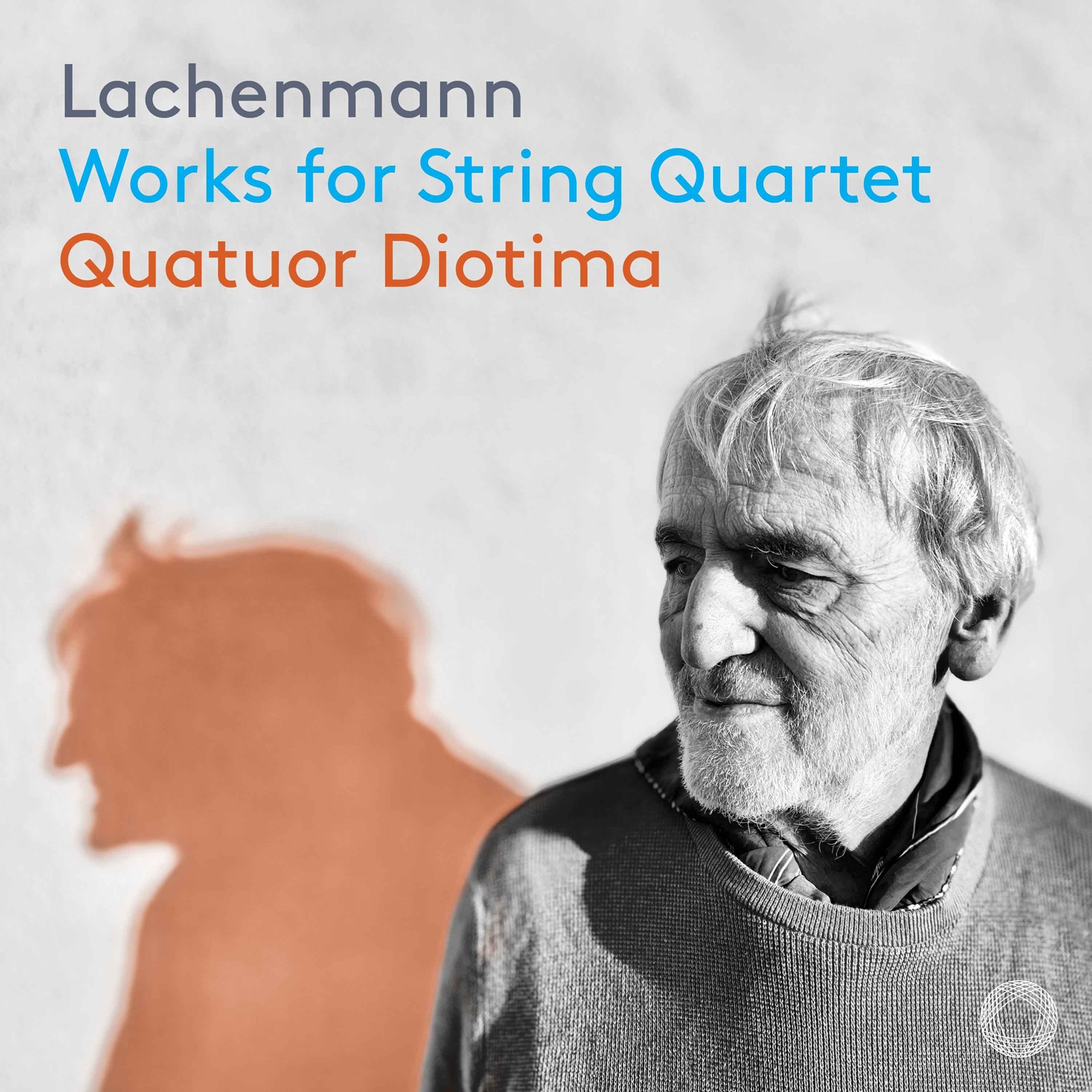
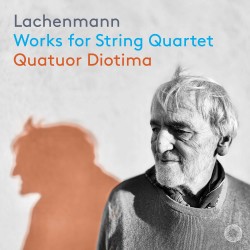 Lachenmann: Another iconic composer I had the pleasure of meeting through New Music Concerts is Helmut Lachenmann (b.1935). Known for his “musique concrète instrumental,” Lachenmann’s music makes extreme demands on the players, utilizing a plethora of unconventional playing techniques which produce unusual sounds from conventional instruments. Often entire pieces unfold without any traditionally “musical” tones, melodies or harmonies. This is exemplified on Lachenmann: Works for String Quartet (pentatonemusic.com/product/lachenmann-works-for-string-quartet), the fruit of a 25-year collaboration between Quatuor Diotima and that visionary composer.
Their first meeting in 1998, originally just a one-week workshop, sparked a deep artistic bond and a shared fascination with his radical approach to sound and listening. This album is the result of hundreds of hours spent in rehearsal, performance, and conversation with the composer. It doesn’t make for easy listening, even in comparison to the rigours of the music of Boulez, but patient and careful listening will reward the adventurous musical soul.
Quatuor Diotima is not the only ensemble to have benefited from working with Helmut Lachenmann. Back in 2003 an early iteration of the JACK Quartet came to Toronto for an intensive masterclass with him under the auspices of New Music Concerts. Fully matured, JACK would return to headline a concert co-presented by NMC with Music Toronto a dozen years later, but this encounter with Lachenmann was a formative experience for the young quartet.
 Wourinen: another iconic composer who graced the stage of NMC during my tenure is Charles Wuorinen (1938-2020). Perhaps best known for his opera Brokeback Mountain, Wuorinen’s uncompromising oeuvre encompassed solo works to large orchestral scores and included electronic compositions, such as 1970’s Time’s Encomium for which he won a Pulitzer Prize. A recent addition to his discography, MEGALITH (rezrecordz.com/megalith), comprises six works from the composer’s later years. JACK is joined by violist Miranda Cuckson and cellist Jay Cambell for Zoe (2012) which to my ear harkens back to the serialism of the Second Viennese School (rather than to the lush textures of Schoenberg’s own string sextet Verklärte Nacht).
The disc begins with Spin 5, a concerted work from 2006 for solo violin (Alexi Kenney) and an ensemble of 18 musicians conducted by James Baker, and also includes a piano concerto, the title work from 2014, featuring Peter Serkin and the Saint Paul Chamber Orchestra under Matthias Pintscher. Filled out with an extended work for solo oboe (Jacqueline Leclair) and mixed sextet, Buttons and Bows for cello (Michael Nicolas) and accordion (Mikko Luoma), and Scherzo for solo piano (Tengku Irfan) this collection is a testament to the importance of one of the most challenging American composers of the last half century.
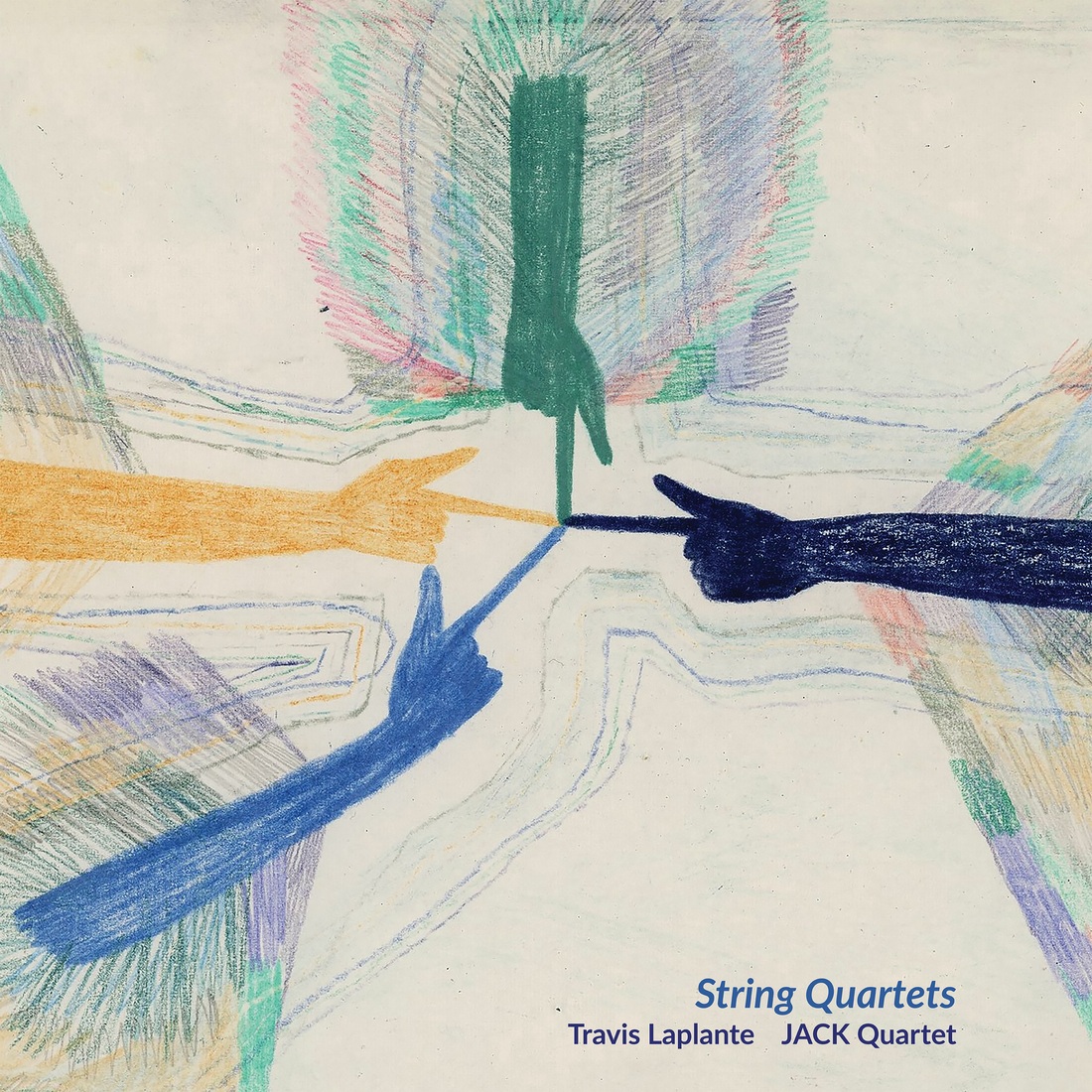
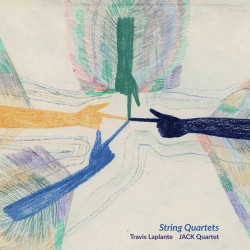 Laplante: While JACK Quartet is only peripherally involved in the Wuorinen recording, they are front and centre on Travis Laplante – String Quartets 1 & 2 (New Amsterdam Records travislaplante.bandcamp.com/album/string-quartets). The Brooklyn-based composer and saxophonist was deeply moved by the experience of reading W. A. Mathieu’s seminal theory book The Harmonic Experience. This led to an interest in resonance which led to studies with Mathieu, and ultimately to a PhD in composition at Princeton University.
Laplante’s fascination with resonance guided him into the world of just intonation using the Helmholtz-Ellis notation system, and into collaborating with JACK Quartet who have extensive experience working within this musical framework. This is particularly noticeable in the first movement of String Quartet No.1 where the slowly unfolding muted opening has a medieval quality. The second movement, which also opens quietly, develops into minimalist textures and arpeggios referred to as [Philip] Glass-esque by the composer.
“String Quartet No.2 leads the listener to harmonic spaces that challenge our perception of beauty and resonance. The longing melodic payoff at the end of the piece comes only after moving through an intense harmonic passage that pushes and pulls consonant harmony to its extremes. JACK Quartet performs at the very edge of intensity where any push can break the music, yet they remain in total control…”
I see I have, as usual, used up most of my allotment talking about myself, but there are several other striking discs which came our way that I want to bring to your attention before they get too “long of tooth.” To keep things brief, I’ll rely on the accompanying press releases for the basic info. I want to assure you, however, that after repeated listenings I can, in all cases, wholeheartedly embrace the publicists’ enthusiasms.
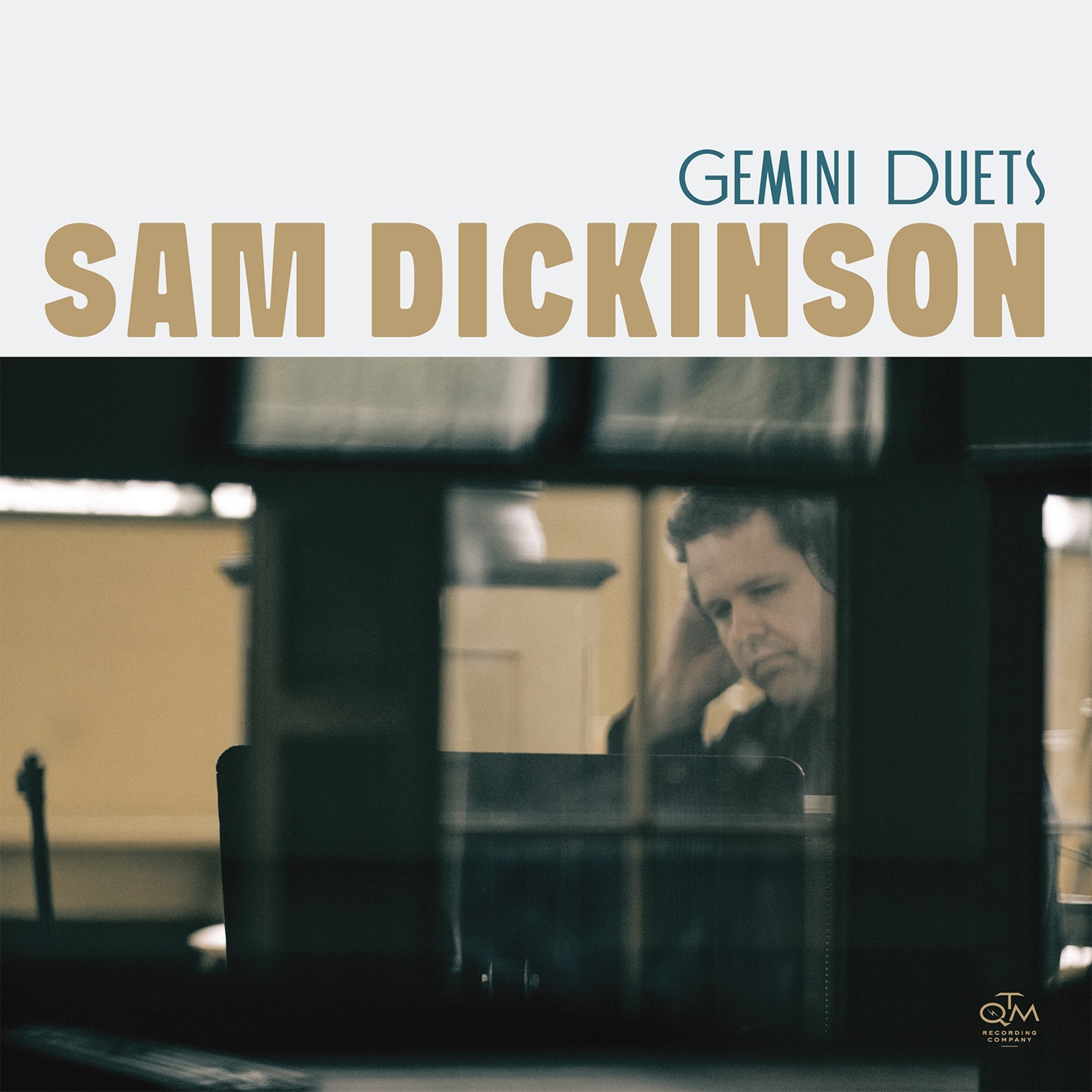
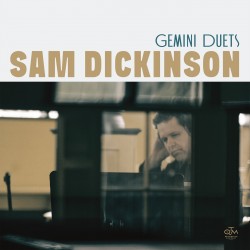 To start, I want to make amends to one of our reviewers, Sam Dickinson, whose disc Gemini Duets (tqmrecordingco.com/sam-dickinson-gemini-duets) somehow fell through the cracks when it was released last spring. “Gemini Duets was envisioned as a mainly solo guitar album ‘with a few overdubs,’ but quickly grew into a broader project offering dense contemporary soundscapes, multi-tracked duets, and unaccompanied vignettes. This exciting new music was captured at the historic Sharon Temple in Aurora, Ontario by Ron Skinner.
“Effects and electronics have been part of Dickinson’s sound since he first began playing guitar, and Gemini Duets has a healthy helping of these sounds without them taking away from the notes and song-forms.” Dickinson describes this mandate as “I’ve always been interested in how differently I play depending on my instrument and setup of choice. That said, I’m amply careful not to stray from the core of the music itself just to ‘experiment’ with new gadgets and gizmos.”
The result is a solid offering based in straight-ahead jazz idioms ranging from contemplative and balladic tracks to playful turns and rich, resonant soundscapes.
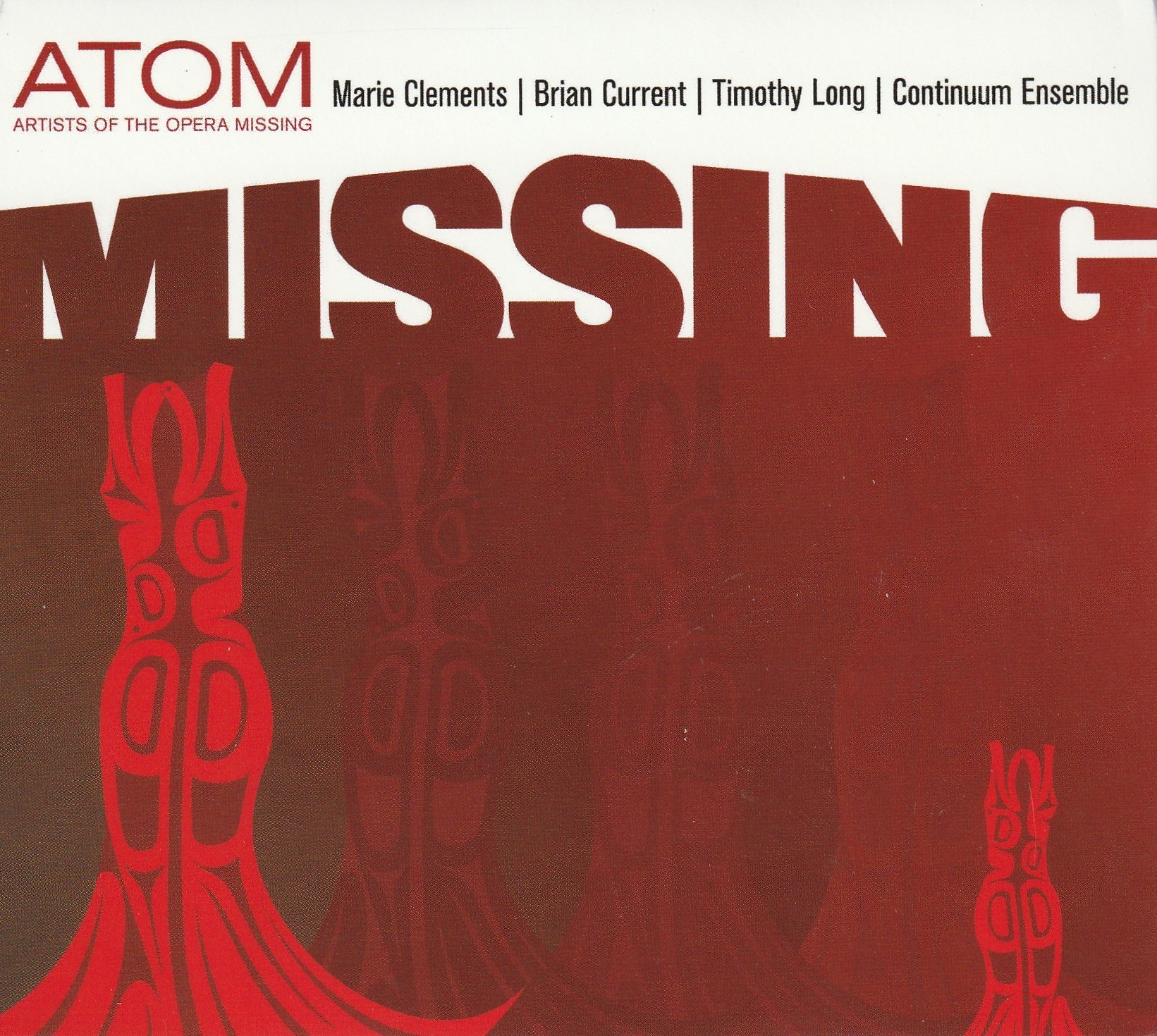
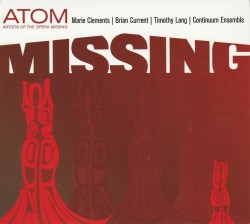 A co-commission and co-production of City Opera Vancouver and Pacific Opera Victoria, MISSING was created to confront the ongoing crisis of Canada’s Missing and Murdered Indigenous Women and Girls (MMIWG). More than half the cast and crew are of Indigenous background, yet as librettist Marie Clements – herself of Métis/Dene heritage – comments: “To me and to so many other people, this is not an Indigenous issue; it’s a human issue. As human beings we have a responsibility to end this, and so we’re asking for people to open their hearts, to be able to comprehend on an emotional level what’s really happening.” Guggenheim Fellowship and Juno Award-winning composer Brian Current (now artistic director of New Music Concerts) joined the project after the libretto was completed and composed the music in close partnership with the cast and cultural advisors.
Set in Vancouver and along the Highway of Tears, MISSING was premiered in November 2017 at City Opera Vancouver and toured by Pacific Opera Victoria in British Columbia and Saskatchewan in 2019. This recording (Bright Shiny Things brightshiny.ninja/missing) features ATOM (Artists of the Opera Missing, including sopranos Cait Wood and Melody Courage and mezzo Marion Newman) and Toronto’s Continuum Ensemble. Conductor and musical director Timothy Long, says: “Being a Muscogee/Choctaw man, I have often felt alone in this musical world, but MISSING revealed the purpose of my path. The victims and the families looked like my family and me. It pivoted my life trajectory towards representing all Indigenous people.”
According to Current, “Working on MISSING alongside Indigenous artists and listening to families of the missing quietly shifted how I see the world. I hope this recording invites the same kind of awakening.” I think it will.
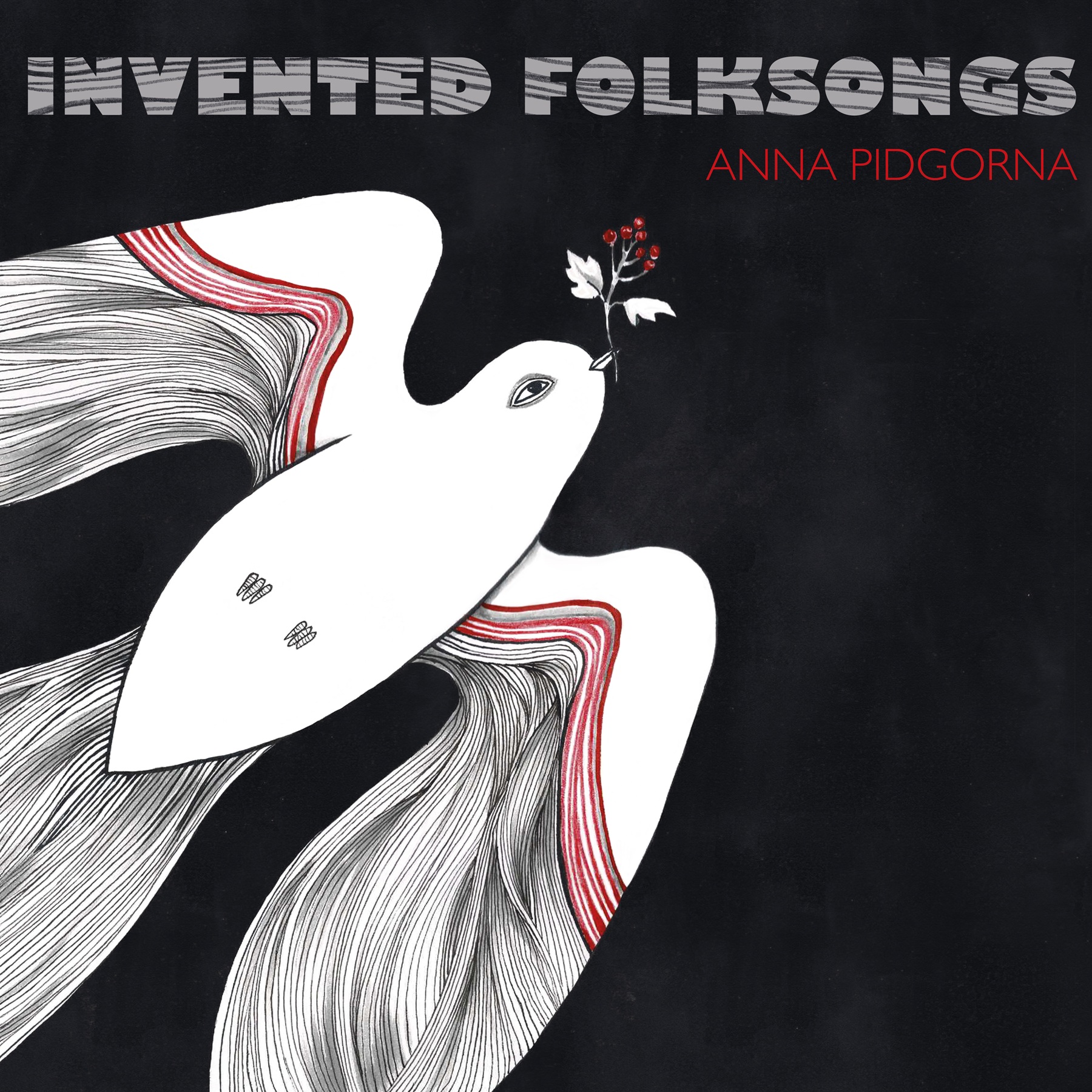
In 2015 New Music Concerts commissioned Canadian Anna Pidgorna to create a piece based on her Ukrainian heritage for a concert featuring a new work by Odessa native Karmella Tsepkolenko. The result was Weeping, for mixed sextet based on rural Ukrainian traditional mourning songs, which Pidgorna had discovered through archival recordings during field work in Ukraine in 2012. Mesmerized by the sonic qualities and emotional power of these songs, a new chapter in her musical development began.
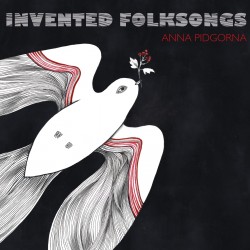 “Invented Folk Songs (redshiftmusicsociety.bandcamp.com/album/invented-folksongs) is a set of songs resulting from her traveling to Ukraine to study with traditional music practitioners. Returning from this period abroad, she subsequently arranged to study voice [at] Princeton with the intention of building her own hybrid vocal sound. The bold, powerful voice she has since cultivated, is couched here in matching ensemble textures that capture the drive and raw emotion of folk music, yet stray far from traditionalism in their form and sound. She has harnessed the strengths of both musical realms, rather than blending superficially. She finds the places where traditional playing overlaps with so-called extended techniques, and expands upon the compositional features of these folk songs that are ripe for experimentation… The lyrics, also written by Pigorna, function similarly, drawing on folkloric imagery and tropes to formulate relevant commentary, often with a strong feminist bent.” The booklet includes the lyrics in her hybrid Ukrainian dialects with full English translations.
Pidgorna is accompanied by the Ludovico Ensemble, a Boston-based chamber group specializing in modern music, known for focusing on specific and often unusual instrumentations. For this recording the instruments are violin, cello, double bass, cimbalom, piano and percussion.
 When I first started collecting contemporary “classical” music, I was intrigued to find that the Louisville (Kentucky) Orchestra, contrary to common wisdom, was specializing in modern music and trying to support itself by commissioning and recording new orchestral works. Evidently the practice continues to this day, some 90 years after the orchestra’s founding by Robert Whitney.
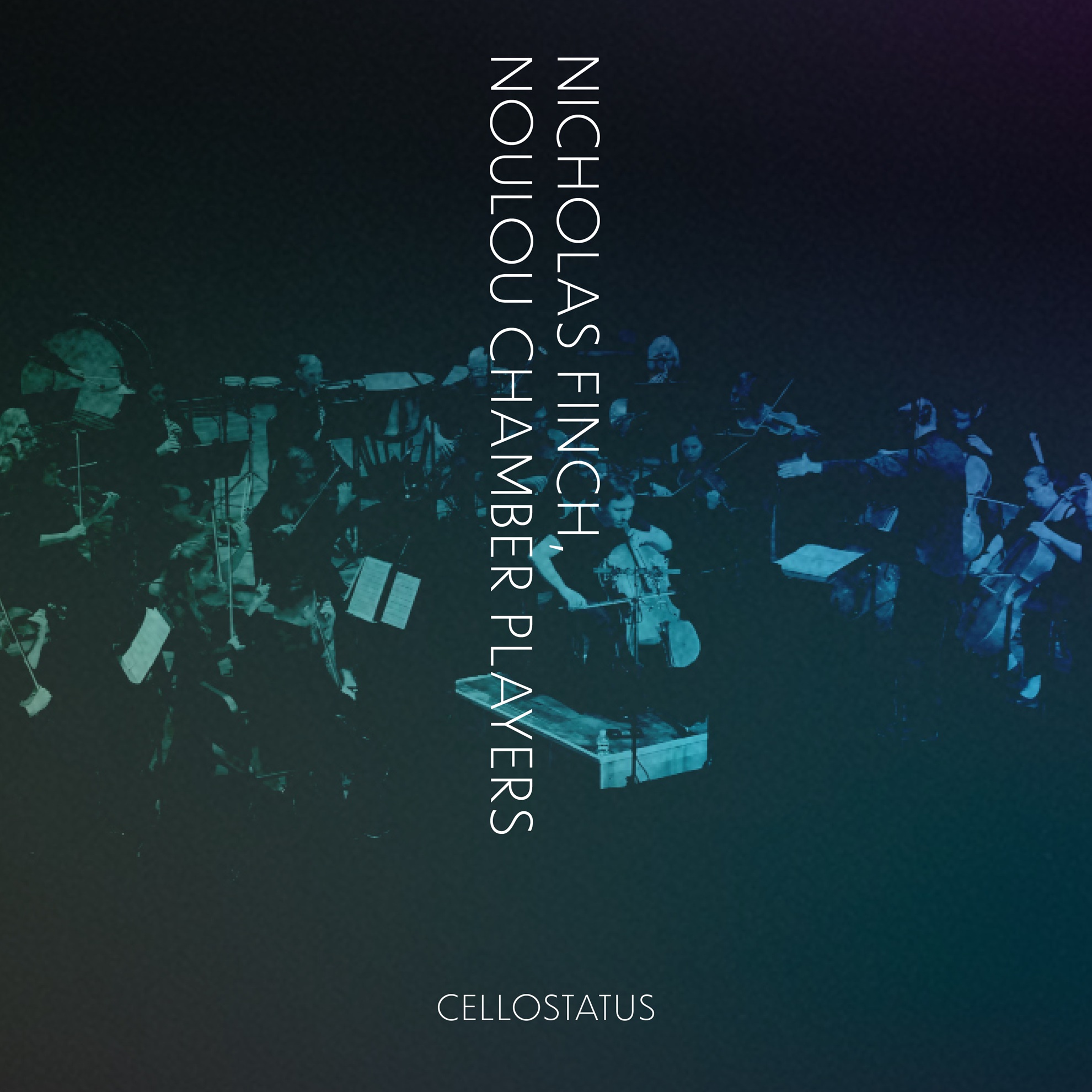
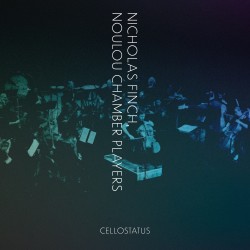
Cellostatus (brightshiny.ninja/cellostatus), is the debut album from Louisville Orchestra principal cellist Nicholas Finch and the NouLou Chamber Players (Louisville), conducted by Jason Seber. Comprising three world premiere works – by Dorian Wallace, Alyssa Weinberg, and Ljova – commissioned by Finch and the ensemble, the album’s far-flung inspirations include the Kübler-Ross stages of grief (Wallace), the Latin word caligo meaning darkness or obscurity (Weinberg), and the ubiquity of the smartphone and social media (Ljova). Finch is in fine form, ably rising to all the diverse challenges in these attractive works.
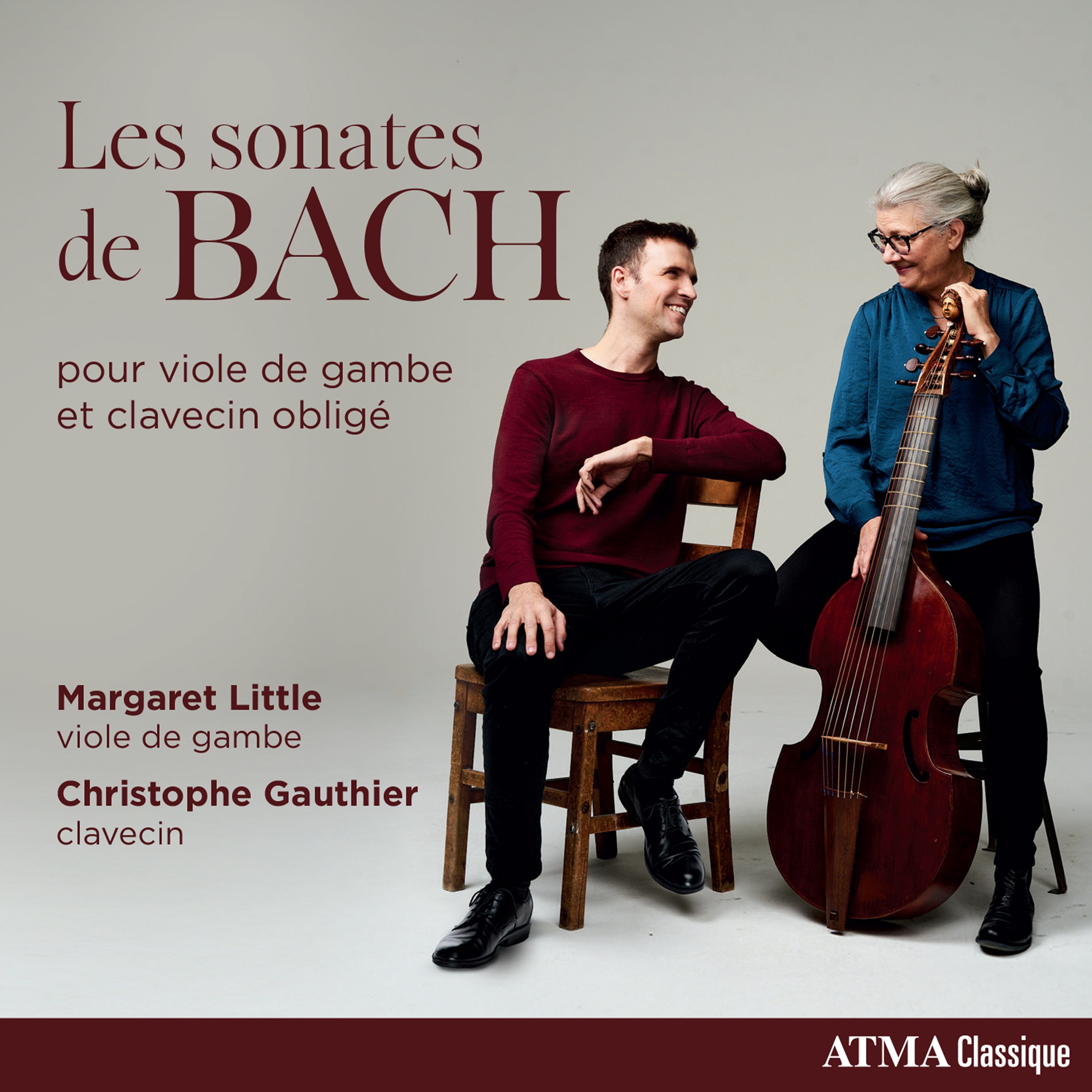
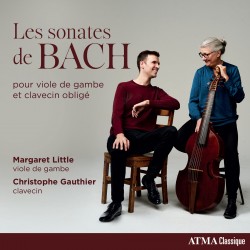 My introduction to Johann Sebastian Bach’s sonatas for viola da gamba and obbligato harpsichord was a recording on modern instruments by Leonard Rose (cello) and Glenn Gould (piano). I became enamoured of these “true contrapuntal jewels,” but I must say that hearing them on period instruments has opened my ears in a whole new way (atmaclassique.com/en/product/the-sonatas-by-bach-for-viola-da-gamba-and-obbligato-harpsichord).
“These works offer a dialogue of remarkable eloquence between two instruments engaging on equal footing, revealing both the expressive depth and architectural refinement of Bach’s chamber writing.
Margaret Little and Christophe Gauthier offer a performance that is at once precise, flexible, and deeply expressive. Their musical rapport highlights the nuanced palette of the viola da gamba and the brilliance of the harpsichord, illuminating the emotional power of Bach in a recording that is both vibrant and elegant.”
Two pieces by Antoine Forqueray — La Couperin and La Buisson — complete the program with their virtuosity and distinctly French refinement. A truly refreshing experience.
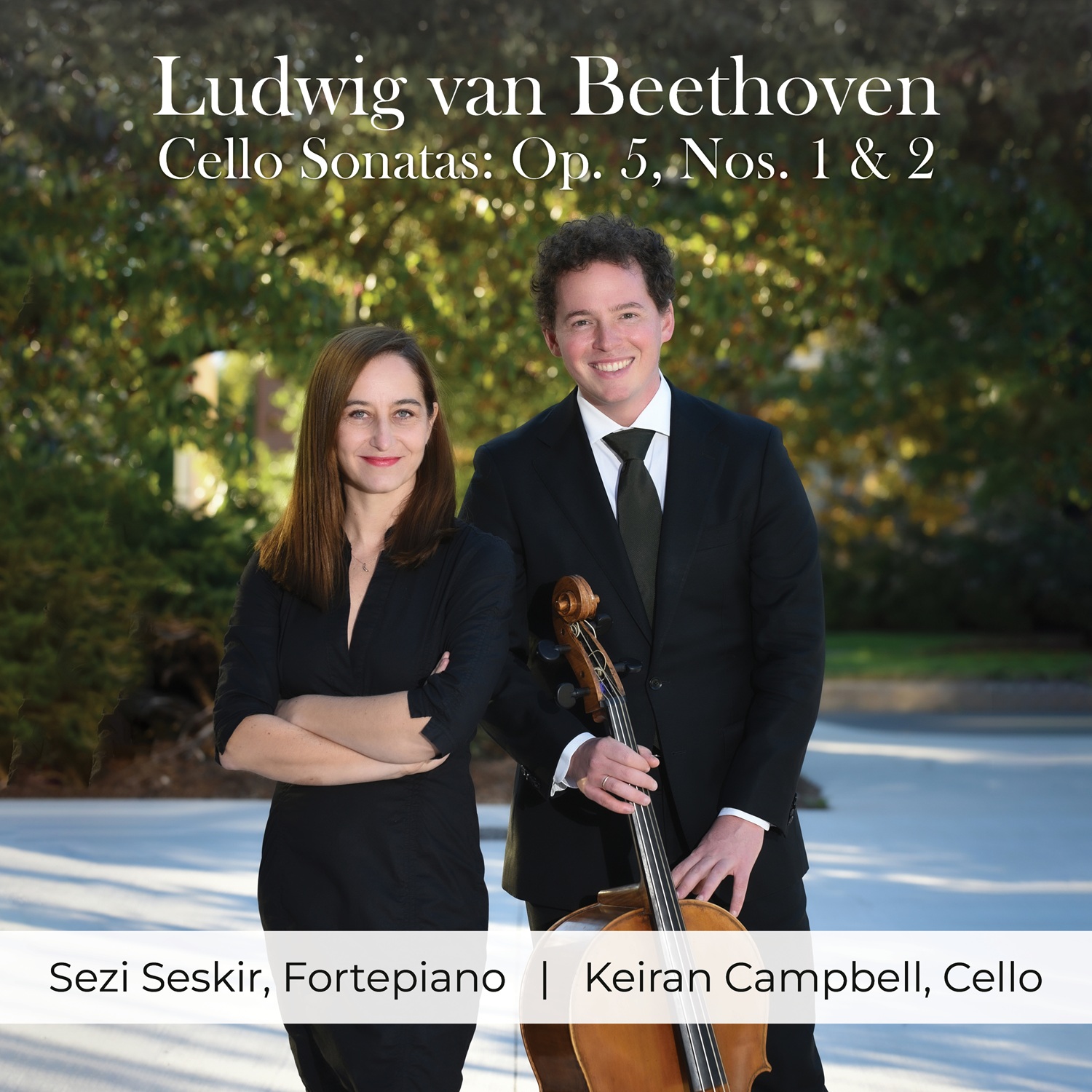
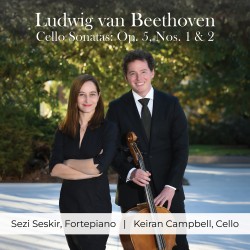 As with the Bach sonatas, I first heard Beethoven’s cello sonatas recorded by Mstislav Rostropovich and Sviatoslav Richter, and my current favourite recording features Pieter Wispelwey and Dejan Lazić, again on modern instruments (Channel Classics CCS SA 22605). I must say, however, that a new period performance of Beethoven Cello Sonatas, Op. 5 by cellist Keiran Campbell and Sezi Seskir (fortepiano) (leaf.music/keirancampbell-seziseskir-beethoven) is growing on me for its sheer rawness and exuberance.
“Performing on a fortepiano with its leather hammers, and on a gut-strung cello with a supple classical bow allows the players to recapture these beloved sonatas’ intended original sound. The two cello sonatas (Nos. 1 and 2) were composed in 1796, and saw Beethoven attempting to make the two instruments more equal while celebrating the capabilities of the five-octave piano.”
Campbell is co-principal cello of Tafelmusik, and on faculty at the Chamber Music Collective, an intensive chamber music program on period instruments which focuses on post-1750 performance practice. Seskir is a co-founder of the Chamber Music Collective, and an associate professor of Music at Bucknell University. Together they bring new life to these timeless pieces.
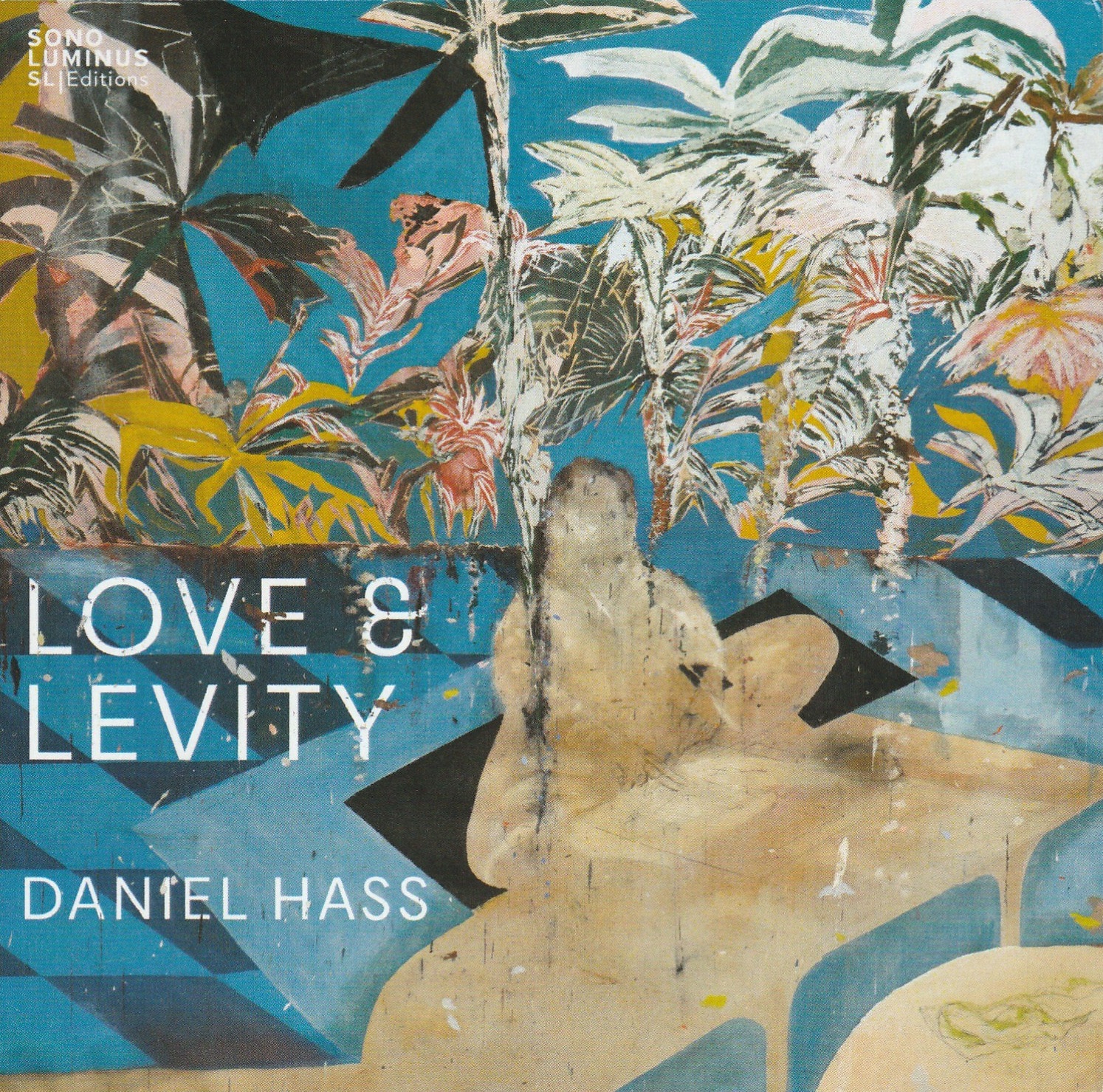
 Canadian cellist and composer Daniel Hass has built an impressive career that encompasses a diverse range of pursuits, genres, and achievements. He has performed as soloist with orchestras across Canada, the United States, and Europe; and has received numerous commissions, including one from the Glenn Gould Foundation, The Lord of Toronto, His Pavin, for cello and piano dedicated to Glenn Gould.
He wrote to me earlier this year to say “I’m excited to share my next milestone: my debut album Love and Levity (travislaplante.bandcamp.com/album/string-quartets). […] This recording features my original compositions for string quartet and piano quartet, performed by the Renaissance String Quartet and other collaborating artists. These quartets are Beethovenian at heart, in their thematic and structural tautness, but draw from contemporary musics such as Jazz and Folk along the way… [They] were written in the summer of 2021. There was a pandemic going on, and I spent most of the summer in my apartment, reading books and feeling the momentum of life melting away in the heat.”
While the COVID lockdown was not such a productive time for many people, Hass certainly put his isolation to good use, crafting these fine chamber works.
David Olds can be reached at discoveries@thewholenote.com.


 Haunted Melody