02a_Bach_Jalbert02b_Bach_BarenboimBach – Goldberg Variations
David Jalbert
ATMA ACD2 2557

Bach – Goldberg Variations
Daniel Barenboim
EuroArts 2066778

We have so many “Goldbergs” to choose from. In fact Goldbergitis fever insures us that one or more new versions will be released each year. What differentiates each of these performances? There is also the question of whether any of the new CDs will ever replace the two iconic Glenn Gould recordings. Often the choice is subjective and sentimental. I grew up listening to the Gould version but I also love Andras Schiff, Murray Perahia and the very personal and unique performance by Simone Dinnerstein. What puts new CDs in the top echelon of Goldberg recordings? I believe it is the quality of tone, effortless technique, virtuosic control and command of the contrapuntal lines, orchestrating the piano and the indecipherable quotient of magic.

David Jalbert on the ATMA label certainly has the virtuoso technique and articulation to be in the elite few. The opening Aria was beautifully shaded and his control of quick passagework in succeeding variations was crisp and articulate. I enjoyed his smooth lines which created an extremely musical flow in spite of the many embellishments and busy counterpoint. His playing was always controlled, yet incisive without being metronomic. His sensitivity to the tempi for each variation made for engaged listening. Jalbert’s tonal quality is not as warm and sweet as Dinnerstein’s or Perahia’s but his command and power at the keyboard is unquestionable. I found his trills to be remarkably even and precise. What makes this recording work for me is that Jalbert discovered the thread that links each variation and he made the performance a cohesive masterpiece.

I also like the liner notes by Robert Rival. I found his writing very informative and revealing from a composer’s perspective. It brought to life Bach’s complex and virtuosic composition technique in creating this remarkable and timeless work of art.

Released this year, the DVD of Daniel Barenboim’s performance of Bach’s Goldberg Variations was actually recorded in 1992 and I was surprised to hear such a sensitive and musical interpretation. Past performances have not always lived up to expectations in tonal quality. This performance exudes energy and deep emotional commitment to the work. Barenboim uses a wide range of dynamics and articulations to create the instrumental sounds from Bach’s time.

He makes pianistic references to the famous high trumpet, the oboe, the string family and the organ. Barenboim has created an orchestra from the piano. This is no surprise as he is a highly respected conductor and it shows in his “orchestration” of each variation. His faster variations are dance-like and real toe-tappers. However, despite the speed or tempo he never loses his refined touch and exquisite control of the rhythm and ornaments. Each variation breathes musically, dances, sings or speaks in a contemplative manner. Although linked, each variation tells a unique story.

Anthony Short in his excellent program notes wrote that if Bach’s early biographer Johann Forkel is to be believed, when Bach’s extended family got together they often struck up a chorale that would mix spiritual and serious songs with comic and scabrous popular tunes of the era. These improvising harmonies produced a quodlibet which is a contrapuntal combination of several different popular songs featuring a selection of lowly brassica vegetables such as the tune for “Cabbages and turnips have driven me away, had my Mother cooked meat, I’d have opted to stay.” I feel that Barenboim captured the spirit of this quodlibet in several of the variations as well as the reflective and spiritual quality of some of the other variations.

Both Barenboim and Jalbert have virtuosic techniques and the ability to cast a spell when performing this work. Both have the communicative and musical skills to take their place in the elite group of Goldberg performers. If I had to choose between Jalbert and Barenboim I would pick Barenboim. His playing had a greater range of tonal colour and dynamics. I don’t mean dynamics as simply loud and soft but dynamics that created different moods and instrumental soundscapes. I also thought his warm touch gave him a slight edge over Jalbert. I would love to hear Jalbert record the Goldberg many years from now. I was mesmerized by his recording now but what an amazing performance he will give in the years to come. We are so lucky to have an artist like David Jalbert in Canada.

Picking your favorite Goldberg CD is such a subjective experience. Do any of them knock Gould off his iconic pedestal? Depends on the day but I believe that these two recent performances join him in that special group with others which are certain to come. This is indeed a testament to the great J.S. Bach whose music continues to be such a joy and revelation that we forever keep searching and learning from his masterpieces.
01a_Nosky01b_SwartzBach; Ysaÿe; Oesterle
Aisslinn Nosky
Independent IF004
www.aisslinn.com

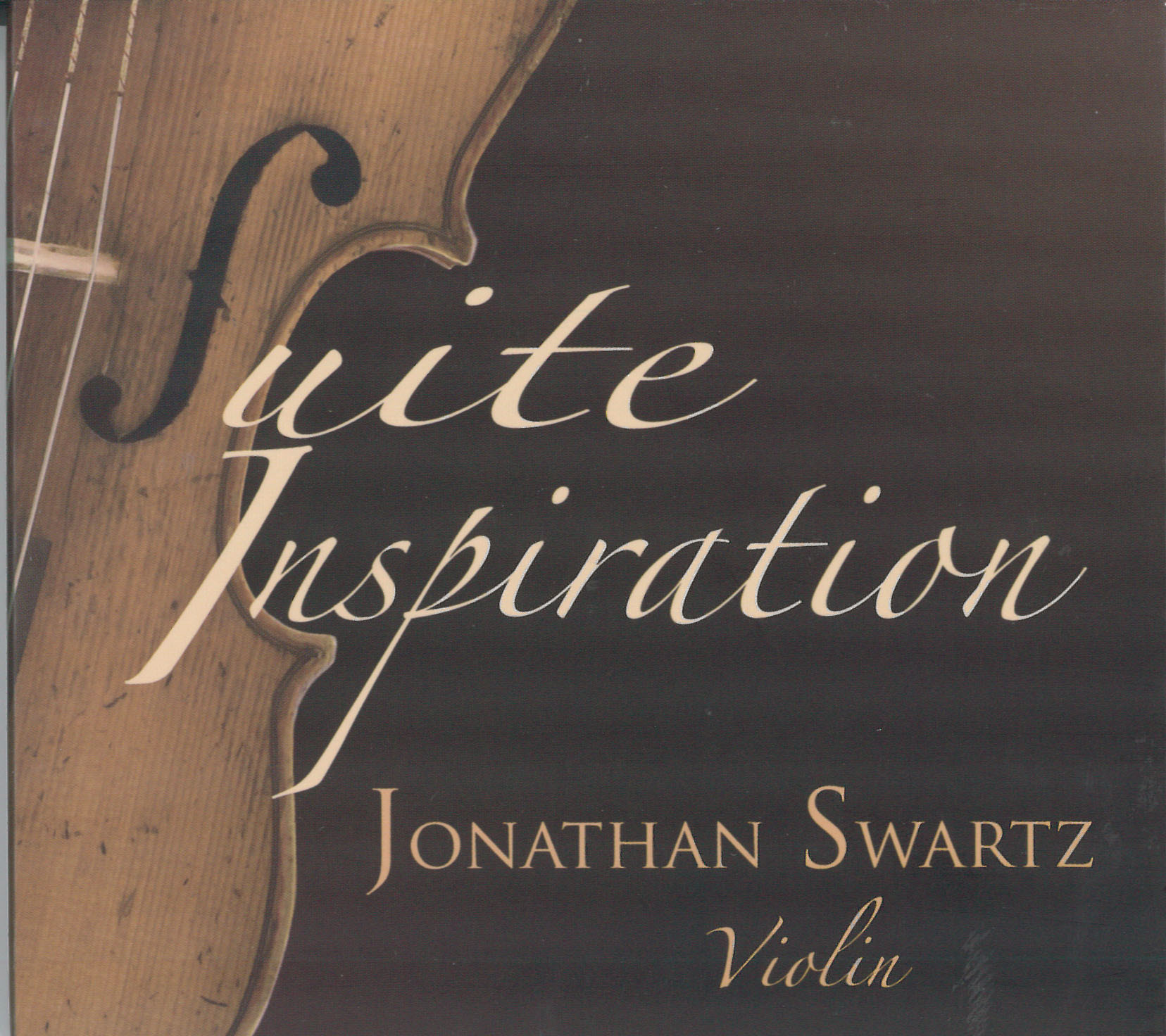
Suite Inspiration
Jonathan Swartz
Soundset SR1039
www.Jonathan-Swartz.com

These are two fascinating discs both of which feature strong performances of the music for unaccompanied violin by J.S. Bach and other more modern pieces which reflect and refract the glorious light of Bach’s works.

The irrepressible and omnipresent Aisslinn Nosky is one of the Toronto music scene’s precious treasures. As this, her debut solo CD, proves, she is possessed of a rock-solid technique and an open and probing musical mind. Three extended pieces for solo violin make up the program: the Partita in E Major by Bach, Eugene Ysaÿe’s Sonata Op.27 No.2 and Stand Still, written especially for Nosky in 2011 by the German-Canadian composer Michael Oesterle.

Oesterle’s captivating piece is both minimalist and lyrical and exploits the “voice” of the violin to great effect. Nosky’s performance, with its varied dynamics and articulation, brings out the fanciful character of the music as well as its fragility. The Bach partita and Ysaÿe’s sonata are inextricably linked thematically and are both given luminous performances here. Nosky’s playing and musical intentions are crystal clear throughout and her free and bright sound is well supported by the fine production values of the disc.

The Toronto-born violinist Jonathan Swartz was educated at Rice University and Mannes College, and teaches at Arizona State University, where he is active as a soloist and chamber musician. His cleverly-titled CD Suite Inspiration is filled with dance movements for solo violin by Johann Georg Pisendel, J.S. Bach and the Canadian composer Kieren MacMillan. Following a chronological order, Swartz begins the disc with the weakest piece, unfortunately. Though it is given a convincing performance, Pisendel’s A Minor Sonata doesn’t have enough interest to either move or entertain. The highlight of the program is MacMillan’s Suite No.1 and intriguing Chaconne, which — with its hypnotic, circular patterns — provides a trance-inducing, deeply satisfying conclusion to Swartz’s program.

Both Nosky’s and Swartz’s performances of Bach’s works are brave and thoughtful. My fondest wish for both players – if it’s not too corny to say — is that they keep searching their hearts for ever deeper ways to bring this music across, and that they keep revisiting this repertoire, as I know they will, throughout their careers. There is a delicious sense of abandon in Nosky’s live playing that is captured thankfully in spades, in her recording of the E Major Partita, especially in the outer movements. Swartz’s performance of the D Minor Partita, with the biblically-proportioned final Chaconne, is a little more reserved and careful and is at times marred by questionable ornamentation choices.

These are two welcome additions to any violin-lover’s collection. Bravo to both players for commissioning new works from excellent, imaginative composers and for sharing their musical “voices” so generously.

02a_Chopin_Fialkowska02b_Chopin_LortieChopin Recital 2
Janina Fialkowska
ATMA ACD2 2666

Chopin – Volume 2
Louis Lortie
Chandos CHAN 10714

Two artists, each presenting a second instalment in their Chopin discography, invite us to ponder their muse through the music of Chopin.

While both Louis Lortie and Janina Fialkowska record on Steinway pianos, their sound is remarkably different. The Lortie/Chandos recording is dark, more heavily pedaled and given more room. Whether this darker tone is the result of instrument voicing or recording equalization is unclear. But the contrast to Fialkowska’s brighter, more present sound lays the groundwork for appreciating the difference between these two pianists.

Fialkowska is quick, articulate and generous with interpretive variations in her tempi. The impression her playing gives is of an artist revelling in the energy of Chopin’s pianistic dance forms. Her command of this composer’s language leaves no doubt about her convictions to follow Chopin through the turmoil of cascading note clusters and the depths of melancholic harmonies. Her playing gives the impression that she feels quite “in-charge” of this material but never surrenders herself entirely to the seduction of Chopin’s voice. Still, she performs very much from “inside” the music.

Lortie is no less an interpreter or technician. He is adept at fluidity of phrasing and coaxing Chopin’s menacing growls to emerge from the piano’s bass register. He favours a more weighty approach that blends keyboard articulation into longer ideas. Somehow, Lortie introduces a stronger element of mystery into this same music. We recognize the composer and his language but see him in less definite terms, with more unanswered questions.

The two recordings present different repertoire with Fialkowska playing waltzes, polonaises and mazurkas, along with the larger F Minor Fantaisie and the B-Flat Minor Scherzo. Lortie, by contrast, gives us nocturnes, ballades, the Berceuse and Barcarolle. Both, however, perform the Ballade No.2 in F Major Op.38 and here we find ground for a revealing comparison.

What appears to distinguish these two extraordinary artists is the extent to which they pull back the curtain to reveal Chopin. The opening ideas of the ballade are short and tender, supported by simple but artful harmonies that return as a coda to close the work. Between them lies a bombastic and turbulent middle section that demands breathtaking technique.

Fialkowska is ready to expose both the explosive and the deeply intimate by pushing the piano to its technical limits from massive volume to notes that are barely played. It’s an all-or-nothing approach with immediate impact. Lortie, by contrast, keeps back from the brink and doesn’t take us all the way to where we know the emotional journey must surely go. This distance of untraveled emotion may be the key to the mystique in Lortie’s art — the power of unfulfilled expectation.

Both these artists command complete attention. Their interpretations are mature and eminently credible. Which of these a listener favours may depend merely upon the mood of the moment. Any serious Chopin collector should own both of these recordings.

03_LegendsLegends
Caroline Léonardelli; Matthew Larkin
Centaur Records CEN1110

Now here’s something you don’t come across every day: an album of music for harp and organ. Harpist Caroline Léonardelli joins organist Matthew Larkin in a singular recital of celestial sounds from the post-Romantic era. The music of Marcel Grandjany, doyen of the French harp school in North America, opens the disc in an understated fashion with his solemn and dignified Aria in Classic Style. Russia is represented by the second movement from Glière’s Harp Concerto, a livelier work with some lovely registrations provided in the arrangement by Matthew Larkin. A heavyweight from Vienna incongruously appears in the form of the Adagietto from Mahler’s Fifth Symphony. I’m sorry to say the balance of the instruments here is frankly a travesty. The overstated harp part, copied verbatim from the orchestral version in an unimaginative transcription by Joachim Dorfmüller, is not, and was never meant to be, a concerto! (Mahlerians might care to seek out David Biggs’ mind-blowing performance of the complete symphony on the Gloucester Cathedral organ.) Two extended works follow by the equally obscure composers Rudolf Zingel and Alfred Holy, both entitled Légende. Athematic and teeming with arpeggios, they are well-nigh stylistically indistinguishable from each other. The Concerto for Harp by the American Leo Sowerby struck me as the most effective and imaginative work of the lot, providing numerous opportunities to demonstrate the registral varieties of the organ of Christ Church Cathedral in Ottawa.

Mahler aside, the recording values are generally excellent and the artists are both at the top of their game. The packaging however is infuriating, replete with confusing layouts, virtually illegible English translations and no track timings. To add insult to injury, the identity of the very well-maintained organ is nowhere apparent until one removes the disc from its spindle. Here’s hoping Centaur gives the estimable Mr. Larkin his due in the future with a disc of solo organ music.

05_Wagner_en_SuisseWagner en Suisse
Orchestre Symphonique Bienne;
Thomas Rosner
ATMA ACD2 2580

Tribschen, the Wagner villa in Lucerne, is on the cover of this surprisingly beautiful collection by ATMA. I visited this house and its breathtaking surroundings exactly 100 years after Siegfried Idyll was first performed in its central staircase as “Symphonic Birthday Gift” to his soon-to-be second wife, Cosima von Bülow (December 25, 1870). Wagner’s Swiss exile due to political reasons is so rich in significant events, inspiration and compositional scope that volumes could be written. Tristan und Isolde, Die Meistersinger, the completion of Siegfried will barely scratch the surface …

The original chamber version of Siegried Idyll dreamily performed recreating the intimate acoustic properties of the house, suitably starts off the program. This is followed later by Traume, an early study for the phenomenal second act love duet, dedicated to Mathilde Wesendonk, his Zurich benefactor’s wife and object of Wagner’s tempestuous love affair that inspired Tristan und Isolde. All this and much more is contained here, lovingly played by the Orchestre Symphonique Bienne conducted by a young and up and coming Thomas Rösner. His fresh inspiration breathes new soul into these works.

In stark contrast, Richard Strauss’ “sojourn en Suisse” in 1946 was not really an exile, more like an escape from the defeat of the Third Reich (whose composer emeritus he was), looking for greener pastures and a more comfortable life. His Oboe Concerto written, ironically, for an American GI oboist certainly reflects his newfound peace. Much inspired by Mozart, Strauss, by this time, abandoned his earlier, overheated post-Romantic, albeit masterful, style. Performed to perfection and virtuoso grace by Louise Pellerin, it makes an appropriate close to this highly recommendable new release.

06_Dvorak_CeciliaDvorˇák – String Quartet No.13; Cypresses
Cecilia String Quartet
Analekta AN 2 9892

Dvořák’s String Quartet No.13 in G Major was written towards the end of 1895, a particularly happy time in the composer’s life. Only a few months earlier, Dvořák had returned from his second successful tour of the USA and was now back in the familiar landscape of his beloved Bohemia. Working from his country home in Vysoká, he completed the quartet in just four weeks, putting the final touches on it on Christmas Day. The piece exudes contentment, and its buoyant spirit is clearly evident in this new Analekta recording featuring the Cecilia String Quartet.

Named for the patron saint of music, the Toronto-based ensemble formed when all four members were studying at the University of Toronto. The quartet won the Felix Galimir Chamber Music Award in 2005, went on to win first prize at the Banff International Quartet Competition in 2010 and has since made appearances both in Europe and North America. This is the Cecilia’s first recording in a series of four to be recorded for Analekta, and it’s a gem! From the quartet’s sprightly opening measures, the ensemble achieves a wonderful sense of balance throughout the finely interwoven counterpoint. The intonation is clear and precise, and there is none of the muddiness which can sometimes occur in string performance. The languorous lines of the Adagio result in a wonderful sound, while the Finale is treated with an arresting energy, the changes in mood and tempo adeptly handled.

An added bonus on this disc is the set of Cypresses Op.152. These expressions of young love initially began as songs, but were later adapted for string quartet. Together, they contain a bevy of contrasting moods, from yearning and tender to anguished and defiant. The Cecilia Quartet does them all justice, playing with an assured elegance, as it does the set of Two Waltzes Op.54 which rounds out this most satisfying recording.

Concert Note: This year’s Felix Galimir Prize will be presented to the Arkadas String Quartet in a concert at Walter Hall on Sunday May 13 at 3 PM. Arkadas will perform Beethoven’s “Serioso” quartet, Wolf’s Interlude and Bartok’s String Quartet No.6.

01_Windermere_QuartetToronto’s Windermere String Quartet was founded in 2005, but has only just released its first CD, The Golden Age of String Quartets, on Alison Melville’s Pipistrelle label (PIP0112). The ensemble bills itself as the Windermere String Quartet “on period instruments” and the players, violinists Rona Goldensher and Elizabeth Loewen Andrews, violist Anthony Rapoport and cellist Laura Jones, all have extensive experience with leading period instrument ensembles.

Their debut CD highlights the period at the heart of their repertoire, with Mozart’s Quartet in C Major K465, the “Dissonance,” Haydn’s Quartet in E-Flat Major Op.33 No.2, “The Joke,” and Beethoven’s Quartet in C Minor Op.18 No.4.

As you would expect, there is no overtly “romantic” approach to the playing here, but these are terrific interpretations, with fine ensemble playing, great dynamics and expression, excellent choices of tempo, sensitivity in the Mozart, a fine sense of humour in the Haydn and real passion in the Beethoven.

The recordings were made almost two years ago in St. Anne’s Anglican Church in Toronto, with the expert team of Norbert Kraft and Bonnie Silver, and the ambience is spacious and reverberant.

Period performances often display a sparsity of vibrato and a softness of attack that can make them sound somewhat flat and lifeless, and lacking in fullness and warmth — or at least, warmth the way we have come to expect it. There is never any danger of that here, though. These are period performances that blend life, spirit and soul with a perfectly-judged sensitivity for contemporary style and practice. It’s the perfect marriage, and hopefully we won’t have to wait too long for further offspring to accompany this exemplary debut disc.

Two interesting CDs of early Italian string quartets arrived recently, neither of which turned out to be quite what I expected.

03_BocdheriniLuigi Boccherini (1743–1805) is mostly remembered for his famous Minuet, but along with Haydn he was in at the birth of the string quartet form, writing close to 100 quartets, almost always in groups of six, starting with his Op.2 in 1761. The six String Quartets Op.8 from 1768 are featured on a budget re-issue CD from the Italian DYNAMIC label in excellent 1994 performances by the Quartetto d’archi di Venezia (DM8027).

Despite their brevity — the longest quartet is only 14 minutes long — and their limited emotional range, this is in no way merely functional music but true part-writing that is both well-balanced and idiomatic.

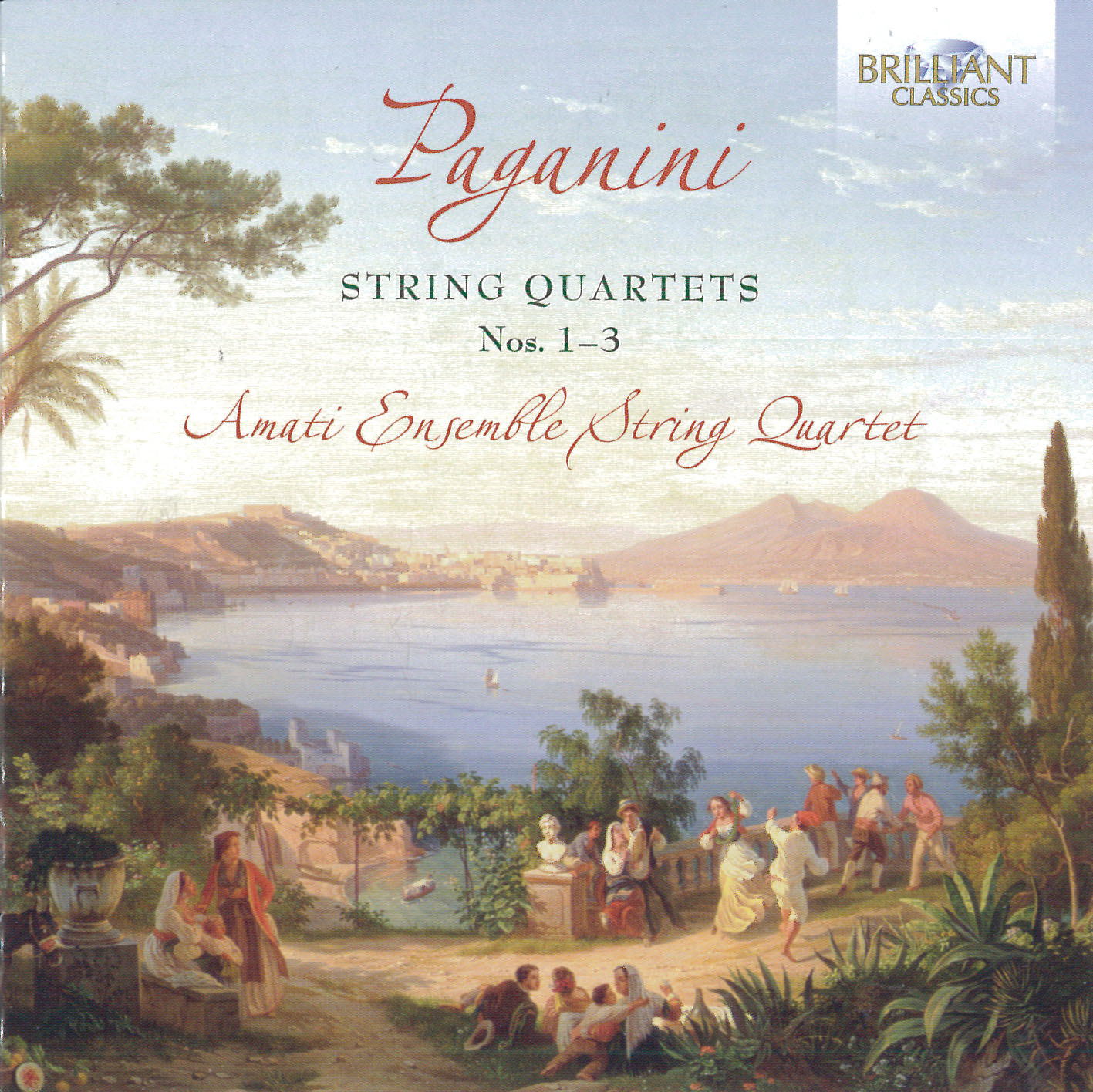
02_PaganiniNiccolo Paganini wrote only three works in the quartet genre, but despite their being written some 50 years after Boccherini’s there is virtually no part-writing; it’s almost all first violin solo with string accompaniment. Perhaps surprisingly, this is not because Paganini wanted to display his virtuosic technique: they are, in fact, very much of their time. Paganini was a close friend of Rossini, and the music here — like Rossini’s — is essentially melodic, with no attempt at dialogue. The String Quartets Nos.1–3 are charming and competent, but with no great depth, and receive effortless performances by the Amati Ensemble String Quartet on Brilliant Classics (94287). These quartets live or die on the skills of the first violin, and happily, Dutch violinist Gil Sharon is more than up to the task.

04_GoosensThe Goossens family was at the centre of English musical life in the first half of the 20th century. Eugene Goossens (1893-1962) is now mostly remembered for his conducting career, particularly in the USA, but he was trained as a violinist and composer. Naxos has issued an outstanding CD of his Complete Music for Violin and Piano, featuring violinist Robert Gibbs and pianist Gusztav Fenyo (8.572860).

The violin sonatas nos.1 and 2, from 1918 and 1930 respectively, are the major works here. Heifetz played the latter, and Goossens transcribed the Romance from his opera Don Juan de Manara for him. The Lyric Poem and the Old Chinese Folk-Song complete the disc.

Gibbs is simply perfect for this material, technically stunning, with a warm, sweet, lyrical sound and a fast and fairly constant vibrato very reminiscent of Heifetz. Fenyo is every bit his equal, especially in the demanding second sonata.

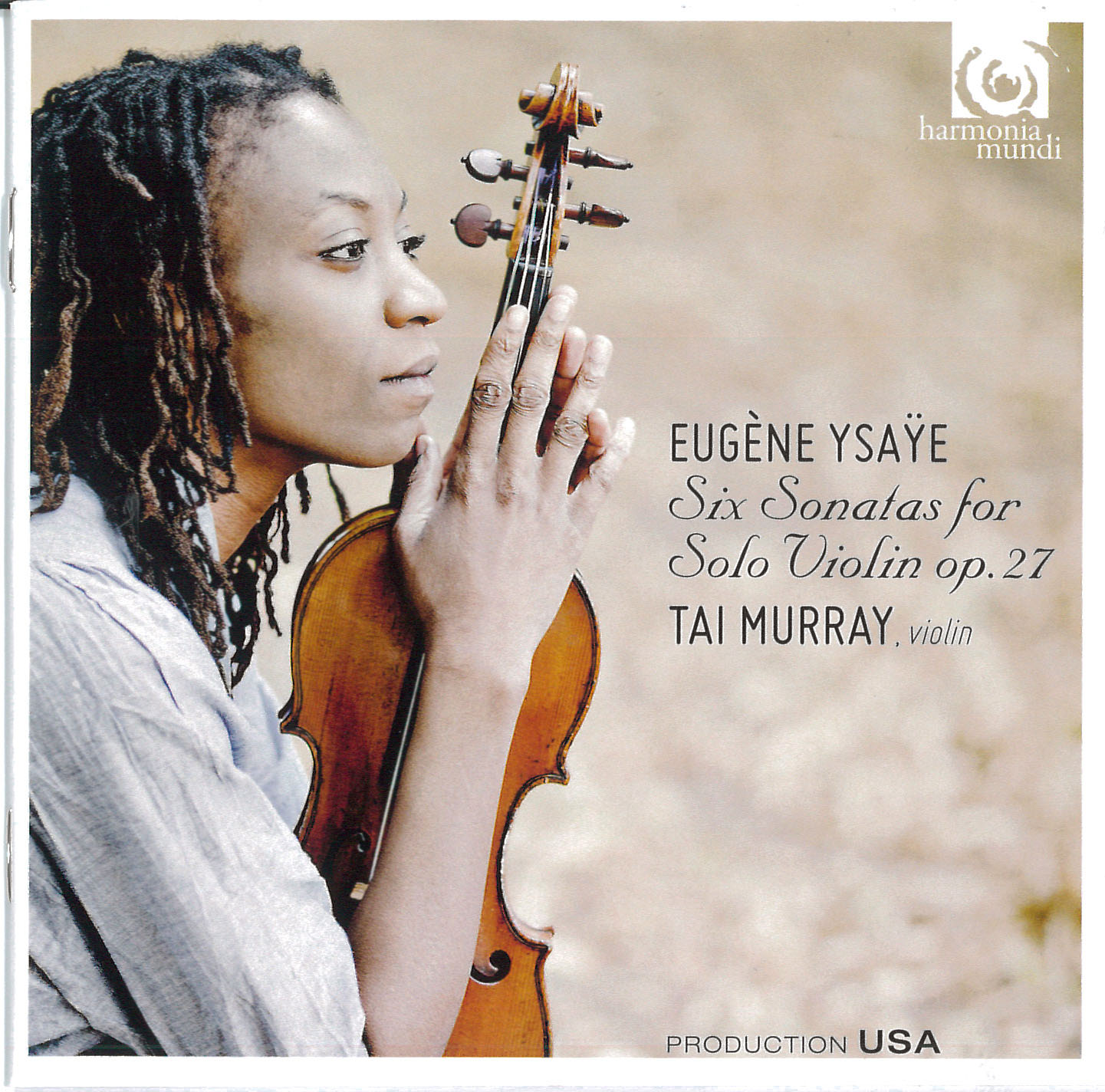
05_YsayeThere is yet another CD – the third I’ve received in the past year – of the Six Sonatas for Solo Violin by Eugene Ysaÿe, this time by the American violinist Tai Murray (harmonia mundi HMU 907569). Given the number of versions available, these works obviously continue to be highly regarded and valued by violinists, even if music lovers in general seem to be unaware of their quality and significance.

This is Murray’s debut recording for the label, and it’s a real winner. She has a big, warm tone, and always keeps a clear inner line through the maze of multiple stoppings and technical challenges, with never a strained moment or jagged edge.

It’s almost impossible to recommend a single CD of these works, given the number currently available, but you really can’t go far wrong with this beautifully recorded and impeccably played interpretation.

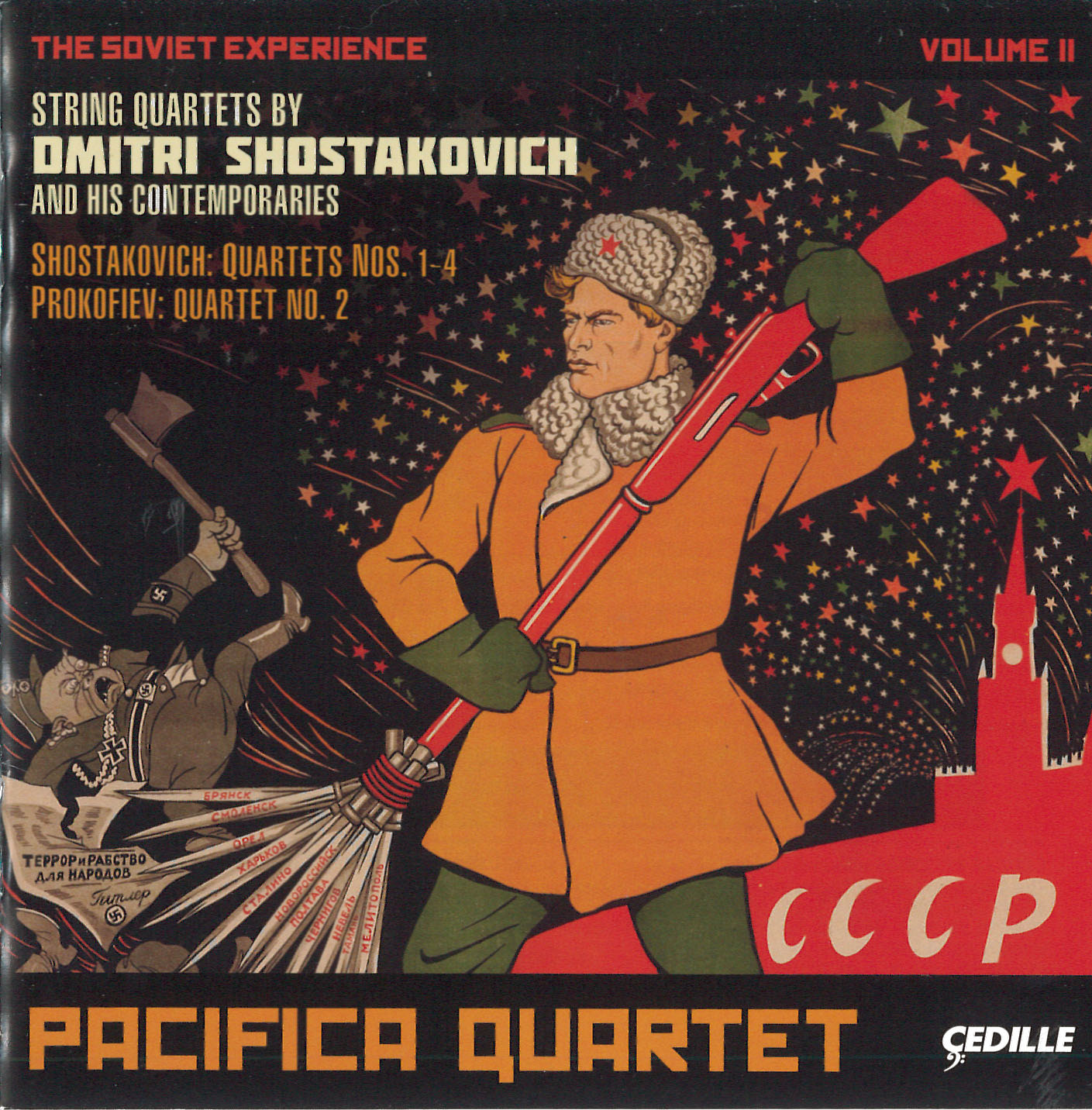
06_Soviet_2The Chicago label Cedille has issued Volume II of The Soviet Experience, the series of String Quartets by Dmitri Shostakovich and his Contemporaries (CDR 90000 130), and it maintains the standard set by the first volume, reviewed in this column two months ago.

This time, the four Shostakovich quartets Nos.1-4 are paired with the String Quartet No.2 of Sergei Prokofiev, and the performances by the Pacifica Quartet once again show their great affinity for the music of this country and this period. The booklet notes and cover art are again outstanding.

I hope we won’t have to wait too long for the remaining volumes in this terrific series.

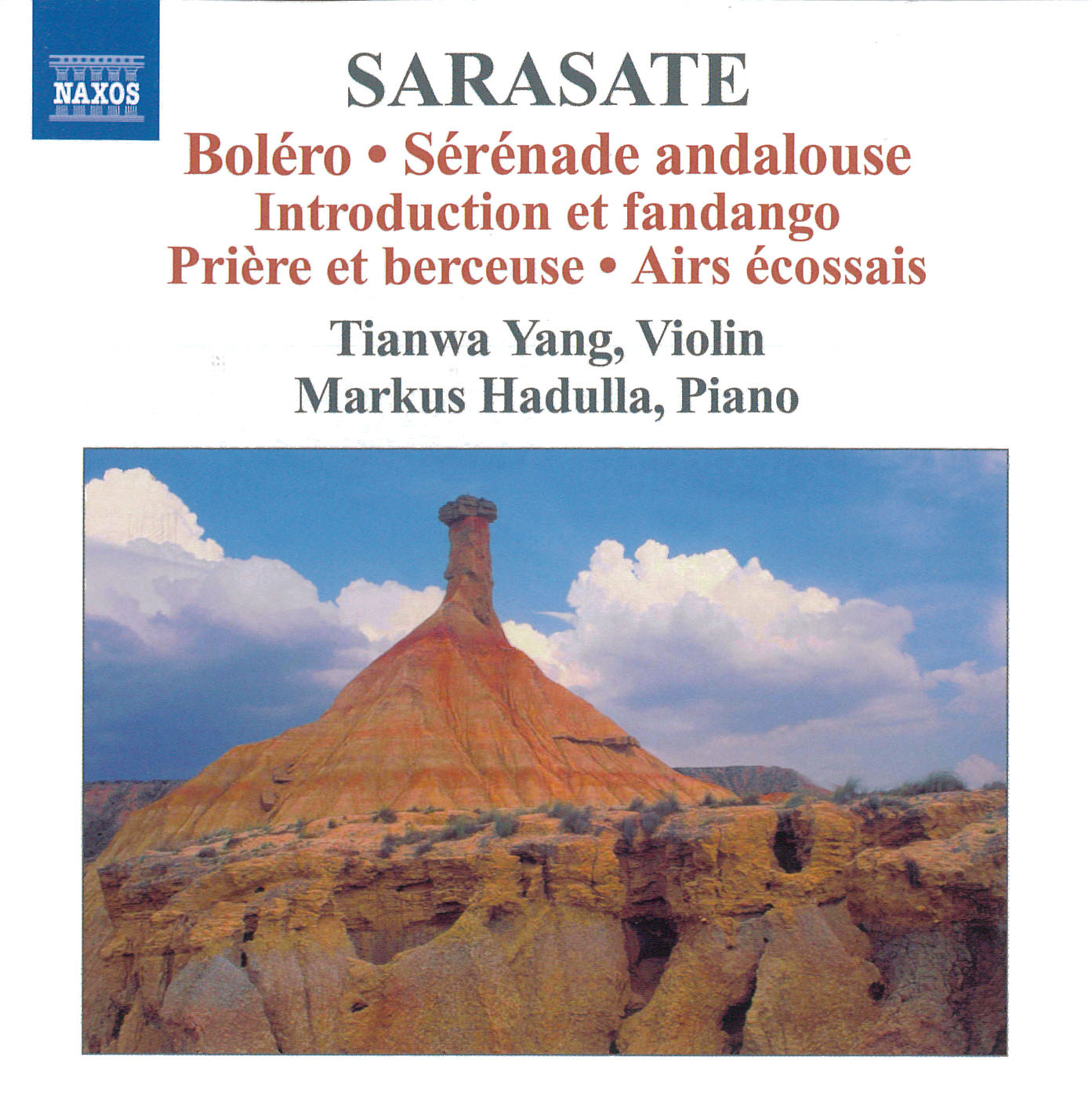
07_SarasateNaxos has issued another volume in its ongoing series of the Complete Violin Works of Pablo Sarasate. I think it’s volume six of a planned seven or eight – depending on which CD cover you believe – but I’m not sure, as the numbering system is a bit confusing: this is apparently Volume 3 of the Music for Violin and Piano (8.570893) and there have also been three numbered volumes of Music for Violin and Orchestra, two of which have been reviewed here. No matter, because it’s the music that counts, and once again the standard of composition never lags throughout the 14 short pieces.

In his booklet notes, Josef Gold rightly stresses not only Sarasate’s outstanding melodic gifts, which were far ahead of the other composers of salon pieces at the time, but also his skill in the piano accompaniments. Both aspects are fully evident on this delightful CD, which once again features the outstanding Tianwa Yang accompanied by Markus Hadulla. Melody does quite often overshadow pure virtuosity, but Yang is perfectly at ease with both. Hadulla supplies sympathetic and idiomatic support throughout.

Most of the tracks on this CD were recorded in Germany in 2007, with three of the longer tracks recorded there in late 2010. Yang apparently started the series in 2004, and while it seems to be taking quite some time to reach completion the quality of the playing and the standard of the production has remained extremely high.

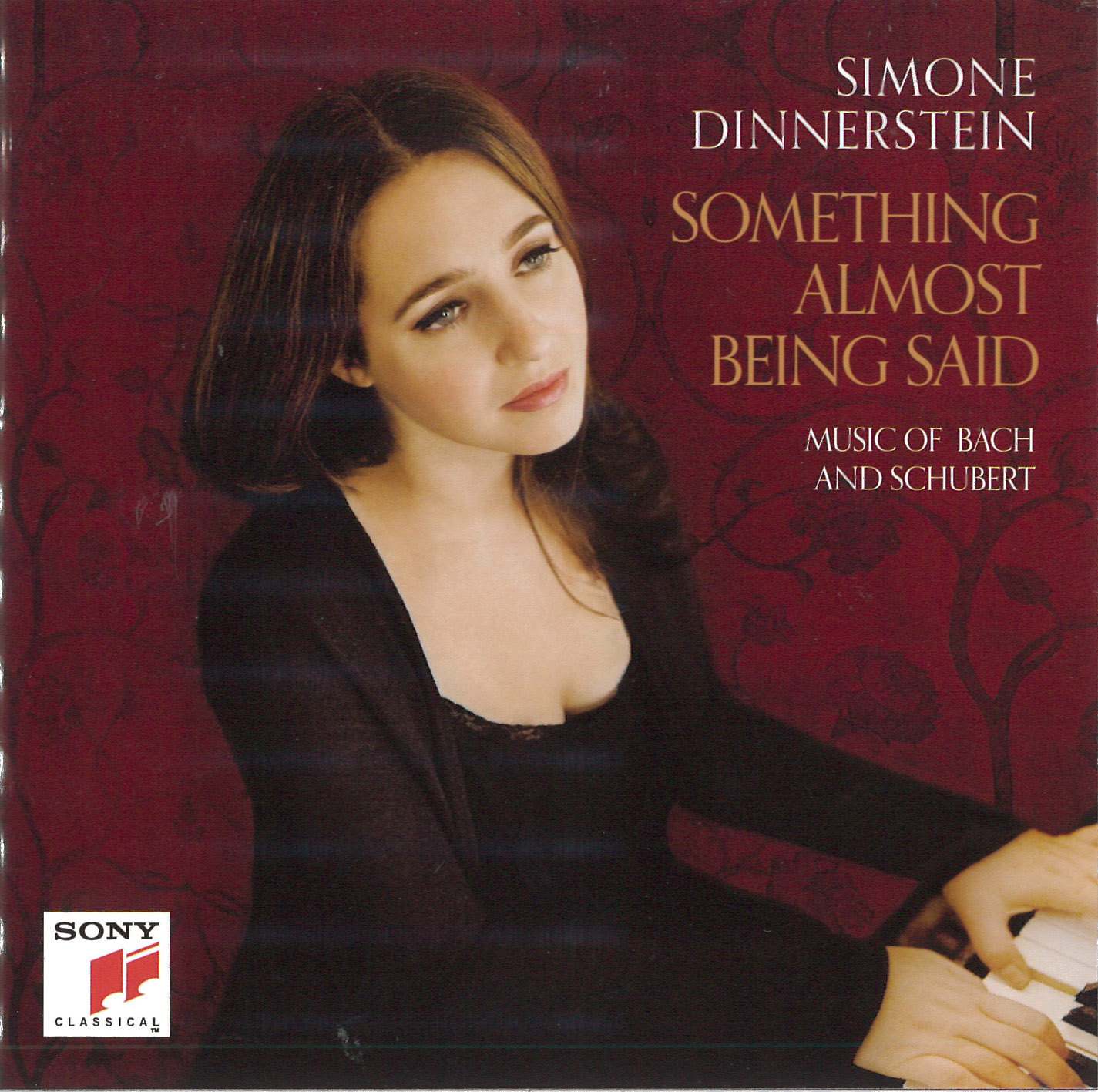
01_DinnersteinSomething Almost Being Said –
Music of Bach and Schubert
Simone Dinnerstein
Sony Classical 88697998242

For someone who supposedly “broke all the rules” when it came to preparing for a concert career, New York-based pianist Simone Dinnerstein has been remarkably successful. She dropped out of the Juilliard School at 18 (only to return later) and by 30 she had neither management nor bookings. Nevertheless, her talents ultimately triumphed, and she has been able to achieve what she calls “a normal life” with international appearances to great acclaim.

Her latest recording, featuring the first two partitas by Bach, and Schubert’s Four Impromptus Op.90, is titled Something Almost Being Said, the name taken from a poem by Philip Larkin. Dinnerstein explains in the notes that, in her opinion, the non-vocal music of both composers has a strong narrative element to it, with a resulting effect of “wordless voices singing textless melodies.” While her full command of the music is evident from the opening of the c minor partita, this is decidedly Bach with a difference. Her approach is convincingly lyrical, proving that Bach need not be played with metronomic rigidity, as is sometimes the case. Indeed, the melodic lines of such movements as the Sarabande in the second partita, or the Praeludium in the first, have a wonderful vocal-like quality to them fully in keeping with the premise of the recording. This declamatory quality is further evident in the four impromptus, coupled at times with a mood of quiet introspection. Bravura for its own sake is refreshingly absent; instead, Dinnerstein chooses to let the music speak for itself.

In all, this is a fine recording from someone who manages a balanced life — and indeed, balance is a key issue here. Beautiful music elegantly played — we can hardly ask for more.

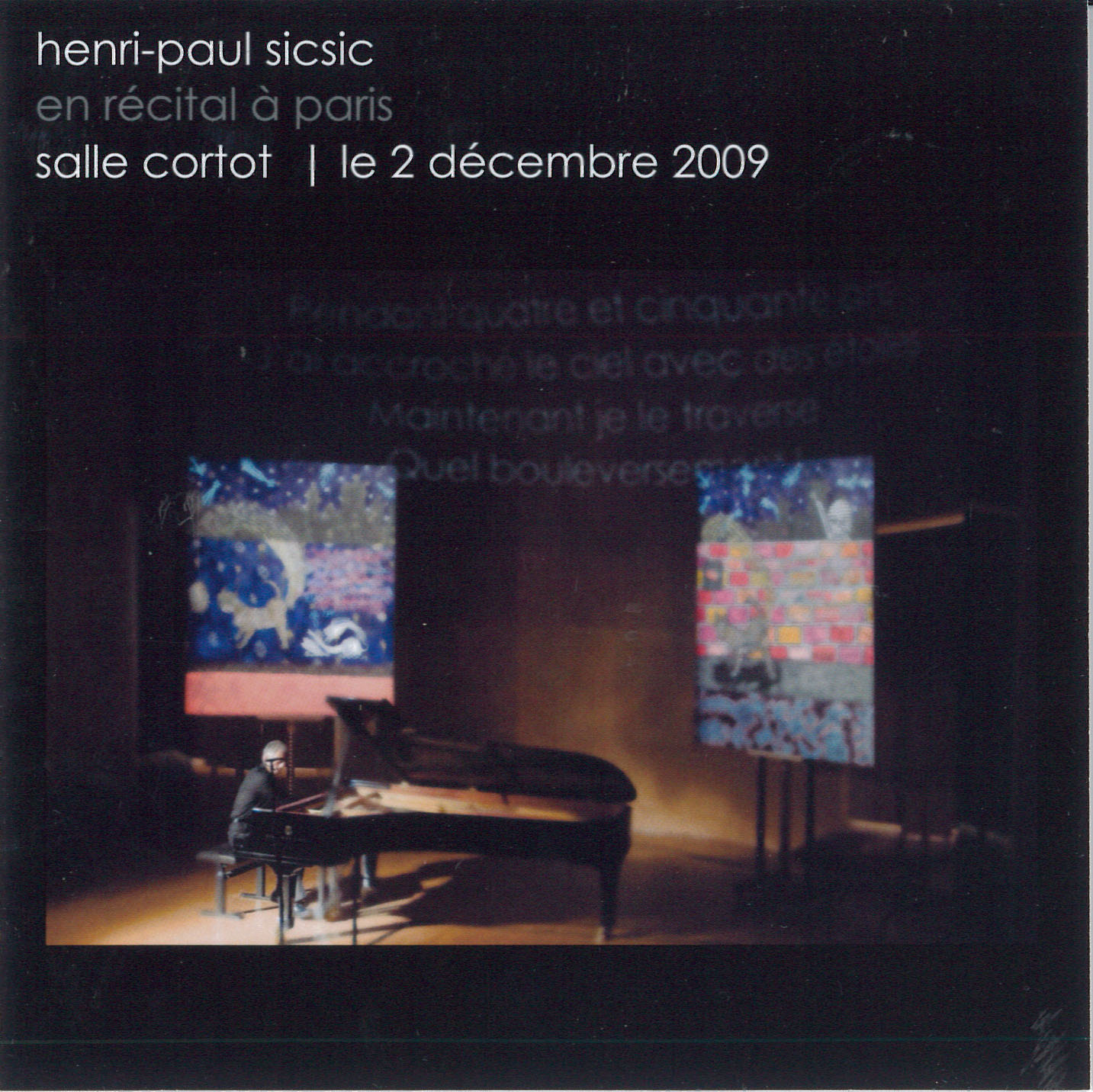
02_SicsicHenri-Paul Sicsic en recital à Paris
Henri-Paul Sicsic
Independent
www.henripaulsicsic.com

Henry-Paul Sicsic, Canadian pianist and professor at the U of T Faculty of Music, is a remarkable artist who “thrills audiences across North America and Europe with his intense, passionate and imaginative performances.” He is not short of impressive credentials and there is a thread that connects him to the legendary Alfred Cortot via his teacher Juliette Audibert-Lambert who herself had been a student of the master. Sicsic’s remarkable international concert career and the top prizes he’s won are well documented on his website but we must emphasize also his achievements as a teacher and his uncanny ability to inspire the younger generation.

His second solo recording was done in the aptly named Salon Cortot in Paris. This recent disc has been issued to commemorate the 200th anniversary of Chopin’s birth. About half of the program is devoted to Chopin, short pieces of which the passionate Nocturne in C Minor of brooding intensity followed by the sunny, brilliant and bravura Valse in A-Flat Major stand out. The centrepiece is the famous Piano Sonata No.2 that shows off the pianist’s talents with its complex structures and varied moods. How beautifully he makes the piano sing in the slow section of the Scherzo or in the trio of the ubiquitous Marche Funebre!

The remainder of the program is devoted to the impressionist sound-world of Ravel and evocations of Spain by Albeniz. A surprise treat is I Leap through the Sky with Stars by the Toronto composer Alexina Louie that appears to be influenced by Ravel at first, but almost imperceptibly loses its tonal centre as it develops and becomes more like “new music.” It receives grand applause from the Paris audience.

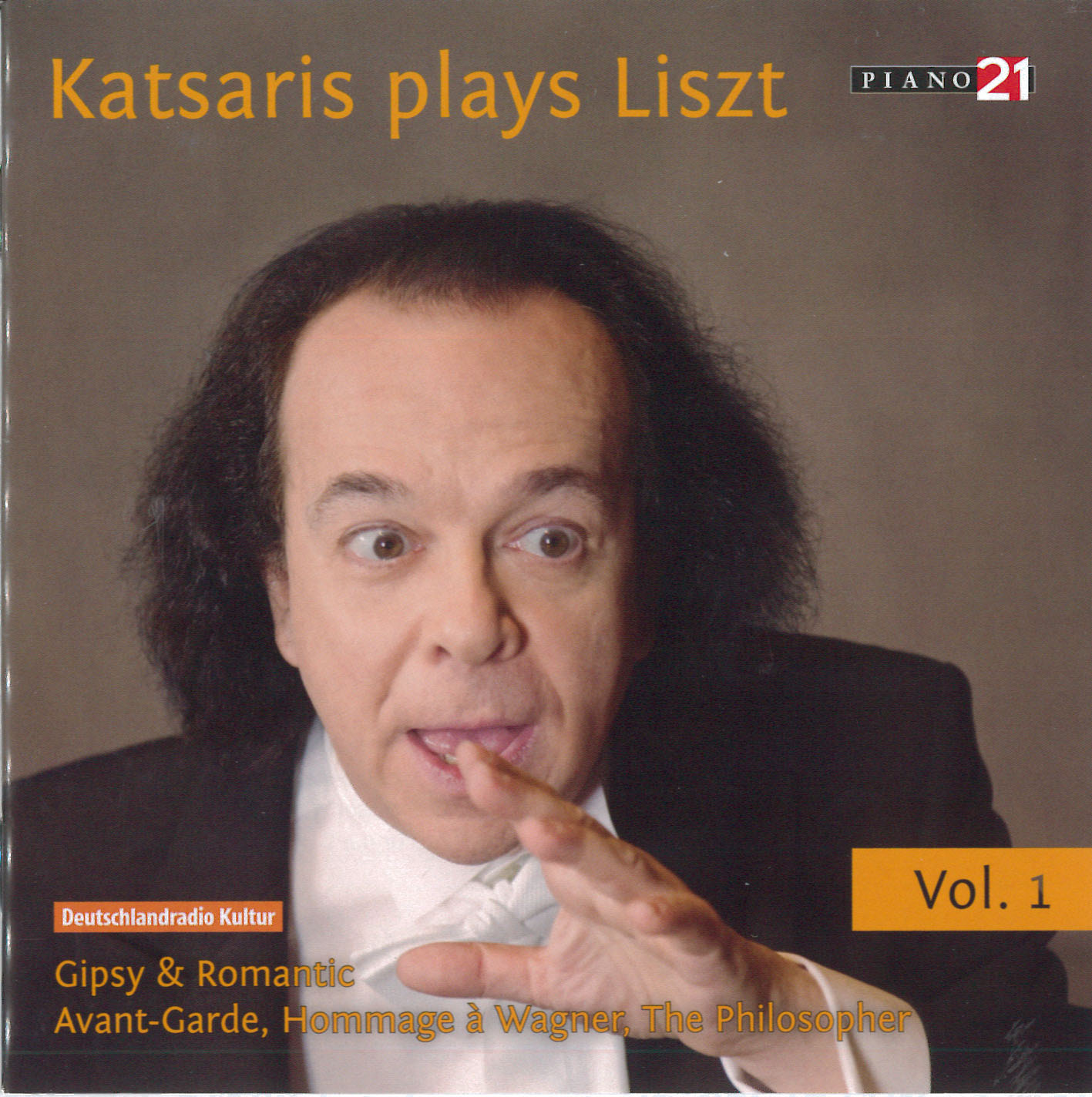
03_KatsarisKatsaris plays Liszt, Volume 1
Cyprien Katsaris
Piano 21 P21 041-N
www.cyprienkatsaris.net

Liszt! What do we think of when one of the most flamboyant composers of the 19th century comes to mind? Swooning ladies? Technical brilliance on an almost superhuman scale? Whatever image we have, the 200th birthday of this legendary pianist/composer from Raiding was celebrated in 2011, and among those marking the occasion was French-Cypriot pianist Cyprien Katsaris, who issued a splendid two-disc set titled Katsaris Plays Liszt on his own label, Piano 21.

Internationally famous since his debut in Paris in 1966, Katsaris has been the recipient of several prizes for his recordings, including the Grand Prix du Disc Franz Liszt in 1984 and 1989, and the German Record of the Year in 1984. This set — recorded over a 39 year period — is bound to appeal to any Liszt aficionado. The first disc, titled Gypsy and Romantic, is mainly devoted to his earlier works, including four of the Hungarian Rhapsodies, the well-known Liebestraum, and the Piano Concerto No.2 with the German Radio Symphony of Berlin, Arid Remmereit conducting. Here, Katsaris handles the technical demands of the repertoire with ease and panache, easily upholding his reputation as a fleet-fingered virtuoso.

Yet the set is not all tinsel and glitter. The second disc, titled Avant Garde, Hommage à Wagner, The Philosopher, is considerably more introspective and features music from Liszt’s late period. This was a time when the composer was very much “pushing the boundaries.” Indeed, Grey Clouds, The Lugubrious Gondola 1 and 2 and At Richard Wagner’s Grave stylistically look to the future, with Katsaris perfectly conveying the dark, almost sinister quality of the music.

As this set is designated as “Volume I,” may we assume there are more to come? We can only hope so, in light of the high standards and intriguing programming presented in this one.

04_Berlioz_HaroldBerlioz – Les Nuits d’Été; Harold en Italie
Anne Sofie von Otter; Antoine Tamestit; Les Musiciens du Louvre Grenoble;
Marc Minkowski
Naïve V 5266

I was introduced to “Harold” by the Victor recording with William Primrose that Serge Koussevitzky and the Boston Symphony made in 1944. Hearing this was a thrilling discovery and repeated encores did not diminish its impact. Particularly winning was Primrose’s patrician elegance and focused performance that would define the role for me.

As it turns out, the genius of Berlioz benefits from a large, well oiled virtuoso orchestra, as the two Primrose recordings with the Boston Symphony in its prime, conducted by Koussevitzky and the 1958 Charles Munch (RCA 88697 08280, hybrid CD/SACD), so magnificently demonstrate. I have also heard many excellent European performances with different soloists, the most notable of which are conducted by Colin Davis.

This new recording with a somewhat smaller orchestra (about 50 players) would seem to lack the splendour and power we have come to expect in a worthy Berlioz performance. Minkowski and his group, however, have a thorough understanding of Berlioz’ musical essence and convey a persuasive enthusiasm, overriding any misgivings about size. Tempos in each of the four movements are well judged and unerringly balanced. Some unusual accents flavour a beautifully constructed performance played with immaculate ensemble. Acclaimed violist, Antoine Tamestit, delivers a compelling, deeply felt performance with a delicious viola sound throughout.

The Les nuits d’été (a work that contrasts with the hectic finale it follows) is one of the finest versions of this enchanting song cycle to come my way. The program concludes with the strange narrative “The King of Thulé” from The Damnation of Faust, with the viola intertwining with Anne Sophie von Otter’s voice in this haunting Gothic lullaby … a master stroke of programming. This disc is a treasure.

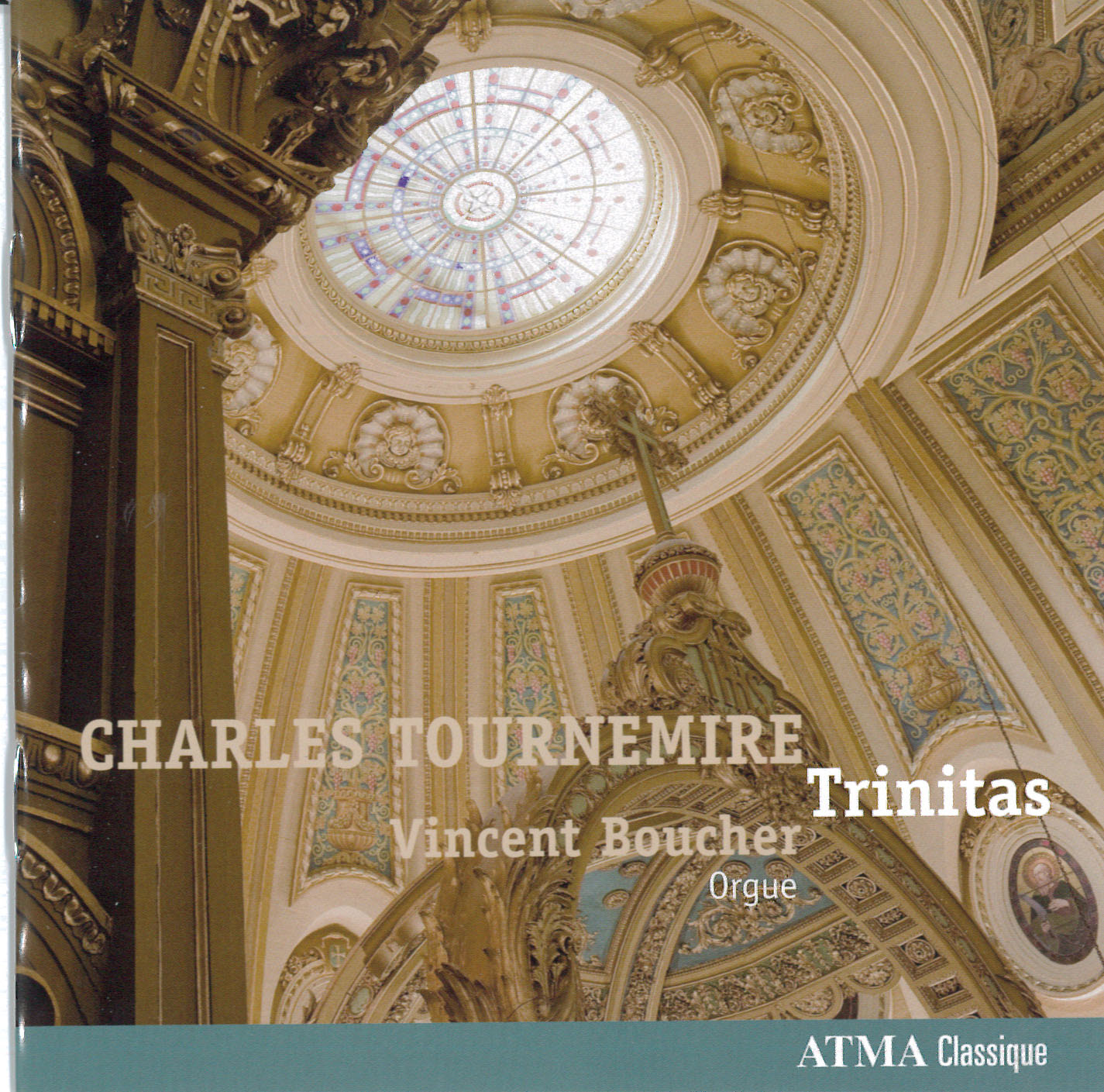
05_TournemireCharles Tournemire – Trinitas
Vincent Boucher
ATMA ACD2 2472

The organ music of Charles Tournemire (1870–1939) is a revelation. The youngest student of César Franck, Tournemire developed towards modernism with a mystical bent and was admired by Messiaen. The Triple Choral (1910) is a key work in his journey to individuality. Organist Vincent Boucher’s performance is well paced and his expressive rubato is tasteful. I was especially moved by the sense of growth in the stirring, ecstatic middle section, followed by the contrasting meditative ending. In conveying the tone-palette of Tournemire’s music, Boucher employs to full advantage the magnificent Casavant organ and acoustics of the Church of St. John the Baptist in Montreal; the sound on this recording is glorious.

The two other major works on the disc are Offices from L’Orgue Mystique (1927–1932), organ music for each Sunday in the liturgical year to be played between sung sections of the mass. In the first, for Trinity Sunday, Boucher handles confidently the final recessional with its colouristic wave-like opening and its working of three themes in the introspective mood characteristic of Tournemire’s later works. Boucher captures the improvisational feel of Tournemire’s style in the second­ — music that is unearthly at times, seemingly in-the-moment explorations conveying striking visions. Here tone-content, texture and timbre together produce myriad effects of light, of brilliant rays, glimmering pulsations, murky depths. Three brief Postludes for antiphons of the Magnificat round out this deeply reflective disc.

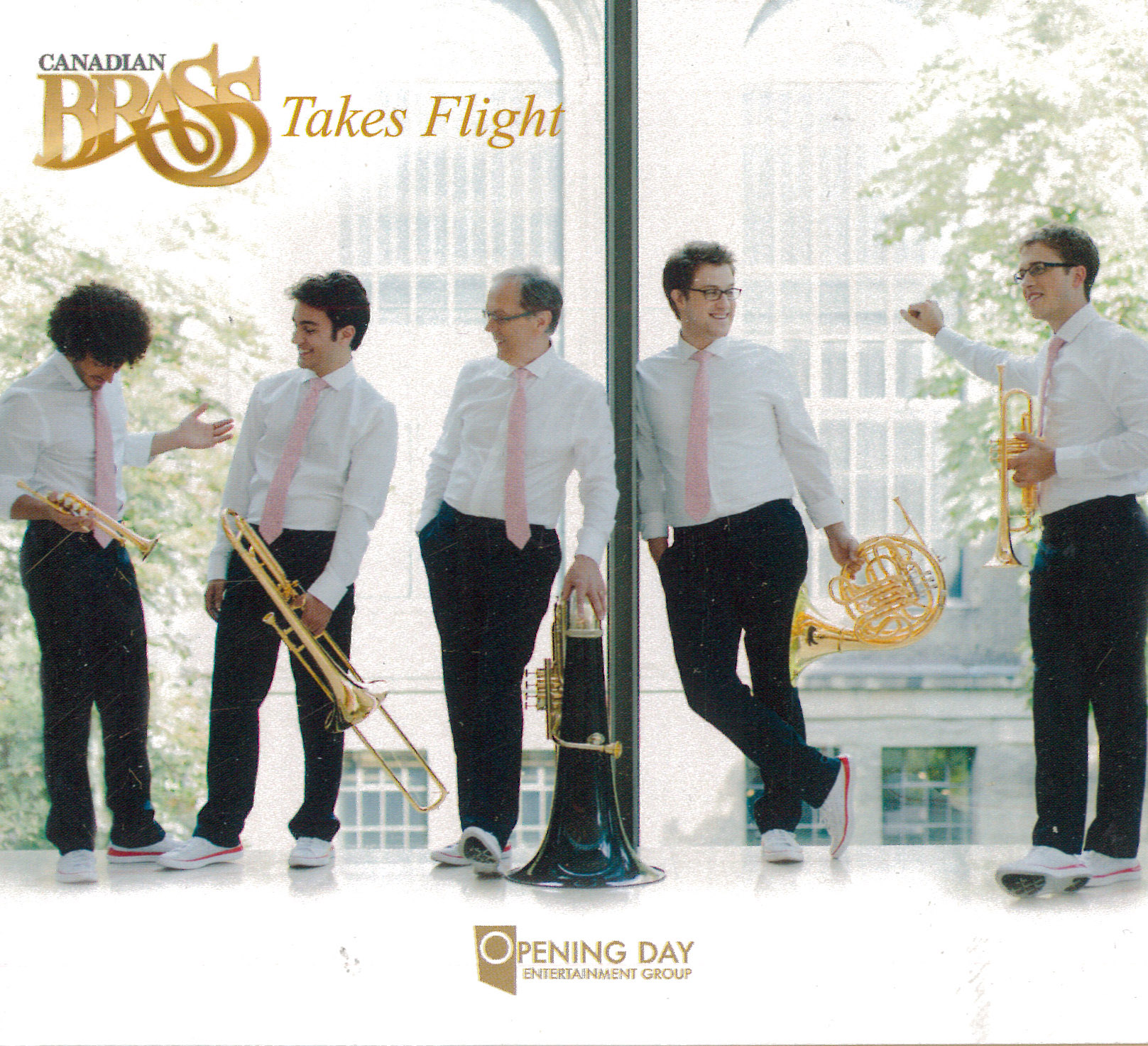
06_Canadian_BrassCanadian Brass Takes Flight
Canadian Brass
Opening Day Records ODR 7416
www.openingday.com

It’s yet another recording by the ubiquitous Canadian Brass, and as the title suggests, the Canadian Brass does take flight on this new release, departing from what we are used to in a number of ways. First, it is a new Canadian Brass. In 1970, over 40 years ago, with tuba virtuoso Chuck Daellenbach at the helm, the Canadian Brass began the journey of introducing the world to brass music. Now, with four new permanent members, and Daellenbach performing better than ever, we are treated to some oldies in new arrangements and some departures from what we have come to expect.

The Brass is as stunning as ever with such old favourites as The Flight of the Bumblebee and The Carnival of Venice in sparkling new arrangements. In particular, I enjoyed the versions of La Cumparsita and Mozart’s Turkish Rondo, works not usually considered part of the brass repertoire. Having played in a brass quintet for a few years, I was particularly humbled by their rendition of Scheidt’s Galliard Battaglia. Having attempted that arrangement in rehearsal, I now know how it should sound. The finale on this CD is their long-time favourite Just a Closer Walk with Thee.

The stunning sparkle is still there, but there is also a new warmth and mellow feeling in several of the slower numbers on this release. As for technique, this new young team of Daellenbach’s doesn’t have to take a back seat to anyone. It’s a top notch group to carry on the Canadian Brass name. For fans of brass, this one is a must.

Concert Note: The Canadian Brass is featured in three regional concerts this month. On April 11 they will be at the Sanderson Centre for the Performing Arts in Brantford, on April 12 at the Markham Theatre for the Perfoming Arts and on April 28 in a subscription only performance at the Hi-Way Pentecostal Church presented by Barrie Concerts (705-726-1181).

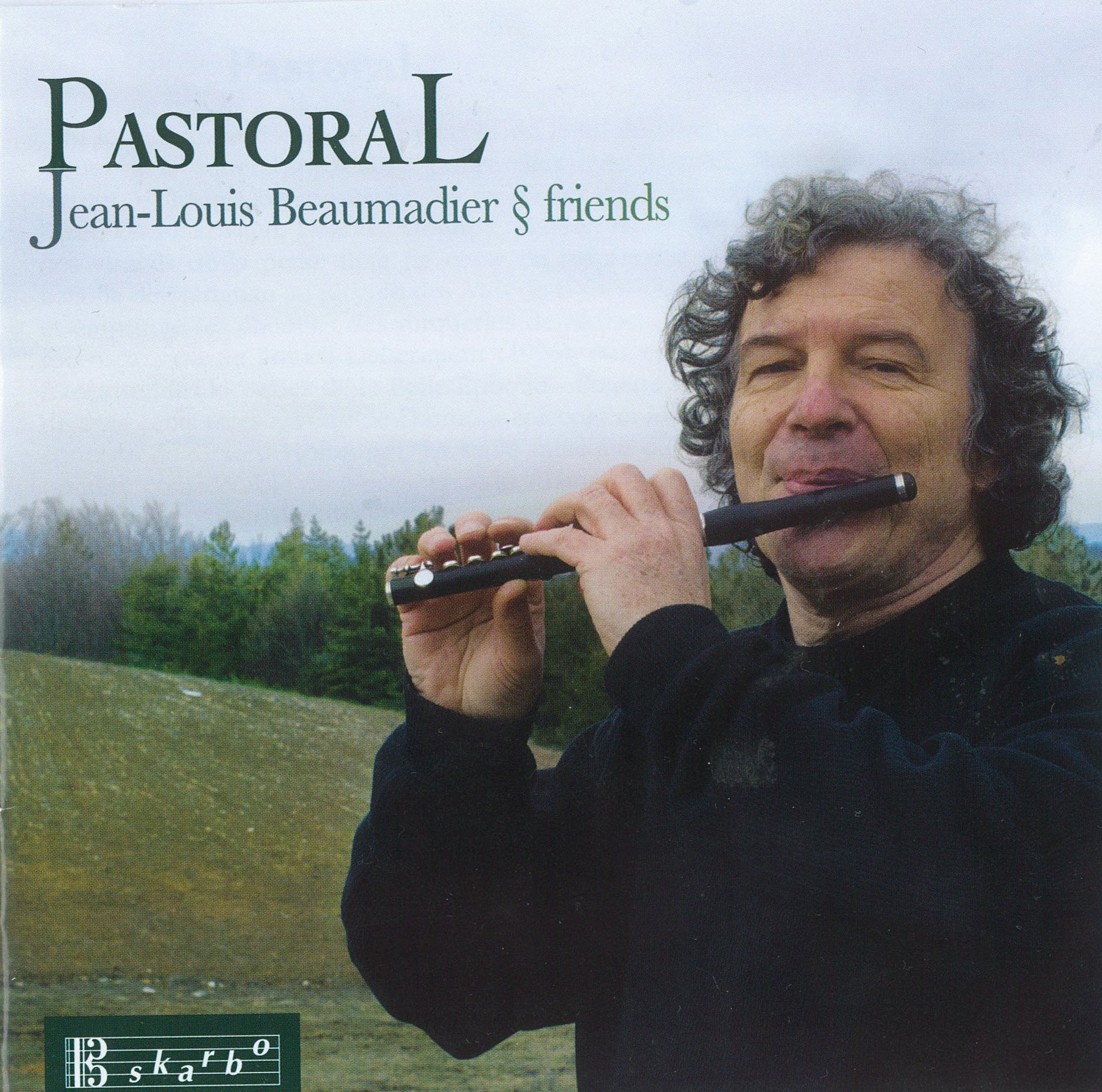
07_PiccoloPastoral
Jean-Louis Beaumadier; Various Artists
Skarbo DSK4117

As spring arrives and thoughts turn to the outdoors, Pastoral makes an apt musical counterpart. Above all it is French piccoloist Jean-Louis Beaumadier’s playing that is memorable for perfectly-tuned long tones, controlled dynamic changes and technical virtuosity. Two short chamber pieces on the disc specify use of the piccolo; otherwise, Beaumadier has assembled a group of pastoral 20th-century works originally written for the pipe or the flute. Of special interest are seldom-heard miniatures for pipe by such composers as Roussel, Poulenc and Milhaud, published in the volume Pipeaux 1934. I particularly enjoyed the Poulenc Villanelle which has a quality of quirky sentiment. A number of composers included have associations with Beaumadier’s native Provence. Henri Tomasi (1901–1971) wrote Le tombeau de Mireille for galoubet (tabor) and tambourin (pipe), evocative of the medieval Provençal world of troubadours and chivalry. (Note: the tabor’s rattle takes getting used to.)

In the flute works, the piccolo’s pure, focused timbre shows to advantage, conveying well the birdsong, whistle, outdoor piping, dance and amatory elements of the pastoral genre. The soloist moves assuredly through contrasts of melody and rapid filigree in Philippe Gaubert’s tender Andante pastoral. He captures the intimate and pensive feeling in Germaine Tailleferre’s Pastorale, with its gently rocking piano accompaniment. The best is saved for last: the Sicilienne et burlesque (1914) by Alfredo Casella reminding us of the significant accomplishment of this neglected modernist.

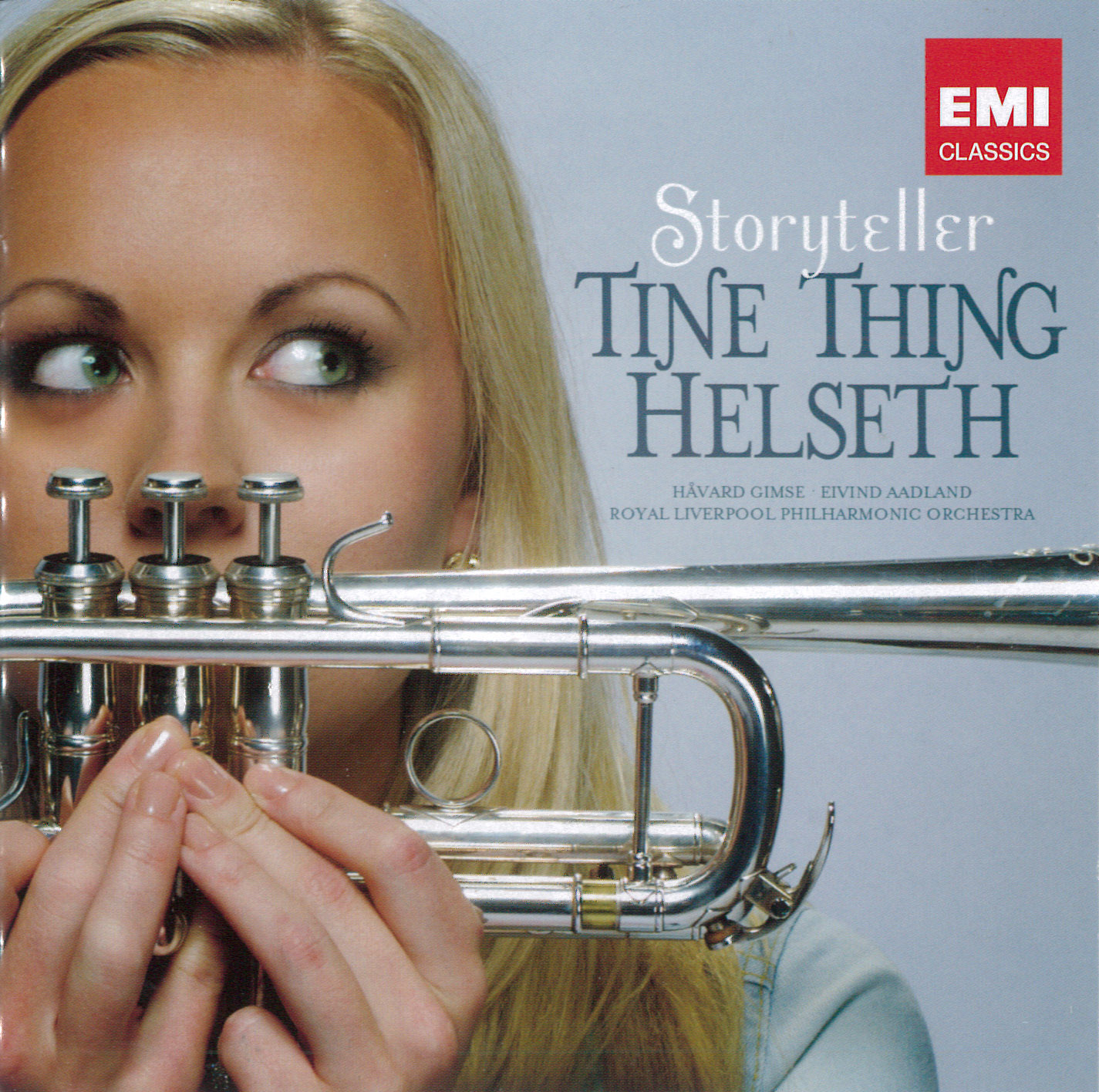
08_Storyteller08b_Seraph_Alison_BalsomStoryteller
Tine Thing Helseth; Royal Liverpool Philharmonic Orchestra; Eivind Aadland
EMI Classics 0 88328 2

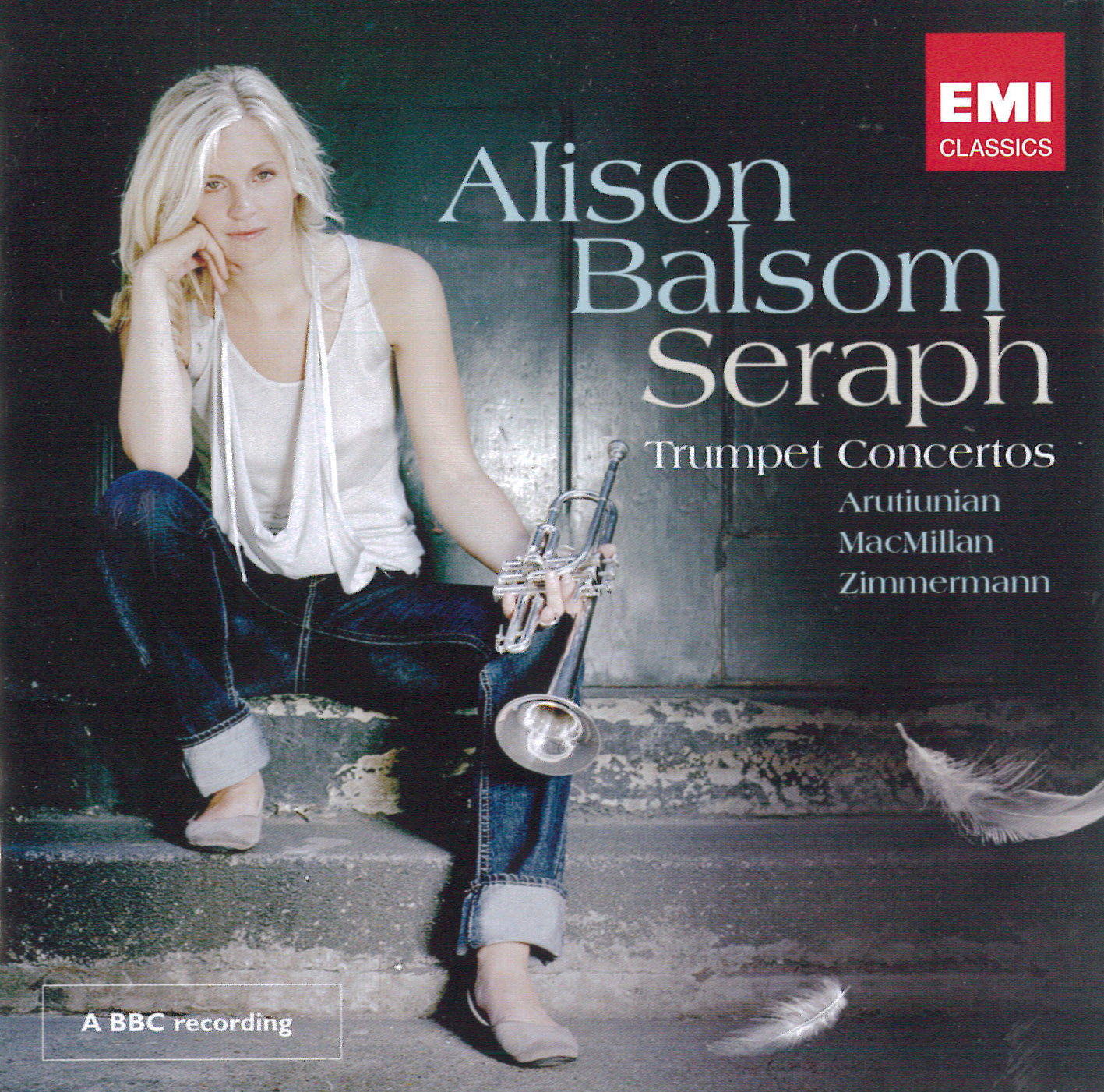
Seraph – Trumpet Concertos
Alison Balsom; Scottish Ensemble
EMI Classics 6 78590 2

Having received, within days of each other, two CDs with much in common, it was decided to include them in a double review. The first is Storyteller, trumpet solos performed by Tine Thing Helseth with the Royal Liverpool Philharmonic Orchestra and Eivind Aadland, piano. The other is Seraph, trumpet concertos played by Alison Balsom with various accompaniments. The commonality is that both contain performances by young women trumpet players and both depart from the “traditional repertoire” usually associated with trumpets.

Storyteller is an apt title for the first CD. Norwegian trumpeter Tine Thing Helseth takes a very different approach to the trumpet and her repertoire. As she describes her approach in the program notes, “My sound is my voice.” There are no “show off” selections here. You won’t find Carnival of Venice or similar traditional trumpet technical challenges to display the soloist’s virtuosity. Without exception, the works performed were not written for trumpet. Most were originally for voice by such composers as Rachmaninov, Dvořák, Delibes. Sibelius, Grieg, Mahler and Saint-Saëns. The soloist is singing her stories to her audience through her trumpet.

As I scanned the list of titles on the disc, one stood out above all others for me. Here was my all-time favourite operatic aria with a different voice: “Mon coeur s’ouvre à ta voix” from Saint-Saëns’ Samson et Dalila. Ms. Helseth’s trumpet voice came as a surprise. Rather than the usual tone with an edge usually associated with the trumpet, her tone is warmer and mellow, more like that of a cornet. Most of the time her lyric passages are smooth and appear effortless, but on occasion her tonguing is assisted by the technique of a slight bit of valve flicking. For me this did not detract in any way from my enjoyment. In all, it is an excellent departure from the usual trumpet fare.

Of the 22 tracks on the CD, Kurt Weill’s Je ne t’aime pas and Grieg’s eight-movement The Mountain Maid are with piano accompaniment. All others are with full symphony orchestra.

In contrast, Seraph, with one exception, contains works written for trumpet by such 20th-century composers as James MacMillan, Toru Takemitsu, Alexander Arutiunian and Bernd Alois Zimmerman. The one exception is a slow haunting arrangement of the Negro spiritual Nobody knows. That latter selection is followed by, and contrasted with, a trumpet concerto by Zimmerman entitled Nobody knows de trouble I see based on the same spiritual theme.

These are definitely not your standard trumpet fare, and for me at least, will require repeated listening to determine my level of approval. From a performance standpoint, as with her other recordings, Alison Balsom excels. As a passionate champion of contemporary music, she highlights the many voices of her instrument that are not normally heard, and introduces them to her audience.

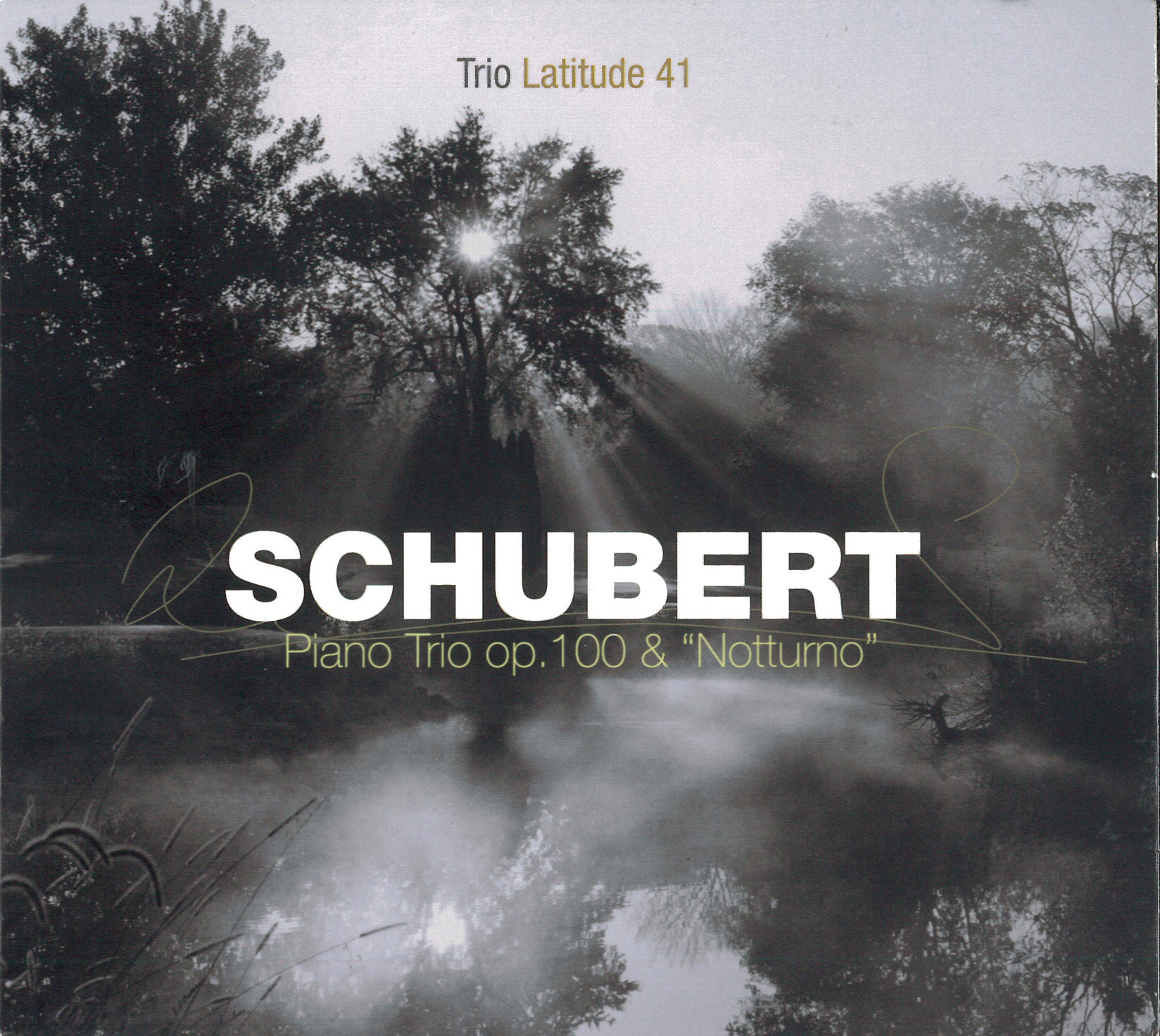
01_Schubert_Latitute_41Apart from the single-movement Sonatensatz written when he was just 15, Schubert’s works for piano, violin and cello all date from 1827, the year before he died. Two of the three works from that year — the E-Flat Major Piano Trio Op.100 and the single-movement Adagio or Notturno, also in e-flat — are featured on a new CD from Trio Latitude 41 (ELOQUENTIA EL 1129).

The Op.100 is a large, four-movement work that makes an immediate impression and clearly has a great deal of depth. The booklet notes quote Robert Schumann’s 1836 description of the trio as a work that “blazed forth like some enraged meteor,” with an opening movement “inspired by deep indignation as well as boundless longing.” The artists here — Canadian pianist Bernadene Blaha, violinist Livia Sohn and cellist Luigi Piovano — find all this and more in a memorable performance. A finely-nuanced and highly effective performance of the Notturno completes an excellent recital disc. Recorded at the Rolston Recital Hall in the Banff Centre, the balance and ambience are perfect.

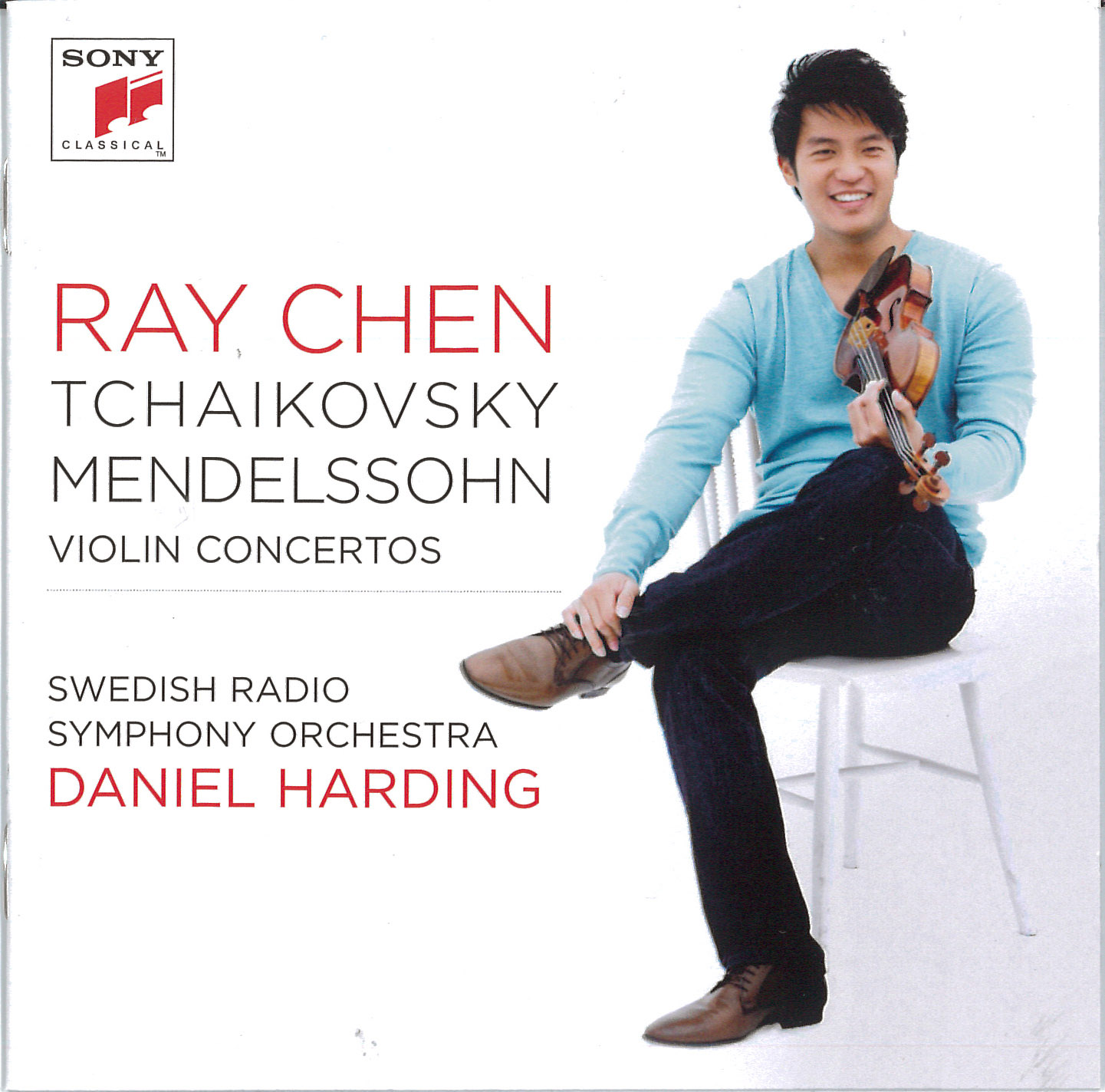
02_Ray_ChenThe first thing that comes to mind whenever I receive a CD of the Tchaikovsky and Mendelssohn Violin Concertos is: do we really need yet another recording of these classic works? Well, yes, of course we do: established artists often find something new to say, and all new artists have to measure themselves against these cornerstones of the repertoire. For the young violinist Ray Chen, the choice of these works for his second Sony CD (SONY 88697984102) — his first with orchestra — was easy: he won the Menuhin Competition in 2008 playing the Mendelssohn concerto, and the prestigious Queen Elisabeth Competition in Brussels in 2009 with the Tchaikovsky.

The first words I wrote down while listening to the Tchaikovsky were “relaxed tempo/approach in first movement,” so it was interesting to read “relaxed and peaceful … that is also what Ray Chen demands of his interpretations of the two concertos” in the booklet notes. That’s very much how the works come across, although that certainly shouldn’t be taken to imply any absence of line or a lack of intensity when needed. Chen’s playing is expansive, warm and sympathetic, and he communicates a clear empathy for these works.

The conductor of the Swedish Radio Symphony Orchestra is the outstanding Daniel Harding, whose name on a CD virtually guarantees a top-notch accompaniment, and that’s certainly the case here. Great balance and a lovely recorded ambience make for an impressive CD that promises a great future for Chen.

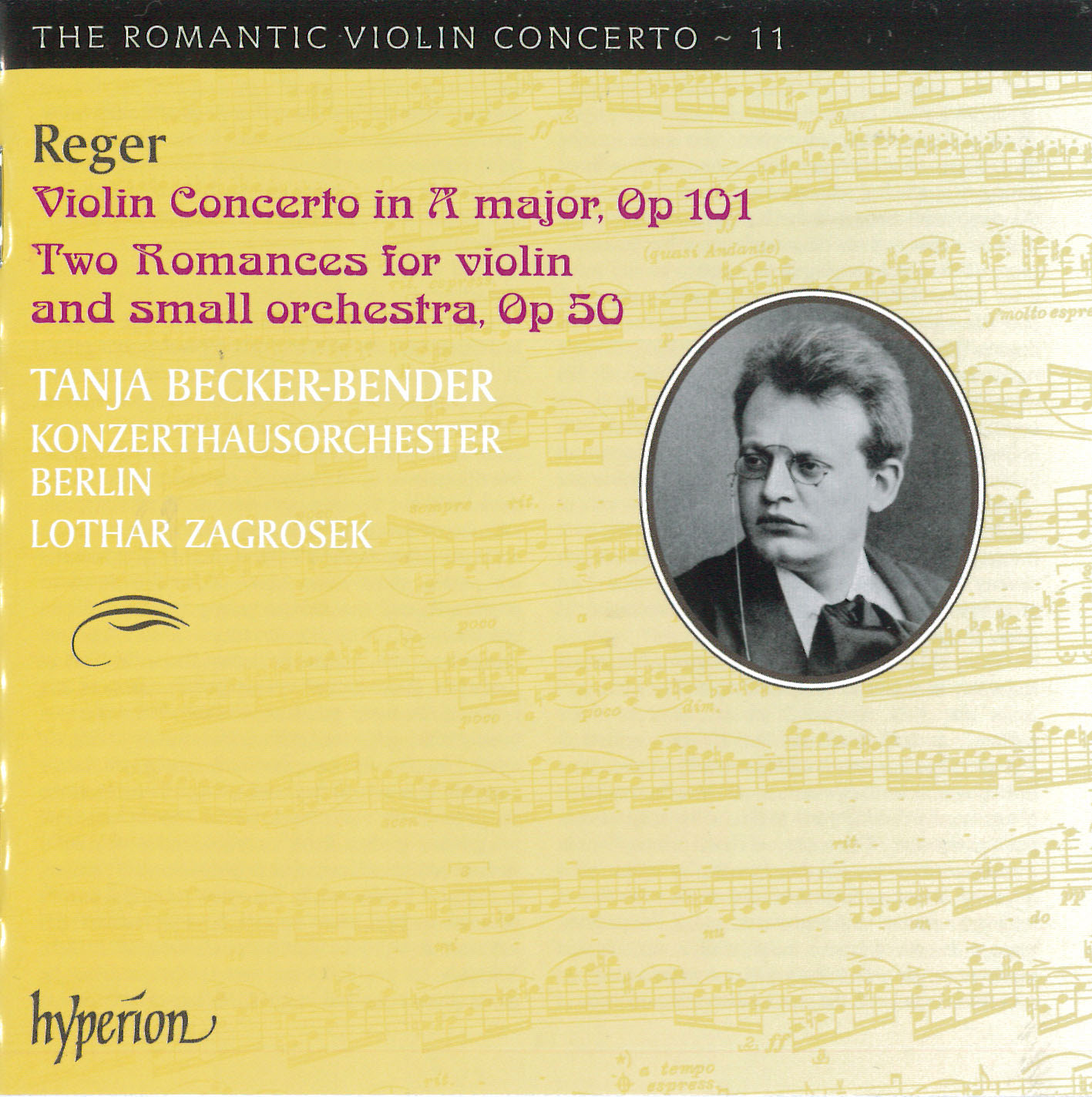
03_RegerThe latest CD in the outstanding Hyperion series The Romantic Violin Concerto is Volume 11. It features the works for violin and orchestra by Max Reger in terrific performances by Tanja Becker-Bender and the Konzerthausorchester Berlin under Lothar Zagrosek (Hyperion CDA67892).

Reger, who was only 43 when he died in 1916, trod a highly individualistic road as a composer. As was the case with Mahler, who had died exactly five years earlier, his main exponents and interpreters left Germany in the 1930s, but, unlike Mahler, his music and reputation failed to gain a foothold on foreign soil after the Second World War.

The Violin Concerto in A Major, Op.101, from 1907, is a simply huge, melodic and immediately accessible work, almost an hour long, and clearly in the post-Brahms tradition. The Two Romances in G Major and D Major, Op.50, written in 1900 and scored for a smaller orchestra than the concerto, were a deliberate attempt to secure more concert performances in the major German cities. Wolfgang Rathert’s excellent booklet notes refer to their “fusion of contrapuntal texture and flowing melody,” which is a pretty good description of Reger’s music in general. They are simply gorgeous works, reminiscent of Brahms and Bruch, and they receive sympathetically beautiful performances by Becker-Bender and Zagrosek.

Reger still tends to be criticized for the complexity and turgidity of his compositions, but it’s really more a case of an overabundance of creative ideas making it difficult for the listener to discern the overall shape and form. It’s quite beautiful writing, however, and if you don’t know any of his music then the three lovely works on this terrific CD offer the perfect opportunity to put that right.

04_Angele_DubeauIt’s really difficult to know what to say about Silence, on joue! A Time for Us, the new CD from Angèle Dubeau & La Pietà (ANALEKTA AN 2 8733). It’s a collection of movie themes quite clearly aimed at a mass market — and, sure enough, it’s already being enthusiastically played on a certain Toronto FM radio station.

Film music is an extremely important area of contemporary composition, of course, and the big names are here in force: John Williams, James Horner, Howard Shore, Erich Korngold, Ennio Morricone, Nino Rota, John Barry. The problem is that there seems to be little of any real substance: of the 20 tracks, 12 are under four minutes in length, and only one exceeds five minutes — just. It’s unrelenting easy listening, with no real “bite” anywhere, although this may well be due to the fact that virtually all of the 15 basic tracks (there are five “bonus” tracks from previous Dubeau CDs) are – hardly surprisingly — transcriptions, adaptations or arrangements.

Tracks include My Heart Will Go On, Over the Rainbow, Smile, the Love Themes from Romeo and Juliet and Cinema Paradiso, and music from The English Patient, Lord of the Rings and Dances with Wolves. The bonus tracks include the “Cavatina” from Stanley Myers’ The Deer Hunter and the main themes from Schindler’s List and The Mission.

Dubeau, clearly a top-notch player, is apparently the only Canadian “classical” musician to have earned two gold records for album sales exceeding 50,000 in one year. This CD will probably do equally well, although one may hopefully be excused for pondering the relationship between quantity and quality, and wondering whether or not Dubeau’s undoubted talents could be put to better use.

Strings Attached continues at www.thewholenote.com with the latest from the New York orchestra The Knights with works by Schubert, Satie and Philip Glass among others.

Back to top