03_grieg-mogensenPiano Music of Edward Grieg, Volume 2

Sandra Mogensen

Independent CHM 0901120 (www.sandramogensen.com)


Edvard Grieg was not an especially complicated composer – yet, ironically, his style offers something of a challenge for performers. On one hand, a pianist should respect the heart-on-sleeve emotionalism and down-to-earth directness of Grieg’s ideas. On the other hand, this music demands interpretation: a pianist must do something with it.


And Sandra Mogensen, a Canadian pianist who lives in Stratford, Ontario, does plenty with it. With all of the 23 selections recorded here, there’s a strong sense of mood and dramatic purpose. In her hands, each piece on this clear-sounding disc captures an image or tells a story.


For instance, there’s a Schumannesque flutteriness to Butterfly (Op. 43. No. 1); and a sunny, pleasant disposition to Gade (Op. 57 No. 2) – a musical portrait of Grieg’s teacher Niels Gade. As well At the Cradle (Op. 68 No. 5) is suitably dreamy, and Bell Ringing (Op. 54 No. 6) is dark and mysterious. For Nordic folksiness look to Springdans (Op. 17 No. 1) or Norwegian (Op. 12 No. 6).


Some of these pieces go beyond the expression of a single idea, enfolding contrasting material into single movements. Mogensen’s performance of the famous Solveig’s Song (Op. 52 No. 2) is alternately mournful and sweet. And the enigmatic Vanished Days (Op. 57. No. 1) – the longest piece on the disc – runs the gamut from introspective wistfulness to intense high drama, with some playful passages thrown in for good measure.


For those with a penchant for sterner stuff, some of the pieces recorded here will no doubt seem overly sentimental. Be that as it may, Mogensen pleads Grieg’s case sincerely and well.
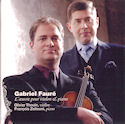
02_faure_violinFauré - Works for Violin and Piano

Olivier Thouin; Francois Zeitouni

XXI XXI-CD2 1702


This fine disc’s two “pillars” are the early and late Fauré violin sonatas. Sonata No. 1 in A Major shows Fauré already at the height of his powers. This performance realizes the music’s striving, yearning sensibility. The passionate first movement features Fauré’s distinctive modal and chromatic harmony. Zeitouni controls the florid piano accompaniment well, bringing out motifs and subordinating lines, or underlining the violin’s melodic shaping. In the barcarole-like slow movement, sensitivity to harmony is displayed in violinist Thouin’s classic, subtly-coloured style. Both players meet the demands of the intricate, skittering scherzo, featuring fine staccato from Thouin’s bow.


The duo makes the most of the disc’s three lighter works. Berceuse in D Major is like a charming French mélodie. I find the Romance in B-flat Major too conventionally sentimental, but the forward-looking Andante in the B-flat Major’s melody in ascending fourths receives particularly interesting harmonizations.


The performers capture well the much different character of Sonata No. 2 in E minor: the first movement’s soaring lines seeming to ascend out of tumult towards light; the second movement’s tossing and turning; and the finale’s conflict and ambiguity resolving only at the final measure.


This disc may attract new listeners to Fauré, while aficionados will find it faithful to the composer’s style and spirit. The recording quality is excellent, capturing a full dynamic range in all registers, and Zeitouni's accompanying notes only reinforce the case being made for this great composer.

01_raymond_spasovskiPhoenix 

Raymond Spasovski

Independent (www.raymondspasovski.com)


I don’t imagine Walter Hall has changed all that much since I gave my one and only noon-hour recital there many years ago as a fourth-year composition student. But what I do know is that pianist Raymond Spasovski plays much better than I did on this live recording of a concert held there last October. Born in Macedonia, Spasovski made his debut at the age of 10 with the Macedonian Symphony, and since then, has appeared with major orchestras throughout Europe and North America to great acclaim.


This CD, his first, presents an attractive program drawing heavily from the late Romantic period, but opening with a short sonata by the 18th century composer Mateo Albeniz. Although this piece and the Bach Prelude in A minor BWV 807 clearly demonstrate his technical dexterity, it’s the repertoire from the late 19th century in which he particularly excels, especially that by Spanish and South American composers. Indeed, de Falla, Granados, Isaac Albeniz, Lecuona, and Ginastera are well represented, and he approaches them all with great panache. The playing is confident and bold, particularly demonstrated in the Tres Danzas Argentinas by Ginastera, and Granados’ Allegro de Concierto. Yet his interpretation of the Chopin Berçeuse shows a decidedly more sensitive side to his playing.


While I’m always a little leery about live recordings with respect to audio quality, the sound here is well-balanced and warmly resonant - and even the frequent applause doesn’t detract in any way. So a big bravo, Mr. Spasovski – the Walter Hall Steinway sounds much better under your capable hands than it ever did with mine!

05_migotMigot - Suite à trois; Le livre des danceries

Robert Cram; Trio Hochelaga

ATMA ACD2 2543

Intense in his spirituality, drawing on the rich diversity of French music, and inspired by the Touraine landscape, Georges Migot (1891-1976) could not fail to achieve fame as president of La Spirale, the Parisian society dedicated to offering performances of new French works.

Migot’s Trio of 1935 commences with the Modéré, an intense - and clashing and disjointed - movement. It is almost a duel between piano and violin. It is followed by an Allègre. Both movements make great demands on the skills of cellist Paul Marleyn and violinist Anne Robert; their skills ensure that this recording matches up to the description of the Trio as one of the most arresting pieces of French chamber music.

Third movement is the Danse, where Stéphane Lemelin’s piano-playing comes into its own, as intense as the string parts, but more disciplined as the piano is denied the liberty that the latter enjoy as they invoke France’s varied heritage. Last is the Final: no instrument dominates and Migot allows each to test its player’s skill. This is an intense suite of chamber music, a challenge to preconceived ideas of classical ensembles.


In very different spirit is the Livre des Danceries where flautist Robert Cram introduces a sprightly quality which is eventually taken up by the piano part in the second - Gai - movement. At last, the CD’s pianist can relax! Next is Réligieux, longest of the four movements, drawing on melodic religious sources. And then Conclusion, from the earliest bars a celebration of the other movements and an exciting way to round off Trio Hochelaga’s vigorous interpretations.

04_english_violaEnglish Music for Viola

Eniko Magyar; Tadashi Imai

Naxos 8.572407

There is something about the viola’s tonal quality that makes it seem quintessentially English; appropriately so, given that it was an Englishman – Lionel Tertis – who almost singlehandedly established the viola as a legitimate solo instrument in the early 20th century. Tertis had connections with most of the music on this outstanding debut CD by the London-based Hungarian violist Eniko Magyar.

The Bliss Sonata is the most challenging of the works, with a turbulent, restless and dissonant start and a passionate third movement. It was written for, and dedicated to, Tertis, who gave the first performance in 1933.

A year earlier, Tertis had transcribed Delius’s Third Violin Sonata and had played it for the ailing composer at the latter’s home in Grez-sur-Loing. Written in 1930, it is Delius at his distinctively lyrical best.

The seven attractive miniatures by Frank Bridge date from 1901 to 1908, when Bridge was in his 20s. Most were originally written for violin or cello; only two – Pensiero and Allegro appassionato – were written specifically for the viola, Bridge’s own instrument, and were published as the first titles in the Lionel Tertis Viola Library in 1908.

Magyar plays her c.1700 Grancino viola (on loan from the Royal Academy) with warmth, sensitivity, and a superb technique, and is ably and sympathetically supported by pianist Tadashi Imai. The recording quality and booklet notes are both excellent.

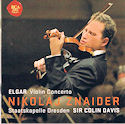
03_elgarElgar - Violin Concerto

Nikolaj Znaider; Staatskapelle Dresden; Sir Colin Davis

RCA Red Seal 88697 60588 2

Nikolaj Znaider has not yet attained universal fame but, be assured, he is on the way. He is an exclusive RCA recording artist and has several fine concerto discs including the Brahms and Korngold with Valery Gergiev, the Beethoven and Mendelssohn with Zubin Mehta, the Nielsen and Bruch with Lawrence Foster, and the Prokofiev No.2 and Glazunov with Mariss Jansons. This new recording of the Elgar is clearly one of the finest versions this concerto has enjoyed.

Connoisseurs know well the historic recording with the teen-aged Yehudi Menuhin and Elgar conducting the London Symphony Orchestra from 1932. Although Fritz Kreisler premiered the concerto in 1910 it was the Menuhin/Elgar that had the music world talking.

Znaider impresses me with a seemingly effortless command of his instrument and his silky, singing tone. A performance aided by the authoritative collaboration with consummate Elgarian Colin Davis, under whom one could believe that the German orchestra was a traditional English ensemble steeped in the tradition. Not that I have auditioned the others recently but I believe that this performance is not bettered by any version that I have previously heard.

Top marks are also due the production and sound engineering, naturally balanced and detailed. One caveat, the timing for this concerto is less than 50 minutes - RCA should have included an appropriate filler.

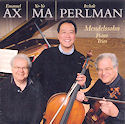
02_mendelssohnMendelssohn - Piano Trios

Emanuel Ax; Yo-Yo Ma; Itzhak Perlman

Sony Music 88697 52192 2

Menahem Pressler, the pianist who for more than half a century was the driving force behind the Beaux Arts Trio, is inclined to take a jaundiced view of piano trios cobbled together on a temporary, ad-hoc basis. “Three fine fellows do not make a trio!” he pointedly remarked.

Yet when the “three fine fellows” happen to be Itzhak Perlman, Yo-Yo Ma and Emmanuel Ax, Pressler’s concerns may be set aside. Although this group hadn’t played in public before last year and has given only handful of concerts, their collective interpretation is decisive and secure, banishing any hint of the wimpy playing that sometimes finds its way into Mendelssohn performances.

The two Mendelssohn trios on this disc are paired on countless recordings – but they’ve probably never been played or recorded better than they have here. From the outset of the D Minor Trio, the group’s playing is taut, nuanced and intricately interwoven. The dramatic first movement is nicely contrasted with the introspective second. The third movement is all coyness and charm; and the last movement is effervescent, with muscular outbursts.

Perhaps the group might have taken the opening movement of the C Minor Trio a little faster – but the tempo they chose provides some breathing room for the expressive range of this movement: the sotto voce string passages, and surprising outbursts from the piano. The second movement is all sweetness; and the third scampers lightly, as a Mendelssohnian scherzo should. The finale does not lack grandness, but there’s a spring to the rhythm that propels the music forward.

I’m reminded of one other thing Pressler has said about piano trios: the heart of the ensemble is the piano. Violinists and cellists may not like this proposal – but it’s well borne out on this recording, which is solidly founded on Ax’s superb playing.

01_aux_armesGossec - Aux Armes, Citoyens: Royal and Revolutionary Music for Winds

Les Jacobins; Mathieu Lussier

ATMA ACD2 2595

Absolute monarchy, revolution, terror, Napoleon, restored monarchy - François-Joseph Gossec lived through all of this over his 95 years. And he orchestrated La Marseillaise.

Despite name and title, this CD features both royalist and revolutionary music. So, with our six period-woodwind instrumentalists, we aristos can ride with the Grande Chasse de Chentilli to the accompaniment of clarinets, horns and bassoons. Then, revolutionaries, we lower our flags as we remember assassinated Deputy Feraud.

Back on course we hear La Marseilaise. Gossec’s arrangement starts at a quick revolutionary pace but ends in a more stately, Royalist, tempo. Gossec hedges his bets...

And so to five revolutionary airs under Mathieu Lussier’s artistic direction. Ça ira leads. It inspired the French revolutionaries (and one English officer who actually made it his regimental march). In fact, most of this suite is rather un-revolutionary in its tempo - but still a wonderful opportunity to hear authentic Baroque woodwind solos. We arrive at the battlefield with four short pieces. Clarinets, bassoons, and horns boost our morale as we march, playing spiritedly as we engage our foe at close quarters, and with dignity as victory is ours.

More relaxing are Gossec’s Andante and Chasse d’Hylas et Sylvie. Gossec’s interest in the clarinet, new in France when he was composing in the early 1770s, is ably demonstrated by Jane Booth and Martin Carpentier.

Gossec’s hymns to liberty are more reflective than brash; the same is true of his Simphonie à 6. What Les Jacobins have done here is to publicise the vast store of undiscovered French revolutionary music.

02_saint_ceciliaTo Saint Cecilia

Les Musiciens du Louvre, Grenoble; Marc Minkowski

Naïve V5183

Cecilia, patron saint of music, was martyred: her killers would surely have been more benign if they had listened to the celestial music dedicated to her. Purcell, with his Hail Bright Cecilia of 1692, shows why English music-lovers came to establish festivals dedicated to Cecilia. Listen to the tenor voice of Anders Dahlin in ‘Tis Nature’s Voice and bass Luca Tittoto in Wond’rous Machine! to hear why. There is one irony in Hail, Bright Cecilia. Purcell uses the human voice in all its beauty to sing the praises of musical instruments - which hardly get the chance to express themselves.

Handel’s A Song for St Cecilia’s Day is lively in its Overture; baroque orchestral music at its most serene. Add the cello-playing of Niels Wieboldt in What Passion Cannot Music Raise and Florian Cousin’s flute-playing in The Soft Complaining Flute and you will see how Handel gives freer rein to instruments than Purcell.

And then Haydn, with the more religious approach of the St. Cecilia Mass. The female soloists come into their own: contralto Nathalie Stutzmann and above all, soprano Lucie Crowe. Listen to the latter in Haydn’s Quoniam; if anyone can claim to be called the Cecilia of these two CDs, it is Ms Crowe.

And don’t just set aside 2 hours 33 minutes for the recording: immerse yourself in the 132-page booklet of insightful articles and sumptuous paintings.

Michael Schwartz

01_vivaldi_lemieuxVivaldi!

Marie-Nicole Lemieux; Ensemble Matheus; Jean-Christophe Spinosi

Naïve V5212

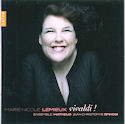
This recording features selections from the three Vivaldi operas which Canadian contralto Marie-Nicole Lemieux has recorded for the Naïve label with the Ensemble Matheus directed by Jean-Christoph Spinosi - Orlando furioso, Griselda and La fida ninfa - as well as Vivaldi's Stabat Mater. Known for her extremely agile voice, unusual for a contralto, she is well able to manage the roller-coaster agitato passages better suited to a violin that Vivaldi (most unfairly) demands of singers. One is reminded, especially in the exhilarating Sorge l'irato nembo from Orlando furioso, of the fire of Marilyn Horne. It's no wonder this performance of the opera was acclaimed as the best recording of the year 2005 at the French Victoires de la Musique in Paris.

This recording also includes duets and trios with internationally acclaimed voices such as sopranos Sandrine Piau and Veronica Cangemi and countertenor Philippe Jaroussky with whom Lemieux's rich warm tones blend effortlessly. Lemieux is sublimely regal in the arias from one of the most beautiful settings of Stabat Mater. This is a singer well on her way to becoming a national treasure.

Dianne Wells

01_antico-modernoAntico/Moderno - Renaissance Madrigals Embellished 1517-2001

Doron Sheriwn; Julien Martin; Hosh Cheatham; Skip Sempé; Capriccio Stravagante

Paradizo PA008 (www.paradizo.org)

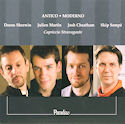
Embellished? Yes, in a phenomenon unknown even to regular early music concert-goers, works by Italian madrigal-writers (e.g. Palestrina and Cipriano de Rore) and Franco-Flemish composers (e.g. Josquin) could sometimes be converted into instrumental versions, often in the composers’ own life-times.

Skip Sempé explains that top and bass vocal parts were frequently embellished; instruments classified as baroque - violin, viol da gamba, recorder, and sackbut - were developed and played to virtuoso standards during the Renaissance - the arrangements on this CD must surely have mesmerised audiences.

The commonly expressed view that the cornetto (a hybrid instrument with a small trumpet-like mouthpiece and finger holes like a recorder, made of wood and covered in leather) was closest to the human voice in its output is borne out by Doron Sherwin’s playing - you would think initially that a female voice was in full flow. And if you have doubts as to how expressive the recorder can be, listen as Julien Martin embellishes Palestrina’s Pulchra es amica mea and Vestiva i colli. As for viols, Ancor che col partire by de Rore was embellished for consort after his death; five violas da gamba interpret the piece’s intricacy and thoughtfulness.

To describe this CD as highly original does it disservice. It is original in rediscovering embellishments, original in recording several scorings for the same piece and above all original for embracing Doron Sherwin’s inspired cornetto playing, sometimes of embellishments which he himself has written!

Michael Schwartz

02_scarlatti_petricScarlatti - 18 Sonatas

Joseph Petric

Astrila AST232652-1 (www.josephpetric.com)

The keyboard sonatas of Domenico Scarlatti have long been a challenge and a treat for accordionists. Though difficult to execute, the fluidity of melody, contrapuntal intricacies, and rhythmic stability translate well to the instrument. Toronto virtuoso and international accordion star Joseph Petric shines in the 18 Sonatas featured here. Although many will be unknown to the general public, a number are familiar to me (and likely other accordionists) from student days.

Instead of the term “transcription” (which is frequently used in classical music), Petric uses “adaptation” in his liner notes to explain his musical approach and interpretation. His choices of somewhat narrower range of dynamics, and slower tempos succeed as the gifted performer has contemplated each musical nuance with care – Sonata K 209 in A Major is especially beautiful in its lyricism and motion.

Scarlatti's harpsichord sonatas were written for an instrument that creates sound by plucking a string. Sound is created in an accordion by moving the bellows, forcing air to vibrate a reed. Occasionally a less than optimal tonal quality surfaces here – this may be a bellowing issue or just an adaptation factor but this is overshadowed by Petric’s brilliant playing in the florid sections. Stylistically however, I longed for a more solid rhythmic sense which would provide a boundary within which to further explore his unique ideas.

Joseph Petric makes it sound so easy but believe me its not! His very individual take in “18 Sonatas by Domenico Scarlatti” will have accordionists and non-accordionists alike listening, contemplating and enjoying for a long time.

Tiina Kiik

03_stamitz_aitkenStamitz - Flute Concertos

Robert Aitken; St. Christopher Chamber Orchestra; Donatas Katkus

Naxos 8.570150

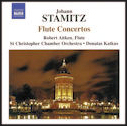
These four (C major, G major and two in D major), of Johann Stamitz’s fourteen concertos for flute and orchestra, were probably composed in the 1750s for the flute virtuoso Johann Wendling. They demand reconsideration of the standard music school wisdom on the “rococo” period as a kind of transitional netherworld where composers produced inane music, which inexplicably laid the ground work for Haydn, Mozart and Beethoven. These concertos are poised and mature. The writing for the flute is superb, equally expressive in the virtuosic outer movements and in the slow middle movements. The orchestral writing is equally impressive; and the pair of horns in both D major concertos (not just the second as the notes suggest) are masterfully employed. The middle movement of the C major concerto, with its stern repetitive Beethovenian dotted rhythmic motif, is poignantly tragic; and the virtuosity required throughout of both the soloist and of the orchestra, far from being exhibitionism, is central to the meaning of this music.

Robert Aitken is exemplary, his sound robust, even in the most extreme register transitions, and at times tender; his articulation sets the standard. The orchestra is virile in the tutti passages and engagingly rhythmic when accompanying the flute. The cadenzas, composed by Aitken, are stylistically consistent and contain some lovely touches, like the orchestra joining the flute in the trill at the conclusion of the cadenza in the slow movement of the first D major concerto.

Allan Pulker

Concert note: Robert Aitken is featured in Alice Ping Yee Ho’s Dance Concerto for solo flute, strings and percussion with Chinese dancer William Lau and the New Music Concerts Ensemble at Betty Oliphant Theatre on February 14.

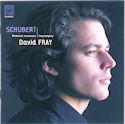
04_schubert_fraySchubert - Moments musicaux; Impromtus

David Fray

Virgin Classics 694489 0

In his short career, the young French pianist David Fray has gained a reputation for eccentricity, mostly due to his intense stage presence and singular vision. Inevitably, Glenn Gould comes to mind. In fact, Bruno Monsaingeon, who made a series of important films on Gould, has produced a documentary on Fray, called J.S. Bach – Sing, Swing and Think. Fray scored his first international success in Canada, at the 2004 Montreal International Music Competition, and recorded his very first disc, which included Schubert’s Wanderer Fantasie, on the Canadian ATMA label.

In this recording of Schubert’s six Moments musicaux, the first set of Impromptus, and the rarely heard Allegretto in C minor, Fray tends to favour subtle dynamics and restrained tempos. He can certainly be dramatic. But instead of creating sharp contrasts and sudden climaxes, he builds up tiers of sound. This is particularly effective in extended passages like the shimmering triplet runs in the first part of the Impromptu No. 2 in E flat Major and with motifs like the heart-wrenching inner-voice dissonances in the second part. He treats even the most fleeting lines like cantabile melodies, shaping them with an imaginative variety of colours, textures and harmonic details.

In his program notes Fray calls Schubert ‘a close friend’. In his playing Fray shows Schubert to be the most generous and humane friend possible. I find myself returning to this exquisite disc frequently, and feeling richly rewarded with each listening.

Pamela Margles

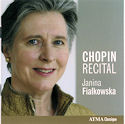
05_chopin_fialkowskaChopin Recital

Janina Fialkowska

ATMA ACD2 2597

Polish sausage is loved for its deep flavours that linger long after the blush of its immediate gratification to the palette. Our reluctance, however, to use food as a frequent metaphor for art means that the only place you’ll ever see Chopin likened to Kolbassa is… well, right here.

Janina Fialkowska is a Canadian pianistic stalwart – more amazing still because of her recovery from a 2002 cancer surgery that threatened her career. Her performance of the Chopin standards in this recording is remarkably strong. Her masculine keyboard energy is undiminished and her feminine subtleties as seductive as ever. This Yin and Yang are so beautifully balanced in her interpretations that one quickly forgets the performer while being drawn deeply into the swirling emotions that make Chopin’s music unique.

Stepping out of the way of the music is something Fialkowska does with clever and manipulative grace. One easily takes the bait offered by her technical perfection and is drawn toward the fiery melancholy of Chopin’s world.

Most unusual in these performances is the jarring pull-apart of the three-four rhythm in the C sharp minor Waltz (Op. 64 No.2) and the D Major Mazurka (Op. 33 No.2). The irregularity of the left hand “oom-pa-pa” is taken to its absolute limit without ever compromising the pulse of the music. This is a high risk interpretation but carried off convincingly because Fialkowska’s Polish roots run deep and true – and her musicianship is impeccable.

The audio balance of this recording leaves just the perfect amount of room space around the piano. And although the Steinway Fialkowska uses sounds a bit brighter and harder in the mid range than we generally hear from these instruments, this disc should definitely be a part of your Chopin collection.

Alex Baran

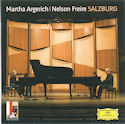
06_argerich_freireSalzburg

Martha Argerich; Nelson Freire

Deutsche Grammophon 477 8570

Back in the days before TV, radio and stereo recordings, inconceivable to the younger generation but really not that long ago, the only way to hear an orchestral piece was at a concert hall. For that reason composers reduced scores to single or two piano arrangements in order to be performed in the home. The other reason for 2 piano versions was so aspiring pianists could practise piano concertos with the 2nd piano, the orchestra, played by the teacher.

Argerich, the firebrand Argentinean virtuoso, now in her 70’s and still full of her powers, and Brazilian Nelson Freire who is a bit younger and was a child prodigy (who I saw playing as a teenager the Liszt Concerto under Rudolf Kempe), here combine forces at the Grosses Festspielhaus of Salzburg. These two have been playing together for years and have a wonderful compatibility and chemistry.

A carefully selected program from the classic to early and post Romantic and modern pieces gives a good cross section of what can be achieved in this instrumental mode. BrahmsHaydn Variations where the composer is in one of his sunniest moods and at his most inventive, is particularly suited to this version as it reveals the many structural intricacies that tend to be underplayed in the orchestra. It is a lovingly caressed and detailed performance. With the Rachmaninov Symphonic Dances, a piece written by a piano virtuoso, the players have a chance to show deliberate bravura eliciting a strong audience reaction. Their perennial showstopper, Ravel’s La Valse, conjures up many shades of mood and orchestral colour from the charm of a Strauss waltz to the menacing undertones of war. It ends in a gigantic explosion of sound followed by a gigantic explosion of applause.

Janos Gardonyi

Back to top