70Lip sync is nothing new. It goes back to the very first Holly-wood musicals, only in that case, the actors were singing to their own pre-recorded voices. In Mulroney: The Opera, the voices belong to someone else, and the actors and singers are in two different worlds. Soprano Zorana Sadiq, who sings several roles in the opera, was also the film’s lip sync coach. “It became my obsession,” she says, “to make sure that the actors matched the singers exactly. It had to look like they were using their own voice.”

When the vocal track was being recorded, the singers were filmed for reference, particularly, how they were shaping their mouths around the words. In the trade, these are called “eye movies.” As well, the actors were given the libretto and their vocal tracks far in advance of the shoot, so they could practise at home in front of a mirror. They also had separate libretto rehearsals. Says actor Rick Miller who played Mulroney: “A big problem was how words are accented. Actors hit the consonants and singers hit the vowels.”

What had to be resolved was the collision of different techniques. Explains Sadiq: “Opera singers rehearse to a ridiculous level to get the music into their bodies. Actors, on the other hand, don’t like to over-rehearse. They like to look spontaneous and are more laid back. As a result, each on-screen performer had to find a way to emulate the pushed, tensed sound of an opera singer.” When the actual shoot was happening, some actors would sing out loud to the recorded track, while others preferred to just move their mouths. It was a matter of personal preference, although Sadiq thought the former was a more practical approach.

Another problem to overcome was the fact that the actors didn’t have a conductor, so on set, they were on their own. Sadiq taught them cheat tricks, like having their mouths opened if they were coming in on a vowel. Or how to mirror vibrato. For example, Patrick McKenna, who played the debate moderator, sung by tenor Eric Shaw, made his chin quiver when he mouthed the words. “Unfortunately, there is no way that one can fake a P,” says Sadiq. “That has to be spot on.”

For very difficult entrances, actors were given a click track on their recorded score, which marks the beat. For example, if they needed to come in on the fourth note, they could count the clicks. The most difficult lip sync was the Shamrock Summit quartet featuring the Mulroneys and the Reagans. With four people singing, it was hard to follow the voices. Each actor had to be given a vocal tape with his/her own part beefed up louder than the other three. Even then, it was problematic to be exact. Says Sadiq: “That’s what editing rooms are for. Clever cuts made the scene work.”

10aThe recording sessions for Mulroney: The Opera were organized pandemonium.

The Esprit Orchestra and conductor Alex Pauk were in one booth, with the soft harp and heavy percussion each being given its own booth for sound mixing purposes. The singers were in another, and in the so-called peanut gallery were composer Alexina Louie, librettist Dan Redican and film director Larry Weinstein. And then there were the technicians in the control room. They were all connected together by headsets.

Since this was an opera, the music was not a background film score. Rather, music in Mulroney: The Opera was dominant, or, as they say in the trade, extended foreground. As Louie rightly points out: “It is the dialogue!” As a result, attention had to be paid to every nuance, with Weinstein directing the singers. Everyone was under the pressure of a tight schedule. Says Pauk: “There is just not the same rehearsal time for record mode as there is for a concert or a staged opera.”

One of the hardest things for the orchestra, according to Pauk, was recording in chunks, and then making sure that the various pieces would segue together in the editing room. “Alexina’s score was continually changing in styles, rhythm and pacing,” he says, “so that every corner of the musicians’ talent had to be utilized. They had to be sharp on the uptake because it was difficult to get a sense of flow. Yet, tempi had to be strictly observed for every take, because the playing had to fit a timed film sequence.”

Because Weinstein would not allow subtitles, every word sung had to be crystal clear. With all the forces finally ranged together, musical and libretto problems inevitably cropped up, so Redican was forced to do rapid fire rewrites on the spot – more words needed here, fewer words there, different words altogether – changes which the singers had to immediately absorb. They also had to be aware of tempi through maestro Pauk, and stay in time. Says Pauk: “Things were coming at them fast and furiously, and they had to keep jumping through hoops.”

8When the Globe and Mail first broke the story last October that there was going to be an opera film about Brian Mulroney, an astonishing 58 readers wrote comments on the website, and all of them were pure vitriol. Clearly, Mulroney, Canada’s 18th prime minister, may well be the most hated politician in modern Canadian history.

Well, Mulroney haters (among whom I include myself) can take heart. When I watched the screener, I started to laugh from the very first frame, and was still chortling after the fade-out. In truth, Mulroney: The Opera is absolutely delicious political satire, with every character of every political stripe coming in for a drubbing. On a more serious note, opera lovers will appreciate composer Alexina Louie’s clever pastiche score and librettist Dan Redican’s hilarious rhyming couplets. Louie is one of Canada’s most important composers of new music, while Redican is a revered comedian.

In a real coup, the 75-minute Mulroney: The Opera will be shown in Empire movie theatres across Canada as a special presentation of the Metropolitan Opera’s wildly popular “Live in HD” series. The program also includes the 26-minute Behind the Curtain: The Making of Mulroney: The Opera. The first screening takes place Saturday, April 16 at 1pm, with a repeat on Wednesday, April 27 at 7pm. Peter Gelb, the Met’s general manager, even gives the tongue-in-cheek introduction from the opera company’s broadcast truck.

Read more: Mulroney: The Opera - Guess Who’s Not Coming For Dinner

wholenote_cover_story_february_2011__6_of_25_

I.


IT WAS A BIT COLD, I grant you – one of those crisp January Sundays that gets called “twenty below” because it’s windy. If you didn’t know better, you’d have thought the sign saying “Isabel Bader” must be for a hockey rink, what with all the minivans rolling up, full of kids and gear. And who else in Canada but a hockey parent would sacrifice their day of rest like this, on the coldest Sunday afternoon of the winter? Who else indeed?

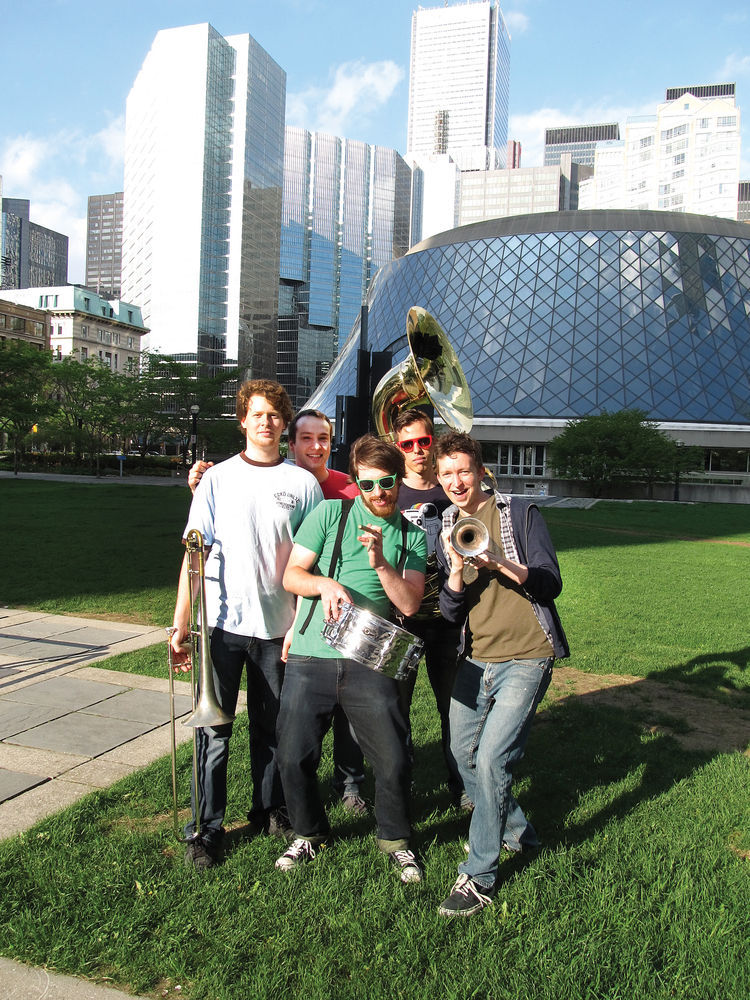
One of the dads of the seven musicians assembling for the hastily scheduled photo shoot comes up to me. (My standard issue cherry-red Quest Nature Tours Arctic expedition Gore-Tex windbreaker must make me look like I know what’s going on). “So whose bright idea was this one?” he asks. His shivering son or daughter is huddling with the other six young musicians, while WholeNote photographer Air’leth Aodfhin explains the shot we are looking for, and Toronto Sinfonietta music director Matthew Jaskiewicz looks on.

Read more: Bader-Bound... and Then? Toronto Sinfonietta’s Fifth Annual Concerto Competition

Naturally we like to hear from readers who like what we are doing, but more importantly we like to hear from musically engaged readers who like what they are doing – especially when they have good ideas to share!

52_art_galleryA recent call, inquiring if The WholeNote might be able to provide circulation to a group in the Orillia area, was especially interesting in the wake of Ori Dagan’s December story about Marg Cameron and The Toronto Music Lovers. We are increasingly aware of the groundswell of people getting together for the particular pleasures of enjoying live performance in the diverse company of other music-loving companions.

Elsie Leskew’s call gave me the opportunity to chat with an interesting new reader, and she followed up our conversation with a letter.

…I have been involved in music my entire professional life, and only in the last year discovered your magazine through Albert Greer director (soon to retire) of the Cellar Singers here in the Orillia area. I was absolutely thrilled and amazed to find this gem, full of information about concerts, reviews, and so many articles about all aspects of music and musicians….

Pianist Elsie Leskew studied with Clifford Poole, Mona Bates, Reginald Godden in Hamilton and Toronto; and Edith Oppens in Aspen, Colorado and New York. As well as performing in recitals, she was also involved in chamber music. Eventually music education in the school system became a part of her life, and she studied at the Eastman School of Music in Rochester, graduating with a Masters degree in Music Education. She taught high school music in Bracebridge and was Music Consultant for the Muskoka Board for several years before retiring in1989.

I continue to be involved in music here in Orillia, with many friends who have been part of the Orillia Arts Group which I created, in a rather informal way in 1998. It was the result of my offering a “music appreciation” series of evenings to introduce classical music to a handful of non-musician friends...

Their desire to attend a concert in Toronto led them to a TSO Beethoven concert back in June of 1998, and the rest is history. Today Ms Leskew co-ordinates a list of over 90 names from Orillia, Barrie, Gravenhurst, and Bracebridge, and concert expeditions are a regular event. A concert is chosen and The Arts Group hires a small bus accommodating only 22 people each trip  – first come first served – and there is usually a waiting list. They get together for an evening, share some wine and hor d’oeuvres, and Ms Leskew talks about the music they are going to hear. They listen to recordings. On the day of the concert they have their own driver, provided by Hammond’s Transportation in Bracebridge, who delivers them to their concert venue, and returns them safely home again at the end of a wonderful evening. Often they plan an art gallery visit or restaurant meal before the concert.

…For your interest and information I include a list of the performances we have attended in the last 12 years. Reading in your publication about all the events surrounding the GTA, I am sure we will expand our musical horizons and discover other delightful events…

The Orillia Arts Group’s list of concerts over the past 12 years includes concerts at Roy Thomson Hall, operas – first at the Hummingbird and later at the Four Season Centre, performances by the National Ballet, and most recently the September 2010 TSO concert with guest pianist Lang Lang. Where will these intrepid music lovers and their trusty bus venture next?

…Many are eager to hear some music in the magnificent new Koerner Hall. I think we may attend the Mozart Mass in C Minor, on May 11, but I’m going to listen to it again before we decide… My first experience of this wonderful music was singing in it, when I sang I attended The Aspen School of Music in Colorado one summer, as quite a young person. Walter Susskind was the conductor. It was the first time in my life I experienced that shiver that goes right down your spine…from music. I heard the Mozart Mass again years later at the Salzburg Festival and it thrilled me all over again.

The last part of my conversation with Ms Leskew was about the many opportunities to hear magnificent live music beyond the GTA, which previously her group might not have known about. These are becoming increasingly visible in the WholeNote’s listings and advertising. We agreed that getting sufficient copies of our magazine to the Orillia area was a really good place to start.

Back to top