The last two WholeNote columns I wrote examined some general aspects of choirs and the practice of choral singing, a topic that did not meet with unanimous approval. A friend who can be relied on never to mince words said something to the tune of, “Can’t you just tell us what concerts are going on? All this navel-gazing about the meaning of choral singing is kind of self-indulgent.”

My first thought was that this comment was completely unjust. But just to make sure that I had not overreacted to reasonable criticism, I resolved to sternly inspect my actions and motivations. Hewing to a strict schedule, I spent every evening of the following week sitting on the back deck, drinking wine or coffee depending on my whim, moodily watching the sunset, writing about my feelings in my journal and listening to my favourite music.

At the end of the week I was absolutely certain there could be no possible justification for characterizing as indulgent someone as rigorous, self-denying and ascetic as myself. So, the final question of this tripartite series, in this last WholeNote column before the fall season begins, is this: What gives a choir its particular identity?

Choirs can define themselves by the era and musical repertoire, making their specialty baroque or contemporary music. Most choirs sing diverse repertoire, and in a crowded choral market, it is challenging for choirs to find a way to stand out from the crowd in a manner that will attract an audience. As our knowledge of the performance practices of earlier eras has increased, the “one size fits all” choir that sings repertoire from five centuries is becoming a thing of the past.

Some choirs build themselves around music associated with a particular culture or region of the world. The greater Toronto area is likely the most diversely multicultural region of Canada, and the culture of the area is enriched by those who come and bring a bit of their home country’s musical practices with them. Such groups often strive to strike a balance between being exemplars and proponents of past traditions, and exploring the way in which new influences can challenge and reshape those traditions. The Heritage Singers were formed in 1977 by Grace Carter-Henry Lyons, who came to Canada from Jamaica. Its members hail from diverse parts of Africa and the Caribbean. They will be singing at Harbourfront on July 31.
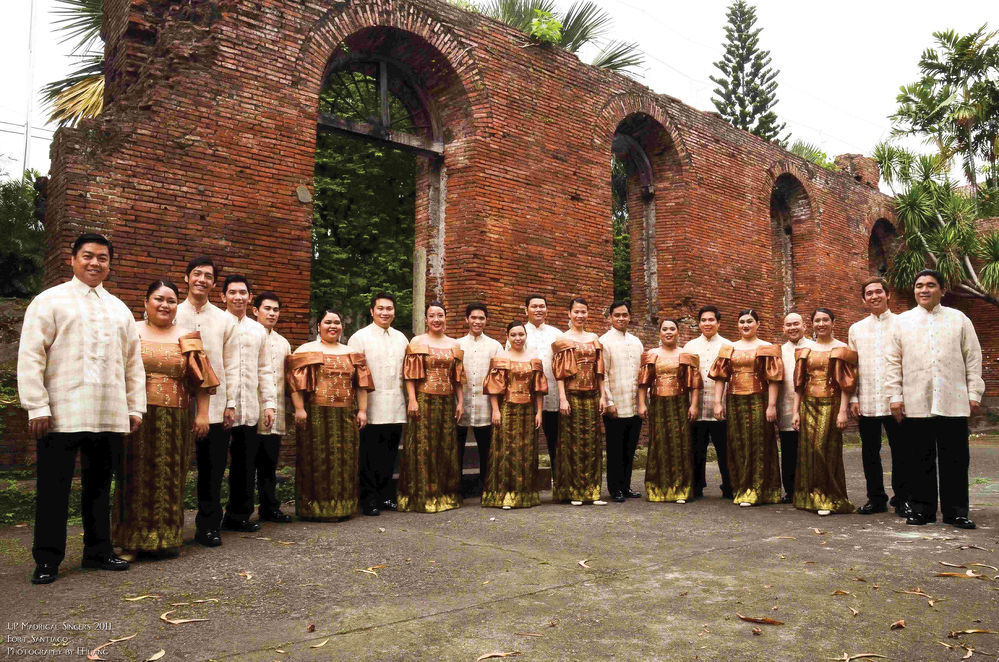
21Cross-cultural influences can give a choir its identity, as in the case of the Philippine Madrigal Singers. Hailing from the Pacific Rim and based out of the University of the Philippines, they sing diverse music but have made their specialty the European renaissance madrigal and have been hugely successful in Europe. They perform in Toronto on July 13. Incidentally, they perform their concerts seated — my kind of choir.

Often, groups are assembled for the express purpose of putting on a discreet performance. This summer is the first and, hopefully, inaugural year of the BlackCreek Summer Music Festival. Out of whole cloth, the festival has had to assemble a chorus for its concert performances. In the spring, the emails went out advertising work opportunities for choral singers. In this kind of situation, it is really the conductor that must pull together the group, quickly giving it an identity and aesthetic in a short rehearsal period. Listeners can judge whether or not this has been achieved at an August 27 performance of Beethoven’s Symphony No.9, with the great London Symphony Orchestra, conducted by Lorin Maazel.

Other festival performances this summer include the Arcady Singers performing Carl Orff’s Carmina Burana at the Boris Brott Festival on August 18, The Elmer Isler Singers at the Festival of the Sound (in Parry Sound) on August 6, and numerous concerts by the Elora Festival Singers during the Elora Festival, which runs July 8–31.

Choirs are often defined by (and sometimes named for) their conductor, such as the aforementioned Elmer Iseler Singers, and more recently, the relatively new Larkin Singers. One conductor whose presence is likely to be strongly felt in coming years is the new head of choral conducting at the University of Toronto, Hilary Apfelstadt. Originally from Nova Scotia, she has worked for years in the United States, at Ohio State University, and has guest conducted all over the world. She is this year’s conductor for the Ontario Youth Choir, an ever-changing group of young singers that assembles each summer to learn choral skills and give concerts. They will be performing on August 28 in Toronto.

Not so incidentally, Choirs Ontario, which coordinates the OYC program, celebrates its 40th anniversary with a gala reception and dinner after this concert. Choirs Ontario has been a staunch supporter of all the diverse choral groups of this region and it is a pleasure to congratulate them on 40 years of choral activism and advocacy.

Ben Stein is a Toronto tenor and theorbist. He can be contacted at choralscene@thewholenote.com.
Last issue I explored some of the reasons that people join choirs, focusing on such things as improving musical skills and singing great choral works. For many, the community aspect of group singing is of equal importance to music. If one is looking for a pastime, hobby, diversion, or social activity, group singing can fulfill all these needs.

But one can also see choral singing as a metaphor for the kind of cooperation that is necessary to make the world function. Each (vocal) part fulfills its particular role, according to its nature and ability. Some aspects of the group are more noticeable than others – altos tend to get buried in the mix – but each part is crucial to making up the whole, and the good quality of the choir is dependent on each section being able to make a healthy, secure and blended sound.

Still, music making is not an inherently democratic activity. The choir-as-society metaphor becomes more problematic when it is applied to the conductor, whose role is most regularly that of a benevolent dictator. But the conductor’s rule often only applies to the music making alone, while the larger power structure of the choir organization usually resides in a volunteer board of directors.

A dictatorial or abusive conductor may be tolerated for a time if they are getting an exceptional sound from the choir, but ultimately choral singers prefer to be treated well when making music, and know that musical excellence and courtesy in rehearsal are not mutually exclusive.

Any arts group has to negotiate the tension between focusing on the fun of the performance and maintaining a healthy culture of regular rehearsal. This mirrors the societal tug-of-war between rewarding achievement (tax breaks, incentives, high salaries) and looking after the mundane but necessary aspects of everyday life (roads, education, a social safety net).

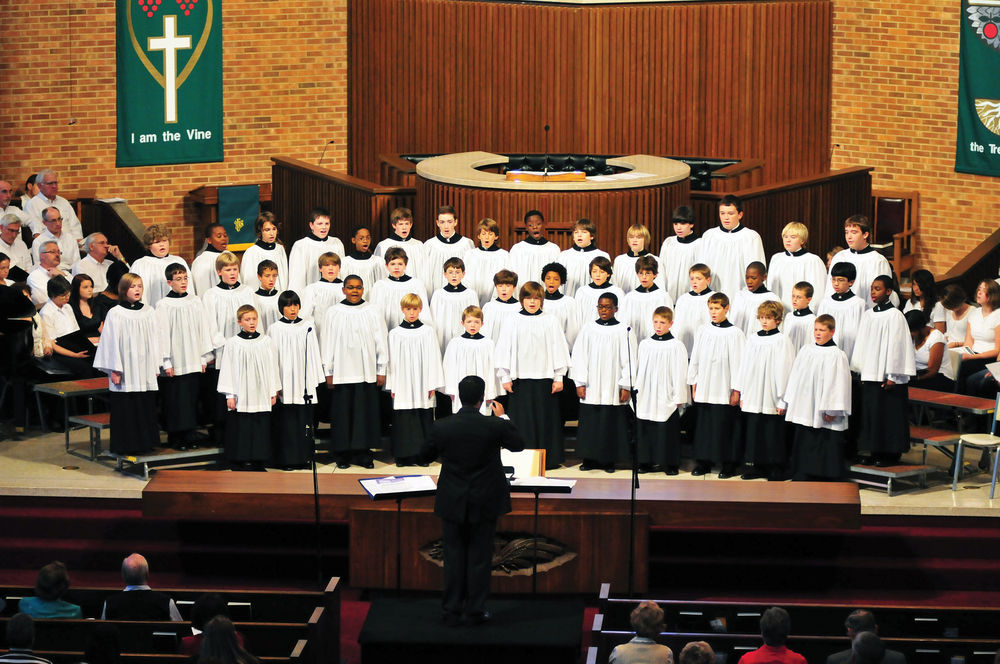
p20_chattanoogaboyschoir1Many choirs use music to fundraise and to champion causes. Two fundraising concerts of interest take place this month. On June 11, the Chattanooga Boys Choir sings works by Purcell, Schubert, Bach and Rutter to raise funds to help with the maintenance of the Casavant organ at Our Lady of Sorrows Catholic Church. On June 16, the Coro San Marco – a local choir that specializes in Italian repertoire – is performing a concert of opera arias and choruses, in support of Japanese earthquake relief.

Composers themselves can also directly address social concerns through their compositions. Paul Winter’s Missa Gaia/Earth Mass has become a choral favourite since its premiere recording first appeared in 1982. It uses the Mass text only as a jumping off point for settings of other lyrics including poetry and hymns that take the health of the earth as their focus.

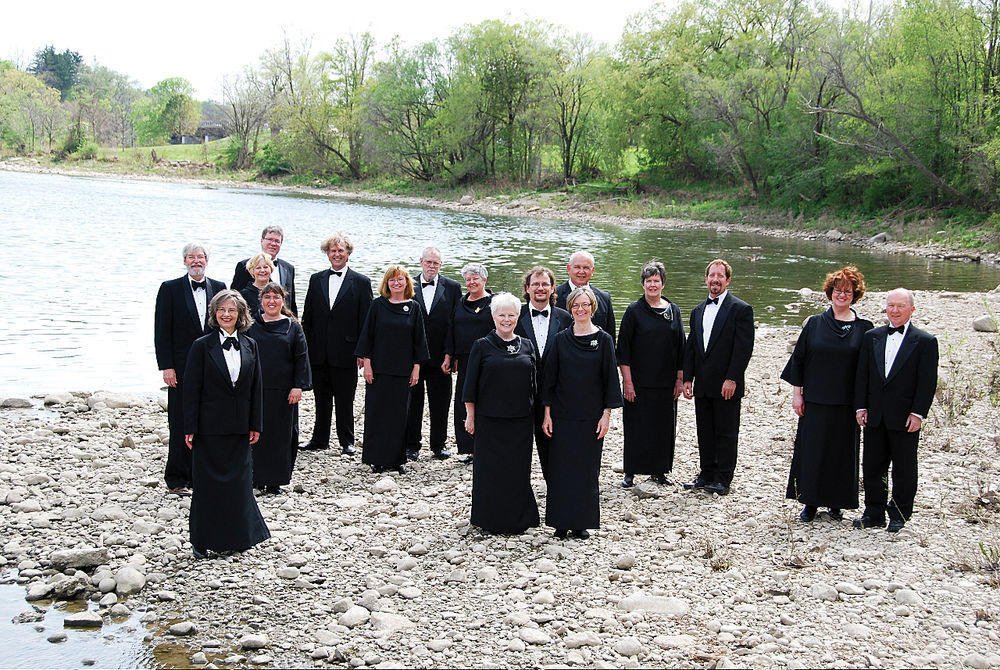
p21_schuessler_singersThe Karen Schuessler Singers were founded in 1993, and they work out of London. They have a strong reputation for crafting inventive seasons and commissioning new works. They have made their own performance tradition of the Missa Gaia, and have been performing it since 1994. This year’s performance, on June 4, will include displays by Salthaven Wildlife Rehabilitation and Education Centre. Salthaven’s focus is on the rescue and rehabilitation of sick, displaced, injured and orphaned wildlife. They also do local education and outreach to raise environmental awareness.

Mozart’s Mass settings have become compositions for the ages, but at the time of their writing Mozart was as mired in politics as any working artisan. He wrote the majority of his mass settings in Salzburg, under the patronage of Archbishop Colloredo. Mozart was held to strict structural controls regarding both the style of music and length of composition that he was expected to produce. He disliked the autocratic style of the Archbishop, and wrote scathingly contemptuous letters to his father about the musicians for whom he was forced to write. For all that they were composed under arduous conditions, his Salzburg masses remain consistently popular. They are never less than professional, and all of them have moments of both inventiveness and insight. The Voices Choir performs Mozart’s 1779 “Coronation” Mass on June 25.

Politics is inherent in the traditional British Proms concert, in which ethnic pride is celebrated and satirized at the same time. No conductor does this better than Bramwell Tovey, who leads the TSO’s “Last Night of the Proms” with the Toronto Mendelssohn Choir, on June 21 and 22.

Some other events of interest during the summer months:

The excellent choir of the Church of St. Mary Magdalene has a Friday concert series on June 3, 10 and 17, featuring Mass settings by Victoria, Guerrero and Palestrina.

Further into the summer, the Elora Festival Singers perform several choral concerts each week of the the Elora Festival. Of particular interest is the July 21 performance of famed composer Arvo Pärt’s Passio, an intense setting of the Passion story. I can’t remember the last time (if ever) that this piece was performed in this area – this is a good opportunity to hear it live.

Finally, Choirs Ontario is a valuable resource that is perhaps less known to choral audiences than it is to choral organizations. It both fosters and coordinates choral opportunities for young singers, and is an important resource for the province’s choirs. The organization’s website (www.choirsontario.org) is worth checking out for a number of workshops and choral camps taking place between June and August.

Ben Stein is a Toronto tenor and theorbist. He can be contacted at choralscene@thewholenote.com.
What Doth a Good Choral Singer Make?

11bMany an eminent philosopher has pondered this question. Most have finally admitted defeat and returned to relatively safe areas of enquiry such as the nature of evil and Man’s place in the universe. But how many philosophers took the time to engage in amateur choral singing? Nietzsche and Wittgenstein would have been chewed up and spat out by some of the alto sections I’ve seen in action.

The very nature of The WholeNote “choral canary” issue is a tribute to the multivalent nature of choral singing in this region. There are groups of all sizes, abilities and musical focuses available to join. But among all these choices, the principles of good choral work are (or at least ought to be) a constant, no matter what type of choir is involved. Here are a few observations about the choral experience and the nature of being a good choral citizen.

Read more: The Choral “Right Stuff”

23_choral_cantemus3The easiest way to understand music’s place in our lives is to compare it to food. What are you in the mood for tonight? Perhaps you’re willing to brave an exotic, unfamiliar meal from a distant land. Maybe you’re looking forward to a familiar dish, which a notable chef promises to create anew with daringly unconventional spices, sauces and cooking practices. Or after a long week’s work, it may be time for nothing better than comfort food, not especially healthy but familiar and filling for the soul.

In music as with food, proper nourishment is achieved through balance. A steady diet of music that is redolent with sophistication and subtlety may yield a kind of spiritual dyspepsia and a desire for more straightforward, meaty fare. But an unbroken chain of fat-fried musical hamburgers is likely to bring on metaphysical bloat of the brain and hardening of the aesthetic arteries.

For composers, the monetary rewards of laying on the musical sugar-treacle must be tempting, as the popularity of Rutter and Lauridsen can demonstrate. On the other hand, proud and uncompromising creators who proffer a musical meal that is the aural equivalent of dry wooden sticks garnished with razor blades should not be overly surprised or aggrieved if most audience members politely decline the invitation.

This month’s column focuses on the familiar and its opposite. Nine out of ten Canadian choral clinicians urge concert-goers to choose at least one of each category in the coming weeks, for proper health and a balanced musical diet.

The weeks surrounding Good Friday are a common time of year to perform settings of the Requiem Mass text. On May 7 and 8, the Cantemus Singers sing Palestrina’s Missa Papae Marcelli, which history has deemed his most popular mass setting. French composer Maurice Duruflé’s popular setting can be heard on April 2, sung by the Alata Harmonia Chorus of Canada, and on April 22, Good Friday evening, at the All Saints Kingsway Anglican Church.

On April 9, the Amadeus Choir performs Mozart’s Mass in C Minor and Haydn’s Lord Nelson Mass. This work, written during the height of Austria’s involvement in the Napoleonic wars, is considered by some to be Haydn’s greatest choral achievement. Other concerts with music by Verdi, Bach, Brahms and Handel can be found in the listings.

Let us turn to premieres, lesser-known works and Canadian composers. Now don’t flip the page or touch that computer mouse, you big scaredy-cats. I promise you that yummy aural snacks await, even if the tastes and recipes are not always entirely familiar.

24_donald_patriquinOn May 7, Cantores Celestes Women’s Choir presents a program that includes Montreal composer Donald Patriquin’s Canadian Mosaic. Patriquin is an inventive and adept choral writer whose work deserves more hearing in this part of the world.

On May 1, the DaCapo Chamber Choir premieres Gerard Yun’s We Have Not Heard. This concert is part of the excellent Open Ears Festival, which runs from April 27 to May 1 in Kitchener. Specializing in non-traditional music making, this is one of the best modern music festivals around. It deserves much more attention, especially from audiences and media in the GTA.

The Upper Canada Choristers’ May 6 concert Come to the Ceilidh! has a Celtic theme with songs composed or arranged by Canadian composers Mark Sirrett, Stephen Hatfield, Stuart Calvert, Gary Ewer and Harry Somers. Somers in particular was a tough-minded modernist, and it is good to see choirs continue to meet the challenge of his music.

On April 9, the Healey Willan Singers give the Canadian premiere of English composer David Bendall’s Requiem setting. On April 22, the Metropolitan Festival Choir gives a Good Friday concert which features the Canadian premiere of Bob Chilcott’s Requiem, and a number of Canadian works as well. Chilcott was a member of the renowned King’s Singers before embarking on a distinguished career as a choral composer.

This is also a season of premieres for the Orpheus Choir of Toronto. On April 2, they present Eriks Esenvalds’ Passion and Resurrection, and Howard Goodall’s Eternal Light. (On May 11 they debut Imant Raminsh’s Quaternity: A Cantata of Seasons. Raminsh is a Latvian Canadian composer based on the country’s west coast, but he has had a fruitful relationship with many Ontario choirs.)

Three concerts are worth noting that bridge the gap between familiar and novel. Pax Christi Chorale and the Pax Christi Youth Choir give an April 17 concert in support of their audaciously titled new CD Great Canadian Hymns. This collection of all-new compositions is intended for use in church worship services. Nowhere more often than in a discussion of hymn-singing does one hear the phrase, “I like the old ones better,” so a new CD designed for such use is a welcome thing.

On May 7, the Toronto Children’s Chorus sings two relatively unfamiliar works by familiar composers, Brahms’ Four Songs for Two Horns and Harp and Verdi’s Laud Alla Vergine Maria. The former work is particularly beautiful, and worth hearing live.

Finally, a concert series that exemplifies the combination of old and new is Tafelmusik’s rendering of Beethoven’s Symphony No. 9 (April 7-10). Although this orchestra has played Beethoven before, this is its first foray into a work that is normally the purview of enormous choral forces.

The last movement of this symphony is both historically important and undeniably popular, yet many Beethoven aficionados find it the least satisfactory section of the work. Certainly, it is the symphony’s most loosely constructed movement. Personally, when I hear the oom-pah percussion of the tenor solo section, I immediately want to go a-wandering, my knapsack on my back, val-da-ree, etc. But for the vast majority, there is no denying the unique power of the choral movement, especially the taut mixture of serenity and tension in the final B Major interlude before the marching band-like race to the finish.

Benjamin Stein is a Toronto tenor and theorbist. He can be contacted at choralscene@thewholenote.com.
Last month I devoted a column to a discussion of Bach’s choral music, works that have probably become as central to the European choral canon as anything one can think of. This month, for contrast, I’ll write about lesser known and/or modern works being performed in March and April, and of choral endeavours that have sprung from other traditions as well. What follows is only a few of many excellent concerts this month – please consult the listings for more choices.

14_the_victoria_scholarsThe baroque French composer François Couperin (1668-1733) has traditionally been known for his innovative harpsichord compositions, and his influence on the keyboard works of later composers. In recent years musicians have been investigating his vocal works. While there are good recordings of Couperin’s choral music available, concerts of it are rare in this area. We have a chance to hear one of his early works, the Messe a l’usage ordinaire des paroisses (mass for regular parish use) performed by the Victoria Scholars on March 6. Belying its somewhat lumpish utilitarian title, it has the dancing rhythms typical of French choral music of this era.

Another composer better known for his keyboard works than choral music is 19th century German Josef Rheinberger. In recent years, the Lyrica Chamber Choir of Barrie has made a project of reviving Rheinberger’s work. On March 26, they perform his Missa Brevis Op.117.

I’ve known choral conductor Ron Cheung since we were young tenors in the Toronto Mendelssohn Youth Choir, in the years when it was conducted by choral wild man Robert Cooper. Ron founded the Voices Choir in 1996. In celebration of Ron’s 20th year of choral conducting and Voices’ 15th year in existence, they are presenting a programme on April 2 that includes Robert Schumann’s very rare late period setting of the Requiem text. It is not a work I know at all, but the inevitable “net search” reveals that it clearly has its champions. Schumann fans and others curious about his quirky, dynamic music might well want to give it a listen, especially performed live.

While the classical music world’s focus on the music of past centuries is often seen as conservative and unadventuresome, deeper investigation into neglected areas of musical history has resulted in the rediscovery and rehabilitation of female composers of past centuries. In honour of the centenary of International Women’s Day on March 8, St. Catharine’s “Primavera Concerts” are presenting an all day series of three separate concerts on March 5. Along with music by composers from earlier times – Hildegard von Bingen and the amazing Barbara Strozzi – the excellent Oriana Women’s Choir will perform works by Canadian choral heroes Ruth Watson Henderson and Eleanor Daley. These two composers constitute a genuine Canadian tradition of their own, and their works have anchored many a concert in this part of the world (including the Voices concert mentioned above).

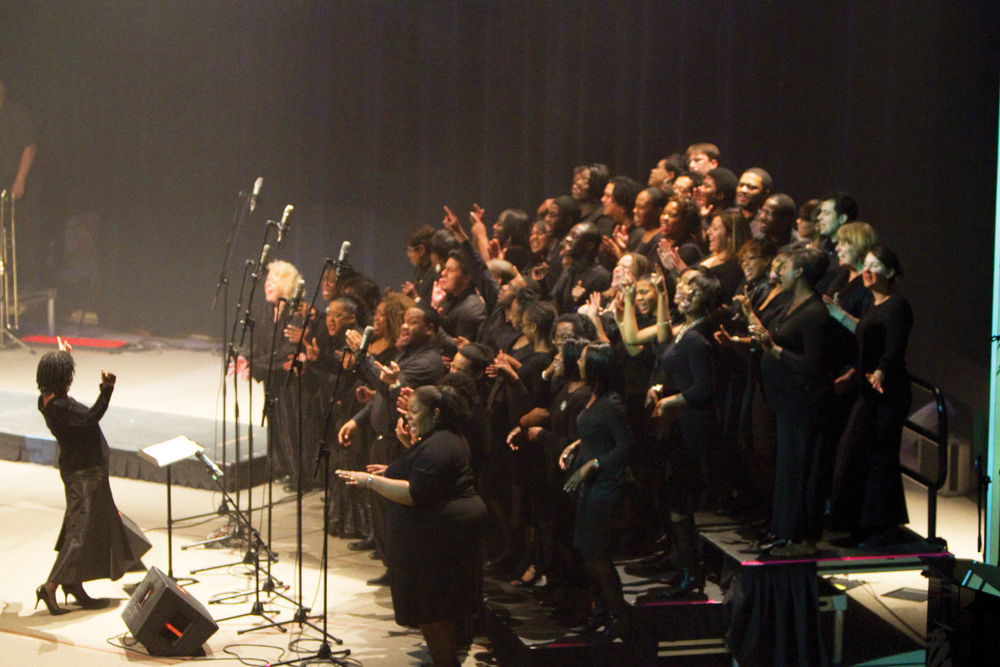
15_karen_burkeI had the pleasure to participate in a choral event in December at which the Toronto Mass Choir performed. Many choirs make pleasant sounding music in a pleasant manner. The Toronto Mass Choir is the kind of group that arrests your attention with their exuberance and rhythmic drive. Choirs steeped in European traditions often stumble when executing gospel music. Two common elements of gospel performance are memorization and physical movement, the precise opposite of what most choirs are accustomed to. Freeing one’s hands of the necessity to hold a music folder allows singers to sway and clap on the off–beat. These elements are really not just options with gospel – they’re often as necessary to its performance tradition as agile coloratura is to Handel and Mozart.

Choirs can often be bribed to memorize music with extra goodies at break time, but movement while singing remains difficult for many groups – a basic shift in weight from one foot to the other can be enough to cause the pitch to drop and the tempo to drag. This kind of movement has to be built into the practice of the music from the beginning. While it is difficult, the advantage for choral singers is plain to see – a choir that programs a choral concert will likely be in better shape that season than ever before. Choirs interested in innovative marketing strategies might well consider the appeal of “choral–cize” concerts to a fitness–minded audience eager to work up a sweat. But I digress.

For choral musicians interested in getting their gospel chops in shape, Toronto Mass Choir and its dynamic director, Karen Burke, are hosting Power Up 2011, an annual gospel music workshop on the weekend of March 4-6. The weekend includes workshops in vocal improvisation and songwriting, and culminates in a mass choir performance on the Sunday evening of the weekend. More information can be found at the Choir’s website www.tmc.ca.

Lastly, on April 2, the Toronto Chamber Choir devotes an evening to the works of Josquin Des Prez (c. 1450 approx - 1521). Josquin was quite possibly the world’s first genuine choral superstar. In a time in which music was not disseminated easily, his pan–national popularity and influence is well documented in sources from the early Renaissance. Now even more remote to our ears than Monteverdi, Byrd or Palestrina, his music denotes mystery, lost customs and sounds and beliefs. But well performed, it is hardly austere – he wrote rowdy and rhythmic popular songs as well as settings of religious texts.

Full disclosure prompts me to acknowledge that I have a small part to play in this concert. Likely, the proper thing for me to do was to not have written about it in the first place. But live performances of Josquin’s music are rare enough in this part of the world that I really have no choice but to risk my journalist’s credibility by highlighting it for The WholeNote readers. In the battle between journalistic ethics and Josquin, Josquin’s got to win pretty much every time. ν

Benjamin Stein is a Toronto tenor and theorbist. He can be contacted at choralscene@thewholenote.com

Back to top