31 choral lydia-adams 079 dscn2053September can be a frustrating time for choral music fans. Eager to reconnect with their favourite choirs, they find that the concert season does not start until October, or even November. What are choirs doing during the first month of the fall, anyhow — bowling tournaments? Poker sessions? Sleeping in?

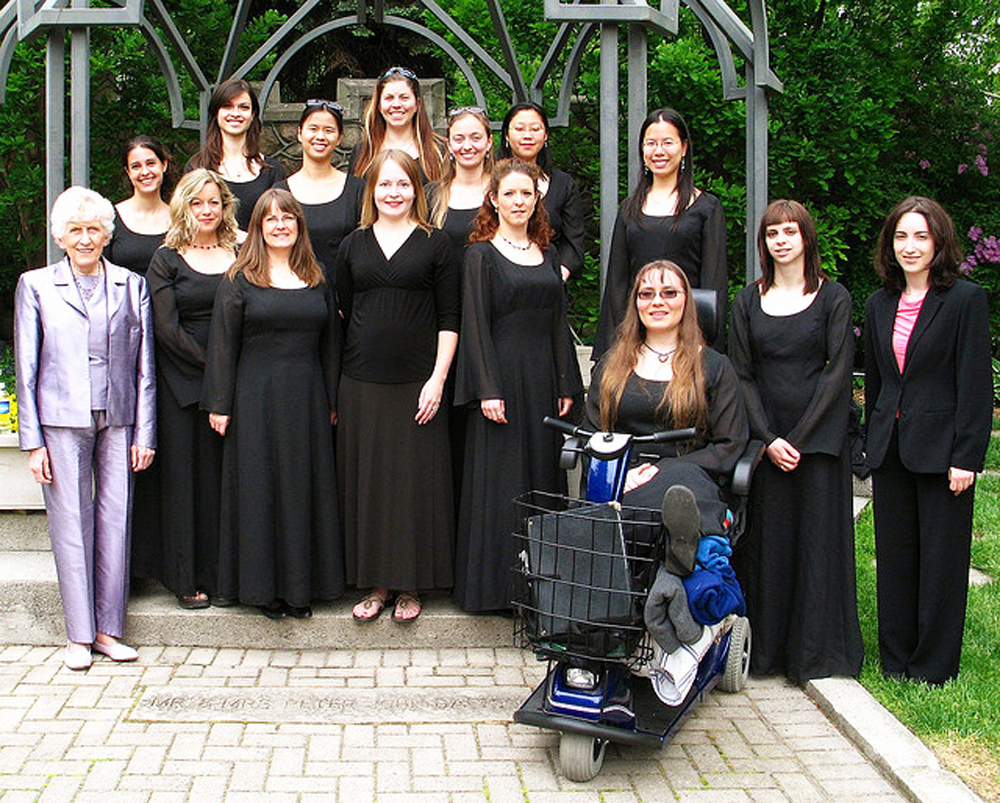
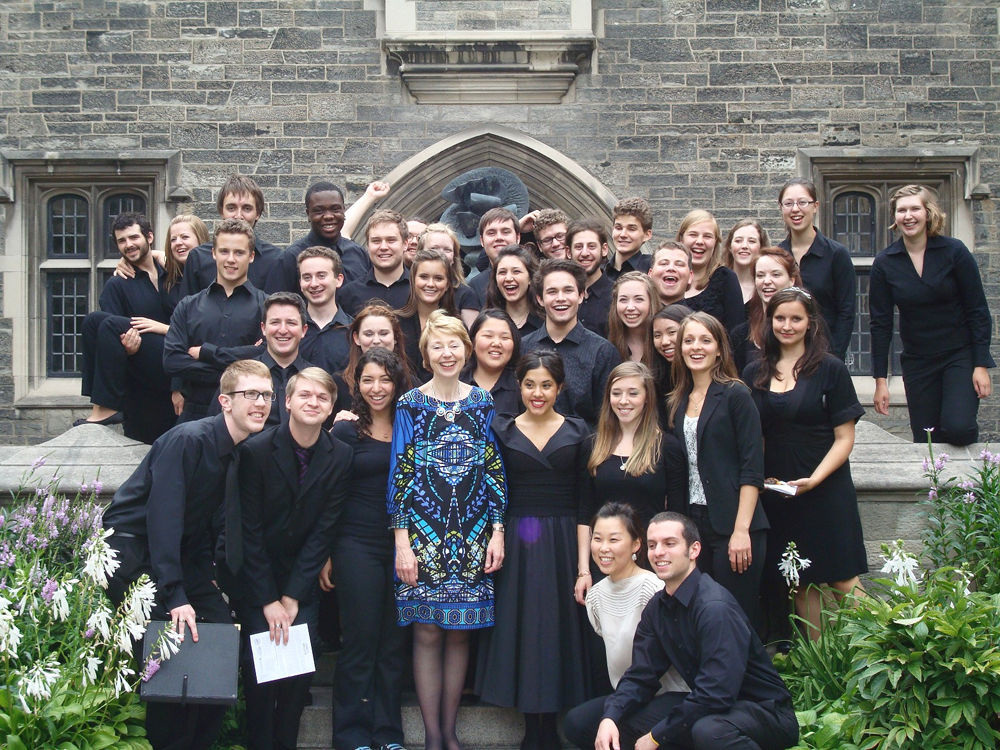
Lofty goals: Lydia Adams is the conductor of two accomplished Toronto choirs, the Elmer Iseler Singers and the Amadeus Choir. She writes about the autumn’s first rehearsal, “I personally always have a sense of excitement, butterflies, even, before that first chord. It is pure joy (and relief!) once that first moment is over and you (as a conductor) think: “Okay, we have a sound. Everything is going to be fine.

“I start working for the choir’s sound from that moment. I have a clear idea what I want to hear from the choir and keep asking for that right through to the season’s end.”

Nathaniel Dett Chorale director Brainerd Blyden-Taylor adds, “our organization has a social justice mandate as well as a musical one. We do a one-day retreat early in the fall, to connect with each other spiritually and musically, to find the spirit behind the music.”

But while these comments are insightful, they do not fully address the unique challenges of autumn choral rehearsals. Peeling back the veil of choral silence, this column exposes the complexities and challenges that each choral section presents.

Tenors have the reputation of being self-absorbed, in part because of the inordinate amount of time they spend in front of mirrors. But tenors need mirrors to monitor correct mouth position. This helps in the vocal production of glorious high notes that no other voice can match. No mirrors, no proper mouth position, no high notes — it is astonishing how many people cannot understand or accept this simple equation.

Still, these technical pursuits can interfere with the first few weeks of choral rehearsal. Music directors must struggle to convince tenors to follow their beat, rather than to gaze soulfully into the conductor’s eyes, hoping to see themselves reflected.

Conductors should gently continue to call attention to themselves as rehearsals progress, and eventually the tenors will be able to distinguish them as sentient human beings. But the process must be respectful. The hurtful phrase, “There are other people here besides you, you know!” is to be avoided at all costs.

Basses and altos: The more robust sections of the traditional choir tend to spend summers in physically active pursuits such as white-water rafting, rock-climbing, defusing bombs and rescuing heiresses from eastern European kidnappers bent on world domination.

Often basses and altos have so much fun with these light-hearted outdoor activities that a gentle reminder about fall commitments is not enough to lure them back to the choir. Ensembles with a concert deadline approaching have no choice but to retrieve their low-voiced singers by force. This is done by setting special traps to recapture and bring them back to civilization. Power tools tend to be the standard bait.

32A complex acclimatization process follows, as altos and basses are gradually reintroduced to such things as choir folders, concert dress, hot coffee during break, spoons, napkins and indoor showers. This process is usually very successful; by October or November, altos and basses learn to happily accept standard choir pencils, and stop asking for the picks and axes necessary to mine graphite deposits and chop trees to make their own.

Sopranos, the highest of the four standard choir voices, are subject to a mysterious ailment little known outside choral circles. It is a documented scientific phenomenon that if a soprano goes without a weekly choir rehearsal for a period of time, she will forget that the three lower voices actually exist. In extreme cases, sopranos have been known to forget entire symphony orchestras between the afternoon dress rehearsal and the evening performance.

This presents choirs with an enormous problem as the season gets underway; how to reintroduce the rest of the choir without terminally alarming the sopranos. Often conductors integrate the other sections gradually throughout the autumn, telling the sopranos they are guest audience members who have been granted special dispensation to attend a rehearsal.

Eventually the sopranos notice that these apparent guests are making a noise that resembles singing, and will innocently enquire as to what is taking place. This is the conductor’s opportunity to tell the sopranos wonderful stories about helpful, magical beings named “Tenor,” “Alto” and “Bass,” who only live to help and serve sopranos as they do their important work. Sopranos always respond with gratitude and interest to these exotic but unobtrusive creatures, and their fascination often lasts for several rehearsals.

Leaving choirs to their autumn challenges, let us investigate which concerts are taking place this month.

Lydia Adams, mentioned above, recently won the prestigious Roy Thomson Hall Award of Recognition. Adams writes, “I was amazed and humbled. I also was overwhelmed as I was acutely aware of having worked with many of the other musicians who had won the Award: Lois Marshall, Maureen Forrester, Robert Aitken and, of course, Elmer Iseler were all musicians who held special meaning for me and who influenced my career in a major way. I am happy for the recognition for my choirs and also for the choral community in Toronto.”

Look forward later in the fall to Adams’ Elmer Iseler Singers presenting a concert, October 21, celebrating the diamond jubilee of Queen Elizabeth II, featuring works by many great composers from Handel and Purcell, to the Modernists Tippet and Britten who rescued British music in the 20th century. And on October 27 the Amadeus Choir will present Rachmaninoff’s beautiful and imposing Vespers. Blyden-Taylor’s ensemble performs three distinct and interesting programs at Toronto’s Nuit Blanche between September 29 and 30, including works by Canadian composers Sid Rabinovitch and Peter Togni. They are also performing a benefit concert in Orangeville on September 22 for the One-world Schoolhouse, to raise money for schools in St. Lucia. See their website for details.

Finally, England’s renowned Tallis Scholars visit the city on September 12, bringing their signature sound to a program of renaissance and early baroque music. 

Ben Stein is a Toronto tenor and theorbist.  He can be contacted at choralscene@thewholenote.com.  Visit his website at benjaminstein.ca.

Many choirs are typically on hiatus during the summer. Below are some choral concerts taking place in July and August.

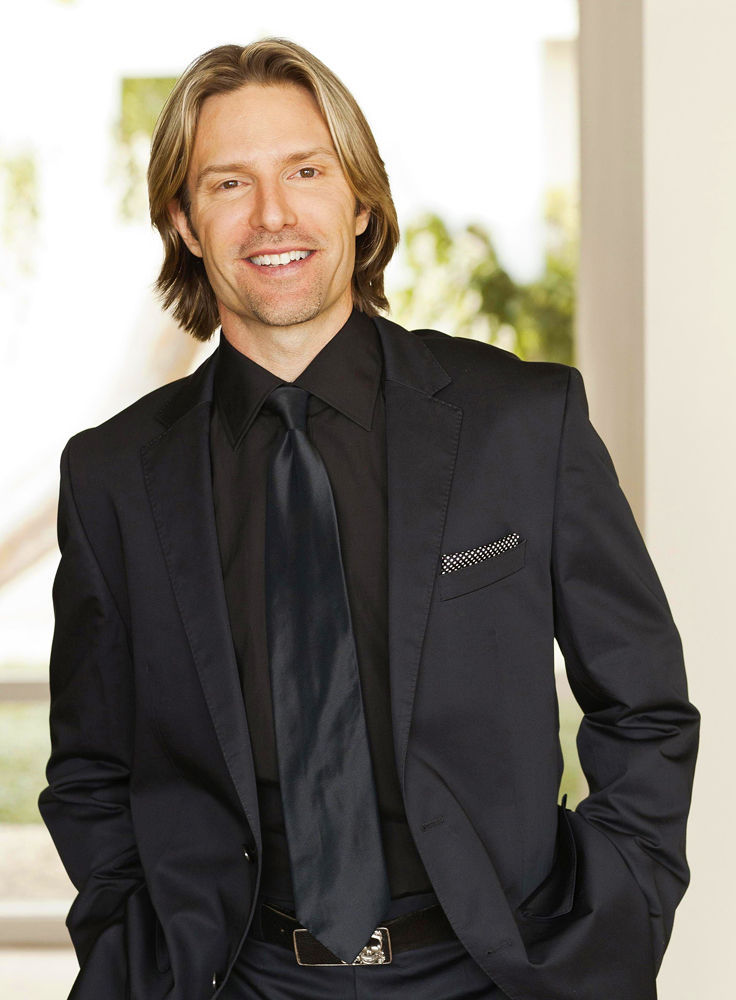
The Elora Festival, built around the Elora Festival Singers, is always a rich source of choral music in the summer. Taking place July 13 to August 5, choral highlights include Mendelssohn’s Elijah, Britten’s rare 1937 opera composed for radio performance, The Company of Heaven, Paul Halley’s celebrated Missa Gaia, and a concert devoted to the music of American composer Eric Whitacre.

The Nathaniel Dett Chorale performs at the Westben Arts Festival Theatre — the Barn — on July 15.

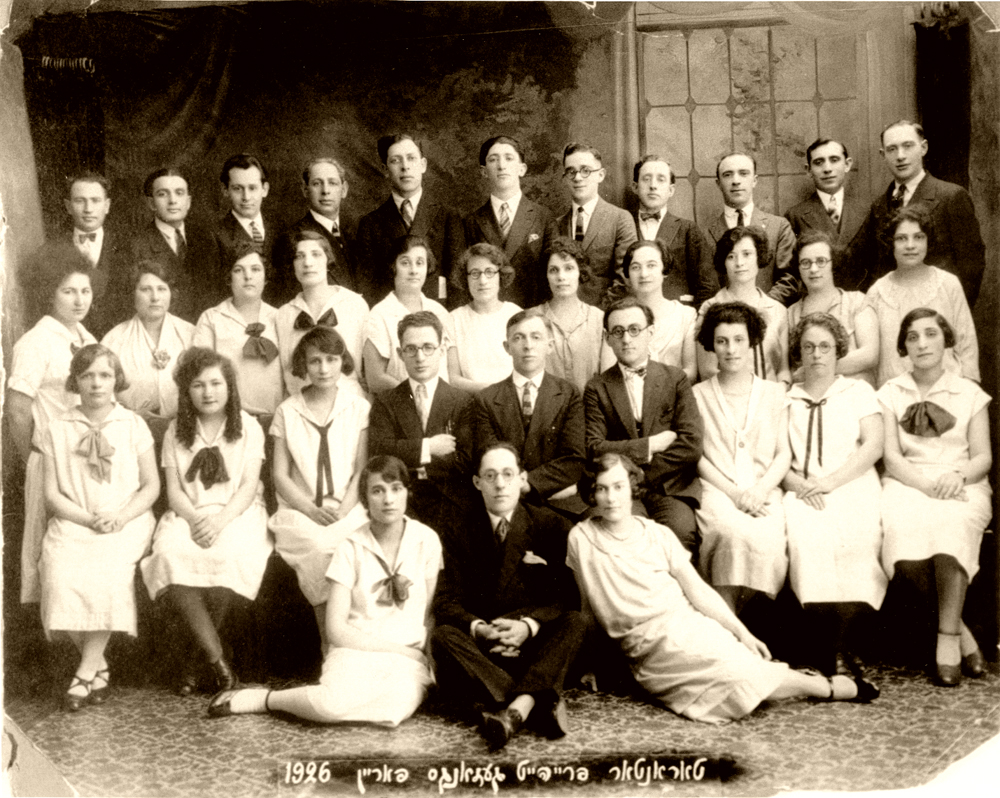
The Toronto Jewish Folk Choir sings at the Ashkenaz Festival, which takes place August 28 to September 3.

The Ontario Youth Choir, a group that has fostered excellent singers over many years, performs in Kingston on August 24 and in Toronto, August 26.

In May, I wrote about a colleague who passed away suddenly, and about the bonds, loyalties and joys of singing that draw the choral community together. This month, I address an aspect of choirs that can be awkward, contentious, even divisive —the issue of singing choral music for money.

As a young singer who fell in love with choral music, I was in awe of the musicians who were part of professional choral ensembles. To get paid to do something that was so much fun seemed astonishing to me. When I began singing for these groups myself, I was gratified to be paid, but I quickly learned that this could not be my only source of income, and that I would have to find other work to put food on the table.

Looking back, what I find odd is that this simple truth — choral singing won’t pay the bills, and you will need more than classical vocal training to generate income through music — was never openly discussed, not by singers, conductors, arts administrators or vocal teachers. The subject remains a delicate one. Why is this the case?

Perhaps in a well-meaning attempt to encourage and foster passion for and commitment to the arts, or perhaps because open discussion about money is often considered taboo, musicians avoid informing their students about the often difficult economic realities of a career in music. Myself, I would never have become anything but a musician — the ability to count to four and a vague awareness of pitch are about the only skills that I possess — but being armed with the some hard economic facts about the musician’s life might have led me to make more strategic, or at least more informed, choices.

My own experience has made me stubbornly determined to be open with younger musicians regarding money issues — not to stomp on their dreams, but to help them go into their chosen profession armed with some practical knowledge about the different elements at play.

In the specific case of choral pay, one of the likely reasons for the lack of discussion may be the awkward fact that it lags behind pay for other musicians. The choral ensembles, churches and synagogues in the Southern Ontario region that pay choral singers generally do so at the rate of $20–$30/hr. Most professional ensembles are in the $24–$28/hr range. By contrast, unionized opera choruses pays between $31–$38/hr. The minimum rate of pay for instrumentalists of all kinds, according the Toronto Musicians’ Association, is $42/hr for a minimum two-hour rehearsal call, and $50/hr for a minimum three-hour performance call.

Whether instrumentalists always get this minimum rate is another question entirely. The point for this discussion is that  our most accomplished choral ensembles often pay a significant amount less per hour than the minimum rate of pay for an orchestral instrumentalist or unionized opera chorus singer. An experienced choral singer performing a two hours-plus Messiahconcert filled with grueling choruses will get paid half of what the trumpeter and percussionist, fresh out of school, get paid for playing in three or four movements comprising 12 to 14 minutes of music.

Still, is this discrepancy truly a problem? With so many singers ready, willing and eager to sing for free, shouldn’t hired singers be grateful for whatever they can get? There are parts of the world in which the idea of a paid choral singer is unheard of.

My own opinion in this matter — tiresomely obvious to anyone who spends more than ten minutes in my presence — matters less than yours, and anyone else’s involved or interested in choral singing. But since you ask, my belief is that choral singing in Ontario — so accomplished in so many ways — could certainly stand to take a professional leap forward. Why should choral singing not be a skilled and specialized métier, a viable career choice, rather than a very poor second to soloist work?

Open, public discussion of this question might offer some creative solutions. What follows are a few statements and suggestions for dialogue , debate and possible action for those involved in choral training and performance.

Organizations that hire choral singers have a ethical responsibility to pay them equitably. This is easier said than done, of course — in many cases it would require some groups to extensively revise their business model. But choirs regularly manage to pay market prices for instrumentalists, venue rental, advertising, administrative needs, technical needs and other expenses; should they not do the same with the employees whose work defines the very nature of the organization?

At the same time, singers should become more exacting in the two ways that count most for a professional musician: being at an engagement promptly, and being able to execute music accurately and stylishly in the shortest amount of time. Choral musicians often come up dismayingly short in these areas. One cannot demand a professional rate of pay if the service delivered is not up to the best professional standard. And speaking of professional standards, strong choral skills — sight-reading, chiefly — could be much more emphasized in voice training than they are currently, if singers are going to be able to solicit paid chorus work.

Music teachers, universities, colleges and conservatories ought to be very clear about what options and opportunities truly exist for the singers that they graduate every year. Voice students should be learning skills and techniques that will broaden their knowledge base beyond a narrow focus on vocal technique and classical music, to encompass other skills that help them find work in a variety of professional areas.

Grants bodies and unions can raise awareness of this issue, by noting the hourly rate or general compensation parameters of other performers, and by helping to promote and foster the idea of parity for choral singers.

Audience members can raise this issue with arts organizations, grants bodies and governments. Individual and corporate donors can insist that the amount of money given will be dependent on a certain amount of it going directly to singers’ compensation.

More than anything, all parties involved may start talking and sharing information, to begin to come up with their own solutions. Now and then, choral singers have been known to complain about the organizations they work for. For all I know, those who run these organizations are griping about their hired singers as well. Isn’t it time to turn from private complaint to open discussion? It can only help the growth of skill, excellence and artistry within the Canadian choral scene.

If you would like to be part of what I hope will be a creative, good-humoured and energetic discussion, feel free to email me at choralscene@thewholenote.com. All emails will be held in strict confidence. In coming months, look for a choral blog in which open dialogue can take place. 

Ben Stein is a Toronto tenor and theorbist. He can be contacted at choralscene@thewholenote.com. Visit his website at benjaminstein.ca.

Perhaps it is the beautiful weather outside, but I cannot get my head around a way to thematically link this month’s concerts together in my usual artful, elegant, insightful manner. Forget it, I give up. Here instead are some column topics at various levels of quarrel-picking provocativeness. I invite you to use them as your own argument-starters with family, friends and colleagues. (No amount of bribes or flattery will induce me to reveal which, if any, of the following statements I actually agree with, though readers are certainly welcome to try.)

– Very few choirs should ever attempt to sing Bach.

– Choirs should rarely — actually, never — use a piano in rehearsal when singing a cappella music. Even when pianos are in tune, they’re not in tune. Pianos are to choirs as that big wooden horse was to Troy.

– Music died with Brahms. Pretty much everything composed in the 20th century should be avoided.

– On the other hand, most choral music written before 1700 is completely boring. Program it and watch attendance drop at both concerts and religious services.

– Why bother programming Canadian music? There’s tons of superior American and British stuff out there.

– Choral diction is a contradiction in terms. In this region you may as well stick with German/French/Italian repertoire, because no one understands what you’re singing anyhow. Seriously, what’s the point of drilling consonants on something like “She’s like the swallow that flies so high” when all the audience is going to hear is “cheese bites, marshmallow and Lysol pie”?

– The discrepancy between the quality of the awesome films produced in Quebec and those from the rest of Canada is so vast that it should make all non-Quebecois hang our heads with shame. (I know that this has nothing to do with choral music, but it needs to be pointed out wherever possible.)

– No choir should sing gospel music unless they can memorize their scores, clap on the off-beat and sway in rhythm. Kids, please remember — friends don’t let friends clap on one and three.

– The reason that none of the really good English music composed after Purcell and before Britten ever gets performed is because there isn’t any.

– Choral arrangements of music theatre songs are partially responsible for global warming.

– Choral arrangements of rock songs have been proven to cause cancer in rats.

– Choral arrangements of jazz standards are like bumper cars — a gag version of the real thing.

– The previous three statements are clearly written by a madman. In the 21st century, the benchmark for a good choir will be how well it can execute an accurate version of Queen’s Bohemian Rhapsody. Schoenberg’s Gurrelieder will be a distant memory. Actually, it sort of is that already.

– Choral singing in the Ontario region is not even close to reaching its full potential. The performance of one composition, and one composition alone, can achieve this. Tune in to next month’s column for what this piece is, and how performing it will achieve this goal.

Are you sufficiently provoked or outraged? Excellent. Just keep passing that good vibe on to all you meet, and my work here is done. The WholeNote takes no responsibility for the opinions expressed above, so don’t blame them.

Now, on to the concerts. There are a number of groups listed below that have either flown under my radar, are relatively new, or simply have not previously given their information to The WholeNote listings that are the source for choral news. In any case, my apologies for any former neglect on my part, and welcome to the column.

A number of these ensembles are based outside of Toronto, so if your choral experience is a Toronto-centric one — mine certainly is - time to get out of the city and get to know some of the groups outside your urban comfort zone. Incidentally, some of these choirs have the most awesome names I’ve ever seen.

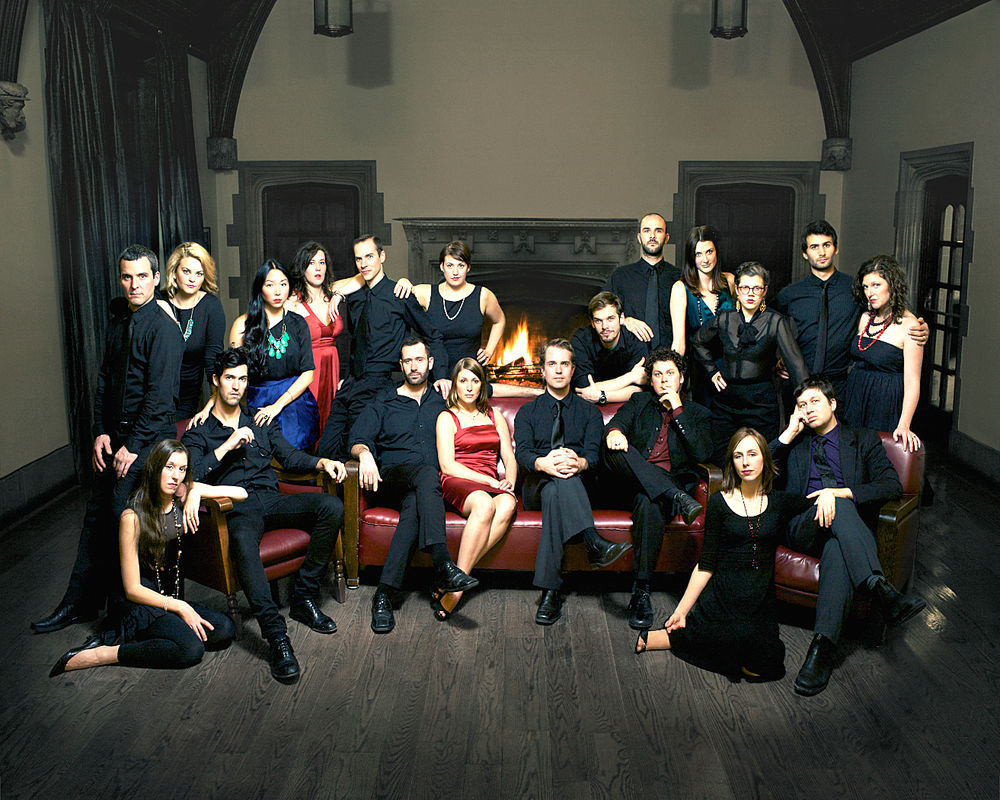
choral_thatchoir_photo_by_brian_telzerow_1I was intrigued and mystified by a group called That Choir. Googling that one was an interesting experience. It turns out that That Choir is an a cappella group based in Toronto, founded in 2008 and comprised primarily of actor/singers. Their June 4 concert launches their first CD, and features music by Rachmaninoff, Whitacre and Lauridsen. Information about them can be found at www.thatchoir.com.

Another prize in the naming department goes to the Sound Investment Choir, which sounds like a group of very cool singing accountants. Based out of Collingwood, their mandate is to foster choral music-making in the Georgian Triangle, the group of communities surrounding the south end of Georgian Bay. On June 1 and 2 in Collingwood, the Sound Investment Choir performs “Bernstein & Broadway,” a concert that includes Bernstein’s Chichester Psalms.

Owen Sound’s Shoreline Chorus is another group from the Georgian. They perform hymns and gospel songs for their two “The Gospel Truth” concerts on June 9.

Ancaster’s Harlequin Singers specialize in musical theatre and other popular music. Their “45 Years of Broadway” on June 1 will be presented, cabaret-style, with the ability to buy a drink and listen. This is entirely civilized, and is something other choirs might consider taking up regularly.

Another similar ensemble is Barrie’s Bravado Show Choir, a group that is strongly theatrical in nature. As well as performing two shows per year, they also do community outreach work, and have a youth education component. They perform “Bravado Rocks!” on June 1.

The Ispiravoce Vocal Ensemble is a chamber group of 10 to 12 female voices based out of Mississauga. In the show-choir style that is increasing in popularity, they use movement and costumes to augment their music-making. On June 2, they perform “Voyage!,” music apparently inspired by the tango, flamenco, sacred spaces, secular vices and Lord of the Rings. I confess myself intrigued by the “secular vices” aspect of this program. Further information can be found at www.ispiravoce.ca.

On June 2 another west end youth group, the Mississauga Children’s Choir, perform “City Scapes,” a concert that addresses the experience of the modern city. The concert features a new work by the excellent Toronto choral composer Michael Coghlan.

This month it was a pleasure to discover a previously unknown local youth choir, the children’s ensemble from the Oratory of St. Philip Neri. The oratory is located in the west end of Toronto, and has a lively music program. The Oratory Children’s Choir performs music by Legrenzi, Charpentier, Schein, Schutz, Bach and others at a free concert on June 23.

At the other end of the city, the Cantemus Singers are based in Toronto’s east end Beaches region. This choir steps outside its usual focus on early music for “My Spirit Sang All Day!,” a concert of Victorian and Edwardian songs and anthems, including works by Elgar, Willan and Finzi. I confess myself a complete fan of parlour songs from this era — My Old Shako — is a personal mantra — and urge other concert-goers to sample the delights of this beguiling and sometimes quirky repertoire. The group performs on June 16 and 17.

Ben Stein is a Toronto tenor and theorbist.  He can be contacted at choralscene@thewholenote.com. Visit his website at benjaminstein.ca.

What is the definition of a successful musician? I thought about this last month after learning that local organist and singer Bruce Kirkpatrick Hill had passed away suddenly and unexpectedly. Word of Bruce’s passing spread very quickly throughout the Toronto choral community, and the shock that people felt had to do with his young age — he was only 49 — as well as with its suddenness. But at the funeral service, it was clear that the mixture of grief and respect that defined the event extended well beyond shock. As I walked home, I pondered why Bruce’s death — or rather, his life — had touched so many people.

Public recognition is the most obvious indication of success — a reputation draws people to attend a concert, purchase a recording, sign up for lessons. It’s usually (but not always) an indication of a standard of artistic achievement for audiences and musicians alike. Another category, less obvious but often more long-lasting, is the behind-the-scenes or just-out-of-the-spotlight professional who works steadily, but has little or no public profile. The majority of musicians fall into this group. A lot of the music that you love the most has been created by artists whose names you have never known.

A third category might be “community musician,” a term that can encompass both professionals and amateurs. A community musician can be defined as someone who loves their chosen art form, and devotes their talents and abilities to it with the best of their ability. Sometimes they are known outside their home region, but often they are not. Choral music is in great part driven by the work of talented and dedicated amateurs. This is, in part, because professional choral singing pays very badly — a subject for a future column — but just as significantly, because most choral singers are amateurs in the traditional sense of the word, lovers of the art from who have the drive to foster and maintain it.

Of course, these three categories of success intersect and divide into subsets and levels, and Bruce Kirkpatrick Hill certainly acquitted himself well in the first two areas described above. But at his funeral, and during the week leading up to it, it became clear that Bruce was a community musician of unusual success and achievement.

Some musicians seem to have a particular talent for simply being present. Without any fanfare, they make an impression, and you never forget them. Their assurance and professionalism thread through a musical community and help define that community in people’s minds. When they are gone, we feel their absence as a loss beyond their physical presence. Even for those of us who didn’t know him well, Bruce made this kind of impression. He was part of the bone and sinew of the Toronto choral scene. In a sense, his very presence seemed to evoke the solidity of the choral traditions that he loved.

Bruce’s funeral was held at the Anglican Church of St. Mary Magdalene. Every seat was full, and the rest of the overflow crowd stood at the back for the entire two hour service. When hymns were sung, the church reverberated with the sound of hundreds of trained singers falling naturally into four-part harmony. It was a choral sound unprecedented in the city, one that Bruce would have appreciated.

Ottawa conductor Matthew Larkin (leader of the Toronto-based Larkin Singers) led the St. Mary Magdalene church choir in a selection of anthems. After the final benediction, a mixture of the singers from the Exultate Choir, the church choir, and various choral colleagues and friends of Bruce’s, joined together to sing a beautiful setting of the Kontakion, a Byzantine liturgical text from the Eastern Orthordox Christian tradition, composed by Bruce’s wife, fellow choral director and composer Stephanie Martin.

If the above reads somewhat like a concert review, it is not because Bruce’s funeral was primarily an aesthetic event. Rather, it is that choral concerts are experiences rooted in community, and choral concert repertoire has its roots in these communal experiences — worship of a deity, celebration of the bounty of the earth, tribute to a beloved friend. To be a community musician within the choral tradition is to take part in an ancient activity that is as relevant and necessary to our lives now as it was hundreds, possibly thousands, of years ago.

12_choral_toronto-jewish-folk-choir-1926-fraihait_gezangs_farain_-_1926_-_full_size-aMoving to this month’s choral lineup: at this time of year, almost every choir in the region is presenting its final concert of the season, and there are many musical choices in the coming weeks. My recommendation: make sure you go to two or more concerts — one by your favourite group, and one or more given by a group that you have not yet heard. Travel to a part of the city or region that you haven’t visited, and get to know a group that comes from that community.

12_choral_ben_shek_-_80th_b-day_roast-_by_linda_l_-_jpg-400_Another community musician of note was Ben Shek, an expert in Yiddish culture, and one of the driving forces of the venerable Toronto Jewish Folk Choir. The TJFC will be giving a concert in honour of Ben, and other members of Toronto’s Jewish choral community, on June 3.

On the same night, the Penthelia Singers celebrate their 15th anniversary with a gala concert program of all-Canadian music, and a guest conducting appearance from Mary Legge, another great Toronto choral community musician.

12_marylegge__plan-b-image_and_penthelia-b_516324557_a72a18ed7a_zThe Tallis Choir performs “The Glory of the English Anthem” on May 5. This concert includes two genuine masterworks, Harris’s eight-part setting of Faire is the Hevene, and renaissance composer Thomas Tallis’s setting of the Lamentations of Jeremiah.

The Toronto Mendelssohn Choir’s final concert of the season (May 23) is a feast of choral riches: the Poulenc Gloria, Leonard Bernstein’s Chichester Psalms and William Walton’s Belshazzar’s Feast.

On June 9, just beyond the scope of this issue’s concert listings, Jenny Crober’s East York chorus re-christens itself the Voca Chorus of Toronto, with a performance of Paul Winter’s crowd-pleasing Missa Gaia. This work combines the sound of recorded animal voices with energetic gospel-derived music, and has been a hit since its premiere in 1982.

On May 4, the Upper Canada Choristers combine the famous Fauré Requiem with works by Venezuelan composer César Alejandro Carrillo. Interestingly, the choir has recently instituted a support program for boys with changing voices, to foster continued choral involvement for nascent baritones and tenors, and to promote to teenage boys a positive message for choral singing as an ongoing activity through adolescence and adulthood.

Ben Stein is a Toronto tenor and theorbist.  He can be contacted at choralscene@thewholenote.com. Visit his website at benjaminstein.ca.

Would you like to experience “Total Vocal Pleasure” the likes of which you have never dreamed possible? You don’t have to be able to sing “O Mio Babbino Caro” or “Nessun Dorma.” You don’t have to join a classical ensemble and participate in the execution of intricate motets, cantatas or oratorios. You don’t need to know how to tune jazz vocal harmonies like diminished ninths and sharp elevenths.

rb_official_pr_for_choirTotal Vocal Pleasure may be achieved very simply, and anyone can do it. The secret: imitate Tom Waits singing “Feed the Birds” from Mary Poppins. Careful, though — this pastime is addictive, and after a few tries in the shower or the car, you will find yourself alarming people in checkout lines and buses, as you growl and croon about little birds and tuppence and saints and apostles looking down.

Why do singers move us so much? What is it about the voice that makes us respond? Why are the airwaves not filled with glamorous oboe or viola players? Well, aside from the fact that glamorous oboe and viola players do not actually exist, the voice is like no other instrument in its ability to inspire loyalty or antipathy, horror or love.

The phrase “the grain of the voice” gives us this month’s theme. It is the title of an essay by Roland Barthes, a French critic and theorist influential in academic circles and pretty much avoided everywhere else. “Grain” refers very generally to vocal timbre, but Barthes’ essay is a complex investigation into the subtle signals and hidden meanings that vocal timbre can convey.

Barthes’ ideas have been used in studies of popular music to explore the appeal of voices that are not stereotypically “beautiful,” when beautiful is understood to mean smooth and even — Tom Waits, Bob Dylan, Maria Callas, Shane MacGowan, Billie Holiday and Diamanda Galas, to name a few. These are voices with edges, rough spots, potholes and speedbumps.

In a non-operatic choral context, these types of voices are almost useless — there is no way to make them blend as choral voices must, though an entire choir of singers who sound like Bob Dylan has a certain appeal. Still, many choirs experiment with vocal timbres and techniques that lie outside a traditional Western classical music aesthetic, and, eschewing traditional or popular programming choices, commission and program unexpected and unusual repertoire.

The Aradia Ensemble’s May 3 concert, “The Grain of the Voice,” (a free COC noonhour Vocal Series concert) combines motets by Monteverdi and Gesualdo (the latter responsible for some of the most macabre Italian renaissance vocal works ever written) with guest choir Darbazi, a Toronto vocal ensemble specializing in music from the Eastern European Caucasus region of Georgia. Traditional Georgian music has a tuning system and timbral aesthetic utterly at odds with what most people understand to be a standard choral sound. Aradia’s conductor, Kevin Mallon, has composed a new work that will blend these ensembles together, uniting these apparently irreconcilable musical elements. Aradia presents a full-length version of the same concert May 5 at Glenn Gould Studio.

Two upcoming music festivals also explore varied vocal techniques. Contemporary music organization NUMUS is based out of Waterloo, and is pretty consistently ignored by Toronto music critics. This is a shame, because its programming is easily the match of any Toronto new music organization. NUMUS presents the Element Choir on May 5, with “new works for improvisational choir”. This alone ought to draw an intrigued audience, because improvisation, rare in classical circles, is almost unheard of in a choral context. Read more about NUMUS at www.numus.on.ca.

NUMUS is in part the creation of composer Glen Buhr, whose works bring an agreeable touch of humour to a contemporary music scene that is often whimsy-challenged. In a more sombre mood, however, is his Ritchot Mass, which was dedicated to Canadians who lost their homes in the 1997 flood of the Red River Valley in Manitoba. Hamilton’s John Laing Singers will perform this work, and others in “Dreams and Dances” on April 28.

The other vocal festival that lovers of vocal music really should not miss this month is SING! The Toronto Vocal Arts Festival at Harbourfront Centre from Friday April 13 to Sunday April 15.

This festival, curated with Harbourfront’s customarily polyvalent approach to programming, is a kind of snapshot of the diversity of vocal styles available to singers. The weekend will combine performances with workshops and masterclasses, the majority of which will be free of charge. The Canadian choirs participating are Elmer Iseler Singers, Lachan Jewish Chamber, Choir, the Allegria Choir, Darbazi and Cantores Celestes; jazz and pop vocal ensembles Countermeasure and the Nylons will be there as well. Guest groups will include the renowned Swingle Singers and the New York Voices, among others. For a schedule of the weekend’s events, see www.torontovocalarts­festival.com.

Moving beyond the column’s theme to other interesting concerts: although the phrase “arts and science” is commonly heard in university curricula, in reality these two areas are often stratified. British writer C.P. Snow coined the term “the two solitudes” in reference to the isolation that he saw between arts and science studies in both academia and general culture. His thesis, briefly, was that artists needed to understand more about science, if for no other reason than to understand the profound effect that science has had on culture in the past century.

Bridging the gap between these solitudes, at least for the duration of a concert program, is “Music of the Spheres: A Fusion of Music, Art and Science.” This April 21 concert commemorates the 20th anniversary of Canadian astronaut Roberta Bondar’s spaceflight. The concert features conductor Lydia Adams’ two principal ensembles, the Amadeus Choir and the Elmer Iseler Singers. For the occasion, Adams has composed music to a text by Bondar entitled, Light in the Darkness – The Earth Sings. Another Canadian piece on the program is Jason Jestadt’s And Yet it Moves, presumably a reference to the defiant (although likely mythical) quote from astronomer Galileo Galilei, after being forced to recant his assertion that the earth moved around the sun.

The inventive poetry of English clergyman George Herbert (1593–1633) has attracted many choral composers. Religious in theme and intent, Herbert’s work is introspective and intense, avoiding the dual traps of unreflective piety and facile celebration that often characterize sacred lyrics. Vaughan Williams’ Five Mystical Songs is one of the best known settings of Herbert’s poetry. The Larkin Singers perform this work on April 21, and conductor Matthew Larkin steps into a composer’s role with his own Herbert settings as well. The Larkin Singers, incidentally, is one of Toronto’s newer choral ensembles worth checking out — it boasts strong singers very committed to choral work, and programs interesting music.

Late composer Srul Irving Glick wrote many works for Canadian choirs, and on April 29 the Elora Festival Singers present Visions Through Darkness, a work that they commissioned from Glick in 1988. This composer had strong connections with choral ensembles, and it is good to see that his legacy continues to be fostered. For those who like to hear more of Glick’s music, a memorial concert devoted to his work will take place at Holy Blossom Temple on April 22. For information, see www.holyblossom.org.

The Pax Christi Chorale celebrates its 25th anniversary season on May 6 with a rare performance of Elgar’s The Kingdom. A choir with roots in the Canadian Mennonite choral tradition, the Pax Christi Chorale is a vital part of the local vocal scene, with solid programming and a commitment to generating new choral commissions. The Kingdom, just over a hundred years old, is a wonderful example of the grand, late romantic oratorio. The last time it was performed in Canada was over 25 years ago, and this concert is a rare opportunity to hear this work performed live.

In difficult economic times, it is tremendously important to remember that music lessons are a luxury that many families cannot afford. All over Toronto, there are musicians giving their time and expertise to help another generation foster their creativity and discipline through music. Reaching Out Through Music is an organization devoted to bringing music to the community of St. Jamestown in downtown Toronto. The choir of the Church of St. Simon-the-Apostle takes part in a fundraising concert for ROTM on April 28. Find out more at www.reachingoutthroughmusic.org.

Two other benefit concerts of note: on April 6 the Cantabile Chorale of York Region performs to raise funds for social services in York Region; April 12 the Guelph Youth Singers team up with Les Jeunes Chanteurs d’Acadie to raise money for Bracelet of Hope charity, a group that provides medical care to HIV/AIDS patients in Africa.

The Tallis Choir performs “The Glory of the English Anthem” on May 5. I will write about this concert in more detail next month.

Two final notes regarding members of the Toronto choral community: choirmaster and organist Douglas Bodle has directed, coached and inspired several generations of singers in this city. He celebrates 40 years of directorship at St. Andrew’s Presbyterian Church on April 27, with an archival CD launch and notable guest soloists, some of them past members of the St. Andrew’s choir.

Lastly, some tragic late-breaking news: Toronto choral director, organist and singer Bruce Kirkpatrick Hill passed away suddenly and unexpectedly as this column was going to press. Bruce was a well-known and well-loved member of Toronto’s choral scene, and our thoughts are with his family and friends. Read a tribute to Bruce on page 63.


Ben Stein is a Toronto tenor and theorbist.
He can be contacted at choralscene@thewholenote.com.
Visit his website at benjaminstein.ca.

Ben Stein is a Toronto tenor and theorbist. He can be contacted at choralscene@thewholenote.com. Visit his website at benjaminstein.ca.
Back to top