05 Time of our SingingKris Defoort – The Time of Our Singing
Claron McFadden; Mark S. Doss; Simon Bailey; Levy Sekgapane; La Monnaie Chamber Orchestra; Kwamé Ryan
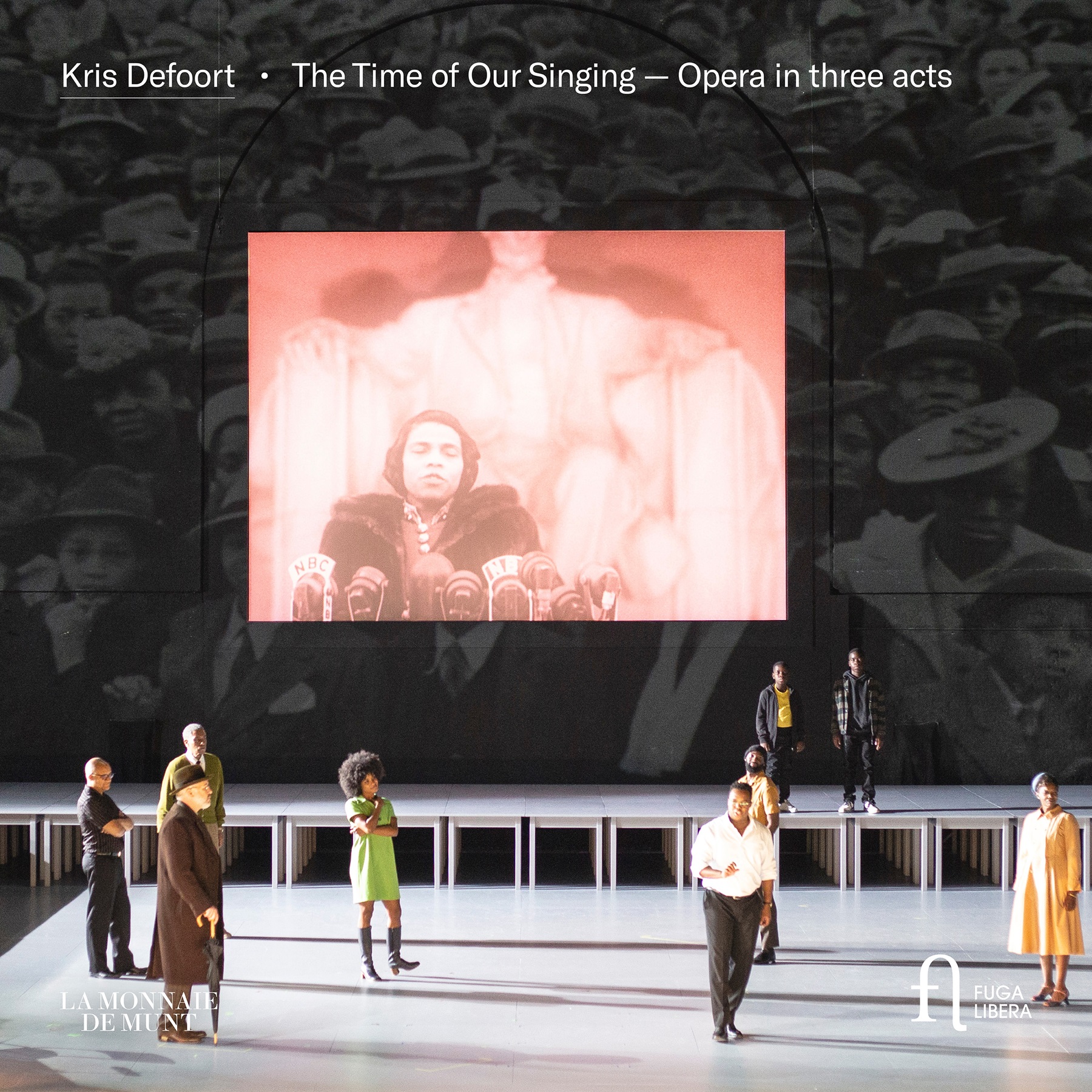
Fuga Libera FUG837 (outhere-music.com/en/albums/kris-defoort-time-our-singing)

Belgian composer Kris Defoort’s multilayered opera The Time of Our Singing follows members of a mixed-race family through the years 1939 to 1992. Repeatedly they are torn apart by the pernicious effects of the racism they each have to confront in their lives. But their shared passion for music always brings them back together. 

Defoort and his compatriot, librettist Peter van Kraaij, have adapted a 629-page novel by Richard Powers, published over 20 years ago. In contrast to the novel, which jumps around in time, the opera follows a traditional chronological narrative. The harmonic language is familiar, the rhythmic structure clear. Yet it sounds startlingly new, and fundamentally of our time. 

The many musical references are taken directly from Powers’ novel. Since they are integral to the story, Defoort weaves them right into the texture of the opera. The sounds of Dowland, Purcell, Bach, Puccini, spirituals, cool jazz, rock, hip-hop, free jazz and rap all shape the characters in this African American-Jewish family. The hip-hop beat that drives the activist daughter Ruth’s sensational I will tell you about Blackness has an urgency that intensifies her fury. Exquisite modernist textures colour the heartbreaking deathbed scene between the father, David, a Jewish refugee from Nazi Germany, and younger son Joey, a pianist. The transformation of Purcell’s Music for a While into an infectiously catchy vocal ensemble is used to bring the three siblings together for what turns out to be the last time. “Classics meets the street,” the eldest son Jonah, an opera singer, says. “People need this,” he adds. Indeed.

Defoort and van Kraaij draw on key historic events in the never-ending struggle for civil rights in America. Inevitably what happens globally impacts each character directly. Marian Anderson’s concert at the Lincoln Memorial in 1939 brings hope and joy to Delia, an African American singer, and David when they first meet there. But the Rodney King riots in 1992 bring tragedy for Jonah. 

This live recording was made during the first staged production at La Monnaie in 2021, which won the the International Opera Award 2022 for Best World Premiere. The excellent cast, with Claron McFadden, Abigail Abraham, Lilly Jørstad, Levy Sekgapane, Simon Bailey, Peter Braithwaite and Mark S. Doss, the jazz quartet featuring Mark Turner’s melancholy tenor saxophone, the La Monnaie Chamber Orchestra and choirs, are all led by Canadian-Trinidadian conductor Kwamé Ryan with palpable insight and versatility.

01 Art Choral 1Art Choral Vol.1 – Renaissance
Ensemble Artchoral; Matthias Maute
ATMA ACD2 2420 (atmaclassique.com/en/product/art-choral-vol-1-renaissance)

If radio stations are to be believed the only a capella choral group worthy of airplay is Voces 8 (without doubt, a wonderful ensemble, eminently worthy of celebration under any circumstances). However, when producers of radio keep programming just one choral group (singing songs from their latest repertoire) listeners are robbed of – to quote  Pliny – “an embarrassment of riches” worthy of the airwaves wherever their reach may extend.    

The virtues of a disc such as this one – Renaissance Art Choral Vol.1 – even parts of it from time to time – serve the purpose of being infinitely greater than the educational. Presented here is music that will surely have appeal quite beyond academia. 

The disc opens with a glorious motet – Adoremus te, Christe à 4 voix – attributed to Giovanni Pierluigi Palestrina, the father of polyphony. The repertoire then traverses a breathtaking arc of motets, madrigals, chanson, anthems and lullabies sweeping across Europe, from France and Italy through England. Undertaking this musical journey we discover much music from the ecstatic mysticism of Palestrina, the chanson of Josquin des Pres to the joyful works of William Byrd and an anthem written by the celebrated Thomas Tallis.

The eloquent musicality of Ensemble Artchoral under the direction of the accomplished Matthias Maute recreate these works with eloquent emotionality and deep spirituality.

Listen to 'Art Choral Vol.1: Renaissance' Now in the Listening Room

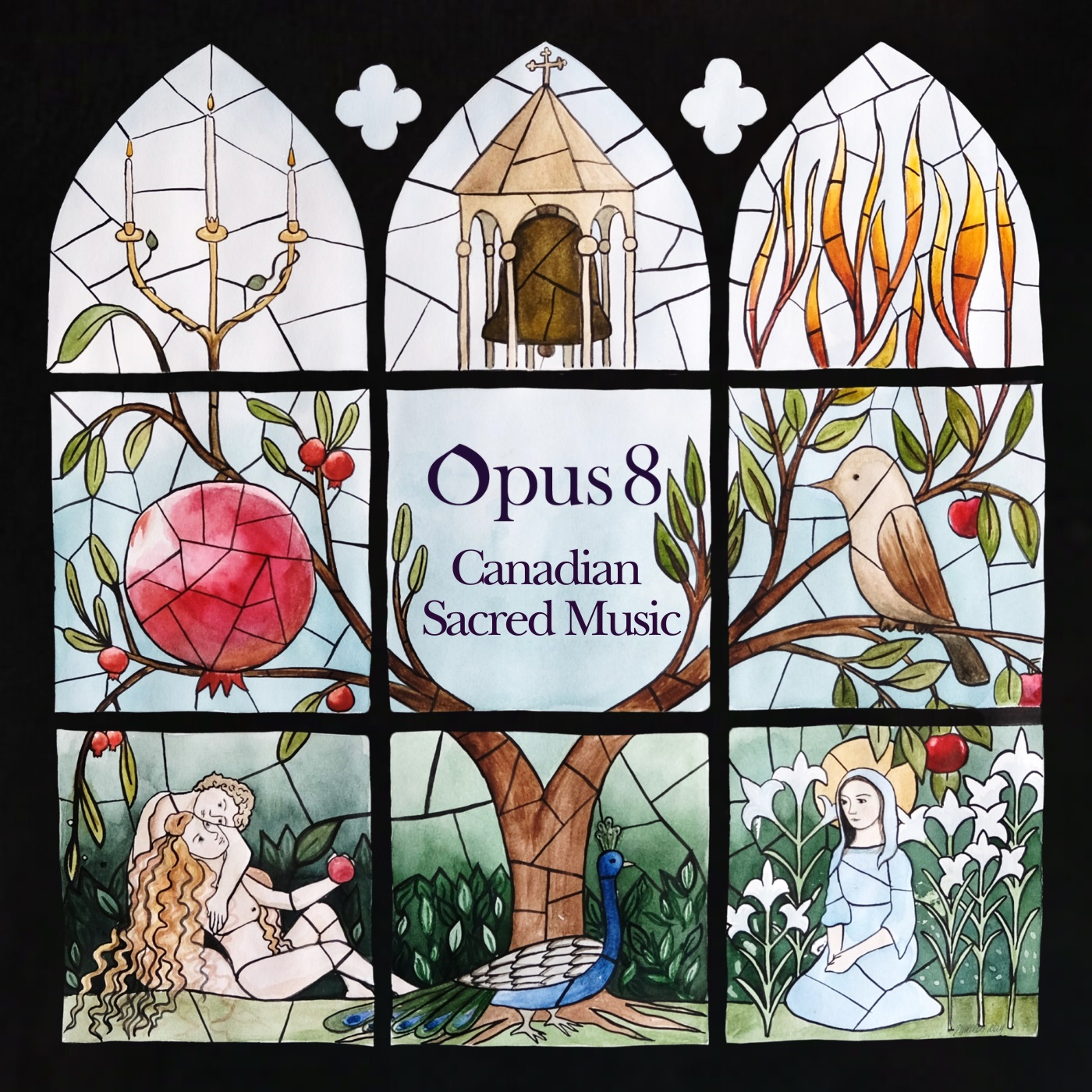
02 Canadian Sacred MusicCanadian Sacred Music
Opus 8
Independent (opus8choir.com/store)

Released on July 1st, 2024, to coincide with the anniversary of Canadian confederation, Canadian Sacred Music, the independently released third fine recording by the Toronto-based choral octet Opus 8 advances the canon of underappreciated Canadian music by showcasing beautiful original work from Eleanor Daley, Derek Holman, James Rolfe, Violet Archer, Stephanie Martin and Ramona Luengen, among others. While taking on the task of recording music by Canadian composers deserving greater recognition is perhaps not easy, the results are musically excellent. Spanning seventy-five years of Canadian sacred choral music, Opus 8 approaches these pieces with the creative aplomb and historical rigor for which the group has been known for most of the past decade. 

Part creative endeavour, part musicological excavation, pieces such as Holman’s An Old Song lay dormant following a lone decades-old performance before being resurrected here by tenor soloist and Opus 8 founding director Robert Busiakiewicz, who arranged the piece and brought it to the group.

Handled gorgeously by Busiakiewicz and singers Katy Clark, Clara MacCallum Fraser, Veronika Anissimova, Rebecca Claborn, Jamie Tuttle, Martin Gomes and Bryan Martin, the piece, as well as the resulting album which shines a light on a body of music that otherwise may have been lost to time, is creatively satisfying, historically valuable and beautifully captured at Toronto’s Humbercrest United Church with excellent results. Highly recommended for lovers of choral music, Canadian history enthusiasts and general listeners alike. 

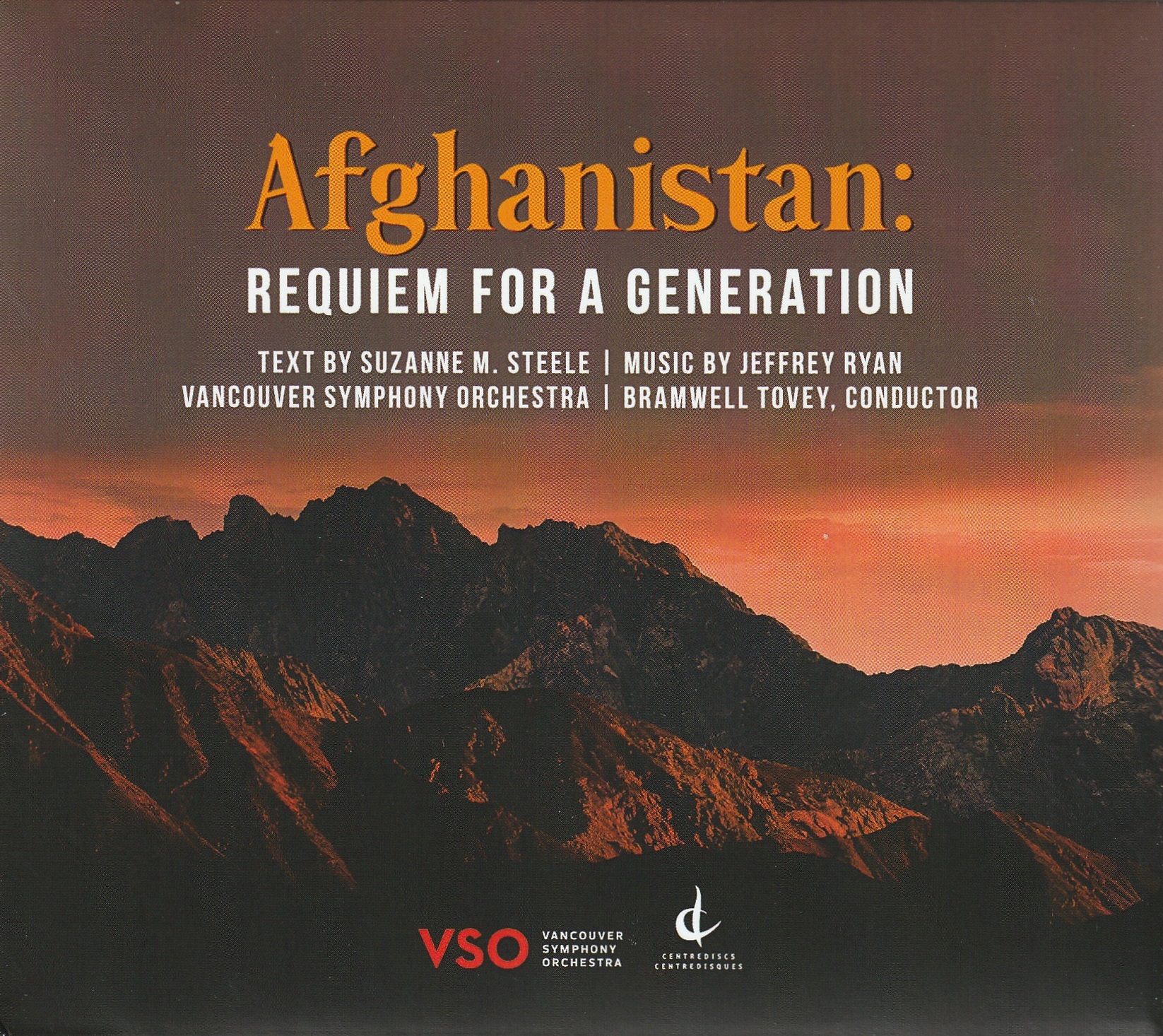
03 Ryan AfghanistanJeffrey Ryan – Afghanistan: Requiem for a Generation
Vocal Soloists; Vancouver Symphony Orchestra; Bramwell Tovey
Centrediscs CMCCD 33023 (cmccanada.org/shop/cmccd-33023)

Structured around the Latin text of the Requiem Mass, Jeffrey Ryan’s deeply moving work weaves in texts from Suzanne Steele, who was Canada’s war poet in Afghanistan from 2008-2010. Commissioned by the Calgary Philharmonic and One Yellow Rabbit Performance Theatre, the Afghanistan Requiem was given its premiere in Calgary in November 2012, with subsequent performances in Toronto and Vancouver. The work has obvious parallels with Britten’s War Requiem, but in many ways is more successful in its specificity, intimacy, accessibility and connection to the spirit world. 

Ryan’s score serves the text beautifully, teases out unique and rich colours from the orchestra and choirs and gives each of the four soloists lyric and dramatic material, putting them at the forefront of the storytelling. Highlights include the connections drawn between the snowy lands of Elk Island and the deserts of Afghanistan and references to the Four Directions teachings in the opening Requiem Aeternam, the thrilling, visceral and terrifying excitement of Dies Irae, the poignant litany of birds in Lux Aeterna (affectingly sung by the Langley Youth Choir) and the profound and heartbreaking final In Paradisum putting into context Canada’s history of combat and, yes, the pity of war. 

The orchestra, choirs, soprano Zorana Sadiq, mezzo-soprano Rebecca Haas, tenor Colin Ainsworth and baritone Brett Polegato are all led admirably, intelligently and with great passion by Bramwell Tovey. 

The Canadian Army was active in the Afghanistan conflict from 2001-2014. In Afghanistan: Requiem for a Generation, Ryan and Steele have borne witness to that difficult period with grace, respect and beauty. This is surely one of the most important Canadian works of the 21st century.

04 John Corigliano Mr. Tamborine Man Vincent Ho Gryphon RealmsJohn Corigliano – Mr. Tamborine Man; Vincent Ho - Gryphon Realms
Laura Hynes (amplified soprano); Land’s End Ensemble; Karl Hirzer
Naxos 8.579160 (naxos.com/CatalogueDetail/?id=8.579160)

Among the traits, and there are many, that people find compelling about the current octogenarian and formerly dubbed “voice of his generation,” Bob Dylan, are his restless nature and continued creativity. Famously categorizing himself as a “song and dance man,” to insert distance between he and his then folk-rock contemporaries and attach himself to a vaudevillian past that he wanted, but truly never had, Dylan has shape shifted so many times that his only constant is change. Long before it was fashionable to see such groups as Lake Street Dive and Scary Pockets reimagining the possibilities of canonic cover versions, Dylan himself was radically reinventing his own songbook, most famously in July 1965 at the Newport Folk Festival. Given the composer’s own stance on the malleability of his work, perhaps it is not surprising that Dylan’s music has provided creative fodder for musicians not just of the folk/rock ilk, but such jazz players as Nina Simone, Ben Paterson, and Bill Frisell, among others.

Here, with Mr. Tambourine Man: Seven Poems of Bob Dylan (version for amplified soprano and sextet), the highly feted American composer John Corigliano brings Dylan’s poetic lyrics into the realm of contemporary classical music, setting seven texts to his unique original music with compelling results. Acknowledging in the liner notes the newness of this exercise, (as Dylan’s words had not previously been set to classical music), while locating the historical antecedents of Schumann or Brahms working with a Goethe text. Corigliano’s reimagining has been beautifully realized here by soprano Laura Hynes and Calgary’s Land’s End Ensemble under Karl Hirzer. Corigliano’s cycle is paired effectively with Canadian composer Vincent Ho’s Gryphon Realms (for piano trio) commissioned by Toronto’s Gryphon Trio inspired by that mythical tripartite beast. It is performed here by the core members of Land’s End, violinist Maria van der Sloot, cellist Beth Root Sandvoss and pianist Susanne Ruberg-Gordon. This 2024 Naxos release is highly enjoyable and immensely satisfying. 

05 Bespoke SongsBespoke Songs
Fotina Naumenko; various artists
New Focus Recordings FCR410 (newfocusrecordings.bandcamp.com/album/bespoke-songs)

Sensual doesn’t so much ooze as burst in ecstatic luminosity from Fotina Naumenko’s soaring, swooping soprano. The recital comprises 20 works specially commissioned by Naumenko from four composers. Each takes a cue from a verse by poets selected by the soprano and relates to settings and emotions awakened by the global pandemic. The album takes its title from a cycle of twelve – Bespoke Songs –composed by Jonathan Newman, set to the poetry of Kristina Faust.

Two shorter cycles comprise a work by Jennifer Jolley (“Hope” Is The Thing with Feathers – poetry by Emily Dickenson), and one by Benedict Sheehan (Let Evening Come with texts by Jane Kenyon). These cycles bookend Carrie Magin’s work (How to See An Angel set to Dorothy Walter’s poem). The commissions were initiated during the global pandemic and reflect the angst that was imposed on a human psyche which still cries out for healing. 

The work of artists of the first order were driven not only to deeper reflection, but also to surface for air with the singular impulse to heal others with art. This Naumenko certainly does with uncommon erudition. Her instrument is gorgeous: lustrous, precise and feather-light. Her musicianship is fierce as she digs into the expression of every word, giving every phrase a special grace. The accompanying musicians bring a deeply interiorised reading that complements Naumenko’s execution. 

Listen to 'Bespoke Songs' Now in the Listening Room

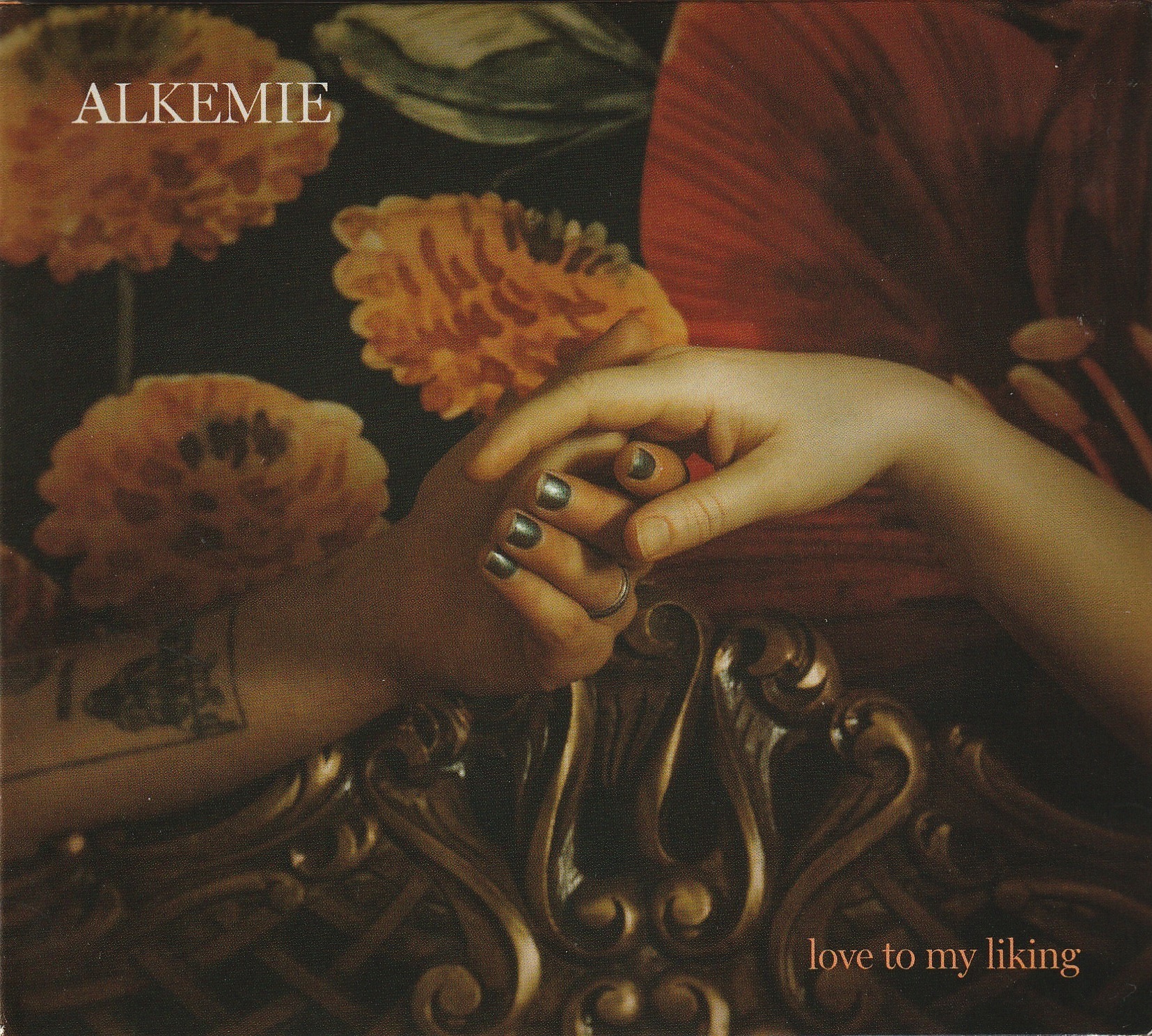
06 AlkemieLove to My Liking
Alkemie
Bright Shiny Things BSTC-0201 (alkemie.bandcamp.com/album/love-to-my-liking)

Unusually for recordings of medieval troubadour songs, all five vocalists on this CD are women – three of the six-member Alkemie ensemble (they also play instruments) and two “guests.” They’re reviving the spirit of the all-but-forgotten Trobairitz, a unique all-female troupe of 13th-century French troubadours (not mentioned in the CD’s notes), discovered when I googled “female troubadours.” The notes also offer little information beyond the names of the selections, performers and instruments. Most regrettably, there are no texts or translations.

Searching online, I learned that Alkemie was founded in 2013, is based in Brooklyn and that most of the CD’s 13 selections were drawn from the 13th-century collections Chansonnier du Roi and Montpellier Codex. I also found descriptions of five instruments with names unfamiliar to me: hümmelchen (small German bagpipe), viola a chiavi (seven-keyed viola), scheitholt (German zither), gittern (small lute) and douçaines (double-reed woodwind). These, plus recorders, vielle, psaltery, lute, harps and percussion provide Alkemie’s constantly varying combinations of intriguing instrumental timbres, among the disc’s chief delights.

I particularly enjoyed the selections featuring all five singers – the up-tempo E, bone amourette/La rotta della Manfredina, La joliveté/Douce amiete and L’autrier chevauchoie delez Paris, and the haunting, chant-like Belle doette as fenestres se siet, lasting over nine minutes.

Although Alkemie’s fresh arrangements, incorporating touches of bluegrass and Celtic music aren’t historically authentic, since no one can ever know exactly how these ancient pieces originally sounded, musicological conjecture must yield to extant entertainment.

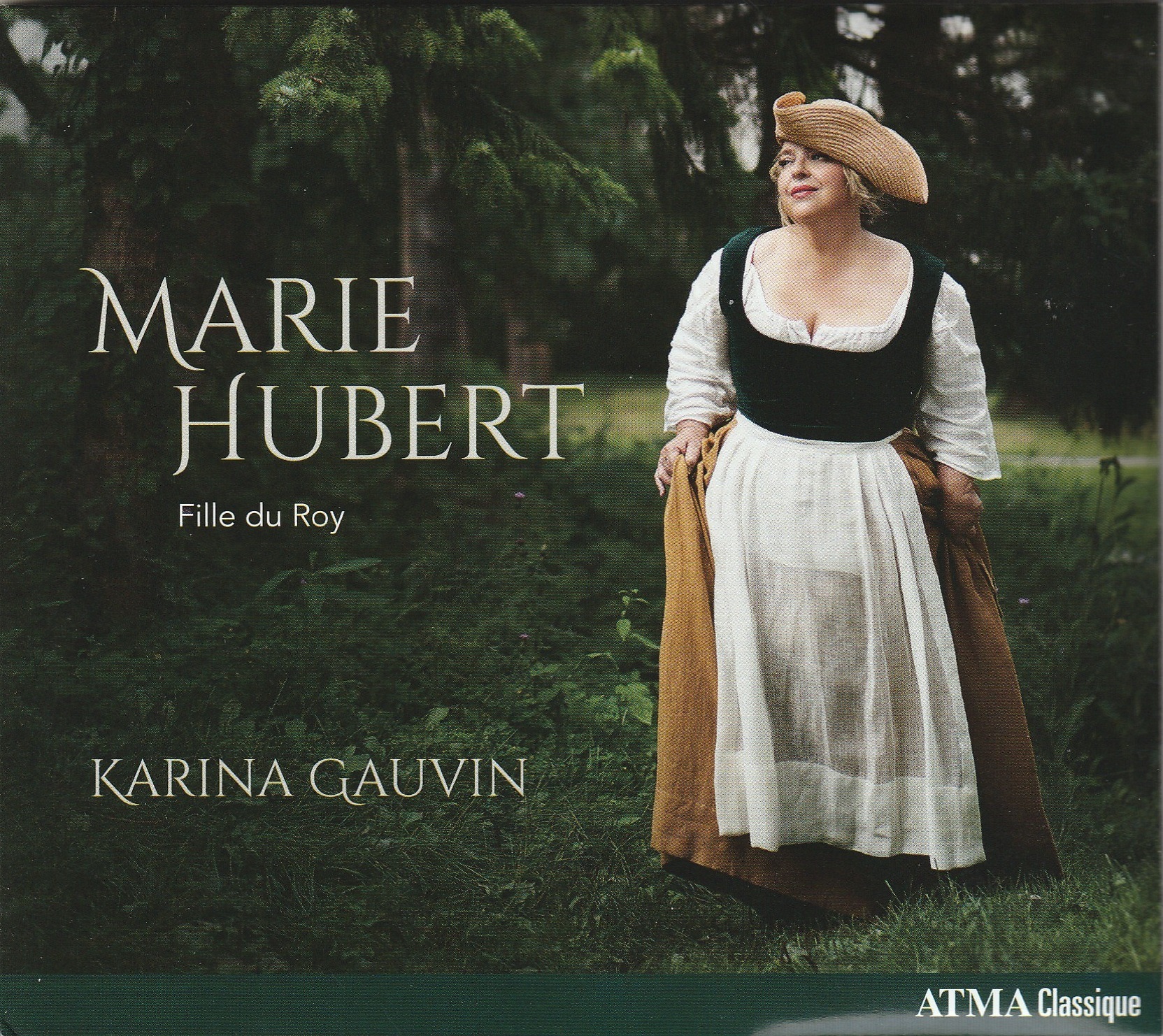
01 Karina GauvinMarie Hubert: Fille du Roy
Karina Gauvin; Pierre McLean; Valerie Milot; Etienne Lafrance; Quatuor Molinari; Pentaedre; Clauce Lapalme
ATMA ACD2 2827 (atmaclassique.com/en)

In 1889, Oscar Wilde asserted: “Life imitates art far more than art imitates life,” arguing that rather than merely copy, life imitates art because life craves the expression found in great art. Karina Gauvin has turned this maxim on its head playing one of the most fascinating dramatic roles. Indeed, in Gauvin’s case, “art imitates life” – the life of Marie Hubert

Gauvin traced her lineage to Hubert, one of the 46 (of 327) “Filles du roi” that Monsieur de Bretonvilliers priest of the parish of Saint-Sulpice, selected to sail from Dieppe to New France, by royal decree of King Louis XIV. This is an enthralling story, and Gauvin tells it eloquently – before a single note, or phrase is sung – with charming booklet notes based on her great-ancestor’s diary entries. Gauvin then employs her fabled lyric soprano to turn the diary entries – 21 in all – into songs, the lyrics and music of which propel them into a rarefied realm. 

Gauvin is a priceless gift to music, an artist of the first order, broadening out from the Baroque repertory for which she is celebrated across the world. Her instrument is gorgeous: lustrous, precise and feather-light. Her musicianship is fierce as she digs into the expression of each word, brings ceaseless variety to soft dynamics and gives every phrase grace. 

She is accompanied by pianist Pierre McLean, harpist Valérie Milot, contrabassist Étienne LaFrance, Quatuor Molinari and the wind quintet Pentaédre. Claude LaPalme conducts and arranged the music.

Listen to 'Marie Hubert: Fille du Roy' Now in the Listening Room

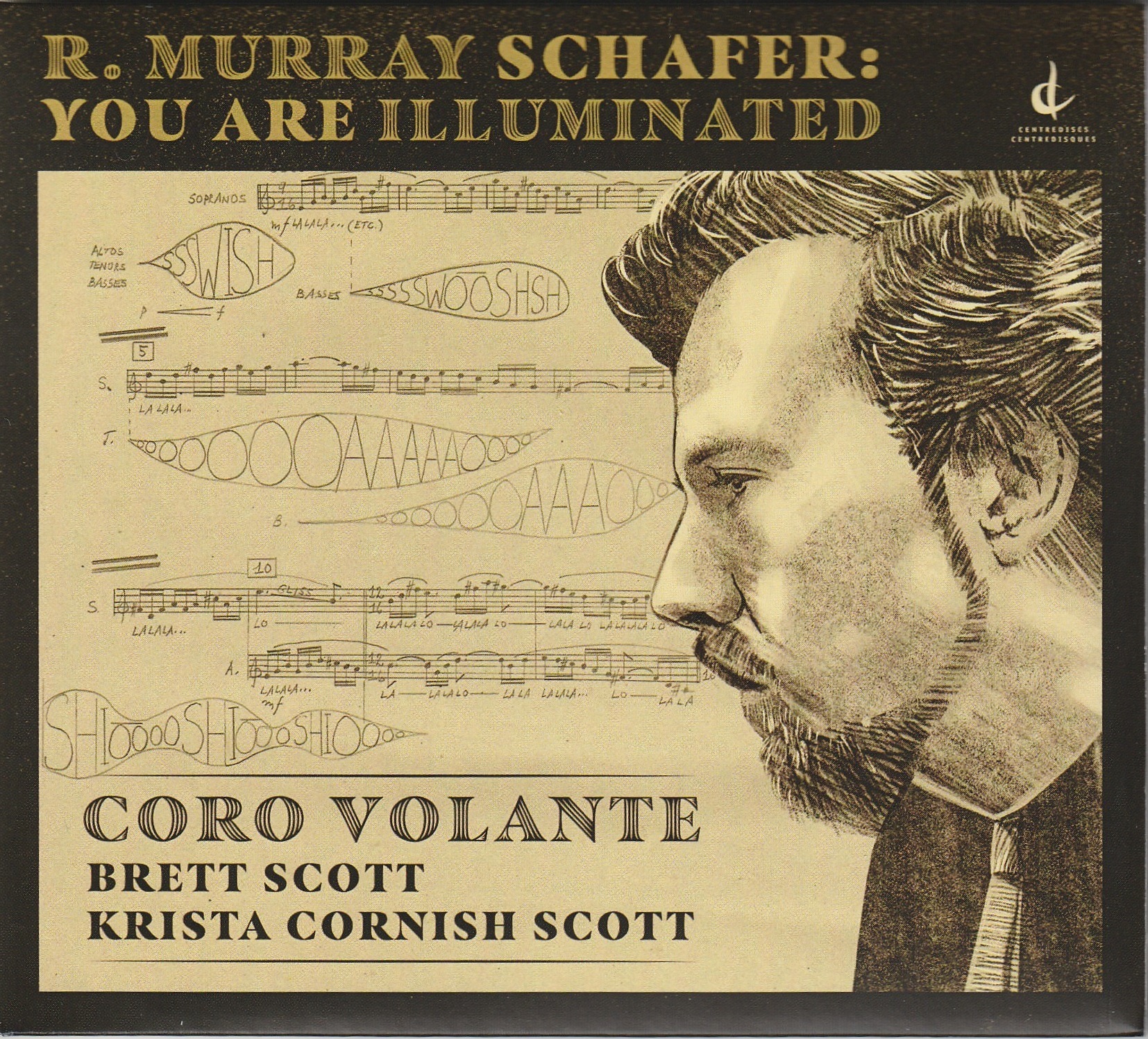
02 Schafer IlluminatedMurray Schafer – You Are Illuminated
Coro Volante; Brett Scott; Krista Cornish Scott
Centrediscs CMCCD 31523 (cmccanada.org/shop/cmccd-31523)

This terrific new album of choral music by the late R. Murray Schafer stands simultaneously in both the past and present. I suppose this blurring of old and new is one reason why Schafer is often referred to as a postmodernist (in addition to being called an avant-gardist who coined the term schizophonia, a soundscapist or an acoustic ecologist). But with You Are Illuminated, a beautifully captured 2024 recording by the Cincinnati-based choir Coro Volante under the keen direction of conductor Brett Scott, the music not only defies classification, but requires little explanation or illumination beyond what a simple listen can provide. 

Although eminently enjoyable, Schafer’s music often challenges listeners to expand beyond their comfort zones and to confront his above-mentioned musical theories and concepts. But with Scott at the helm, who, in 2019 penned an authorized biography of Schafer and who enjoyed a two-decade long friendship and musical relationship with the Canadian composer, listeners are in expert hands. As such, Scott, along with an impressive roster of soloists, ensemble choral singers and an excellent percussionist, has put together a stylistically divergent, but always musical program of Schafer’s choral works that span 45 years of compositional creativity. A self-described “labour of love,” this valuable new addition to the Canadian Music Centre’s already impressive discographic output focuses primarily on works of Schafer’s that have never before been recorded (or in some cases even performed), adding much to both the legacy of Schafer’s contributions to the choral canon, and to Canadian music more generally. 

Back to top